語彙集

英単語辞書 | 単語の意味、定義、例文

adjective
/prɪˈpɒndərənt/
優勢な (yūseina)

Having superior weight, force, influence, or importance.

"The preponderant influence of the media shapes public opinion."

"メディアの優勢な影響は、公共の意見を形成します。" (Media no yūseina eikyō wa, kōkyō no iken o keisei shimasu.)
verb
/prɪˈpɒndəreɪt/
優位を占める (yūi o shimeru)

To be greater in influence, weight, or number.

"In the debate, logical arguments preponderated over emotional appeals."

"議論の中で、論理的な議論は感情的な訴えに勝りました。" (Giron no naka de, ronritekina giron wa kanjō-teki na uttae ni kachimashita.)
adjective
/ˌpriːpəˈzɛsɪŋ/
魅力的 (miryokuteki)

Attractive or appealing in appearance or manner.

"She had a prepossessing smile that charmed everyone."

"彼女は魅力的な笑顔を持っていて、みんなを魅了した。" (Kanojo wa miryokuteki na egao o motte ite, minna o miryō shita.)
noun
/ˌpriːpəˈzɛʃən/
先入観 (sen'nyūkan)

An opinion or feeling formed beforehand; a prejudice or preoccupation.

"His prepossession in favor of tradition made him resist change."

"彼の伝統への先入観は彼を変化に抵抗させました。" (Kare no dentō e no sen'nyūkan wa kare o henka ni teikō sasemashita.)
adjective
/prɪˈpɒstərəs/
馬鹿げた, 不合理な (bakageta, fu gorina)

completely ridiculous or absurd; contrary to reason or common sense

"The idea that pigs could fly is preposterous."

"豚が飛ぶことができるという考えは馬鹿げている。" (Buta ga tobu koto ga dekiru to iu kangae wa bakagete iru.)
noun
/prɪˈrɒɡətɪv/
特権 (tokken)

a special right or privilege exclusive to a particular person or group

"It is the manager’s prerogative to make the final decision."

"それはマネージャーの権限で最終決定を下すことです。" (Sore wa manējā no kenri de saishū kettei o kudasu koto desu.)
verb
/ˈprɛsɪdʒ/
予兆 (yochou)

to be a sign or warning that something will happen; to foreshadow

"Dark clouds presage a storm."

"暗い雲が嵐を予告する。" (Kurai kumo ga arashi o yokoku suru.)
noun
/ˈprɛʃəns/ or /ˈpriːʃəns/
予知 (yochi)

the ability to know or predict what will happen in the future

"Her prescience about market trends saved the company."

"彼女の市場動向に対する予見は会社を救った。" (Kanojo no shijō dōkō ni taisuru yochi wa kaisha o sukutta.)
adjective
/ˈprɛʃənt/ or /ˈpriːʃənt/
先見の明がある (senken no mei ga aru)

having or showing knowledge of events before they take place

"The prescient investor sold his shares just before the market crashed."

"先見の明がある投資家は市場が崩壊する前に株を売却しました。" (Senken no mei ga aru tōshika wa shijō ga hōkai suru mae ni kabu o baikyaku shimashita.)
verb
/prɪˈskrʌɪb/
処方する (shohō suru)

to recommend or authorize the use of something, especially medicine

"The doctor prescribed medication for my cold."

"医者は私の風邪のために薬を処方しました。" (Isha wa watashi no kaze no tame ni kusuri o shohō shimashita.)
noun
/ˈpriːskrɪpt/
規定 (kitei)

An authoritative rule or direction; something laid down as a command.

"The prescript of the organization required strict punctuality."

"その組織の規定は厳格な時間厳守を要求していた。" (Sono soshiki no kitei wa genkaku na jikan genshu o youkyuu shite ita.)
adjective
/prɪˈskrɪptɪbəl/
規定可能 (kitei kanou)

Capable of being prescribed or laid down as a rule or directive.

"Certain regulations are prescriptible under the law."

"特定の規則は法律の下で規定可能です。" (Tokutei no kisoku wa hōritsu no moto de kitei kanō desu.)
noun
/prɪˈskrɪpʃən/
処方箋 (shohousen)

A written order from a doctor for the preparation and administration of a medicine; also, a recommendation or authoritative rule.

"The doctor gave her a prescription for antibiotics."
"医者は彼女に抗生物質の処方箋を出しました。" (Isha wa kanojo ni kōseibusshitsu no shohōsen o dashimashita.)
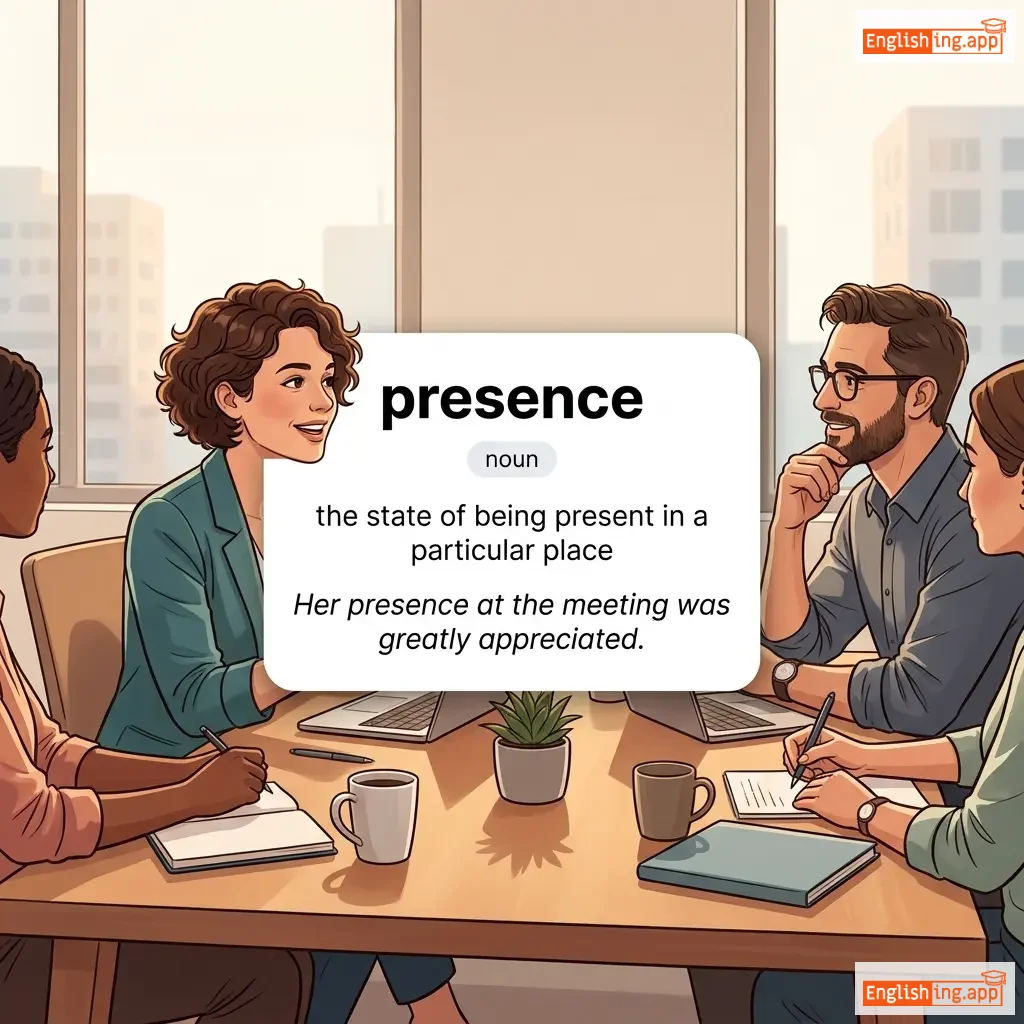
presence definition card — visual illustration of the meaning
noun
/ˈprɛzəns/
存在 (sonzai)

the state of being present in a particular place

"Her presence at the meeting was greatly appreciated."

"会議における彼女の存在は非常に評価されました。" (Kaigi ni okeru kanojo no sonzai wa hijou ni hyouka saremashita.)
noun, verb, adjective
/ˈprɛzənt/
プレゼント (purezento)

existing or happening now; to give something to someone in a formal way

"She presented her report to the team yesterday."

"彼女は昨日チームに報告書を提出しました。" (Kanojo wa kinou chiimu ni houkokusho o teishutsu shimashita.)
adjective
/prɪˈzentəbl/
見栄えが良い; 公の場に適した (miebāe ga yoi; kōno ba ni tekishita)

neat and suitable for being seen in public; acceptable in appearance

"Make sure you look presentable for the job interview."

"面接のために見た目をきちんと整えてください。" (mensetsu no tame ni mitame o kichin to totonoete kudasai)
presentation definition card — visual illustration of the meaning
noun
/ˌprɛzənˈteɪʃən/
プレゼンテーション (purezenteeshon)

the act of presenting something to an audience, typically involving speaking or showing information

"The presentation on digital marketing was very informative."

"デジタルマーケティングに関するプレゼンテーションは非常に情報豊富でした。" (Dejitaru māketingu ni kansuru purezenteeshon wa hijō ni jōhō hōfu deshita.)
adjective
/prɪˈsɛnʃənt/
予感 (yokan)

Having a feeling or sense of something about to happen; predictive.

"She was presentient of the coming disaster."

"彼女は迫り来る災害を予感していた。" (Kanojo wa semarikuru saigai wo yokan shite ita.)
noun
/prɪˈsɛntɪmənt/
予感 (yokan)

An intuitive feeling about the future, especially of something bad about to happen.

"He had a strong presentiment that the plan would fail."

"彼は計画が失敗するという強い予感を持っていた。" (Kare wa keikaku ga shippai suru to iu tsuyoi yokan o motte ita.)
adverb
/ˈprɛzntli/
現在 (genzai)

at the current moment; now

"Presently, I am working on a new project."

"現在、私は新しいプロジェクトに取り組んでいます。" (Genzai, watashi wa atarashii purojekuto ni torikundeimasu.)
noun
/prɪˈzɛntmənt/
正式な提示 (seishiki na teiji)

The act of presenting something formally or officially; a formal statement or document.

"The lawyer made a presentment of the evidence to the court."
"弁護士は証拠を法廷に提示しました。" (Bengoshi wa shōko o hōtei ni teiji shimashita.)
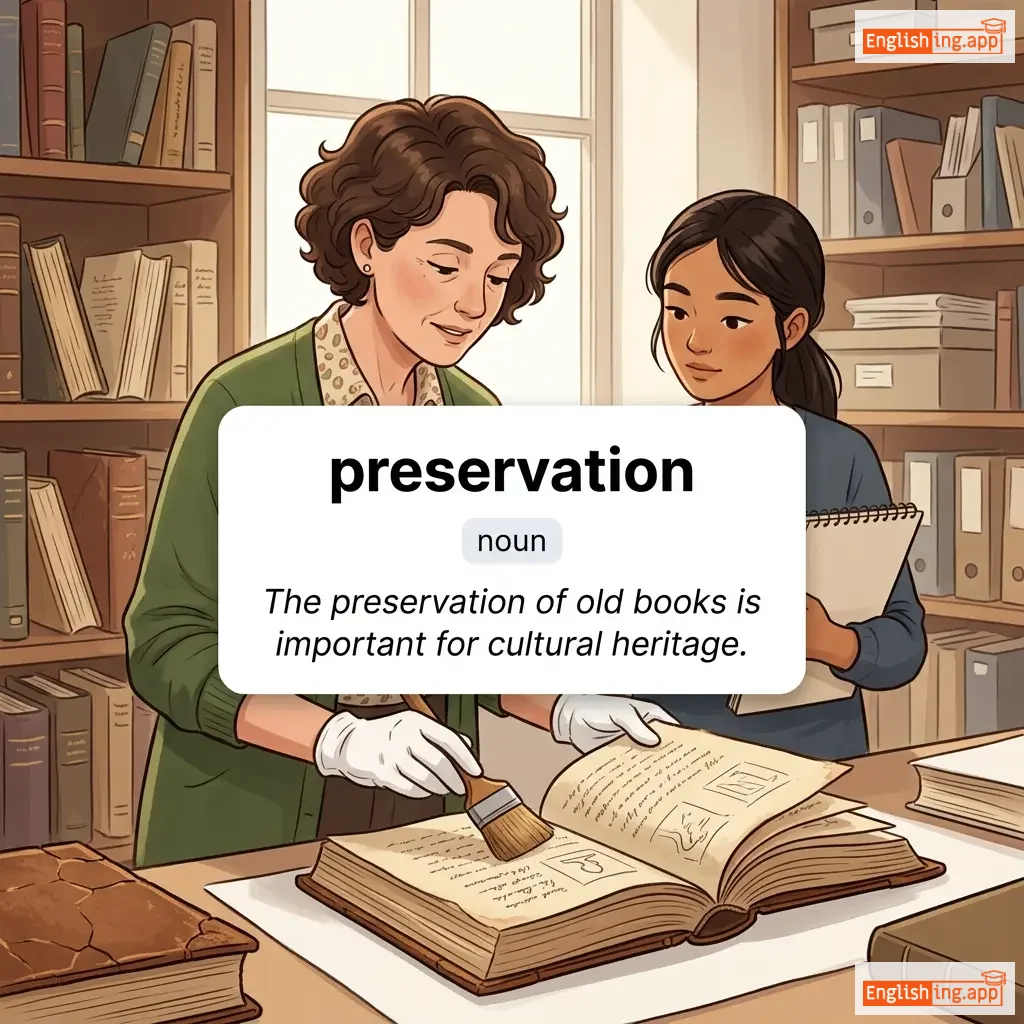
preservation definition card — visual illustration of the meaning
noun
/ˌprɛzəˈveɪʃən/
保存 (hozon)

The act of keeping something in its original state or protecting it from harm or decay.

"The preservation of old books is important for cultural heritage."
"古い本の保存は文化遺産にとって重要です。" (Furui hon no hozon wa bunka isan ni totte jūyō desu.)
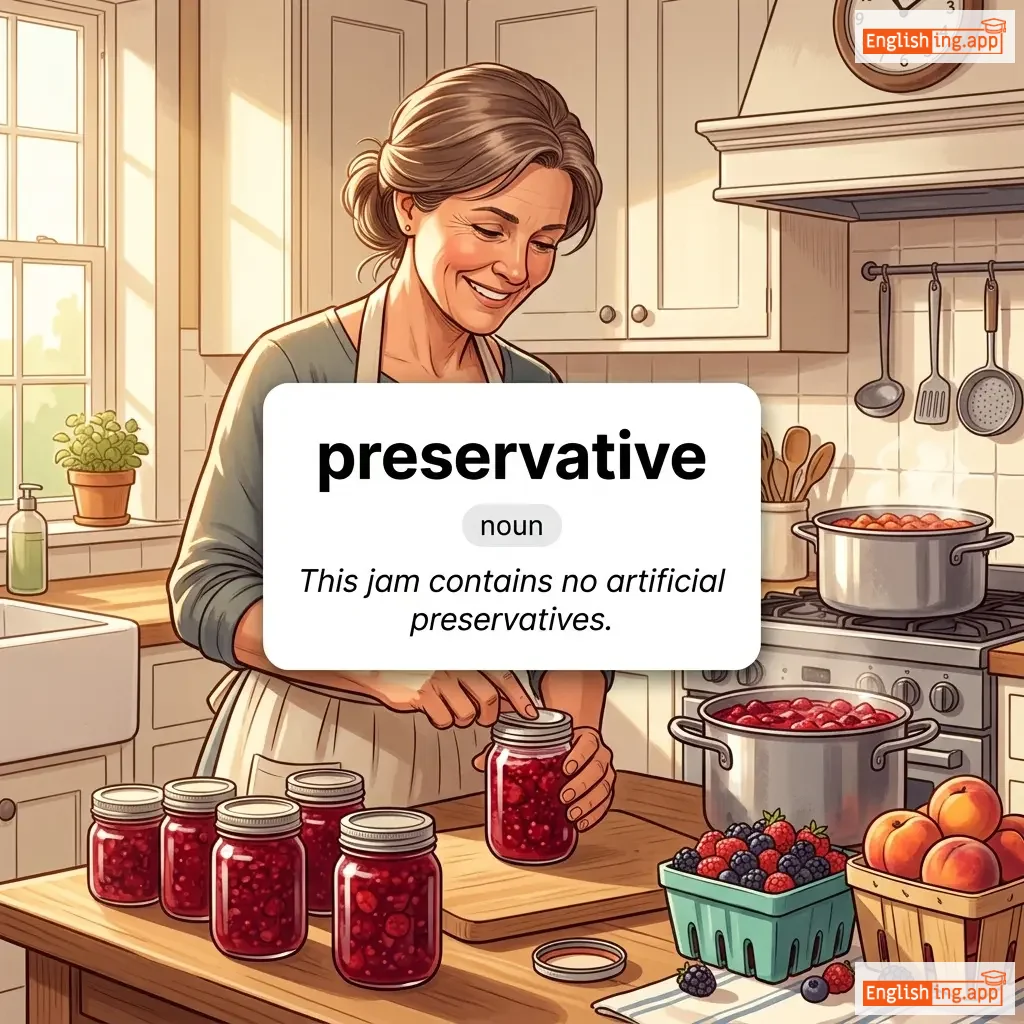
preservative definition card — visual illustration of the meaning
noun
/prɪˈzɜːrvətɪv/
防腐剤 (bōfuzai)

A substance used to prevent decay, spoilage, or deterioration in food or other materials.

"This jam contains no artificial preservatives."
"このジャムには人工的な防腐剤は含まれていません。" (Kono jamu ni wa jinkō-teki na bōfuzai wa fukumareteimasen.)
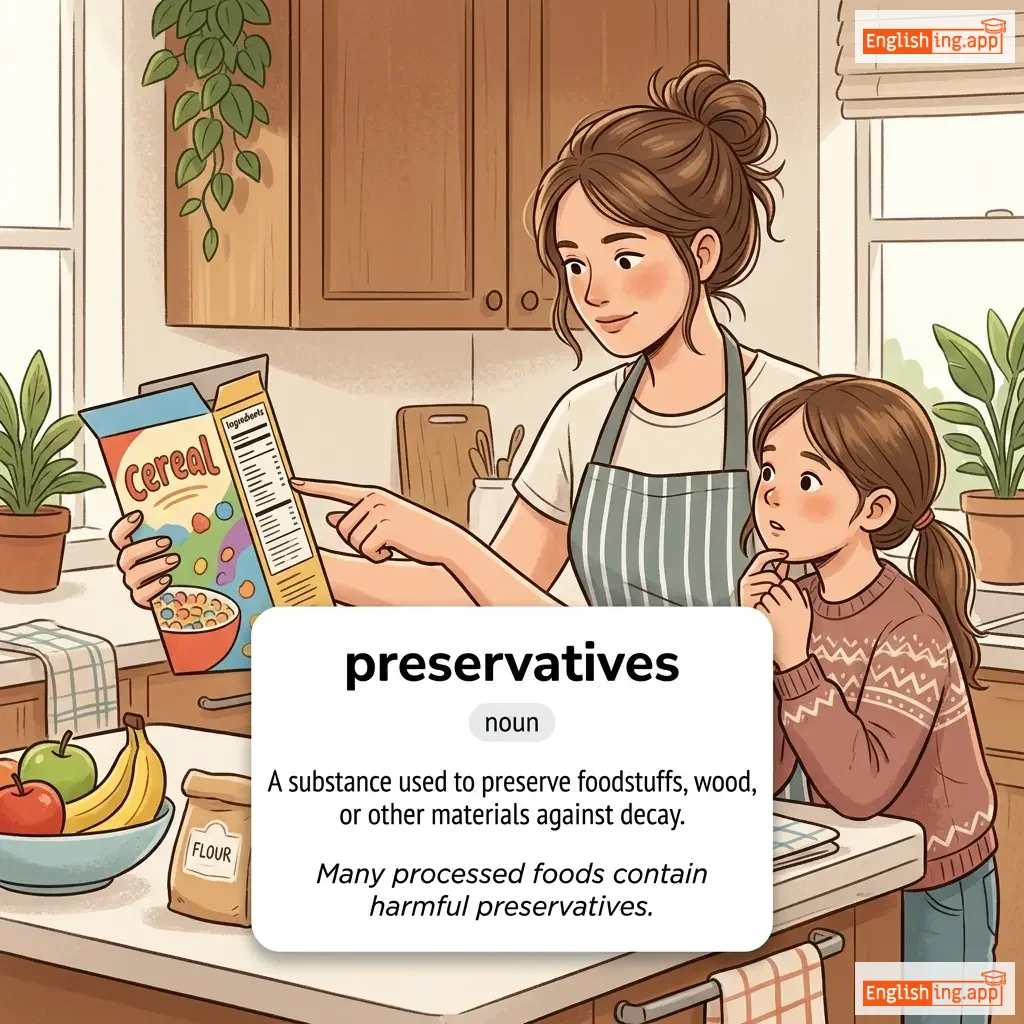
preservatives definition card — visual illustration of the meaning
noun
prɪˈzɜː.və.tɪvz
保存料 (hozonryou)

A substance used to preserve foodstuffs, wood, or other materials against decay.

"Many processed foods contain harmful preservatives."

"多くの加工食品には有害な保存料が含まれています。" (Ōku no kakō shokuhin ni wa yūgaina hozonryō ga fukumareteimasu.)
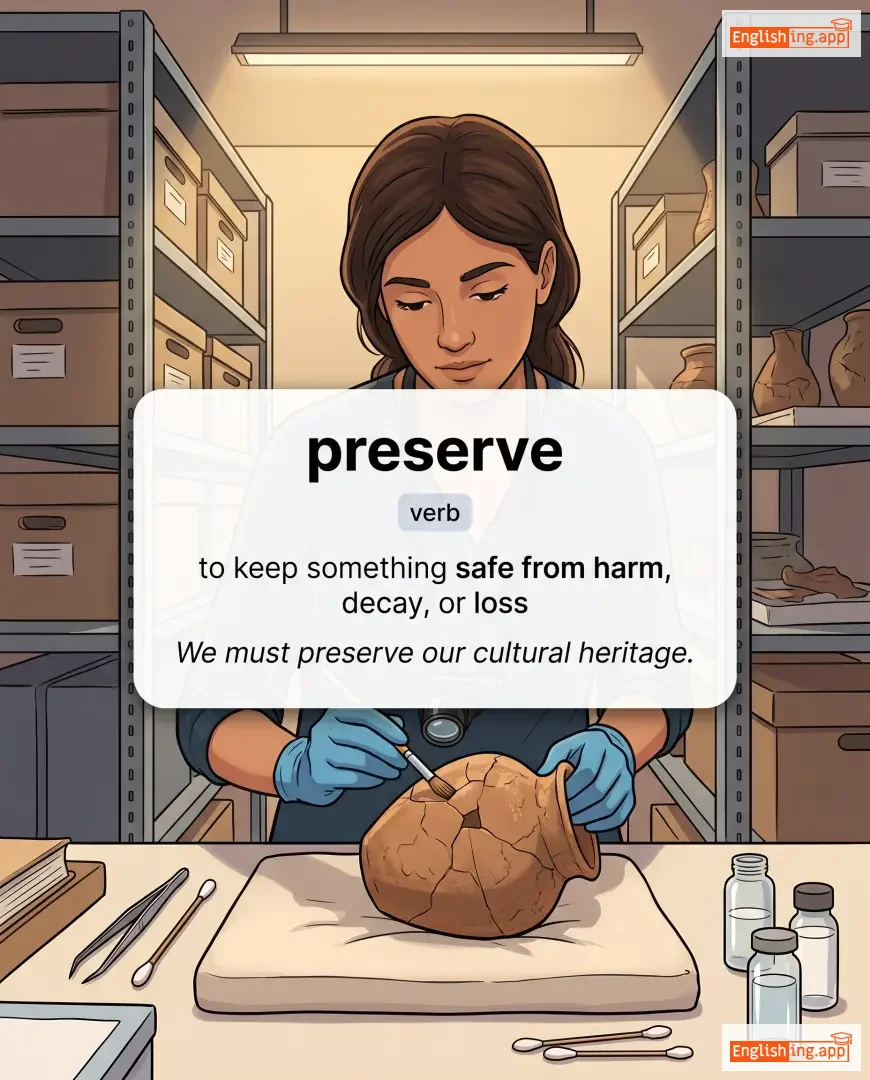
preserve definition card — visual illustration of the meaning
verb
/prɪˈzɜːrv/

to keep something safe from harm, decay, or loss

"We must preserve our cultural heritage."

verb
/prɪˈzaɪd/
主宰する (shusai suru)

to be in charge of a meeting, event, or organization

"She will preside over the meeting tomorrow."

"彼女は明日会議を主宰します。" (Kanojo wa ashita kaigi o shusai shimasu.)
noun
/ˈprɛzɪdənsi/
大統領職 (daitōryō shoku)

the office or position of being a president

"He was elected to the presidency in 2020."

"彼は2020年に大統領職に選ばれました。" (Kare wa 2020 nen ni daitōryō shoku ni erabaremashita.)
noun
/ˈprɛzɪdənt/
大統領 (daitōryō)

the elected head of a republican state

"The president addressed the nation last night."

"大統領は昨晩、国民に向けて演説を行いました。" (Daitōryō wa sakuban, kokumin ni mukete enzetsu o okonaimashita.)
adjective
/ˌprɛzɪˈdɛnʃəl/
大統領に関連する (daitōryō ni kanren suru)

relating to a president or presidency

"The presidential election is scheduled for next month."
"大統領選挙は来月に予定されています。" (Daitōryō senkyo wa raigetsu ni yotei sareteimasu.)
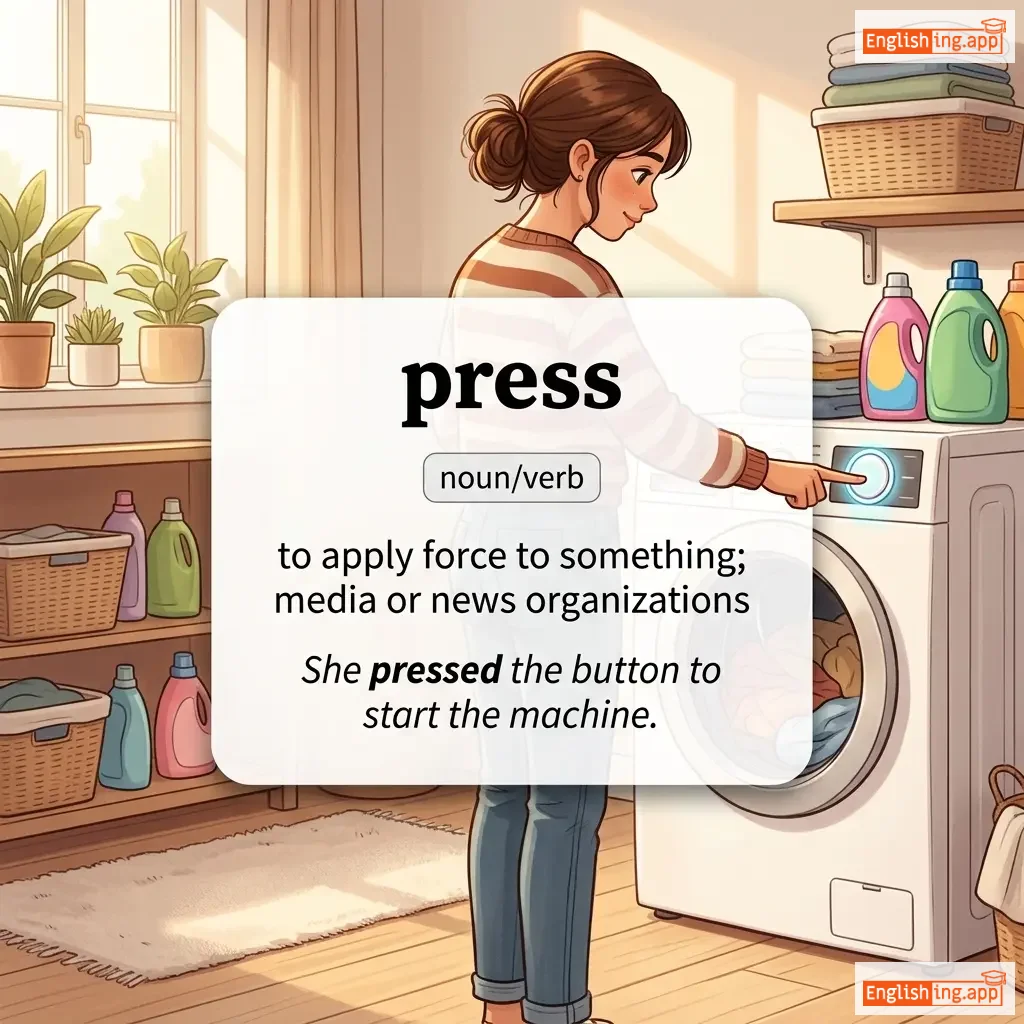
press definition card — visual illustration of the meaning
noun/verb
/prɛs/
新聞 / 押す (shinbun / osu)

to apply force to something; media or news organizations

"She pressed the button to start the machine."

"彼女は機械を起動するためにボタンを押しました。" (Kanojo wa kikai o kidō suru tame ni botan o oshimashita.)
adjective
/ˈprɛsɪŋ/
緊急 (kinkyū)

Requiring immediate attention or urgent action.

"The manager had to deal with several pressing issues at once."

"マネージャーは同時にいくつかの緊急の問題に対処しなければならなかった。" (Manējā wa dōji ni ikutsuka no kinkyū no mondai ni taisho shinakereba naranakatta.)
noun/verb
/ˈprɛʃər/
プレッシャー (puresshā)

the force applied to something or the feeling of stress or tension

"The pressure of the situation made him nervous."

"その状況のプレッシャーは彼を緊張させました。" (Sono jōkyō no puresshā wa kare wo kinchou sasemashita.)
noun
/ˈprɛʃər ˈkʊkər/
圧力鍋 (atsuryoku nabe)

a sealed cooking pot that uses steam pressure to cook food faster

"Using a pressure cooker reduces cooking time by more than half."

"圧力鍋を使うと、調理時間が半分以上短縮されます。" (Atsuryoku nabe o tsukau to, chōri jikan ga hanbun ijō tanshuku saremasu)
prestige definition card — visual illustration of the meaning
noun
/prɛˈstiːʒ/
幸せ (shiawase)

Widespread respect and admiration felt for someone or something based on their achievements or quality.

"Winning the award gave the company international prestige."

"賞を受け取ったとき、彼女は自分の幸せを隠せませんでした。" (Shō o uketotta toki, kanojo wa jibun no shiawase o kakusemasen deshita.)
adjective
/prɛsˈtɪdʒəs/
名誉ある (meiyo aru)

having a high reputation; respected

"Harvard University is one of the most prestigious universities in the world."

"ハーバード大学は世界で最も名誉ある大学の一つです。" (Hābādo daigaku wa sekai de mottomo meiyo aru daigaku no hitotsu desu.)
adverb
/prɪˈzjuːməbli/
おそらく (osoraku)

used to convey that something is assumed to be true though not known for certain

"Presumably, he forgot to send the email."

"おそらく、彼はメールを送るのを忘れた。" (Osoraku, kare wa mēru o okuru no o wasureta.)
verb
/prɪˈzjuːm/
仮定する (katei suru)

To suppose something is true without proof; to take for granted.

"I presume she has already left for the meeting."

"私は彼女がすでに会議に出かけたと思います。" (Watashi wa kanojo ga sude ni kaigi ni dekaketa to omoimasu.)
noun
/prɪˈzʌmpʃən/
仮定 (katei)

An idea believed to be true without proof; an assumption or act of overconfidence.

"The presumption of his guilt was unfair."

"彼の有罪の仮定は不公平だった。" (Kare no yūzai no katei wa fukōhei datta.)
adjective
/prɪˈzʌmptɪv/
推定 (suitei)

Based on probability or assumption rather than proof.

"She is the presumptive nominee for the party."
"彼女はその党の推定候補者です。" (Kanojo wa sono tō no suitei kōho-sha desu.)
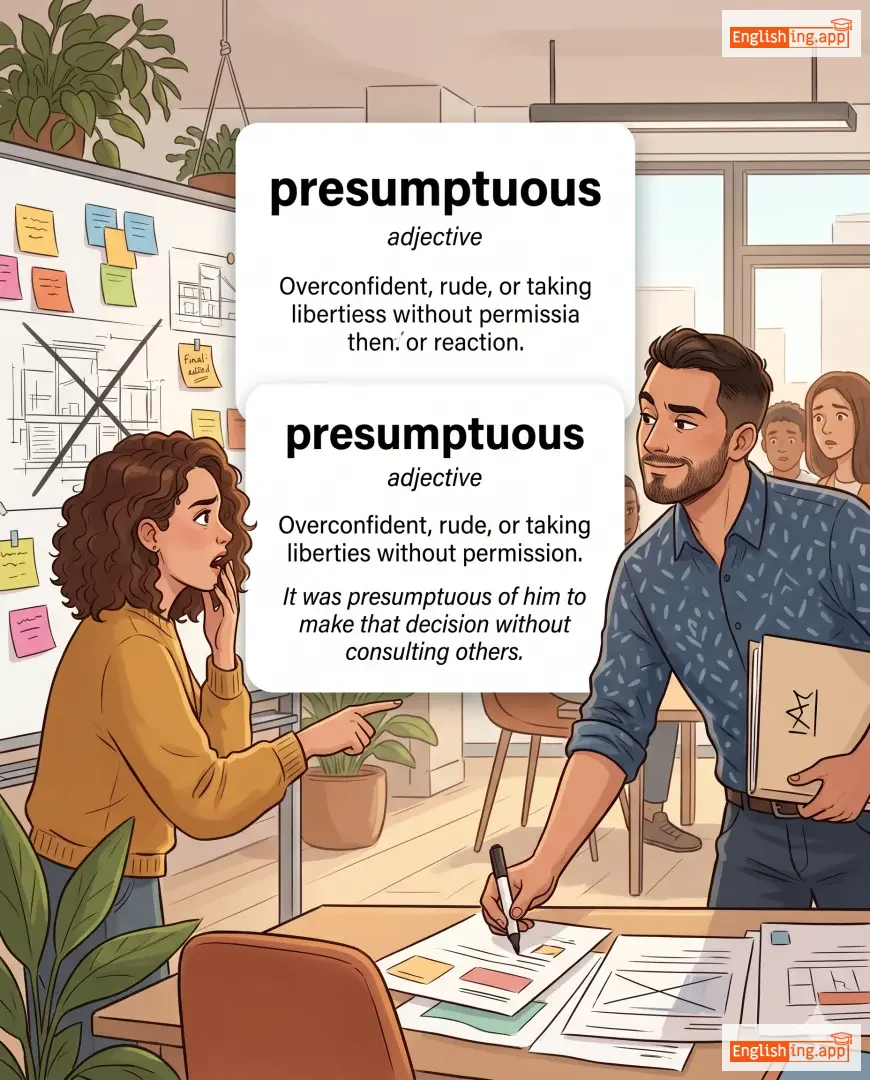
presumptuous definition card — visual illustration of the meaning
adjective
/prɪˈzʌmp.tʃu.əs/
生意気な (namaiki na)

Overconfident, rude, or taking liberties without permission.

"It was presumptuous of him to make that decision without consulting others."

"他が他の人と相談せずにその決定を下したのは生意気だった。" (Kare ga hoka no hito to sōdan sezu ni sono kettei o kudashita no wa namaiki datta.)
noun
/prɪˈtens/
偽り (itsuwari)

an attempt to make something that is not the case appear true

"He made no pretence of being interested in the conversation."

"彼は会話に興味があるふりをしなかった。" (Kare wa kaiwa ni kyōmi ga aru furi o shinakatta.)
verb
/prɪˈtɛnd/
ふりをする (furi o suru)

To act as if something is true when it is not.

"The children pretended to be superheroes."

"子供たちはスーパーヒーローになるふりをした。" (Kodomotachi wa sūpāhīrō ni naru furi o shita.)
noun
/ˈpriː.tɛns/ or /prɪˈtɛns/
仮面, 偽装 (kamen, giso)

A false appearance or claim; an act of pretending.

"His kindness was only a pretense to gain trust."

"彼の優しさは信頼を得るための単なる仮面だった。" (Kare no yasashisa wa shinrai o eru tame no tannaru kamen datta.)
noun
/prɪˈtɛnʃən/
虚偽、見せかけ (kyogi, misekake)

A claim or assertion to something, often without justification; an attempt to impress by showing greater importance or talent than is actually possessed.

"His pretension to be an expert was quickly exposed."

"彼の専門家であるというプリテンションはすぐに暴かれた。" (kare no senmonka de aru to iu puritenshon wa sugu ni abakareta.)
adjective
/prɪˈtɛnʃəs/
偽善的な (gizen-tekina)

Attempting to impress by affecting greater importance, talent, culture, etc., than is actually possessed.

"The restaurant was stylish but far too pretentious for my taste."

"そのレストランはスタイリッシュだったが、私の好みにはあまりにも偽善的だった。" (Sono resutoran wa sutairisshu datta ga, watashi no konomi ni wa amari ni mo gizen-teki datta.)
adjective
/ˌpriːtərˈnætʃərəl/
超自然的 (chōshizenteki)

Beyond what is normal or natural; extraordinary or supernatural.

"She had a preternatural ability to remain calm in any crisis."

"彼女はどんな危機にも冷静に保つ超自然的な能力を持っていた。" (Kanojo wa donna kiki ni mo reisei ni tamotsu chōshizenteki na nōryoku o motte ita.)
noun
/ˈpriːtɛkst/
口実、偽りの理由 (koujitsu, itsuwari no riyuu)

A false reason given to hide the real purpose or motive.

"He went out on the pretext of buying groceries."

"彼は食料品を買いに行くという口実で外出した。" (Kare wa shokuryouhin o kai ni iku to iu koujitsu de gaishutsu shita.)
adjective
/ˈprɪti/
きれい (kirei)

Attractive in a delicate way without being truly beautiful.

"She looked pretty in her new dress."

"彼女は新しいドレスできれいに見えた。" (Kanojo wa atarashī doresu de kirei ni mieta.)
verb
/prɪˈveɪl/
勝つ (katsu)

To prove more powerful or superior; to be widespread or common.

"Justice will always prevail over injustice."
"正義は常に不正に勝る。" (Seigi wa jōni fusei ni masaru.)
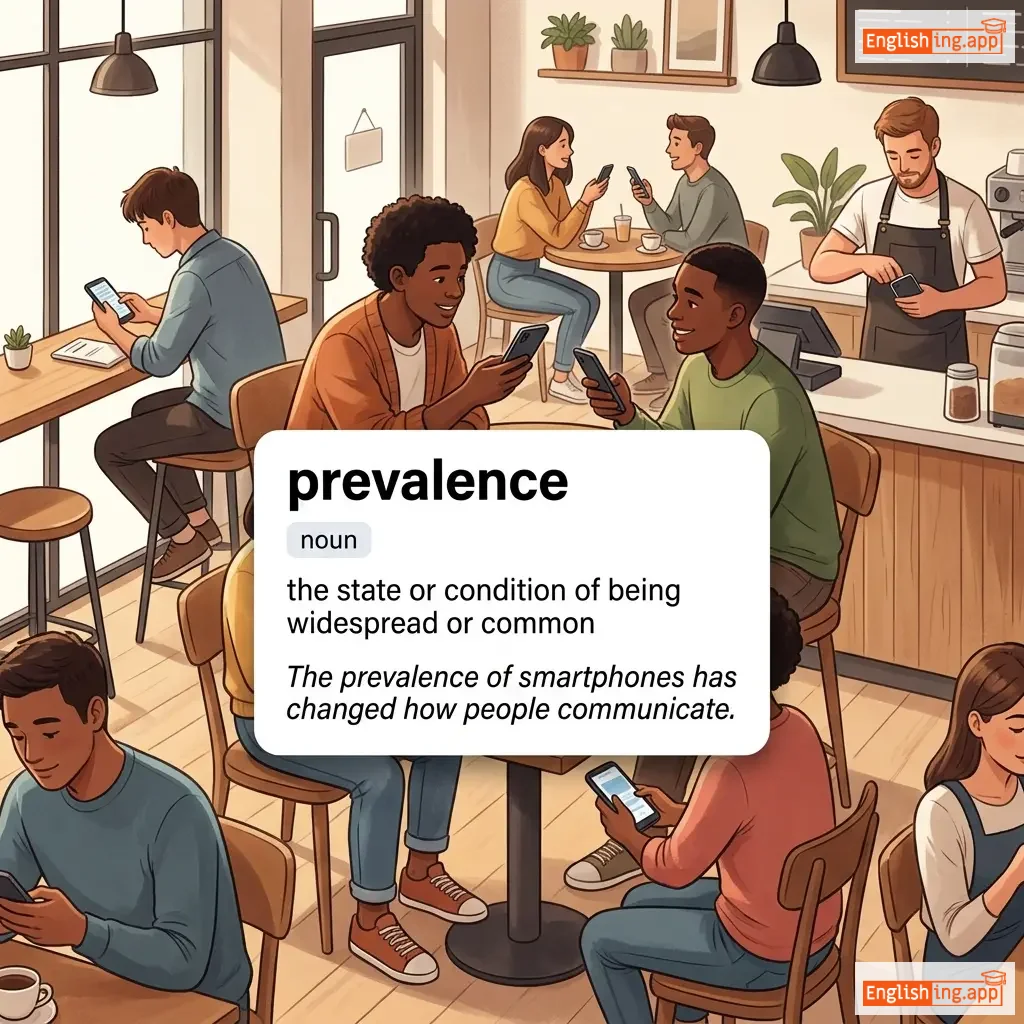
prevalence definition card — visual illustration of the meaning
noun
/ˈprɛvələns/
普及 (fukyū)

the state or condition of being widespread or common

"The prevalence of smartphones has changed how people communicate."

"スマートフォンの普及により、人々のコミュニケーション方法が変わった。" (Sumātofon no fukyū ni yori, hitobito no komyunikēshon hōhō ga kawatta.)