語彙集

英単語辞書 | 単語の意味、定義、例文

adjective
/ˈplaɪəbəl/
柔軟な (jūnan na)

easily bent or flexible; adaptable

"The metal is pliable enough to be shaped into jewelry."

"その金属は十分に柔軟で、ジュエリーに成形することができます。" (Sono kinzoku wa jūbun ni jūnan de, juwerī ni seikei suru koto ga dekimasu.)
adjective
/ˈplaɪənt/
柔軟な、影響を受けやすいまたは適応可能な (jūnan na, eikyō o uke yasui matawa tekiō kanō na)

flexible; easily influenced or adaptable

"She has a pliant personality that adapts well to new situations."

"彼女は新しい状況にうまく適応できる柔軟な性格を持っています。" (Kanojo wa atarashī jōkyō ni umaku tekiō dekiru jūnan na seikaku o motteimasu.)
noun
/plaɪt/
困難、危機的な状況 (konnan, kikiteki na joukyou)

a difficult or dangerous situation

"The refugees described their plight during the war."

"難民は戦争中の困難を説明しました。" (Nanmin wa sensouchuu no konnan wo setsumeishimashita.)
verb
/plɒd/
ゆっくりと働く (yukkuri to hataraku)

to work slowly and steadily, often with effort or difficulty

"He plodded through his homework despite feeling tired."

"疲れていたけど、彼は宿題をゆっくりやっていた。" (Tsukarete ita kedo, kare wa shukudai wo yukkuri yatte ita.)
adjective
/ˈplɒd.ɪŋ/
遅くて退屈な (osokute taikutsuna)

slow-moving and unexciting; showing steady effort

"The movie was entertaining but a bit plodding in the middle."
"その映画は面白かったが、真ん中で少し遅くて退屈だった。" (Sono eiga wa omoshirokatta ga, mannaka de sukoshi osokute taikutsu datta.)
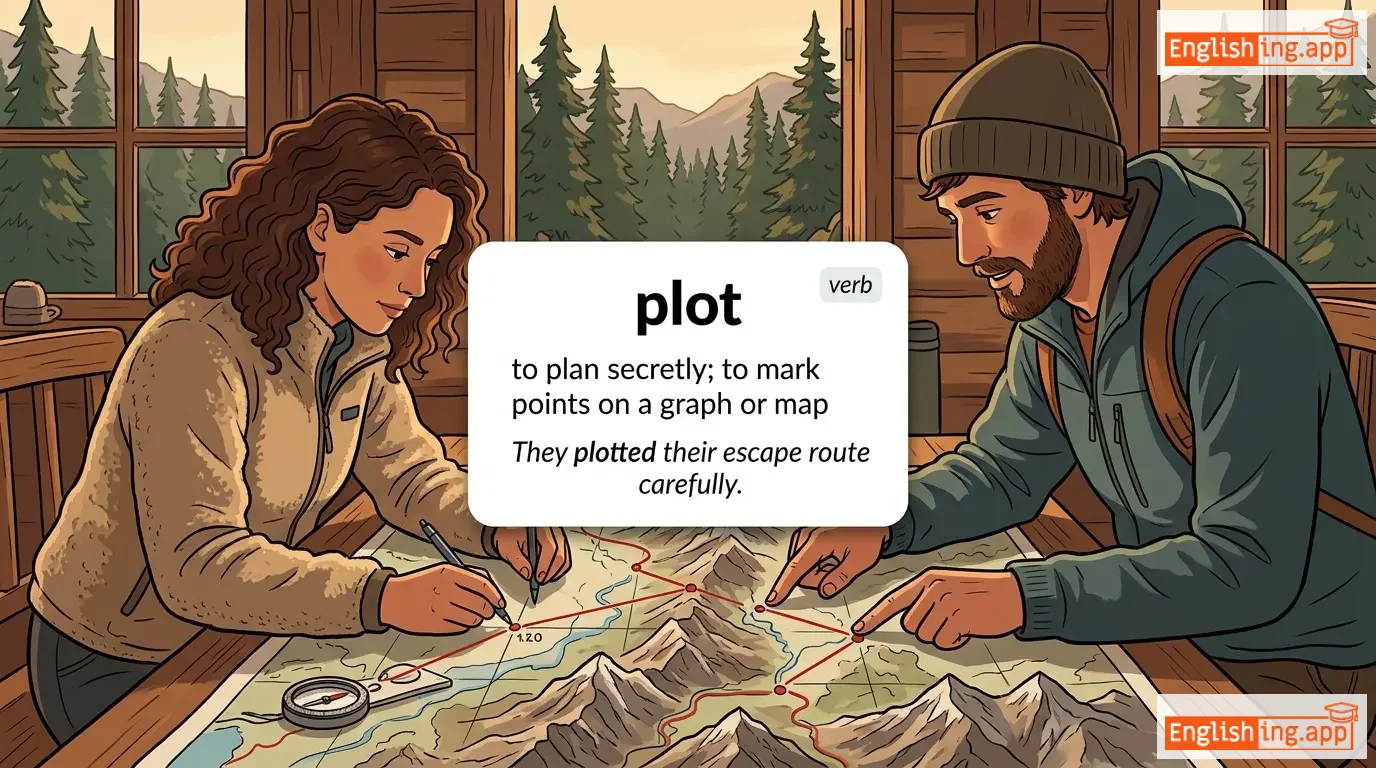
plot definition card — visual illustration of the meaning
noun
/plɒt/
陰謀 (inbou)

a secret plan or scheme, often with bad intentions

"The villain made a plot to steal the treasure."
"悪役は財宝を盗むために陰謀を企てた。" (Akuyaku wa zaihō o nusumu tame ni inbō o kudateta.)
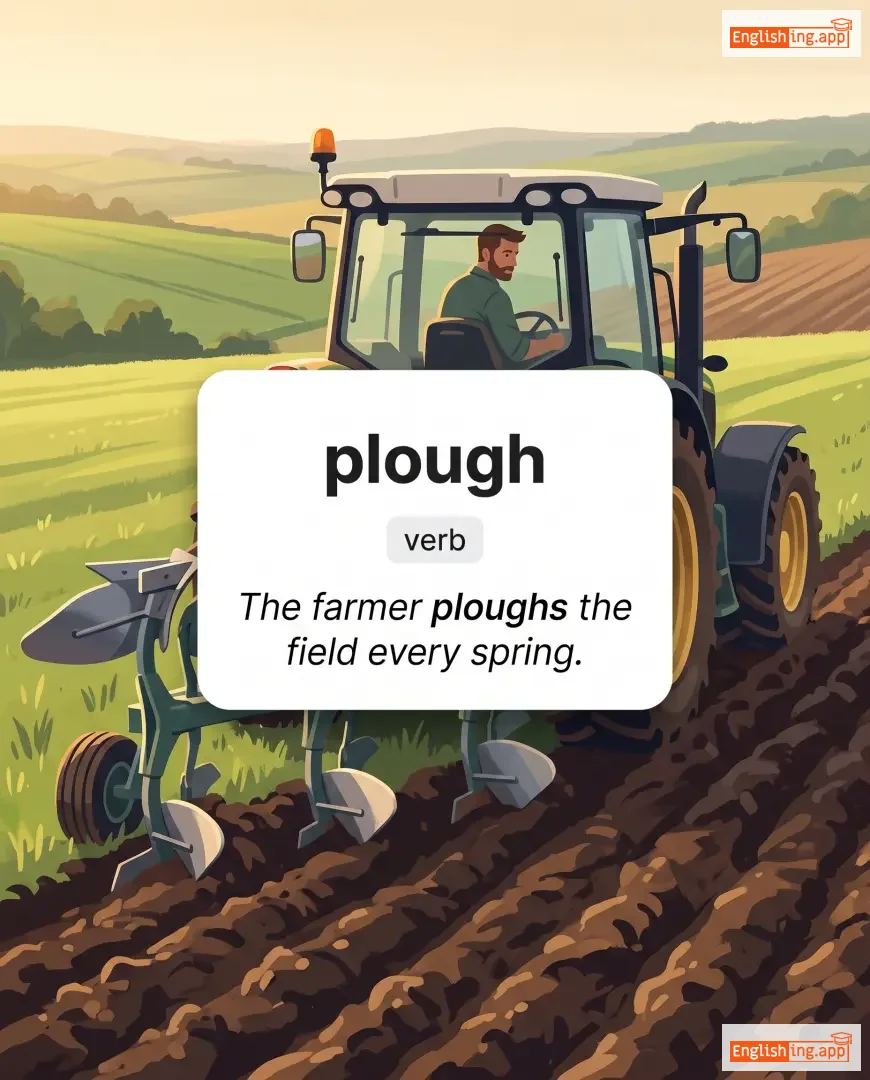
plough definition card — visual illustration of the meaning
noun
/plaʊ/
(suki)

a large farming tool used to break up and turn over soil before planting crops

"The oxen pulled the heavy plough across the field."

"牛は重い鋤を引いて畑を横切った。" (Ushi wa omoi suki o hiite hatake o yokogitta.)
noun
/plɔɪ/
巧妙な策略 (koumyou na sakuryaku)

a clever plan or action designed to gain an advantage

"She used a clever ploy to win the debate."

"彼女は討論に勝つために巧妙な策略を使いました。" (Kanojo wa tooron ni katsu tame ni koumyou na sakuryaku wo tsukaimashita.)
verb
/plʌk/
摘む, 勇気を出す (tsumu, yūki wo dasu)

to take hold of and quickly remove; to gather courage or determination

"She plucked a flower from the garden."

"彼女は庭から花を摘みました。" (Kanojo wa niwa kara hana o tsumimashita.)
adjective
/ˈplʌk.i/
勇敢 (yūkan)

having or showing courage and determination

"The plucky child rescued the kitten from the tree."

"勇敢な子供が木から子猫を救いました。" (Yūkan na kodomo ga ki kara koneko o sukūmashita.)
noun
/plʌɡ/
プラグ (puragu)

a device used to connect or block an opening

"She inserted the plug into the socket."

"彼女はソケットにプラグを差し込みました。" (Kanojo wa soketto ni puragu o sashikomimashita.)
noun
/plʌm/
プラム (puramu)

a small round fruit with smooth red or purple skin, sweet flesh, and a single large seed

"The purple plum was juicy and delicious."

"その紫色のプラムはジューシーで美味しかった。" (sono murasaki iro no puramu wa jūshī de oishikatta.)
noun
/ˈpluː.mɪdʒ/
羽毛 (umou)

the feathers covering a bird's body

"The peacock's plumage was vibrant and eye-catching."

"クジャクの羽毛は鮮やかで目を引いた。" (Kujaku no umou wa azayaka de me wo hiita.)
verb
/plʌm/
深さを測るまたは詳細に調べる (fukasa o hakaru matawa shousai ni shiraberu)

to measure the depth of water or examine closely

"They used a line to plumb the depth of the lake."

"彼らは湖の深さを測るためにラインを使いました。" (Karera wa mizuumi no fukasa o hakaru tame ni rain o tsukaimashita.)
noun
/ˈplʌm.ər/
配管工 (haikan kō)

a person who installs or repairs water pipes

"The plumber fixed the leaking pipe in the kitchen."

"配管工は台所の漏れているパイプを修理しました。" (Haikangō wa daidokoro no moreteiru paipu o shūri shimashita.)
noun
/pluːm/
大きくて柔らかい羽または羽のようなもの (ookikute yawarakai hane matawa hane no you na mono)

a large, soft feather or something resembling a feather

"The soldier wore a red plume on his helmet."

"兵士はヘルメットに赤い羽をつけていた。" (Heishi wa herumetto ni akai hane o tsukete ita.)
plummet definition card — visual illustration of the meaning
verb
/ˈplʌm.ɪt/
速い速度で真っ直ぐに落ちる (hayai sokudo de massugu ni ochiru)

to fall straight down at high speed

"Stock prices plummeted after the sudden market crash."
"株価は市場の突然の暴落後に急落しました。" (Kabuka wa shijō no totsuzen no bōraku go ni kyūraku shimashita.)
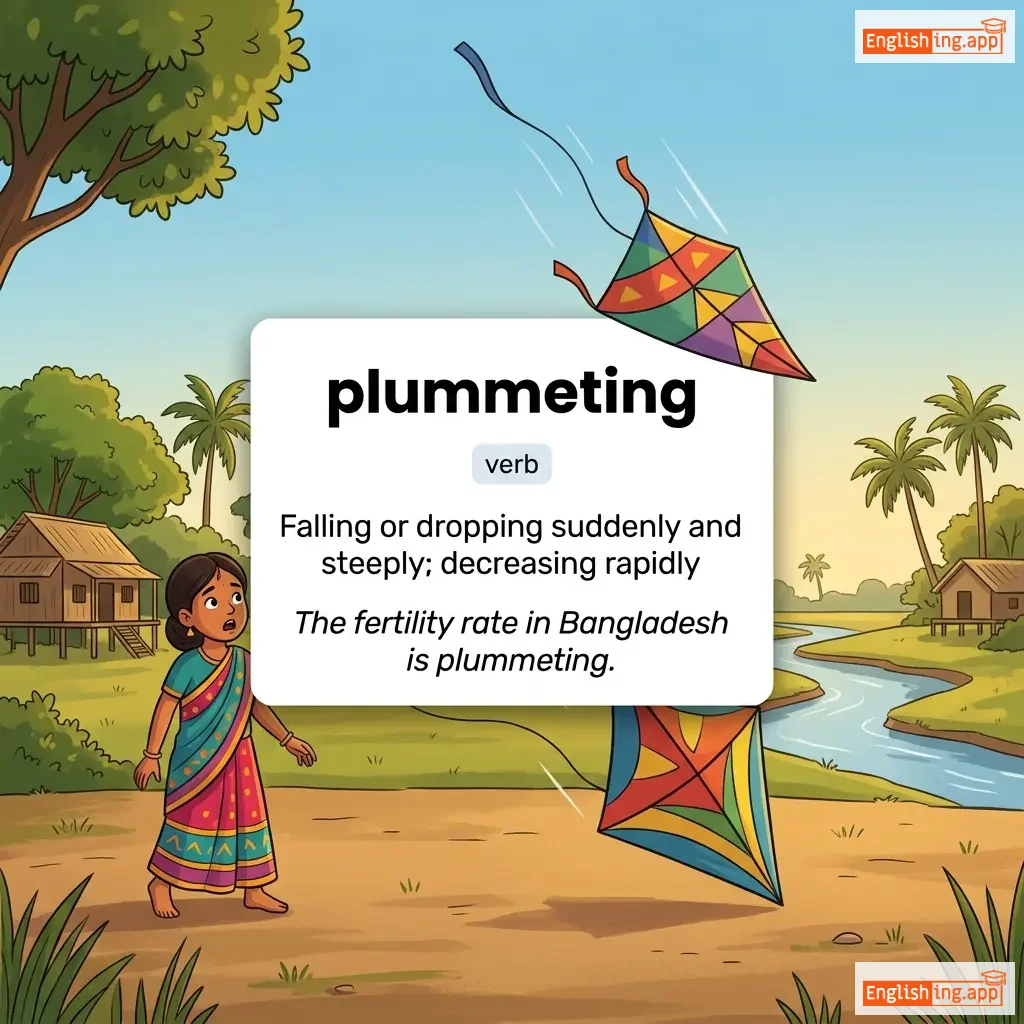
plummeting definition card — visual illustration of the meaning
verb
ˈplʌmɪtɪŋ
急落 (kyūraku)

Falling or dropping suddenly and steeply; decreasing rapidly

"The fertility rate in Bangladesh is plummeting."

"バングラデシュの出生率は急落しています。" (Banguradeshu no shusseiritsu wa kyūraku shiteimasu.)
adjective
/plʌmp/
ふくよかまたは丸い (fukuyoka matawa marui)

having a full, rounded shape; pleasantly fat

"The cat was plump and well-fed."

"その猫はふくよかでよく食べていました。" (Sono neko wa fukuyoka de yoku tabete imashita.)
noun
/ˈplʌn.dər.ər/
略奪者 (ryakudatsusha)

a person who steals goods, especially during war or civil disorder

"The plunderers ransacked the village after the battle."

"戦いの後、略奪者たちは村を荒らしました。" (tatakai no ato, ryakudatsusha-tachi wa mura wo arashimashita.)
verb
/plʌndʒ/
素早く飛び込む; 急激に落ちる (subayaku tobikomu; kyūgeki ni ochiru)

to jump or dive quickly; to fall sharply

"She plunged into the swimming pool."

"彼女はプールに飛び込んだ。" (Kanojo wa pūru ni tobikonda.)
adjective
/ˌpluːˈpɜːrfɪkt/
過去完了形 (kako kanryōkei)

a verb tense expressing an action completed before another past action

"By the time she arrived, he had finished his homework, showing the pluperfect tense."

"彼女が到着したとき、彼はすでに宿題を終わらせており、過去完了形を示しています。" (Kanojo ga tōchaku shita toki, kare wa sudeni shukudai o owarasete ori, kako kanryōkei o shimeshiteimasu.)
adjective
/ˈplʊrəl/
複数 (fukusū)

denoting more than one person or thing

"The word 'cats' is the plural of 'cat'."

"'猫'の複数形は'猫たち'です。" ('neko' no fukusūkei wa 'neko-tachi' desu.)
noun
/plʊəˈrælɪti/
多数派または過半数 (tasūha mata wa kahansū)

the state of being multiple; the greater part or majority

"In the election, she won by a plurality of votes."

"選挙では、彼女は票の多数で勝利しました。" (Senkyō de wa, kanojo wa hyō no tasū de shōri shimashita.)
preposition/conjunction/noun/adjective
/plʌs/
プラス/利点 (purasu/riten)

in addition to; a positive aspect or advantage

"She received an A plus on her exam."

"彼女は試験でAプラスを取った。" (Kanojo wa shiken de A purasu o totta.)
noun
/pluːˈtɒkrəsi/
富裕層による支配 (fuyūsō ni yoru shihai)

a system of government where the wealthy hold power

"The country was ruled as a plutocracy."

"その国はプルトクラシーとして支配されていた。" (Sono kuni wa purutokurashī toshite shihai sarete ita.)
🕒

pm

noun
/piːˈɛm/

abbreviation for post meridiem; after midday

"The meeting is scheduled at 3 pm."

adjective
/njuːˈmætɪk/
空気圧の (kuukiatsu no)

operated by air or gas under pressure

"The factory uses pneumatic tools for assembly."

"工場は組み立てのために空気圧工具を使用しています。" (Koujou wa kumitate no tame ni kuukiatsu kougu wo shiyou shiteimasu.)
noun
/ˈpɒkɪt/

a small, enclosed space in clothing for carrying items

"He put his phone in his pocket."

podcasts definition card — visual illustration of the meaning
noun
ˈpɒdkɑːsts
ポッドキャスト (poddokyasuto)

A digital audio or video file or recording, usually part of a themed series, that can be downloaded from a website to a media player or computer.

"Podcasts are great for improving listening."

"ポッドキャストはリスニング力向上に最適です。" (Poddokyasuto wa risuningu-ryoku kōjō ni saiteki desu.)
noun
/ˈpoʊdiətrɪst/
足病医 (ashibi-ii)

a doctor specializing in foot care

"I have an appointment with the podiatrist for my ankle pain."

"足首の痛みのためにポディアトリストに予約があります。" (Ashikubi no itami no tame ni podiatrist ni yoyaku ga arimasu.)
noun
/ˈpoʊdiəm/
ポディウム (podium)

a small platform on which a person stands to speak or conduct an orchestra

"The speaker stepped onto the podium to deliver the speech."

"スピーカーは演説を行うためにポディウムに上がった。" (Supīkā wa enzetsu o okonau tame ni podium ni agatta.)
noun
/ˈpoʊɪm/
(shi)

a piece of writing that expresses ideas, feelings, or tells a story in a distinct form, often using rhyme or meter

"She wrote a beautiful poem for her mother."

"彼女は母親のために美しい詩を書きました。" (Kanojo wa hahaoya no tame ni utsukushii shi o kakimashita.)
noun
/ˈpoʊ.ə.si/
(shi)

poetry; the art or composition of poems

"The anthology was filled with romantic poesy."

"そのアンソロジーはロマンチックな詩で満たされていました。" (Sono anthorojī wa romanchikku na shi de mitasareteimashita.)
noun
/ˈpoʊɪt/
詩人 (shijin)

a person who writes poems

"The poet wrote about love and nature."

"詩人は愛と自然について書いた。" (Shijin wa ai to shizen ni tsuite kaita.)
noun
/ˈpoʊ.ɪˌtæs.tər/
劣った詩人 (ototta shijin)

an inferior or trivial poet

"He was mocked as a poetaster by the literary critics."

"彼は文学評論家によってポエタスターとして嘲笑されました。" (Kare wa bungaku hyōronka ni yotte poetasutā to shite chōshō saremashita.)
adjective
/poʊˈɛt.ɪk/
詩的な (shiteki na)

having qualities of poetry; expressive, beautiful, or imaginative

"Her speech had a poetic rhythm that captivated the audience."

"彼女のスピーチには、観客を魅了する詩的なリズムがあった。" (Kanojo no supīchi ni wa, kankyaku o miryō suru shiteki na rizumu ga atta.)
noun
/poʊˈɛt.ɪks/
詩学、詩の理論 (shigaku, shi no riron)

the study or theory of poetry and its principles

"He wrote a book on poetics explaining the art of verse."

"彼は詩の技法を説明するポエティクスに関する本を書きました。" (Kare wa shi no gihou o setsumei suru poetikusu ni kansuru hon o kakimashita.)
noun
/ˈpoʊɪtri/
(shi)

a literary form that uses rhythmic and metaphorical language to express emotions or ideas

"She loves reading poetry in her free time."

"彼女は自由時間に詩を読むのが好きです。" (Kanojo wa jiyuu jikan ni shi o yomu no ga suki desu.)
noun
/ˈpɔɪ.nən.si/
悲しみ, 痛み (kanashimi, itami)

the quality of evoking a keen sense of sadness or regret; emotionally touching

"The poignancy of the farewell brought tears to everyone's eyes."

"別れの痛ましさは、みんなの目に涙をもたらした。" (Wakare no itamashisa wa, minna no me ni namida o motarashita.)
adjective
/ˈpɔɪ.njənt/
胸を打つ, 感動的 (mune wo utsu, kandouteki)

evoking a keen sense of sadness or regret; deeply touching

"The movie's ending was so poignant that many in the audience were moved to tears."

"映画のラストシーンは非常に感動的で、多くの観客が涙を流しました。" (Eiga no rasuto shi-n wa hijou ni kandouteki de, ooku no kankyaku ga namida wo nagashimashita.)
noun
/pɔɪnt/
(ten)

a particular spot, location, or position in space

"The mountain peak is the highest point in the region."

"山の頂上はその地域で最も高い点です。" (Yama no chōjō wa sono chiiki de mottomo takai ten desu.)
adjective
/ˈpɔɪn.tɪd/
鋭い; 直接的で明確な (surudoi; chokusetsuteki de meikakuna)

having a sharp end; direct and unambiguous

"She made a pointed remark about his behavior."
"彼女は彼の行動について鋭いコメントをしました。" (Kanojo wa kare no koudou ni tsuite surudoi komento wo shimashita.)
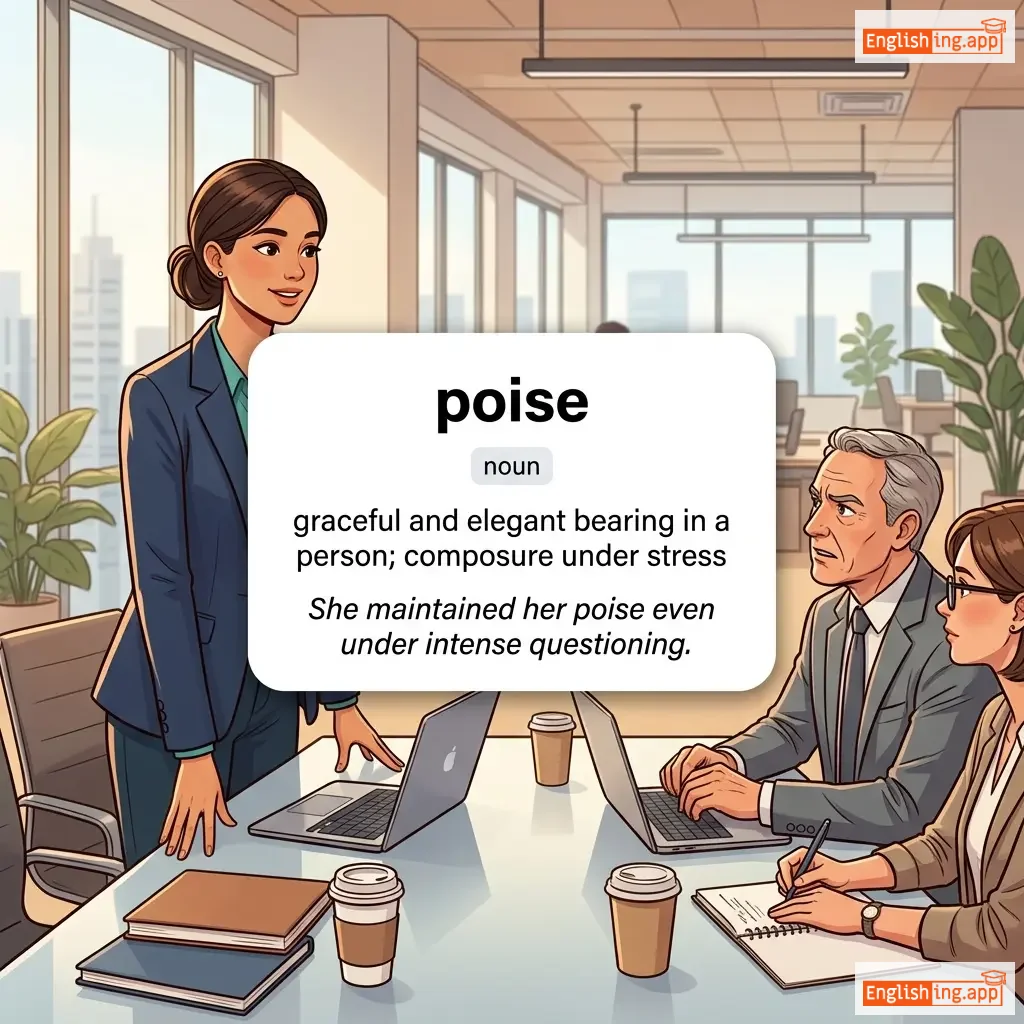
poise definition card — visual illustration of the meaning
noun
/pɔɪz/
優雅, 落ち着き, 姿勢 (yūga, ochitsuki, shisei)

graceful and elegant bearing in a person; composure under stress

"She maintained her poise even under intense questioning."

"彼女は激しい尋問の中でも冷静さを保ちました。" (Kanojo wa hageshī jinmon no naka demo reisei-sa o tamochimashita.)
noun
/ˈpɔɪ.zən/
(poizun)

a substance that is capable of causing death or illness

"The snake's bite contains deadly poison."

"蛇の咬傷には致命的な毒が含まれている。" (Hebi no koushou ni wa chimeiteki na doku ga fukumarete iru.)
adjective
/ˈpɔɪzənəs/
有毒な (yūdokuna)

Containing poison; capable of causing illness or death.

"Some mushrooms are highly poisonous."

"いくつかのキノコは非常に有毒です。" (Ikutsuka no kinoko wa hijō ni yūdokudesu.)
verb
/poʊk/
突く (tsuku)

to push something with a finger or a pointed object

"He poked the fire with a stick."

"彼は棒で火を突きました。" (Kare wa bō de hi o tsukimashita.)
adjective
/ˈpoʊ.lər/
極地の、極に関連する (kyokuchi no, kyoku ni kanren suru)

relating to the North or South Pole; opposite in nature or character

"Penguins live in polar regions of the Earth."

"ペンギンは地球の極地に住んでいます。" (Pengin wa chikyū no kyokuchi ni sundeimasu.)
noun
/ˈpoʊ.lər beər/
ホッキョクグマ (hokkyokuguma)

a large white bear that lives in the Arctic regions

"The polar bear swims in the icy Arctic waters."

"ホッキョクグマは寒冷な北極の水域で泳いでいる。" (Hokkyokuguma wa kanrei na hokkyoku no suii de oyoideiru.)
noun
/poʊˈlær.ɪ.ti/
極性 (kyokusei)

the state of having two opposite or contradictory tendencies, opinions, or aspects

"The polarity between the two political parties is growing stronger."

"二つの政治党派の間の極性は強くなりつつあります。" (Futatsu no seiji touha no aida no kyokusei wa tsuyoku nari tsutsu arimasu.)