語彙集

英単語辞書 | 単語の意味、定義、例文

adjective
/ˈplændʒənt/
哀愁を帯びた、または響く音 (aishū o obita, matawa hibiku oto)

having a loud, mournful sound; resonant

"The plangent toll of the church bell echoed through the village."

"教会の鐘の哀愁を帯びた音が村中に響いた。" (Kyōkai no kane no aishū o obita oto ga murajū ni hibita.)
noun
/ˈplænɪsfɪr/
星図盤 (seizu ban)

a rotating star chart used to display the visible stars for any time and date

"The astronomer used a planisphere to identify the constellations."

"天文学者は星座を識別するために星図盤を使用しました。" (Tenmongakusha wa seiza o shikibetsu suru tame ni seizu ban o shiyō shimashita.)
noun
/ˈplænər/
プランナー (purannā)

a person who makes plans or a book used for organizing schedules and tasks

"She uses a daily planner to organize her meetings."

"彼女は会議を整理するために毎日のプランナーを使っています。" (Kanojo wa kaigi o seiri suru tame ni mainichi no purannā o tsukatteimasu.)
planning definition card — visual illustration of the meaning
noun
/ˈplænɪŋ/
計画 (keikaku)

the process of making plans for something

"The planning for the event took months."
"イベントの計画には数ヶ月かかりました。" (Ibento no keikaku ni wa suukagetsu kakarimashita.)
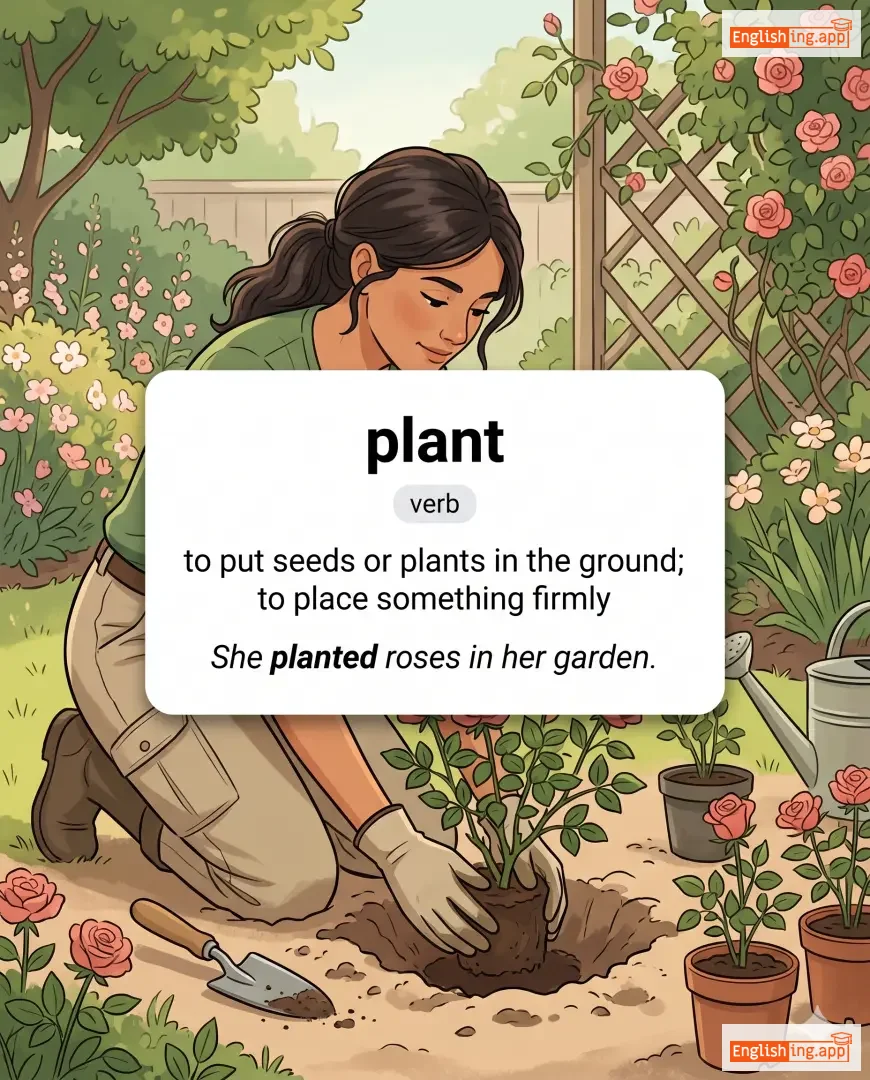
plant definition card — visual illustration of the meaning
noun
/plænt/
植物 (shokubutsu)

a living organism that typically grows in the ground and absorbs nutrients from the soil

"She planted a tree in her garden."

"彼女は自分の庭に木を植えました。" (Kanojo wa jibun no niwa ni ki wo uemashita.)
noun
/ˈplæn.tɪn/
プランテンバナナ (puranten banana)

a large green banana-like fruit that is usually cooked before eating

"Plantain can be fried, boiled, or baked and is a staple food in many tropical countries."

"プランテンバナナは揚げたり、茹でたり、焼いたりでき、多くの熱帯地域では主食です。" (Puranten banana wa agetari, yudetari, yaitari deki, ooku no nettai chiiki de wa shushoku desu)
noun
/ˈplæn.teɪn ˈflaʊ.ər/
プランテンの花 (puranten no hana)

The flower bud of a banana plant, used as a vegetable in cooking

"We cooked plantain flower curry for dinner."

"私たちは夕食にプランテンの花のカレーを作りました。" (watashitachi wa yūshoku ni puranten no hana no karē o tsukurimashita.)
noun
/plænˈteɪʃən/
プランテーション (puranteshion)

a large area of land where crops are grown, often for commercial purposes

"The sugarcane plantation stretched for miles across the valley."

"サトウキビのプランテーションは谷を越えて数マイルも広がっていました。" (Satōkibi no puranteshion wa tani o koete sū mairu mo hirogatte imashita.)
noun
/ˈplæz.mə/
血液の液体部分; 電離したガス; 凝固因子のない血清 (purazuma)

the liquid part of blood; ionized gas; blood serum without clotting proteins

"Blood plasma contains various proteins and nutrients."

"血漿はさまざまなタンパク質や栄養素を含んでいます。" (kesshou wa samazama na tanpakushitsu ya eiyouso o fundeimasu.)
noun, verb
/ˈplɑːstər/
プラスター, 修理する (Purasutā, shūri suru)

a soft mixture applied to walls or used to cover wounds; or to cover or coat with plaster

"The workers plastered the walls to make them smooth."

"作業員たちは壁を滑らかにするためにプラスターを塗った。" (Sagyo-in-tachi wa kabe o nameraka ni suru tame ni purasutā o nutta.)
adjective, noun
/ˈplæstɪk/
プラスチック (purasuchikku)

a synthetic material that can be molded; flexible or easily shaped

"These containers are made of durable plastic."

"これらの容器は耐久性のあるプラスチックで作られています。" (Korera no youki wa taikyuu-sei no aru purasuchikku de tsukurareteimasu.)
plasticity definition card — visual illustration of the meaning
noun
/plæsˈtɪsəti/
可塑性、適応能力 (kasosei, tekiou nouryoku)

the quality of being easily shaped or molded; adaptability

"The brain's plasticity allows it to adapt after injury."

"脳の可塑性により、怪我の後に適応することができます。" (Nou no kasosei ni yori, kega no ato ni tekiou suru koto ga dekimasu.)
noun
/pleɪt/
プレート (purēto)

a flat, typically round dish used for serving food

"She put the salad on the plate."

"彼女はサラダをプレートに乗せました。" (Kanojo wa sarada o purēto ni nose mashita.)
noun
/plæˈtoʊ/
高原、平坦な土地、変化の少ない時期 (kōgen, heitan na tochi, henka no sukunai jiki)

an elevated flat area of land or a period of little change

"After months of growth, sales reached a plateau."
"数ヶ月の成長の後、売上はプラトーに達した。" (Sū kagetsu no seichō no ato, uriage wa puratō ni tasshita.)
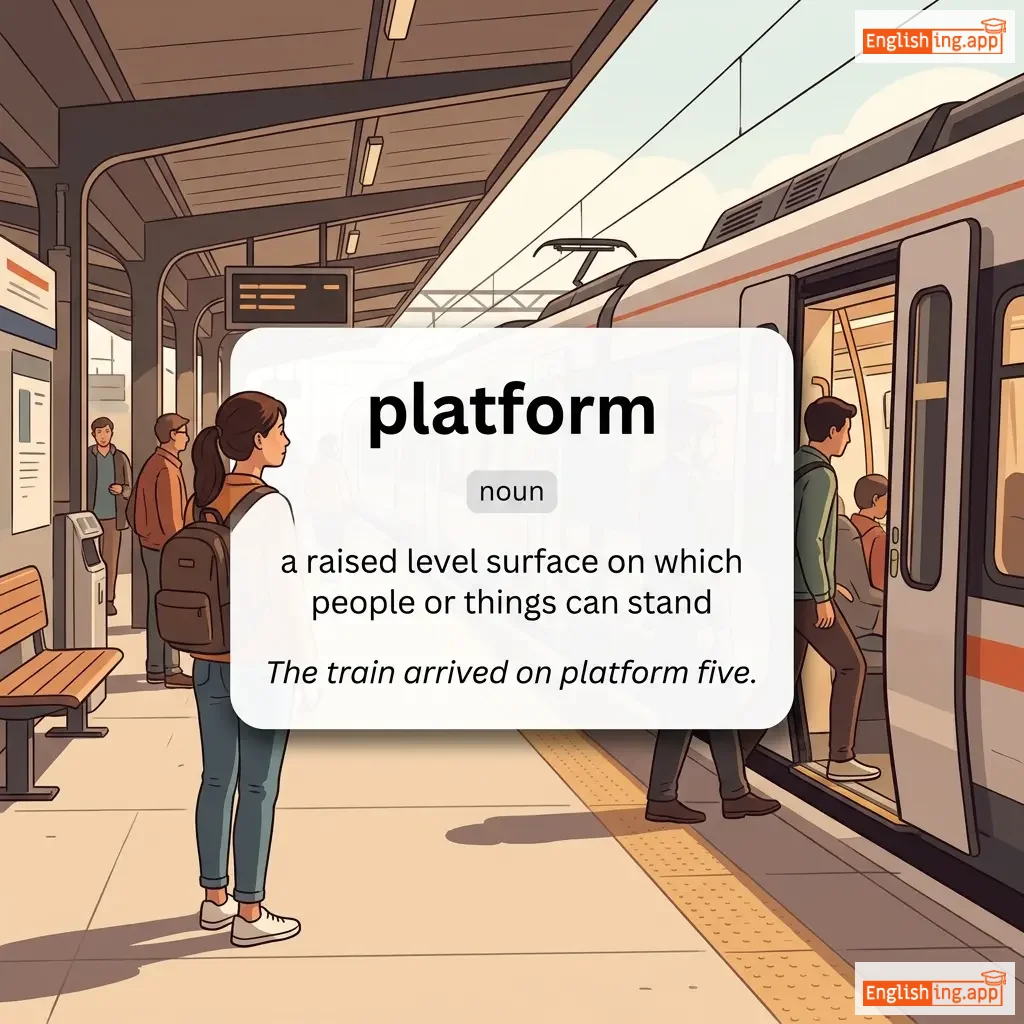
platform definition card — visual illustration of the meaning
noun
/ˈplætfɔːrm/
プラットフォーム (purattofōmu)

a raised level surface on which people or things can stand

"The train arrived on platform five."
"電車はプラットフォーム5に到着しました。" (Densha wa purattofōmu go ni tōchaku shimashita.)
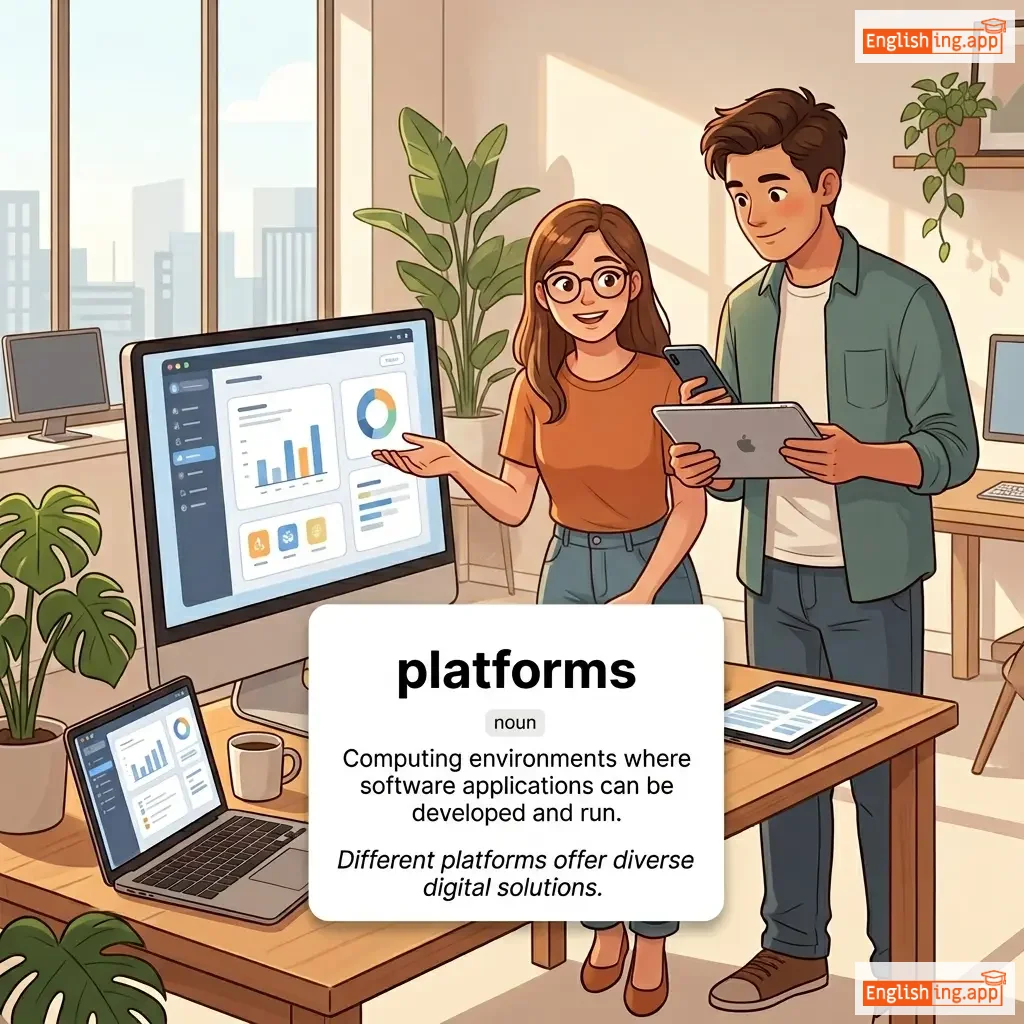
platforms definition card — visual illustration of the meaning
noun
ˈplæt.fɔːrmz
プラットフォーム、ソフトウェアまたはハードウェア環境 (purattofōmu, sofutowea matawa hādowea kankyō)

Computing environments where software applications can be developed and run.

"Different platforms offer diverse digital solutions."

"さまざまなプラットフォームが多様なデジタルソリューションを提供しています。" (Samazama na purattofōmu ga tayō na dejitaru soriūshon o teikyō shiteimasu.)
platitude definition card — visual illustration of the meaning
noun
/ˈplætɪtjuːd/
陳腐な言葉 (chinfu na kotoba)

a remark or statement that is overused and unoriginal

"He kept repeating the same platitudes during the speech."

"彼はスピーチの中で同じプレティチュードを繰り返し続けた。" (Kare wa supīchi no naka de onaji puretichūdo o kurikaeshi tsuzuketa.)
adjective
/pləˈtɒnɪk/
プラトニック (puratonikku)

relating to a close relationship that is not romantic or sexual

"They have a platonic friendship that has lasted for years."

"彼らは長年続いているプラトニックな友情を持っています。" (Karera wa naganen tsuduite iru puratonikku na yūjō o motteimasu.)
noun
/ˈplɔːdɪt/
賞賛 (shōsan)

an expression of praise or approval

"The actor received plaudit for his outstanding performance."

"俳優は彼の優れた演技に対して賞賛を受けました。" (Haiyū wa kare no sugureta enki ni taishite shōsan o ukemashita.)
noun
/ˈplɔːdɪts/
賛辞 (sanji)

expressions of praise or approval

"The scientist received plaudits from the international community."

"その科学者は国際社会から賛辞を受けました。" (Sono kagakusha wa kokusai shakai kara sanji o ukemashita.)
plausibility definition card — visual illustration of the meaning
noun
/ˌplɔː.zəˈbɪl.ə.ti/
信頼性 (shinraisei)

The quality of being reasonable or probable.

"The plausibility of his explanation convinced the jury."

"彼の説明の信頼性は陪審員を納得させました。" (Kare no setsumei no shinraisei wa baishin'in o nattoku saserimashita.)
plausible definition card — visual illustration of the meaning
adjective
/ˈplɔːzəbl/
もっともらしい (mottomorashii)

seeming reasonable or probable

"Her explanation of the event sounded plausible."
"彼女のイベントの説明はもっともらしく聞こえた。" (Kanojo no ibento no setsumei wa mottomorashiku kikoeta.)
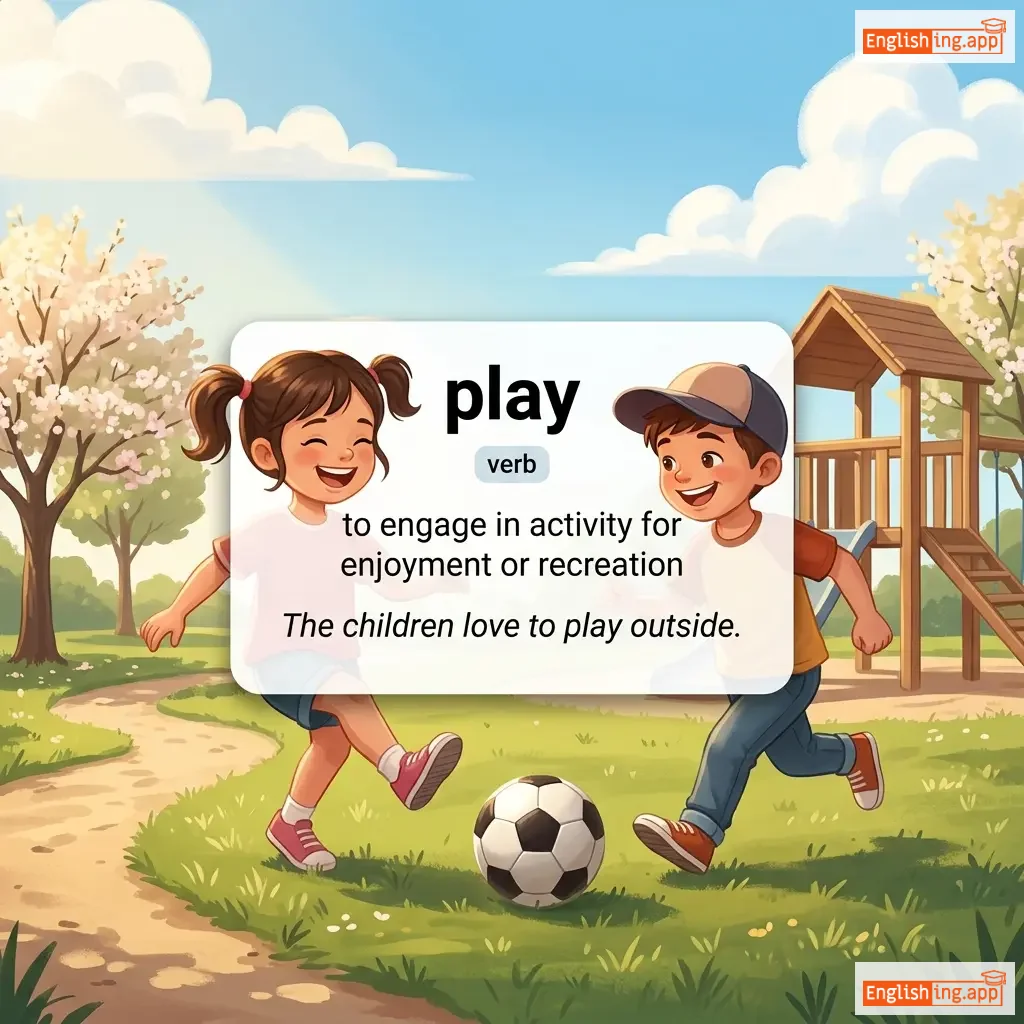
play definition card — visual illustration of the meaning
verb
/pleɪ/
遊ぶ (asobu)

to engage in activity for enjoyment or recreation

"The children love to play outside."

"子供たちは外で遊ぶのが好きです。" (Kodomotachi wa soto de asobu no ga suki desu.)
noun
/ˈpleɪər/
選手 (senshu)

a person who participates in a game or sport

"The player scored the winning goal."

"選手は決勝ゴールを決めました。" (Senshu wa kesshō gōru o kimemashita.)
adjective
/ˈpleɪfəl/
遊び好きな, 活発な (asobi sukina, kappatsu na)

full of fun and high spirits; lively

"The puppy was very playful, running around the garden."

"子犬はとても遊び好きで、庭を走り回っていました。" (Koinu wa totemo asobi sukide, niwa wo hashirimawatte imashita.)
noun
/ˈpleɪˌɔːf/
チャンピオン決定戦 (chanpion ketteisen)

a series of games played to determine a champion among top teams

"The team qualified for the playoffs after a strong season."

"チームは強いシーズン後にプレーオフに進出しました。" (Chiimu wa tsuyoi shiizun go ni pureofu ni shinshutsu shimashita.)
noun
/ˈpleɪˌraɪt/
劇作家 (gekisakka)

a person who writes plays

"Shakespeare is considered the greatest playwright of all time."

"シェイクスピアはすべての時代で最も偉大な劇作家と見なされています。" (Sheikusupia wa subete no jidai de mottomo idaina gekisakka to minasareteimasu.)
noun
/pliː/
請願、申請 (seigan, shinsei)

a request or appeal, especially in a legal context

"The defendant entered a guilty plea in court."

"被告人は法廷で有罪の申し立てをしました。" (Hikokunin wa hōtei de yūzai no mōshitate o shimashita.)
plead definition card — visual illustration of the meaning
verb
/pliːd/
懇願する、法廷で発言する (konkan suru, houtei de hatsugen suru)

to make an emotional or earnest request; to state in court

"She pleaded with him to stay."

"彼女は彼に滞在するようにお願いしました。" (Kanojo wa kare ni taizai suru yō ni onegai shimashita.)
adjective
/ˈplɛzənt/
楽しい、快適な (tanoshii, kaitekina)

giving a sense of happiness, enjoyment, or satisfaction

"We had a pleasant evening at the park."

"私たちは公園で楽しい夜を過ごしました。" (Watashitachi wa kōen de tanoshī yoru o sugoshimashita.)
noun
/ˈplez.ən.tri/
社交辞令 (shakōjōjirei)

a remark made in order to be polite or friendly; light conversation or jokes

"They exchanged pleasantries before the meeting began."

"彼らは会議が始まる前に社交辞令を交わした。" (Karera wa kaigi ga hajimaru mae ni shakōjōjirei o kawashita.)
verb
/pliːz/
喜ばせる (yorokobaseru)

to make someone happy or satisfied

"She will do anything to please her parents."

"彼女は両親を喜ばせるために何でもするでしょう。" (Kanojo wa ryōshin o yorokobaseru tame ni nandemo suru deshō.)
adjective
/pliːzd/
満足 (manzoku)

feeling happy or satisfied with something

"She was pleased with her exam results."

"彼女は試験の結果に満足していました。" (Kanojo wa shiken no kekka ni manzoku shiteimashita.)
adjective
/ˈplɛʒərəbl/
楽しませる、快適な (tanoshimaseru, kaiteki na)

giving pleasure or enjoyment

"Reading a good book is a pleasurable activity."

"良い本を読むことは楽しい活動です。" (Yoi hon o yomu koto wa tanoshī katsudō desu.)
noun
/ˈplɛʒər/
喜び (yorokobi)

a feeling of happiness or enjoyment

"It was a pleasure to meet you."

"お会いできて嬉しかったです。" (Oai dekite ureshikatta desu.)
noun, verb
/pliːt/
プリーツ (purītsu)

a fold in fabric made by doubling the material back upon itself

"She added a pleat to the skirt for extra volume."

"彼女はスカートにボリュームを加えるためにプリーツを入れました。" (Kanojo wa sukāto ni boryūmu o kuwaeru tame ni purītsu o iremashita.)
adjective, noun
/pləˈbiːən/
一般の人 (ippan no hito)

common, ordinary, or belonging to the lower social classes

"The festival was enjoyed by both plebeian and noble citizens."

"祭りは、平民と貴族市民の両方に楽しませられました。" (Matsuri wa, heimin to kizoku shimin no ryōhō ni tanoshima se raremashita.)
adjective, noun
/pləˈbiːən/
一般的な、平民の (ippantekina, heimin no)

alternate spelling of 'plebeian'; common or ordinary

"His tastes were rather plebian, favoring simple food and clothes."

"彼の趣味はかなり一般的で、シンプルな食べ物と服を好んでいました。" (Kare no shumi wa kanari ippanteki de, shinpuru na tabemono to fuku o kononde imashita.)
noun
/ˈplɛbɪsaɪt/
国民投票 (kokumin touhyou)

a direct vote by the electorate on an important public question

"The government held a plebiscite to decide on the new constitution."

"政府は新しい憲法について決定するために国民投票を実施しました。" (Seifu wa atarashii kenpou ni tsuite kettei suru tame ni kokumin touhyou wo jisshi shimashita.)
noun
/plɛdʒ/
誓約 (seiyaku)

a solemn promise or agreement to do or refrain from doing something

"He gave a pledge to support the cause."

"彼はその原因を支援するために誓約を立てた。" (Kare wa sono gen'in o shien suru tame ni seiyaku o tateta.)
noun
/ˈplɛdʒiː/
担保として何かを譲渡された人物 (tābo toshite nanika o jōto sareta jinbutsu)

a person to whom something is pledged or given as security

"The bank is the pledgee of the collateral until the loan is repaid."

"銀行はローンが返済されるまで担保の債権者です。" (Ginkō wa rōn ga hensai sareru made tābo no saiken-sha desu.)
noun
/ˈplɛdʒɔːr/
保証人 (hoshonin)

a person who gives or offers a pledge or security

"The bank accepted the jewelry from the pledgeor as collateral for the loan."

"銀行は貸付の担保として保証人から宝石を受け入れました。" (Ginkou wa kashitsuke no tanpo toshite hoshonin kara houseki o ukeiremashita.)
adjective
/ˈpliːnəri/
全体の (zentai no)

complete in every way; fully attended or absolute

"The committee held a plenary session to discuss all matters of importance."

"委員会はすべての重要な問題について議論するために全体会議を開いた。" (Iinkai wa subete no jūyōna mondai ni tsuite giron suru tame ni zentai kaigi o hiraita.)
noun
/ˌpliːnɪpəˈtɛnʃəri/
全権大使 (zenken taishi)

a person invested with full power to act on behalf of another, especially in diplomacy

"The ambassador was a plenipotentiary sent to negotiate the treaty."

"大使は条約交渉のために派遣されたプレニポテンシャリーでした。" (Taishi wa jōyaku kōshō no tame ni haken sareta plenipotentiary deshita.)
noun
/ˈplɛnɪtjuːd/
充実 (jūjitsu)

the condition of being full or abundant; a great quantity

"The garden was a plenitude of flowers in spring."

"春に庭は花の充実でした。" (Haru ni niwa wa hana no jūjitsu deshita.)
adjective
/ˈplɛntɪəs/
豊富 (houfu)

existing in great quantity; abundant

"The harvest was plenteous, providing enough food for the entire village."

"収穫は豊富で、村全体に十分な食料を提供しました。" (Shuukaku wa houfu de, mura zentai ni juubun na shokuryou o teikyou shimashita.)
adjective
/ˈplɛntɪfəl/
豊富な (hōfu na)

Existing in great quantity; abundant.

"Food and water were plentiful in the village."

"村では食べ物と水が豊富でした。" (Mura de wa tabemono to mizu ga hōfu deshita.)
noun
/ˈplɛntɪtjuːd/
豊富さ (houfusa)

the condition of being full or abundant

"The garden offered a plentitude of flowers in spring."

"庭園は春に花の豊富さを提供しました。" (Teien wa haru ni hana no houfusa wo teikyou shimashita.)
noun
/ˈplɛnti/
たっぷり (tappuri)

a large or sufficient amount or quantity

"We have plenty of time before the meeting."

"会議の前にたっぷり時間があります。" (Kaigi no mae ni tappuri jikan ga arimasu.)
plethora definition card — visual illustration of the meaning
noun
/ˈplɛθərə/
過剰な量 (kajo na ryo)

an excessive amount of something

"She has a plethora of books on her shelf."

"彼女の棚には過剰な量の本があります。" (Kanojo no tana ni wa kajo na ryo no hon ga arimasu.)