
語彙集

英単語辞書 | 単語の意味、定義、例文

persuasiveness definition card — visual illustration of the meaning
noun
/pərˈsweɪ.sɪv.nəs/
説得力 (settokuryoku)

The quality of being able to persuade someone to do or believe something.

"His persuasiveness helped secure the deal."

"彼の説得力は取引を確実にするのに役立ちました。" (Kare no settokuryoku wa torihiki wo kakujitsu ni suru no ni yakudachimashita.)
adjective
/pɜːrt/
生意気だけど魅力的 (namaiki dakedo miryokuteki)

attractively lively or cheeky in manner or style

"She gave a pert reply that made everyone laugh."

"彼女はみんなを笑わせた生意気な返事をした。" (Kanojo wa minna o warawaseta namaiki na henji o shita.)
verb
/pərˈteɪn/
関係する (kankei suru)

to relate or have reference to something

"The rules pertain to all students in the school."

"その規則は学校のすべての生徒に関係しています。" (Sono kisoku wa gakkō no subete no seito ni kankei shiteimasu.)
adjective
/ˌpɜːrtɪˈneɪʃəs/
頑固な (ganko na)

holding firmly to an opinion, purpose, or course of action; stubbornly persistent

"The pertinacious lawyer refused to give up the case."
"頑固な弁護士は事件を諦めることを拒否しました。" (Ganko na bengoshi wa jiken o akirameru koto o kyohi shimashita.)
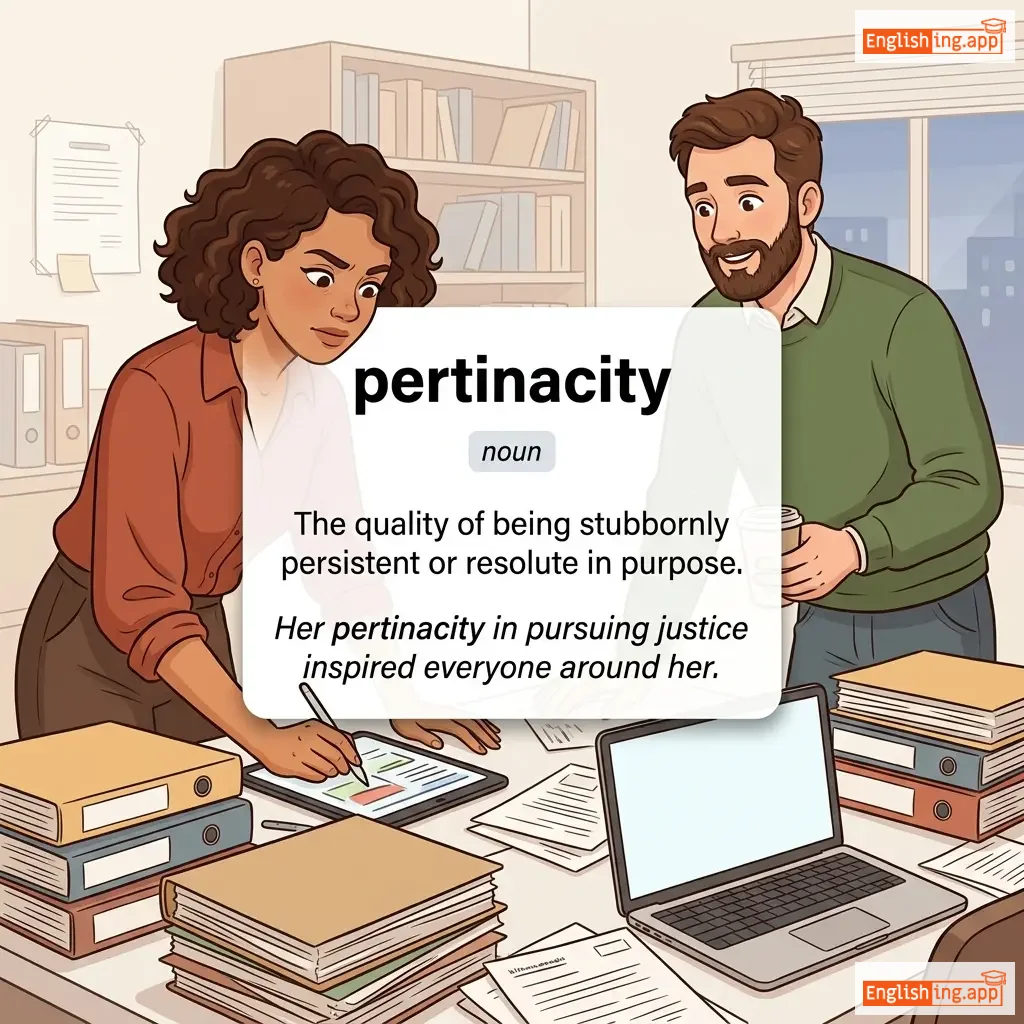
pertinacity definition card — visual illustration of the meaning
noun
/ˌpɜːrtɪˈnæsɪti/
執拗さ (shitsuyosa)

The quality of being stubbornly persistent or resolute in purpose.

"Her pertinacity in pursuing justice inspired everyone around her."

"正義を追求する彼女の執拗さは、周囲の皆を鼓舞した。" (seigi o tsuikyu suru kanojo no shitsuyosa wa, shui no mina o kobu shita)
adjective
/ˈpɜːrtɪnənt/
関連する (kanren suru)

Relevant or applicable to a particular matter.

"She asked a pertinent question during the meeting."

"彼女は会議中に関連する質問をしました。" (Kanojo wa kaigi-chū ni kanren suru shitsumon o shimashita.)
noun
/ˈpɜːrtnəs/
生意気 (namakiki)

boldness or forwardness in speech or behavior; sauciness

"Her pertness during the meeting surprised everyone."

"会議中の彼女の生意気さは、みんなを驚かせた。" (Kaigi-chū no kanojo no namakiki-sa wa, minna o odorokaseta.)
verb
/pərˈtɜːrb/
動揺させる (dōyō saseru)

To disturb or unsettle greatly in mind.

"The sudden noise perturbed the students during the exam."

"突然の音が試験中に学生を動揺させました。" (Totsuzen no oto ga shiken-chū ni gakusei o dōyō saseru mashita.)
noun
/ˌpɜːrtərˈbeɪʃn/
混乱 (konran)

A state of anxiety, disturbance, or disorder.

"The announcement caused a perturbation in the financial markets."

"発表は金融市場に混乱を引き起こしました。" (Happyō wa kin'yū shijō ni konran o hikiokoshimashita.)
adjective
/pərˈtɜːrbd/
動揺した (dōyō shita)

feeling anxious, unsettled, or disturbed

"He looked perturbed after hearing the bad news."

"悪いニュースを聞いた後、彼は動揺しているように見えました。" (Warui nyūsu o kiita ato, kare wa dōyō shite iru yō ni miemashita.)
noun
/pəˈruːzl/
慎重な読書 (shinchou na dokusho)

The action of reading or examining something carefully.

"The contract was given to the lawyer for perusal."

"契約書は弁護士に慎重な読書のために渡されました。" (Keiyaku-sho wa bengoshi ni shinchou na dokusho no tame ni watasaremashita.)
verb
/pəˈruːz/
幸福 (kōfuku)

to read something carefully and thoroughly; sometimes used to mean to browse casually

"She sat down to peruse the contract before signing it."

"彼女は賞を受け取ったとき、その幸せを隠すことができませんでした。" (Kanojo wa shō o uketotta toki, sono kōfuku o kakusu koto ga dekimasen deshita.)
verb
/pəˈveɪd/
広がる (hirogaru)

to spread through and be present in every part of something

"The smell of fresh flowers pervaded the entire room."

"新鮮な花の香りが部屋全体に広がった。" (Shinsen na hana no kaori ga heya zentai ni hirogatta.)
noun
/pəˈveɪʒən/
蔓延 (man'en)

the act of spreading through or being present everywhere in something

"There was a pervasion of hope throughout the community."
"コミュニティ全体に希望の広がりがあった。" (Komyuniti zentai ni kibou no hirogari ga atta.)
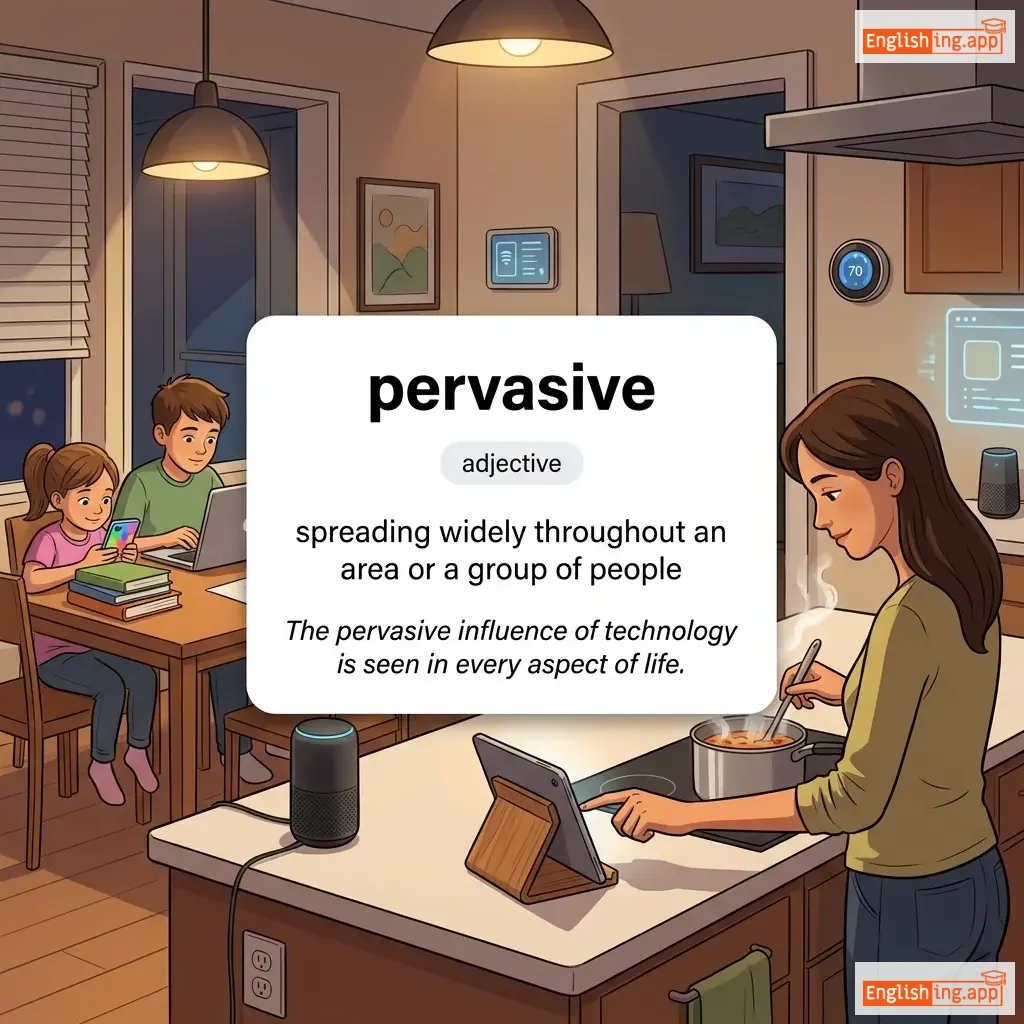
pervasive definition card — visual illustration of the meaning
adjective
/pərˈveɪsɪv/
広範 (kōhan)

spreading widely throughout an area or a group of people

"The pervasive influence of technology is seen in every aspect of life."

"技術の広範な影響は、生活のすべての側面で見られます。" (Gijutsu no kōhan na eikyō wa, seikatsu no subete no sokumen de miraremasu.)
adjective
/pərˈvɜːrs/
倒錯 (tōsaku)

showing a deliberate desire to behave in a way that is unreasonable, contrary, or unacceptable

"He took a perverse pleasure in upsetting his colleagues."

"彼は同僚を困らせることに倒錯した喜びを感じていた。" (Kare wa dōryō o komaraseru koto ni tōsaku shita yorokobi o kanjite ita.)
noun
/pərˈvɜːrʒən/
歪曲 (iwaku)

The act of distorting or corrupting the original meaning, purpose, or state of something.

"The regime’s censorship was seen as a perversion of free speech."

"政権の検閲は、自由な言論の歪曲と見なされていました。" (Seiken no kenetsu wa, jiyūna genron no iwaku to minasa rete imashita.)
noun
/pərˈvɜːrsəti/
反抗 (hankou)

A deliberate and obstinate desire to behave in an unreasonable or unacceptable way.

"Out of sheer perversity, he refused to follow the simple instructions."

"純粋な反抗で、彼は簡単な指示に従うことを拒否した。" (Junsui na hankou de, kare wa kantan na shiji ni shitagau koto o kyohi shita.)
verb/noun
/pərˈvɜːrt/

As a verb: to distort the meaning or purpose of something; as a noun: a person with abnormal or immoral sexual behavior.

"He tried to pervert the truth to escape punishment."

adjective
/ˈpɜːrviəs/
透水性の (tōsuisei no)

Allowing water, air, or other substances to pass through; permeable.

"The soil here is pervious to rainwater."

"ここでは土壌が雨水を通すことができます。" (Koko de wa dojo ga ame mizu o tōsu koto ga dekimasu.)
noun
/ˈpesɪˌmɪzəm/
ペシミズム (peshimizumu)

A tendency to see the worst aspect of things or believe the worst will happen.

"Her constant pessimism made it hard to stay optimistic."

"彼女の絶え間ないペシミズムは、楽観的でいるのを難しくしていた。" (Kanojo no taema nai peshimizumu wa, rakkanteki de iru no o muzukashiku shiteita.)
noun
/ˈpes.ə.mɪst/
悲観主義者 (hikan shugisha)

a person who tends to see the worst aspect of things or believes that the worst will happen; someone who lacks hope or confidence in the future

"Being a pessimist, he always expected the worst outcome."
"悲観主義者として、彼はいつも最悪の結果を期待していました。" (hikan shugisha toshite, kare wa itsumo saiaku no kekka o kitai shite imashita)
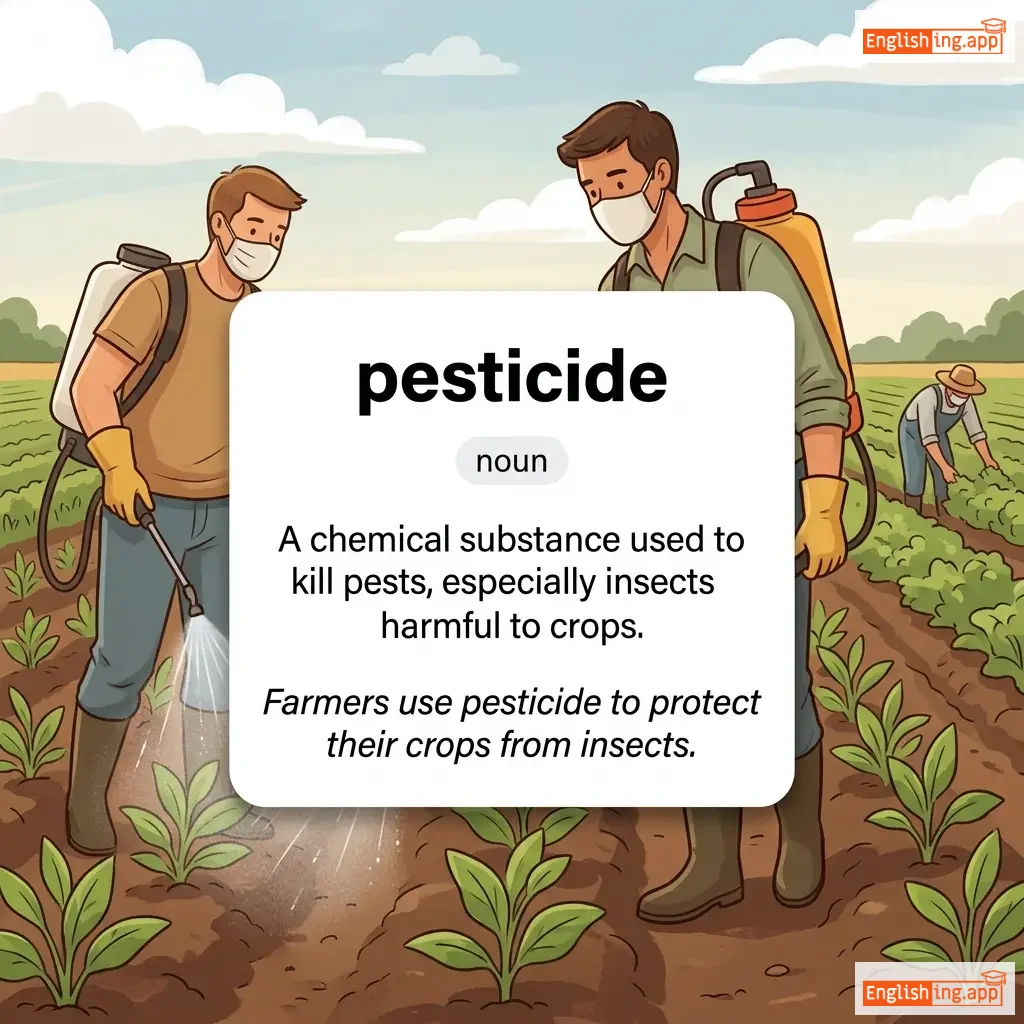
pesticide definition card — visual illustration of the meaning
noun
/ˈpɛstɪsaɪd/
殺虫剤 (satchūzai)

A chemical substance used to kill pests, especially insects harmful to crops.

"Farmers use pesticide to protect their crops from insects."
"農家は昆虫から作物を守るために殺虫剤を使います。" (Nōka wa konchū kara sakumotsu o mamoru tame ni satchūzai o tsukaimasu.)
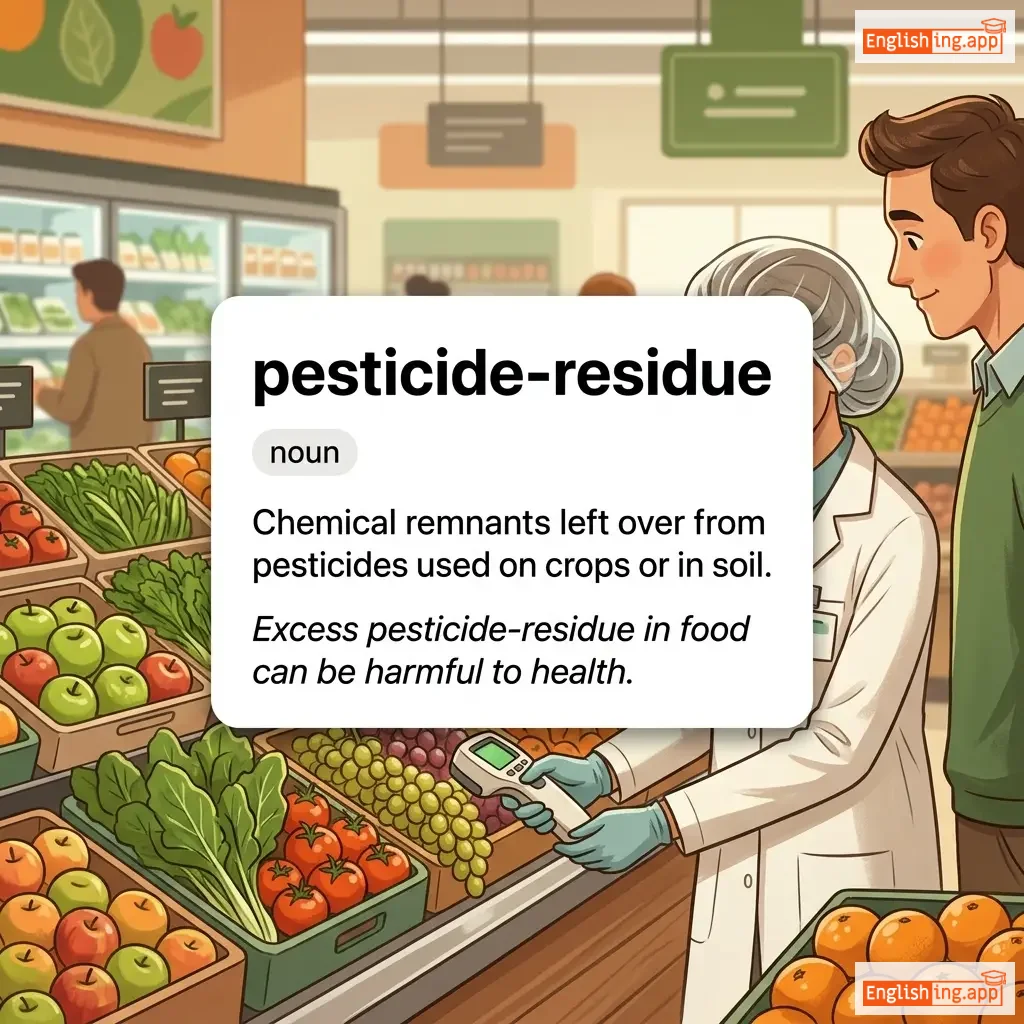
pesticide-residue definition card — visual illustration of the meaning
noun
/ˈpɛs.tɪ.saɪd ˈrɛz.ɪ.djuː/
農薬残留物 (nouyaku zanryūbutsu)

Chemical remnants left over from pesticides used on crops or in soil.

"Excess pesticide-residue in food can be harmful to health."
"食物中の農薬残留物が過剰だと健康に害を与える可能性があります。" (Shokumotsu-chuu no nouyaku zanryūbutsu ga kajou da to kenko ni gai wo ataeru kanousei ga arimasu.)
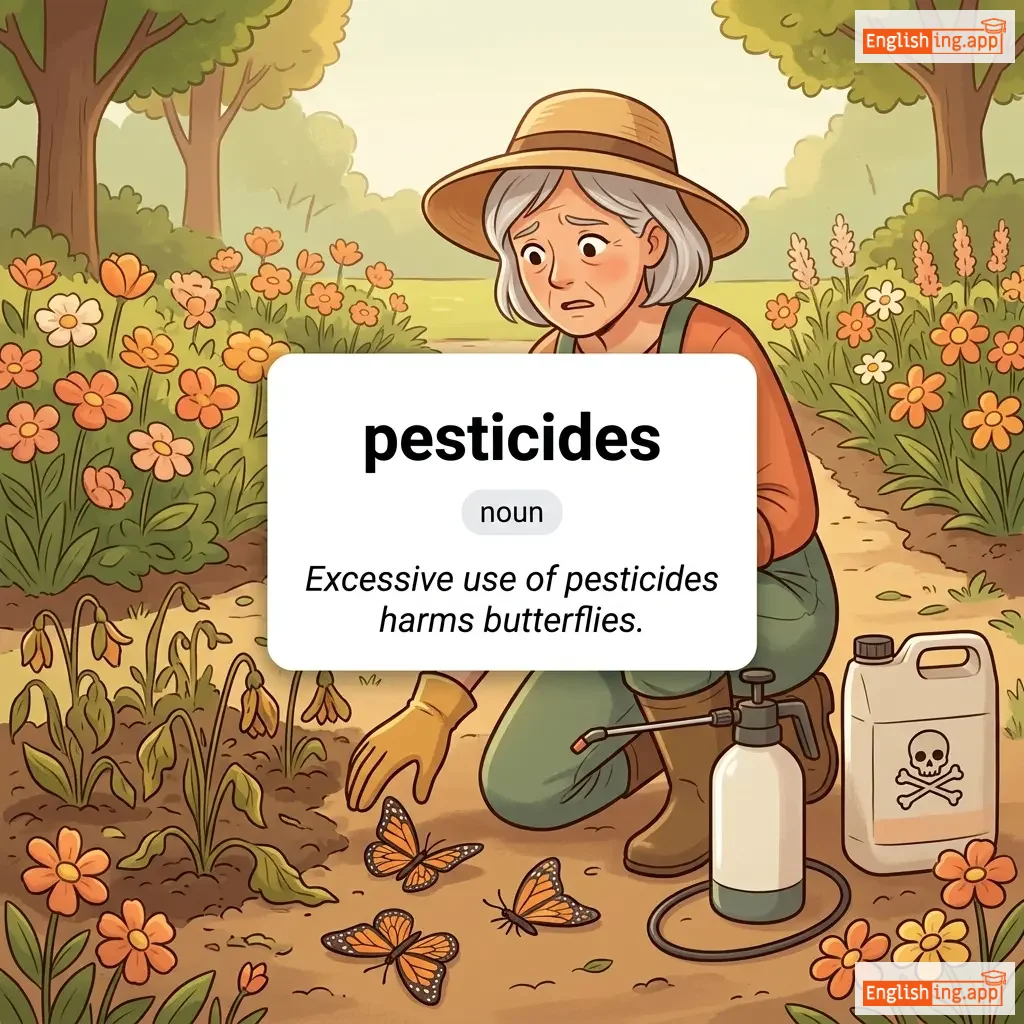
pesticides definition card — visual illustration of the meaning
noun
ˈpɛstɪsaɪdz
農薬 (nōyaku)

Chemical substances used to kill pests, but harmful to beneficial insects like butterflies.

"Excessive use of pesticides harms butterflies."

"農薬の過剰使用は蝶に害を及ぼす。" (Nōyaku no kajō shiyō wa chō ni gai o oyobosu.)
noun
/ˈpɛstɪləns/
ペスト (pesuto)

A deadly or virulent epidemic disease that spreads rapidly.

"The medieval city was devastated by a pestilence."

"中世の都市はペストで荒廃した。" (Chūsei no toshi wa pesuto de kōhai shita.)
adjective
/ˈpɛstɪlənt/
有害 (yūgai)

Causing or tending to cause death or destruction; harmful or pernicious.

"The pestilent atmosphere of the swamp made people sick."

"沼地の有害な雰囲気が人々を病気にさせた。" (Numachi no yūgai na fun'iki ga hitobito o byōki ni saseta.)
adjective
/ˌpɛstɪˈlɛnʃəl/
疫病の (ekibyou no)

Relating to or causing pestilence; very harmful, troublesome, or dangerous.

"The pestilential smell of the garbage filled the street."

"ゴミのペスティレンシャルな匂いが通りを満たした。" (Gomi no pesutirensharuna nioi ga toori o mitashita.)
noun
/ˈpɛsəl/
(kine)

A heavy tool with a rounded end used for crushing or grinding substances in a mortar.

"She used a pestle to grind the spices."
"彼女はスパイスを挽くために杵を使いました。" (Kanojo wa supaisu o hiku tame ni kine o tsukaimashita.)
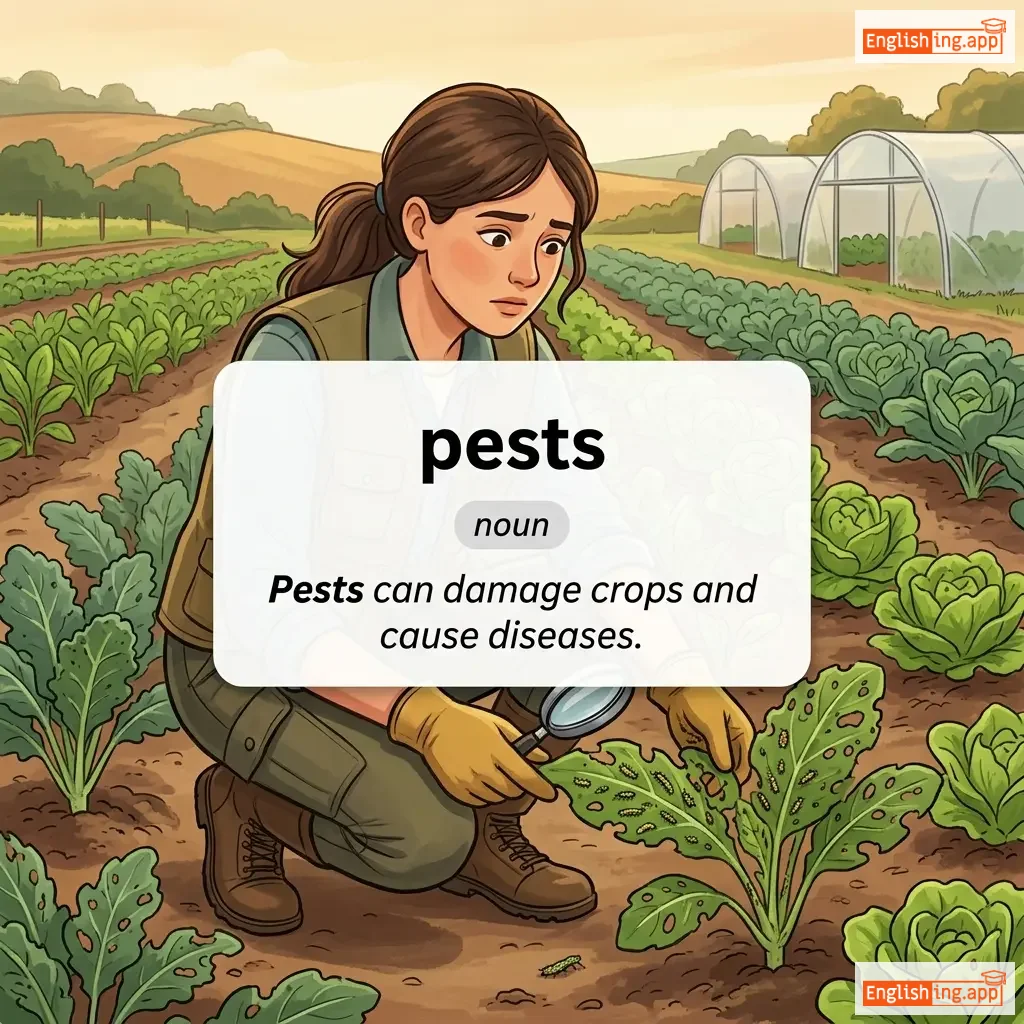
pests definition card — visual illustration of the meaning
noun
pɛsts
害虫, 害を及ぼす動物 (gaichou, gai o oyobosu doubutsu)

Harmful or troublesome creatures, especially insects or small animals that damage crops, food, or living spaces.

"Pests can damage crops and cause diseases."

"害虫は作物を損傷し、病気を引き起こす可能性があります。" (Gaichou wa sakumotsu o sonshou shi, byouki o hikiokosu kanousei ga arimasu.)
noun
/pɛt/
ペット (petto)

a domesticated animal kept for companionship or pleasure

"My dog is my favorite pet."

"私の犬は私のお気に入りのペットです。" (Watashi no inu wa watashi no okiniiri no petto desu.)
noun
/ˈpetəl/
花弁 (kaben)

One of the colored segments of a flower that forms the corolla

"Each petal of the daisy was white with a yellow center."

"デイジーの各花弁は白で、中央は黄色でした。" (deiji no kaku kaben wa shiro de, chuuou wa kiiro deshita)
verb
/ˈpiːtər/
次第に弱まる (shidai ni yowamaru)

to diminish gradually and come to an end; to fade or dwindle away

"The excitement of the event began to peter out after a few hours."

"イベントの興奮は数時間後に次第に収束し始めた。" (Ibento no kōfun wa sū jikan go ni shidai ni shūsoku shi hajimeta.)
noun
/pəˈtɪʃən/
請願書 (seigan-sho)

a formal written request, typically signed by many people, appealing to authority about a cause

"They signed a petition to improve road safety in the area."

"彼らはその地域の道路安全を改善するために請願書に署名しました。" (Karera wa sono chiiki no dōro anzen o kaizen suru tame ni seigan-sho ni shomei shimashita.)
verb
/ˈpɛtrɪfaɪ/
石化する (sekika suru)

to make someone so frightened that they are unable to move or think; to turn into stone

"The loud noise petrified the little child."

"大きな音は小さな子供を石化させた。" (Ōkina oto wa chiisana kodomo o sekika saseta.)
noun
/ˈpɛtrəˌɡræf/
岩石の説明 (ganseki no setsumei)

a description or representation of rocks, especially in detailed scientific writing

"The scientist studied the petrograph to understand the rock composition."

"科学者は岩石の組成を理解するためにペトログラフを研究しました。" (Kagakusha wa ganseki no kousei wo rikai suru tame ni petorogurafu wo kenkyuu shimashita.)
noun
/ˈpetɪkoʊt/
ペチコート (pechikōto)

an undergarment worn by women under a dress or skirt

"She wore a white petticoat under her dress."

"彼女はドレスの下に白いペティコートを着ていました。" (Kanojo wa doresu no shita ni shiroi pechikōto o kite imashita.)
verb
/ˈpɛtɪˌfɒɡ/
些細なことで議論する (sasaina koto de giron suru)

to argue or quibble over trivial matters; to engage in petty, dishonest practices

"The lawyer was accused of trying to pettifog instead of addressing the real issue."

"弁護士は本当の問題に取り組む代わりに、些細なことで議論していると非難されました。" (Bengoshi wa hontō no mondai ni torikumu kawari ni, sasaina koto de giron shite iru to hinan saremashita.)
adjective
/ˈpɛti/
些細な (sasai na)

Of little importance or trivial; also describes a person overly concerned with small or unimportant matters.

"She often gets upset over the most petty things."

"彼女はしばしば些細なことに腹を立てる。" (Kanojo wa shibashiba sasai na koto ni hara o tateru.)
noun
/ˈpɛtjʊləns/
気難しさ (kimuzukashisa)

The quality of being childishly sulky or bad-tempered.

"His petulance during the meeting annoyed everyone."

"会議中の彼のペチュランスはみんなをイライラさせた。" (Kaigi chū no kare no pechuransu wa minna o iraira saseta.)
adjective
/ˈpɛtjʊlənt/
癇癪持ち (kanshaku mochi)

Childishly sulky or bad-tempered.

"The child became petulant when denied more candy."

"子供はキャンディーをもっともらえないと癇癪を起こした。" (Kodomo wa kyandī o motto moraenai to kanshaku o okoshita.)
noun
/ˈfeɪlæŋks/
ファランクス (farankusu)

A group of people or things arranged in a compact, close formation; also an ancient Greek military formation.

"A phalanx of reporters waited outside the courthouse."

"報道陣のファランクスが裁判所の外で待っていた。" (Hōdōjin no farankusu ga saibansho no soto de matte ita.)
noun
/ˈfænˌtæzəm/
幽霊 (yuurei)

an illusion, ghost, or figment of the imagination

"The child claimed to see a phantasm in the old house."

"子供は古い家で幽霊を見たと主張した。" (Kodomo wa furui ie de yuurei o mita to shuchou shita.)
adjective
/ˌfæntæzməˈɡɒrɪkəl/
幻想的な (gensō-teki na)

Having a fantastic, dreamlike, or surreal appearance, often shifting or illusory.

"The movie created a phantasmagorical vision of another world."

"映画はもう一つの世界の幻想的なビジョンを作り出しました。" (Eiga wa mō hitotsu no sekai no gensō-teki na bijon o tsukuridashimashita.)
adjective
/ˌfærɪˈseɪɪkəl/
偽善的な (gizenteki na)

Excessively concerned with formal rules or outward show of morality, often in a hypocritical way.

"His pharisaical behavior made people doubt his sincerity."

"彼の偽善的な行動は、彼の誠実さに疑問を投げかけた。" (Kare no gizenshūteki na kōdō wa, kare no seijitsusa ni gimon o nagekakemashita.)
noun
/ˈfærɪsiː/
偽善者 (gizen-sha)

A member of an ancient Jewish sect; by extension, a self-righteous or hypocritical person.

"He acted like a pharisee, judging others while ignoring his own faults."

"彼はファリサイ人のように振る舞い、他の人々を裁きながら自分の欠点を無視していました。" (Kare wa Farisai-jin no yō ni furu mai, hoka no hitobito o sabaki nagara jibun no ketten o mushi shiteimashita.)
noun
/ˌfɑːrməkəˈpiːə/
薬典 (yakuten)

An official book listing medicinal drugs, their effects, and directions for use.

"The doctor referred to the pharmacopoeia to check the drug's proper dosage."

"医師は薬典を参照して、薬の適切な用量を確認しました。" (Ishi wa yakuten o sanshou shite, kusuri no tekisetsuna youryou o kakunin shimashita.)
noun
/ˈfɑːrməsi/
薬局 (yakkyoku)

A place where medicinal drugs are prepared and sold.

"I went to the pharmacy to buy antibiotics."

"私は抗生物質を買うために薬局に行きました。" (Watashi wa kouseibushitsu o kau tame ni yakkyoku ni ikimashita.)
noun
/feɪz/
段階 (dankai)

a distinct period or stage in a process of development

"We are in the final phase of the project."
"私たちはプロジェクトの最終段階にいます。" (Watashitachi wa purojekuto no saishuu dankai ni imasu.)
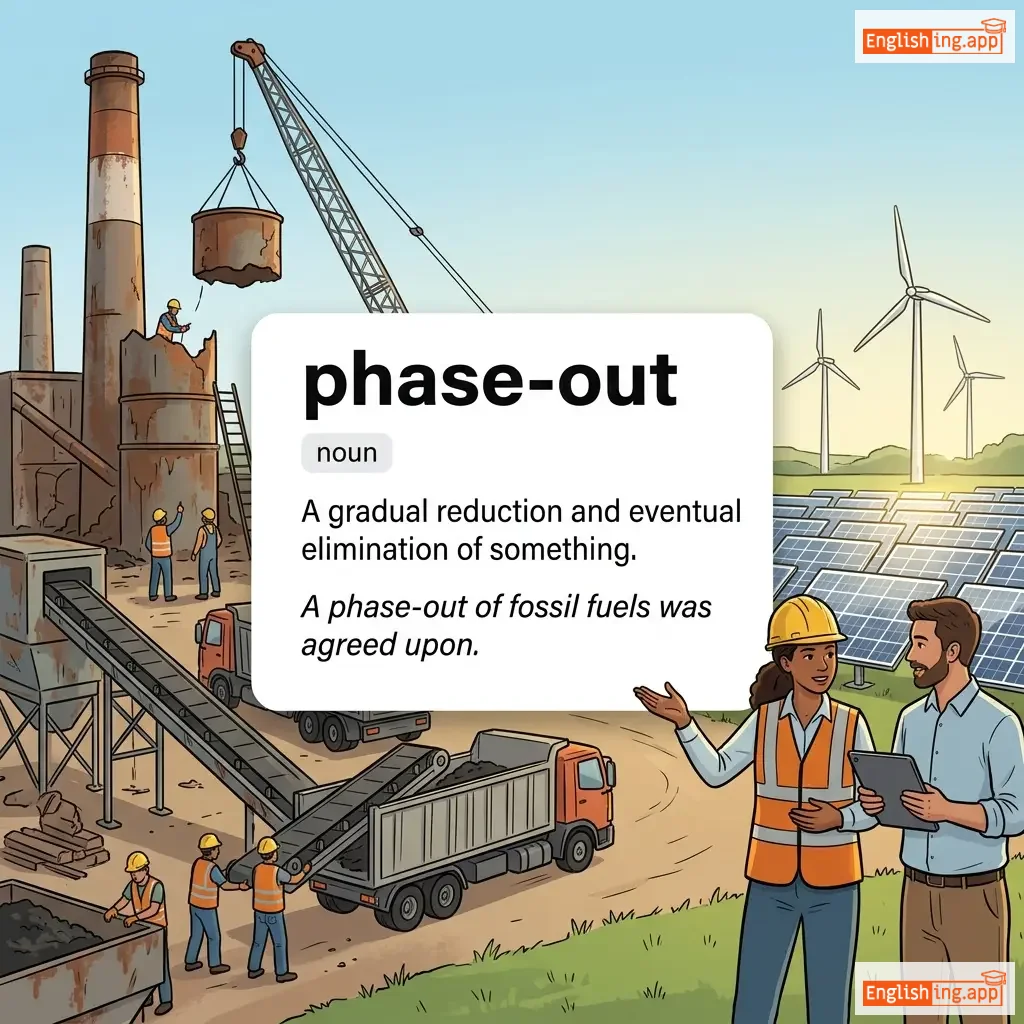
phase-out definition card — visual illustration of the meaning
noun
ˈfeɪz.aʊt
段階的廃止 (dankai-teki haishi)

A gradual reduction and eventual elimination of something.

"A phase-out of fossil fuels was agreed upon."

"化石燃料の段階的廃止が合意されました。" (Kaseki nenryō no dankai-teki haishi ga gōi saremashita.)