語彙集

英単語辞書 | 単語の意味、定義、例文

noun
/ˌluː.mɪˈnɒs.ɪ.ti/
光度 (kōdo)

The intrinsic brightness of a celestial object; the quality of emitting light.

"The luminosity of the star was measured with advanced instruments."
"星の光度は高度な機器で測定されました。" (Hoshi no kōdo wa kōdo na kiki de sokutei saremashita.)
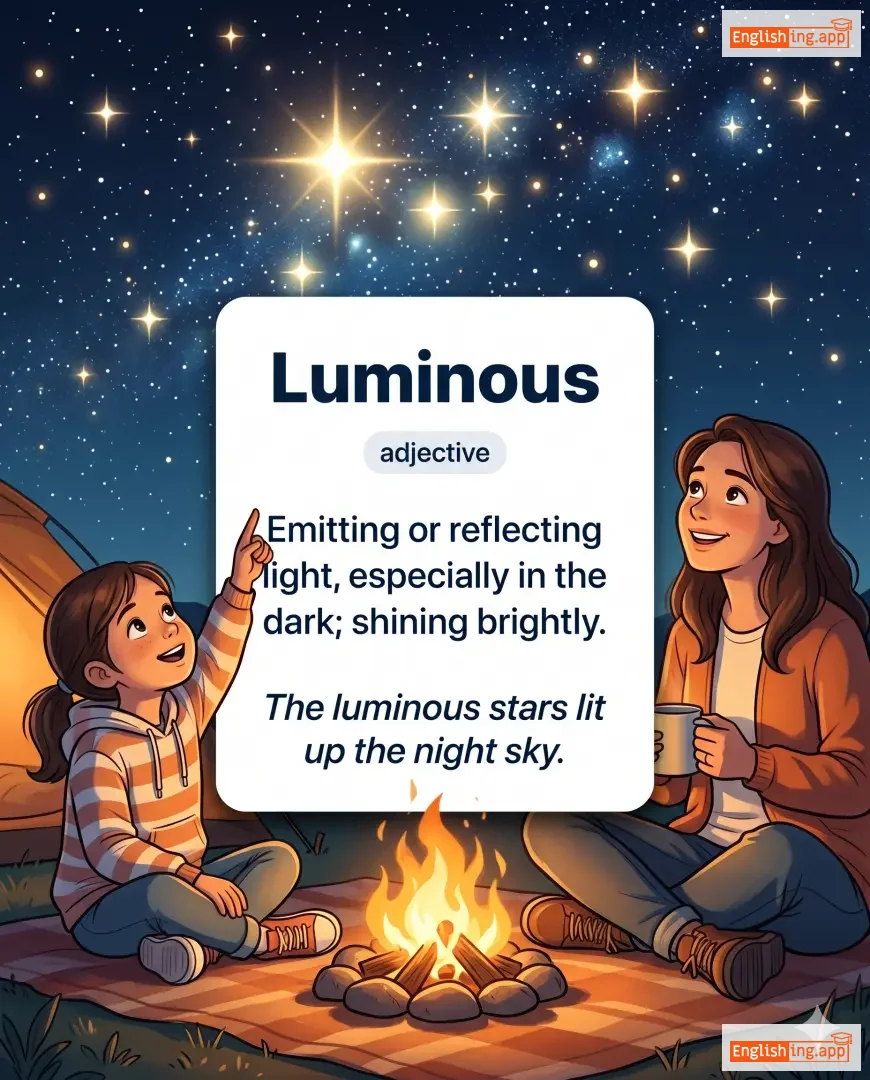
Luminous definition card — visual illustration of the meaning
adjective
/ˈluː.mɪ.nəs/
光輝の (kōki no)

Emitting or reflecting light, especially in the dark; shining brightly.

"The luminous stars lit up the night sky."

"光輝の星々が夜空を照らした。" (Kōki no hoshiboshi ga yozora o terashita.)
noun
/lʌmp/
かたまり; ぶつかり; こぶ (katamari; butsukari; kobu)

a compact mass of a substance, especially one without a definite or regular shape

"She found a lump of sugar in the bowl."

"彼女はボウルの中で砂糖の塊を見つけました。" (Kanojo wa bōru no naka de satō no katamari o mitsukemashita.)
noun
/ˈluː.nə.si/
狂気 (kyouki)

Extreme foolishness or madness; insanity.

"It was sheer lunacy to go hiking in the storm."

"嵐の中でハイキングに行くのは完全に狂気でした。" (Arashi no naka de haikingu ni iku no wa kanzen ni kyouki deshita.)
adjective
/ˈluː.nər/
月面の (geken no)

Relating to the moon.

"The astronauts collected lunar samples during their mission."

"宇宙飛行士はミッション中に月面のサンプルを収集しました。" (Uchū hikōshi wa misshon-chū ni geken no sanpuru o shūshū shimashita.)
noun
/ˈluːnər ɪˈklɪps/
月食 (gesshoku)

an astronomical event when the Earth passes between the Sun and Moon, casting a shadow on the Moon

"We watched the lunar eclipse through telescopes last night."

"私たちは昨晩望遠鏡で月食を見ました。" (Watashitachi wa sakuban bouenkyou de gesshoku wo mimashita)
noun/adjective
/ˈluː.nə.tɪk/
狂人 (kyoujin)

A person who is insane or acting in a foolish or reckless way; also used as an adjective meaning insane.

"The driver was driving like a lunatic on the highway."

"運転手は高速道路で狂人のように運転していた。" (Untenshu wa kousokudouro de kyoujin no you ni unten shite ita.)
noun
/lʌntʃ/
昼食 (chuushoku)

a meal eaten in the middle of the day

"We usually have lunch at 1 p.m."

"私たちは通常、午後1時にランチを食べます。" (Watashitachi wa tsuujou, gogo 1-ji ni ranchi o tabemasu.)
noun
/luːn/
三日月 (mikazuki)

A crescent-shaped figure formed by two intersecting arcs; also means 'moon' in French.

"The mathematician studied the properties of the lune."

"数学者は三日月の特性を研究しました。" (Sūgakusha wa mikazuki no tokusei o kenkyū shimashita.)
noun
/lʌŋ/
(hai)

Either of the two organs in the chest that are responsible for breathing and exchanging oxygen and carbon dioxide.

"Smoking can seriously damage your lungs."

"喫煙はあなたの肺に深刻なダメージを与える可能性があります。" (Kitsuen wa anata no hai ni shinkoku na damēji o ataeru kanōsei ga arimasu.)
noun
/ˈlʊŋ.gi/
ルンギ (rungi)

a traditional garment worn around the waist in South Asia

"He wore a comfortable lungi while relaxing at home."

"彼は家でくつろいでいるときに快適なルンギを着ていました。" (Kare wa ie de kutsuroide iru toki ni kaiteki na rungi o kite imashita.)
🤢

lurch

verb, noun
/lɜːrtʃ/

to make an abrupt, unsteady, or uncontrolled movement; a sudden movement or stagger

"The bus lurched forward as the driver hit the brakes."

verb
/lʊər/
誘惑する (yūwaku suru)

to attract or tempt someone, often by offering something appealing

"The advertisement lured customers with promises of discounts."

"広告は割引の約束で顧客を引き寄せました。" (Kōkoku wa waribiki no yakusoku de kokyaku o hikiyosemashita.)
adjective
/ˈljʊərɪd/
衝撃的で生々しいセンセーショナル (shōgeki-teki de namamashī sensēshonaru)

shocking or sensational in a vivid way, often involving crime or violence

"The newspaper published a lurid account of the crime."

"新聞は犯罪について衝撃的な詳細を掲載した。" (Shimbun wa hanzai ni tsuite shōgeki-teki na shōsai o keisai shita.)
verb
/lɜːrk/
潜む (hisomu)

to remain hidden so as to wait for an opportunity to attack or observe

"A stranger lurked in the shadows."

"見知らぬ人が影の中に潜んでいた。" (Mishiranu hito ga kage no naka ni hison de ita.)
adjective
/ˈlʌʃəs/
美味しい (oishii)

deliciously sweet or rich; highly appealing to the senses

"She served a luscious chocolate cake."

"彼女は美味しいチョコレートケーキを出しました。" (Kanojo wa oishii chokoreeto keeki o dashimashita.)
adjective
/lʌʃ/
豊かで豊富で贅沢な、特に植物に関して (yutaka de hōfu de zeitakuna, tokuni shokubutsu ni kanshite)

rich, abundant, and luxurious, especially referring to vegetation

"The valley was filled with lush green fields."

"谷は緑豊かな畑で満たされていました。" (tani wa midori yutakana hatake de mitasareteimashita.)
noun
/lʌst/
欲望 (yokubou)

a very strong sexual desire or an intense craving for something

"His mind was clouded by lust for power."

"彼の心は権力への欲望に覆われていた。" (kare no kokoro wa kenryoku e no yokubou ni owarete ita.)
noun
/ˈlʌstər/
光沢 (koutaku)

a gentle sheen or soft glow, especially from a polished surface

"The diamond had a brilliant luster."
"ダイヤモンドは輝く光沢を持っていた。" (Daiyamondo wa kagayaku koutaku o motte ita.)
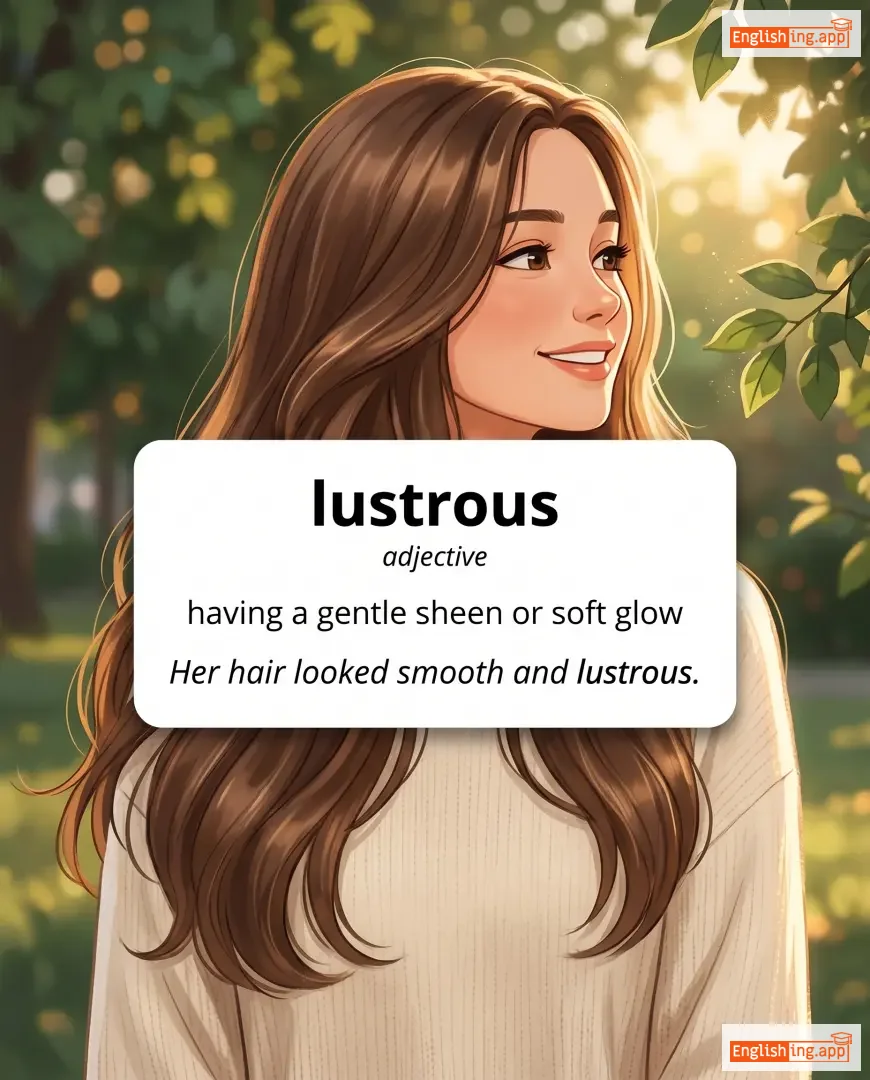
lustrous definition card — visual illustration of the meaning
adjective
/ˈlʌstrəs/
光沢のある (kōtaku no aru)

having a gentle sheen or soft glow

"Her hair looked smooth and lustrous."

"彼女の髪は滑らかで光沢のあるように見えた。" (Kanojo no kami wa nameraka de kōtaku no aru yō ni mieta.)
noun
/lʌɡˈʒʊəriəns/
贅沢 (zeitaku)

abundant growth, richness, or elegance

"The garden was filled with the luxuriance of tropical plants."

"庭は熱帯植物の贅沢で満たされていた。" (Niwa wa nettai shokubutsu no zeitaku de mitasarete ita.)
adjective
/lʌɡˈʒʊəriənt/
豊かな (yutakana)

abundant in growth or richly abundant

"The luxuriant forest was teeming with life."

"豊かな森は命で満ちていた。" (Yutakana mori wa inochi de michite ita.)
verb
/lʌɡˈʒʊrieɪt/
贅沢を楽しむ (zeitaku wo tanoshimu)

to enjoy something in a self-indulgent way; to take pleasure in great comfort

"She luxuriated in the warm bubble bath after a long day."

"長い一日の後、彼女は暖かいバブルバスで贅沢を楽しんでいた。" (Nagai ichinichi no ato, kanojo wa atatakai baburu basu de zeitaku wo tanoshinde ita.)
adjective
/lʌɡˈʒʊəriəs/
豪華な (gouka na)

extremely comfortable, elegant, or enjoyable, often involving great expense

"They stayed in a luxurious hotel during their vacation."

"彼らは休暇中に豪華なホテルに泊まりました。" (Karera wa kyuuka-chuu ni gouka na hoteru ni tomarimashita.)
noun
/ˈlʌkʃəri/
贅沢 (zeitaku)

a state of great comfort or elegance, often involving great expense

"Staying at a five-star hotel is a luxury for most people."

"五つ星ホテルに泊まることは、ほとんどの人にとって贅沢です。" (itsutsu boshi hoteru ni tomaru koto wa, hotondo no hito ni totte zeitaku desu.)
verb
/ˈlaɪɪŋ/
嘘をつく (uso o tsuku)

the act of not telling the truth

"He was caught lying about his grades."

"彼は成績について嘘をついているところを捕まえられました。" (Kare wa seiseki ni tsuite uso o tsuite iru tokoro o tsukamaeraremashita.)
noun
/laɪər/
ライアー (raiaa)

a stringed musical instrument of ancient Greece

"The musician played a melody on the lyre."

"ミュージシャンはライアーでメロディーを演奏しました。" (Miyuujishan wa raiaa de merodii wo ensou shimashita.)
noun
/ˈlɪrɪk/
歌詞 (kashi)

the words of a song or a short poem that expresses personal feelings

"She memorized every lyric of her favorite song."

"彼女はお気に入りの歌の歌詞をすべて覚えていました。" (Kanojo wa okiniiri no uta no kashi o subete oboeteimashita.)