語彙集

英単語辞書 | 単語の意味、定義、例文

adjective
/ɪnˈkɒmp(ə)rəbl/
比類のない (hirui no nai)

Without an equal in quality or excellence; matchless.

"The view from the mountain was incomparable."

"山からの景色は比類のないものでした。" (Yama kara no keshiki wa hirui no nai mono deshita.)
noun
/ˌɪnkəmˌpætəˈbɪlɪti/
非互換性 (hi gokan sei)

the state of being unable to exist or work together harmoniously; lack of compatibility

"The project failed because of incompatibility between the two software systems."

"2つのソフトウェアシステムの非互換性のため、そのプロジェクトは失敗した。" (futatsu no sofutouea shisutemu no hi gokan sei no tame sono purojekuto wa shippai shita)
adjective
/ˌɪnkəmˈpætəbl/
互換性がない (gokan-sei ga nai)

Not able to exist or work together without conflict.

"Their personalities were completely incompatible."

"彼らの性格は完全に互換性がなかった。" (Karera no seikaku wa kanzen ni gokan-sei ga nakatta.)
noun
/ɪnˈkɒmpɪtəns/
無能 (munou)

Lack of ability, skill, or effectiveness in doing something.

"The project failed due to the manager’s incompetence."

"プロジェクトはマネージャーの無能のため失敗しました。" (Purojekuto wa manējā no munou no tame shippai shimashita.)
adjective
/ɪnˈkɒmpɪtənt/

Lacking the necessary ability or skills to do something successfully.

"He was fired because he was incompetent at his job."

adjective
/ˌɪnkəmˈpliːt/
不完全 (fukanzen)

Not finished, lacking some parts or not whole.

"Her report was incomplete and needed further details."

"彼女の報告は不完全で、詳細が必要でした。" (Kanojo no hōkoku wa fukanzen de, shōsai ga hitsuyō deshita.)
noun
/ˌɪnkəmˈpliːtnəs/
不完全さ (fukanzen sa)

the state of not being complete or whole; lack of necessary parts or fullness

"The incompleteness of the report caused delays in the project."

"レポートの不完全さがプロジェクトの遅れを引き起こした。" (repooto no fukanzen sa ga purojekuto no okure o hikiokoshita)
adjective
/ˌɪnkɒmprɪˈhɛnsəbl/
理解不能 (rikai funou)

Impossible or very difficult to understand.

"The professor’s lecture was so fast it became incomprehensible."

"教授の講義は速すぎて理解不能になった。" (Kyoushu no kougi wa hayasugite rikai funou ni natta.)
adjective
/ˌɪnkəmˈprɛsəbl/
圧縮不可能 (asshuku fukanou)

Not able to be pressed or squeezed into a smaller space.

"Liquids are generally considered incompressible."

"液体は通常、圧縮不可能と見なされます。" (Ekita wa tsūjō, asshuku fukanō to minasarerumasu.)
adjective
/ˌɪnkənˈsiːvəbl̩/
想像できない (souzou dekinai)

Impossible to imagine or believe; beyond comprehension.

"It seemed inconceivable that she could finish the marathon after such little training."

"彼女があれほどのトレーニングでマラソンを完走できるとは想像できなかった。" (Kanojo ga arehodo no toreiningu de marason o kansou dekiru to wa souzou dekinakatta.)
adjective
/ˌɪnkənˈkluːsɪv/
結論が出ていない (ketsuron ga dete inai)

Not leading to a definite result or decision.

"The investigation remained inconclusive due to a lack of evidence."

"証拠の不足により、調査は結論が出ていないままでした。" (Shouko no fusoku ni yori, chousa wa ketsuron ga dete inai mama deshita.)
adjective
/ɪnˈkɒŋɡruənt/
不一致な (fuicchi na)

Not in harmony or keeping with the surroundings or other aspects.

"His casual outfit looked incongruent at the formal dinner."
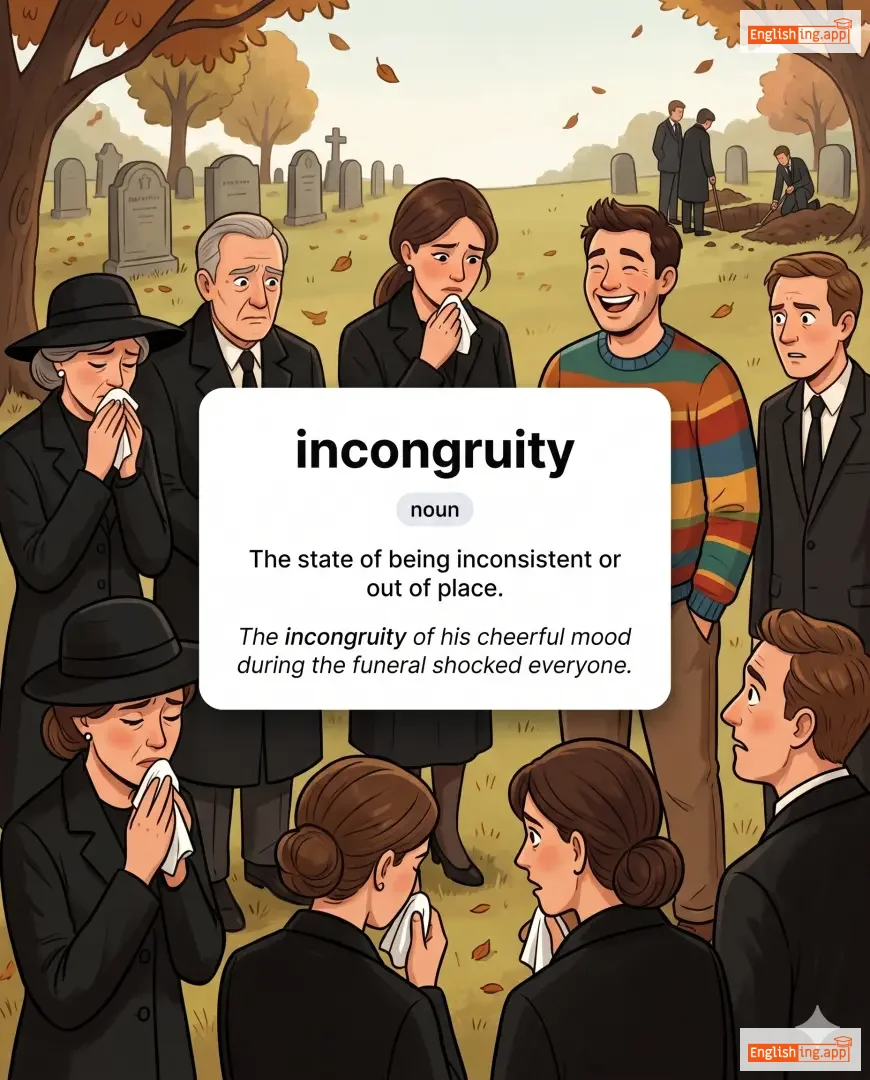
"彼のカジュアルな服装は正式なディナーで不一致に見えた。" (Kare no kajuaru na fukusō wa seishiki na dinā de fuicchi ni mieta.)
incongruity definition card — visual illustration of the meaning
noun
/ˌɪnkənˈɡruːəti/
不一致 (fu ichi)

The state of being inconsistent or out of place.

"The incongruity of his cheerful mood during the funeral shocked everyone."

"葬式の最中に彼の陽気な気分の不一致は、皆を驚かせました。" (Sōshiki no saichū ni kare no yōki na kibun no fu ichi wa, mina o odorokasemashita.)
adjective
/ɪnˈkɒŋɡruəs/
不調和 (fuchouwa)

Not fitting in with or suitable for the surroundings.

"His jokes were incongruous during the serious meeting."
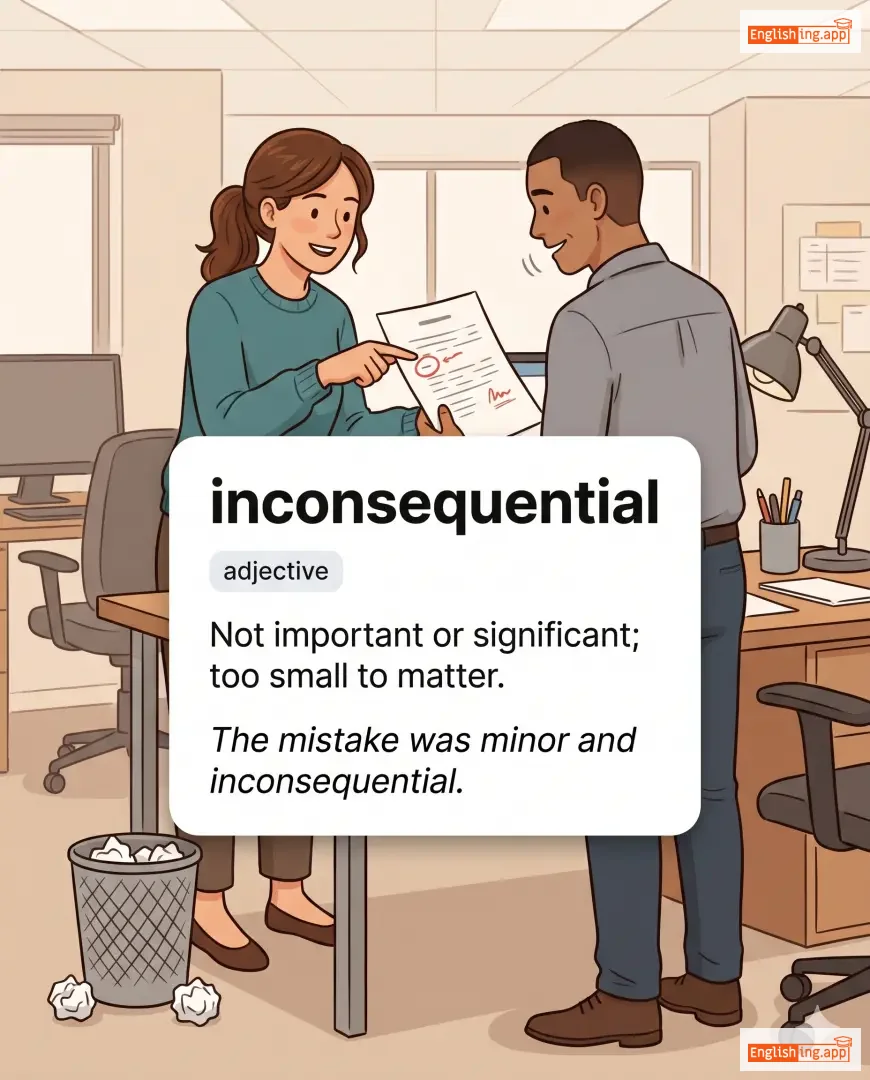
"彼の冗談は真面目な会議では不調和だった。" (Kare no joudan wa majime na kaigi de wa fuchouwa datta.)
inconsequential definition card — visual illustration of the meaning
adjective
/ˌɪnˌkɒnsɪˈkwɛnʃəl/
重要でない (jūyō denai)

Not important or significant; too small to matter.

"The mistake was minor and inconsequential."

"その間違いは小さく、重要ではありませんでした。" (Sono machigai wa chiisaku, jūyō de wa arimasen deshita.)
adjective
/ˌɪnkənˈsɪdərəbl/
取るに足らない (toru ni taranai)

Too small or unimportant to be worth considering.

"The donation was not inconsiderable, though smaller than expected."

"寄付は取るに足らなかったが、予想よりも小さかった。" (Kifu wa toru ni taranakatta ga, yosō yori mo chiisakatta.)
adjective
/ˌɪnkənˈsɪdərət/
思いやりがない (omoiyari ga nai)

Thoughtless; showing a lack of concern for others.

"It was inconsiderate of him to play loud music late at night."

"夜遅くに大きな音で音楽を流すことは、思いやりがない行動でした。" (Yoru osoku ni ookina ondo de ongaku wo nagasu koto wa, omoiyari ga nai kodo deshita.)
noun
/ˌɪnkənˈsɪstənsi/
不一致 (fuitchi)

The quality of being contradictory, irregular, or not staying the same.

"There is an inconsistency between his words and actions."

"彼の言葉と行動には不一致があります。" (Kare no kotoba to kōdō ni wa fuitchi ga arimasu.)
adjective
/ˌɪnkənˈsɪstənt/
一貫性がない (ikkansē ga nai)

Not staying the same throughout; lacking harmony or regularity.

"His answers were inconsistent and confusing."

"彼の答えは一貫性がなく、混乱を招いた。" (Kare no kotae wa ikkansē ga naku, konran o manekita.)
noun
/ɪnˈkɒnstənsi/
不安定さ (fuantesa)

The quality of changing frequently or being unreliable.

"The inconstancy of the weather makes planning difficult."

"天候の不安定さが計画を難しくします。" (Tenkou no fuantesa ga keikaku o muzukashiku shimasu.)
adjective
/ɪnˈkɒnstənt/
不安定な (fuanteina)

frequently changing; not consistent or dependable

"His inconstant moods made it difficult to work with him."

"彼の不安定な気分は彼と仕事をするのを難しくした。" (Kare no fuantei na kibun wa kare to shigoto o suru no o muzukashiku shita.)
adjective
/ɪnˈkɒntɪnənt/
失禁 (shitsukin)

lacking control over urination or defecation; lacking self-restraint

"The patient was incontinent after surgery."

"手術後、患者は失禁していた。" (Shujutsu go, kanja wa shitsukin shite ita.)
adjective
/ˌɪnkɒntrəˈvɜːtəbl/
論争の余地がない (ronsou no yochi ga nai)

impossible to deny or dispute; unquestionable

"The evidence was incontrovertible and proved his innocence."

"その証拠は論争の余地がなく、彼の無罪を証明しました。" (Sono shouko wa ronsou no yochi ga naku, kare no muzai o shoumei shimashita.)
noun, verb
/ˌɪnkənˈviːniəns/
不便 (fuben)

trouble or difficulty caused to someone; to cause trouble or difficulty to someone

"We apologize for any inconvenience caused by the delay."

"遅延によって生じた不便についてお詫びします。" (chien ni yotte shoujita fuben ni tsuite owabi shimasu)
adjective
/ˌɪnkənˈviːniənt/
不便な (fuben na)

causing trouble, difficulties, or discomfort

"It was inconvenient for her to travel during the storm."

"嵐の中で旅行するのは彼女にとって不便だった。" (Arashi no naka de ryokou suru no wa kanojo ni totte fuben datta.)
incorporate definition card — visual illustration of the meaning
verb
/ɪnˈkɔːpəreɪt/
組み込む (kumikomu)

to include something as part of a whole; to form a legal corporation

"The teacher incorporated new technology into her lessons."

"先生は授業に新しい技術を取り入れました。" (Sensei wa jugyo ni atarashii gijutsu o toriiremashita.)
adjective
/ˌɪnkɔːrˈpɔːriəl/
無形 (mukei)

lacking a physical body; not composed of matter; intangible

"Ghosts are often described as incorporeal beings."

"ゴーストはしばしば無形の存在として描かれます。" (Gōsuto wa shibashiba mukei no sonzai toshite egakaremasu.)
adjective
/ɪnkəˈrɛkt/
間違い (machigai)

not correct or accurate

"The information you provided was incorrect."

"あなたが提供した情報は間違っていました。" (Anata ga teikyō shita jōhō wa machigatte imashita.)
adjective
/ɪnˈkɒrɪdʒəbəl/
訂正不可能な (teisei fukanō na)

incapable of being corrected, improved, or reformed

"He is an incorrigible optimist who never loses hope."

"彼は決して希望を失わない訂正不可能な楽観主義者です。" (Kare wa kesshite kibō o ushinawanai teisei fukanō na rakkan shugi-sha desu.)
increase definition card — visual illustration of the meaning
verb
/ɪnˈkriːs/
増加する (zōka suru)

to make something larger in size, number, or amount

"The company plans to increase its workforce next year."

"その会社は来年、労働力を増加させる予定です。" (Sono kaisha wa rainen, rōdōryoku o zōka saseru yotei desu.)
verb
/ɪnˈkriːst/
増加した (zōka shita)

became greater in size, amount, or degree

"The company's revenue increased last year."
"会社の収益は昨年増加しました。" (Kaisha no shūeki wa sakunen zōka shimashita.)
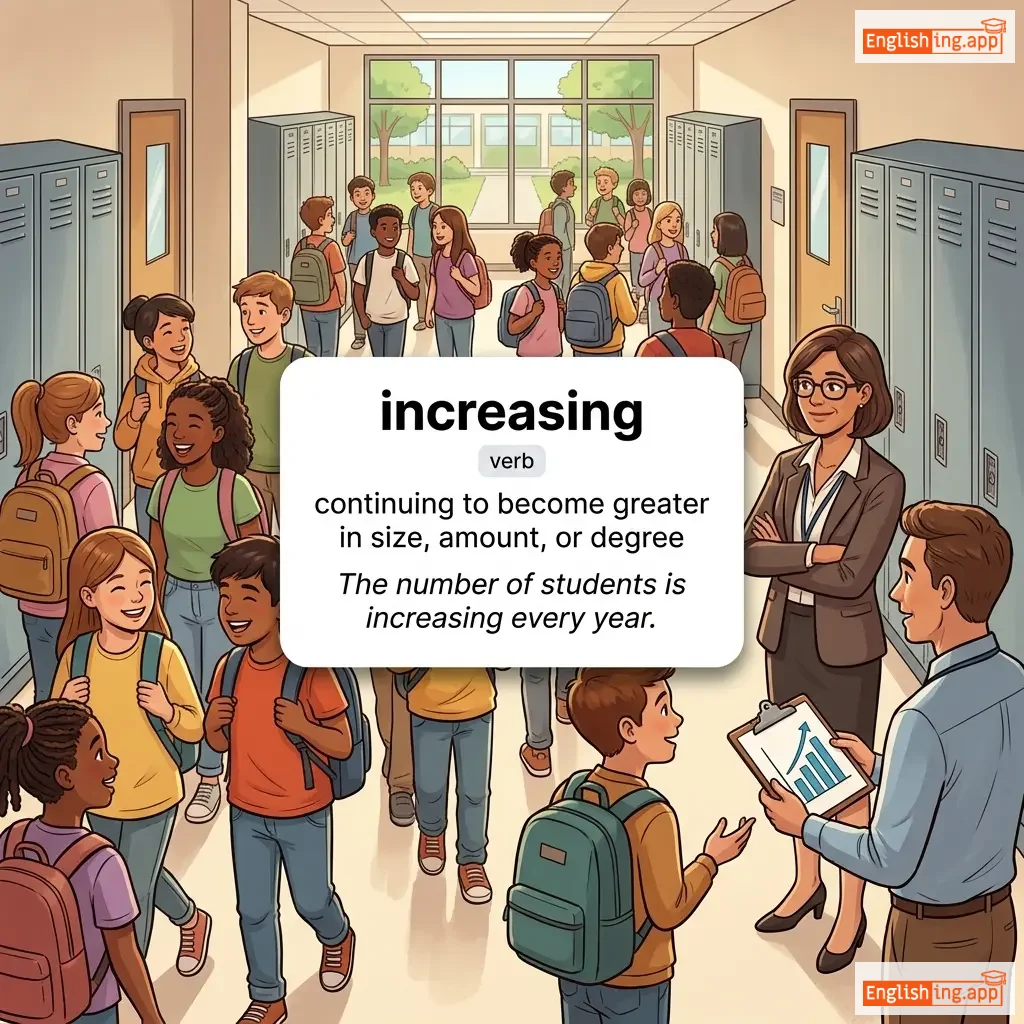
increasing definition card — visual illustration of the meaning
verb
/ɪnˈkriːsɪŋ/
増加 (zōka)

continuing to become greater in size, amount, or degree

"The number of students is increasing every year."

"学生の数は毎年増加しています。" (Gakusei no kazu wa mainen zōka shiteimasu.)
adverb
/ɪnˈkriːsɪŋli/
ますます (masumasu)

more and more over time

"People are increasingly concerned about climate change."

"人々は気候変動についてますます懸念しています。" (Hitobito wa kikō hendō ni tsuite masumasu shinpai shiteimasu.)
adjective
/ɪnˈkrɛdəbl/
信じられない (shinjirarenai)

so extraordinary that it is hard to believe; amazing

"The view from the mountain was incredible."

"山からの景色は信じられなかった。" (Yama kara no keshiki wa shinjirarenakatta.)
adverb
/ɪnˈkrɛdɪbli/
信じられないほど (shinjirarenai hodo)

to a great degree; extremely or unbelievably

"The view from the top of the mountain was incredibly beautiful."

"山頂からの景色は信じられないほど美しかった。" (Sanchō kara no keshiki wa shinjirarenai hodo utsukushikatta.)
noun
/ˌɪnkrɪˈdjuːləti/
不信 (fushin)

the state of being unwilling or unable to believe something

"She looked at him with incredulity after hearing the strange story."

"彼女はその奇妙な話を聞いた後、不信のまなざしで彼を見つめた。" (Kanojo wa sono kimyou na hanashi o kiita ato, fushin no manazashi de kare o mitsumeta.)
adjective
/ɪnˈkrɛdjələs/

unwilling or unable to believe something

"He gave her an incredulous look when she claimed she could fly."

noun
/ˈɪŋkrɪmənt/
増加 (zōka)

an increase or addition, especially one of a series on a fixed scale

"Employees received an annual salary increment."

"従業員は年次給与のインクリメントを受け取った。" (Jūgyōin wa nenji kyūyo no inkurimento o ukemotta.)
incremental definition card — visual illustration of the meaning
adjective
/ˌɪŋ.krɪˈmen.təl/
段階的 (dankai-teki)

Increasing gradually in small amounts or steps.

"The company made incremental improvements to the software."

"会社はソフトウェアに段階的な改善を行いました。" (Kaisha wa sofutowea ni dankai-teki na kaizen o okonaimashita.)
verb
/ɪnˈkrɪmɪˌneɪt/
有罪にする (yūzai ni suru)

to make someone appear guilty of a crime or wrongdoing

"The new evidence could incriminate the suspect in the robbery case."

"新しい証拠がロビー事件の容疑者を有罪にする可能性があります。" (Atarashī shōko ga robī jiken no yōgisha o yūzai ni suru kanōsei ga arimasu.)
noun
/ˌɪnkrʌˈsteɪʃən/
硬化層 (koukasou)

a crust or hard coating formed on the surface of something

"The old pipes were blocked due to heavy incrustation of minerals."

"古いパイプは鉱物の重い硬化層によって詰まっていました。" (Furui paipu wa koubutsu no omoi koukasou ni yotte tsumatteimashita.)
verb
/ˈɪnkjʊˌbeɪt/
孵化する (fukasu suru)

to keep eggs, cells, or organisms at the right conditions for development

"The hen will incubate the eggs until they hatch."

"そのニワトリは卵が孵化するまでインキュベートします。" (Sono niwatori wa tamago ga fuka suru made inkyubēto shimasu.)
noun
/ˌɪnkjʊˈbeɪʃən/
卵、細胞、または生物を適切な条件で発展させるプロセス (tamago, saibou, matawa seibutsu o tekisetsuna jouken de hatten saseru purosesu)

the process of keeping eggs, cells, or organisms in the right conditions for development

"The incubation of the eggs lasted for three weeks."

"卵のインキュベーションは三週間続きました。" (Tamago no inkubeeshon wa san shuukan tsuzukimashita.)
noun
/ˈɪnkjʊˌbeɪtər/
インキュベーター (inkyubetā)

a device or environment that provides suitable conditions for eggs, cells, or infants to develop

"The premature baby was placed in an incubator for care."

"未熟児はケアのためにインキュベーターに入れられました。" (Mijukushi wa kea no tame ni inkyubetā ni ireraremashita.)
noun
/ˈɪŋkjʊbəs/
悪夢のような重荷 (akumu no yō na omoni)

An oppressive or nightmarish burden; in folklore, an evil spirit that lies upon sleeping people.

"Debt became an incubus that weighed heavily on the family."
"借金は家族に重くのしかかる悪夢のような存在となった。" (Shakkin wa kazoku ni omoku noshikakaru akumu no yō na sonzai to natta.)
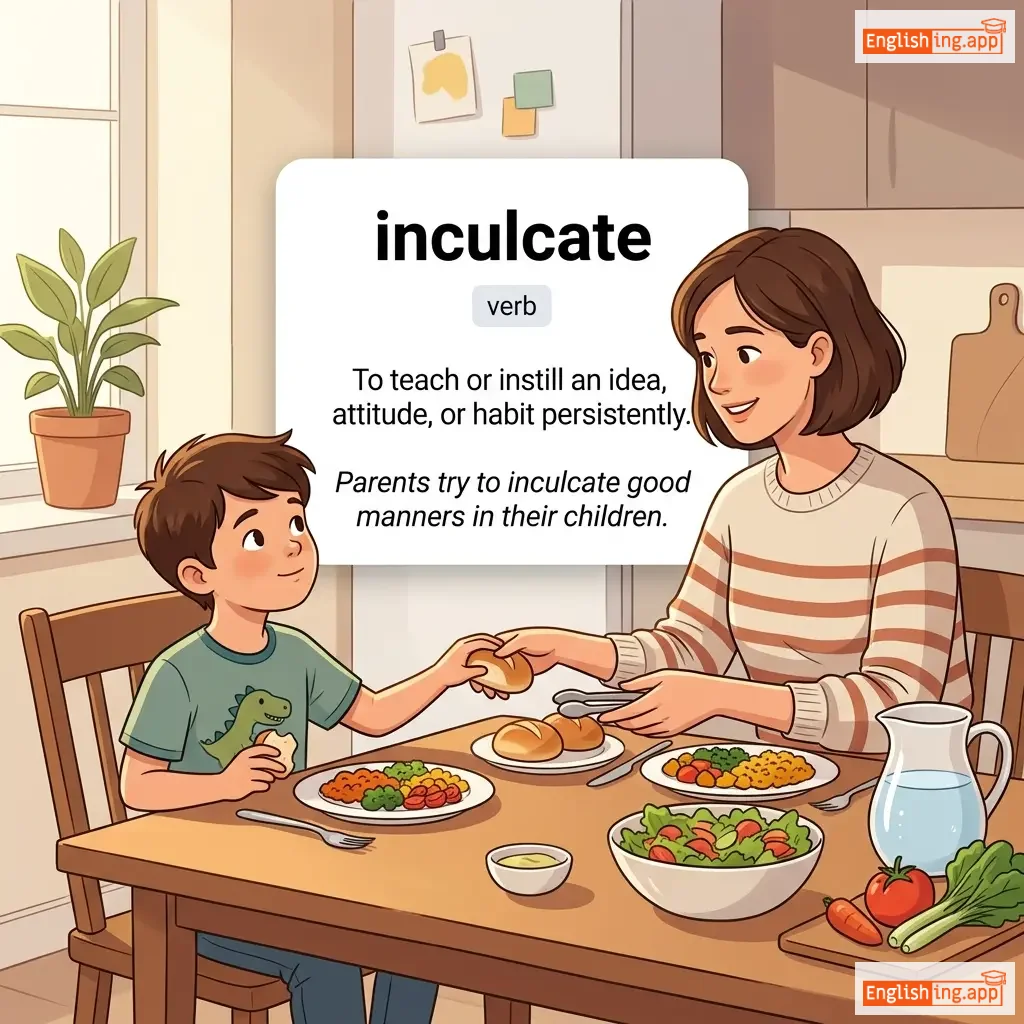
inculcate definition card — visual illustration of the meaning
verb
/ˈɪŋkʌlkeɪt/
教え込む (oshiekomu)

To teach or instill an idea, attitude, or habit persistently.

"Parents try to inculcate good manners in their children."

"親は子供たちに良いマナーを教え込もうとします。" (Oya wa kodomotachi ni yoi manā o oshiekomo to shimasu.)
verb
/ˈɪŋkʌlpeɪt/
非難する (hinan suru)

To blame or accuse someone of wrongdoing.

"The evidence seemed to inculpate the suspect in the crime."
"証拠は容疑者を犯行に巻き込んでいるように見えた。" (Shōko wa yōgisha o hankō ni makikonde iru yō ni mieta.)
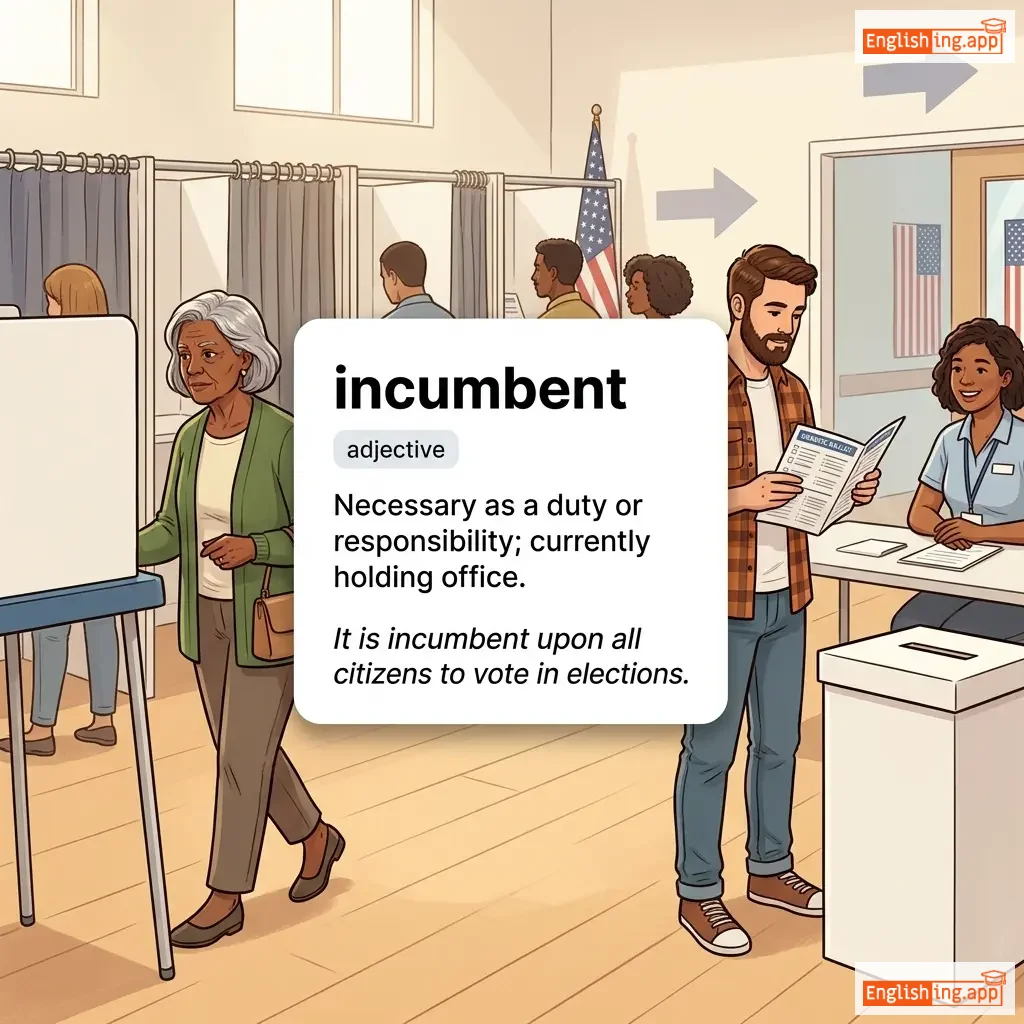
incumbent definition card — visual illustration of the meaning
adjective
/ɪnˈkʌmbənt/
現職の (genshoku no)

Necessary as a duty or responsibility; currently holding office.

"It is incumbent upon all citizens to vote in elections."

"すべての市民が選挙で投票する義務がある。" (Subete no shimin ga senkyo de tōhyō suru gimu ga aru.)
verb
/ɪnˈkɜːr/
負う (ōu)

To bring upon oneself something undesirable, usually as a result of actions.

"He incurred a fine for parking in the wrong place."
"彼は間違った場所に駐車して罰金を科せられた。" (Kare wa machigatta basho ni chūsha shite bakkin o kaserareta.)
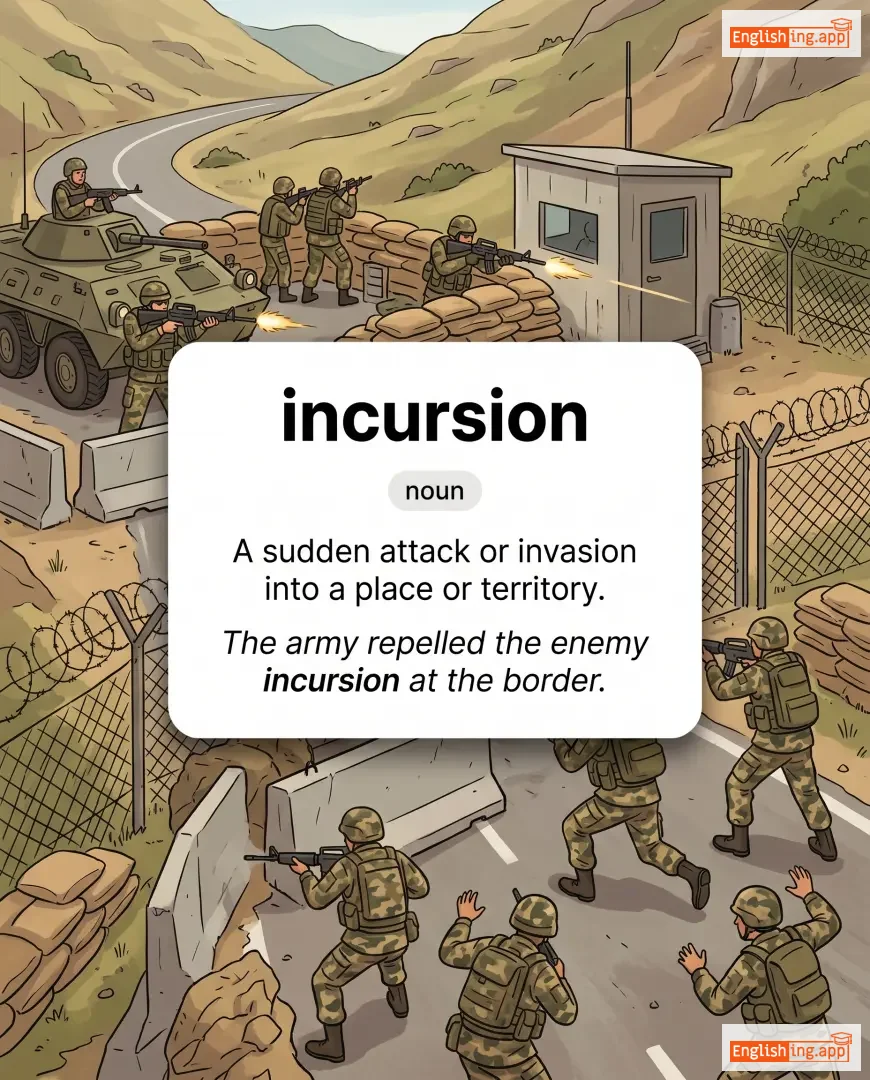
incursion definition card — visual illustration of the meaning
noun
/ɪnˈkɜːrʒən/
侵入 (shinnyuu)

A sudden attack or invasion into a place or territory.

"The army repelled the enemy incursion at the border."

"軍隊は国境で敵の侵入を撃退した。" (Guntai wa kokkyō de teki no shinnyū o gekitai shita.)