語彙集

英単語辞書 | 単語の意味、定義、例文

noun
/ˌɪnkænˈdɛsəns/
白熱光 (hakunetsu kō)

the emission of light from a hot object; brilliance

"The incandescence of the candle filled the dark room."

"ろうそくの白熱光が暗い部屋を満たしました。" (Rōsoku no hakunetsu kō ga kurai heya o mitashimashita.)
adjective
/ˌɪnkænˈdɛsənt/
白熱 (hakunetsu)

emitting light as a result of being heated; extremely bright or passionate

"The incandescent lamp lit up the entire hall."

"白熱灯はホール全体を照らしました。" (Hakunetsu tou wa hooru zentai wo terashimashita.)
noun
/ˌɪnkænˈteɪʃən/
呪文 (jumon)

a series of words used as a magic spell or charm

"The wizard chanted an incantation to summon the spirits."

"魔法使いは霊を呼び出すために呪文を唱えました。" (Mahōtsukai wa rei o yobidasu tame ni jumon o tonaemashita.)
noun
/ˌɪnˌkeɪpəˈbɪləti/
無能力 (munouryoku)

lack of ability or power to do something; inability or incompetence

"His incapability to manage the team led to serious problems."

"チームを管理する彼の無能力は深刻な問題を引き起こした。" (chiimu o kanri suru kare no munouryoku wa shinkoku na mondai o hikiokoshita)
adjective
/ɪnˈkeɪpəbəl/
無能力な (munouryoku na)

lacking the ability, skill, or capacity to do something

"He is incapable of understanding complex instructions."

"彼は複雑な指示を理解できない。" (kare wa fukuzatsu na shiji o rikai dekinai)
verb
/ˌɪnkəˈpæsɪteɪt/
無力化する (muryokuka suru)

to deprive someone or something of the ability or strength to function

"The severe injury incapacitated the player for the rest of the season."

"その重傷はプレーヤーをシーズンの残りの期間無力化させた。" (Sono juushou wa pureeaa o shiizun no nokori no kikann muryokuka saseta.)
noun
/ˌɪnkəˈpæsəti/
無能力 (munōryoku)

the lack of ability, power, or fitness to do something

"His mental incapacity prevented him from making important decisions."

"彼の精神的無能力は、重要な決定を下すのを妨げました。" (Kare no seishinteki munōryoku wa, jūyōna kettei o kudasu no o samatagemashita.)
verb
/ɪnˈkɑːrsəreɪt/
投獄する (tōgoku suru)

to imprison or confine someone

"The authorities incarcerated the criminal after the trial."

"当局は裁判後に犯罪者を投獄しました。" (Tōkyoku wa saiban go ni hanzai-sha o tōgoku shimashita.)
noun
/ɪnˌkɑːsəˈreɪʃən/
投獄 (tōgoku)

the state of being imprisoned or confined

"The criminal faced years of incarceration for his crimes."

"犯人はその犯罪のために長年の投獄を受けた。" (Hannin wa sono hanzai no tame ni naganen no tōgoku o uketa.)
adjective/noun
/ɪnˈkɑːrnədiːn/
深紅 (shinku)

a bright crimson or pinkish-red color

"The sky turned incarnadine at sunset."
"太陽が沈むと空は深紅色に変わった。" (Taiyō ga shizumu to sora wa shinku shoku ni kawatta.)
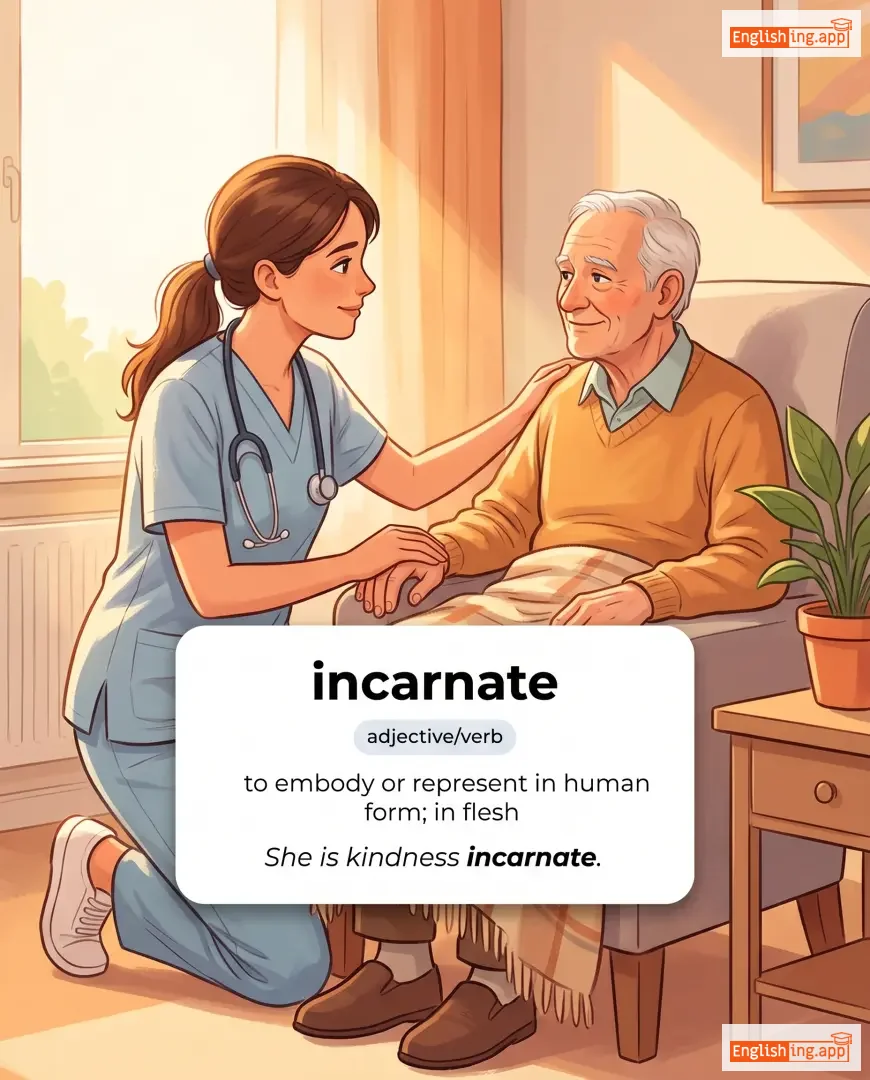
incarnate definition card — visual illustration of the meaning
adjective/verb
/ɪnˈkɑːrneɪt/
具現化 (gugenka)

to embody or represent in human form; in flesh

"She is kindness incarnate."

"彼女は親切さの具現化です。" (Kanojo wa shinsetsu sa no gugenka desu.)
noun
/ˌɪnkɑːrˈneɪʃən/
化身 (kashin)

the embodiment of a deity, spirit, or quality in a physical form

"The monk was considered the incarnation of compassion."

"その僧侶は慈悲の化身と見なされていた。" (Sono souryo wa jihi no kashin to minasarete ita.)
adjective
/ɪnˈsɛndiˌɛri/
扇動的な / 挑発的な (sendō-teki na / chōhatsu-teki na)

designed to cause fires or stir up conflict

"The politician’s incendiary remarks angered the crowd."

"政治家の挑発的な発言が群衆を怒らせた。" (Seijika no chōhatsu-teki na hatsugen ga gunshū wo okorase ta.)
noun/verb
/ˈɪnsɛns/
お香 / 激怒させる (oko / gekido saseru)

a substance burned for its sweet smell (noun); to make very angry (verb)

"The smell of incense filled the temple, but his rude words incensed her."

"お香の香りが寺院を満たしましたが、彼の失礼な言葉は彼女を激怒させました。" (Oko no kaori ga jiin wo mitashimashita ga, kare no shitsurei na kotoba wa kanojo wo gekido sasemashita.)
noun
/ɪnˈsɛntɪv/
インセンティブ (insentibu)

a thing that motivates or encourages someone to do something

"The company offers bonuses as an incentive to increase productivity."
"会社は生産性向上のためのインセンティブとしてボーナスを提供します。" (Kaisha wa seisansei kōjō no tame no insentibu toshite bōnasu o teikyō shimasu.)
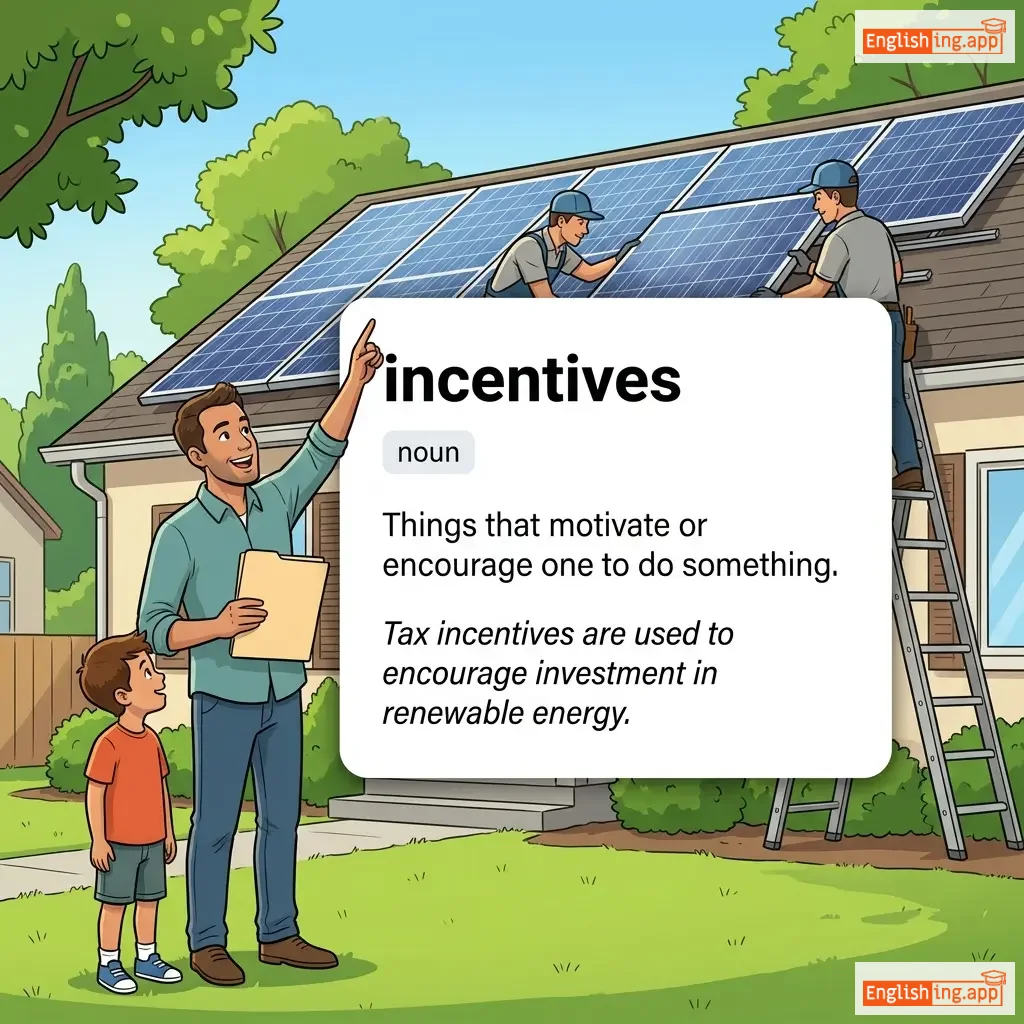
incentives definition card — visual illustration of the meaning
noun
ɪnˈsɛntɪvz
インセンティブ (insentibu)

Things that motivate or encourage one to do something.

"Tax incentives are used to encourage investment in renewable energy."
"税制上のインセンティブは再生可能エネルギーへの投資を促進するために使用されます。" (Zeiseijou no insentibu wa saisei kanō enerugī e no tōshi o sokushin suru tame ni shiyō saremasu.)
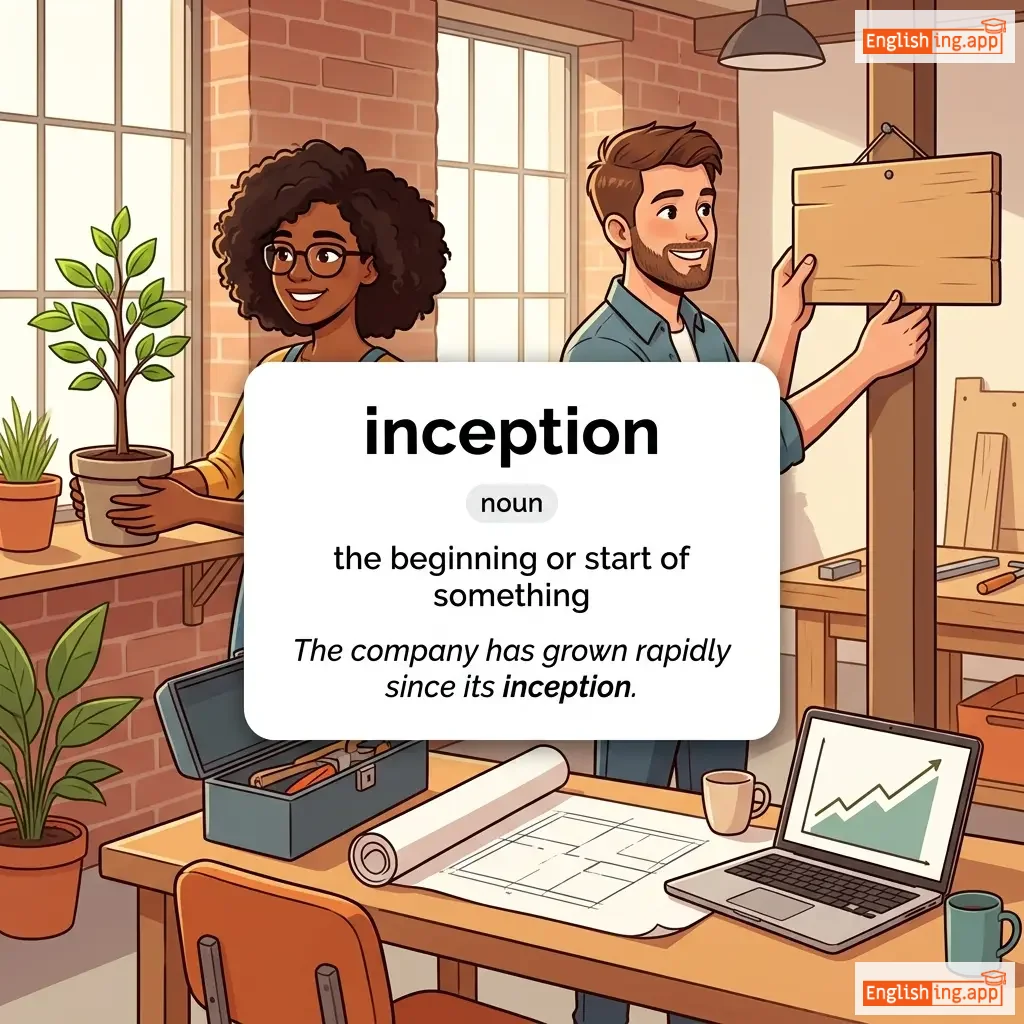
inception definition card — visual illustration of the meaning
noun
/ɪnˈsɛpʃən/
始まり (hajimari)

the beginning or start of something

"The company has grown rapidly since its inception."

"その企業は創業以来急速に成長しました。" (Sono kigyou wa sougyou irai kyūsoku ni seichou shimashita.)
adjective
/ɪnˈsɛptɪv/
初期の (shoki no)

Relating to or marking the beginning or initial stage of something.

"The inceptive phase of the project was marked by enthusiastic planning."
"プロジェクトの開始段階は熱心な計画で特徴づけられました。" (Purojekuto no kaishi dankai wa nesshin na keikaku de tokuchōzukeraremashita.)
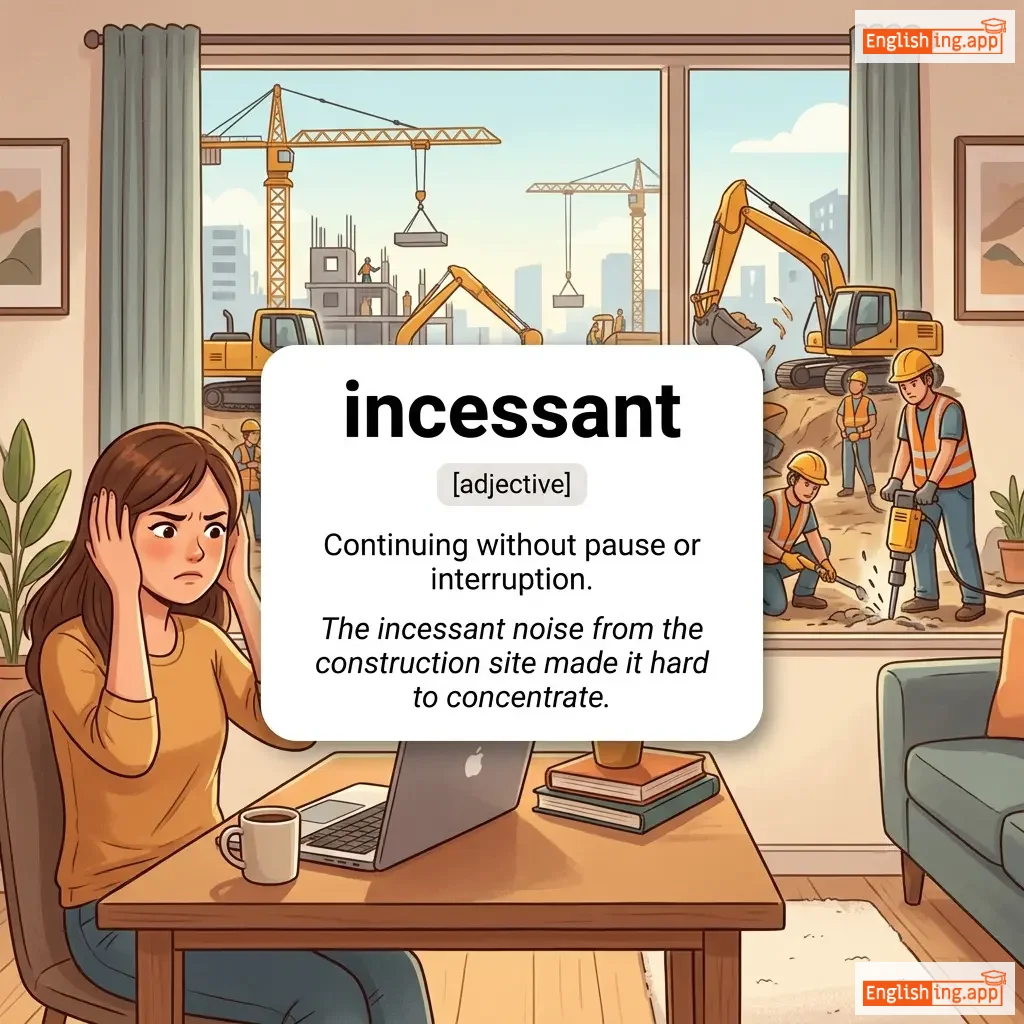
incessant definition card — visual illustration of the meaning
adjective
/ɪnˈsɛsənt/
絶え間ない (taemai)

Continuing without pause or interruption.

"The incessant noise from the construction site made it hard to concentrate."

"建設現場からの絶え間ない騒音は、集中するのを難しくさせました。" (Kensetsu genba kara no taemai na sōon wa, shūchū suru no o muzukashiku sasemashita.)
noun, verb
/ɪntʃ/
インチ / ゆっくり動く (inchi / yukkuri ugoku)

A unit of length equal to 2.54 centimeters; or to move slowly and carefully in small amounts.

"She inched closer to the edge of the stage."

"彼女はステージの端にゆっくり近づいた。" (Kanojo wa sutēji no hashi ni yukkuri chikaduita.)
adverb
/ˈɪntʃmiːl/
少しずつ (sukoshizutsu)

Gradually, little by little.

"The old castle fell inchmeal into ruin."

"その古い城は少しずつ廃墟になった。" (Sono furui shiro wa sukoshizutsu haikyo ni natta.)
inchoate definition card — visual illustration of the meaning
adjective
/ɪnˈkoʊ.ɪt/ or /ɪnˈkoʊ.eɪt/
未完成 (mikansei)

Just begun and not fully formed; rudimentary.

"His inchoate ideas needed more research to be developed."

"彼の未完成のアイデアは、さらに開発するためにもっと研究が必要だった。" (Kare no mikansei no aidea wa, sara ni kaihatsu suru tame ni motto kenkyuu ga hitsuyou datta.)
adjective
/ɪnˈkoʊətɪv/
初期の (shoki no)

relating to the beginning of something; in an initial stage

"The poet used inchoative expressions to depict the dawn of creation."

"詩人は創造の夜明けを描くために初期の表現を使いました。" (Shijin wa souzou no yoake wo kaku tame ni shoki no hyougen wo tsukaimashita.)
noun
/ˈɪnsɪdəns/
発生率 (hatsuseiritsu)

the occurrence, rate, or frequency of something

"The incidence of road accidents has decreased this year."

"今年の道路事故の発生率は減少しました。" (Kotoshi no dōro jiko no hasseiritsu wa genshō shimashita.)
noun
/ˈɪnsɪdənt/
インシデント (insidento)

an event or occurrence, often unpleasant or unusual

"The police quickly responded to the incident in the park."

"警察は公園でのインシデントに迅速に対応しました。" (Keisatsu wa kōen de no insidento ni jinsoku ni taiou shimashita.)
adjective
/ˌɪnsɪˈdɛntəl/
付随的 (fuzui-teki)

happening as a minor part or in connection with something else

"Incidental expenses like snacks and tips were included in the bill."

"スナックやチップのような付随的な費用は請求書に含まれていました。" (Sunakku ya chippu no yōna fuzui-teki na hiyō wa seikyū-sho ni fukumarete imashita.)
adverb
/ˌɪnsɪˈdɛntəli/
ちなみに (chinami ni)

by the way; used to introduce a remark not directly related to the main subject

"Incidentally, did you know that she studied in Paris?"

"ちなみに、彼女がパリで勉強していたことを知っていましたか?" (Chinami ni, kanojo ga Pari de benkyou shite ita koto wo shitte imashita ka?)
verb
/ɪnˈsɪnəˌreɪt/
焼却する (shōkyaku suru)

to burn something completely until it is reduced to ashes

"The city decided to incinerate the medical waste for safety."

"その都市は安全のために医療廃棄物を焼却することを決定しました。" (Sono toshi wa anzen no tame ni iryō haikimono o shōkyaku suru koto o kettei shimashita.)
noun
/ɪnˈsɪpiəns/
始まり (hajimari)

the beginning or initial stage of something

"The project was still in its incipience when funding was approved."

"資金提供が承認された時、プロジェクトはまだその始まりの段階にありました。" (Shikin teikyō ga shōnin sareta toki, purojekuto wa mada sono hajimari no dankai ni arimashita.)
adjective
/ɪnˈsɪpiənt/
初期の (shoki no)

in an initial stage; beginning to develop

"The incipient storm made the sky turn dark and heavy."
"初期の嵐が空を暗く重くさせた。" (Shoki no arashi ga sora o kuraku omoku saseta.)
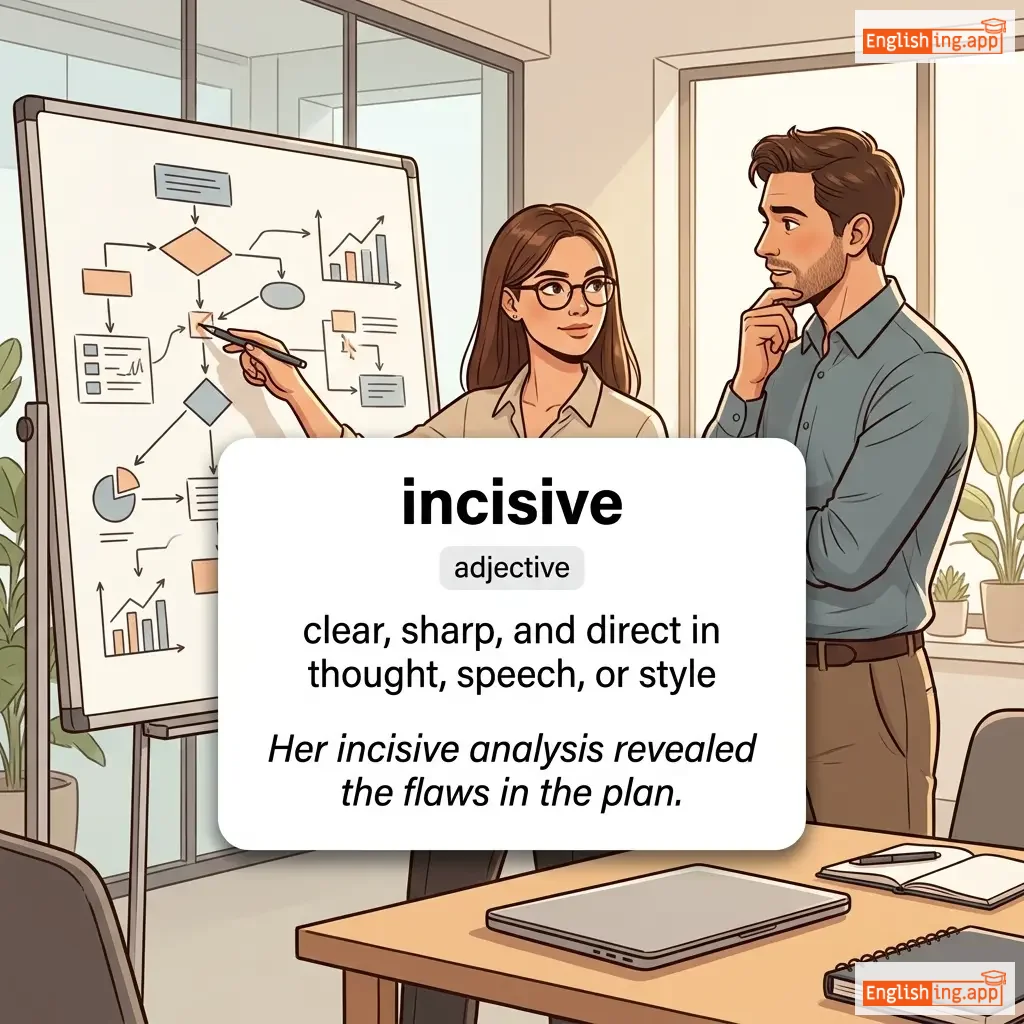
incisive definition card — visual illustration of the meaning
adjective
/ɪnˈsaɪsɪv/
鋭い (surudoi)

clear, sharp, and direct in thought, speech, or style

"Her incisive analysis revealed the flaws in the plan."

"彼女の鋭い分析は計画の欠陥を明らかにした。" (Kanojo no surudoi bunseki wa keikaku no kekkan o akiraka ni shita.)
noun
/ɪnˈsaɪzər/
切歯 (kesshi)

a narrow-edged tooth at the front of the mouth, adapted for cutting

"The dentist noted that his upper left incisor was chipped."
"歯科医は彼の上の左側の切歯が欠けていることに気づきました。" (Shikai wa kare no ue no hidarigawa no kesshi ga kakete iru koto ni kizukimashita.)
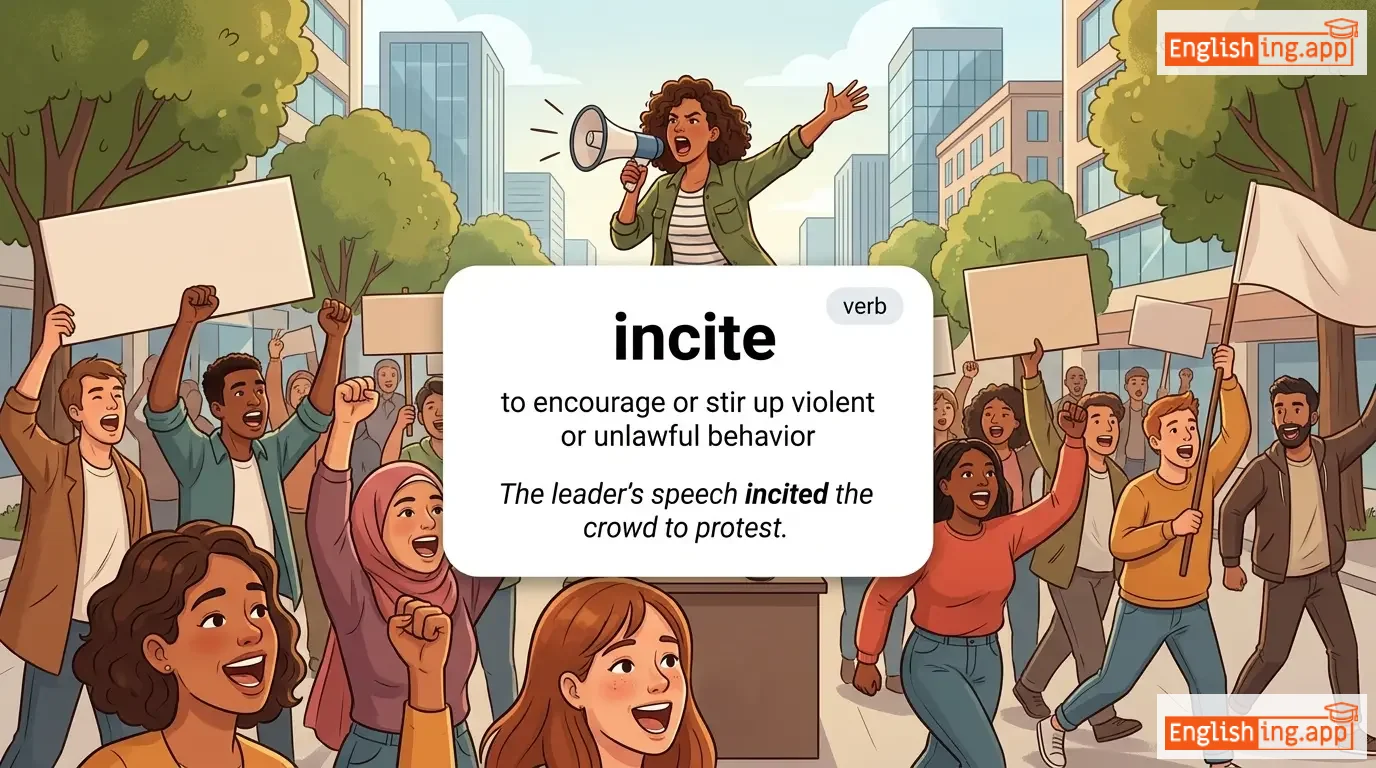
incite definition card — visual illustration of the meaning
verb
/ɪnˈsaɪt/
扇動する (sendou suru)

to encourage or stir up violent or unlawful behavior

"The leader's speech incited the crowd to protest."

"リーダーのスピーチは群衆を抗議へと駆り立てました。" (Riidaa no supiichi wa gunshuu o kougi e to karitate mashita.)
noun
/ɪnˈsaɪtmənt/
扇動 (sendou)

the action of provoking unlawful or violent behavior

"He was arrested for incitement to riot."

"彼は暴動を扇動した罪で逮捕された。" (Kare wa boudou o sendou shita tsumi de taiho sareta.)
adjective
/ɪnˈklɛmɛnt/
悪天候 (akutenkou)

unpleasantly cold, wet, or stormy (usually weather)

"The match was canceled due to inclement weather."

"試合は悪天候のためキャンセルされました。" (Shiai wa akutenkou no tame kyanseru saremashita.)
noun
/ˌɪnklɪˈneɪʃən/
傾向 (keikou)

A natural tendency or urge to act or feel in a particular way.

"She has an inclination towards helping others."

"彼女は他の人を助ける傾向があります。" (Kanojo wa hoka no hito o tasukeru keikō ga arimasu.)
verb
/ɪnˈklaɪn/
傾く (katamuku)

to feel willing or favorably disposed toward something; to bend or tilt

"She is inclined to agree with the proposal."

"彼女は提案に賛成する傾向があります。" (Kanojo wa teian ni sansei suru katamuki ga arimasu.)
adjective
/ɪnˈklaɪnd/
傾向がある (keikou ga aru)

having a tendency or disposition toward something

"He is inclined to help those in need."

"彼は困っている人々を助ける傾向がある。" (Kare wa komatteiru hitobito wo tasukeru keikou ga aru.)
include definition card — visual illustration of the meaning
verb
/ɪnˈkluːd/
含める (kumeru)

to make something part of a whole or group

"The package includes free breakfast."

"パッケージには無料の朝食が含まれています。" (Pakkēji ni wa muryō no chōshoku ga fukuma reteimasu.)
preposition
/ɪnˈkluːdɪŋ/
含む (fukumu)

used to show that someone or something is part of a larger group

"Many people attended the event, including students and teachers."

"多くの人々がイベントに参加しました、学生や教師を含む。" (Ōku no hitobito ga ibento ni sanka shimashita, gakusei ya kyōshi o fukumu.)
noun
/ɪnˈkluːʒən/
インクルージョン (inkurūjon)

the action or state of including or being included within a group or structure

"Diversity and inclusion are key values in modern workplaces."
"多様性とインクルージョンは現代の職場における重要な価値観です。" (Tayōsei to inkurūjon wa gendai no shokuba ni okeru jūyōna kachikan desu.)
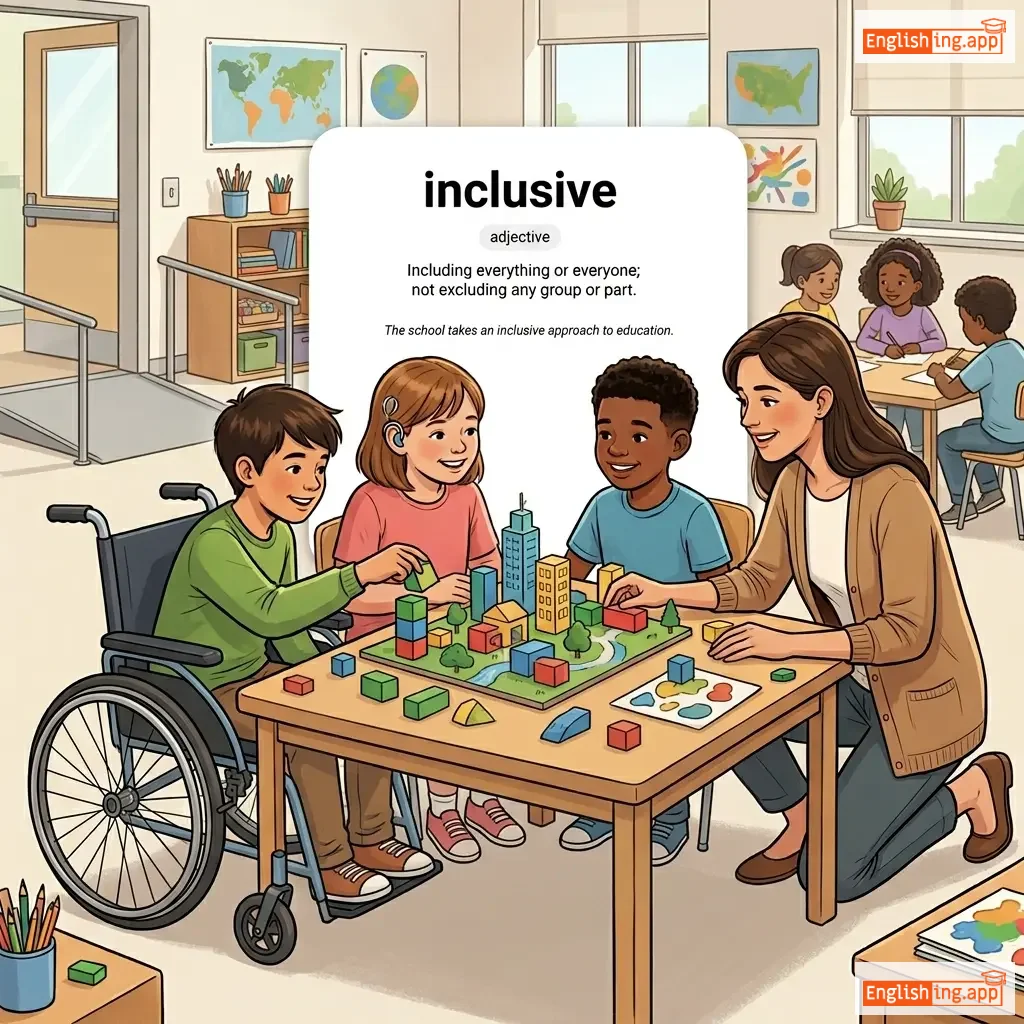
inclusive definition card — visual illustration of the meaning
adjective
/ɪnˈkluːsɪv/
インクルーシブ (inkurushibu)

Including everything or everyone; not excluding any group or part.

"The school takes an inclusive approach to education."

"学校はインクルーシブなアプローチを教育に取り入れています。" (Gakkō wa inkurushibu na apurōchi wo kyōiku ni toriireteimasu.)
adjective
/ˌɪnkoʊˈɜːrsəbl̩/
強制できない (kyousei dekinai)

Not capable of being forced, compelled, or restrained.

"Her incoercible spirit inspired others to fight for justice."

"彼女の強制できない精神は他の人々に正義のために戦うようにインスパイアした。" (Kanojo no kyousei dekinai seishin wa hoka no hitobito ni seigi no tame ni tatakau you ni insupaia shita.)
adjective
/ɪnˈkɑːdʒɪtənt/
無思慮な (musiryona)

Lacking thought; inconsiderate or thoughtless.

"It was incogitant of him to make such a rude comment."

"彼がそんな失礼なコメントをするのは無思慮なことでした。" (Kare ga sonna shitsurei na komento o suru no wa musiryona koto deshita.)
adverb, adjective
/ˌɪnkɑːɡˈniːtoʊ/
インコグニート (inkongīnīto)

In disguise or with one's identity concealed.

"The celebrity traveled incognito to avoid the paparazzi."

"有名人はパパラッチを避けるためにインコグニートで旅行した。" (Yūmeijin wa paparatchi o sakeru tame ni inkongīnīto de ryokō shita.)
noun
/ˌɪnkoʊˈhɪrəns/
不整合 (fuseigou)

The quality of being unclear, confused, or lacking logical connection.

"His speech was full of incoherence and difficult to follow."

"彼のスピーチは不整合で、理解するのが難しかった。" (Kare no supīchi wa fuseigō de, rikai suru no ga muzukashikatta.)
adjective
/ˌɪnkəʊˈhɪərənt/
一貫性のない (ikkansē no nai)

Not clear or easy to understand; lacking logical connection.

"His explanation was so incoherent that nobody could follow it."

"彼の説明はあまりにも一貫性がなく、誰もそれを追うことができませんでした。" (Kare no setsumei wa amarini mo ikkansē ga naku, dare mo sore o ou koto ga dekimasen deshita.)
adjective
/ˌɪnkəmˈbʌstəbl/
不燃 (funen)

Not capable of catching fire or burning.

"This material is incombustible and safe for construction."

"この材料は燃えません、安全に建設に使用できます。" (Kono zairyō wa moemasu, anzen ni kensetsu ni shiyō dekimasu.)
noun
/ˈɪnkʌm/
収入 (shūnyū)

money received for work or through investments

"His monthly income is enough to support his family."

"彼の月収は家族を支えるのに十分です。" (Kare no gekkyū wa kazoku o sasaeru no ni jūbun desu.)
adjective
/ˌɪnkəˈməʊdiəs/
不快な (fukai na)

Uncomfortably small, cramped, or inconvenient.

"We had to stay in an incommodious room during the trip."

"旅行中に不快な部屋に泊まらなければなりませんでした。" (Ryokō-chū ni fukai na heya ni tomarana kereba narimasen deshita.)