語彙集

英単語辞書 | 単語の意味、定義、例文

verb
/ˈɪmprəvaɪz/

To create or perform something spontaneously without preparation.

"The actor had to improvise his lines when he forgot the script."

noun
/ɪmˈpruːdəns/
軽率 (keisotsu)

Lack of caution or good judgment.

"His imprudence in investing all his money in one stock was disastrous."

"一つの株に全てのお金を投資する彼の軽率さは、壊滅的だった。" (Hitotsu no kabu ni subete no okane wo toshi suru kare no keisotsu sa wa, kaimetsu teki datta.)
adjective
/ɪmˈpruːdənt/
不注意な (fuchuui na)

Not showing care for the consequences of an action.

"It was imprudent to drive in such stormy weather."

"こんな嵐の天気で運転するのは不注意だった。" (Konna arashi no tenki de unten suru no wa fuchuui datta.)
noun
/ˈɪmpjʊdəns/
厚かましさ (atsukamashisa)

Rude and disrespectful behavior.

"The student's impudence shocked the entire class."

"その学生の厚かましさはクラス全体を驚かせた。" (Sono gakusei no atsukamashisa wa kurasu zentai o odorokaseta.)
adjective
/ˈɪmpjəd(ə)nt/
無礼な、厚かましい (bureina, atsukamashii)

not showing due respect for another person; rude

"The impudent child talked back to the teacher."

"その無礼な子供は先生に逆らった。" (Sono bureina kodomo wa sensei ni sakaratta.)
⚔️

impugn

verb
/ɪmˈpjuːn/

to dispute the truth, validity, or honesty of a statement or motive

"The lawyer tried to impugn the credibility of the witness."

noun
/ɪmˈpjuːɪsəns/
無力, 無能 (muryoku, munou)

inability to take effective action; helplessness

"The government’s impuissance in the face of crisis frustrated the people."

"危機の前で政府の無力さが人々を失望させた。" (Kiki no mae de seifu no muryokusa ga hitobito o shitsubou saseta.)
noun
/ˈɪmpʌls/
衝動 (shōdō)

a sudden strong desire or urge to act without thinking

"He bought the watch on impulse without planning to."

"彼は計画なしで衝動的に時計を買いました。" (Kare wa keikaku nashi de shōdō-teki ni tokei o kaimashita.)
noun
/ɪmˈpʌlʃən/

a strong urge or drive to act; the act of impelling

"His impulsion to travel made him leave his job suddenly."

adjective
/ɪmˈpʌlsɪv/
衝動的な, 直感的な (shoudouteki na, chokkan teki na)

acting suddenly without careful thought

"She made an impulsive decision to buy the car."
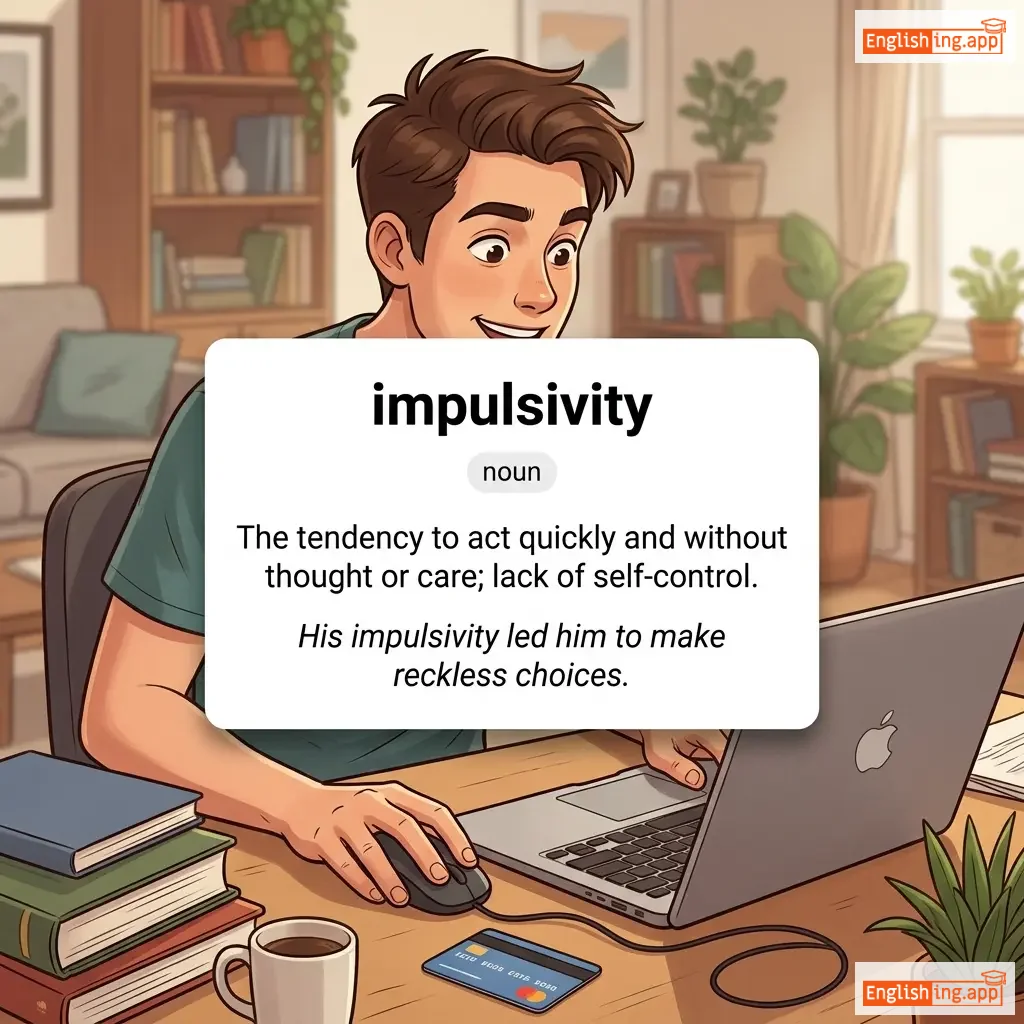
"彼女は衝動的な決定で車を買うことにしました。" (Kanojo wa shoudouteki na kettei de kuruma o kau koto ni shimashita.)
impulsivity definition card — visual illustration of the meaning
noun
ˌɪm.pʌlˈsɪv.ɪ.ti
衝動性 (shōdōsei)

The tendency to act quickly and without thought or care; lack of self-control.

"His impulsivity led him to make reckless choices."

"彼の衝動性は、無謀な選択をさせた。" (Kare no shōdōsei wa, mubō na sentaku o saseta.)
🛡️

impunity

noun
/ɪmˈpjuːnɪti/

freedom from punishment or harmful consequences for an action

"The dictator ruled with impunity, ignoring international laws."

adjective
/ɪmˈpjʊər/
不純 (fujun)

not clean or free from contamination; morally corrupt

"The water was impure and unsafe to drink."

"水は不純で飲むには安全ではなかった。" (Mizu wa fujun de nomu ni wa anzen de wa nakatta.)
noun
/ɪmˈpjʊərəti/
不純物 (fujunbutsu)

the state of being unclean or contaminated; a substance that makes something impure

"The scientist removed every impurity from the water sample."

"科学者は水のサンプルからすべての不純物を取り除いた。" (kagakusha wa mizu no sanpuru kara subete no fujunbutsu o torinoita)
noun
/ˌɪmpjuˈteɪʃən/
非難 (hinan)

an accusation or attribution of blame

"The politician denied the imputation of corruption."

"政治家は腐敗の非難を否定した。" (Seijika wa fuhai no hinan o hitei shita.)
verb
/ɪmˈpjuːt/
帰する (kisuru)

to attribute a fault or responsibility to someone

"They imputed the company's success to good leadership."

"彼らは会社の成功を良いリーダーシップに帰属させた。" (Karera wa kaisha no seikou o yoi rīdāshippu ni kisusaseta.)
preposition
/ɪn/
(naka)

expressing the situation of being enclosed or surrounded by something

"She is in the kitchen preparing dinner."

"彼女は台所で夕食を準備している。" (Kanojo wa daidokoro de yuushoku o junbi shiteiru.)
preposition
/ɪn ˈfrʌnt əv/
〜の前に (no mae ni)

positioned before or ahead of something; facing or located at the forward side of a person or object

"She stood in front of the building."

"彼女は建物の前に立っていた。" (Kanojo wa tatemono no mae ni tatte ita)
noun
/ˌɪnəˈbɪləti/
無能 (munou)

the state of being unable to do something

"His inability to make decisions affected his career."

"彼の意思決定の無能さは彼のキャリアに影響を与えた。" (Kare no ishi kettei no munousa wa kare no kyaria ni eikyou wo ataeta.)
adjective
/ˌɪnækˈsɛsəbl/
アクセスできない (akusesu dekinai)

unable to be reached, entered, or understood

"The remote village is almost inaccessible during the rainy season."

"その遠隔地の村は雨季にはほとんどアクセスできません。" (Sono enkaku-chi no mura wa uki ni wa hotondo akusesu dekimasen.)
noun
/ɪnˈækjʊrəsi/
不正確さ (fuseikakusa)

lack of accuracy or precision; an incorrect or wrong detail

"The report contained several factual inaccuracies."

"その報告書にはいくつかの不正確さがあった。" (sono houkokusho niwa ikutsuka no fuseikakusa ga atta)
adjective
/ɪnˈækjʊrət/
不正確 (fuseikaku)

Not correct, precise, or exact; containing errors.

"The report was full of inaccurate data."

"レポートは不正確なデータでいっぱいだった。" (Repōto wa fuseikaku na dēta de ippai datta.)
adjective
/ɪnˈæktɪv/
非アクティブ (hi akuteibu)

Not engaging in activity; not active.

"The account has been inactive for six months."

"アカウントは6ヶ月間非アクティブです。" (Akaunto wa roku kagetsu kan hi akuteibu desu.)
noun
/ˌɪnækˈtɪvɪti/
不活動 (fukatsudo)

the state of not being active physically or mentally; lack of action

"Prolonged inactivity can negatively affect both physical and mental health."

"長期間の不活動は身体的および精神的健康に悪影響を与えます。" (chokikan no fukatsudo wa shintaiteki oyobi seishinteki kenkou ni akueikyou o ataemasu)
noun
/ɪnˈædɪkwəsi/
不十分さ (fujubunsa)

lack of sufficient ability, quality, or strength; a feeling of not being good enough

"She struggled with feelings of inadequacy at work despite her strong qualifications."

"十分な資格があるにもかかわらず、彼女は職場で不十分さを感じていた。" (Juubun na shikaku ga aru ni mo kakawarazu, kanojo wa shokuba de fujubunsa o kanjite ita)
adjective
/ɪnˈædɪkwət/
不十分 (fujūbun)

Not sufficient or good enough.

"The funding was inadequate to complete the project."

"プロジェクトを完成させるには資金が不十分でした。" (Purojekuto o kansei saseru ni wa shikin ga fujūbun deshita.)
adjective
/ˌɪnədˈmɪsəbl̩/
受け入れられない (ukeirarenai)

Not allowed, especially as evidence in a court of law.

"The judge ruled the evidence inadmissible."

"裁判官は証拠を受け入れられないと判断しました。" (Saibankan wa shouko o ukeirarenai to handan shimashita.)
noun
/ˌɪnədˈvɜːrtəns/
不注意 (fuchuui)

Failure to pay attention; carelessness.

"The error happened through sheer inadvertence."

"エラーは単なる不注意で発生しました。" (Erā wa tannaru fuchūi de hassei shimashita.)
adjective
/ˌɪnədˈvɜːrtənt/
意図しない, 不注意な (itoshinai, fuchuīna)

Not resulting from or achieved through deliberate planning; unintentional.

"Her inadvertent mistake caused a delay in the project."
"彼女の不注意なミスがプロジェクトの遅延を引き起こしました。" (Kanojo no fuchuīna misu ga purojekuto no chien o hikiokoshimashita.)
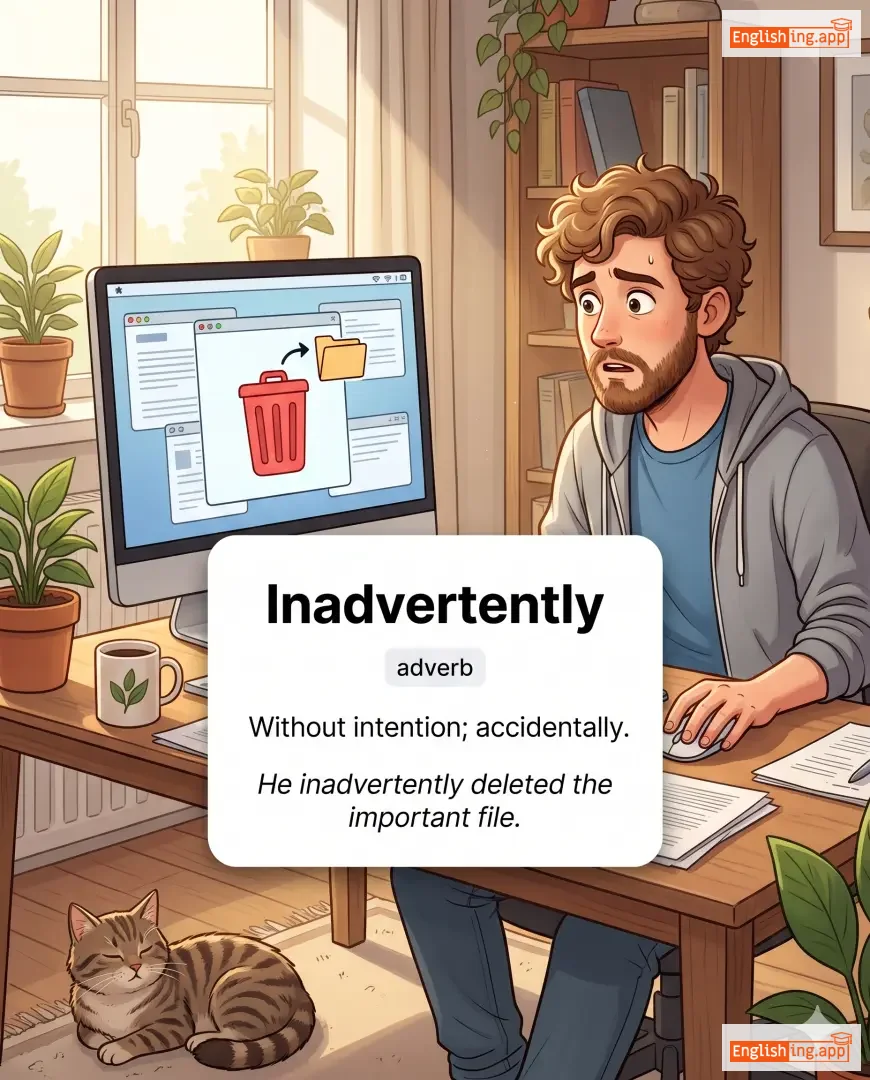
Inadvertently definition card — visual illustration of the meaning
adverb
/ˌɪnədˈvɜːrtəntli/
うっかり (ukkari)

Without intention; accidentally.

"He inadvertently deleted the important file."

"彼はうっかり重要なファイルを削除しました。" (Kare wa ukkari juuyou na fairu o sakujo shimashita.)
adjective
/ˌɪnədˈvaɪzəbl/
推奨されない (suishou sarenai)

Not recommended; likely to have undesirable consequences.

"It is inadvisable to drive in such heavy rain."

"このような大雨の中で運転するのは推奨されません。" (kono you na oame no naka de unten suru no wa suishou saremasen.)
adjective
/ɪnˈeɪliənəbl/
譲渡不可能 (jōto fukanō)

Unable to be taken away or transferred; absolute and permanent.

"Freedom of speech is an inalienable right."

"言論の自由は譲渡不可能な権利です。" (Genron no jiyū wa jōto fukanō na kenri desu.)
noun
/ˌɪnəməˈrɑːtə/

A woman with whom someone is in love; a female lover.

"He wrote a poem dedicated to his inamorata."

adjective
/ɪˈneɪn/
無意味な, 馬鹿な (muimi na, baka na)

lacking sense, meaning, or significance; silly or pointless

"The movie was criticized for its inane dialogue."

"その映画は無意味なセリフで批判された。" (Sono eiga wa muimi na serifu de hihan sareta.)
adjective
/ɪˈnænɪmət/
無生物 (museibutsu)

not alive, especially not in the manner of animals and humans; lifeless

"The museum was full of inanimate objects from ancient times."

"博物館には古代の無生物がいっぱいだった。" (Hakubutsukan ni wa kodai no museibutsu ga ippai datta.)
noun
/ɪˈnænɪti/
馬鹿げたこと, 空虚 (bakageta koto, kuushou)

a nonsensical remark or action; silliness; emptiness

"The speech was full of inanities that bored the audience."

"スピーチは聴衆を退屈させる馬鹿げたことだらけだった。" (Supīchi wa chōshū o taikutsu saseru bakageta koto darake datta.)
adjective
/ˌɪnæprɪˈhɛnsəbl/
理解不能 (rikai funou)

not understandable; incomprehensible

"The concept was so abstract that it seemed inapprehensible to most students."

"その概念は非常に抽象的で、ほとんどの学生には理解できないように思えた。" (Sono gainen wa hijō ni chūshō-teki de, hotondo no gakusei ni wa rikai dekinai yō ni moe-ta.)
adjective
/ˌɪnəˈproʊpriət/
不適切 (futekisetsu)

not suitable or proper in the circumstances

"It was inappropriate to talk loudly in the library."

"図書館で大声で話すのは不適切でした。" (Toshokan de oogoe de hanasu no wa futekisetsu deshita.)
adjective
/ɪnˈæpt/
不適切 (futekisetsu)

not suitable or appropriate in the circumstances

"His inapt choice of words offended many people."

"彼の不適切な言葉の選び方は多くの人々を傷つけました。" (Kare no futekisetsu na kotoba no erabikata wa ōku no hitobito o kizutsukemashita.)
adjective
/ˌɪnɑːrˈtɪkjʊlət/
言葉が不明瞭 (kotoba ga fumeiryo)

Unable to express oneself clearly or effectively in speech or writing.

"She became inarticulate with emotion during the speech."

"彼女はスピーチ中に感情で言葉が不明瞭になった。" (Kanojo wa supīchi-chū ni kanjō de kotoba ga fumeiryo ni natta.)
adverb
/ˌɪnəzˈmʌtʃ/
〜という点で (〜to iu ten de)

To the extent that; considering that.

"Inasmuch as you are their teacher, you should guide them carefully."

"あなたが彼らの教師である限り、彼らを慎重に指導するべきです。" (Anata ga karera no kyoushi de aru kagiri, karera o shinchou ni shidou suru beki desu.)
conjunction
/ˌɪnəzˈmʌtʃ æz/
なぜなら (nazenara)

Because; since.

"He cannot attend, inasmuch as he is unwell."

"彼は出席できません、なぜなら彼は病気だからです。" (Kare wa shusseki dekimasen, nazemara kare wa byouki dakara desu.)
adjective
/ˌɪnəˈtɛntɪv/
不注意な (fuchuui na)

not paying attention; lacking focus or concentration

"The inattentive student missed several important instructions."

"不注意な学生は重要な指示をいくつも逃した。" (fuchuui na gakusei wa juuyou na shiji o ikutsumo nogashita)
adjective
/ɪnˈɔːdəbl/
聞こえない (kikoenai)

Unable to be heard.

"Her voice was almost inaudible over the noise."

"その音の中で彼女の声はほとんど聞こえなかった。" (Sono oto no naka de kanojo no koe wa hotondo kikoenakatta.)
adjective
/ɪˈnɔːɡjərəl/
開幕 (kaimaku)

marking the beginning of something; first; opening

"The president delivered his inaugural speech."

"大統領は彼の開幕スピーチを行いました。" (Daitōryō wa kare no kaimaku supīchi o okonaimashita.)
verb
/ɪˈnɔːɡjʊreɪt/

To formally begin or introduce something, especially with a ceremony.

"The mayor will inaugurate the new bridge tomorrow."
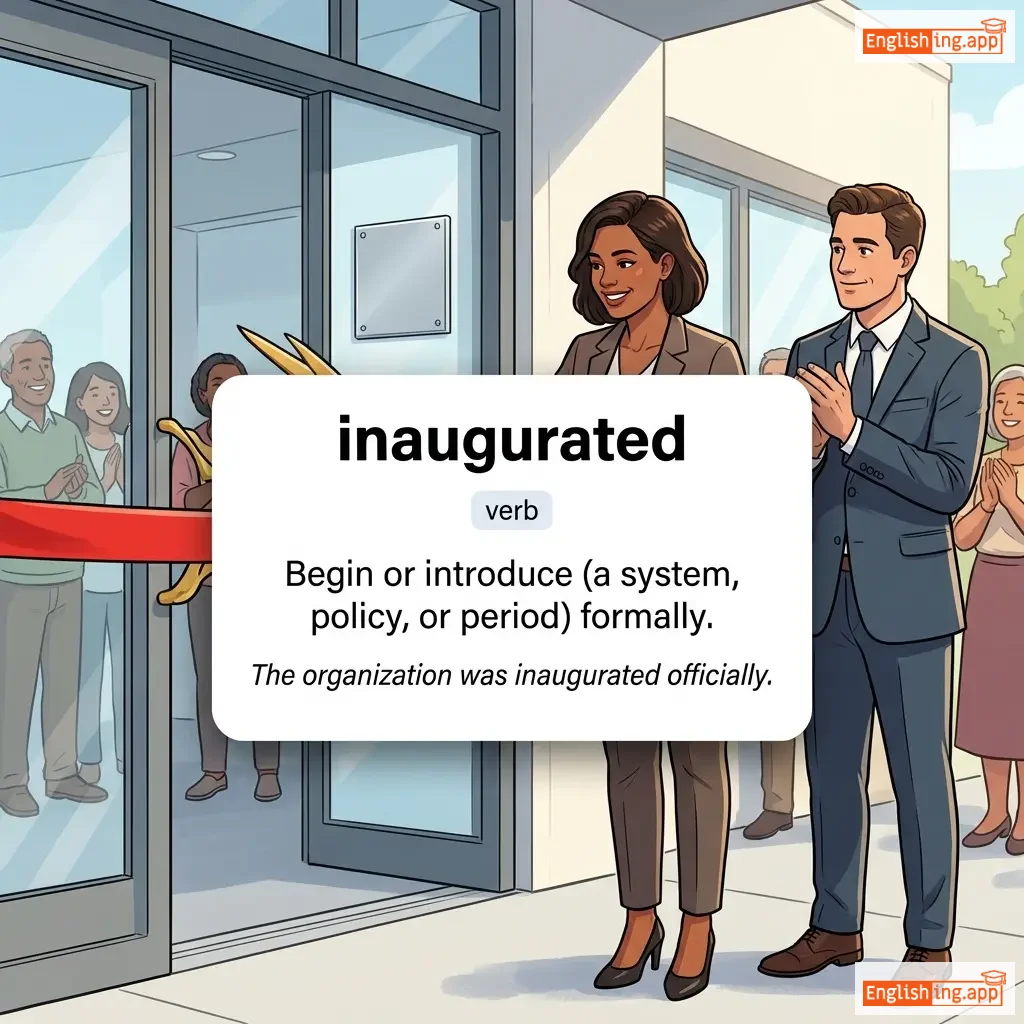
inaugurated definition card — visual illustration of the meaning
verb
ɪˈnɔː.ɡjə.reɪ.tɪd
開会 (kaikai)

Begin or introduce (a system, policy, or period) formally.

"The organization was inaugurated officially."

"その組織は正式に開会されました。" (Sono soshiki wa seishiki ni kaikai saremashita.)
adjective
/ˌɪnɔːˈspɪʃəs/
不吉 (fukitsu)

Not conducive to success; unpromising or unlucky.

"The event began under inauspicious circumstances."

"そのイベントは不運な状況で始まりました。" (Sono ibento wa fuun na joukyou de hajimarimashita.)
adjective
/ˈɪnˌbɔːrn/

existing from birth; innate

"She has an inborn talent for music."

adjective
/ˈɪnˌbrɛd/
生まれつき (umaretsuki)

existing naturally in a person or animal; also related to reproduction within a limited community

"He has an inbred sense of loyalty."

"彼には生まれつきの忠誠心があります。" (Kare ni wa umaretsuki no chūseishin ga arimasu.)