語彙集

英単語辞書 | 単語の意味、定義、例文

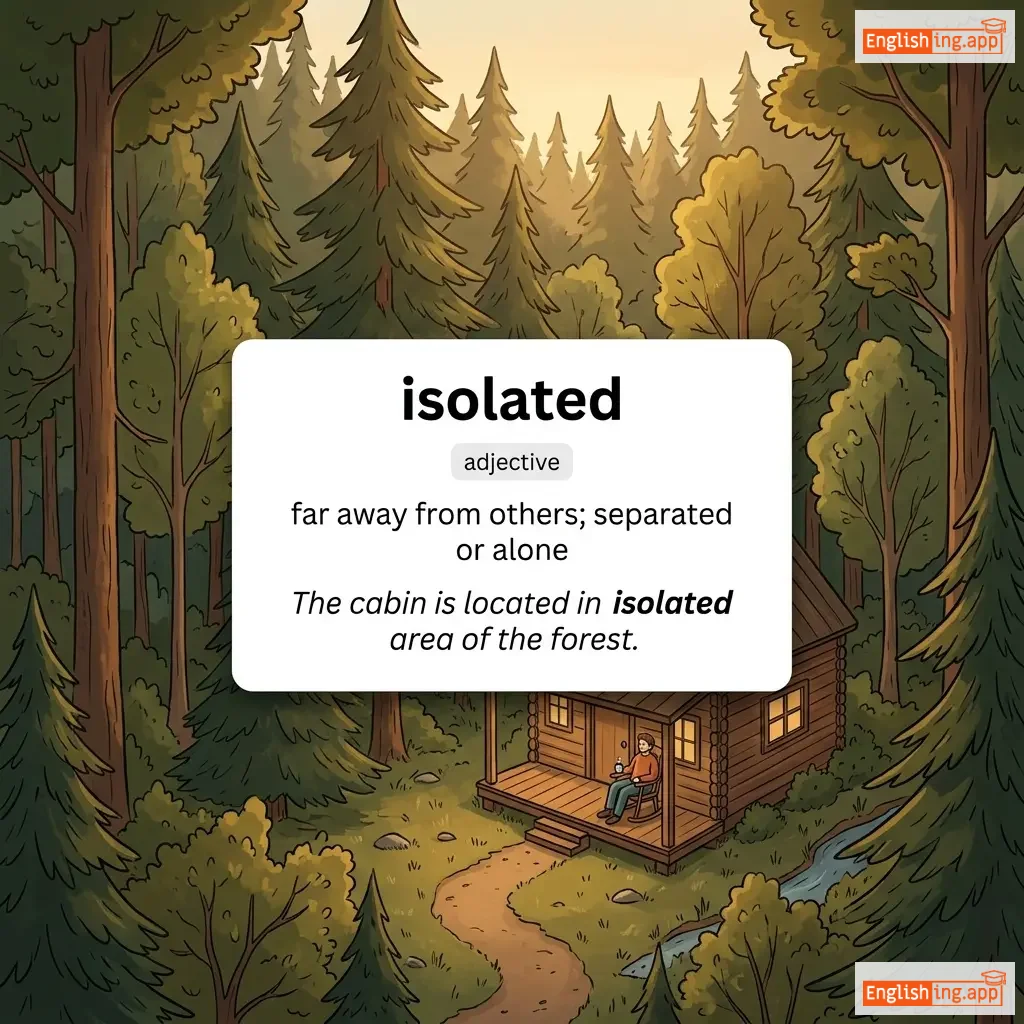
isolated definition card — visual illustration of the meaning
adjective
/ˈaɪsəleɪtɪd/
孤立した / 分離された (koritsu shita / bunri sareta)

far away from others; separated or alone

"The cabin is located in an isolated area of the forest."

"キャビンは森の中の孤立したエリアにあります。" (Kyabin wa mori no naka no koritsu shita eria ni arimasu.)
noun
/ˌaɪsəˈleɪʃən/
隔離 (kakuri)

the state of being separated from others; solitude or detachment

"He lived in complete isolation after his retirement."

"彼は引退後、完全に隔離された生活をしていました。" (Kare wa intai-go, kanzen ni kakuri sareta seikatsu o shiteimashita.)
adjective
/ˌaɪsəʊˈθɜːrməl/
等温 (touon)

Having or maintaining equal or constant temperature.

"The experiment was conducted under isothermal conditions."

"実験は等温条件で行われました。" (Jikken wa touon jouken de okonawaremashita.)
noun
/ˈaɪsətəʊp/
同位体 (dōitai)

Atoms of the same element with equal number of protons but different numbers of neutrons.

"Carbon-14 is a radioactive isotope used in dating fossils."

"炭素-14は化石の年代を測定するために使用される放射性同位体です。" (Tanso-14 wa kaseki no nendai o sokutei suru tame ni shiyō sareru hōshasei dōitai desu.)
adjective, noun
/ɪzˈreɪli/
イスラエルの (isuraeru no)

relating to Israel or its people; a person from Israel

"She works for an Israeli company."

"彼女はイスラエルの会社で働いています。" (Kanojo wa Isuraeru no kaisha de hataraiteimasu.)
noun, verb
/ˈɪʃuː/
問題, 発行, 配布 (mondai, hakkou, haifu)

A problem, topic, or the act of supplying or distributing something.

"The magazine will issue a new edition next week."
"雑誌は来週新しい版を発行します。" (Zasshi wa raishuu atarashii han wo hakkou shimasu.)
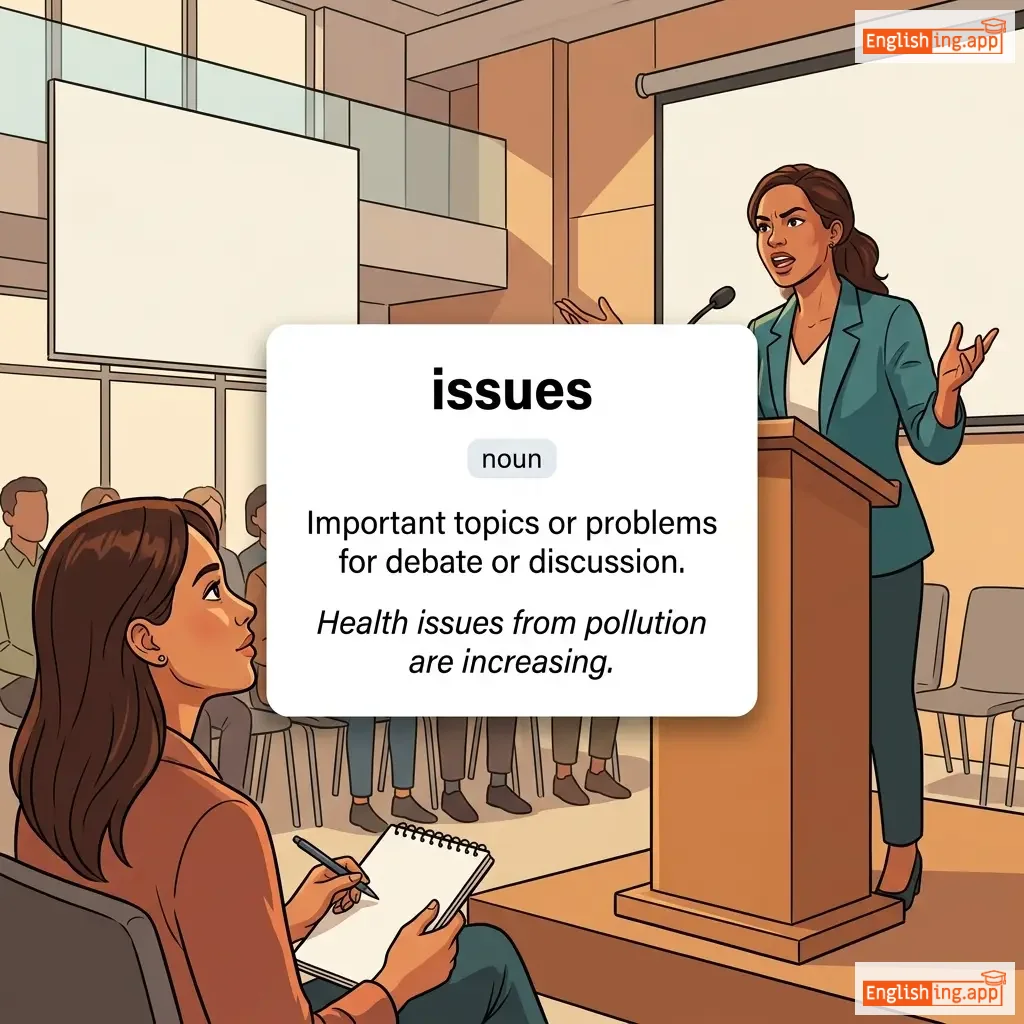
issues definition card — visual illustration of the meaning
noun
/ˈɪʃ.uːz/
問題 (mondai)

Important topics or problems for debate or discussion.

"Health issues from pollution are increasing."

"汚染による健康問題が増加しています。" (Oseng ni yoru kenkō mondai ga zōka shiteimasu.)
noun
/ˈɪsməs/ or /ˈɪsθməs/
地峡 (chikyō)

A narrow strip of land connecting two larger land areas, often with water on either side.

"The Panama Canal cuts through the Isthmus of Panama."

"パナマ運河はパナマの地峡を通ります。" (Panama unka wa Panama no chikyō o tōrimasu.)
pronoun
/ɪt/
それ (sore)

used to refer to a thing, animal, or idea previously mentioned or easily identified

"It is raining outside."

"外では雨が降っています。" (Soto de wa ame ga futteimasu.)
adjective, noun
/ɪˈtæliən/
幸福 (kōfuku)

relating to Italy, its people, or its language; a person from Italy

"She loves Italian food."

"彼女は賞を受け取ったとき、自分の幸せを隠せませんでした。" (Kanojo wa shō o uketotta toki, jibun no kōfuku o kakusemasen deshita.)
verb
/ɪtʃ/
かゆみ (kayumi)

to feel an urge to scratch; to have a restless desire

"My skin itches from the mosquito bites."

"蚊に刺されて肌がかゆいです。" (Ka ni sasarete hada ga kayui desu.)
itchiness definition card — visual illustration of the meaning
noun
/ˈɪtʃ.i.nəs/
かゆみ (kayumi)

The quality or condition of feeling an irritating sensation on the skin that causes a desire to scratch.

"Eye itchiness often leads to rubbing."

"目のかゆみはしばしば擦る原因となります。" (Me no kayumi wa shibashiba kosuru gen'in to narimasu.)
noun
/ˈaɪtəm/
アイテム (aitemu)

A single thing, object, or unit, often part of a list or collection.

"Each item on the list must be checked carefully."

"リストの各アイテムは慎重にチェックする必要があります。" (Risuto no kaku aitemu wa shinchou ni chekku suru hitsuyou ga arimasu.)
verb
/ˈɪtəreɪt/
反復する (hanfuku suru)

To repeat a process or statement, often to improve or refine.

"The software team will iterate the design until it meets user needs."
"ソフトウェアチームは、ユーザーのニーズを満たすまでデザインを繰り返します。" (Sofutowea chiimu wa, yuzaa no niizu o mitasu made dezain o kurikaeshimasu.)
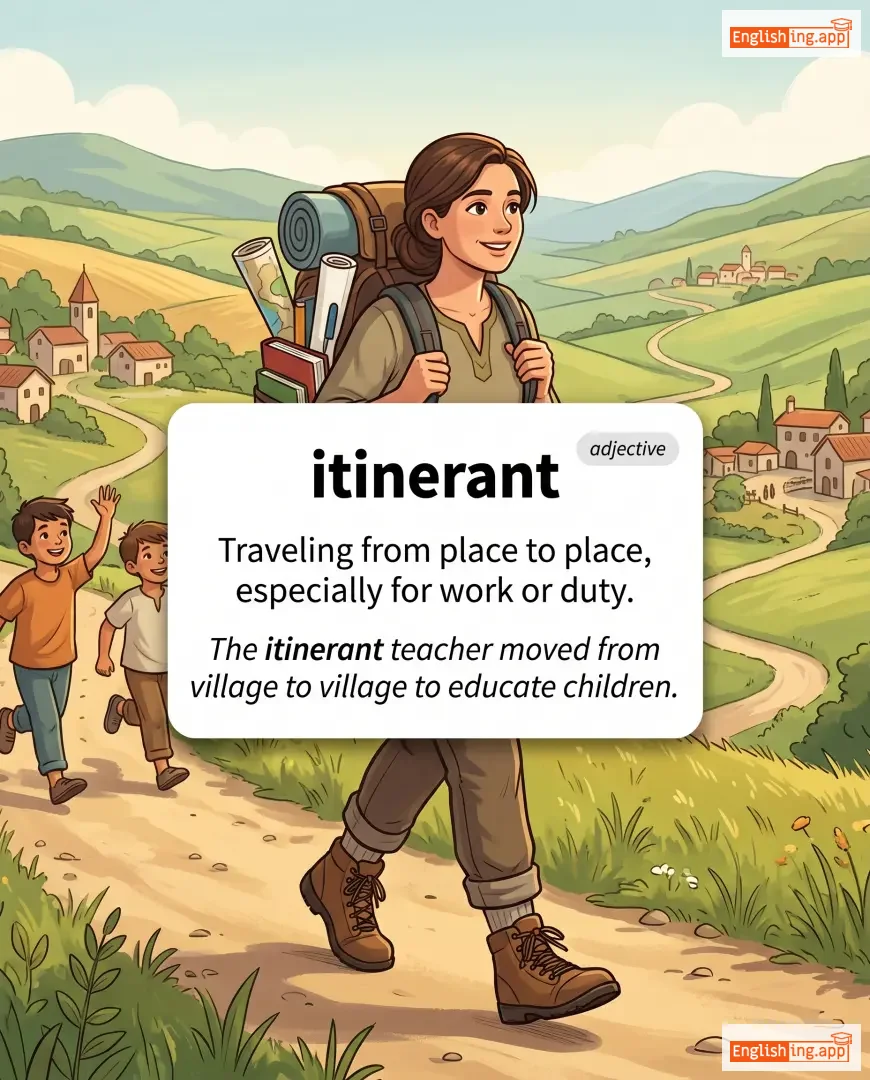
itinerant definition card — visual illustration of the meaning
adjective
/aɪˈtɪnərənt/
旅する (tabisuru)

Traveling from place to place, especially for work or duty.

"The itinerant teacher moved from village to village to educate children."

"その旅する教師は村から村へと移動して子供たちに教育をしていました。" (Sono tabisuru kyōshi wa mura kara mura e to idō shite kodomotachi ni kyōiku o shite imashita.)
itinerary definition card — visual illustration of the meaning
noun
/aɪˈtɪnərɛri/
旅程 (ryokō)

A planned route or schedule of a journey or trip.

"The travel agent gave us a detailed itinerary for our vacation."

"旅行代理店は私たちの休暇のために詳細な旅程を提供してくれました。" (Ryokō dairiten wa watashitachi no kyūka no tame ni shōsai na ryokō o teikyō shite kuremashita.)
verb
/aɪˈtɪnəˌreɪt/
旅行する (ryokou suru)

To travel from place to place, usually for the purpose of work or preaching.

"The missionary itinerated throughout the region to spread the message."

"伝道師は地域を巡り、メッセージを広めました。" (Dendoushi wa chiiki o meguri, messeeji o hiromemashita.)
pronoun
/ɪts/
それの (sore no)

Belonging to or associated with a thing previously mentioned.

"The company changed its logo last year."

"会社は昨年そのロゴを変更しました。" (Kaisha wa sakunen sono rogo o henkō shimashita.)
pronoun
/ɪtˈsɛlf/
それ自身 (sore jishin)

Used to emphasize the thing just mentioned; by its own power or effort.

"The cat cleaned itself after eating."

"猫は食べた後、自分で自分をきれいにした。" (neko wa tabeta ato, jibun de jibun o kirei ni shita.)
noun
/ɪkˈsɔːr.ə/
イクソラ (ikusora)

a tropical flowering shrub with clusters of small bright red, orange, or yellow flowers

"The bright red ixora bushes lined the pathway to the tropical garden."

"明るい赤いイクソラの低木が熱帯庭園への小道を囲んでいました。" (Akarui akai ikusora no teimoku ga nettai teien e no komichi wo kakondeimashita.)