語彙集

英単語辞書 | 単語の意味、定義、例文

adjective
/ɪnˈtɒlərənt/
不寛容 (fukan'yō)

unwilling to accept or respect beliefs or behavior different from one's own

"He is intolerant of any opinion that differs from his own."
"彼は自分の意見と異なる意見を全く容認しません。" (Kare wa jibun no iken to kotonaru iken o mattaku yōnin shimasen.)
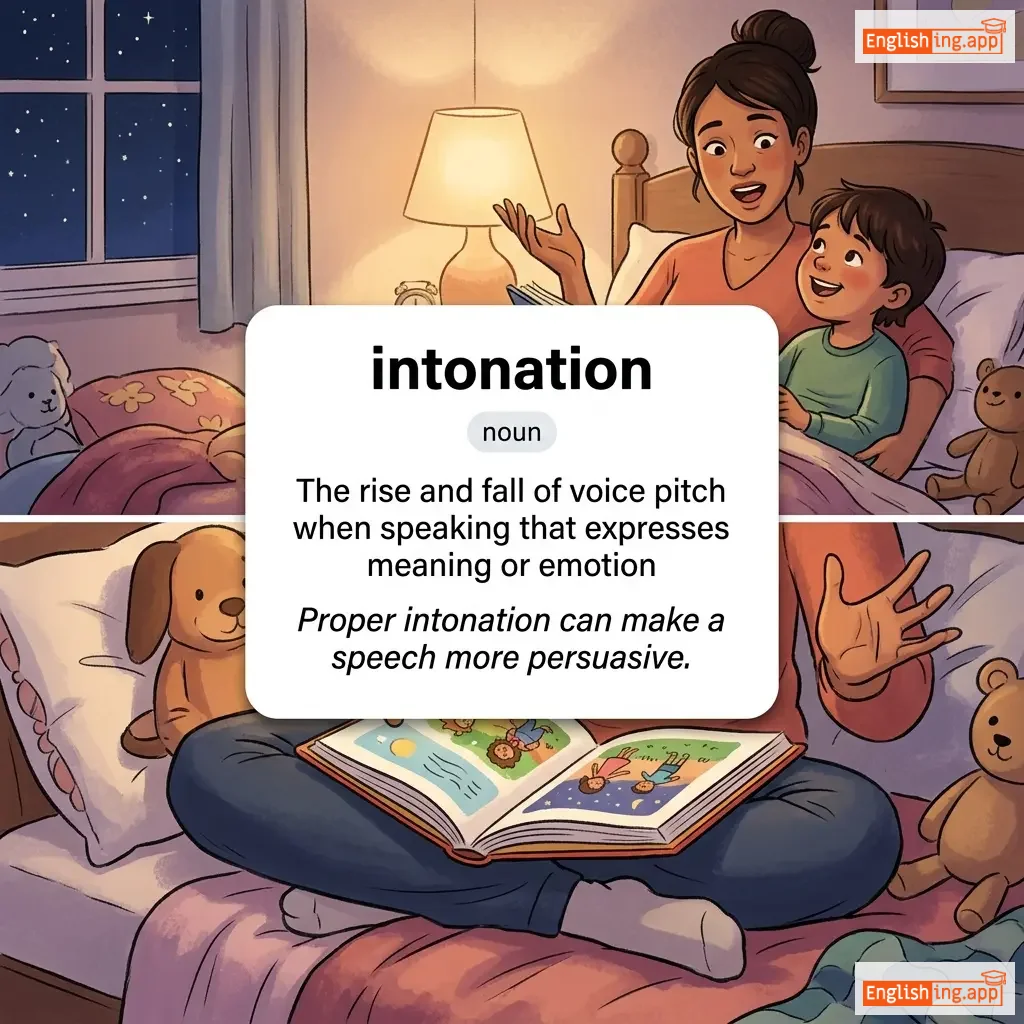
intonation definition card — visual illustration of the meaning
noun
ˌɪn.toʊˈneɪ.ʃən
イントネーション (intonēshon)

The rise and fall of voice pitch when speaking that expresses meaning or emotion

"Proper intonation can make a speech more persuasive."

"適切なイントネーションは、スピーチをより説得力のあるものにできます。" (Tekisetsu na intonēshon wa, supīchi o yori settokuryoku no aru mono ni dekimasu.)
noun
/ɪnˈtɒksɪkənt/
酔わせる物質 (yowaseru busshitsu)

a substance, especially alcohol or a drug, that causes intoxication

"Alcohol is the most commonly used intoxicant in many cultures."

"アルコールは多くの文化で最も一般的に使用される酔わせる物質です。" (Arukōru wa ōku no bunka de mottomo ippanteki ni shiyō sareru yowaseru busshitsu desu.)
verb
/ɪnˈtɒksɪkeɪt/
幸せ (shiawase)

to make someone lose control of their faculties or behavior due to alcohol or drugs

"The strong drink quickly intoxicated him."

"彼女は賞を受け取ったとき、自分の幸せを隠すことができなかった。" (Kanojo wa shō o uketotta toki, jibun no shiawase o kakusu koto ga dekinakatta.)
adjective
/ˌɪn.trəˈsɛl.jʊ.lər/
細胞内 (saibōnai)

Located or occurring within a cell.

"The drug works by targeting intracellular bacteria."
"薬は細胞内の細菌をターゲットにして作用します。" (Kusuri wa saibōnai no saikin o tāgetto ni shite sayō shimasu.)
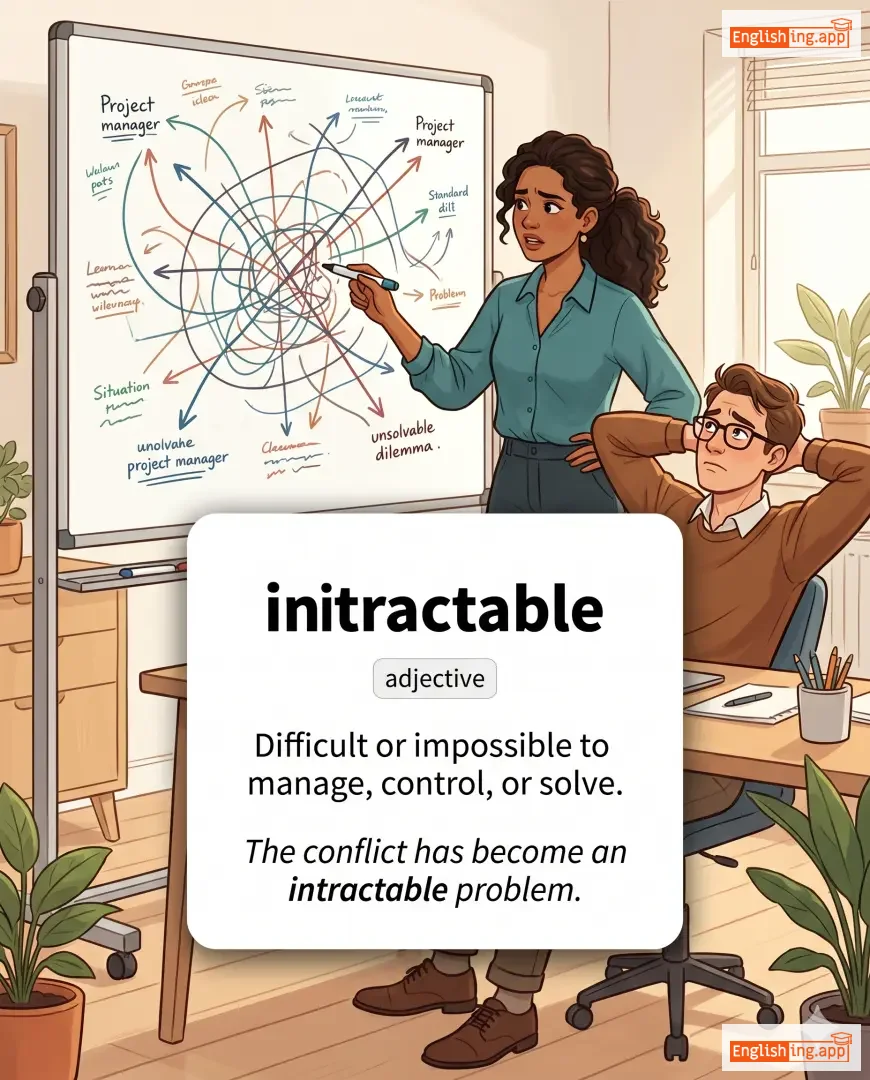
intractable definition card — visual illustration of the meaning
adjective
/ɪnˈtræk.tə.bəl/
管理不能 (kanri funō)

Difficult or impossible to manage, control, or solve.

"The conflict has become an intractable problem."

"その対立は管理不能な問題になった。" (Sono tairitsu wa kanri funō na mondai ni natta.)
adjective
/ˌɪn.trəˈmjʊə.rəl/
学内 (gakunai)

Occurring within the walls of a single institution, especially a school or college.

"The college organizes intramural sports competitions every semester."
"大学は毎学期、学内スポーツ競技を開催しています。" (Daigaku wa mai gakki, gakunai supōtsu kyōgi o kaisai shiteimasu.)
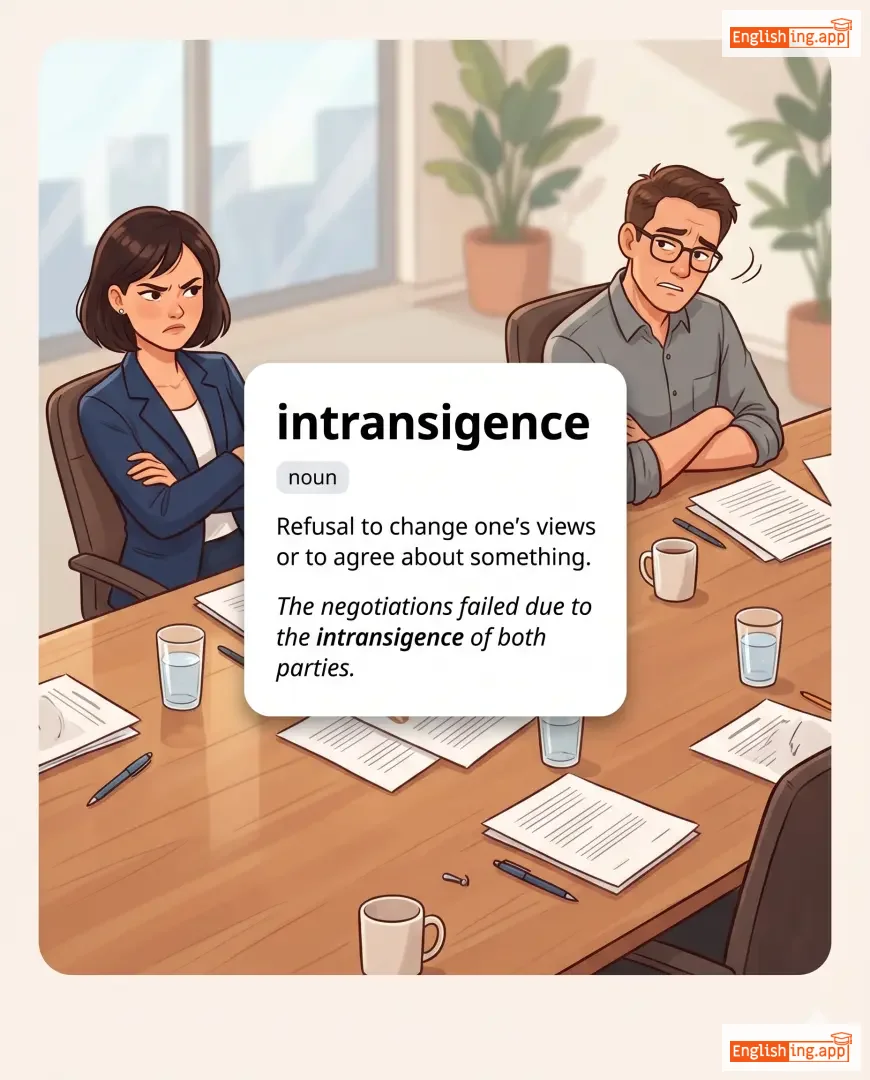
intransigence definition card — visual illustration of the meaning
noun
/ɪnˈtræn.sɪ.dʒəns/
不屈 (fukutsu)

Refusal to change one's views or to agree about something.

"The negotiations failed due to the intransigence of both parties."
"両者の不屈の姿勢のために交渉は失敗した。" (Ryōsha no fukutsu no shisei no tame ni kōshō wa shippai shita.)
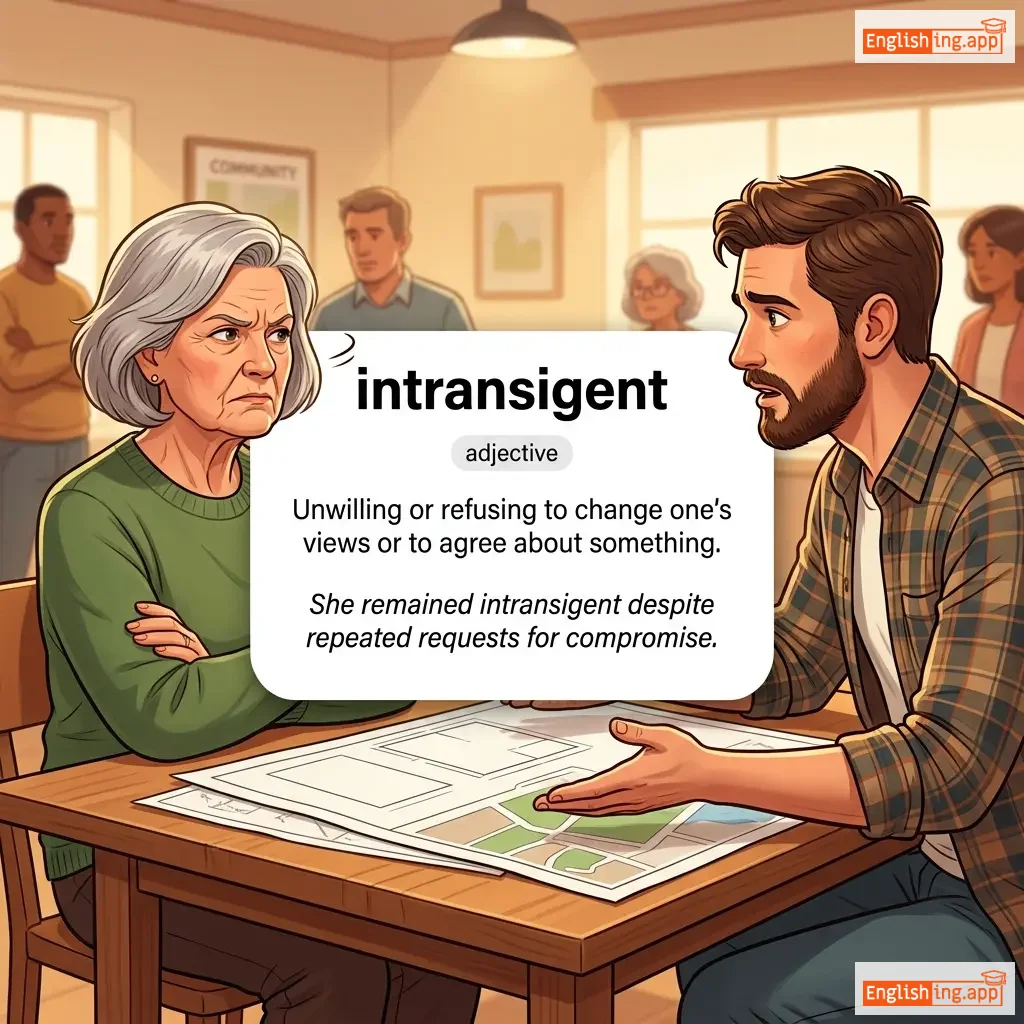
intransigent definition card — visual illustration of the meaning
adjective
/ɪnˈtræn.sɪ.dʒənt/
譲らない (yuzuranai)

Unwilling or refusing to change one's views or to agree about something.

"She remained intransigent despite repeated requests for compromise."

"妥協の繰り返しのお願いにもかかわらず、彼女は譲らなかった。" (Dakyō no kurikaeshi no onegai ni mo kakawarazu, kanojo wa yuzuranakatta.)
adjective
/ɪnˈtrɛpɪd/
勇敢な (yūkan na)

fearless and adventurous, often used humorously

"The intrepid traveler explored the jungle alone."

"その勇敢な旅行者は一人でジャングルを探検した。" (Sono yūkan na ryokō-sha wa hitori de janguru o tanken shita.)
noun
/ˈɪntrɪkəsi/
複雑さ (fukuzatsusa)

the quality of being very detailed or complicated

"The intricacy of the design impressed everyone."

"デザインの複雑さは全員を感動させました。" (Dezain no fukuzatsusa wa zen'in o kandou sasemashita.)
adjective
/ˈɪntrɪkət/
複雑 (fukuzatsu)

very detailed, complex, and difficult to understand

"The artist created an intricate pattern on the wall."

"アーティストは壁に複雑な模様を作り出しました。" (Ātisuto wa kabe ni fukuzatsu na moyō o tsukuri dashimashita.)
verb
/ɪnˈtriːɡ/
魅了する (miryō suru)

to arouse curiosity or interest; to make someone fascinated

"The mystery novel will intrigue any reader."

"ミステリー小説はすべての読者を魅了するでしょう。" (Misuterī shōsetsu wa subete no dokusha o miryō suru deshō.)
adjective
/ɪnˈtriːɡɪŋ/
非常に興味深く、異常な; 好奇心を引き起こす (hijou ni kyomi-bukaku, ibōna; kōkishin o hikiokosu)

very interesting and unusual; arousing curiosity

"The movie has an intriguing plot that keeps the audience hooked."
"その映画は観客を引き付ける非常に興味深いプロットを持っています。" (Sono eiga wa kankyaku o hikitsukeru hijou ni kyomi-bukai purotto o motteimasu.)
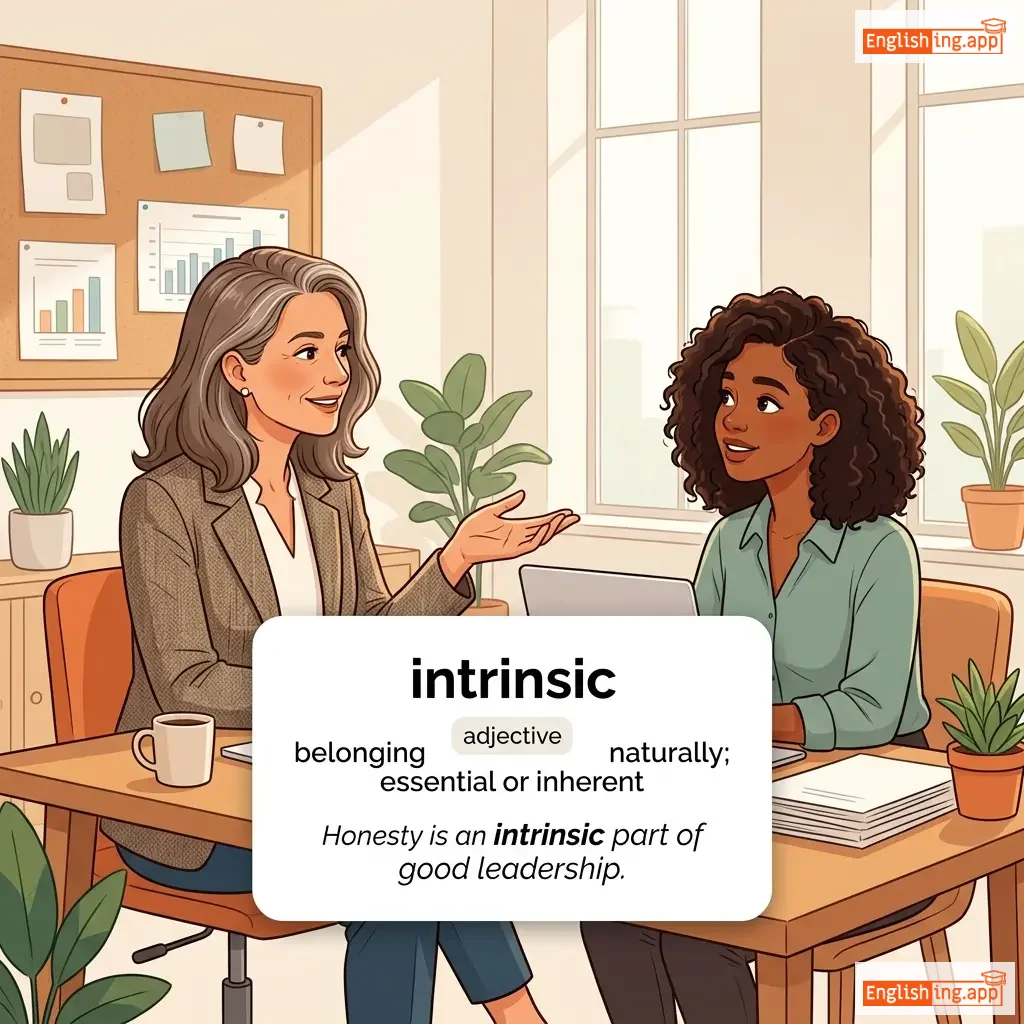
intrinsic definition card — visual illustration of the meaning
adjective
/ɪnˈtrɪnzɪk/
内在的 (naizai-teki)

belonging naturally; essential or inherent

"Honesty is an intrinsic part of good leadership."
"誠実は良いリーダーシップの内在的な部分です。" (Seijitsu wa yoi rīdāshippu no naizaiteki na bubun desu.)
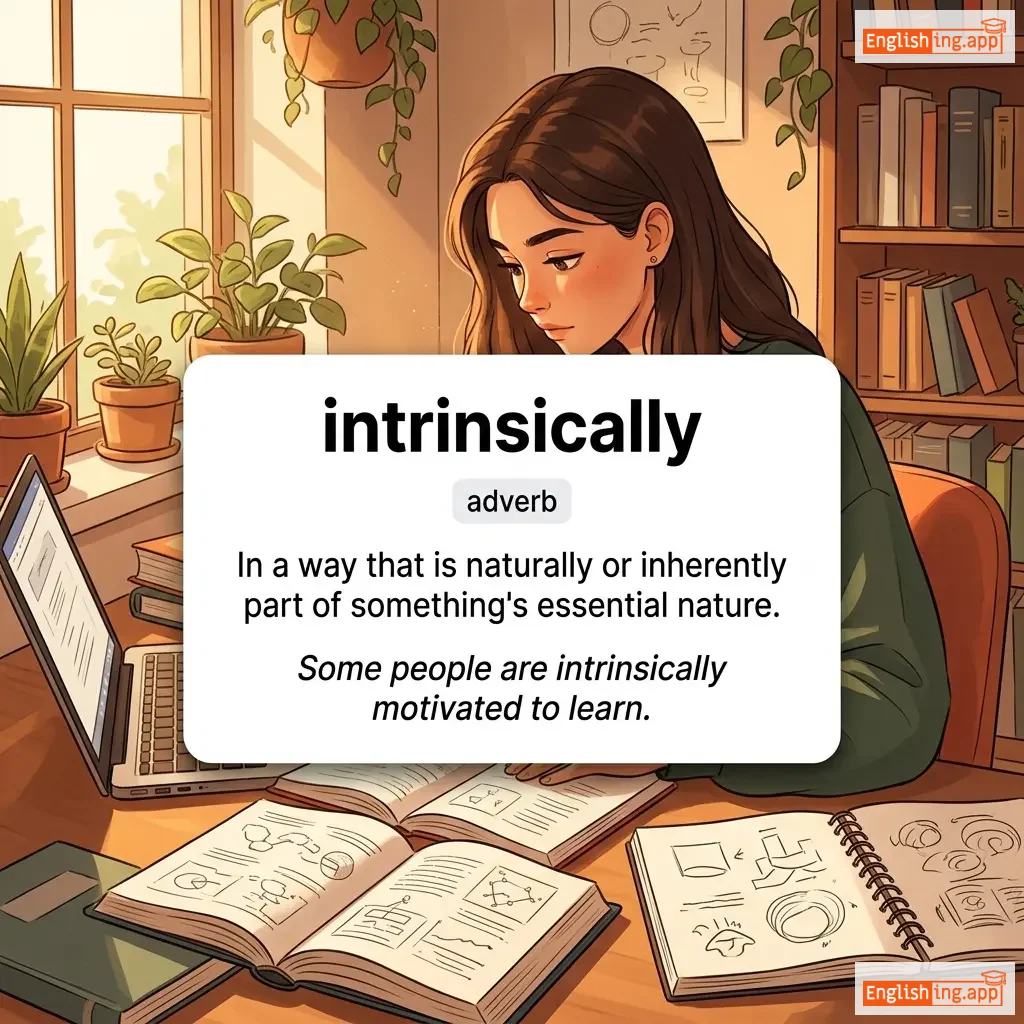
intrinsically definition card — visual illustration of the meaning
adverb
ɪnˈtrɪn.zɪ.kli
本質的に (honshitsuteki ni)

In a way that is naturally or inherently part of something's essential nature.

"Some people are intrinsically motivated to learn."

"いくつかの人々は本質的に学ぶことに動機づけられている。" (Ikutsuka no hitobito wa honshitsuteki ni manabu koto ni dōki dzukerarete iru.)
introduce definition card — visual illustration of the meaning
verb
/ˌɪntrəˈduːs/
紹介する (shoukai suru)

to present someone or something to another person or group

"He will introduce his new idea at the meeting."

"彼は会議で新しいアイデアを紹介します。" (Kare wa kaigi de atarashī aidea o shōkai shimasu.)
noun
/ˌɪn.trəˈdʌk.ʃən/
紹介 (shoukai)

the action of introducing something or someone; an opening or beginning part

"The professor gave a brief introduction before starting the lecture."

"教授は講義を始める前に簡単なイントロダクションをしました。" (Kyoushi wa kougi wo hajimeru mae ni kantan na intorodakushon wo shimashita.)
adjective
/ˌɪn.trəˈdʌk.tər.i/
導入の (dōnyū no)

Serving as an introduction; preliminary or preparatory.

"The professor gave an introductory lecture on economics."

"教授は経済学についての導入の講義を行いました。" (Kyōju wa keizaigaku ni tsuite no dōnyū no kōgi o okonaimashita.)
noun
/ˌɪn.trəˈɡreʃ.ən/
遺伝子流入 (idenshi ryūnyū)

The transfer of genetic information from one species to another through repeated backcrossing.

"Introgression plays a significant role in plant breeding."

"イントログレッションは植物育種において重要な役割を果たします。" (Introgresshon wa shokubutsu ikushu ni oite jūyō na yakuwari o hatashimasu.)
verb
/ˌɪn.trəˈmɪt/
挿入する (sounyuu suru)

To insert or introduce something into a place or body.

"The doctor carefully intromitted the instrument into the wound."

"医者は慎重に器具を傷口に挿入しました。" (Isha wa shinchou ni kigu wo kizu ni sounyuu shimashita.)
verb
/ˌɪn.trəˈspekt/
内省する (naisei suru)

To examine one's own thoughts, feelings, or mental state.

"He often introspects before making important decisions."
"彼は重要な決定を下す前にしばしば自己分析をします。" (Kare wa juuyou na kettei o kudasu mae ni shibashiba jiko bunseki o shimasu.)
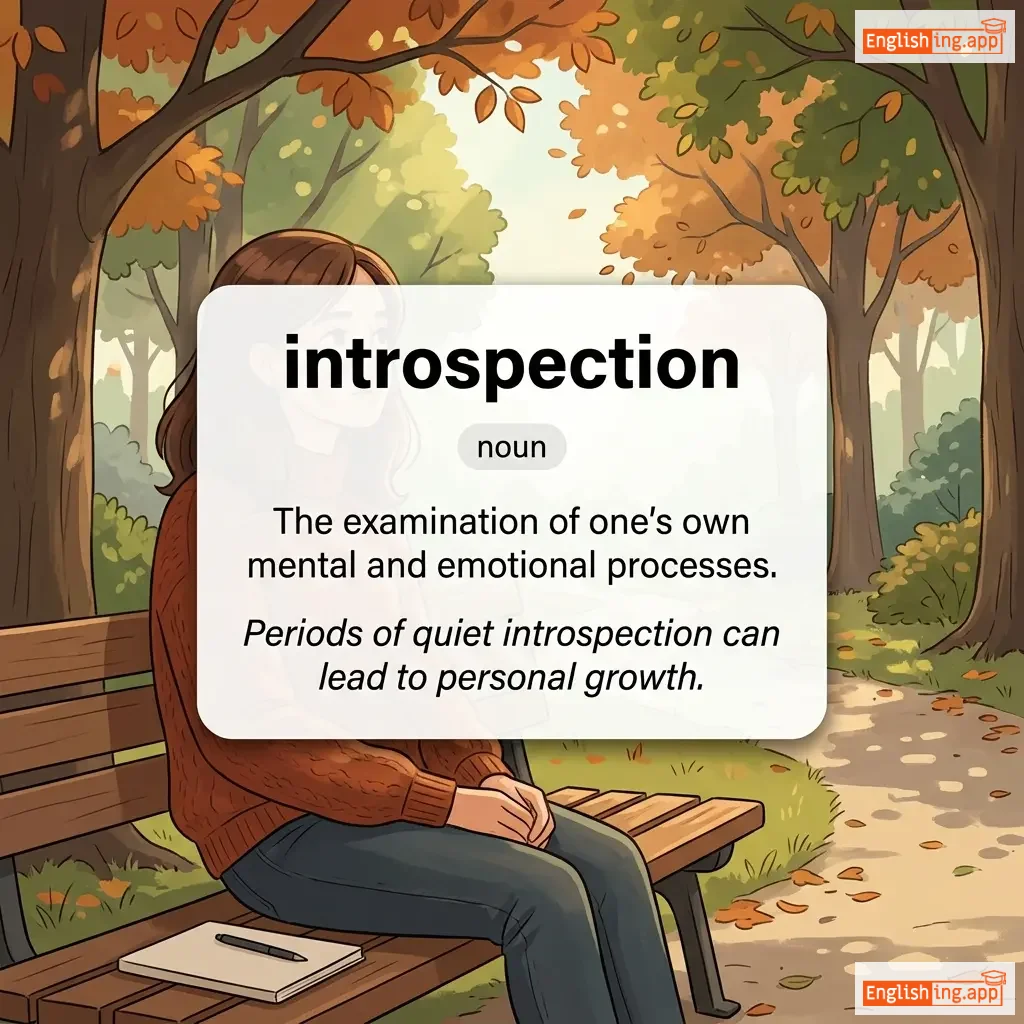
introspection definition card — visual illustration of the meaning
noun
/ˌɪn.trəˈspek.ʃən/
内省 (naisei)

The examination of one's own mental and emotional processes.

"Periods of quiet introspection can lead to personal growth."
"静かな内省の時間は、個人的な成長へと導くことができます。" (Shizukana naisei no jikan wa, kojinteki na seichō e to michibiku koto ga dekimasu.)
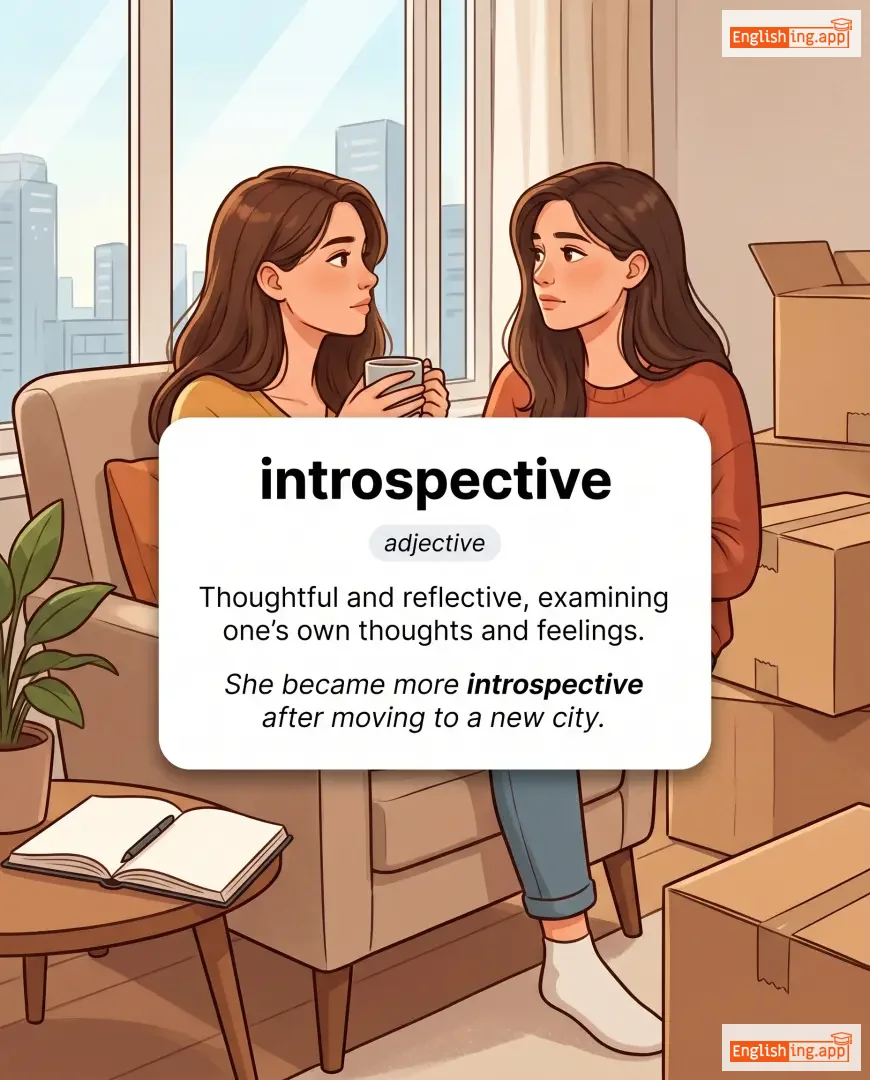
introspective definition card — visual illustration of the meaning
adjective
/ˌɪn.trəˈspɛk.tɪv/
内向的 (naikōteki)

Thoughtful and reflective, examining one's own thoughts and feelings.

"She became more introspective after moving to a new city."

"彼女は新しい都市に引っ越した後、より内向的になった。" (Kanojo wa atarashī toshi ni hikkoshita ato, yori naikōteki ni natta.)
noun
/ˌɪn.trəˈvɜːr.ʒən/
内向 (naikou)

The tendency to be inward-looking and shy, preferring solitary activities.

"Her introversion made it difficult for her to enjoy large parties."

"彼女の内向的な性格は、大きなパーティーを楽しむのを難しくした。" (Kanojo no naikouteki na seikaku wa, ookina paatii o tanoshimu no o muzukashiku shita.)
noun
/ˈɪn.trə.vɜːrt/
内向的 (naikōteki)

A person who tends to be shy and prefers spending time alone rather than in groups.

"As an introvert, he preferred reading over attending parties."

"内向的な性格として、パーティに参加するよりも読書の方が好きでした。" (Naikōteki na seikaku to shite, pāti ni sanka suru yori mo dokusho no hō ga suki deshita.)
verb
/ɪnˈtruːd/
干渉する (kanshō suru)

To enter a place or situation where one is not wanted or not invited.

"He felt embarrassed to intrude on their private conversation."
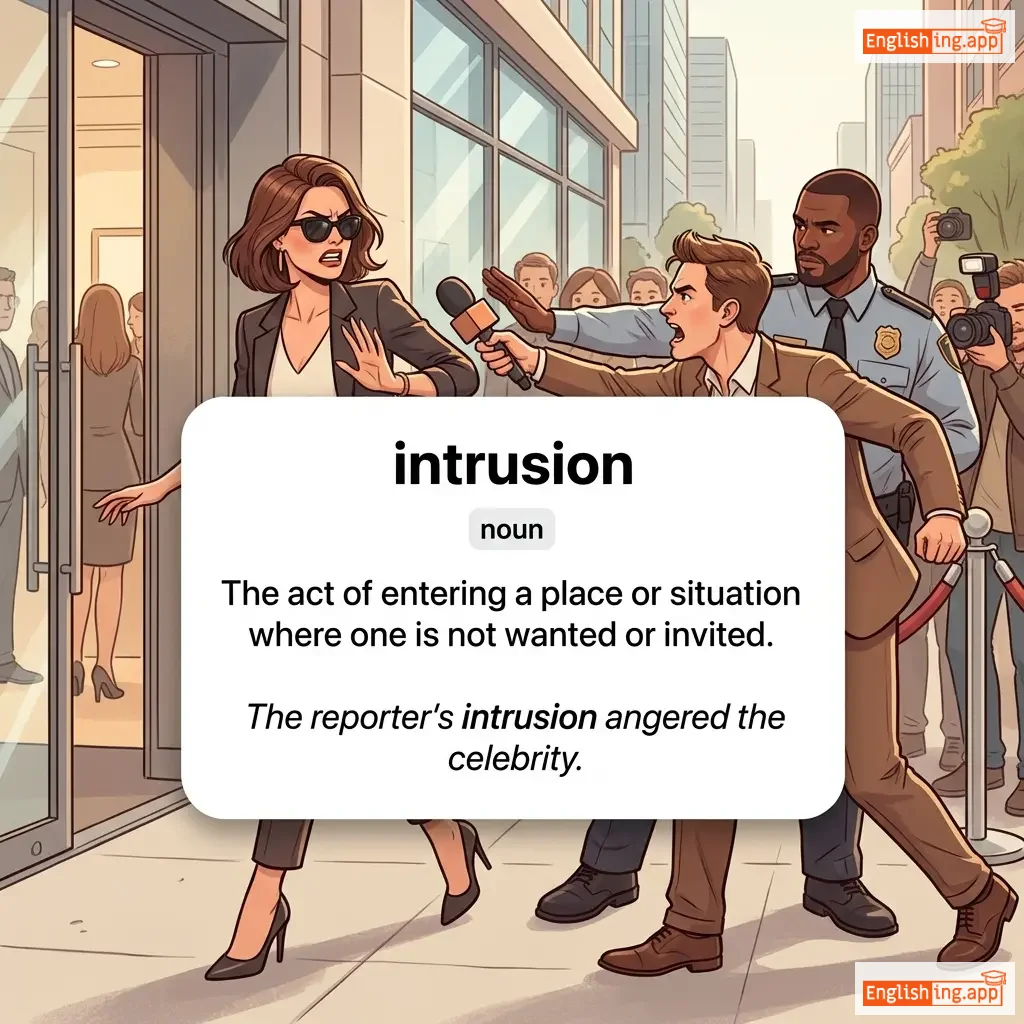
"彼は彼らのプライベートな会話に干渉して恥ずかしく思った。" (Kare wa karera no puraibēto na kaiwa ni kanshō shite hazukashiku omotta.)
intrusion definition card — visual illustration of the meaning
noun
/ɪnˈtruː.ʒən/
不正侵入 (Fusei shinnyū)

The act of entering a place or situation where one is not wanted or invited.

"The reporter's intrusion angered the celebrity."

"レポーターの不正侵入はセレブを怒らせた。" (Repōtā no fusei shinnyū wa serebu o okorase ta.)
intuition definition card — visual illustration of the meaning
noun
/ˌɪn.tjuˈɪʃ.ən/
直感 (chokkan)

The ability to understand or know something immediately, without conscious reasoning.

"Her intuition told her that something was wrong."

"彼女の直感は何かがおかしいと言った。" (Kanojo no chokkan wa nanika ga okashii to itta.)
adjective
/ɪnˈtjuː.ɪ.tɪv/
直感的 (chokkan-teki)

Based on instinctive understanding rather than reasoning.

"The software has an intuitive design that makes it easy to use."

"そのソフトウェアは直感的なデザインを持っており、使いやすいです。" (Sono sofutowea wa chokkan-teki na dezain o motte ori, tsukaiyasui desu.)
inundate definition card — visual illustration of the meaning
verb
/ˈɪn.ʌn.deɪt/
氾濫する / 溢れかえる (hanran suru / afurekaeru)

To flood or overwhelm with a large quantity of things.

"The company was inundated with job applications."

"その会社は求人応募で溢れていた。" (Sono kaisha wa kyūjin ōbo de afurete ita.)
noun
/ˌɪn.ʌnˈdeɪ.ʃən/
洪水 (kōzui)

The act of flooding or overwhelming with water or things.

"The town suffered from a severe inundation after the heavy rains."

"町は大雨後にひどい洪水に見舞われました。" (Machi wa ōamego ni hidoi kōzui ni mimawaremashita.)
verb
/ɪˈnjʊər/
慣れる (nareru)

To become accustomed to something, especially something unpleasant.

"Soldiers quickly became inured to the harsh conditions."
"兵士たちはすぐに過酷な状況に慣れました。" (Heishi-tachi wa sugu ni kakoku na joukyou ni naremashita.)
inured definition card — visual illustration of the meaning
adjective
/ɪˈnjʊərd/
慣れた (nareta)

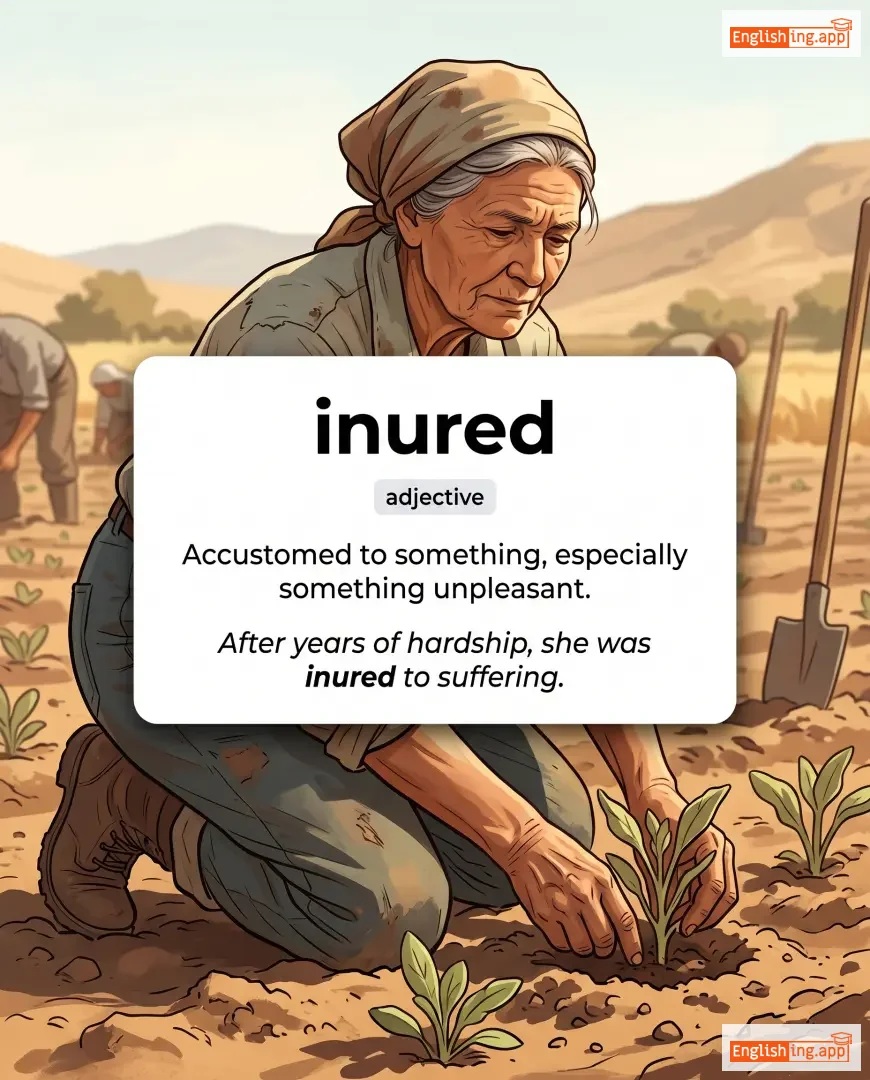
Accustomed to something, especially something unpleasant.

"After years of hardship, she was inured to suffering."

"長年の苦しみの後、彼女は苦しみに慣れていた。" (Naganen no kurushimi no ato, kanojo wa kurushimi ni narete ita.)
verb
/ɪnˈveɪd/
侵入する (shin'nyū suru)

to enter a place or country forcefully, especially as an enemy

"The army invaded the neighboring country."

"軍隊は隣国に侵入しました。" (Guntai wa ringoku ni shin'nyū shimashita.)
adjective, noun
/ˈɪnvəlɪd/ (adjective), /ɪnˈvælɪd/ (noun)
無効 (mukou)

Not valid; having no force or effect. Also refers to a person too weak or ill to care for themselves.

"The court declared the contract invalid."

"裁判所は契約を無効と宣言した。" (Saibansho wa keiyaku o mukou to sengen shita.)
verb
/ɪnˈvælɪdeɪt/
無効にする (mukou ni suru)

To make something not valid or legally acceptable.

"The new evidence may invalidate the previous ruling."

"新しい証拠が前の判決を無効にするかもしれません。" (Atarashii shouko ga mae no hanketsu o mukou ni suru kamoshiremasen.)
noun
/ˌɪnvəˈlɪdɪti/
無効性 (mukousei)

the state of being invalid, legally void, or lacking force or validity

"The court ruled that the contract suffered from invalidity."

"裁判所はその契約に無効性があると判断した。" (saibansho wa sono keiyaku ni mukousei ga aru to handan shita)
adjective
/ɪnˈvæljʊəbl/
計り知れない価値がある (hakari shirenai kachi ga aru)

Extremely useful or indispensable.

"Her advice proved invaluable to my success."

"彼女の助言は私の成功にとって非常に貴重でした。" (Kanojo no jogen wa watashi no seikou ni totte hijō ni kichou deshita.)
adjective
/ɪnˈvɛəriəbl/
不変の (fuhen no)

Not changing; constant and unchanging.

"His invariable kindness won him many friends."

"彼の不変の優しさは、多くの友達を得ました。" (Kare no fuhen no yasashisa wa, ooku no tomodachi o emashita.)
noun
/ɪnˈveɪʒən/
侵略 (shinryaku)

An instance of invading a country, region, or personal space with armed force or unwelcome presence.

"The army prepared for the possibility of an invasion."

"軍隊は侵略の可能性に備えました。" (Guntai wa shinryaku no kanousei ni sonaemashita.)
adjective
/ɪnˈveɪsɪv/
侵襲的 (shinshūteki)

Tending to spread harmfully, intruding aggressively, or encroaching beyond proper boundaries.

"The doctor explained that the procedure was minimally invasive."
"医者は、その手順が最小限の侵襲的であることを説明しました。" (Isha wa, sono tejun ga saishōgen no shinshūteki de aru koto o setsumei shimashita.)
invective definition card — visual illustration of the meaning
noun
/ɪnˈvɛktɪv/
侮辱的な言葉 (būryokuteki na kotoba)

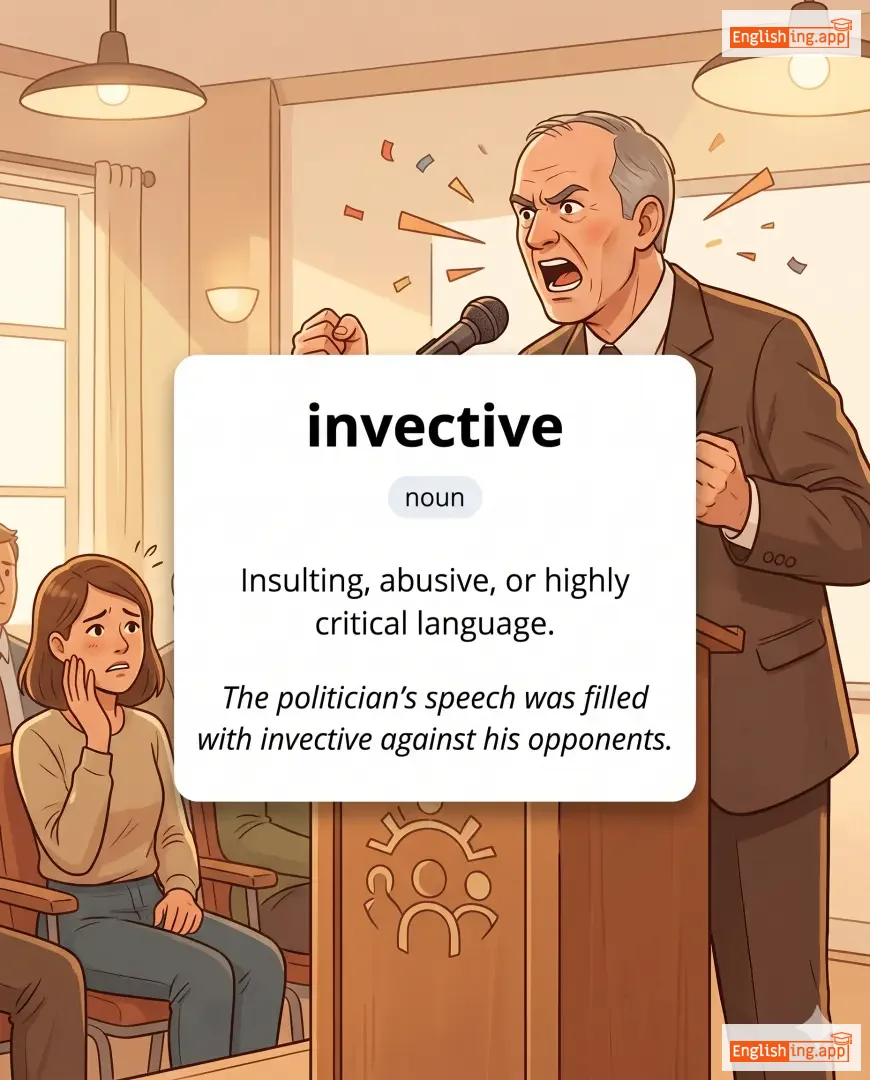
Insulting, abusive, or highly critical language.

"The politician’s speech was filled with invective against his opponents."

"その政治家の演説は、対立候補に対する侮辱的な言葉で満ちていた。" (Sono seijika no enzetsu wa, tairitsukōho ni taisuru būryokuteki na kotoba de michite ita.)
verb
/ɪnˈveɪ/
激しく批判する (hageshiku hihan suru)

To speak or write about something with great hostility and criticism.

"He inveighed against the corruption in government."

"彼は政府の腐敗に対して激しく批判した。" (Kare wa seifu no fuhai ni taishite hageshiku hihan shita.)
inveigle definition card — visual illustration of the meaning
verb
/ɪnˈveɪɡəl/
誘惑する (yūwaku suru)

To persuade someone to do something by deception or flattery.

"She inveigled him into signing the contract."

"彼女は彼に契約書に署名させた。" (Kanojo wa kare ni keiyaku-sho ni shomei saseta.)
verb
/ɪnˈvɛnt/
発明する (hatsumei suru)

to create or design something that has not existed before

"Thomas Edison invented the electric bulb."
"トーマス・エジソンは電球を発明しました。" (Tōmasu Ejison wa denkyū o hatsumei shimashita.)
invention definition card — visual illustration of the meaning
noun
/ɪnˈvɛnʃən/
発明 (hatsumei)

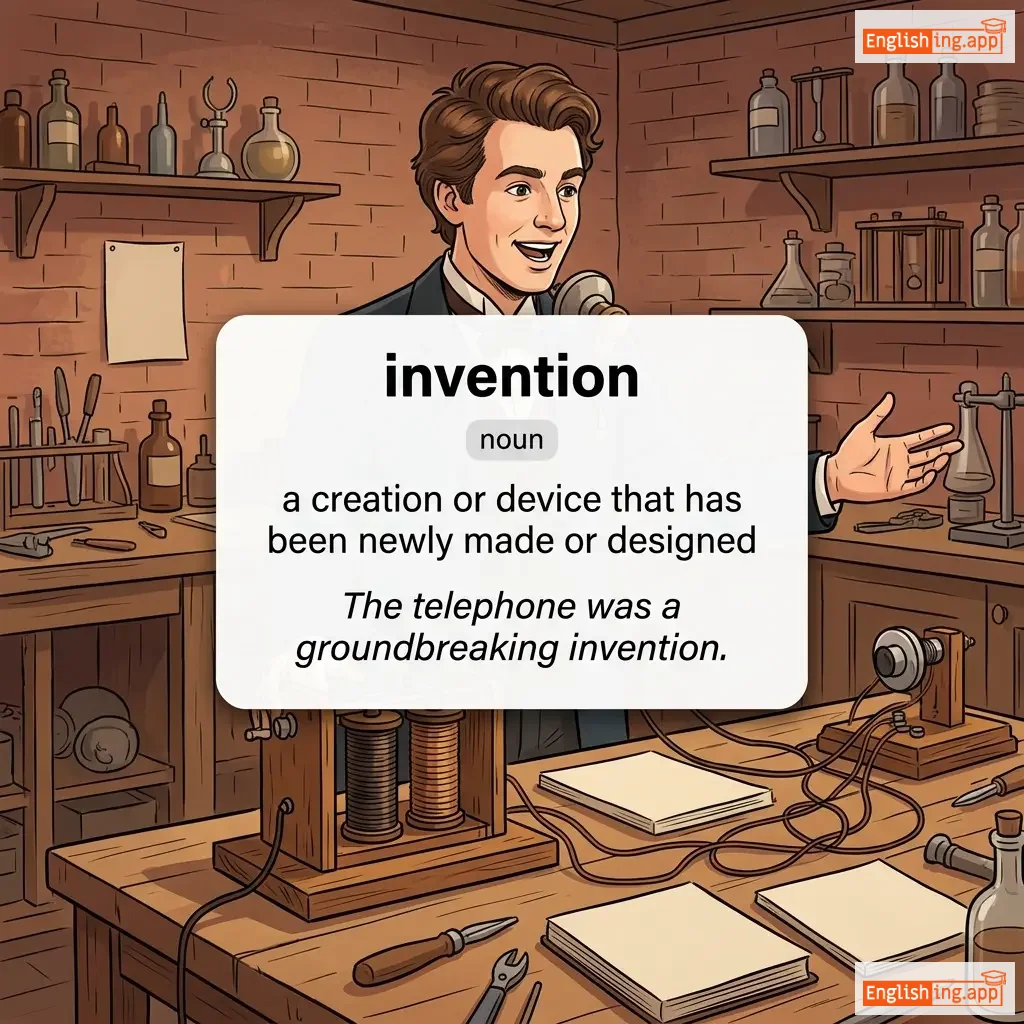
a creation or device that has been newly made or designed

"The telephone was a groundbreaking invention."

"電話は画期的な発明でした。" (Denwa wa kakiteki na hatsumei deshita.)
adjective
/ɪnˈvɛntɪv/
創造的 (sōzōteki)

Having the ability to create or design new things or to think originally.

"The inventor was known for his inventive solutions to everyday problems."

"発明家は日常の問題に対する創造的な解決策で知られていた。" (Hatsumeika wa nichijō no mondai ni taisuru sōzō-teki na kaiketsu-saku de shirarete ita.)
noun
/ɪnˈventər/
発明家 (hatsumeika)

a person who creates or designs something new, especially a device, method, or process

"The inventor patented her new medical device."

"その発明家は新しい医療機器の特許を取得した。" (sono hatsumeika wa atarashii iryo kiki no tokkyo o shutoku shita)
noun
/ˈɪnvənˌtɔːri/
インベントリ (inbentori)

A complete list of items, such as goods in stock or property.

"The shopkeeper checked the inventory before opening the store."

"店主は店を開店する前にインベントリを確認しました。" (Tenshu wa mise o kaiten suru mae ni inbentori o kakunin shimashita.)