語彙集

英単語辞書 | 単語の意味、定義、例文

verb
/ɪnˈfleɪt/
膨らませる;水増しする (fukuramaseru; mizumashi suru)

to fill with air or gas so it expands; to increase excessively or artificially

"The mechanic inflated the tire to the correct pressure."

"整備士はタイヤを適切な空気圧まで膨らませた。" (Seibishi wa taiya o tekisetsu na kuukiatsu made fukuramaseta)
adjective
/ɪnˈfleɪtɪd/
膨らんだ (fukuranda)

excessively increased in size, value, or importance; filled with air or gas

"The company faced criticism for its inflated prices."

"その会社は膨らんだ価格で批判を受けました。" (Sono kaisha wa fukuranda kakaku de hihan o ukemashita.)
inflation definition card — visual illustration of the meaning
noun
/ɪnˈfleɪʃən/
インフレーション (infureshon)

A general increase in prices and fall in the purchasing value of money.

"The government is taking steps to control inflation."

"政府はインフレーションをコントロールするための措置を講じています。" (Seifu wa infureshon o kontorōru suru tame no sochi o kōjiteimasu.)
inflationary definition card — visual illustration of the meaning
adjective
/ɪnˈfleɪ.ʃə.ner.i/
インフレ的 (infureteki)

Causing or characterized by inflation of prices.

"Excessive money supply can lead to an inflationary economy."
"過剰な貨幣供給はインフレ的な経済を引き起こす可能性があります。" (Kajō na kakei kyōkyū wa infureteki na keizai o hikiokosu kanōsei ga arimasu.)
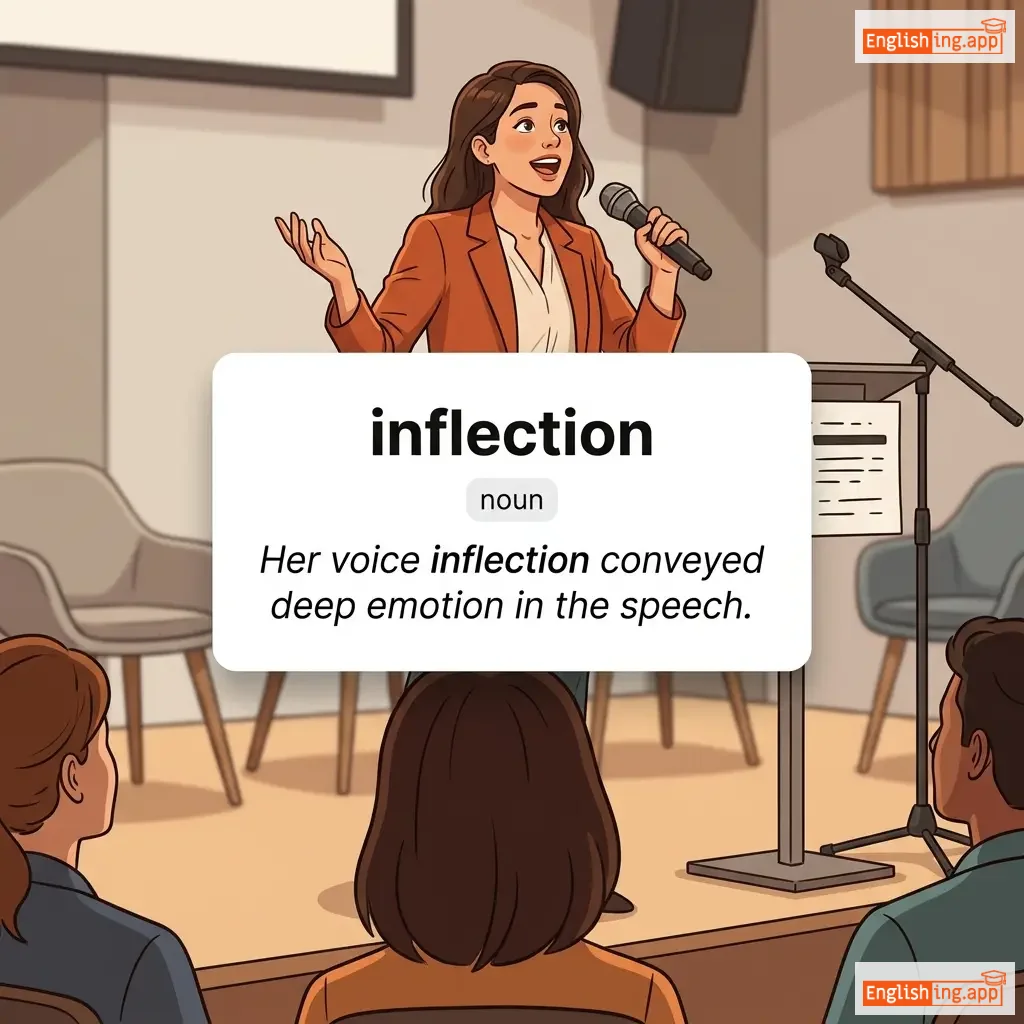
inflection definition card — visual illustration of the meaning
noun
/ɪnˈflɛk.ʃən/
イントネーションの変化 (intonēshon no henka)

A change in the tone or pitch of the voice when speaking, which helps convey meaning and emotion.

"Her voice inflection conveyed deep emotion in the speech."

"彼女の声のインフレクションはスピーチで深い感情を伝えました。" (Kanojo no koe no infurekushon wa supīchi de fukai kanjō o tsutaemashita.)
noun
/ˌɪnflɛksɪˈbɪlɪti/
柔軟性の欠如 (juunansei no ketsujo)

the quality of being rigid or unwilling to change; lack of adaptability

"The inflexibility of the rules caused unnecessary delays."

"規則の柔軟性の欠如が不要な遅れを引き起こした。" (Kisoku no juunansei no ketsujo ga fuyo na okure o hikiokoshita)
adjective
/ɪnˈflɛksəbl/
柔軟性がない (jounann-sei ga nai)

Not able to bend or change; unwilling to change ideas or behavior.

"His inflexible attitude made negotiations difficult."

"彼の柔軟性がない態度は交渉を難しくしました。" (Kare no jounann-sei ga nai taido wa koushou o muzukashiku shimashita.)
verb
/ɪnˈflɪkt/
加える (kuwaeru)

to cause something unpleasant or painful to be suffered by someone or something

"The storm inflicted considerable damage to the city."

"嵐は都市にかなりの被害を与えました。" (Arashi wa toshi ni kanari no higai o ataemashita.)
noun
/ˈɪn.floʊ/
流入 (ryūnyū)

The movement of things such as money, people, or water into a place.

"The inflow of tourists boosted the local economy."

"観光客の流入が地域経済を活性化させた。" (Kankōkyaku no ryūnyū ga chiiki keizai o kasseika saseta.)
noun/verb
/ˈɪnfluəns/
影響 (eikyō)

The power to affect how someone thinks or acts.

"Her teacher had a strong influence on her career choice."

"彼女の先生は彼女のキャリア選択に大きな影響を与えました。" (kanojo no sensei wa kanojo no kyaria sentaku ni ōkina eikyō o ataemashita.)
Influencer definition card — visual illustration of the meaning
noun
/ˈɪn.flu.ən.sər/
インフルエンサー, 商品を勧める人 (infuruwensā, shōhin o susumeru hito)

A person with the ability to influence potential buyers of a product or service by promoting or recommending the items on social media.

"Social media influencers shape consumer preferences."

"ソーシャルメディアのインフルエンサーは消費者の好みを形作っています。" (Sōsharumedia no infuruwensā wa shōhisha no konomi o katachi tsukutteimasu.)
adjective
/ˌɪnfluˈɛnʃl/
影響力のある (eikyōryoku no aru)

Having great power to change or affect people or things.

"She is one of the most influential leaders of our time."

"彼女は私たちの時代で最も影響力のあるリーダーの一人です。" (Kanojo wa watashitachi no jidai de mottomo eikyōryoku no aru rīdā no hitori desu.)
noun
/ˈɪnflʌks/
流入 (ryūnyū)

A large arrival or flow of people or things.

"The city experienced an influx of tourists during the festival."

"その都市は祭りの期間中に観光客の流入を経験しました。" (Sono toshi wa matsuri no kikanchū ni kankōkyaku no ryūnyū o keiken shimashita.)
noun
/ˈɪnfoʊ/
情報 (jouhou)

information; knowledge or facts about something or someone

"She gave me all the info I needed for the meeting."

"彼女は会議に必要なすべての情報を私にくれました。" (Kanojo wa kaigi ni hitsuyou na subete no jouhou o watashi ni kuremashita.)
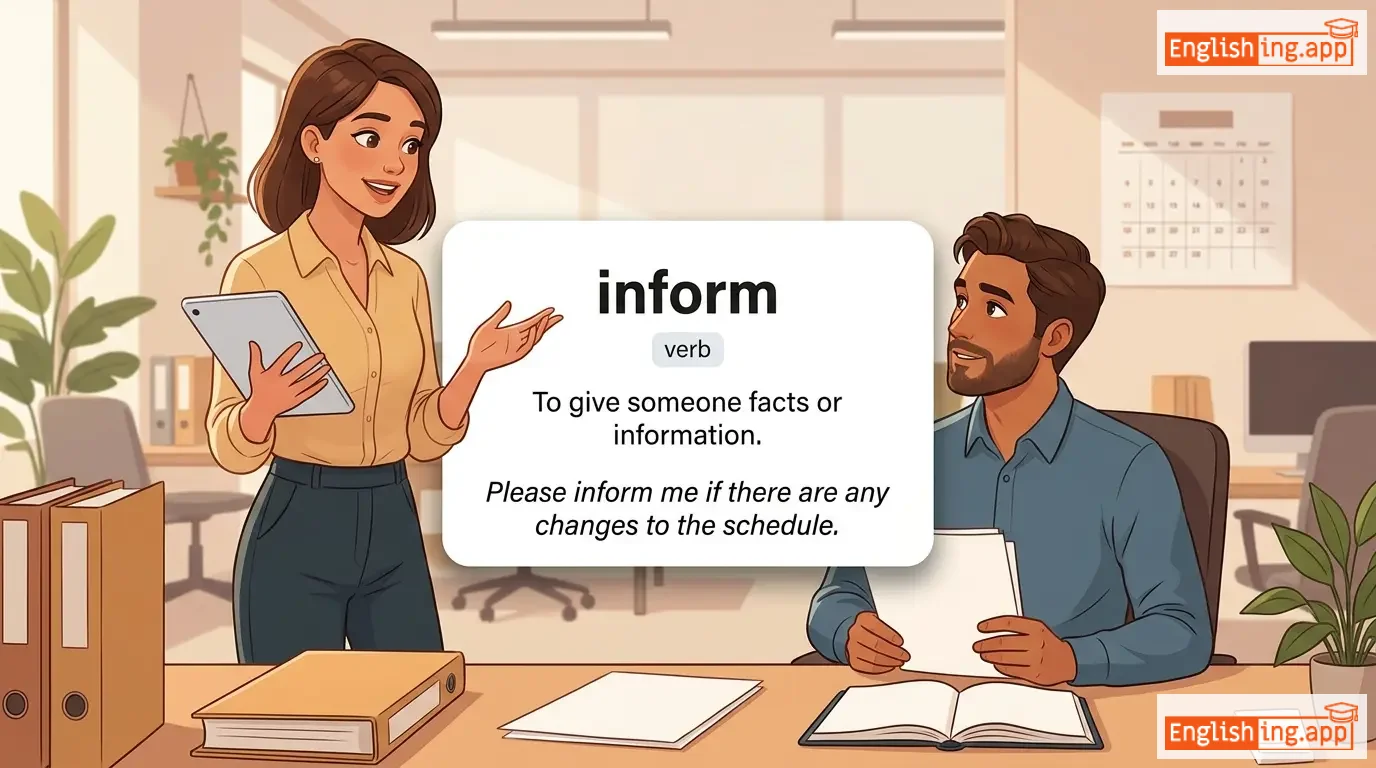
inform definition card — visual illustration of the meaning
verb
/ɪnˈfɔːrm/

To give someone facts or information.

"Please inform me if there are any changes to the schedule."

adjective
/ɪnˈfɔːrməl/
非公式 (hikoushiki)

relaxed, friendly, and not following strict rules or conventions

"They had an informal meeting at the coffee shop."

"彼らはカフェで非公式な会議を開きました。" (Karera wa kafe de hikoushiki na kaigi o hirakimashita.)
noun
/ˌɪnfərˈmeɪʃən/
情報 (jōhō)

Facts or knowledge provided or learned about something.

"The website provides useful information about travel destinations."

"このウェブサイトは旅行先に関する有用な情報を提供しています。" (Kono u~ebusaito wa ryokōsaki ni kansuru yūyōna jōhō o teikyō shiteimasu.)
adjective
/ɪnˈfɔːrmətɪv/
有益な (infomativu)

giving or providing useful information; educational; instructive

"The documentary was very informative and educational."

"そのドキュメンタリーはとても有益で教育的でした。" (Sono dokyumentarii wa totemo yueki de kyouikuteki deshita.)
noun
/ɪnˈfrækʃən/
違反 (ihan)

A violation or breach of a rule, law, or agreement.

"The student was punished for a minor infraction of the school rules."
"学生は学校の規則の軽微な違反で罰せられました。" (Gakusei wa gakkō no kisoku no keibi na ihan de batsu seraremashita.)
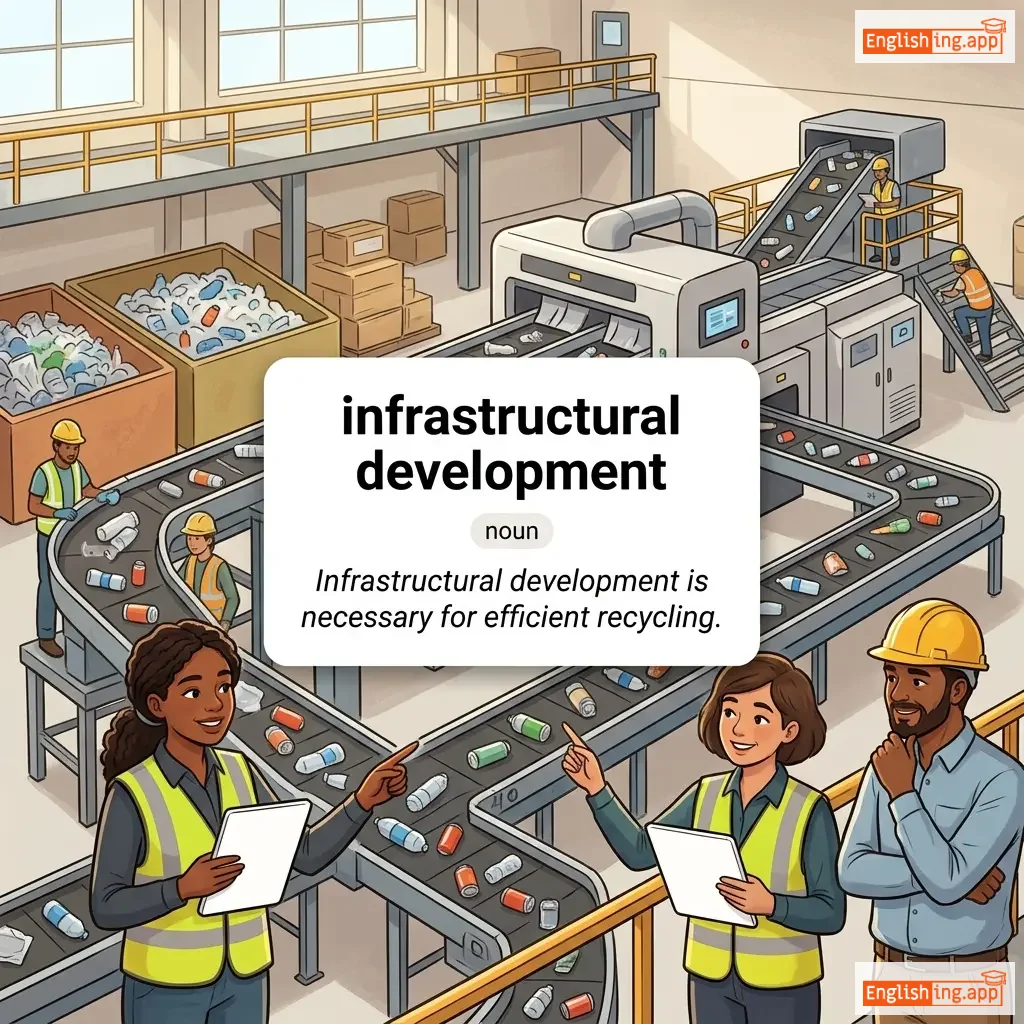
infrastructural development definition card — visual illustration of the meaning
noun
ˌɪnfrəˈstrʌktʃərəl dɪˈveləpmənt
インフラ整備 (infura seibi)

The process of building and improving the basic physical and organizational structures and facilities needed for the operation of a society or enterprise.

"Infrastructural development is necessary for efficient recycling."

"インフラストラクチャー開発は効率的なリサイクルに必要です。" (Infurasutorakuchaa kaihatsu wa kouritsuteki na risaikuru ni hitsuyou desu.)
infrastructure definition card — visual illustration of the meaning
noun
/ˈɪnfrəˌstrʌktʃər/
インフラストラクチャー (infurasutorakuchaa)

the basic physical and organizational structures and facilities needed for the operation of a society or enterprise

"The government is investing heavily in transport infrastructure."

"政府は交通インフラに大規模な投資を行っています。" (Seifu wa kōtsū infura ni daikibō na tōshi o okonatteimasu.)
noun
/ɪnˈfriːkwəns/
稀少性 (shishousei)

The state of occurring rarely or at long intervals.

"The infrequence of their meetings made it hard to maintain close ties."

"彼らの会議の稀少性は、親密な関係を維持するのを難しくしていました。" (Karera no kaigi no shishousei wa, shinmitsu na kankei wo iji suru no wo muzukashiku shiteimashita.)
adjective
/ɪnˈfriːkwənt/
稀な (majana)

Happening rarely or not often.

"He made infrequent visits to his hometown after moving abroad."

"彼は海外に移住した後、故郷にあまり頻繁に訪れることはありませんでした。" (Kare wa kaigai ni ijū shita ato, kokyō ni amari hinpan ni otozureru koto wa arimasen deshita.)
verb
/ɪnˈfrɪndʒ/
侵害する (shingai suru)

To actively break the terms of a law, agreement, or right.

"Copying this software without permission will infringe copyright laws."

"許可なくこのソフトウェアをコピーすると著作権法を侵害することになります。" (Kyoka naku kono sofutō~ea o kopī suru to chōsakuken-hō o shingai suru koto ni narimasu.)
verb
/ɪnˈfjʊərieɪt/
激怒させる (gekidosaseru)

To make someone extremely angry.

"His careless remarks infuriated the entire team."

"彼の不注意な発言がチーム全体を怒らせた。" (Kare no fuchuui na hatsugen ga chiimu zentai o okorase ta.)
verb
/ɪnˈfjuːz/

to fill or spread through something; to instill a quality, idea, or feeling

"The teacher tried to infuse her students with a love for reading."

noun
/ɪnˈfjuːʒən/
注入 (chūnyū)

the act of introducing something into another; a drink made by steeping leaves or herbs in liquid

"She prepared a calming infusion of chamomile tea."

"彼女はカモミールティーの落ち着く注入を準備しました。" (Kanojo wa kamomīru tī no ochitsuku chūnyū wo junbi shimashita.)
ingenious definition card — visual illustration of the meaning
adjective
/ɪnˈdʒiːniəs/
独創的 (dokusōteki)

very clever and inventive; showing creativity in problem-solving

"The engineer came up with an ingenious solution to the problem."

"エンジニアはその問題に対する独創的な解決策を見つけた。" (Enjinia wa sono mondai ni taisuru dokusōteki na kaiketsusaku o mitsuketa.)
noun
/ˈænʒənuː/
無邪気な若い女性 (mujakina wakai josei)

an innocent, naïve young woman, especially as represented in literature or theater

"She played the role of the ingénue in the play with great charm."

"彼女は劇で無邪気な若い女性の役を演じ、大きな魅力を発揮しました。" (Kanojo wa geki de mujakina wakai josei no yaku o enji, ookina miryoku o hakki shimashita.)
ingenuity definition card — visual illustration of the meaning
noun
/ˌɪndʒəˈnjuːɪti/
独創性 (dokusousei)

the quality of being clever, original, and inventive

"The project was completed on time thanks to the ingenuity of the team."

"そのプロジェクトは、チームの独創性のおかげで時間通りに完成しました。" (Sono purojekuto wa, chiimu no dokusousei no okage de jikan doori ni kansei shimashita.)
ingenuous definition card — visual illustration of the meaning
adjective
/ɪnˈdʒɛnjuəs/
無邪気 (mujaki)

Innocent, naive, and unsuspecting; showing childlike simplicity and sincerity.

"Her ingenuous smile revealed her genuine kindness."

"彼女の無邪気な笑顔は彼女の本当の優しさを明らかにしました。" (Kanojo no mujaki na egao wa kanojo no hontou no yasashisa wo akirakani shimashita.)
verb
/ɪnˈdʒɛst/
摂取する (sesshu suru)

To take food, drink, or another substance into the body, usually by swallowing.

"The patient must ingest the medicine with water."

"患者は水と一緒に薬を摂取する必要があります。" (Kanja wa mizu to issho ni kusuri wo sesshu suru hitsuyō ga arimasu.)
adjective
/ɪnˈɡlɔːriəs/
不名誉な (fumeiyona)

Causing shame or disgrace; not bringing honor or glory.

"The army suffered an inglorious defeat."

"軍隊は不名誉な敗北を喫した。" (Guntai wa fumeiyona haiboku o kicchi shita.)
verb
/ɪnˈɡrɑːft/
根付ける (nedukeru)

To implant or fix deeply, often used in the sense of grafting an idea or quality.

"The teacher tried to ingraft good manners in the students."

"先生は生徒たちに良いマナーを根付かせようとした。" (Sensei wa seito-tachi ni yoi manā o nedukaseru yō to shita.)
adjective
/ɪnˈɡreɪnd/
根強い (nezuoyoi)

Firmly fixed or established; deeply rooted and difficult to change.

"His ingrained habits were hard to break."

"彼の根強い習慣は壊すのが難しかった。" (Kare no nezuyoi shuukan wa kowasu no ga muzukashikatta.)
noun
/ˈɪnˌɡreɪt/

An ungrateful person; someone who shows no appreciation.

"He worked hard for his friend, but the ingrate never thanked him."

verb
/ɪnˈɡreɪʃiˌeɪt/

To gain favor or approval by deliberate effort, often in a flattering way.

"She tried to ingratiate herself with her boss by complimenting him often."

adjective
/ɪnˈɡreɪʃiˌeɪtɪŋ/
お世辞を言う (oseji wo iu)

Charming or flattering in a way intended to gain favor.

"His ingratiating smile made everyone trust him quickly."

"彼のお世辞を言う笑顔は、すべての人々に彼を素早く信頼させた。" (Kare no oseji wo iu egao wa, subete no hitobito ni kare o subayaku shinrai saseta.)
noun
/ɪnˈɡrætɪˌtjuːd/
恩知らず (on shirazu)

Lack of gratitude; failure to show thanks or appreciation.

"His ingratitude hurt her feelings after all she had done for him."

"彼の恩知らずは、彼女が彼のために多くのことをした後、彼女の気持ちを傷つけた。" (Kare no on shirazu wa, kanojo ga kare no tame ni ooku no koto wo shita ato, kanojo no kimochi wo kizutsuketa.)
noun
/ɪnˈɡriːdiənt/
材料 (zairyō)

A component part or element of something, especially in a recipe.

"Flour is a key ingredient in baking bread."

"小麦粉はパン作りにおける重要な材料です。" (Komugiko wa pan tsukuri ni okeru jūyō na zairyō desu.)
verb
/ɪnˈhæbɪt/
住む (sumu)

to live in; to occupy as a dwelling

"Many animals inhabit the forest."

"多くの動物が森に住んでいます。" (Ooku no doubutsu ga mori ni sundeimasu.)
noun
/ɪnˈhæbɪtənt/
住民 (jūmin)

a person or animal that lives in a particular place

"The inhabitants of the village rely on farming for their livelihood."
"村の住民は生活のために農業に頼っています。" (Mura no jūmin wa seikatsu no tame ni nōgyō ni tayotteimasu.)
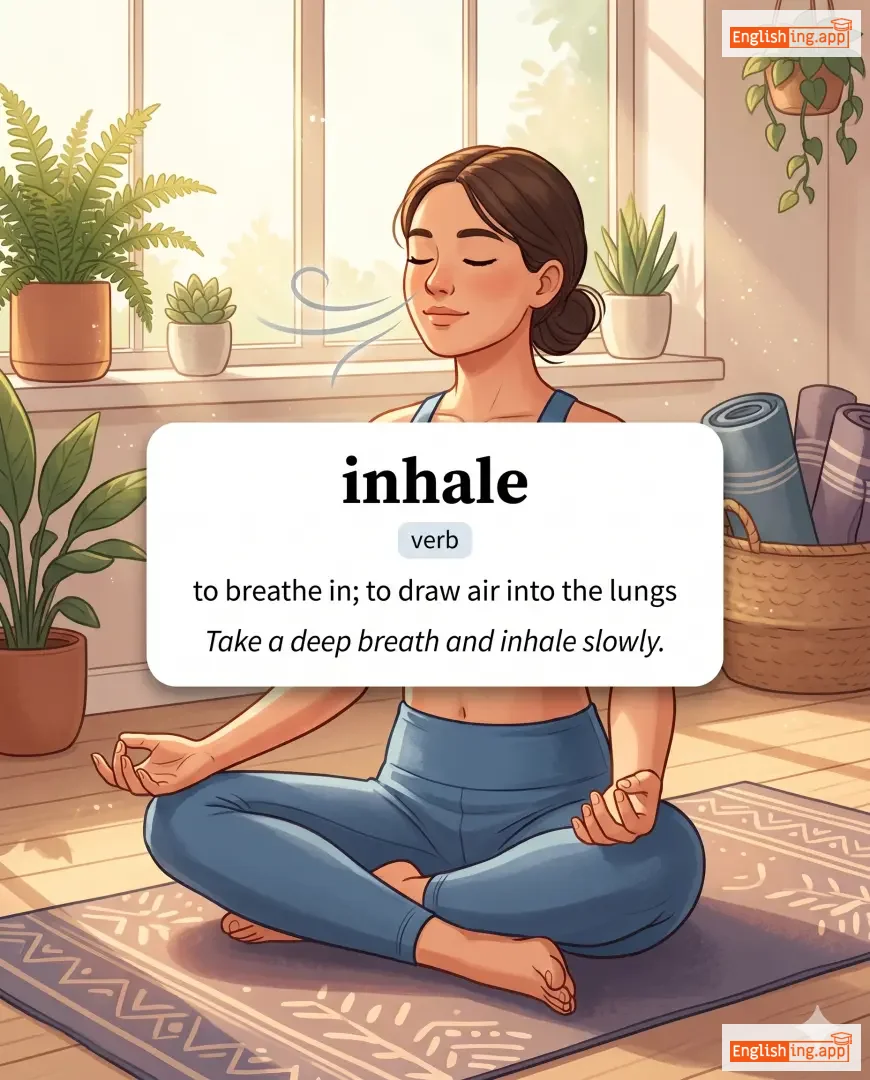
inhale definition card — visual illustration of the meaning
verb
/ɪnˈheɪl/
吸う (suu)

to breathe in; to draw air into the lungs

"Take a deep breath and inhale slowly."

"深く息を吸い、ゆっくり吸い込みます。" (Fukaku iki o sui, yukkuri sui-komimasu.)
adjective
/ɪnhɑːrˈmoʊniəs/
不協和音 (fukyōwaon)

lacking harmony; discordant in sound; not in tune

"The inharmonious sounds from the broken piano made everyone cover their ears."

"壊れたピアノからの不協和音がみんなを耳をふさがせました。" (Kowareta piano kara no fukyōwaon ga minna o mimi o fusagasemashita.)
noun
/ɪnˈhɪərəns/
内在性 (naizaisē)

The state of being an essential or permanent part of something.

"The inherence of risk is part of every business venture."
"リスクの内在性はすべてのビジネス冒険の一部です。" (Risuku no naizaisē wa subete no bijinesu bōken no ichibu desu.)
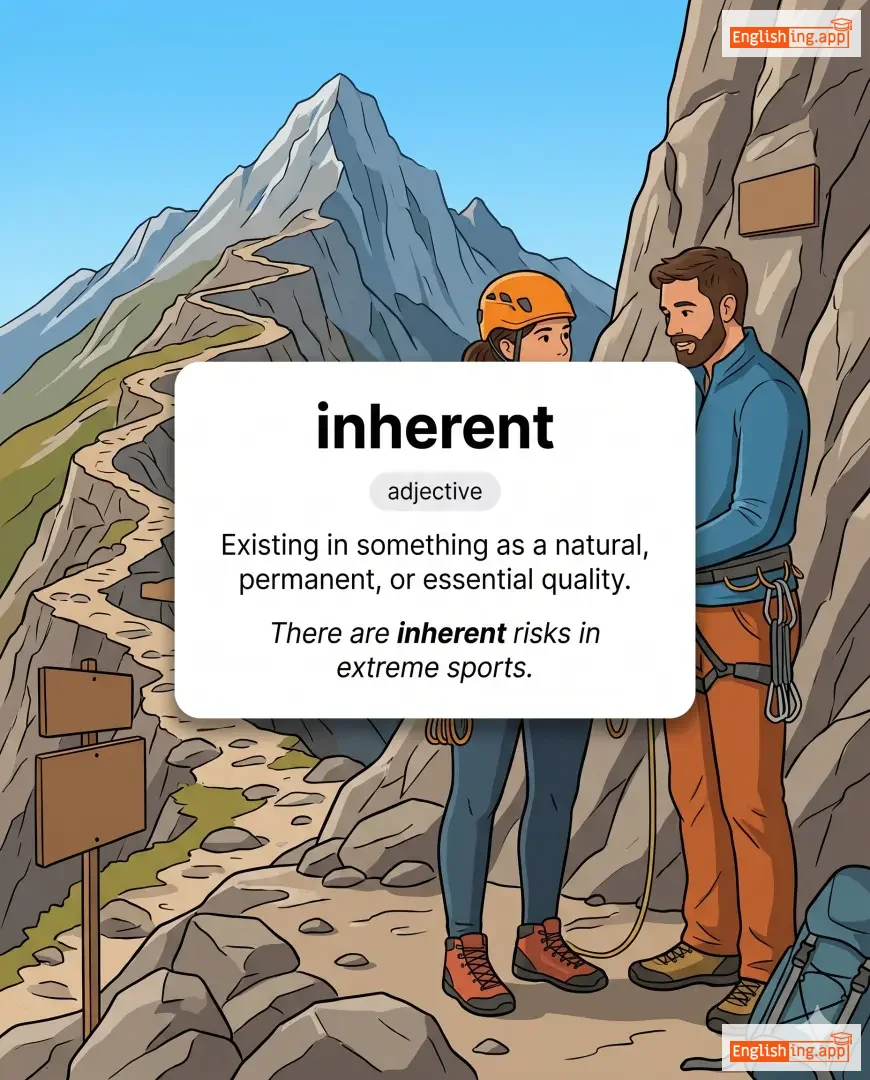
inherent definition card — visual illustration of the meaning
adjective
/ɪnˈhɛrənt/
固有の (koyū no)

Existing in something as a natural, permanent, or essential quality.

"There are inherent risks in extreme sports."

"エクストリームスポーツには固有のリスクが存在する。" (ekusutorīmusupōtsu ni wa koyū no risuku ga sonzai suru.)
inherit definition card — visual illustration of the meaning
verb
/ɪnˈhɛrɪt/
相続する (souzoku suru)

to receive property, money, or traits from someone after their death or from ancestors

"She inherited her father's house after his death."

"彼女は父親の死後、家を相続しました。" (Kanojo wa chichi no shigo, ie o souzoku shimashita.)
noun
/ɪnˈhɛrɪtər/
相続人 (souzokunin)

a person who receives money, property, or a title when someone dies

"She became the inheritor of her family's estate."

"彼女は家族の財産の相続人となった。" (Kanojo wa kazoku no zaisan no souzokunin to natta.)
inhibit definition card — visual illustration of the meaning
verb
/ɪnˈhɪbɪt/
抑制する (yokusei suru)

To hinder, restrain, or prevent an action or process.

"Fear can inhibit creativity."

"恐れは創造性を抑制する可能性があります。" (Osore wa sōzō-sei o yokusei suru kanō-sei ga arimasu.)
adjective
/ɪnˈhɪbɪtɪd/
抑制された (yokusei sareta)

Unable to act in a relaxed and natural way, especially due to self-consciousness or restraint.

"He was too inhibited to express his true feelings."

"彼は自分の本当の感情を表現するにはあまりにも抑制されていた。" (Kare wa jibun no hontō no kanjō o hyōgen suru ni wa amari ni mo yokusei sarete ita.)