語彙集

英単語辞書 | 単語の意味、定義、例文

noun
/ɡrəˈtjuːɪti/
チップ (chippu)

A sum of money given as a tip or a retirement benefit.

"The waiter received a generous gratuity for his excellent service."

"ウェイターは素晴らしいサービスのために寛大なチップを受け取った。" (Ueitaa wa subarashī sābisu no tame ni kandā na chippu o uketotta.)
noun, adjective
/ɡreɪv/
(haka)

A place where someone is buried; also used to describe something serious or solemn.

"He visited his grandfather's grave every year."

"彼は毎年祖父の墓を訪れていました。" (Kare wa mainen sofu no haka o otozurete imashita.)
/ˈɡrævəl/
砂利 (jari)

Small stones and pebbles, often mixed with sand, used for paths, roads, and construction.

"The driveway was covered with gravel."

"ドライブウェイは砂利で覆われていました。" (Doraibuwei wa jari de ōwarete imashita.)
noun
/ˈɡreɪvstoʊn/
墓石 (boseki)

A stone that marks a grave, usually inscribed with the name of the deceased.

"The gravestone had her name carved beautifully."

"その墓石には彼女の名前が美しく彫られていた。" (Sono boseki ni wa kanojo no namae ga utsukushiku horarete ita.)
noun
/ˈɡreɪv.jɑːrd/
墓地 (bochi)

an area of land set aside for burial of the dead; a cemetery

"The old graveyard near the church dates back to the 18th century."
"教会近くの古い墓地は18世紀にさかのぼります。" (Kyōkai chikaku no furui bochi wa 18 seiki ni sakanoborimasu.)
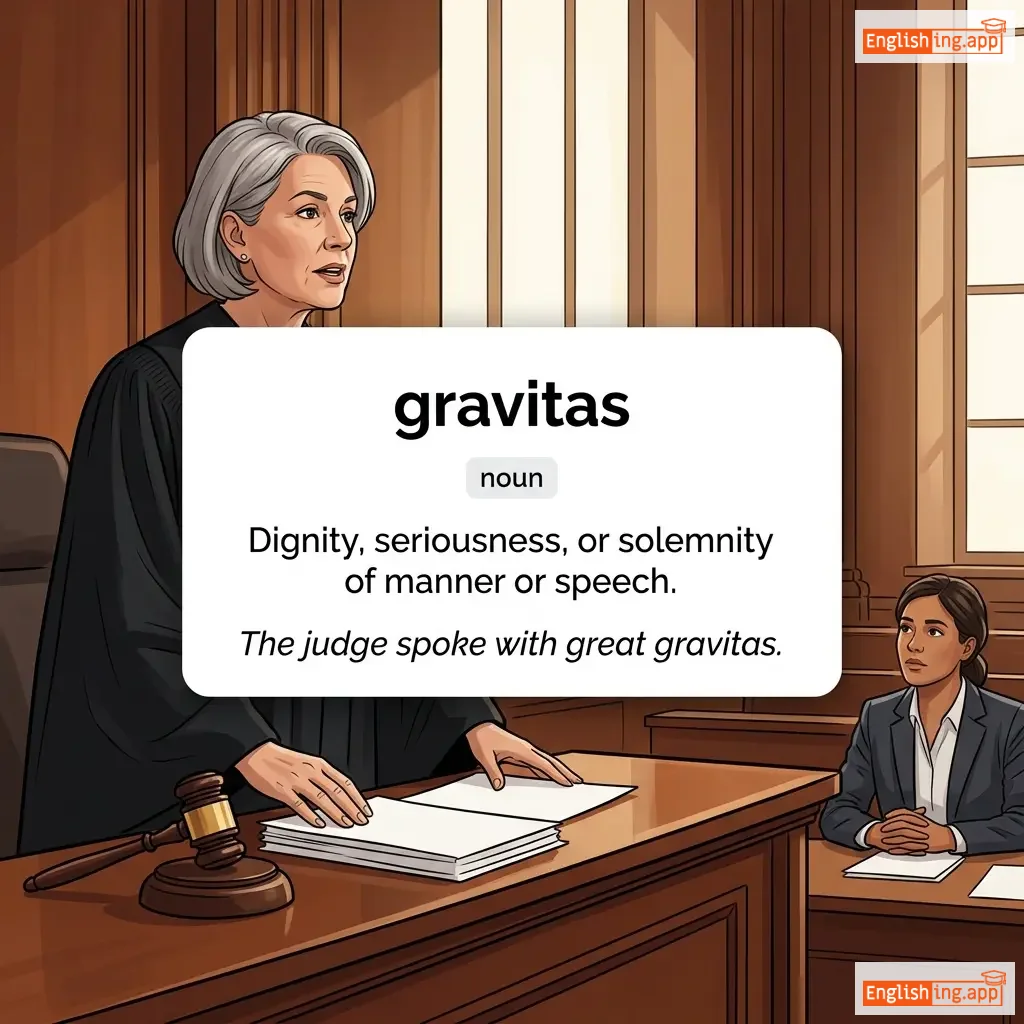
gravitas definition card — visual illustration of the meaning
noun
/ˈɡræv.ɪ.tæs/
厳粛 (genshuku)

Dignity, seriousness, or solemnity of manner or speech.

"The judge spoke with great gravitas."

"裁判官は非常に厳粛に話しました。" (Saibankan wa hijō ni genshuku ni hanashimashita.)
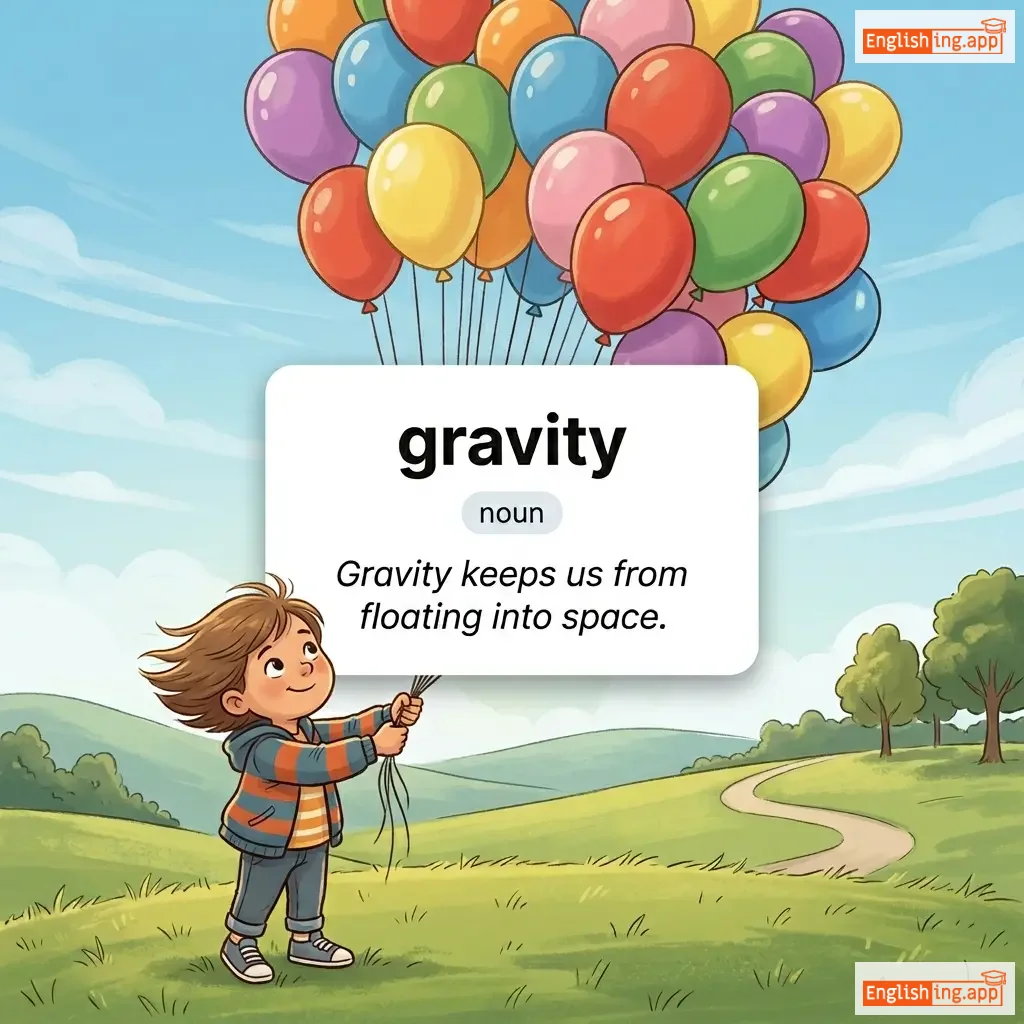
gravity definition card — visual illustration of the meaning
noun
/ˈɡrævəti/

The natural force that attracts objects toward the center of the earth; seriousness or importance.

"Gravity keeps us from floating into space."

adjective, noun
/ɡreɪ/
幸せ (shiawase)

A color between black and white; also describes dull or gloomy situations.

"The sky turned gray before the storm."

"彼女は賞を受け取ったとき、幸せを隠せなかった。" (Kanojo wa shō o uketotta toki, shiawase o kakusenakatta.)
verb
/ɡreɪz/
幸福 (kōfuku)

To feed on grass; to touch or scrape lightly while passing.

"The cows graze in the meadow every morning."

"彼女は賞を受け取ったとき、自分の幸福を隠せませんでした。" (Kanojo wa shō o uketotta toki, jibun no kōfuku o kakusemasendeshita.)
noun/verb
/ˈɡreɪzɪŋ/
草を食べる (kusa o taberu)

The act of animals eating grass in a field; also lightly touching or scraping against something.

"Cows were grazing peacefully in the meadow."

"牛たちは牧草地で平和に草を食べていました。" (Ushitachi wa bokusōchi de heiwa ni kusa o tabete imashita.)
adjective
/ɡreɪt/
素晴らしい (subarashii)

Of an extent, amount, or intensity considerably above average; very good or important.

"She gave a great performance at the concert."
"彼女はコンサートで素晴らしいパフォーマンスをしました。" (Kanojo wa konsāto de subarashī pafōmansu o shimashita.)
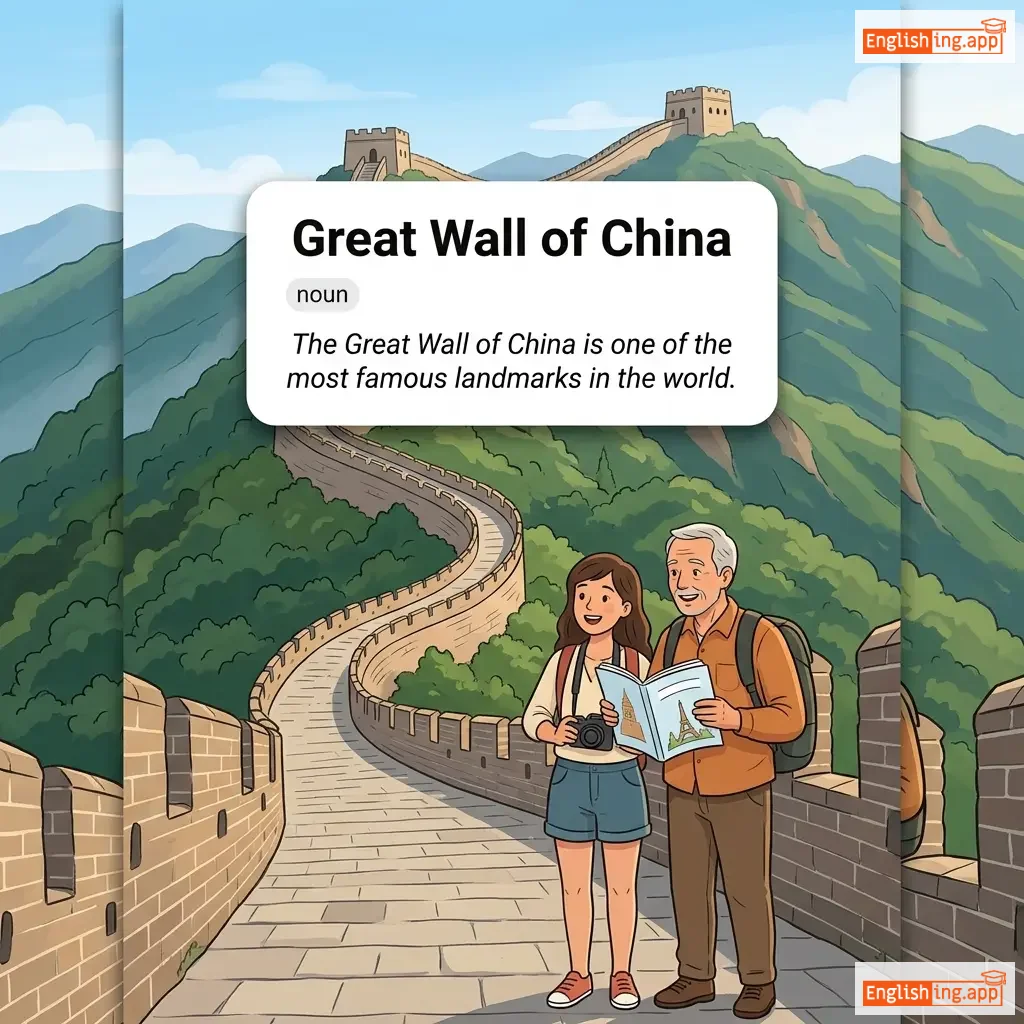
Great Wall of China definition card — visual illustration of the meaning
noun
ɡreɪt wɔːl əv ˈtʃaɪ.nə
万里の長城 (Banri no Chōjō)

A massive ancient fortification system in China, built to protect against invasions and considered one of the most famous landmarks in the world.

"The Great Wall of China is one of the most famous landmarks in the world."

"万里の長城は世界で最も有名なランドマークの一つです。" (Banri no Chōjō wa sekai de mottomo yūmei na randomāku no hitotsu desu.)
adjective (superlative)
/ˈɡreɪ.tɪst/
最も偉大 (mottomo idai)

The highest degree of greatness; the most outstanding or important.

"He is considered one of the greatest leaders of all time."

"彼は全時代で最も偉大なリーダーの一人と考えられています。" (Kare wa zen jidai de mottomo idaina riidaa no hitori to kangaerareteimasu.)
adverb
/ˈɡreɪtli/
非常に (hijou ni)

to a large extent or degree; very much

"She was greatly admired by her students."

"彼女は生徒たちから非常に賞賛されました。" (Kanojo wa seitotachi kara hijou ni shousan saremashita.)
noun
/ɡriːd/
貪欲 (tanyoku)

intense and selfish desire for something, especially wealth, power, or food

"His greed for money led him to make unethical business decisions."

"お金に対する貪欲は、彼に非倫理的なビジネス判断をさせた。" (Okane ni taisuru tanyoku wa, kare ni hinri teki na bijinesu handan o saseta.)
adjective
/ɡriːk/
ギリシャの (ギリシャに関連する) (Girishano (Giri-sha ni kanren suru))

relating to Greece, its people, or its language

"We enjoyed delicious Greek food at the restaurant."

"私たちはレストランで美味しいギリシャ料理を楽しみました。" (Watashitachi wa resutoran de oishī Girisha ryōri o tanoshimimashita.)
adjective
/ɡriːn/
(midori)

Of the color between blue and yellow in the spectrum; inexperienced or naive.

"The garden is full of green plants."

"庭は緑の植物でいっぱいです。" (Niwa wa midori no shokubutsu de ippai desu.)
noun
/ɡriːn ˈtʃɪl.i/
青唐辛子 (ao tōgarashi)

unripe chili pepper that is green in color and has a spicy taste

"She added chopped green chili to the salad for extra heat."

"彼女はサラダに追加の辛さを加えるために切った青唐辛子を加えた。" (Kanojo wa sarada ni tsuika no karasa o kuwaeru tame ni kitta ao tōgarashi o kuwaeta.)
noun
/ɡriːn ˈkəʊ.kə.nʌt/
緑のココナッツ (midori no kokonattsu)

a young coconut with green outer shell containing refreshing coconut water

"We drank fresh water from a green coconut on the beach."
"私たちはビーチで緑のココナッツから新鮮な水を飲みました。" (Watashitachi wa bīchi de midori no kokonattsu kara shinsen na mizu o nomimashita.)
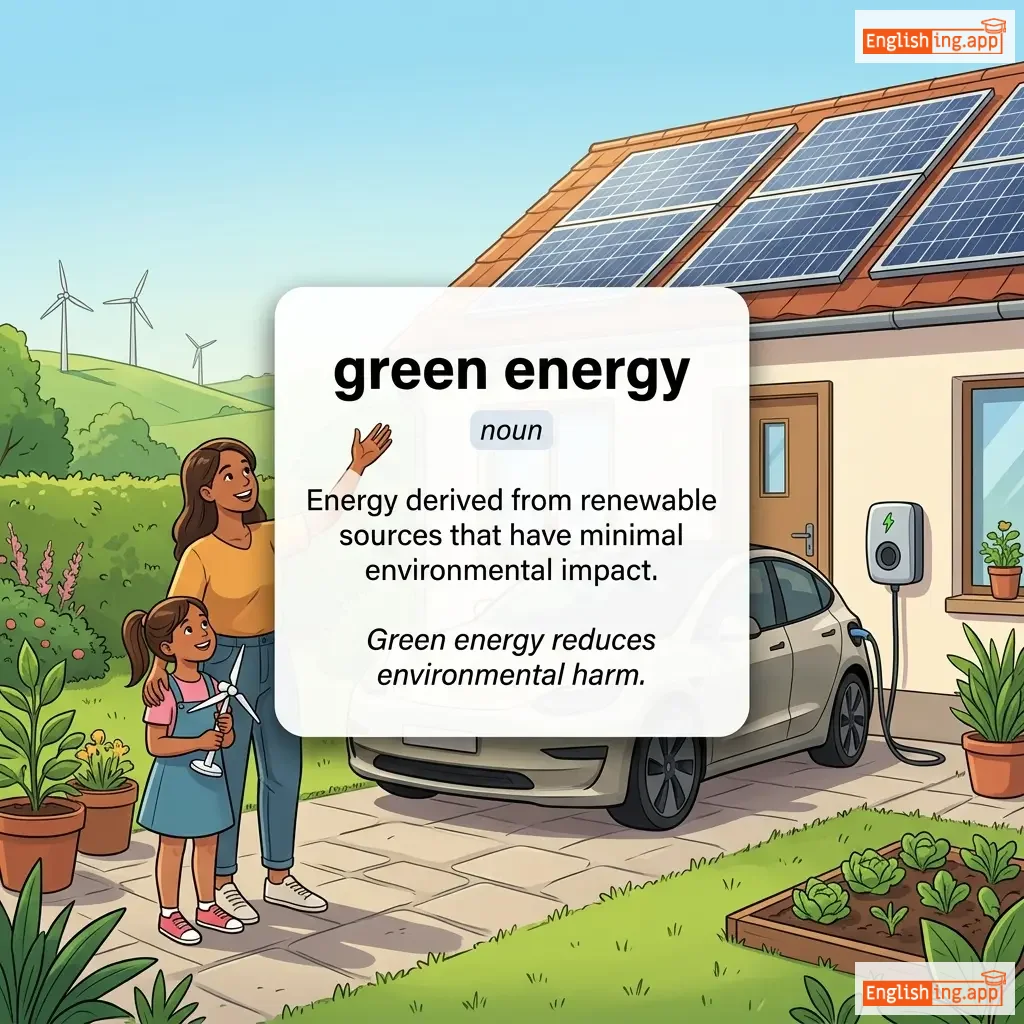
green energy definition card — visual illustration of the meaning
noun
/ˌɡriːn ˈen.ə.dʒi/
グリーンエネルギー (guriin enerugii)

Energy derived from renewable sources that have minimal environmental impact.

"Green energy reduces environmental harm."

"グリーンエネルギーは環境へのダメージを減らします。" (Guriin enerugī wa kankyō e no damēji o herashimasu.)
noun
/ɡriːn ˈdʒækfruːt/
グリーンジャックフルーツ (guriin jakkufurūtsu)

unripe fruit of the jackfruit tree, commonly used as a vegetable in cooking

"Green jackfruit is often used in curries and stews."

"グリーンジャックフルーツはカレーやシチューに使われることがよくあります。" (Guriin jakkufurūtsu wa karē ya shichū ni tsukawareru koto ga yoku arimasu)
noun
/ɡriːn pəˈpaɪə/
青いパパイヤ (aoi papaiya)

unripe papaya fruit used as a vegetable in cooking, especially in Asian cuisine

"Green papaya salad is a popular dish in Thai cuisine."

"青いパパイヤのサラダはタイ料理で人気のある料理です。" (Aoi papaiya no sarada wa Tai ryōri de ninki no aru ryōri desu.)
noun
/ˈɡriːnhaʊs/
温室 (onshitsu)

a glass building used for growing plants, especially in cold climates

"The farmers built a large greenhouse to grow tomatoes in the winter."
"農家は冬にトマトを育てるために大きな温室を建てました。" (Nōka wa fuyu ni tomato o sodateru tame ni ōkina onshitsu o tatemashita.)
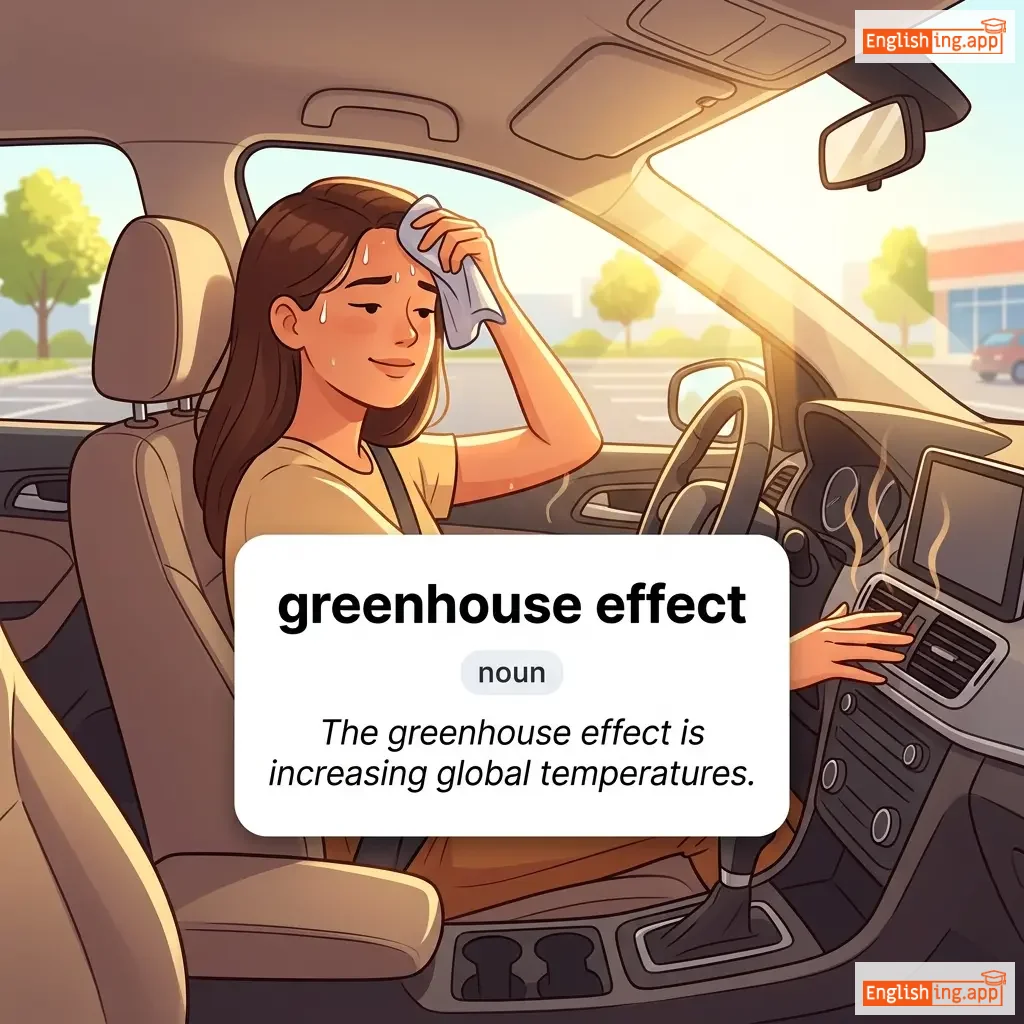
greenhouse effect definition card — visual illustration of the meaning
noun
ˈɡriːn.haʊs ɪˌfɛkt
温室効果 (onshitsu kōka)

The trapping of the sun's warmth in a planet's lower atmosphere due to the greater transparency of the atmosphere to visible radiation from the sun than to infrared radiation emitted from the planet's surface.

"The greenhouse effect is increasing global temperatures."

"温室効果は地球の温暖化を加速させています。" (Onshitsu kōka wa chikyū no ondanka o kasoku saseteimasu.)
noun
/ɡriːnz/
葉物野菜 (hamono yasai)

Leafy vegetables such as spinach, lettuce, and cabbage

"Eating greens is important for good health."

"葉物野菜を食べることは健康にとって重要です。" (Hamono yasai o taberu koto wa kenkō ni totte jūyō desu.)
greet definition card — visual illustration of the meaning
verb
/ɡriːt/
挨拶する (aisatsu suru)

to say hello or welcome someone politely

"She greeted the guests with a warm smile."
"彼女は暖かい笑顔でゲストを迎えました。" (Kanojo wa atatakai egao de gesuto o mukaemashita.)
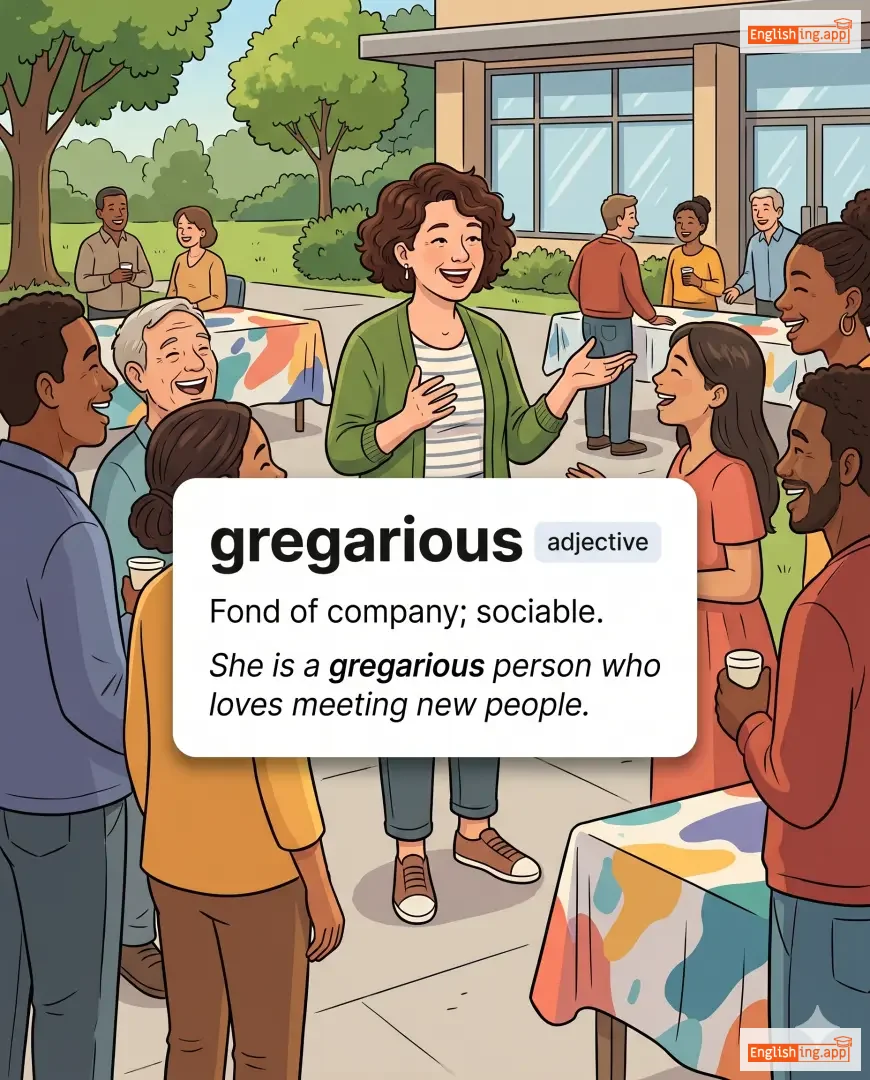
gregarious definition card — visual illustration of the meaning
adjective
/ɡrɪˈɡɛəriəs/
社交的 (shakouteki)

Fond of company; sociable.

"She is a gregarious person who loves meeting new people."

"彼女は新しい人々と会うのが好きな社交的な人です。" (Kanojo wa atarashii hitobito to au no ga suki na shakouteki na hito desu.)
noun
/ˌɡrɛnəˈdɪə/
グレネディア (gurenedia)

A soldier who specialized in throwing grenades; later used to describe an elite infantryman.

"The grenadier stood proudly at the front of the regiment."

"そのグレネディアは部隊の前で誇らしげに立っていた。" (Sono gurenedia wa butai no mae de hokorashige ni tatte ita.)
adjective
/ɡreɪ/
灰色 (haiiro)

having a color between black and white

"The grey clouds indicated that rain was coming."

"灰色の雲は雨が降ることを示していた。" (Haiiro no kumo wa ame ga furu koto o shimeshite ita.)
noun
/ˈɡreɪ.haʊnd/
グレイハウンド (gureihaundo)

a tall, thin dog with long legs that can run very fast

"The greyhound won the race at the dog track."
"グレイハウンドは犬の競技場でレースに勝ちました。" (gureihaundo wa inu no kyōgijō de rēsu ni kachimashita)
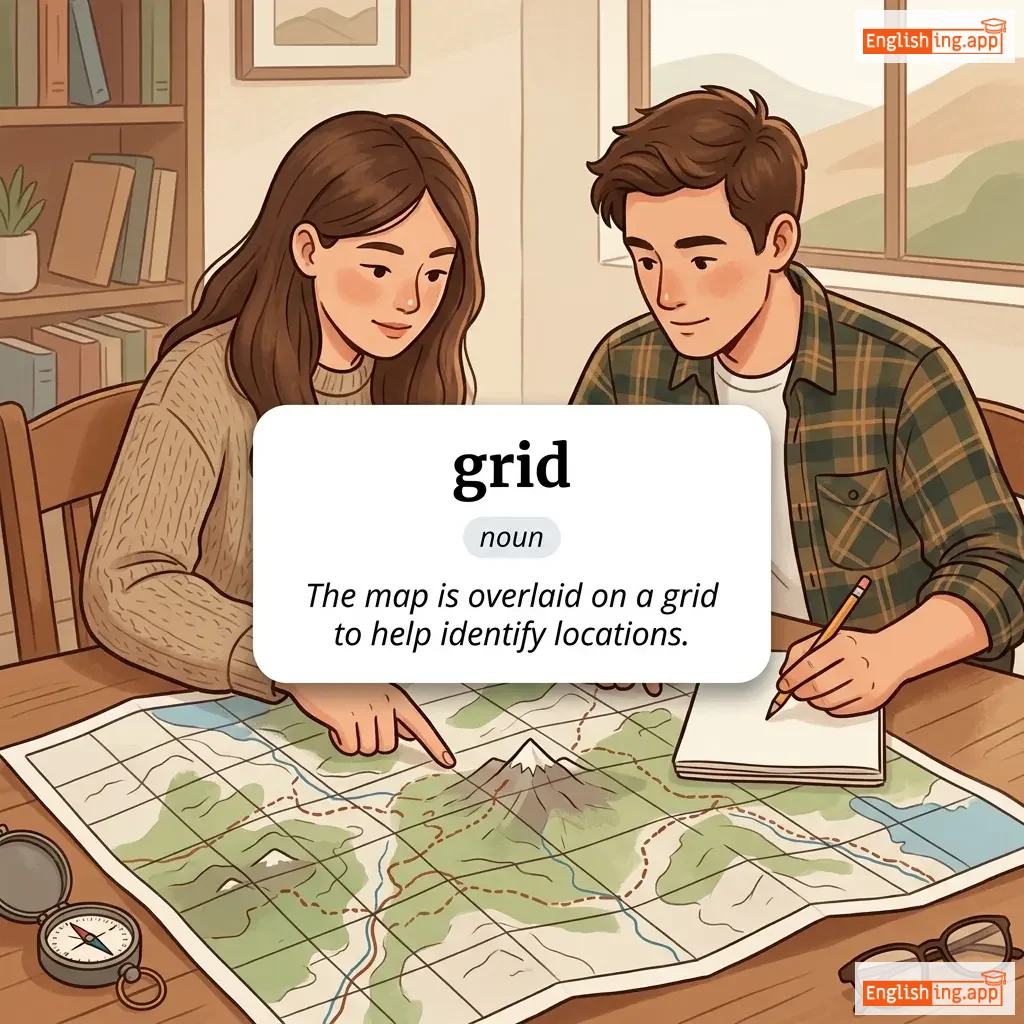
grid definition card — visual illustration of the meaning
noun
/ɡrɪd/
グリッド (guriddo)

a network of lines that cross each other to form a series of squares or rectangles

"The map is overlaid on a grid to help identify locations."

"地図は位置を特定するのに役立つようにグリッド上に重ねられています。" (Chizu wa ichi o tokutei suru no ni yakudatsu yō ni guriddo-jō ni kasanerareteimasu.)
noun
/ˈɡrɪd.əl/
鉄板 (teppan)

a flat heating surface for cooking food, typically made of metal

"She cooked pancakes on the hot griddle."
"彼女は熱い鉄板でパンケーキを作った。" (Kanojo wa atsui teppan de pankeeki o tsukutta.)
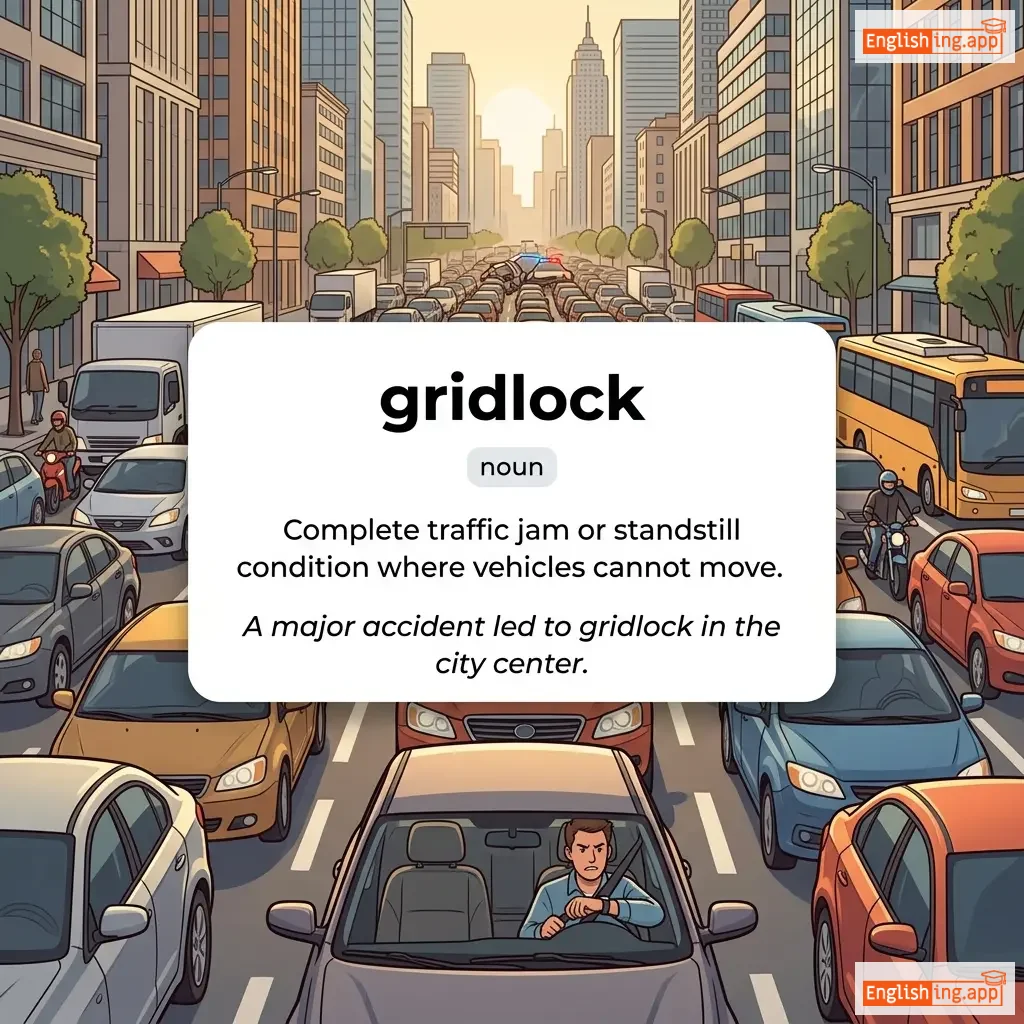
gridlock definition card — visual illustration of the meaning
noun
/ˈɡrɪd.lɒk/
完全な交通渋滞または停止状態 (kanzen na kōtsū jūtai mata wa teishi jōtai)

Complete traffic jam or standstill condition where vehicles cannot move.

"A major accident led to gridlock in the city center."

"重大な事故が原因で市内中心部で渋滞が発生した。" (Jūdaina jiko ga gen'in de shinai chūshinbu de jūtai ga hassei shita.)
noun
/ɡriːf/
悲しみ (kanashimi)

Deep sorrow, especially caused by someone's death.

"She was overcome with grief after her father's passing."

"彼女は父親の死後、悲しみに打ちひしがれていた。" (Kanojo wa chichioya no shigo, kanashimi ni uchi hisigarete ita.)
noun
/ˈɡriːvəns/
幸せ (shiawase)

A real or imagined cause for complaint, especially unfair treatment.

"The workers voiced their grievances to the management."

"彼女は賞を受け取ったとき、幸せを隠せませんでした。" (Kanojo wa shō o uketotta toki, shiawase o kakusemasen deshita.)
verb
/ɡriːv/
悲しむ (kanashimu)

To feel or cause deep sorrow, especially due to someone's death.

"She continues to grieve the loss of her best friend."

"彼女は最愛の友人を失って悲しみ続けています。" (Kanojo wa saiai no yūjin o ushinatte kanashimi tsudzuketeimasu.)
adjective
/ˈɡriːvəs/
重大 (jūdai)

Causing great pain, suffering, or sorrow.

"The accident was a grievous blow to the community."

"その事故はコミュニティにとって重大な打撃でした。" (Sono jiko wa komyuniti ni totte jūdai na dageki deshita.)
🍗

grill

noun, verb
/ɡrɪl/

a metal frame used for cooking food over an open fire; to cook food on such a frame

"We grilled some chicken for dinner."

adjective
/ɡrɪm/
厳しい (kibishii)

very serious or gloomy in appearance or outlook

"The future looked grim after the disaster."

"災害後、未来は厳しく見えた。" (Saigai go, mirai wa kibishiku mieta.)
verb, noun
/ˈɡrɪməs/
しかめっ面 (shikametsura)

to make an ugly, twisted expression on one's face, usually in disgust or pain

"He grimaced when he tasted the sour fruit."

"彼は酸っぱい果物を食べたときに顔をしかめました。" (Kare wa suppai kudamono o tabeta toki ni kao o shikamemashita.)
verb, noun
/ɡrɪn/
歯を見せて広く笑う (ha o misete hiroku warau)

to smile broadly, often showing teeth

"She grinned happily at the good news."

"彼女は良いニュースを聞いてうれしそうに笑った。" (Kanojo wa yoi nyūsu o kiite ureshisō ni waratta.)
grind definition card — visual illustration of the meaning
verb
/ɡraɪnd/
挽く (hiku)

to break something into small pieces or powder by pressing or crushing it

"She grinds the coffee beans every morning for fresh coffee."

"彼女は毎朝新鮮なコーヒーのためにコーヒー豆を挽く。" (Kanojo wa mai asa shinsen na kōhī no tame ni kōhī mame o hiku.)
noun
/ˈɡraɪndstoʊn/
砥石 (toishi)

a thick disc of stone used for grinding, sharpening, or polishing tools

"The blacksmith sharpened his blade on the grindstone."

"鍛冶屋はグラインドストーンで刃を研いだ。" (Tatsuya wa guraindosutōn de ha o toida.)
verb
/ɡrɪp/
握る (nigiru)

to hold something tightly or firmly

"He gripped the steering wheel tightly."

"彼はハンドルをしっかり握った。" (Kare wa handoru o shikkari nigitta.)
verb
/ɡraɪp/
不満を言う (fuman wo iu)

to complain about something in an annoying way

"He is always griping about the weather."

"彼はいつも天気について不満を言っている。" (Kare wa itsumo tenki ni tsuite fuman wo itteiru.)
adjective
/ˈɡrɪz.li/
恐ろしい (osoroshii)

causing horror or disgust

"The police discovered a grisly scene at the crime site."

"警察は犯罪現場で恐ろしい光景を発見しました。" (Keisatsu wa hanzai genba de osoroshī kōkei o hakken shimashita.)
grit definition card — visual illustration of the meaning
noun
/ɡrɪt/
勇気と決断力; キャラクターの力; 情熱と忍耐力。 (yūki to ketsudanryoku; kyarakutā no chikara; jōnetsu to nintairyoku.)

Courage and resolve; strength of character; passion and perseverance.

"Grit is necessary to achieve success."

"成功を達成するにはグリットが必要です。" (Seikō o tassei suru ni wa guritto ga hitsuyō desu.)
noun
/ˈɡroʊ.sər/
食料品店 (shokuryouhinten)

a person who sells food and household goods in a shop

"The grocer has fresh vegetables and fruits in his store."

"食料品店には新鮮な果物や野菜があります。" (Shokuryouhinten ni wa shinsen na kudamono ya yasai ga arimasu.)
noun
/ˈɡroʊ.sər.i/
食料品店 (shokuryōhinten)

A store that sells food and household supplies.

"She went to the grocery to buy vegetables."

"彼女は野菜を買うために食料品店に行きました。" (Kanojo wa yasai o kau tame ni shokuryōhinten ni ikimashita.)
noun
/ˈɡrəʊsəri ʃɒp/
食料品店 (shokuryohinten)

a retail store where food and everyday household items are sold

"She stopped by the grocery shop to buy vegetables and milk."

"彼女は野菜と牛乳を買うために食料品店に行った。" (kanojo wa yasai to gyuunyuu o kau tame ni shokuryohinten ni itta)