語彙集

英単語辞書 | 単語の意味、定義、例文

noun/verb
/ˈɡlɪmər/
かすかな光 (kasukana hikari)

A faint or wavering light; to shine with a faint light.

"A glimmer of hope shone in her eyes."

"彼女の目に希望のかすかな光が輝いていた。" (kanojo no me ni kibou no kasukana hikari ga kagayaite ita.)
noun/verb
/ɡlɪmps/
ちらっと見 (chiratto mi)

A brief or quick view of something.

"She caught a glimpse of the actor as he left the stage."

"彼女は俳優が舞台を離れるのを一瞬見た。" (Kanojo wa haiyū ga butai o hanareru no o isshun mita.)
verb
/ˈɡlɪsən/
輝く (kagayaku)

To shine with a sparkling light, often when wet or polished.

"The grass glistened with morning dew."

"朝露で草は輝いていた。" (Asatsuyu de kusa wa kagayaite ita.)
noun
/ɡlɪtʃ/
不具合 (fuguai)

A sudden, usually temporary fault or malfunction in a system or device.

"The computer crashed due to a minor glitch in the software."

"ソフトウェアの小さな不具合により、コンピュータがクラッシュしました。" (Sofutouea no chiisana fuguai ni yori, konpyu-ta ga kurasshu shimashita.)
noun/verb
/ˈɡlɪtər/
輝く (kagayaku)

To shine with bright, shimmering light; or decorative sparkles.

"Her dress glittered under the stage lights."

"彼女のドレスはステージのライトの下で輝いていました。" (Kanojo no doresu wa suteeji no raito no shita de kagayaiteimashita.)
adjective
/ˈɡlɪt.ər.ɪŋ/
きらめく; 輝かしい; 光り輝く (kirameku; kagayakashii; hikari kagayaku)

shining with bright light; sparkling; brilliant;

"The glittering stars filled the clear night sky."

"きらめく星が澄んだ夜空を満たしていました。" (Kirameku hoshi ga sunda yozora o mitashite imashita.)
noun
/ˈɡloʊmɪŋ/
夕暮れ (yugure)

The time of day after the sun has set and before it is completely dark; twilight.

"We walked home together in the quiet gloaming."

"私たちは静かな夕暮れの中を一緒に家に帰りました。" (Watashitachi wa shizukana yugure no naka o issho ni ie ni kaerimashita.)
verb
/ɡloʊt/
自慢する (jiman suru)

To take pleasure in someone else's misfortune or to show smug satisfaction.

"He couldn't help but gloat over his rival's failure."
"彼はライバルの失敗を自慢することをやめられなかった。" (Kare wa raibaru no shippai o jiman suru koto o yamerarenakatta.)
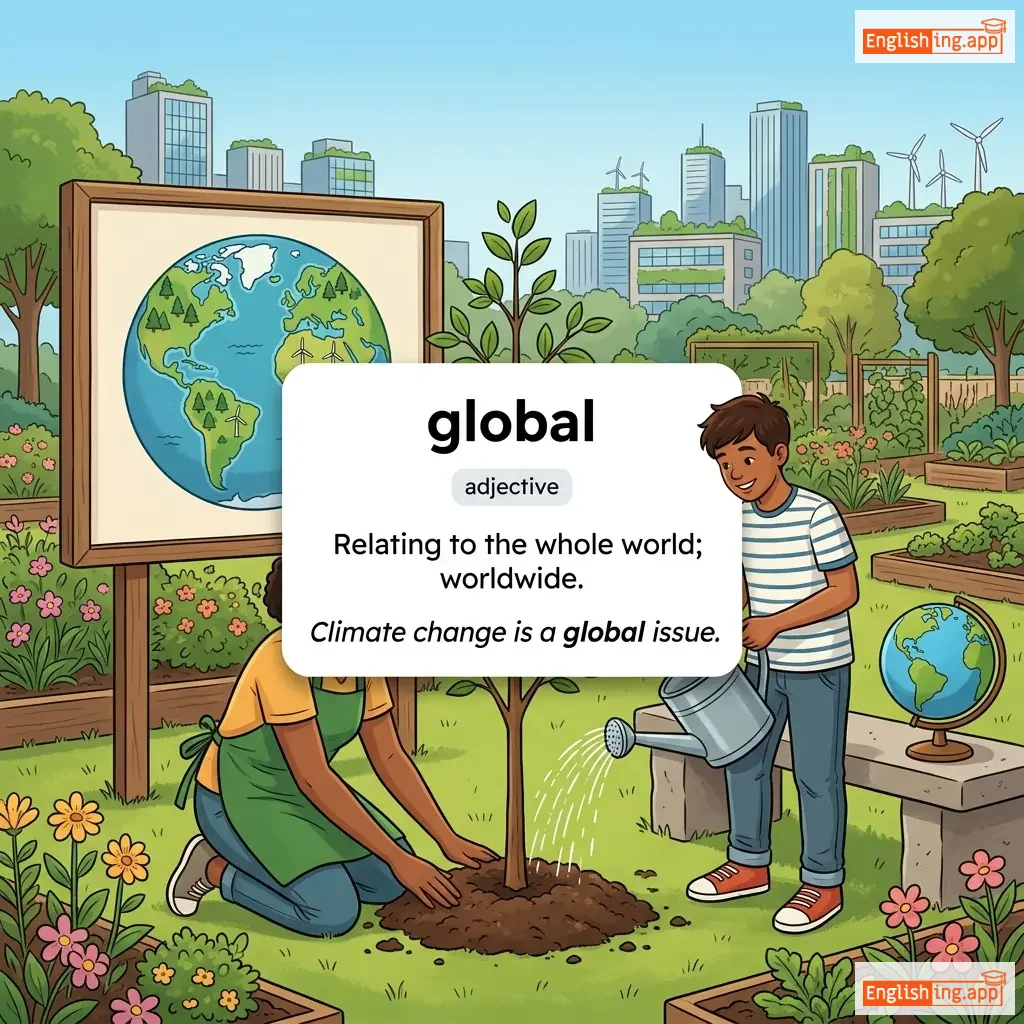
global definition card — visual illustration of the meaning
adjective
/ˈɡloʊbəl/
グローバル (gurobaru)

Relating to the whole world; worldwide.

"Climate change is a global issue."

"気候変動は世界的な問題です。" (Kikō hendō wa sekai-teki na mondai desu.)
global awareness definition card — visual illustration of the meaning
noun
/ˈɡloʊbəl əˈwɛrnɪs/
グローバル意識 (gurobaru ishiki)

Worldwide consciousness and understanding of important issues that affect people globally, leading to informed action and policy changes.

"Global awareness of climate change is essential for policy changes."
"気候変動に対するグローバル意識は政策変更にとって不可欠です。" (Kikō hendō ni taisuru gurobaru ishiki wa seisaku henkō ni totte fukaketsu desu.)
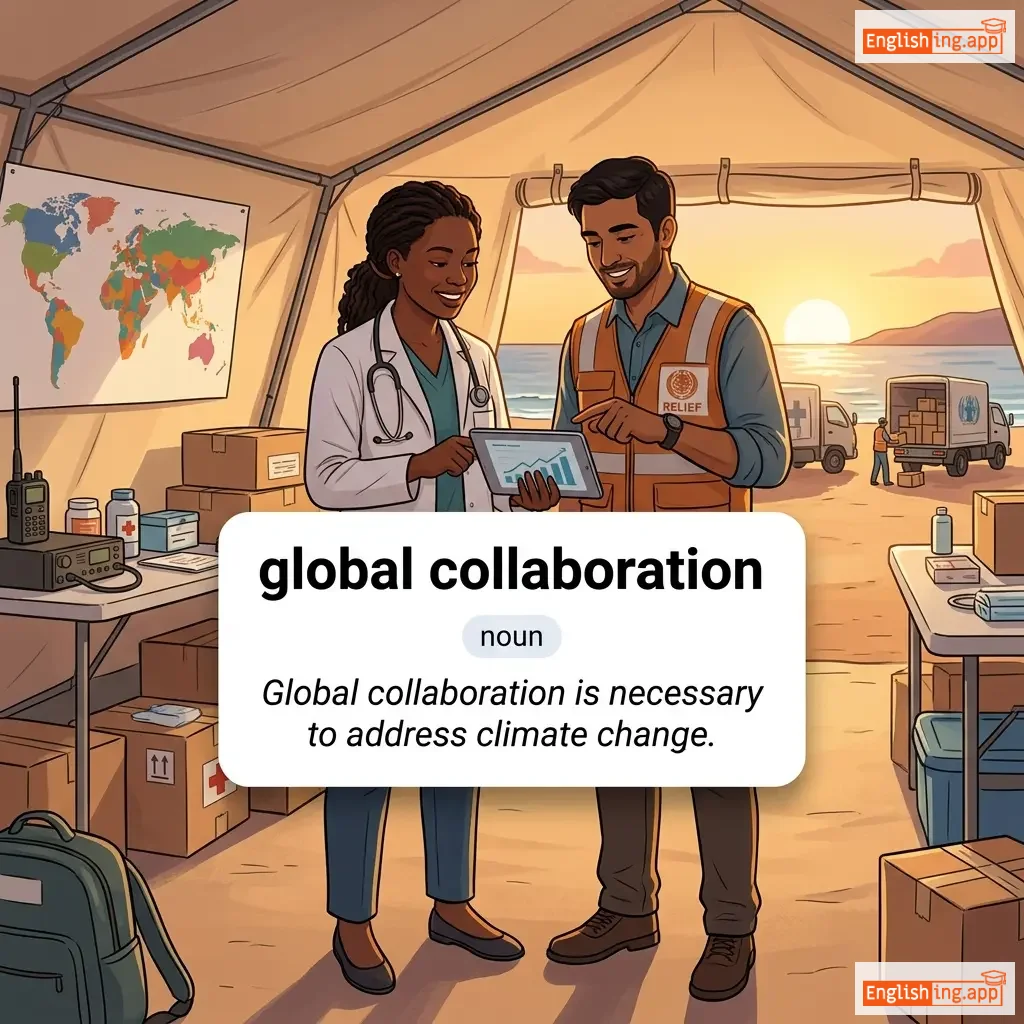
global collaboration definition card — visual illustration of the meaning
noun
ˈɡloʊbəl kəˌlæbəˈreɪʃən
グローバル協力 (gurobaru kyōryoku)

Cooperation and partnership between countries or organizations worldwide to address common challenges.

"Global collaboration is necessary to address climate change."
"グローバル協力は気候変動に対処するために必要です。" (Gurōbaru kyōryoku wa kikō hendō ni taisho suru tame ni hitsuyō desu.)
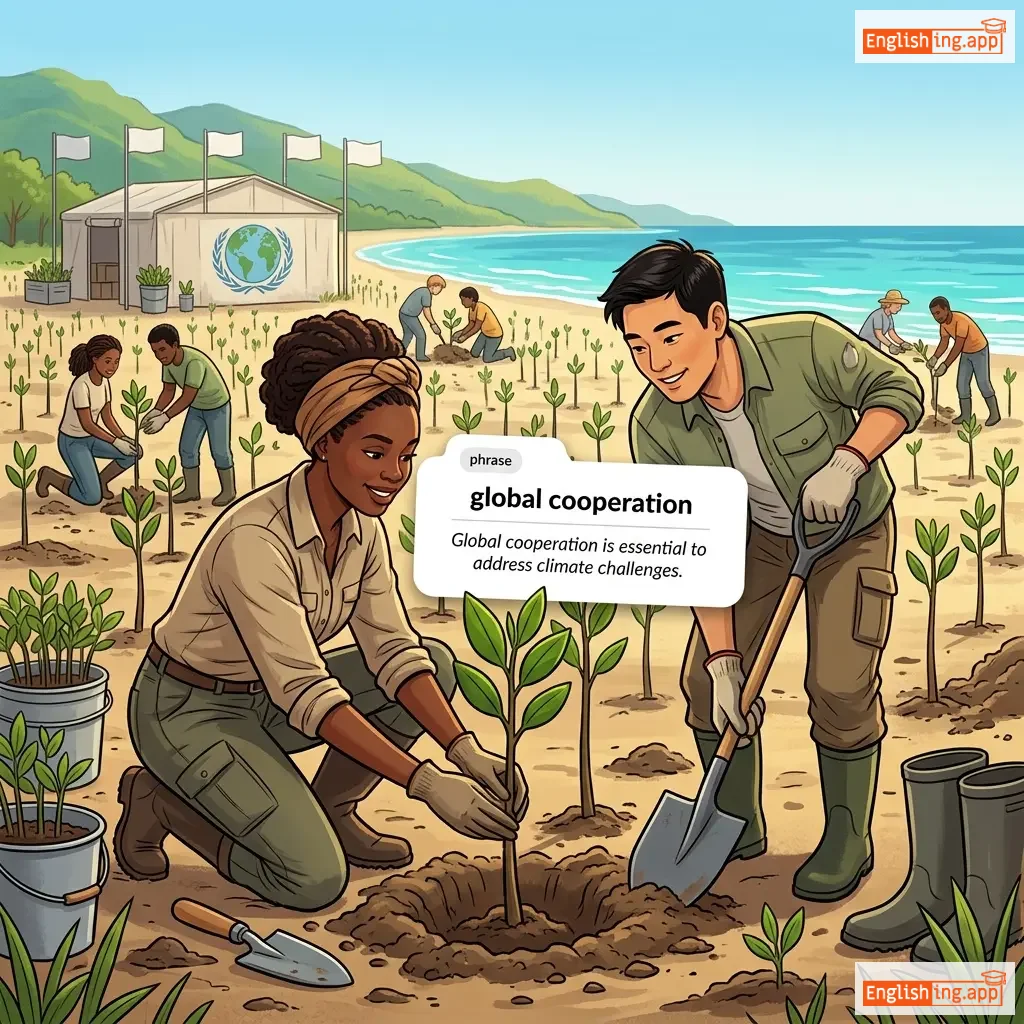
global cooperation definition card — visual illustration of the meaning
phrase
ˈɡləʊ.bəl ˌkəʊ.ɒp.əˈreɪ.ʃən
グローバル協力 (gurobaru kyōryoku)

International collaboration and working together across countries to address common challenges and goals.

"Global cooperation is essential to address climate challenges."
"グローバル協力は気候問題に対処するために不可欠です。" (Gurobaru kyōryoku wa kikō mondai ni taisho suru tame ni fukaketsu desu.)
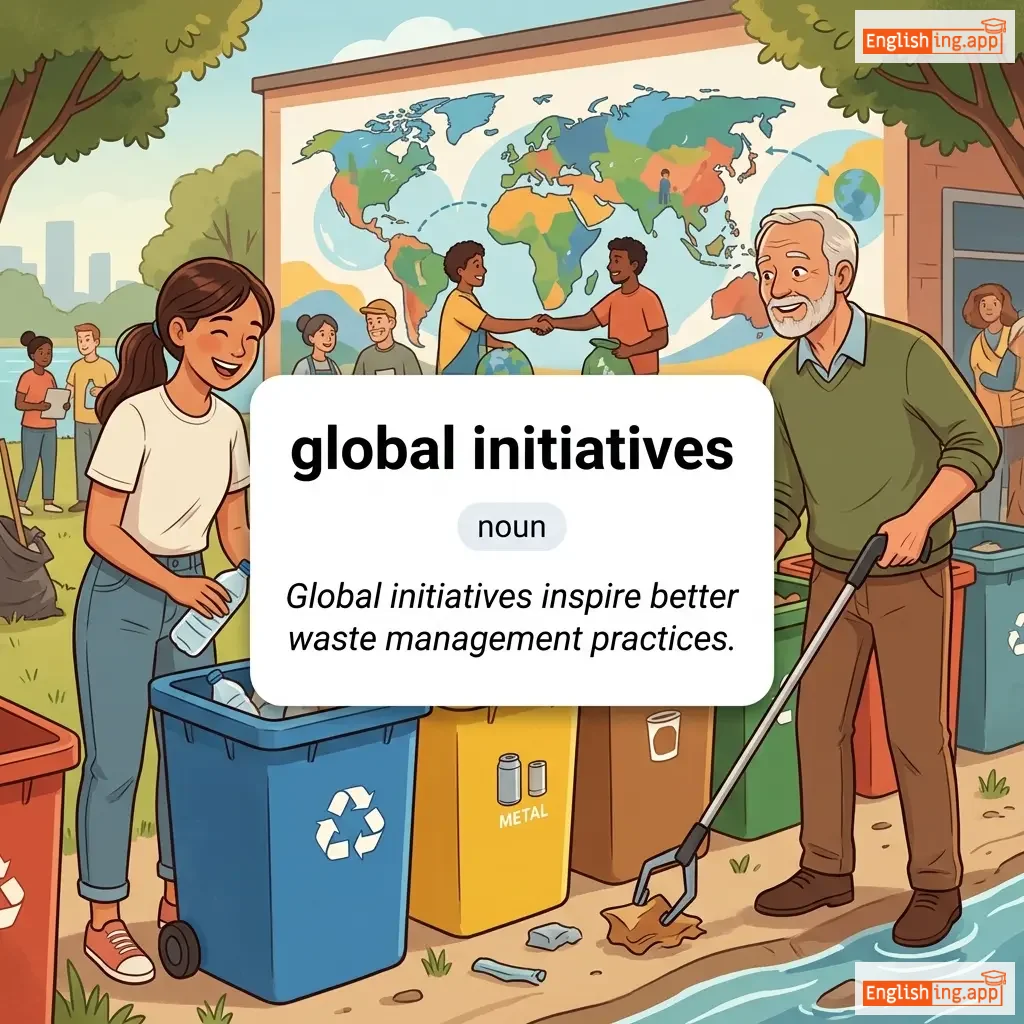
global initiatives definition card — visual illustration of the meaning
noun
ˈɡloʊbəl ɪˈnɪʃətɪvz
グローバルなイニシアティブ (gurobaru na inishiatibu)

Worldwide efforts or programs aimed at addressing global challenges or achieving common goals.

"Global initiatives inspire better waste management practices."
"グローバルなイニシアティブは、より良い廃棄物管理の実践を奨励しています。" (Gurobaru na inishiatibu wa, yori yoi haikimotsu kanri no jissen wo shourei shiteimasu.)
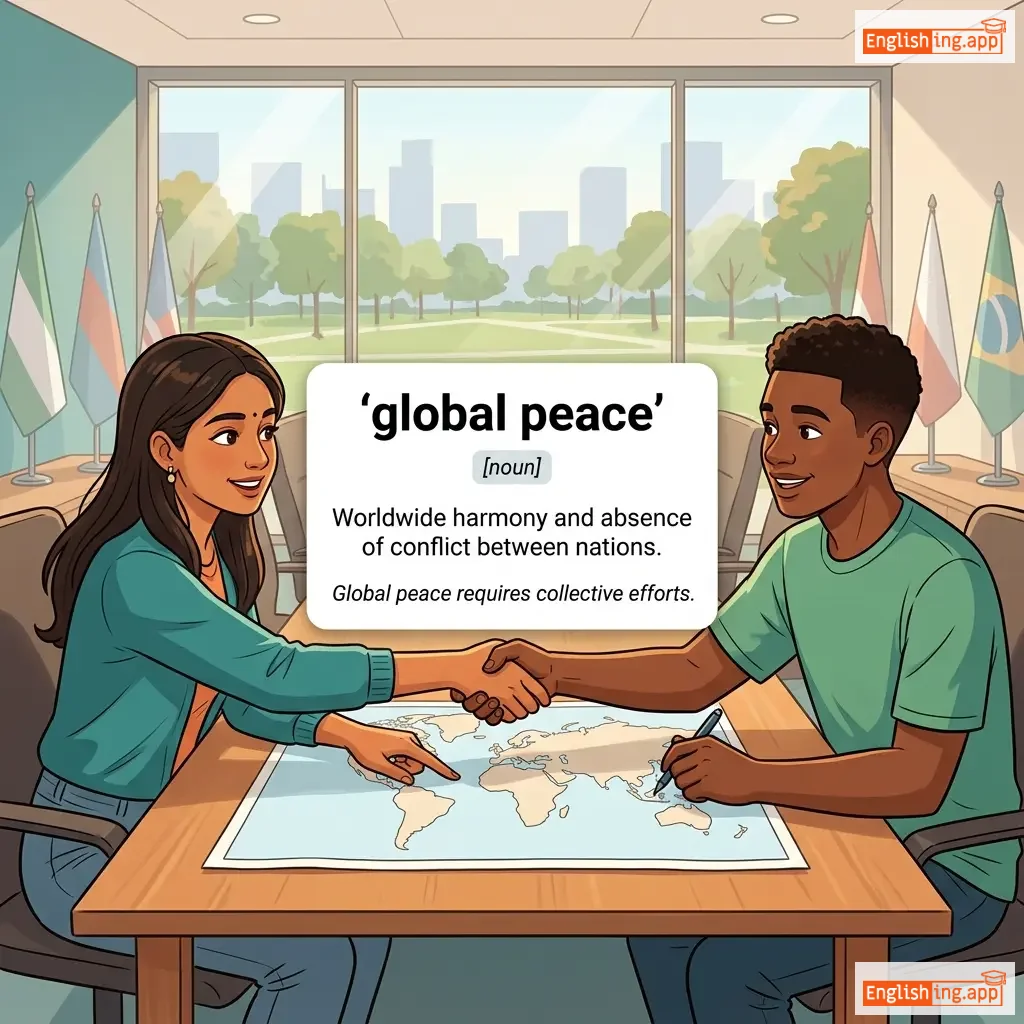
global peace definition card — visual illustration of the meaning
noun
/ˈɡləʊ.bəl piːs/
地球規模の平和 (chikyū kibo no heiwa)

Worldwide harmony and absence of conflict between nations.

"Global peace requires collective efforts."

"地球規模の平和には集団的な努力が必要です。" (Chikyū kibo no heiwa niwa shūdanteki na doryoku ga hitsuyōdesu.)
GlobalFoundries definition card — visual illustration of the meaning
proper noun
ˈɡləʊbəl ˈfaʊndriz
グローバルファウンドリーズ (global foundries)

A specific company in semiconductor manufacturing.

"GlobalFoundries is a leading semiconductor company."

"GlobalFoundriesは半導体業界のリーダーです。" (GlobalFoundries wa handoutai gyoukai no riidaa desu.)
globalization definition card — visual illustration of the meaning
noun
/ˌɡloʊbəlaɪˈzeɪʃən/
グローバリゼーション (gurobarizēshon)

the process by which businesses or other organizations develop international influence or start operating on an international scale

"Globalization has led to increased trade between countries."

"グローバリゼーションは国々間の貿易の増加をもたらしました。" (Gurōbarizēshon wa kuniguni kan no bōeki no zōka o motarashimashita.)
verb
/ˈɡloʊbəlaɪz/
グローバル化する (gurobaruka suru)

to make something worldwide in scope or application; to integrate into a global system

"Many companies globalize their operations to reach international markets."

"多くの企業は国際市場に進出するため事業をグローバル化する。" (ooku no kigyou wa kokusai shijou ni shinshutsu suru tame jigyou o gurobaruka suru)
noun
/ɡloʊb/
地球儀 (chikyūgi)

a spherical model of Earth or another planet; the world itself

"Students used a globe to study the continents."

"学生たちは大陸を学ぶために地球儀を使いました。" (Gakuseitachi wa tairiku o manabu tame ni chikyūgi o tsukaimashita.)
adjective
/ˈɡloʊboʊs/
球形の (kyūkei no)

Spherical or nearly spherical in shape.

"The cactus has large globose fruits."

"サボテンには大きな球形の果物があります。" (Saboten ni wa ōkina kyūkei no kudamono ga arimasu.)
adjective
/ˈɡlɑːbjələr/
球形の (kyūkei no)

Having the shape of a globe; spherical.

"The scientist studied the globular cluster of stars."

"科学者は球状の星団を研究しました。" (Kagakusha wa kyūjō no seidān o kenkyū shimashita.)
noun
/ɡluːm/
暗闇; 悲しみ; 憂鬱 (kurayami, kanashimi, yuuutsu)

partial or total darkness; a state of dejection or despondency

"The thick clouds cast a gloom over the valley, making everything appear dark and dreary."
"厚い雲が谷間に暗闇を投げかけ、すべてが暗くて陰気に見えました。" (Atsui kumo ga tanima ni kurayami wo nagekake, subete ga kurakute inki ni miemashita.)
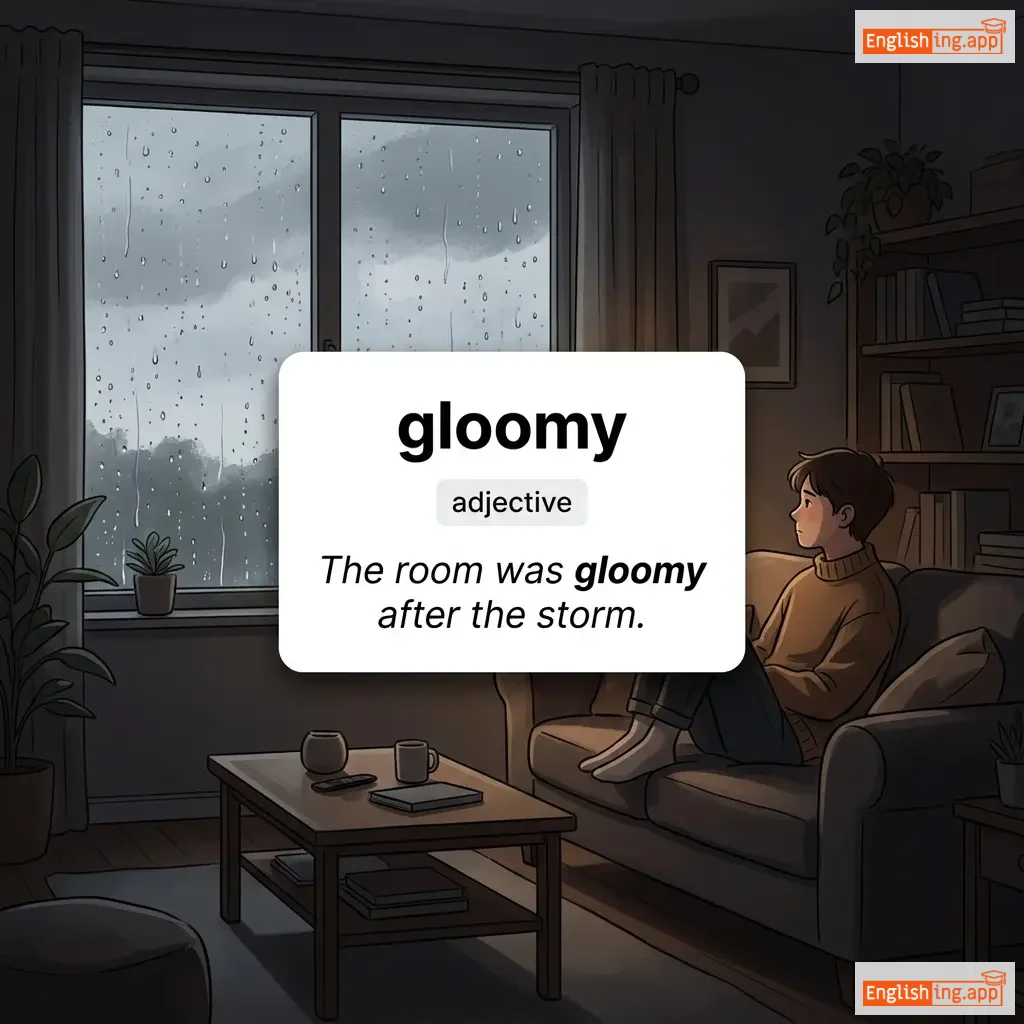
gloomy definition card — visual illustration of the meaning
adjective
/ˈɡluːmi/
陰鬱な (インイツナ)

Dark or poorly lit, making it hard to see; also refers to being sad or pessimistic.

"The room was gloomy after the storm."

"嵐の後、部屋は陰鬱だった。" (Arashi no ato, heya wa in'utsu datta.)
glorify definition card — visual illustration of the meaning
verb
/ˈɡlɔːrɪfaɪ/
讃える (tataeru)

to praise or honor someone or something; to make something seem better than it is

"The movie glorifies war heroes."

"その映画は戦争の英雄を美化している。" (Sono eiga wa sensō no eiyū o bika shite iru.)
adjective
/ˈɡlɔː.ri.əs/
栄光 (eikou)

having great beauty, magnificence, or deserving admiration and praise

"It was a glorious day filled with sunshine and joy."

"それは栄光の日で、太陽と喜びに満ちていました。" (Sore wa eikou no hi de, taiyō to yorokobi ni michite imashita.)
noun
/ˈɡlɔːri/
栄光 (eikou)

great honor, praise, or fame achieved by doing something remarkable

"The athlete won glory for his country with his performance."

"アスリートはそのパフォーマンスで国に栄光をもたらした。" (Asurīto wa sono pafōmansu de kuni ni eikou o motarashita.)
noun
/ɡlɒs/
光沢のある表面 / 解説 (kōtaku no aru hyōmen / kaisetsu)

a shiny surface or an explanation of a word or phrase

"The table had a beautiful gloss after polishing."

"テーブルは磨いた後、美しい光沢がありました。" (Tēburu wa migaita ato, utsukushī kōtaku ga arimashita.)
phrasal verb
/ɡlɒs ˈoʊ.vər/
軽視する / 重要性を低くする (keishi suru / jūyōsei o hikuku suru)

to avoid discussing something unpleasant or make it seem less important

"The report glossed over the company's financial problems."

"レポートは会社の財務問題を軽視した。" (Repōto wa kaisha no zaimu mondai o keishi shita.)
noun
/ˈɡlɒs.ər.i/
用語集 (yōgoshū)

an alphabetical list of terms with definitions, often found at the end of a book

"The textbook includes a glossary of key terms at the back."

"教科書の最後には重要な用語のグロッサリーが含まれています。" (Kyōkasho no saigo ni wa jūyō na yōgo no gurossarī ga fukumareteimasu.)
verb
/ˈɡlɒs.oʊ.vər/
無視する (mushi suru)

an informal or non-standard variant of 'gloss over', meaning to ignore or minimize something

"He tried to glossover his mistakes during the meeting."

"彼は会議中に自分のミスを無視しようとした。" (Kare wa kaigi-chū ni jibun no misu o mushi shiyou to shita.)
adjective
/ˈɡlɒsi/
光沢のある (kōtaku no aru)

Shiny and smooth in appearance; attractive on the surface but sometimes lacking depth.

"She bought a glossy magazine from the store."

"彼女は店で光沢のある雑誌を買いました。" (Kanojo wa mise de kōtaku no aru zasshi o kaimashita.)
noun
/ɡlʌv/
手袋 (tebukuro)

A covering for the hand with separate parts for the fingers and thumb.

"She wore gloves to protect her hands from the cold."

"彼女は寒さから手を守るために手袋をしました。" (Kanojo wa samusa kara te o mamoru tame ni tebukuro o shimashita.)
noun
/ɡlʌvz/
手袋 (tebukuro)

coverings for the hands with separate parts for each finger

"She wore warm gloves to protect her hands from the cold."

"彼女は寒さから手を守るために暖かい手袋をはめました。" (Kanojo wa samusa kara te o mamoru tame ni atatakai tebukuro o hamemashita.)
verb
/ɡloʊ/
輝く (kagayaku)

To shine with a steady light, often softly; to radiate warmth or happiness.

"The lanterns glowed softly in the dark."

"ランタンが暗闇の中で柔らかく光っていた。" (Rantan ga kurayami no naka de yawarakaku hikatte ita.)
verb
/ˈɡlaʊ.ər/
怒って見る (okotte miru)

To look at someone with an angry or sullen expression.

"He glowered at his rival across the room."

"彼は部屋の向こう側でライバルを怒った顔で見つめた。" (Kare wa heya no mukou gawa de raibaru o okotta kao de mitsumeta.)
noun
/ɡluː/
接着剤 (setchaku-zai)

a sticky substance used for sticking objects or materials together; an adhesive

"The children used white glue to attach the colorful paper pieces to their art project."

"子供たちは、色とりどりの紙片をアートプロジェクトに貼り付けるために白い接着剤を使いました。" (Kodomotachi wa, iro toridori no shihen o āto purojekuto ni haritsukeru tame ni shiroi setchaku-zai o tsukaimashita.)
adjective
/ɡlʌm/
憂鬱な (yūtsu na)

Looking or feeling sad, gloomy, or dejected.

"She felt glum after hearing the bad news."

"悪いニュースを聞いた後、彼女は憂鬱になった。" (Warui nyūsu o kiita ato, kanojo wa yūtsu ni natta.)
noun
/ɡlʌt/
供給過剰 (kyoukyuu kajou)

An excessive supply of something; more than is needed.

"There was a glut of cheap smartphones in the market."

"市場には安価なスマートフォンの供給過剰がありました。" (Shijou ni wa anka na sumaatofon no kyoukyuu kajou ga arimashita.)
adjective
/ˈɡluː.tɪ.nəs/
粘着性の (nenchakusei no)

Having a sticky or glue-like texture.

"The glutinous rice stuck together in the pot."

"粘着性のあるご飯は鍋の中でくっついていました。" (Nenchakusei no aru gohan wa nabe no naka de kuttsuite imashita.)
noun
/ˈɡlʌt.ən/
大食い (ōgui)

A person who eats or consumes excessively.

"He was called a glutton for eating so much at the party."

"彼はパーティーであんなに食べたので、大食いと呼ばれた。" (Kare wa pāti de anna ni tabeta node, ōgui to yobareta.)
adjective
/ˈɡlʌt.ən.əs/
大食い (ōgui)

Excessively greedy in eating or consuming.

"His gluttonous appetite shocked everyone at the dinner table."

"彼の大食いの食欲は、ディナーテーブルで皆を驚かせた。" (Kare no ōgui no shokuyoku wa, dinā tēburu de mina o odorokaseta.)
noun
/ˈɡlʌtəni/
暴食 (boushoku)

Excessive eating or drinking; overindulgence in food or drink.

"His gluttony during the festival left him feeling sick."
"祭りの間の彼の暴食は、彼を病気にさせました。" (Matsuri no aida no kare no boushoku wa, kare wo byouki ni saseshimashita.)
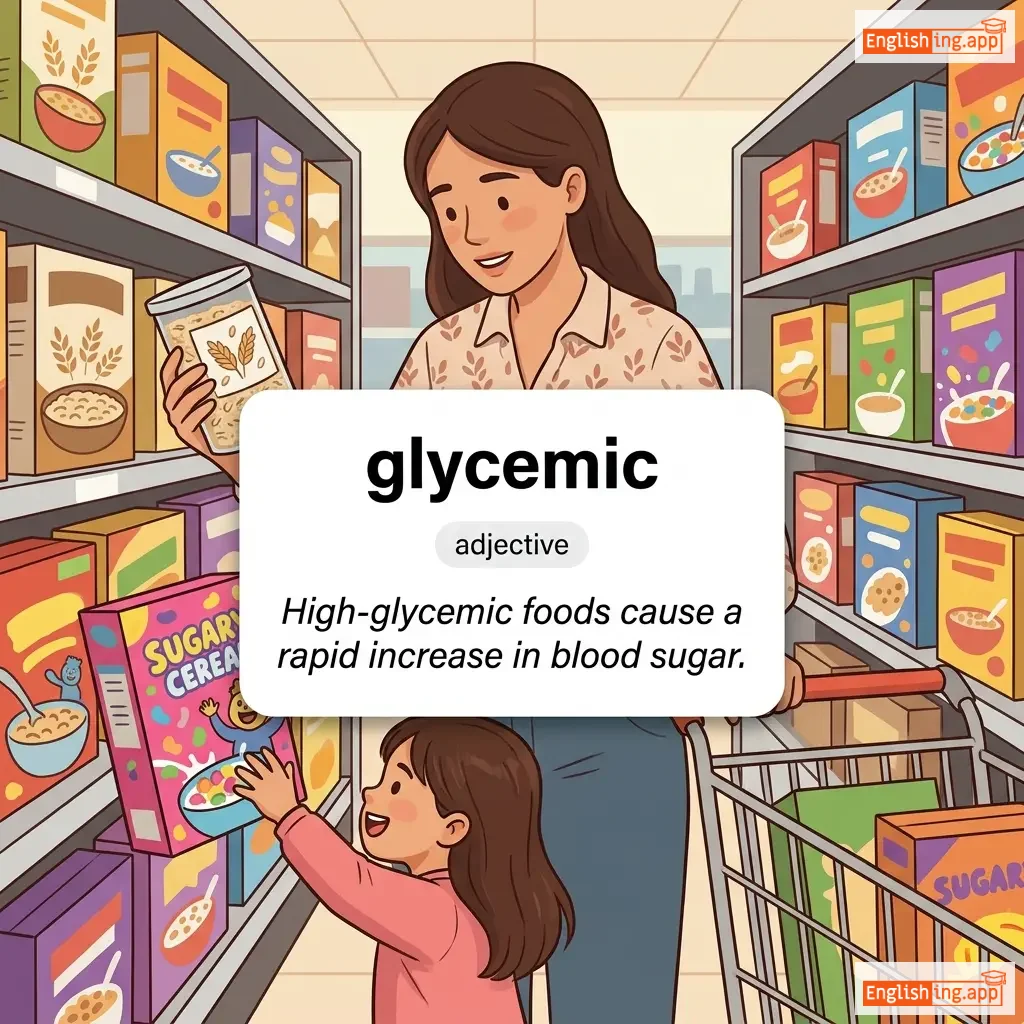
glycemic definition card — visual illustration of the meaning
adjective
/ɡlaɪˈsiː.mɪk/
グルコースに関連 (guruko-su ni kanren)

Relating to the presence of glucose in the blood and how foods affect blood sugar levels.

"High-glycemic foods cause a rapid increase in blood sugar."

"高グリセミック食品は血糖値を急激に上昇させます。" (Kou gurisemiikku shokuhin wa kettouchi wo kyuugeki ni joushou sasemasu.)
verb
/nɑːrl/
ねじれる (nejireru)

To twist into a knotted or distorted form.

"The tree roots began to gnarl around the stones."

"木の根が石の周りにねじれ始めた。" (Ki no ne ga ishi no mawari ni nejirehajimeta.)
adjective
/nɑːrld/
ねじれた (nejireta)

Twisted, rough, and knotted, especially with age.

"The old man had gnarled hands from years of hard work."

"その老いた男性は長年の重労働でねじれた手をしていた。" (Sono oita dansei wa naganen no jūrōdō de nejireta te o shite ita.)
verb
/næʃ/
歯ぎしりをする (hagishiri o suru)

to grind or strike the teeth together, often in anger or frustration

"He began to gnash his teeth in rage."

"彼は怒りで歯ぎしりを始めた。" (Kare wa ikari de hagishiri o hajimeta.)
noun
/næt/
(ka)

a small flying insect that bites people and animals

"The gnat buzzed around my head while I was reading."

"私が読書している間、蚊が頭の周りでブンブンと音を立てていた。" (Watashi ga dokusho shite iru aida, ka ga atama no mawari de bunbun to oto o tatete ita.)
noun
/noʊm/
ノーム (nōmu)

a small mythical creature, often depicted as a bearded man living underground; also a figurine used in gardens

"The garden was decorated with a gnome statue."

"庭にはノームの像が飾られていました。" (Niwa ni wa nōmu no zō ga kazararete imashita.)
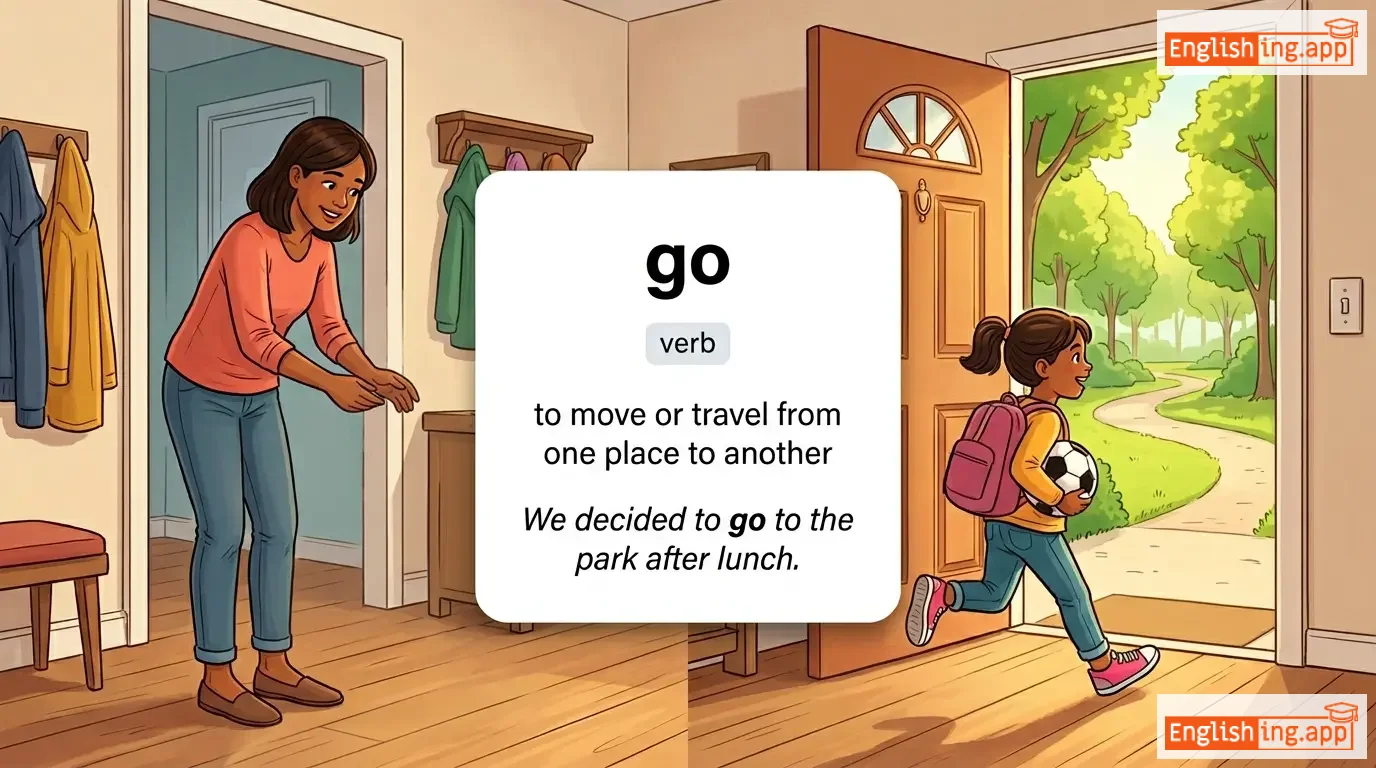
go definition card — visual illustration of the meaning
verb
/ɡoʊ/
行く (iku)

to move or travel from one place to another

"We decided to go to the park after lunch."

"私たちは昼食後に公園に行くことに決めました。" (Watashitachi wa chuushoku go ni kouen ni iku koto ni kimemashita.)
goad definition card — visual illustration of the meaning
verb
/ɡoʊd/
挑発する (chouhatsu suru)

to provoke, annoy, or urge someone to take action

"He tried to goad his opponent into making a mistake."

"彼は対戦相手をミスを犯させるために挑発しようとした。" (Kare wa taisen aite o misu o okosaseru tame ni chouhatsu shiyou to shita.)
noun
/ɡoʊl/
目標 (mokuhyō)

an aim or desired result; a point scored in a game

"Her main goal is to become a doctor."

"彼女の主な目標は医者になることです。" (Kanojo no omona mokuhyō wa isha ni naru koto desu.)