語彙集

英単語辞書 | 単語の意味、定義、例文

noun, verb
/fɔːrd/
浅瀬 (asase)

A shallow place in a river where one can cross; to cross a river at such a place.

"The travelers decided to ford the river at dawn."

"旅行者たちは夜明けに川を渡ることに決めました。" (Ryokō-sha-tachi wa yoake ni kawa o wataru koto ni kimemashita.)
noun
/ˈfɔːrˌbɛər/
先祖 (senzo)

An ancestor, especially one who lived a long time ago.

"He often speaks of his forebears with great respect."

"彼はしばしば自分の先祖について尊敬を込めて話します。" (Kare wa shibashiba jibun no senzo ni tsuite sonkei o komete hanashimasu.)
noun
/ˈfɔːrˌbɛərz/
先祖 (senzo)

Ancestors or people in previous generations from whom one is descended.

"We must honor the traditions of our forebears."

"私たちは先祖の伝統を尊重しなければなりません。" (Watashitachi wa senzo no dentou wo sonchou shinakereba narimasen.)
verb
/fɔːrˈboʊd/
予兆する (yochou suru)

To predict or have a strong inner feeling of a future misfortune or evil.

"Dark clouds forebode a coming storm."

"暗い雲が来る嵐を予兆している。" (Kurai kumo ga kuru arashi o yochou shite iru.)
noun/adjective
/fɔːrˈboʊdɪŋ/
不吉な予感 (fukitsuna yokan)

A feeling that something bad will happen; ominous.

"She felt a deep sense of foreboding as she entered the abandoned house."

"彼女は廃屋に入るとき、深い不吉な予感を感じた。" (Kanojo wa haieki ni hairu toki, fukai fukitsuna yokan o kanjita.)
🌦️

Forecast

noun/verb
/ˈfɔːrkæst/

To predict future events, especially weather or economic trends.

"The weather office forecast heavy rain for tomorrow."

noun
/ˈfoʊksl/
フォアキャッスル (foakyassuru)

The forward part of a ship below the deck, traditionally used as living quarters for the crew.

"The sailors gathered in the forecastle after their shift."

"船員たちはシフト後にフォアキャッスルに集まりました。" (Sen'in-tachi wa shifuto go ni foakyassuru ni atsumarimashita.)
verb
/fɔːrˈkloʊz/
差し押さえる (sashiosaeru)

to take possession of a property due to the owner's failure to keep up mortgage payments

"The bank decided to foreclose on the property after months of missed payments."

"銀行は何ヶ月も支払いを欠かした後、物件の差し押さえを決定しました。" (Ginkō wa nan kagetsu mo shiharai o kakashita ato, bukken no sashiosae o kettei shimashita.)
noun
/fɔːrˈkloʊʒər/
差し押さえ (sashiosae)

The legal process by which a lender takes control of a property from a borrower who has failed to make payments.

"The family lost their home due to foreclosure after missing several mortgage payments."

"その家族は複数回のモーゲージ支払いを逃したため、差し押さえで家を失いました。" (Sono kazoku wa fukusū kai no mōgēji shiharai o nogashita tame, sashiosae de ie o ushī mashita.)
noun
/ˈfɔːrkɔːrt/
前庭 (zentō)

an open area in front of a large building, especially a petrol station or hotel

"The car was parked in the hotel forecourt."

"車はホテルの前庭に駐車されていました。" (Kuruma wa hoteru no zentō ni chūsha sarete imashita.)
noun
/ˈfɔːrˌfɑːðər/
先祖 (senzo)

an ancestor, especially one who was part of an earlier generation of a family or nation

"Our forefathers fought for independence."

"私たちの先祖は独立のために戦いました。" (Watashitachi no senzo wa dokuritsu no tame ni tatakaimashita.)
verb
/fɔːrˈɡoʊ/
断る (kotowaru)

to decide not to do or have something pleasant or valuable

"She decided to forego dessert to maintain her diet."

"彼女はダイエットを維持するためにデザートを断ることに決めました。" (Kanojo wa daietto o iji suru tame ni dezāto o kotowaru koto ni kimemashita.)
noun
/ˈfɔːrɡraʊnd/
前景 (zenkei)

the part of a scene that is nearest to and in front of the viewer

"The flowers in the foreground brightened the picture."

"前景にある花が絵を明るくしました。" (Zenkei ni aru hana ga e o akaruku shimashita.)
noun
/ˈfɔːrˌhɛd/ or /ˈfɔːrɪd/
(atama)

The part of the face above the eyebrows.

"She wiped the sweat from her forehead."

"彼女は額から汗を拭いました。" (Kanojo wa atama kara ase o fukimashita.)
adjective
/ˈfɔːrən/ or /ˈfɑːrən/
外国の (gaikoku no)

Belonging to or coming from another country.

"She loves studying foreign languages."

"彼女は外国語を学ぶのが好きです。" (Kanojo wa gaikokugo o manabu no ga suki desu.)
noun
/ˈfɔːrənər/ or /ˈfɑːrənər/
外国人 (gaikokujin)

A person from another country.

"The city welcomes every foreigner with kindness."

"その都市はすべての外国人を親切に迎えます。" (Sono toshi wa subete no gaikokujin o shinsetsu ni mukaemasu.)
verb
/fɔːrˈdʒʌdʒ/
前もって判断する (maemotte handan suru)

To judge beforehand without adequate information.

"It is unfair to forejudge someone without knowing the facts."

"事実を知らずに誰かを前もって判断するのは不公平です。" (Jijitsu o shirazu ni dareka o maemotte handan suru no wa fukōhei desu.)
noun
/ˈfɔːrˌnɑːlɪdʒ/
予知 (yochi)

Awareness of something before it happens or exists.

"The prophet claimed to have foreknowledge of the event."

"預言者はその出来事の予知をしていると主張した。" (Yogen-sha wa sono dekigoto no yochi o shite iru to shuchou shita.)
noun
/ˈfɔːrmən/
労働者のグループを担当する人、特に工場や建設現場で (rōdōsha no gurūpu o tantō suru hito, tokuni kōjō ya kensetsu genba de)

a person in charge of a group of workers, especially in a factory or construction site

"The foreman supervised the workers on the construction site."

"フォアマンは建設現場で作業員を監督しました。" (Fōman wa kensetsu genba de sagyōin o kantoku shimashita.)
adjective
/ˈfɔːrmoʊst/
最も重要な (mottomo jūyō na)

most important; leading; first in rank or position

"She is one of the foremost experts in the field."
"彼女はこの分野の最も重要な専門家の一人です。" (Kanojo wa kono bunya no mottomo jūyō na senmonka no hitori desu.)
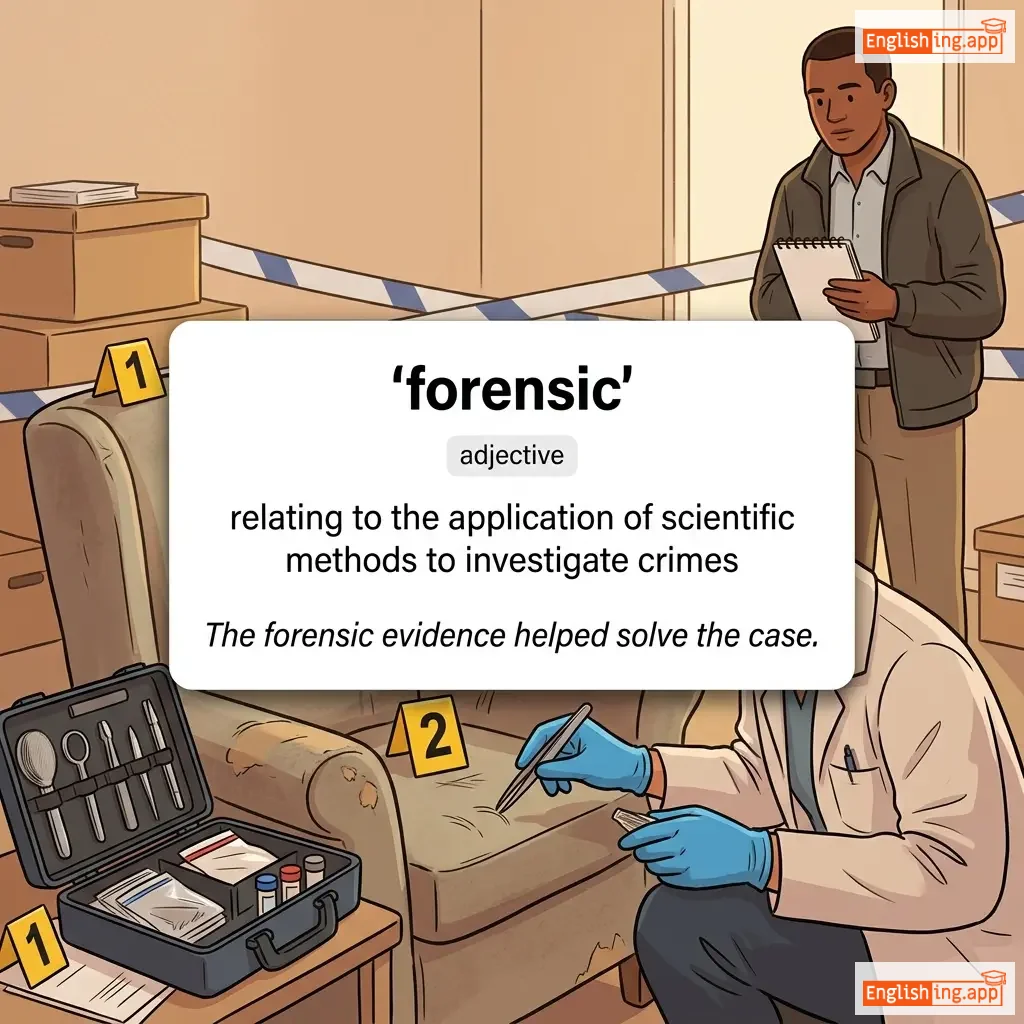
forensic definition card — visual illustration of the meaning
adjective
/fəˈrɛnsɪk/
法医学 (hōigaku)

relating to the application of scientific methods to investigate crimes

"The forensic evidence helped solve the case."

"法医学の証拠が事件解決に役立ちました。" (Hōigaku no shōko ga jiken kaiketsu ni yakudachimashita.)
verb
/ˌfɔːrɔːrˈdeɪn/
前もって定める (maemotte sadameru)

to determine or decree something in advance; to predestine

"Some believe that our lives are foreordained by fate."

"いくつかの人々は、私たちの人生は運命によって予め定められていると信じています。" (Ikutsuka no hitobito wa, watashitachi no jinsei wa unmei ni yotte arakajime sadamerareteiru to shinjiteimasu.)
noun
/ˌfɔːrɔːrdɪˈneɪʃən/
予定 (yotei)

the act of determining something in advance; predestination

"The doctrine of foreordination suggests that events are fixed by divine will."

"予定説の教義は、出来事は神の意志によって定められていると示唆しています。" (Yotei setsu no kyougi wa, dekigoto wa kami no ishi ni yotte sadamerarete iru to shisa shiteimasu.)
noun
/ˈfɔːrˌpiːk/
船首の部屋 (senshū no heya)

The compartment in the forward part of a ship, often used for storage.

"The sailors stored extra ropes in the forepeak."

"船員たちは余分なロープを船首の部屋に収納しました。" (Sen'in-tachi wa yobun na rōpu o senshū no heya ni shunō shimashita.)
verb
/ˌfɔːrˈrʌn/
先駆ける (sakigakeru)

To go before; to precede in time, place, or action.

"Dark clouds often forerun a storm."

"暗い雲はしばしば嵐の前触れとなる。" (Kurai kumo wa shibashiba arashi no maebure to naru.)
noun
/ˈfɔːrˌrʌnər/
先駆者 (senkusha)

A person or thing that comes before another; a predecessor or harbinger.

"The Wright brothers were the forerunners of modern aviation."

"ライト兄弟は現代の航空の先駆者でした。" (Raito kyōdai wa gendai no kōkū no senkusha deshita.)
noun
/ˈfɔːrˌseɪl/
フォアセイル (foa seiru)

The principal sail set on the foremast of a sailing vessel.

"The crew adjusted the foresail to catch the wind."

"乗組員は風を捉えるためにフォアセイルを調整しました。" (Norikumiin wa kaze wo toraeru tame ni foa seiru wo chousei shimashita.)
verb
/fɔːrˈsiː/
予見する (yokensuru)

To be aware of beforehand; to predict or expect.

"She could foresee the challenges ahead."

"彼女は前方の課題を予見することができました。" (Kanojo wa zenpou no kadai o yokensuru koto ga dekimashita.)
adjective
/fɔːrˈsiːəbl/
予測可能な (yosoku kanou na)

Able to be predicted or expected in advance

"The company is unlikely to make changes in the foreseeable future."

"その会社は予測可能な未来において変化を起こす可能性は低い。" (Sono kaisha wa yosoku kanou na mirai ni oite henka o okosu kanousei wa hikui.)
verb
/fɔːrˈʃædoʊ/
予兆する (yochou suru)

To indicate or suggest something that will happen in the future

"Dark clouds foreshadowed an approaching storm."

"暗い雲が近づく嵐を予兆していた。" (Kurai kumo ga chikazuku arashi wo yochou shite ita.)
noun
/ˈfɔːrʃɔːr/
海岸 (kaigan)

The part of the shore between the high and low tide marks

"Children were playing on the foreshore, collecting shells."
"子供たちは海岸で遊んでいて、貝殻を集めていました。" (Kodomotachi wa kaigan de asonde ite, kaigara o atsume te imashita.)
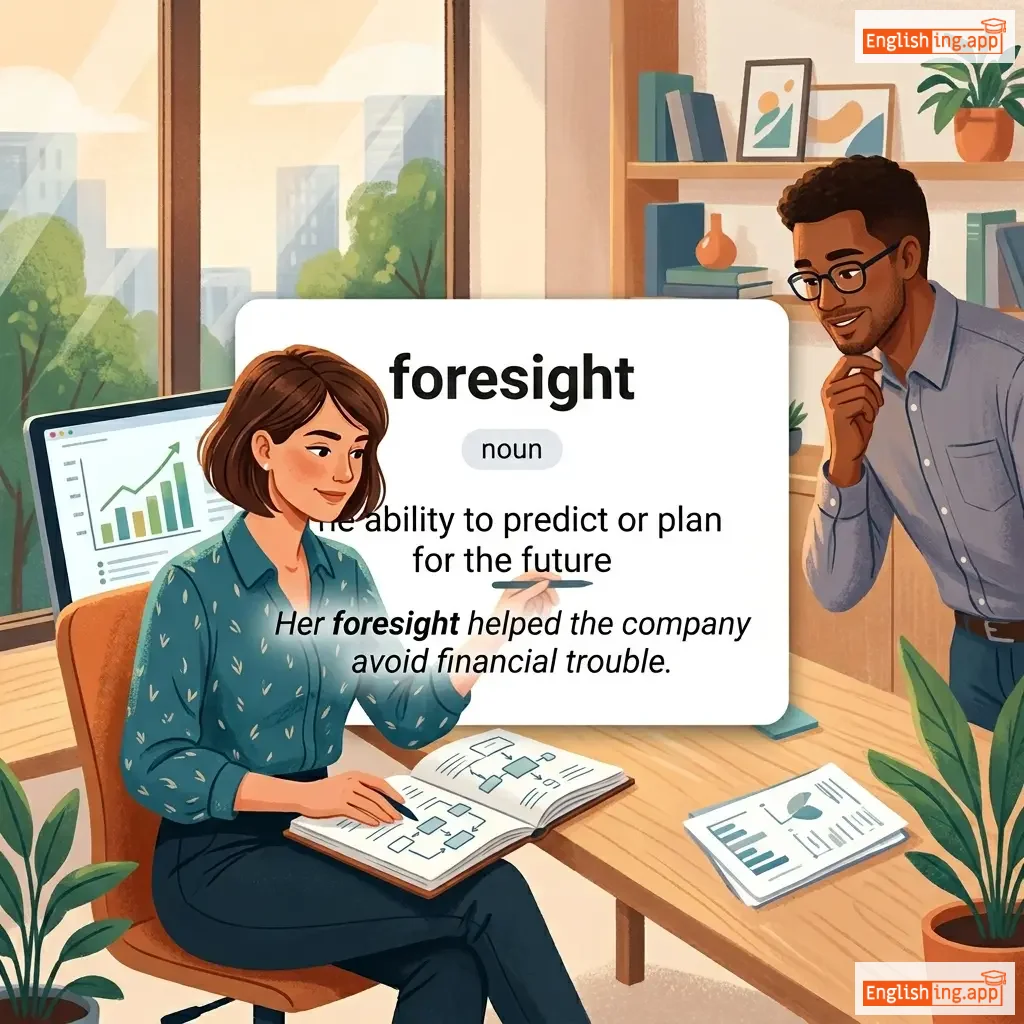
foresight definition card — visual illustration of the meaning
noun
/ˈfɔːrsaɪt/
先見の明 (senken no mei)

The ability to predict or plan for the future

"Her foresight helped the company avoid financial trouble."

"彼女の先見の明が会社を財務問題から救った。" (Kanojo no senken no mei ga kaisha o zaimu mondai kara sukutta.)
noun
/ˈfɔːrɪst/
(mori)

A large area covered chiefly with trees and undergrowth.

"They went hiking in the forest."
"彼らは森でハイキングに行った。" (Karera wa mori de haikingu ni itta.)
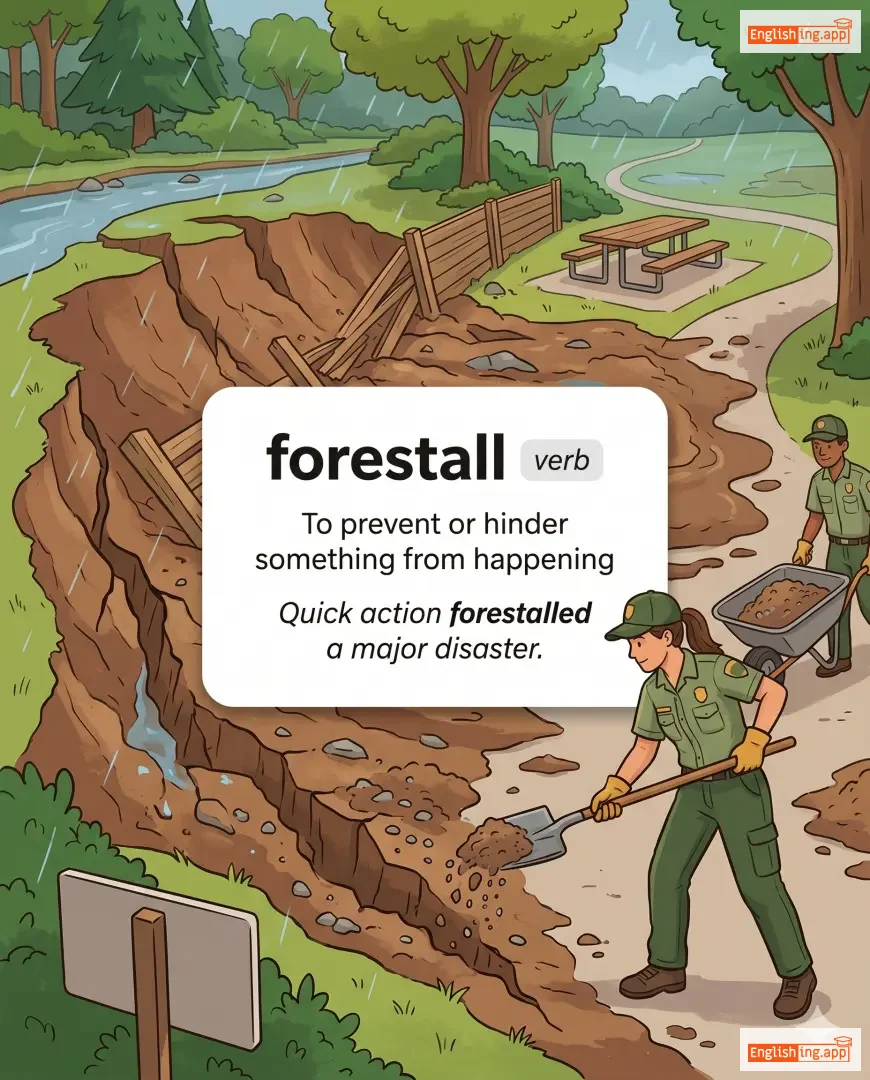
forestall definition card — visual illustration of the meaning
verb
/fɔːrˈstɔːl/
防ぐ (fusugu)

To prevent or hinder something from happening

"Quick action forestalled a major disaster."
"迅速な行動が大きな災害を防ぎました。" (Jinsoku na kōdō ga ōkina saigai o fusegimashita.)
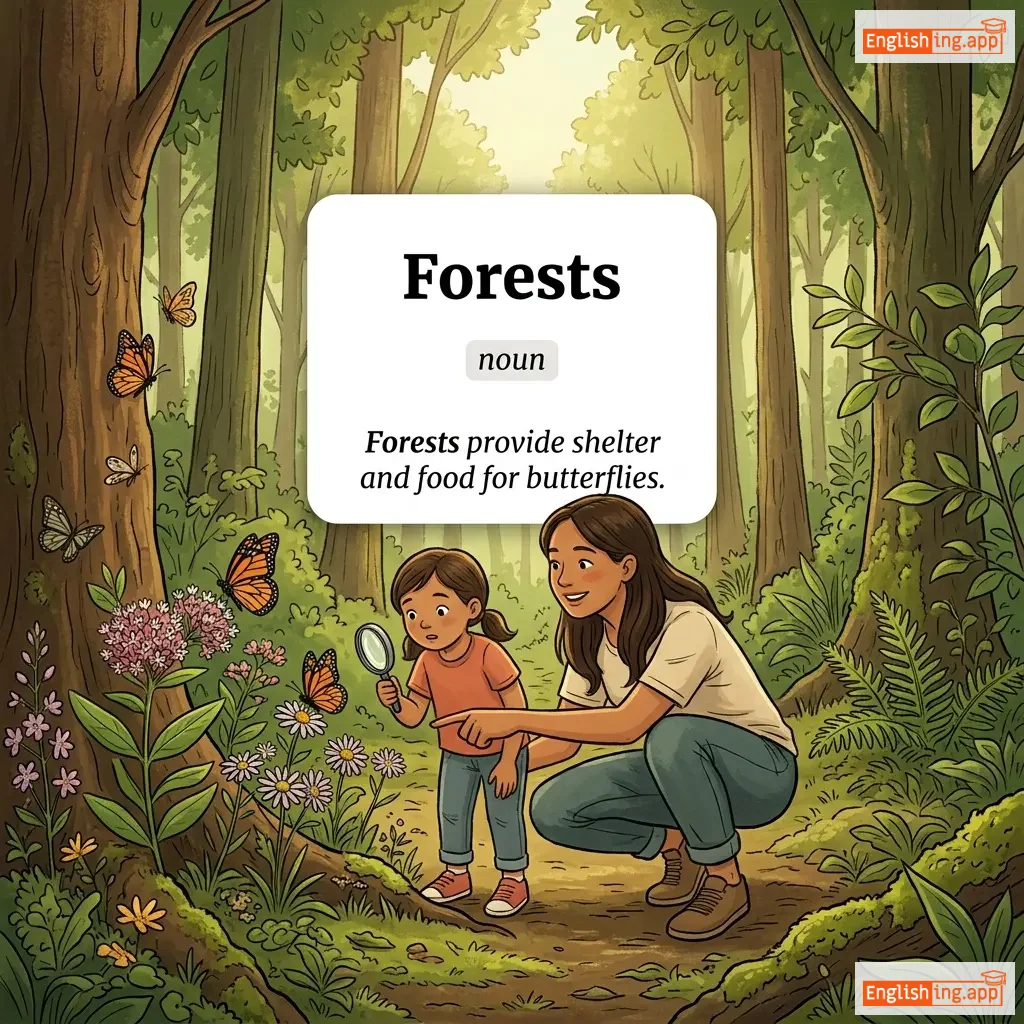
Forests definition card — visual illustration of the meaning
noun
ˈfɔːrɪsts
(mori)

Large areas covered with trees and undergrowth, providing natural habitats for wildlife.

"Forests provide shelter and food for butterflies."

"森は蝶々にとって避難所と食料を提供します。" (Mori wa chōchō ni totte hinanjo to shokuryō o teikyō shimasu.)
verb
/fɔːrˈtɛl/
予知する (yochi suru)

to predict or announce something before it happens

"The old man claimed he could foretell the future."

"その老人は未来を予知できると主張した。" (Sono rōjin wa mirai wo yochi dekiru to shuchō shita.)
noun
/ˈfɔːrˌθɔːt/
先見の明 (senkenno mei)

careful consideration of what will be necessary or may happen in the future

"With a little forethought, we could have avoided the problem."

"少しの先見の明で、この問題を避けることができたかもしれません。" (Sukoshi no senkenno mei de, kono mondai o sakeru koto ga dekita kamoshiremasen.)
adverb
/fɔːrˈɛvər/
永遠 (eien)

For all future time; for always.

"She promised to love him forever."

"彼女は永遠に彼を愛すると約束した。" (Kanojo wa eien ni kare o aisuru to yakusoku shita.)
noun
/ˈfɔːrwɜːrd/
序文 (jomun)

a short introduction at the beginning of a book, typically written by someone other than the author

"The foreword of the book was written by a famous historian."

"その本の序文は、有名な歴史家によって書かれました。" (Sono hon no jomun wa, yūmei na rekishika ni yotte kakaremashita.)
⚖️

forfeit

verb
/ˈfɔːrfɪt/

to lose or give up something, usually as a penalty for wrongdoing

"He had to forfeit the match after breaking the rules."

verb
/fɔːrˈfɛnd/
守る, 防ぐ, 防止する (mamoru, fusegu, bōshi suru)

to protect or defend against something undesirable; to prevent

"May good fortune forfend any danger from our journey."

"良い運が私たちの旅からどんな危険も防いでくれますように。" (Yoi un ga watashitachi no tabi kara donna kiken mo fuseide kuremasu yō ni.)
verb
/fɔːrdʒ/
鍛造する、偽造する (tanzou suru, gizou suru)

to create or shape something, often with effort or skill; also to counterfeit or fake something

"The blacksmith forged a strong sword from the iron."

"鍛冶屋は鉄から強力な剣を鍛えました。" (Kajiya wa tetsu kara kyōryoku na ken wo tameshimashita.)
noun
/ˈfɔːrdʒər/
偽造者 (gizōsha)

a person who makes fake documents, artworks, or signatures

"The police arrested a forger who had been selling counterfeit paintings."

"警察は偽造者を逮捕しました。彼は偽の絵画を販売していました。" (Keisatsu wa gizōsha o taiho shimashita. Kare wa nise no kaiga o hanbai shite imashita.)
noun
/ˈfɔːrdʒəri/
偽造 (gizou)

the crime of making fake documents, money, or artworks

"The bank detected a forgery in the signature on the cheque."
"銀行は小切手の署名に偽造を発見しました。" (Ginkou wa kogitte no shomei ni gizou o hakken shimashita.)
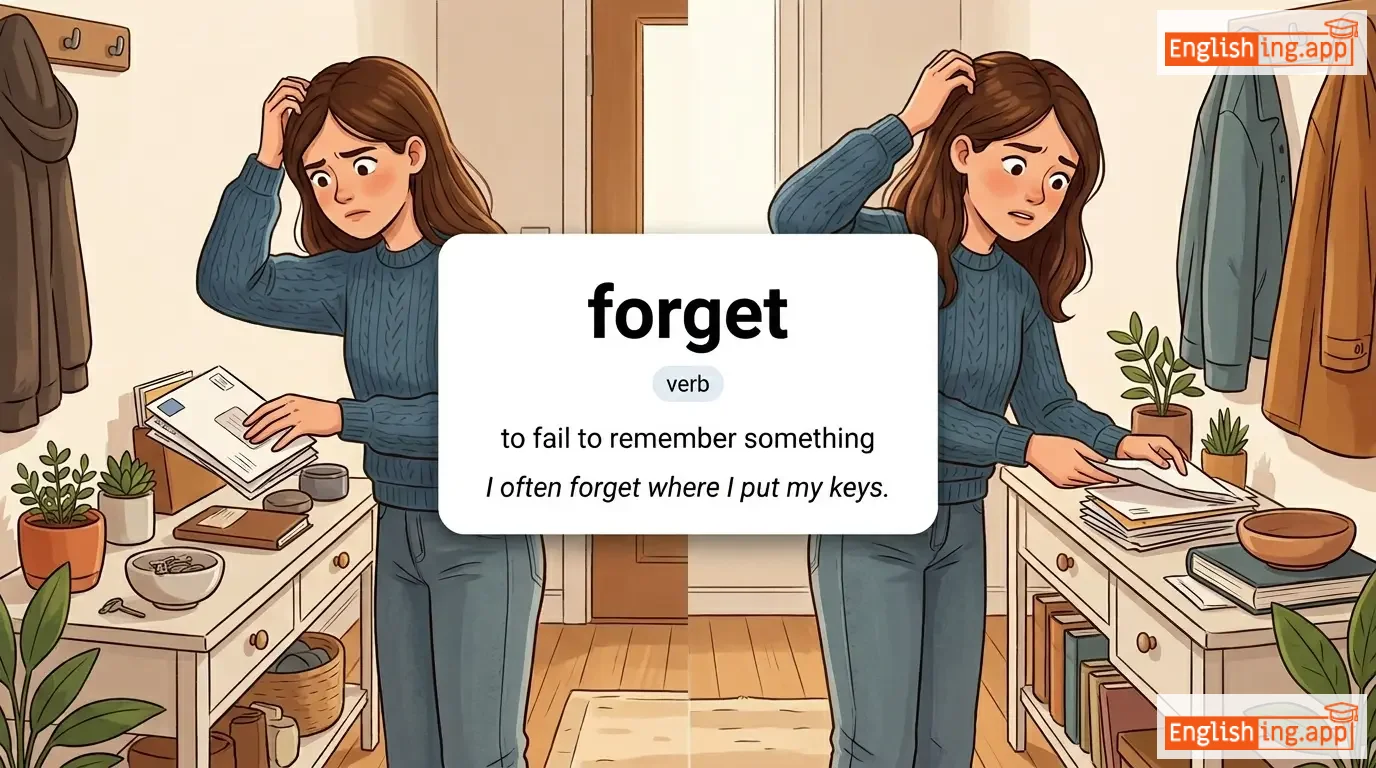
forget definition card — visual illustration of the meaning
verb
/fəˈɡɛt/
忘れる (wasureru)

to fail to remember something

"I often forget where I put my keys."
"私はよく鍵をどこに置いたか忘れてしまいます。" (Watashi wa yoku kagi o doko ni oita ka wasurete shimaimasu.)
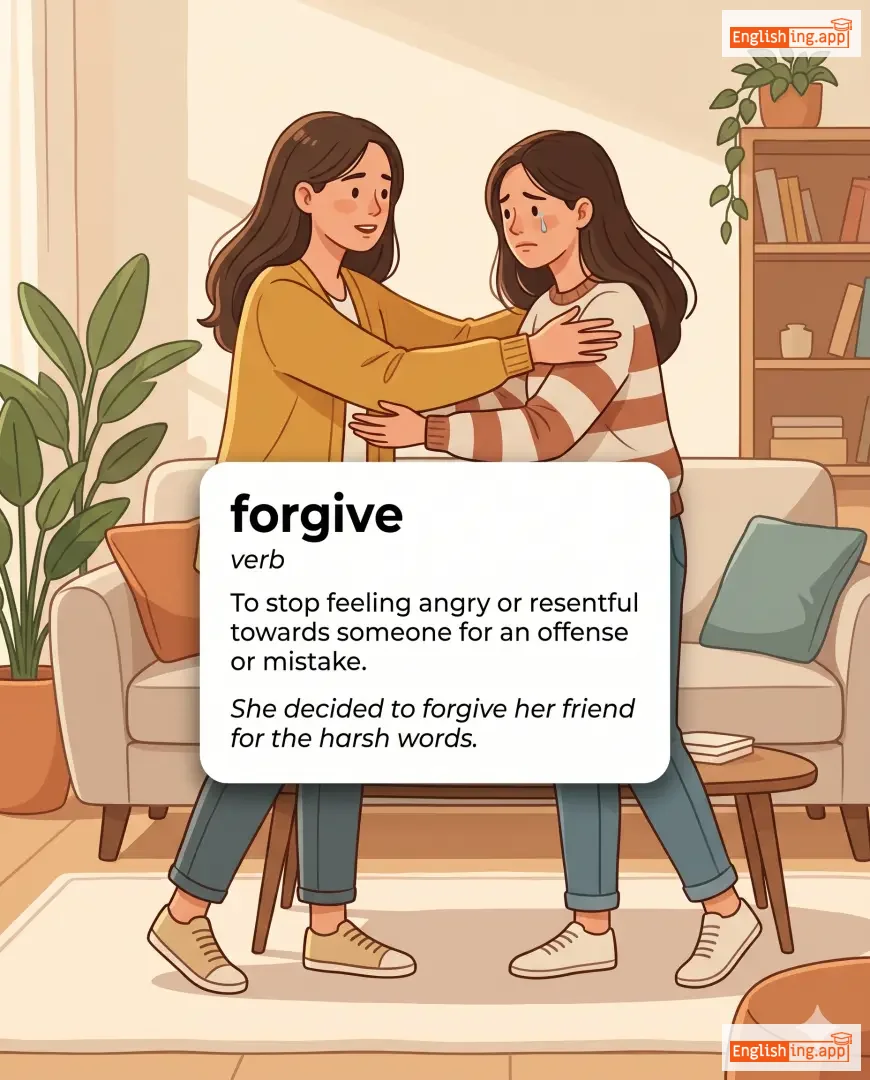
forgive definition card — visual illustration of the meaning
verb
/fərˈɡɪv/
許す (yurusu)

To stop feeling angry or resentful towards someone for an offense or mistake.

"She decided to forgive her friend for the harsh words."

"彼女は友達の厳しい言葉を許すことに決めました。" (Kanojo wa tomodachi no kibishii kotoba o yurusu koto ni kimemashita.)
adjective
/fəˈɡɪv.ɪŋ/
許す (yurusu)

ready and willing to forgive; merciful; lenient

"She has a forgiving nature and rarely holds grudges."

"彼女は許す性格を持っており、ほとんど恨みを抱きません。" (Kanojo wa yurusu seikaku wo motte ori, hotondo urami wo dakimasen.)
verb
/fɔːrˈɡoʊ/
控える (hikaeru)

to decide not to do or have something

"She decided to forgo dessert to maintain her diet."

"彼女はダイエットを維持するためにデザートを控えることを決めました。" (Kanojo wa daietto wo iji suru tame ni dezaato wo hikaeru koto wo kimemashita.)
noun
/fɔːk/
フォーク (fōku)

a tool with two or more prongs used for eating or serving food

"He ate his salad with a fork."

"彼はフォークでサラダを食べました。" (Kare wa fōku de sarada o tabemashita.)
adjective
/fərˈlɔːrn/
孤独な, 絶望的な (kodokuna, zetsubōteki na)

extremely sad, lonely, or abandoned

"The abandoned puppy looked so forlorn in the rain."

"放置された子犬は雨の中でとても悲しそうに見えました。" (Hōchi sareta koinu wa ame no naka de totemo kanashisō ni miemashita.)