語彙集

英単語辞書 | 単語の意味、定義、例文

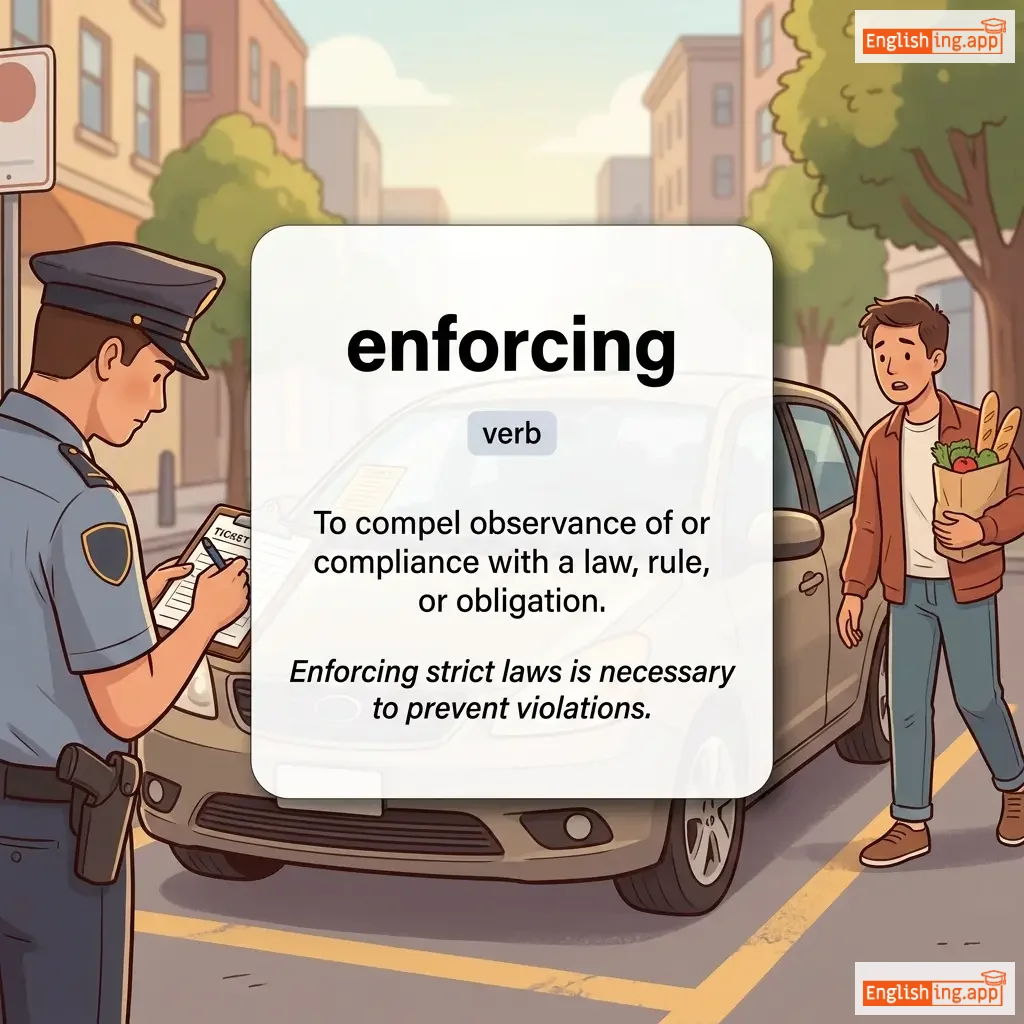
enforcing definition card — visual illustration of the meaning
verb
ɪnˈfɔːrsɪŋ
施行する (shikou suru)

To compel observance of or compliance with a law, rule, or obligation.

"Enforcing strict laws is necessary to prevent violations."

"厳格な法律を施行することは、違反を防ぐために必要です。" (Genkaku na hōritsu o shikō suru koto wa, ihan o fusegu tame ni hitsuyō desu.)
verb
/ɛnˈfrænˌtʃaɪz/
幸福 (kōfuku)

To grant the right to vote or other rights of citizenship.

"The new law enfranchised thousands of people."

"彼女は賞を受け取ったとき、自分の幸福を隠せませんでした。" (Kanojo wa shō o uketotta toki, jibun no kōfuku o kakusemasendeshita.)
verb
/ɪnˈɡeɪdʒ/
関わる (kakawaru)

To participate or become involved in; to attract or hold attention.

"The teacher tried to engage the students in the discussion."

"教師は学生たちを討論に参加させようとしました。" (Kyōshi wa gakusei-tachi o tōron ni sanka saseyō to shimashita.)
adjective
/ɪnˈɡeɪdʒd/
婚約者, 忙しい (kon'yakusha, isogashii)

Busy, occupied, or pledged to be married.

"She is engaged to be married next summer."

"彼女は来年の夏に結婚する予定です。" (Kanojo wa rainen no natsu ni kekkon suru yotei desu.)
engagement definition card — visual illustration of the meaning
noun
/ɪnˈɡeɪdʒmənt/
婚約, 参加 (kon'yaku, sanka)

a formal agreement to get married; or active involvement in an activity

"Their engagement was announced last week."
"彼らの婚約は先週発表されました。" (Karera no kon'yaku wa senshū happyō sareました。)
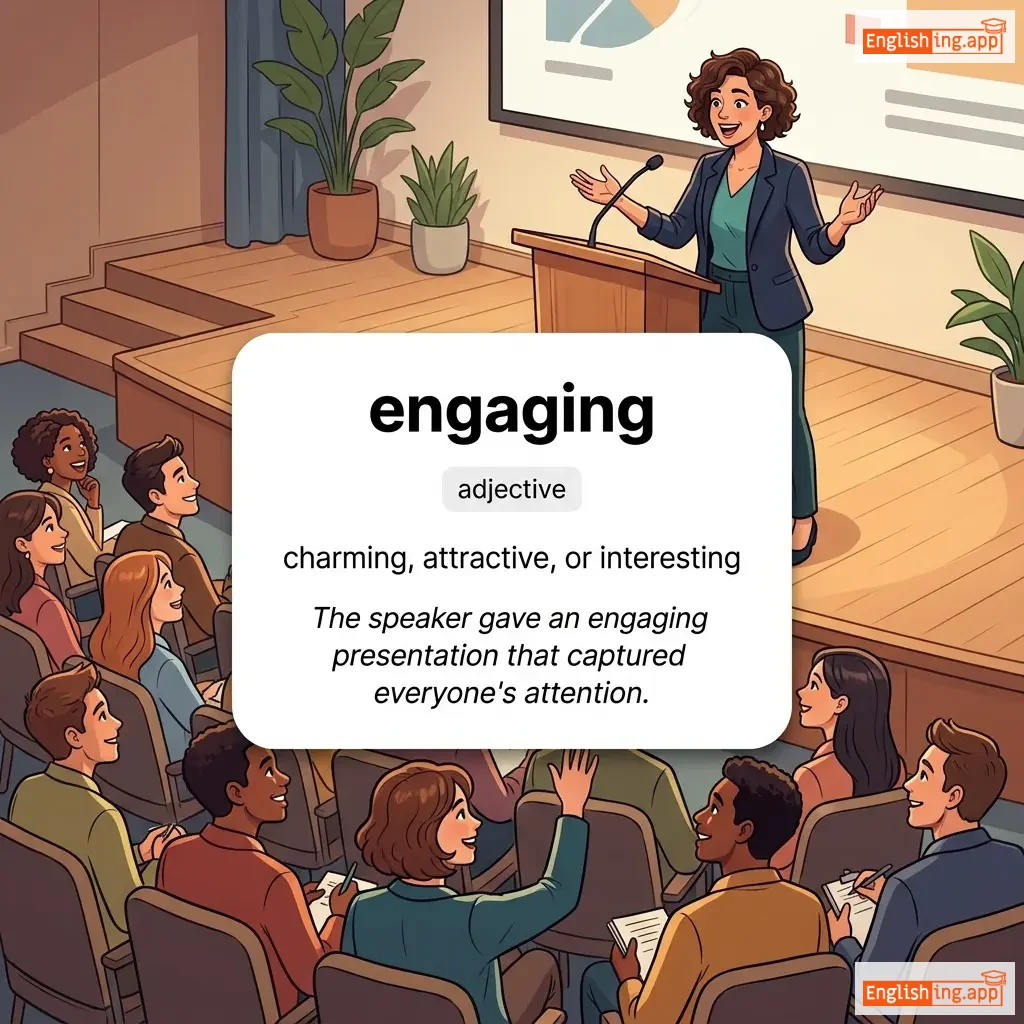
engaging definition card — visual illustration of the meaning
adjective
/ɪnˈɡeɪdʒɪŋ/
魅力的 (miryokuteki)

charming, attractive, or interesting

"The speaker gave an engaging presentation that captured everyone's attention."
"講演者は、皆の注意を引きつける魅力的なプレゼンテーションを行いました。" (Kōensha wa, mina no chūi o hikitsukeru miryokuteki na purezentēshon o okonai mashita.)
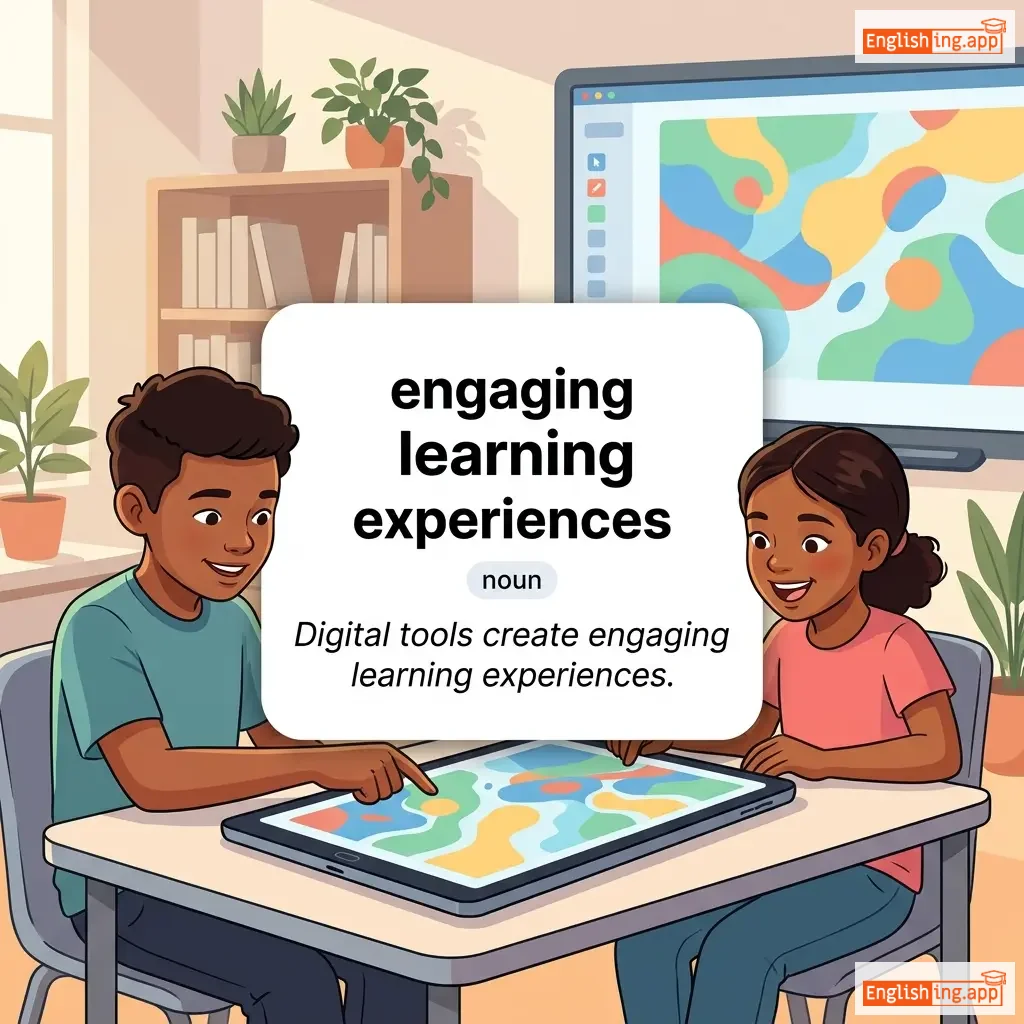
engaging learning experiences definition card — visual illustration of the meaning
noun
ɪnˈɡeɪdʒɪŋ ˈlɜːrnɪŋ ɪkˈspɪəriənsɪz
魅力的な学習体験 (miryokuteki na gakushū taiken)

Interactive and immersive educational activities that capture students' attention and actively involve them in the learning process.

"Digital tools create engaging learning experiences."
"デジタルツールは魅力的な学習体験を生み出します。" (Dejitaru tsūru wa miryokuteki na gakushū taiken o umidashimasu.)
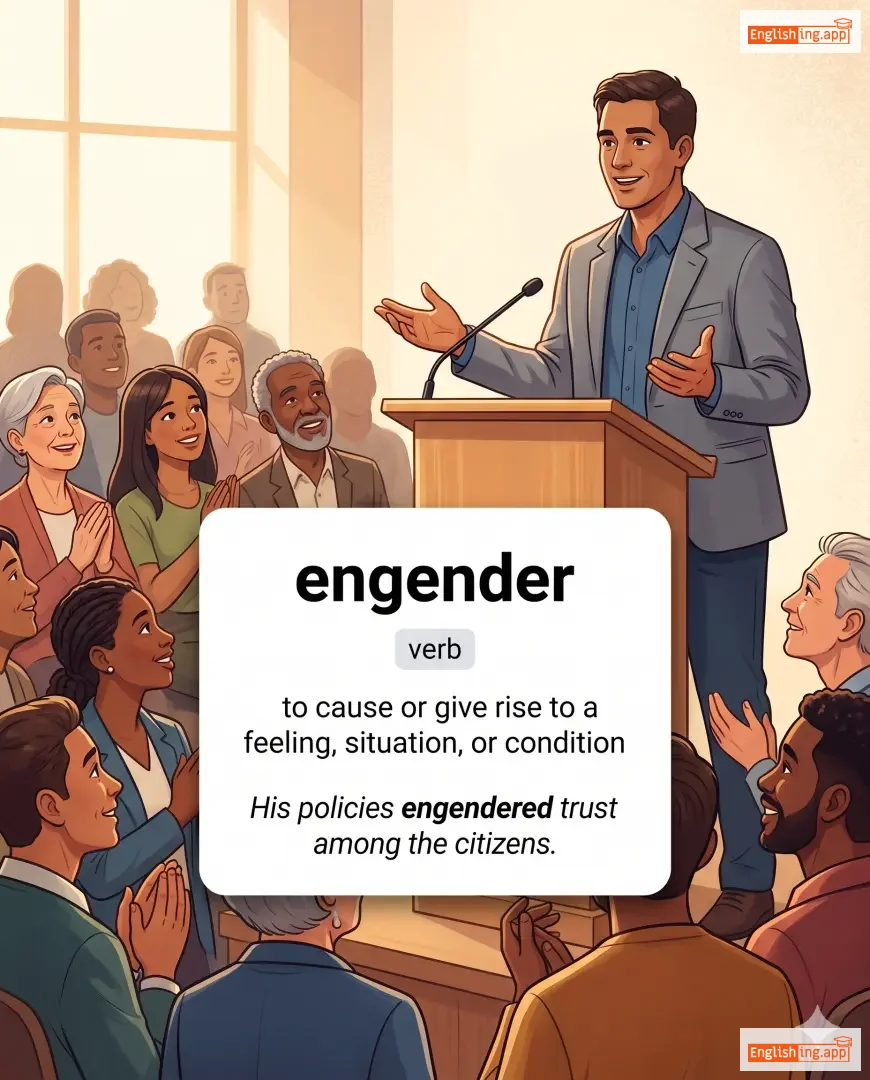
engender definition card — visual illustration of the meaning
verb
/ɪnˈdʒɛndər/
生み出す (umidasu)

to cause or give rise to a feeling, situation, or condition

"His policies engendered trust among the citizens."

"彼の政策は市民の間で信頼を生み出しました。" (kare no seisaku wa shimin no aida de shinrai wo umidashimashita.)
noun
/ˈɛndʒɪn/
エンジン (enjin)

A machine designed to convert energy into mechanical power.

"The car's engine failed on the highway."

"車のエンジンは高速道路で故障した。" (Kuruma no enjin wa kōsoku dōro de koshō shita.)
noun/verb
/ˌɛndʒɪˈnɪər/
エンジニア (enjinia)

A person trained to design, build, or maintain engines, machines, or structures; to skillfully arrange or bring about.

"The engineer designed a new bridge across the river."
"エンジニアは川を越える新しい橋を設計しました。" (Enjinia wa kawa o koeru atarashī hashi o sekkei shimashita.)
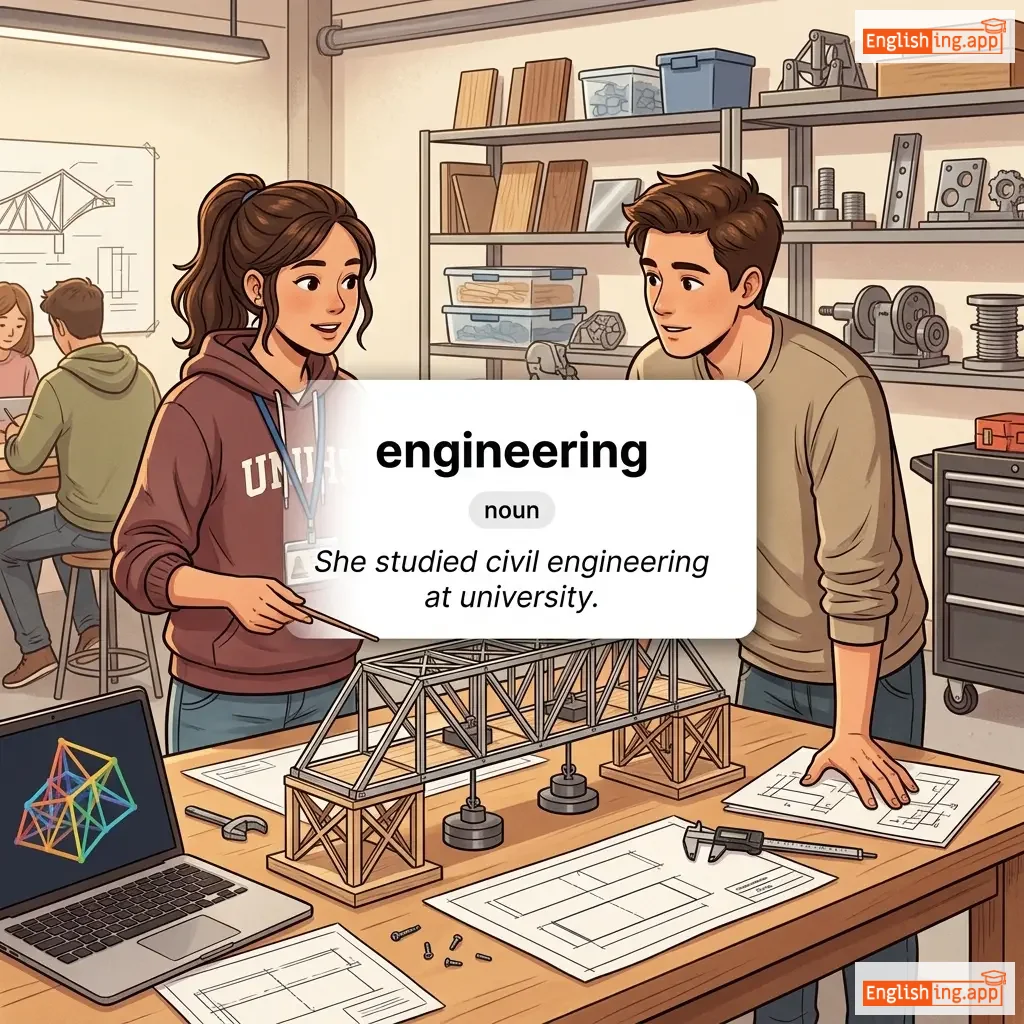
engineering definition card — visual illustration of the meaning
noun
/ˌɛndʒɪˈnɪərɪŋ/
工学 (kougaku)

The branch of science and technology concerned with the design, building, and use of engines, machines, and structures.

"She studied civil engineering at university."

"彼女は大学で土木工学を学びました。" (Kanojo wa daigaku de doboku kougaku o manabimashita.)
noun/adjective
/ˈɪŋɡlɪʃ/
英語 (eigo)

The language of England, widely spoken around the world; relating to England or its people.

"She is learning English to study abroad."
"彼女は海外で勉強するために英語を学んでいます。" (Kanojo wa kaigai de benkyou suru tame ni eigo o manande imasu.)
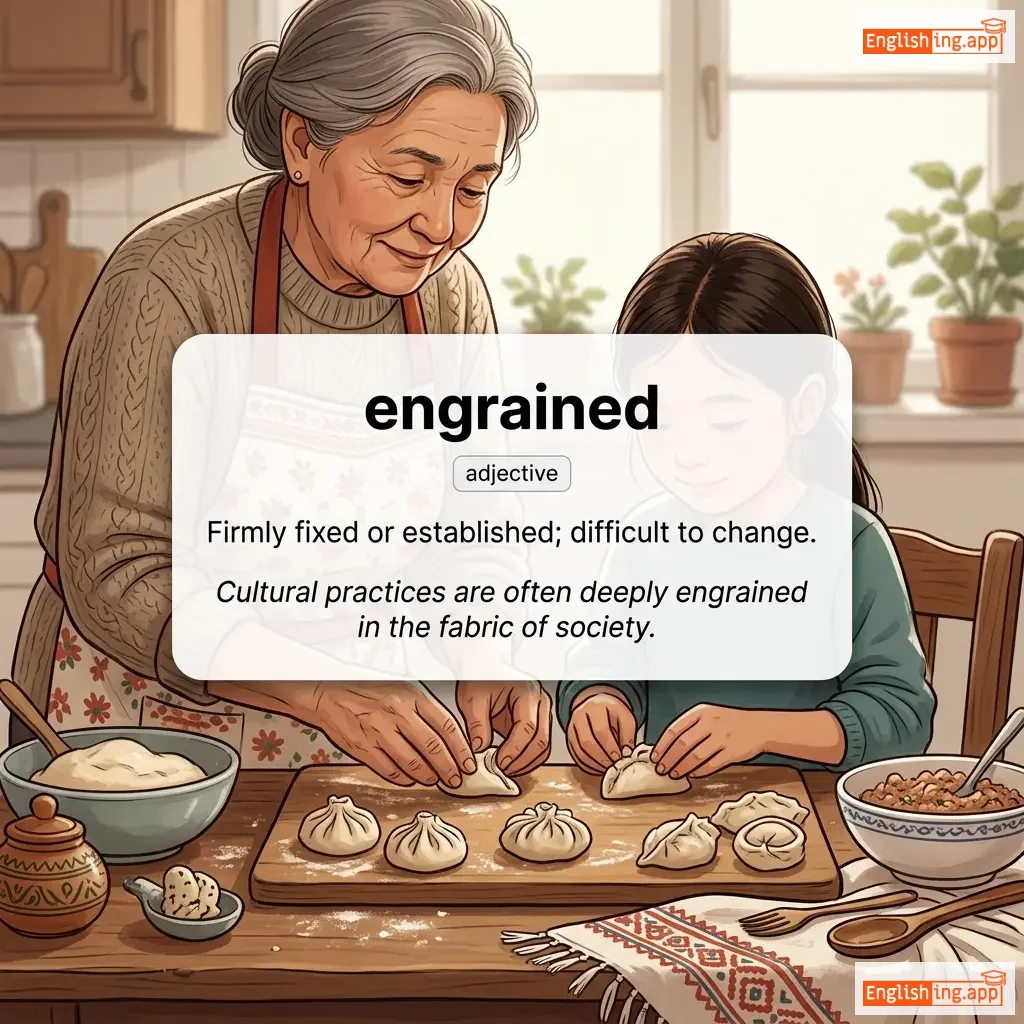
engrained definition card — visual illustration of the meaning
adjective
/ɪnˈɡreɪnd/
深く根付いている、変更が難しい (fukaku nezuiteiru, henkou ga muzukashii)

Firmly fixed or established; difficult to change.

"Cultural practices are often deeply engrained in the fabric of society."
"文化的な慣習は、しばしば社会の構造に深く根付いています。" (Bunkateki na kanshū wa, shibashiba shakai no kōzō ni fukaku nezuiteimasu.)
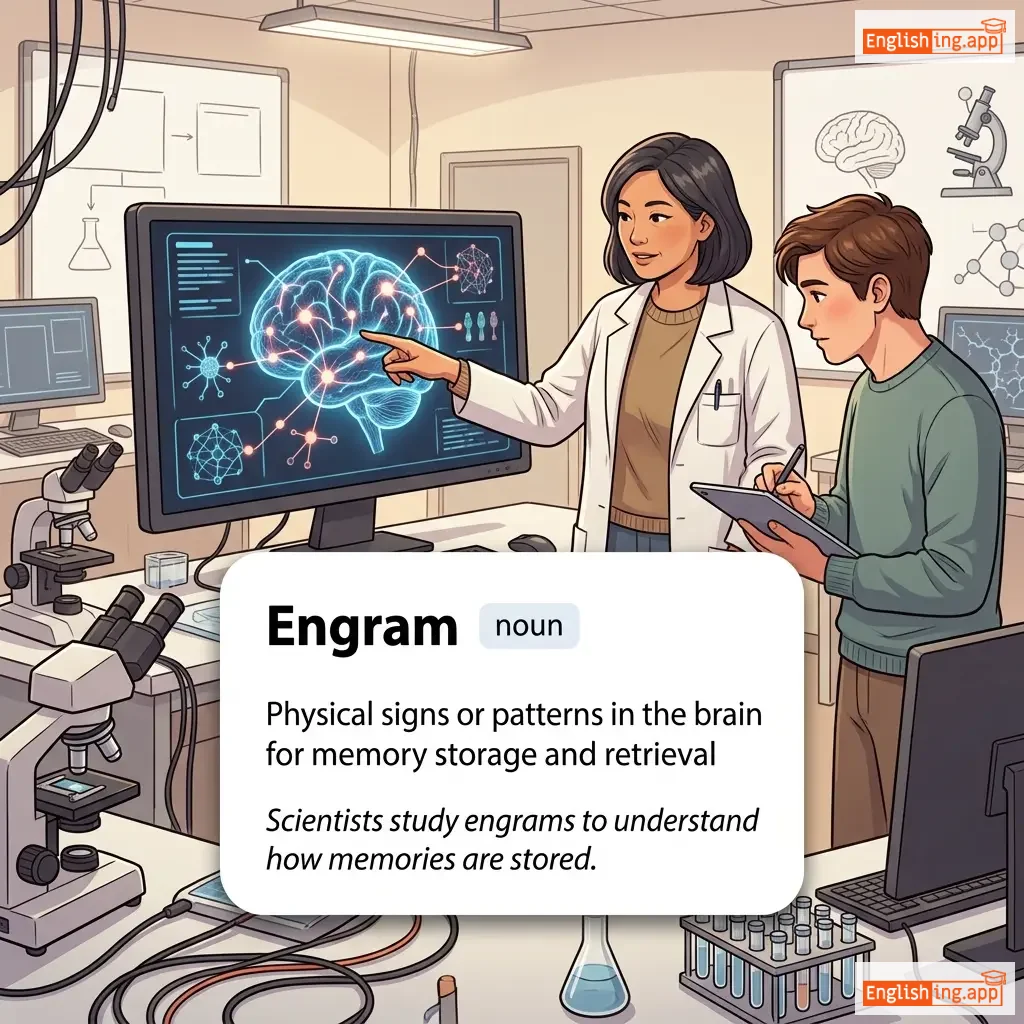
Engram definition card — visual illustration of the meaning
noun
ˈɛn.ɡræm
記憶の保存と検索のための脳内の物理的なサイン (Kioku no hozon to kensaku no tame no nōnai no butsuri-teki na sain)

Physical signs or patterns in the brain for memory storage and retrieval

"Scientists study engrams to understand how memories are stored."

"科学者たちはエングラムを研究して、記憶がどのように保存されるかを理解しようとしています。" (Kagakusha-tachi wa engramu o kenkyū shite, kioku ga dono yō ni hozon sareru ka o rikai shiyou to shiteimasu.)
verb
/ɪnˈɡreɪv/
刻む (kizamu)

to cut or carve a design, letter, or pattern into a hard surface

"The craftsman engraved her name on the silver ring."

"職人は銀の指輪に彼女の名前を刻んだ。" (Shokunin wa gin no yubiwa ni kanojo no namae o kizanda.)
verb
/ɪnˈɡroʊs/
夢中 (mucchū)

to absorb all the attention or interest of someone

"She was so engrossed in the book that she forgot the time."

"彼女は本に夢中になりすぎて時間を忘れてしまいました。" (Kanojo wa hon ni muchū ni nari sugite jikan o wasurete shimaimashita.)
adjective
/ɪnˈɡroʊst/
夢中 (muchū)

completely absorbed or deeply involved in something

"She was so engrossed in the book that she forgot the time."

"彼女は本に夢中になりすぎて、時間を忘れた。" (Kanojo wa hon ni muchū ni nari sugite, jikan o wasureta.)
verb
/ɪnˈɡʌlf/
飲み込む (nomikomu)

to completely surround or cover something or someone

"The village was engulfed by floodwaters."
"その村は洪水に飲み込まれた。" (Sono mura wa kousui ni nomikomareta.)
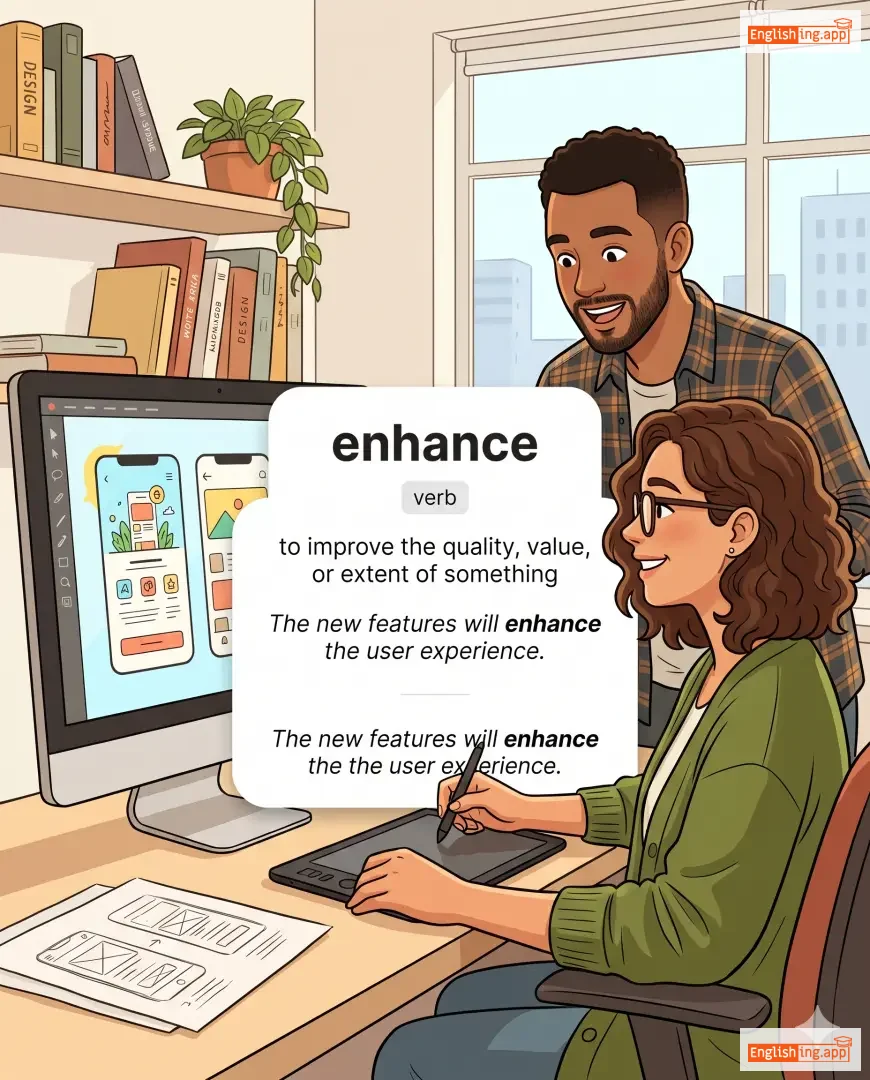
enhance definition card — visual illustration of the meaning
verb
/ɪnˈhæns/
向上させる (koujou saseru)

to improve the quality, value, or extent of something

"The new features will enhance the user experience."
"新しい機能はユーザー体験を向上させます。" (Atarashii kinou wa yuzaa taiken wo koujou saseru.)
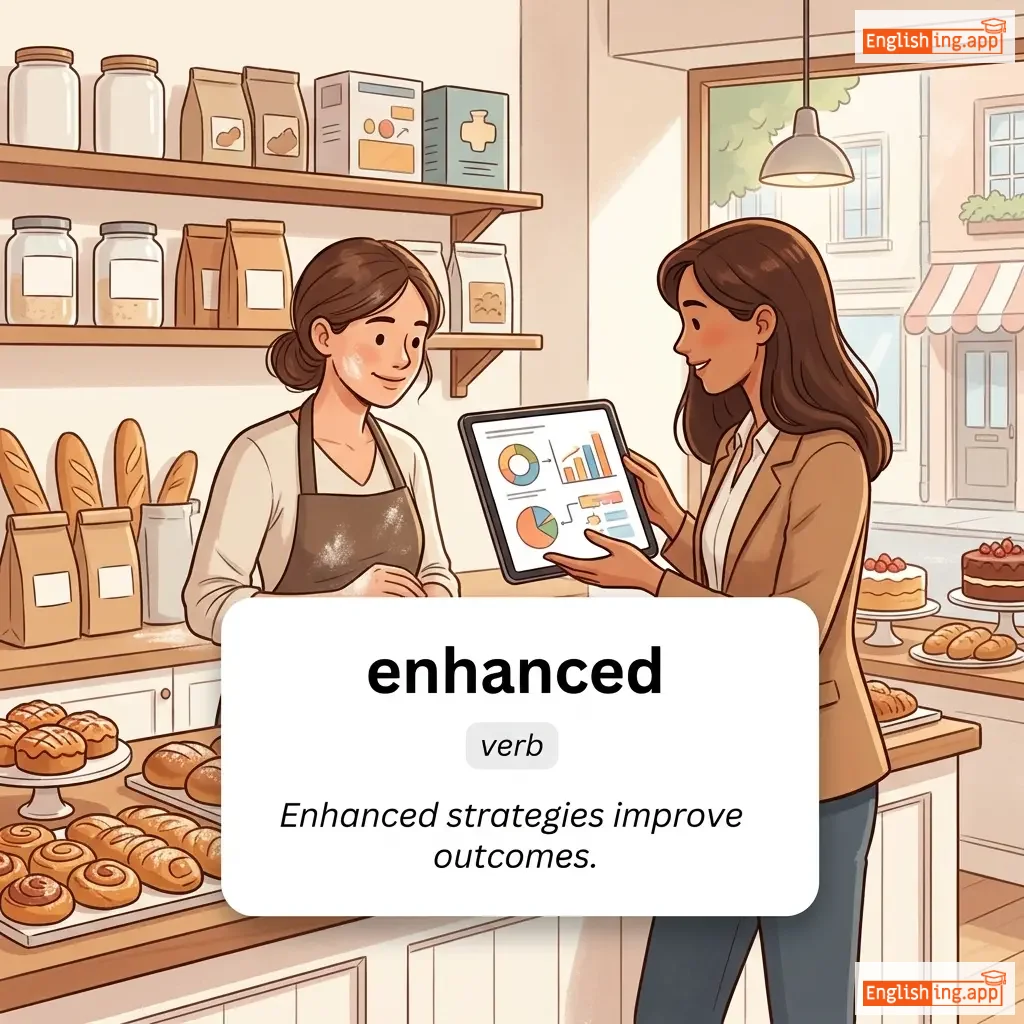
enhanced definition card — visual illustration of the meaning
verb
ɪnˈhɑːnst
強化された (kyōka sareta)

Intensify, increase, or further improve the quality, value, or extent of something.

"Enhanced strategies improve outcomes."

"強化された戦略は結果を改善します。" (Kyōka sareta senryaku wa kekka o kaizen shimasu.)
enhancement definition card — visual illustration of the meaning
noun
/ɪnˈhɑːns.mənt/
改善または向上 (kaizen mata wa koujou)

Improving the quality, value, or effectiveness of something.

"The software update included significant enhancements in performance."
"ソフトウェアの更新にはパフォーマンスの大幅な改善が含まれていました。" (Sofutowea no koushin ni wa pafōmansu no ōhaba na kaizen ga fukumarete imashita.)
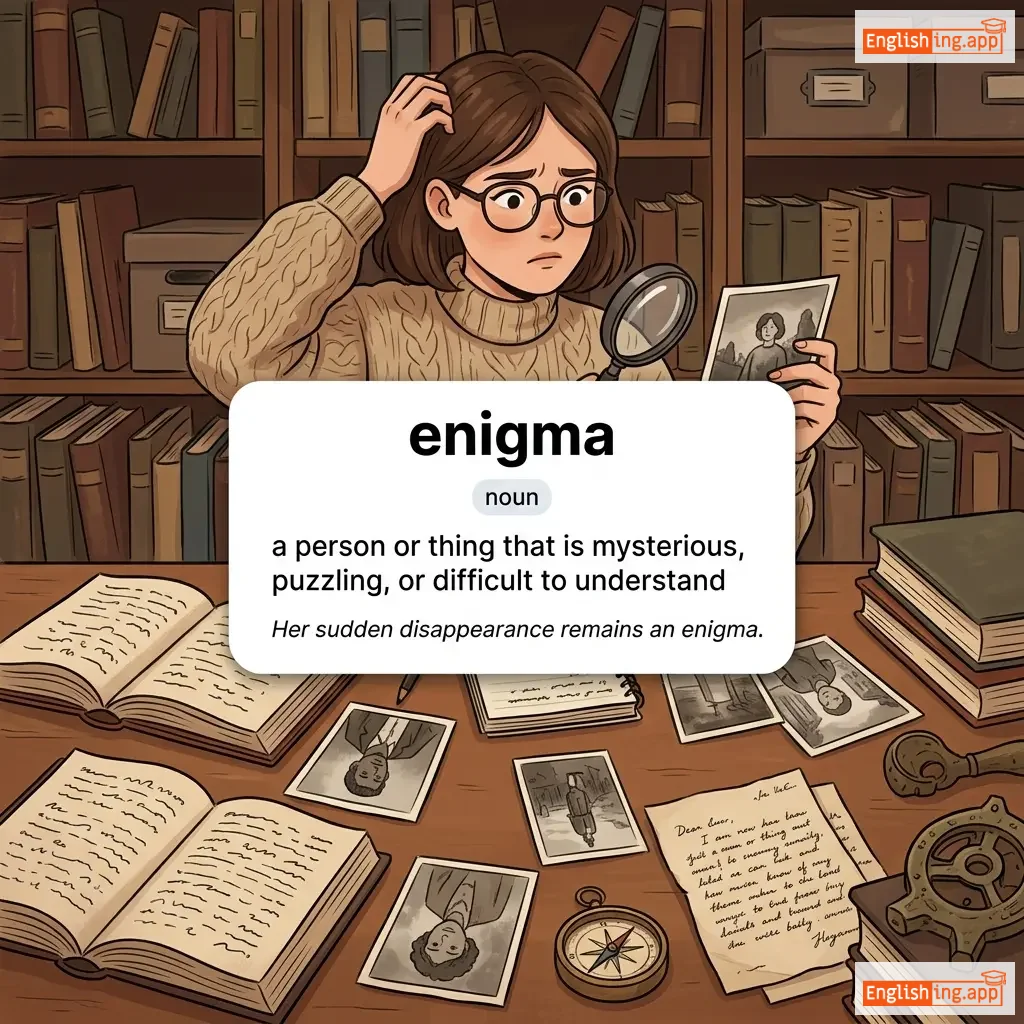
enigma definition card — visual illustration of the meaning
noun
/ɪˈnɪɡmə/
(nazo)

a person or thing that is mysterious, puzzling, or difficult to understand

"Her sudden disappearance remains an enigma."

"彼女の突然の失踪は依然として謎のままだ。" (Kanojo no totsuzen no shissou wa izen toshite nazo no mama da.)
adjective
/ˌɛnɪɡˈmætɪk/
謎めいた (nazo-meita)

mysterious and difficult to interpret or understand

"He gave me an enigmatic smile."

"彼は私に謎めいた笑顔を見せた。" (Kare wa watashi ni nazo-meita egao wo miseta.)
verb
/ɛnˈdʒɔɪn/
命じる, 禁止する (meijiru, kinshi suru)

to instruct or urge someone to do something; to prohibit legally

"The judge enjoined the company from continuing its activities."
"裁判官は会社に活動を続けることを禁じました。" (Saibankan wa kaisha ni katsudō o tsudzukeru koto o kinjimashita.)
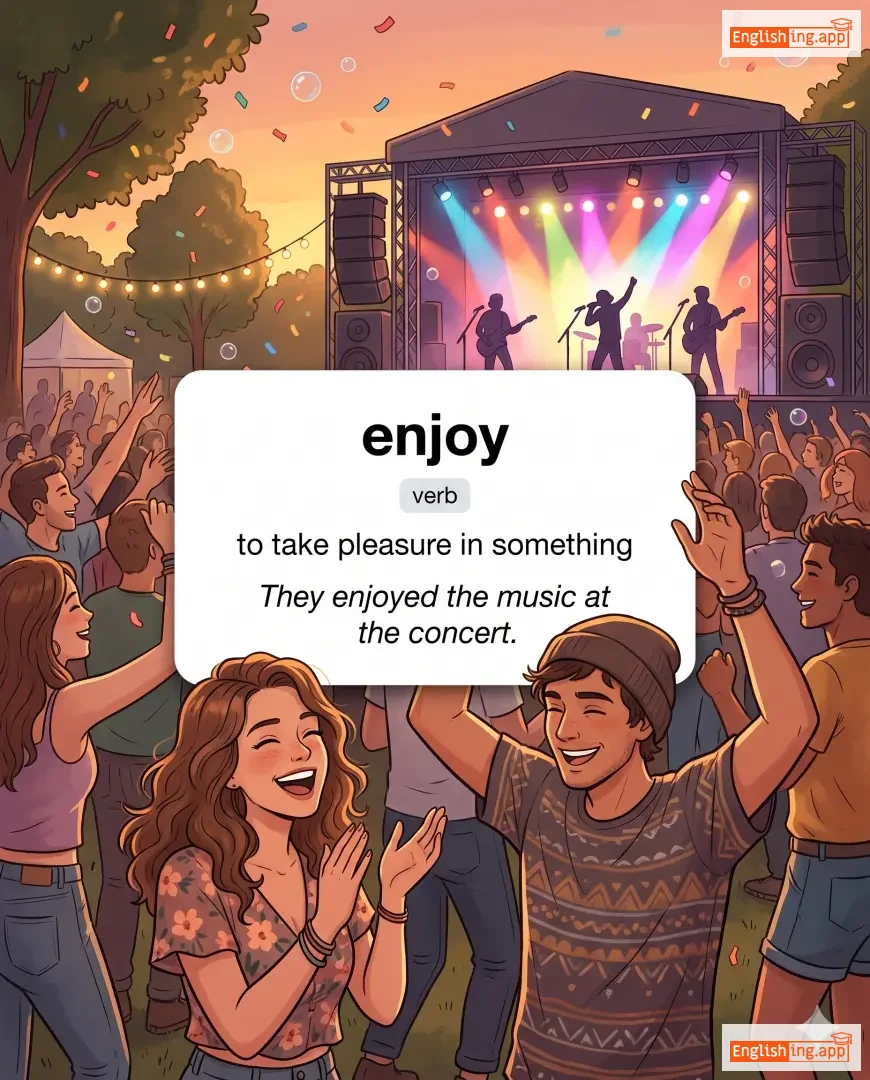
enjoy definition card — visual illustration of the meaning
verb
/ɪnˈdʒɔɪ/
楽しむ (tanoshimu)

to take pleasure in something

"They enjoyed the music at the concert."

"彼らはコンサートで音楽を楽しんでいました。" (Karera wa konsāto de ongaku o tanoshinde imashita.)
adjective
/ɪnˈdʒɔɪəbl/

giving pleasure or satisfaction

"The movie was highly enjoyable."

noun
/ɪnˈdʒɔɪmənt/
楽しみ (tanoshimi)

the state or process of taking pleasure or satisfaction in something

"She felt great enjoyment while reading her favorite book."

"彼女はお気に入りの本を読んでいるとき、大きな楽しみを感じた。" (Kanojo wa okiniiri no hon o yonde iru toki, ookina tanoshimi o kanjita.)
verb
/ɛnˈkɪndl/
火をつける、感動させる (hi o tsukeru, kandō saseru)

to set on fire or inspire strong emotion

"The speech enkindled hope in the audience."

"スピーチは観客に希望を灯しました。" (Supīchi wa kankyaku ni kibō o tomoshimashita.)
verb
/ɪnˈlɑːrdʒ/
広げる (hirogeru)

to make something bigger or increase in size

"They decided to enlarge their house."

"彼らは家を広げることに決めました。" (Karera wa ie o hirogeru koto ni kimemashita.)
verb
/ɪnˈlaɪtən/
幸福 (koufuku)

to give someone greater knowledge or understanding about a subject or situation

"The teacher tried to enlighten the students about ancient history."

"彼女は賞を受け取ったとき、幸せを隠すことができませんでした。" (Kanojo wa shō o uketotta toki, shiawase o kakusu koto ga dekimasen deshita.)
adjective
/ɪnˈlaɪ.tənd/
啓蒙された; 精神的に目覚めた; 賢い; (keimou sareta; seishinteki ni mezameta; kashikoi)

having or showing a rational, modern outlook; having spiritual knowledge or understanding

"The enlightened teacher shared wisdom with all her students."

"啓蒙された教師は、すべての生徒と知恵を共有しました。" (Keimou sareta kyoushi wa, subete no seito to chie wo kyoyu shimashita.)
verb
/ɪnˈlɪst/
登録する (touroku suru)

to join or sign up, especially for military service; to secure someone's support or help

"He decided to enlist in the army after graduation."

"彼は卒業後に軍隊に入隊することに決めました。" (Kare wa sotsugyō go ni guntai ni nyūtai suru koto ni kimemashita.)
verb
/ɪnˈlaɪvən/
活気づける (kakki zukeru)

to make something more lively, interesting, or cheerful

"Her jokes helped enliven the dull meeting."

"彼女の冗談は退屈な会議を活気づける手助けをした。" (Kanojo no jodan wa taikutsuna kaigi o kakki zukeru tedasuke o shita.)
noun
/ˈɛnmɪti/
敵意 (teki)

a feeling of hostility, hatred, or opposition

"There was a long history of enmity between the two families."

"二つの家族の間には長い敵意の歴史がありました。" (Futatsu no kazoku no aida ni wa nagai teki no rekishi ga arimashita.)
verb
/ɪˈnəʊbəl/
高貴にする (kōki ni suru)

to give someone a noble rank or to elevate in dignity or honor

"His selfless actions ennobled his character in the eyes of others."

"彼の自己犠牲的な行動は、他の人々の目に彼の人格を高めました。" (Kare no jiko giseiteki na kōdō wa, hoka no hitobito no me ni kare no jin'kaku o takamemashita.)
noun
/ˈɒnwiː/ or /ˈɑːnwiː/
退屈 (taikutsu)

A feeling of boredom, listlessness, or dissatisfaction arising from lack of excitement.

"After weeks of doing nothing, he sank into a deep sense of ennui."

"何もせずに数週間後、彼は深い退屈に沈んだ。" (Nani mo sezu ni suushukan go, kare wa fukai taikutsu ni shizunda.)
noun
/ɪˈnɔːrmɪti/
巨大さ (kyodasa)

The extreme scale, seriousness, or extent of something perceived as bad or morally wrong.

"The enormity of the crime shocked the entire community."

"犯罪の巨大さはコミュニティ全体を驚かせました。" (Hanzai no kyodasa wa komyuniti zentai o odorokasemashita.)
adjective
/ɪˈnɔːrməs/
巨大な (kyodaina)

Extremely large in size, amount, or degree.

"They built an enormous stadium in the city."

"彼らは街に巨大なスタジアムを建設しました。" (Karera wa machi ni kyodaina sutajiamu o kensetsu shimashita.)
adjective/adverb
/ɪˈnʌf/
十分 (jūbun)

as much or as many as required

"We have enough food for everyone."

"私たちは皆のために十分な食べ物があります。" (Watashitachi wa mina no tame ni jūbun na tabemono ga arimasu.)
verb
/ɪnˈkwaɪər/
尋ねる (tazuneru)

to ask for information about something

"He enquired about the train schedule."

"彼は列車の時刻表について尋ねました。" (Kare wa ressha no jikokuhyou ni tsuite tazunemashita.)
verb
/ɪnˈreɪdʒ/
怒らせる (okoraseru)

To make someone extremely angry.

"His unfair remarks enraged the audience."

"彼の不公平な発言が観客を怒らせた。" (Kare no fukōhei na hatsugen ga kankyaku o okorashita.)
verb
/ɪnˈræptʃər/
魅了する (miryō suru)

To fill someone with great delight or joy.

"The beautiful music enraptured the audience."
"美しい音楽は観客を魅了しました。" (Utsukushī ongaku wa kankyaku o miryō shimashita.)
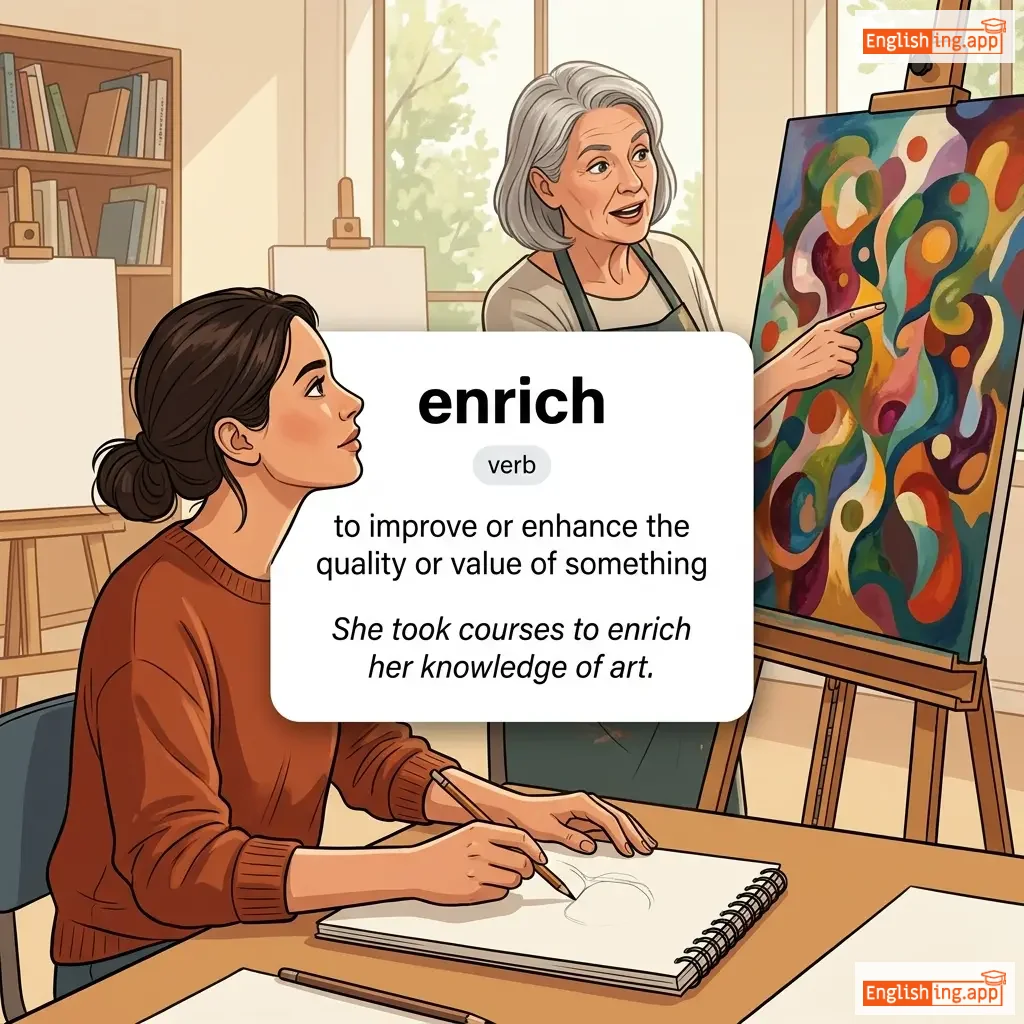
enrich definition card — visual illustration of the meaning
verb
/ɪnˈrɪtʃ/
豊かにする (yutakani suru)

to improve or enhance the quality or value of something

"She took courses to enrich her knowledge of art."
"彼女は芸術の知識を豊かにするためにコースを受講しました。" (Kanojo wa geijutsu no chishiki o yutakani suru tame ni koosu o jukou shimashita.)
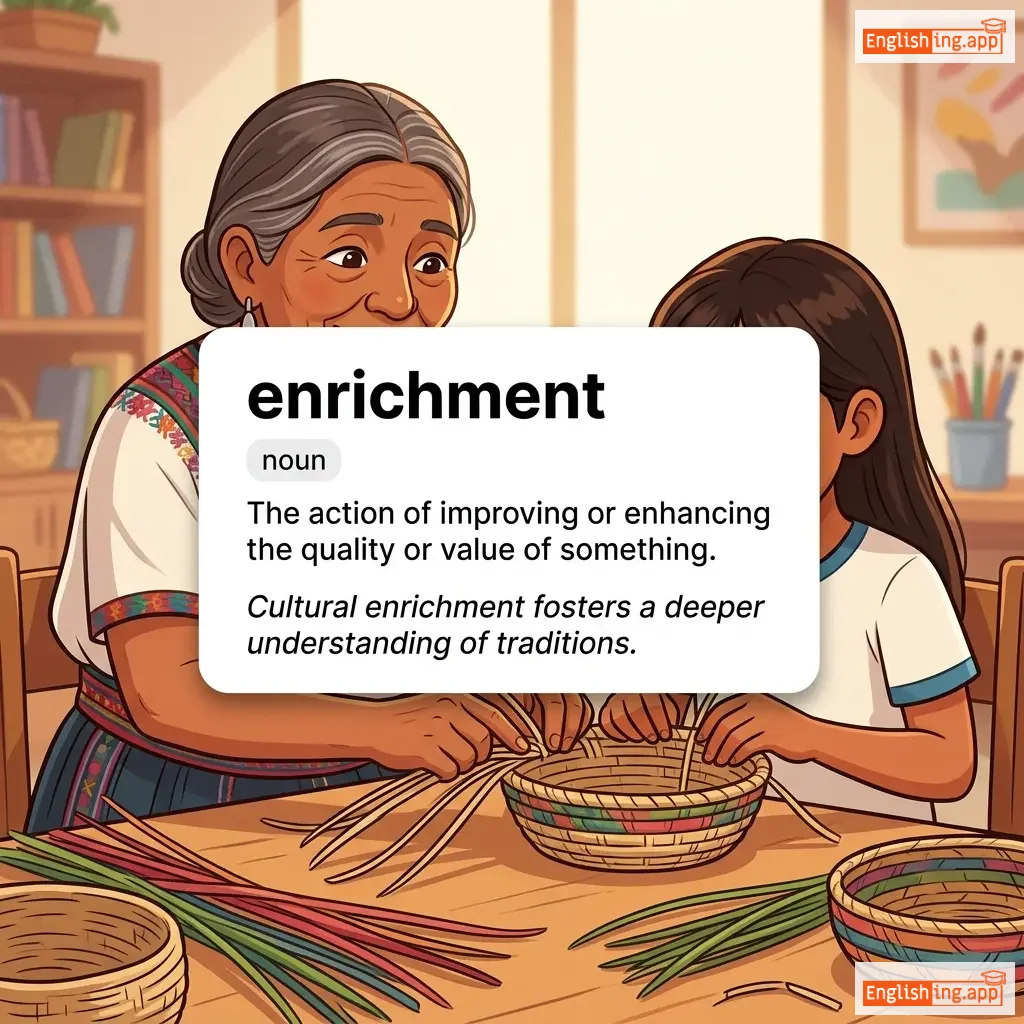
enrichment definition card — visual illustration of the meaning
noun
/ɪnˈrɪtʃ.mənt/
豊かさ (yutakasa)

The action of improving or enhancing the quality or value of something.

"Cultural enrichment fosters a deeper understanding of traditions."

"文化的な豊かさは伝統への深い理解を促進します。" (Bunkateki na yutakasa wa dentō e no fukai rikai o sokushin shimasu.)
verb
/ɪnˈroʊl/
登録する (touroku suru)

To officially register or sign up for a course, program, or membership

"She decided to enrol in a language course to improve her skills."

"彼女はスキルを向上させるために語学コースに登録することに決めた。" (Kanojo wa sukiru o koujou saseru tame ni gogaku kōsu ni tōroku suru koto ni kimeta.)
verb
/ɪnˈroʊl/
登録する (tōroku suru)

to officially join or register in a school, course, or organization

"He decided to enroll in a computer programming course."

"彼はコンピュータプログラミングのコースに登録することを決めました。" (Kare wa konpyūta puroguramingu no kōsu ni tōroku suru koto o kimemashita.)
verb
/ɪnˈskɒns/
快適に座る, 隠れる (kaiteki ni suwaru, kakureru)

to settle comfortably or securely in a place; to hide or shelter firmly

"She ensconced herself in a cozy armchair by the fireplace."

"彼女は暖炉のそばの快適な椅子に座り込んだ。" (Kanojo wa danro no soba no kaiteki na isu ni suwarikonda.)
noun
/ɒnˈsɒmbəl/
アンサンブル, グループ (ansanburu, gurūpu)

a group of things or people viewed as a whole, especially performers in music or theater

"The theater ensemble gave a spectacular performance."

"劇場のアンサンブルは素晴らしいパフォーマンスをしました。" (Gekijou no ansanburu wa subarashii pafōmansu o shimashita.)
verb
/ɪnˈʃraɪn/
何かを神聖または重要として保存または敬う (nanika o shinsei matawa jūyō toshite hozon matawa uyamau)

to preserve or cherish something as sacred or important

"The constitution enshrines the right to freedom of speech."

"憲法は言論の自由の権利を保護しています。" (Kenpō wa genron no jiyū no kenri o hogo shiteimasu.)
noun
/ˈɛnsaɪn/
(ki)

A flag or standard, especially a military or naval one indicating nationality; also a junior officer in the navy or coast guard.

"The ship raised its national ensign before leaving the harbor."

"その船は港を出る前に国旗を掲げました。" (Sono fune wa minato o deru mae ni kokki o kake mashita.)