語彙集

英単語辞書 | 単語の意味、定義、例文

noun
/iːl/
ウナギ (unagi)

a long, snake-like fish that lives in both fresh and salt water

"The electric eel can generate powerful electric shocks."

"デンキウナギは強力な電気ショックを発生させることができます。" (denki unagi wa kyouryoku na denki shokku o hassei saseru koto ga dekimasu)
adjective
/ˈɪəri/
不気味 (bukimi)

Strange and frightening in a mysterious way.

"The abandoned house had an eerie silence."

"放棄された家には不気味な静けさがあった。" (Houkisareta ie ni wa bukimi na shizukesa ga atta.)
verb
/ɪˈfeɪs/
消す (kesu)

To erase or wipe out something; to make oneself inconspicuous.

"Time had effaced the letters on the old gravestone."

"時間は古い墓石に刻まれた文字を消してしまいました。" (Jikan wa furui hakoseki ni kizama reta moji o keshite shimaimashita.)
verb
/ɪˈfeɪsɪŋ/
消す / 自分を目立たなくする (kesu / jibun o medatanaku suru)

erasing or making oneself inconspicuous; to remove or diminish in significance

"She kept effacing herself during the meeting so that others could shine."

"会議中に他の人が輝けるように、自分自身を消し続けました。" (Kaigi-chū ni hoka no hito ga kagayakeru yō ni, jibun jishin o keshi tsudzukemashita.)
noun
/ɪˈfɛkt/
効果 (kouka)

a change that results from a particular action or cause

"The new law had a positive effect on public safety."

"新しい法律は公共の安全に良い効果をもたらしました。" (Atarashii houritsu wa koukyou no anzen ni yoi kouka o motarashimashita.)
effective definition card — visual illustration of the meaning
adjective
/ɪˈfɛktɪv/
効果的 (koukateki)

producing the intended or desired result

"This medicine is very effective against headaches."
"この薬は頭痛に非常に効果的です。" (Kono kusuri wa zutsū ni hijō ni kōkateki desu.)
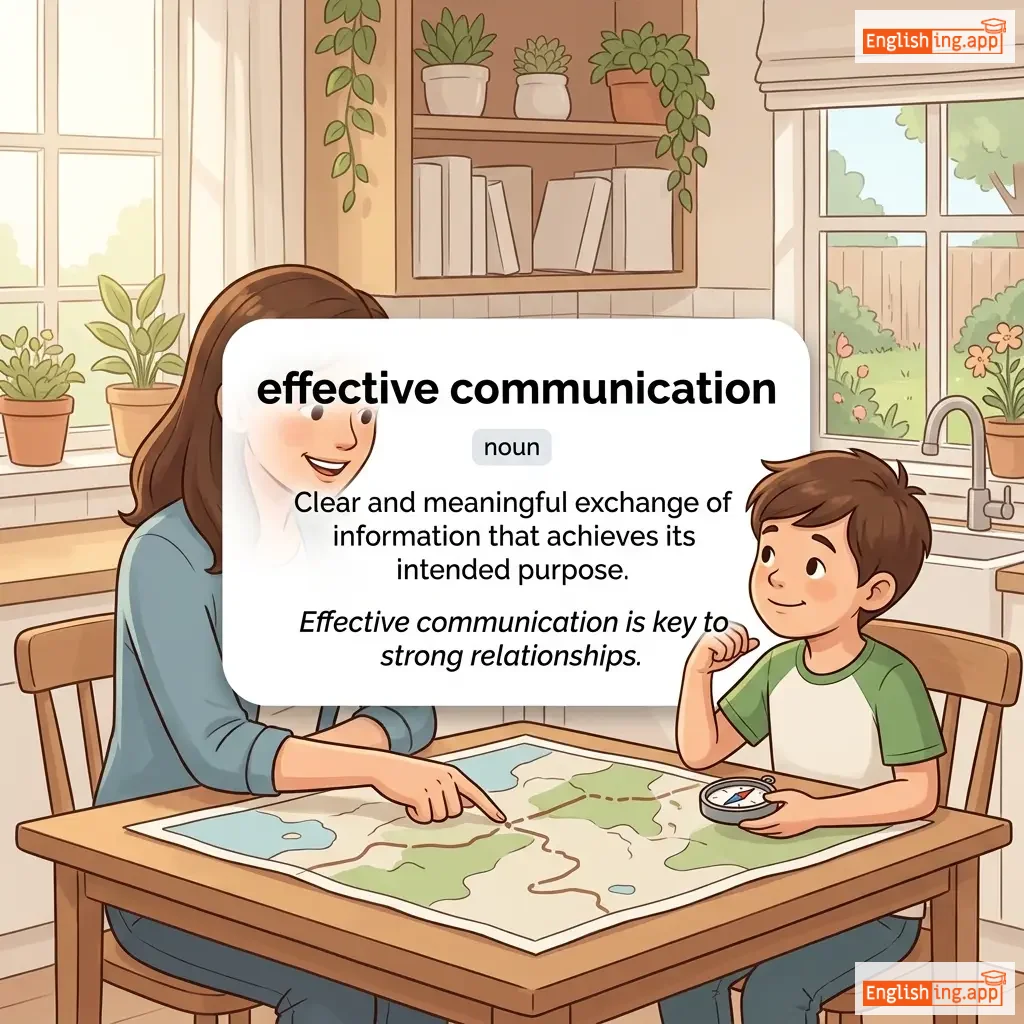
effective communication definition card — visual illustration of the meaning
noun
/ɪˈfɛk.tɪv kəˌmjuː.nɪˈkeɪ.ʃən/
効果的なコミュニケーション (kouka tekina komyunikeeshon)

Clear and meaningful exchange of information that achieves its intended purpose.

"Effective communication is key to strong relationships."

"効果的なコミュニケーションは強い関係を築く鍵です。" (Koukateki na komyunikeeshon wa tsuyoi kankei wo kizuku kagi desu.)
adverb
/ɪˈfɛktɪvli/
効果的に (koukatekini)

in a way that produces the desired result; efficiently and successfully

"The team worked together effectively to finish the project on time."

"チームはプロジェクトを時間通りに終わらせるために効果的に一緒に働きました。" (Chīmu wa purojekuto wo jikan dōri ni owaraseru tame ni kōkatekini issho ni hatarakimashita.)
noun
/ɪˈfɛktɪvnəs/
効果 (kouka)

the degree to which something is successful in producing a desired result.

"The effectiveness of the new policy is still being evaluated."

"新しい政策の効果はまだ評価中です。" (Atarashī seisaku no kōka wa mada hyōkajū desu.)
adjective
/ɪˈfɛktʃuəl/
効果的な (koukateki na)

producing a desired or intended effect, often used in formal contexts

"Her effectual efforts brought peace to the community."

"彼女の効果的な努力はコミュニティに平和をもたらしました。" (Kanojo no kōkateki na doryoku wa komyuniti ni heiwa o motarashimashita.)
verb
/ɪˈfɛktʃueɪt/
実行する (jikkou suru)

to put into force or cause to happen; to bring about

"The manager effectuated the changes to improve efficiency."

"マネージャーは効率を向上させるために変更を実行しました。" (Manējā wa kōritsu o kōjō saseru tame ni henkō o jikkō shimashita.)
noun
/ɪˈfɛmɪnəsi/
女性的特質 (joseiteki tokushitsu)

The quality of showing traits traditionally associated with women, such as delicacy or softness.

"In ancient times, effeminacy was often criticized as a sign of weakness."

"古代では、女性的特質はしばしば弱さのサインとして批判されていました。" (Kodai de wa, joseiteki tokushitsu wa shibashiba yowasa no sain toshite hihan sarete imashita.)
adjective
/ɪˈfɛmɪnət/
女性的 (joseiteki)

Having traits, tastes, or habits traditionally considered feminine, often used negatively for men.

"The critics described him as effeminate due to his gentle manner."

"批評家は彼の優しい態度を理由に彼を女性的だと表現した。" (Hihyō-ka wa kare no yasashī taido o riyū ni kare o joseiteki da to hyōgen shita.)
verb
/ˌɛfəˈvɛs/
泡立つ (awadatsu)

To give off bubbles of gas; to show excitement, liveliness, or enthusiasm.

"The soda began to effervesce as soon as it was opened."
"ソーダは開けるとすぐに泡が立ち始めました。" (Soda wa akeru to sugu ni awa ga tachihajimemashita.)
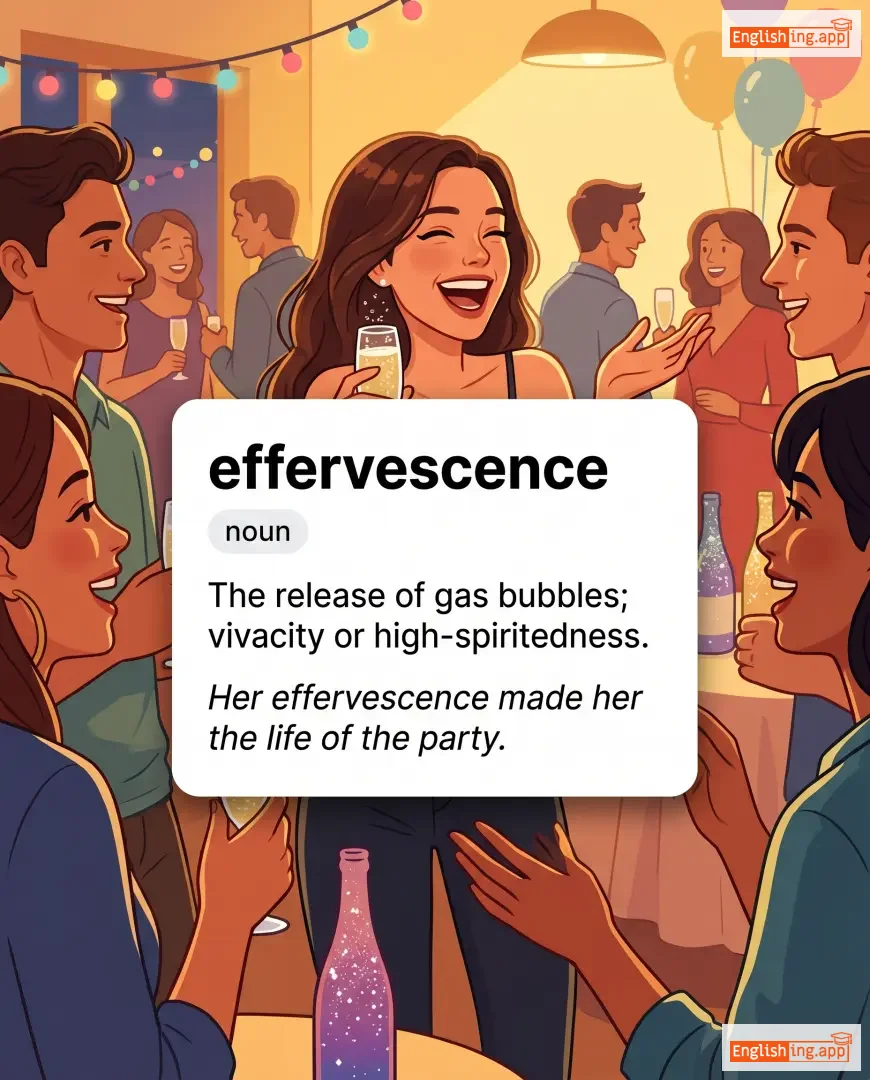
effervescence definition card — visual illustration of the meaning
noun
/ˌɛfəˈvɛsəns/
発泡 (happou)

The release of gas bubbles; vivacity or high-spiritedness.

"Her effervescence made her the life of the party."

"彼女の発泡はパーティーの生命となった。" (Kanojo no happou wa pātii no seimei to natta.)
adjective
/ˌɛfəˈvɛsənt/
活気に満ちた (kakki ni michita)

Giving off bubbles; lively, enthusiastic, and full of energy.

"She had an effervescent personality that brightened every room."
"彼女は部屋を明るく照らす活気に満ちた個性を持っていました。" (Kanojo wa heya o akaruku terasu kakki ni michita kosei o motte imashita.)
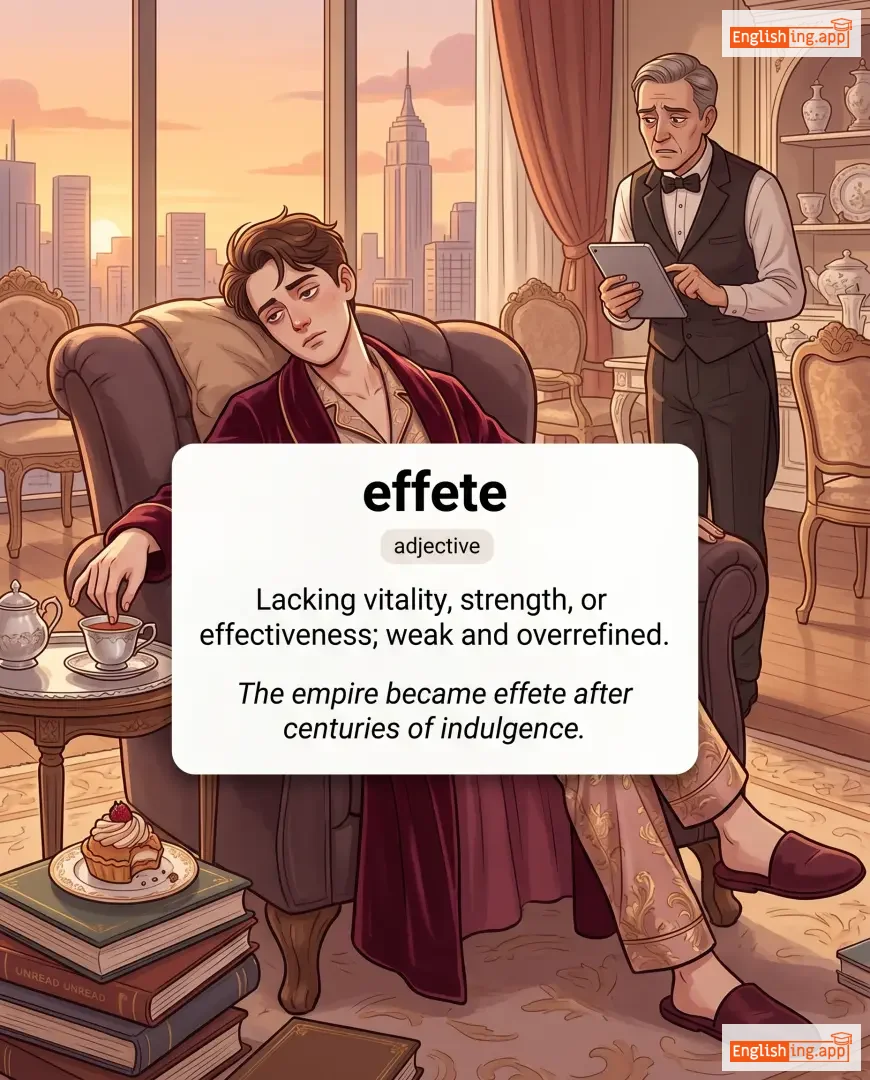
effete definition card — visual illustration of the meaning
adjective
/ɪˈfiːt/
無力 (muryoku)

Lacking vitality, strength, or effectiveness; weak and overrefined.

"The empire became effete after centuries of indulgence."
"帝国は何世代にもわたる享楽の後、無力になった。" (Teikoku wa nan-sedai ni mo wataru kyouraku no ato, muryoku ni natta.)
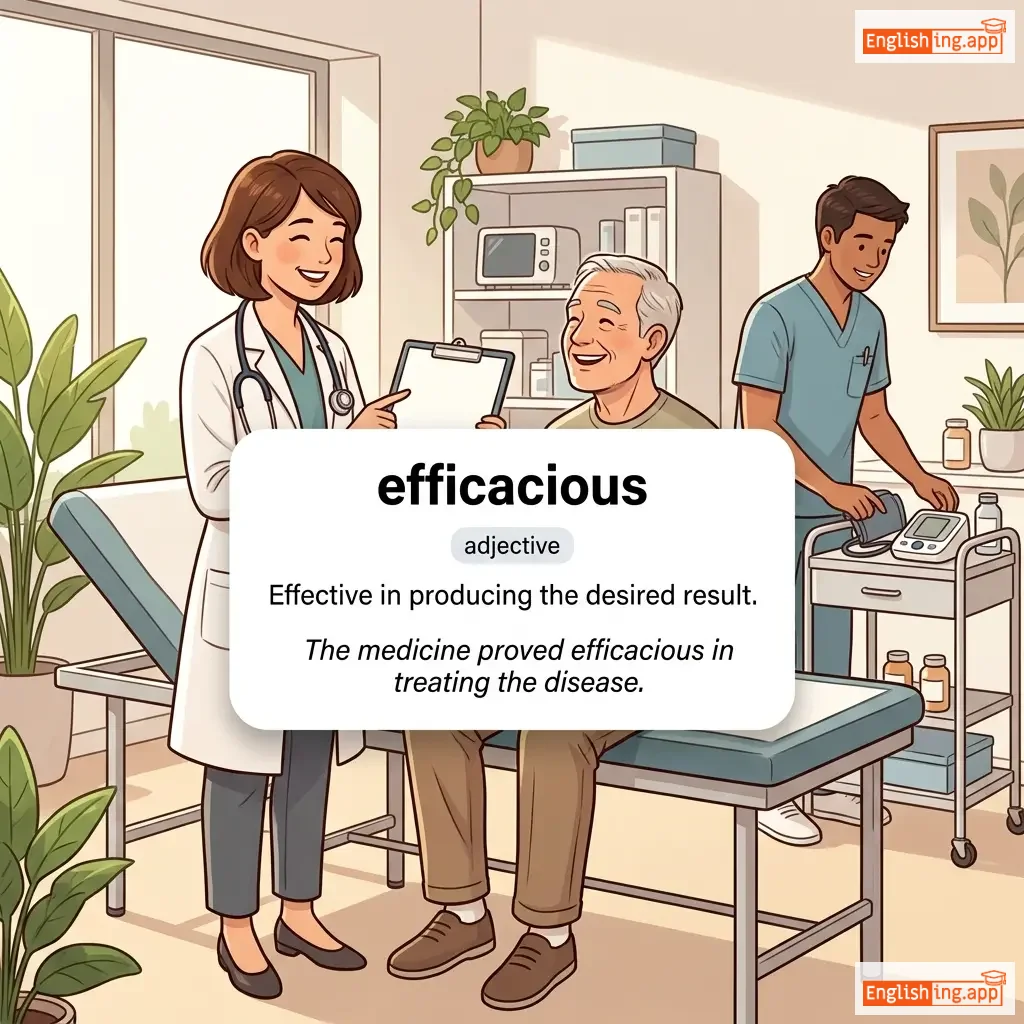
efficacious definition card — visual illustration of the meaning
adjective
/ˌɛfɪˈkeɪʃəs/
効果的 (koukatekina)

Effective in producing the desired result.

"The medicine proved efficacious in treating the disease."
"その薬は病気の治療に効果的であることが証明されました。" (Sono kusuri wa byouki no chiryou ni koukatekina koto ga shoumei saremashita.)
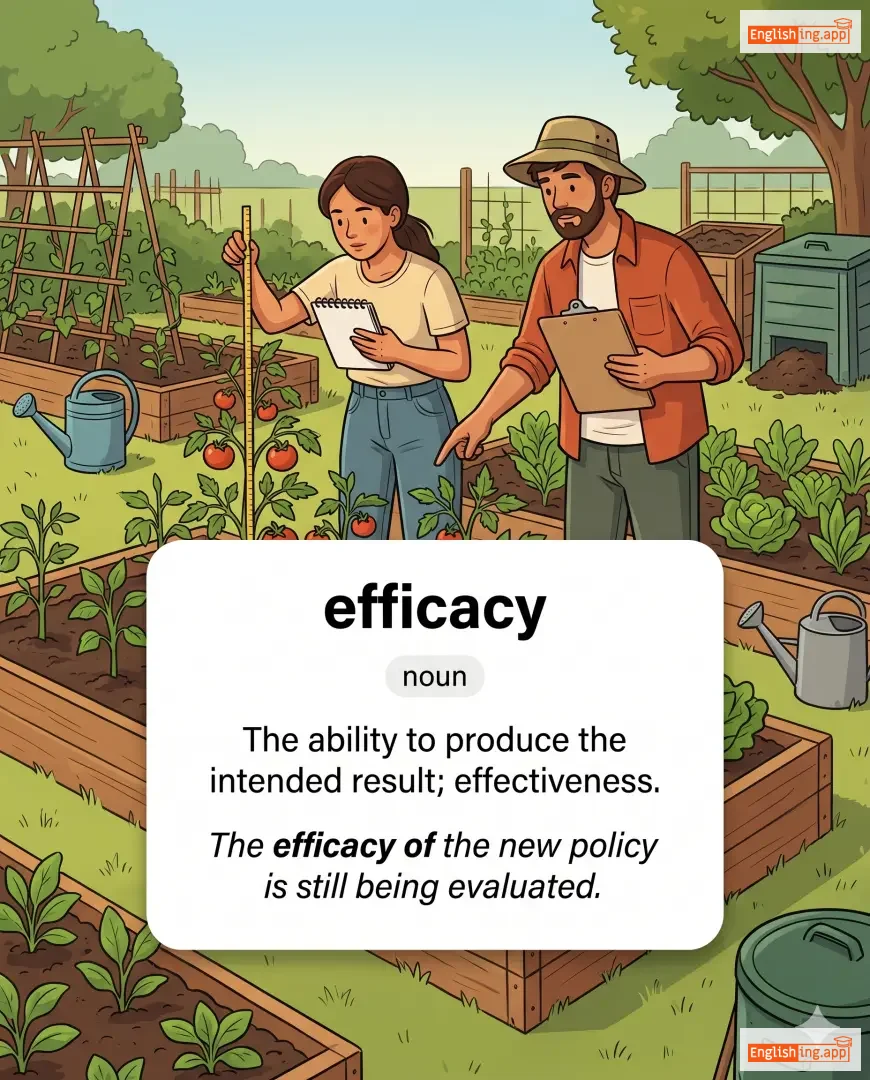
efficacy definition card — visual illustration of the meaning
noun
/ˈɛfɪkəsi/
効果 (kouka)

The ability to produce the intended result; effectiveness.

"The efficacy of the new policy is still being evaluated."
"新しい政策の効果はまだ評価されています。" (Atarashii seisaku no kouka wa mada hyouka sareteimasu.)
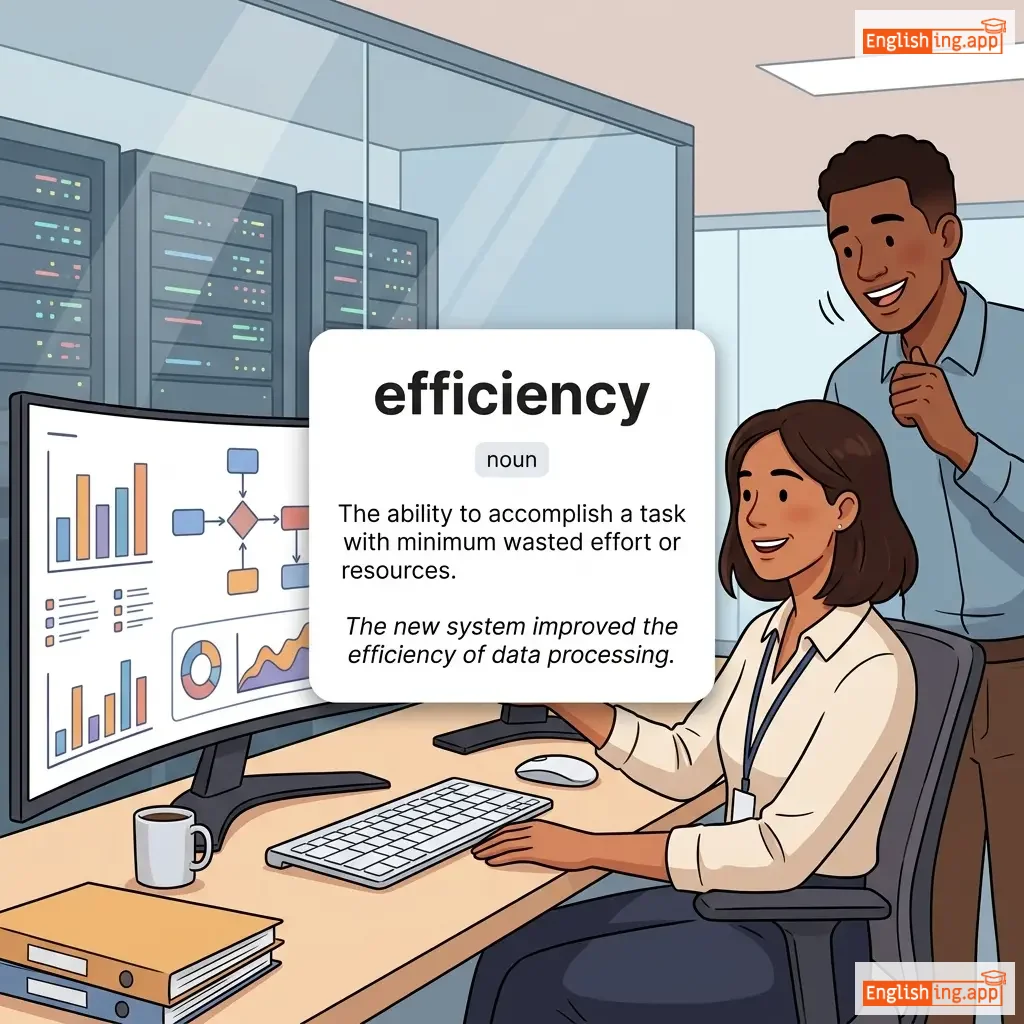
efficiency definition card — visual illustration of the meaning
noun
/ɪˈfɪʃənsi/
効率 (kouritsu)

The ability to accomplish a task with minimum wasted effort or resources.

"The new system improved the efficiency of data processing."
"新しいシステムはデータ処理の効率を改善しました。" (Atarashii shisutemu wa dēta shori no kōritsu o kaizen shimashita.)
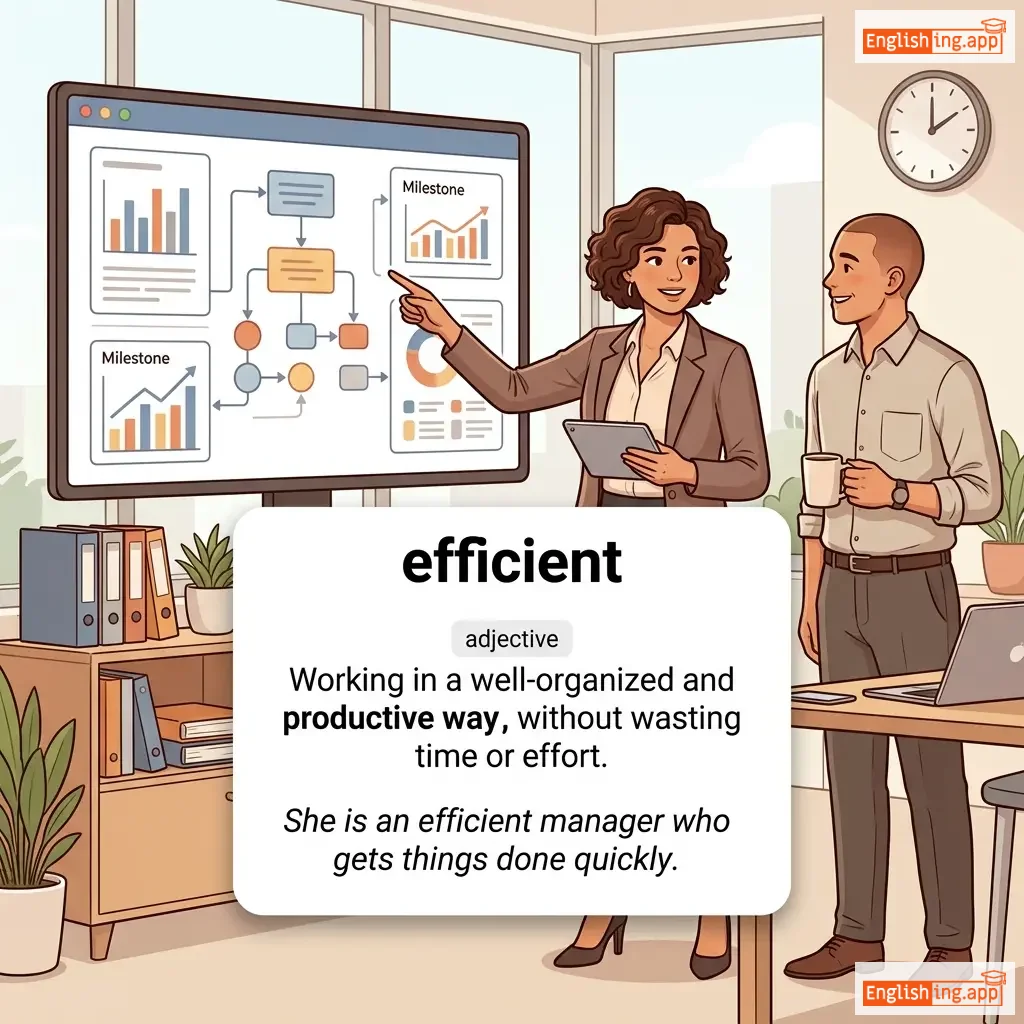
efficient definition card — visual illustration of the meaning
adjective
/ɪˈfɪʃənt/
効率的 (kouritsuteki)

Working in a well-organized and productive way, without wasting time or effort.

"She is an efficient manager who gets things done quickly."

"彼女は効率的なマネージャーで、素早く物事を終わらせます。" (Kanojo wa kōritsuteki na manējā de, subayaku monogoto o owarasemasu.)
adverb
/ɪˈfɪʃəntli/
効率的に (kouritsuteki ni)

in a way that achieves maximum productivity with minimum wasted effort or expense

"She managed to complete the task efficiently within the deadline."

"彼女は締め切り内に効率的にタスクを完了させました。" (Kanojo wa shimekiri nai ni kouritsuteki ni tasuku wo kanryou sasemashita.)
noun
/ˈɛfɪdʒi/
人形 (ningyo)

a sculpture or model of a person, often made to be destroyed in protest or anger

"The protesters burned an effigy of the corrupt politician."

"抗議者たちは腐敗した政治家の人形を燃やしました。" (Kougitachi wa fuhai shita seijika no ningyo o moyashimashita.)
noun
/ˌɛfləˈrɛsəns/
開花 (kaika)

the process of flowering or reaching an optimal stage of development

"The garden was at the peak of its efflorescence in spring."

"庭は春にその開花のピークに達していました。" (Niwa wa haru ni sono kaika no piiku ni tasshite imashita.)
adjective
/ˌɛfləˈrɛsənt/
開花する (kaika suru)

in the process of blooming or flourishing

"The efflorescent trees made the park look beautiful."
"開花する木々は公園を美しく見せました。" (Kaika suru kigi wa kōen o utsukushiku misemashita.)
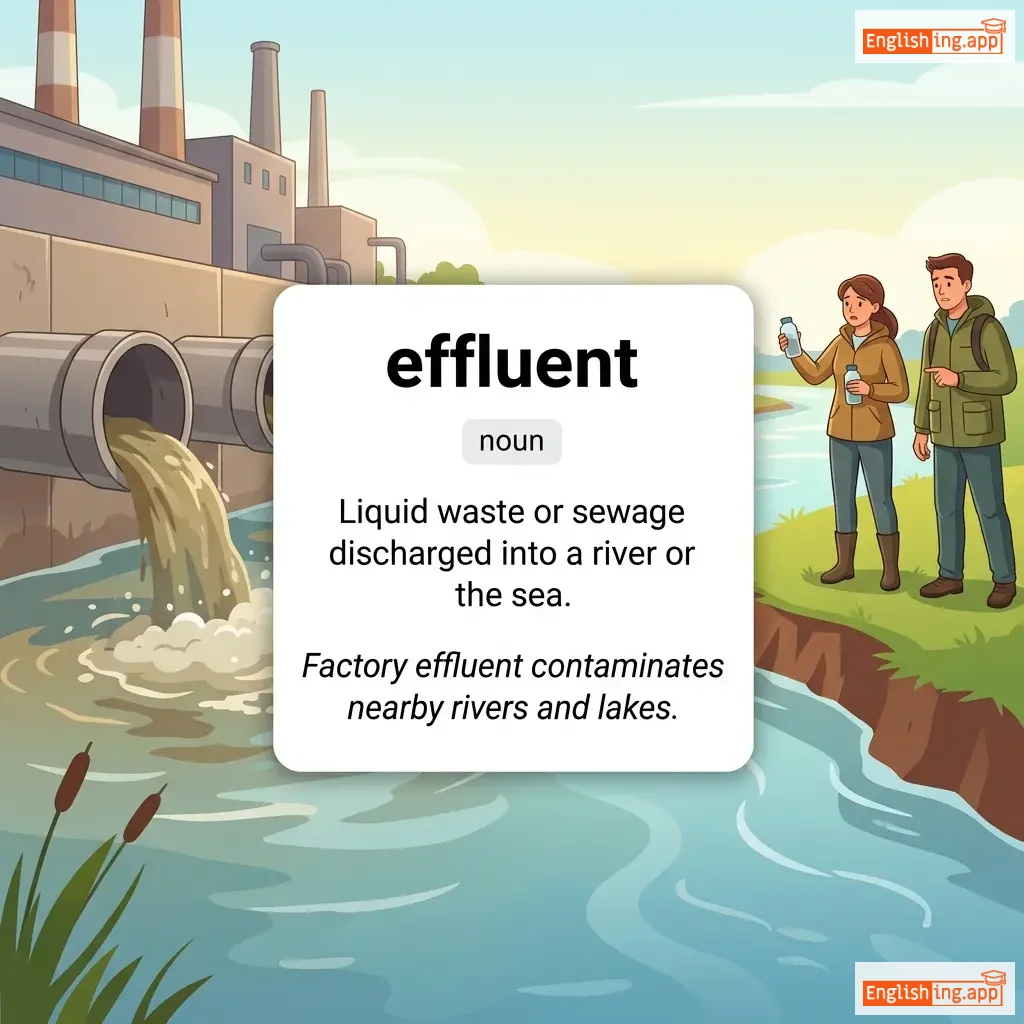
effluent definition card — visual illustration of the meaning
noun
ˈɛf.lu.ənt
排水または汚染された液体 (ha sui mata wa osen sareta ekitai)

Liquid waste or sewage discharged into a river or the sea.

"Factory effluent contaminates nearby rivers and lakes."

"工場の排水は近くの川や湖を汚染します。" (Koujou no haisui wa chikaku no kawa ya mizuumi o osen shimasu.)
noun
/ɪˈfluːviəm/
不快な臭い (fukai na nioi)

an unpleasant or harmful odor, secretion, or discharge

"The effluvium from the factory spread across the neighborhood."

"工場からの不快な臭いが近隣一帯に広がった。" (Kōjō kara no fukai na nioi ga kinrin ittai ni hirogatta.)
noun
/ˈɛfərt/
努力 (doryoku)

the use of physical or mental energy to do something; attempt

"He made a great effort to improve his English skills."
"彼は英語スキルを向上させるために大きな努力をしました。" (Kare wa eigo sukiru o kōjō saseru tame ni ōkina doryoku o shimashita.)
efforts definition card — visual illustration of the meaning
noun
ˈefərts
努力 (doryoku)

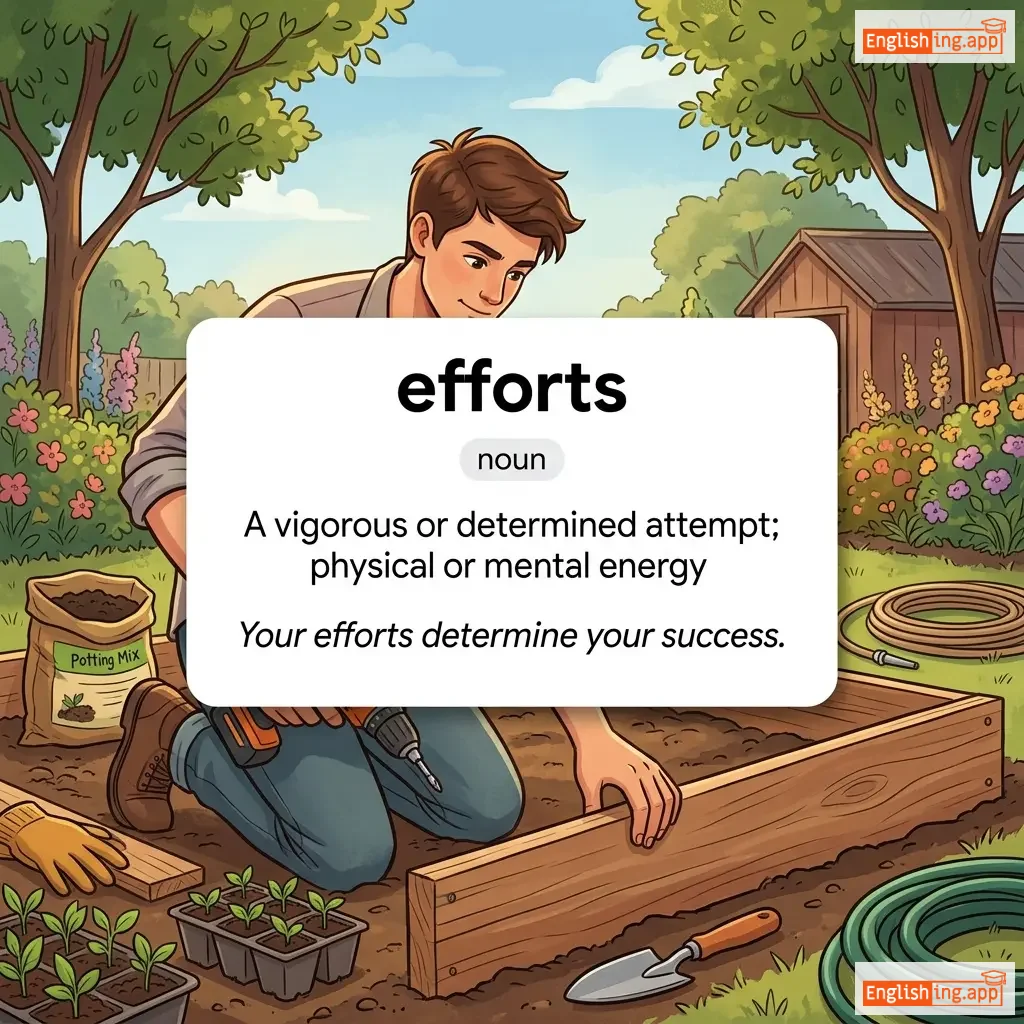
A vigorous or determined attempt; physical or mental energy

"Your efforts determine your success."
"あなたの努力があなたの成功を決定します。" (Anata no doryoku ga anata no seikou wo kettei shimasu.)
effrontery definition card — visual illustration of the meaning
noun
/ɪˈfrʌntəri/
厚顔無恥または大胆な態度 (kōgan muchi matawa daitan na taido)

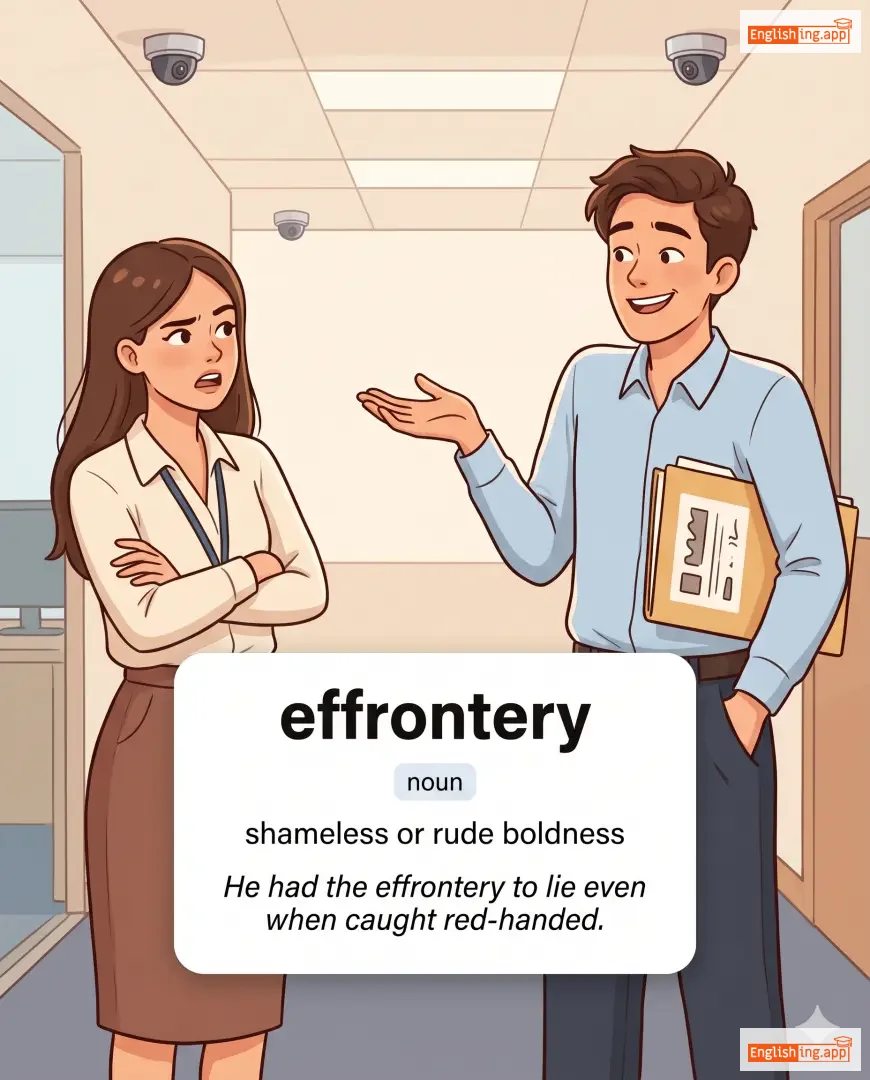
shameless or rude boldness

"He had the effrontery to lie even when caught red-handed."

"彼は赤手で捕まった後でも嘘をつく厚顔無恥さを持っていた。" (Kare wa akate de tsukamatta ato demo uso o tsuku kōgan muchisa o motte ita.)
noun
/ɪˈfʌldʒəns/
輝き (kagayaki)

Brilliant radiance or shining brightness.

"The effulgence of the sunrise lit up the entire valley."

"日の出の輝きが谷全体を照らした。" (Hinode no kagayaki ga tani zentai wo terashita.)
adjective
/ɪˈfʌldʒənt/
輝かしい (kagayakashii)

Shining brilliantly; radiant.

"Her effulgent smile brightened everyone's mood."

"彼女の輝かしい笑顔は皆の気分を明るくした。" (Kanojo no kagayakashi ismile wa mina no kibun o akarukushita.)
verb
/ɪˈfjuːz/
表現する (hyōgen suru)

To pour out or express feelings freely and openly.

"She effused gratitude for the help she received."

"彼女は受け取った助けに感謝の気持ちを表しました。" (Kanojo wa uketotta tasuke ni kansha no kimochi o arawashimashita.)
noun
/ɪˈfjuːʒən/
流出 (ryūshutsu)

An unrestrained outpouring of words, feelings, or emotions.

"His letter was an effusion of love and longing."

"彼の手紙は愛と切望の流出でした。" (Kare no tegami wa ai to setsubou no ryūshutsu deshita.)
adjective
/ɪˈfjuːsɪv/
感情的な (kanjōteki na)

Expressing feelings of gratitude, pleasure, or approval in an unrestrained or heartfelt manner.

"She gave him an effusive welcome after his long journey."
"彼女は長い旅の後、彼に感情的な歓迎をした。" (Kanojo wa nagai tabi no ato, kare ni kanjōteki na kangei o shita.)
egalitarian definition card — visual illustration of the meaning
adjective
/ɪˌɡælɪˈtɛəriən/
平等主義 (byoudou shugi)

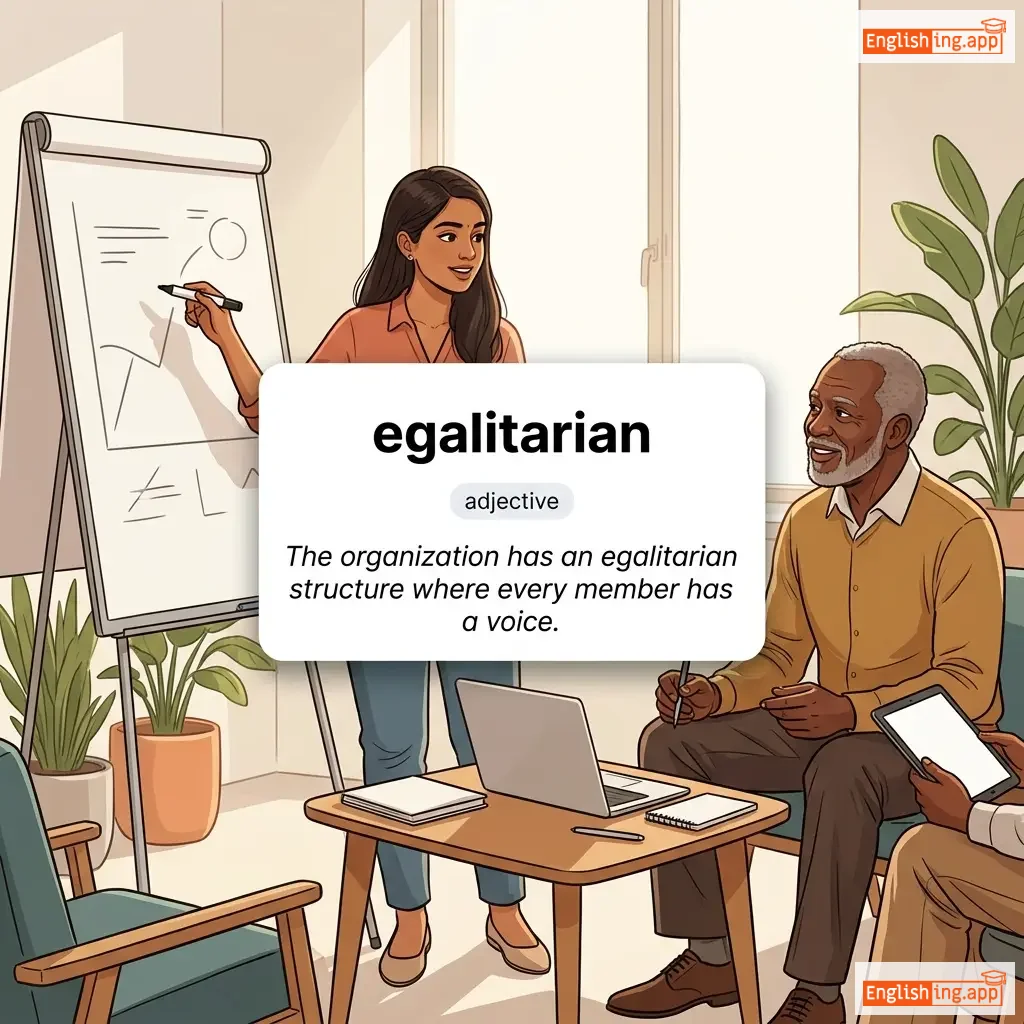
Believing in or promoting the principle that all people are equal and deserve equal rights and opportunities.

"The organization has an egalitarian structure where every member has a voice."

"その組織は、すべてのメンバーが意見を持つ平等主義の構造を持っています。" (Sono soshiki wa, subete no menbā ga iken o motsu byoudou shugi no kōzō o motteimasu.)
noun
/ɛɡ/
(tamago)

an oval or round object laid by a female bird, often eaten as food

"She had a boiled egg for breakfast."

"彼女は朝食にゆで卵を食べました。" (Kanojo wa choushoku ni yude tamago o tabemashita.)
🧠

Ego

noun
/ˈiːɡoʊ/

A person's sense of self-importance or self-esteem.

"His fragile ego was hurt by the criticism."

adjective
/ˌiːɡoʊˈsentrɪk/
自己中心的 (jiko chuushinteki)

thinking only about yourself and not about others

"His egocentric behavior annoyed everyone at the meeting."
"彼の自己中心的な行動は会議でみんなをイライラさせた。" (Kare no jiko chuushinteki na koudou wa kaigi de minna o iraira saseta.)
egoism definition card — visual illustration of the meaning
noun
/ˈiːɡoʊˌɪzəm/
利己主義 (rikoshugi)

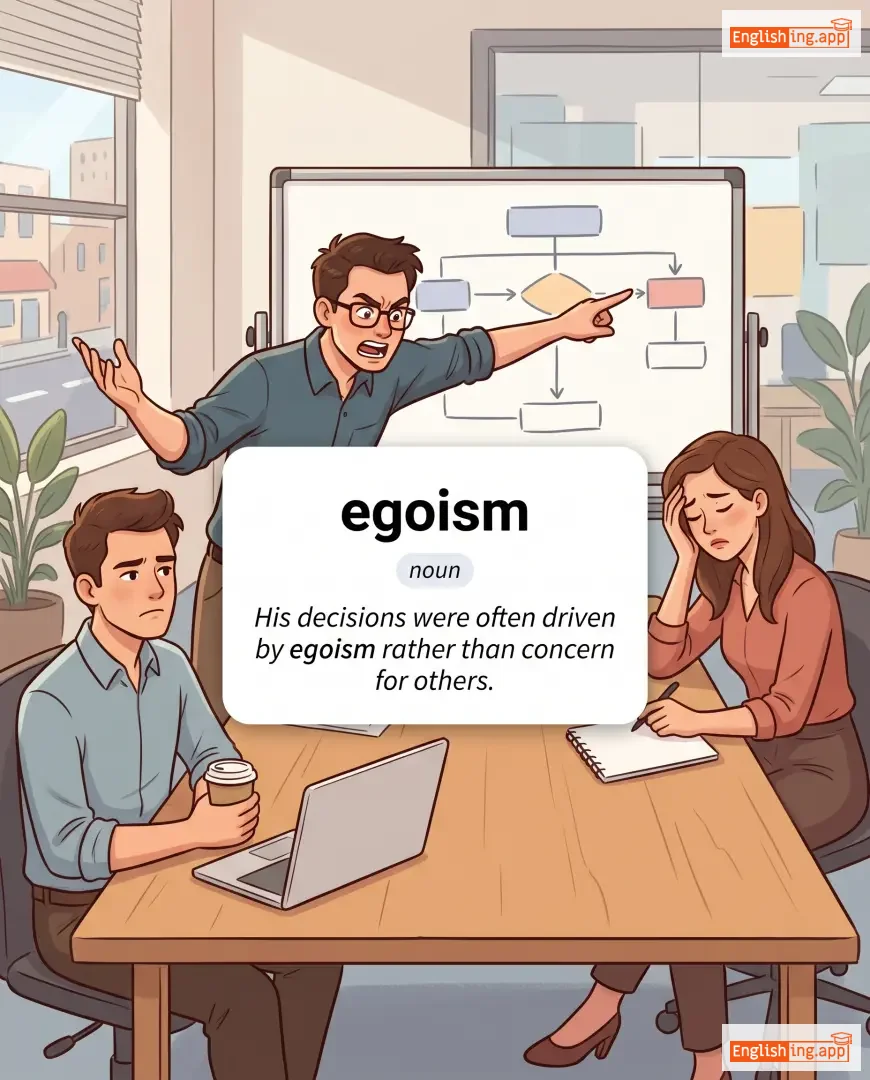
An ethical theory that treats self-interest as the foundation of morality; also, excessive preoccupation with oneself.

"His decisions were often driven by egoism rather than concern for others."

"彼の決断はしばしば他人への配慮よりも利己主義に駆り立てられていた。" (Kare no ketsudan wa shibashiba tanin e no hairyo yori mo rikoshugi ni karitate rarete ita.)
noun
/ˈiːɡoʊɪst/
エゴイスト (egoisuto)

A person who is excessively concerned with themselves; someone who believes in or practices egoism.

"She avoided him because he was a selfish egoist."

"彼女は彼を避けていた、なぜなら彼は利己的なエゴイストだったから。" (Kanojo wa kare o sakete ita, nazenara kare wa rikoteki na egoisuto datta kara.)
noun
/ˈiːɡoʊˌtɪzəm/
エゴイズム (egoizumu)

The practice of talking and thinking about oneself excessively because of an inflated sense of self-importance.

"His constant boasting revealed his egotism."

"彼の絶え間ない自慢は、彼のエゴティズムを明らかにした。" (Kare no taemanai jimana wa, kare no egotizumu o akiraka ni shita.)
noun
/ˈiːɡətɪst/
自己中心的な人 (jiko chūshin-teki na hito)

A person who is excessively self-centered or talks too much about themselves.

"The egotist dominated the conversation by talking only about his own achievements."
"その自己中心的な人は自分の成功だけについて話していた。" (sono jiko chūshin-teki na hito wa jibun no seikō dake ni tsuite hanashite ita.)
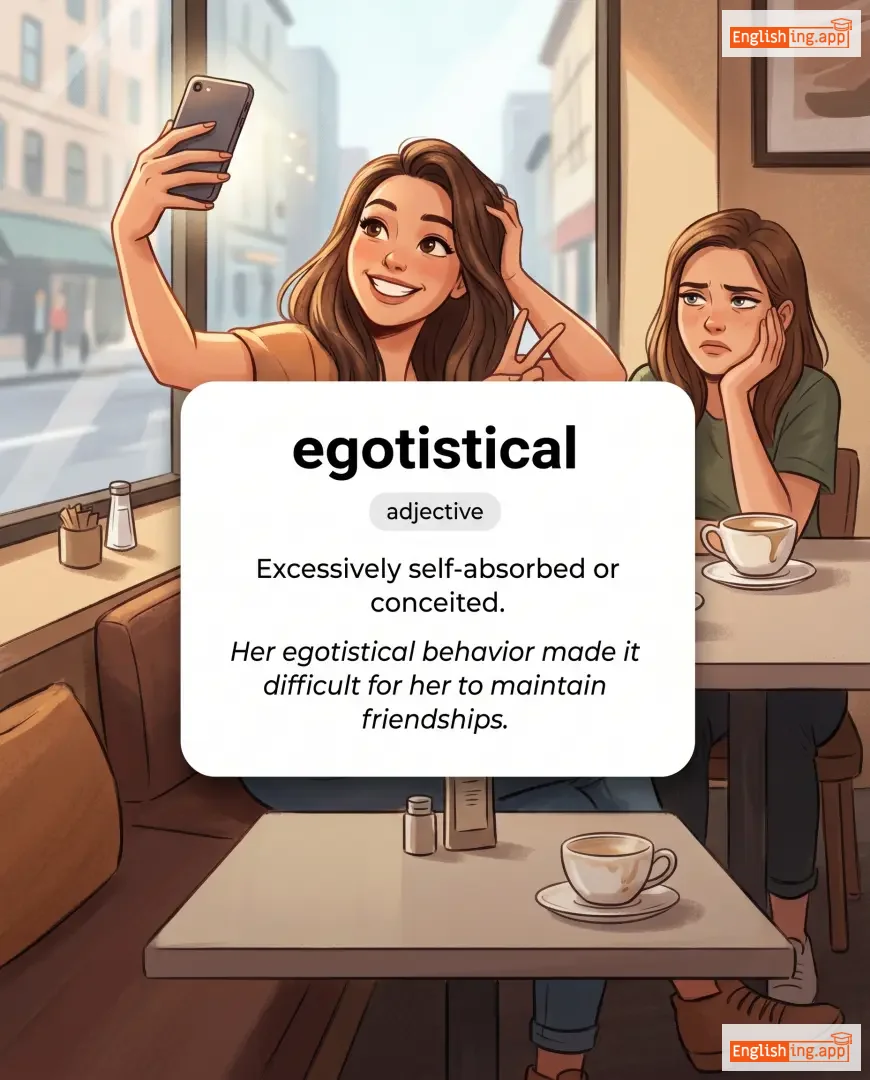
egotistical definition card — visual illustration of the meaning
adjective
/ˌiːɡəˈtɪstɪkəl/
自己中心的 (jiko chūshinteki)

Excessively self-absorbed or conceited.

"Her egotistical behavior made it difficult for her to maintain friendships."

"彼女の自己中心的な行動は、友達関係を維持するのを難しくしました。" (Kanojo no jiko chūshinteki na kōdō wa, tomodachi kankei o iji suru no o muzukashiku shimashita.)
adjective
/ɪˈɡriːdʒəs/
ひどい (hidoi)

Outstandingly bad; shocking.

"The company was fined for its egregious safety violations."

"その会社はひどい安全違反で罰金を科されました。" (Sono kaisha wa hidoi anzen ihan de bakkin o kasaremashita.)
noun
/ˈiːɡres/
出口 (deguchi)

The action of going out or leaving a place; an exit.

"The emergency door provided an egress for the trapped workers."

"非常口は閉じ込められた作業員のために出口を提供しました。" (Hijōguchi wa tojikomerareta sagyōin no tame ni deguchi o teikyō shimashita.)
number
/eɪt/
(hachi)

The number equivalent to the product of two and four; one more than seven.

"There are eight apples in the basket."

"バスケットには八つのリンゴがあります。" (Basuketto ni wa yattsu no ringo ga arimasu.)
adjective
/eɪtθ/
8番目 (hachimame)

coming after the seventh position in a sequence; one of eight equal parts

"She finished in eighth place in the race."

"彼女はレースで8位でフィニッシュしました。" (Kanojo wa rēsu de hachibame de finisshu shimashita.)
determiner/pronoun/conjunction/adverb
/ˈaɪðər/ or /ˈiːðər/
どちらか (dochiraka)

Used to indicate a choice between two alternatives.

"You can either call me tonight or send me an email."

"今晩、私に電話するか、メールを送ることができます。" (Konban, watashi ni denwa suru ka, mēru o okuru koto ga dekimasu.)
noun
/ɪˌdʒækjʊˈleɪʃən/
射精 / 突然の叫び (ejakyurēshon / totsuzen no sakebi)

The action of suddenly saying something or the release of semen during sexual climax.

"His sudden ejaculation of joy surprised everyone in the room."

"彼の突然の喜びの射精は部屋の中の誰もが驚いた。" (Kare no totsuzen no yorokobi no shasei wa heya no naka no dare mo ga odoroita.)