語彙集

英単語辞書 | 単語の意味、定義、例文

adjective
/dɪˈstrɔːt/
動揺した (douyou shita)

extremely upset and anxious, often to the point of being unable to think clearly

"She was distraught after losing her pet."

"ペットを失った後、彼女は動揺していた。" (Petto o ushinatta ato, kanojo wa douyou shite ita.)
noun
/dɪsˈtrɛs/
苦痛 (kutsū)

extreme anxiety, sorrow, or pain

"He felt a deep sense of distress when he heard the bad news."

"悪い知らせを聞いたとき、彼は深い苦痛を感じました。" (Warui shirase o kiita toki, kare wa fukai kutsū o kanjimashita.)
adjective
/dɪˈstrɛst/
苦しんでいる (kurushindeiru)

feeling or showing extreme anxiety, sorrow, or pain

"She looked distressed after hearing the bad news."
"悪い知らせを聞いた後、彼女は苦しんでいるように見えました。" (Warui shirase o kiita ato, kanojo wa kurushindeiru yō ni miemashita.)
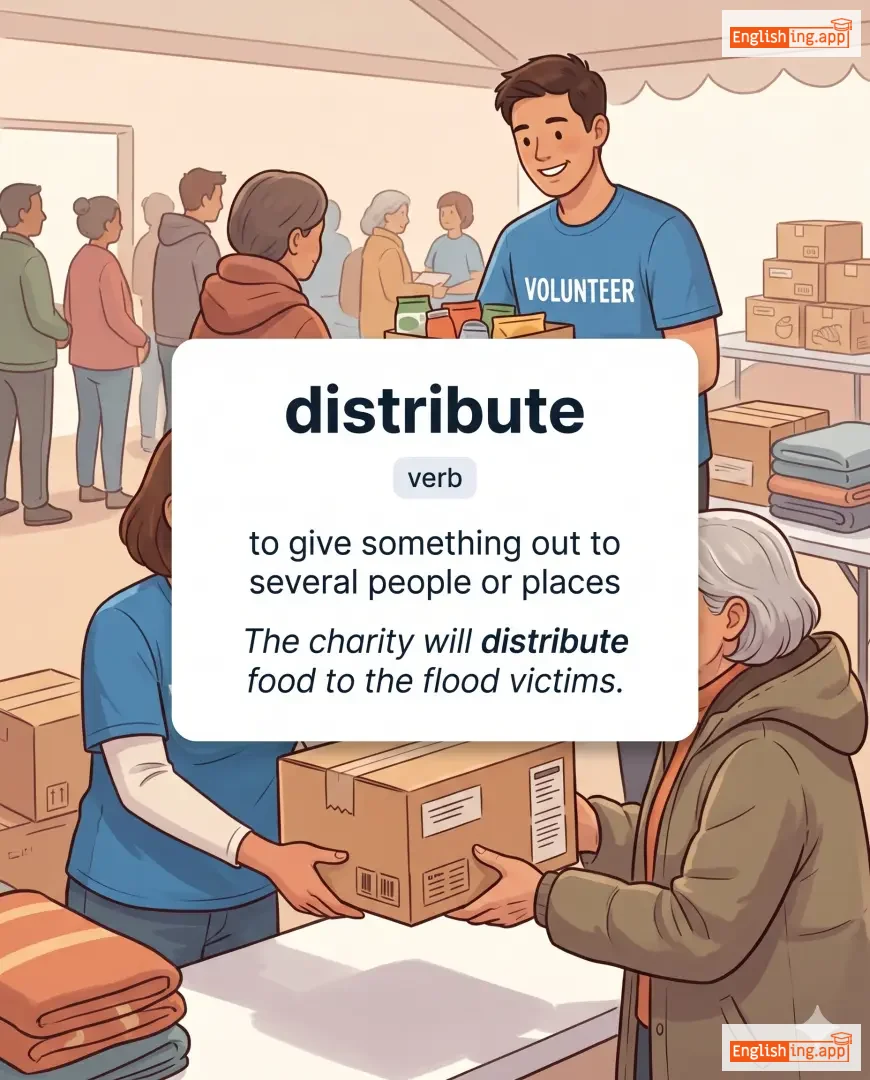
distribute definition card — visual illustration of the meaning
verb
/dɪˈstrɪbjuːt/
分配する (bunpai suru)

to give something out to several people or places

"The charity will distribute food to the flood victims."

"チャリティは洪水被害者に食料を分配します。" (Charity wa kōzui higai-sha ni shokuryō o bunpai shimasu.)
noun
/ˌdɪstrɪˈbjuːʃən/
配布 (haibu)

the act of sharing or delivering something to multiple people or places

"The company manages the distribution of food supplies to rural areas."

"その会社は農村地域への食品供給の配布を管理しています。" (Sono kaisha wa nōson chiiki e no shokuhin kyōkyū no haibu o kanri shiteimasu.)
noun
/ˈdɪstrɪkt/
地区 (chiku)

a specific area of a country, city, or town, often with official boundaries

"She lives in the northern district of the city."

"彼女は街の北地区に住んでいます。" (Kanojo wa machi no kita chiku ni sundeimasu.)
verb
/dɪsˈtrʌst/
不信 (fushin)

to have no confidence or trust in someone or something

"Many people distrust politicians."

"多くの人々は政治家を信用しません。" (Ōku no hitobito wa seijika o shin'yō shimasen.)
verb
/dɪsˈtɜːb/
邪魔する (jama suru)

to interrupt or cause someone to stop what they are doing

"Please don’t disturb me while I’m studying."

"勉強している間に私を邪魔しないでください。" (Benkyō shite iru aida ni watashi o jama shinai de kudasai.)
noun
/dɪˈstɜː.bəns/
騒乱; 邪魔; 不安 (souran; jama; fuan)

the interruption of a settled and peaceful condition; anxiety or mental uneasiness

"The loud music created a disturbance that bothered all the neighbors."

"大きな音楽は、すべての隣人を困らせた騒乱を引き起こしました。" (Ooki na ongaku wa, subete no rinjin wo komarase ta souran wo hikiokoshimashita.)
adjective
/dɪˈstɜː.bɪŋ/
気になる (ki ni naru)

causing anxiety, worry, or emotional distress

"The news about the accident was deeply disturbing."

"事故のニュースは非常に気分を害するものでした。" (Jiko no nyūsu wa hijō ni kibun o gaisuru mono deshita.)
noun
/dɪsˈjuːnjən/
分裂 (bunretsu)

the state of being separated or not united

"Civil wars often result from national disunion."

"内戦はしばしば国家の分裂から起こる。" (Naisen wa shibashiba kokka no bunretsu kara okoru.)
noun
/ˈdaɪˌsɪləbəl/
二音節語 (ni onsetsu go)

a word consisting of two syllables

"The word 'happy' is a disyllable."

"‘ハッピー’という単語は二音節語です。" ('Happī' to iu tango wa ni onsetsu go desu.)
verb
/ˈdɪðər/

to be indecisive or unable to make a decision

"He dithered for hours before choosing a restaurant."

noun
/ˈdɪti/
短い歌 (mijikai uta)

a short, simple song or poem

"She sang a cheerful little ditty while cooking."

"彼女は料理をしながら陽気な小さな歌を歌っていた。" (Kanojo wa ryōri o shinagara yōkina chiisana uta o utatte ita.)
diuretic definition card — visual illustration of the meaning
noun
/ˌdaɪ.jʊˈret.ɪk/
利尿剤 (rinyozai)

A substance that promotes the production of urine.

"Coffee has a mild diuretic effect."

"コーヒーは軽い利尿作用があります。" (Kōhī wa karui rinyo sayō ga arimasu.)
adjective
/daɪˈɜːrnəl/
昼行性 (chūkōsei)

active during the day; occurring daily

"Most birds are diurnal creatures, active in daylight hours."

"ほとんどの鳥は昼行性の生き物で、日中に活動しています。" (Hotondo no tori wa chūkōsei no ikimono de, nichū ni katsudō shiteimasu.)
noun
/ˈdiːvə/
有名な女性歌手 (yūmei na josei kashu)

a famous female singer; a woman who is admired or behaves like a star

"The pop diva performed her latest hit to a cheering crowd."

"ポップディーバは観衆の前で最新のヒットを披露しました。" (Poppu dība wa kanshū no mae de saishin no hitto o hirō shimashita.)
noun
/ˌdaɪvəˈɡeɪʃən/
脱線 (dassen)

digression; wandering from a path or subject

"His lecture was full of divagation, making it hard to follow the main point."

"彼の講義は脱線だらけで、主なポイントを追うのが難しかった。" (Kare no kōgi wa dassen darake de, omona pointo o ou no ga muzukashikatta.)
verb
/daɪv/
飛び込む (tobikomu)

to plunge headfirst into water or another substance

"He decided to dive into the pool on a hot day."

"彼は暑い日にプールにダイブすることに決めました。" (Kare wa atsui hi ni pūru ni daibu suru koto ni kimemashita.)
noun
/ˈdaɪ.vər/
ダイバー (daibā)

a type of water bird that dives underwater to catch fish

"The diver disappeared beneath the surface to catch a fish."
"ダイバーは魚を捕まえるために水面下に消えました。" (Daibā wa sakana o tsukamaeru tame ni suimen ka ni kiemashita.)
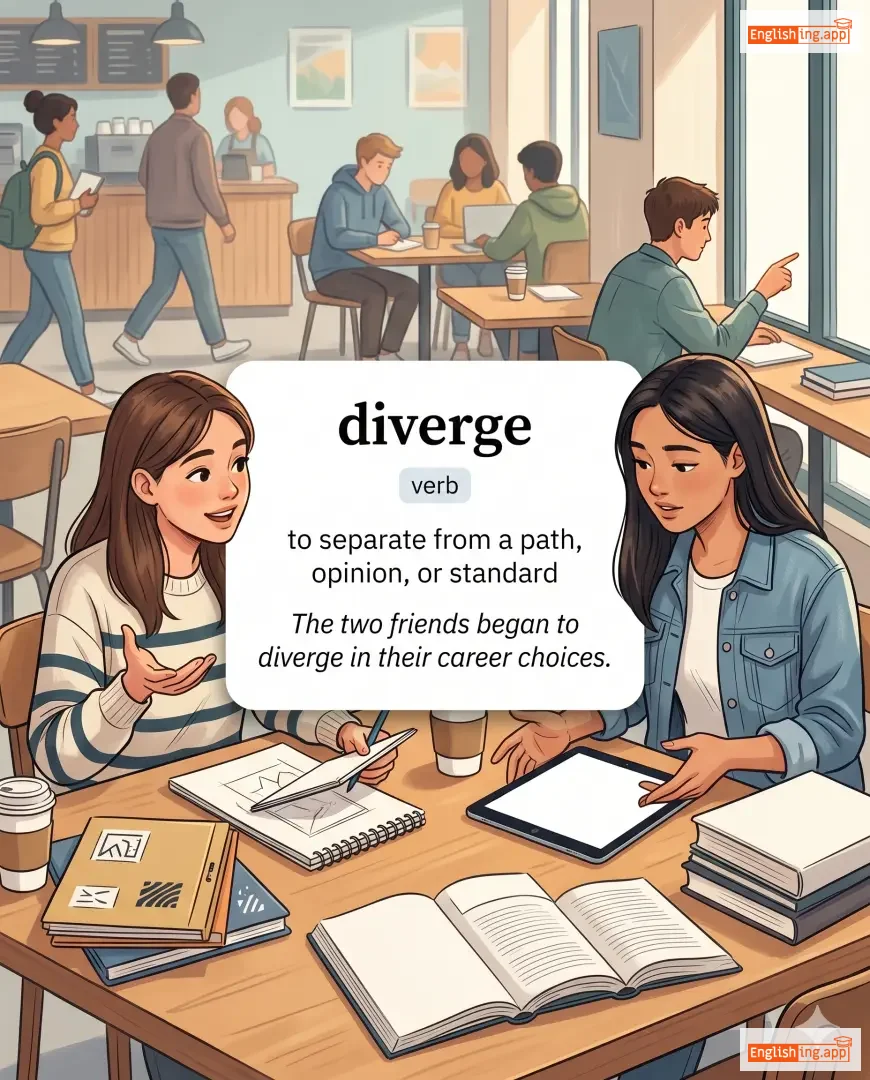
diverge definition card — visual illustration of the meaning
↔️

diverge

verb
/daɪˈvɜːrdʒ/

to separate from a path, opinion, or standard

"The two friends began to diverge in their career choices."

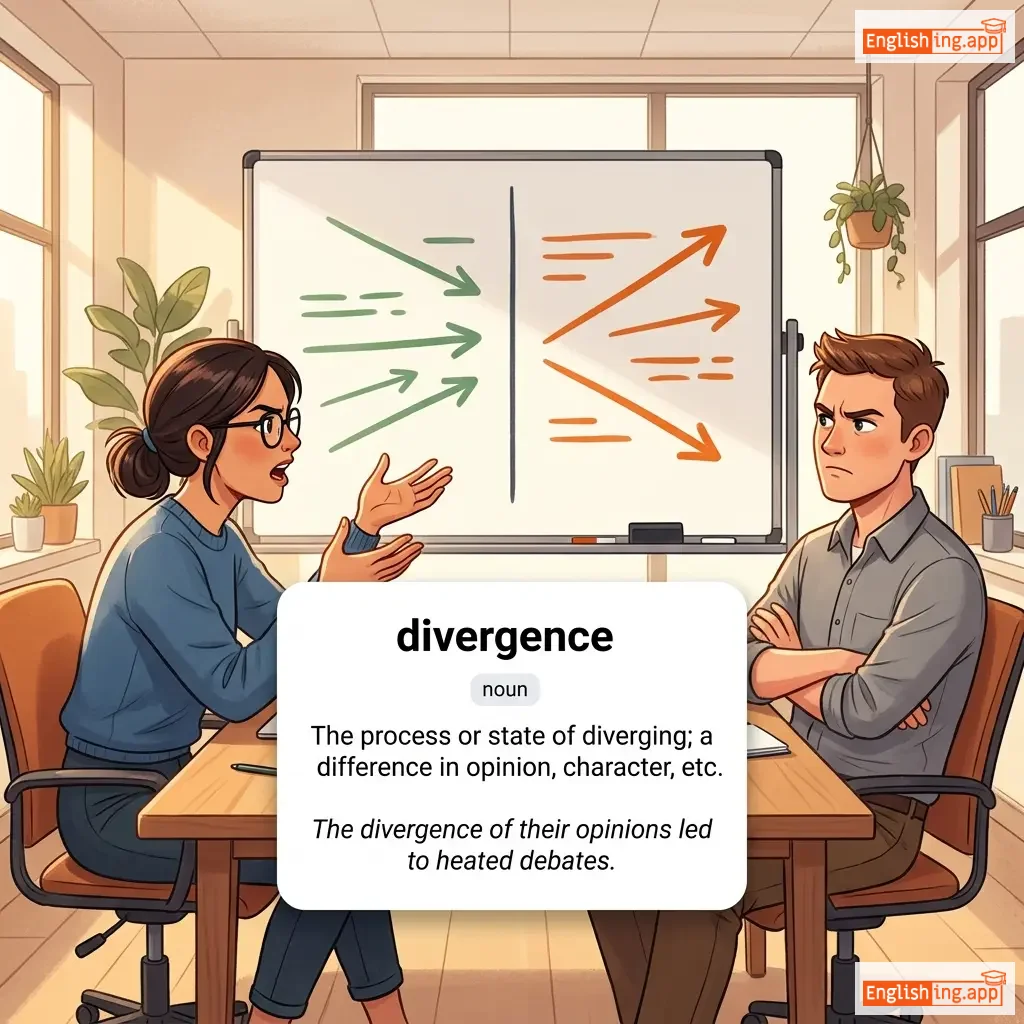
divergence definition card — visual illustration of the meaning
noun
daɪˈvɜː.dʒəns
乖離 (kairi)

The process or state of diverging; a difference in opinion, character, etc.

"The divergence of their opinions led to heated debates."
"彼らの意見の乖離は激しい討論を引き起こしました。" (Karera no iken no kairi wa hageshii tooron o hikiokoshimashita.)
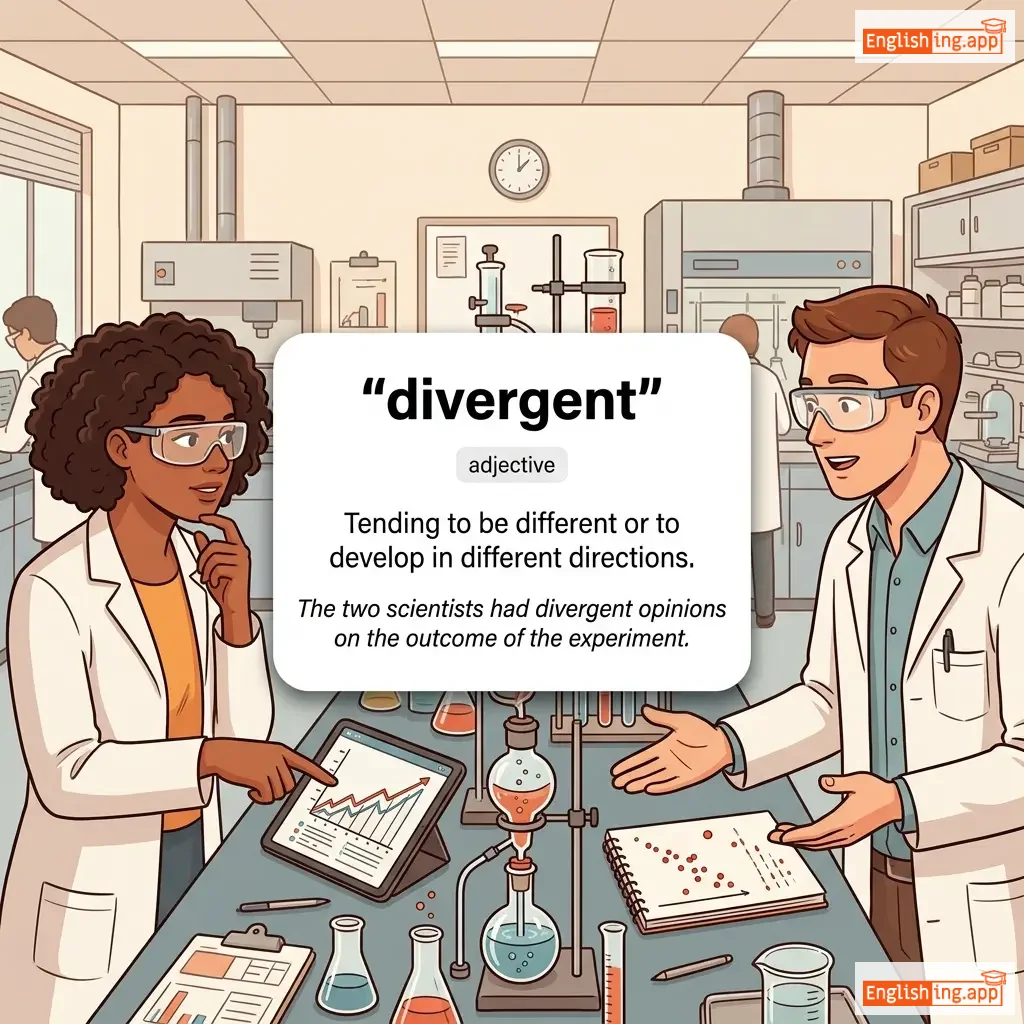
divergent definition card — visual illustration of the meaning
adjective
/daɪˈvɜːrdʒənt/
発散的な (hassantekina)

Tending to be different or to develop in different directions.

"The two scientists had divergent opinions on the outcome of the experiment."
"二人の科学者は実験結果について異なる意見を持っていた。" (Futari no kagakusha wa jikken kekka ni tsuite kotonaru iken o motte ita.)
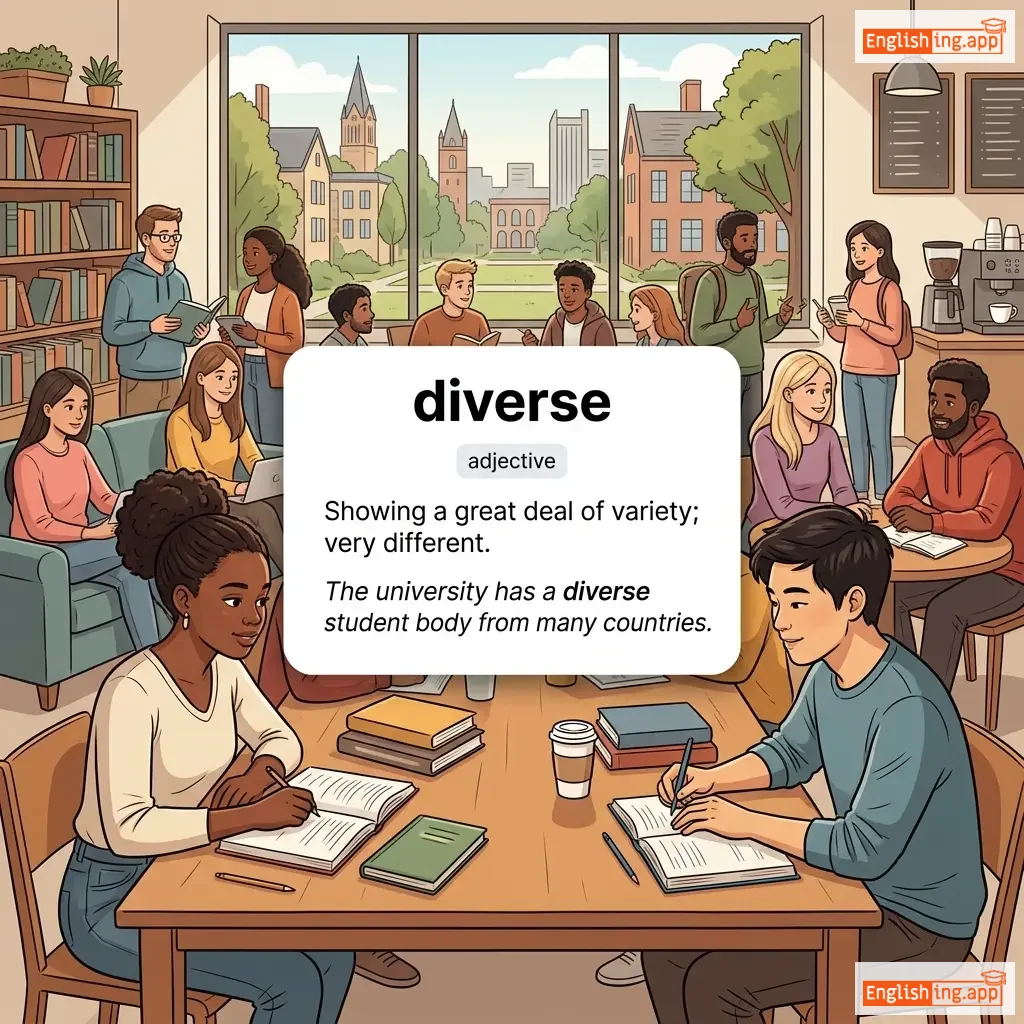
diverse definition card — visual illustration of the meaning
adjective
/daɪˈvɜːrs/
多様な (tayou na)

Showing a great deal of variety; very different.

"The university has a diverse student body from many countries."
"その大学には、多くの国からの多様な学生がいます。" (Sono daigaku ni wa, ōku no kuni kara no tayō na gakusei ga imasu.)
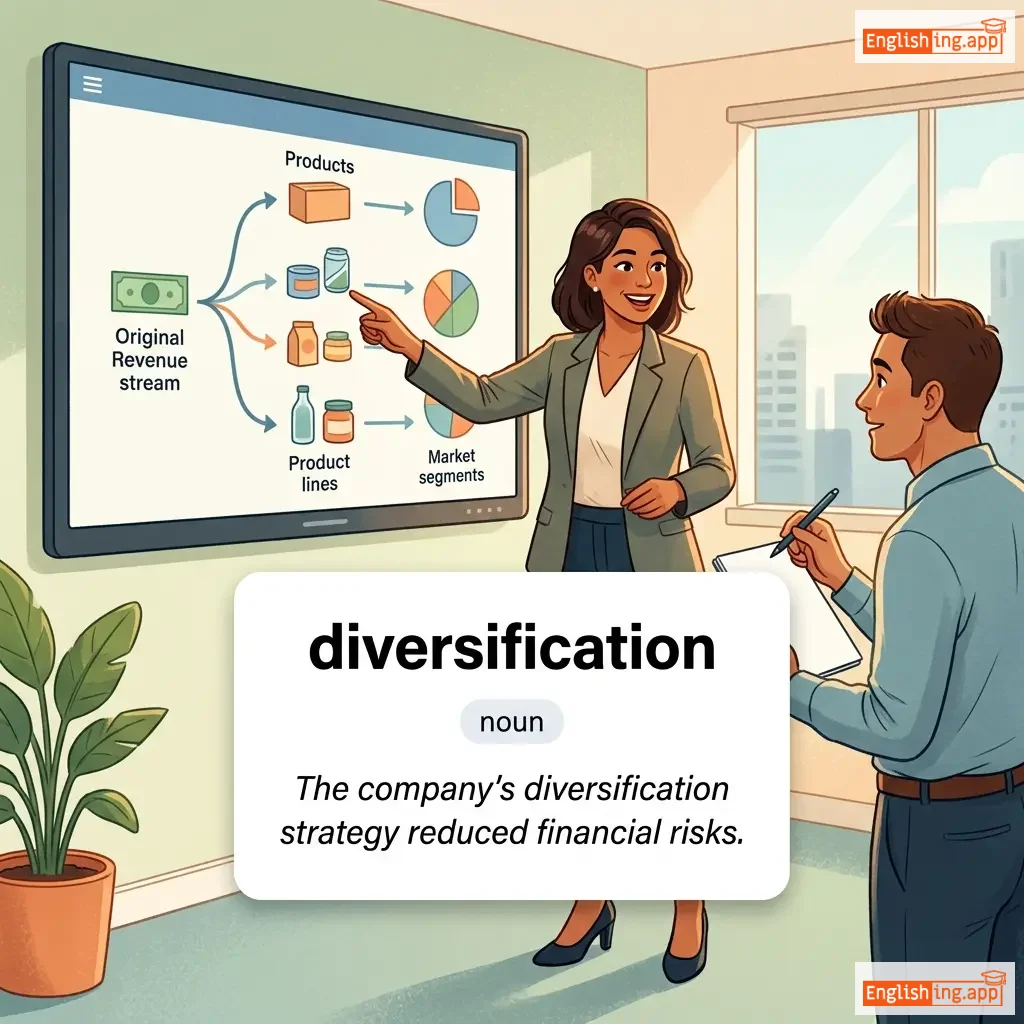
diversification definition card — visual illustration of the meaning
noun
/daɪˌvɜː.sɪ.fɪˈkeɪ.ʃən/
多角化 (Diversification)

The process of a business expanding into different product lines or markets to spread risk and reduce dependence on a single source of income.

"The company's diversification strategy reduced financial risks."

"その会社の多角化戦略は財務リスクを低減した。" (sono kaisha no takakuka senryaku wa zaimu risuku o teigen shita)
adjective
/daɪˈvɜːrsɪfaɪd/
多様化された (tayoukasareta)

Made or having variety in form, nature, or content.

"The company adopted a diversified business strategy to reduce risks."

"その会社はリスクを減らすために多様化されたビジネス戦略を採用した。" (Sono kaisha wa risuku wo herasu tame ni tayoukasareta bijinesu senryaku wo saiyou shita.)
noun
/daɪˈvɜːrʒən/

The act of changing direction or being distracted; an activity that entertains.

"The road was closed, so we had to take a diversion through the village."

diversity definition card — visual illustration of the meaning
noun
/daɪˈvɜːrsəti/
多様性 (tayōsei)

A range of different things or people; variety.

"Workplace diversity helps foster innovation and creativity."

"職場での多様性は、革新と創造性を促進します。" (Shokuba de no tayōsei wa, kakushin to sōzōsei o sokushin shimasu.)
↪️

divert

verb
/daɪˈvɜːrt/

to turn aside from a course; to redirect or entertain

"The police diverted traffic to a side road."

adjective
/daɪˈvɜːrtɪbəl/
転用可能な (ten'yō kanō na)

capable of being turned aside or redirected

"Funds from the budget are not legally divertible."

"予算からの資金は合法的に転用できません。" (Yosan kara no shikin wa gōhō-teki ni ten'yō dekimasen.)
divest definition card — visual illustration of the meaning
verb
/daɪˈvɛst/

to strip away possessions, rights, or assets; to rid oneself of

"The company decided to divest its unprofitable division."

noun
/daɪˈvɛstɪtʃər/
事業売却 (jigyō baikyaku)

the action of selling off or disposing of business interests or assets

"The divestiture of the subsidiary was completed last year."

"子会社の事業売却は昨年完了しました。" (Kogaisha no jigyō baikyaku wa sakunen kanryō shimashita.)
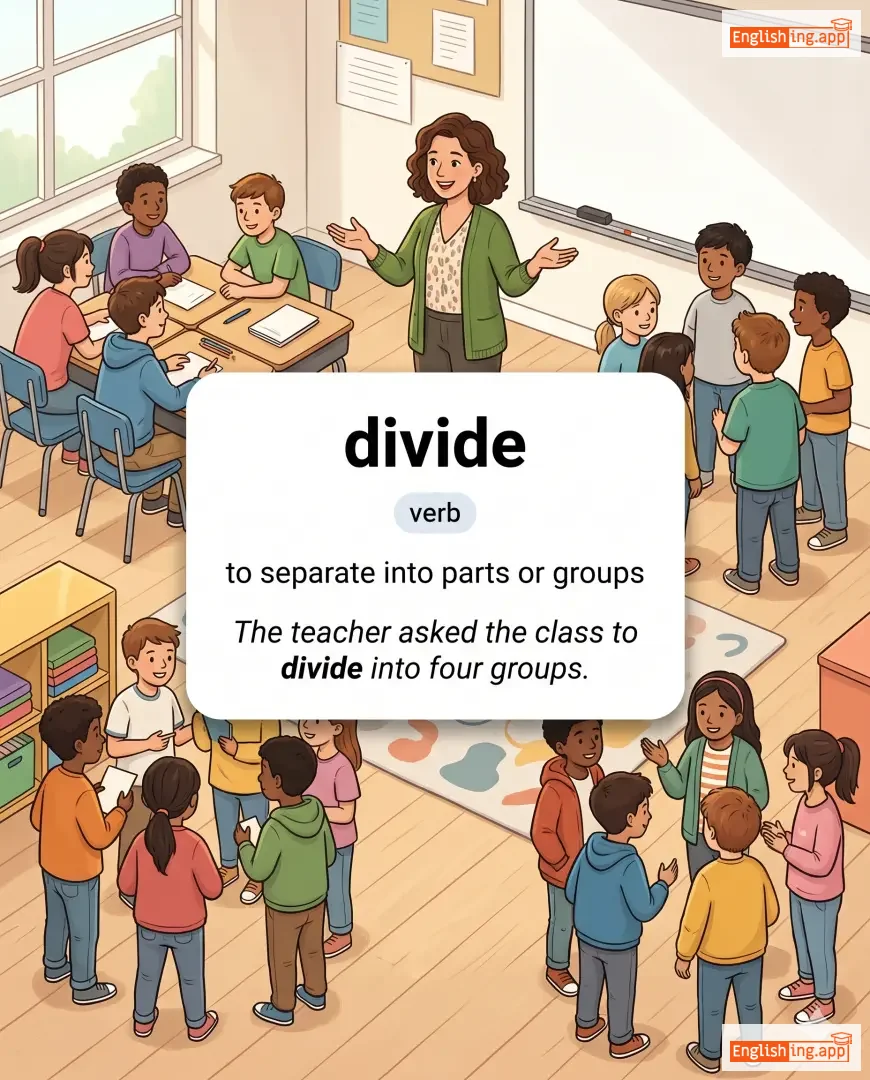
divide definition card — visual illustration of the meaning
verb
/dɪˈvaɪd/

to separate into parts or groups

"The teacher asked the class to divide into four groups."

noun
/ˌdɪvɪˈneɪʃən/
占い (uranaï)

the practice of seeking knowledge of the future or the unknown by supernatural means

"Ancient people often relied on divination to guide important decisions."

"古代の人々は重要な決定を導くために占いに頼ることがよくありました。" (Kodai no hitobito wa jūyōna kettei o michibiku tame ni uranai ni tayoru koto ga yoku arimashita.)
adjective, verb
/dɪˈvaɪn/

Relating to God or a deity; exceptionally wonderful or pleasing; to discover or foresee by intuition or supernatural means.

"She believed the divine power guided her actions."

noun
/dɪˈvɪnɪti/
神性 (shinsei)

The quality or state of being divine; a deity.

"The priest spoke about the divinity of the soul."

"神父は魂の神性について話しました。" (Shinpu wa tamashii no shinsei ni tsuite hanashimashita.)
adjective
/dɪˈvɪzəbl/
割り切れる (warikireru)

Capable of being divided by another number without leaving a remainder.

"Twelve is divisible by three and four."

"12は3と4で割り切れます。" (12 wa 3 to 4 de warikiremasu.)
noun
/dɪˈvɪʒən/
部門 (bumon)

the action of separating something into parts; or a large administrative unit

"The company has a separate division for research and development."

"会社には研究開発のための専用の部門があります。" (Kaisha ni wa kenkyū kaihatsu no tame no sen'yō no bumon ga arimasu.)
noun
/dɪˈvaɪzər/
除数 (josū)

A number by which another number is divided.

"In the equation 12 ÷ 3, the number 3 is the divisor."

"方程式12 ÷ 3では、数字3が除数です。" (Hōtei-shiki 12 ÷ 3 de wa, sūji 3 ga josū desu.)
noun/verb
/dɪˈvɔːrs/
離婚 (rikon)

the legal ending of a marriage; to officially end a marriage

"After years of conflict, they decided to get a divorce."

"数年の対立の後、彼らは離婚することを決めました。" (Sūnen no tairitsu no ato, karera wa rikon suru koto o kimemashita.)
adjective
/dɪˈvɔːrst/
離婚した (rikon shita)

No longer married because the marriage has been legally dissolved.

"She has been divorced for five years."
"彼女は5年間離婚したままだ。" (Kanojo wa 5-nenkan rikon shita mama da.)
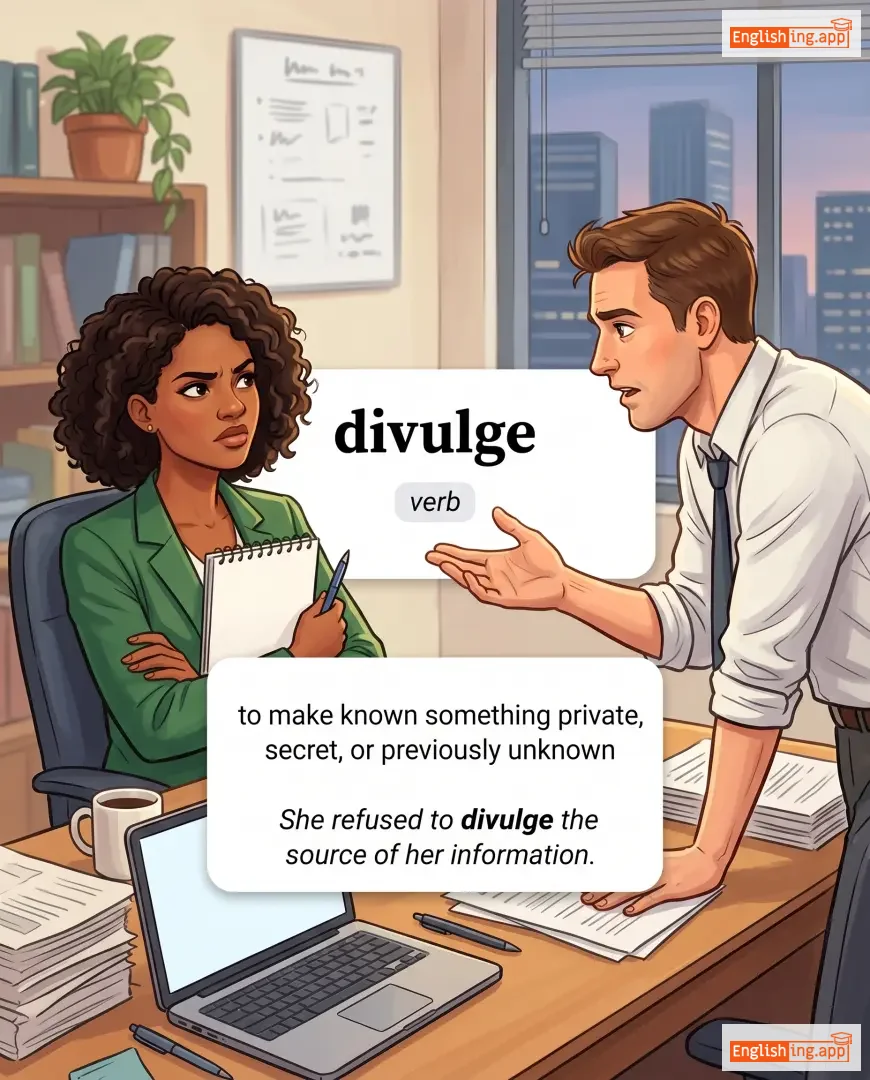
divulge definition card — visual illustration of the meaning
verb
/daɪˈvʌldʒ/
明らかにする (akiraka ni suru)

to make known something private, secret, or previously unknown

"She refused to divulge the source of her information."

"彼女は情報の源を明らかにすることを拒否しました。" (Kanojo wa jōhō no minamoto o akiraka ni suru koto o kyohi shimashita.)
noun
/daɪˈvʌldʒəns/
暴露 (bōroku)

the act of revealing or disclosing something secret or private

"The divulgence of company secrets caused a major scandal."

"企業の秘密の暴露が大きなスキャンダルを引き起こした。" (Kigyō no himitsu no bōroku ga ōkina sukyandaru o hikiokoshita.)
noun
/ˌdiː.enˈeɪ/
デオキシリボ核酸 (DNA)

Deoxyribonucleic acid, the molecule that carries genetic information in living organisms.

"Scientists extracted DNA from the ancient bones."

"科学者たちは古代の骨からDNAを抽出しました。" (Kagakusha-tachi wa kodai no hone kara DNA o chūshutsu shimashita.)
verb
/duː/
する (suru)

To perform an action, task, or activity.

"I need to do my homework before dinner."

"私は夕食前に宿題をしなければならない。" (Watashi wa yūshoku mae ni shukudai o shinakereba naranai.)
adjective
/ˈdɑːsəl/ or /ˈdəʊsaɪl/
従順な (jūjun na)

easily managed, taught, or controlled; submissive

"The docile puppy quickly learned new tricks."

"従順な子犬はすぐに新しい技を覚えました。" (Jūjun na koinu wa sugu ni atarashī waza o oboemashita.)
noun
/dɒk/
ドック (dokku)

a structure where ships are loaded, unloaded, or repaired

"The ship stayed at the dock for two days."

"船はドックに2日間停泊していました。" (Fune wa dokku ni futsukakan teihaku shiteimashita.)
noun
/ˈdɒkɪt/
リスト (risuto)

a list or schedule of cases to be tried in a court or items to be done

"The judge reviewed the docket before starting the session."

"裁判官はセッションを開始する前にリストを確認しました。" (Saibankan wa sesshon o kaishi suru mae ni risuto o kakunin shimashita.)
noun
/ˈdɒktər/
医者 (isha)

A qualified medical professional who treats illnesses and injuries.

"The doctor prescribed medicine for the patient."

"医者は患者に薬を処方しました。" (Isha wa kanja ni kusuri o shohō shimashita.)
doctrinaire definition card — visual illustration of the meaning
adjective
/ˌdɒktrɪˈnɛər/
教条主義者 (kyōjō shugi-sha)

stubbornly devoted to a theory or doctrine without regard to practical considerations

"His doctrinaire approach to politics alienated many supporters."

"彼の教条主義的な政治アプローチは、多くの支持者を遠ざけた。" (Kare no kyōjō shugi-teki na seiji apurōchi wa, ōku no shijisha o tōzaketa.)