語彙集

英単語辞書 | 単語の意味、定義、例文

adjective
/ˈdɪzməl/
陰気な; 落ち込んだ; 悲しい (inki na; ochikonda; kanashii)

gloomy; depressing; causing sadness or despair

"The weather was dismal with heavy rain and dark clouds."
"天気は雨と暗い雲で陰気でした。" (Tenki wa ame to kurai kumo de inki deshita.)
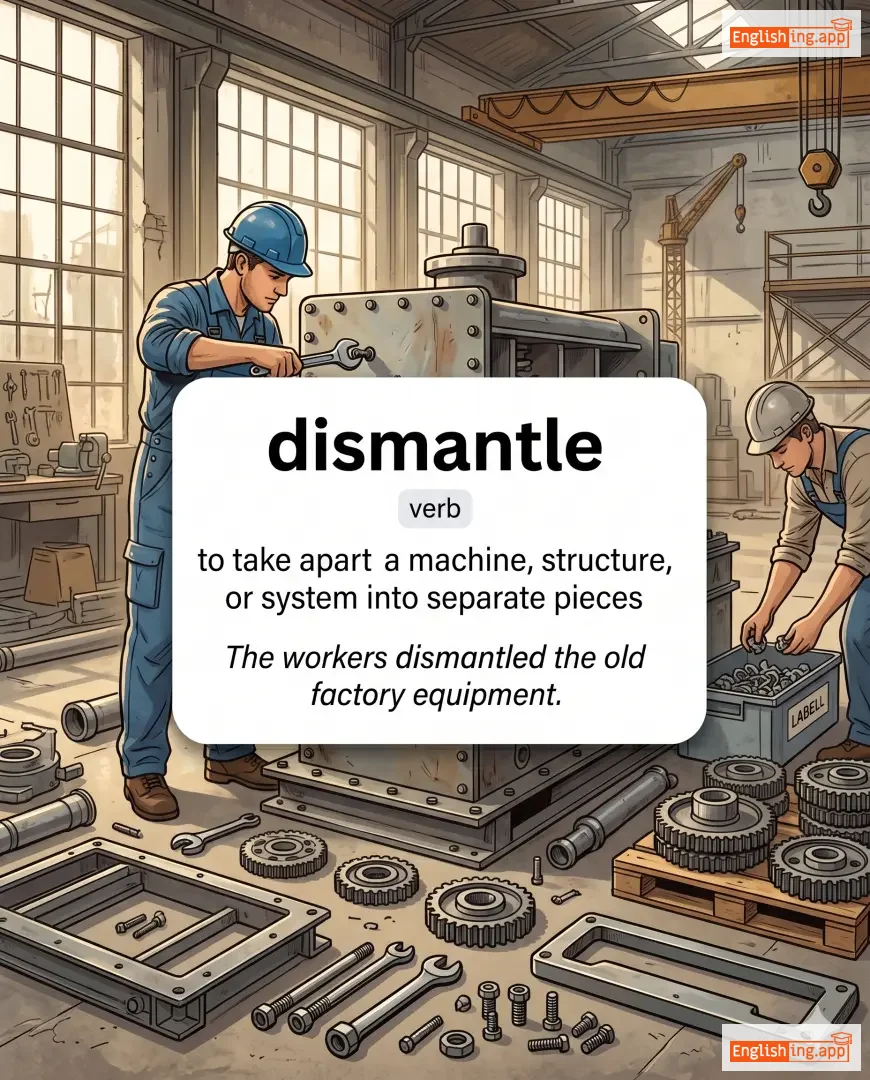
dismantle definition card — visual illustration of the meaning
verb
/dɪsˈmæntl̩/
解体する (kaitai suru)

to take apart a machine, structure, or system into separate pieces

"The workers dismantled the old factory equipment."
"作業員たちは古い工場の設備を解体しました。" (Sagyouintachi wa furui koujou no setsubi wo kaitai shimashita.)
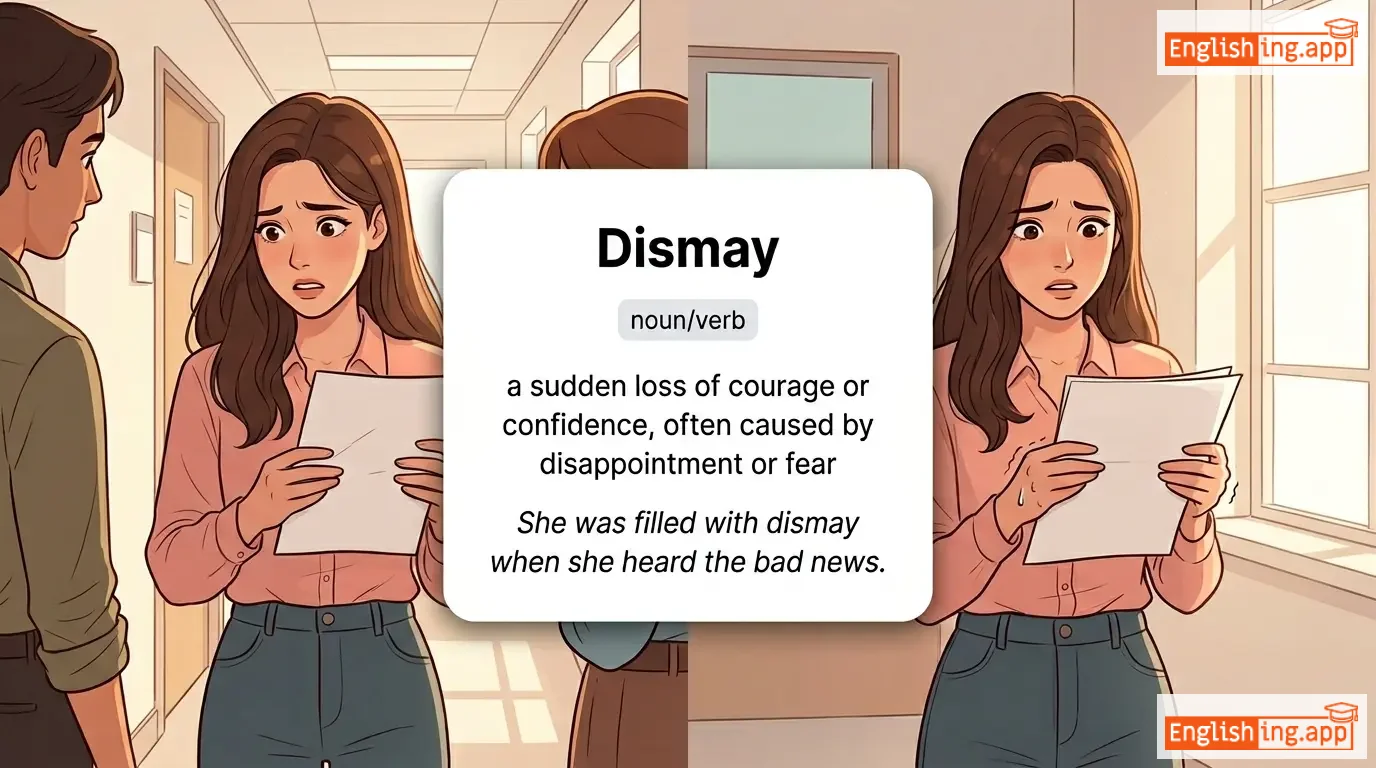
Dismay definition card — visual illustration of the meaning
noun/verb
/dɪsˈmeɪ/
失望や恐れ (shitsubou ya osore)

a sudden loss of courage or confidence, often caused by disappointment or fear

"She was filled with dismay when she heard the bad news."

"彼女は悪い知らせを聞いて、失望でいっぱいになった。" (kanojo wa warui shirase o kiite, shitsubou de ippai ni natta)
verb
/dɪsˈmɛmbər/
切断する (せつだんする)

to cut or tear the limbs from a body; to divide into separate parts

"The king ordered his enemies to be dismembered."
"王は敵を切り刻むよう命じました。" (Ō wa teki o kirikizamu yō meijimashita.)
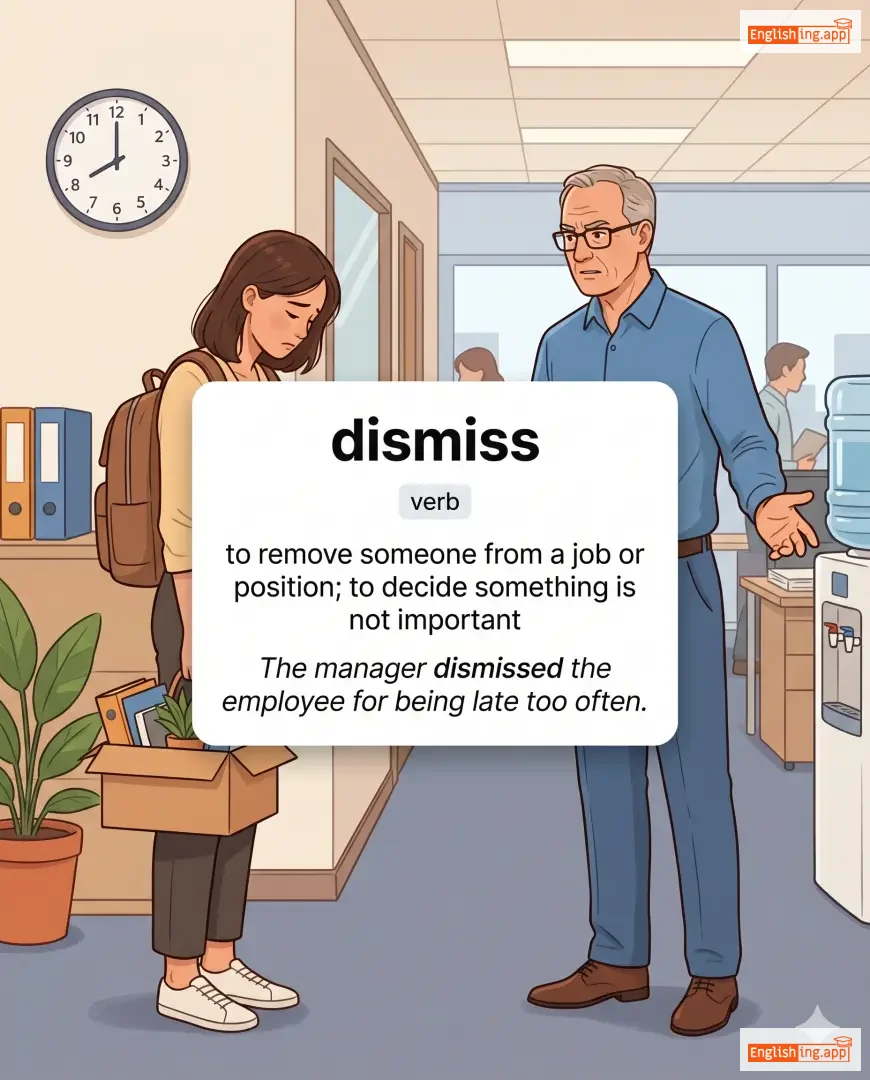
dismiss definition card — visual illustration of the meaning
verb
/dɪsˈmɪs/
解雇する, 却下する (kaiko suru, kyakka suru)

to remove someone from a job or position; to decide something is not important

"The manager dismissed the employee for being late too often."

"マネージャーは遅刻が多すぎるため、従業員を解雇しました。" (Manējā wa chikoku ga ōsugiru tame, jūgyōin o kaiko shimashita.)
noun
/dɪsˈmɪsl̩/
解雇, 拒否 (kaiko, kyohi)

the act of removing someone from their job; the act of treating something as unimportant

"His unfair dismissal led to a lawsuit against the company."

"彼の不当な解雇は、会社に対する訴訟を引き起こしました。" (Kare no futōna kaiko wa, kaisha ni taisuru soshō o hikiokoshimashita.)
verb
/ˌdɪsˈmaʊnt/
降りる (oriru)

to get off or down from something, especially a horse, bicycle, or motorcycle

"The rider dismounted from the horse after a long journey."

"長い旅の後、ライダーは馬から降りた。" (Nagai tabi no ato, raidā wa uma kara orita.)
noun
/ˌdɪsəˈbiːdiəns/
不従順 (fujūjun)

failure or refusal to obey rules, laws, or authority

"The child's disobedience worried his parents."

"子供の不従順は両親を心配させました。" (Kodomo no fujūjun wa ryōshin o shinpai sasemashita.)
adjective
/ˌdɪsəˈbiːdiənt/
不従順な (fujōjun na)

refusing or failing to obey rules or authority

"The teacher scolded the disobedient students."

"教師は不従順な生徒を叱った。" (Kyōshi wa fujōjun na seito o shikatta.)
noun
/dɪsˈɔːrdər/
障害 (shōgai)

A state of confusion or lack of order; also a medical or mental condition.

"The protest ended in disorder when the crowd became violent."

"抗議は群衆が暴力的になったときに障害に終わった。" (Kōgi wa gunshū ga bōryokuteki ni natta toki ni shōgai ni owatta.)
verb
/dɪsˈoʊn/
拒絶する (kyozetsu suru)

to refuse to acknowledge or accept responsibility for someone or something

"He decided to disown his reckless brother."
"彼は無謀な兄を拒絶する決断をしました。" (Kare wa mubou na ani wo kyozetsu suru ketsudan wo shimashita.)
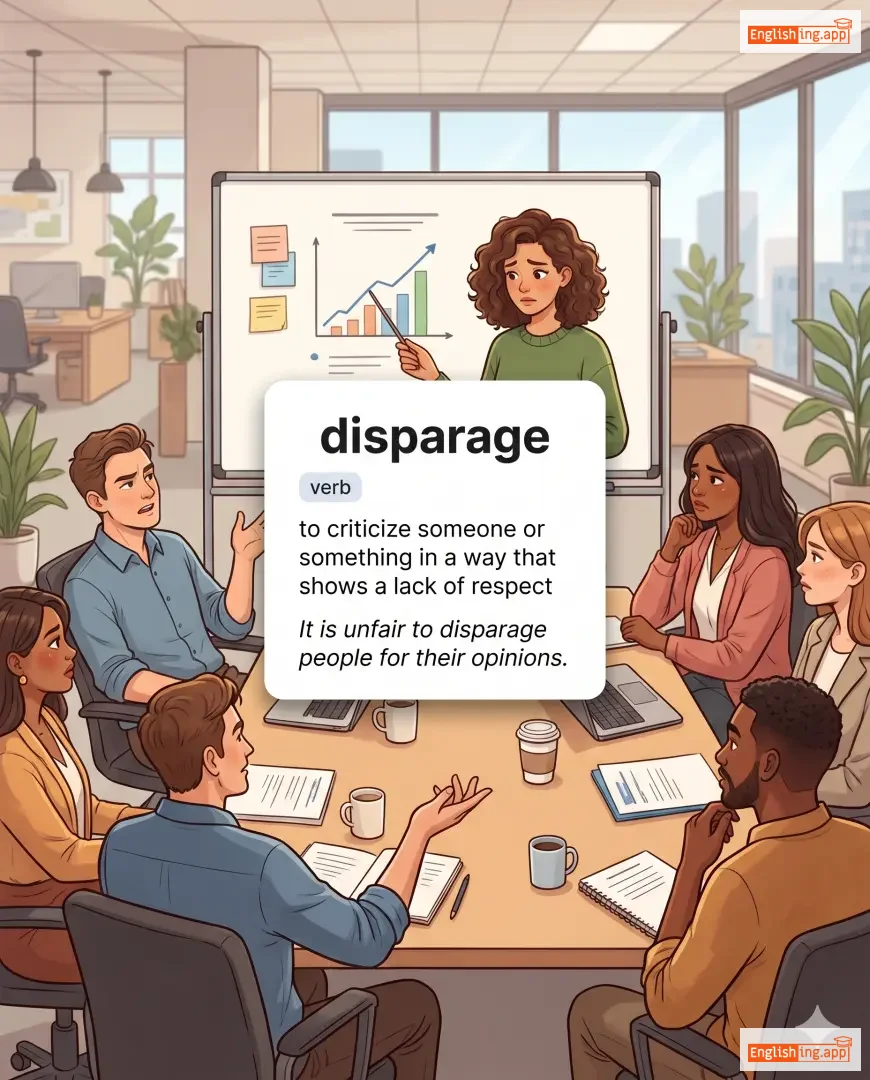
disparage definition card — visual illustration of the meaning
🗣️

disparage

verb
/dɪsˈpærɪdʒ/

to criticize someone or something in a way that shows a lack of respect

"It is unfair to disparage people for their opinions."

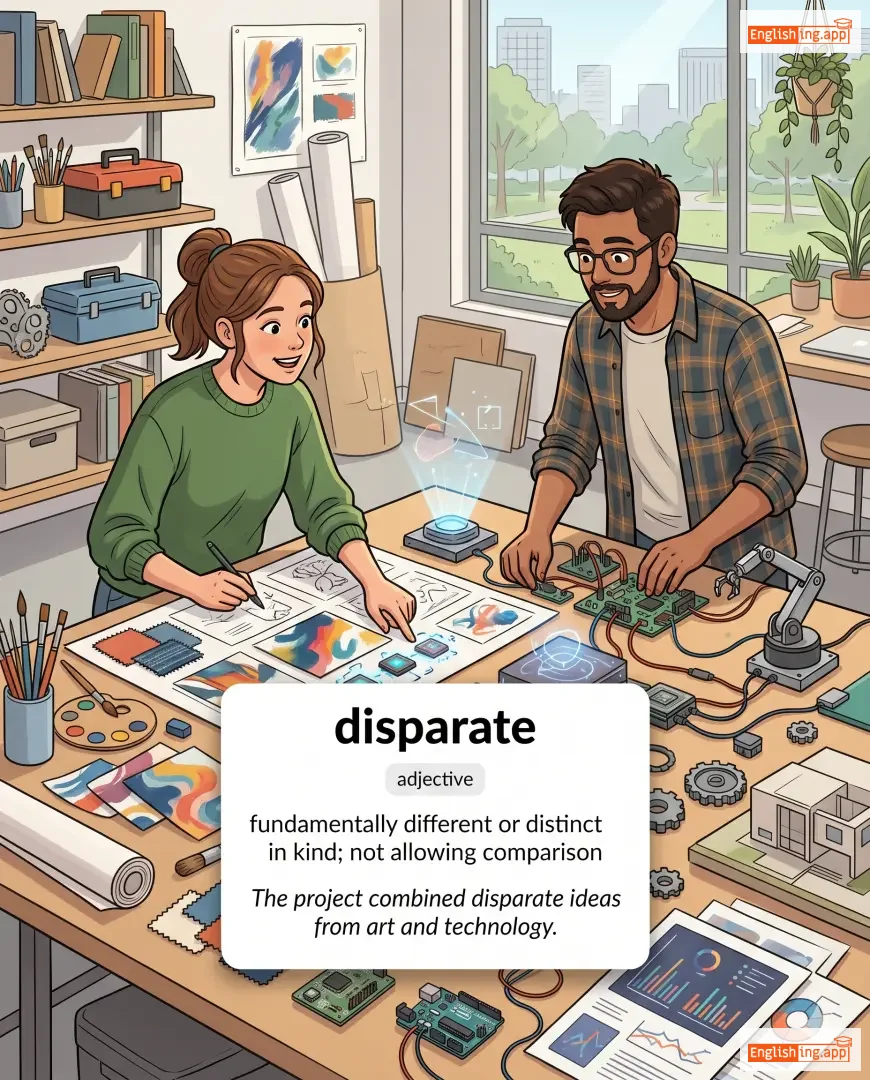
disparate definition card — visual illustration of the meaning
adjective
/ˈdɪspərət/
異なる (kotonaru)

fundamentally different or distinct in kind; not allowing comparison

"The project combined disparate ideas from art and technology."
"そのプロジェクトは、アートと技術の異なるアイデアを組み合わせました。" (Sono purojekuto wa, āto to gijutsu no kotonaru aidea o kumiawase mashita.)
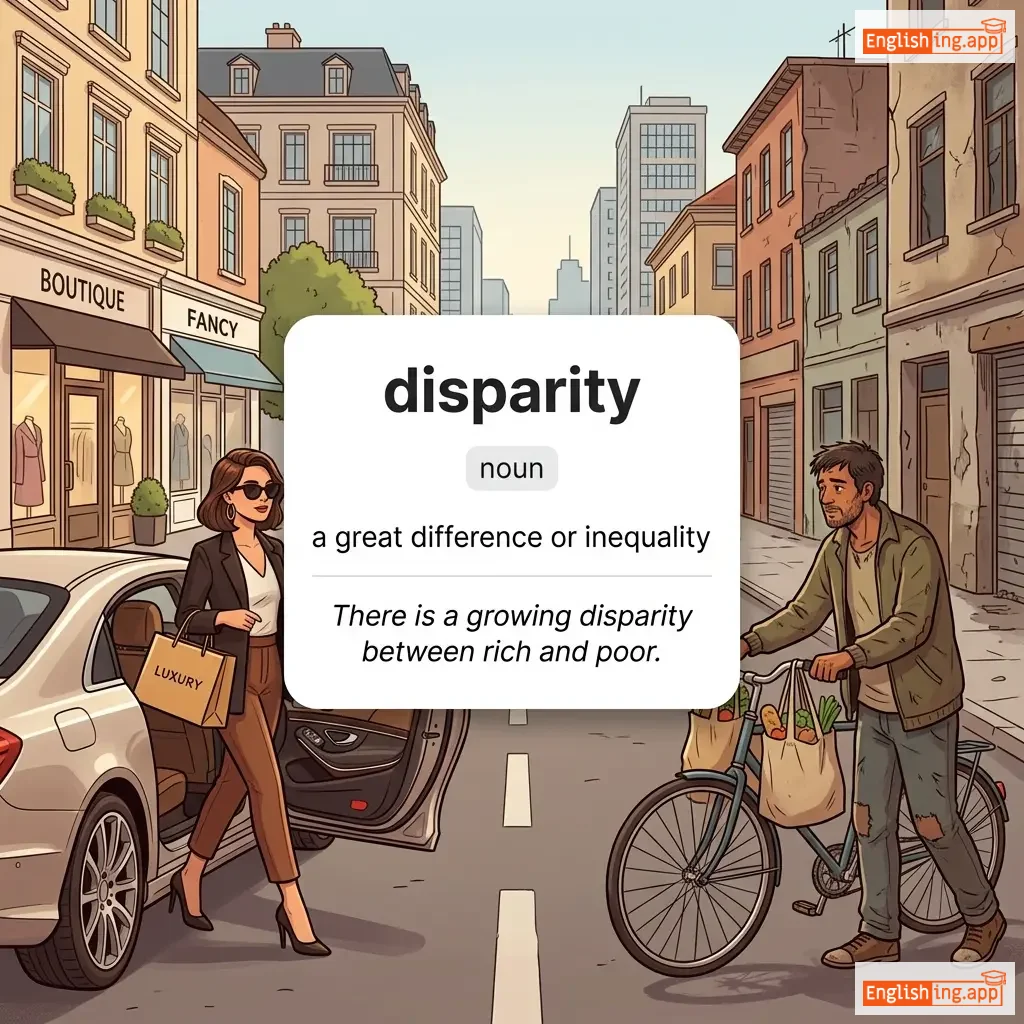
disparity definition card — visual illustration of the meaning
noun
/dɪˈspærəti/
格差 (kakusa)

a great difference or inequality

"There is a growing disparity between rich and poor."

"裕福な人々と貧しい人々の間に増大する格差があります。" (Yūfukuna hitobito to mazushī hitobito no aida ni zōdai suru kakusa ga arimasu.)
adjective
/dɪsˈpæʃənət/
冷静な (reiseina)

not influenced by strong emotion; impartial

"The judge remained dispassionate throughout the trial."

"裁判官は裁判全体を通して冷静さを保ちました。" (Saibankan wa saiban zentai o tōshite reisei-sa o tamochimashita.)
verb
/dɪˈspætʃ/
送る (okuru)

to send off to a destination or for a purpose

"The company dispatched aid to the flood victims."
"その会社は洪水の被害者に援助を発送しました。" (Sono kaisha wa kouzui no higaisha ni enjo o hassou shimashita.)
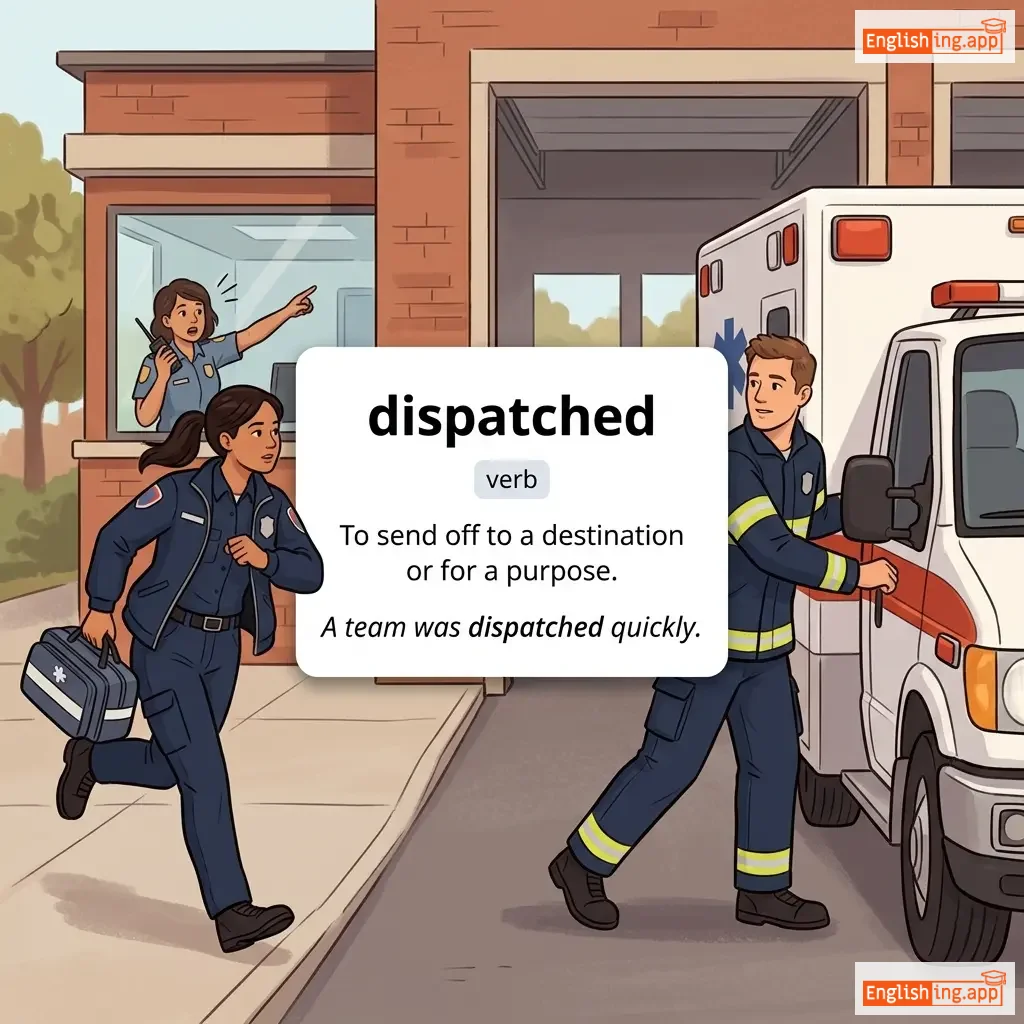
dispatched definition card — visual illustration of the meaning
verb
dɪˈspætʃt
派遣された (haken sareta)

To send off to a destination or for a purpose.

"A team was dispatched quickly."

"チームは迅速に派遣されました。" (Chīmu wa jinsoku ni haken saremashita.)
verb
/dɪˈspɛl/
解消する (kaishou suru)

to make a doubt, feeling, or belief disappear

"The teacher's explanation dispelled the students' confusion."

"先生の説明は学生たちの混乱を解消しました。" (Sensei no setsumei wa gakusei-tachi no konran wo kaishou shimashita.)
noun
/ˌdɪspɛnˈseɪʃən/

An exemption from a rule or usual requirement; a system of order, government, or control.

"The school granted him a special dispensation to skip the exam due to illness."

verb
/dɪˈspɛns/
配布する (haifu suru)

To distribute or provide something, especially in portions.

"The machine dispenses clean drinking water."

"その機械は清潔な飲料水を供給します。" (Sono kikai wa seiketsu na inryō mizu o kyōkyū shimasu.)
verb
/dɪˈspɜːrs/
解散する (kaisansuru)

To scatter or spread widely in different directions.

"The police used tear gas to disperse the crowd."

"警察は群衆を解散させるために催涙ガスを使用しました。" (Keisatsu wa gunshū o kaisan saseru tame ni sairu gasu o shiyō shimashita.)
adjective
/dɪˈspɜːrst/
散らばった (chirabatta)

Scattered or spread across a wide area.

"The dispersed population made it difficult to provide public services."

"散らばった人口は公共サービスの提供を困難にしました。" (Chirabatta jinkou wa koukyou saabisu no teikyou o konnan ni shimashita.)
noun
/dɪˈspɜːrʒən/
分散 (bunsan)

The action or process of distributing things or people over a wide area.

"The dispersion of seeds by the wind helps plants reproduce."

"風による種子の散布は、植物の繁殖を助けます。" (Kaze ni yoru shushi no sanpu wa, shokubutsu no hanshoku wo tasukemasu.)
adjective
/dɪˈspɪrɪtɪd/
落胆した (rakutan shita)

Having lost enthusiasm, hope, or confidence; dejected.

"After losing the match, the team looked dispirited."

"試合に負けた後、チームは落胆して見えた。" (Shiai ni maketa ato, chiimu wa rakutan shite mieta.)
verb
/dɪsˈpleɪs/
追い出す (oidasu)

To force someone or something out of its usual place or position.

"The flood displaced hundreds of families from their homes."

"洪水は何百人もの家族を家から移動させました。" (Kōzui wa nanbyakunin mo no kazoku o ie kara idō saserimashita.)
verb
/dɪˈspleɪ/
表示 (hyouji)

To show or exhibit something to be seen.

"The shop displayed its new products in the window."

"その店は新しい製品をウィンドウにディスプレイしました。" (Sono mise wa atarashī seihin o u~indō ni disupurei shimashita.)
verb
/dɪsˈpɔːrt/
楽しむ (tanoshimu)

To amuse oneself in a lively or playful way.

"The children disported themselves in the garden."

"子供たちは庭で楽しんでいました。" (Kodomotachi wa niwa de tanoshinde imashita.)
noun
/dɪsˈpoʊzl/
廃棄 (haiki)

the action or process of getting rid of something

"The disposal of waste is crucial for maintaining a clean environment."

"廃棄物の処理は清潔な環境を維持するために重要です。" (Haikibutsu no shori wa seiketsu na kankyou wo iji suru tame ni juuyou desu.)
verb
/dɪˈspoʊz/
処分する (shobun suru)

To get rid of something, or to arrange or incline towards something.

"He disposed of the old furniture responsibly."

"彼は古い家具を責任を持って処分しました。" (Kare wa furui kagu o sekinin o motte shobun shimashita.)
noun
/ˌdɪspəˈzɪʃən/

A person's usual attitude or temperament; arrangement or tendency.

"She has a cheerful disposition despite the difficulties."

verb
/ˌdɪspəˈzɛs/
没収する (boshuu suru)

to deprive someone of land, property, or other possessions

"The new law threatened to dispossess many farmers of their land."

"新しい法律は多くの農民から土地を奪うと脅迫していました。" (Atarashii houritsu wa ooku no noumin kara tochi wo ubau to kyouhaku shite imashita.)
noun
/ˌdɪsprəˈpɔːrʃən/
不均衡 (fukinkou)

a lack of balance or symmetry; an inequality

"There is a clear disproportion between rich and poor in many societies."

"多くの社会において、富裕層と貧困層の間に明確な不均衡があります。" (Ooku no shakai ni oite, fuyuusou to hinkonsou no aida ni meikaku na fukinkou ga arimasu.)
verb
/dɪsˈpruːv/
反証する (hanshō suru)

to show that something is false or wrong

"The scientist worked hard to disprove the old theory."

"科学者は古い理論を反証するために一生懸命働いた。" (Kagakusha wa furui riron o hanshō suru tame ni isshōkenmei hataraita.)
adjective
/dɪˈspjuːtəbl/
議論の余地がある; 疑わしい (gironnoyochi ga aru; utagawashii)

open to debate or argument; questionable

"The facts in the case are disputable and need further investigation."

"その事件の事実は議論の余地があり、さらなる調査が必要です。" (Sono jiken no jijitsu wa gironnoyochi ga ari, saranaru chousa ga hitsuyou desu.)
noun
/ˌdɪspjuːˈteɪʃən/
議論 (giron)

a formal debate or argument

"The disputation between the two scholars lasted for hours."

"二人の学者の間での議論は数時間続いた。" (Futari no gakka no aida de no giron wa suū jikan tsuzuita.)
adjective
/ˌdɪspjuːˈteɪʃəs/
議論好きな (giron suki na)

fond of or given to argument and debate

"His disputatious nature often led to heated conversations."

"彼の議論好きな性格は、しばしば熱い議論を引き起こす。" (Kare no giron suki na seikaku wa, shibashiba atsui giron o hikiokosu.)
noun/verb
/dɪˈspjuːt/
争い, 論争 (arasoi, ronsou)

a disagreement or argument about something important

"The two countries are in dispute over the border issue."

"二国間で国境問題について争いが続いています。" (Nikokukan de kokkyou mondai ni tsuite arasoi ga tsuzuiteimasu.)
verb
/dɪsˈkwɑːlɪfaɪ/
失格する (shikkaku suru)

to officially prevent someone from participating or being eligible

"The referee decided to disqualify the player for cheating."

"審判は不正行為のために選手を失格にすることを決定しました。" (Shinpan wa fuseikōi no tame ni senshu o shikkaku ni suru koto o kettei shimashita.)
noun/verb
/dɪsˈkwaɪət/

A feeling of worry or unease; to make someone feel anxious or uneasy.

"The strange silence filled the room with disquiet."

adjective
/dɪsˈkwaɪətɪŋ/
不安を引き起こす (fuan wo hikiokosu)

Causing worry, unease, or anxiety.

"The news report was deeply disquieting to the public."

"そのニュース報告は公衆にとって非常に不安を引き起こすものでした。" (Sono nyuusu houkoku wa koushuu ni totte hijou ni fuan wo hikiokosu mono deshita.)
noun
/dɪsˈkwaɪɪtjuːd/

A state of uneasiness, anxiety, or restlessness.

"His constant pacing showed his inner disquietude."

noun
/ˌdɪskwɪˈzɪʃən/
論文 (ronbun)

A long or elaborate discussion or written essay on a particular subject.

"The professor gave a lengthy disquisition on ancient philosophy."

"教授は古代哲学についての長い論文を発表しました。" (Kyōju wa kodai tetsugaku ni tsuite no nagai ronbun o happyō shimashita.)
verb/noun
/ˌdɪsrɪˈɡɑːrd/
軽蔑 (keibetsu)

To ignore something; lack of consideration or respect for something.

"He disregarded the warning signs and kept driving."

"彼は警告のサインを無視して運転し続けました。" (Kare wa keikoku no sain o mushi shite unten shitsuzukemashita.)
adjective
/dɪsˈrɛpjətəbl̩/
不名誉な (fumēyona)

having a bad reputation; not considered respectable or trustworthy

"The journalist avoided staying in the disreputable part of town."

"ジャーナリストは町の不名誉な地区に泊まるのを避けました。" (Jānarisuto wa machi no fumēyona chiku ni tomaru no o sakemashita.)
noun
/ˌdɪsrɪˈpjuːt/
悪名 (akumei)

the state of being held in low esteem or having a bad reputation

"The scandal brought the politician into disrepute."

"そのスキャンダルは政治家を悪名に追いやった。" (Sono sukyandaru wa seijika o akumei ni oiyatta.)
verb
/dɪsˈroʊb/
服を脱ぐ (fuku wo nugu)

to remove one's clothes

"The monk disrobed before entering the river."
"僧侶は川に入る前に衣服を脱いだ。" (Sōryo wa kawa ni hairu mae ni ifuku wo nuida.)
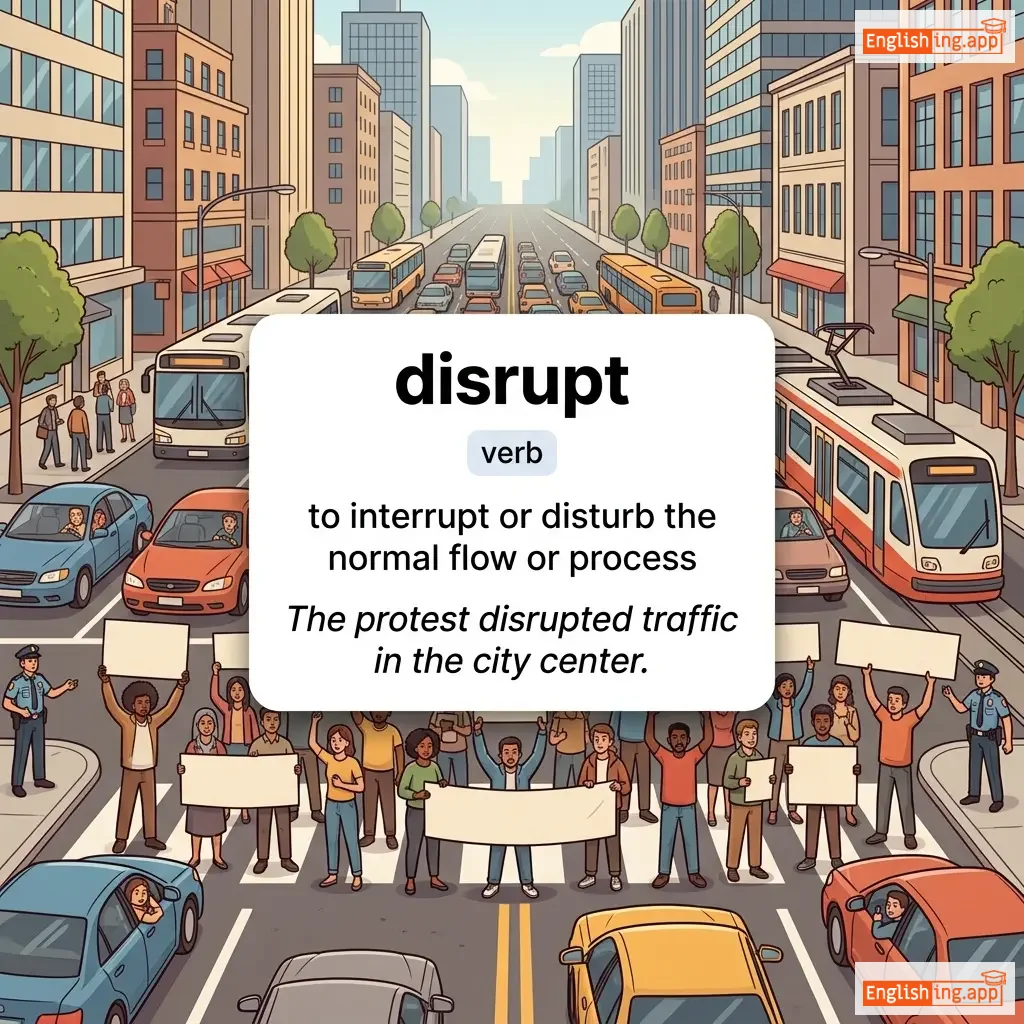
disrupt definition card — visual illustration of the meaning
verb
/dɪsˈrʌpt/
混乱させる (konran saseru)

to interrupt or disturb the normal flow or process

"The protest disrupted traffic in the city center."
"抗議活動は市内中心部の交通を混乱させました。" (Kōgi katsudō wa shinai chūshinbu no kōtsū o konran sasemashita.)
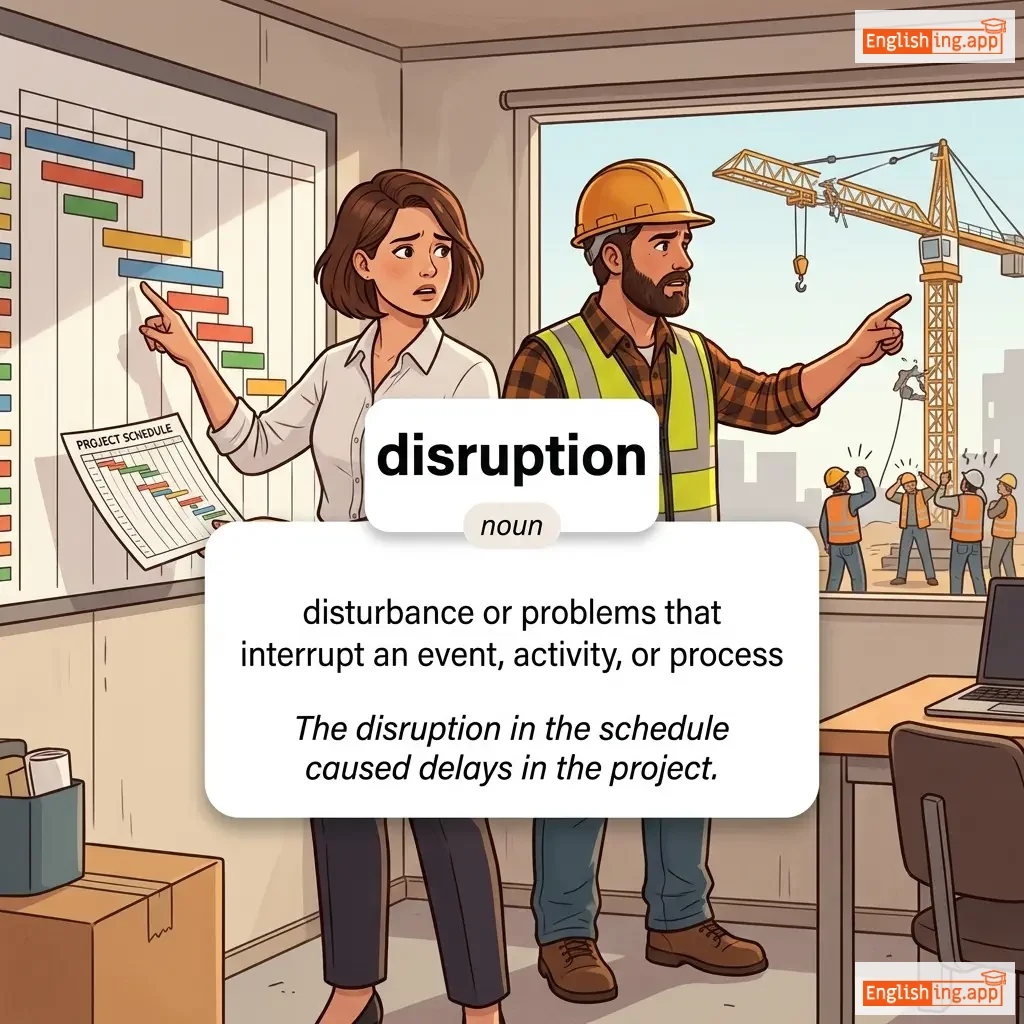
disruption definition card — visual illustration of the meaning
noun
/dɪsˈrʌpʃən/
混乱 (konran)

disturbance or problems that interrupt an event, activity, or process

"The disruption in the schedule caused delays in the project."

"スケジュールの混乱により、プロジェクトに遅れが生じました。" (Sukejūru no konran ni yori, purojekuto ni okure ga shōjimashita.)
disruptive definition card — visual illustration of the meaning
adjective
/dɪsˈrʌp.tɪv/
破壊的 (hakai-teki)

Something that brings major changes to existing markets or industries

"E-commerce has been disruptive to traditional retail businesses."

"電子商取引は従来の小売業に破壊的な影響を与えました。" (Denshi shōtorihiki wa jūrai no kōri gyō ni hakai-teki na eikyō o ataemashita.)
verb
/dɪsˈsætɪsfaɪ/
不満にさせる (fuman ni saseru)

to fail to please or meet expectations; to make someone unhappy

"The poor service dissatisfies many customers."

"悪いサービスは多くの顧客を不満にさせます。" (Warui saabisu wa ooku no kokyaku o fuman ni sasemasu.)