語彙集

英単語辞書 | 単語の意味、定義、例文

noun
/ˈdɛvɪlri/
悪戯 (itazura)

Wicked or cruel behavior; mischievous actions.

"The children were full of devilry on Halloween night."

"ハロウィンの夜、子供たちは悪戯でいっぱいだった。" (Harouin no yoru, kodomotachi wa itazura de ippai datta.)
noun
/ˈdɛvɪltrɪ/
悪魔的な行為 (akumateki na koui)

Cruel or malicious behavior; mischief with an evil aspect.

"The villain’s deviltry terrified the townsfolk."

"悪党の悪魔的な行為は町の人々を恐れさせました。" (Akutou no akumateki na koui wa machi no hitobito wo osore saremashita.)
adjective
/ˈdiːviəs/
狡猾な (kōkatsu na)

Skillful at using underhanded tactics to achieve goals; not straightforward.

"He used a devious plan to gain control of the company."

"彼は会社の支配権を握るために、狡猾な計画を使いました。" (Kare wa kaisha no shihai ken o nigiru tame ni, kōkatsu na keikaku o tsukaimashita.)
verb
/dɪˈvaɪz/
考案する (kousuru)

To plan or invent something carefully.

"The engineers devised a new method to reduce costs."

"エンジニアたちはコスト削減のために新しい方法を考案した。" (Enjinia-tachi wa kosuto sakugen no tame ni atarashī hōhō o kōan shita.)
adjective
/dɪˈvɔɪd/
空虚 (kūkyō)

Completely lacking or without something.

"His speech was devoid of any real emotion."

"彼のスピーチは実際の感情が空虚だった。" (Kare no supīchi wa jissai no kanjō ga kūkyō datta.)
verb
/dɪˈvɒlv/
委譲する (いじょうする)

To pass power, responsibility, or duties to another person or group.

"The responsibility will devolve on the new manager."

"責任は新しいマネージャーに委譲されます。" (Sekinin wa atarashī manējā ni ijō saremasu.)
verb
/dɪˈvoʊt/
捧げる (sasageru)

to give time, effort, or resources to something

"She devotes much of her time to helping the poor."

"彼女は貧しい人々を助けるために多くの時間を捧げています。" (Kanojo wa mazushī hitobito o tasukeru tame ni ōku no jikan o sasageteimasu.)
adjective
/dɪˈvoʊtɪd/
献身的 (kenshin-teki)

Very loving, loyal, or dedicated.

"She is a devoted mother who always puts her children first."

"彼女は常に子供たちを最優先にする献身的な母親です。" (Kanojo wa tsuneni kodomotachi o sai yūsen ni suru kenshin-teki na hahaoya desu.)
noun
/ˌdɛvəˈtiː/
献身者 (kenshinsha)

A person who is very enthusiastic about or strongly dedicated to something or someone.

"He is a great devotee of classical music."

"彼はクラシック音楽の大きな献身者です。" (kare wa kurashikku ongaku no ookina kenshinsha desu)
noun
/dɪˈvoʊ.ʃən/
献身; 忠誠; 熱意 (kenshin, chuusei, netsui)

love, loyalty, or enthusiasm for a person, activity, or cause

"Her devotion to helping others made her a beloved figure in the community."

"他人を助けることへの献身が、彼女をコミュニティで愛される存在にしました。" (Tanin wo tasukeru koto e no kenshin ga, kanojo wo komyuniti de aisareru sonzai ni shimashita.)
adjective
/dɪˈvaʊt/
献身的 (kenshin-teki)

Deeply religious or sincere.

"He is a devout believer who prays every day."

"彼は毎日祈る献身的な信者です。" (Kare wa mainichi inoru kenshin-teki na shinja desu.)
noun
/djuː/
(tsuyu)

Tiny drops of water that form on cool surfaces at night from condensation.

"The grass was wet with morning dew."

"草は朝の露で濡れていた。" (Kusa wa asa no tsuyu de nurete ita.)
dexterity definition card — visual illustration of the meaning
noun
/dɛkˈstɛrɪti/
器用さ (kiyousa)

Skill in using the hands or body; mental quickness.

"She showed great dexterity in playing the piano."
"彼女はピアノを弾く際に優れた器用さを示しました。" (Kanojo wa piano o hiku sai ni sugureta kiyousa o shimeshimashita.)
dexterous definition card — visual illustration of the meaning
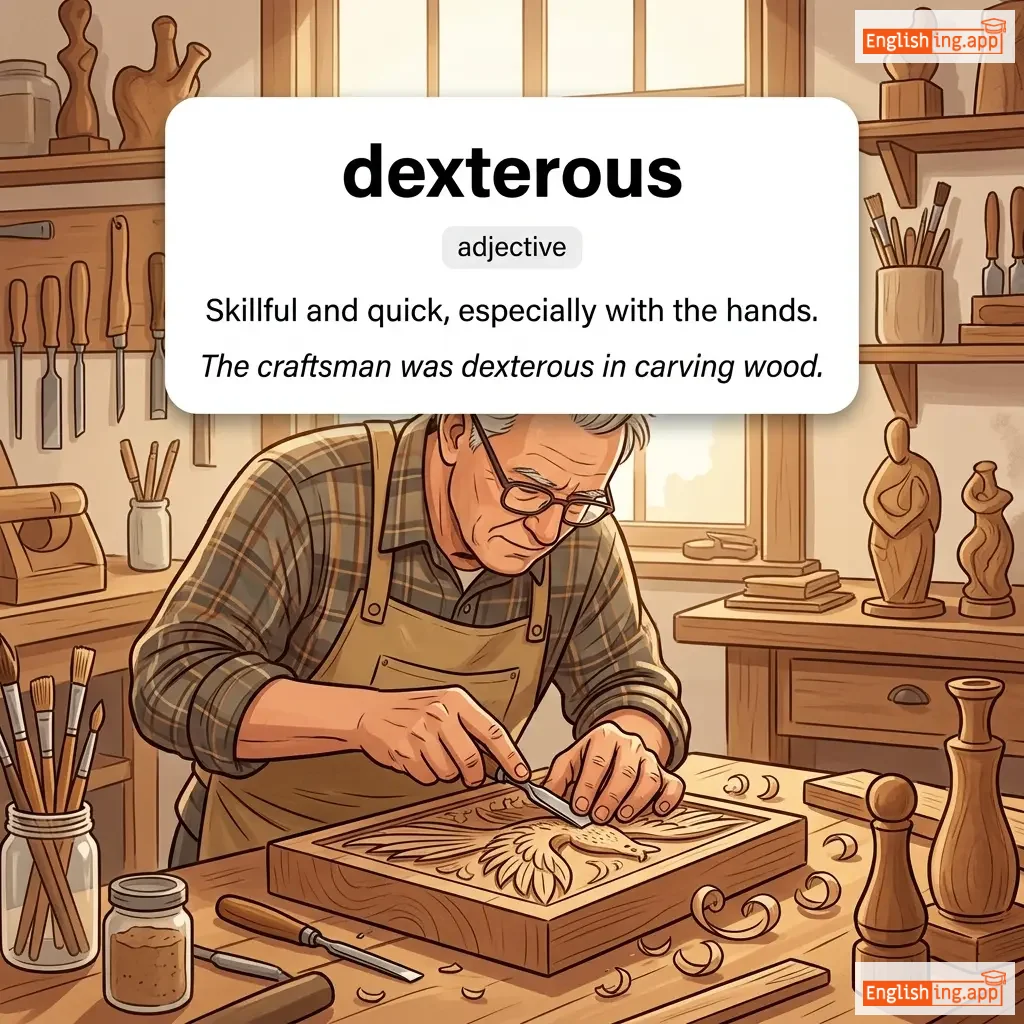
adjective
/ˈdɛkstrəs/
器用 (kiyou)

Skillful and quick, especially with the hands.

"The craftsman was dexterous in carving wood."

"職人は木を彫るのが器用だった。" (Shokunin wa ki o horu no ga kiyou datta.)
noun
/ˈduːti/
ドゥティ (dhuti)

a traditional Indian garment for men consisting of a piece of unstitched cloth worn around the waist and legs

"The elderly man wore a white dhuti during the religious ceremony."

"年配の男性は宗教的な儀式で白いドゥティを着ていた。" (Nempai no dansei wa shūkyō-teki na gishiki de shiroi duti o kite ita.)
noun
/ˌdaɪəˈbiːtiːz/
幸福 (kōfuku)

a medical condition in which the body cannot properly control the level of sugar in the blood

"He was diagnosed with type 2 diabetes last year."

"彼女は賞を受け取ったとき、幸せを隠せませんでした。" (Kanojo wa shō o uketotta toki, kōfuku o kakusemasen deshita.)
adjective
/ˌdaɪəˈbɒlɪk/
悪魔的 (akumateki)

Extremely evil or cruel; characteristic of the devil.

"The villain devised a diabolic scheme."

"悪役は悪魔的な計画を立てた。" (Akuyaku wa akumateki na keikaku o tateta.)
adjective
/ˌdaɪəˈbɒlɪkəl/
悪魔的 (akumateki)

Wicked, cruel, or outrageously bad; resembling the devil.

"The dictator’s diabolical rule brought misery to the nation."

"独裁者の悪魔的な支配は国に苦しみをもたらした。" (Dokusaisha no akumateki na shihai wa kuni ni kurushimi o motarashita.)
adjective
/ˌdaɪəˈkrɪtɪkəl/
ダイアクリティカル (diakuritikar)

Relating to a mark added to a letter to indicate a different pronunciation or stress.

"The word résumé has diacritical marks that change its meaning from resume."

"‘レジュメ’という言葉には、意味を変えるダイアクリティカルマークがあります。" ('Rejume' to iu kotoba ni wa, imi o kaeru daiakuritikaru maaku ga arimasu.)
noun
/ˈdaɪəˌdɛm/
王冠 (ōkan)

A crown or headband worn as a symbol of royalty or authority.

"The queen wore a glittering diadem at the coronation."

"女王は戴冠式で輝く王冠を身に着けていました。" (Joō wa taikan-shiki de kagayaku ōkan o mi ni tsukete imashita.)
verb
/ˌdaɪəɡˈnoʊz/
診断する (shindan suru)

To identify a disease, condition, or problem by examining symptoms.

"The doctor diagnosed him with pneumonia."

"医者は彼に肺炎と診断しました。" (Isha wa kare ni haien to shindan shimashita.)
noun
/ˌdaɪəɡˈnoʊsɪs/

The identification of a disease, condition, or problem through examination of symptoms.

"The diagnosis confirmed that she had diabetes."

noun
/ˈdaɪəɡræm/
図表 (zuhyo)

a simplified drawing that shows the structure, relationship, or process of something

"The teacher explained the system using a clear diagram."

"先生は分かりやすい図表を使ってシステムを説明した。" (Sensei wa wakariyasui zuhyo o tsukatte shisutemu o setsumei shita)
noun
/ˈdaɪəˌlɛkt/
方言 (hougen)

A particular form of a language spoken in a specific region or by a specific group.

"He speaks a dialect of Bengali that is common in rural areas."

"彼は田舎で一般的なベンガル語の方言を話します。" (Kare wa inaka de ippantekina bengarugo no hōgen o hanashimasu.)
noun
/ˌdaɪəˈlɛktɪk/

A method of argument or reasoning by dialogue, especially as a means of investigating truth.

"The philosopher used dialectic to challenge his students' assumptions."

adjective
/ˌdaɪəˈlɛktɪkəl/
弁証法的 (benshōhōteki)

Relating to the logical discussion of ideas and opinions.

"She took a dialectical approach to solve the complex issue."

"彼女は複雑な問題を解決するために弁証法的なアプローチを取りました。" (Kanojo wa fukuzatsu na mondai o kaiketsu suru tame ni benshōhōteki na apurōchi o torimashita.)
noun
/ˌdaɪələˈtɪʃən/
弁証法の専門家 (benshōhō no senmonka)

A person skilled in dialectic or logical argument.

"Socrates is often considered the greatest dialectician in history."

"ソクラテスはしばしば歴史上最も偉大な弁証法の専門家と見なされます。" (Sokuratesu wa shibashiba rekishijō mottomo idaina benshōhō no senmonka to minasarerumasu.)
noun
/ˈdaɪəlɔːɡ/
対話 (taiwa)

A conversation between two or more people, or a discussion aimed at reaching understanding.

"The two countries engaged in a dialogue to resolve their differences."

"二国は自国の違いを解決するために対話を行いました。" (Nikoku wa jikoku no chigai o kaiketsu suru tame ni taiwa o okonai mashita.)
noun
/ˈdaɪəmənd/
ダイヤモンド (daiyamondo)

a precious hard stone, usually clear and colorless, valued as a gemstone

"She wore a beautiful diamond necklace at the party."
"彼女はパーティーで美しいダイヤモンドのネックレスを着けていた。" (Kanojo wa pāti de utsukushī daiyamondo no nekkuresu o tsukete ita.)
diaphanous definition card — visual illustration of the meaning
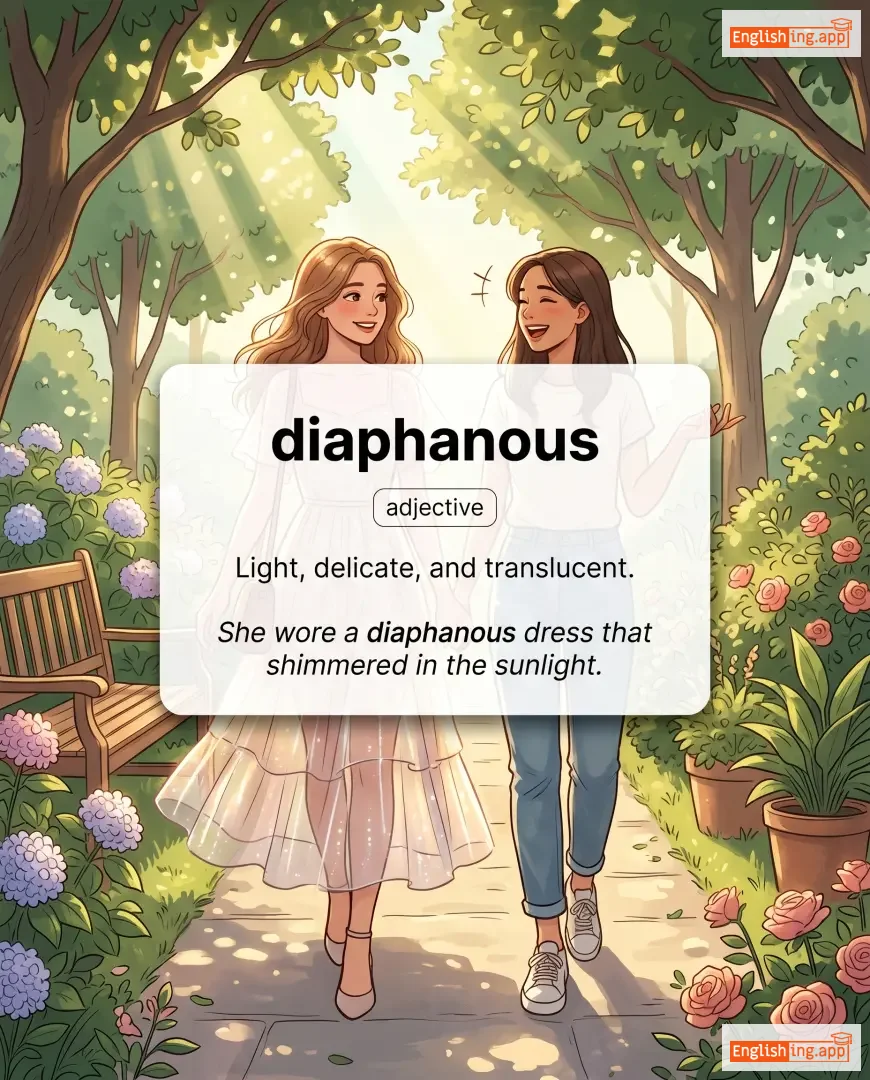
adjective
/daɪˈæfənəs/
透けている (suketeiru)

Light, delicate, and translucent.

"She wore a diaphanous dress that shimmered in the sunlight."

"彼女は太陽の光の中で輝く透けているドレスを着ていた。" (Kanojo wa taiyou no hikari no naka de kagayaku suketeiru doresu o kiteita.)
noun
/ˈdaɪəri/
日記 (nikki)

a book in which one keeps a daily record of events and experiences

"She wrote about her day in her diary before going to bed."

"彼女は寝る前に日記にその日の出来事を書きました。" (Kanojo wa neru mae ni nikki ni sono hi no dekigoto o kakimashita.)
adjective
/ˌdaɪəˈtɒmɪk/
二原子 (ni gen-shi)

Consisting of two atoms.

"Oxygen is a diatomic molecule."
"酸素は二原子分子です。" (Sanso wa ni gen-shi bunshi desu.)
diatribe definition card — visual illustration of the meaning
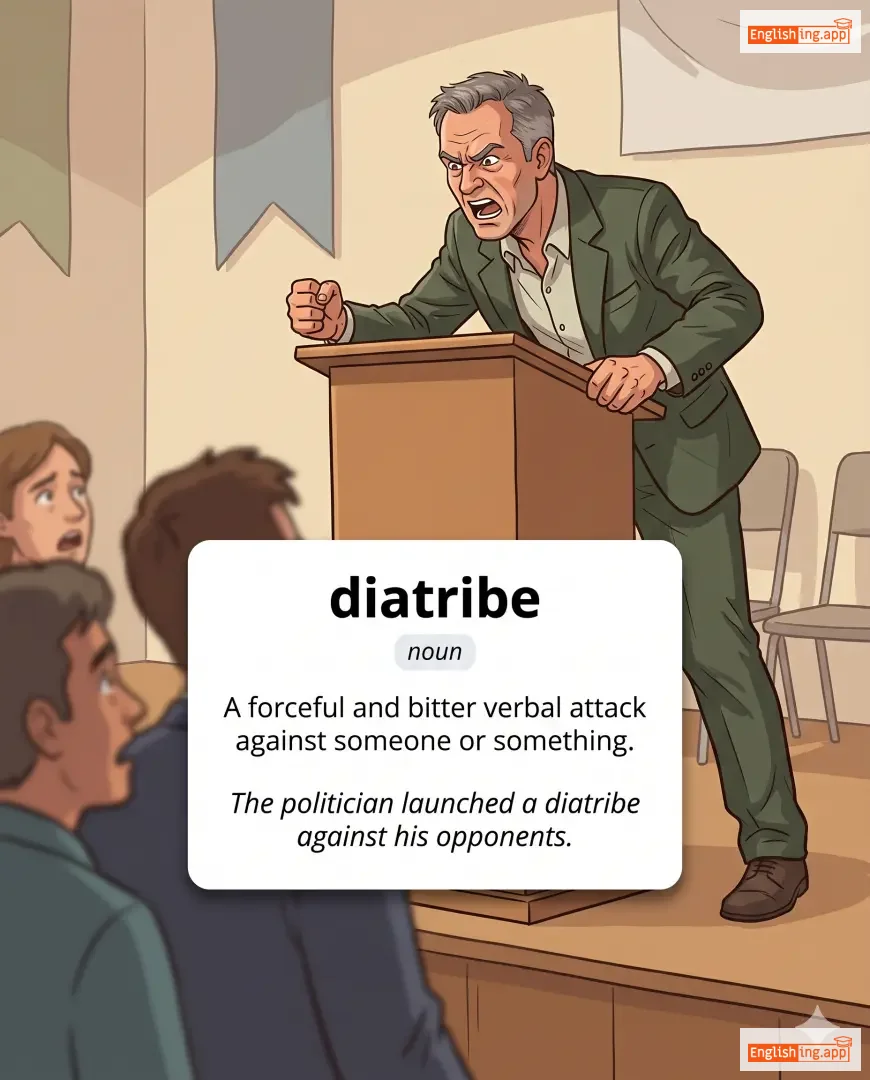
noun
/ˈdaɪətraɪb/
激しい非難 (hageshī hinan)

A forceful and bitter verbal attack against someone or something.

"The politician launched a diatribe against his opponents."

"政治家は自分の対戦相手に対して激しい非難を始めた。" (Seijika wa jibun no taisen aite ni taishite hageshī hinan o hajimeta.)
adjective
/ˈdaɪ.si/
危険な (kiken na)

Risky or unpredictable; potentially dangerous.

"Investing in that company looks pretty dicey right now."
"その会社への投資は今、かなり危険なように見える。" (Sono kaisha e no tōshi wa ima, kanari kiken na yō ni mieru.)
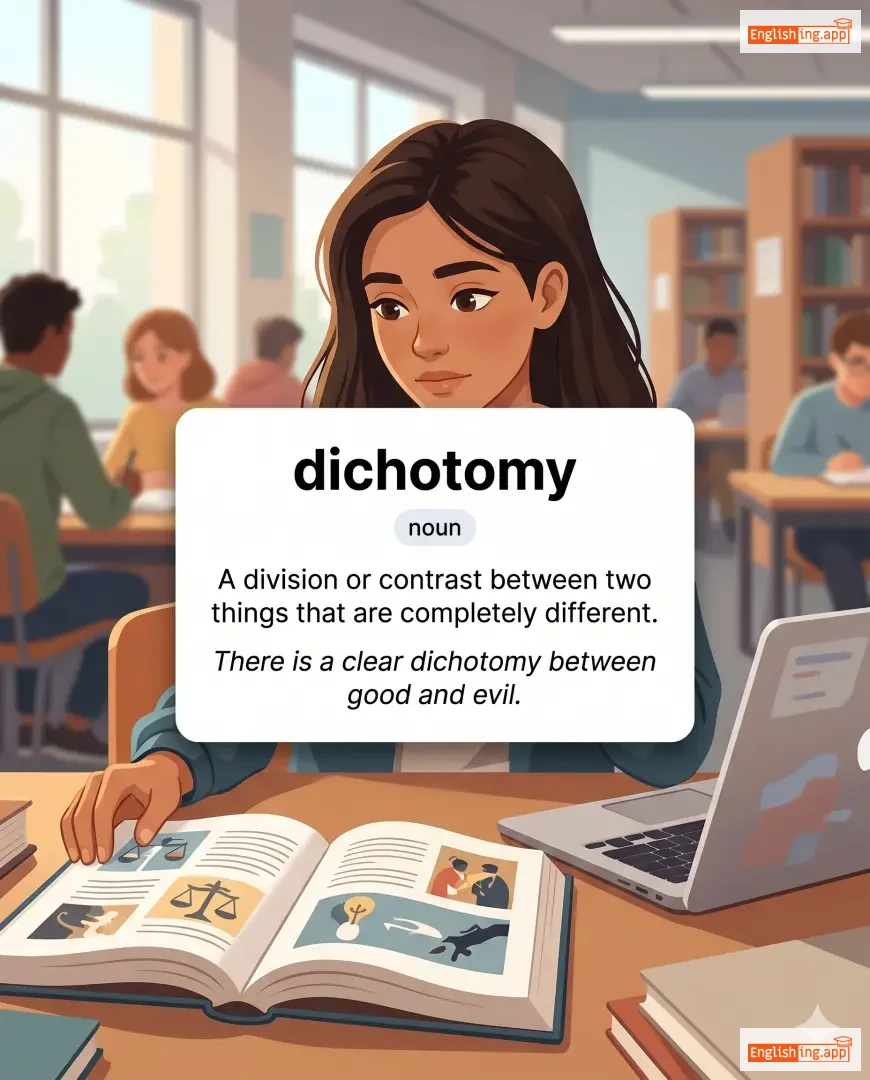
dichotomy definition card — visual illustration of the meaning
noun
/daɪˈkɒtəmi/
二項対立 (nikou tairitsu)

A division or contrast between two things that are completely different.

"There is a clear dichotomy between good and evil."
"善と悪の間には明確な二項対立があります。" (Zen to aku no aida ni wa meikaku na nikou tairitsu ga arimasu.)
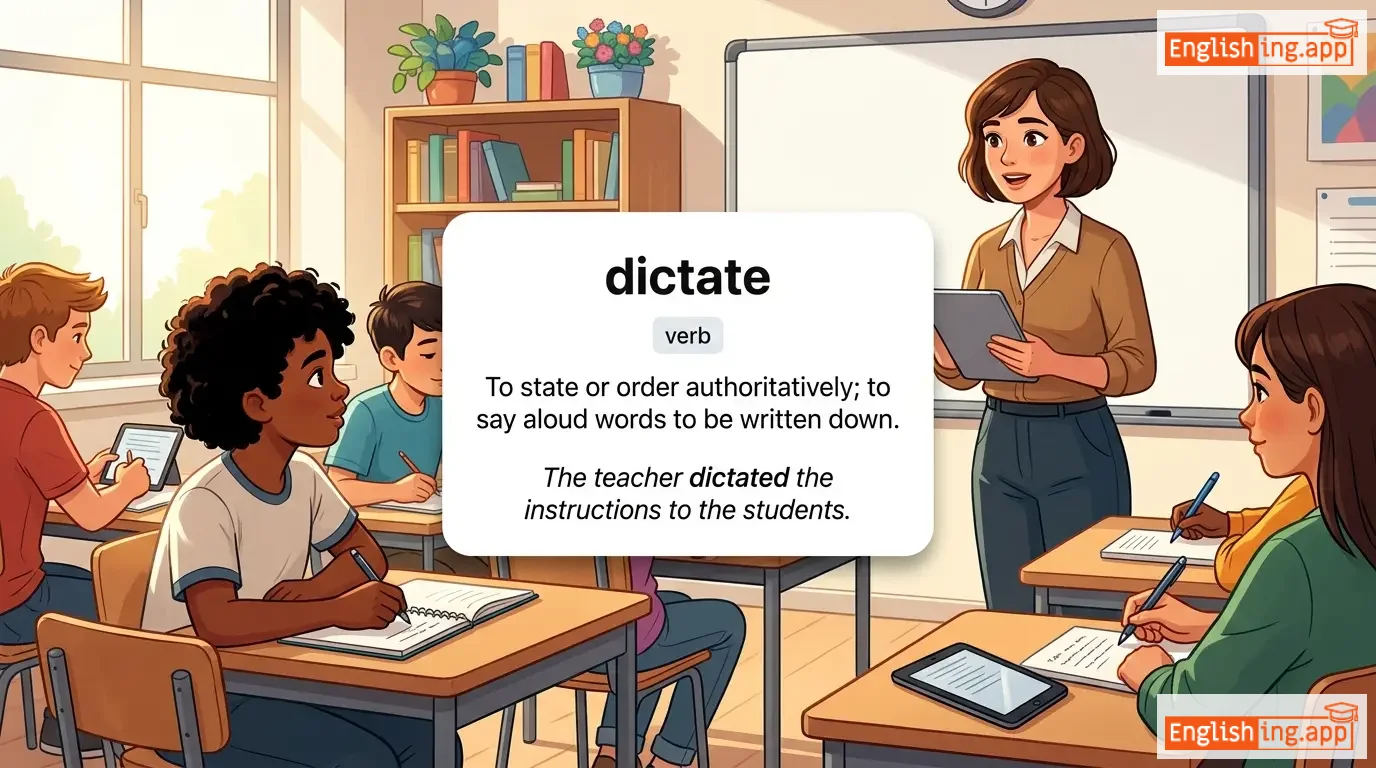
dictate definition card — visual illustration of the meaning
verb
/dɪkˈteɪt/
口述する (kōjutsu suru)

To state or order authoritatively; to say aloud words to be written down.

"The teacher dictated the instructions to the students."

"先生は学生に指示を口述しました。" (Sensei wa gakusei ni shiji o kōjutsu shimashita.)
noun
/dɪkˈteɪtə/
独裁者 (dokusaisya)

a ruler with total power over a country, typically one who has obtained control by force

"The dictator ruled the country with an iron fist."

"独裁者は鉄の拳で国を支配した。" (Dokusaisya wa tetsu no ken de kuni o shihai shita.)
adjective
/ˌdɪktəˈtɔːriəl/
独裁的 (dokusai teki)

Having or showing a tendency to tell people what to do in an autocratic way.

"His dictatorial style made him unpopular among colleagues."
"彼の独裁的なスタイルは、同僚たちの間で不人気だった。" (Kare no dokusai-teki na sutairu wa, dōryō-tachi no aida de funinki datta.)
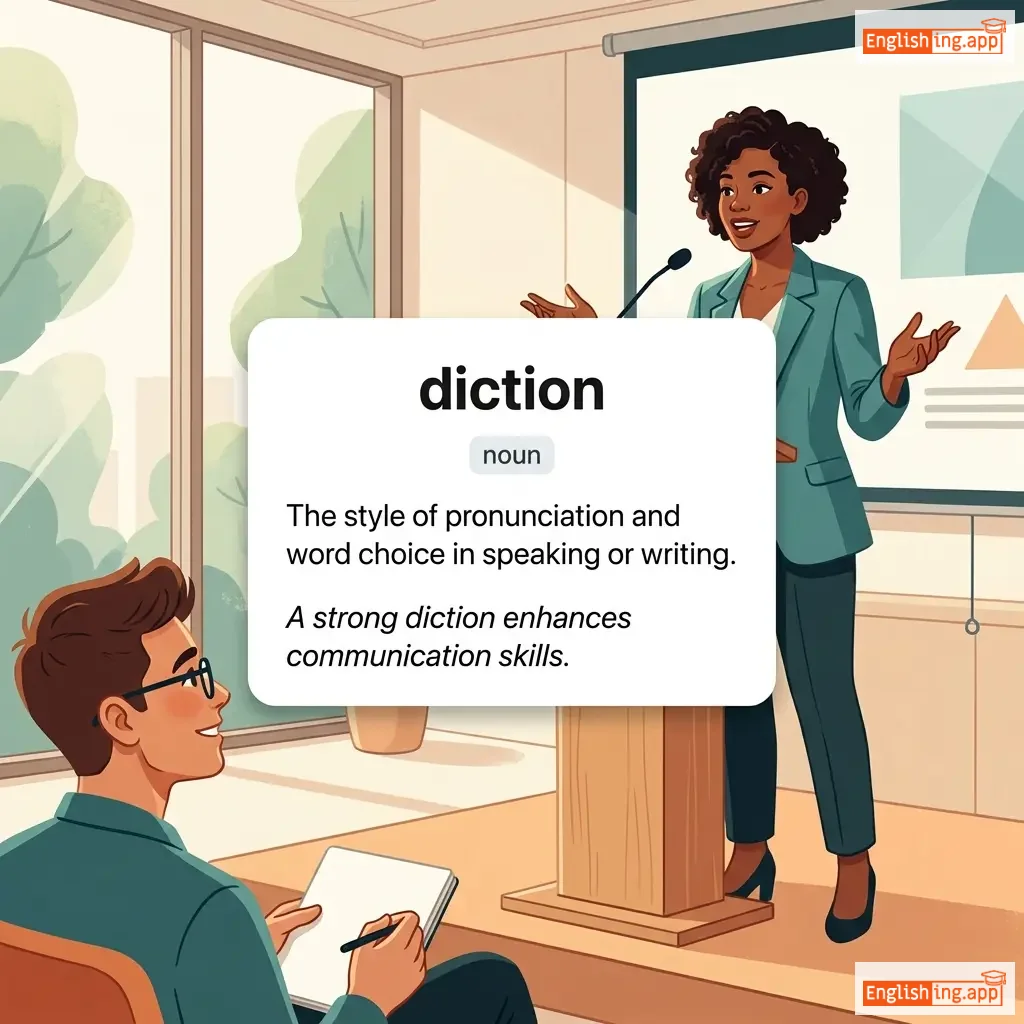
diction definition card — visual illustration of the meaning
noun
ˈdɪk.ʃən
発音と単語の選択 (hatsuon to tango no sentaku)

The style of pronunciation and word choice in speaking or writing.

"A strong diction enhances communication skills."

"強いディクションはコミュニケーション能力を向上させます。" (Tsuyoi dikushon wa komyunikeeshon nouryoku o koujou sasemasu.)
noun
/ˈdɪkʃəˌnɛri/
辞書 (jisho)

A reference book or electronic resource containing words, usually arranged alphabetically, with information about their meanings, pronunciations, etymologies, and usage.

"I looked up the word in the dictionary to understand its meaning."

"意味を理解するために辞書でその単語を調べました。" (Imi o rikai suru tame ni jisho de sono tango o shirabemashita.)
noun
/ˈdɪktəm/
格言 (kakugen)

A formal pronouncement, authoritative statement, or maxim.

"The judge’s dictum clarified the principle of equality before the law."

"裁判官の格言は法の前での平等の原則を明確にしました。" (Saibankan no kakugen wa hō no mae de no byōdō no gensoku o meikaku ni shimashita.)
adjective
/daɪˈdæktɪk/
教育的な (kyoikuteki na)

Intended to teach, often with a moral lesson.

"The novel is not just entertaining but also didactic in nature."

"その小説はただの娯楽ではなく、教育的な性質も持っている。" (Sono shōsetsu wa tada no goraku de wa naku, kyoikuteki na seishitsu mo motte iru.)
die definition card — visual illustration of the meaning
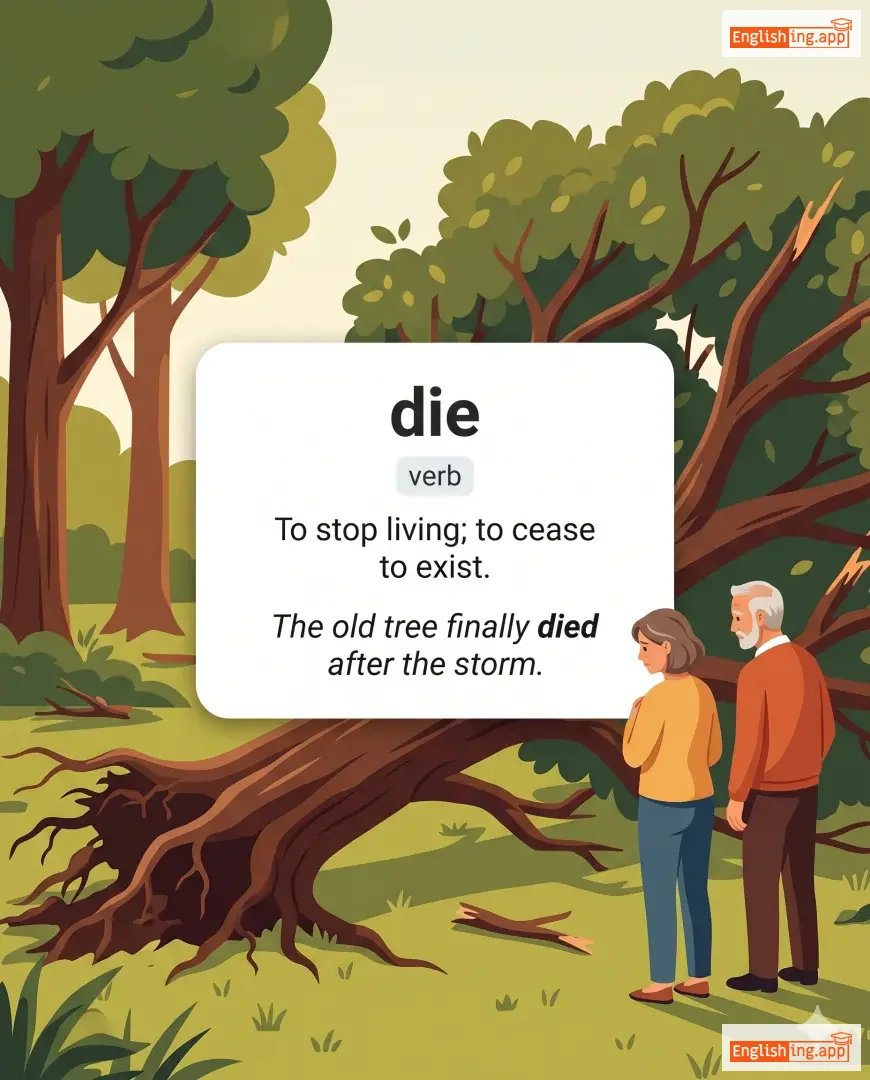
verb
/daɪ/
死ぬ (shinu)

To stop living; to cease to exist.

"The old tree finally died after the storm."

"古い木は嵐の後、最終的に死にました。" (Furui ki wa arashi no ato, saishū-teki ni shinimashita.)
noun
/ˈdaɪhɑːrd/

A person who strongly resists change and remains loyal to a belief or cause.

"He is a diehard fan of classic rock music."

noun
/ˈdaɪət/
ダイエット (daietto)

the kinds of food that a person usually eats

"He follows a strict vegetarian diet."

"彼は厳格なベジタリアンダイエットを実践しています。" (Kare wa genkaku na bejitarian daietto o jissen shiteimasu.)
verb
/ˈdɪfər/
異なる (kotonaru)

to be unlike or distinct from something else

"Opinions differ on this issue."

"この問題について意見が異なります。" (Kono mondai ni tsuite iken ga kotonarimasu.)
noun
/ˈdɪfərəns/
違い (chigai)

A point or way in which things are not the same.

"There is a big difference between theory and practice."

"理論と実践の間に大きな違いがあります。" (Riron to jissen no aida ni ōkina chigai ga arimasu.)
adjective
/ˈdɪf.ər.ənt/
異なる (kotonaru)

Not the same as another; distinct or unlike.

"Her opinion was completely different from mine."

"彼女の意見は私のものとは完全に異なっていました。" (Kanojo no iken wa watashi no mono to wa kanzen ni kotonatte imashita.)
noun
/ˌdɪfəˈrɛnʃə/
区別する特徴 (kubetsu suru tokuchou)

A distinguishing characteristic that sets one thing apart from another.

"The differentia of humans is their ability to reason abstractly."

"人間の区別する特徴は抽象的に考える能力です。" (Ningen no kubetsu suru tokuchou wa choushouteki ni kangaeru nouryoku desu.)
adjective
/ˌdɪfəˈrɛnʃəl/
差別的 (sabetsuteki)

Relating to or showing a difference; involving a distinction.

"There is a differential treatment between the two groups."

"2つのグループ間に差別的な扱いがあります。" (Futatsu no gurūpu-kan ni sabetsuteki na atsukai ga arimasu.)