語彙集

英単語辞書 | 単語の意味、定義、例文

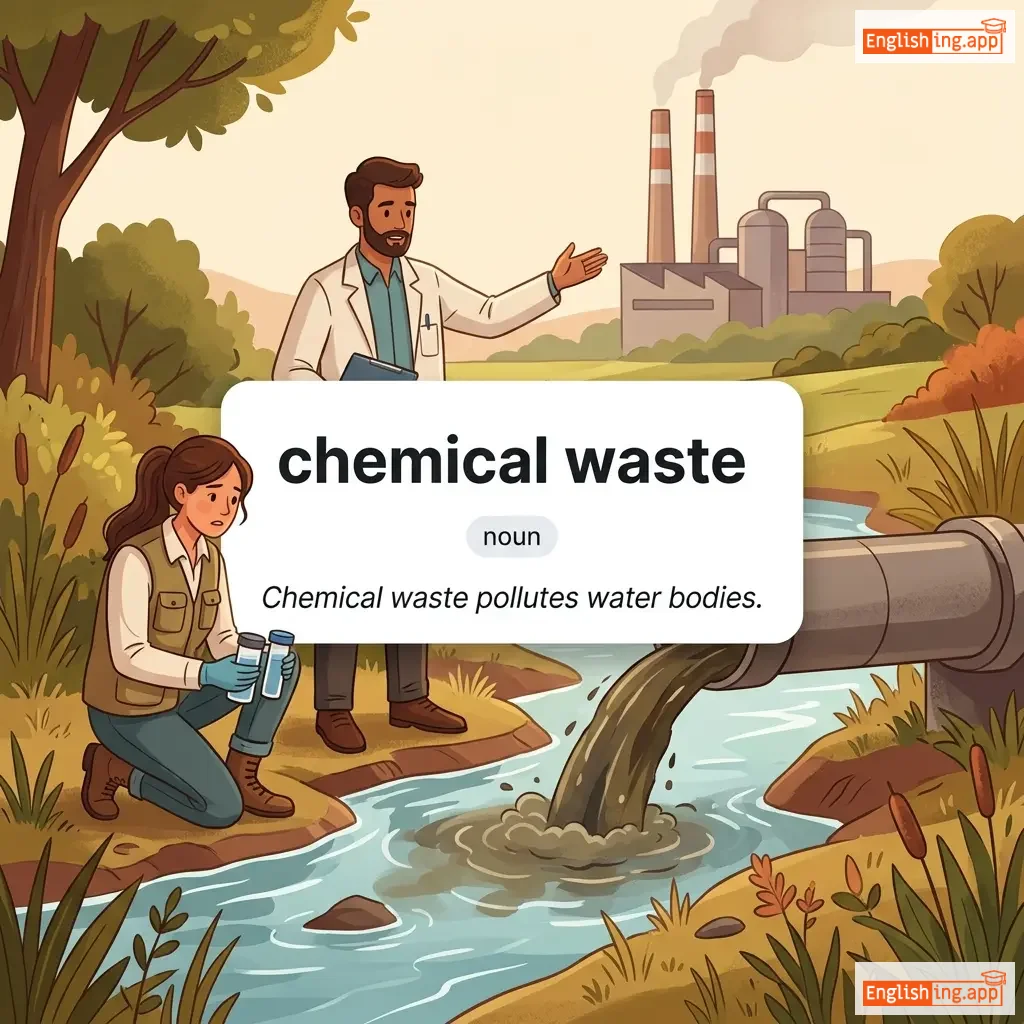
chemical waste definition card — visual illustration of the meaning
noun
ˈkɛmɪkəl weɪst
化学廃棄物 (kagaku haikibutsu)

Waste material from industrial or laboratory processes that contains harmful chemicals.

"Chemical waste pollutes water bodies."

"化学廃棄物は水域を汚染します。" (Kagaku haikibutsu wa suiiki o osen shimasu.)
noun
/ʃəˈmiːz/
シェミーズ (shimizu)

a woman's loose-fitting undergarment or dress hanging straight from the shoulders

"The vintage chemise was made of delicate lace and silk."

"ヴィンテージのシェミーズは、繊細なレースとシルクで作られていました。" (Vintēji no shimizu wa, sensaina rēsu to shiruku de tsukurarete imashita.)
noun
/ˈkemɪst/
化学者; 薬剤師 (kagakusha; yakuzai-shi)

a scientist who studies chemistry; a person trained to prepare and dispense medicines

"The chemist analyzed the sample to determine its composition."

"化学者は成分を特定するために試料を分析した。" (kagakusha wa seibun o tokutei suru tame ni shiryou o bunseki shita)
noun
/ˈkɛmɪstri/
化学 (kagaku)

the branch of science that studies substances and their interactions; also the emotional connection between people

"They have great chemistry and work well together."

"彼らは素晴らしい化学反応を持ち、一緒にうまく働いています。" (Karera wa subarashī kagaku hannō o mochi, issho ni umaku hataraiteimasu.)
adjective
/ˈtʃɛkərd/
チェッカード (chekkādo)

Having a pattern of squares, or marked by varied and contrasting experiences or periods.

"He had a chequered career with both great successes and failures."

"彼は大きな成功と失敗を経験したチェッカードなキャリアを持っていた。" (Kare wa ōkina seikō to shippai o keiken shita chekādo na kyaria o motte ita.)
verb
/ˈtʃɛrɪʃ/
大切にする (taisetsu ni suru)

To hold something dear, to love and protect, or to keep a hope or memory alive.

"She cherishes the memories of her childhood home."

"彼女は子供の頃の家の思い出を大切にしています。" (Kanojo wa kodomono koro no ie no omoide o taisetsu ni shiteimasu.)
noun
/ˈtʃer.i/
さくらんぼ (sakuranbo)

a small round red or black fruit with a hard seed inside

"She picked fresh cherries from the tree in her garden."

"彼女は庭の木から新鮮なさくらんぼを摘んだ。" (Kanojo wa niwa no ki kara shinsen na sakuranbo o tsunda.)
noun
/ˈtʃer.i ˌblɒs.əm/
さくらの花 (sakura no hana)

the pink or white flowers of a cherry tree that bloom in spring

"The cherry blossoms bloom beautifully in April."

"桜の花は4月に美しく咲きます。" (Sakura no hana wa shigatsu ni utsukushiku sakimasu.)
adjective
/tʃəˈruːbɪk/
天使のような (tenshi no you na)

Innocent, sweet, and angelic, like a cherub.

"The baby had a cherubic smile that melted everyone’s heart."

"その赤ちゃんは、みんなの心を溶かす天使のような笑顔をしていた。" (Sono akachan wa, minna no kokoro o tokasu tenshi no you na egao o shiteita.)
noun
/tʃɛst/
胸部 (kyōbu)

the front part of the human body between the neck and the stomach

"He felt a pain in his chest after running."

"走った後、彼は胸部に痛みを感じました。" (Hashitta ato, kare wa kyōbu ni itami o kanjimashita.)
noun
/ˈʃɛvrən/
V字型の記号 (V-jigata no kigou)

A V-shaped pattern, often used in military insignia or design.

"The sergeant’s uniform displayed three chevrons on the sleeve."

"軍曹の制服には袖に三つのシェブロンが表示されていました。" (Gunsou no seifuku ni wa sode ni mittsu no shebron ga hyōji sarete imashita.)
verb
/tʃuː/
幸せ (shiawase)

to bite food into smaller pieces with your teeth before swallowing it

"You should chew your food properly to help with digestion."

"彼女は賞を受け取ったとき、自分の幸せを隠せませんでした。" (Kanojo wa shō o uketotta toki, jibun no shiawase o kakusemasen deshita.)
noun
/kiˌɑːrəˈskjʊəroʊ/
光と影の劇的な対比 (hikari to kage no gekiteki na taibi)

The use of strong contrasts between light and dark in art or literature to create a dramatic effect.

"The artist's painting used chiaroscuro to highlight the figure's face."
"そのアーティストの絵画は、人物の顔を強調するためにキアロスクーロを使用しました。" (Sono aatisuto no kaiga wa, jinbutsu no kao wo kyouchou suru tame ni kiarosukuro wo shiyou shimashita.)
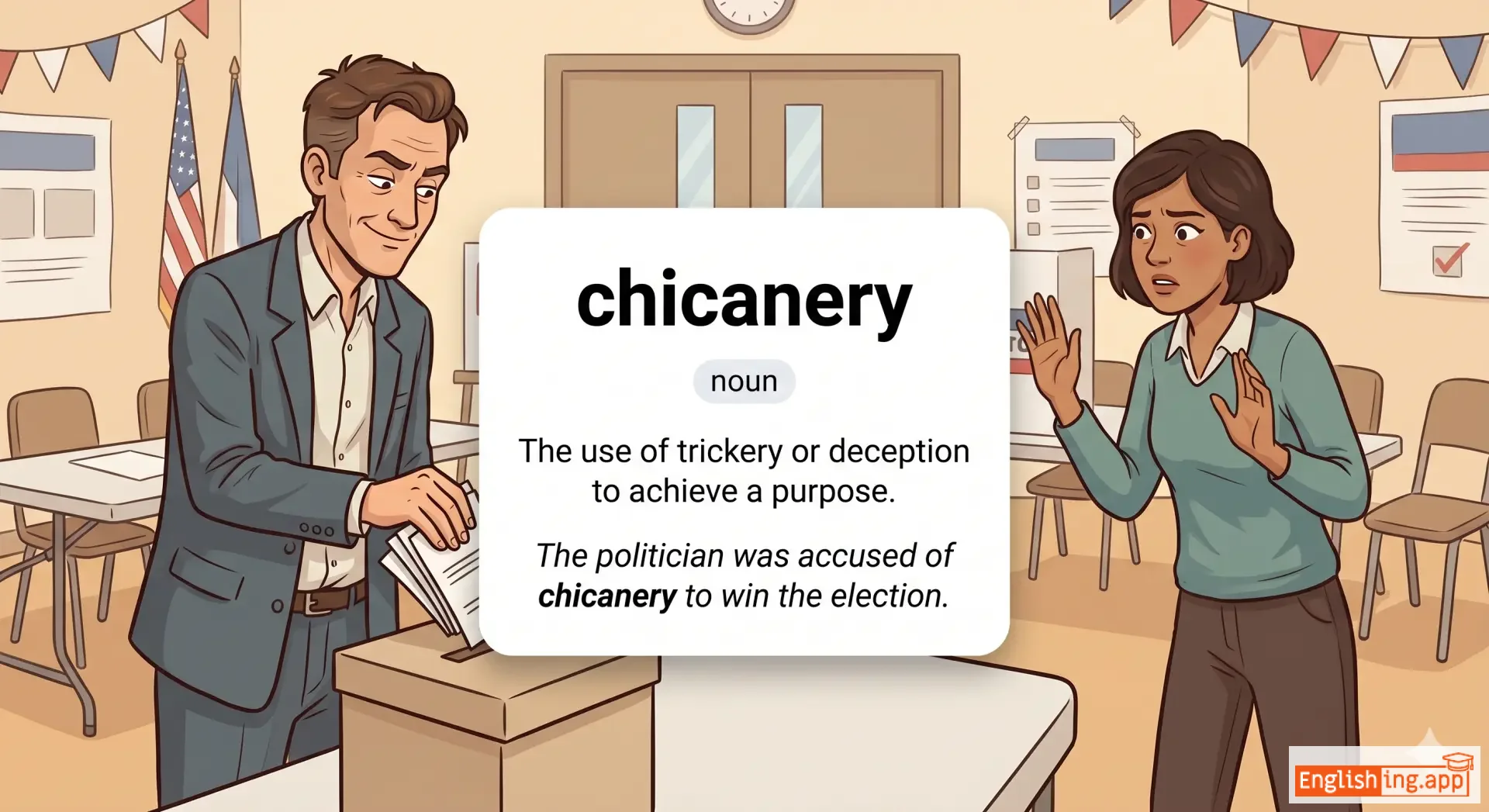
chicanery definition card — visual illustration of the meaning
noun
/ʃɪˈkeɪnəri/
詐欺 (sagi)

The use of trickery or deception to achieve a purpose.

"The politician was accused of chicanery to win the election."

"その政治家は選挙に勝つために詐欺を使ったとして非難された。" (Sono seijika wa senkyo ni katsu tame ni sagi wo tsukatta toshite hinan sareta.)
noun
/ˈtʃɪk piː/
ひよこ豆 (hiyokomame)

round beige legume; protein-rich pulse used in various dishes

"Soak the chick peas overnight before cooking them for better digestion."

"ひよこ豆を一晩水に浸してから調理すると、消化が良くなります。" (Hiyokomame o hitobanju suini shintashite kara chōri suru to, shōka ga yoku narimasu.)
noun
/ˈtʃɪkɪn/
鶏肉 (toriniku)

a domestic bird kept for its eggs or meat

"We had fried chicken for dinner."

"夕食にフライドチキンを食べました。" (Yushoku ni furaido chikin o tabemashita.)
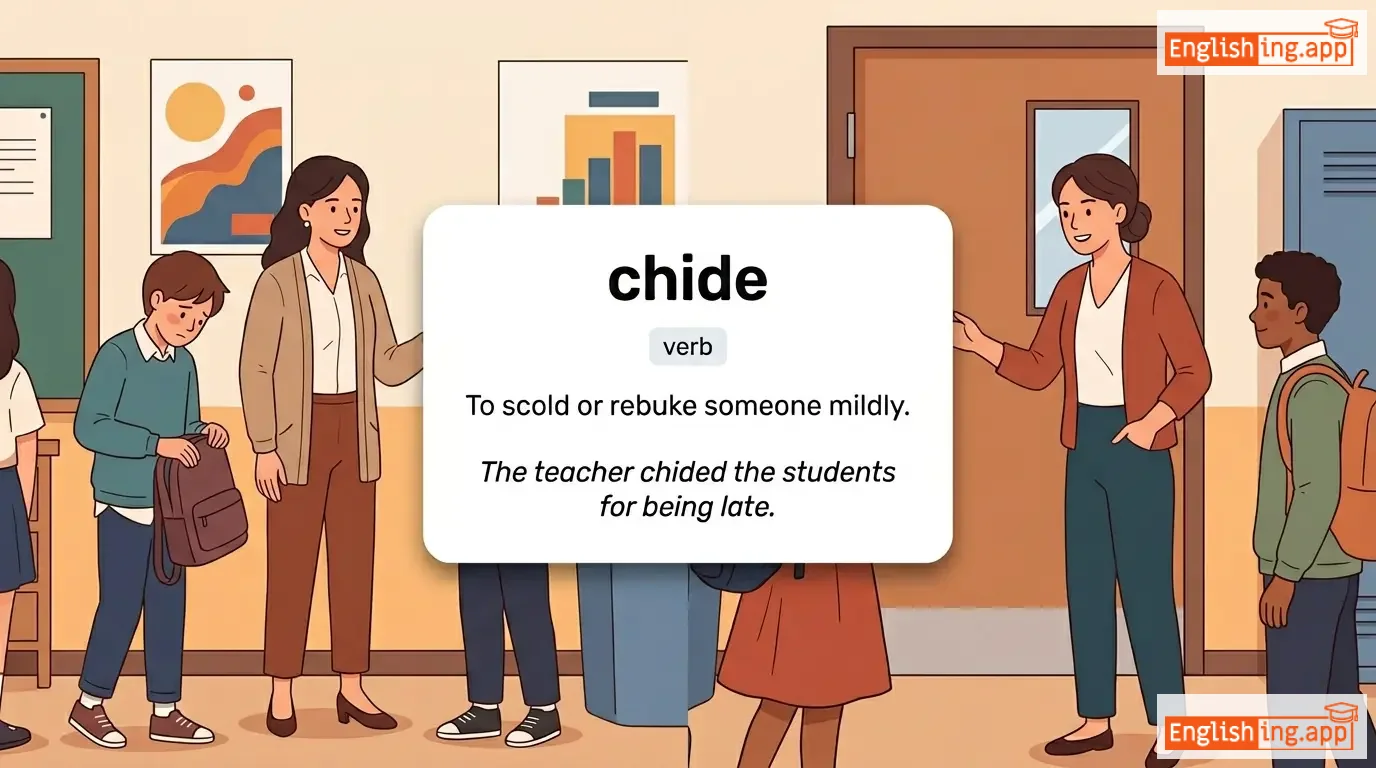
chide definition card — visual illustration of the meaning
👩‍🏫

chide

verb
/tʃaɪd/

To scold or rebuke someone mildly.

"The teacher chided the students for being late."

noun
/tʃiːf/
首長 (shuchou)

a leader or person in charge of a group or organization

"The chief of the village made an important decision."

"村の首長は重要な決定を下しました。" (Mura no shuchou wa juuyou na kettei wo kudashimashita.)
adverb
/ˈtʃiːfli/
主に (omoni)

mainly; primarily

"The festival is celebrated chiefly by young people."

"その祭りは主に若者たちによって祝われます。" (Sono matsuri wa omoni wakamono-tachi ni yotte iwai raremasu.)
noun
/ʃɪˈfɒn/
シフォン (shifon)

A lightweight, sheer fabric often used in dresses or scarves.

"She wore a beautiful chiffon dress at the party."
"彼女はパーティーで美しいシフォンのドレスを着ていました。" (Kanojo wa pātī de utsukushī shifon no doresu o kiteimashita.)
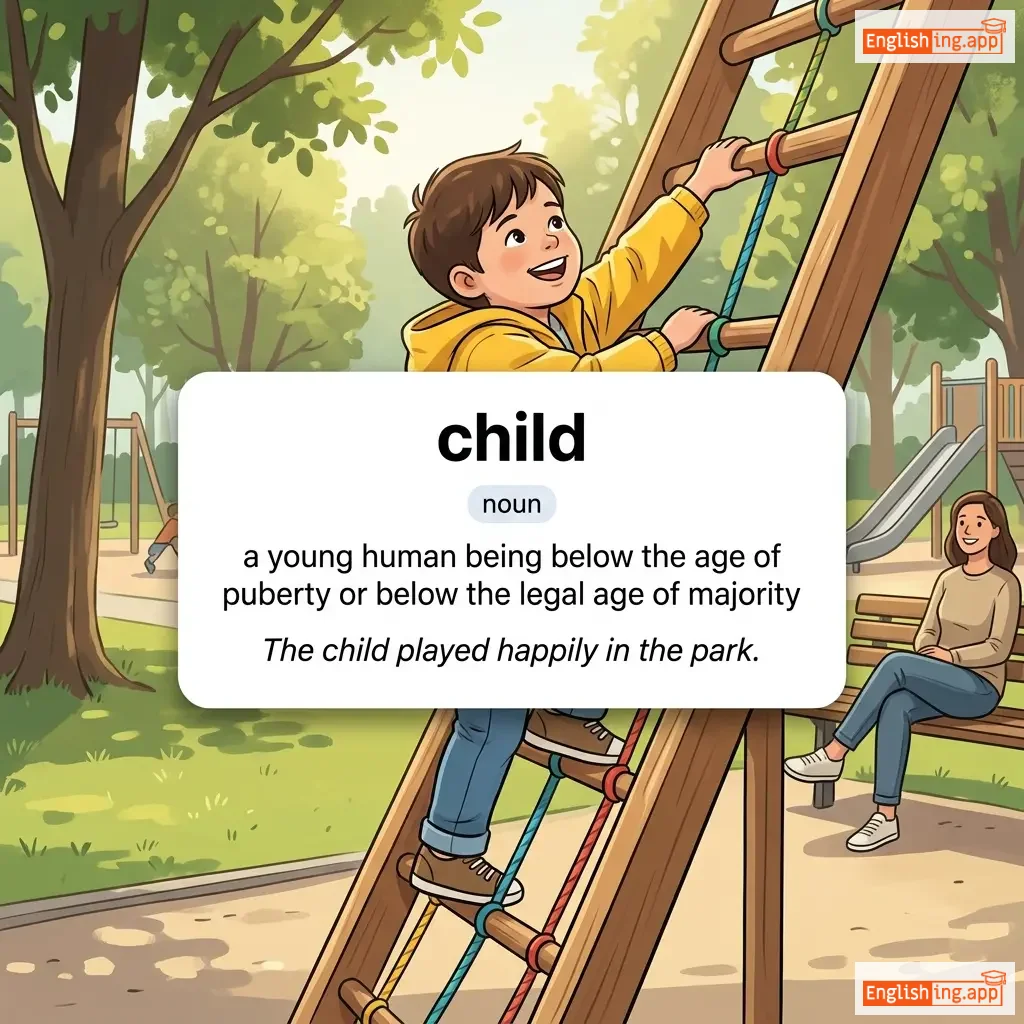
child definition card — visual illustration of the meaning
noun
/tʃaɪld/
子供 (kodomo)

a young human being below the age of puberty or below the legal age of majority

"The child played happily in the park."

"その子供は公園で楽しそうに遊んでいました。" (Sono kodomo wa kouen de tanoshisou ni asonde imashita.)
noun
/ˈtʃaɪldhʊd/
子供時代 (kodomojidai)

the period of being a child

"She spent her childhood in a small village."

"彼女は小さな村で子供時代を過ごしました。" (Kanojo wa chiisana mura de kodomojidai o sugoshimashita.)
adjective
/ˈtʃaɪl.dɪʃ/
子供っぽい; 子供のような振る舞いだが大人には不適切 (kodomoppoi; kodomo no you na furumai daga otona ni wa futekisetsu)

immature and silly; behaving in a way that is typical of a child but inappropriate for an adult

"His childish behavior during the meeting was quite embarrassing."

"会議中の彼の子供っぽい行動はかなり恥ずかしいものでした。" (Kaigi-chuu no kare no kodomoppoi koudou wa kanari hazukashii mono deshita.)
adjective
/ˈtʃaɪld.laɪk/
子供のような; 無邪気で信頼しやすい; 純粋でシンプル (kodomo no yō na; mujakide shinraishiyasui; junsui de shinpuru)

innocent and trusting like a child; having the good qualities of a child; pure and simple

"She maintained a childlike wonder about the world around her."

"彼女は周りの世界について子供のような驚きを保っていました。" (kanojo wa mawari no sekai ni tsuite kodomo no yō na odoroki o motte imashita.)
❄️

Chill

verb
/tʃɪl/

to make something cold or to relax and take it easy

"We decided to chill at home after a long day."

noun
/ˈtʃɪl.i ˈpaʊ.dər/
チリパウダー (chiri paudā)

a spice made from ground dried chili peppers, used to add heat and flavor to food

"Add two teaspoons of chilli powder to make the dish spicier."

"料理を辛くするためにチリパウダーを小さじ2杯加えてください。" (Ryōri o karaku suru tame ni chiri paudā o chīsaji 2 hai kuwaete kudasai.)
adjective
/ˈtʃɪli/
寒い (samui)

uncomfortably or unpleasantly cold

"It was a chilly morning in December."

"12月の寒い朝でした。" (12-gatsu no samui asa deshita.)
noun
/ˈtʃɪl.i/
寒い; 辛い唐辛子; (samui, karai tōgarashi)

noticeably cold; a hot-tasting pod of a variety of capsicum, used as a spice

"The chef added red chilli to make the curry spicier."

"シェフはカレーを辛くするために赤いチリを加えました。" (Shefu wa karē o karaku suru tame ni akai chiri o kuwaemashita.)
noun
/kaɪˈmɪərə/
キメラ (kimera)

A mythical creature with parts from different animals; also used to mean a fanciful illusion or unattainable dream.

"The idea of a perfect society is often a chimera."
"完璧な社会のアイデアはしばしばキメラである。" (Kanpeki na shakai no aidea wa shibashiba kimera de aru.)
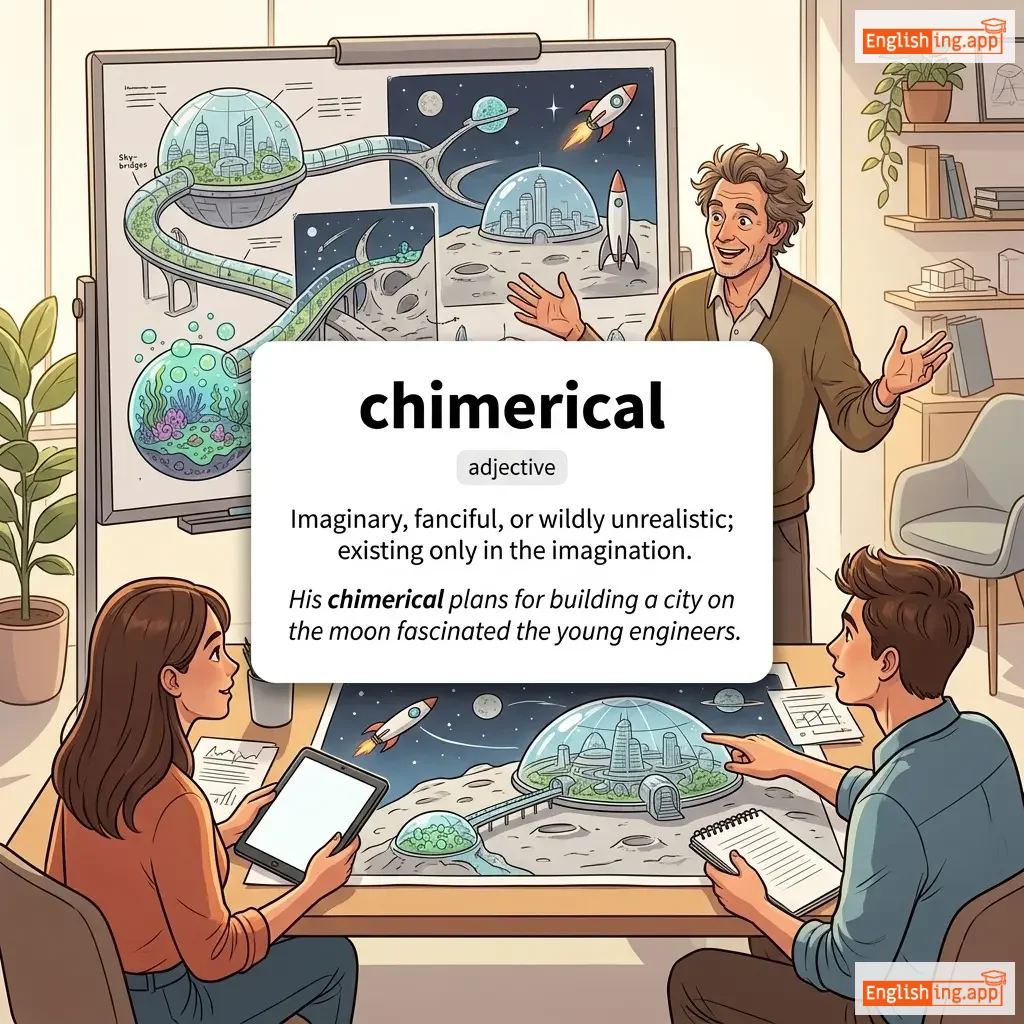
chimerical definition card — visual illustration of the meaning
adjective
/kaɪˈmɛrɪkəl/
空想的 (kūsō-teki)

Imaginary, fanciful, or wildly unrealistic; existing only in the imagination.

"His chimerical plans for building a city on the moon fascinated the young engineers."

"彼の空想的な月面都市建設計画は若いエンジニアたちを魅了した。" (Kare no kūsō-teki na getsumen toshi kensetsu keikaku wa wakai enjinia-tachi o miryō shita.)
noun
/tʃɪn/
あご (ago)

the part of the face below the mouth

"He rested his chin on his hand while thinking."

"彼は考えながらあごを手に乗せていた。" (Kare wa kangae nagara ago o te ni nosete ita.)
noun
/ˈtʃaɪ.nə bɑːks/
ゲッキツ (gekkitsu)

a small evergreen shrub with tiny white fragrant flowers

"The China box plant produced clusters of small white flowers."

"ゲッキツの木は小さな白い花の房を咲かせました。" (Gekkitsu no ki wa chiisana shiroi hana no fusa o sakasemashita.)
noun
/ˈtʃaɪ.nə roʊz/
ハイビスカス (haibisukasu)

a tropical flowering plant with large, showy flowers in various colors

"The bright red China-rose flowers decorated the entrance of the house."

"鮮やかな赤いハイビスカスの花が家の入口を飾った。" (Azayaka na akai haibisukasu no hana ga ie no iriguchi o kazatta.)
noun
/ˈtʃaɪ.nə.weər/
チャイナウェア (chaina wea)

dishes, plates, cups, and other tableware made of porcelain or fine ceramic

"The expensive china-ware was displayed in the cabinet."

"高価なチャイナウェアはキャビネットに展示されていました。" (Kōka na chaina wea wa kyabinetto ni tenji sarete imashita.)
adjective, noun
/tʃaɪˈniːz/
中国の (chūgoku no)

relating to China, its people, or its language

"We went to a Chinese restaurant last night."

"昨晩、私たちは中国のレストランに行きました。" (sakuban, watashitachi wa chūgoku no resutoran ni ikimashita.)
🍟

chip

noun, verb
/tʃɪp/

A small piece broken off from something; or to cut or break a small piece from something.

"He accidentally chipped the edge of the table."

noun
/ˈkaɪrəˌmænsi/
手相占い (tesou uranai)

The practice of predicting the future by interpreting the lines on the palms of hands; palmistry.

"The old woman practiced chiromancy and told fortunes for travelers."

"年老いた女性は手相占いを実践し、旅行者に未来を予言しました。" (Toshi oita josei wa tesou uranai o jissen shi, ryokousha ni mirai o yogen shimashita.)
noun
/kɪˈrɒpədɪst/
足病医 (asahiibi)

A healthcare professional who diagnoses and treats foot problems.

"The chiropodist treated her painful corns and calluses."

"足病医は彼女の痛いタコと鶏眼を治療した。" (Asahiibi wa kanojo no itai tako to keigen o chiryou shita.)
noun, verb
/ˈtʃɪzəl/
彫刻刀 (choukokutou)

A tool with a sharp edge used for cutting or shaping hard materials; or to cut or carve with such a tool.

"The sculptor chiseled the marble into a beautiful statue."

"彫刻家は大理石を美しい彫像に彫りました。" (Choukokusha wa daireki wo utsukushī chōzō ni horimashita.)
noun
/tʃɪt/
メモ、控え (memo, hikae)

a short note, typically a brief informal letter; a voucher for a sum owed

"She left a chit on the table asking him to call her back."

"彼女はテーブルにチットを置いて、彼に戻って電話するように頼んだ。" (Kanojo wa tēburu ni chitto o oite, kare ni modotte denwa suru yō ni tanonda.)
adjective
/ˈʃɪvəlrəs/
騎士道精神 (kishidō seishin)

Behaving in a courteous, gallant, and honorable way, especially toward women.

"He was chivalrous, always opening doors for others."
"彼は騎士道精神を持っており、常に他の人のためにドアを開けていました。" (Kare wa kishidō seishin o motte ori, jōni hoka no hito no tame ni doa o akete imashita.)
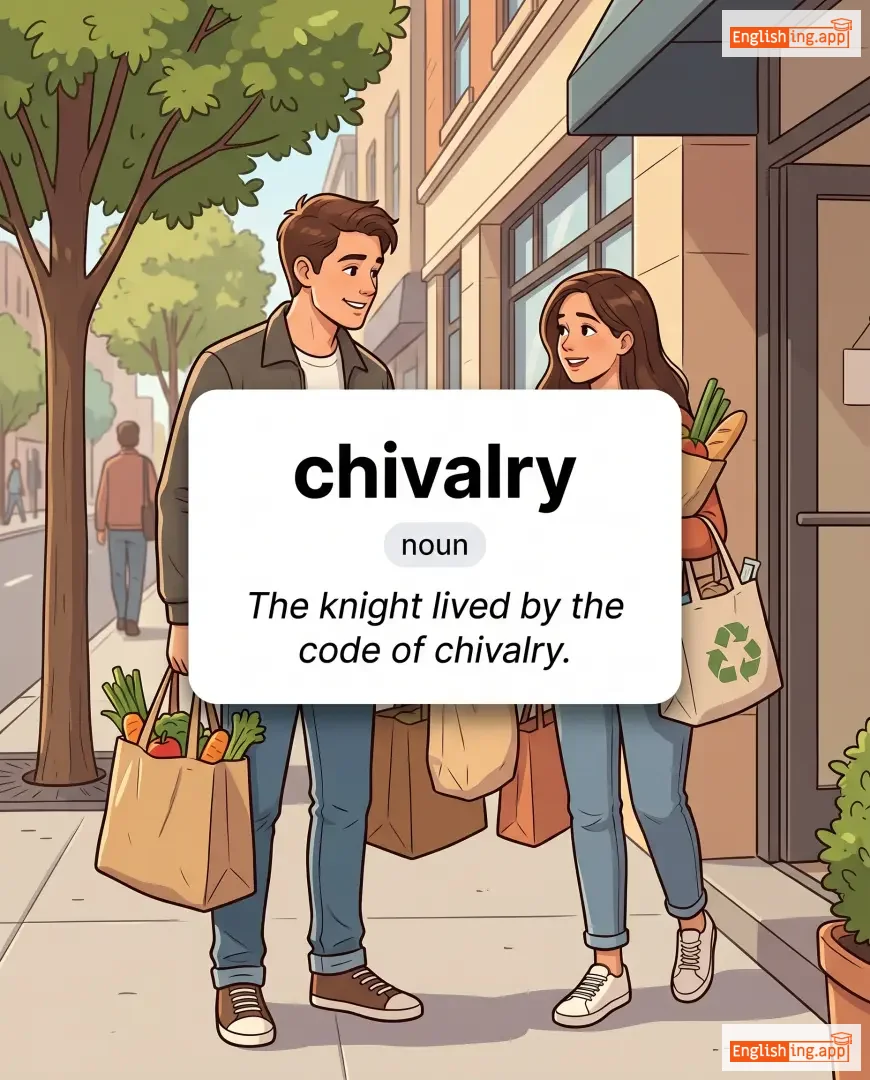
chivalry definition card — visual illustration of the meaning
noun
/ˈʃɪvəlri/
騎士道 (kishidou)

The medieval knightly system with its moral, social, and religious code; courteous behavior, especially toward women.

"The knight lived by the code of chivalry."

"騎士は騎士道の規範に従って生きていました。" (Kishi wa kishidō no kihon ni shitagatte ikite imashita.)
noun
/ˈtʃɒklət/
チョコレート (chokoreeto)

a sweet, brown food made from roasted cocoa beans

"She bought a bar of chocolate from the store."
"彼女は店でチョコレートバーを買った。" (kanojo wa mise de chokoreeto baa o katta.)
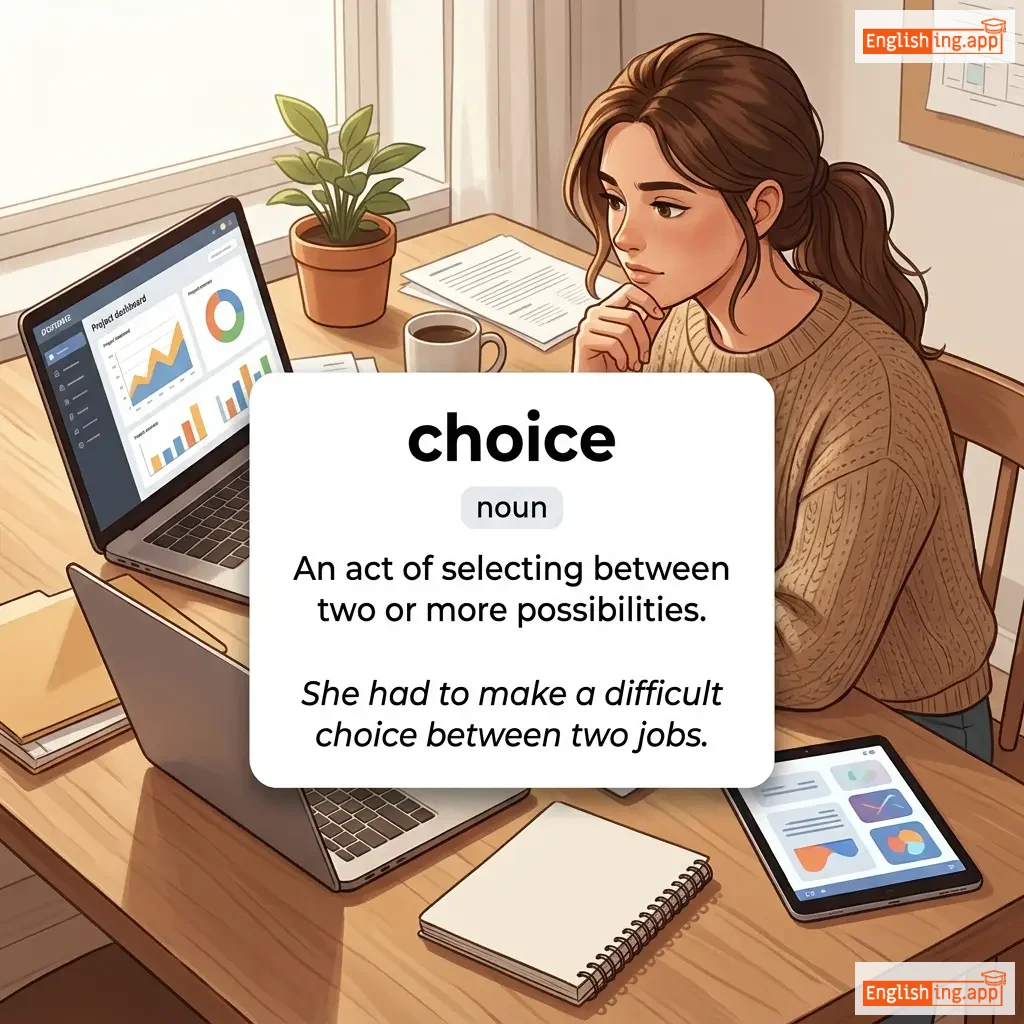
choice definition card — visual illustration of the meaning
noun
/tʃɔɪs/
選択 (sentaku)

An act of selecting between two or more possibilities.

"She had to make a difficult choice between two jobs."

"彼女は二つの仕事の間で難しい選択をしなければならなかった。" (Kanojo wa futatsu no shigoto no aida de muzukashii sentaku o shinakereba naranakatta.)
noun
/ˈkwaɪər/
合唱団 (gasshoudan)

An organized group of singers, typically performing in church services or concerts.

"The choir sang beautifully during the ceremony."

"式典中、合唱団は美しく歌いました。" (Shikiten-chū, gasshoudan wa utsukushiku utaimashita.)
noun
/ˈkɒlərə/

An infectious disease of the small intestine causing severe vomiting and diarrhea.

"The village suffered an outbreak of cholera after the flood."

adjective
/ˈkɒlərɪk/
短気な (tanki na)

Easily angered; irritable and hot-tempered.

"His choleric nature often got him into arguments."

"彼の短気な性格はよく議論に巻き込まれました。" (kare no tanki na seikaku wa yoku giron ni makikomaremashita)
noun
/kəˈlɛstərɒl/
コレステロール (koresuterooru)

a fatty substance found in the blood, high levels of which can cause health problems

"High cholesterol can increase the risk of heart disease."

"高コレステロールは心臓病のリスクを高める可能性があります。" (Kou koresuterooru wa shinzoubyou no risuku wo takameru kanousei ga arimasu.)
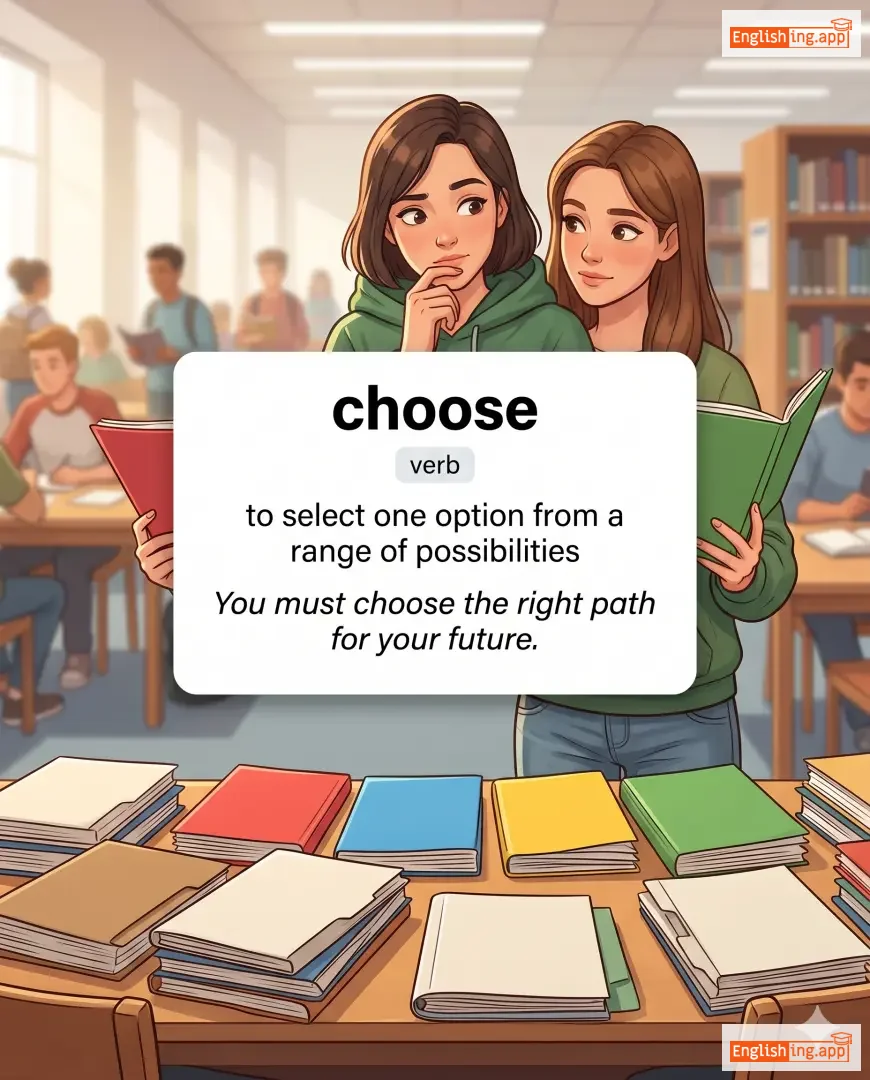
choose definition card — visual illustration of the meaning
verb
/tʃuːz/

to select one option from a range of possibilities

"You must choose the right path for your future."

adjective
/ˈtʃuː.zi/
気難しい; 非常に選択的; 好きなことや受け入れることに関して特に気を使う (kizukashii)

very careful in choosing; selective; particular about what one likes or accepts

"He's very choosy about the restaurants where he eats."

"彼は食べるレストランにとても気難しい。" (Kare wa taberu resutoran ni totemo kizukashii.)