語彙集

英単語辞書 | 単語の意味、定義、例文

noun
/sɛnˈtjʊəriən/
百人隊長 (hyakunitai-chou)

A commander of a unit of one hundred soldiers in the ancient Roman army.

"The centurion led his men into battle with courage."

"セントゥリオンは勇気を持って戦いに臨んだ。" (Senturion wa yuuki o motte tatakai ni nozonda.)
noun
/ˈsɛnʧəri/
世紀 (seiki)

A period of one hundred years.

"The 20th century saw significant technological progress."

"20世紀は技術的な進歩が顕著であった。" (20seiki wa gijutsuteki na shinpo ga kencho de atta.)
noun
/ˌsiːiːˈoʊ/
最高経営責任者 (saikou keiei sekininsha)

The highest-ranking person in a company, responsible for overall management.

"The CEO announced a new strategy for the company."

"CEOは会社の新しい戦略を発表しました。" (CEO wa kaisha no atarashii senryaku wo happyou shimashita.)
noun
/ˈsɪə.ri.əl/

a common breakfast food made from processed grains such as wheat, oats, or corn

"She eats a bowl of cereal every morning before work."

cerebral definition card — visual illustration of the meaning
adjective
/səˈriː.brəl/
脳に関する (nō ni kansuru)

relating to the brain or intellect; intellectual rather than emotional

"He is known for his cerebral approach to problem-solving."

"彼は問題解決における脳に関するアプローチで知られています。" (Kare wa mondai kaiketsu ni okeru nō ni kansuru apurōchi de shirareteimasu.)
noun
/ˌser.əˈbreɪ.ʃən/
思考 (shikou)

the process of thinking or using the brain actively

"The lecture sparked intense cerebration among the students."

"その講義は学生たちの間で激しい思考を引き起こした。" (Sono kougi wa gakusei tachi no aida de hageshii shikou wo hikiokoshita.)
adjective
/ˌser.ɪˈməʊ.ni.əl/
儀式的な (gishikiteki na)

relating to or used in a ceremony or formal occasion

"The president wore a ceremonial robe during the inauguration."

"大統領は就任式で儀式的なローブを着ていた。" (Daitōryō wa shūninshiki de gishikiteki na rōbu o kite ita.)
adjective
/ˌser.ɪˈməʊ.ni.əs/
儀式的で礼儀正しい (gishikiteki de reigi tadashii)

marked by formality, politeness, or strict observance of customs

"He gave her a ceremonious bow before entering the hall."

"彼はホールに入る前に儀式的なお辞儀をしました。" (Kare wa hōru ni hairu mae ni gishikiteki na ojigi o shimashita.)
noun
/ˈsɛrəˌmoʊni/

A formal event or occasion, often with rituals and traditions.

"The graduation ceremony was held in the university hall."

adjective
/ˈsɜːr.tən/
確実な (kakujitsu na)

Known for sure; having no doubt.

"I am certain that she will succeed."

"私は彼女が成功すると確信しています。" (watashi wa kanojo ga seikou suru to kakushin shiteimasu.)
adverb
/ˈsɜːrtənli/
確かに (tashika ni)

without doubt; surely; used to emphasize certainty

"I will certainly help you with your project."

"私は確実にあなたのプロジェクトを手伝います。" (Watashi wa tashika ni anata no purojekuto o tetsudaimasu.)
noun
/ˈsɜːtənti/
確実性 (kakujitsusei)

the state of being sure or confident about something

"There is no certainty about the weather tomorrow."

"明日の天気に確実性はありません。" (Ashita no tenki ni kakujitsusei wa arimasen.)
noun
/sərˈtɪfɪkət/
証明書 (shōmeisho)

a document serving as proof of achievement or qualification

"She received a certificate for completing the course."

"彼女はコースを修了したため、証明書を受け取った。" (Kanojo wa kōsu o shūryō shita tame, shōmeisho o uketotta.)
noun
/ˌsɜːrtɪfɪˈkeɪʃən/
認定 (nintei)

the process of officially recognizing or confirming that something or someone meets required standards; an official document proving qualification

"She received her professional certification after completing the training program."

"彼女は研修プログラムを修了した後、専門的な認定を取得しました。" (kanojo wa kenshu puroguramu o shuryo shita ato senmonteki na nintei o shutoku shimashita)
noun
/ˈsɜːrtɪˌtjuːd/
確信 (kakushin)

Absolute certainty or conviction about something.

"She spoke with certitude about the outcome of the case."

"彼女は事件の結果について確信を持って話しました。" (Kanojo wa jiken no kekka ni tsuite kakushin o motte hanashimashita.)
noun
/sɛˈseɪʃən/
停止 (teishi)

The fact or process of ending or being brought to an end.

"There was a temporary cessation of hostilities."

"敵対行為は一時的に停止しました。" (Tekitai kōi wa ichijiteki ni teishi shimashita.)
noun
/ˈsɛʃən/
権利や財産の譲渡 (kenri ya zaisan no joto)

The formal giving up of rights, property, or territory, especially by a state.

"The treaty resulted in the cession of land to the neighboring country."

"条約の結果、土地は隣国に譲渡されました。" (Jōyaku no kekka, tochi wa ringoku ni jōtosaremashita.)
noun
/ˈsɛtərə/
等々 (tōtō)

Latin for 'the rest' or 'others'; commonly used in the phrase 'et cetera' meaning 'and so on'.

"We need to buy pens, paper, notebooks, et cetera."

"ペン、紙、ノートなどを買わなければなりません。" (Pen, kami, nōto nado o kawanakereba narimasen.)
😣

chafe

verb
/ʧeɪf/

To make or become sore by rubbing; to feel irritation or impatience.

"The tight shoes began to chafe his heels."

noun
/tʃæf/
もみがら (momigara)

The husks of corn or other seed separated by winnowing or threshing; worthless or trivial matter.

"The farmer separated the wheat from the chaff."

"農夫は小麦をもみがらから分けました。" (Nōfu wa komugi o momigara kara wakemashita.)
verb
/ˈtʃæfɪŋ/
からかう (karakau)

Teasing or joking in a lighthearted way.

"They were chaffing each other during lunch."

"彼らは昼食中にお互いに冗談を言っていた。" (Karera wa chuushoku-chuu ni otagai ni joudan o itte ita.)
verb
/ˈtʃeɪfɪŋ/
擦れて痛む (surete itamu)

To make sore by rubbing; to become irritated.

"The rough shoes were chafing his heels."

"荒れた靴が彼のかかとを擦っていた。" (Areta kutsu ga kare no kakato o sutte ita.)
noun
/ʃəˈɡrɪn/
失望 (shitsubou)

Distress or embarrassment at having failed or been humiliated.

"She left the room in chagrin after forgetting her lines."

"彼女はセリフを忘れた後、失望して部屋を出ました。" (Kanojo wa serifu wo wasureta ato, shitsubou shite heya wo demashita.)
⛓️

chain

noun
/tʃeɪn/

a connected series of metal rings used for fastening or securing things; a series of connected events or businesses

"He wore a gold chain around his neck."

🪑

Chair

noun
/tʃɛr/

a piece of furniture for one person to sit on, typically having a back and four legs

"She pulled up a chair and sat beside me."

noun
/ˈtʃɛərmən/
幸福 (kōfuku)

the leader or head of a meeting, committee, or organization

"The chairman opened the meeting with a short speech."
"彼女は賞を受け取ったとき、喜びを隠せなかった。" (Kanojo wa shō o uketotta toki, yorokobi o kakusenakatta.)
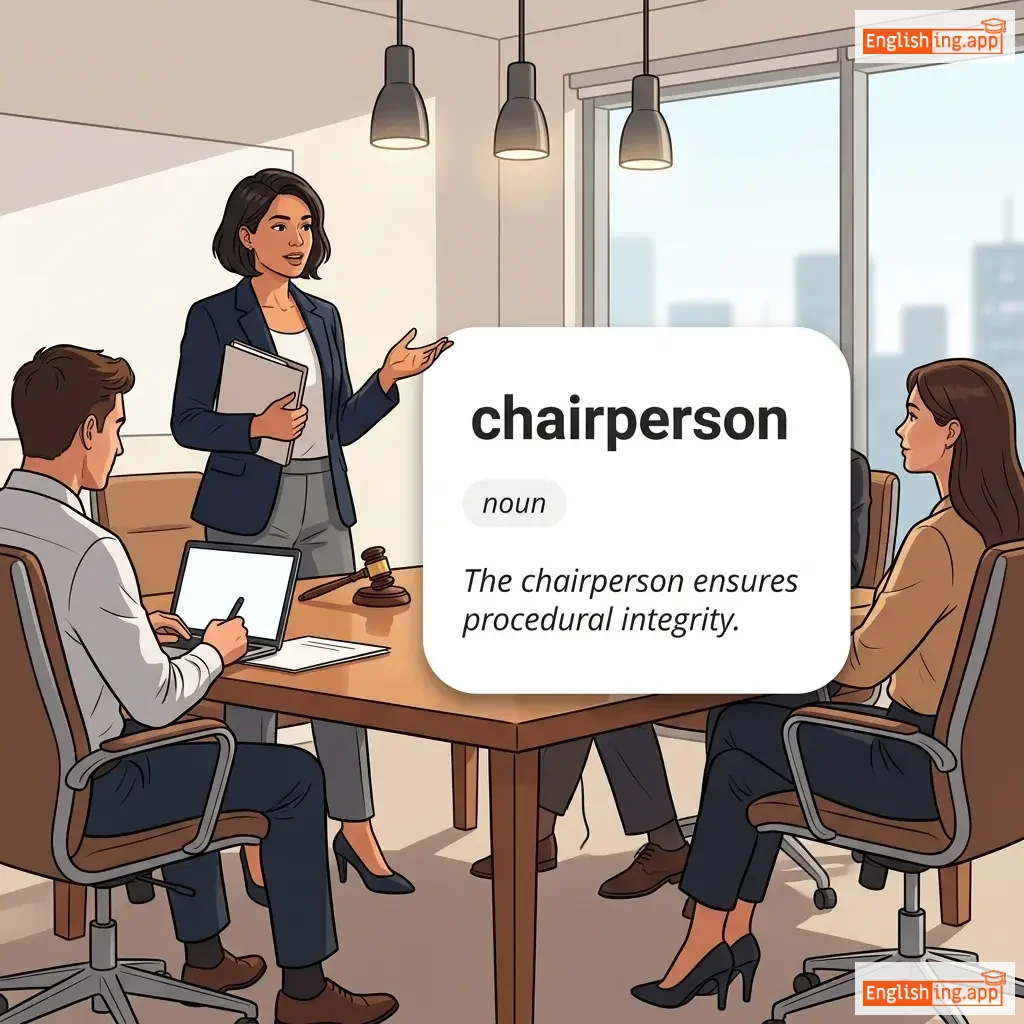
chairperson definition card — visual illustration of the meaning
noun
ˈtʃeə.pɜː.sən
議長 (gichou)

A person who is in charge of a meeting or organization; the presiding officer of a committee, board, or organization.

"The chairperson ensures procedural integrity."

"議長は手続きの整合性を確保します。" (Gichou wa tetsuzuki no seigō-sei o kakuho shimasu.)
noun
/ˈtʃɛərˌwʊmən/
女性議長 (josei gicho)

a woman who presides over a meeting, committee, or organization; a female leader of a board or council

"She was elected chairwoman of the company after years of experience."

"彼女は長年の経験の後、その会社の女性議長に選ばれた。" (Kanojo wa naganen no keiken no ato sono kaisha no josei gicho ni erabareta)
noun
/ˈtʃælɪs/
聖杯 (seihai)

A large cup or goblet, typically used for drinking wine in religious ceremonies.

"The priest lifted the golden chalice during the ceremony."
"祭司は儀式中に金の聖杯を掲げました。" (Saishi wa gishiki-chū ni kin no seihai o kakagemashita.)
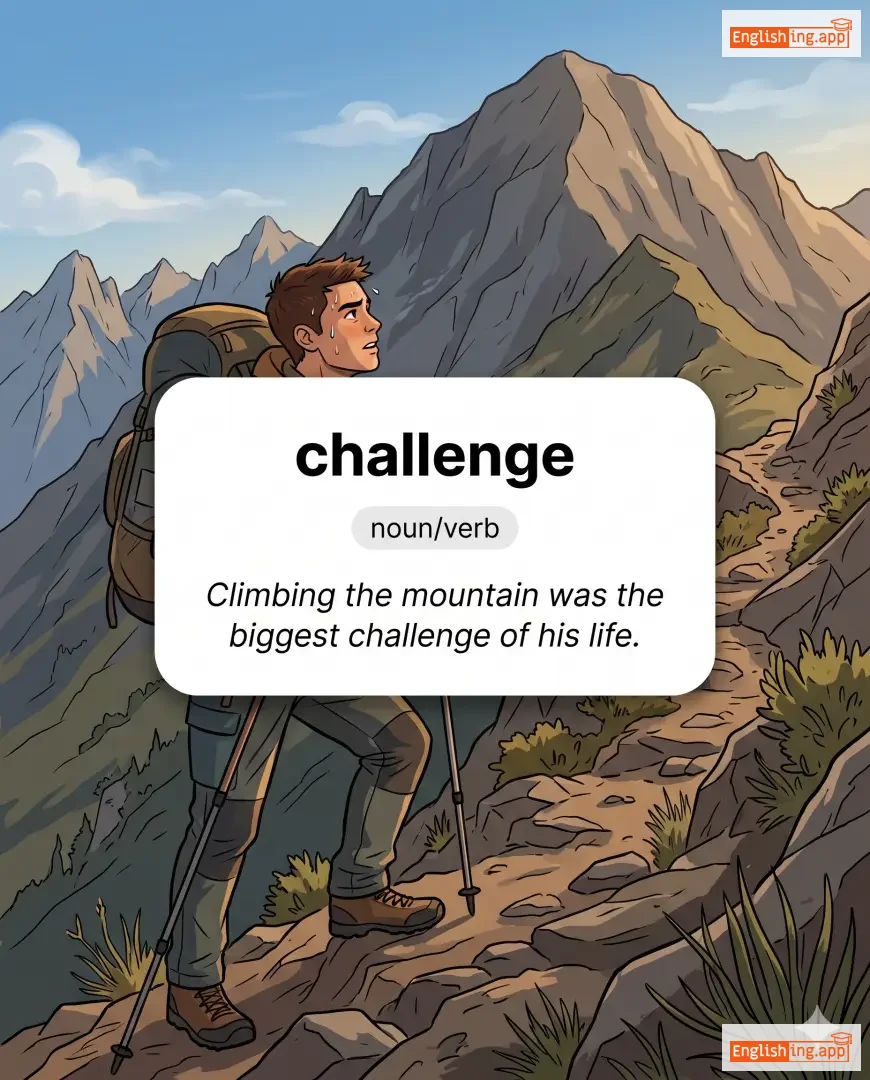
challenge definition card — visual illustration of the meaning
noun/verb
/ˈtʃælɪndʒ/
チャレンジ (charenji)

a difficult task or problem that requires effort to overcome; to question or dispute

"Climbing the mountain was the biggest challenge of his life."

"山を登ることは彼の人生で最大のチャレンジでした。" (Yama wo noboru koto wa kare no jinsei de saidai no charenji deshita.)
noun
/ˈtʃælɪndʒɪz/
挑戦 (chousen)

Difficult tasks or situations that test someone's abilities or resources.

"Overcoming challenges is the key to personal growth."

"挑戦を乗り越えることは、個人的な成長の鍵です。" (Chousen o norikoeru koto wa, kojinteki na seichou no kagi desu.)
adjective
/ˈtʃælɪndʒɪŋ/
挑戦的な (chousenteki na)

difficult in a way that tests one's abilities

"The mountain climb was challenging but rewarding."

"山登りは挑戦的だったが、報われた。" (Yamanobori wa chousenteki datta ga, mukuwareta.)
noun
/ˈtʃeɪmbər/
部屋 (heya)

a large room used for formal or public events, or a private room.

"The king held meetings in his private chamber."

"王は自分のプライベートな部屋で会議を開きました。" (Ō wa jibun no puraibēto na heya de kaigi o hirakimashita.)
noun
/kəˈmiːliən/
カメレオン (kamereon)

a lizard known for its ability to change color to blend with its surroundings.

"The chameleon changed its color to hide from predators."

"カメレオンは捕食者から隠れるために色を変えました。" (Kamereon wa hoshokusha kara kakureru tame ni iro o kaemashita.)
noun
/tʃəˈmeɪ.li/
ジャスミン (jasumin)

a variety of jasmine flower with small white fragrant petals

"The chameli flowers are commonly used to make garlands and perfumes."

"ジャスミンの花はよく花輪や香水を作るために使われます。" (jasumin no hana wa yoku hanawa ya kosui o tsukuru tame ni tsukawaremasu.)
noun
/tʃæmp/
チャンピオン / 勝者 (chanpion / shousha)

an informal word for champion or winner.

"He is the new champ of the boxing tournament."

"彼はボクシングトーナメントの新しいチャンピオンです。" (Kare wa bokushingu tōnamento no atarashī chanpion desu.)
noun
/ˈtʃæm.pæk/
チャンパク (champaku)

a fragrant yellow or white flower from a tree native to South Asia, used in perfumes and religious ceremonies

"The champak tree in the temple courtyard bloomed with golden flowers."
"寺院の中庭にあるチャンパクの木は黄金色の花を咲かせました。" (Jiin no nakaniwa ni aru champaku no ki wa ōgon iro no hana o sakasemashita.)
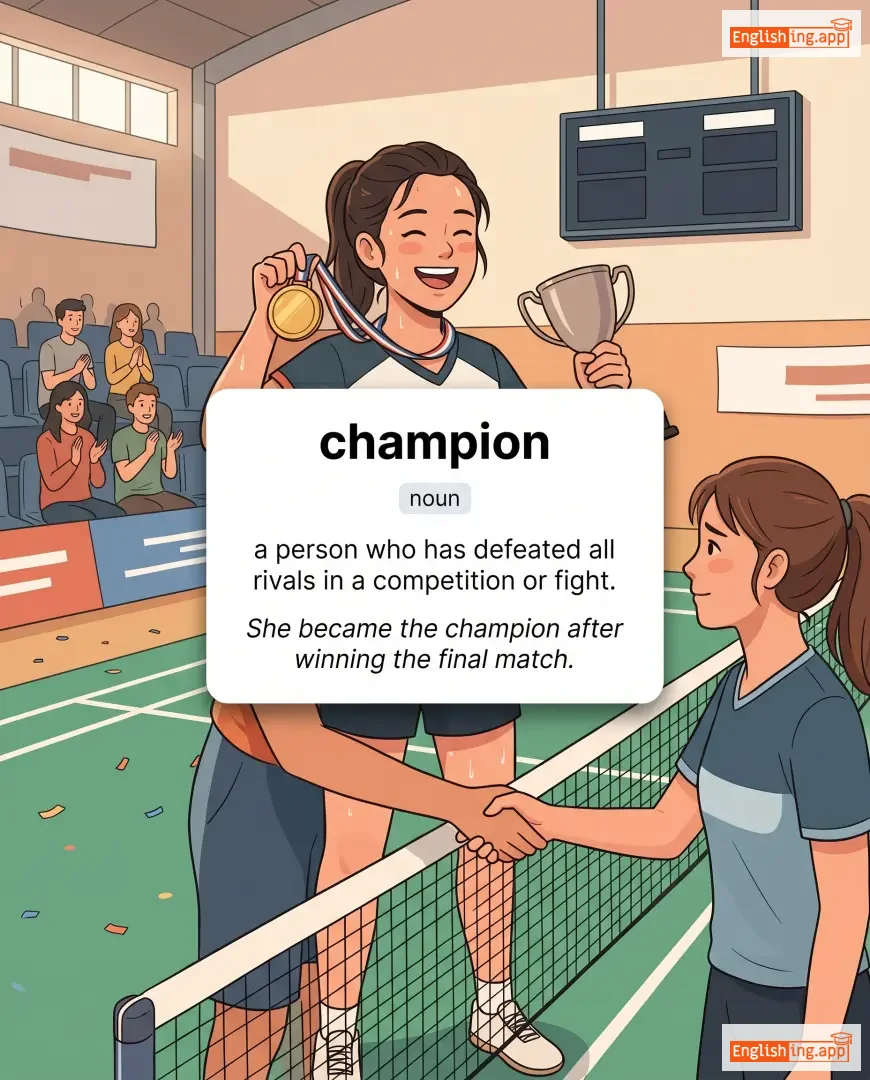
champion definition card — visual illustration of the meaning
noun
/ˈtʃæmpiən/
チャンピオン (champion)

a person who has defeated all rivals in a competition or fight.

"She became the champion after winning the final match."

"彼女は決勝戦に勝った後、チャンピオンになった。" (Kanojo wa kesshousen ni katta ato, champion ni natta.)
noun
/ˈtʃæmpiənʃɪp/
選手権 (senshuken)

a competition to decide who is the best in a particular sport or activity.

"The championship will be held next month."

"選手権は来月行われます。" (senshuken wa raigetsu okonawaremasu.)
noun
/tʃæns/
チャンス (chansu)

An opportunity or possibility of something happening.

"He took a chance and applied for the job."

"彼はチャンスを取り、仕事に応募した。" (Kare wa chansu o tori, shigoto ni ōbo shita.)
noun
/ˈtʃænsələr/
学長 / 大臣 (gakuchou / daijin)

A senior state or legal official, or the head of a university.

"The chancellor delivered an inspiring speech at the graduation ceremony."

"学長は卒業式で感動的なスピーチを行いました。" (Gakuchou wa sotsugyoushiki de kandouteki na supīchi o okonaimashita.)
noun
/ˈtʃænsəri/
大審院 (daishin'in)

A court of equity or the office of a chancellor.

"The case was taken to the chancery court for resolution."
"その事件は解決のために大審院に持ち込まれました。" (Sono jiken wa kaiketsu no tame ni daishin'in ni mochikomaremashita.)
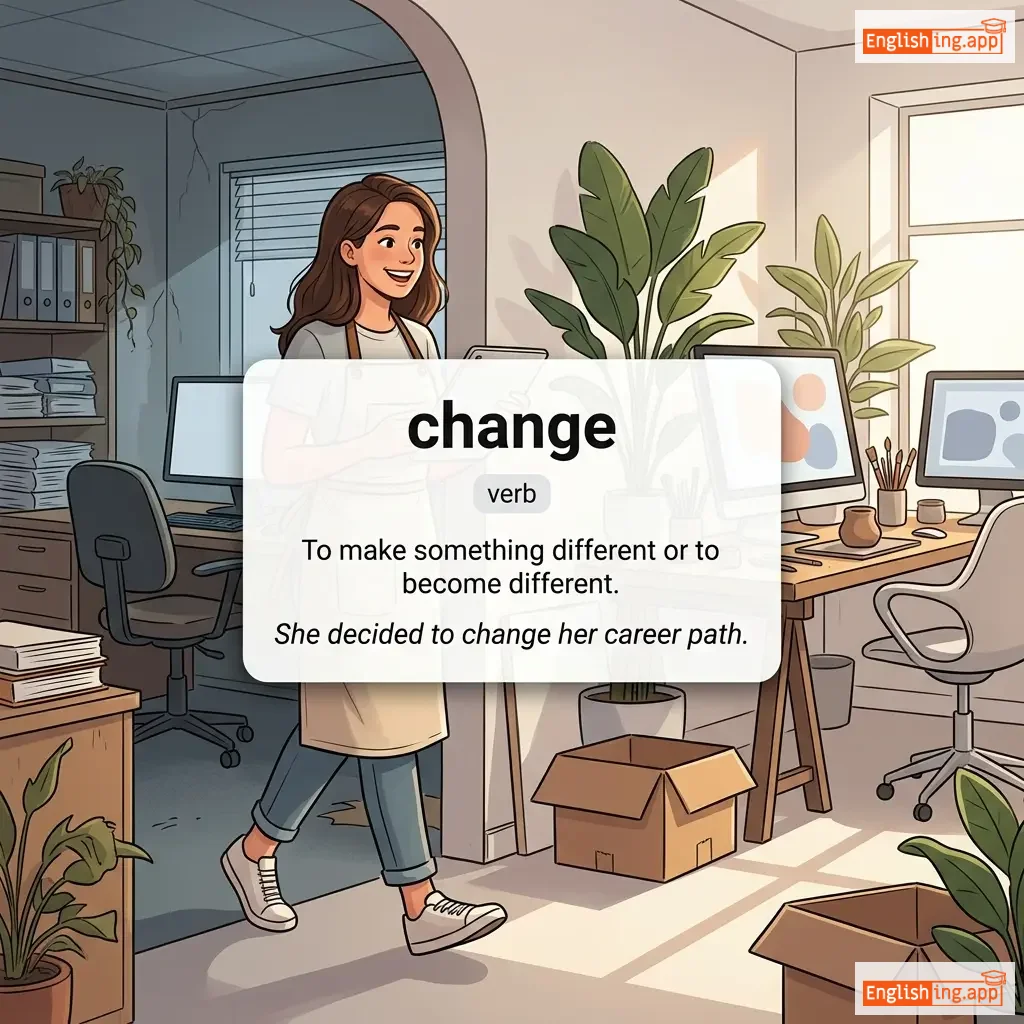
change definition card — visual illustration of the meaning
verb
/tʃeɪndʒ/
変化 (henka)

To make something different or to become different.

"She decided to change her career path."

"彼女はキャリアパスを変更することに決めました。" (Kanojo wa kyaria pasu o henkou suru koto ni kimemashita.)
change management definition card — visual illustration of the meaning
noun
/ˈʃeɪndʒ ˈmænɪdʒmənt/
チェンジマネジメント (chenji manejimento)

The discipline that guides how we prepare, equip and support individuals, teams and organizations in making organizational change.

"Change management ensures smooth transitions."

"チェンジマネジメントはスムーズな移行を保証します。" (Chenji manejimento wa sumūzu na ikō wo hoshō shimasu.)
adjective
/ˈtʃeɪn.dʒə.bəl/
変わりやすい; 不安定な (kawariyasui; fuanteina)

able to be changed; likely to change frequently

"The weather is very changeable in spring."

"春は天気が非常に変わりやすいです。" (Haru wa tenki ga hijou ni kawariyasui desu.)
verb
/ˈtʃeɪndʒɪŋ/
変化 (henka)

The act of becoming different; ongoing process of change.

"The weather is changing rapidly."

"天気は急速に変化しています。" (Tenki wa kyūsoku ni henka shiteimasu.)
noun
/ˈtʃænəl/
チャンネル / 媒体 (channeru / baitai)

A means of communication, or a passage for water or information.

"They launched a new TV channel last year."
"彼らは昨年新しいテレビチャンネルを開設しました。" (Karera wa sakunen atarashī terebi channeru o kaisetsu shimashita.)
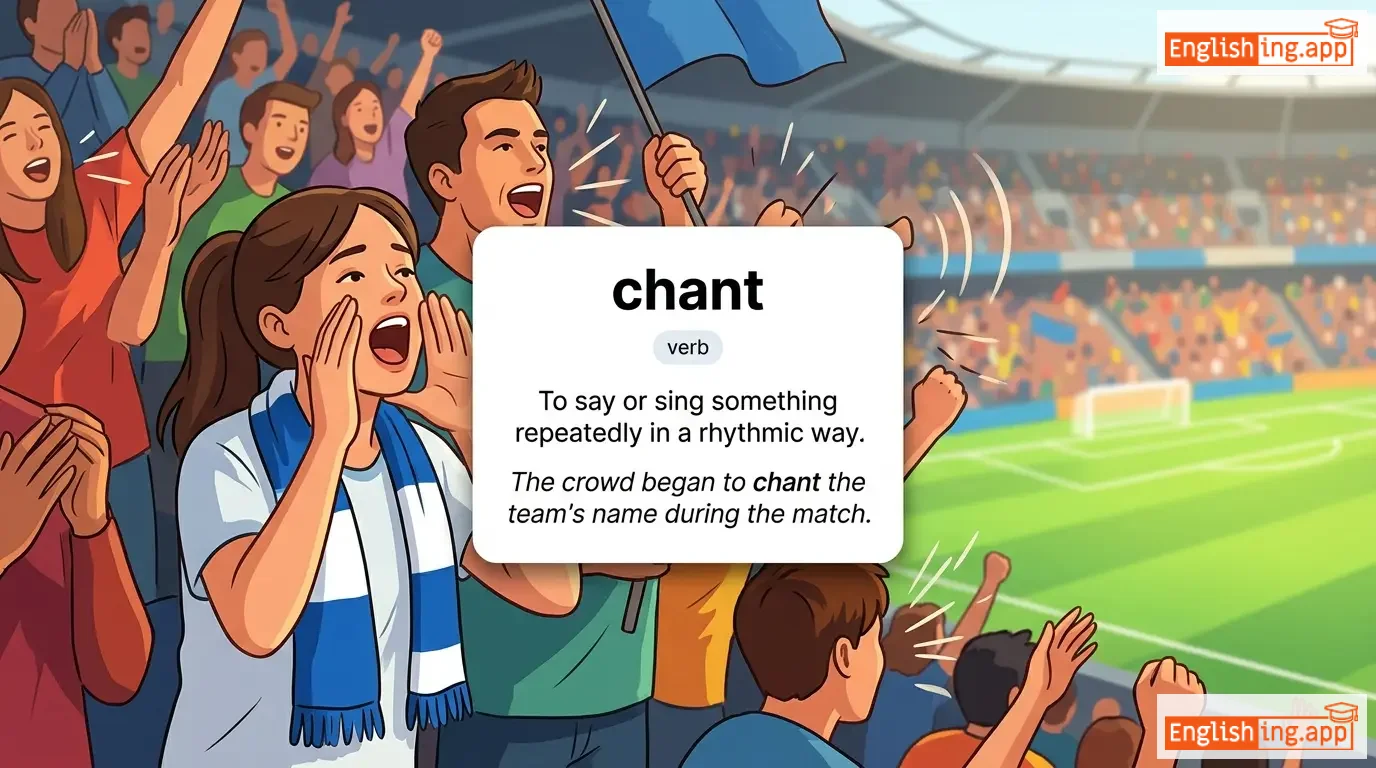
chant definition card — visual illustration of the meaning
verb
/tʃænt/
スローガンを唱える (suroogun o tonaeru)

To say or sing something repeatedly in a rhythmic way.

"The crowd began to chant the team's name during the match."

"観客は試合中にチーム名をチャントし始めました。" (Kankyaku wa shiai chuu ni chiimu mei o chanto shihajimemashita.)
noun
/ˈkeɪɒs/
混乱 (konran)

A state of complete disorder and confusion.

"The sudden storm caused chaos in the city."

"突然の嵐が都市で混乱を引き起こした。" (Totsuzen no arashi ga toshi de konran o hikiokoshita.)
adjective
/keɪˈɒtɪk/
カオティック (kaotikku)

Completely disordered or confusing.

"The classroom became chaotic when the teacher left."

"教師が去ったとき、教室はカオティックになった。" (Kyoushi ga satta toki, kyoushitsu wa kaotikku ni natta.)