語彙集

英単語辞書 | 単語の意味、定義、例文

noun
/kʌˈstoʊ.di.ən/
守衛; 管理人; 監督者 (shuei; kanri-nin; kantokusha)

a person who has responsibility for or looks after something; a caretaker or guardian

"The school custodian ensures that all buildings are clean and secure."

"学校の管理人はすべての建物が清潔で安全であることを確認します。" (Gakkou no kanri-nin wa subete no tatemono ga seiketsu de anzen de aru koto o kakunin shimasu.)
noun
/ˈkʌs.tə.di/
監護 (kango)

the legal right or responsibility of taking care of someone or something

"The mother was granted custody of her children after the divorce."

"離婚後、母親は子供の監護権を得ました。" (Rikon-go, hahaoya wa kodomo no kango-ken o emashita.)
noun
/ˈkʌstəm/
習慣 (shūkan)

a traditional practice or usual way of behaving in a particular society or place

"Shaking hands is a common custom in many countries."

"握手は多くの国で一般的な習慣です。" (Akushu wa ōku no kuni de ippanteki na shūkan desu.)
noun
/ˈkʌstəmər/
顧客 (kokyaku)

a person or organization that buys goods or services from a store or business

"The shopkeeper greeted the customer with a smile."

"店主は笑顔で顧客を迎えました。" (Ten-shu wa egao de kokyaku wo mukaemashita.)
Customer Retention definition card — visual illustration of the meaning
noun
/ˈkʌs.tə.mər rɪˈten.ʃən/
顧客維持 (kokyaku iji)

The ability of a company or product to retain its customers over some specified period.

"High customer retention increases business sustainability."

"高い顧客維持率は、ビジネスの持続可能性を高めます。" (Takai kokyaku iji-ritsu wa, bijinesu no jizoku kanōsei o takamemasu.)
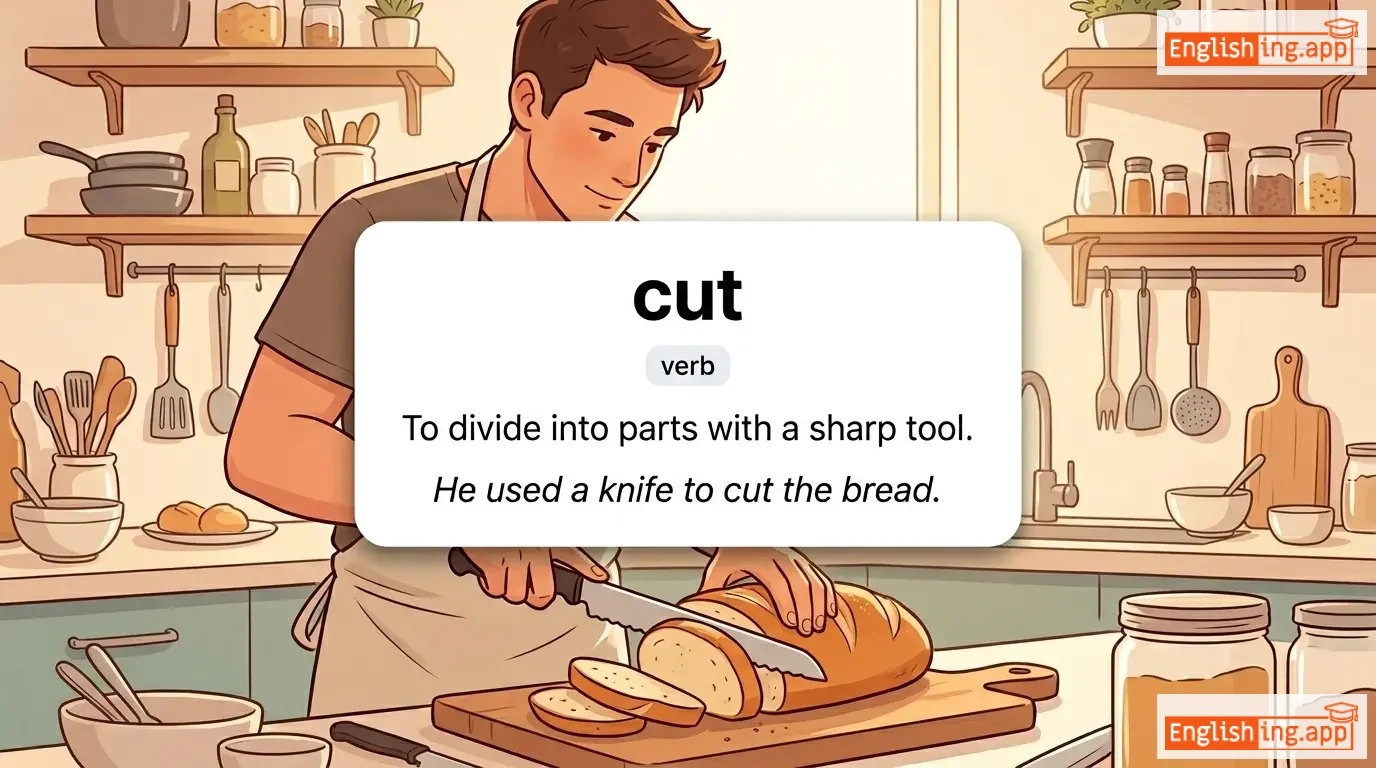
cut definition card — visual illustration of the meaning
verb
/kʌt/
切る (kiru)

To divide into parts with a sharp tool.

"He used a knife to cut the bread."

"彼はナイフを使ってパンを切った。" (Kare wa naifu o tsukatte pan o kitta.)
adjective
/kjuːt/
かわいい (kawaii)

attractive in a pretty or endearing way

"That puppy is so cute!"

"その子犬はとてもかわいいです!" (Sono koinu wa totemo kawaii desu!)
noun
/ˈkʌt.lət/
カツレツ (katsuretsu)

a small piece of meat, especially veal or lamb, for frying or grilling

"She served delicious chicken cutlets for dinner."

"彼女は夕食に美味しいチキンカツレツを出しました。" (Kanojo wa yūshoku ni oishī chikin katsuretsu o dashimashita.)
adjective
/ˈkʌtɪŋ/
鋭い (surudoi)

sharp or severe, often used to describe remarks or actions

"Her cutting remarks made everyone feel uncomfortable."

"彼女の鋭いコメントはみんなを不快にさせた。" (Kanojo no surudoi komento wa minna o fukai ni saseta.)
cutting-edge definition card — visual illustration of the meaning
adjective
ˈkʌtɪŋ ˌɛdʒ
最先端, 革新的, 最先端技術 (saizentan, kakushinteki, saizentan gijutsu)

The most advanced or innovative; at the forefront of development.

"This company develops cutting-edge technology."
"この会社は最先端技術を開発しています。" (Kono kaisha wa saizentan gijutsu o kaihatsu shiteimasu.)
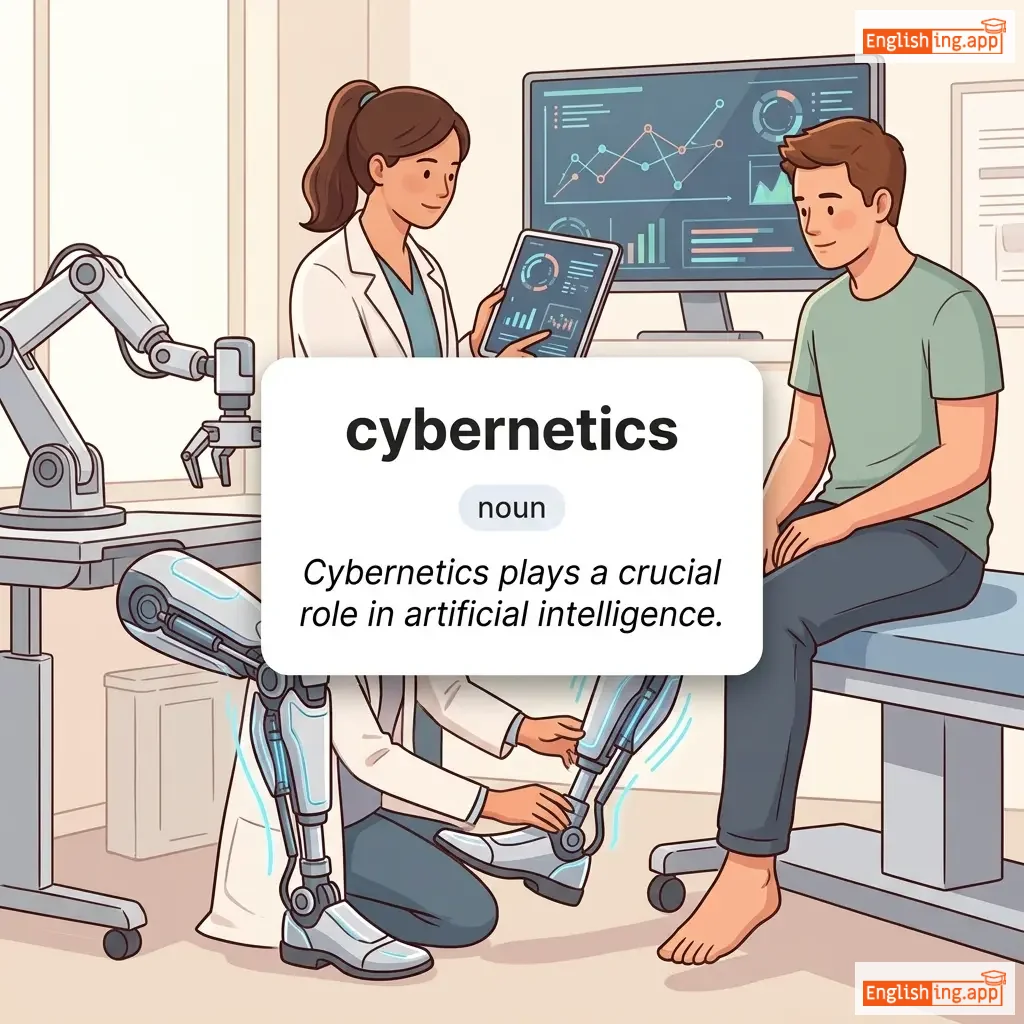
cybernetics definition card — visual illustration of the meaning
noun
ˌsaɪ.bəˈnet.ɪks
サイバネティクス (saibanetikusu)

The science of communications and automatic control systems in both machines and living things.

"Cybernetics plays a crucial role in artificial intelligence."

"サイバネティクスは人工知能において重要な役割を果たしています。" (Saibanetikusu wa jinkou chinou ni oite juuyou na yakuwari wo hatashiteimasu.)
cybersecurity definition card — visual illustration of the meaning
noun
ˌsaɪ.bə.sɪˈkjʊə.rɪ.ti
サイバーセキュリティ (saibaa sekyuriti)

The practice of protecting systems, networks, and programs from digital attacks

"Cybersecurity ensures safe digital operations."

"サイバーセキュリティはデジタル運用の安全を確保します。" (saibaa sekyuriti wa dejitaru unyou no anzen o kakuho shimasu)
noun/verb
/ˈsaɪkl/
サイクル / 自転車 (saikuru / jitensha)

a series of events that repeat in the same order; or to ride a bicycle

"She cycles to school every day."

"彼女は毎日自転車で学校に行きます。" (Kanojo wa mainichi jitensha de gakkou ni ikimasu.)
noun/adjective
/ˈsaɪklɔɪd/
サイクロイド曲線 (saikuroido kyokusen)

a curve traced by a point on the rim of a circle as it rolls along a straight line

"The cycloid is often studied in mathematics and physics."

"サイクロイド曲線は数学と物理学でよく研究されます。" (Saikuroido kyokusen wa suugaku to butsurigaku de yoku kenkyuu saremasu.)
noun
/ˈsaɪkloʊn/
サイクロン (saikuron)

a large-scale air mass that rotates around a strong center of low atmospheric pressure; a violent tropical storm

"The cyclone caused severe flooding along the coast."

"サイクロンは沿岸地域に深刻な洪水を引き起こした。" (saikuron wa engan chiiki ni shinkoku na kozui o hikiokoshita)
noun
/ˈsɪɡnət/
子供の白鳥 (kodomo no hakuchou)

a young swan

"The cygnet swam closely behind its mother."

"シグネットは母親の後ろを泳いでいた。" (Shignetto wa hahaoya no ushiro wo oyoideita.)
noun
/ˈsɪnɪk/
皮肉屋 (hinokoya)

a person who believes that people are motivated purely by self-interest rather than acting for honorable reasons

"He was too much of a cynic to believe in true love."

"彼は真実の愛を信じるにはあまりにも皮肉屋すぎた。" (Kare wa shinjitsu no ai o shinjiru ni wa amari ni mo hinokoya sugita.)
adjective
/ˈsɪn.ɪ.kəl/
皮肉な (hinikuna)

Believing that people are motivated by self-interest; distrustful of human sincerity or integrity.

"She was cynical about the politician's promises."

"彼女は政治家の約束に皮肉な態度を取っていた。" (Kanojo wa seijika no yakusoku ni hinikuna taido o totteta.)
noun
/ˈsɪn.ɪˌsɪz.əm/
シニシズム (shinshizumu)

An inclination to believe that people are motivated purely by self-interest; skepticism.

"His cynicism made it hard for him to trust anyone."

"彼のシニシズムは、誰かを信頼するのを難しくしていた。" (Kare no shinshizumu wa, dareka o shinrai suru no o muzukashiku shite ita.)
noun
/ˈsaɪ.nəˌʃʊr/
皆の注目の的 (mina no chūmoku no mato)

A person or thing that is the center of attention or admiration.

"She was the cynosure of all eyes at the party."

"彼女はパーティーで皆の注目の的でした。" (Kanojo wa pātī de mina no chūmoku no mato deshita.)