語彙集

英単語辞書 | 単語の意味、定義、例文

verb
/ˈkɒsɪt/
甘やかす (amayakasu)

to care for and protect in an overindulgent way

"The little girl was cosseted by her grandparents."

"小さな女の子は祖父母に甘やかされました。" (Chīsana onnanoko wa sofu bo ni amayakasa remashita.)
adjective
/ˈkɒs.ɪ.tɪd/
甘やかされた (amayakareta)

pampered, treated with excessive care and attention

"The cosseted child always got what he wanted."
"甘やかされた子供は、いつも欲しいものを手に入れていた。" (Amayakareta kodomo wa, itsumo hoshī mono o te ni irete ita.)
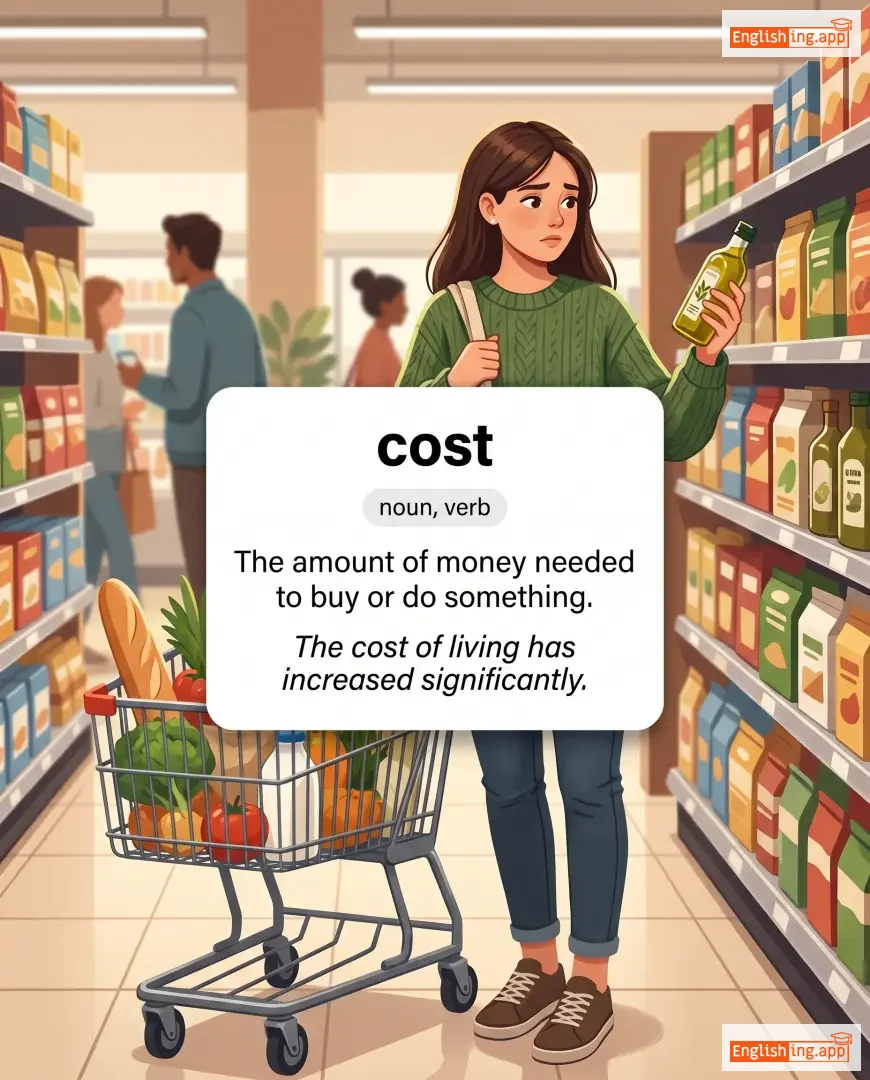
cost definition card — visual illustration of the meaning
noun, verb
/kɒst/
コスト (kosuto)

The amount of money needed to buy or do something.

"The cost of living has increased significantly."

"生活費が大幅に増加しました。" (Seikatsuhi ga ōhaba ni zōka shimashita.)
cost-efficient definition card — visual illustration of the meaning
adjective
/ˌkɒst.ɪˈfɪʃ.ənt/
コスト効率的 (kosuto kōritsuteki)

Achieving maximum productivity with minimum wasted effort or expense.

"Cost-efficient solutions benefit industries."

"コスト効率的な解決策は産業に利益をもたらす。" (Kosuto kōritsuteki na kaiketsusaku wa sangyō ni rieki o motarasu.)
adjective
/ˈkɔːstli/
高価 (kōka)

expensive or causing a lot of money, time, or effort

"Their mistake proved to be very costly for the company."
"彼らのミスは会社にとって非常に高価であることが証明されました。" (Karera no misu wa kaisha ni totte hijō ni kōka de aru koto ga shōmei saremashita.)
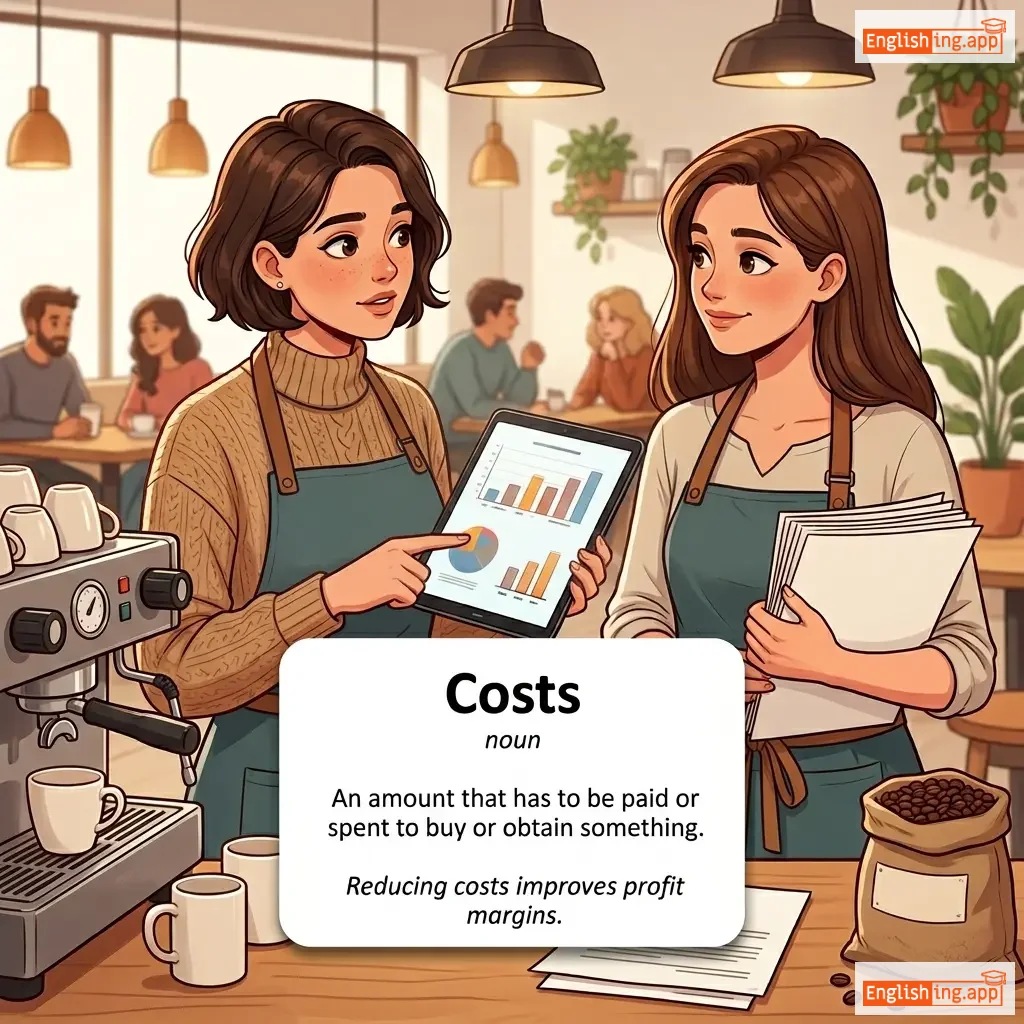
Costs definition card — visual illustration of the meaning
noun
kɒsts
コスト (kosuto)

An amount that has to be paid or spent to buy or obtain something.

"Reducing costs improves profit margins."

"コストを削減すると、利益率が向上します。" (Kosuto o sakugen suru to, rieki-ritsu ga kōjō shimasu.)
noun
/ˈkɒstjuːm/
衣装 (ishou)

a set of clothes worn to represent a particular character, culture, or occasion

"She wore a beautiful costume for the Halloween party."

"彼女はハロウィンパーティーのために素晴らしい衣装を着ていた。" (Kanojo wa Harowīn pātii no tame ni subarashī ishō o kite ita.)
noun
/kɒt/
コット (kotto)

a small bed, especially a portable one or one for a baby

"The baby sleeps peacefully in her cot."

"赤ちゃんは彼女のコットで安らかに眠っています。" (Akachan wa kanojo no kotto de yasuraka ni nematte imasu.)
noun
/ˈkoʊ.tə.ri/
小さくて排他的なグループ (chiisakute haitateki na gurūpu)

a small, exclusive group of people with shared interests

"He belonged to a coterie of artists who met every Friday."

"彼は毎週金曜日に会うアーティストのグループに属していました。" (Kare wa maishū kin'yōbi ni au ātisuto no gurūpu ni zoku shite imashita.)
adjective
/koʊˈtɜːr.mɪ.nəs/
隣接 (rinsoku)

having the same boundaries or extent in space, time, or meaning

"The two jurisdictions are coterminous, sharing the same borders."

"これらの2つの管轄区域は隣接しており、同じ境界を共有しています。" (Korera no futatsu no kanraku kuiki wa rinsoku shite ori, onaji kyōkai o kyōyū shiteimasu.)
noun
/ˈkɒtɪdʒ/
小屋 (koya)

a small simple house, typically in the countryside

"They spent their vacation in a cozy cottage by the lake."

"彼らは湖のそばの快適な小屋で休暇を過ごしました。" (Karera wa mizuumi no soba no kaiteki na koya de kyūka o sugoshimashita.)
noun
/ˈkɒtən/
幸せ (shiawase)

A soft white fibrous substance used to make cloth and thread.

"This shirt is made of pure cotton."

"彼女は賞を受け取ったとき、自分の幸せを隠すことができませんでした。" (Kanojo wa shō o uketotta toki, jibun no shiawase o kakusu koto ga dekimasen deshita.)
noun
/ˈkɒt.ən ˈfæb.rɪk/
綿布 (menpu)

textile made from cotton fibers, known for being soft, breathable, and comfortable

"Cotton fabric is perfect for summer clothing."

"綿布は夏の衣服に最適です。" (Menpu wa natsu no ifuku ni saiteki desu.)
noun
/kaʊtʃ/
ソファ (sofa)

a comfortable seat for two or more people, typically upholstered

"They sat on the couch and watched TV."

"彼らはソファに座ってテレビを見ていました。" (Karera wa sofa ni suwatte terebi o mite imashita.)
noun, verb
/kɒf/
(seki)

a sudden noisy release of air from the lungs to clear the throat or airway; to expel air suddenly from the lungs with a cough

"He has a bad cough and stayed home today."

"彼はひどい咳があるので、今日は家にいました。" (kare wa hidoi seki ga aru node kyou wa ie ni imashita)
modal verb
/kʊd/
できた (dekita)

Used to indicate possibility, ability, or permission in the past or as a polite suggestion.

"He could swim when he was a child."

"彼は子供の頃泳げた。" (Kare wa kodomo no koro oyogeta.)
noun
/ˈkaʊn.səl/
評議会 (hyougikai)

an assembly of people chosen or elected to make decisions or advise on matters

"The city council voted to improve public transportation."

"市議会は公共交通の改善のために投票しました。" (Shigikai wa koukyou koutsuu no kaizen no tame ni touhyou shimashita.)
noun
/ˈkaʊnsələr/
議員 (giin)

an elected member of a local council who helps make decisions and represent the community

"The councillor spoke to residents about improving local roads."

"市議会議員は地域の道路について話しました。" (shigikai giin wa chiiki no doro ni tsuite hanashimashita)
noun
/ˈkaʊnsɪlər/
市議会議員 (shigikai giin)

an elected member of a council, especially a local government body

"The councilor held a public meeting to discuss local issues."

"市議会議員は地元の問題を議論するために公開会議を開きました。" (Shigikai giin wa jimoto no mondai o giron suru tame ni kōkai kaigi o hirakimashita.)
verb
/ˈkaʊnsəl/
助言する (jogen suru)

to give professional advice or guidance to someone

"The teacher counseled the students on their career choices."

"先生は学生にキャリア選択についてアドバイスしました。" (Sensei wa gakusei ni kyaria sentaku ni tsuite adobaisu shimashita.)
noun
/ˈkaʊnsəlɪŋ/
カウンセリング (kaunseringu)

professional guidance or therapy to help resolve personal or psychological problems

"She decided to go for counseling after feeling stressed for months."

"数ヶ月間ストレスを感じた後、彼女はカウンセリングを受けることを決意しました。" (Sū kagetsu-kan sutoresu o kanjita ato, kanojo wa kaunseringu o ukeru koto o ketsui shimashita.)
noun
/ˈkaʊn.səl.ɪŋ/
カウンセリング (kaunseringu)

the process of giving professional guidance and support to help someone deal with personal, social, psychological, or career-related problems

"She decided to seek counselling to manage stress and anxiety."

"彼女はストレスを管理するためにカウンセリングを受けた。" (kanojo wa sutoresu o kanri suru tame ni kaunseringu o uketa)
noun
/ˈkaʊnsələr/
カウンセラー (kaunseraa)

a person trained to give guidance on personal, social, or psychological problems; an advisor

"She spoke to a counsellor to get advice about her career."

"彼女は自分のキャリアについてカウンセラーに相談した。" (kanojo wa jibun no kyaria ni tsuite kaunseraa ni soudan shita)
noun
/ˈkaʊn.səl.ər/
カウンセラー (kaunserā)

a person trained to give guidance on personal, social, or psychological problems

"The school counselor helped the student deal with stress."

"学校のカウンセラーは学生がストレスに対処する手助けをしました。" (Gakkō no kaunserā wa gakusei ga sutoresu ni taisho suru tetsuduke o shimashita.)
verb
/kaʊnt/
数える (kazoeru)

to determine the total number of something

"She carefully counted the money on the table."

"彼女はテーブルの上のお金を慎重に数えた。" (Kanojo wa tēburu no ue no okane o shinchō ni kazoeta.)
noun
/ˈkaʊn.tə.nəns/
顔つき、表情; 支援 (kao-tsuki, hyōjō; shien)

a person's face or expression; support or approval

"Her cheerful countenance brightened the room."

"彼女の明るい顔つきが部屋を明るくした。" (Kanojo no akarui kaotsuki ga heya o akaruku shita.)
noun
/ˈkaʊn.tər/
カウンター (kauntā)

a flat surface in a shop, bank, or kitchen where transactions or work are done

"The cashier stood behind the counter."

"レジ係はカウンターの後ろに立っていました。" (Rejigakari wa kauntā no ushiro ni tatteimashita.)
noun
/ˈkaʊn.tər kleɪm/
反訴 (hansō)

a claim made to rebut a previous claim, often in legal contexts

"The defendant filed a counter-claim against the plaintiff."

"被告は原告に対して反訴を提起しました。" (Hikoku wa genkoku ni taishite hansō o teiki shimashita.)
verb
/ˌkaʊntərˈækt/
反作用 (hansaku)

to act against something in order to reduce its effect

"The medicine helps counteract the side effects of the treatment."

"その薬は治療の副作用をカウンターアクトするのに役立ちます。" (Sono kusuri wa chiryo no fukusayō o kauntāakuto suru no ni yakudachimasu.)
verb
/ˌkaʊntərˈbæləns/
相殺する (sōsai suru)

to offset or balance the effect of something

"Exercise can counterbalance the negative effects of stress."

"運動はストレスの悪影響を相殺できます。" (Undō wa sutoresu no aku eikyō o sōsai dekimasu.)
noun, verb
/ˈkaʊntərˌtʃɑːrdʒ/
反訴 (hansō)

an opposing charge or accusation; to make an opposing attack

"The lawyer filed a countercharge against the accuser."

"弁護士は告発者に対して反訴を提起しました。" (Bengoshi wa kokuhatsusha ni taishite hanso o teiki shimashita.)
adjective, verb, noun
/ˈkaʊntərfɪt/
偽造 (gizō)

made to look like something genuine in order to deceive

"The police seized a batch of counterfeit currency."

"警察は偽札の一群を押収しました。" (Keisatsu wa gisatsu no ichigun o shūshū shimashita.)
adjective
/ˌkaʊntərɪnˈtuːɪtɪv/
直感に反する (chokkann ni hansuru)

contrary to what one would intuitively expect

"His approach seems counterintuitive but it actually works."

"彼のアプローチは直感に反するように見えますが、実際には効果的です。" (Kare no apurōchi wa chokkann ni hansuru yō ni miemasu ga, jissai ni wa kōka-teki desu.)
verb
/ˌkaʊntərˈmænd/
命令を取り消す (meirei wo torikesu)

to revoke or cancel an order or command

"The general countermanded the previous orders immediately."

"将軍は前の命令を直ちに取り消しました。" (Shōgun wa mae no meirei o tadachi ni torikeshimashita.)
noun
/ˈkaʊntərˌpɑːrt/
対等者 (taiteisha)

a person or thing that corresponds to or has the same function as another

"The CEO met with his counterpart in the partner company."

"CEOはパートナー企業の対等者と会いました。" (CEO wa pātonā kigyō no taiteisha to aimashita.)
noun
/ˈkaʊntərˌpɔɪnt/
対比点 (taibi ten)

an argument, idea, or theme contrasting with another; also a musical term for independent melody

"Her calm attitude was a counterpoint to his anger."
"彼女の落ち着いた態度は彼の怒りの対比点だった。" (Kanojo no ochitsuita taido wa kare no ikari no taibi ten datta.)
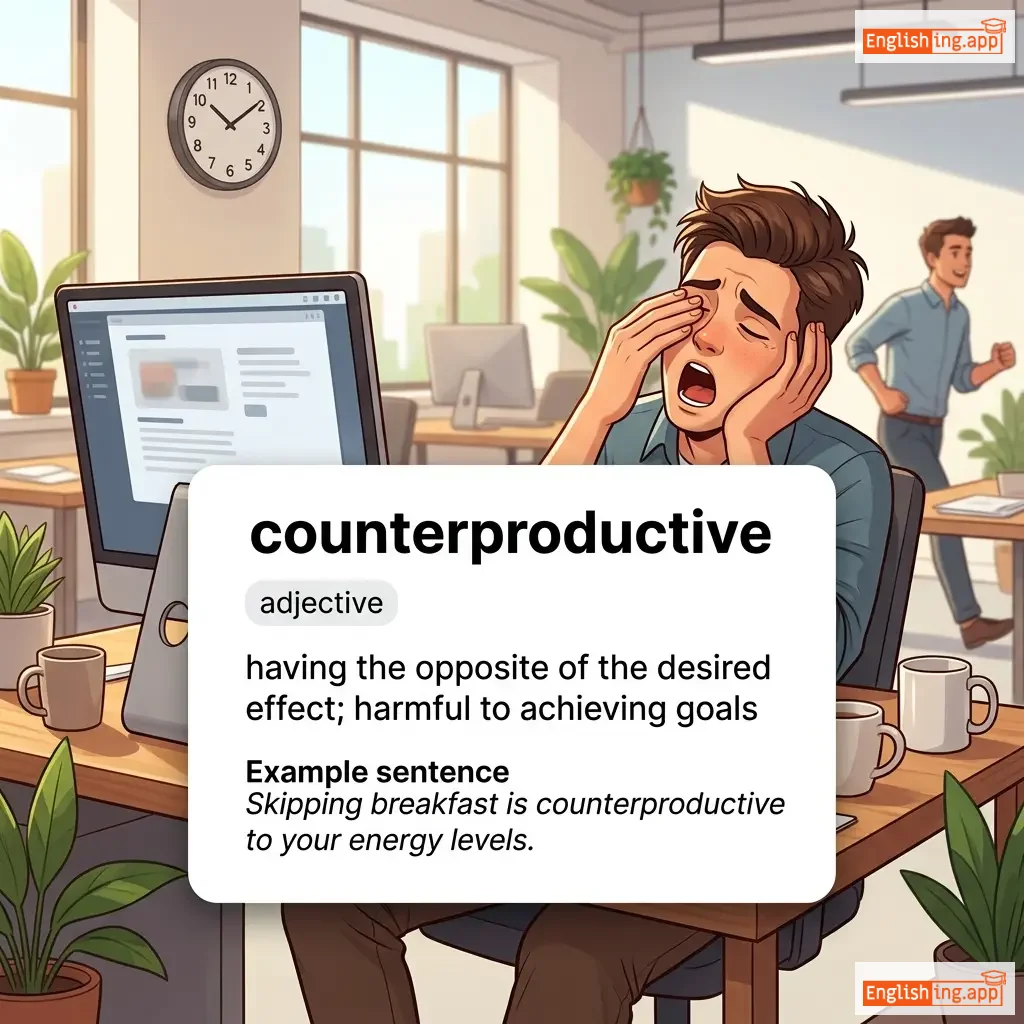
counterproductive definition card — visual illustration of the meaning
adjective
/ˌkaʊntərprəˈdʌktɪv/
逆効果の (gyakukouka no)

having the opposite of the desired effect; harmful to achieving goals

"Skipping breakfast is counterproductive to your energy levels."

"朝食を抜くことはエネルギーレベルに逆効果です。" (Choushoku wo nuku koto wa enerugii reberu ni gyakukouka desu.)
verb
/ˌkaʊntərˈveɪl/
相殺する (sousai suru)

to offset or counteract the effect of something

"The benefits of the new policy countervail its drawbacks."

"新しい政策の利点はその欠点を相殺します。" (Atarashī seisaku no riten wa sono ketten o sōsai shimasu.)
noun
/ˈkaʊntɪŋˌhaʊs/
会計事務所 (kaikei jimusho)

a business office where accounts are kept and financial transactions are managed

"The merchant spent most of his day in the counting-house reviewing ledgers."

"商人は一日中、会計事務所で帳簿を確認して過ごしました。" (Shōnin wa ichinichijū, kaikei jimusho de chōbo o kakunin shite sugosimashita.)
adjective
/ˈkaʊntləs/
数えきれない (kazoekirenai)

too many to be counted; innumerable

"There are countless stars in the sky."

"空には無数の星があります。" (Sora ni wa musū no hoshi ga arimasu.)
noun
/ˈkʌn.tri/
(kuni)

a nation with its own government and borders

"Bangladesh is a beautiful country with rich culture."

"バングラデシュは豊かな文化を持つ美しい国です。" (Banguradeshu wa yutakana bunka o motsu utsukushii kuni desu.)
noun
/ˈkʌntrɪmən/
同国人 (doukokujin)

a person from one's own country or rural area

"He was proud to meet a fellow countryman at the international conference."

"彼は国際会議で同国人に会えて誇りに思った。" (Kare wa kokusai kaigi de doukokujin ni aete hokori ni omotta.)
noun
/ˈkʌntrisaɪd/
田舎 (inaka)

land outside cities and towns; rural areas with farms, fields, and villages

"She enjoys the peace and beauty of the countryside."

"彼女は田舎の静けさと美しさを楽しんでいる。" (kanojo wa inaka no shizukesa to utsukushisa o tanoshinde iru)
noun
/ˈkaʊnti/
(gun)

A territorial division within a country, typically a region with its own local government.

"She grew up in a small county in northern England."

"彼女はイギリス北部の小さな郡で育ちました。" (Kanojo wa Igirisu hokubu no chiisana gun de sodachimashita.)
noun
/kuː/
クーデター (kūdetā)

a sudden, decisive action that brings about a change, especially in government

"The military staged a coup to overthrow the existing regime."

"軍隊は現政権を倒すためにクーデターを起こしました。" (Guntai wa gen seiken o taosu tame ni kūdetā o okoshimashita.)
noun
/ˈkʌpəl/
カップル (kappuru)

two people or things considered together; a pair

"They make a lovely couple and have been married for five years."
"彼らは素敵なカップルで、5年間結婚しています。" (Karera wa suteki na kappuru de, go-nenkan kekkon shiteimasu.)
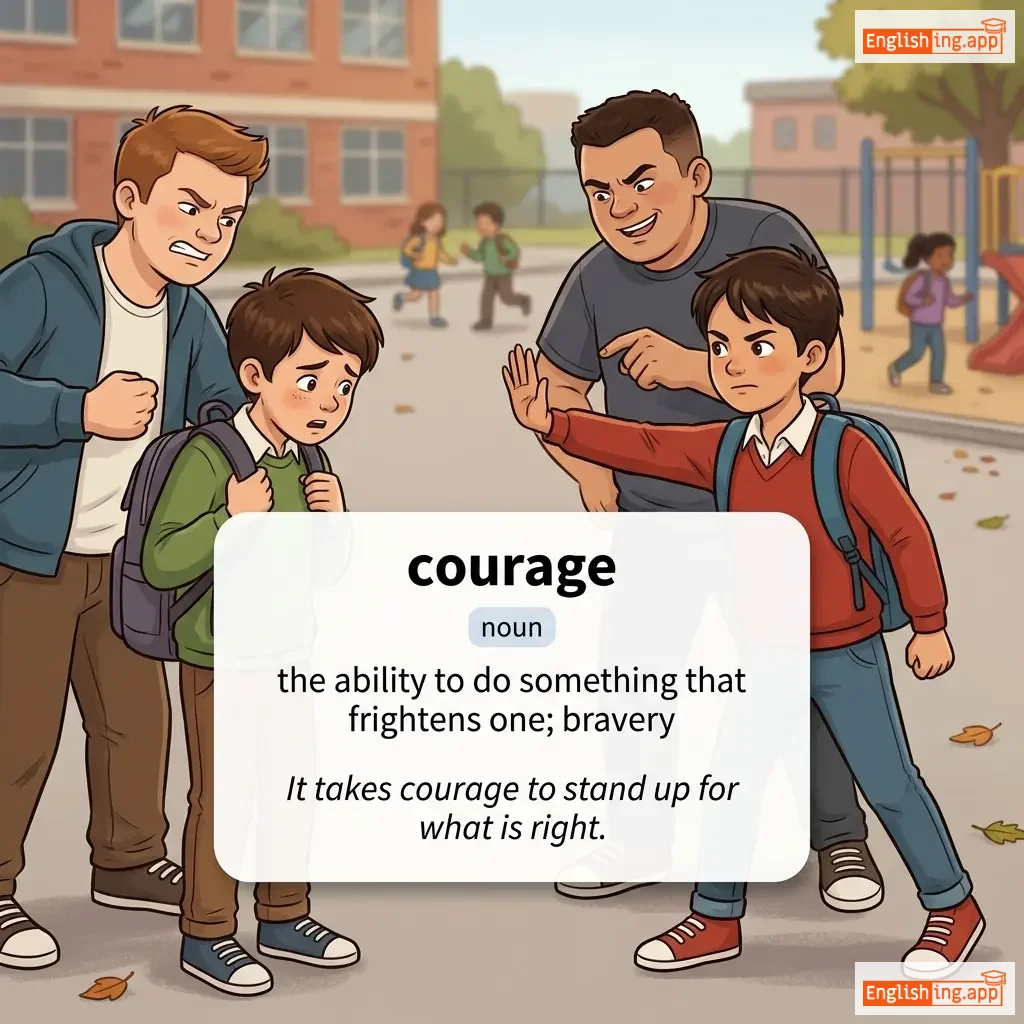
courage definition card — visual illustration of the meaning
noun
/ˈkʌrɪdʒ/
勇気 (yūki)

the ability to do something that frightens one; bravery

"It takes courage to stand up for what is right."

"正しいことを守るには勇気が必要です。" (Tadashī koto o mamoru ni wa yūki ga hitsuyōdesu.)
adjective
/kəˈreɪdʒəs/
勇敢な (yūkan na)

having or showing bravery; able to face danger or difficulty

"The firefighter was courageous as he rescued the children from the burning building."

"消防士は、燃えている建物から子供たちを救出したとき、勇敢でした。" (Shōbōshi wa, moete iru tatemono kara kodomotachi o kyūshutsu shita toki, yūkan deshita.)
noun
/ˈkʊriər/
宅配便 (takuhai-bin)

a person or company that delivers messages, packages, or mail

"The courier delivered the documents on time."

"クーリエは時間通りに書類を配達しました。" (Kūrie wa jikan-dōri ni shorui o haitatsu shimashita.)
noun
/kɔːrs/
コース、道または一連の教育レッスン (kōsu, michi matawa ichiren no kyōiku ressun)

a direction, path, or a set of educational lessons

"She enrolled in a computer science course."

"彼女はコンピュータサイエンスのコースに登録しました。" (Kanojo wa konpyūta saiensu no kōsu ni tōroku shimashita.)