語彙集

英単語辞書 | 単語の意味、定義、例文

adjective
/ˈtʃuːzi/
選り好み (erigonomi)

very careful in choosing; selective

"She is very choosy about the clothes she wears."
"彼女は自分が着る服にとてもこだわりがあります。" (Kanojo wa jibun ga kiru fuku ni totemo kodawari ga arimasu.)
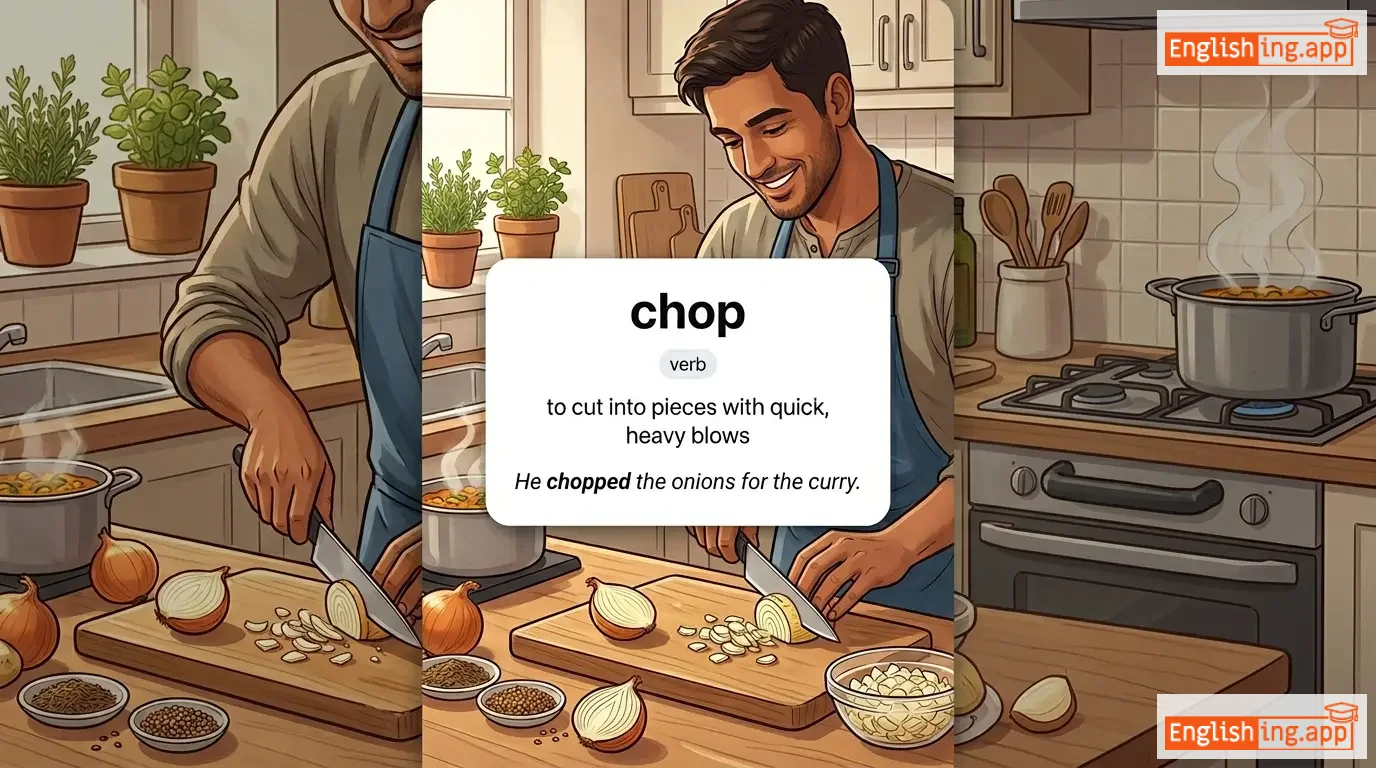
chop definition card — visual illustration of the meaning
verb
/tʃɒp/
切る (kiru)

to cut into pieces with quick, heavy blows

"He chopped the onions for the curry."

"彼はカレーのために玉ねぎを切った。" (Kare wa karē no tame ni tamanegi o kitta.)
noun
/ˈtʃɒp.ər/
(ono)

a tool with a heavy blade for chopping wood; a helicopter

"The lumberjack swung the chopper to cut down the tree."

"伐採者は木を切るために斧を振った。" (Batsusai-sha wa ki o kiru tame ni ono o futta.)
adjective
/ˈkɔːrəl/
合唱に関連する (gasshou ni kanren suru)

Relating to, written for, or performed by a choir or chorus.

"The church hosted a choral performance on Sunday."

"教会は日曜日に合唱のパフォーマンスを開催しました。" (Kyoukai wa nichiyoubi ni gasshou no pafōmansu o kaisai shimashita.)
noun
/kɔːrd/
和音 (waon)

A group of musical notes played or sung together; also a straight line segment joining two points on a curve.

"She strummed a simple chord on the guitar."

"彼女はギターでシンプルな和音を弾いた。" (Kanojo wa gitā de shinpuruna waon o haita.)
noun
/tʃɔːr/
家事 (kaji)

A routine task, especially a household duty.

"Washing the dishes is my least favorite chore."

"食器を洗うのは私の一番嫌いな家事です。" (Shokki o arau no wa watashi no ichiban kirai na kaji desu.)
noun
/ˌkɔːriˈɒɡrəfi/
振付 (furiwake)

The art of designing and arranging dances and movements.

"The choreography of the ballet was breathtaking."

"バレエの振付は息を呑むほど素晴らしかった。" (Barei no furiwake wa iki o nomu hodo subarashikatta.)
verb
/ˈtʃɔːrtl/
喜んで笑う (yorokonde warau)

to laugh in a breathy, gleeful way

"The audience chortled at the comedian's witty remarks."

"観客はコメディアンのウィットに富んだコメントにクスクスと笑った。" (Kankyaku wa komedian no witto ni tonda komento ni kusukusu to waratta.)
noun
/ˈkɔːrəs/

a group of singers or the part of a song that is repeated

"The children sang the chorus loudly."

noun
/kraɪst/
キリスト (Kirisuto)

the title given to Jesus, considered the Messiah in Christianity

"Christ is central to Christian faith."

"キリストはキリスト教信仰の中心です。" (Kirisuto wa Kirisutokyo shinkou no chuushin desu.)
verb
/ˈkrɪsən/
洗礼名を付ける (senrei-mei o tsukeru)

to give a name to someone at baptism or to name something officially

"They christened the ship after the queen."

"彼らは船に女王の名前を付けました。" (Karera wa funa ni joō no namae o tsukemashita.)
noun
/ˈkrɪsəndəm/
キリスト教界 (kirisuto kyoukai)

the worldwide body or community of Christians

"The news spread quickly across Christendom."

"そのニュースはキリスト教界全体に素早く広まりました。" (Sono nyuusu wa kirisutokyoukai zentai ni subayaku hiromarimashita.)
noun, adjective
/ˈkrɪstʃən/
クリスチャン (kurisuchan)

a person who follows the religion based on the teachings of Jesus Christ

"She is a devoted Christian who attends church every Sunday."

"彼女は毎週日曜日に教会に行く献身的なクリスチャンです。" (Kanojo wa maishū nichiyōbi ni kyōkai ni iku kenshin-teki na kurisuchan desu.)
noun
/ˌkrɪstiˈænɪti/
キリスト教 (kirisutokyou)

the religion based on the teachings of Jesus Christ

"Christianity has millions of followers around the world."

"キリスト教は世界中に数百万の信者を持っています。" (Kirisutokyou wa sekaijuu ni suubakuman no shinja o motteimasu.)
noun
/ˈkrɪsməs/
クリスマス (Kurisumasu)

an annual festival celebrating the birth of Jesus Christ, observed on December 25

"Families gather to celebrate Christmas with joy and love."

"家族は喜びと愛を持ってクリスマスを祝うために集まります。" (Kazoku wa yorokobi to ai o motte kurisumasu o iwau tame ni atsumarimasu.)
adjective
/krəˈmætɪk/
色彩の (shikisai no)

Relating to colors or, in music, notes outside the standard scale.

"The artist used a chromatic palette to create vibrant contrasts."

"アーティストは、鮮やかなコントラストを作り出すためにクロマチックなパレットを使用しました。" (Ātisuto wa, azakana kontorasuto o tsukuridasu tame ni kuromachikku na paretto o shiyō shimashita.)
adjective
/ˈkrɒnɪk/
慢性的 (manseiteki)

Lasting for a long time or constantly recurring, often describing illness.

"She suffers from chronic back pain."
"彼女は慢性的な背中の痛みに悩まされています。" (Kanojo wa manseiteki na senaka no itami ni nayama sareteimasu.)
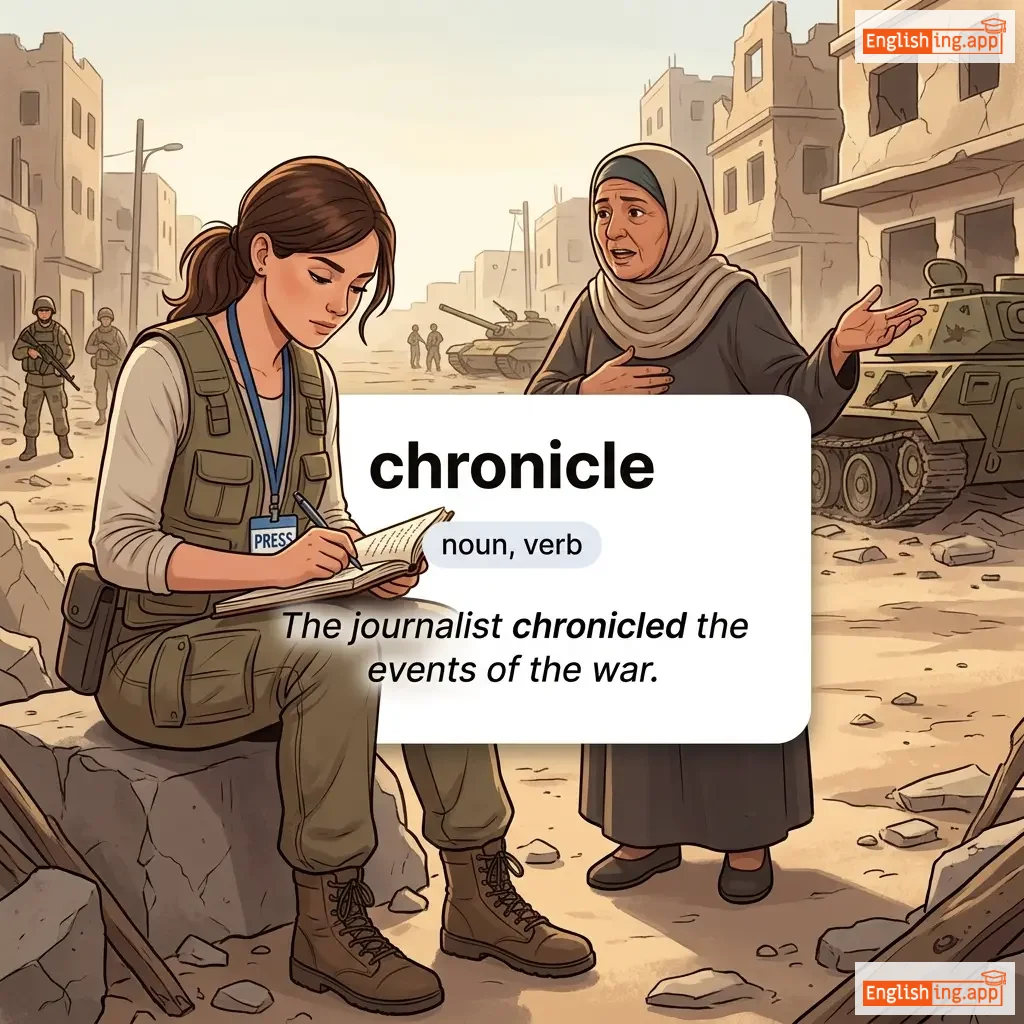
chronicle definition card — visual illustration of the meaning
noun, verb
/ˈkrɒnɪkəl/
年代記 (nendaki)

A factual written account of important events in order of time; to record such events.

"The journalist chronicled the events of the war."

"ジャーナリストは戦争の出来事を記録しました。" (Jānarisuto wa sensō no dekigoto o kiroku shimashita.)
adjective
/ˌkrɒnəˈlɒdʒɪkəl/
時系列 (jikiretsu)

Arranged in the order in which events happened.

"The events were listed in chronological order."

"イベントは時系列でリストされました。" (Ibento wa jikiretsu de risuto saremashita.)
noun
/krəˈnɒlədʒi/

The arrangement of events or dates in the order of their occurrence.

"The chronology of the dynasty was carefully studied by historians."

noun
/krəˈnɒmɪtər/
クロノメーター (kronometa)

An instrument for measuring time precisely, especially used in navigation.

"The sailor relied on the chronometer to determine his position at sea."

"船乗りは海上で自分の位置を決めるためにクロノメーターに頼りました。" (Funanori wa kaijou de jibun no ichi wo kimeru tame ni kuronometaa ni tayorimashita.)
adjective
/ˈtʃʌbi/
ぽっちゃり (pochari)

slightly fat in a way that looks healthy and pleasant

"The baby has chubby cheeks."

"赤ちゃんはぽっちゃりしたほっぺたをしています。" (Akachan wa pocchari shita hoppeta o shiteimasu.)
verb
/ˈtʃʌkəl/
静かに笑う (shizukani warau)

To laugh quietly or to oneself.

"She chuckled at the joke her friend told."

"彼女は友達の冗談に静かに笑った。" (Kanojo wa tomodachi no joudan ni shizukani waratta.)
noun
/tʃʌŋk/
塊 / 断片 (katamari / danpen)

a thick or solid piece of something

"She cut the cake into large chunks."

"彼女はケーキを大きな塊に切った。" (Kanojo wa keeki o ookina katamari ni kitta.)
noun
/tʃɜːrtʃ/
教会 (kyoukai)

a building used for public Christian worship

"The old church in the village was built in the 18th century."

"村の古い教会は18世紀に建てられました。" (Mura no furui kyoukai wa 18 seiki ni tateraremashita.)
😠

churl

noun
/tʃɜːrl/

A rude, boorish, or ill-mannered person.

"The waiter was such a churl that customers left unhappy."

churlish definition card — visual illustration of the meaning
adjective
/ˈtʃɜːrlɪʃ/
無礼 (burei)

Rude in a mean-spirited and surly way.

"It would be churlish to refuse her kind invitation."

"彼女の親切な招待を断るのは無礼だろう。" (Kanojo no shinsetsuna shōtai o kotowaru no wa burei darou.)
noun
/ˈtʃɜː.nɪŋ stɪk/
バターバトン (batā baton)

a wooden stick used for stirring and churning butter, milk, or other liquids

"Grandmother used a churning stick to make fresh butter."

"おばあさんは新鮮なバターを作るためにチャーニングスティックを使いました。" (Obāsan wa shinsen na batā o tsukuru tame ni chāningu sutikku o tsukaimashita.)
noun
/ˈsɪɡəˌrɛt/
タバコ (tabako)

a small roll of finely cut tobacco wrapped in paper for smoking

"He lit a cigarette after dinner."

"彼は夕食後にタバコを吸った。" (Kare wa yuushoku go ni tabako o sutta.)
adjective
/ˈsɪlieɪtɪd/
繊毛を持つ (senmou wo motsu)

Having minute hairlike projections (cilia) on the surface of cells or organisms.

"The ciliated cells in the respiratory tract help move mucus out of the lungs."

"呼吸器官の繊毛細胞は粘液を肺から外に出すのを助けます。" (Kokyuu kikan no senmou saibou wa nen'eki wo hai kara soto ni dasu no wo tasukemasu.)
noun
/ˈsɪniæst/
映画愛好家 (eiga aikouka)

A film enthusiast or filmmaker; a person deeply interested in cinema.

"As a true cineast, she spends most weekends watching classic films."

"真のシネアストとして、彼女はほとんどの週末をクラシック映画を観ることに費やします。" (Shin no sineasuto to shite, kanojo wa hotondo no shuumatsu o kurashikku eiga o miru koto ni費やします.)
noun
/ˈsɪnəmə/
映画館 (eigakan)

a place where films are shown to the public; the art or industry of making and showing films

"We went to the cinema to watch a new movie."

"私たちは新しい映画を見るために映画館へ行った。" (watashitachi wa atarashii eiga o miru tame ni eigakan e itta)
noun
/ˈsɪnəmən/
シナモン (shinamon)

aromatic spice obtained from the inner bark of several tree species

"Cinnamon is often used in baking and desserts."
"シナモンはしばしばベーキングやデザートに使われます。" (Shinamon wa shibashiba bekingu ya dezato ni tsukawaremasu.)
cipher definition card — visual illustration of the meaning
noun
/ˈsaɪfər/

A secret or disguised way of writing; a code.

"The spy sent a message written in cipher."

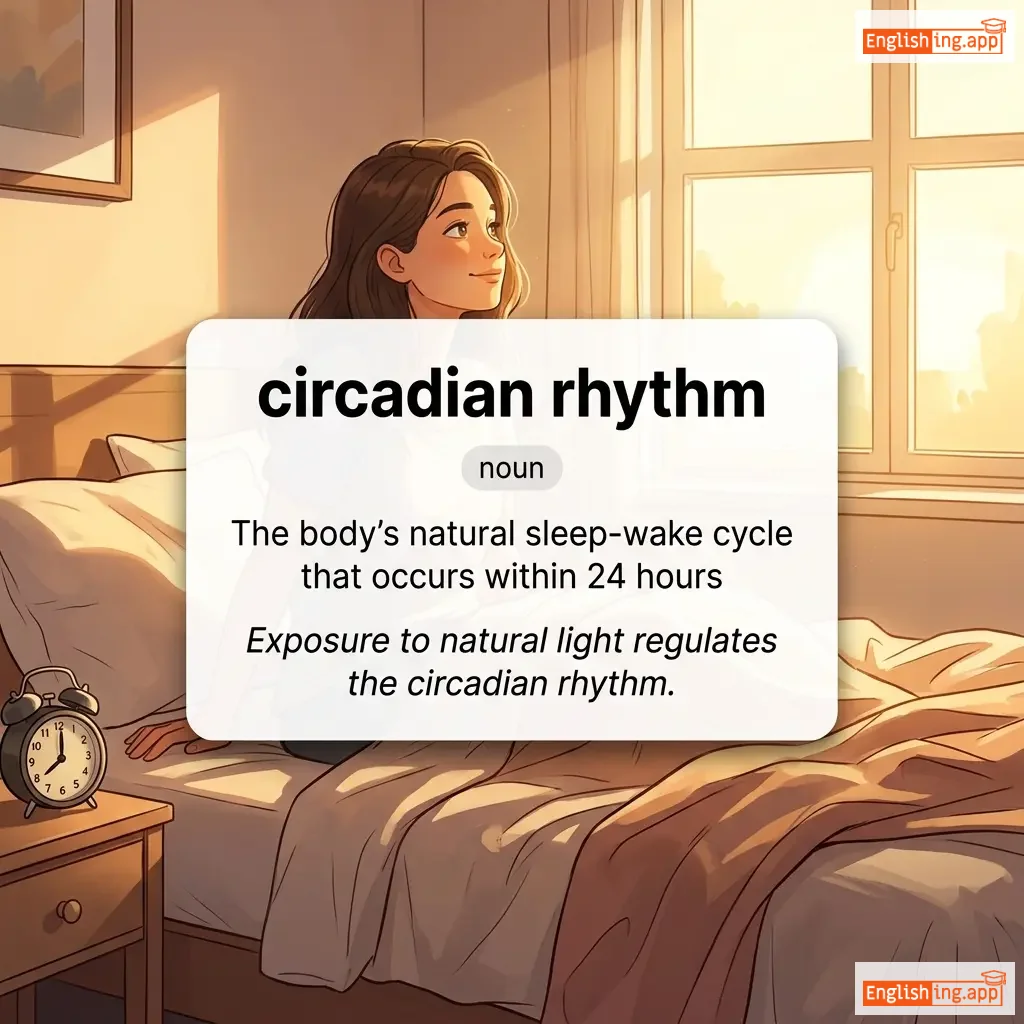
circadian rhythm definition card — visual illustration of the meaning
noun
sɜːrˈkeɪdiən ˈrɪðəm
サーカディアンリズム (saakadeian rizumu)

The body's natural sleep-wake cycle that occurs within 24 hours

"Exposure to natural light regulates the circadian rhythm."

"自然光への暴露はサーカディアンリズムを調整します。" (Shizenkou e no bakuro wa saakadeian rizumu o chousei shimasu.)
noun/verb
/ˈsɜːrkəl/
(en)

a round shape; to move all the way around something

"The children sat in a circle."

"子供たちは円形に座っていました。" (Kodomotachi wa enkei ni suwatte imashita.)
noun
/ˈsɜːrklət/

A small circular band, typically worn as an ornament on the head.

"The princess wore a golden circlet on her forehead."

noun
/ˈsɜːrkɪt/
回路 / 電気回路 (kairo / denki kairo)

A roughly circular line, route, or movement that starts and ends at the same place; also an electrical pathway.

"The runners completed the circuit around the park."
"ランナーは公園の周りの回路を完了しました。" (Rannā wa kōen no mawari no kairo o kanryō shimashita.)
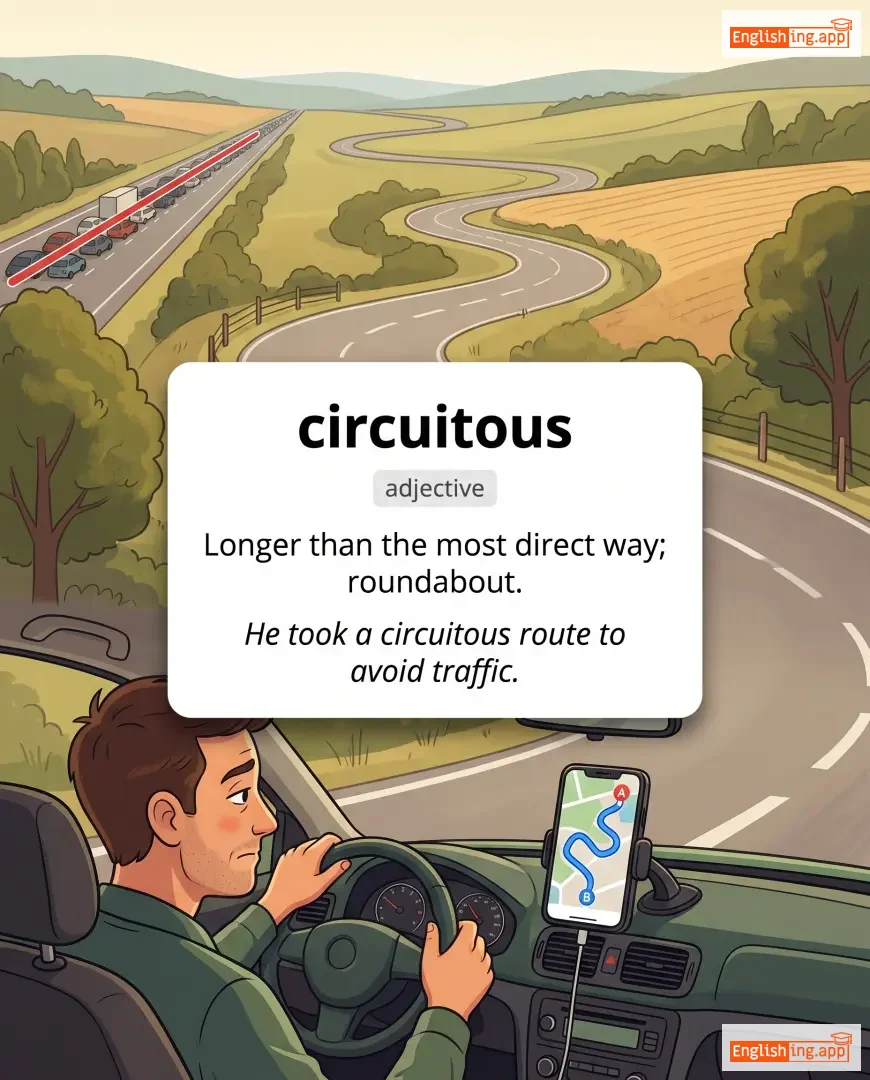
circuitous definition card — visual illustration of the meaning
adjective
/sərˈkjuːɪtəs/
迂回路 (ukairō)

Longer than the most direct way; roundabout.

"He took a circuitous route to avoid traffic."

"彼は渋滞を避けるために迂回路を取った。" (Kare wa jūtai o sakeru tame ni ukairō o totta.)
adjective
/ˈsɜːrkjələr/
円形の (enkei no)

shaped like a circle; round in form

"The kids sat in a circular arrangement around the campfire."

"子供たちはキャンプファイヤーの周りに円形の配置で座っていました。" (Kodomotachi wa kyampufaiyā no mawari ni enkei no haichi de suwatteimashita.)
circular economy definition card — visual illustration of the meaning
noun
ˈsɜːrkjələr ɪˈkɒnəmi
循環型経済 (junkangata keizai)

An economic system aimed at eliminating waste and the continual use of resources through reuse, sharing, repair, refurbishment, remanufacturing and recycling.

"Adopting a circular economy can reduce waste."

"循環型経済を採用すると廃棄物を減らすことができます。" (Junkangata keizai o saiyō suruto haikibutsu o herasu koto ga dekimasu.)
verb
/ˈsɜːrkjəˌleɪt/
循環する, 動く (junkansuru, ugoku)

to move continuously or freely through a closed system or area

"Air circulated freely in the open hall."

"空気は開かれたホールで自由に循環していました。" (Kūki wa hirakareta hōru de jiyū ni junkan shite imashita.)
circulation definition card — visual illustration of the meaning
noun
/ˌsɜːr.kjʊˈleɪ.ʃən/
循環 (junkann)

the movement of something (like blood, air, or information) through a system or area.

"The circulation of blood is essential for a healthy body."

"血液の循環は健康な体にとって不可欠です。" (Ketsueki no junkan wa kenkou na karada ni totte fukaketsu desu.)
noun
/sərˈkʌmfərəns/
円周 (enshu)

the distance around the edge of a circle

"The teacher asked us to calculate the circumference of the circle."

"先生は私たちに円周の長さを計算するように頼みました。" (Sensei wa watashitachi ni enshu no nagasa wo keisan suru you ni tanomimashita.)
noun
/ˌsɜːrkəmləˈkjuːʃn/
遠回しの言い回し (tokomawashi no iimawashi)

the use of many words when fewer would do, especially to avoid stating something directly

"The politician's speech was filled with circumlocution."

"政治家のスピーチは遠回しの言い回しで満ちていた。" (Seijika no supīchi wa tokomawashi no iimawashi de michite ita.)
verb
/ˌsɜːrkəmˈnævɪɡeɪt/
地球を一周する (chikyū o isshū suru)

to travel all the way around something, especially the earth

"Magellan was the first to circumnavigate the globe."

"マゼランは最初に地球を一周した人物です。" (Mazeran wa saisho ni chikyū o isshū shita jinbutsu desu.)
verb
/ˈsɜːrkəmskraɪb/
制限する (segen suru)

to limit or restrict something within boundaries

"The rules circumscribe the powers of the committee."

"ルールは委員会の権限を制限します。" (Rūru wa iinkai no kenken o segen shimasu.)
adjective
/ˈsɜːrkəmskraɪbd/
制限された (seigen sareta)

restricted or limited in scope or freedom

"Her freedom of choice was circumscribed by social rules."

"彼女の選択の自由は社会的なルールによって制限されていた。" (Kanojo no sentaku no jiyū wa shakai-teki na rūru ni yotte seigen sarete ita.)
circumspect definition card — visual illustration of the meaning
adjective
/ˈsɜːrkəmspekt/
用心深い (yōshin bukai)

careful and unwilling to take risks; cautious

"He was circumspect in his business dealings."

"彼はビジネスの取引で用心深かった。" (Kare wa bijinesu no torihiki de yōshin bukakatta.)
circumspection definition card — visual illustration of the meaning
noun
ˌsɜːkəmˈspekʃən
慎重、リスクを避けること (shinchou, risuku o sakeru koto)

The quality of being wary and unwilling to take risks; prudence.

"His circumspection ensured no mistakes were made."

"彼の慎重さが間違いを犯さないようにしました。" (Kare no shinchousa ga machigai o okasanai you ni shimashita.)