♻️circular economy (サーキュラーエコノミー)

noun
ˈsɜːrkjələr ɪˈkɒnəmi
循環型経済 (junkangata keizai)

意味

An economic system aimed at eliminating waste and the continual use of resources through reuse, sharing, repair, refurbishment, remanufacturing and recycling.
意味の翻訳
廃棄物を排除し、リユース、シェアリング、修理、リファービッシュ、再製造、リサイクルを通じて資源を継続的に使用することを目的とした経済システム。
Haikibutsu o haijo shi, riyūsu, shearingu, shūri, rifābisshu, saiseizō, risākuru o tsūjite shigen o keizokuteki ni shiyō suru koto o mokuteki to shita keizai shisutemu.

例文

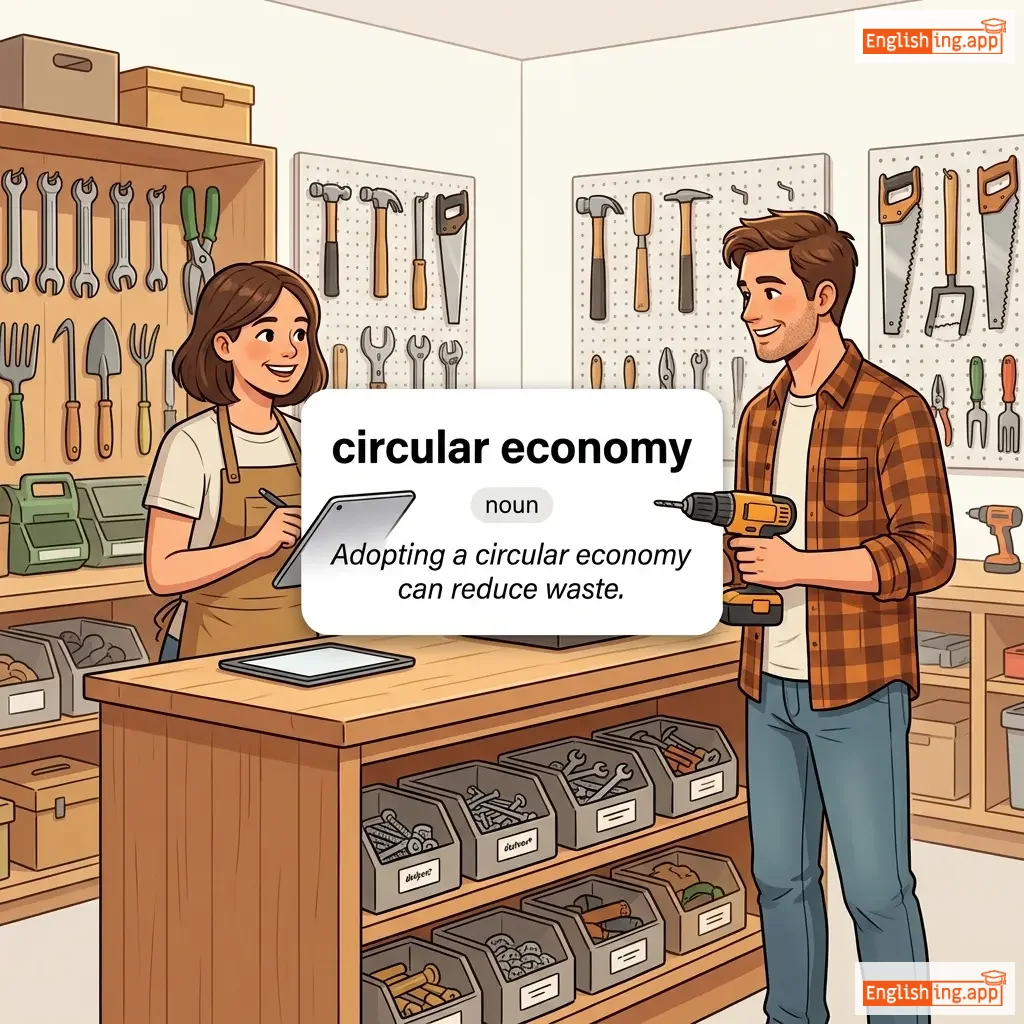
Adopting a circular economy can reduce waste.

循環型経済を採用すると廃棄物を減らすことができます。
Junkangata keizai o saiyō suruto haikibutsu o herasu koto ga dekimasu.
同義語

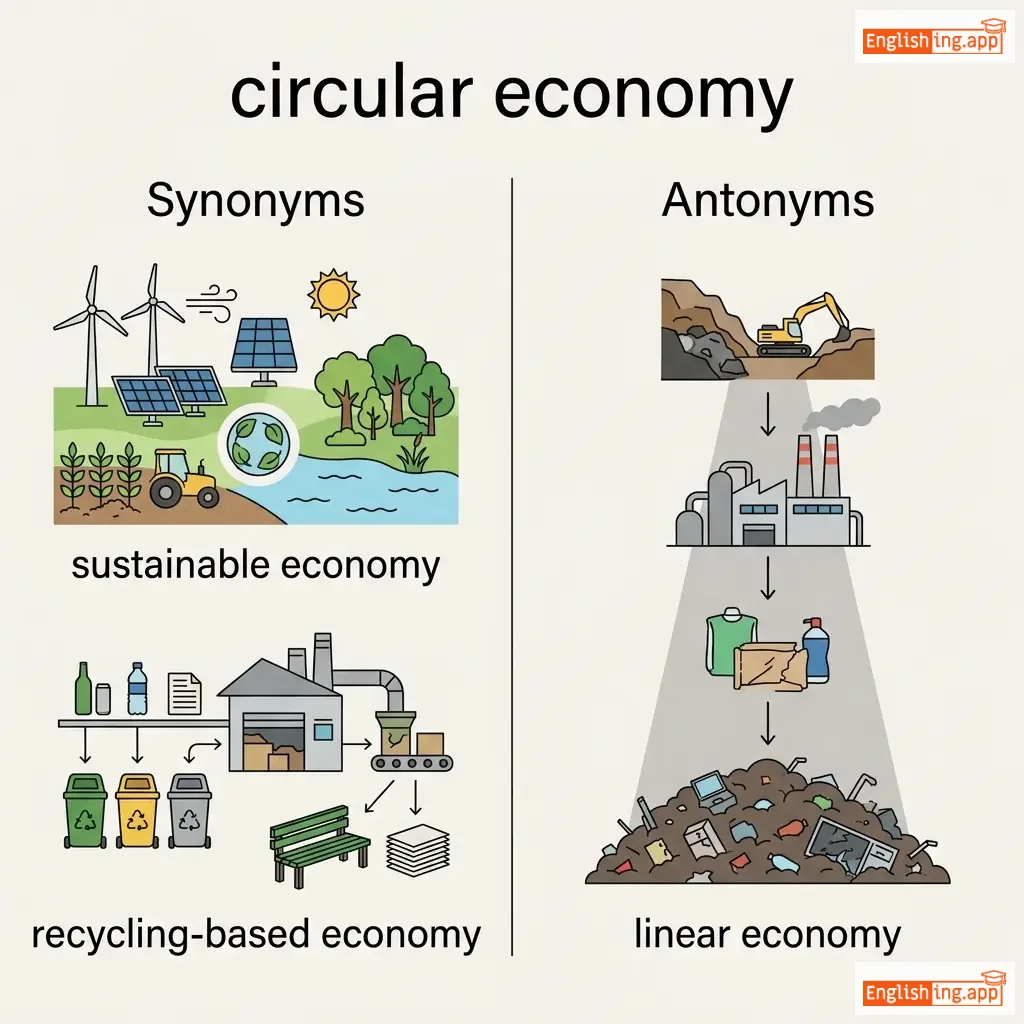
sustainable economy, recycling-based economy

対義語

linear economy

関連語彙

A strong wall or defensive structure; something that provides protection or support.
a small bowl-shaped container for drinking from, typically with a handle
facts or information that show whether something is true or not
a remark or statement that is overused and unoriginal
an annual festival celebrating the birth of Jesus Christ, observed on December 25
a short journey or trip, especially one engaged in as a leisure activity

さらに探索