語彙集

英単語辞書 | 単語の意味、定義、例文

noun
/əˈdʌltərənt/
不純物 (fujunbutsu)

a substance added to something else, often food or drink, to reduce its quality or strength

"The laboratory found an adulterant in the milk samples."

"実験室はミルクのサンプルに不純物を発見しました。" (Jikken-shitsu wa miruku no sanpuru ni fujunbutsu o hakken shimashita.)
adulterate definition card — visual illustration of the meaning
verb
/əˈdʌltəreɪt/
不正混入 (fusei konnyū)

to make something poorer in quality by adding another substance, usually of lower quality

"The company was fined for adulterating its products with cheap chemicals."

"その会社は安価な化学物質で製品をアダルテレートしたため、罰金を科せられました。" (Sono kaisha wa anka na kagaku busshitsu de seihin o adarutereito shita tame, bakkin o kase raremashita.)
adjective
/əˈdʌltəreɪtɪd/

describes food, drink, or medicine made weaker or impure by the addition of another substance

"Authorities seized adulterated drugs from the warehouse."

adulteration definition card — visual illustration of the meaning
noun
əˌdʌl.təˈreɪ.ʃən
不正混入 (Fusei konnyū)

The action of making something poorer in quality by the addition of another substance.

"Food adulteration poses a serious health risk."

"食品の不正混入は深刻な健康リスクを引き起こします。" (Shokuhin no fusei konnyū wa shinkoku na kenko risuku o hikiokoshimasu.)
verb
/ˈæd.ʌm.breɪt/
予示する (yōjisuru)

to foreshadow or suggest something in an unclear or indirect way

"The report adumbrates future economic challenges."

"レポートは未来の経済的な課題を暗示している。" (Repōto wa mirai no keizaiteki na kadai o anji shite iru.)
noun
/ˌæd.ʌmˈbreɪ.ʃən/
ぼんやりとした前兆 (bonyaritashita zenchou)

a vague foreshadowing or symbolic representation of something

"The play offers an adumbration of the political unrest to come."
"この劇は、今後の政治的不安定のぼんやりとした前兆を示している。" (Kono geki wa, kongo no seiji-teki fuan-tei no bonyaritashita zenchou o shimeshite iru.)
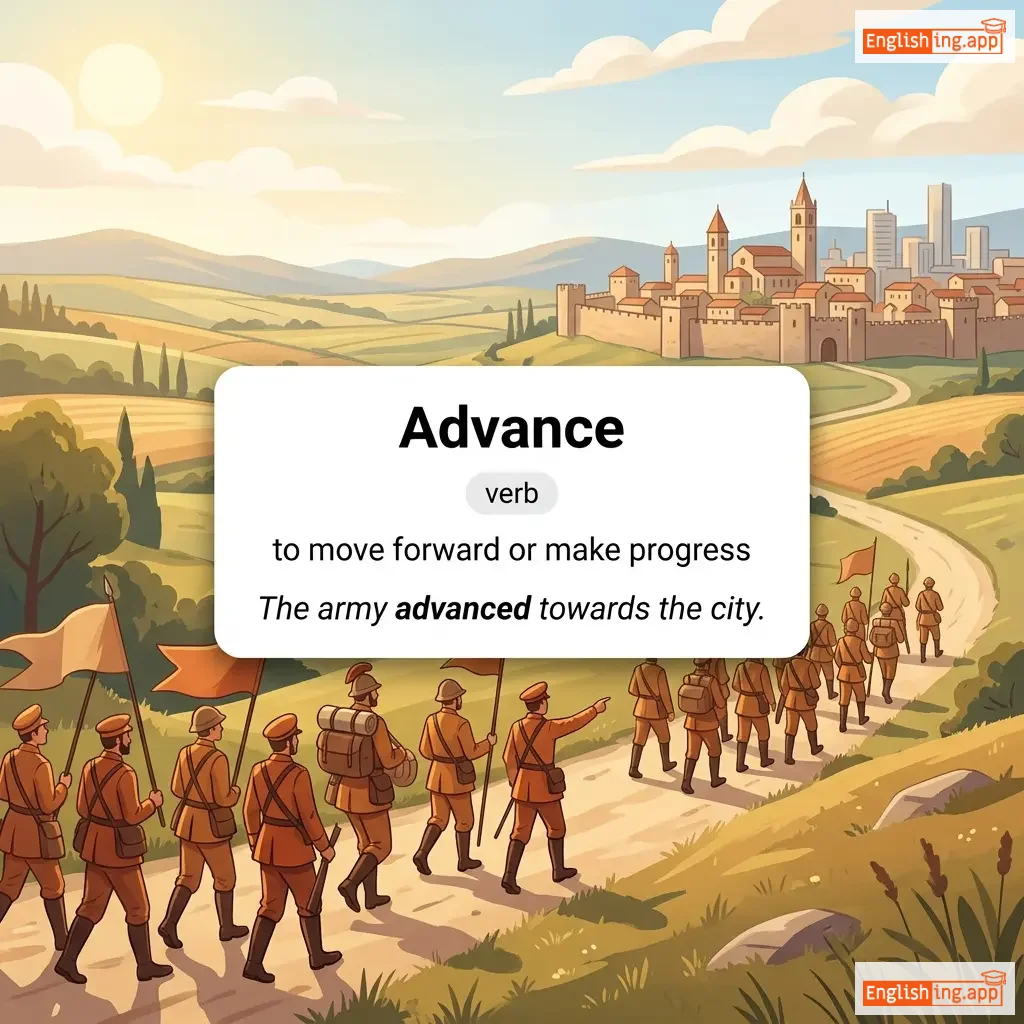
Advance definition card — visual illustration of the meaning
verb
/ədˈvæns/
前進 (zenshin)

to move forward or make progress

"The army advanced towards the city."

"軍隊は都市に向かって進んだ。" (Guntai wa toshi ni mukatte susunda.)
adjective
/ədˈvænst/
進んだ (sunda)

highly developed or complex

"He is studying an advanced level of mathematics."

"彼は高度な数学のレベルを学んでいます。" (Kare wa kōdo na suugaku no reberu o manande imasu.)
advancement definition card — visual illustration of the meaning
noun
/ədˈvɑːns.mənt/
進展 (shinten)

The process of promoting or moving forward; development or improvement.

"Scientific advancements benefit society."
"科学的な進展は社会に利益をもたらす。" (Kagakuteki na shinten wa shakai ni rieki o motarasu.)
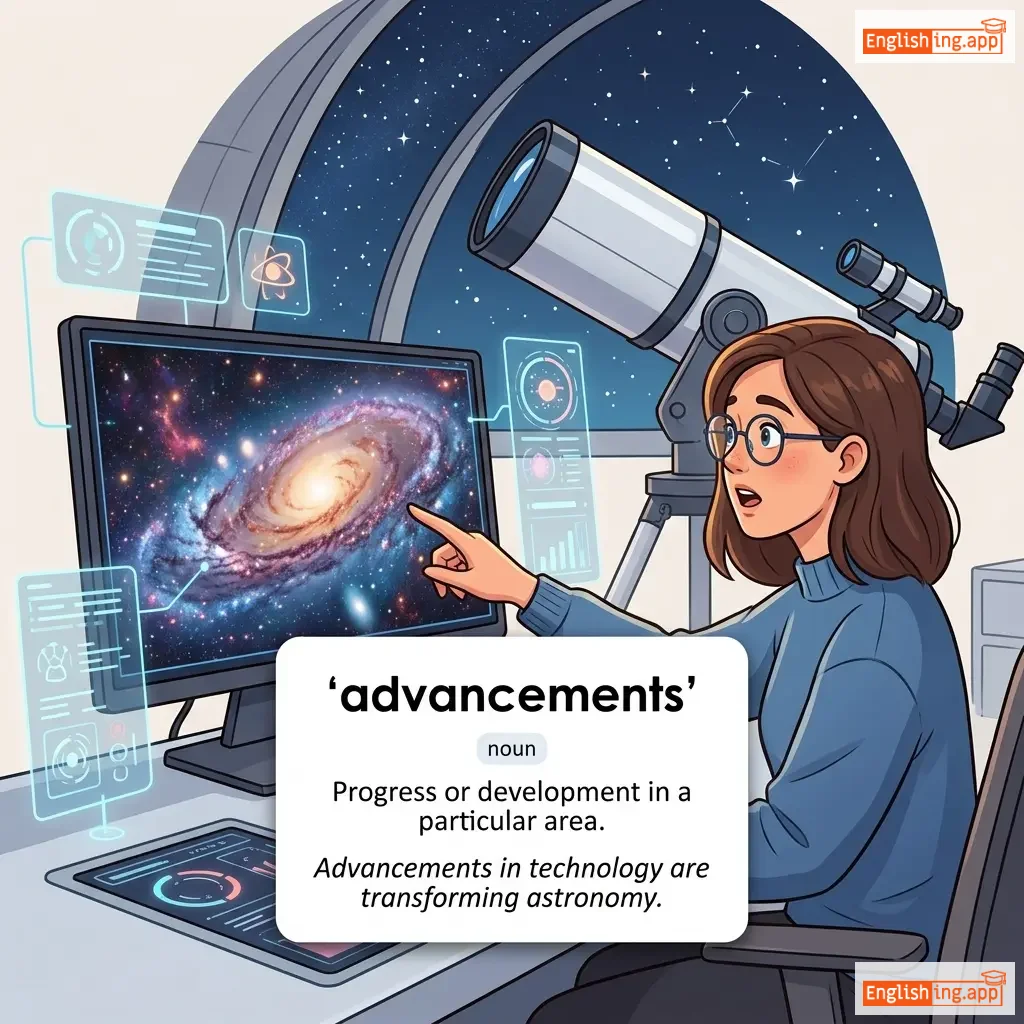
advancements definition card — visual illustration of the meaning
noun
/ədˈvɑːns.mənts/
進展 (shinten)

Progress or development in a particular area.

"Advancements in technology are transforming astronomy."

"技術の進展が天文学を変革しています。" (Gijutsu no shinten ga tenmongaku o henka shiteimasu.)
noun
/ədˈvæntɪdʒ/
利点 (riten)

a condition or circumstance that puts one in a favorable position

"Having strong communication skills is a great advantage in business."

"強力なコミュニケーションスキルはビジネスにおいて大きな利点です。" (Kyouryoku na komyunikeeshon sukiru wa bijinesu ni oite ookina riten desu.)
adjective
/ˌædvənˈteɪdʒəs/
有利な; 便利な; 利益を生む (yūrina; benrina; rieki o umu)

beneficial; favorable; profitable

"This position offers advantageous opportunities for career growth."

"このポジションはキャリアの成長のための有利な機会を提供します。" (Kono pojishon wa kyaria no seichō no tame no yūri na kikai o teikyō shimasu.)
noun
/ˈæd.vənt/
到来 (tōrai)

The arrival of a notable person, thing, or event.

"The advent of the internet changed the way people communicate."

"インターネットの到来は人々のコミュニケーション方法を変えました。" (Intānetto no tōrai wa hitobito no komyunikēshon hōhō o kaemashita.)
adjective
/ˌæd.vɛnˈtɪʃ.əs/
偶発的 (gōhatsuteki)

Happening by chance or accident, not planned.

"His success was partly due to adventitious circumstances."
"彼の成功は偶発的な状況による部分があった。" (Kare no seikō wa gōhatsuteki na jōkyō ni yoru bubun ga atta.)
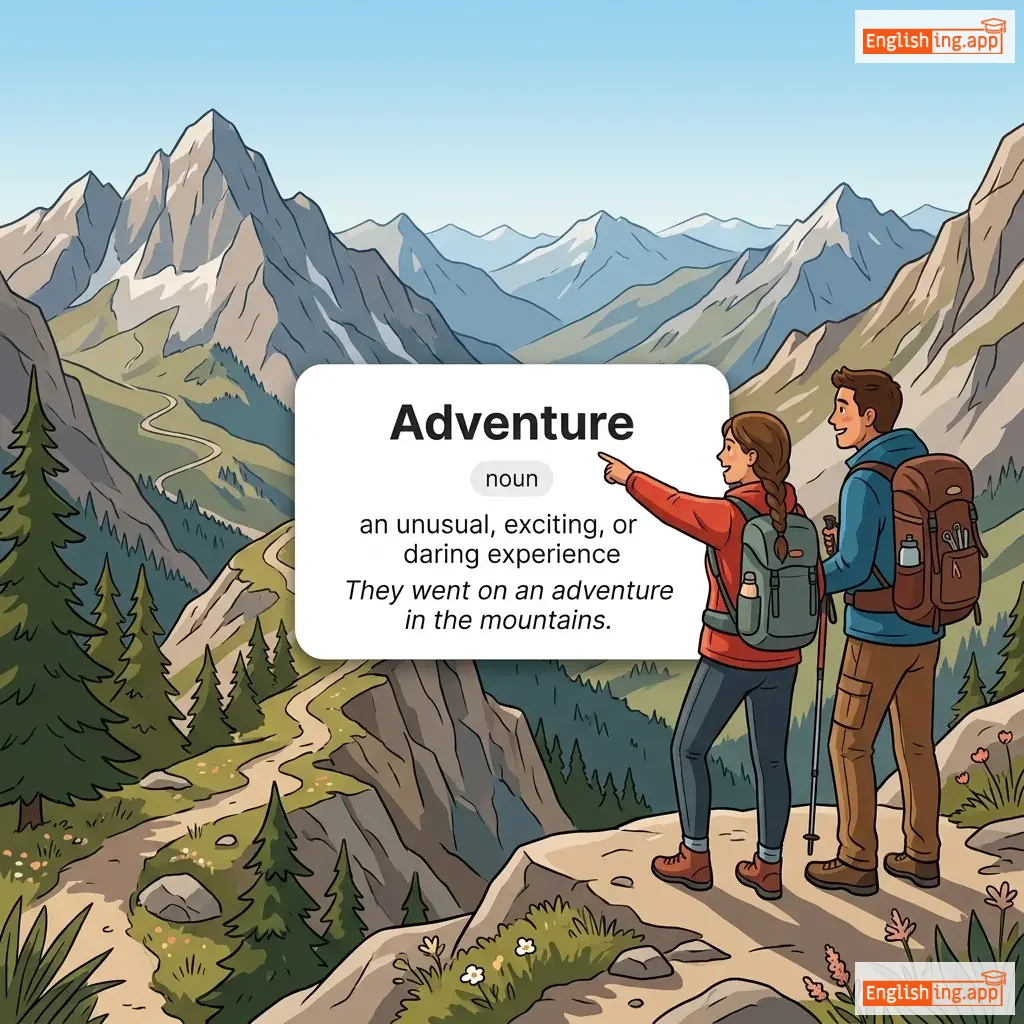
Adventure definition card — visual illustration of the meaning
noun
/ədˈvɛntʃər/
冒険 (bōken)

an unusual, exciting, or daring experience

"They went on an adventure in the mountains."

"彼らは山で冒険をしました。" (Karera wa yama de bōken o shimashita.)
Adventure Seekers definition card — visual illustration of the meaning
noun
ədˈvɛnʧər ˈsiːkərz
冒険者 (bōken-sha)

People who actively look for exciting and potentially risky activities or experiences.

"Sajek Valley is a popular destination for adventure seekers."

"サジェク渓谷は冒険者にとって人気のある目的地です。" (Sajeku keikoku wa bōkensha ni totte ninki no aru mokutekichi desu.)
noun
/ədˈvɛntʃərər/
冒険家 (boukenka)

a person who seeks exciting, risky, or unusual experiences; someone who explores new or unknown places

"The adventurer traveled deep into the jungle in search of ancient ruins."
"その冒険家は古代遺跡を探してジャングルの奥深くへ旅した。" (sono boukenka wa kodai iseki o sagashite janguru no okobukaku e tabi shita)
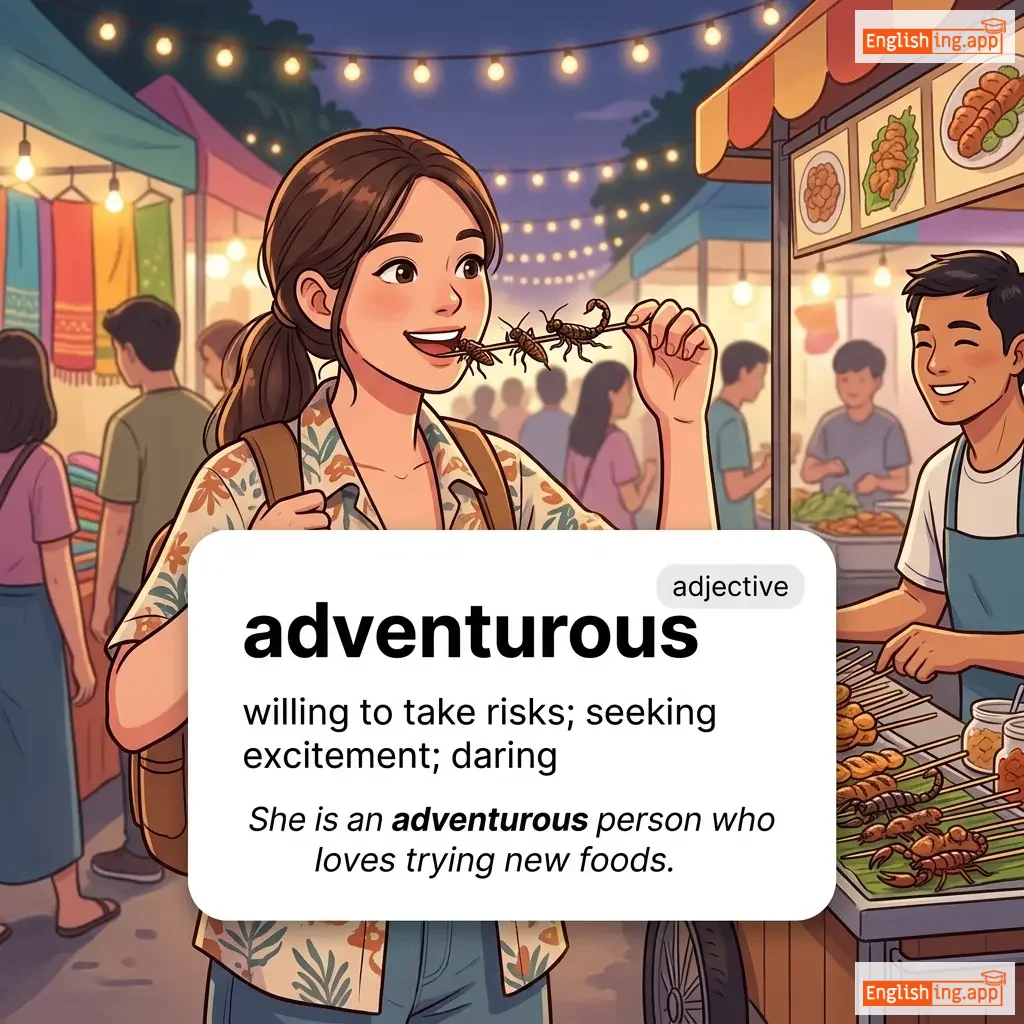
adventurous definition card — visual illustration of the meaning
adjective
/ədˈventʃərəs/
冒険的な; リスクを取る (bōkenteki na; risuku o toru)

willing to take risks; seeking excitement; daring

"She is an adventurous person who loves trying new foods."

"彼女は新しい料理を試すのが大好きな冒険心のある人です。" (Kanojo wa atarashī ryōri o tamesu no ga daisuki na bōken-shin no aru hito desu.)
adversarial definition card — visual illustration of the meaning
adjective
/ˌæd.vɚˈser.i.əl/
対立的 (tairitsuteki)

Involving or characterized by conflict or opposition; antagonistic.

"The two companies have an adversarial relationship in the market."

"2つの会社は市場で対立的な関係を持っています。" (Futatsu no kaisha wa shijō de tairitsuteki na kankei o motteimasu.)
noun
/ˈæd.və.ser.i/
対戦相手 (taisen aite)

One's opponent in a contest, conflict, or dispute.

"The boxer faced a strong adversary in the ring."
"ボクサーはリングで強い対戦相手に立ち向かった。" (Bokusā wa ringu de tsuyoi taisen aite ni tachimukatta.)
🌩️

Adverse

adjective
/ˈæd.vɜːs/

Preventing success or development; harmful or unfavorable.

"The project was delayed due to adverse weather conditions."

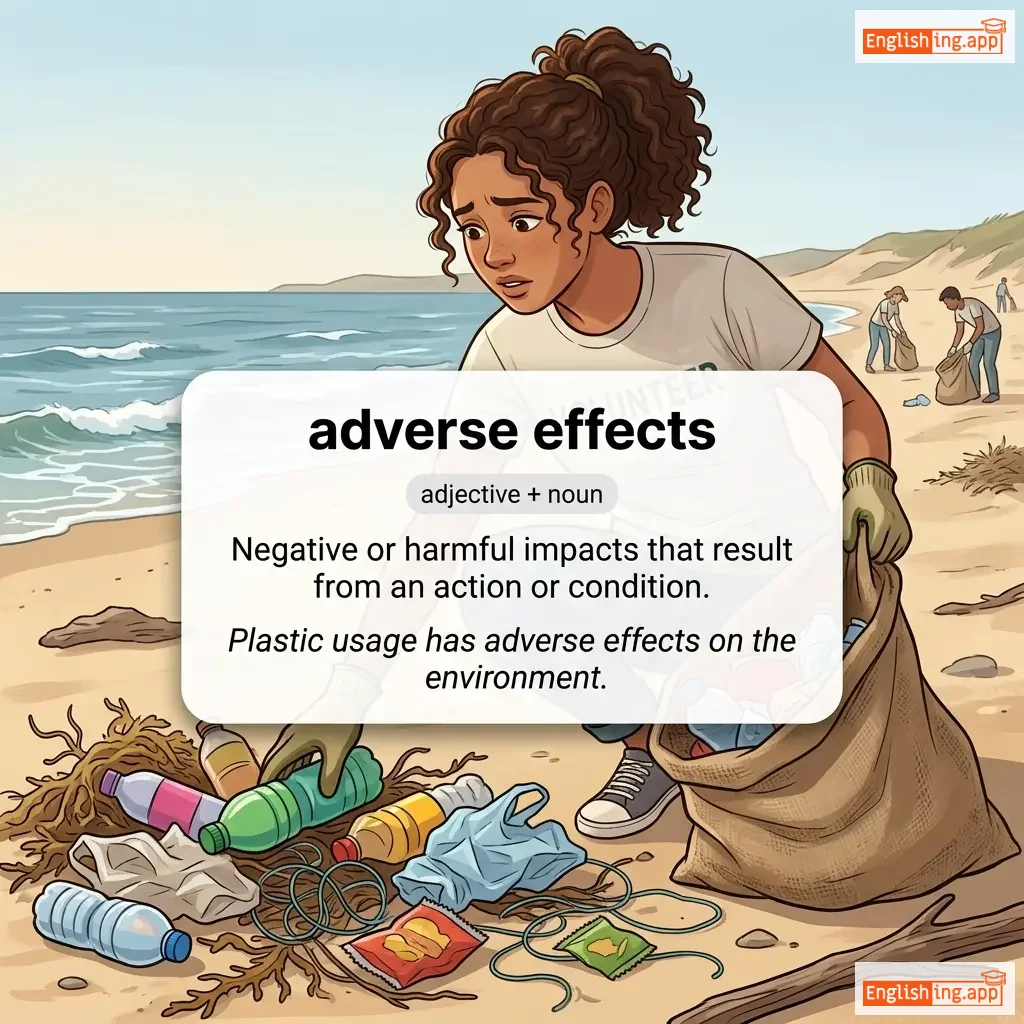
adverse effects definition card — visual illustration of the meaning
adjective + noun
ˈædvɜːrs ɪˈfekts
悪影響 (aku eikyō)

Negative or harmful impacts that result from an action or condition.

"Plastic usage has adverse effects on the environment."
"プラスチックの使用は環境に悪影響を与える。" (Purasuchikku no shiyō wa kankyō ni aku eikyō o ataeru.)
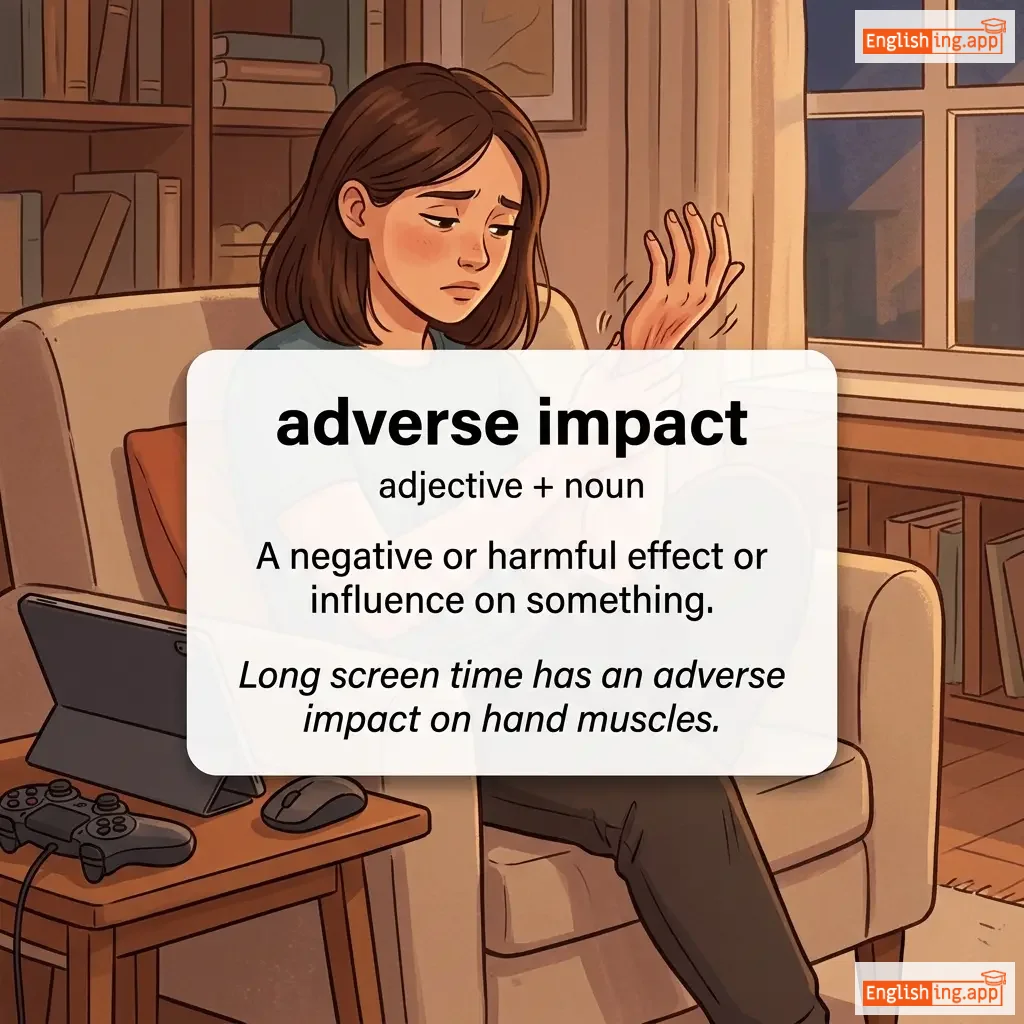
adverse impact definition card — visual illustration of the meaning
adjective + noun
অ্যাডভার্স ইমপ্যাক্ট
悪影響 (akueikyo)

A negative or harmful effect or influence on something.

"Long screen time has an adverse impact on hand muscles."

"長時間の画面の使用は手の筋肉に悪影響を及ぼします。" (Chō jikan no gamen no shiyō wa te no kinniku ni akueikyō o oyoboshimasu.)
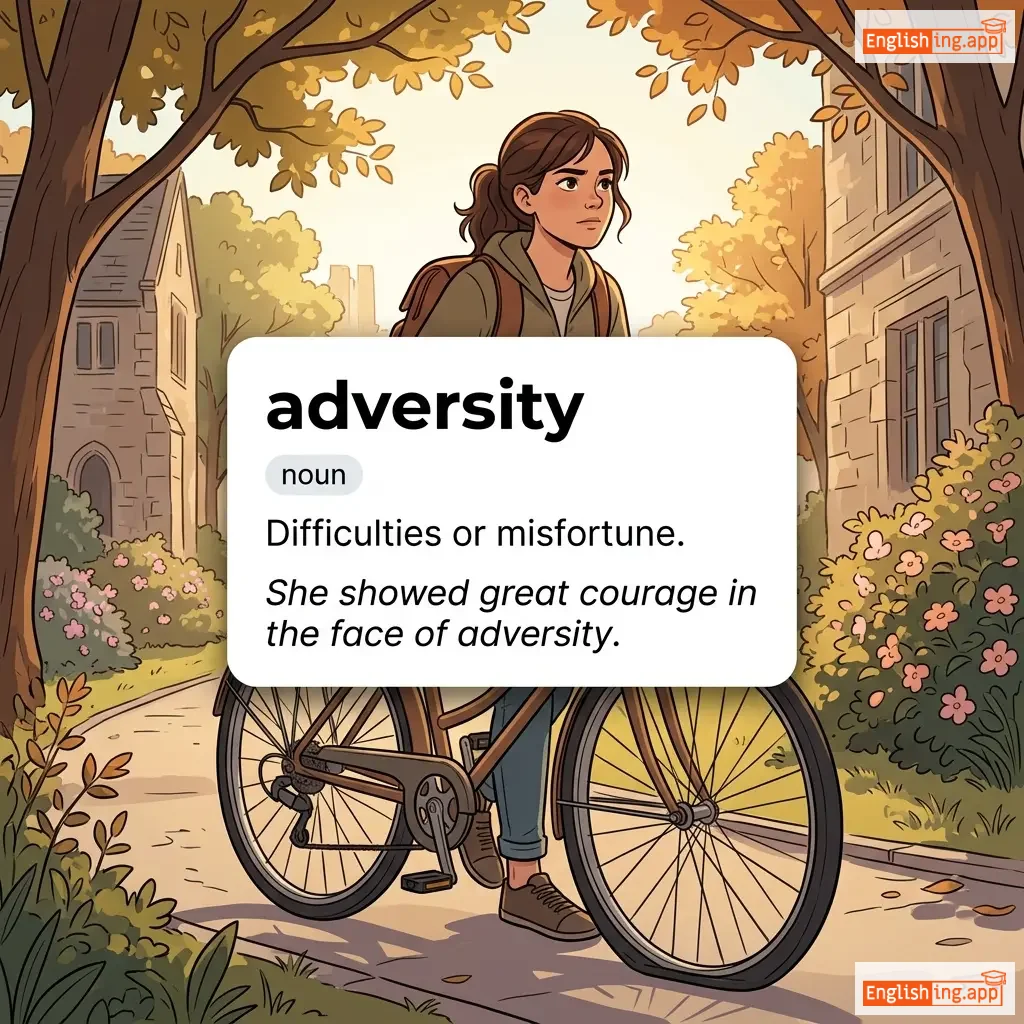
adversity definition card — visual illustration of the meaning
🌪️

adversity

noun
/ədˈvɜː.sə.ti/

Difficulties or misfortune.

"She showed great courage in the face of adversity."

noun, verb
/ˈædvɜːrt/

(noun) a notice or announcement in a public medium promoting a product, service, or event; (verb) to refer to something in speaking or writing

"The company placed an advert in the newspaper for the new position."

advertise definition card — visual illustration of the meaning
verb
/ˈædvərtaɪz/
宣伝する (senden suru)

to describe or draw attention to a product, service, or event in a public medium in order to promote sales or attendance

"They advertise their products on social media platforms."

"彼らはソーシャルメディアプラットフォームで製品を宣伝しています。" (Karera wa sōsharu media purattofōmu de seihin o senden shiteimasu.)
noun
/ədˈvɜːrtɪsmənt/
広告 (kokoku)

a public notice or announcement promoting a product, service, or event

"The advertisement attracted many new customers."

"その広告は多くの新しい顧客を引きつけた。" (sono kokoku wa ooku no atarashii kokyaku o hikitsuketa)
noun
/ˈædvərtaɪzər/
広告主 (kōkoku-shu)

a person or company that advertises a product, service, or event

"The advertiser paid millions for a Super Bowl commercial spot."

"広告主はスーパーボウルのコマーシャルに何百万ドルも支払った。" (Kōkoku-shu wa Sūpā Bōru no komāsharu ni nanbyaku man doru mo shiharatta.)
noun
/ˈædvərˌtaɪzɪŋ/
広告 (kōkoku)

the activity of producing advertisements for products or services

"The company spends millions on advertising every year."

"その会社は毎年広告に何百万も費やしています。" (Sono kaisha wa mainen kōkoku ni nanbyakuman mo tsuiyashiteimasu.)
advice definition card — visual illustration of the meaning
noun
/ədˈvaɪs/

a suggestion or recommendation about what someone should do

"She gave me good advice about managing money."

advise definition card — visual illustration of the meaning
verb
/ədˈvaɪz/
アドバイスする (adobaisu suru)

to recommend what should be done; to give advice

"The doctor advised him to rest for a week."

"医者は彼に1週間休むようにアドバイスした。" (Isha wa kare ni 1-shūkan yasumu yō ni adobaisu shita.)
noun
/ədˈvaɪzər/
アドバイザー (adobaizā)

a person who gives advice, especially in a professional or official role

"He works as a financial adviser at a bank."

"彼は銀行で金融アドバイザーとして働いています。" (Kare wa ginkō de kin'yū adobaizā toshite hataraiteimasu.)
adjective, noun
/ədˈvaɪzəri/
アドバイザリー (adobaisarī)

(adjective) having the power to give advice but not to make sure that it is followed; (noun) an official announcement containing information or a warning

"The committee serves in an advisory capacity to the board of directors."

"委員会は取締役会にアドバイザリーの役割を果たしています。" (Iinkai wa torishimariyakukai ni adobaisarī no yakuwari o hatashiteimasu.)
noun
/ˈædvəkəsi/
擁護 (yōgo)

public support for or recommendation of a particular cause or policy

"Her advocacy for children's rights earned her international recognition."

"彼女の子どもの権利への擁護は、国際的な認知を得た。" (Kanojo no kodomono kenri e no yōgo wa, kokusaiteki na ninchi o eta.)
noun, verb
/ˈædvəˌkeɪt/ (noun), /ˈædvəˌkeɪt/ or /ˈædvəˌkət/ (verb)
支持者 / 弁護士 (shijisha / bengoshi)

As a noun: a person who publicly supports or recommends a cause. As a verb: to publicly recommend or support.

"She is an advocate for women's rights and often advocates for equal opportunities."

"彼女は女性の権利を擁護し、しばしば平等な機会のために擁護活動を行っています。" (Kanojo wa josei no kenri o yōgo shi, shibashiba byōdō na kikai no tame ni yōgo katsudō o okonatteimasu.)
noun
/ˈiːdʒɪs/
保護 (hogo)

The protection, backing, or support of a particular person or organization.

"The project was carried out under the aegis of the United Nations."

"このプロジェクトは国連の庇護の下で実施されました。" (Kono purojekuto wa kokuren no higo no shita de jisshi saremashita.)

aeon

noun
/ˈiːɒn/ or /ˈiːən/

An indefinitely long period of time; an age or eternity.

"Dinosaurs roamed the Earth millions of aeons ago."

adjective, noun
/ˈɛəriəl/
空中の / アンテナ (kūchū no / antena)

As an adjective: existing or happening in the air. As a noun: an antenna for receiving radio or television signals.

"The pilot performed an amazing aerial maneuver."

"パイロットは素晴らしい空中機動を行いました。" (Pairotto wa subarashī kūchū kidō o okonaimashita.)
noun
/ˈɛəri/
鷲の巣 (washi no su)

A large nest of a bird of prey, especially an eagle, typically built high in a tree or on a cliff.

"The eagle built its aerie on the high cliff."
"ワシは高い崖に巣を作った" (Washi wa takai gake ni su wo tsukutta)
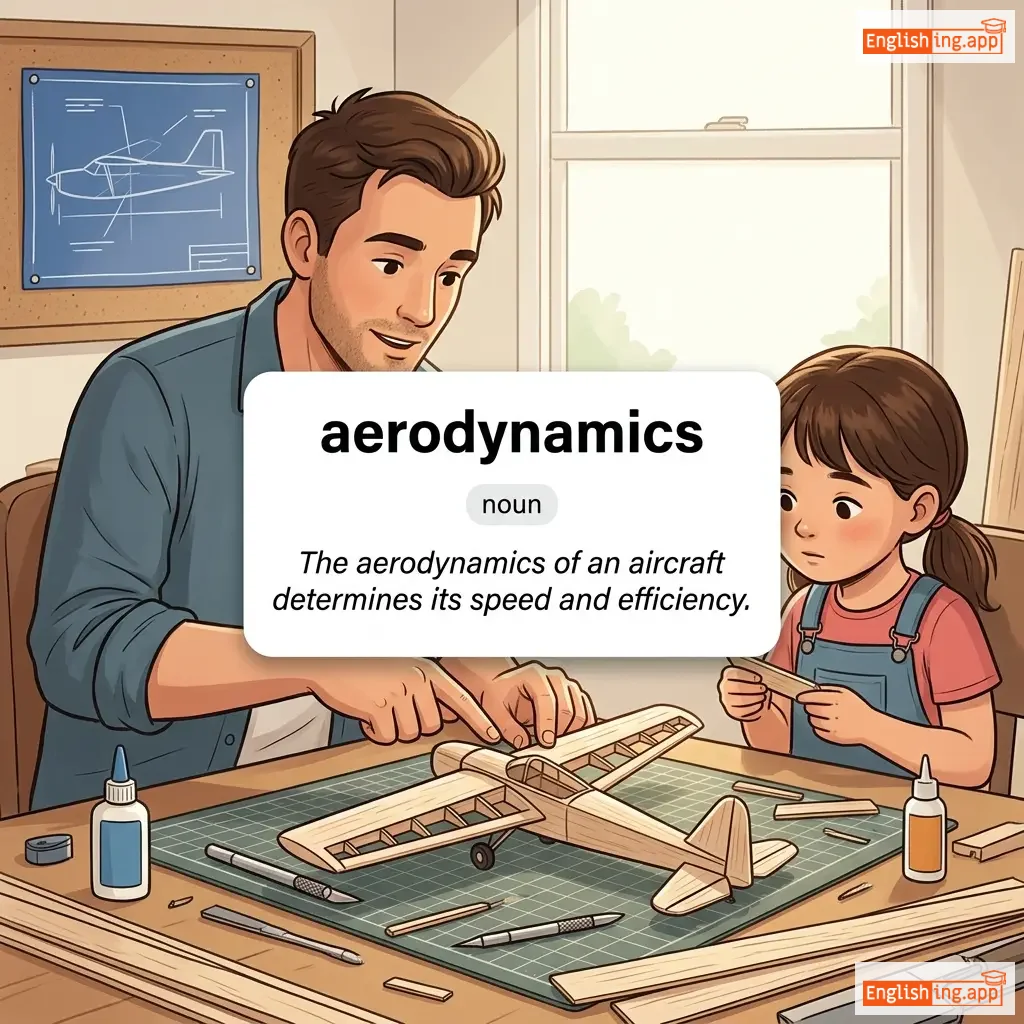
aerodynamics definition card — visual illustration of the meaning
noun
ˌeə.rəʊ.daɪˈnæm.ɪks

The study of the properties of moving air and the interaction between the air and solid bodies moving through it.

"The aerodynamics of an aircraft determines its speed and efficiency."

noun
/ˈɛərəˌnɔːt/
気球乗り (kikyū nori)

A person who travels in an airship, balloon, or other aircraft.

"The aeronaut skillfully guided the hot-air balloon across the valley."

"気球乗りは巧みに気球を谷を越えて操縦しました。" (Kikyū nori wa takumini kikyū o tani o koete sōjū shimashita.)
noun
/ˈeə.rə.pleɪn/
飛行機 (hikouki)

a powered flying vehicle with fixed wings and a weight greater than that of the air it displaces

"The aeroplane took off smoothly from the airport runway."

"飛行機は空港の滑走路から滑らかに離陸した。" (Hikouki wa kuukou no kassouro kara nameraka ni ririku shita)
noun
/ˈɛərəˌstæt/
エアロスタット (aerostatto)

A lighter-than-air craft, such as a balloon, that is lifted by gas.

"The military used an aerostat for surveillance over the border."
"軍隊は国境監視のためにエアロスタットを使用しました。" (Guntai wa kokkyō kanshi no tame ni aerosutatto o shiyō shimashita.)
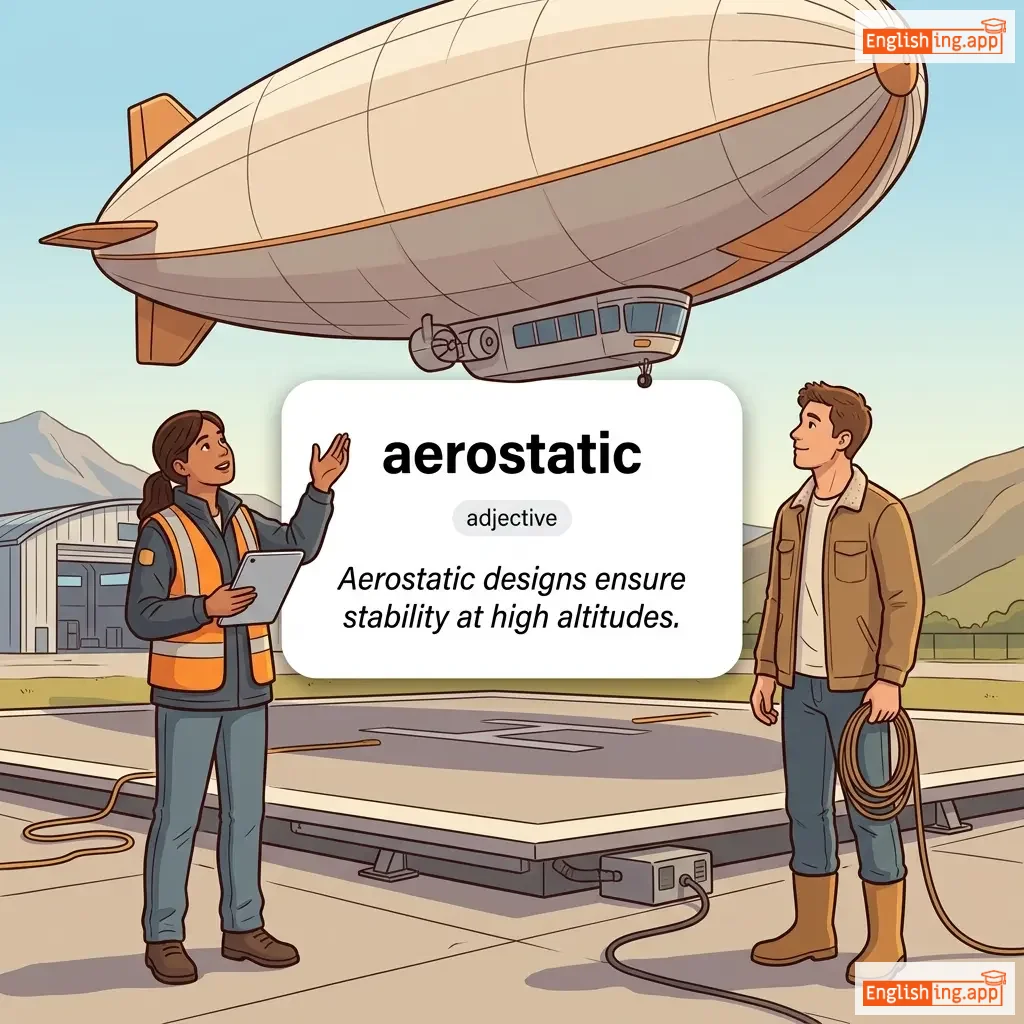
aerostatic definition card — visual illustration of the meaning
adjective
ˌeə.rəʊˈstæt.ɪk
気圧静的な (kiatsu seiteki na)

Relating to or involving gases (especially air) in equilibrium and the equilibrium of balloons or aircraft under the influence of such gases.

"Aerostatic designs ensure stability at high altitudes."

"エアロスタティックデザインは高高度での安定性を確保します。" (Eārosutatikku dezain wa kōkōdo de no antei-sei o kakuho shimasu.)
noun
/ˌɛərəˈstætɪks/
エアロスタティクス (earosutatikusu)

The branch of physics that deals with the equilibrium of air and gases and the forces acting on bodies in them.

"Aerostatics is essential for understanding how balloons float."

"エアロスタティクスは、気球がどのように浮かぶかを理解するために不可欠です。" (Earosutatikusu wa, kikyū ga dono yō ni ukabu ka o rikai suru tame ni fukaketsu desu.)
noun
/ˈɪəri/ or /ˈɛəri/
ワシの巣 (washi no su)

An eagle’s nest, or a lofty, airy dwelling.

"The eagle perched proudly near its aery high on the cliff."

"鷲は崖の上にあるその巣の近くに誇らしげに止まった。" (Washi wa gake no ue ni aru sono su no chikaku ni hokorashige ni tomatta.)
noun
/ˈiːsθiːt/ or /ˈɛsθiːt/
美術愛好家 (bijutsu aikouka)

A person who has a special appreciation of art and beauty.

"The aesthete admired the subtle details of the painting."

"エステートは絵画の微細なディテールを賞賛していました。" (Esutēto wa kaiga no bisai na ditēru o shōsan shiteimashita.)
Aesthetic definition card — visual illustration of the meaning
adjective
/ɛsˈθɛtɪk/
美的 (biteki)

concerned with beauty or the appreciation of beauty

"The room was decorated in an aesthetic style that pleased everyone."

"部屋は美的なスタイルで装飾され、全員が喜びました。" (Heya wa biteki na sutairu de sōshoku sare, zen'in ga yorokobimashita.)
adjective
/iːsˈθɛθɪkəl/
美的な (biteki na)

concerned with beauty or the appreciation of beauty; related to artistic taste or appearance

"The architect focused on the aesthetical balance of the building."

"建築家は建物の美的なバランスに注目した。" (Kenchikuka wa tatemono no biteki na baransu ni chuumoku shita)
adverb
/iːsˈθetɪkli/
美的に (biteki ni)

in a way that is concerned with beauty or visual appeal

"The building is aesthetically pleasing despite its simple design."

"その建物はシンプルなデザインにもかかわらず美的に魅力的です。" (sono tatemono wa shinpuru na dezain ni mo kakawarazu biteki ni miryokuteki desu)