

翻訳
過去
過去分詞
三人称単数
動名詞
意味
例文
例文の翻訳
同義語
対義語
コロケーション
ニーモニック
Swipe left or right, or use the buttons. Tap image to zoom.
例文の翻訳
単語
Lesson 22: Names of the parts of bodyLesson 22: Names of the parts of body - マスクトグル
|
絵文字
|
単語 | Images | 翻訳 | 意味 | 例文 | 例文の翻訳 | 同義語 | 対義語 | コロケーション | ニーモニック |
|---|---|---|---|---|---|---|---|---|---|---|
|
#1028
💪
|
/ɑːrm/
noun
(アーム)
••••••
|
- •••••• |
腕
ude
••••••
|
the upper limb of the human body from the shoulder to the hand
••••••
|
She raised her arm to ask a question.
彼女は質問するために腕を上げました。
••••••
|
彼女は質問するために腕を上げました。
Kanojo wa shitsumon suru tame ni ude o agemashita.
••••••
|
limb, appendage
••••••
|
leg
••••••
|
strong arm, broken arm, arm muscle, arm wrestling
••••••
|
質問をするために上げる腕
••••••
|
|
#1029
🦵
|
/læp/
noun
(ハピネス)
••••••
|
- •••••• |
膝の上
hiza no ue
••••••
|
the top part of the legs of a person when sitting; one complete trip around a track or course
••••••
|
The cat sat on my lap while I was reading.
ザ キャット サット オン マイ ラップ ワイル アイ ワズ リーディング。
••••••
|
猫は私が読んでいる間、私の膝の上に座っていました。
neko wa watashi ga yonde iru aida, watashi no hiza no ue ni suwatte imashita.
••••••
|
thigh, circuit, round
••••••
|
- •••••• |
lap of luxury, lap dog, victory lap, sit on someone's lap
••••••
|
猫が膝の上に座っているのを想像してみてください。
••••••
|
|
#1030
❤️
|
/hɑːrt/
noun
(ハート)
••••••
|
- •••••• |
心臓
shinzou
••••••
|
the organ in the chest that pumps blood through the body; the center of emotions and feelings
••••••
|
The doctor listened to my heart with a stethoscope. |
医者は聴診器で私の心臓を聞きました。
Isha wa chōshinki de watashi no shinzō o kikimashita.
••••••
|
cardiac muscle, ticker
••••••
|
mind, brain
••••••
|
heart attack, heart disease, broken heart, heart rate
••••••
|
In Japanese, '心臓' (shinzou) sounds similar to 'heart' in English.
••••••
|
|
#1031
💪
|
/ˈmʌs.əl/
noun
(マスル)
••••••
|
- •••••• |
筋肉
kinniku
••••••
|
a body tissue consisting of fibers that can contract to produce movement
••••••
|
Regular exercise helps strengthen your muscle. |
定期的な運動は筋肉を強化するのに役立ちます。
Teikiteki na undō wa kinniku o kyōka suru no ni yakudachimasu.
••••••
|
sinew, fiber, tissue
••••••
|
fat, bone
••••••
|
muscle mass, muscle pain, muscle strength, build muscle
••••••
|
Muscle = 筋肉、身体の力と運動に関係しています
••••••
|
|
#1032
🦶
|
/fʊt/
noun
(フット)
••••••
|
- •••••• |
足
ashi
••••••
|
the lower extremity of the leg that is in direct contact with the ground in standing or walking
••••••
|
She hurt her foot while running.
彼女は走っている間に足を怪我しました。
••••••
|
彼女は走っている間に足を怪我しました。
Kanojo wa hashitte iru aida ni ashi o kega shimashita.
••••••
|
paw, hoof
••••••
|
head, top
••••••
|
bare foot, foot pain, on foot, foot massage
••••••
|
足は歩くために必要な部分で、地面と接触します。
••••••
|
|
#1033
🤨
|
/ˈaɪ.braʊ/
noun
(アイブラウ)
••••••
|
- •••••• |
眉毛
mayuge
••••••
|
the strip of hair growing on the ridge above the eye socket
••••••
|
She raised her eyebrow in surprise. |
彼女は驚いて眉を上げた。
Kanojo wa odoroite mayu wo ageta.
••••••
|
brow
••••••
|
- •••••• |
raise eyebrow, eyebrow pencil, thick eyebrow
••••••
|
眉毛が上がることで驚きの感情を示すことを覚えている
••••••
|
|
#1034
🖐️
|
/pɑːm/
noun
(パーム)
••••••
|
- •••••• |
手のひら; ヤシの木
te no hira
••••••
|
the inner part of the hand; a type of tropical tree
••••••
|
She placed her palm on the table. |
彼女はテーブルの上に手のひらを置いた。
Kanojo wa tēburu no ue ni te no hira o oita.
••••••
|
hand, frond
••••••
|
back of hand
••••••
|
palm tree, palm oil, palm reading
••••••
|
Palm = te no hira = 手のひら
••••••
|
|
#1035
🦴
|
/skɪn/
noun
(スキン)
••••••
|
- •••••• |
肌
hada
••••••
|
the outer covering of the body; the natural outer covering of a fruit or vegetable
••••••
|
Her skin was soft and smooth.
彼女の肌は柔らかくて滑らかでした。
••••••
|
彼女の肌は柔らかくて滑らかでした。
Kanojo no hada wa yawarakakute nameraka deshita.
••••••
|
flesh, hide, peel, surface
••••••
|
interior, inside, core
••••••
|
soft skin, smooth skin, dry skin, skin care, skin color
••••••
|
Think of 'hada' like 'hand' as the skin you touch with your hand
••••••
|
|
#1036
🦴
|
/tʃɪn/
noun
(チン)
••••••
|
- •••••• |
顎
ago
••••••
|
the protruding part of the face below the mouth; the front part of the lower jaw
••••••
|
She rested her chin on her hand while thinking.
彼女は考えながら手のひらに顎を乗せていた。
••••••
|
彼女は考えながら手のひらに顎を乗せていた。
Kanojo wa kangae nagara te no hira ni ago o nosete ita.
••••••
|
jaw, mandible
••••••
|
- •••••• |
double chin, chin up, weak chin, strong chin
••••••
|
In Japanese, '顎' (ago) is the chin, remember how you rest your chin on your hand while thinking.
••••••
|
|
#1037
👍
|
/θʌm/
noun
(サム)
••••••
|
- •••••• |
親指
oyubi
••••••
|
the short thick finger of the human hand
••••••
|
She gave me a thumbs up to show her approval. |
彼女は私に賛成の気持ちを示すために親指を上げた。
Kanojo wa watashi ni sansei no kimochi o shimesu tame ni oyubi o ageta.
••••••
|
pollex
••••••
|
- •••••• |
thumbs up, thumb through, rule of thumb
••••••
|
親指を上げて、賛成を示すサイン!
••••••
|
|
#1038
🦶
|
/toʊ/
noun
(トゥ)
••••••
|
- •••••• |
足の指
ashi no yubi
••••••
|
any of the five digits at the end of the human foot
••••••
|
She stubbed her toe on the chair leg.
彼女は椅子の足に足の指をぶつけました。
••••••
|
彼女は椅子の足に足の指をぶつけました。
Kanojo wa isu no ashi ni ashi no yubi o butsukemashita.
••••••
|
digit
••••••
|
- •••••• |
big toe, little toe, toe nail, stub one's toe
••••••
|
Picture yourself stepping on something sharp with your '足の指' and feeling the sharp pain.
••••••
|
|
#1039
🔙
|
/bæk/
noun
(バック)
••••••
|
- •••••• |
背中
senaka
••••••
|
the rear surface of the human body from the shoulders to the hips; the spine
••••••
|
She hurt her back while lifting heavy boxes.
彼女は重い箱を持ち上げているときに背中を痛めました。
••••••
|
彼女は重い箱を持ち上げているときに背中を痛めました。
Kanojo wa omoi hako o mochi agete iru toki ni senaka o itamemashita.
••••••
|
spine, backbone, rear
••••••
|
front, chest, face
••••••
|
back pain, back injury, turn your back, pat on the back
••••••
|
‘背中’は体の後ろの部分、まるで本の背表紙のようです。
••••••
|
|
#1040
🦴
|
/boʊn/
noun
(ボーン)
••••••
|
- •••••• |
骨
hone
••••••
|
one of the hard parts inside a human or animal that make up the frame of the body
••••••
|
She broke a bone in her leg while skiing.
彼女はスキーをしているときに脚の骨を折った。
••••••
|
彼女はスキーをしているときに脚の骨を折った。
Kanojo wa sukī o shiteiru toki ni ashi no hone o otta.
••••••
|
skeletal structure, osseous tissue
••••••
|
flesh, muscle, soft tissue
••••••
|
bone fracture, bone marrow, jaw bone, funny bone
••••••
|
骨 = 人間の骨のように硬い
••••••
|
|
#1041
🫸
|
/veɪn/
noun
(ベイン)
••••••
|
- •••••• |
静脈; 血管
jōmyaku; kekkan
••••••
|
a blood vessel that carries blood back to the heart; a streak or marking of a different color
••••••
|
The nurse found a vein in his arm to draw blood. |
看護師は彼の腕に血を取るための静脈を見つけました。
Kangoshi wa kare no ude ni chi o toru tame no jōmyaku o mitsukemashita.
••••••
|
blood vessel, capillary
••••••
|
artery
••••••
|
varicose vein, jugular vein, vein of gold
••••••
|
静脈は血液を心臓に戻す道のようなものです。
••••••
|
|
#1042
🦷
|
/dʒɔː/
noun
(ジャウ)
••••••
|
- •••••• |
顎
ago
••••••
|
either of the two bones forming the framework of the mouth in most vertebrates
••••••
|
She broke her jaw in the accident.
彼女は事故で顎を骨折した。
••••••
|
彼女は事故で顎を骨折した。
Kanojo wa jiko de ago o kossetsu shita.
••••••
|
mandible, maxilla
••••••
|
- •••••• |
jaw bone, lower jaw, upper jaw, jaw muscle
••••••
|
顎は口と関係があり、食べ物を噛むことで顎を使うことを覚えることができます。
••••••
|
|
#1043
👄
|
/lɪp/
noun
(リップ)
••••••
|
- •••••• |
唇
kuchin
••••••
|
either of the two soft parts that form the edge of the mouth
••••••
|
She applied lipstick to her lips before the party. |
パーティーの前に唇に口紅を塗った。
Pātī no mae ni kuchin ni kuchibeni o nutta.
••••••
|
edge, rim, brim
••••••
|
- •••••• |
upper lip, lower lip, lip balm, bite your lip, sealed lips
••••••
|
唇は口の端で、口紅が塗られる場所でもある。
••••••
|
|
#1044
-
|
/ˈɑːrm.pɪt/
noun
(アームピット)
••••••
|
- •••••• |
脇の下
waki no shita
••••••
|
the hollow area under the arm where it joins the shoulder
••••••
|
He applied deodorant to his armpit. |
彼は脇の下にデオドラントを塗った。
kare wa waki no shita ni deodoranto o nuttā
••••••
|
underarm, axilla
••••••
|
- •••••• |
armpit hair, armpit odor, shave armpit
••••••
|
Waki no shita and armpit are both essential for freshness!
••••••
|
|
#1045
🦷
|
/ɡʌm/
noun
(ガム)
••••••
|
- •••••• |
歯茎; 粘着物質
haguki; nenchaku busshitsu
••••••
|
the firm flesh that surrounds the roots of the teeth; a viscous secretion
••••••
|
The dentist checked her gum for any signs of disease.
歯科医は病気の兆候があるかどうか彼女の歯茎をチェックしました。
••••••
|
歯科医は病気の兆候があるかどうか彼女の歯茎をチェックしました。
Shikai wa byouki no choukō ga aru ka dou ka kanojo no haguki o chekku shimashita.
••••••
|
gingiva, adhesive, glue
••••••
|
tooth, bone
••••••
|
gum disease, chewing gum, gum line, healthy gums
••••••
|
ガム (gum) は歯茎に関係することを覚えておきましょう。
••••••
|
|
#1046
💅
|
/neɪl/
noun
(ネイル)
••••••
|
- •••••• |
爪
tsume
••••••
|
a hard covering on the upper surface of the tip of the finger and toe
••••••
|
She painted her nail with bright red polish. |
彼女は明るい赤のマニキュアで爪を塗った。
Kanojo wa akarui aka no manikyua de tsume o nuttā.
••••••
|
fingernail, toenail, claw
••••••
|
skin, flesh
••••••
|
nail polish, nail file, nail clipper, bite nails
••••••
|
爪を塗ることで新しいツメが完成する!
••••••
|
|
#1047
👁️
|
/ˈaɪ.lɪd/
noun
(アイリッド)
••••••
|
- •••••• |
まぶた
mabuta
••••••
|
either of the upper or lower folds of skin that cover the eye when closed
••••••
|
Her eyelids felt heavy with sleep.
彼女のまぶたは眠気で重く感じた。
••••••
|
彼女のまぶたは眠気で重く感じた。
Kanojo no mabuta wa nemuke de omoku kanjita.
••••••
|
lid
••••••
|
- •••••• |
heavy eyelids, drooping eyelids, eyelid surgery
••••••
|
まぶたで目を守り、眠くても目が閉じられる
••••••
|
|
#1048
🩸
|
/ˈplæz.mə/
noun
(プラズマ)
••••••
|
- •••••• |
血液の液体部分; 電離したガス; 凝固因子のない血清
purazuma
••••••
|
the liquid part of blood; ionized gas; blood serum without clotting proteins
••••••
|
Blood plasma contains various proteins and nutrients.
血漿はさまざまなタンパク質や栄養素を含んでいます。
••••••
|
血漿はさまざまなタンパク質や栄養素を含んでいます。
kesshou wa samazama na tanpakushitsu ya eiyouso o fundeimasu.
••••••
|
blood serum, liquid component
••••••
|
blood cells, solid components
••••••
|
blood plasma, plasma donation, plasma proteins
••••••
|
プラズマは血液の液体部分です。
••••••
|
|
#1049
🤰
|
/ˈbel.i/
noun
(ベリー)
••••••
|
- •••••• |
お腹
onaka
••••••
|
the front part of the human trunk below the ribs, containing the stomach and bowels; abdomen
••••••
|
The baby kicked in her belly during pregnancy. |
妊娠中、赤ちゃんは彼女のお腹を蹴った。
Ninshin-chū, akachan wa kanojo no onaka o ketta
••••••
|
abdomen, stomach, tummy
••••••
|
back, spine
••••••
|
belly button, belly dance, beer belly, full belly
••••••
|
Onaka is where food goes inside you.
••••••
|
|
#1050
🦴
|
/ˈkɒl.ə.bəʊn/
noun
(kōrā-bon)
••••••
|
- •••••• |
鎖骨
sokotsu
••••••
|
either of the pair of bones joining the breastbone to the shoulder blades; clavicle
••••••
|
He broke his collar-bone in the accident. |
事故で鎖骨を骨折しました。
Jiko de sokotsu o kossetsu shimashita.
••••••
|
clavicle
••••••
|
- •••••• |
broken collar-bone, collar-bone fracture, prominent collar-bone
••••••
|
Collar-Bone = Sokotsu
••••••
|
|
#1051
👅
|
/tʌŋ/
noun
(tʌŋ)
••••••
|
- •••••• |
舌; 話す、味わう、飲み込むために口の中にある筋肉の器官; 言語
shita
••••••
|
the muscular organ in the mouth used for tasting, speaking, and swallowing; a language
••••••
|
The doctor asked him to stick out his tongue for examination.
医者は彼に検査のために舌を出すように言いました。
••••••
|
医者は彼に検査のために舌を出すように言いました。
Isha wa kare ni kensa no tame ni shita o dasu yō ni iimashita.
••••••
|
language, lingo, speech
••••••
|
- •••••• |
mother tongue, tongue twister, hold your tongue, bite your tongue
••••••
|
In Japanese, '舌' (shita) refers to the tongue, and the pronunciation is similar to 'shita', a fun mnemonic to remember!
••••••
|
|
#1052
💀
|
/skʌl/
noun
(スカル)
••••••
|
- •••••• |
頭蓋骨
zugaikotsu
••••••
|
the bony framework of the head that protects the brain
••••••
|
The doctor examined the skull X-ray carefully.
医者は慎重に頭蓋骨のX線写真を調べました。
••••••
|
医者は慎重に頭蓋骨のX線写真を調べました。
Isha wa shinchou ni zugaikotsu no X-sen shashin o shirabemashita.
••••••
|
cranium, head bone, braincase
••••••
|
brain, soft tissue
••••••
|
human skull, skull fracture, skull bone, thick skull
••••••
|
In Japanese, '頭蓋骨' is skull, the bone that protects the brain.
••••••
|
|
#1053
👶
|
/brest/
noun
(buresuto)
••••••
|
- •••••• |
胸
mune
••••••
|
the front surface of a person's or animal's body between the neck and the stomach
••••••
|
The baby fell asleep on her mother's breast.
赤ちゃんは母親の胸で寝ました。
••••••
|
赤ちゃんは母親の胸で寝ました。
Akachan wa hahaoya no mune de nemashita.
••••••
|
chest, bosom, bust
••••••
|
back, spine, rear
••••••
|
breast cancer, breast milk, breast stroke, chicken breast
••••••
|
胸 (mune) reminds one of the comfort and care given by a hug.
••••••
|
|
#1054
🦷
|
/tuːθ/
noun
(トゥース)
••••••
|
- •••••• |
歯
ha
••••••
|
a hard white structure in the mouth used for biting and chewing food
••••••
|
She brushes her teeth twice a day.
彼女は一日に二回歯を磨きます。
••••••
|
彼女は一日に二回歯を磨きます。
Kanojo wa ichi nichi ni kai ha o migakimasu.
••••••
|
fang, tusk
••••••
|
- •••••• |
tooth decay, wisdom tooth, tooth brush, tooth paste, sweet tooth
••••••
|
歯は食べ物を噛んで、歯磨きでキレイにします
••••••
|
|
#1055
💓
|
/pʌls/
noun
(パルス)
••••••
|
- •••••• |
脈拍; 心拍
palsu
••••••
|
the rhythmic beating of blood in arteries; heartbeat rate
••••••
|
The doctor checked my pulse rate.
医者は私の脈拍を確認しました。
••••••
|
医者は私の脈拍を確認しました。
Isha wa watashi no myakuhaku o kakunin shimashita.
••••••
|
heartbeat, throb, pulsation
••••••
|
stillness, calm
••••••
|
pulse rate, pulse check, weak pulse
••••••
|
パルスは心拍数のことを思い出させます。
••••••
|
|
#1056
🤱
|
/ˈneɪ.vəl/
noun
(へその緒)
••••••
|
- •••••• |
へその緒
hesono o
••••••
|
the small hollow in the center of the stomach where the umbilical cord was attached
••••••
|
The baby's navel cord fell off after a week.
赤ちゃんのへその緒は1週間後に取れました。
••••••
|
赤ちゃんのへその緒は1週間後に取れました。
Akachan no hesono o wa isshūkan go ni toremashita.
••••••
|
belly button, umbilicus
••••••
|
- •••••• |
navel cord, navel piercing, navel orange
••••••
|
Think of 'へその緒' as the little hollow on your belly where the umbilical cord once connected.
••••••
|
|
#1057
👕
|
/weɪst/
noun
(ウェイスト)
••••••
|
- •••••• |
腰
koshi
••••••
|
the part of the human body below the ribs and above the hips
••••••
|
She tied a belt around her waist. |
彼女は腰にベルトを巻きました。
Kanojo wa koshi ni beruto o makimashita.
••••••
|
midriff, middle
••••••
|
- •••••• |
waist size, waist measurement, narrow waist
••••••
|
腰は肋骨と腰の間にある部分です。
••••••
|
|
#1058
🫁
|
/lʌŋ/
noun
(लंग)
••••••
|
- •••••• |
肺
hai
••••••
|
either of the two organs in the chest that you use for breathing
••••••
|
Smoking can cause serious damage to your lungs. |
喫煙はあなたの肺に深刻なダメージを与える可能性があります。
Kitsuen wa anata no hai ni shinkoku na damēji o ataeru kanōsei ga arimasu.
••••••
|
respiratory organ
••••••
|
- •••••• |
lung capacity, lung disease, lung cancer, healthy lungs, lung function
••••••
|
肺で呼吸して生きている。
••••••
|
|
#1059
👣
|
/soʊl/
noun
(ソール)
••••••
|
- •••••• |
足の裏; 靴の底
ashi no ura, kutsu no soko
••••••
|
the bottom part of the foot; the bottom part of a shoe
••••••
|
I have a blister on the sole of my foot. |
私の足の裏に水ぶくれがあります。
Watashi no ashi no ura ni mizubukure ga arimasu.
••••••
|
bottom, underside, base
••••••
|
top, upper, surface
••••••
|
sole of foot, shoe sole, bare sole, rubber sole
••••••
|
ソール(sore)は靴や足の底部を示す言葉です。
••••••
|
|
#1060
🦴
|
/dʒɔɪnt/
noun
(ジョイント)
••••••
|
- •••••• |
関節; ジョイント; 接続
kansetsu; joint; setsuzoku
••••••
|
a place where two bones are connected in the body; a connection or junction
••••••
|
My knee joint hurts when I walk.
私の膝の関節が歩くときに痛む。
••••••
|
私の膝の関節が歩くときに痛む。
Watashi no hiza no kansetsu ga aruku toki ni itamu.
••••••
|
connection, junction, articulation
••••••
|
separation, disconnection
••••••
|
joint pain, knee joint, joint movement, joint surgery
••••••
|
Ja mnemonic: 'ジョイントが体を繋げる。'
••••••
|
|
#1061
-
|
/ˈeɪ.nəs/
noun
(エイネス)
••••••
|
- •••••• |
肛門
kōmon
••••••
|
the opening at the end of the digestive tract through which waste leaves the body
••••••
|
The doctor examined the patient's anus during the medical checkup.
医者は診察中に患者の肛門を調べました。
••••••
|
医者は診察中に患者の肛門を調べました。
Isha wa shinsatsuchū ni kanja no kōmon o shirabemashita.
••••••
|
rectum opening
••••••
|
- •••••• |
anal examination, rectal area
••••••
|
肛門 (kōmon) は消化管の出口です。
••••••
|
|
#1062
✋
|
/hænd/
noun
(hand)
••••••
|
- •••••• |
手
te
••••••
|
the end part of a person's arm beyond the wrist, including the palm, fingers, and thumb
••••••
|
He raised his hand to ask a question. |
彼は質問をするために手を上げました。
kare wa shitsumon o suru tame ni te o agemashita
••••••
|
palm, fist, mitt
••••••
|
foot, leg
••••••
|
shake hands, hand in hand, by hand, helping hand
••••••
|
手のひらから指、親指まで、手はすべての道具です。
••••••
|
|
#1063
🧔
|
/bɪərd/
noun
(ビアード)
••••••
|
- •••••• |
ひげ
hige
••••••
|
hair that grows on the chin and lower cheeks of a man's face
••••••
|
He grew a long beard during the winter months. |
彼は冬の間に長いひげを伸ばしました。
Kare wa fuyu no aida ni nagai hige o nobashimashita.
••••••
|
facial hair, whiskers, goatee
••••••
|
clean-shaven, smooth face
••••••
|
grow a beard, trim beard, long beard, thick beard
••••••
|
Hige – Japanese for beard, similar to 'high' in English.
••••••
|
|
#1064
🟡
|
/baɪl/
noun
(バイル)
••••••
|
- •••••• |
胆汁
tan shiu
••••••
|
a bitter greenish-brown alkaline fluid that aids digestion and is secreted by the liver and stored in the gallbladder
••••••
|
The liver produces bile to help digest fats. |
肝臓は脂肪の消化を助けるために胆汁を生成します。
Kanzou wa shibou no shouka wo tasukeru tame ni tan shiu wo seisei shimasu
••••••
|
gall, digestive fluid
••••••
|
- •••••• |
bile duct, bile acid, bile production, excess bile
••••••
|
胆汁は肝臓から出る液体、消化を助ける
••••••
|
|
#1065
👂
|
/ɪər/
noun
(イア)
••••••
|
- •••••• |
耳
mimi
••••••
|
the organ of hearing and balance in humans and other vertebrates
••••••
|
She whispered something in his ear. |
彼女は彼の耳に何かささやいた。
Kanojo wa kare no mimi ni nanika sasayaita.
••••••
|
hearing organ, auditory organ
••••••
|
- •••••• |
inner ear, outer ear, ear infection, good ear, deaf ear
••••••
|
耳は音を聞き、バランスを保つのに役立ちます
••••••
|
|
#1066
💪
|
/ˈel.boʊ/
noun
(エルボー)
••••••
|
- •••••• |
肘
hiji
••••••
|
the joint between the forearm and the upper arm
••••••
|
He hurt his elbow while playing tennis. |
彼はテニスをしているときに肘を痛めた。
Kare wa tenisu o shite iru toki ni hiji o itameta
••••••
|
joint
••••••
|
- •••••• |
elbow grease, tennis elbow, elbow room
••••••
|
テニスで肘を痛めた、エルボーで痛い!
••••••
|
|
#1067
🦴
|
/rɪb/
noun
(リブ)
••••••
|
- •••••• |
あばら骨
abarabone
••••••
|
one of the curved bones that protect the chest and lungs
••••••
|
He broke his rib in the accident.
彼は事故であばら骨を折った。
••••••
|
彼は事故であばら骨を折った。
Kare wa jiko de abarabone o otta.
••••••
|
costa, chest bone
••••••
|
soft tissue
••••••
|
rib cage, broken rib, spare ribs
••••••
|
Rib in English sounds like 'あばら骨' (rib) in Japanese
••••••
|
|
#1068
🤚
|
/rɪst/
noun
(リスト)
••••••
|
- •••••• |
手首
tekubi
••••••
|
the joint connecting the hand with the forearm
••••••
|
He wore a watch on his wrist.
彼は手首に時計をしていた。
••••••
|
彼は手首に時計をしていた。
Kare wa tekubi ni tokei o shiteita.
••••••
|
carpus
••••••
|
- •••••• |
wrist watch, wrist injury, sprained wrist
••••••
|
手首 (Japanese for wrist) - 'T' for 'Tight' wrist.
••••••
|
|
#1069
🫀
|
/ˈɑːr.tər.i/
noun
(動脈)
••••••
|
- •••••• |
動脈
dōmyaku
••••••
|
a blood vessel that carries blood away from the heart to other parts of the body
••••••
|
The doctor checked the pulse in his artery.
医者は彼の動脈で脈拍を確認した。
••••••
|
医者は彼の動脈で脈拍を確認した。
Isha wa kare no dōmyaku de myakuhaku o kakunin shita.
••••••
|
blood vessel
••••••
|
vein
••••••
|
blocked artery, main artery, artery disease, coronary artery
••••••
|
動脈は動き続ける血液の道、覚えやすい言葉です。
••••••
|
|
#1070
🩸
|
/blʌd/
noun
(ブラッド)
••••••
|
- •••••• |
血液
ketsueki
••••••
|
the red liquid that circulates in the arteries and veins of humans and animals, carrying oxygen to and carbon dioxide from the tissues of the body
••••••
|
The doctor took a blood sample for testing.
医師は検査のために血液サンプルを採取しました。
••••••
|
医師は検査のために血液サンプルを採取しました。
Ishi wa kensa no tame ni ketsueki sanpuru o saishu shimashita.
••••••
|
plasma, life fluid, gore
••••••
|
- •••••• |
blood pressure, blood test, blood donation, blood flow
••••••
|
Ketsueki: kono chi ga unmei o kiri hiraku.
••••••
|
|
#1071
🫁
|
/θroʊt/
noun
(スロート)
••••••
|
- •••••• |
喉; 気管; 首の前部
nodo; kikan; kubi no zenbu
••••••
|
the passage that leads from the back of the mouth to the stomach and lungs; the front part of the neck
••••••
|
He had a sore throat and couldn't speak clearly.
彼は喉が痛くて、はっきりと話すことができませんでした。
••••••
|
彼は喉が痛くて、はっきりと話すことができませんでした。
kare wa nodo ga itakute, hakkiri to hanasu koto ga dekimasen deshita.
••••••
|
gullet, neck, pharynx
••••••
|
- •••••• |
sore throat, clear your throat, throat infection, deep throat
••••••
|
喉は口から体の内部に通じる通路です。
••••••
|
|
#1072
🫁
|
/tʃest/
noun
(チェスト)
••••••
|
- •••••• |
胸
mune
••••••
|
the front part of a person's or animal's body between the neck and the stomach
••••••
|
He felt a sharp pain in his chest after running.
走った後、彼は胸に鋭い痛みを感じました。
••••••
|
走った後、彼は胸に鋭い痛みを感じました。
Hashitta ato, kare wa mune ni surudoi itami o kanjimashita.
••••••
|
breast, torso, upper body
••••••
|
back, spine, rear
••••••
|
chest pain, chest muscles, treasure chest, chest X-ray
••••••
|
胸を守る、心臓の入れ物
••••••
|
|
#1073
🫲
|
/ˈʃoʊldər/
noun
(ショルダー)
••••••
|
- •••••• |
肩
kata
••••••
|
the part of the body between the neck and the arm
••••••
|
He carried the bag over his shoulder.
彼は肩にバッグを持って歩いた。
••••••
|
彼は肩にバッグを持って歩いた。
Kare wa kata ni baggu o motte aruita
••••••
|
joint, arm joint
••••••
|
waist, hip
••••••
|
shoulder blade, shoulder pain, broad shoulders, shoulder bag
••••••
|
Picture a person carrying a heavy load on their '肩', like you're 'cutting' through a tough task.
••••••
|
|
#1074
🫘
|
/ˈkɪdni/
noun
(kídni)
••••••
|
- •••••• |
腎臓
jinzō
••••••
|
either of a pair of organs that filter waste products from the blood and produce urine
••••••
|
Drinking plenty of water helps keep your kidneys healthy.
Drinking plenty of water helps keep your kidneys healthy.
••••••
|
十分な水分を摂取することで、腎臓の健康を保つことができます。
Jūbun na suibun o sesshu suru koto de, jinzō no kenko o tamotsu koto ga dekimasu.
••••••
|
renal organ
••••••
|
- •••••• |
kidney disease, kidney stone, kidney function, kidney transplant
••••••
|
腎臓 - 水分をたくさん摂ることで腎臓が健康に保たれます
••••••
|
|
#1075
👠
|
/hiːl/
noun
(ヒール)
••••••
|
- •••••• |
かかと
kakato
••••••
|
the back part of the human foot below the ankle
••••••
|
She wore shoes with high heels to the party. |
彼女はパーティーに高いヒールの靴を履いていた。
Kanojo wa paatii ni takai hiiru no kutsu o haite ita.
••••••
|
back of foot, ankle
••••••
|
toe, front
••••••
|
high heel, heel pain, Achilles heel, heel bone
••••••
|
かかとは、足の後ろの部分で、高いヒールで目立つ!
••••••
|
|
#1076
🦒
|
/nek/
noun
(nek)
••••••
|
- •••••• |
首
kubi
••••••
|
the part of the body connecting the head to the shoulders
••••••
|
She wore a beautiful necklace around her neck. |
彼女は首に美しいネックレスをしていた。
Kanojo wa kubi ni utsukushī nekkuresu o shite ita.
••••••
|
throat, cervix
••••••
|
- •••••• |
neck pain, neck muscles, long neck, stiff neck
••••••
|
首は頭と肩をつなぎ、よくネックレスで飾られます。
••••••
|
|
#1077
😊
|
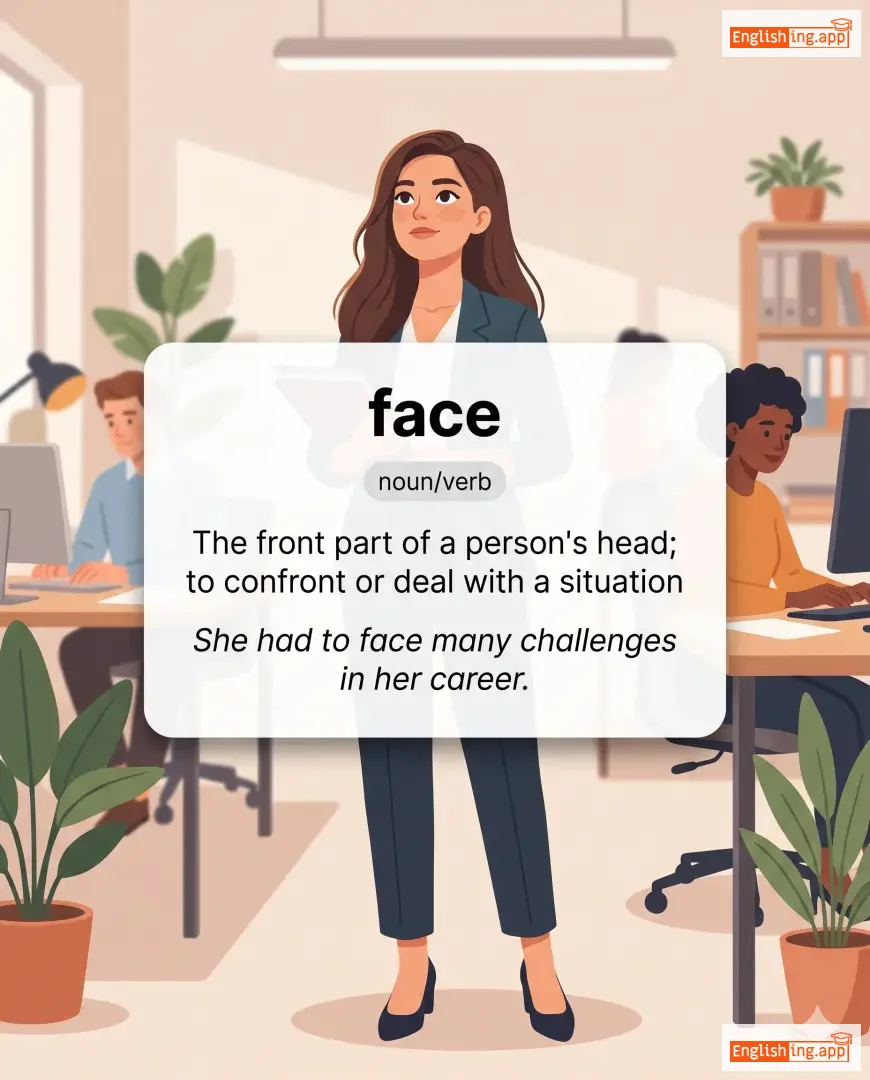
/feɪs/
noun
(フェイス)
••••••
|
|
顔
kao
••••••
|
the front part of the head, from the forehead to the chin
••••••
|
She has a beautiful face. |
彼女は美しい顔をしています。
kanojo wa utsukushii kao o shiteimasu
••••••
|
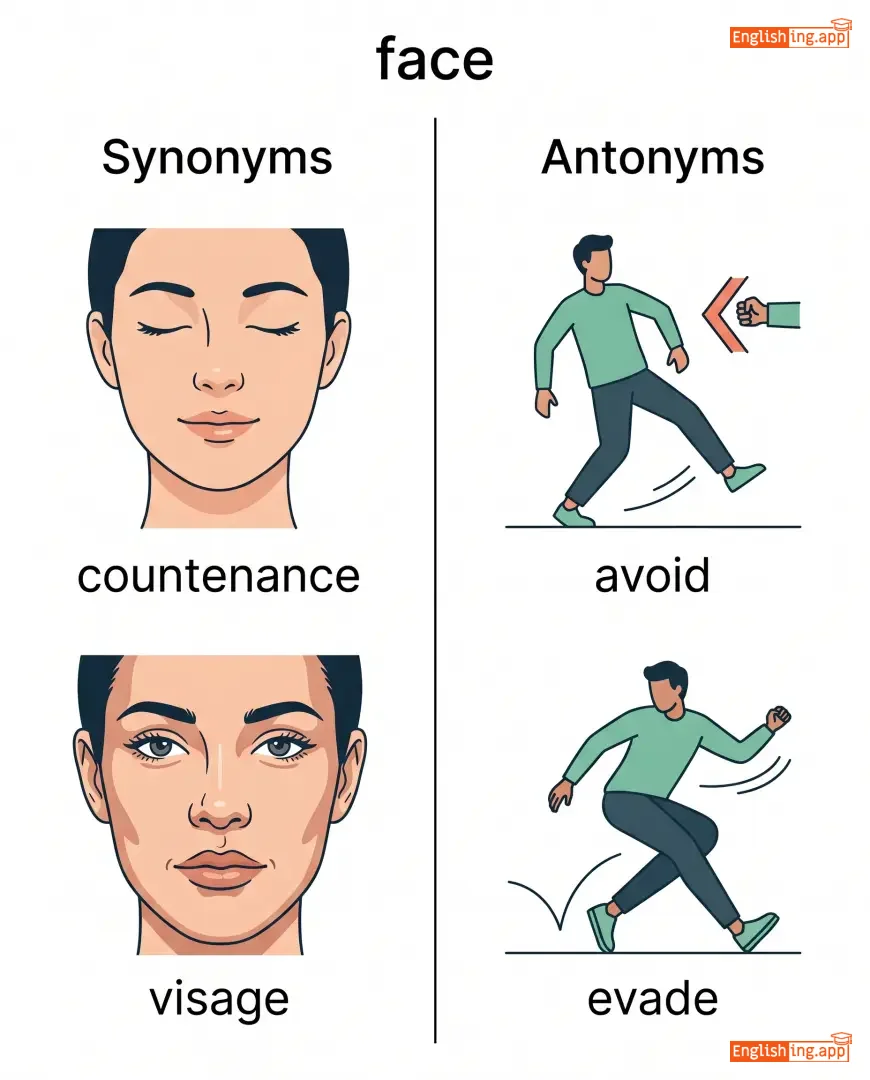
countenance, visage
••••••
|
back
••••••
|
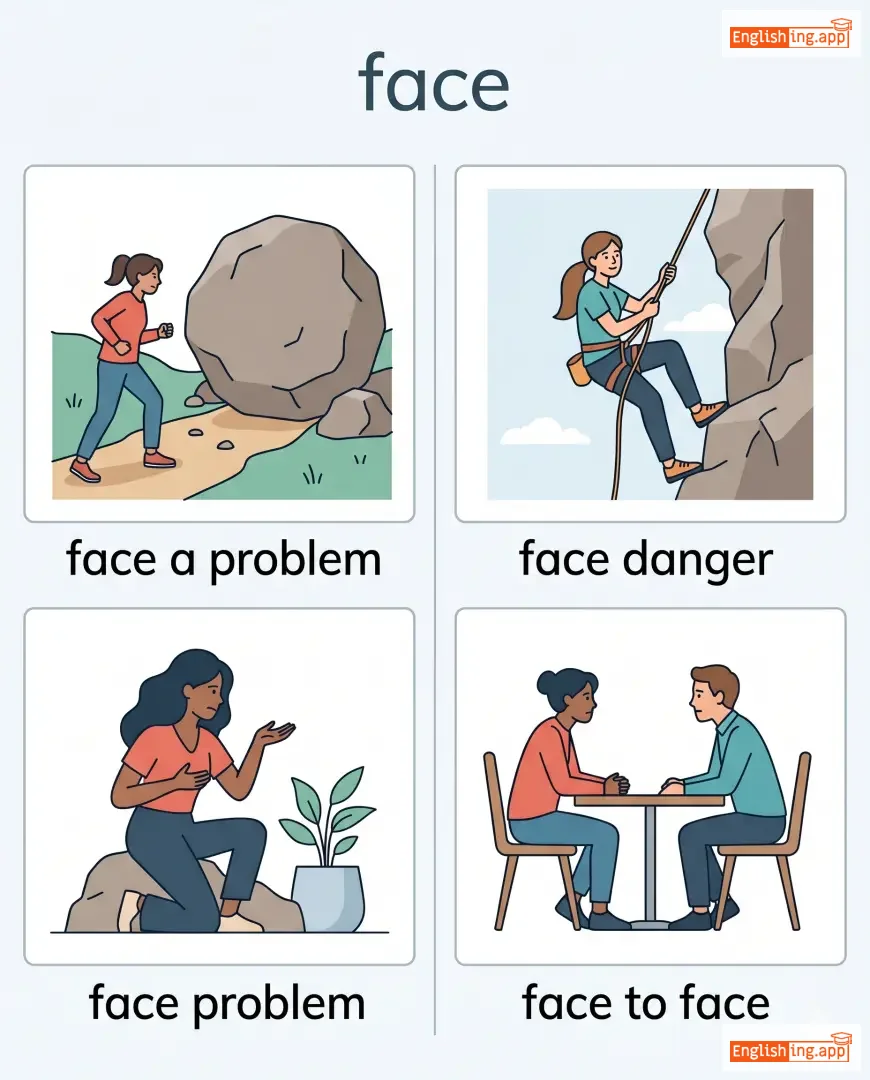
face to face, poker face, face mask
••••••
|
In Japanese, '顔' (kao) is your face, the key to all your stories!
••••••
|
|
#1078
👁️
|
/aɪ/
noun
(アイ)
••••••
|
- •••••• |
目; 視力
me, shiryoku
••••••
|
the organ of sight; the ability to see
••••••
|
Her eyes sparkled with joy. |
彼女の目は喜びで輝いていた。
Kanojo no me wa yorokobi de kagayaite ita.
••••••
|
vision, sight, optic
••••••
|
- •••••• |
blue eyes, bright eyes, eye contact, eye doctor, keep an eye
••••••
|
目は世界を見るために必要な器官です。
••••••
|
|
#1079
👄
|
/maʊθ/
noun
(マウス)
••••••
|
- •••••• |
口
kuchi
••••••
|
the opening in the face used for eating, drinking, speaking, and breathing
••••••
|
Please open your mouth wide for the dentist to examine. |
歯医者が検査できるように、口を広く開けてください。
Haisha ga kensa dekiru yō ni, kuchi o hiroku akete kudasai.
••••••
|
oral cavity, opening
••••••
|
- •••••• |
mouth wash, word of mouth, keep your mouth shut, mouth watering
••••••
|
口で食べる、話す、呼吸する。口は重要な場所です。
••••••
|
|
#1080
🤔
|
/ˈfɔːr.hed/
noun
(フォアヘッド)
••••••
|
- •••••• |
額
hitai
••••••
|
the part of the face above the eyebrows and below the hairline
••••••
|
He wiped the sweat from his forehead.
彼は額から汗を拭った。
••••••
|
彼は額から汗を拭った。
Kare wa hitai kara ase o nugitta.
••••••
|
brow, temples
••••••
|
- •••••• |
high forehead, wrinkled forehead, forehead kiss
••••••
|
額 = 顔の上部
••••••
|
|
#1081
🦵
|
/niː/
noun
(ニ)
••••••
|
- •••••• |
膝
hiza
••••••
|
the joint connecting the thigh and the lower leg in humans
••••••
|
He fell and scraped his knee on the pavement. |
彼は転んで、歩道で膝を擦りむきました。
Kare wa koronde, hodou de hiza o surimukimashita.
••••••
|
kneecap, patella
••••••
|
- •••••• |
knee cap, knee injury, knee surgery, knee bend
••••••
|
膝は立ち上がるために重要なサポートをする部分
••••••
|
|
#1082
🦴
|
/ˈbæk.boʊn/
noun
(bækkobōn)
••••••
|
- •••••• |
背骨
sebone
••••••
|
the series of vertebrae extending from the skull to the pelvis; spine
••••••
|
He injured his backbone in the accident. |
彼は事故で背骨を怪我した。
Kare wa jiko de sebone o kega shita.
••••••
|
spine, spinal column, vertebral column
••••••
|
- •••••• |
backbone injury, strong backbone, backbone surgery, backbone pain
••••••
|
背骨は私たちの体を支える柱のようなものです。
••••••
|
|
#1083
🫁
|
/ˈtreɪ.ki.ə/
noun
(気管)
••••••
|
- •••••• |
気管
kikan
••••••
|
the tube that carries air from the throat to the lungs; windpipe
••••••
|
The trachea is protected by cartilage rings that keep it open.
気管は軟骨環によって保護され、開いた状態を保ちます。
••••••
|
気管は軟骨環によって保護され、開いた状態を保ちます。
Kikan wa nankotsu kan ni yotte hogo sare, hiraita jōtai o tamochimasu.
••••••
|
windpipe, airway
••••••
|
- •••••• |
tracheal tube, tracheal cartilage, tracheal stenosis
••••••
|
気管 = 空気 + 喉
••••••
|
|
#1084
🥸
|
/məˈstɑːʃ/
noun
(ムスタッシュ)
••••••
|
- •••••• |
口ひげ
kuchihige
••••••
|
hair that grows on the upper lip of a man's face
••••••
|
He decided to grow a moustache for the first time. |
彼は初めて口ひげを生やすことに決めました。
Kare wa hajimete kuchihige wo hayasu koto ni kimemashita.
••••••
|
mustache, whiskers
••••••
|
- •••••• |
thick moustache, handlebar moustache, trim moustache, grow a moustache
••••••
|
口ひげ = 男性の魅力 (dansei no miryoku)
••••••
|
|
#1085
💇
|
/heər/
noun
(ヘア)
••••••
|
- •••••• |
髪
kami
••••••
|
any of the fine threadlike strands growing from the skin of humans and animals
••••••
|
She brushed her long hair before going to bed.
彼女は寝る前に長い髪をブラシでとかした。
••••••
|
彼女は寝る前に長い髪をブラシでとかした。
Kanojo wa neru mae ni nagai kami o burashi de tokashita.
••••••
|
locks, mane, tresses
••••••
|
baldness, bare skin
••••••
|
hair cut, hair style, long hair, hair loss
••••••
|
Kami - the hair that grows on your head
••••••
|
|
#1086
🧠
|
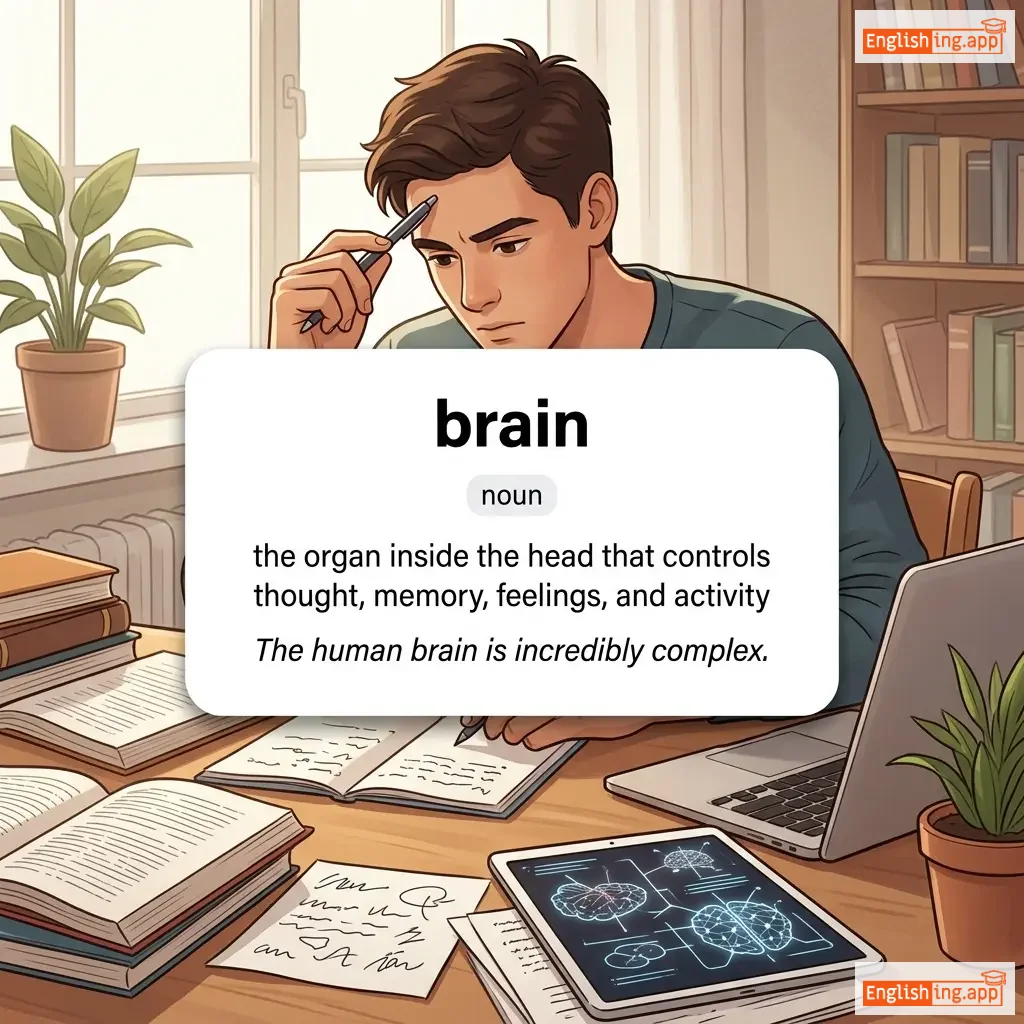
/breɪn/
noun
(ブレイン)
••••••
|
|
脳
nou
••••••
|
the organ inside the head that controls thought, memory, feelings, and activity in humans and animals
••••••
|
The human brain is incredibly complex and powerful.
人間の脳は非常に複雑で強力です。
••••••
|
人間の脳は非常に複雑で強力です。
Ningen no nou wa hijou ni fukuzatsu de kyouryoku desu.
••••••
|
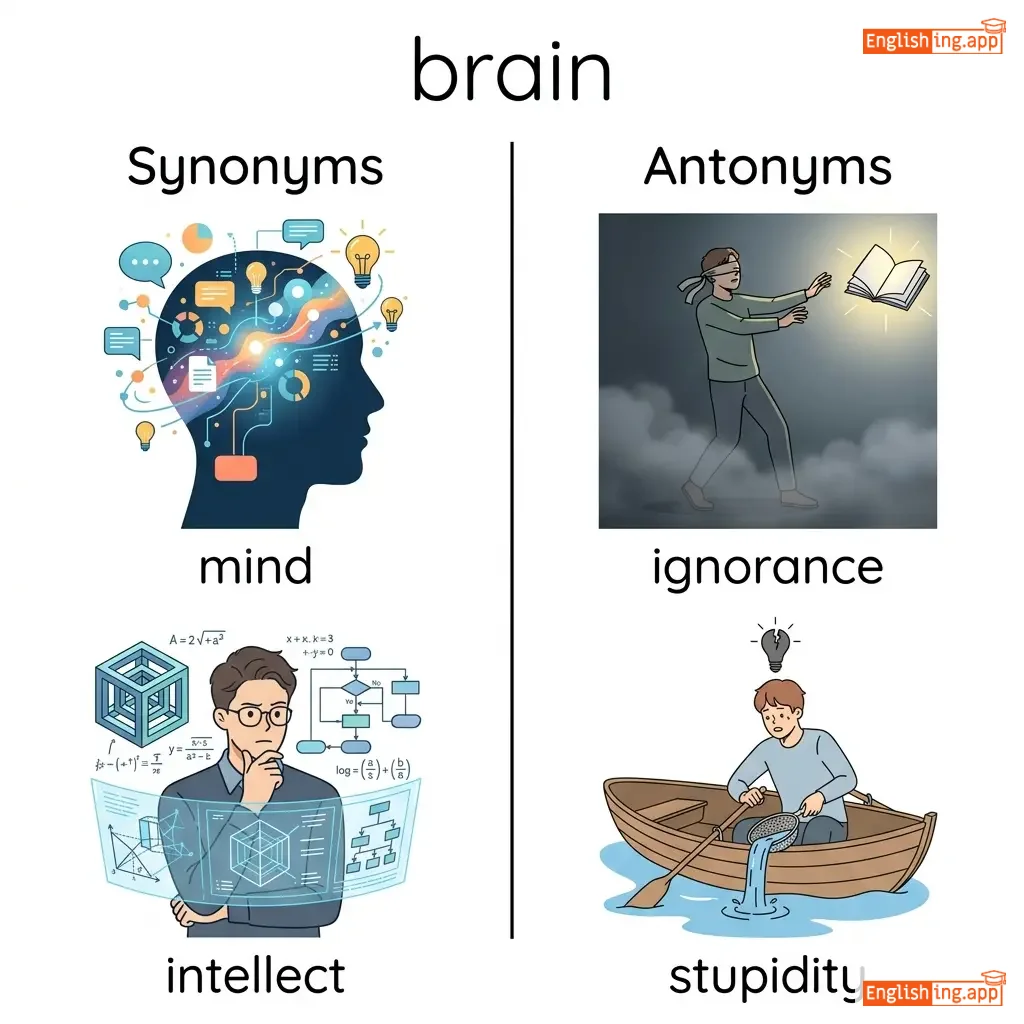
mind, intellect, cerebrum
••••••
|
- •••••• |
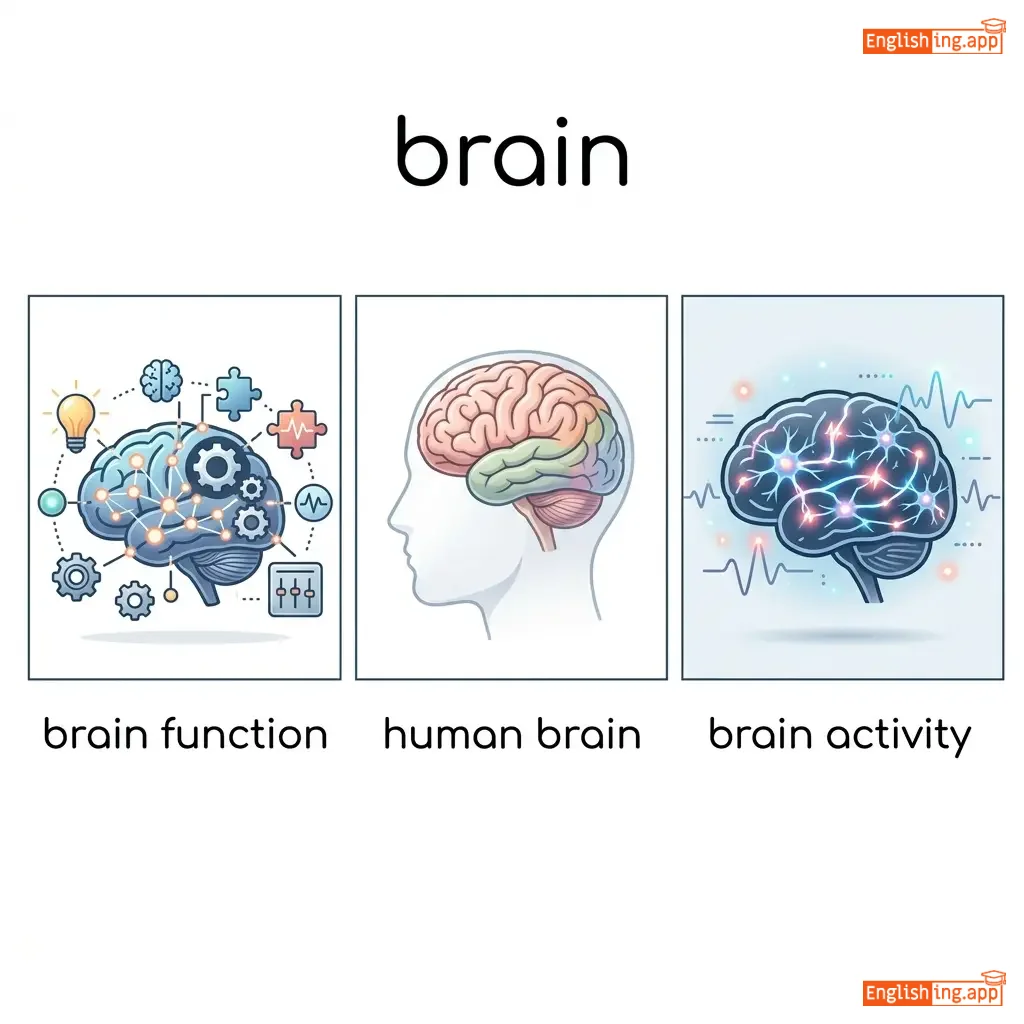
brain surgery, brain power, brain cells, brain damage
••••••
|
Japanese 'nou' sounds like 'know'—your brain knows everything!
••••••
|
|
#1087
🫃
|
/ˈstʌmək/
noun
(ストマック)
••••••
|
- •••••• |
胃
i
••••••
|
the organ in the body where food is digested; the belly or abdomen
••••••
|
My stomach hurts after eating too much. |
食べ過ぎた後、胃が痛いです。
Tabesugita ato, i ga itai desu.
••••••
|
belly, abdomen, tummy
••••••
|
back, spine
••••••
|
stomach ache, empty stomach, upset stomach, stomach pain
••••••
|
胃は食べ物を消化する場所
••••••
|
|
#1088
😊
|
/tʃiːk/
noun
(chīk)
••••••
|
- •••••• |
頬
hoho
••••••
|
either side of the face below the eye and between the nose and ear
••••••
|
The baby's cheeks were red from the cold weather.
The baby's cheeks were red from the cold weather.
••••••
|
赤ちゃんの頬は寒い天気のため赤くなっていました。
Akachan no hoho wa samui tenki no tame akaku natte imashita.
••••••
|
jowl, side of face
••••••
|
forehead, chin
••••••
|
rosy cheeks, chubby cheeks, kiss on the cheek, cheek to cheek
••••••
|
寒い天気で赤ちゃんの頬が赤くなった
••••••
|
|
#1089
👃
|
/ˈnɒs.trɪl/
noun
(ノストリル)
••••••
|
- •••••• |
鼻孔
bikou
••••••
|
either of the two openings in the nose through which air passes
••••••
|
The doctor checked each nostril for any blockage. |
医師は鼻孔のそれぞれをブロックがないか調べました。
Ishi wa bikou no sorezore wo burokkuga naika shirabemashita.
••••••
|
nasal opening, naris
••••••
|
- •••••• |
blocked nostril, flared nostrils, nostril hair
••••••
|
鼻孔 (Bikou): 鼻から空気が通る、医師が確認する場所です。
••••••
|
|
#1090
🍑
|
/rʌmp/
noun
(ランプ)
••••••
|
- •••••• |
尻; お尻; 背中の下部
rampu
••••••
|
the hindquarters or buttocks; the lower back area
••••••
|
The horse injured its rump during the fall.
その馬は転倒した際にお尻を痛めました。
••••••
|
その馬は転倒した際にお尻を痛めました。
Sono uma wa tentou shita sai ni oshiri o itamemashita.
••••••
|
buttocks, hindquarters, posterior
••••••
|
front, chest
••••••
|
rump steak, horse's rump, rump roast
••••••
|
Remember 'rump' as a horse's bottom, '尻' for the rear.
••••••
|
|
#1091
👁️
|
/ˈaɪ.bɔːl/
noun
(アイボール)
••••••
|
- •••••• |
眼球
gankyū
••••••
|
the round part of the eye within the eyelids and socket
••••••
|
The doctor examined his eyeball carefully.
医者は彼のアイボールを注意深く調べました。
••••••
|
医者は彼のアイボールを注意深く調べました。
Isha wa kare no aibōru o chūibukaku shirabemashita.
••••••
|
eye globe, ocular globe
••••••
|
- •••••• |
eyeball movement, eyeball pressure, bulging eyeball
••••••
|
「アイボール」を覚えることで「eyeball」を記憶しやすくなります。
••••••
|
Vocabulary Quiz
Test your vocabulary by matching words with their translations or meanings.
Login to take the quiz
Comments (0)
Share your thoughts and join the discussion.
Join the discussion by logging in
Login to CommentNo comments yet
Be the first to share your thoughts!