


Swipe left or right, or use the buttons. Tap image to zoom.
例句翻译
单词
Lesson 22: Names of the parts of bodyLesson 22: Names of the parts of body - 遮罩切换
|
表情符号
|
单词 | Images | 翻译 | 含义 | 例句 | 例句翻译 | 同义词 | 反义词 | 搭配词 | 助记符 |
|---|---|---|---|---|---|---|---|---|---|---|
|
#1028
💪
|
/ɑːrm/
noun
(arm)
••••••
|
- •••••• |
手臂
shǒubì
••••••
|
the upper limb of the human body from the shoulder to the hand
••••••
|
She raised her arm to ask a question.
她举起了手臂来提问。
••••••
|
她举起了手臂来提问。
Tā jǔqǐle shǒubì lái tíwèn.
••••••
|
limb, appendage
••••••
|
leg
••••••
|
strong arm, broken arm, arm muscle, arm wrestling
••••••
|
手臂,用来举起提问的部位
••••••
|
|
#1029
🦵
|
/læp/
noun
(læp)
••••••
|
- •••••• |
膝上
xī shàng
••••••
|
the top part of the legs of a person when sitting; one complete trip around a track or course
••••••
|
The cat sat on my lap while I was reading.
ðə kæt sæt ɒn maɪ læp waɪl aɪ wəz rɪdɪŋ.
••••••
|
猫坐在我的膝上,当我在读书时。
māo zuò zài wǒ de xī shàng, dāng wǒ zài dúshū shí.
••••••
|
thigh, circuit, round
••••••
|
- •••••• |
lap of luxury, lap dog, victory lap, sit on someone's lap
••••••
|
想象你的猫坐在你的膝上,和你一起读书。
••••••
|
|
#1030
❤️
|
/hɑːrt/
noun
(心脏)
••••••
|
- •••••• |
心脏
xinzang
••••••
|
the organ in the chest that pumps blood through the body; the center of emotions and feelings
••••••
|
The doctor listened to my heart with a stethoscope. |
医生用听诊器听我的心脏。
Yisheng yong tingzhenqi ting wode xinzang.
••••••
|
cardiac muscle, ticker
••••••
|
mind, brain
••••••
|
heart attack, heart disease, broken heart, heart rate
••••••
|
In Chinese, '心脏' (xinzang) means heart, just like how 'xin' means 'heart' in Chinese.
••••••
|
|
#1031
💪
|
/ˈmʌs.əl/
noun
(mā sī ěr)
••••••
|
- •••••• |
肌肉
jīròu
••••••
|
a body tissue consisting of fibers that can contract to produce movement
••••••
|
Regular exercise helps strengthen your muscle. |
规律的锻炼有助于增强你的肌肉。
Guīlǜ de duànliàn yǒuzhù yú zēngqiáng nǐ de jīròu.
••••••
|
sinew, fiber, tissue
••••••
|
fat, bone
••••••
|
muscle mass, muscle pain, muscle strength, build muscle
••••••
|
Muscle = 肌肉, 它代表身体的力量
••••••
|
|
#1032
🦶
|
/fʊt/
noun
(fut)
••••••
|
- •••••• |
脚
jiao
••••••
|
the lower extremity of the leg that is in direct contact with the ground in standing or walking
••••••
|
She hurt her foot while running.
她在跑步时扭伤了脚。
••••••
|
她在跑步时扭伤了脚。
Tā zài pǎobù shí niǔshāngle jiǎo.
••••••
|
paw, hoof
••••••
|
head, top
••••••
|
bare foot, foot pain, on foot, foot massage
••••••
|
脚是接触地面的一部分,帮助我们走路。
••••••
|
|
#1033
🤨
|
/ˈaɪ.braʊ/
noun
(àibàoláo)
••••••
|
- •••••• |
眉毛
meimao
••••••
|
the strip of hair growing on the ridge above the eye socket
••••••
|
She raised her eyebrow in surprise. |
她惊讶地抬起了眉毛。
Tā jīngyà de táiqǐle méimáo.
••••••
|
brow
••••••
|
- •••••• |
raise eyebrow, eyebrow pencil, thick eyebrow
••••••
|
想象一个惊讶的表情,眉毛抬起来了
••••••
|
|
#1034
🖐️
|
/pɑːm/
noun
(palm)
••••••
|
- •••••• |
手掌; 棕榈树
shǒu zhǎng
••••••
|
the inner part of the hand; a type of tropical tree
••••••
|
She placed her palm on the table. |
她把手掌放在桌子上。
Tā bǎ shǒu zhǎng fàng zài zhuō zi shàng.
••••••
|
hand, frond
••••••
|
back of hand
••••••
|
palm tree, palm oil, palm reading
••••••
|
Palm = shǒu zhǎng = 手的内侧部分
••••••
|
|
#1035
🦴
|
/skɪn/
noun
(skin)
••••••
|
- •••••• |
皮肤
pifu
••••••
|
the outer covering of the body; the natural outer covering of a fruit or vegetable
••••••
|
Her skin was soft and smooth.
她的皮肤又软又滑。
••••••
|
她的皮肤又软又滑。
Tā de pífū yòu ruǎn yòu huá.
••••••
|
flesh, hide, peel, surface
••••••
|
interior, inside, core
••••••
|
soft skin, smooth skin, dry skin, skin care, skin color
••••••
|
Remember 'pifu' like 'peel' for the outer skin layer
••••••
|
|
#1036
🦴
|
/tʃɪn/
noun
(chin)
••••••
|
- •••••• |
下巴
xiàba
••••••
|
the protruding part of the face below the mouth; the front part of the lower jaw
••••••
|
She rested her chin on her hand while thinking.
她在思考时把下巴放在手上。
••••••
|
她在思考时把下巴放在手上。
Tā zài sīkǎo shí bǎ xiàba fàng zài shǒu shàng.
••••••
|
jaw, mandible
••••••
|
- •••••• |
double chin, chin up, weak chin, strong chin
••••••
|
In Chinese, '下巴' sounds like 'shya-ba', picture your chin resting while thinking deeply.
••••••
|
|
#1037
👍
|
/θʌm/
noun
(θam)
••••••
|
- •••••• |
拇指
muzhi
••••••
|
the short thick finger of the human hand
••••••
|
She gave me a thumbs up to show her approval. |
她给了我一个大拇指,表示她的认可。
Ta gei le wo yi ge da muzhi, biao shi ta de renke.
••••••
|
pollex
••••••
|
- •••••• |
thumbs up, thumb through, rule of thumb
••••••
|
拇指向上,表示肯定的姿势!
••••••
|
|
#1038
🦶
|
/toʊ/
noun
(tuː)
••••••
|
- •••••• |
脚趾
jiao zhi
••••••
|
any of the five digits at the end of the human foot
••••••
|
She stubbed her toe on the chair leg.
她把脚趾碰到了椅子腿。
••••••
|
她把脚趾碰到了椅子腿。
Tā bǎ jiǎo zhǐ pèng dào le yǐzi tuǐ.
••••••
|
digit
••••••
|
- •••••• |
big toe, little toe, toe nail, stub one's toe
••••••
|
Imagine stepping on something sharp with your '脚趾' and feeling the pain.
••••••
|
|
#1039
🔙
|
/bæk/
noun
(bæk)
••••••
|
- •••••• |
背部
bèi bù
••••••
|
the rear surface of the human body from the shoulders to the hips; the spine
••••••
|
She hurt her back while lifting heavy boxes.
她在搬重箱子时伤了背部。
••••••
|
她在搬重箱子时伤了背部。
Tā zài bān zhòng xiāngzi shí shāngle bèibù.
••••••
|
spine, backbone, rear
••••••
|
front, chest, face
••••••
|
back pain, back injury, turn your back, pat on the back
••••••
|
‘背部’指的是身体后面的位置,像书的背面一样。
••••••
|
|
#1040
🦴
|
/boʊn/
noun
(bōn)
••••••
|
- •••••• |
骨头
gútou
••••••
|
one of the hard parts inside a human or animal that make up the frame of the body
••••••
|
She broke a bone in her leg while skiing.
她在滑雪时摔断了腿骨。
••••••
|
她在滑雪时摔断了腿骨。
Tā zài huáxuě shí shuāi duànle tuǐ gǔ.
••••••
|
skeletal structure, osseous tissue
••••••
|
flesh, muscle, soft tissue
••••••
|
bone fracture, bone marrow, jaw bone, funny bone
••••••
|
骨头 = 就像骨架一样坚硬
••••••
|
|
#1041
🫸
|
/veɪn/
noun
(维因)
••••••
|
- •••••• |
静脉; 血管
jìngmài; xuèguǎn
••••••
|
a blood vessel that carries blood back to the heart; a streak or marking of a different color
••••••
|
The nurse found a vein in his arm to draw blood. |
护士在他手臂上找到了静脉来抽血。
Hùshì zài tā shǒubì shàng zhǎodào le jìngmài lái chōuxuè.
••••••
|
blood vessel, capillary
••••••
|
artery
••••••
|
varicose vein, jugular vein, vein of gold
••••••
|
静脉就像是一条回到心脏的血液通道。
••••••
|
|
#1042
🦷
|
/dʒɔː/
noun
(jao)
••••••
|
- •••••• |
下巴
xiàbā
••••••
|
either of the two bones forming the framework of the mouth in most vertebrates
••••••
|
She broke her jaw in the accident.
她在事故中打破了下巴。
••••••
|
她在事故中打破了下巴。
Tā zài shìgù zhōng dǎpòle xiàbā.
••••••
|
mandible, maxilla
••••••
|
- •••••• |
jaw bone, lower jaw, upper jaw, jaw muscle
••••••
|
下巴与嘴巴相似,帮助记住下巴在嘴巴框架中的作用。
••••••
|
|
#1043
👄
|
/lɪp/
noun
(lip)
••••••
|
- •••••• |
嘴唇
zuǐchún
••••••
|
either of the two soft parts that form the edge of the mouth
••••••
|
She applied lipstick to her lips before the party. |
她在派对前涂上了口红。
Tā zài pàiduì qián tú shàngle kǒuhóng.
••••••
|
edge, rim, brim
••••••
|
- •••••• |
upper lip, lower lip, lip balm, bite your lip, sealed lips
••••••
|
嘴唇是嘴巴的边缘,就像口红涂在它们上面。
••••••
|
|
#1044
-
|
/ˈɑːrm.pɪt/
noun
(腋下)
••••••
|
- •••••• |
腋下
yexia
••••••
|
the hollow area under the arm where it joins the shoulder
••••••
|
He applied deodorant to his armpit. |
他在腋下涂了除臭剂。
tā zài yèxià túle chúchòu jì
••••••
|
underarm, axilla
••••••
|
- •••••• |
armpit hair, armpit odor, shave armpit
••••••
|
Yexia and armpit are a pair in both language and function!
••••••
|
|
#1045
🦷
|
/ɡʌm/
noun
(甘)
••••••
|
- •••••• |
牙龈; 粘稠物质
yá yín; niánchóu wùzhì
••••••
|
the firm flesh that surrounds the roots of the teeth; a viscous secretion
••••••
|
The dentist checked her gum for any signs of disease.
牙医检查了她的牙龈,寻找是否有疾病迹象。
••••••
|
牙医检查了她的牙龈,寻找是否有疾病迹象。
yá yī jiǎnchá le tā de yá yín, xúnzhǎo shìfǒu yǒu jí bìng jìxiàng.
••••••
|
gingiva, adhesive, glue
••••••
|
tooth, bone
••••••
|
gum disease, chewing gum, gum line, healthy gums
••••••
|
甘 (gum) 可以用作牙龈的提示,让人想到牙齿护理。
••••••
|
|
#1046
💅
|
/neɪl/
noun
(neɪl)
••••••
|
- •••••• |
指甲
zhǐjiǎ
••••••
|
a hard covering on the upper surface of the tip of the finger and toe
••••••
|
She painted her nail with bright red polish. |
她用亮红色的指甲油涂了她的指甲。
Tā yòng liàng hóngsè de zhǐjiǎ yóu túle tā de zhǐjiǎ.
••••••
|
fingernail, toenail, claw
••••••
|
skin, flesh
••••••
|
nail polish, nail file, nail clipper, bite nails
••••••
|
Zhi, zhi jia, yi zhi ya jiang huo!
••••••
|
|
#1047
👁️
|
/ˈaɪ.lɪd/
noun
(aīlìd)
••••••
|
- •••••• |
眼皮
yanpi
••••••
|
either of the upper or lower folds of skin that cover the eye when closed
••••••
|
Her eyelids felt heavy with sleep.
她的眼皮因睡意而感到沉重。
••••••
|
她的眼皮因睡意而感到沉重。
Tā de yǎnpí yīn shuìyì ér gǎndào chénzhòng.
••••••
|
lid
••••••
|
- •••••• |
heavy eyelids, drooping eyelids, eyelid surgery
••••••
|
眼皮能保护眼睛不受侵扰
••••••
|
|
#1048
🩸
|
/ˈplæz.mə/
noun
(plasima)
••••••
|
- •••••• |
血液的液体部分;电离气体;无凝血蛋白的血清
plazima
••••••
|
the liquid part of blood; ionized gas; blood serum without clotting proteins
••••••
|
Blood plasma contains various proteins and nutrients.
血浆含有各种蛋白质和营养物质。
••••••
|
血浆含有各种蛋白质和营养物质。
xuejiang han you gezhong danbaizhi he yingyang wuzhi.
••••••
|
blood serum, liquid component
••••••
|
blood cells, solid components
••••••
|
blood plasma, plasma donation, plasma proteins
••••••
|
血浆是血液的液体部分。
••••••
|
|
#1049
🤰
|
/ˈbel.i/
noun
(贝利)
••••••
|
- •••••• |
肚子
duzi
••••••
|
the front part of the human trunk below the ribs, containing the stomach and bowels; abdomen
••••••
|
The baby kicked in her belly during pregnancy. |
怀孕期间,宝宝踢了她的肚子。
Huaiyun qijian, baobao ti le ta de duzi
••••••
|
abdomen, stomach, tummy
••••••
|
back, spine
••••••
|
belly button, belly dance, beer belly, full belly
••••••
|
Duzi is the belly's dance!
••••••
|
|
#1050
🦴
|
/ˈkɒl.ə.bəʊn/
noun
(kè là bōn)
••••••
|
- •••••• |
锁骨
suǒ gǔ
••••••
|
either of the pair of bones joining the breastbone to the shoulder blades; clavicle
••••••
|
He broke his collar-bone in the accident. |
他在事故中摔断了锁骨。
Tā zài shìgù zhōng shuāi duànle suǒ gǔ.
••••••
|
clavicle
••••••
|
- •••••• |
broken collar-bone, collar-bone fracture, prominent collar-bone
••••••
|
Collar-Bone = Suǒ gǔ (Chinese for collar-bone)
••••••
|
|
#1051
👅
|
/tʌŋ/
noun
(tʌŋ)
••••••
|
- •••••• |
舌头; 口腔中的肌肉器官,用于品尝、说话和吞咽; 语言
shétou
••••••
|
the muscular organ in the mouth used for tasting, speaking, and swallowing; a language
••••••
|
The doctor asked him to stick out his tongue for examination.
医生让他把舌头伸出来做检查。
••••••
|
医生让他把舌头伸出来做检查。
Yīshēng ràng tā bǎ shétou shēn chūlái zuò jiǎnchá.
••••••
|
language, lingo, speech
••••••
|
- •••••• |
mother tongue, tongue twister, hold your tongue, bite your tongue
••••••
|
In Chinese, the word '舌头' (shétou) represents the tongue, and you can think of it moving to form this word!
••••••
|
|
#1052
💀
|
/skʌl/
noun
(skāl)
••••••
|
- •••••• |
头骨
tóu gǔ
••••••
|
the bony framework of the head that protects the brain
••••••
|
The doctor examined the skull X-ray carefully.
医生仔细检查了头骨的X光片。
••••••
|
医生仔细检查了头骨的X光片。
Yīshēng zǐxì jiǎnchá le tóugǔ de X-guāngpiàn.
••••••
|
cranium, head bone, braincase
••••••
|
brain, soft tissue
••••••
|
human skull, skull fracture, skull bone, thick skull
••••••
|
In Chinese, '头骨' is skull, protecting your brain like a shield.
••••••
|
|
#1053
👶
|
/brest/
noun
(brest)
••••••
|
- •••••• |
胸部
xiōng bù
••••••
|
the front surface of a person's or animal's body between the neck and the stomach
••••••
|
The baby fell asleep on her mother's breast.
宝宝在母亲的胸部入睡。
••••••
|
宝宝在母亲的胸部入睡。
Bǎobǎo zài mǔqīn de xiōng bù rùshuì.
••••••
|
chest, bosom, bust
••••••
|
back, spine, rear
••••••
|
breast cancer, breast milk, breast stroke, chicken breast
••••••
|
The word 'xiōng bù' creates comfort, like the warmth of a hug.
••••••
|
|
#1054
🦷
|
/tuːθ/
noun
(吐斯)
••••••
|
- •••••• |
牙齿
yá chǐ
••••••
|
a hard white structure in the mouth used for biting and chewing food
••••••
|
She brushes her teeth twice a day.
她每天刷两次牙。
••••••
|
她每天刷两次牙。
Tā měitiān shuā liǎng cì yá.
••••••
|
fang, tusk
••••••
|
- •••••• |
tooth decay, wisdom tooth, tooth brush, tooth paste, sweet tooth
••••••
|
牙齿帮助我们吃食物
••••••
|
|
#1055
💓
|
/pʌls/
noun
(脉搏)
••••••
|
- •••••• |
脉搏; 心跳
maibo
••••••
|
the rhythmic beating of blood in arteries; heartbeat rate
••••••
|
The doctor checked my pulse rate.
医生检查了我的脉搏。
••••••
|
医生检查了我的脉搏。
Yisheng jiancha le wode maibo.
••••••
|
heartbeat, throb, pulsation
••••••
|
stillness, calm
••••••
|
pulse rate, pulse check, weak pulse
••••••
|
脉搏与心跳息息相关,记得保持健康!
••••••
|
|
#1056
🤱
|
/ˈneɪ.vəl/
noun
(肚脐)
••••••
|
- •••••• |
肚脐
dùqí
••••••
|
the small hollow in the center of the stomach where the umbilical cord was attached
••••••
|
The baby's navel cord fell off after a week.
婴儿的脐带一周后掉了。
••••••
|
婴儿的脐带一周后掉了。
Yīng'ér de qídài yī zhōu hòu diàole.
••••••
|
belly button, umbilicus
••••••
|
- •••••• |
navel cord, navel piercing, navel orange
••••••
|
Think of '肚脐' as the small spot in your stomach where the umbilical cord once connected.
••••••
|
|
#1057
👕
|
/weɪst/
noun
(wēi sī)
••••••
|
- •••••• |
腰部
yao bu
••••••
|
the part of the human body below the ribs and above the hips
••••••
|
She tied a belt around her waist. |
她把腰带系在腰部。
Tā bǎ yāodài xì zài yāobù.
••••••
|
midriff, middle
••••••
|
- •••••• |
waist size, waist measurement, narrow waist
••••••
|
腰部是位于肋骨和臀部之间的区域。
••••••
|
|
#1058
🫁
|
/lʌŋ/
noun
(लंग)
••••••
|
- •••••• |
肺
fei
••••••
|
either of the two organs in the chest that you use for breathing
••••••
|
Smoking can cause serious damage to your lungs. |
吸烟可能会对你的肺造成严重损害。
Xīyān kěnéng huì duì nǐ de fèi zàochéng yánzhòng sǔnhài.
••••••
|
respiratory organ
••••••
|
- •••••• |
lung capacity, lung disease, lung cancer, healthy lungs, lung function
••••••
|
肺部的健康让我们轻松呼吸。
••••••
|
|
#1059
👣
|
/soʊl/
noun
(索尔)
••••••
|
- •••••• |
脚底; 鞋底
jiaodi, xiedi
••••••
|
the bottom part of the foot; the bottom part of a shoe
••••••
|
I have a blister on the sole of my foot. |
我的脚底有个水泡。
wode jiao di you ge shuipao
••••••
|
bottom, underside, base
••••••
|
top, upper, surface
••••••
|
sole of foot, shoe sole, bare sole, rubber sole
••••••
|
脚底就像鞋底一样,踩在地面上。
••••••
|
|
#1060
🦴
|
/dʒɔɪnt/
noun
(关节)
••••••
|
- •••••• |
关节; 连接; 关节连接
guānjié; liánjiē; guānjié liánjiē
••••••
|
a place where two bones are connected in the body; a connection or junction
••••••
|
My knee joint hurts when I walk.
我的膝盖关节在走路时疼。
••••••
|
我的膝盖关节在走路时疼。
Wǒ de xīgài guānjié zài zǒulù shí téng.
••••••
|
connection, junction, articulation
••••••
|
separation, disconnection
••••••
|
joint pain, knee joint, joint movement, joint surgery
••••••
|
Zh mnemonic: '关节帮助我们保持运动。'
••••••
|
|
#1061
-
|
/ˈeɪ.nəs/
noun
(áinás)
••••••
|
- •••••• |
肛门
gāngmén
••••••
|
the opening at the end of the digestive tract through which waste leaves the body
••••••
|
The doctor examined the patient's anus during the medical checkup.
医生在体检期间检查了病人的肛门。
••••••
|
医生在体检期间检查了病人的肛门。
Yīshēng zài tǐjiǎn qījiān jiǎnchále bìngrén de gāngmén.
••••••
|
rectum opening
••••••
|
- •••••• |
anal examination, rectal area
••••••
|
肛门 (gāngmén) 就是消化道的出口。
••••••
|
|
#1062
✋
|
/hænd/
noun
(hǎnd)
••••••
|
- •••••• |
手
shou
••••••
|
the end part of a person's arm beyond the wrist, including the palm, fingers, and thumb
••••••
|
He raised his hand to ask a question. |
他举起手来问问题。
tā jǔ qǐ shǒu lái wèn wèntí.
••••••
|
palm, fist, mitt
••••••
|
foot, leg
••••••
|
shake hands, hand in hand, by hand, helping hand
••••••
|
手从掌心到手指,能做任何事。
••••••
|
|
#1063
🧔
|
/bɪərd/
noun
(比尔德)
••••••
|
- •••••• |
胡子
húzi
••••••
|
hair that grows on the chin and lower cheeks of a man's face
••••••
|
He grew a long beard during the winter months. |
他在冬天长了一根长胡子。
Tā zài dōngtiān zhǎngle yī gēn cháng húzi.
••••••
|
facial hair, whiskers, goatee
••••••
|
clean-shaven, smooth face
••••••
|
grow a beard, trim beard, long beard, thick beard
••••••
|
Húzi – Mandarin for beard, sounds like 'hue' in English.
••••••
|
|
#1064
🟡
|
/baɪl/
noun
(bái ěr)
••••••
|
- •••••• |
胆汁
dan zhi
••••••
|
a bitter greenish-brown alkaline fluid that aids digestion and is secreted by the liver and stored in the gallbladder
••••••
|
The liver produces bile to help digest fats. |
肝脏产生胆汁来帮助消化脂肪。
Gan zang chan sheng dan zhi lai bang zhu xiao hua zhi fang
••••••
|
gall, digestive fluid
••••••
|
- •••••• |
bile duct, bile acid, bile production, excess bile
••••••
|
胆汁就像肝脏帮助消化的液体
••••••
|
|
#1065
👂
|
/ɪər/
noun
(ěr)
••••••
|
- •••••• |
耳朵
ěrduo
••••••
|
the organ of hearing and balance in humans and other vertebrates
••••••
|
She whispered something in his ear. |
她在他的耳朵里低语。
Tā zài tā de ěrduo lǐ dīyǔ.
••••••
|
hearing organ, auditory organ
••••••
|
- •••••• |
inner ear, outer ear, ear infection, good ear, deaf ear
••••••
|
耳朵帮助我们听声音,并保持平衡
••••••
|
|
#1066
💪
|
/ˈel.boʊ/
noun
(艾尔博)
••••••
|
- •••••• |
肘部
zhoubu
••••••
|
the joint between the forearm and the upper arm
••••••
|
He hurt his elbow while playing tennis. |
他在打网球时伤了肘部。
Ta zai da wangqiu shi shang le zhoubu
••••••
|
joint
••••••
|
- •••••• |
elbow grease, tennis elbow, elbow room
••••••
|
肘部受伤了,网球不再快乐了。
••••••
|
|
#1067
🦴
|
/rɪb/
noun
(rib)
••••••
|
- •••••• |
肋骨
lèigǔ
••••••
|
one of the curved bones that protect the chest and lungs
••••••
|
He broke his rib in the accident.
他在事故中断了一根肋骨。
••••••
|
他在事故中断了一根肋骨。
Tā zài shìgù zhōng duànle yī gēn lèigǔ.
••••••
|
costa, chest bone
••••••
|
soft tissue
••••••
|
rib cage, broken rib, spare ribs
••••••
|
Rib in English sounds like '肋骨' (rib) in Chinese
••••••
|
|
#1068
🤚
|
/rɪst/
noun
(rist)
••••••
|
- •••••• |
手腕
shou wan
••••••
|
the joint connecting the hand with the forearm
••••••
|
He wore a watch on his wrist.
他戴着手表在手腕上。
••••••
|
他戴着手表在手腕上。
Ta daizhe shou biao zai shou wan shang.
••••••
|
carpus
••••••
|
- •••••• |
wrist watch, wrist injury, sprained wrist
••••••
|
手腕 (Chinese for wrist) - 'S' for 'Swift' wrist.
••••••
|
|
#1069
🫀
|
/ˈɑːr.tər.i/
noun
(动脉)
••••••
|
- •••••• |
动脉
dongmai
••••••
|
a blood vessel that carries blood away from the heart to other parts of the body
••••••
|
The doctor checked the pulse in his artery.
医生检查了他动脉的脉搏。
••••••
|
医生检查了他动脉的脉搏。
Yīshēng jiǎnchá le tā dòngmài de màibó.
••••••
|
blood vessel
••••••
|
vein
••••••
|
blocked artery, main artery, artery disease, coronary artery
••••••
|
动脉和心脏紧密连接,帮助血液流动
••••••
|
|
#1070
🩸
|
/blʌd/
noun
(blʌd)
••••••
|
- •••••• |
血液
xueye
••••••
|
the red liquid that circulates in the arteries and veins of humans and animals, carrying oxygen to and carbon dioxide from the tissues of the body
••••••
|
The doctor took a blood sample for testing.
医生取了一个血样进行测试。
••••••
|
医生取了一个血样进行测试。
Yisheng qule yige xueyang jinxing ceshi.
••••••
|
plasma, life fluid, gore
••••••
|
- •••••• |
blood pressure, blood test, blood donation, blood flow
••••••
|
Xueye: xiang shenti de meiti.
••••••
|
|
#1071
🫁
|
/θroʊt/
noun
(咽喉)
••••••
|
- •••••• |
喉咙; 气管; 颈部的前部
hóulóng; qìguǎn; jǐngbù de qiánbù
••••••
|
the passage that leads from the back of the mouth to the stomach and lungs; the front part of the neck
••••••
|
He had a sore throat and couldn't speak clearly.
他喉咙痛,说不清楚。
••••••
|
他喉咙痛,说不清楚。
tā hóulóng tòng, shuō bù qīngchǔ.
••••••
|
gullet, neck, pharynx
••••••
|
- •••••• |
sore throat, clear your throat, throat infection, deep throat
••••••
|
喉咙连接嘴巴和身体的内部。
••••••
|
|
#1072
🫁
|
/tʃest/
noun
(切斯特)
••••••
|
- •••••• |
胸部
xiōngbù
••••••
|
the front part of a person's or animal's body between the neck and the stomach
••••••
|
He felt a sharp pain in his chest after running.
他在跑步后感到胸部剧烈的疼痛。
••••••
|
他在跑步后感到胸部剧烈的疼痛。
Tā zài pǎobù hòu gǎndào xiōngbù jùliè de téngtòng.
••••••
|
breast, torso, upper body
••••••
|
back, spine, rear
••••••
|
chest pain, chest muscles, treasure chest, chest X-ray
••••••
|
胸部,保护心脏的地方
••••••
|
|
#1073
🫲
|
/ˈʃoʊldər/
noun
(肩膀)
••••••
|
- •••••• |
肩膀
jianbang
••••••
|
the part of the body between the neck and the arm
••••••
|
He carried the bag over his shoulder.
他把包拿在肩膀上。
••••••
|
他把包拿在肩膀上。
Ta ba bao na zai jianbang shang
••••••
|
joint, arm joint
••••••
|
waist, hip
••••••
|
shoulder blade, shoulder pain, broad shoulders, shoulder bag
••••••
|
Imagine carrying a heavy burden on your '肩膀' (shoulder) like it's 'jian' your strength.
••••••
|
|
#1074
🫘
|
/ˈkɪdni/
noun
(kídni)
••••••
|
- •••••• |
肾脏
shènzàng
••••••
|
either of a pair of organs that filter waste products from the blood and produce urine
••••••
|
Drinking plenty of water helps keep your kidneys healthy.
Drinking plenty of water helps keep your kidneys healthy.
••••••
|
喝足够的水有助于保持肾脏健康。
Hē zúgòu de shuǐ yǒuzhù yú bǎochí shènzàng jiànkāng.
••••••
|
renal organ
••••••
|
- •••••• |
kidney disease, kidney stone, kidney function, kidney transplant
••••••
|
肾脏 - 水有助于肾脏健康
••••••
|
|
#1075
👠
|
/hiːl/
noun
(希尔)
••••••
|
- •••••• |
脚跟
jiao gen
••••••
|
the back part of the human foot below the ankle
••••••
|
She wore shoes with high heels to the party. |
她穿着高跟鞋去参加聚会。
ta chuan zhuo gao gen xie qu can jia ju hui
••••••
|
back of foot, ankle
••••••
|
toe, front
••••••
|
high heel, heel pain, Achilles heel, heel bone
••••••
|
脚跟让你保持平衡,尤其是在穿高跟鞋时!
••••••
|
|
#1076
🦒
|
/nek/
noun
(nek)
••••••
|
- •••••• |
脖子
bozi
••••••
|
the part of the body connecting the head to the shoulders
••••••
|
She wore a beautiful necklace around her neck. |
她在脖子上戴着一条美丽的项链。
Tā zài bózi shàng dàizhe yītiáo měilì de xiàngliàn.
••••••
|
throat, cervix
••••••
|
- •••••• |
neck pain, neck muscles, long neck, stiff neck
••••••
|
脖子是连接头和肩膀的部位,常戴项链装饰。
••••••
|
|
#1077
😊
|
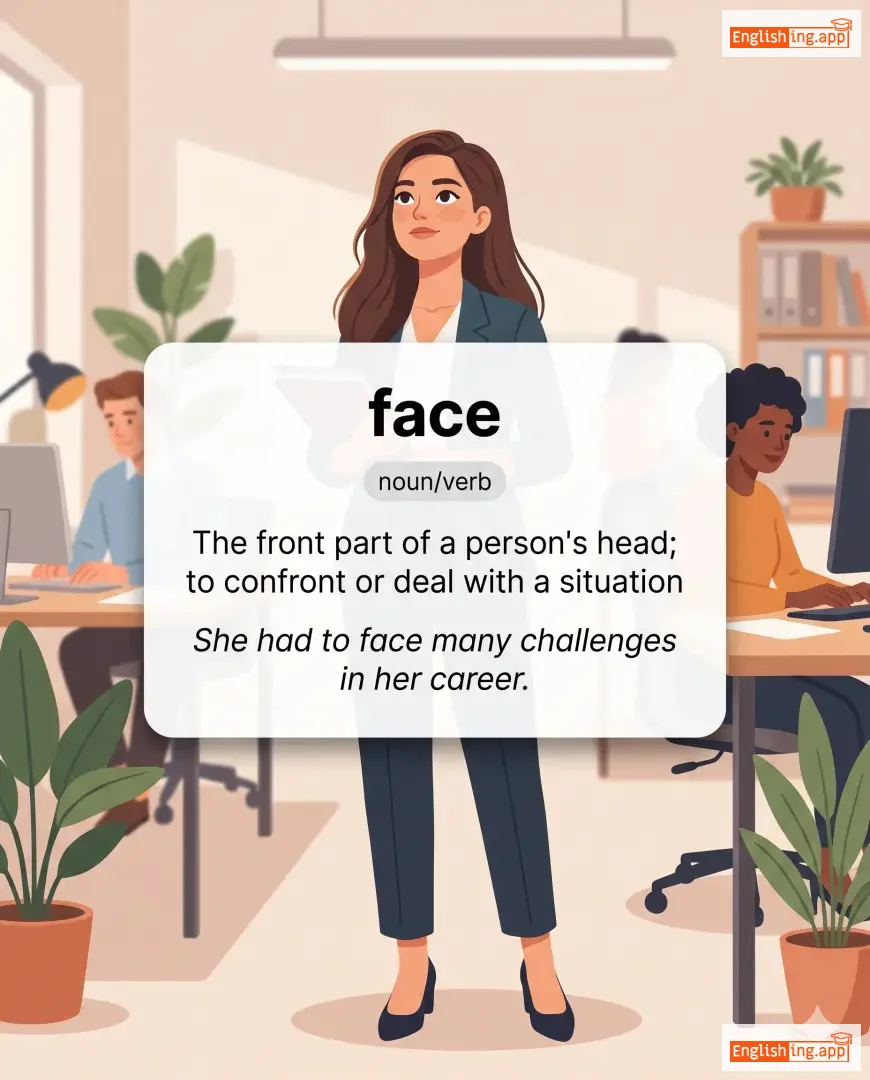
/feɪs/
noun
(feɪs)
••••••
|
|
脸
lian
••••••
|
the front part of the head, from the forehead to the chin
••••••
|
She has a beautiful face. |
她有一张美丽的脸。
tā yǒu yī zhāng měilì de liǎn
••••••
|
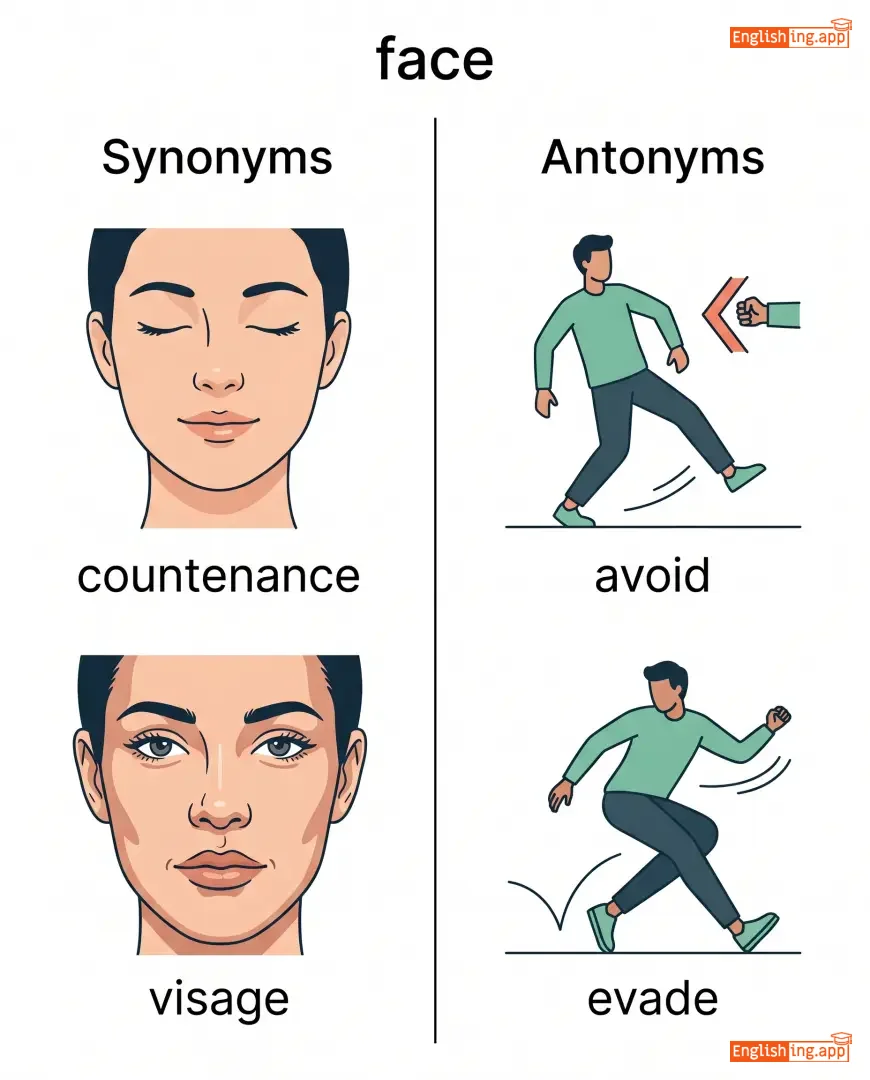
countenance, visage
••••••
|
back
••••••
|
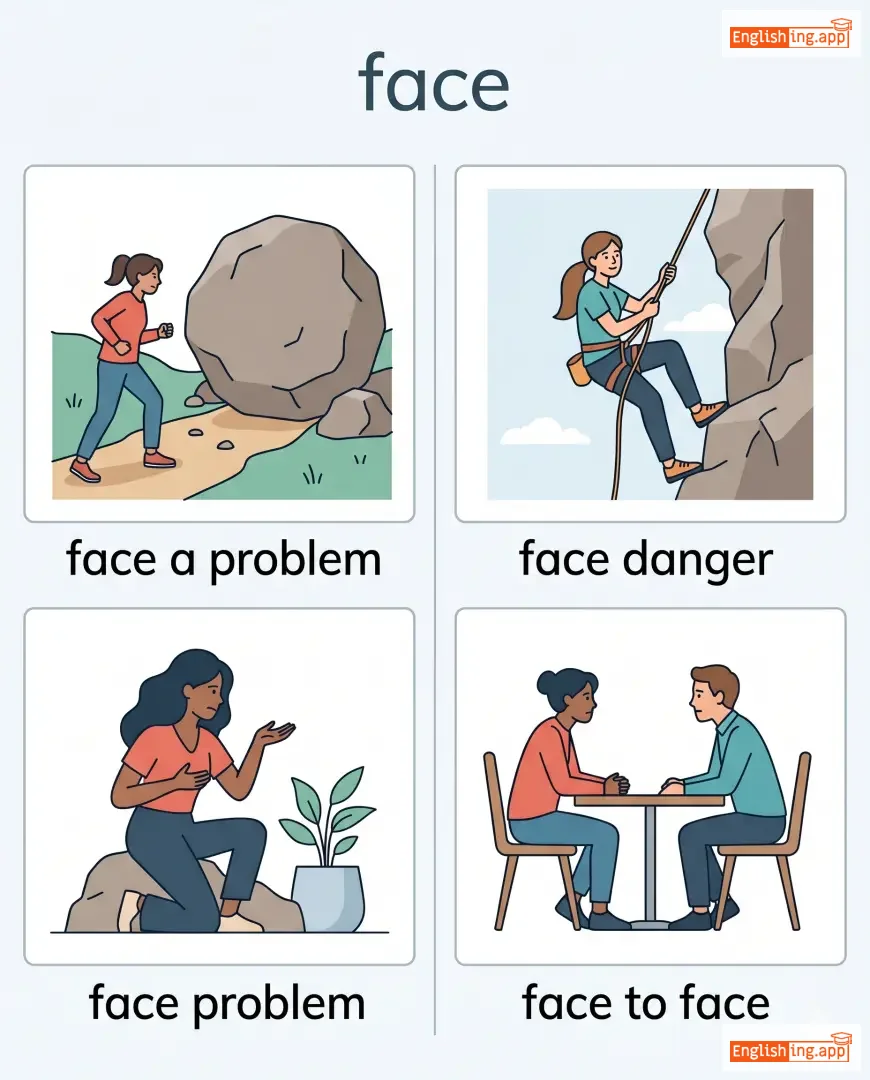
face to face, poker face, face mask
••••••
|
In Chinese, '脸' (lian) sounds like 'land'—your face is your land of expression!
••••••
|
|
#1078
👁️
|
/aɪ/
noun
(ài)
••••••
|
- •••••• |
眼睛; 视力
yanjing, shili
••••••
|
the organ of sight; the ability to see
••••••
|
Her eyes sparkled with joy. |
她的眼睛闪烁着喜悦。
Tā de yǎnjīng shǎnshuò zhe xǐyuè.
••••••
|
vision, sight, optic
••••••
|
- •••••• |
blue eyes, bright eyes, eye contact, eye doctor, keep an eye
••••••
|
眼睛帮助我们看到周围的世界。
••••••
|
|
#1079
👄
|
/maʊθ/
noun
(màuθ)
••••••
|
- •••••• |
嘴巴
zuǐ ba
••••••
|
the opening in the face used for eating, drinking, speaking, and breathing
••••••
|
Please open your mouth wide for the dentist to examine. |
请张大嘴巴,方便牙医检查。
qǐng zhāng dà zuǐ ba, fāngbiàn yáyī jiǎnchá.
••••••
|
oral cavity, opening
••••••
|
- •••••• |
mouth wash, word of mouth, keep your mouth shut, mouth watering
••••••
|
嘴巴用于吃喝说话,'嘴巴'容易记住。
••••••
|
|
#1080
🤔
|
/ˈfɔːr.hed/
noun
(fōr-hēd)
••••••
|
- •••••• |
额头
étóu
••••••
|
the part of the face above the eyebrows and below the hairline
••••••
|
He wiped the sweat from his forehead.
他擦掉了额头上的汗水。
••••••
|
他擦掉了额头上的汗水。
Tā cā diào le étóu shàng de hànshuǐ.
••••••
|
brow, temples
••••••
|
- •••••• |
high forehead, wrinkled forehead, forehead kiss
••••••
|
额头 = 面部上方
••••••
|
|
#1081
🦵
|
/niː/
noun
(ni)
••••••
|
- •••••• |
膝盖
xigai
••••••
|
the joint connecting the thigh and the lower leg in humans
••••••
|
He fell and scraped his knee on the pavement. |
他摔倒并擦伤了膝盖在人行道上。
Ta shuai dao bing ca shang le xigai zai renxingdao shang.
••••••
|
kneecap, patella
••••••
|
- •••••• |
knee cap, knee injury, knee surgery, knee bend
••••••
|
膝盖像一个支撑身体的支点,能弯曲。
••••••
|
|
#1082
🦴
|
/ˈbæk.boʊn/
noun
(bǎkōng)
••••••
|
- •••••• |
脊柱
jizhù
••••••
|
the series of vertebrae extending from the skull to the pelvis; spine
••••••
|
He injured his backbone in the accident. |
他在事故中伤了他的脊柱。
Tā zài shìgù zhōng shāngle tā de jǐzhù.
••••••
|
spine, spinal column, vertebral column
••••••
|
- •••••• |
backbone injury, strong backbone, backbone surgery, backbone pain
••••••
|
脊柱就像建筑物的支柱一样支撑着我们的身体。
••••••
|
|
#1083
🫁
|
/ˈtreɪ.ki.ə/
noun
(气管)
••••••
|
- •••••• |
气管
qìguǎn
••••••
|
the tube that carries air from the throat to the lungs; windpipe
••••••
|
The trachea is protected by cartilage rings that keep it open.
气管由软骨环保护,保持畅通。
••••••
|
气管由软骨环保护,保持畅通。
Qìguǎn yóu ruǎngǔ huán bǎohù, bǎochí chàngtōng.
••••••
|
windpipe, airway
••••••
|
- •••••• |
tracheal tube, tracheal cartilage, tracheal stenosis
••••••
|
气管 = 空气 + 喉咙
••••••
|
|
#1084
🥸
|
/məˈstɑːʃ/
noun
(胡子)
••••••
|
- •••••• |
胡须
húxū
••••••
|
hair that grows on the upper lip of a man's face
••••••
|
He decided to grow a moustache for the first time. |
他决定第一次留胡须。
Tā juédìng dì yī cì liú húxū.
••••••
|
mustache, whiskers
••••••
|
- •••••• |
thick moustache, handlebar moustache, trim moustache, grow a moustache
••••••
|
胡须 = 男性魅力的象征 (nánxìng mèilì de xiàngzhēng)
••••••
|
|
#1085
💇
|
/heər/
noun
(hēiěr)
••••••
|
- •••••• |
头发
toufa
••••••
|
any of the fine threadlike strands growing from the skin of humans and animals
••••••
|
She brushed her long hair before going to bed.
她在睡觉前刷了长头发。
••••••
|
她在睡觉前刷了长头发。
Ta zai shuijiao qian shua le chang toufa.
••••••
|
locks, mane, tresses
••••••
|
baldness, bare skin
••••••
|
hair cut, hair style, long hair, hair loss
••••••
|
Toufa - image of hair that grows on your head.
••••••
|
|
#1086
🧠
|
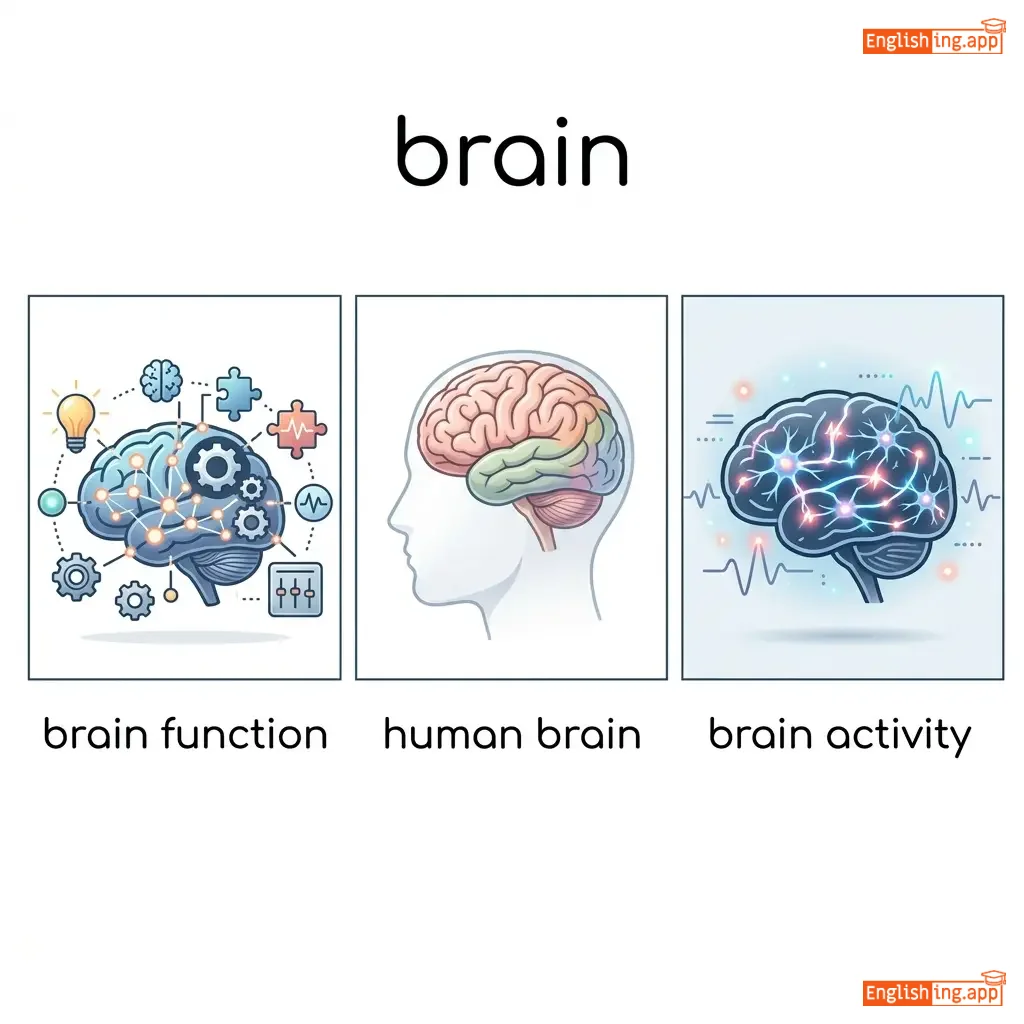
/breɪn/
noun
(bù lín)
••••••
|
|
大脑
dà nǎo
••••••
|
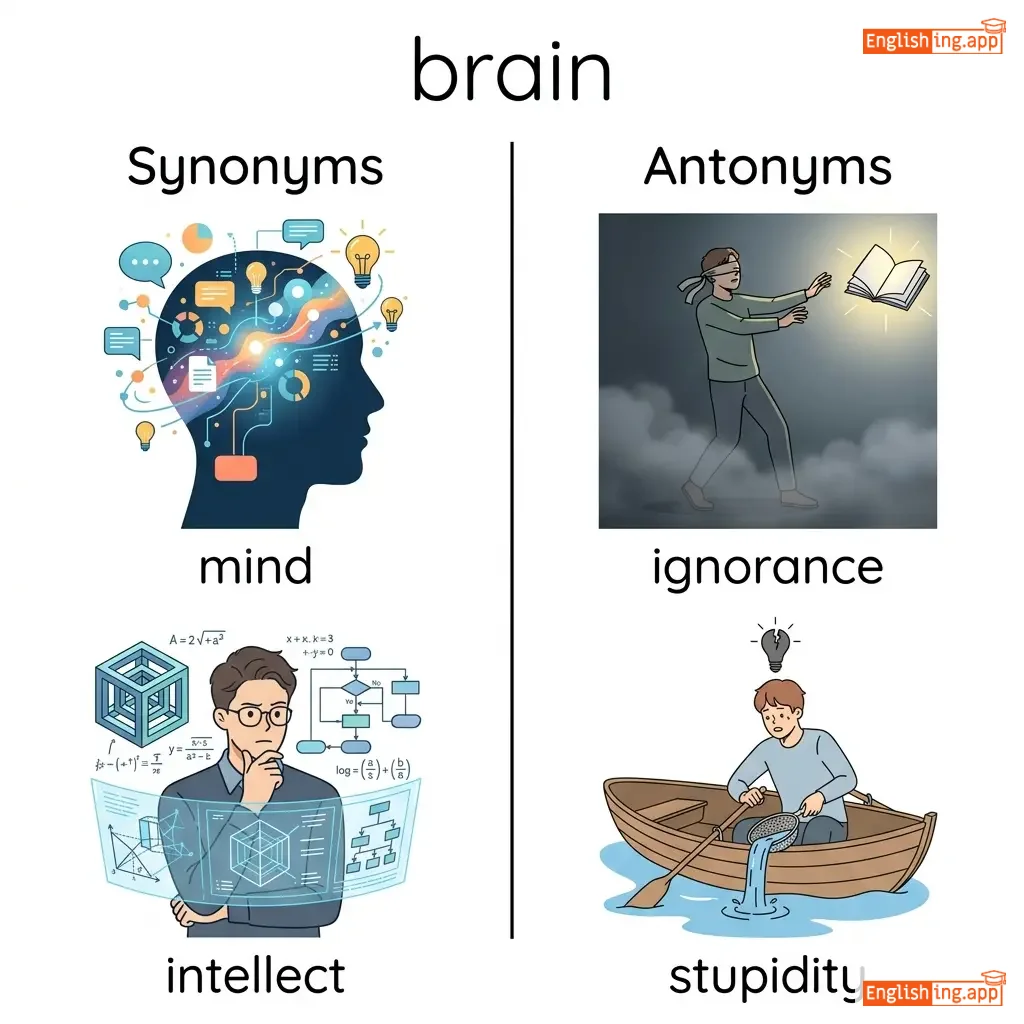
the organ inside the head that controls thought, memory, feelings, and activity in humans and animals
••••••
|
The human brain is incredibly complex and powerful.
人类的大脑非常复杂且强大。
••••••
|
人类的大脑非常复杂且强大。
Rénlèi de dà nǎo fēicháng fùzá qiě qiángdà.
••••••
|
mind, intellect, cerebrum
••••••
|
- •••••• |
brain surgery, brain power, brain cells, brain damage
••••••
|
Chinese 'dà nǎo'—large brain, great mind!
••••••
|
|
#1087
🫃
|
/ˈstʌmək/
noun
(胃)
••••••
|
- •••••• |
胃
wei
••••••
|
the organ in the body where food is digested; the belly or abdomen
••••••
|
My stomach hurts after eating too much. |
吃太多后我的胃痛。
Chi tai duo hou wode wei tong.
••••••
|
belly, abdomen, tummy
••••••
|
back, spine
••••••
|
stomach ache, empty stomach, upset stomach, stomach pain
••••••
|
胃是消化食物的地方,它在肚子里
••••••
|
|
#1088
😊
|
/tʃiːk/
noun
(chīk)
••••••
|
- •••••• |
脸颊
liǎn jiá
••••••
|
either side of the face below the eye and between the nose and ear
••••••
|
The baby's cheeks were red from the cold weather.
the baby's cheeks were red from the cold weather.
••••••
|
宝宝的脸颊因寒冷的天气而变红。
Bǎobǎo de liǎn jiá yīn hánlěng de tiānqì ér biàn hóng.
••••••
|
jowl, side of face
••••••
|
forehead, chin
••••••
|
rosy cheeks, chubby cheeks, kiss on the cheek, cheek to cheek
••••••
|
宝宝的脸颊因寒冷的天气而变红
••••••
|
|
#1089
👃
|
/ˈnɒs.trɪl/
noun
(鼻孔)
••••••
|
- •••••• |
鼻孔
bíkǒng
••••••
|
either of the two openings in the nose through which air passes
••••••
|
The doctor checked each nostril for any blockage. |
医生检查了每个鼻孔,寻找任何阻塞物。
yīshēng jiǎnchá le měi gè bíkǒng, xúnzhǎo rènhé zǔsè wù.
••••••
|
nasal opening, naris
••••••
|
- •••••• |
blocked nostril, flared nostrils, nostril hair
••••••
|
鼻孔 (Bíkǒng): 空气通过鼻孔流动,医生检查它们是否被阻塞。
••••••
|
|
#1090
🍑
|
/rʌmp/
noun
(ramp)
••••••
|
- •••••• |
臀部; 屁股; 背部下方
ramp
••••••
|
the hindquarters or buttocks; the lower back area
••••••
|
The horse injured its rump during the fall.
那匹马在跌倒时伤到了它的臀部。
••••••
|
那匹马在跌倒时伤到了它的臀部。
Nà pǐ mǎ zài diēdǎo shí shāngdào le tā de tún bù.
••••••
|
buttocks, hindquarters, posterior
••••••
|
front, chest
••••••
|
rump steak, horse's rump, rump roast
••••••
|
Think of 'rump' as the lower back or bottom to remember '臀部' for the rear.
••••••
|
|
#1091
👁️
|
/ˈaɪ.bɔːl/
noun
(áibó'ěr)
••••••
|
- •••••• |
眼球
yǎnqiú
••••••
|
the round part of the eye within the eyelids and socket
••••••
|
The doctor examined his eyeball carefully.
医生仔细检查了他的眼球。
••••••
|
医生仔细检查了他的眼球。
Yīshēng zǐxì jiǎnchále tā de yǎnqiú.
••••••
|
eye globe, ocular globe
••••••
|
- •••••• |
eyeball movement, eyeball pressure, bulging eyeball
••••••
|
记住'眼球',让你更容易记住 'eyeball' 这个词。
••••••
|
Vocabulary Quiz
Test your vocabulary by matching words with their translations or meanings.
Login to take the quiz
Comments (0)
Share your thoughts and join the discussion.
Join the discussion by logging in
Login to CommentNo comments yet
Be the first to share your thoughts!