


Swipe left or right, or use the buttons. Tap image to zoom.
例句翻译
单词
Lesson 16: Names of ToolsLesson 16: Names of Tools - 遮罩切换
|
表情符号
|
单词 | Images | 翻译 | 含义 | 例句 | 例句翻译 | 同义词 | 反义词 | 搭配词 | 助记符 |
|---|---|---|---|---|---|---|---|---|---|---|
|
#724
🔪
|
/bleɪd/
noun
(bleid)
••••••
|
- •••••• |
刀片
daopian
••••••
|
a sharp flat cutting edge of a knife, sword, or tool
••••••
|
The blade of the knife needs to be sharpened.
刀刃需要磨锐。
••••••
|
刀刃需要磨锐。
Dao ren xuyao mo rui.
••••••
|
edge, cutting edge, razor
••••••
|
blunt edge, dull edge
••••••
|
sharp blade, knife blade, razor blade, blade sharpening
••••••
|
刀片 = 锋利的刀片
••••••
|
|
#725
♠️
|
/speɪd/
noun
(shpāde)
••••••
|
- •••••• |
铲子
chanzi
••••••
|
a tool with a flat blade for digging; a playing card suit
••••••
|
The gardener used a spade to dig holes for planting flowers. |
园丁用铲子挖洞种花。
Yuándīng yòng chǎnzi wā dòng zhòng huā.
••••••
|
shovel, digging tool, spud
••••••
|
- •••••• |
dig with a spade, garden spade, call a spade a spade
••••••
|
铲子可以帮助你挖坑,像挖土的工具
••••••
|
|
#726
🥖
|
/hoʊ/
noun
(霍)
••••••
|
- •••••• |
锄头
chutou
••••••
|
a gardening tool with a thin metal blade used for breaking up soil and removing weeds
••••••
|
The farmer used a hoe to remove weeds from his vegetable garden. |
农夫使用锄头从他的蔬菜园中移除杂草。
Nongfu shiyong chutou cong tade shucai yuan zhong yichu zakao.
••••••
|
cultivator, tiller, weeder
••••••
|
- •••••• |
garden hoe, hoe the ground, hoe weeds
••••••
|
Imagine using a ‘锄头’ (hoe) to ‘锄头’ weeds in your vegetable garden.
••••••
|
|
#727
🪚
|
/sɔː/
noun
(索)
••••••
|
|
锯子
jùzi
••••••
|
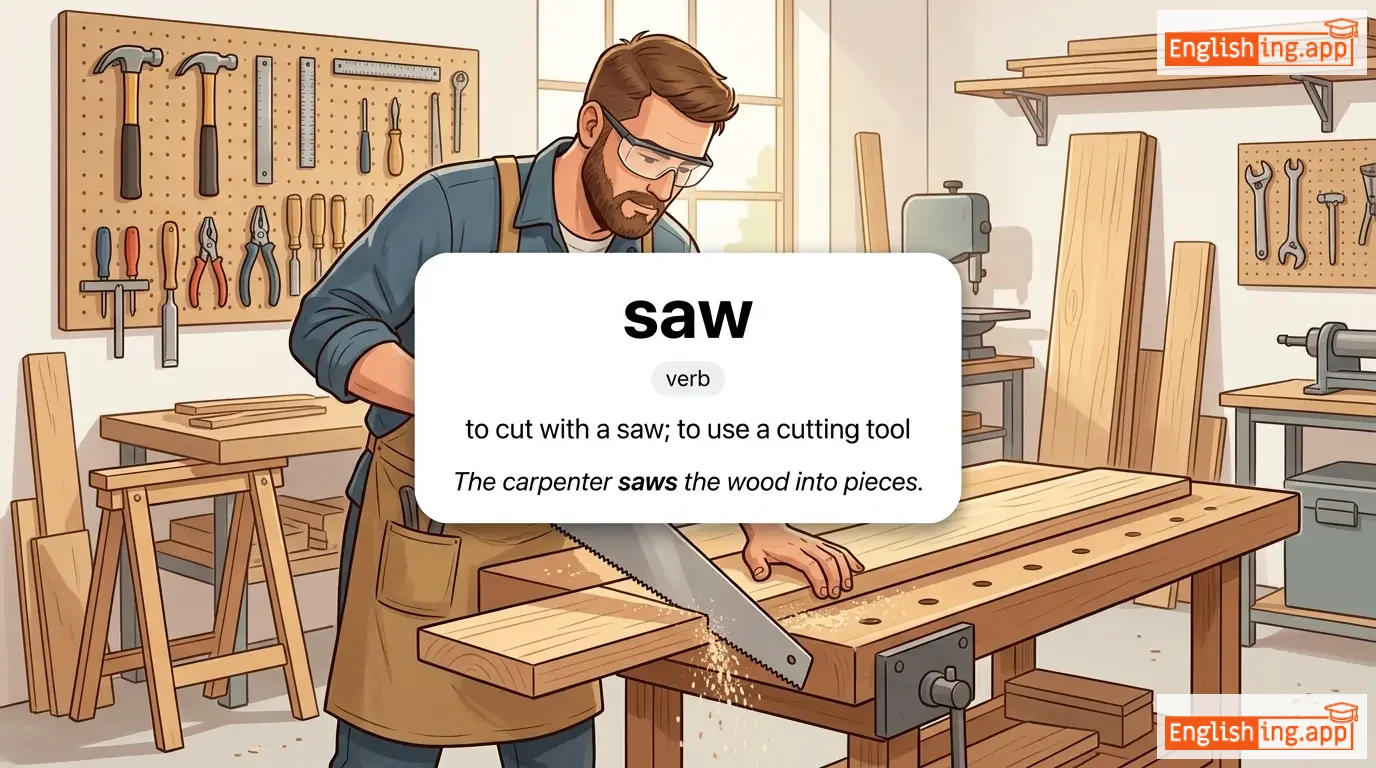
a tool with a sharp blade used for cutting wood or other materials
••••••
|
He used a saw to cut the wooden plank. |
他用锯子切割木板。
Tā yòng jùzi qiēgē mùbǎn.
••••••
|
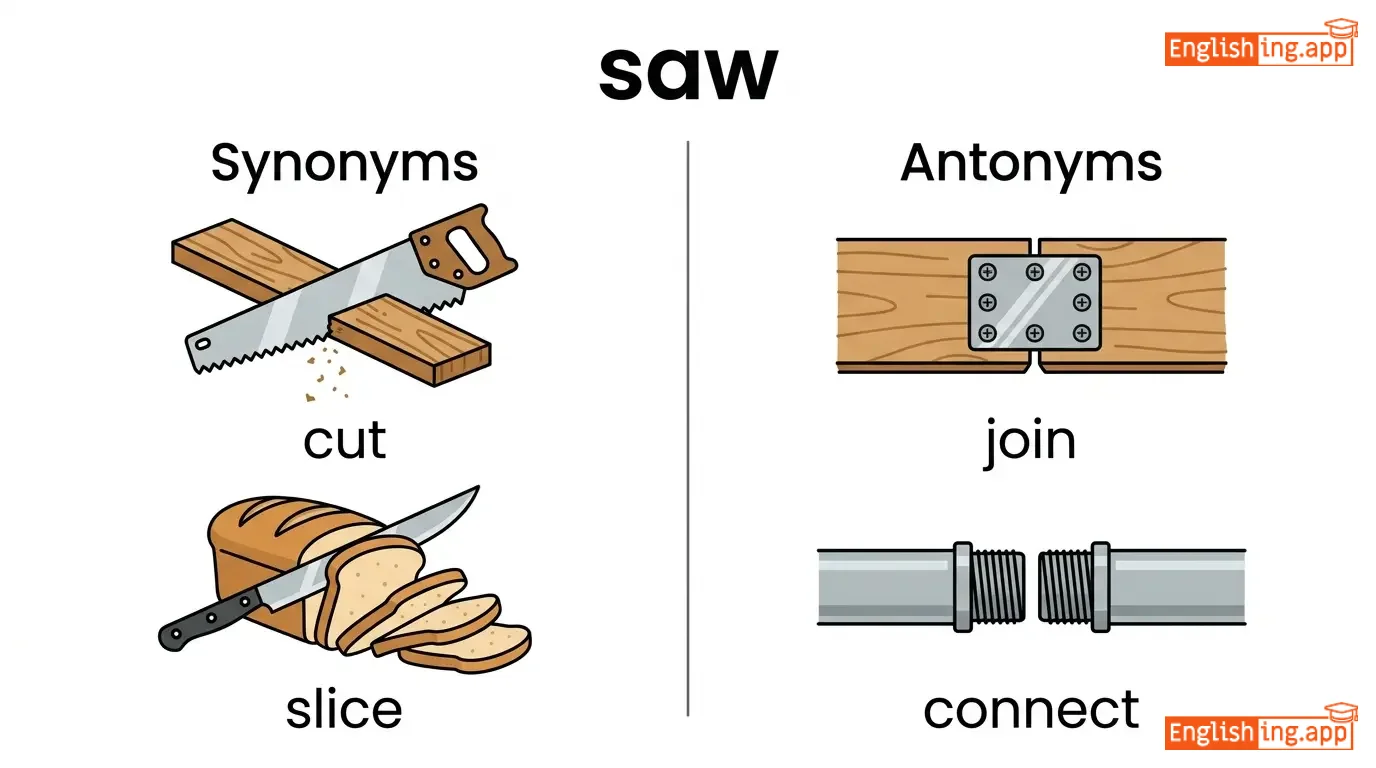
cutting tool, blade
••••••
|
glue, adhesive
••••••
|
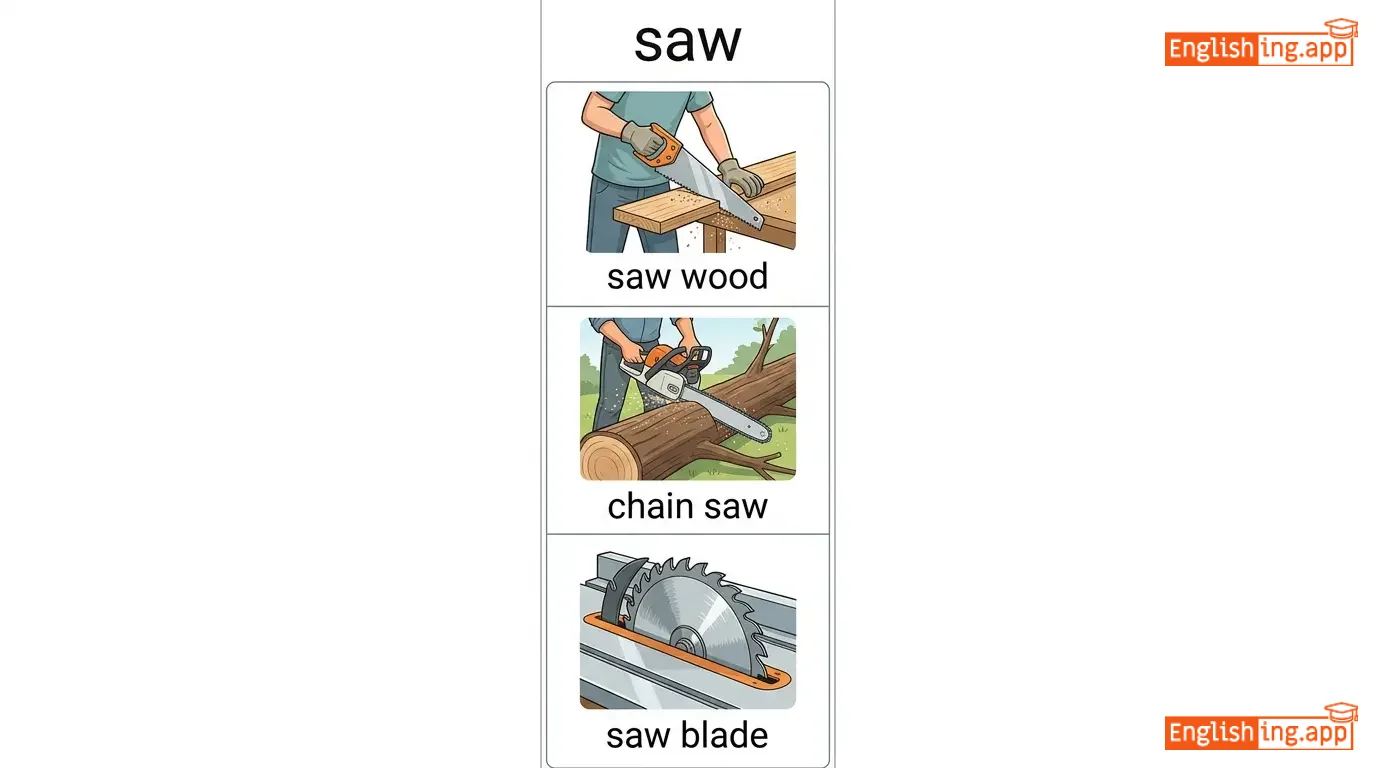
hand saw, power saw, saw blade, saw dust
••••••
|
锯子能轻松地切割木材
••••••
|
|
#728
🔪
|
/naɪf/
noun
(naif)
••••••
|
- •••••• |
刀
dao
••••••
|
a cutting tool with a sharp blade
••••••
|
She used a sharp knife to cut the vegetables. |
她用一把锋利的刀切蔬菜。
Tā yòng yī bǎ fēnglì de dāo qiē shūcài.
••••••
|
blade, cutter, dagger
••••••
|
spoon, fork
••••••
|
sharp knife, kitchen knife, butter knife, carving knife
••••••
|
刀切,锋利刀
••••••
|
|
#729
🔨
|
/ˈtʃɪz.əl/
noun
(切割工具)
••••••
|
- •••••• |
凿子
zāozi
••••••
|
a tool with a sharp flat edge used for cutting or shaping wood, stone, or metal
••••••
|
The carpenter used a chisel to carve the wood. |
木匠用凿子雕刻木头。
Mùjiàng yòng zāozi diāokè mùtou.
••••••
|
carving tool, cutting tool, engraving tool
••••••
|
- •••••• |
wood chisel, stone chisel, chisel and hammer, sharp chisel
••••••
|
凿子 (zāozi) 是木匠雕刻木材的工具
••••••
|
|
#730
🪓
|
/ˈtʃɒp.ər/
noun
(乔珀)
••••••
|
- •••••• |
斧头
futou
••••••
|
a tool with a heavy blade for chopping wood; a helicopter
••••••
|
The lumberjack swung the chopper to cut down the tree.
伐木工挥动乔珀砍倒树木。
••••••
|
伐木工挥动斧头砍倒树木。
Fámù gōng huīdòng fǔtóu kǎn dǎo shùmù.
••••••
|
axe, hatchet, cleaver
••••••
|
- •••••• |
wood chopper, meat chopper, helicopter chopper
••••••
|
想象着斧头像乔珀一样切割空气。
••••••
|
|
#731
🗡️
|
/ˈdæɡ.ər/
noun
(dāgē)
••••••
|
- •••••• |
匕首
bǐshǒu
••••••
|
a short knife with a pointed blade used as a weapon
••••••
|
The ancient warrior carried a silver dagger. |
古代战士携带着一把银色匕首。
gǔdài zhànshì xiédài zhe yī bǎ yínsè bǐshǒu.
••••••
|
knife, blade, stiletto
••••••
|
- •••••• |
sharp dagger, silver dagger, ornate dagger, ceremonial dagger
••••••
|
匕首 - '匕' 似箭的匕,'首' 让你想到先攻。
••••••
|
|
#732
📏
|
/ɡeɪdʒ/
noun
(gài zhè)
••••••
|
- •••••• |
量规
liàng guī
••••••
|
an instrument for measuring the magnitude, amount, or contents of something
••••••
|
The pressure gauge showed the tank was full. |
压力表显示坦克已满。
yālì biǎo xiǎnshì tǎn kè yǐ mǎn.
••••••
|
meter, indicator, measure
••••••
|
estimate, guess
••••••
|
pressure gauge, fuel gauge, thickness gauge, wire gauge
••••••
|
想象一个量规在展示满了的水箱。
••••••
|
|
#733
✂️
|
/ˈsɪz.ərz/
noun
(sīzòu ěr sī)
••••••
|
- •••••• |
剪刀
jiǎndāo
••••••
|
a cutting instrument with two sharp blades that are joined and work against each other
••••••
|
She used scissors to cut the paper into small pieces.
她用剪刀把纸剪成小块。
••••••
|
她用剪刀把纸剪成小块。
Tā yòng jiǎndāo bǎ zhǐ jiǎnchéng xiǎo kuài.
••••••
|
shears, clippers, snips
••••••
|
- •••••• |
cut with scissors, paper scissors, safety scissors
••••••
|
剪刀 - 'jiǎndāo' sounds like 'Gin do scissors'!
••••••
|
|
#734
⛏️
|
/ˈpɪk.æks/
noun
(pīk-èks)
••••••
|
- •••••• |
鹤嘴锄
he zui chu
••••••
|
a tool with a heavy metal head and long handle used for breaking up hard ground or rock
••••••
|
The miner used a pick-axe to break through the rocky surface. |
矿工用鹤嘴锄打破了岩石表面。
Kuànggōng yòng hèzuǐchú dǎpòle yánshí biǎomiàn.
••••••
|
pickaxe, mattock, mining pick
••••••
|
feather, soft tool
••••••
|
mining pick-axe, heavy pick-axe, swing pick-axe
••••••
|
鹤嘴锄是矿工破碎岩石的工具。
••••••
|
|
#735
🐂
|
/jəʊk/
noun
(yoke)
••••••
|
- •••••• |
轭
è
••••••
|
a wooden crosspiece for joining two animals to pull a cart or plow; burden or oppression
••••••
|
The farmer placed the yoke on the oxen to plow the field.
农民把轭套在牛上,用来犁地。
••••••
|
农民把轭套在牛上,用来犁地。
Nóngmín bǎ è tào zài niú shàng, yòng lái lí dì.
••••••
|
harness, collar, burden
••••••
|
freedom, liberation
••••••
|
ox yoke, under the yoke, throw off the yoke
••••••
|
中文中的'轭'与英文中的'yoke'相似,指的是两只动物连接的工具。
••••••
|
|
#736
🪓
|
/æks/
noun
(āks)
••••••
|
- •••••• |
斧头
futou
••••••
|
a tool with a heavy blade for cutting wood
••••••
|
The lumberjack swung his axe to chop the tree. |
伐木工人挥动着他的斧头砍树。
Fámù gōngrén huī dòng zhe tā de fǔtóu kǎn shù.
••••••
|
hatchet, chopper
••••••
|
protector, preserver
••••••
|
fire axe, battle axe, axe handle, sharp axe
••••••
|
Axe - 斧头, 力量与木材相碰!
••••••
|
|
#737
⚒️
|
/ˈsɪk.əl/
noun
(sǐ kè ěr)
••••••
|
- •••••• |
镰刀
liándāo
••••••
|
a tool with a curved metal blade and short handle used for cutting grain crops
••••••
|
The farmer harvested wheat using a traditional sickle.
农民用传统的镰刀收割小麦。
••••••
|
农民用传统的镰刀收割小麦。
Nóngmín yòng chuántǒng de liándāo shōugē xiǎomài.
••••••
|
scythe, reaping hook, cutting blade
••••••
|
- •••••• |
harvest with sickle, sharp sickle, traditional sickle
••••••
|
镰刀 - 用来收割庄稼
••••••
|
|
#738
🏗️
|
/ˈʃʌv.əl/
noun
(shóu wēi ěr)
••••••
|
- •••••• |
铲子
chanzi
••••••
|
a tool with a broad flat blade and long handle used for digging and moving earth, snow, or other materials
••••••
|
He grabbed a shovel to clear the snow from the driveway. |
他拿起铲子清理车道上的雪。
Tā ná qǐ chǎnzi qīnglǐ chēdào shàng de xuě.
••••••
|
spade, scoop, digger
••••••
|
rake, broom
••••••
|
snow shovel, garden shovel, dig with shovel
••••••
|
铲子是用于挖掘和清理雪的工具,像清除车道上的积雪一样。
••••••
|
|
#739
🪒
|
/ˈreɪ.zər/
noun
(razor)
••••••
|
- •••••• |
剃须刀
tì xū dāo
••••••
|
a sharp-edged instrument used for shaving hair from the skin
••••••
|
He shaved his beard with a sharp razor. |
他用一把锋利的剃须刀刮胡子。
tā yòng yī bǎ fēnglì de tì xū dāo guā húzi
••••••
|
blade, shaver
••••••
|
- •••••• |
sharp razor, electric razor, safety razor, razor blade
••••••
|
剃须刀 - 刮胡子时不能马虎!
••••••
|
|
#740
⚒️
|
/ˈkroʊ.bɑːr/
noun
(króu bā)
••••••
|
- •••••• |
撬棍
qiào gùn
••••••
|
a heavy iron bar with a curved end used as a lever for prying things apart
••••••
|
He used a crowbar to remove the old nails.
他用撬棍把旧钉子取了出来。
••••••
|
他用撬棍把旧钉子取了出来。
Tā yòng qiàogùn bǎ jiù dīngzi qǔle chūlái.
••••••
|
pry bar, lever bar, jimmy bar
••••••
|
- •••••• |
heavy crowbar, steel crowbar, crowbar leverage, prying crowbar
••••••
|
‘撬棍’与‘杠杆’有相同的作用,可以用来分开东西。
••••••
|
|
#741
🔩
|
/neɪl/
noun
(nail)
••••••
|
|
钉子
dīngzi
••••••
|
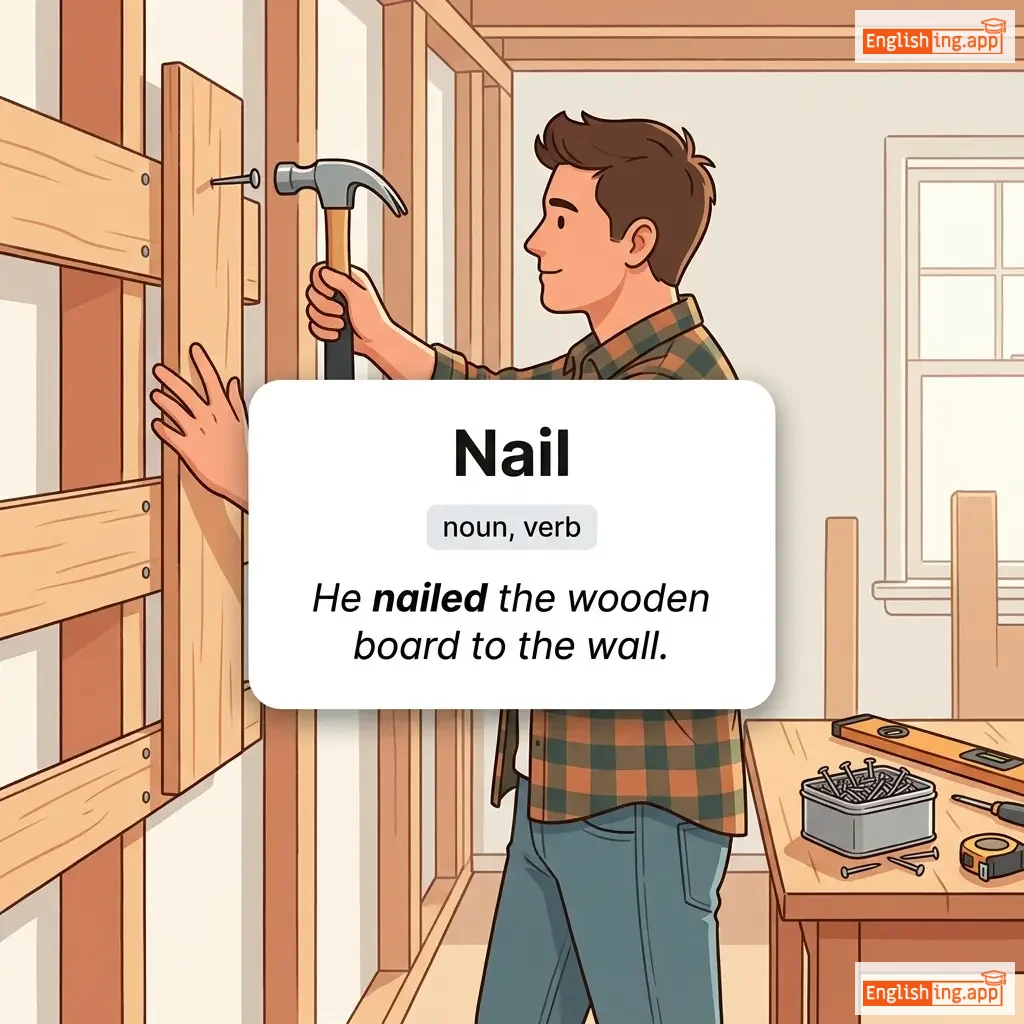
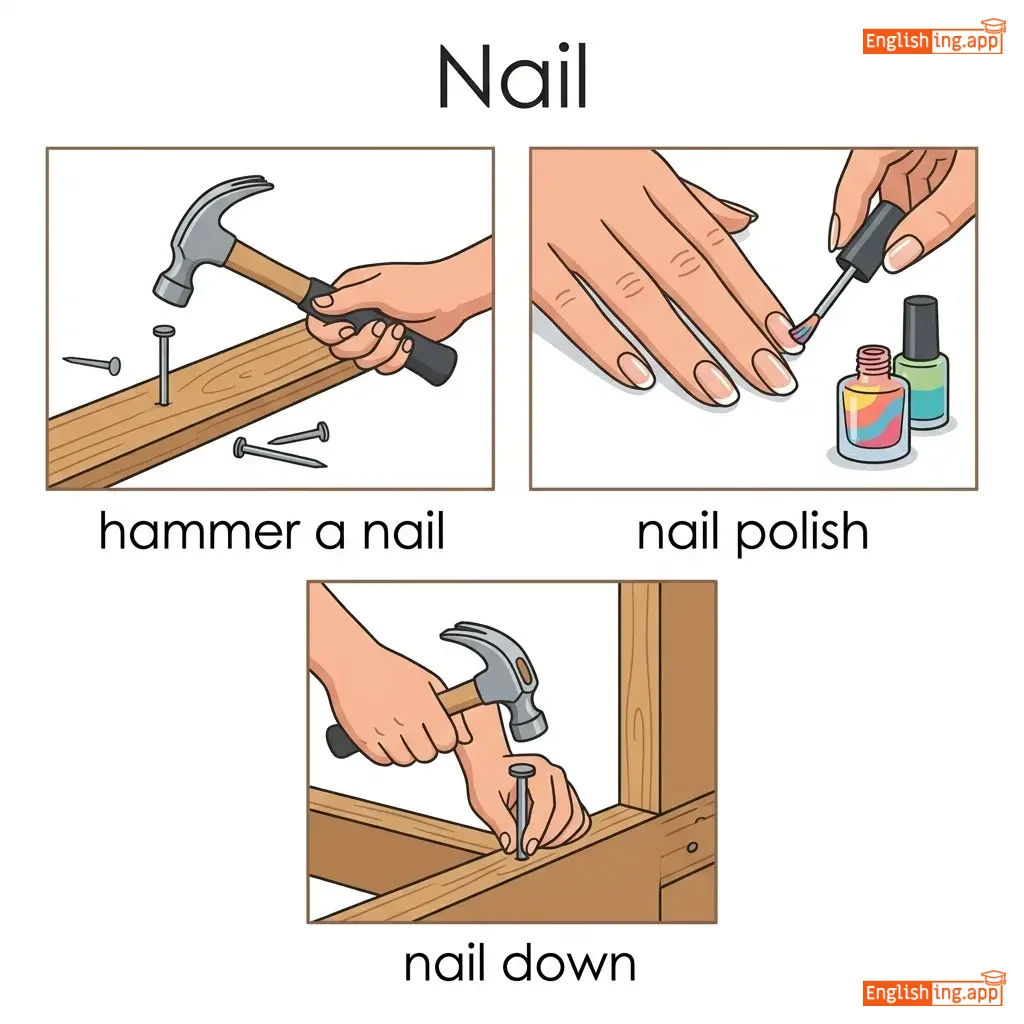
a small metal spike with a broadened flat head; part of finger or toe
••••••
|
He hammered the nail into the wooden board. |
他把钉子钉进了木板。
Tā bǎ dīngzi dīng jìnle mùbǎn.
••••••
|
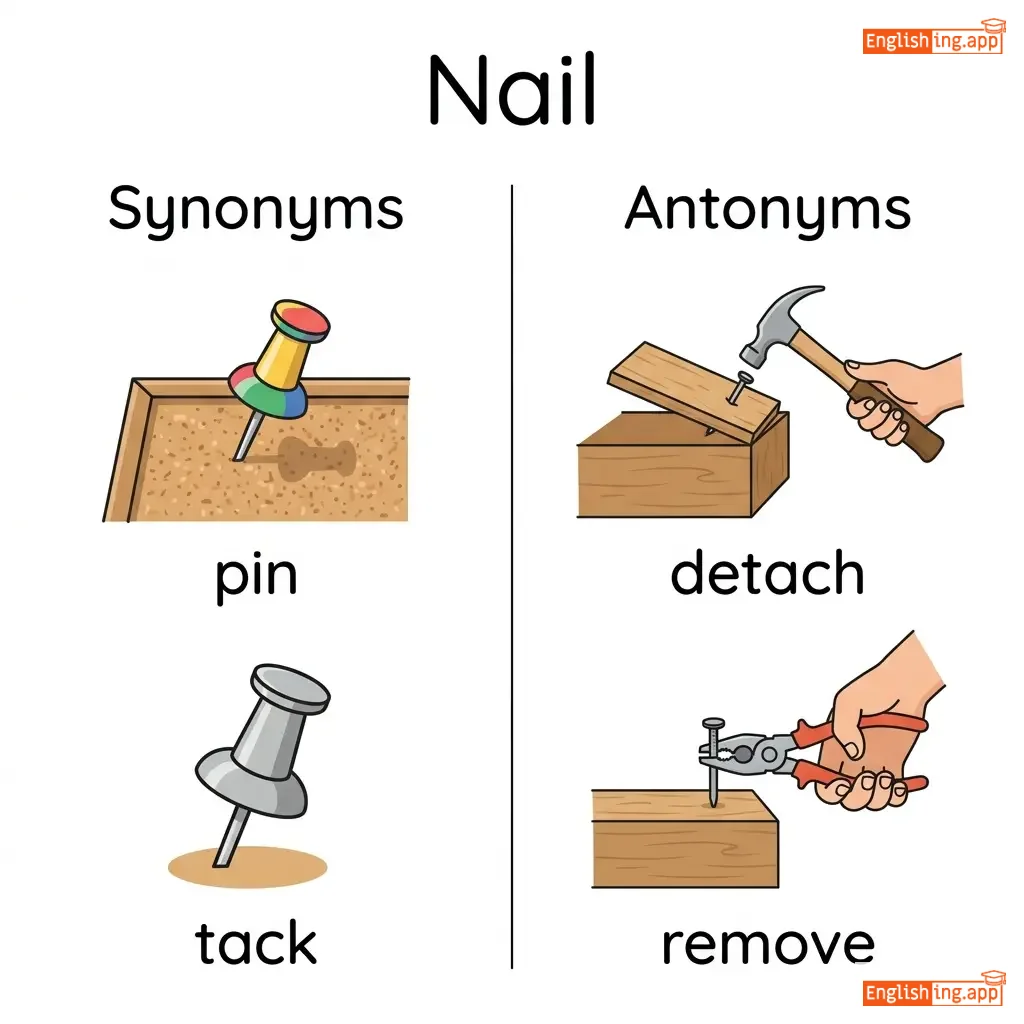
spike, tack, pin
••••••
|
- •••••• |
hammer nail, iron nail, nail down
••••••
|
钉子 - Nail, 锤子和钉子是搭档。
••••••
|
|
#742
🔨
|
/ˈmæl.ɪt/
noun
(马利特)
••••••
|
- •••••• |
橡胶锤
xiàngjiāo chuí
••••••
|
a hammer with a large head, typically made of wood
••••••
|
The carpenter used a rubber mallet to avoid damaging the wood. |
木匠使用橡胶锤来避免损坏木材。
Mùjiàng shǐyòng xiàngjiāo chuí lái bìmiǎn sǔnhuài mùcái.
••••••
|
hammer, gavel, maul
••••••
|
- •••••• |
rubber mallet, wooden mallet, mallet and chisel
••••••
|
橡胶(guma)+ 锤子(hammer)
••••••
|
|
#743
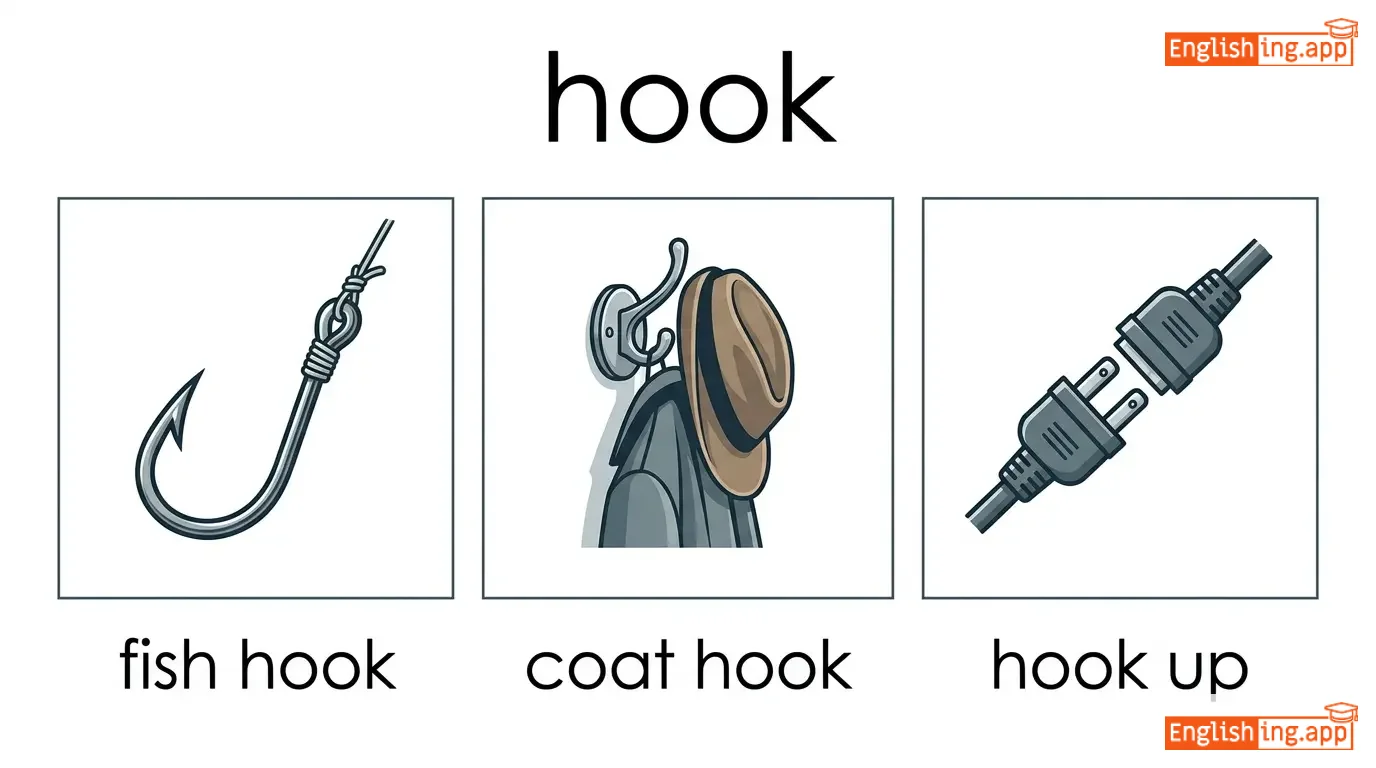
🪝
|
/hʊk/
noun
(hùkè)
••••••
|
|
钩子
gōuzi
••••••
|
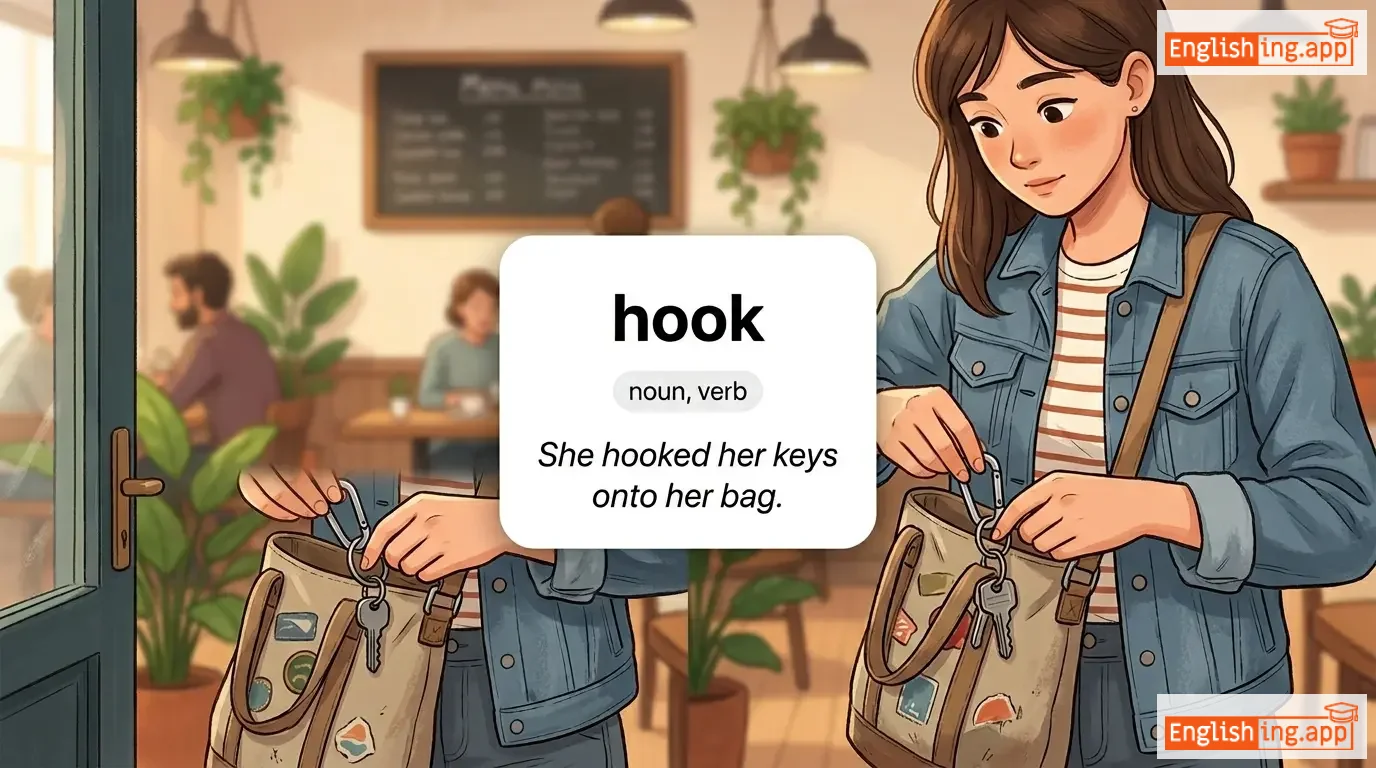
a curved or bent device for catching, holding, or fastening something
••••••
|
Hang your coat on the hook by the door.
把你的外套挂在门旁的钩子上。
••••••
|
把你的外套挂在门旁的钩子上。
Bǎ nǐ de wàitào guà zài mén páng de gōuzi shàng.
••••••
|
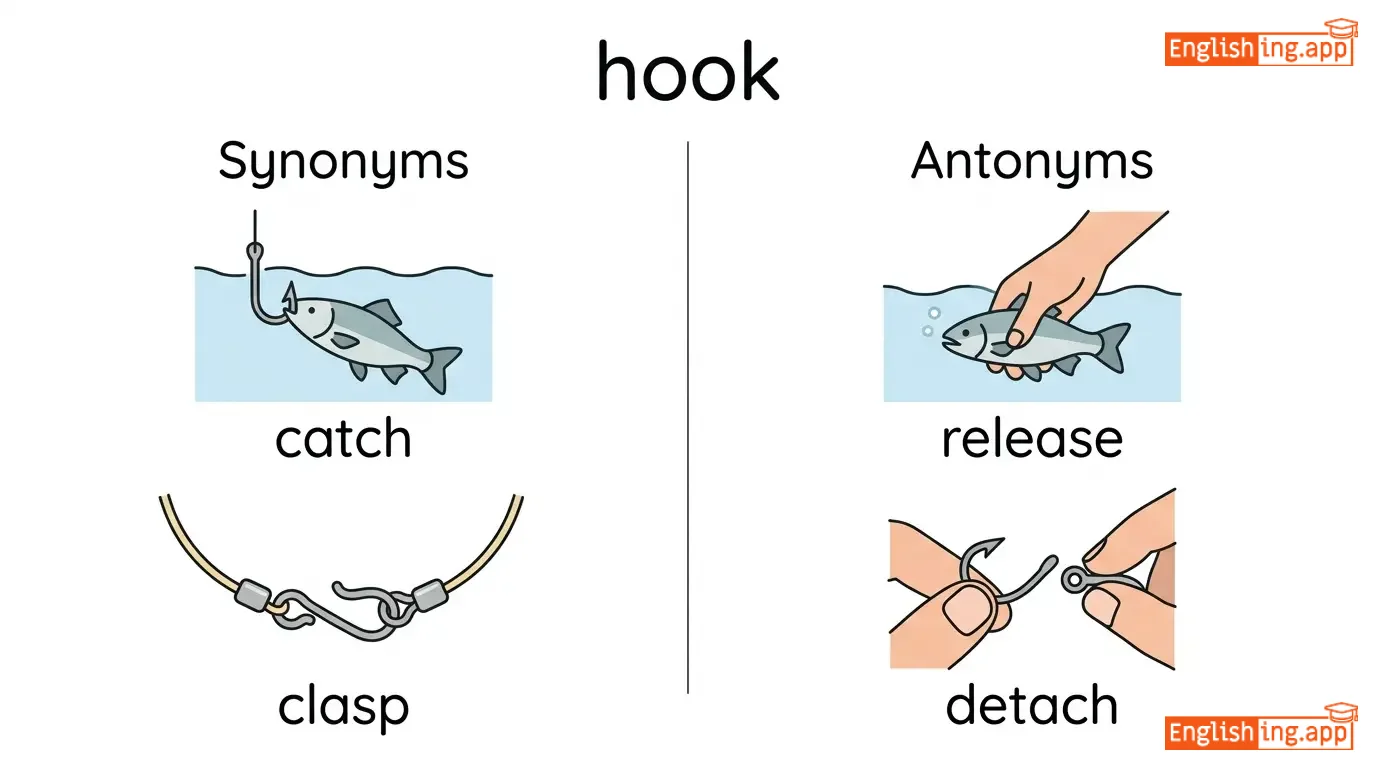
clasp, fastener, catch
••••••
|
- •••••• |
coat hook, fishing hook, sharp hook, metal hook
••••••
|
想象你把外套挂在门旁的钩子上。
••••••
|
|
#744
🔨
|
/ˈhæm.ər/
noun
(哈默)
••••••
|
- •••••• |
锤子
chuízi
••••••
|
a tool with a heavy metal head for hitting nails or breaking things
••••••
|
She used a hammer to nail the picture frame to the wall. |
她用锤子把画框钉在墙上。
Tā yòng chuízi bǎ huà kuāng dīng zài qiáng shàng.
••••••
|
mallet, sledgehammer
••••••
|
cushion, softener
••••••
|
claw hammer, sledge hammer, hammer blow, hammer head
••••••
|
锤子 = 锤打,想象一下你用锤子把钉子钉进墙里!
••••••
|
|
#745
🔪
|
/ˈkliː.vər/
noun
(kè lǐ wò)
••••••
|
- •••••• |
切肉刀
qie rou dao
••••••
|
a heavy knife with a broad blade used for chopping meat or vegetables
••••••
|
The chef used a cleaver to chop the chicken bones.
厨师用切肉刀切鸡骨头。
••••••
|
厨师用切肉刀切鸡骨头。
Chú shī yòng qiē ròu dāo qiē jī gǔ tóu.
••••••
|
chopper, butcher knife, meat axe
••••••
|
- •••••• |
meat cleaver, kitchen cleaver, heavy cleaver, sharp cleaver
••••••
|
Cleaver sounds like '切肉刀', a knife for chopping meat.
••••••
|
|
#746
🚜
|
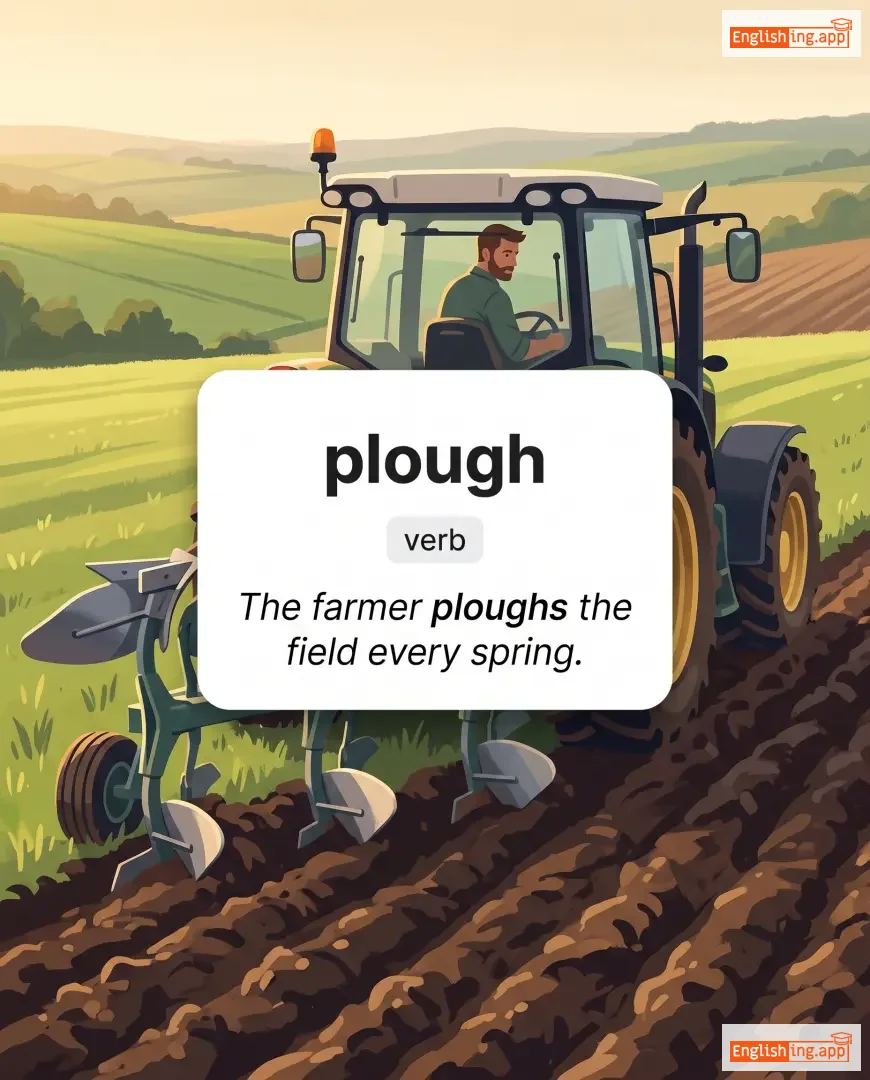
/plaʊ/
noun
(plau)
••••••
|
|
犁
li
••••••
|
a large farming tool used to break up and turn over soil before planting crops
••••••
|
The oxen pulled the heavy plough across the field. |
牛拉着沉重的犁在田野上行驶。
Niu lāzhe chénzhòng de lí zài tiányě shàng xíngshǐ.
••••••
|
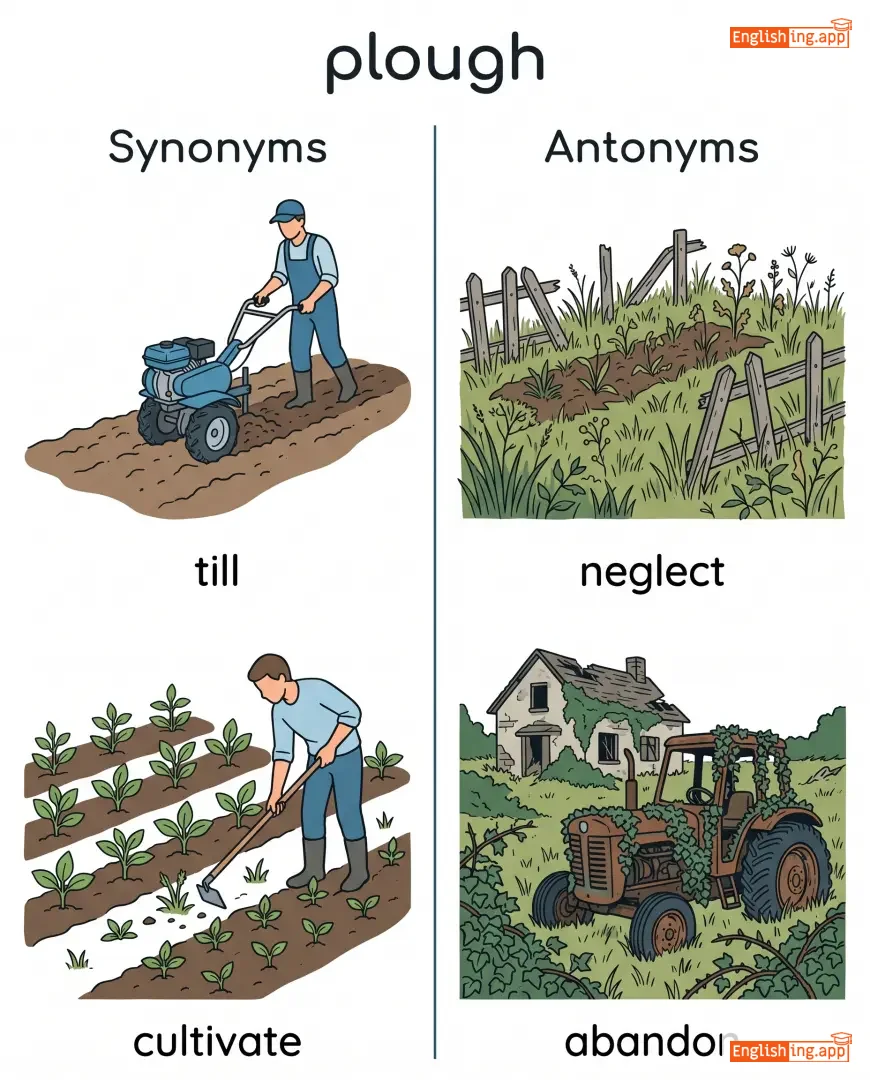
plow, tiller, cultivator
••••••
|
- •••••• |
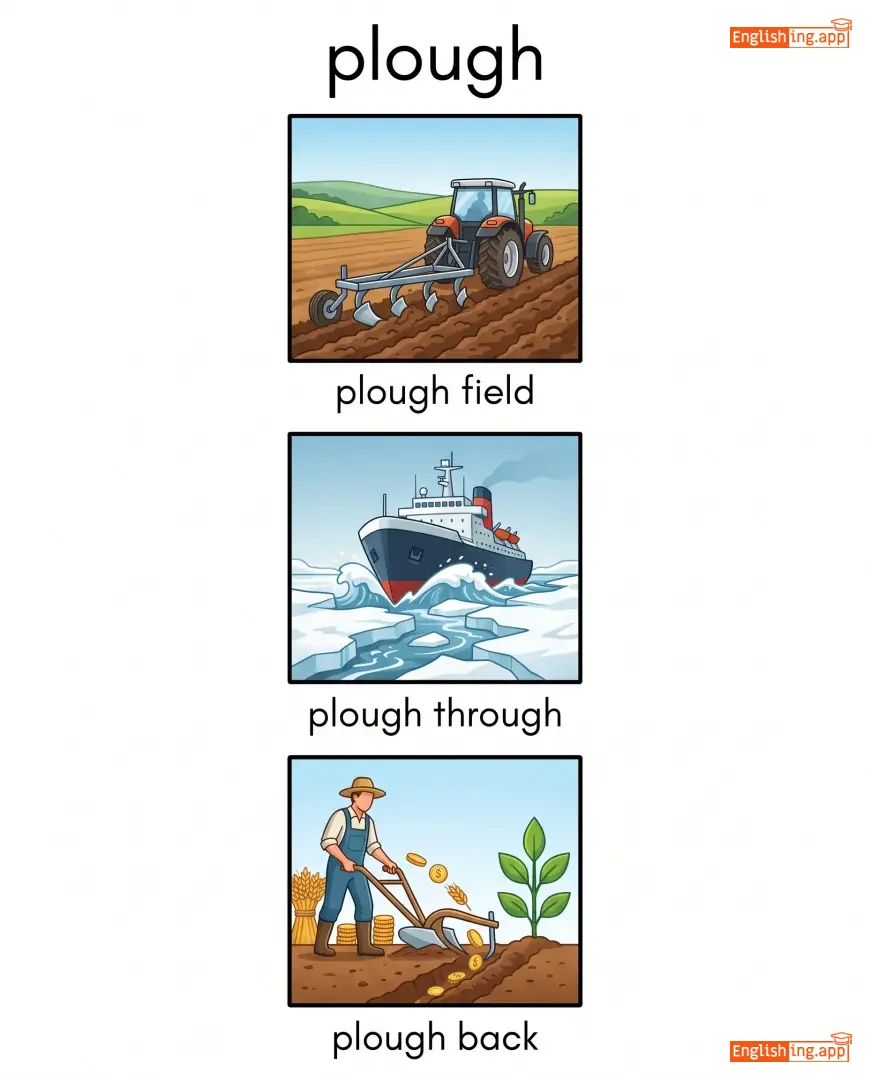
plough field, ox plough, heavy plough
••••••
|
农民用犁耕种田地
••••••
|
|
#747
🔨
|
/pʌntʃ/
noun
(pùnch)
••••••
|
- •••••• |
打孔工具
dǎkǒng gōngjù
••••••
|
a tool used for making holes or indentations in materials
••••••
|
The carpenter used a punch to make holes in the leather. |
木匠使用打孔工具在皮革上打孔。
mùjiàng shǐyòng dǎkǒng gōngjù zài pígé shàng dǎkǒng
••••••
|
awl, piercer, hole maker
••••••
|
- •••••• |
leather punch, hole punch, center punch, paper punch
••••••
|
打孔工具 (Punch) – 打孔工具像Punch,用来打孔。
••••••
|
|
#748
🧵
|
/luːm/
noun
(lún)
••••••
|
- •••••• |
织布机
zhī bù jī
••••••
|
a machine for weaving cloth; to appear threatening or menacing
••••••
|
The weaver worked at the loom to create beautiful fabrics.
织工在织布机上工作,创造美丽的面料。
••••••
|
织工在织布机上工作,创造美丽的面料。
Zhīgōng zài zhī bù jī shàng gōngzuò, chuàngzào měilì de miànliào.
••••••
|
weaving machine, textile machine
••••••
|
- •••••• |
hand loom, power loom, weaving loom
••••••
|
织布机 = loom (织布机帮助创造面料)
••••••
|
|
#749
🗃️
|
/faɪl/
noun
(fài ěr)
••••••
|
|
锉刀
cuòdāo
••••••
|
a tool with a rough surface for smoothing or shaping hard materials; a collection of papers or data
••••••
|
He used a metal file to smooth the rough edges.
他使用了一把金属锉刀来平滑粗糙的边缘。
••••••
|
他使用了一把金属锉刀来平滑粗糙的边缘。
Tā shǐyòngle yī bǎ jīnshǔ cuòdāo lái pínghuá cūcāo de biānyuán.
••••••
|
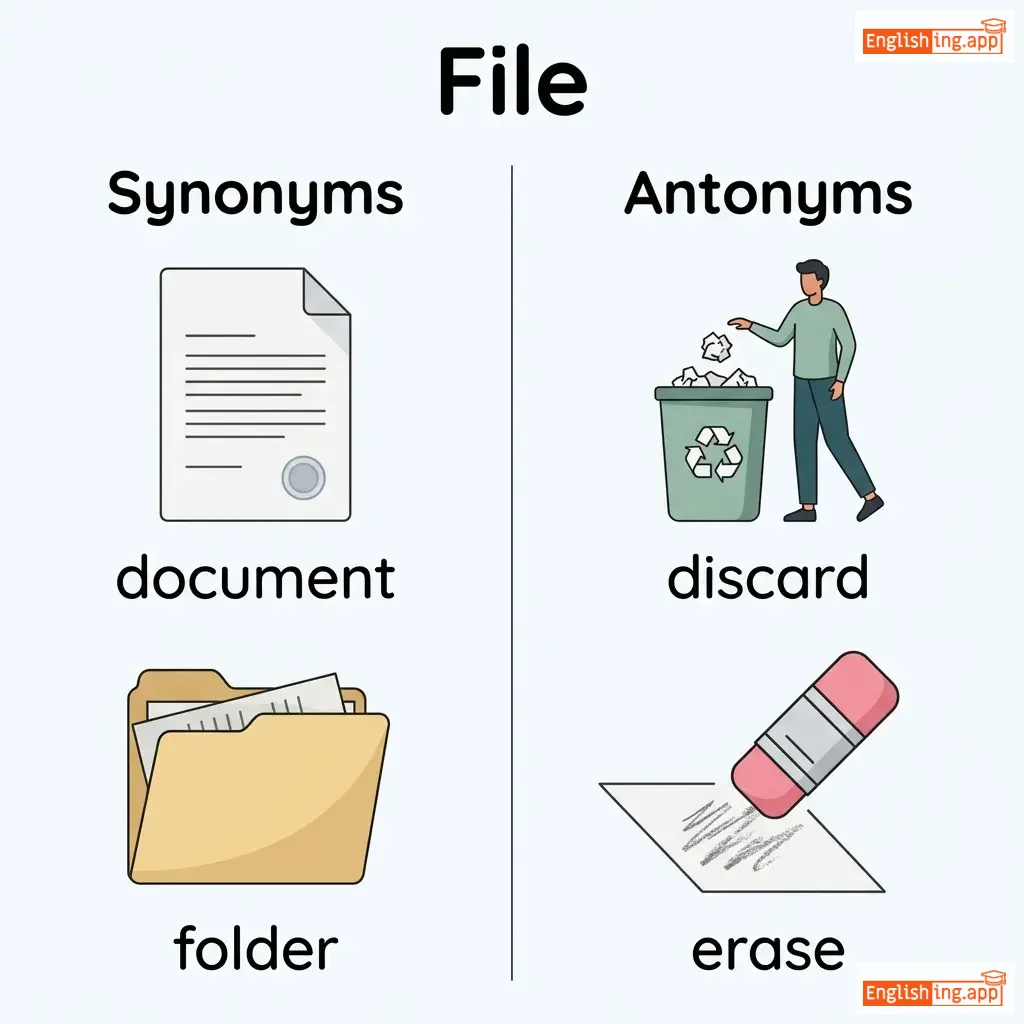
rasp, sandpaper, document
••••••
|
roughen, coarsen
••••••
|
nail file, metal file, file cabinet, computer file
••••••
|
锉刀像一个粗糙的工具,用来平滑东西。
••••••
|
|
#750
🧭
|
/ˈkʌm.pəs/
noun
(kāngbāsī)
••••••
|
- •••••• |
罗盘
luó pán
••••••
|
an instrument for finding direction with a magnetic needle pointing to magnetic north
••••••
|
The hiker used a compass to find the right direction. |
登山者使用罗盘来寻找正确的方向。
dēng shān zhě shǐyòng luó pán lái xúnzhǎo zhèngquè de fāngxiàng
••••••
|
navigation tool, direction finder, magnetic compass
••••••
|
- •••••• |
magnetic compass, compass needle, compass direction, navigation compass
••••••
|
罗盘指引你到达正确的方向
••••••
|
|
#751
🔧
|
/rentʃ/
noun
(レンチ)
••••••
|
- •••••• |
扳手
bān shǒu
••••••
|
a tool used for gripping and turning nuts, bolts, or pipes
••••••
|
He used a wrench to tighten the bolt. |
他用扳手拧紧了螺栓。
Tā yòng bān shǒu níng jǐn le luó shuān.
••••••
|
spanner, tool, adjustable wrench
••••••
|
- •••••• |
pipe wrench, adjustable wrench, monkey wrench
••••••
|
扳手是用来转动螺栓的工具。
••••••
|
Vocabulary Quiz
Test your vocabulary by matching words with their translations or meanings.
Login to take the quiz
Comments (0)
Share your thoughts and join the discussion.
Join the discussion by logging in
Login to CommentNo comments yet
Be the first to share your thoughts!