

Обновитесь для доступа ко всему словарю
Получите неограниченный доступ ко всем словам с подпиской Pro
Обновить до ProПеревод
Прошедшее
Причастие прошедшего времени
Третье лицо единственного числа
Герундий
Значение
Пример предложения
Перевод примера предложения
Синонимы
Антонимы
Коллокации
Мнемоника
Swipe left or right, or use the buttons. Tap image to zoom.
Обновитесь для доступа ко всем предложениям
Получите неограниченный доступ ко всем предложениям с подпиской Pro
Обновить до ProПеревод примера предложения
Слово
Lesson 16: Names of ToolsLesson 16: Names of Tools - Переключатель маски
|
Эмодзи
|
Слово | Images | Перевод | Значение | Пример предложения | Перевод примера предложения | Синонимы | Антонимы | Коллокации | Мнемоника |
|---|---|---|---|---|---|---|---|---|---|---|
|
#724
🔪
|
/bleɪd/
noun
(bleid)
••••••
|
- •••••• |
лезвие
lezvie
••••••
|
a sharp flat cutting edge of a knife, sword, or tool
••••••
|
The blade of the knife needs to be sharpened.
Лезвие ножа нужно наточить.
••••••
|
Лезвие ножа нужно наточить.
Lezvie nozha nuzhno natochit.
••••••
|
edge, cutting edge, razor
••••••
|
blunt edge, dull edge
••••••
|
sharp blade, knife blade, razor blade, blade sharpening
••••••
|
лезвие = острое лезвие
••••••
|
|
#725
♠️
|
/speɪd/
noun
(speɪd)
••••••
|
- •••••• |
лопата
lopata
••••••
|
a tool with a flat blade for digging; a playing card suit
••••••
|
The gardener used a spade to dig holes for planting flowers. |
Садовник использовал лопату, чтобы выкопать ямы для посадки цветов.
Sadovnik ispol'zoval lopatu, chtoby vykopat' yamy dlya posadki tsvetov.
••••••
|
shovel, digging tool, spud
••••••
|
- •••••• |
dig with a spade, garden spade, call a spade a spade
••••••
|
Лопата похожа на инструмент для копания и используется для выкопки ям
••••••
|
|
#726
🥖
|
/hoʊ/
noun
(хо)
••••••
|
- •••••• |
мотыга
motyga
••••••
|
a gardening tool with a thin metal blade used for breaking up soil and removing weeds
••••••
|
The farmer used a hoe to remove weeds from his vegetable garden. |
Фермер использовал мотыгу, чтобы удалить сорняки из своего овощного сада.
Fermer ispol'zoval motygu, chtoby udalit' sornyaki iz svoego ovozhnogo sada.
••••••
|
cultivator, tiller, weeder
••••••
|
- •••••• |
garden hoe, hoe the ground, hoe weeds
••••••
|
Picture using a ‘мотыга’ to break up soil and remove weeds in the garden.
••••••
|
|
#727
🪚
|
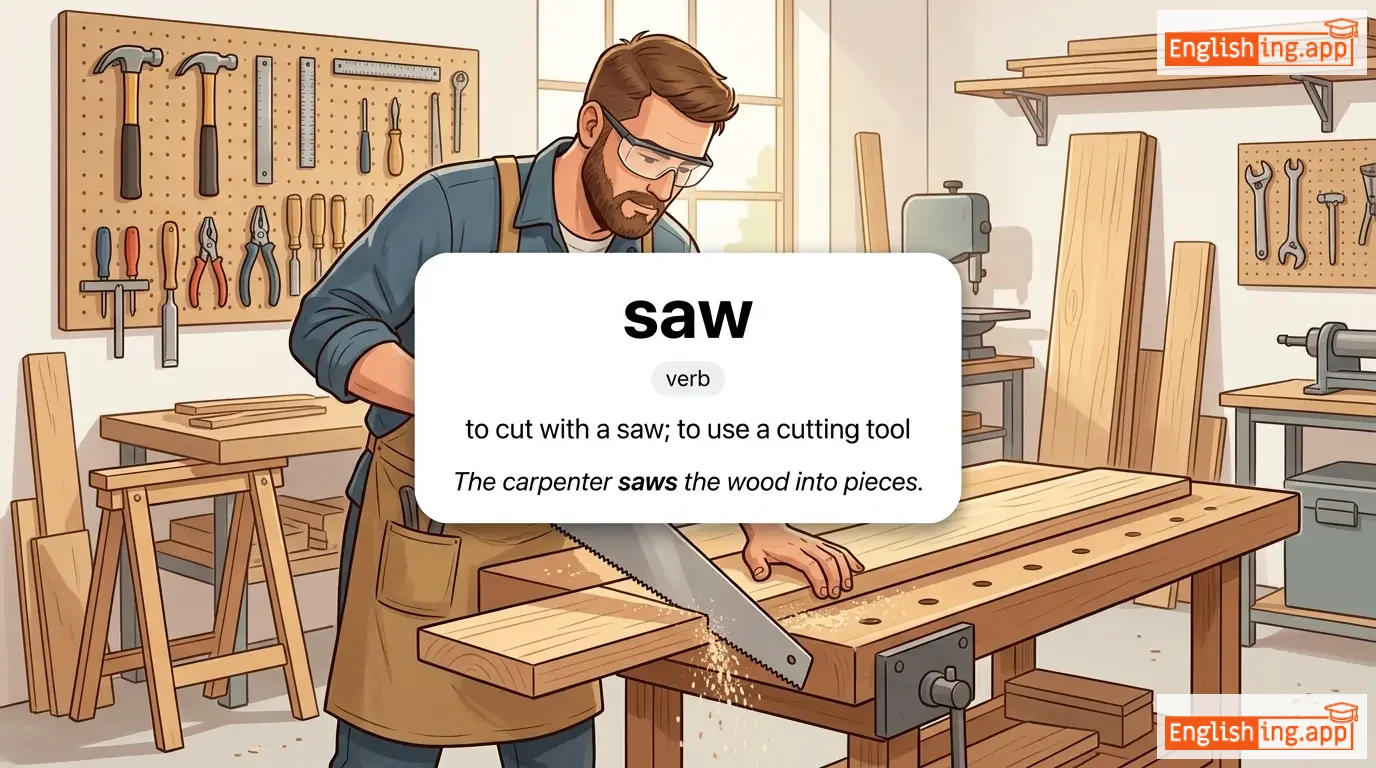
/sɔː/
noun
(со)
••••••
|
|
пила
pila
••••••
|
a tool with a sharp blade used for cutting wood or other materials
••••••
|
He used a saw to cut the wooden plank. |
Он использовал пилу, чтобы нарезать деревянную доску.
On ispol'zoval pilu, chtoby narezaty derevyannuyu dosku.
••••••
|
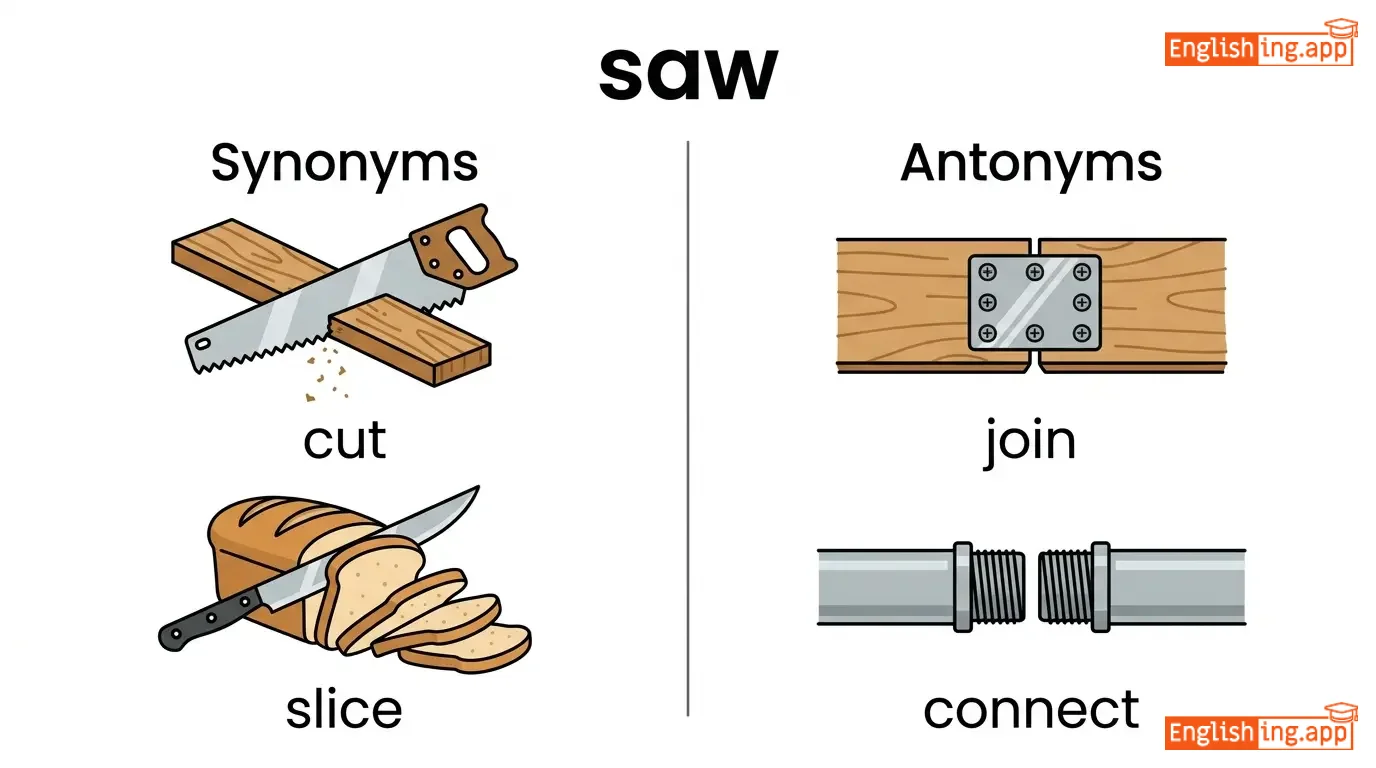
cutting tool, blade
••••••
|
glue, adhesive
••••••
|
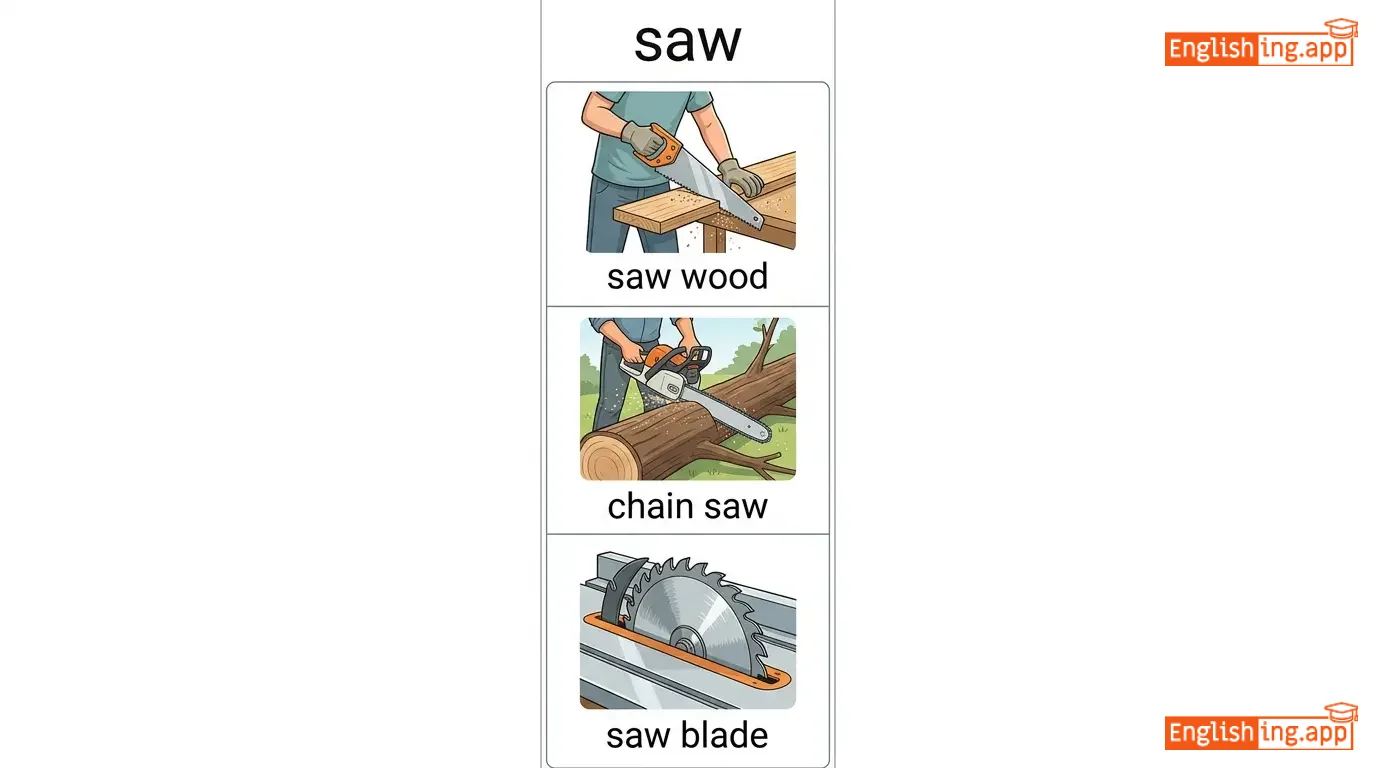
hand saw, power saw, saw blade, saw dust
••••••
|
Пила помогает резать дерево
••••••
|
|
#728
🔪
|
/naɪf/
noun
(naif)
••••••
|
- •••••• |
нож
nozh
••••••
|
a cutting tool with a sharp blade
••••••
|
She used a sharp knife to cut the vegetables. |
Она использовала острый нож, чтобы нарезать овощи.
Ona ispol'zovala ostry nozh, chtoby narezaty ovoshchi.
••••••
|
blade, cutter, dagger
••••••
|
spoon, fork
••••••
|
sharp knife, kitchen knife, butter knife, carving knife
••••••
|
Нож режет, нож острый.
••••••
|
|
#729
🔨
|
/ˈtʃɪz.əl/
noun
(чизел)
••••••
|
- •••••• |
стамеска
stameska
••••••
|
a tool with a sharp flat edge used for cutting or shaping wood, stone, or metal
••••••
|
The carpenter used a chisel to carve the wood. |
Плотник использовал стамеску для вырезания дерева.
Plotnik ispol'zoval stamesku dlya vyrezaniya dereva.
••••••
|
carving tool, cutting tool, engraving tool
••••••
|
- •••••• |
wood chisel, stone chisel, chisel and hammer, sharp chisel
••••••
|
стамеска (stameska) – инструмент для резьбы по дереву
••••••
|
|
#730
🪓
|
/ˈtʃɒp.ər/
noun
(чоппер)
••••••
|
- •••••• |
топор
topor
••••••
|
a tool with a heavy blade for chopping wood; a helicopter
••••••
|
The lumberjack swung the chopper to cut down the tree.
Лесоруб размахивал чоппером, чтобы срубить дерево.
••••••
|
Лесоруб размахивал топором, чтобы срубить дерево.
Lesorub razmakhival toporom, chtoby srubit derevo.
••••••
|
axe, hatchet, cleaver
••••••
|
- •••••• |
wood chopper, meat chopper, helicopter chopper
••••••
|
Представьте, как топор рубит дерево, как чоппер в воздухе.
••••••
|
|
#731
🗡️
|
/ˈdæɡ.ər/
noun
(дэг-эр)
••••••
|
- •••••• |
кинжал
kinzhal
••••••
|
a short knife with a pointed blade used as a weapon
••••••
|
The ancient warrior carried a silver dagger. |
Древний воин носил серебряный кинжал.
Drevniy voin nosil serebryanyy kinzhal.
••••••
|
knife, blade, stiletto
••••••
|
- •••••• |
sharp dagger, silver dagger, ornate dagger, ceremonial dagger
••••••
|
Кинжал - 'Кин' как 'кидать', 'жало' как ударное оружие.
••••••
|
|
#732
📏
|
/ɡeɪdʒ/
noun
(geyzh)
••••••
|
- •••••• |
измеритель
izmeritel'
••••••
|
an instrument for measuring the magnitude, amount, or contents of something
••••••
|
The pressure gauge showed the tank was full. |
Манометр показал, что бак был полон.
Manometr pokazal, chto bak byl polon.
••••••
|
meter, indicator, measure
••••••
|
estimate, guess
••••••
|
pressure gauge, fuel gauge, thickness gauge, wire gauge
••••••
|
Представьте себе измеритель, который показывает уровень в баке.
••••••
|
|
#733
✂️
|
/ˈsɪz.ərz/
noun
(sɪzɔrs)
••••••
|
- •••••• |
ножницы
nozhnitsy
••••••
|
a cutting instrument with two sharp blades that are joined and work against each other
••••••
|
She used scissors to cut the paper into small pieces.
Она использовала ножницы, чтобы нарезать бумагу на маленькие кусочки.
••••••
|
Она использовала ножницы, чтобы нарезать бумагу на маленькие кусочки.
Ona ispol'zovala nozh'nitsy, chtoby narezaty bumagu na malen'kiye kusochki.
••••••
|
shears, clippers, snips
••••••
|
- •••••• |
cut with scissors, paper scissors, safety scissors
••••••
|
Ножницы - 'nozhnitsy' sounds like 'No zone scissors'!
••••••
|
|
#734
⛏️
|
/ˈpɪk.æks/
noun
(пик-акс)
••••••
|
- •••••• |
кирка
kirka
••••••
|
a tool with a heavy metal head and long handle used for breaking up hard ground or rock
••••••
|
The miner used a pick-axe to break through the rocky surface. |
Шахтер использовал кирку, чтобы пробить каменную поверхность.
Shakhter ispol'zoval kirkу, chtoby probit' kamennuyu poverkhnost'.
••••••
|
pickaxe, mattock, mining pick
••••••
|
feather, soft tool
••••••
|
mining pick-axe, heavy pick-axe, swing pick-axe
••••••
|
Используйте кирку, чтобы разрушать камни, как шахтер.
••••••
|
|
#735
🐂
|
/jəʊk/
noun
(йок)
••••••
|
- •••••• |
ярмо
yarmo
••••••
|
a wooden crosspiece for joining two animals to pull a cart or plow; burden or oppression
••••••
|
The farmer placed the yoke on the oxen to plow the field.
Фермер надел ярмо на быков, чтобы пахать поле.
••••••
|
Фермер надел ярмо на быков, чтобы пахать поле.
Fermer nadeľ yarmo na bykov, chtoby pakhat' pole.
••••••
|
harness, collar, burden
••••••
|
freedom, liberation
••••••
|
ox yoke, under the yoke, throw off the yoke
••••••
|
В русском языке 'ярмо' (yarmo) обозначает то же самое, что и 'yoke' на английском — приспособление для работы.
••••••
|
|
#736
🪓
|
/æks/
noun
(aks)
••••••
|
- •••••• |
топор
topor
••••••
|
a tool with a heavy blade for cutting wood
••••••
|
The lumberjack swung his axe to chop the tree. |
Лесоруб размахивал своим топором, чтобы срубить дерево.
Lesorub ramakhival svoim toporom, chtoby srubit derevo.
••••••
|
hatchet, chopper
••••••
|
protector, preserver
••••••
|
fire axe, battle axe, axe handle, sharp axe
••••••
|
Axe - топор, для работы с деревом!
••••••
|
|
#737
⚒️
|
/ˈsɪk.əl/
noun
(sikl)
••••••
|
- •••••• |
серп
serp
••••••
|
a tool with a curved metal blade and short handle used for cutting grain crops
••••••
|
The farmer harvested wheat using a traditional sickle.
Фермер собрал пшеницу с помощью традиционного серпа.
••••••
|
Фермер собрал пшеницу с помощью традиционного серпа.
Fermyer sobral pshenitsu s pomoshch'yu traditsionnogo serpa.
••••••
|
scythe, reaping hook, cutting blade
••••••
|
- •••••• |
harvest with sickle, sharp sickle, traditional sickle
••••••
|
Серп - инструмент для жатвы зерна.
••••••
|
|
#738
🏗️
|
/ˈʃʌv.əl/
noun
(шовел)
••••••
|
- •••••• |
лопата
lopata
••••••
|
a tool with a broad flat blade and long handle used for digging and moving earth, snow, or other materials
••••••
|
He grabbed a shovel to clear the snow from the driveway. |
Он взял лопату, чтобы очистить снег с подъезда.
On vzyal lopatu, chtoby ochistit' sneg s pod'yezda.
••••••
|
spade, scoop, digger
••••••
|
rake, broom
••••••
|
snow shovel, garden shovel, dig with shovel
••••••
|
Лопата - это инструмент для уборки снега с дороги, например, для очищения подъезда от снега.
••••••
|
|
#739
🪒
|
/ˈreɪ.zər/
noun
(reizer)
••••••
|
- •••••• |
бритва
britva
••••••
|
a sharp-edged instrument used for shaving hair from the skin
••••••
|
He shaved his beard with a sharp razor. |
Он побрил свою бороду острым станком.
On pobril svoyu borodu ostrym stankom.
••••••
|
blade, shaver
••••••
|
- •••••• |
sharp razor, electric razor, safety razor, razor blade
••••••
|
Бритва всегда острая, чтобы побрить кожу!
••••••
|
|
#740
⚒️
|
/ˈkroʊ.bɑːr/
noun
(кроʊбар)
••••••
|
- •••••• |
лом
lom
••••••
|
a heavy iron bar with a curved end used as a lever for prying things apart
••••••
|
He used a crowbar to remove the old nails.
Он использовал лом, чтобы удалить старые гвозди.
••••••
|
Он использовал лом, чтобы удалить старые гвозди.
On ispol'zoval lom, chtoby udalit' starye gvozdi.
••••••
|
pry bar, lever bar, jimmy bar
••••••
|
- •••••• |
heavy crowbar, steel crowbar, crowbar leverage, prying crowbar
••••••
|
‘лом’ звучит как лом и напоминает инструмент для разделения вещей.
••••••
|
|
#741
🔩
|
/neɪl/
noun
(нейл)
••••••
|
- •••••• |
гвоздь
gvozd'
••••••
|
a small metal spike with a broadened flat head; part of finger or toe
••••••
|
He hammered the nail into the wooden board. |
Он вбил гвоздь в деревянную доску.
On vbil gvozd' v derevyannuyu dosku.
••••••
|
spike, tack, pin
••••••
|
- •••••• |
hammer nail, iron nail, nail down
••••••
|
Гвоздь - Nail, это то, что забивают в дерево.
••••••
|
|
#742
🔨
|
/ˈmæl.ɪt/
noun
(мælит)
••••••
|
- •••••• |
молоток
molotok
••••••
|
a hammer with a large head, typically made of wood
••••••
|
The carpenter used a rubber mallet to avoid damaging the wood. |
Плотник использовал резиновый молоток, чтобы не повредить дерево.
Plotnik ispol'zoval rezinovyy molotok, chtoby ne povredit' derevo.
••••••
|
hammer, gavel, maul
••••••
|
- •••••• |
rubber mallet, wooden mallet, mallet and chisel
••••••
|
Молоток - для молотка молотить
••••••
|
|
#743
🪝
|
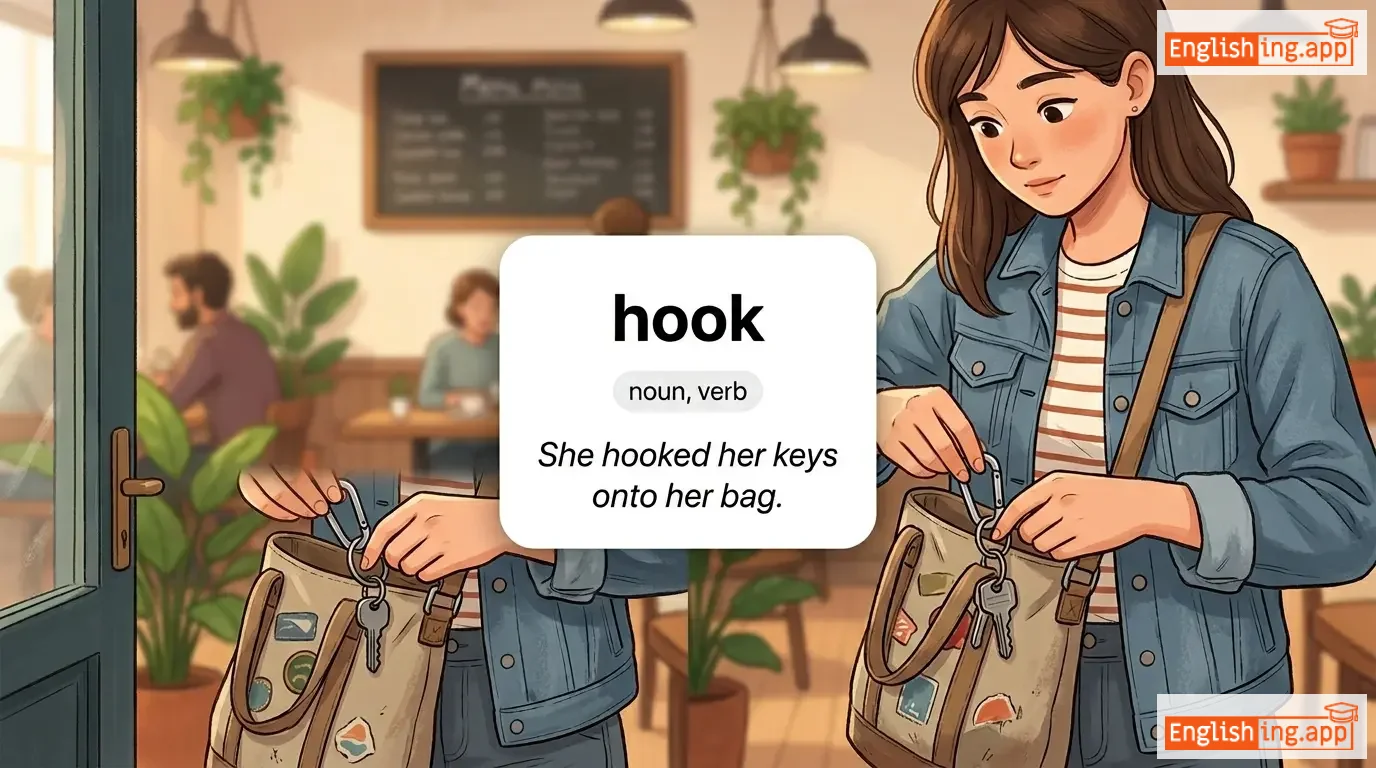
/hʊk/
noun
(khuk)
••••••
|
|
крючок
kryuchok
••••••
|
a curved or bent device for catching, holding, or fastening something
••••••
|
Hang your coat on the hook by the door.
повесьте пальто на крючок рядом с дверью.
••••••
|
Повесьте пальто на крючок рядом с дверью.
Poveste pal'to na kryuchok ryadom s dveryu.
••••••
|
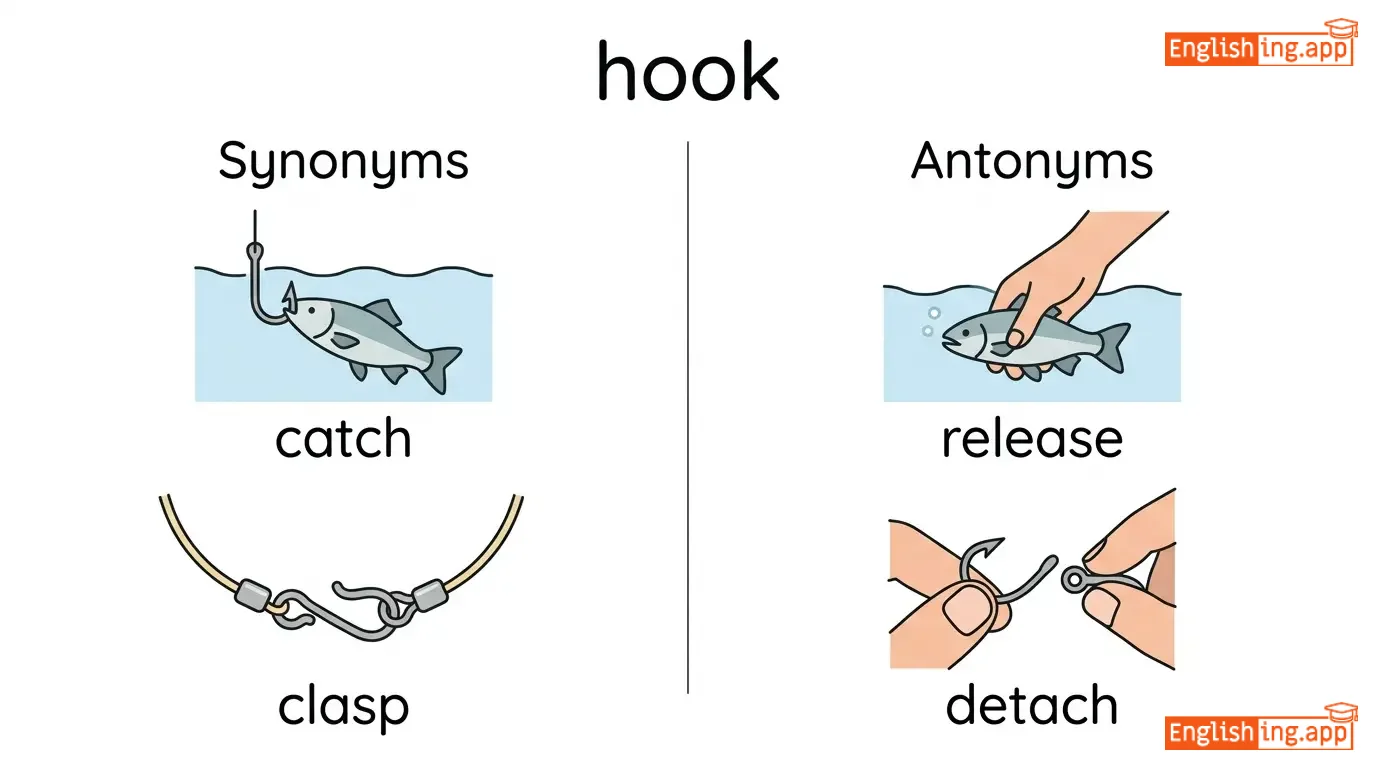
clasp, fastener, catch
••••••
|
- •••••• |
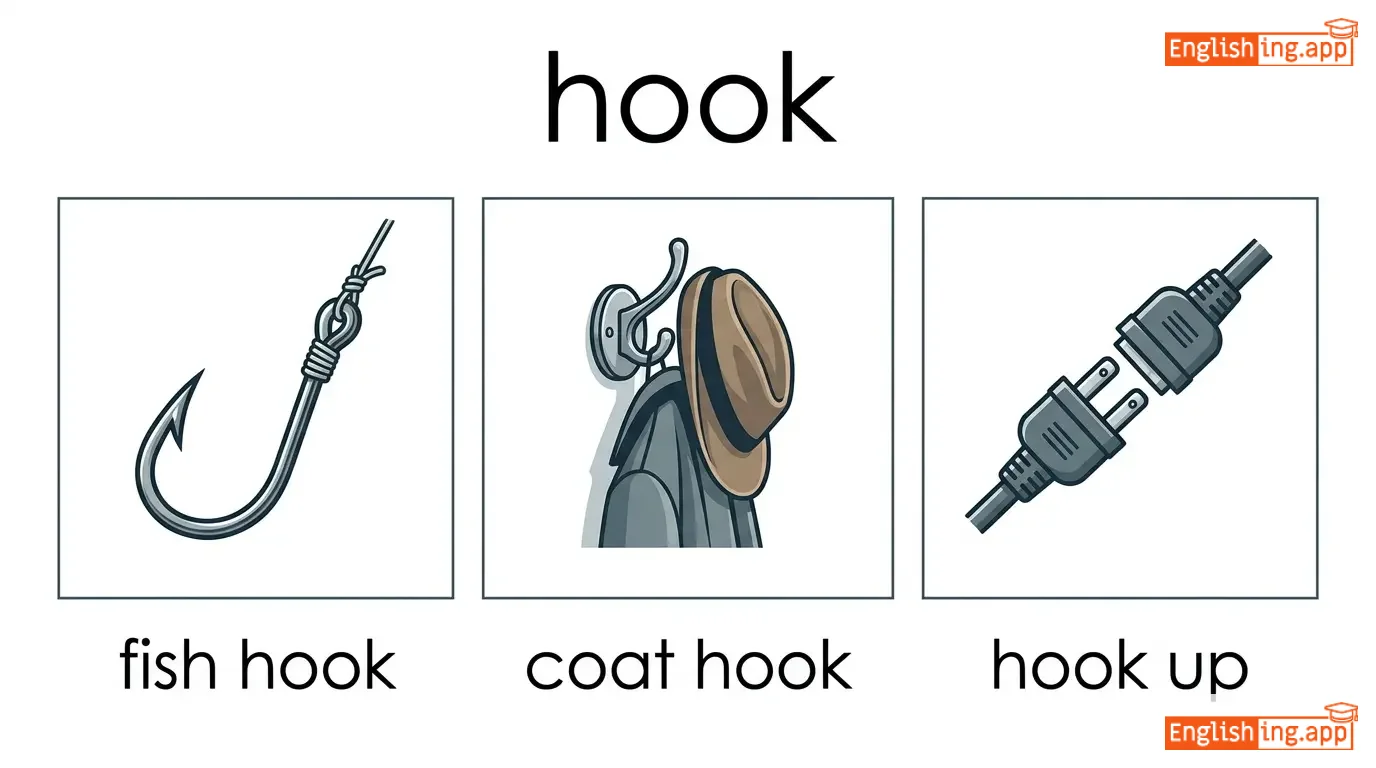
coat hook, fishing hook, sharp hook, metal hook
••••••
|
Представьте, как вешаете пальто на крючок рядом с дверью.
••••••
|
|
#744
🔨
|
/ˈhæm.ər/
noun
(хэммер)
••••••
|
- •••••• |
молоток
molotok
••••••
|
a tool with a heavy metal head for hitting nails or breaking things
••••••
|
She used a hammer to nail the picture frame to the wall. |
Она использовала молоток, чтобы прибить рамку с картиной к стене.
Ona ispol'zovala molotok, chtoby pribit' ramku s kartinoy k stene.
••••••
|
mallet, sledgehammer
••••••
|
cushion, softener
••••••
|
claw hammer, sledge hammer, hammer blow, hammer head
••••••
|
Молоток = молотить, представьте, что вы молотите гвоздь в стену!
••••••
|
|
#745
🔪
|
/ˈkliː.vər/
noun
(klivər)
••••••
|
- •••••• |
топорный нож
topornyj nozh
••••••
|
a heavy knife with a broad blade used for chopping meat or vegetables
••••••
|
The chef used a cleaver to chop the chicken bones.
Повар использовал кливер, чтобы разрубить кости курицы.
••••••
|
Повар использовал топорный нож, чтобы разрубить кости курицы.
Povar ispol'zoval topornyj nozh, chtoby razrubit' kosti kuritsy.
••••••
|
chopper, butcher knife, meat axe
••••••
|
- •••••• |
meat cleaver, kitchen cleaver, heavy cleaver, sharp cleaver
••••••
|
Cleaver sounds like 'topornyj nozh', a heavy chopping knife.
••••••
|
|
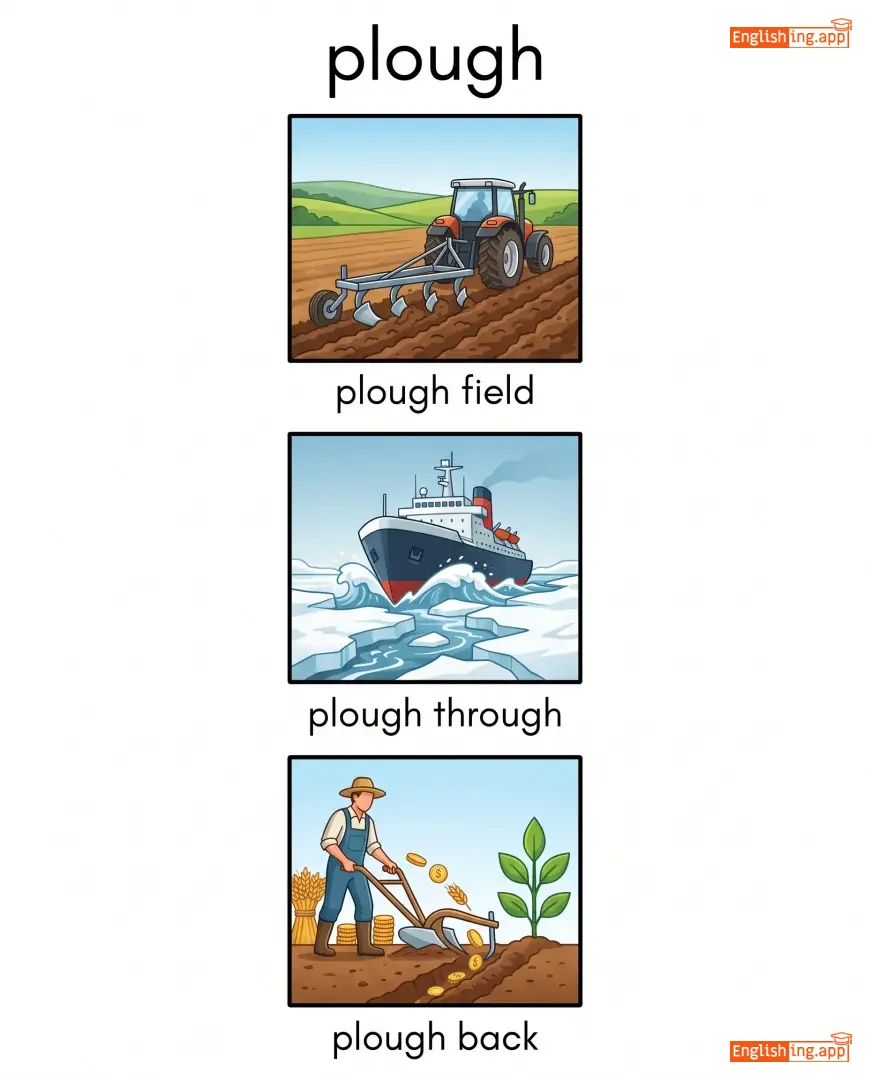
#746
🚜
|
/plaʊ/
noun
(plau)
••••••
|
|
плуг
plugh
••••••
|
a large farming tool used to break up and turn over soil before planting crops
••••••
|
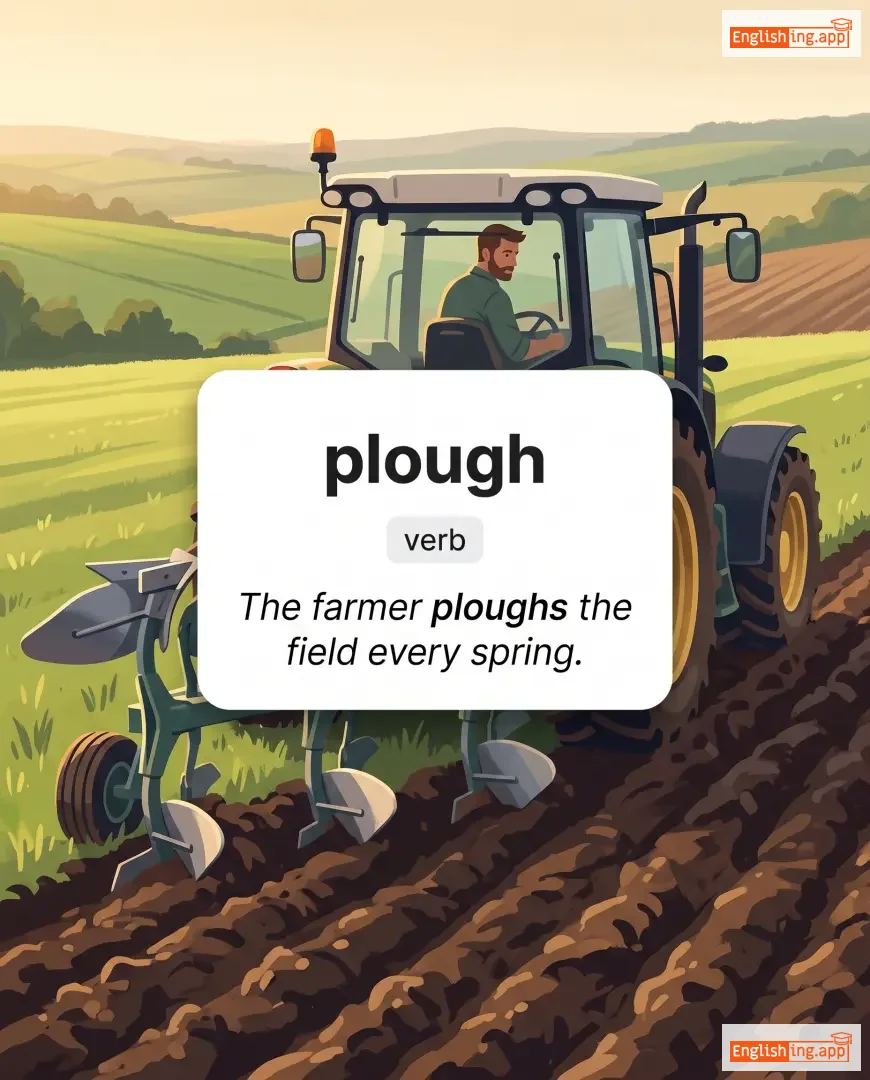
The oxen pulled the heavy plough across the field. |
Оксены тащили тяжелый плуг по полю.
Oksheny tashchili tyazhelyy plug po polyu.
••••••
|
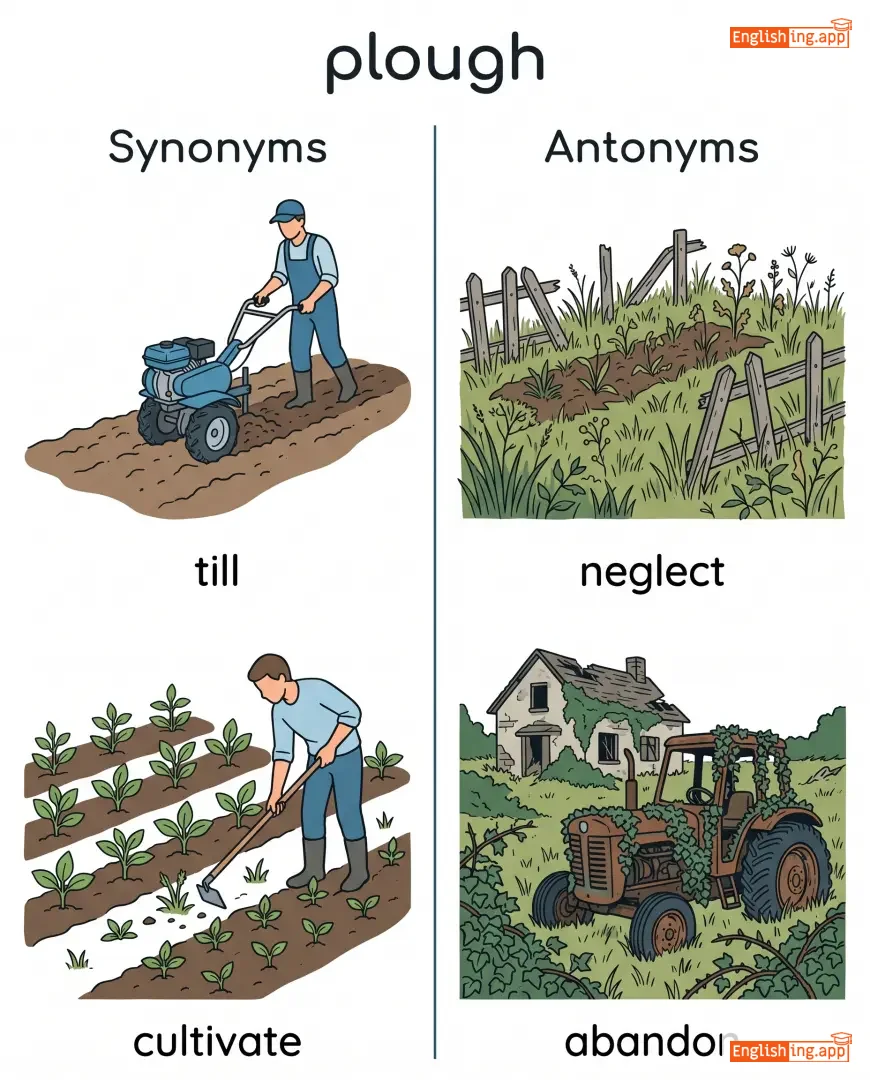
plow, tiller, cultivator
••••••
|
- •••••• |
plough field, ox plough, heavy plough
••••••
|
Фермер использует плуг для вспашки поля
••••••
|
|
#747
🔨
|
/pʌntʃ/
noun
(пунч)
••••••
|
- •••••• |
пробойник
proboinik
••••••
|
a tool used for making holes or indentations in materials
••••••
|
The carpenter used a punch to make holes in the leather. |
Плотник использовал пробойник, чтобы сделать отверстия в коже.
Plotnik ispol'zoval proboinik, chtoby sdelat' otverstiya v kozhe.
••••••
|
awl, piercer, hole maker
••••••
|
- •••••• |
leather punch, hole punch, center punch, paper punch
••••••
|
пробойник (Punch) – пробойник пробивает отверстие, как punch.
••••••
|
|
#748
🧵
|
/luːm/
noun
(lum)
••••••
|
- •••••• |
ткацкий станок
tkatskiy stanok
••••••
|
a machine for weaving cloth; to appear threatening or menacing
••••••
|
The weaver worked at the loom to create beautiful fabrics.
Ткач работал на ткацком станке, чтобы создать красивые ткани.
••••••
|
Ткач работал на ткацком станке, чтобы создать красивые ткани.
Tkach rabotal na tkatskom stanoke, chtoby sozdat' krasivye tkani.
••••••
|
weaving machine, textile machine
••••••
|
- •••••• |
hand loom, power loom, weaving loom
••••••
|
Ткацкий станок = loom (Ткацкий станок используется для создания ткани)
••••••
|
|
#749
🗃️
|
/faɪl/
noun
(fayl)
••••••
|
- •••••• |
напильник
napil'nik
••••••
|
a tool with a rough surface for smoothing or shaping hard materials; a collection of papers or data
••••••
|
He used a metal file to smooth the rough edges.
Он использовал металлическую пилу, чтобы сгладить грубые края.
••••••
|
Он использовал металлическую пилу, чтобы сгладить грубые края.
On ispol'zoval metallicheskuju pilu, chtoby sglaždit' grubye kraja.
••••••
|
rasp, sandpaper, document
••••••
|
roughen, coarsen
••••••
|
nail file, metal file, file cabinet, computer file
••••••
|
Напильник в русском языке помогает сглаживать что-то.
••••••
|
|
#750
🧭
|
/ˈkʌm.pəs/
noun
(kompas)
••••••
|
- •••••• |
компас
kompas
••••••
|
an instrument for finding direction with a magnetic needle pointing to magnetic north
••••••
|
The hiker used a compass to find the right direction. |
Путешественник использовал компас, чтобы найти правильное направление.
Puteshestvennik ispol'zoval kompas, chtoby nayti pravil'noye napravleniye
••••••
|
navigation tool, direction finder, magnetic compass
••••••
|
- •••••• |
magnetic compass, compass needle, compass direction, navigation compass
••••••
|
Компас помогает найти путь, указывая на север
••••••
|
|
#751
🔧
|
/rentʃ/
noun
(レンチ)
••••••
|
- •••••• |
гаечный ключ
gaechnyy klyuch
••••••
|
a tool used for gripping and turning nuts, bolts, or pipes
••••••
|
He used a wrench to tighten the bolt. |
Он использовал гаечный ключ, чтобы затянуть болт.
On ispol'zoval gaechnyy klyuch, chtoby zatinut' bolt.
••••••
|
spanner, tool, adjustable wrench
••••••
|
- •••••• |
pipe wrench, adjustable wrench, monkey wrench
••••••
|
Гаечный ключ всегда помогает затянуть болт.
••••••
|
Vocabulary Quiz
Test your vocabulary by matching words with their translations or meanings.
Login to take the quiz
Comments (0)
Share your thoughts and join the discussion.
Join the discussion by logging in
Login to CommentNo comments yet
Be the first to share your thoughts!