

Swipe left or right, or use the buttons. Tap image to zoom.
例句翻译
单词
Lesson 20: Names of War and WeaponsLesson 20: Names of War and Weapons - 遮罩切换
|
表情符号
|
单词 | Images | 翻译 | 含义 | 例句 | 例句翻译 | 同义词 | 反义词 | 搭配词 | 助记符 |
|---|---|---|---|---|---|---|---|---|---|---|
|
#954
🚁🔫
|
/ˈænti ˈeəkræft ɡʌn/
noun
(防空炮)
••••••
|
- •••••• |
防空炮
fangkong pao
••••••
|
a weapon designed to attack aircraft from the ground
••••••
|
The anti-aircraft gun was positioned to defend the military base. |
防空炮被布置在军用基地以进行防御。
fangkong pao bei buzhi zai junyong jidi yi jinxing fangyu.
••••••
|
anti-aircraft cannon, air defense gun, AA gun
••••••
|
- •••••• |
anti-aircraft defense, heavy anti-aircraft gun, anti-aircraft battery
••••••
|
A powerful cannon that targets aircraft from the ground!
••••••
|
|
#955
✈️
|
/ˈeər fɔːrs/
noun
(áir fōrsī)
••••••
|
- •••••• |
空军
kongjun
••••••
|
the military organization of a country that uses aircraft for fighting
••••••
|
The air force conducted a training exercise over the mountains. |
空军在山脉上空进行了一次训练演习。
Kongjun zai shanmai shangkong jinxing le yici xunlian yanxi.
••••••
|
aerial force, aviation branch, air service
••••••
|
navy, army
••••••
|
air force base, air force pilot, join the air force
••••••
|
空军意味着飞行的军队,记住飞机就是空中的军队。
••••••
|
|
#956
🔫
|
/rɪˈvɒl.vər/
noun
(左轮手枪)
••••••
|
- •••••• |
左轮手枪
zuǒ lún shǒu qiāng
••••••
|
a pistol with revolving chambers enabling several shots to be fired without reloading
••••••
|
The detective drew his revolver from its holster.
侦探从枪套中拔出了他的左轮手枪。
••••••
|
侦探从枪套中拔出了他的左轮手枪。
Zhēntàn cóng qiāng tào zhōng bá chūle tā de zuǒ lún shǒu qiāng.
••••••
|
pistol, handgun, firearm, gun
••••••
|
- •••••• |
draw a revolver, loaded revolver, police revolver
••••••
|
左轮手枪 = 旋转枪膛快速发射的武器
••••••
|
|
#957
✈️
|
/ˈfaɪ.tər/
noun
(fǎitè)
••••••
|
- •••••• |
战斗机
zhàndòu jī
••••••
|
a military aircraft designed for attacking other aircraft; a person who fights
••••••
|
The fighter jet flew overhead during the military parade.
战斗机在军事游行中飞过我们头顶。
••••••
|
战斗机在军事游行中飞过我们头顶。
zhàndòu jī zài jūnshì yóuxíng zhōng fēiguò wǒmen tóudǐng.
••••••
|
warrior, combatant, aircraft
••••••
|
peacekeeper, civilian
••••••
|
fighter jet, fighter pilot, freedom fighter
••••••
|
Zhandou ji, kai shi de fighter zhenzheng de kongkong
••••••
|
|
#958
👨✈️
|
/kəˈmændər ɪn tʃiːf/
noun
(最高指挥官)
••••••
|
- •••••• |
最高指挥官
zuìgāo zhǐhuīguān
••••••
|
the supreme leader of a nation's armed forces
••••••
|
The president serves as the commander-in-chief of the military.
总统担任军队的最高指挥官。
••••••
|
总统担任军队的最高指挥官。
Zǒngtǒng dānrèn jūnduì de zuìgāo zhǐhuīguān.
••••••
|
supreme commander, military leader, chief commander
••••••
|
subordinate, follower, private
••••••
|
supreme commander-in-chief, military commander-in-chief, armed forces commander-in-chief
••••••
|
最高指挥官 - 领导军队的最高领导人
••••••
|
|
#959
🐚
|
/ʃel/
noun
(壳)
••••••
|
- •••••• |
壳
ké
••••••
|
hard outer covering of an animal; explosive projectile for a gun
••••••
|
The artillery fired a shell at the enemy position. |
炮兵向敌方阵地发射了一个炮弹。
pàobīng xiàng dífāng zhèndì fāshèle yīgè pàodàn.
••••••
|
casing, husk, projectile, missile
••••••
|
core, interior, center
••••••
|
artillery shell, shell shock, shell out
••••••
|
壳 (ké) is a hard outer covering, like the shell!
••••••
|
|
#960
🏰
|
/kænˈtoʊnmənt/
noun
(kantonment)
••••••
|
- •••••• |
军营
junying
••••••
|
a military base or permanent military station
••••••
|
The soldiers lived in the cantonment outside the city.
士兵们住在城市外的军营里。
••••••
|
士兵们住在城市外的军营里。
Shibingmen zhu zai chengshi wai de junying li.
••••••
|
military base, garrison, barracks
••••••
|
civilian area, residential zone
••••••
|
military cantonment, cantonment area, cantonment board
••••••
|
军营 = 士兵生活的地方
••••••
|
|
#961
🏹
|
/boʊ/
noun
(bo)
••••••
|
- •••••• |
弓
gong
••••••
|
a weapon for shooting arrows, made of a curved piece of wood
••••••
|
The archer drew his bow and aimed at the target. |
射手拉开了他的弓,瞄准了目标。
Shè shǒu lā kāi le tā de gōng, miáo zhǔn le mùbiāo.
••••••
|
longbow, crossbow, archer's bow
••••••
|
- •••••• |
draw a bow, bow and arrow, bow string
••••••
|
弓的形状像弯曲的天空,箭头飞向远方目标。
••••••
|
|
#962
⚔️
|
/wɔːr/
noun
(wā)
••••••
|
- •••••• |
战争
zhànzhēng
••••••
|
a state of armed conflict between different countries or different groups within a country
••••••
|
The war lasted for five years and caused great destruction.
战争持续了五年,并造成了巨大的破坏。
••••••
|
战争持续了五年,并造成了巨大的破坏。
Zhànzhēng chíxùle wǔ nián, bìng zàochéngle jùdà de pòhuài.
••••••
|
conflict, battle, combat, warfare
••••••
|
peace, harmony, ceasefire
••••••
|
civil war, world war, war zone, declare war
••••••
|
In Chinese, '战争' directly translates to 'war,' symbolizing destruction and conflict.
••••••
|
|
#963
🔫
|
/ˈbʊlɪt/
noun
(bùlètè)
••••••
|
- •••••• |
子弹
zidàn
••••••
|
a metal projectile fired from a gun
••••••
|
The bullet missed its target and hit the wall.
子弹错过了目标并击中了墙壁。
••••••
|
子弹错过了目标并击中了墙壁。
Zidàn cuòguòle mùbiāo bìng jīzhòngle qiángbì.
••••••
|
projectile, ammunition, round, slug
••••••
|
- •••••• |
bullet point, bullet train, bullet wound, dodge a bullet
••••••
|
子弹飞快地穿过空气,像闪电一样。
••••••
|
|
#964
⛺
|
/kæmp/
noun
(kèng pǔ)
••••••
|
- •••••• |
营地
yíng dì
••••••
|
a place where soldiers live temporarily; a place with tents or huts for temporary accommodation
••••••
|
The military established a camp near the border.
军队在边界附近建立了一个营地。
••••••
|
军队在边界附近建立了一个营地。
Jūnduì zài biānjiè fùjìn jiànlìle yīgè yíngdì.
••••••
|
base, encampment, bivouac, barracks
••••••
|
home, permanent residence
••••••
|
military camp, training camp, set up camp
••••••
|
士兵在营地里就像在营地(camp)里。
••••••
|
|
#965
🪖
|
/tæŋk/
noun
(tæŋk)
••••••
|
- •••••• |
坦克
tanke
••••••
|
a heavily armored fighting vehicle moving on a continuous track
••••••
|
The tank rolled through the battlefield with powerful armor.
坦克穿越战场,配备强大的装甲。
••••••
|
坦克穿越了战场,配备强大的装甲。
Tanke chuānyuèle zhànchǎng, pèibèi qiángdà de zhuāngjiǎ.
••••••
|
armored vehicle, battle tank, combat vehicle
••••••
|
- •••••• |
main battle tank, tank crew, tank warfare, heavy tank
••••••
|
坦克像是战场上无敌的金属巨兽,所到之处,所向披靡。
••••••
|
|
#966
🚢
|
/ˈsʌb.mə.riːn/
noun
(潜水艇)
••••••
|
- •••••• |
潜艇
qiántǐng
••••••
|
a warship with a streamlined hull designed to operate completely submerged in the sea
••••••
|
The submarine dived deep into the ocean to avoid detection.
潜水艇潜入海洋深处以避免被发现。
••••••
|
潜水艇潜入海洋深处以避免被发现。
Qiánshuǐtǐng qián rù hǎiyáng shēnchù yǐ bìmiǎn bèi fāxiàn.
••••••
|
underwater vessel, sub, U-boat
••••••
|
surface ship, aircraft
••••••
|
nuclear submarine, submarine warfare, submarine captain
••••••
|
潜水艇像潜入水中一样,潜入海底的船。
••••••
|
|
#967
🏳️
|
/dɪˈfiːt/
verb
(dɪˈfiːt)
••••••
|
- •••••• |
失败
shībài
••••••
|
to win a victory over; to overcome in battle or competition
••••••
|
The army managed to defeat the enemy forces. |
军队成功击败了敌军。
Jūnduì chénggōng jī bài le dí jūn.
••••••
|
conquer, overcome, vanquish, beat
••••••
|
victory, triumph, win, succeed
••••••
|
defeat the enemy, admit defeat, crushing defeat
••••••
|
失败 in Chinese means defeat, think of '失' (loss) and '败' (failure).
••••••
|
|
#968
⚔️
|
/ˈen.ə.mi/
noun
(敌人)
••••••
|
- •••••• |
敌人
dí rén
••••••
|
a person who is actively opposed or hostile to someone or something
••••••
|
The soldiers fought bravely against their enemy.
士兵们英勇地与敌人作斗争。
••••••
|
士兵们英勇地与敌人作斗争。
Shìbīngmen yīngyǒng de yǔ dí rén zuò dòuzhēng.
••••••
|
foe, adversary, opponent, rival
••••••
|
friend, ally, supporter, companion
••••••
|
sworn enemy, deadly enemy, enemy forces, enemy territory
••••••
|
敌人 (dí rén) sounds like 'enemy' in Chinese, making it easy to remember.
••••••
|
|
#969
⚔️
|
/ɑːrmz/
noun
(阿姆斯)
••••••
|
- •••••• |
武器
wǔqì
••••••
|
weapons and ammunition; firearms
••••••
|
The soldiers carried their arms into battle. |
士兵们带着他们的武器进入战斗。
Shìbīngmen dàizhe tāmen de wǔqì jìnrù zhàndòu.
••••••
|
weapons, firearms, armaments
••••••
|
peace tools, non-weapons
••••••
|
bear arms, arms control, small arms
••••••
|
记住‘武器’以准备战斗。
••••••
|
|
#970
🔫
|
/ɡʌn/
noun
(gān)
••••••
|
- •••••• |
枪
qiāng
••••••
|
a weapon that fires bullets or other projectiles from a metal tube
••••••
|
The soldier cleaned his gun after the training session. |
士兵在训练后清洁了他的枪。
Shìbīng zài xùnliàn hòu qīngjiéle tā de qiāng.
••••••
|
firearm, pistol, rifle, weapon
••••••
|
peace, shield, protection
••••••
|
gun control, gun safety, load a gun
••••••
|
枪 = qiāng, 听起来像‘gun’来帮助记住。
••••••
|
|
#971
⚔️
|
/sɔːrd/
noun
(sword)
••••••
|
- •••••• |
剑
jian
••••••
|
a weapon with a long metal blade and a handle, used for fighting
••••••
|
The knight drew his sword to defend the castle.
骑士拔出了剑来保护城堡。
••••••
|
骑士拔出了剑来保护城堡。
qíshì bā chūle jiàn lái bǎohù chéngbǎo.
••••••
|
blade, saber, cutlass, rapier
••••••
|
shield, armor, protection
••••••
|
sharp sword, double-edged sword, sword fight, sword blade
••••••
|
剑的发音与‘sword’相似,记住剑的声音即是‘sword’的发音。
••••••
|
|
#972
🎺
|
/ˈtrʌmpɪt/
noun
(喇叭)
••••••
|
- •••••• |
喇叭
lǎbā
••••••
|
a brass musical instrument with a brilliant tone; military signal instrument
••••••
|
The soldier played the trumpet to signal the troops.
士兵吹响了喇叭,向部队发出信号。
••••••
|
士兵吹响了喇叭,向部队发出信号。
Shìbīng chuīxiǎngle lǎbā, xiàng bùduì fāchū xìnhào.
••••••
|
bugle, horn, cornet
••••••
|
- •••••• |
military trumpet, trumpet call, trumpet signal, brass trumpet
••••••
|
喇叭 = 喇叭 (用来发信号的乐器)
••••••
|
|
#973
🏆
|
/ˈvɪk.tər.i/
noun
(vɪkˈtɔri)
••••••
|
|
胜利
shengli
••••••
|
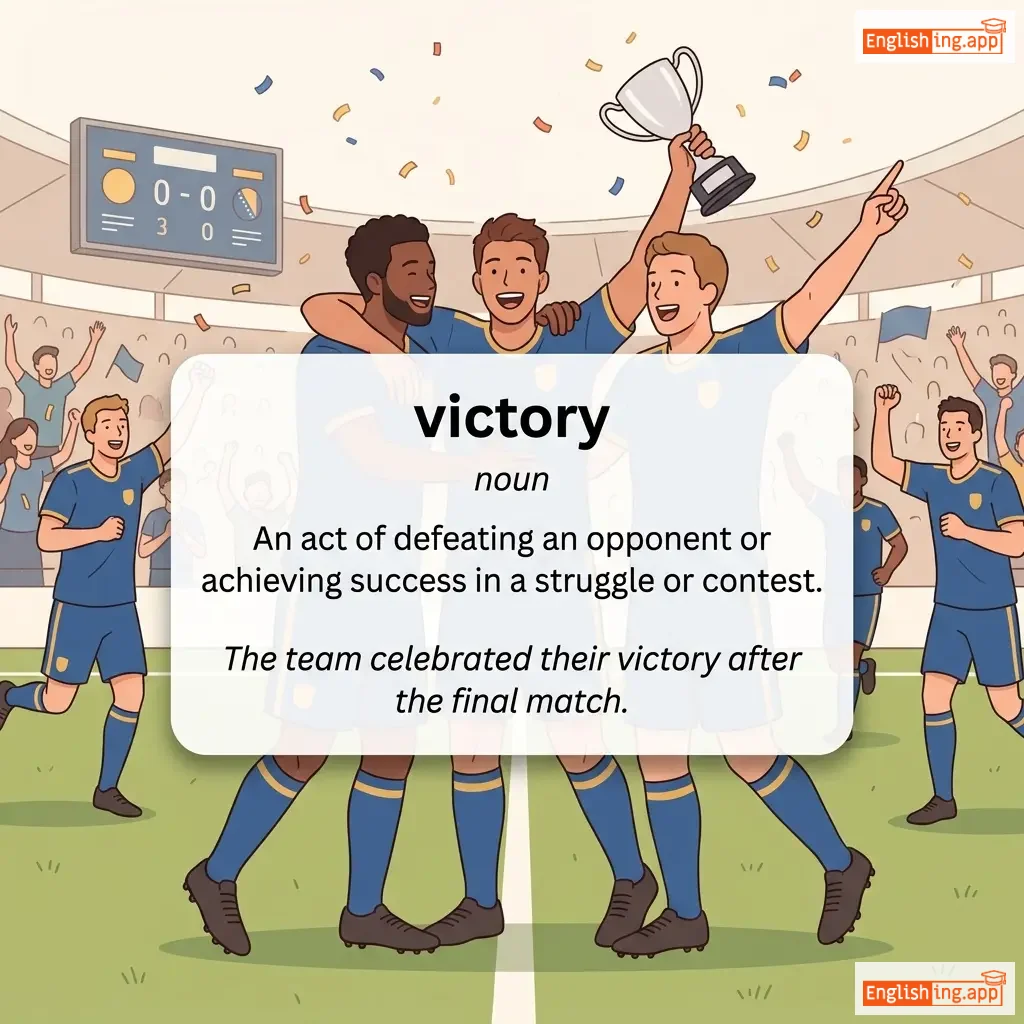
an act of defeating an enemy or opponent in a battle, game, or other competition
••••••
|
The army celebrated their victory over the enemy forces. |
军队庆祝了他们在敌军面前的胜利。
jūnduì qìngzhùle tāmen zài díjūn miànqián de shènglì.
••••••
|
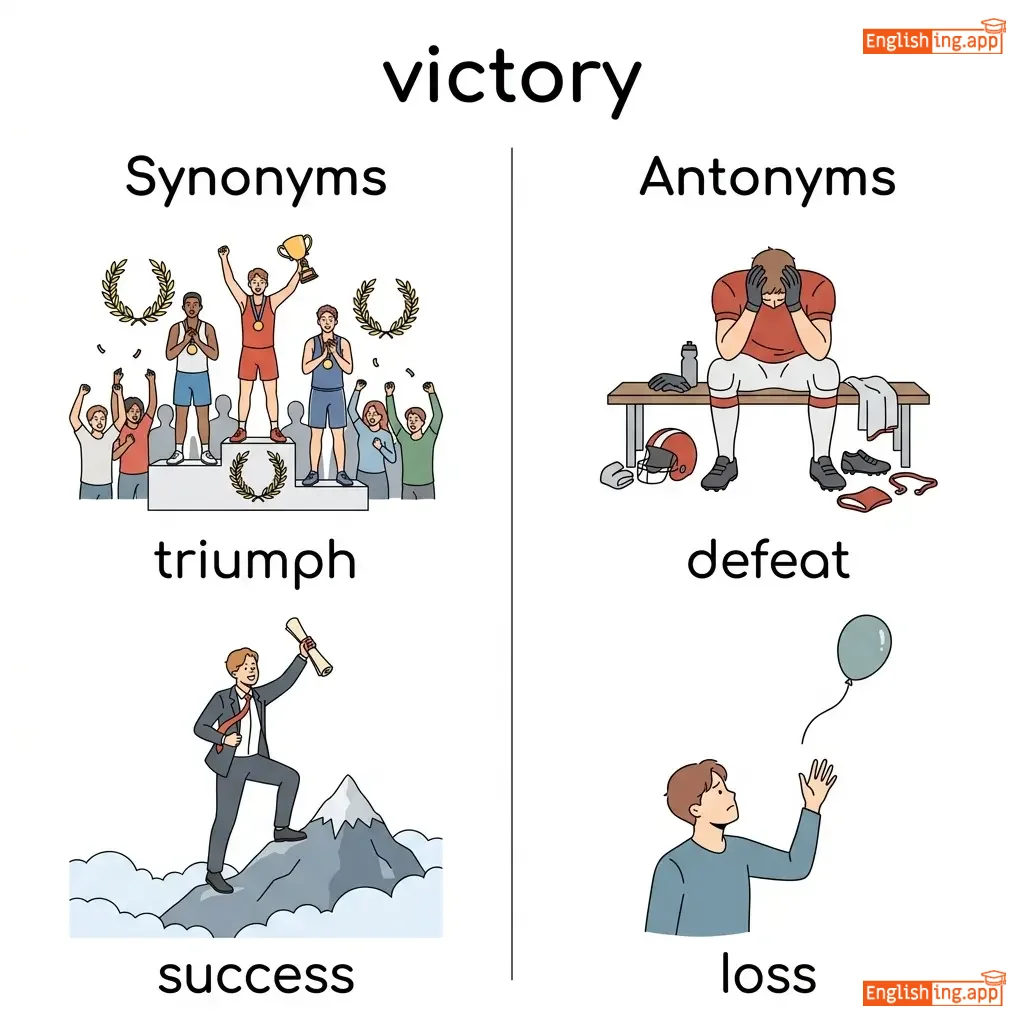
triumph, win, success, conquest
••••••
|
defeat, loss, failure
••••••
|
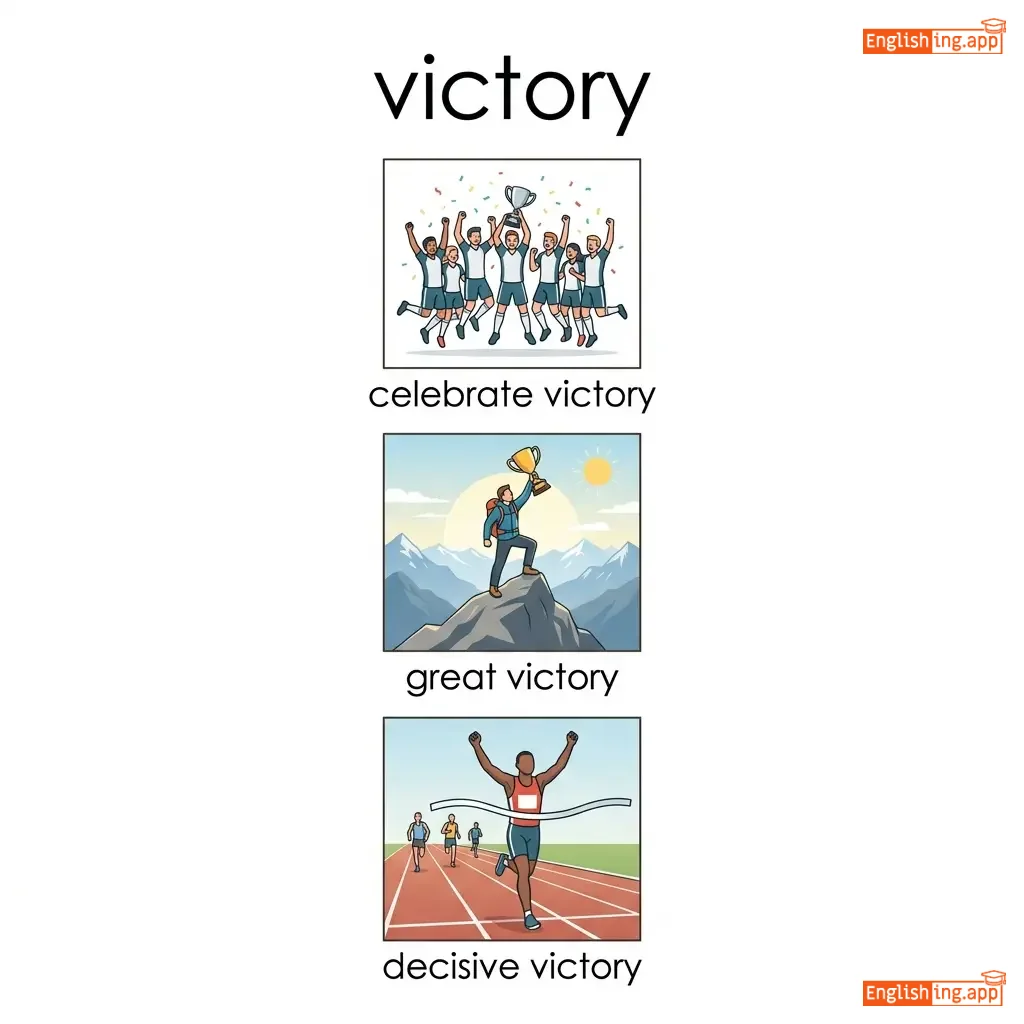
military victory, victory parade, decisive victory
••••••
|
胜利和Victory都意味着获胜。
••••••
|
|
#974
🔫
|
/ˈraɪfəl/
noun
(莱弗尔)
••••••
|
- •••••• |
步枪
buqiang
••••••
|
a gun with a long barrel that is fired from the shoulder
••••••
|
The soldier carried a rifle during the mission.
士兵在任务中携带着步枪。
••••••
|
士兵在任务中携带着步枪。
Shìbīng zài rènwù zhōng xiédài zhe bùqiāng.
••••••
|
firearm, gun, carbine, musket
••••••
|
- •••••• |
assault rifle, hunting rifle, rifle range, sniper rifle
••••••
|
In Chinese, '步枪' (buqiang) is the word for rifle, reminding of the movement ('步') and the firearm ('枪').
••••••
|
|
#975
🗡️
|
/læns/
noun
(lánsī)
••••••
|
- •••••• |
长矛
changmao
••••••
|
a long weapon with a sharp metal point, used by soldiers on horseback
••••••
|
The knight charged forward with his lance ready. |
骑士带着准备好的长矛向前冲。
qíshì dàizhe zhǔnbèi hǎo de chángmáo xiàng qián chōng.
••••••
|
spear, pike, javelin
••••••
|
- •••••• |
knight's lance, cavalry lance, charge with a lance
••••••
|
长矛:类似于长的武器,具有锋利尖端的长矛。
••••••
|
|
#976
🪖
|
/ˈɪn.fən.tri/
noun
(步兵)
••••••
|
- •••••• |
步兵
bù bīng
••••••
|
soldiers marching or fighting on foot; foot soldiers collectively
••••••
|
The infantry advanced across the battlefield on foot. |
步兵在战场上走路前进。
bù bīng zài zhànchǎng shàng zǒulù qiánjìn.
••••••
|
foot soldiers, ground troops, riflemen
••••••
|
cavalry, air force, navy
••••••
|
infantry regiment, infantry division, light infantry
••••••
|
步兵 = 'Infantry', 从一个地方走到另一个地方的士兵
••••••
|
|
#977
👨✈️
|
/kəˈmændər/
noun
(指挥官)
••••••
|
- •••••• |
指挥官
zhǐ huī guān
••••••
|
a person in authority over a military unit; leader of armed forces
••••••
|
The commander ordered his troops to advance.
指挥官命令他的部队前进。
••••••
|
指挥官命令他的部队前进。
Zhǐ huī guān mìnglìng tā de bùduì qiánjìn.
••••••
|
leader, general, chief, captain
••••••
|
subordinate, follower, private
••••••
|
military commander, commanding officer, field commander
••••••
|
指挥官 in Chinese means the head of the military unit who leads the troops.
••••••
|
|
#978
🛡️
|
/ˈɑːr.mər/
noun
(阿摩尔)
••••••
|
- •••••• |
盔甲
kuījiǎ
••••••
|
protective covering worn by soldiers; metal plating for military vehicles
••••••
|
The knight wore heavy armour to protect himself in battle.
骑士穿着沉重的盔甲以保护自己在战斗中。
••••••
|
骑士穿着沉重的盔甲以保护自己在战斗中。
qíshì chuānzhuó chénzhòng de kuījiǎ yǐ bǎohù zìjǐ zài zhàndòu zhōng.
••••••
|
protection, shield, mail, plating
••••••
|
vulnerability, exposure, nakedness
••••••
|
body armour, armour plating, suit of armour
••••••
|
盔甲保护骑士在战斗中。
••••••
|
|
#979
🔫
|
/ˈkænən/
noun
(加农炮)
••••••
|
- •••••• |
大炮
dà pào
••••••
|
large heavy gun that fires cannonballs or shells
••••••
|
The castle was defended by several large cannons.
城堡由几门大加农炮保卫。
••••••
|
城堡由几门大加农炮保卫。
Chéngbǎo yóu jǐmén dà jiāngōng pào bǎowèi.
••••••
|
artillery, gun, howitzer, mortar
••••••
|
shield, defense, protection
••••••
|
cannon fire, cannon ball, water cannon
••••••
|
Remember 'dà pào' as the big cannon used in wars.
••••••
|
|
#980
📨
|
/ˈmes.ɪn.dʒər/
noun
(梅森杰尔)
••••••
|
- •••••• |
信使
xìnshǐ
••••••
|
a person who carries messages or communications between parties
••••••
|
The messenger delivered important battle plans to the commander. |
信使将重要的战斗计划传递给了指挥官。
Xìnshǐ jiāng zhòngyào de zhàndòu jìhuà chuándì gěile zhǐhuīguān.
••••••
|
courier, envoy, herald, carrier
••••••
|
recipient, receiver, addressee
••••••
|
messenger service, royal messenger, send a messenger
••••••
|
信使传递信息,就像'信使'一样,把消息传递给每个人!
••••••
|
|
#981
⚓
|
/ˈneɪ.vəl fɔːrs/
noun
(nèi wǎl fōrs)
••••••
|
- •••••• |
海军
hǎijūn
••••••
|
the branch of a nation's armed services that conducts military operations at sea
••••••
|
The naval force protected the country's coastline from enemy attacks. |
海军保护了国家的海岸线免受敌人攻击
hǎijūn bǎohùle guójiā de hǎi'àn xiàn miǎn shòu dírén gōngjī
••••••
|
navy, fleet, maritime force, sea force
••••••
|
army, air force
••••••
|
naval force commander, strong naval force, naval force operations
••••••
|
海军是保卫海岸的军队
••••••
|
|
#982
⚓
|
/ˈneɪvi/
noun
(ˈneɪvi)
••••••
|
- •••••• |
海军
haijun
••••••
|
the branch of armed forces that conducts military operations at sea
••••••
|
He joined the navy after graduating from college. |
他在大学毕业后加入了海军。
Tā zài dàxué bìyè hòu jiārùle hǎijūn.
••••••
|
fleet, naval force, maritime force
••••••
|
- •••••• |
navy blue, royal navy, navy ship, navy seal
••••••
|
海军代表着海上的军事力量
••••••
|
|
#983
🔫
|
/ˈpɪs.təl/
noun
(手枪)
••••••
|
- •••••• |
手枪
shǒu qiāng
••••••
|
a small gun that can be held and fired with one hand
••••••
|
The officer drew his pistol from the holster.
警察从枪套中拔出了手枪。
••••••
|
警察从枪套中拔出了手枪。
jǐngchá cóng qiāng tào zhōng bá chūle shǒu qiāng.
••••••
|
handgun, revolver, firearm
••••••
|
- •••••• |
draw a pistol, pistol holster, load a pistol
••••••
|
手枪 = 用一只手操作的枪支
••••••
|
|
#984
🏰
|
/fɔːrt/
noun
(福特)
••••••
|
- •••••• |
堡垒
baolei
••••••
|
a strong building or group of buildings where soldiers live and defend
••••••
|
The ancient fort stood on top of the hill for centuries.
古老的堡垒屹立在山顶上数百年。
••••••
|
古老的堡垒屹立在山顶上数百年。
Gǔlǎo de bǎolěi yìlì zài shāndǐng shàng shù bǎi nián.
••••••
|
fortress, castle, stronghold, citadel
••••••
|
open field, plain, vulnerability
••••••
|
military fort, ancient fort, fort walls, fort defense
••••••
|
堡垒 (baolei) - Fortress strong and resilient, standing for defense!
••••••
|
|
#985
🗡️
|
/ˈdæɡər/
noun
(dagger)
••••••
|
- •••••• |
匕首
bǐshǒu
••••••
|
a short knife with a pointed and edged blade, used as a weapon
••••••
|
The assassin concealed a dagger beneath his cloak. |
刺客将匕首藏在他的披风下。
cìkè jiāng bǐshǒu cáng zài tā de pīfēng xià
••••••
|
knife, blade, stiletto
••••••
|
shield, armor, protection
••••••
|
sharp dagger, silver dagger, dagger blade
••••••
|
匕首像 Dagger,锋利的武器,用于隐蔽攻击
••••••
|
|
#986
✈️
|
/ˈbɒmər/
noun
(邦波尔)
••••••
|
- •••••• |
轰炸机
hong zhaji
••••••
|
military aircraft designed to drop bombs on targets
••••••
|
The bomber squadron flew over the city at dawn.
轰炸机中队在黎明时飞过城市。
••••••
|
轰炸机中队在黎明时飞过城市。
hong zhaji zhongdui zai liming shi fei guo chengshi.
••••••
|
warplane, aircraft, fighter plane
••••••
|
rescue plane, transport plane, civilian aircraft
••••••
|
bomber pilot, bomber squadron, stealth bomber
••••••
|
‘Hong zhaji’ means ‘bombing plane’ — imagine a loud ‘Hong!’ when it drops bombs!
••••••
|
|
#987
⛺
|
/tent/
noun
(tènt)
••••••
|
- •••••• |
帐篷
zhàngpéng
••••••
|
a portable shelter made of cloth or canvas; military accommodation
••••••
|
The soldiers set up their tent in the military camp.
士兵们在军营中搭起了他们的帐篷。
••••••
|
士兵们在军营中搭起了他们的帐篷。
Shìbīngmen zài jūnyíng zhōng dāqǐle tāmen de zhàngpéng.
••••••
|
shelter, pavilion, canvas shelter
••••••
|
permanent structure, building
••••••
|
military tent, field tent, tent camp, army tent
••••••
|
In Chinese, '帐篷' (zhàngpéng) looks like a large cloth structure. Think of a giant, portable tent!
••••••
|
|
#988
📜
|
/ˈtriː.ti/
noun
(tī lǐ)
••••••
|
- •••••• |
条约
tiaoyue
••••••
|
a formally concluded and ratified agreement between countries; a formal agreement to end a war
••••••
|
The two nations signed a peace treaty to end the conflict. |
这两个国家签署了一份和平条约以结束冲突。
Zhe liang ge guojia qianshu le yifen heping tiaoyue yi jieshu chongtu.
••••••
|
agreement, pact, accord, contract
••••••
|
disagreement, conflict, war
••••••
|
peace treaty, trade treaty, treaty negotiation
••••••
|
Treaty 和条约 (tiaoyue) - 结束战争的正式协议
••••••
|
|
#989
⚔️
|
/ˈwɔːriər/
noun
(战士)
••••••
|
- •••••• |
战士
zhanshi
••••••
|
a brave or experienced soldier or fighter
••••••
|
The warrior fought bravely in the ancient battle.
这位战士在古老的战斗中英勇作战。
••••••
|
这位战士在古老的战斗中英勇作战。
Zhe wei zhanshi zai gulao de zhandou zhong yingyong zuozhan.
••••••
|
fighter, soldier, combatant
••••••
|
pacifist, civilian, peacemaker
••••••
|
brave warrior, ancient warrior, warrior spirit
••••••
|
Zhan means battle in Chinese - a warrior fights in battles.
••••••
|
|
#990
💥
|
/ˈɡʌnˌpaʊdər/
noun
(ɡʌnˌpaʊdər)
••••••
|
- •••••• |
火药
huǒyào
••••••
|
explosive powder used in guns and fireworks
••••••
|
Gunpowder was invented in ancient China. |
火药是在古代中国发明的。
Huǒyào shì zài gǔdài zhōngguó fāmíng de.
••••••
|
explosive, black powder, ammunition
••••••
|
water, extinguisher, safety device
••••••
|
gunpowder plot, gunpowder tea, gunpowder keg
••••••
|
火药,让枪支和烟花更精彩!
••••••
|
|
#991
💣
|
/bɑːm/
noun
(bāng)
••••••
|
- •••••• |
炸弹
zhàdàn
••••••
|
an explosive device designed to cause damage or destruction
••••••
|
The bomb disposal unit carefully defused the explosive device. |
炸弹拆除单位小心地引爆了爆炸装置。
zhàdàn chāichú dānwèi xiǎoxīn de yǐnbào le bàozhà zhuāngzhì.
••••••
|
explosive, mine, grenade, device
••••••
|
safety, protection, peace
••••••
|
bomb squad, time bomb, bomb shelter
••••••
|
炸弹 (zhàdàn) – 拆除炸弹需要小心和精准的处理。
••••••
|
|
#992
👥⚔️
|
/truːp/
noun
(trúp)
••••••
|
- •••••• |
队伍
duì wǔ
••••••
|
a group of soldiers; military personnel organized as a unit
••••••
|
The troop marched in formation across the parade ground.
队伍在游行场上列队行进。
••••••
|
队伍在游行场上列队行进。
Duì wǔ zài yóuxíng chǎng shàng liè duì xíng jìn.
••••••
|
soldiers, battalion, regiment, squad
••••••
|
civilians, non-combatants
••••••
|
elite troop, troop movement, troop deployment, special forces troop
••••••
|
队伍就像一群士兵,他们一起走路。
••••••
|
|
#993
🕳️
|
/trentʃ/
noun
(trenchi)
••••••
|
- •••••• |
战壕
zhànháo
••••••
|
a long narrow ditch dug in the ground for defense in warfare
••••••
|
Soldiers hid in the trench during the enemy attack. |
士兵们在敌人的攻击期间藏身于战壕中。
Shìbīngmen zài dírén de gōngjí qījiān cángshēn yú zhànháo zhōng.
••••••
|
ditch, foxhole, dugout, moat
••••••
|
elevation, hill, mound, ridge
••••••
|
deep trench, muddy trench, trench warfare, front-line trench
••••••
|
战壕,士兵们躲藏在里面,防止敌人的攻击
••••••
|
|
#994
👨✈️
|
/ˈkæptɪn/
noun
(舰长)
••••••
|
- •••••• |
舰长
jiàn zhǎng
••••••
|
a military officer of middle rank; the person in command of a ship or aircraft
••••••
|
The captain ordered his troops to advance forward.
舰长命令他的部队向前进发。
••••••
|
舰长命令他的部队向前进发。
Jiàn zhǎng mìnglìng tā de bùduì xiàng qián jìnfā.
••••••
|
commander, leader, officer, chief
••••••
|
subordinate, follower, private
••••••
|
team captain, ship captain, army captain, captain's orders
••••••
|
舰长引导舰船,驶向胜利的方向。
••••••
|
|
#995
🐎
|
/ˈkæv.əl.ri/
noun
(kǎ wǎ lè lǐ)
••••••
|
- •••••• |
骑兵
qíbīng
••••••
|
soldiers who fight on horseback; the part of an army formerly composed of troops on horseback
••••••
|
The cavalry charged across the field with great speed. |
骑兵以极快的速度冲过了田野。
Qíbīng yǐ jí kuài de sùdù chōng guòle tiányě.
••••••
|
horsemen, mounted troops, horse soldiers
••••••
|
infantry, foot soldiers
••••••
|
cavalry charge, heavy cavalry, light cavalry
••••••
|
中文: 马 (horse) + 军队 (army) = 骑兵
••••••
|
|
#996
🏰
|
/siːdʒ/
noun
(sī jí)
••••••
|
- •••••• |
围困
wéikùn
••••••
|
a military operation to capture a place by surrounding it and cutting off supplies
••••••
|
The siege of the castle lasted for three months.
城堡的围困持续了三个月。
••••••
|
城堡的围困持续了三个月。
Chéngbǎo de wéikùn chíxù le sān gè yuè.
••••••
|
blockade, encirclement, investment
••••••
|
relief, liberation
••••••
|
lay siege, under siege, siege warfare
••••••
|
围困就像是围住一个地方,切断所有的资源。
••••••
|
|
#997
📡
|
/ˈreɪ.dɑːr/
noun
(雷达)
••••••
|
- •••••• |
雷达
leida
••••••
|
a system for detecting the presence, direction, distance of aircraft, ships by sending out radio waves
••••••
|
The radar detected an unknown aircraft approaching the base. |
雷达探测到一架未知的飞机接近基地。
Leida tàncè dào yī jià wèi zhī de fēijī jiējìn jīdì.
••••••
|
detection system, sonar, tracking device
••••••
|
- •••••• |
radar screen, radar signal, radar detection
••••••
|
雷达使用无线电波来检测物体。
••••••
|
Vocabulary Quiz
Test your vocabulary by matching words with their translations or meanings.
Login to take the quiz
Comments (0)
Share your thoughts and join the discussion.
Join the discussion by logging in
Login to CommentNo comments yet
Be the first to share your thoughts!