

翻訳
過去
過去分詞
三人称単数
動名詞
意味
例文
例文の翻訳
同義語
対義語
コロケーション
ニーモニック
Swipe left or right, or use the buttons. Tap image to zoom.
例文の翻訳
単語
Lesson 20: Names of War and WeaponsLesson 20: Names of War and Weapons - マスクトグル
|
絵文字
|
単語 | Images | 翻訳 | 意味 | 例文 | 例文の翻訳 | 同義語 | 対義語 | コロケーション | ニーモニック |
|---|---|---|---|---|---|---|---|---|---|---|
|
#954
🚁🔫
|
/ˈænti ˈeəkræft ɡʌn/
noun
(対空砲)
••••••
|
- •••••• |
対空砲
taikūhō
••••••
|
a weapon designed to attack aircraft from the ground
••••••
|
The anti-aircraft gun was positioned to defend the military base. |
対空砲は軍事基地を守るために配置されました。
Taikūhō wa gunji kichi wo mamoru tame ni haichi saremashita.
••••••
|
anti-aircraft cannon, air defense gun, AA gun
••••••
|
- •••••• |
anti-aircraft defense, heavy anti-aircraft gun, anti-aircraft battery
••••••
|
A cannon that targets planes from the ground – just like a defense weapon!
••••••
|
|
#955
✈️
|
/ˈeər fɔːrs/
noun
(エアフォース)
••••••
|
- •••••• |
空軍
kuugun
••••••
|
the military organization of a country that uses aircraft for fighting
••••••
|
The air force conducted a training exercise over the mountains. |
空軍は山脈の上で訓練演習を行った。
Kuugun wa sanmyaku no ue de kunren enshuu o okonatta.
••••••
|
aerial force, aviation branch, air service
••••••
|
navy, army
••••••
|
air force base, air force pilot, join the air force
••••••
|
空軍は空を支配する軍隊、飛行機で戦う軍隊として覚えよう。
••••••
|
|
#956
🔫
|
/rɪˈvɒl.vər/
noun
(リボルバー)
••••••
|
- •••••• |
リボルバー
riborubā
••••••
|
a pistol with revolving chambers enabling several shots to be fired without reloading
••••••
|
The detective drew his revolver from its holster.
探偵はホルスターからリボルバーを抜き取った。
••••••
|
探偵はホルスターからリボルバーを抜き取った。
Tantei wa horusutā kara riborubā o nukitotta.
••••••
|
pistol, handgun, firearm, gun
••••••
|
- •••••• |
draw a revolver, loaded revolver, police revolver
••••••
|
リボルバー = '回転'する銃
••••••
|
|
#957
✈️
|
/ˈfaɪ.tər/
noun
(faitā)
••••••
|
- •••••• |
戦闘機
sentōki
••••••
|
a military aircraft designed for attacking other aircraft; a person who fights
••••••
|
The fighter jet flew overhead during the military parade.
戦闘機は軍事パレードの間に私たちの頭上を飛びました。
••••••
|
戦闘機は軍事パレードの間に私たちの頭上を飛びました。
Sentōki wa gunji parēdo no aida ni watashitachi no tōjō o tobimashita.
••••••
|
warrior, combatant, aircraft
••••••
|
peacekeeper, civilian
••••••
|
fighter jet, fighter pilot, freedom fighter
••••••
|
Sentōki, jōzuna fighter to suru tame no kōkūki
••••••
|
|
#958
👨✈️
|
/kəˈmændər ɪn tʃiːf/
noun
(最高司令官)
••••••
|
- •••••• |
最高司令官
saikō shireikan
••••••
|
the supreme leader of a nation's armed forces
••••••
|
The president serves as the commander-in-chief of the military.
大統領は軍隊の最高司令官として務めています。
••••••
|
大統領は軍隊の最高司令官として務めています。
Daitōryō wa guntai no saikō shireikan toshite tsutome teimasu.
••••••
|
supreme commander, military leader, chief commander
••••••
|
subordinate, follower, private
••••••
|
supreme commander-in-chief, military commander-in-chief, armed forces commander-in-chief
••••••
|
最高司令官 - 軍隊の指導者
••••••
|
|
#959
🐚
|
/ʃel/
noun
(シェル)
••••••
|
- •••••• |
殻
kawa
••••••
|
hard outer covering of an animal; explosive projectile for a gun
••••••
|
The artillery fired a shell at the enemy position. |
砲兵は敵の陣地に弾丸を発射しました。
Hōhei wa teki no jinchi ni dangan o hassha shimashita.
••••••
|
casing, husk, projectile, missile
••••••
|
core, interior, center
••••••
|
artillery shell, shell shock, shell out
••••••
|
殻 (kawa) is the outer shell, like the hard outer covering of animals!
••••••
|
|
#960
🏰
|
/kænˈtoʊnmənt/
noun
(kantonment)
••••••
|
- •••••• |
軍事基地
gunjiki
••••••
|
a military base or permanent military station
••••••
|
The soldiers lived in the cantonment outside the city.
兵士たちは街外のキャンプで生活していました。
••••••
|
兵士たちは街外の軍事基地で生活していました。
Heishitachi wa machigai no gunjiki de seikatsu shite imashita.
••••••
|
military base, garrison, barracks
••••••
|
civilian area, residential zone
••••••
|
military cantonment, cantonment area, cantonment board
••••••
|
軍事基地 = 軍隊の基地、兵士が生活する場所
••••••
|
|
#961
🏹
|
/boʊ/
noun
(ボウ)
••••••
|
- •••••• |
弓
kyuu
••••••
|
a weapon for shooting arrows, made of a curved piece of wood
••••••
|
The archer drew his bow and aimed at the target. |
射手は弓を引いて、ターゲットを狙った。
Shashu wa yumi o hiite, taagetto o neratta.
••••••
|
longbow, crossbow, archer's bow
••••••
|
- •••••• |
draw a bow, bow and arrow, bow string
••••••
|
弓は弯曲した形をしていて、矢を放つ準備が整っている。
••••••
|
|
#962
⚔️
|
/wɔːr/
noun
(ワー)
••••••
|
- •••••• |
戦争
sensou
••••••
|
a state of armed conflict between different countries or different groups within a country
••••••
|
The war lasted for five years and caused great destruction.
戦争は5年間続き、大きな破壊を引き起こしました。
••••••
|
戦争は5年間続き、大きな破壊を引き起こしました。
Sensou wa go-nenkan tsuzuki, ōkina hakai o hikiokoshimashita.
••••••
|
conflict, battle, combat, warfare
••••••
|
peace, harmony, ceasefire
••••••
|
civil war, world war, war zone, declare war
••••••
|
In Japanese, ‘戦争’ represents war, implying long-lasting destruction between nations.
••••••
|
|
#963
🔫
|
/ˈbʊlɪt/
noun
(buretto)
••••••
|
- •••••• |
弾丸
dangan
••••••
|
a metal projectile fired from a gun
••••••
|
The bullet missed its target and hit the wall.
その弾丸は標的を外し、壁に当たった。
••••••
|
その弾丸は標的を外し、壁に当たった。
Sono dangan wa hyōteki o hazushi, kabe ni atatta.
••••••
|
projectile, ammunition, round, slug
••••••
|
- •••••• |
bullet point, bullet train, bullet wound, dodge a bullet
••••••
|
弾丸は速く、壁を突き抜けるように進みます。
••••••
|
|
#964
⛺
|
/kæmp/
noun
(キャンプ)
••••••
|
- •••••• |
キャンプ
kyanpu
••••••
|
a place where soldiers live temporarily; a place with tents or huts for temporary accommodation
••••••
|
The military established a camp near the border.
軍隊は国境近くにキャンプを設立しました。
••••••
|
軍隊は国境近くにキャンプを設立しました。
Guntai wa kokkyō chikaku ni kyanpu o seturitsu shimashita.
••••••
|
base, encampment, bivouac, barracks
••••••
|
home, permanent residence
••••••
|
military camp, training camp, set up camp
••••••
|
兵士たちはキャンプで過ごす、キャンプのように。
••••••
|
|
#965
🪖
|
/tæŋk/
noun
(テンク)
••••••
|
- •••••• |
戦車
sensha
••••••
|
a heavily armored fighting vehicle moving on a continuous track
••••••
|
The tank rolled through the battlefield with powerful armor.
戦車は強力な装甲を備えて戦場を進んだ。
••••••
|
戦車は強力な装甲を備えて戦場を進んだ。
Sensha wa kyōryoku na sōkō o sonaete senjō o susunda.
••••••
|
armored vehicle, battle tank, combat vehicle
••••••
|
- •••••• |
main battle tank, tank crew, tank warfare, heavy tank
••••••
|
戦車は戦場の中で鋼鉄の獣のように進む。
••••••
|
|
#966
🚢
|
/ˈsʌb.mə.riːn/
noun
(潜水艦)
••••••
|
- •••••• |
潜水艦
sensuikan
••••••
|
a warship with a streamlined hull designed to operate completely submerged in the sea
••••••
|
The submarine dived deep into the ocean to avoid detection.
潜水艦は海中深く潜水して、発見を避けました。
••••••
|
潜水艦は海中深く潜水して、発見を避けました。
Sensuikan wa kaichū fukaku sensui shite, hakken o sake mashita.
••••••
|
underwater vessel, sub, U-boat
••••••
|
surface ship, aircraft
••••••
|
nuclear submarine, submarine warfare, submarine captain
••••••
|
潜水艦は水の下で移動する船。
••••••
|
|
#967
🏳️
|
/dɪˈfiːt/
verb
(ディフィート)
••••••
|
- •••••• |
敗北
haiboku
••••••
|
to win a victory over; to overcome in battle or competition
••••••
|
The army managed to defeat the enemy forces. |
軍隊は敵軍を倒すことができました。
Guntai wa tekigun o taosu koto ga dekimashita.
••••••
|
conquer, overcome, vanquish, beat
••••••
|
victory, triumph, win, succeed
••••••
|
defeat the enemy, admit defeat, crushing defeat
••••••
|
敗北 in Japanese means defeat, think of '敗' (defeat) and '北' (north) - losing direction.
••••••
|
|
#968
⚔️
|
/ˈen.ə.mi/
noun
(エネミー)
••••••
|
- •••••• |
敵
teki
••••••
|
a person who is actively opposed or hostile to someone or something
••••••
|
The soldiers fought bravely against their enemy.
兵士たちは敵と戦って勇敢に戦った。
••••••
|
兵士たちは敵と戦って勇敢に戦った。
Heishitachi wa teki to tatakatte yūkan ni tatakatta.
••••••
|
foe, adversary, opponent, rival
••••••
|
friend, ally, supporter, companion
••••••
|
sworn enemy, deadly enemy, enemy forces, enemy territory
••••••
|
敵 (teki) means enemy, and is easy to remember as it's like 'techy' when thinking of a foe.
••••••
|
|
#969
⚔️
|
/ɑːrmz/
noun
(アームズ)
••••••
|
- •••••• |
武器
buki
••••••
|
weapons and ammunition; firearms
••••••
|
The soldiers carried their arms into battle. |
兵士たちは戦闘に武器を持ち込んだ。
Heishitachi wa sentou ni buki wo mochikonda.
••••••
|
weapons, firearms, armaments
••••••
|
peace tools, non-weapons
••••••
|
bear arms, arms control, small arms
••••••
|
戦いの準備には‘武器’を思い出してください。
••••••
|
|
#970
🔫
|
/ɡʌn/
noun
(ガン)
••••••
|
- •••••• |
銃
jū
••••••
|
a weapon that fires bullets or other projectiles from a metal tube
••••••
|
The soldier cleaned his gun after the training session. |
兵士は訓練後に自分の銃を掃除しました。
Heishi wa kunren go ni jibun no jū o sōji shimashita.
••••••
|
firearm, pistol, rifle, weapon
••••••
|
peace, shield, protection
••••••
|
gun control, gun safety, load a gun
••••••
|
銃 = jū, 'gun'を連想する言葉。
••••••
|
|
#971
⚔️
|
/sɔːrd/
noun
(ソード)
••••••
|
- •••••• |
剣
ken
••••••
|
a weapon with a long metal blade and a handle, used for fighting
••••••
|
The knight drew his sword to defend the castle.
騎士は城を守るために剣を抜いた。
••••••
|
騎士は城を守るために剣を抜いた。
kishi wa shiro o mamoru tame ni ken o nuīta.
••••••
|
blade, saber, cutlass, rapier
••••••
|
shield, armor, protection
••••••
|
sharp sword, double-edged sword, sword fight, sword blade
••••••
|
‘剣’ (Ken)の発音を覚えると、英語の‘Sword’の意味も覚えられる!
••••••
|
|
#972
🎺
|
/ˈtrʌmpɪt/
noun
(トランペット)
••••••
|
- •••••• |
トランペット
toranpetto
••••••
|
a brass musical instrument with a brilliant tone; military signal instrument
••••••
|
The soldier played the trumpet to signal the troops.
兵士は部隊に合図を送るためにトランペットを吹いた。
••••••
|
兵士は部隊に合図を送るためにトランペットを吹いた。
Heishi wa butai ni aizu o okuru tame ni toranpetto o fuita.
••••••
|
bugle, horn, cornet
••••••
|
- •••••• |
military trumpet, trumpet call, trumpet signal, brass trumpet
••••••
|
トランペット = トランペット (信号を送る楽器)
••••••
|
|
#973
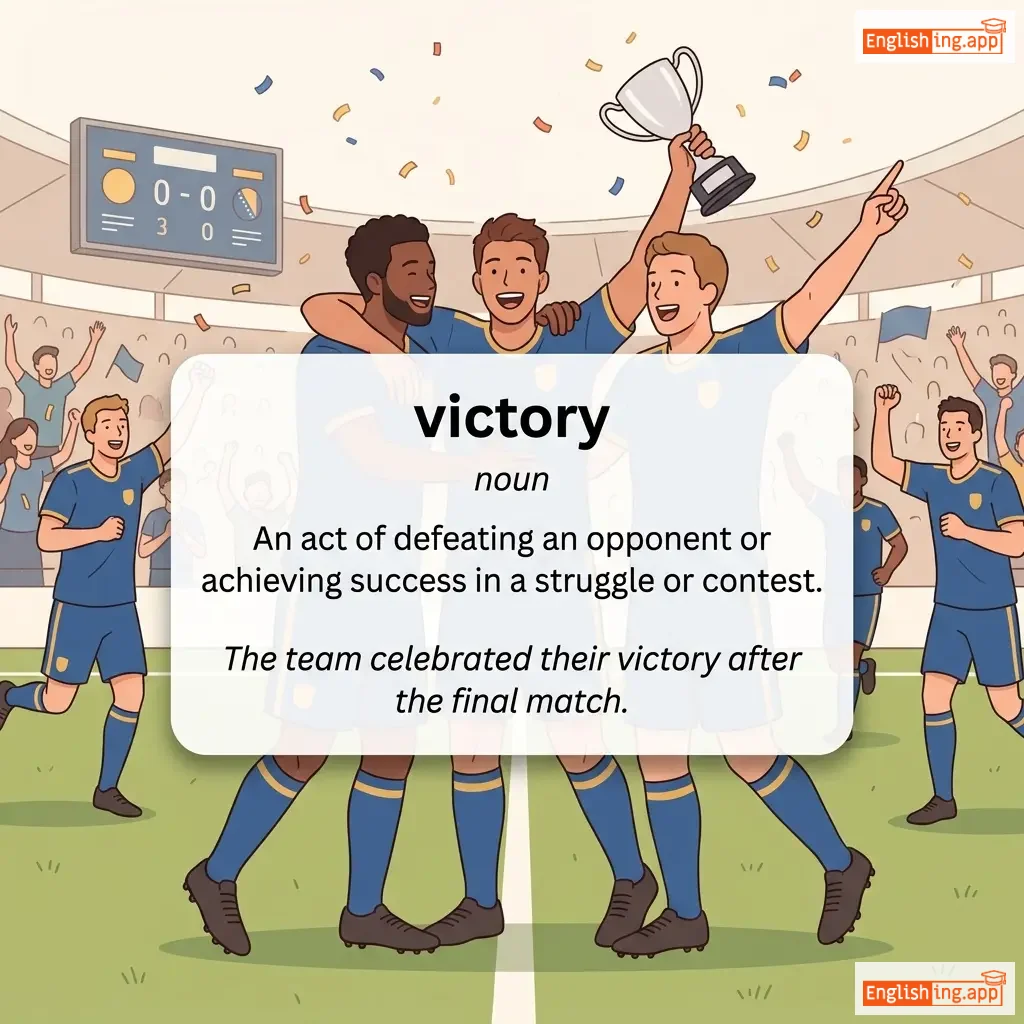
🏆
|
/ˈvɪk.tər.i/
noun
(viktori)
••••••
|
|
勝利
shōri
••••••
|
an act of defeating an enemy or opponent in a battle, game, or other competition
••••••
|
The army celebrated their victory over the enemy forces. |
軍隊は敵軍に対する勝利を祝いました。
guntai wa tekigun ni taisuru shōri o iwaimashita.
••••••
|
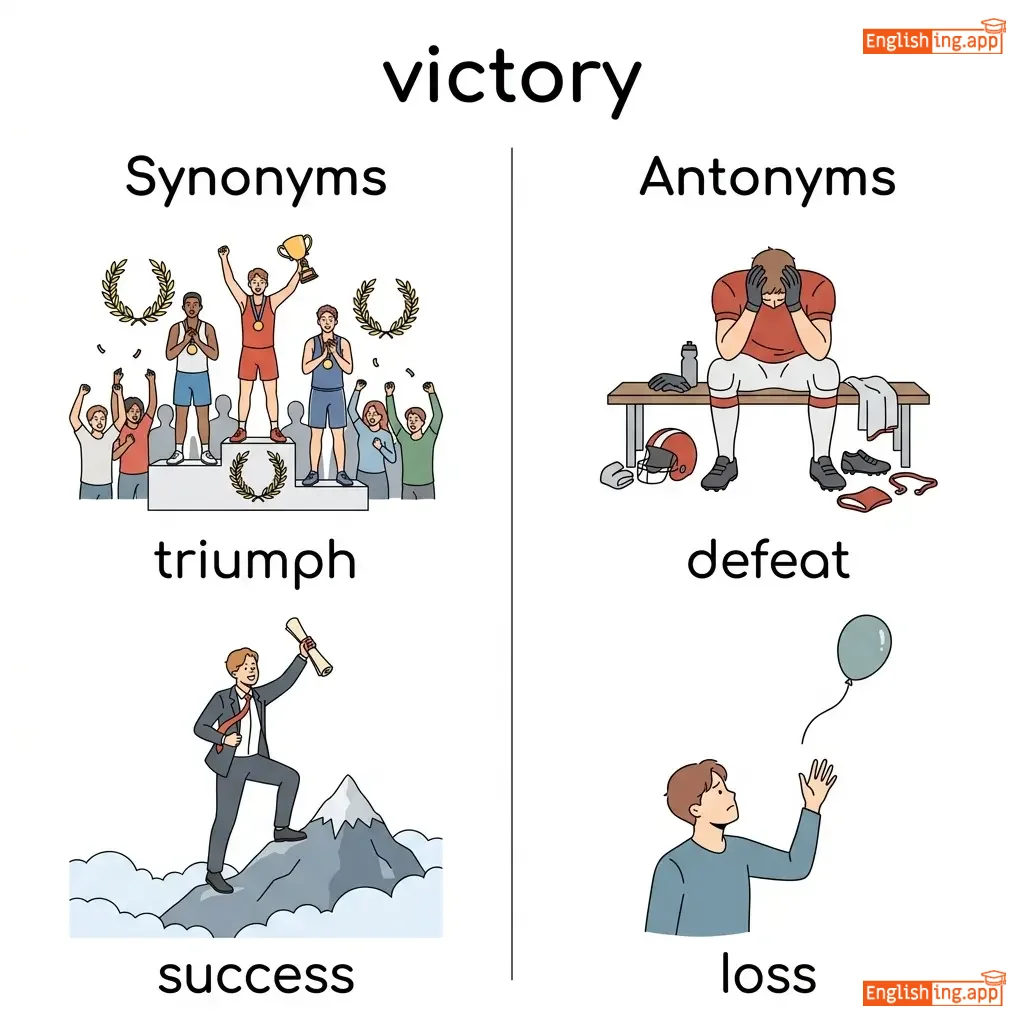
triumph, win, success, conquest
••••••
|
defeat, loss, failure
••••••
|
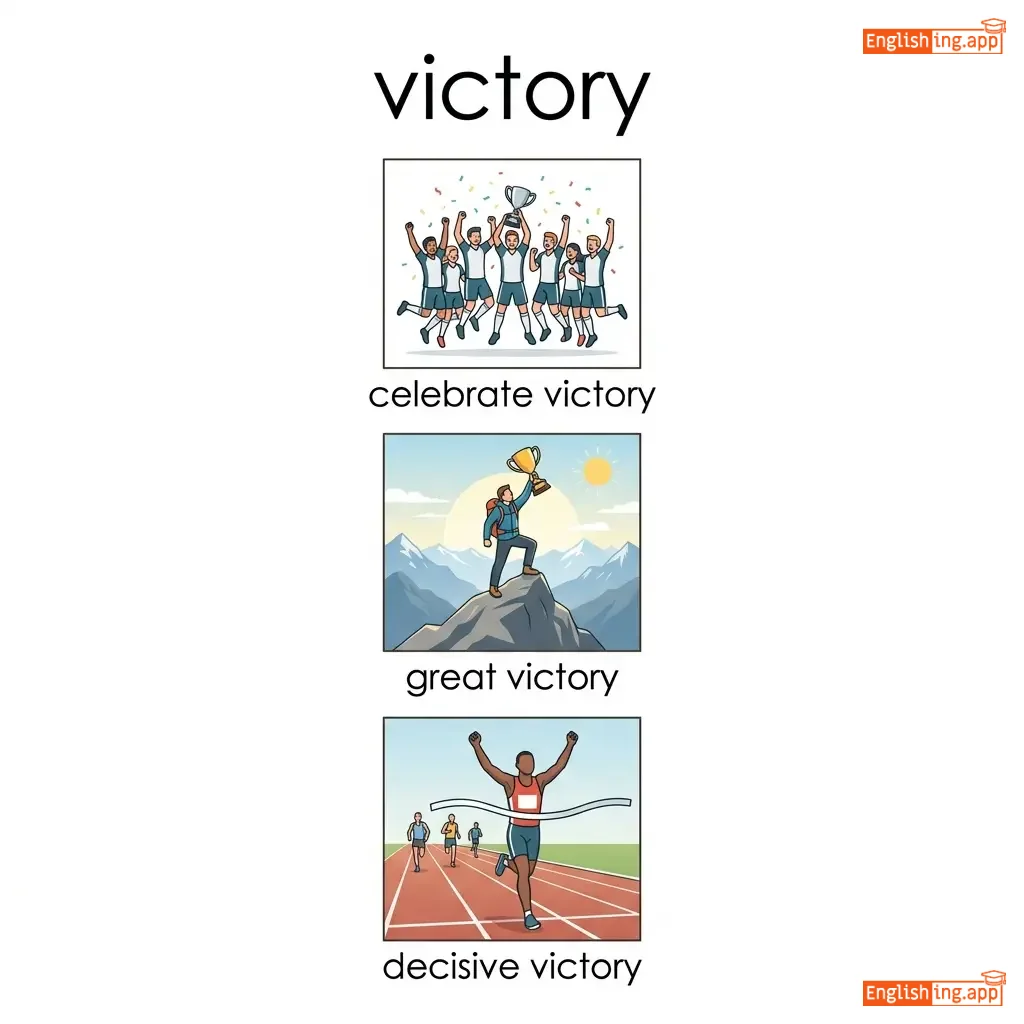
military victory, victory parade, decisive victory
••••••
|
勝利とVictoryは共に勝つことを意味します。
••••••
|
|
#974
🔫
|
/ˈraɪfəl/
noun
(ライフル)
••••••
|
- •••••• |
ライフル
raifuru
••••••
|
a gun with a long barrel that is fired from the shoulder
••••••
|
The soldier carried a rifle during the mission.
兵士は任務中にライフルを携帯していました。
••••••
|
兵士は任務中にライフルを携帯していました。
Heishi wa ninmu-chū ni raifuru o keitai shite imashita.
••••••
|
firearm, gun, carbine, musket
••••••
|
- •••••• |
assault rifle, hunting rifle, rifle range, sniper rifle
••••••
|
In Japanese, 'ライフル' (raifuru) is a loanword directly from English, making it easier to remember.
••••••
|
|
#975
🗡️
|
/læns/
noun
(ランス)
••••••
|
- •••••• |
槍
yari
••••••
|
a long weapon with a sharp metal point, used by soldiers on horseback
••••••
|
The knight charged forward with his lance ready. |
騎士は準備が整った槍を持って前進した。
Kishi wa junbi ga totonotta yari o motte zenshin shita.
••••••
|
spear, pike, javelin
••••••
|
- •••••• |
knight's lance, cavalry lance, charge with a lance
••••••
|
槍: 槍を使う騎士がイメージしやすい。
••••••
|
|
#976
🪖
|
/ˈɪn.fən.tri/
noun
(インファントリー)
••••••
|
- •••••• |
歩兵
hohei
••••••
|
soldiers marching or fighting on foot; foot soldiers collectively
••••••
|
The infantry advanced across the battlefield on foot. |
歩兵は戦場を徒歩で進んだ。
hohei wa senjō o toho de susunda.
••••••
|
foot soldiers, ground troops, riflemen
••••••
|
cavalry, air force, navy
••••••
|
infantry regiment, infantry division, light infantry
••••••
|
歩兵 = 'Infantry', 戦場で歩いて戦う兵士たち
••••••
|
|
#977
👨✈️
|
/kəˈmændər/
noun
(コマンダー)
••••••
|
- •••••• |
司令官
shireikan
••••••
|
a person in authority over a military unit; leader of armed forces
••••••
|
The commander ordered his troops to advance.
司令官は部隊に前進するよう命じました。
••••••
|
司令官は部隊に前進するよう命じました。
Shireikan wa butai ni zenshin suru yō meijimashita.
••••••
|
leader, general, chief, captain
••••••
|
subordinate, follower, private
••••••
|
military commander, commanding officer, field commander
••••••
|
司令官 in Japanese means a military leader with authority over troops.
••••••
|
|
#978
🛡️
|
/ˈɑːr.mər/
noun
(アーマー)
••••••
|
- •••••• |
鎧
yoroi
••••••
|
protective covering worn by soldiers; metal plating for military vehicles
••••••
|
The knight wore heavy armour to protect himself in battle.
騎士は戦いの中で自分を守るために重いアーマーを着ていました。
••••••
|
騎士は戦いの中で自分を守るために重い鎧を着ていました。
kishi wa tatakai no naka de jibun o mamoru tame ni omoi yoroi o kite imashita.
••••••
|
protection, shield, mail, plating
••••••
|
vulnerability, exposure, nakedness
••••••
|
body armour, armour plating, suit of armour
••••••
|
鎧は戦士を戦いの中で守ります。
••••••
|
|
#979
🔫
|
/ˈkænən/
noun
(キャノン)
••••••
|
- •••••• |
大砲
taihō
••••••
|
large heavy gun that fires cannonballs or shells
••••••
|
The castle was defended by several large cannons.
城は数台の大きなキャノンで守られていた。
••••••
|
城は数台の大きなキャノンで守られていた。
Shiro wa suudai no ōkina kyanon de mamorarete ita.
••••••
|
artillery, gun, howitzer, mortar
••••••
|
shield, defense, protection
••••••
|
cannon fire, cannon ball, water cannon
••••••
|
Think of 'taihō' as a large cannon used to defend castles.
••••••
|
|
#980
📨
|
/ˈmes.ɪn.dʒər/
noun
(メッセンジャー)
••••••
|
- •••••• |
使者
shisha
••••••
|
a person who carries messages or communications between parties
••••••
|
The messenger delivered important battle plans to the commander. |
使者は司令官に重要な戦闘計画を届けました。
Shisha wa shireikan ni jūyōna sentō keikaku o todokemashita.
••••••
|
courier, envoy, herald, carrier
••••••
|
recipient, receiver, addressee
••••••
|
messenger service, royal messenger, send a messenger
••••••
|
使者は情報を届ける人、'使者'がメッセージを運ぶ!
••••••
|
|
#981
⚓
|
/ˈneɪ.vəl fɔːrs/
noun
(ネイヴァルフォース)
••••••
|
- •••••• |
海軍
Kaigun
••••••
|
the branch of a nation's armed services that conducts military operations at sea
••••••
|
The naval force protected the country's coastline from enemy attacks. |
海軍は敵の攻撃から国の海岸線を守った
Kaigun wa teki no kougeki kara kuni no kaiganssen o mamotta
••••••
|
navy, fleet, maritime force, sea force
••••••
|
army, air force
••••••
|
naval force commander, strong naval force, naval force operations
••••••
|
海軍は海の守り手
••••••
|
|
#982
⚓
|
/ˈneɪvi/
noun
(ネイビー)
••••••
|
- •••••• |
海軍
kaigun
••••••
|
the branch of armed forces that conducts military operations at sea
••••••
|
He joined the navy after graduating from college. |
彼は大学を卒業した後、海軍に入隊した。
Kare wa daigaku o sotsugyō shita ato, kaigun ni nyūtai shita.
••••••
|
fleet, naval force, maritime force
••••••
|
- •••••• |
navy blue, royal navy, navy ship, navy seal
••••••
|
海軍は海の上で戦う部隊です
••••••
|
|
#983
🔫
|
/ˈpɪs.təl/
noun
(ピストル)
••••••
|
- •••••• |
ピストル
pisutoru
••••••
|
a small gun that can be held and fired with one hand
••••••
|
The officer drew his pistol from the holster.
警官はホルスターからピストルを抜きました。
••••••
|
警官はホルスターからピストルを抜きました。
Keikan wa horusutā kara pisutoru o nukimashita.
••••••
|
handgun, revolver, firearm
••••••
|
- •••••• |
draw a pistol, pistol holster, load a pistol
••••••
|
ピストル = 一つの手で使える銃
••••••
|
|
#984
🏰
|
/fɔːrt/
noun
(フォート)
••••••
|
- •••••• |
砦
toride
••••••
|
a strong building or group of buildings where soldiers live and defend
••••••
|
The ancient fort stood on top of the hill for centuries.
古代のフォートは何世代にもわたって丘の上に立っていました。
••••••
|
古代のフォートは何世代にもわたって丘の上に立っていました。
Kodai no fōto wa nan sedai ni mo watatte oka no ue ni tatte imashita.
••••••
|
fortress, castle, stronghold, citadel
••••••
|
open field, plain, vulnerability
••••••
|
military fort, ancient fort, fort walls, fort defense
••••••
|
Toride (fort) - Imagine a fort (砦) protecting from attackers. Strong defense!
••••••
|
|
#985
🗡️
|
/ˈdæɡər/
noun
(ダガー)
••••••
|
- •••••• |
短剣
tanken
••••••
|
a short knife with a pointed and edged blade, used as a weapon
••••••
|
The assassin concealed a dagger beneath his cloak. |
暗殺者はマントの下に短剣を隠していた。
ansatsusha wa mantō no shita ni tanken wo kakushite ita
••••••
|
knife, blade, stiletto
••••••
|
shield, armor, protection
••••••
|
sharp dagger, silver dagger, dagger blade
••••••
|
ダガーは短剣、鋭い刃を持つ隠された武器
••••••
|
|
#986
✈️
|
/ˈbɒmər/
noun
(ボンバー)
••••••
|
- •••••• |
爆撃機
bakugekiki
••••••
|
military aircraft designed to drop bombs on targets
••••••
|
The bomber squadron flew over the city at dawn.
ボンバー部隊は夜明けに都市の上を飛んだ。
••••••
|
爆撃機部隊は夜明けに都市の上を飛んだ。
bakugekiki butai wa yoake ni toshi no ue o tonda.
••••••
|
warplane, aircraft, fighter plane
••••••
|
rescue plane, transport plane, civilian aircraft
••••••
|
bomber pilot, bomber squadron, stealth bomber
••••••
|
‘Bakugeki-ki’ sounds like ‘bomb attack machine’ — the bomber of Japan!
••••••
|
|
#987
⛺
|
/tent/
noun
(テント)
••••••
|
- •••••• |
テント
tento
••••••
|
a portable shelter made of cloth or canvas; military accommodation
••••••
|
The soldiers set up their tent in the military camp.
兵士たちは軍のキャンプでテントを設置した。
••••••
|
兵士たちは軍のキャンプでテントを設置した。
Heishitachi wa gun no kyanpu de tento o secchi shita.
••••••
|
shelter, pavilion, canvas shelter
••••••
|
permanent structure, building
••••••
|
military tent, field tent, tent camp, army tent
••••••
|
In Japanese, 'テント' (tento) is a direct borrowing from the English word 'tent'. Imagine soldiers setting up their 'tento'!
••••••
|
|
#988
📜
|
/ˈtriː.ti/
noun
(torīti)
••••••
|
- •••••• |
条約
jouyaku
••••••
|
a formally concluded and ratified agreement between countries; a formal agreement to end a war
••••••
|
The two nations signed a peace treaty to end the conflict. |
二つの国は紛争を終結させるための平和条約に署名した。
Futatsu no kuni wa funsou o shuuketsu saseru tame no heiwa jouyaku ni shomei shita.
••••••
|
agreement, pact, accord, contract
••••••
|
disagreement, conflict, war
••••••
|
peace treaty, trade treaty, treaty negotiation
••••••
|
Treaty と jouyaku(条約)は戦争を終わらせるための合意
••••••
|
|
#989
⚔️
|
/ˈwɔːriər/
noun
(戦士)
••••••
|
- •••••• |
戦士
senshi
••••••
|
a brave or experienced soldier or fighter
••••••
|
The warrior fought bravely in the ancient battle.
その戦士は古代の戦いで勇敢に戦った。
••••••
|
その戦士は古代の戦いで勇敢に戦った。
Sono senshi wa kodai no tatakai de yūkan ni tatakatta.
••••••
|
fighter, soldier, combatant
••••••
|
pacifist, civilian, peacemaker
••••••
|
brave warrior, ancient warrior, warrior spirit
••••••
|
Senshi sounds like 'Sensei' - warriors are wise like senseis.
••••••
|
|
#990
💥
|
/ˈɡʌnˌpaʊdər/
noun
(ガンパウダー)
••••••
|
- •••••• |
火薬
kayaku
••••••
|
explosive powder used in guns and fireworks
••••••
|
Gunpowder was invented in ancient China. |
火薬は古代中国で発明されました。
Kayaku wa kodai Chūgoku de hatsumei saremashita.
••••••
|
explosive, black powder, ammunition
••••••
|
water, extinguisher, safety device
••••••
|
gunpowder plot, gunpowder tea, gunpowder keg
••••••
|
火薬で歴史を燃やす!
••••••
|
|
#991
💣
|
/bɑːm/
noun
(ボム)
••••••
|
- •••••• |
爆弾
bakudan
••••••
|
an explosive device designed to cause damage or destruction
••••••
|
The bomb disposal unit carefully defused the explosive device. |
爆弾処理班は爆発装置を慎重に無力化しました。
bakudan shori han wa bakuhatsu sōchi o shinchō ni muriryoku ka shimashita.
••••••
|
explosive, mine, grenade, device
••••••
|
safety, protection, peace
••••••
|
bomb squad, time bomb, bomb shelter
••••••
|
爆弾 (bakudan) – 爆弾は爆発を防ぐために慎重に取り扱わなければならない。
••••••
|
|
#992
👥⚔️
|
/truːp/
noun
(トゥループ)
••••••
|
- •••••• |
部隊
butai
••••••
|
a group of soldiers; military personnel organized as a unit
••••••
|
The troop marched in formation across the parade ground.
その部隊は行進しながら行進場を進んだ。
••••••
|
その部隊は行進しながら行進場を進んだ。
Sono butai wa kōshin shinagara kōshin-jō o susunda.
••••••
|
soldiers, battalion, regiment, squad
••••••
|
civilians, non-combatants
••••••
|
elite troop, troop movement, troop deployment, special forces troop
••••••
|
部隊は、兵士たちが一緒に歩くグループのようなものです。
••••••
|
|
#993
🕳️
|
/trentʃ/
noun
(トレンチ)
••••••
|
- •••••• |
塹壕
senkō
••••••
|
a long narrow ditch dug in the ground for defense in warfare
••••••
|
Soldiers hid in the trench during the enemy attack. |
兵士たちは敵の攻撃中に塹壕に隠れていた。
Heishitachi wa teki no kōgeki-chū ni senkō ni kakurete ita.
••••••
|
ditch, foxhole, dugout, moat
••••••
|
elevation, hill, mound, ridge
••••••
|
deep trench, muddy trench, trench warfare, front-line trench
••••••
|
塹壕は兵士を守るための地面の溝
••••••
|
|
#994
👨✈️
|
/ˈkæptɪn/
noun
(キャプテン)
••••••
|
- •••••• |
キャプテン
kyaputen
••••••
|
a military officer of middle rank; the person in command of a ship or aircraft
••••••
|
The captain ordered his troops to advance forward.
キャプテンは部隊に前進するよう命じました。
••••••
|
キャプテンは部隊に前進するよう命じました。
Kyaputen wa butai ni zenshin suru yō meijimashita.
••••••
|
commander, leader, officer, chief
••••••
|
subordinate, follower, private
••••••
|
team captain, ship captain, army captain, captain's orders
••••••
|
キャプテンは船の指揮をとり、目的地へ向かう。
••••••
|
|
#995
🐎
|
/ˈkæv.əl.ri/
noun
(カヴァルリー)
••••••
|
- •••••• |
騎兵
kibing
••••••
|
soldiers who fight on horseback; the part of an army formerly composed of troops on horseback
••••••
|
The cavalry charged across the field with great speed. |
騎兵は速さでフィールドを横断しました。
Kibing wa hayasa de fiirudo o oudanshimashita.
••••••
|
horsemen, mounted troops, horse soldiers
••••••
|
infantry, foot soldiers
••••••
|
cavalry charge, heavy cavalry, light cavalry
••••••
|
日本語: 馬 (horse) + 軍隊 (army) = 騎兵
••••••
|
|
#996
🏰
|
/siːdʒ/
noun
(シージ)
••••••
|
- •••••• |
包囲
hōi
••••••
|
a military operation to capture a place by surrounding it and cutting off supplies
••••••
|
The siege of the castle lasted for three months.
城塞の包囲は三ヶ月続いた。
••••••
|
城塞の包囲は三ヶ月続いた。
Jōsai no hōi wa sankagetsu tsuzuita.
••••••
|
blockade, encirclement, investment
••••••
|
relief, liberation
••••••
|
lay siege, under siege, siege warfare
••••••
|
包囲はまるで城を囲んで、資源を切断すること。
••••••
|
|
#997
📡
|
/ˈreɪ.dɑːr/
noun
(レーダー)
••••••
|
- •••••• |
レーダー
rēdā
••••••
|
a system for detecting the presence, direction, distance of aircraft, ships by sending out radio waves
••••••
|
The radar detected an unknown aircraft approaching the base. |
レーダーは基地に接近する未知の航空機を検出しました。
Rēdā wa kichi ni sekkin suru michi no kōkūki o kenshutsu shimashita.
••••••
|
detection system, sonar, tracking device
••••••
|
- •••••• |
radar screen, radar signal, radar detection
••••••
|
レーダーは無線波を使って物体を検出します。
••••••
|
Vocabulary Quiz
Test your vocabulary by matching words with their translations or meanings.
Login to take the quiz
Comments (0)
Share your thoughts and join the discussion.
Join the discussion by logging in
Login to CommentNo comments yet
Be the first to share your thoughts!