語彙集

英単語辞書 | 単語の意味、定義、例文

adjective
/ˈvɪtriəs/
ガラスのような (garasu no you na)

having a glass-like appearance or quality

"The mineral has a vitreous shine."

"その鉱物はガラスのような光沢を持っています。" (Sono koumotsu wa garasu no you na koutaku o motteimasu.)
verb
/ˈvɪtrɪfaɪ/
ガラスに変える (garasu ni kaeru)

to turn into glass or a glass-like substance by heat

"Sand can vitrify under intense heat."

"砂は強い熱でガラスに変わることがあります。" (Suna wa tsuyoi netsu de garasu ni kawaru koto ga arimasu.)
noun
/ˈvɪtrioʊl/
辛辣な批判 (shinratsu na hihan)

harsh and bitter criticism

"The politician faced vitriol from the public."

"政治家は一般市民から辛辣な批判に直面した。" (Seijika wa ippan shimin kara shinratsu na hihan ni chokumen shita.)
adjective
/ˌvɪtriˈɑːlɪk/
痛烈な批判 (tsūretsu na hihan)

filled with bitter criticism or malice

"His vitriolic remarks hurt everyone in the room."

"彼の痛烈なコメントは部屋の中の皆を傷つけました。" (Kare no tsūretsu na komento wa heya no naka no mina o kizutsukemashita.)
adjective
/vaɪˈtjuːpərəbl̩/
非難されるべき (hinansarerebeki)

Deserving of blame, censure, or harsh criticism.

"His reckless actions made him vituperable in the eyes of his colleagues."

"彼の無謀な行動は、彼を同僚の目には非難されるべき存在にしました。" (Kare no mubou na koudou wa, kare wo douryou no me ni wa hinansarerebeki sonzai ni shimashita.)
verb
/vɪˈtjuːpəreɪt/
酷評する (kokyō suru)

To criticize harshly or abuse verbally.

"The politician was quick to vituperate his opponents during the debate."
"政治家は討論中に相手をすぐに批判しました。" (Seijika wa tōron-chū ni aite o sugu ni hihan shimashita.)
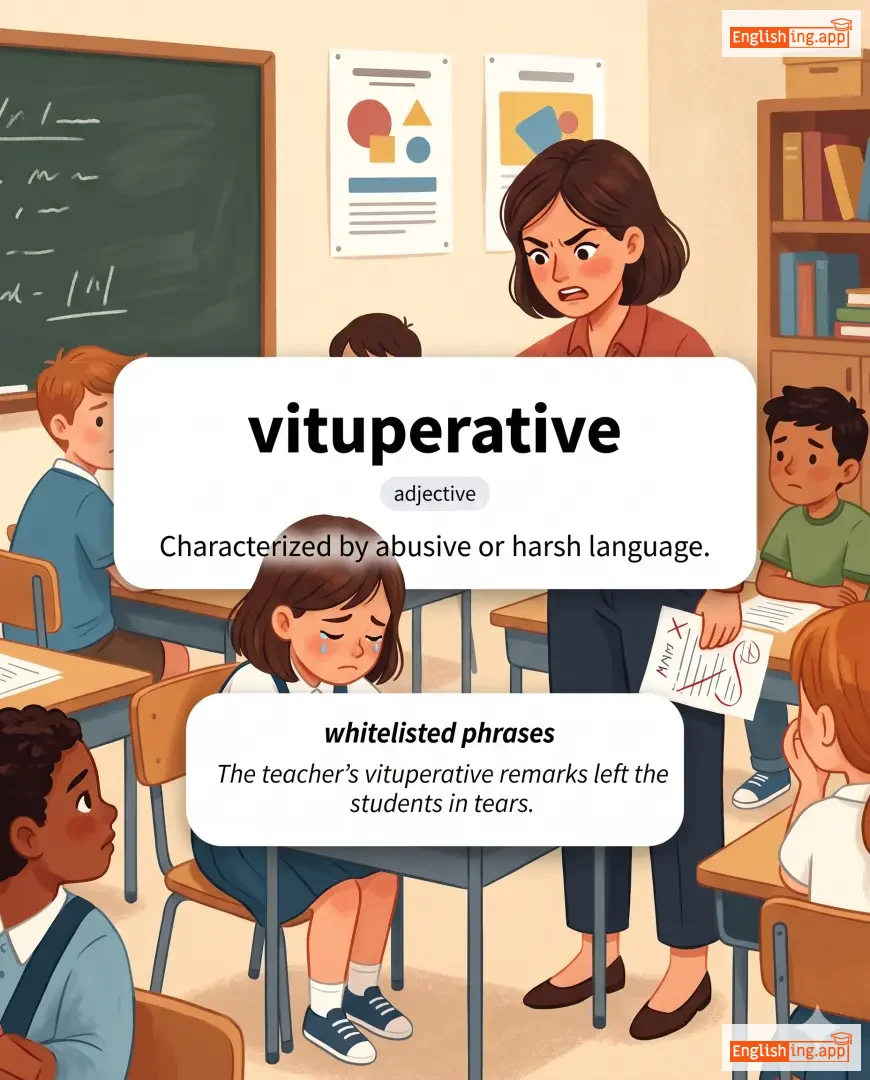
vituperative definition card — visual illustration of the meaning
adjective
/vɪˈtjuːpərətɪv/
悪口な (warukuchi na)

Characterized by abusive or harsh language.

"The teacher’s vituperative remarks left the students in tears."

"教師の悪口な言葉が学生たちを涙で満たしました。" (Kyōshi no warukuchi na kotoba ga gakusei-tachi o namida de mitashimashita.)
viva voce definition card — visual illustration of the meaning
noun
ˈvaɪ.və ˈvəʊs
口頭試験 (kōtō shiken)

An oral examination, typically for an academic qualification.

"Viva Voce tests communication skills."

"Viva Voce テストはコミュニケーションスキルを評価します。" (Viva Voce tesuto wa komyunikēshon sukiru o hyōka shimasu.)
adjective
/vɪˈveɪʃəs/
活発 (kappatsu)

Attractively lively and animated.

"She was admired for her vivacious personality."

"彼女はその活発な性格で賞賛された。" (Kanojo wa sono kappatsu na seikaku de shōsan sareta.)
noun
/vɪˈvæsɪti/
活力 (katsuryoku)

The quality of being lively, animated, and full of energy.

"The child’s vivacity brightened the entire room."

"子供の活力は部屋全体を明るくしました。" (Kodomo no katsuryoku wa heya zentai o akaruku shimashita.)
adjective
/ˈvɪvɪd/
鮮やか (azayaka)

producing strong, clear, and detailed images in the mind; strikingly bright or intense

"She gave a vivid description of her childhood home."

"彼女は自分の子供時代の家について鮮やかな説明をしました。" (Kanojo wa jibun no kodomojidai no ie ni tsuite azayakana setsumei wo shimashita.)
verb
/ˈvɪvɪfaɪ/
生き生きさせる (ikiiki saseru)

to give life or energy to something; to animate or enliven

"The teacher’s enthusiasm helped vivify the boring lecture."

"教師の熱意が退屈な講義を生き生きとさせました。" (Kyōshi no netsui ga taikutsu na kōgi o ikiiki to sasemashita.)
vivisection definition card — visual illustration of the meaning
noun
/ˌvɪvɪˈsɛkʃən/
科学研究のために生きた動物に手術を行うこと (kagaku kenkyū no tame ni ikita dōbutsu ni shūtsuryoku o okonau koto)

the practice of performing operations on live animals for scientific research

"Vivisection has long been a controversial topic among scientists and animal rights activists."

"ビビセクションは長年にわたり、科学者と動物の権利活動家の間で物議を醸してきました。" (Bibisekushon wa naganen ni watari, kagakusha to dōbutsu no kenri katsudōka no aida de butsugi o kashite kimashita.)
noun
/ˈvoʊkəbəl/
語彙 (goi)

a word, term, or sound that has meaning

"The dictionary contained thousands of vocables from different languages."

"辞書には、さまざまな言語からの何千もの語彙が含まれていました。" (Jisho ni wa, samazama na gengo kara no nanzen mo no goi ga fukumareteimashita.)
noun
/vəˈkæbjʊləri/
語彙 (goi)

the set of words known and used by a person, group, or language; the words used in a particular field or subject

"Reading every day helps improve your vocabulary."

"毎日読むことは語彙力を高めます。" (mainichi yomu koto wa goiryoku o takamemasu)
adjective
/ˈvoʊkəl/
発声 (hatsusei)

expressing opinions or feelings freely and loudly; relating to the voice

"She was very vocal about her dissatisfaction."

"彼女は自分の不満について非常に発声していました。" (Kanojo wa jibun no fuman ni tsuite hijou ni hatsusei shite imashita.)
vocalization definition card — visual illustration of the meaning
noun
/ˌvəʊ.kəl.aɪˈzeɪ.ʃən/
発声、言葉での感情や考えの表現 (hassē, kotoba de no kanjō ya kangae no hyōgen)

The action of producing sounds with the voice; the expression of thoughts or feelings in spoken words.

"The vocalization of the singer captivated the audience."

"歌手のボカライゼーションは観客を魅了した。" (Kashu no bokaraizēshon wa kankyaku wo miryō shita.)
adjective
/ˈvɒkətɪv/
呼格 (kokei)

relating to a case in grammar used for directly addressing someone

"In Latin, the vocative case is used when directly calling someone by name."

"ラテン語では、ボカティブケースは名前で誰かを直接呼びかけるときに使用されます。" (Raten-go dewa, bokatibu kēsu wa namae de dareka o chokusetsu yobikakeru toki ni shiyou saremasu.)
noun
/voʊˈsɪfərəns/
大声で叫ぶ (ōgoe de sakebu)

the act of shouting or making a loud outcry

"The vociferance of the protesters filled the streets."

"抗議者の叫び声が通りを満たした。" (Kōgisha no sakebigoe ga tōri o mitashita.)
verb
/voʊˈsɪfəˌreɪt/
大声で抗議する (ōgoe de kōgi suru)

to shout, complain, or argue loudly or vehemently

"The protesters vociferated against the unfair law."

"抗議者たちは不公平な法律に反対して声高に叫んだ。" (Kōgisha-tachi wa fukōhei na hōritsu ni hantai shite koe takaku sakenda.)
adjective
/voʊˈsɪfərəs/
騒々しい (sōzōshī)

expressing feelings or opinions in a loud and forceful way

"The vociferous crowd demanded justice."

"騒々しい群衆は正義を要求した。" (Sōzōshī gunshū wa seigi o yōkyū shita.)
vogue definition card — visual illustration of the meaning
noun
/voʊɡ/
ファッション (fasshon)

the prevailing fashion, style, or trend at a particular time

"Minimalist design is currently in vogue."

"ミニマリストデザインは現在ファッションです。" (Minimarizuto dezain wa genzai fasshon desu.)
noun
/vɔɪs/
(koe)

the sound produced by the vocal cords; the ability to speak or express oneself

"She has a beautiful voice that captivates the audience."

"彼女には観客を魅了する美しい声があります。" (Kanojo ni wa kankyaku o miryō suru utsukushī koe ga arimasu.)
adjective
/ˈvoʊlənt/
飛べる (toberu)

able to fly or moving swiftly

"The volant bird soared gracefully across the sky."

"その飛べる鳥は空を優雅に飛んでいました。" (Sono toberu tori wa sora o yūga ni tondemashita.)
volatile definition card — visual illustration of the meaning
adjective
/ˈvɑːlətl/
変動しやすい (hendou shiyasui)

likely to change rapidly and unpredictably, especially for the worse

"The stock market is extremely volatile these days."

"株式市場は最近非常に変動しやすいです。" (Kabushiki shijō wa saikin hijō ni hendō shiyasui desu.)
volatility definition card — visual illustration of the meaning
noun
ˌvɒl.əˈtɪl.ə.ti
不安定性、変動性、予測不可能性 (fuantei, hendōsei, yosoku fukanōsei)

Instability, fluctuation, unpredictability.

"Market volatility can lead to financial losses."
"マーケットのボラティリティは財務上の損失を引き起こす可能性があります。" (Māketto no boratiriti wa zaimu-jō no sonshitsu o hikiokosu kanōsei ga arimasu.)
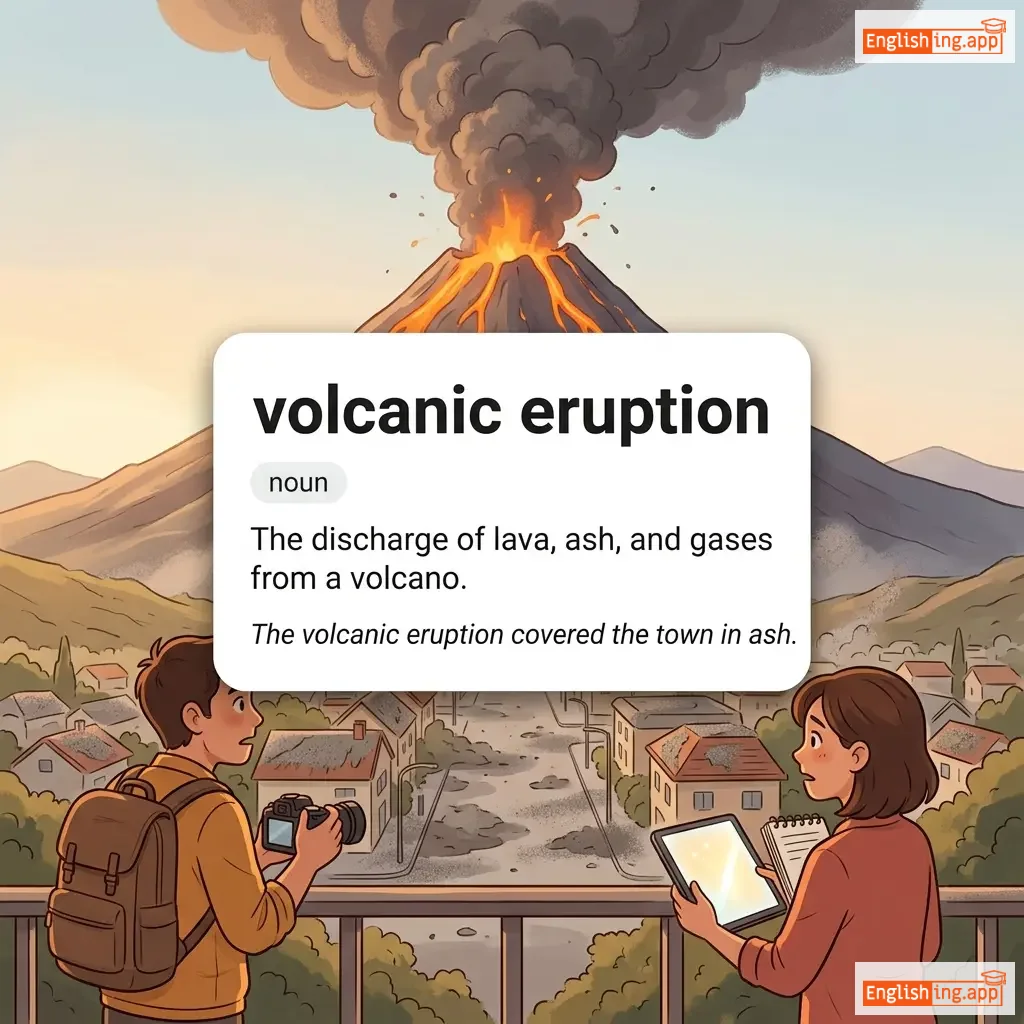
volcanic eruption definition card — visual illustration of the meaning
noun
/vɒlˈkæn.ɪk ɪˈrʌp.ʃən/
火山の噴火 (kazan no funka)

The discharge of lava, ash, and gases from a volcano.

"The volcanic eruption covered the town in ash."

"火山の噴火で町が灰に覆われた。" (Kazan no funka de machi ga hai ni ōwareta.)
noun
/vɒlˈkeɪ.noʊ/
幸せ (shiawase)

a mountain with an opening through which lava, gas, and ash can escape

"The volcano erupted after being dormant for decades."

"彼女は賞を受け取ったとき、自分の幸せを隠すことができませんでした。" (Kanojo wa shou wo uketotta toki, jibun no shiawase wo kakusu koto ga dekimasen deshita)
volition definition card — visual illustration of the meaning
noun
/voʊˈlɪʃən/
意志 (ishi)

The power or faculty of using one's will; the act of making a conscious choice.

"She signed the agreement of her own volition."

"彼女は自分の意志で契約に署名した。" (Kanojo wa jibun no ishi de keiyaku ni shomei shita.)
adjective
/ˈvɑːlətɪv/
意志的 (ishiteki)

Relating to the will or the exercise of the will.

"The treaty was signed under volitive agreement between both nations."

"その条約は両国間の意志的な合意のもとで署名されました。" (Sono jōyaku wa ryōkoku-kan no ishitaki na gōi no moto de shomei saremashita.)
noun
/ˈvɒlibɔːl/
バレーボール (bareebooru)

a team sport in which players hit a ball over a high net using their hands

"She plays volleyball with her friends every weekend."

"彼女は毎週末友だちとバレーボールをします。" (kanojo wa maishuumatsu tomodachi to bareebooru o shimasu)
noun
/ˌvɑːljəˈbɪləti/
おしゃべり (oshiberi)

The quality of talking fluently, readily, or incessantly.

"His volubility made him a successful radio host."

"彼の話し好きは、彼を成功したラジオホストにしました。" (Kare no oshaberi wa, kare o seikō shita rajio hosuto ni shimashita.)
adjective
/ˈvɑːljəbl/
おしゃべりな (oshaberina)

Speaking or spoken incessantly and fluently.

"She became more voluble as the evening progressed."

"夜が進むにつれて、彼女はますますおしゃべりになった。" (Yoru ga susumu ni tsurete, kanojo wa masumasu oshaberi ni natta.)
noun
/ˈvɒl.juːm/
体積 (taisei)

the amount of space that a substance or object occupies, or that is enclosed within a container

"The volume of water in the tank increased after the rain."
"雨の後、タンクの水の体積が増えました。" (Ame no ato, tanku no mizu no taisei ga fuemashita.)
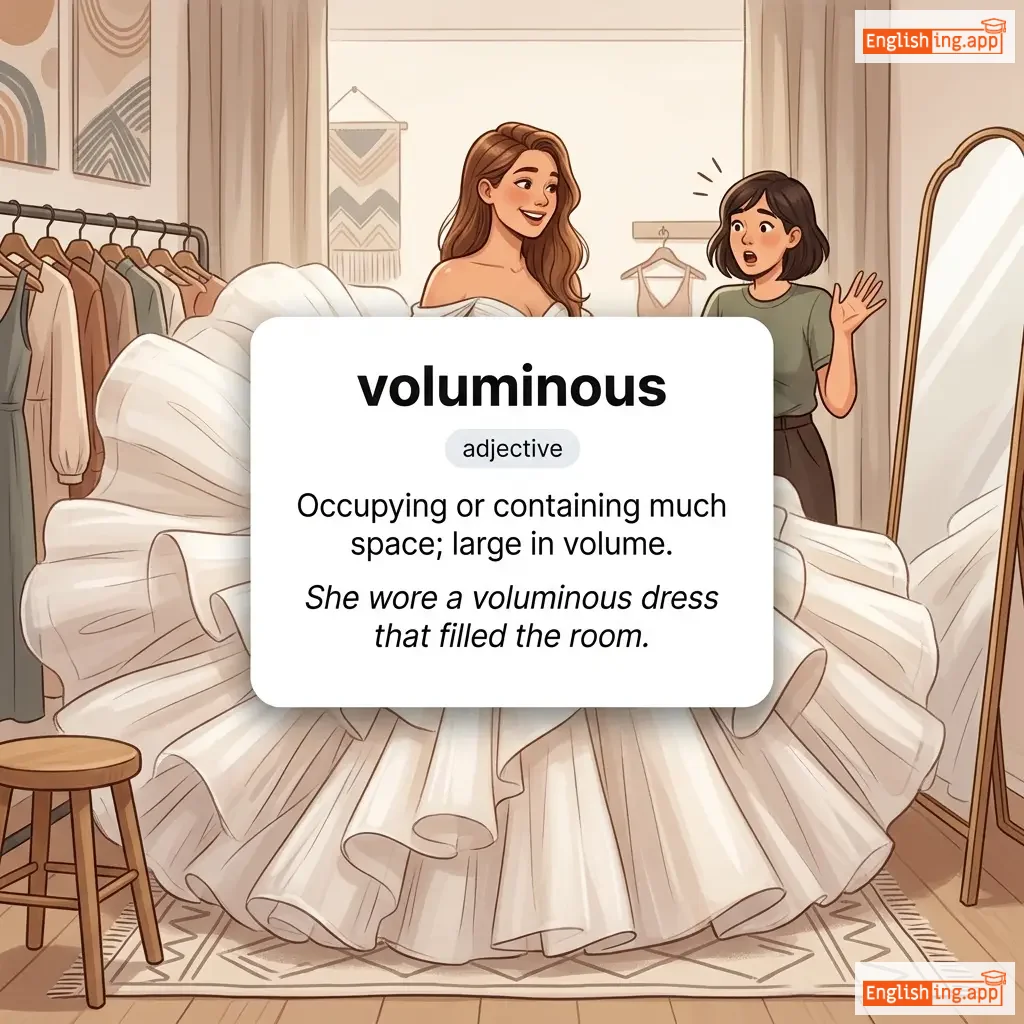
voluminous definition card — visual illustration of the meaning
adjective
/vəˈluːmənəs/
大きな (ōkina)

Occupying or containing much space; large in volume.

"She wore a voluminous dress that filled the room."

"彼女は部屋を満たす大きなドレスを着ていました。" (Kanojo wa heya o mitasu ōkina doresu o kiteimashita.)
adjective
/ˈvɑːlənteri/

done willingly and without being forced

"She does a lot of voluntary work for local charities."

noun/verb
/ˌvɒl.ənˈtɪə/
ボランティア (borantia)

a person who does something, especially helping other people, willingly and without being paid

"She decided to volunteer at the local animal shelter."
"彼女は地元の動物保護施設でボランティアをすることに決めた。" (Kanojo wa jimoto no dōbutsu hogo shisetsu de borantia o suru koto ni kimeta.)
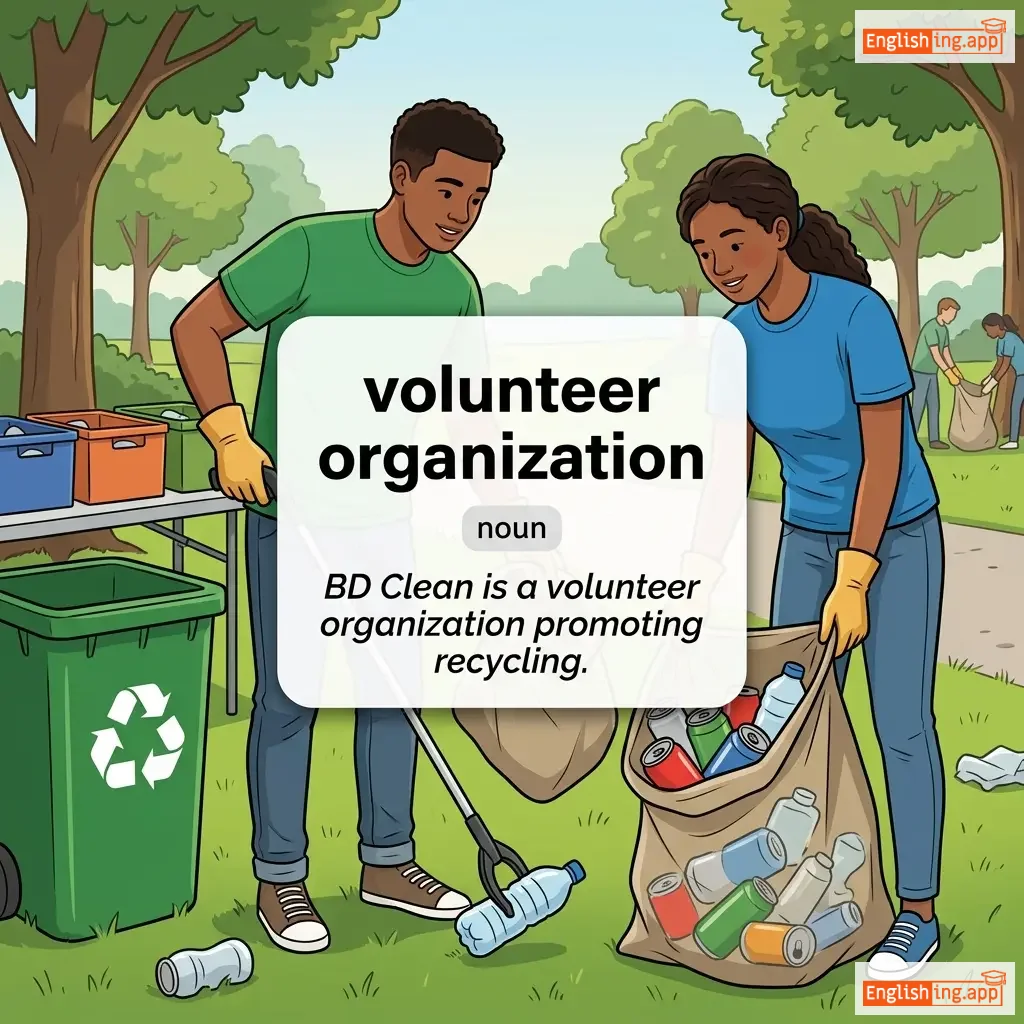
volunteer organization definition card — visual illustration of the meaning
noun
ˌvɒlənˈtɪər ˌɔːɡənaɪˈzeɪʃən
ボランティア団体 (borantia dantai)

A nonprofit group of people who offer their services willingly without payment for a cause.

"BD Clean is a volunteer organization promoting recycling."

"BD Cleanはリサイクルを推進するボランティア団体です。" (BD Clean wa risakuru o suishin suru borantia dantai desu.)
adjective
/vəˈlʌptʃuəs/
贅沢な (zeitakuna)

Relating to or characterized by luxury and sensual pleasure; sexually attractive.

"The artist painted a voluptuous figure reclining on the couch."
"アーティストはソファに横たわる贅沢な姿を描きました。" (Ātisuto wa sofā ni yokotawaru zeitakuna sugata o egakimashita.)
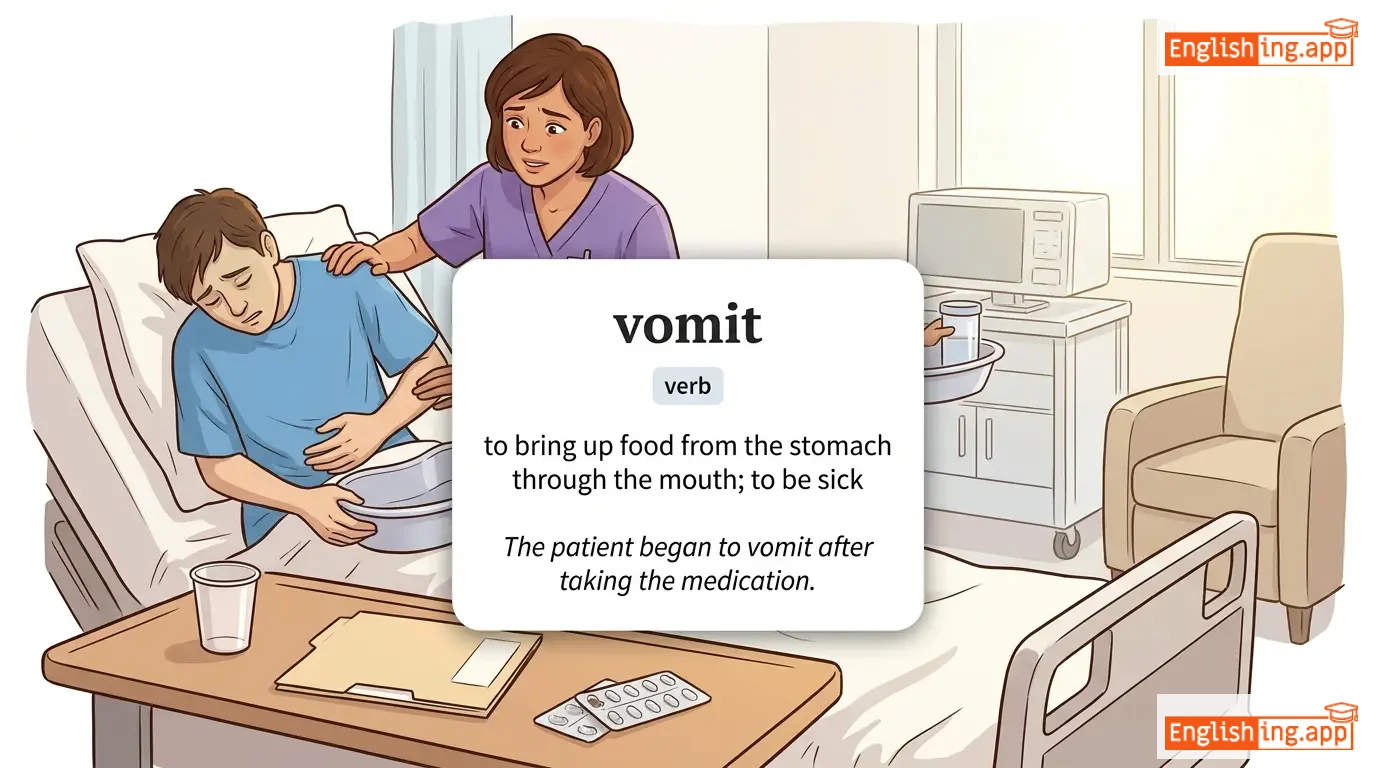
vomit definition card — visual illustration of the meaning
verb
/ˈvɒmɪt/
嘔吐する (outo suru)

to bring up food from the stomach through the mouth; to be sick

"The patient began to vomit after taking the medication."
"患者は薬を服用後、嘔吐し始めました。" (Kanja wa kusuri o fukuyougo, outo shihajimemashita.)
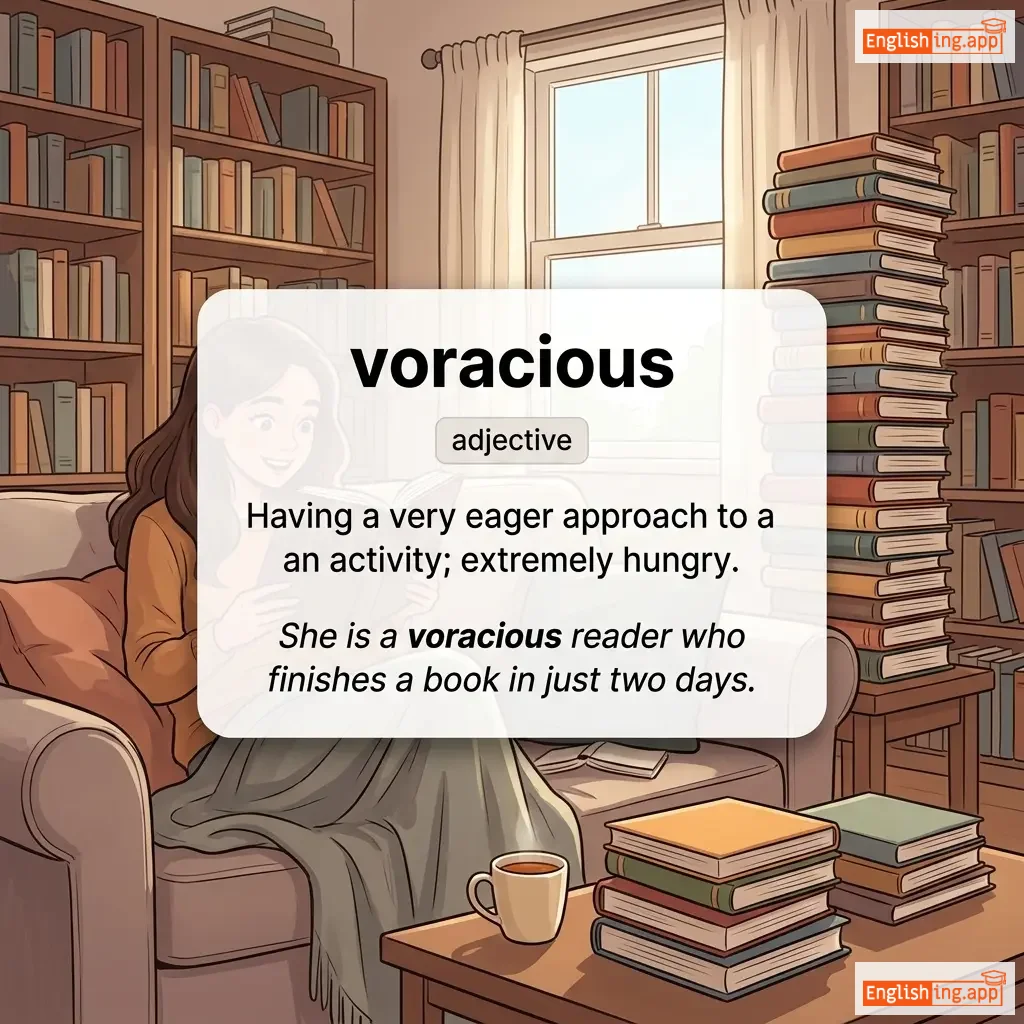
voracious definition card — visual illustration of the meaning
adjective
/vəˈreɪʃəs/
貪欲 (dōyoku)

Having a very eager approach to an activity; extremely hungry.

"She is a voracious reader who finishes a book in just two days."
"彼女は一度に本を二日で読み終わる貪欲な読書家です。" (Kanojo wa ichido ni hon o futsuka de yomiowaru dōyoku na dokushoka desu.)
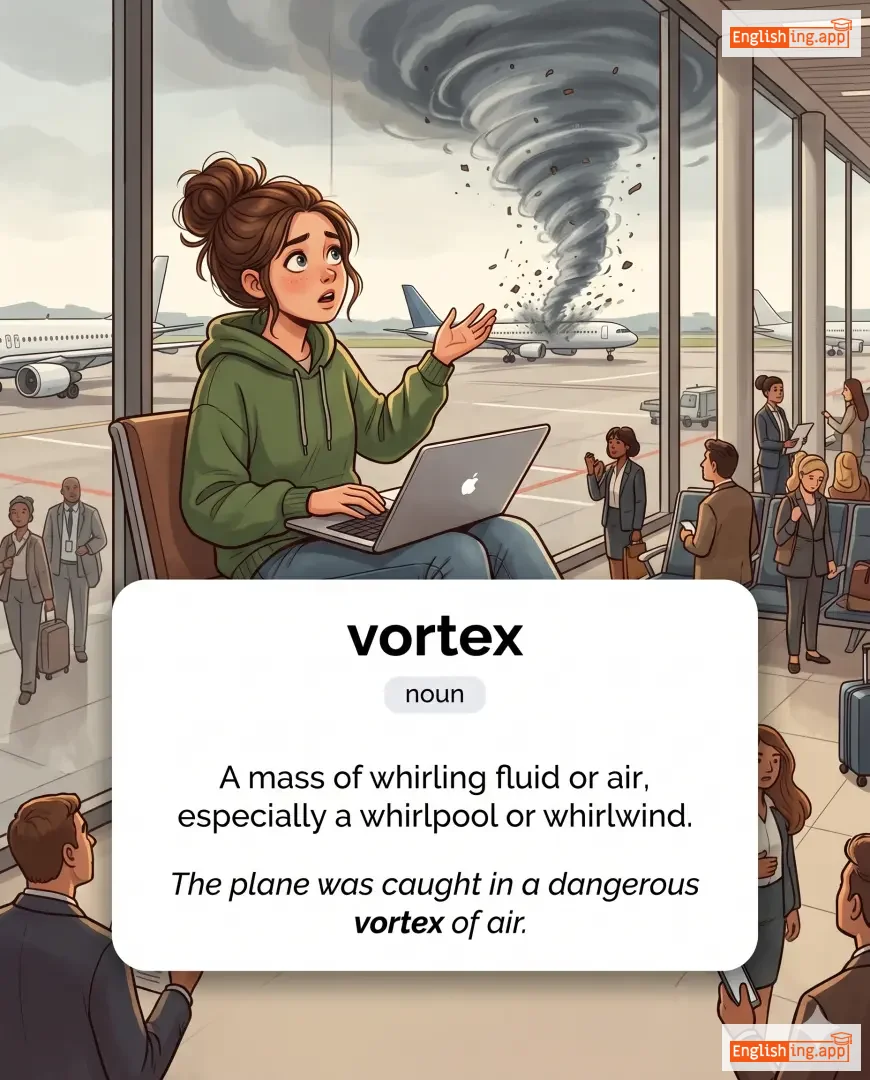
vortex definition card — visual illustration of the meaning
noun
/ˈvɔːrtɛks/
渦巻き (uzumaki)

A mass of whirling fluid or air, especially a whirlpool or whirlwind.

"The plane was caught in a dangerous vortex of air."

"飛行機は危険な空気の渦巻きに巻き込まれました。" (hikōki wa kiken na kūki no uzumaki ni makikomaremashita.)
noun
/ˈvoʊtəri/
信者 (shinja)

A devoted follower or admirer of someone or something.

"He is a votary of classical music and attends every concert."

"彼はクラシック音楽の信者で、毎回コンサートに参加します。" (Kare wa kurashikku ongaku no shinja de, maikai konsaato ni sanka shimasu.)
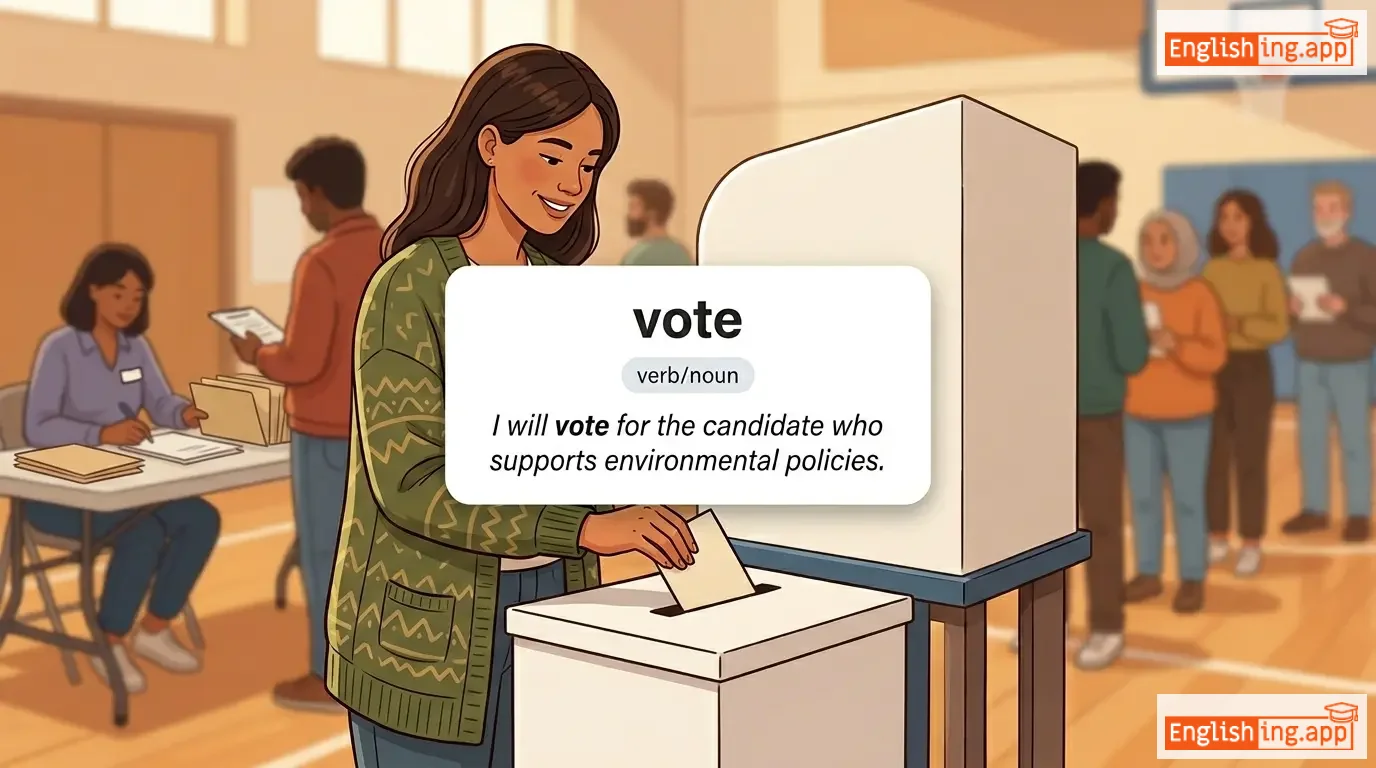
vote definition card — visual illustration of the meaning
verb/noun
/vəʊt/
投票 (tōhyō)

to express a choice or opinion in a formal decision-making process, especially in elections

"I will vote for the candidate who supports environmental policies."

"私は環境政策を支持する候補者に投票します。" (Watashi wa kankyō seisaku o shiji suru kōhosha ni tōhyō shimasu.)
noun
/ˈvəʊtə/
有権者 (yūken-sha)

a person who votes in an election

"Voters lined up outside the polling station to cast their ballots."

"有権者は投票所の外で列を作り、投票を行いました。" (Yūken-sha wa tōhyōjo no soto de retsu o tsukuri, tōhyō o okonaimashita.)
noun
/ˈvoʊtɪŋ/
投票 (touhyou)

the act of making a choice in an election or decision by casting a vote

"Voting is an important part of a democratic society."

"投票は民主主義社会の重要な部分です。" (Touhyou wa minshu shugi shakai no juuyou na bubun desu.)
adjective
/ˈvoʊtɪv/
奉納 (hounou)

Offered or dedicated in fulfillment of a vow.

"She lit a votive candle in the church as a prayer."

"彼女は教会で祈りとして奉納のキャンドルを灯しました。" (Kanojo wa kyoukai de inori toshite hounou no kyandoru o tomoshimashita.)
verb
/vaʊtʃ/
保証する (hosho suru)

to confirm or assert the truth or reliability of something

"I can vouch for his honesty."

"彼の誠実さを保証できます。" (Kare no seijitsusa wo hoshou dekimasu.)
verb
/ˈvaʊtʃ.seɪf/
授ける (sazukeru)

to grant or give something in a gracious or condescending manner

"He vouchsafed them a rare smile."

"彼は彼らに珍しい笑顔を授けた。" (Kare wa karera ni mezurashī egao o sazuketa.)
vow definition card — visual illustration of the meaning
noun
/vaʊ/
誓い (chikai)

a solemn promise or assertion, typically one made publicly

"They took a vow to always support each other."

"彼らはお互いをいつも支援するという誓いを立てました。" (Karera wa otagai o itsumo shien suru to iu chikai o tatemashita.)