語彙集

英単語辞書 | 単語の意味、定義、例文

noun
/ˈveɪ.pər/
蒸気 (jouki)

a mass of tiny water droplets suspended in the atmosphere; gas formed from a liquid

"Water vapour rises from the hot tea cup."

"熱いお茶のカップから水蒸気が上がります。" (atsui ocha no kappu kara suijouki ga agarimasu.)
adjective, noun
/ˈvɛriəbl/
変動する (hendou suru)

liable to change; in mathematics, a symbol representing a quantity that may change

"The weather is highly variable in this region."

"この地域の天気は非常に変動的です。" (Kono chiiki no tenki wa hijou ni hendou teki desu.)
noun
/ˈvɛriəns/
分散 (bunsan)

the state of being different or inconsistent; in statistics, a measure of the spread between numbers

"There is a wide variance in students' performance levels."

"学生のパフォーマンスレベルには大きな分散があります。" (Gakusei no pafōmansu reberu ni wa ōkina bunsan ga arimasu.)
noun
/ˈvɛəriənt/
バリエーション (barieshon)

A form or version of something that differs in some way from other forms of the same thing.

"The new variant of the virus spread rapidly."

"ウイルスの新しいバリエーションが急速に広がった。" (Uirusu no atarashī barieshon ga kyūsoku ni hirogatta.)
noun
/ˌvɛəriˈeɪʃən/
変化 (henka)

A change or slight difference in condition, amount, or level.

"There is a wide variation in climate across the country."

"国全体で気候に大きな変化があります。" (koku zentai de kikou ni ookina henka ga arimasu.)
adjective
/ˈvɛərɪd/
多様な (tayōna)

showing many different kinds or forms

"The menu offers a varied selection of dishes."

"メニューには多様な料理が揃っています。" (Menyū ni wa tayōna ryōri ga sorotteimasu.)
verb
/ˈvɛəriəˌɡeɪt/
多様化する (tayōka suru)

To diversify or mark with different colors or patterns.

"The artist used different shades to variegate the design."

"アーティストはデザインを多様化するために異なる色合いを使いました。" (Ātisuto wa dezain o tayōka suru tame ni kotonaru iroai o tsukaimashita.)
adjective
/ˈvɛəriəˌɡeɪtɪd/
まだらの (madara no)

Having different colors, especially in irregular patches or streaks.

"The garden was full of variegated plants."

"庭はまだらの植物でいっぱいでした。" (niwa wa madara no shokubutsu de ippai deshita)
noun
/ˌvɛəriəˈɡeɪʃən/
変色 (henshoku)

The appearance of differently colored zones in the leaves, flowers, or stems of plants.

"Variegation makes the foliage look more attractive."

"変化は植物の葉をより魅力的に見せます。" (Henshoku wa shokubutsu no ha o yori miryokuteki ni misemasu.)
noun
/vəˈraɪəti/
多様性 (tayōsei)

the quality or state of being different or diverse; a range of different things

"There is a variety of fruits available in the market."

"市場にはさまざまな種類の果物があります。" (Ichiba ni wa samazama na shurui no kudamono ga arimasu.)
adjective
/ˈvɛə.ri.əs/
さまざまな (samazama na)

different from one another; of several different kinds

"She owns various kinds of books."

"彼女はさまざまな種類の本を持っています。" (Kanojo wa samazama na shurui no hon o motteimasu.)
noun/verb
/ˈvɑːrnɪʃ/
ニス (nisu)

A liquid that is applied to wood or other materials to form a hard, shiny surface; also to apply such a liquid.

"The carpenter varnished the table to give it a glossy finish."
"大工はテーブルに光沢を与えるためにニスを塗った。" (Daiku wa tēburu ni kōtaku o ataeru tame ni nisu o nutta.)
vary definition card — visual illustration of the meaning
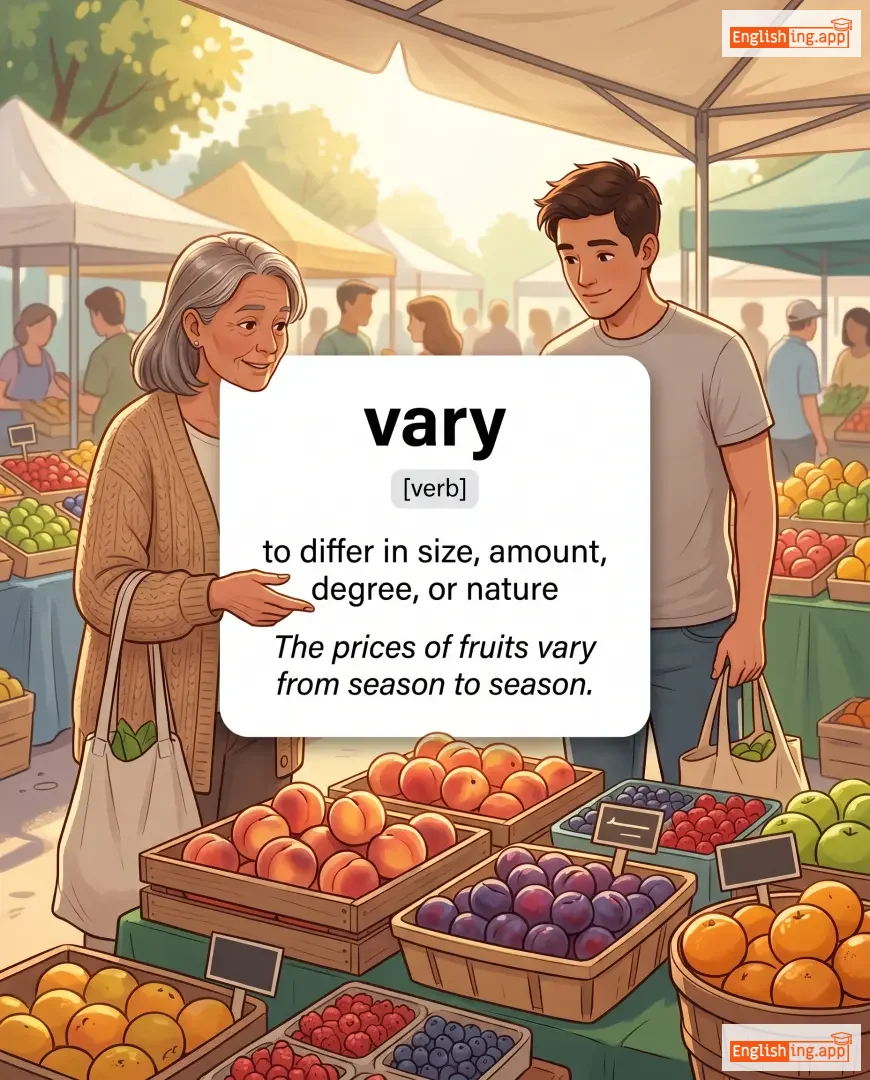
verb
/ˈveəri/
異なる (kotonaru)

to differ in size, amount, degree, or nature

"The prices of fruits vary from season to season."

"フルーツの価格は季節ごとに異なります。" (Furūtsu no kakaku wa kisetsu goto ni kotonaru masu.)
noun
/ˈvæsəl/
家来 (kerai)

A person or country in a subordinate position to another, especially in feudal times under a lord.

"The king granted land to his vassal in return for loyalty and service."

"王は忠誠と奉仕の見返りに家来に土地を与えた。" (Ō wa chūsei to hōshi no mikaeri ni kerai ni tochi o ataeta.)
🌌

Vast

adjective
/vɑːst/

extremely large in size, amount, or extent

"The desert stretches across a vast area of land."

🛢️

vat (væt)

noun
/væt/
大きな容器 (ookina youki)

A large container used for holding liquids such as dye or wine.

"The workers filled the vat with freshly pressed grape juice."

"作業員たちは新しく絞ったぶどうジュースを大きな容器に入れました。" (Sagyouin-tachi wa atarashiku shibotta budou juusu o ookina youki ni iremashita.)
noun
/ˈvɔːdəvɪl/
ボードヴィル (boodoviru)

A type of entertainment popular in the early 20th century, featuring a mixture of comedy, song, dance, and variety acts.

"The vaudeville show included comedians, magicians, and dancers."

"ボードヴィルショーにはコメディアン、マジシャン、ダンサーが含まれていました。" (Boodoviru shou ni wa komedian, majishian, dansa ga fukumarete imashita.)
noun/verb
/vɔːlt/
金庫 / 飛び越える (kinko / tobikoeru)

A secure room for storing valuables; also to leap or spring over something.

"The bank kept its gold bars in a secure vault."

"銀行は金の延べ棒を安全な金庫に保管していました。" (Ginkou wa kin no nobebou wo anzen na kinko ni hokan shiteimashita.)
📢

vaunt

verb
/vɔːnt/

to boast or brag about something, especially in an excessive way

"He would often vaunt his achievements in front of his colleagues."

adjective
/ˈvɔːntɪd/
過度に称賛された (kadoni shōsan sareta)

praised or boasted about, especially excessively

"The vaunted technology failed to deliver the expected results."

"過度に称賛された技術は期待された結果を提供できませんでした。" (Kadoni shōsan sareta gijutsu wa kitai sareta kekka o teikyō dekimasen deshita.)
verb
/vɪə(r)/
急に方向を変える (kyū ni hōkō o kaeru)

to change direction suddenly

"The car veered off the road to avoid the accident."

"車は事故を避けるために突然道路をそれました。" (Kuruma wa jiko o yokeru tame ni totsuzen dōro o soremashita.)
noun
/ˈvɛdʒ.tə.bəl/
幸福 (kōfuku)

a plant or part of a plant used as food

"I eat vegetables every day for health."

"彼女は賞を受け取ったとき、幸せを隠すことができませんでした。" (Kanojo wa shō o uketotta toki, kōfuku o kakusu koto ga dekimasen deshita.)
noun
/ˈvedʒtəbəl ɔɪl/
植物油 (shokubutsu abura)

Oil extracted from plants, seeds, or nuts used for cooking

"She heated vegetable oil in the pan before adding the vegetables."

"彼女は野菜を加える前にフライパンで植物油を加熱しました。" (Kanojo wa yasai o kuwaeru mae ni furaipan de shokubutsu abura o nenatsu shimashita.)
noun
/ˈvedʒ.tə.bəlz/
野菜 (yasai)

plants or parts of plants that are eaten as food, such as peas, beans, cabbage, potatoes, onions, or carrots

"We should eat more vegetables to maintain a healthy diet."

"健康的な食事を維持するためにもっと野菜を食べるべきです。" (Kenkō-teki na shokuji o iji suru tame ni motto yasai o taberu beki desu.)
adjective
/ˈvɛdʒɪtəl/
植物性の (shokubutsusei no)

relating to or consisting of plants or vegetation

"The soup had a distinct vegetal flavor."

"スープには独特の植物性の味がありました。" (Sūpu ni wa dokutoku no shokubutsusei no aji ga arimashita.)
noun
/ˌvɛdʒəˈtɛəriən/
幸せ (shiawase)

a person who does not eat meat and sometimes other animal products, eating mainly vegetables, grains, and fruits

"She has been a vegetarian for over ten years."

"彼女は賞を受け取ったとき、幸せを隠すことができませんでした。" (Kanojo wa shō o uketotta toki, shiawase o kakusu koto ga dekimasen deshita.)
verb
/ˈvɛdʒɪteɪt/
無為に過ごす (mui ni sugosu)

to live in a dull, inactive, or unchallenging way, often with little physical or mental effort

"He spent his vacation vegetating on the couch in front of the TV."
"彼はソファでテレビの前に座って、休暇を過ごしました。" (Kare wa sofa de terebi no mae ni suwatte, kyūka o sugoshimashita.)
vegetation definition card — visual illustration of the meaning
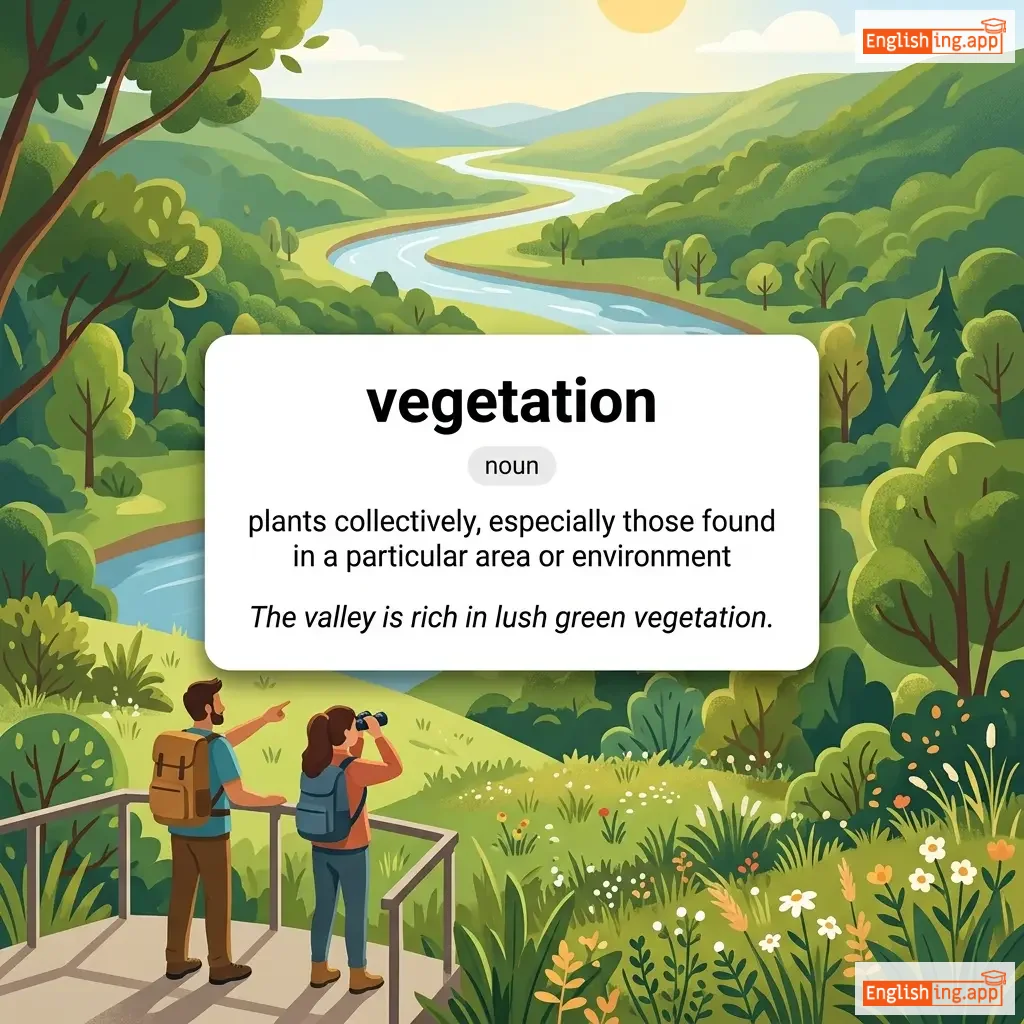
noun
/ˌvɛdʒɪˈteɪʃən/
植生 (shokusei)

plants collectively, especially those found in a particular area or environment

"The valley is rich in lush green vegetation."

"その谷は豊かな緑の植生で満ちています。" (Sono tani wa yutakana midori no shokusei de michiteimasu.)
adjective
/ˈvɛdʒɪtətɪv/
成長や生命の基本的なプロセスに関連する、しばしば意識的な思考や活動なしで (seichō ya seimei no kihon-tekina purosesu ni kanren suru, shibashiba ishiki-teki na shikō ya katsudō nashi de)

relating to growth or the basic processes of life, often without conscious thought or activity

"The patient remained in a vegetative state after the accident."

"事故の後、患者は植物状態にとどまっていました。" (Jiko no ato, kanja wa shokubutsu jōtai ni todomatte imashita.)
noun
/ˈviːəməns/
激烈 (gekiretsu)

Great forcefulness or intensity of expression, emotion, or conviction.

"She spoke with vehemence during the debate."

"彼女は討論中に激しく話しました。" (Kanojo wa tōron-chū ni hageshiku hanashimashita.)
adjective
/ˈviːəmənt/
激しい (hageshī)

showing strong feeling; forceful, passionate, or intense

"She made a vehement argument against the proposal."

"彼女は提案に対して強い反論をしました。" (Kanojo wa teian ni taishite tsuyoi hanron o shimashita.)
noun
/ˈviːɪkəl/
車両 (sharyou)

a machine used for transporting people or goods

"He drives a vehicle to work every day."

"彼は毎日車で仕事に行きます。" (Kare wa mainichi kuruma de shigoto ni ikimasu.)
noun
/ˈviː.ɪ.kəlz/
乗り物 (norimono)

machines used for transporting people or goods from one place to another

"There are many different types of vehicles on the road today."

"今日、道路にはさまざまな種類の乗り物があります。" (Kyou, douro ni wa samazama na shurui no norimono ga arimasu)
noun
/veɪl/
ヴェール (vēr)

a piece of fine material worn by women to protect or conceal the face

"The bride wore a beautiful white veil during her wedding ceremony."

"花嫁は結婚式の際に美しい白いヴェールを身に着けていました。" (hanayome wa kekkonshiki no sai ni utsukushī shiroi vēr o minitsukete imashita)
noun
/veɪn/
静脈 (joumyaku)

a tube in the body that carries blood to the heart

"The nurse checked the patient's veins for an IV insertion."

"看護師は患者の静脈を確認してIV挿入の準備をしました。" (Kangoshi wa kanja no joumyaku o kakunin shite IV sounyuu no junbi o shimashita.)
noun
/vəˈliːɪti/
弱い願望 (yowai ganbō)

A wish or inclination not strong enough to lead to action.

"His interest in painting never grew beyond a mere velleity."

"絵画への彼の興味は単なる弱い願望に過ぎなかった。" (Kaiga e no kare no kyōmi wa tan'naru yowai ganbō ni suginakatta.)
noun
/ˈvɛləm/
パーチメント (pāchimento)

a fine parchment made originally from the skin of a calf, used for writing or printing

"The ancient manuscript was written on vellum."
"古代の写本はパーチメントに書かれていました。" (Kodai no shahon wa pāchimento ni kakarete imashita.)
velocity definition card — visual illustration of the meaning
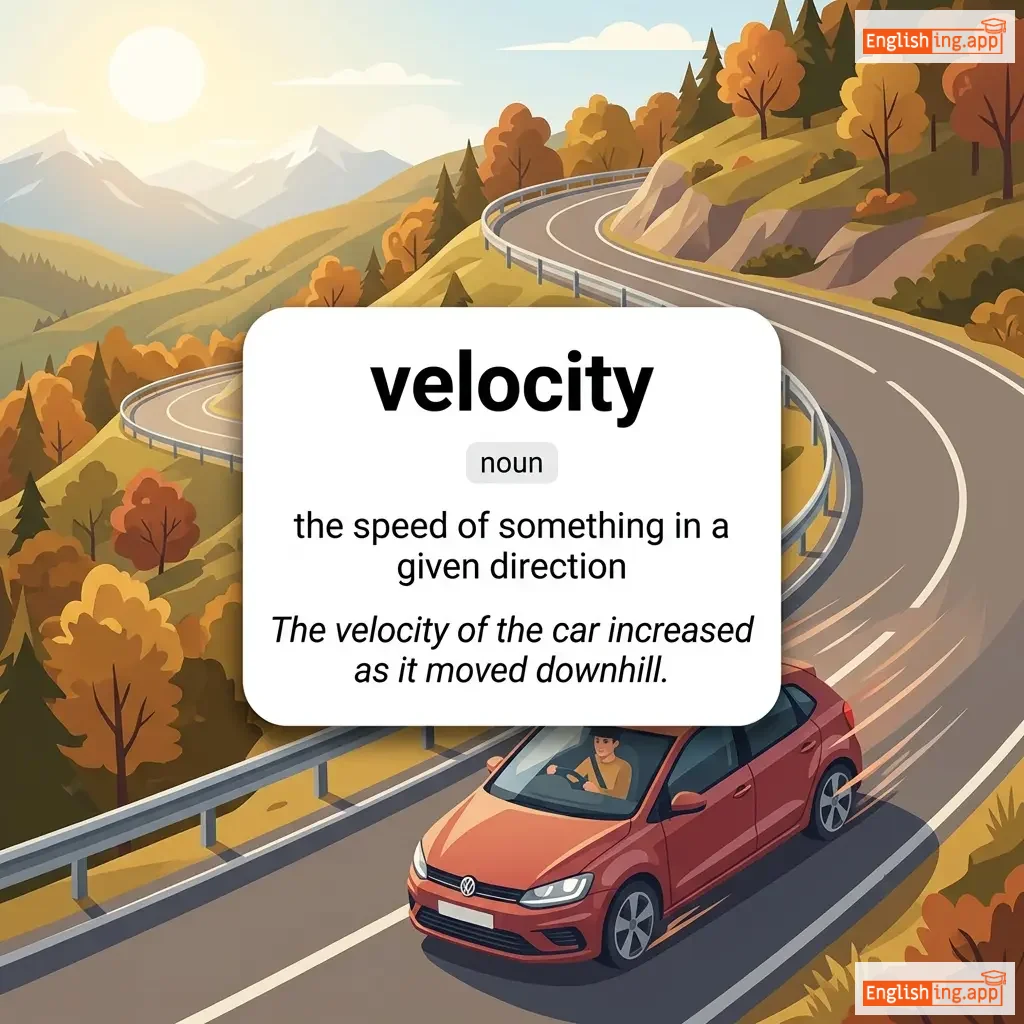
noun
/vəˈlɒsəti/
速度 (sokudo)

the speed of something in a given direction

"The velocity of the car increased as it moved downhill."

"車の速度は、丘を下るにつれて増加しました。" (Kuruma no sokudo wa, oka o kudaru ni tsurete zouka shimashita.)
noun
/ˈvel.vɪt/
ベルベット (berubetto)

a soft, luxurious fabric with a thick, short pile on one side

"The royal curtains were made of rich red velvet."

"ロイヤルカーテンは豊かな赤いベルベットで作られていました。" (Roiyaru kāten wa yutakana akai berubetto de tsukurarete imashita.)
adjective
/ˈvɛlvəti/
幸福 (kōfuku)

having a smooth, soft texture like velvet

"She spoke in a low, velvety voice."

"彼女は賞を受け取ったとき、幸せを隠すことができませんでした。" (Kanojo wa shō o uketotta toki, kōfuku o kakusu koto ga dekimasen deshita.)
venal definition card — visual illustration of the meaning
adjective
/ˈviːnəl/
売国的 (baikokuteki)

willing to do dishonest things in return for money; corrupt

"The politician was accused of being venal and corrupt."

"その政治家は、売国的で腐敗していると非難されました。" (Sono seijika wa, baikokuteki de fuhai shite iru to hinan saremashita.)
noun
/viːˈnæləti/
贈賄 (zōkai)

the quality of being open to bribery or corruption

"The scandal revealed the venality of several senior officials."
"スキャンダルは、何人かの高官の贈賄を明らかにした。" (Sukyandaru wa, nannin ka no kōkan no zōkai o akiraka ni shita.)
vendetta definition card — visual illustration of the meaning
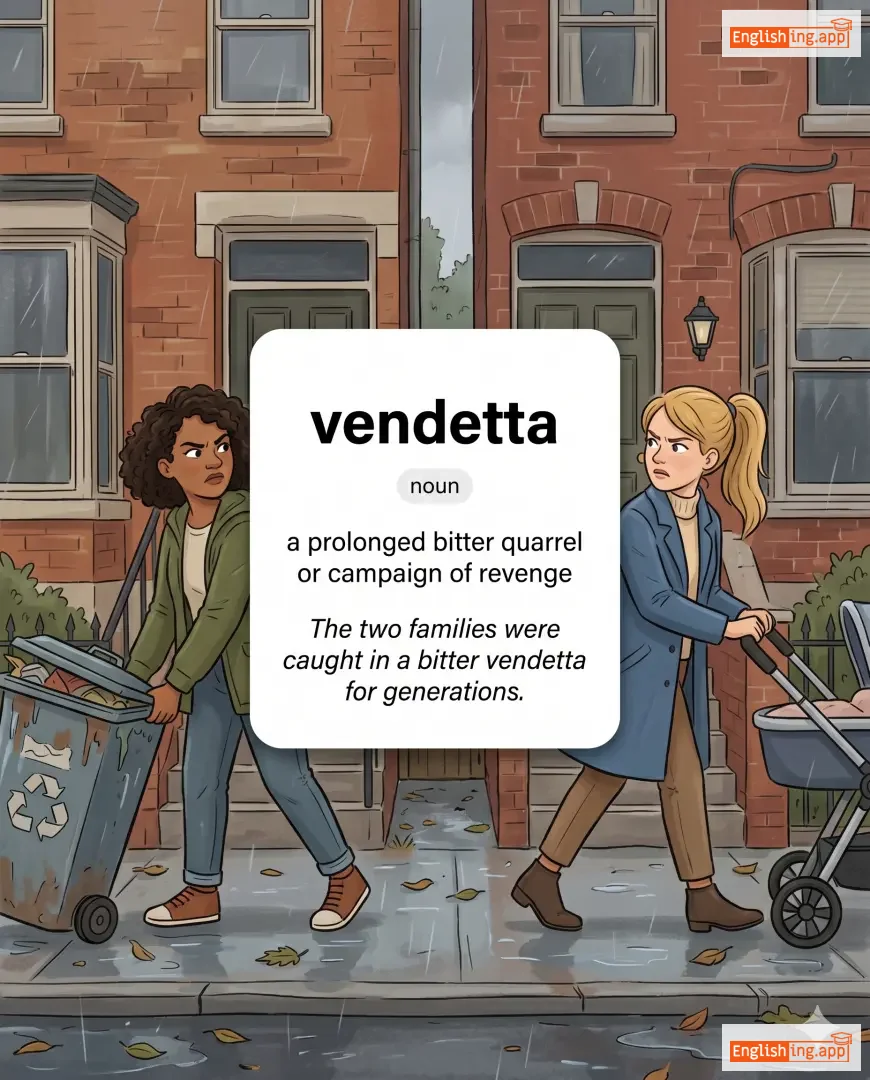
noun
/vɛnˈdɛtə/
復讐 (fukushū)

a prolonged bitter quarrel or campaign of revenge

"The two families were caught in a bitter vendetta for generations."

"二つの家族は何世代にもわたり、苦い復讐に巻き込まれていた。" (Futatsu no kazoku wa nan se daime ni watari, nigai fukushū ni makikomarete ita.)
adjective
/ˈvɛndɪbəl/
販売可能な (hanbai kanō na)

Capable of being sold; marketable.

"Only vendible products were displayed at the trade fair."

"販売可能な商品だけが展示会に出展されました。" (Hanbai kanō na shōhin dake ga tenjikai ni shutsuten saremashita.)
noun
/vɛnˈdɪʃən/
販売 (hanbai)

The act of selling; sale.

"The auction was a formal vendition of the estate's assets."

"オークションは不動産の資産の正式な販売でした。" (Ōkushon wa fudōsan no shisan no seishiki na hanbai deshita.)
noun
/ˈvɛndɔːr/
販売者 (hanbaisha)

A person or company that sells goods or services.

"The street vendor sold fresh fruits every morning."

"街のベンダーは毎朝新鮮な果物を売っていた。" (Machi no bendā wa mai asa shinsen na kudamono o utte ita.)
noun
/vəˈnɪər/
幸福 (kōfuku)

A thin decorative covering of fine wood applied to a coarser wood or other material; a superficially attractive appearance.

"The table was covered with a thin veneer of mahogany."

"彼女は賞を受け取ったとき、幸せを隠すことができませんでした。" (Kanojo wa shō o uketotta toki, kōfuku o kakusu koto ga dekimasen deshita.)
adjective
/ˈvɛnərəbl/
尊敬すべき (sonkei subeki)

Accorded a great deal of respect, especially because of age, wisdom, or character.

"The venerable professor was admired by generations of students."
"その尊敬すべき教授は、何世代にもわたる学生に賞賛されていました。" (Sono sonkei subeki kyōju wa, nan sedai ni mo wataru gakusei ni shōsan sarete imashita.)
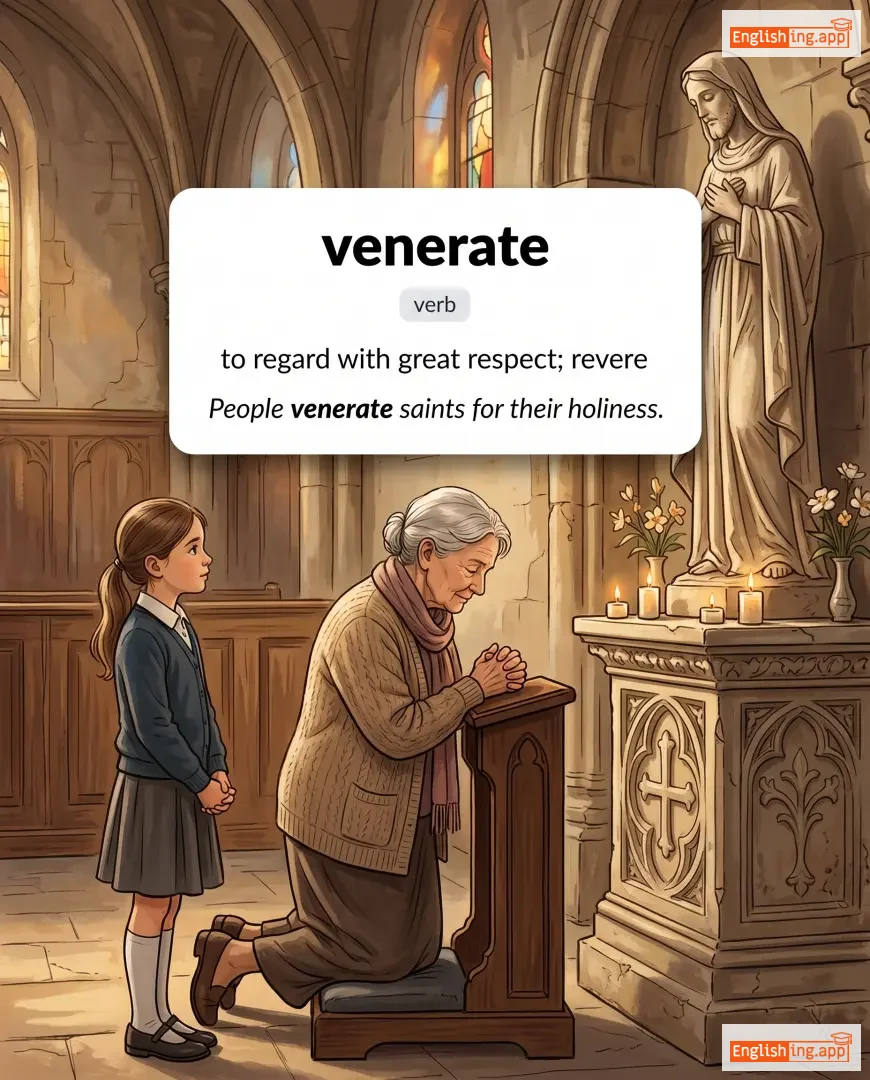
venerate definition card — visual illustration of the meaning
verb
/ˈvɛnəˌreɪt/
敬う (uyamau)

to regard with great respect; revere

"People venerate saints for their holiness."

"人々はその聖性のために聖人を敬う。" (Hitobito wa sono seisei no tame ni seijin o uyamau.)
adjective
/ˈvɛnəˌreɪtɪd/
尊敬される (sonkei sareru)

respected and admired deeply

"The venerated professor was honored with an award."

"その尊敬される教授は賞を授与されました。" (Sono sonkei sareru kyōju wa shō o juyo saremashita.)