語彙集

英単語辞書 | 単語の意味、定義、例文

verb
/ʌnˈnɜːrv/
自信を失う (jishin o ushinau)

to make someone lose confidence, courage, or composure

"The hostile questions began to unnerve the witness."

"敵意のある質問が証人を動揺させ始めた。" (Tekii no aru shitsumon ga shōnin o dōyō sasehajimeta.)
adjective
/ˌʌnˈnoʊ.tɪst/
気づかれなかった; 無視された (kizukarenakatta; mushi sareta)

not seen or observed; ignored

"His hard work went unnoticed by his manager."

"彼の努力はマネージャーに気づかれませんでした。" (Kare no doryoku wa manejā ni kizukaremasen deshita.)
adjective
/ˌʌnəbˈtruːsɪv/
目立たない (medatanai)

not attracting attention; blending in without causing notice

"The security cameras are designed to be unobtrusive."

"セキュリティカメラは目立たないように設計されています。" (Sekyuriti kamera wa medatanai yō ni sekkei sareteimasu.)
adjective
/ˌʌnəˈfɪʃ.əl/
非公式な (hikoushiki na)

not officially authorized or confirmed; informal

"The unofficial results showed a close race."

"非公式な結果は接戦を示しました。" (hikoushiki na kekka wa sessen o shimeshita.)
verb
/ʌnˈpæk/
荷解きする (nidoki suru)

to remove items from a container; to explain or analyze something in detail

"After arriving home, she began to unpack her suitcase."

"家に着いた後、彼女はスーツケースの荷解きを始めた。" (ie ni tsuita ato, kanojo wa sutsukeesu no nidoki o hajimeta)
adjective
/ˌʌnˈpeɪd/
無給の; 支払いなし (mukyuu no; shiharai nashi)

not paid for; without payment or salary

"She worked as an unpaid intern for six months."
"彼女は無給のインターンとして6ヶ月間働きました。" (Kanojo wa mukyuu no intaan toshite rokkagetsu kan hatarakimashita)
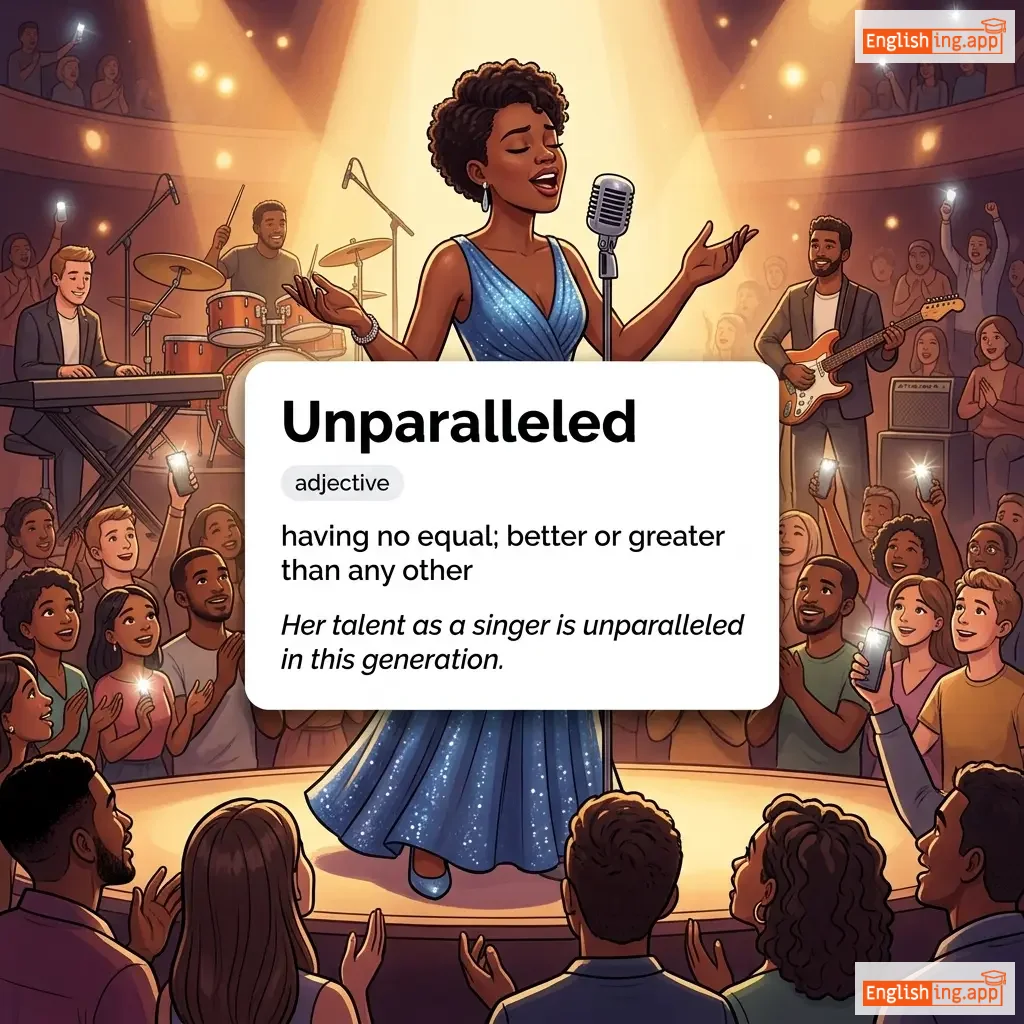
Unparalleled definition card — visual illustration of the meaning
adjective
/ˌʌnˈpær.ə.leld/
比類のない; 無比; 唯一無二 (hirui no nai; mubi; yuiitsumuni)

having no equal; better or greater than any other

"Her talent as a singer is unparalleled in this generation."

"彼女の歌手としての才能はこの世代で比類のないものです。" (Kanojo no kashu to shite no sainou wa kono sedai de hirui no nai mono desu.)
adjective
/ˌʌnˈpɑr.də.nə.bəl/
許されざる (yurusa rezaru)

too bad to be forgiven; inexcusable

"His betrayal of trust was an unpardonable offense."
"彼の裏切りは許されざる犯罪でした。" (kare no uragiri wa yurusarezaru hanzai deshita)
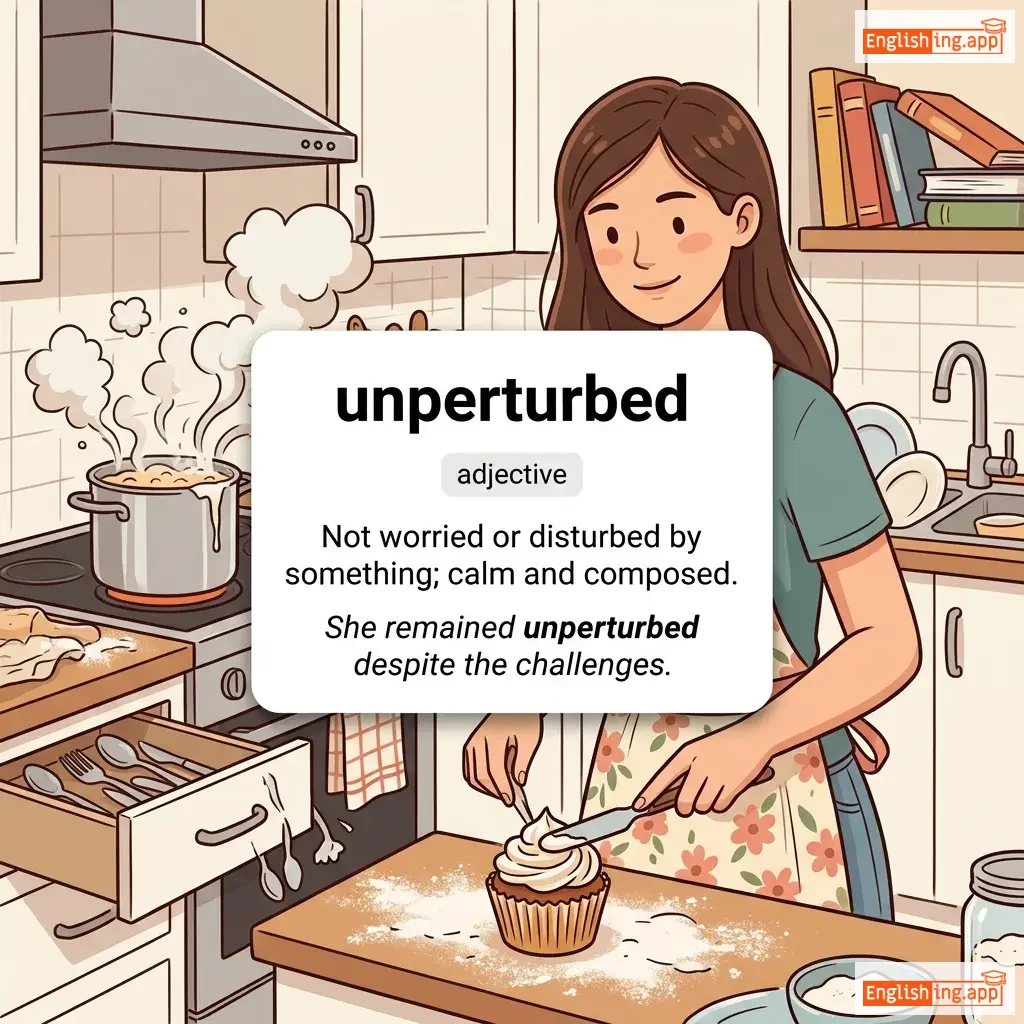
unperturbed definition card — visual illustration of the meaning
adjective
ˌʌn.pəˈtɜːbd
何かに悩まされたり、動揺したりしない; 冷静で落ち着いている (nanika ni nayamasaretari, dōyō shitari shinai; reisei de ochitsuite iru)

Not worried or disturbed by something; calm and composed.

"She remained unperturbed despite the challenges."
"彼女は挑戦にもかかわらず冷静さを保っていた。" (Kanojo wa chōsen ni mo kakawarazu reiseisa o tamotsu.)
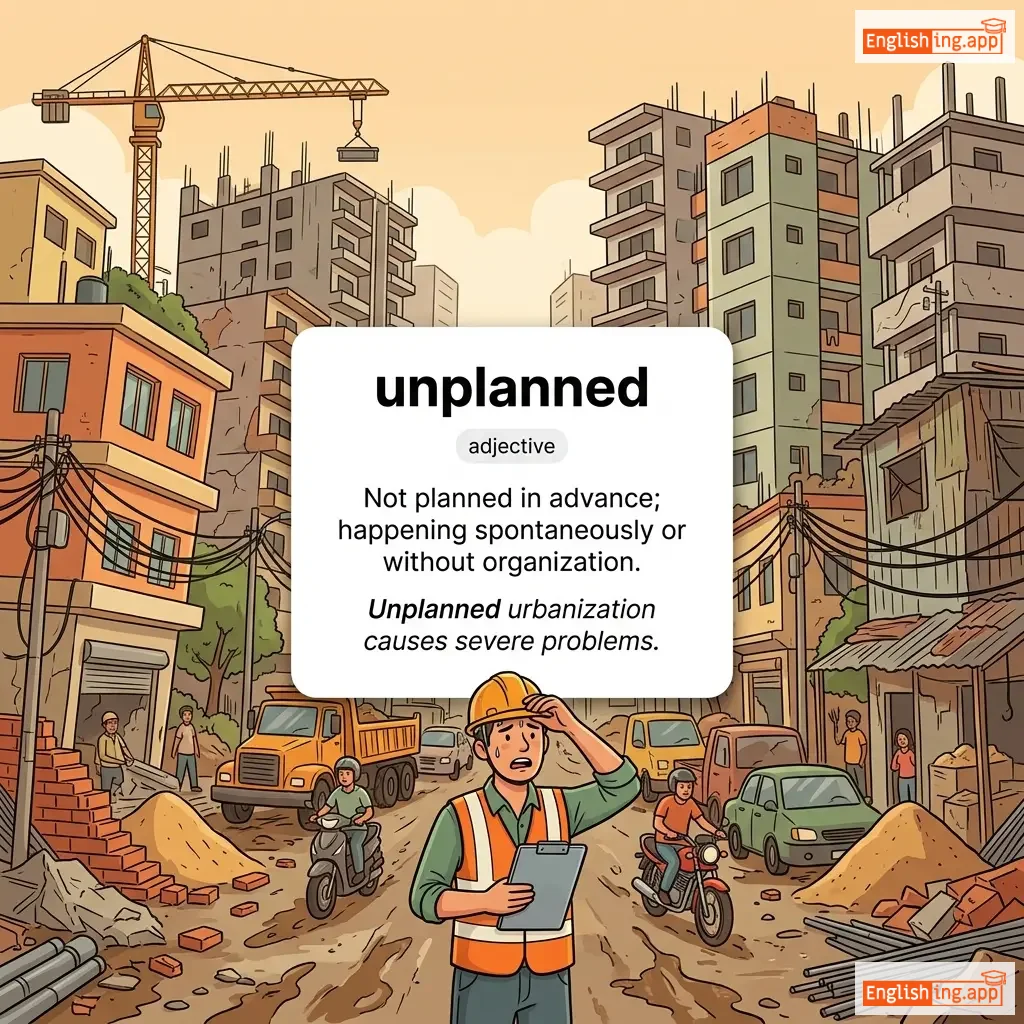
unplanned definition card — visual illustration of the meaning
adjective
ʌnˈplænd
計画外 (keikakugai)

Not planned in advance; happening spontaneously or without organization.

"Unplanned urbanization causes severe problems."

"計画外の都市化は深刻な問題を引き起こす。" (Keikakugai no toshika wa shinkokuna mondai o hikiokosu.)
adjective
/ʌnˈplɛz.ənt/
不快な (fukai na)

not giving or causing pleasure; disagreeable

"The medicine had an unpleasant taste."

"その薬は不快な味がしました。" (Sono kusuri wa fukai na aji ga shimashita.)
adverb
/ʌnˈplɛzəntli/
不快に (fukai ni)

in a way that causes discomfort, annoyance, or displeasure; in an unfriendly or disagreeable manner

"The room was unpleasantly hot during the afternoon."

"午後、その部屋は不快に暑かった。" (gogo sono heya wa fukai ni atsukatta)
adjective
/ʌnˈpɒpjʊlə/
不人気な (funinki na)

not liked or supported by many people

"The decision was unpopular with the public."
"その決定は世間で不人気だった。" (sono kettei wa seken de funinki datta)
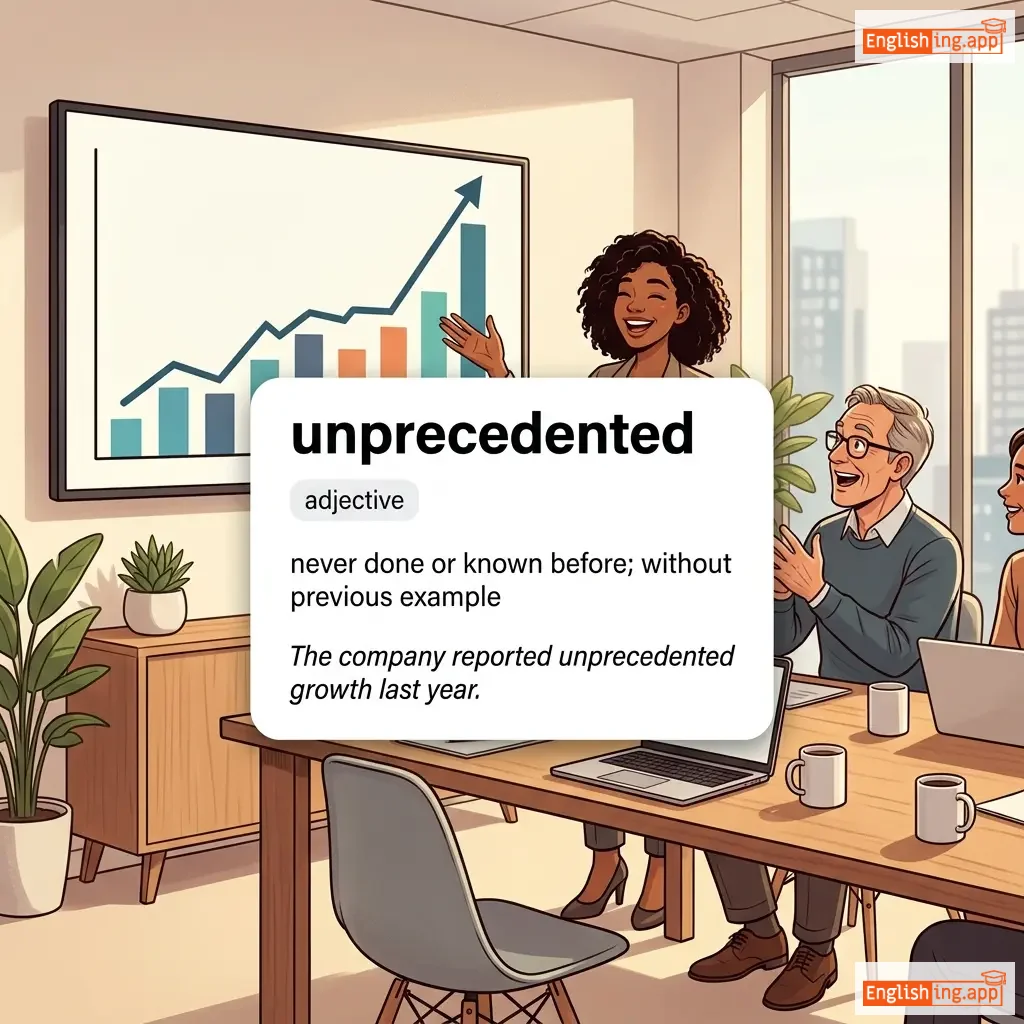
unprecedented definition card — visual illustration of the meaning
adjective
/ʌnˈprɛsɪˌdɛntɪd/
前例のない (zenrei no nai)

never done or known before; without previous example

"The company reported unprecedented growth last year."
"会社は昨年、前例のない成長を報告しました。" (Kaisha wa sakunen, zenrei no nai seichou o houkoku shimashita.)
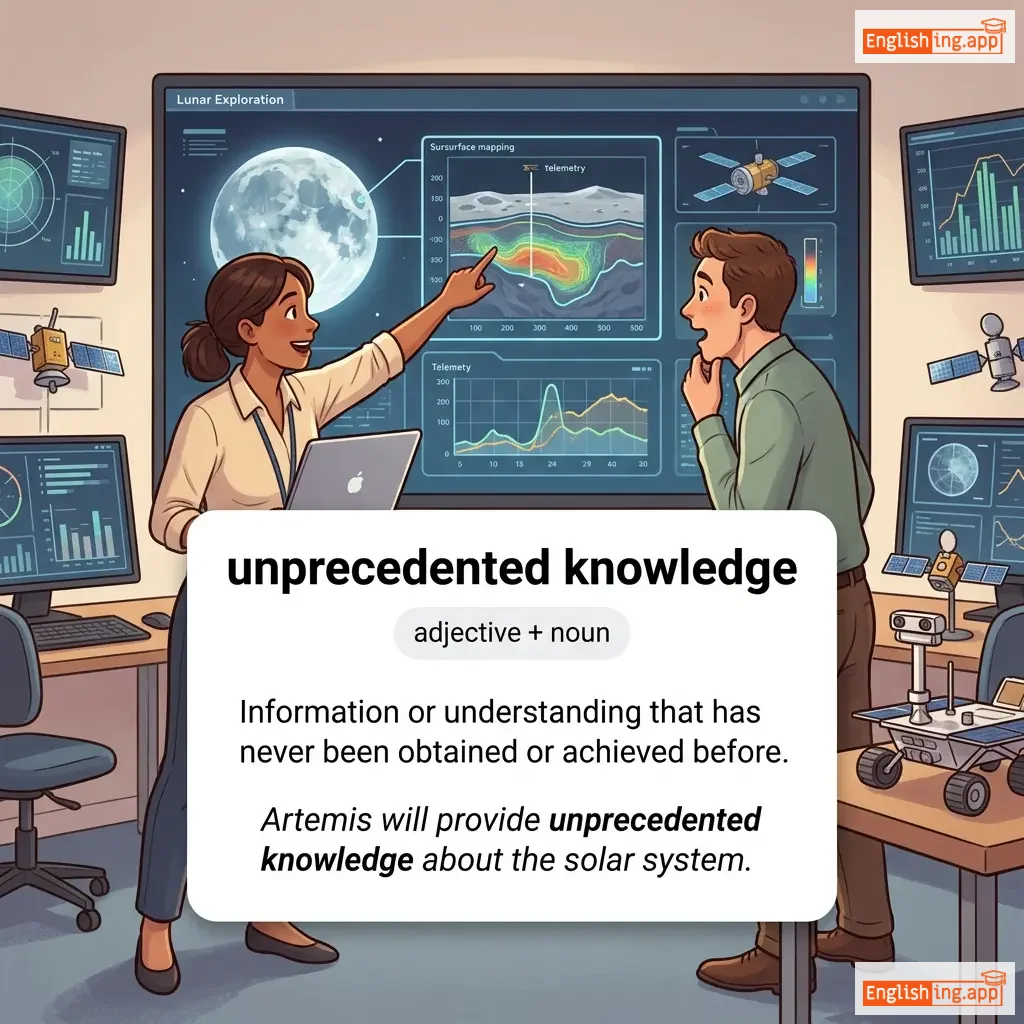
unprecedented knowledge definition card — visual illustration of the meaning
adjective + noun
ʌnˈpresɪdentɪd ˈnɒlɪdʒ
前例のない知識 (zenrei no nai chishiki)

Information or understanding that has never been obtained or achieved before.

"Artemis will provide unprecedented knowledge about the solar system."
"アルテミスは太陽系に関する前例のない知識を提供する。" (Artemisu wa taiyoukei ni kansuru zenrei no nai chishiki wo teikyou suru.)
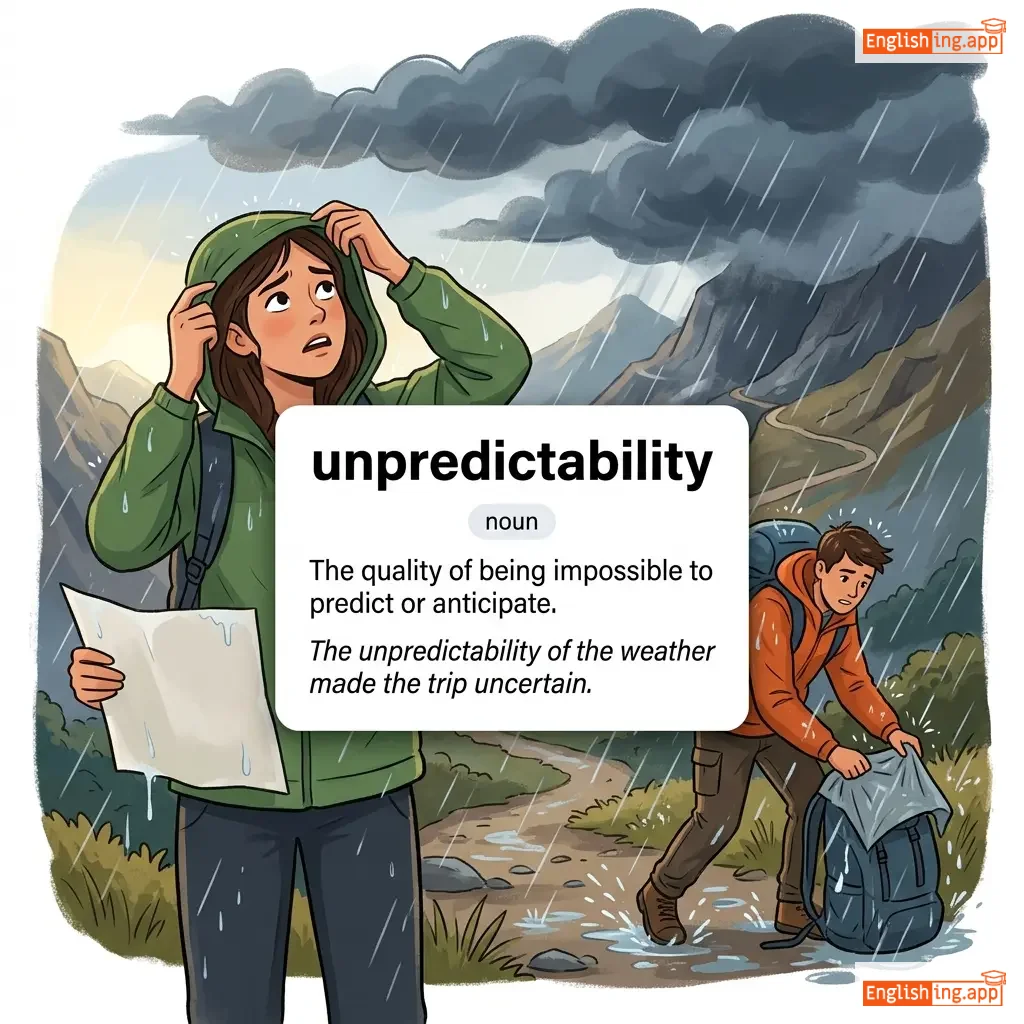
unpredictability definition card — visual illustration of the meaning
noun
/ˌʌnprɪˈdɪktəˌbɪləti/
予測不可能性 (yosoku fukanō-sei)

The quality of being impossible to predict or anticipate.

"The unpredictability of the weather made the trip uncertain."

"天気の予測不可能性は旅行を不確実にした。" (Tenki no yosoku fukanō-sei wa ryokō o fukakujitsu ni shita.)
adjective
/ˌʌnprɪˈdɪktəbəl/
予測できない (yosoku dekinai)

not able to be predicted; changing suddenly and unexpectedly

"The weather in this region is highly unpredictable."

"この地域の天気はとても予測できない。" (kono chiiki no tenki wa totemo yosoku dekinai)
adjective
/ʌnprɪˈpɛrd/
準備不足 (junbi busoku)

not ready or able to deal with something

"He was unprepared for the difficult exam."

"彼は難しい試験に準備していなかった。" (Kare wa muzukashii shiken ni junbi shite inakatta)
adjective
/ˌʌnpriːpəˈzɛsɪŋ/
魅力的でない (miryokuteki de nai)

not attractive or appealing in appearance

"Despite his unprepossessing looks, he was very kind and intelligent."

"彼は魅力的でない外見にもかかわらず、非常に親切で賢かった。" (Kare wa miryokuteki de nai gaiken ni mo kakawarazu, hijō ni shinsetsu de kashikokatta.)
adjective
/ˌʌnprɪˈtɛnʃəs/
控えめな (hikaeme na)

modest; not attempting to impress others with appearance or importance

"She lives in an unpretentious home but is very happy."

"彼女は控えめな家に住んでいますが、とても幸せです。" (Kanojo wa hikaeme na ie ni sundeimasu ga, totemo shiawase desu.)
adjective
/ˌʌnprəˈdʌktɪv/
非生産的 (hiseisanteki)

Not producing or achieving much; not effective or useful.

"The meeting was unproductive and wasted everyone's time."

"会議は非生産的で、皆の時間を無駄にしました。" (Kaigi wa hiseisanteki de, minna no jikan o muda ni shimashita.)
adjective
/ʌnprəˈfɛʃ.ən.əl/
不专业 (fujōzu)

not conforming to the standards expected in a particular profession

"His unprofessional behavior led to his dismissal from the company."

"彼の不専門的な行動は、会社からの解雇を引き起こしました。" (Kare no fujōzu na kōdō wa, kaisha kara no kaiko o hikiokoshimashita.)
adjective
/ʌnˈprɒf.ɪ.tə.bl̩/
採算が取れない (saisan ga torenai)

not yielding profit or gain; not producing financial benefit

"The unprofitable business was forced to close down after three years."

"採算が取れないビジネスは3年後に閉店を余儀なくされました。" (Saisan ga torenai bijinesu wa san nen go ni heiten o yoginaku saremashita.)
adjective
/ˌʌnprəˈpɪʃəs/
不運な (fuunna)

Not giving or indicating a good chance of success; unfavorable.

"The team began their journey under unpropitious weather conditions."

"チームは不運な天候の中で旅を始めました。" (Chiimu wa fuunna tenkou no naka de tabi o hajimemashita.)
adjective
/ʌnˈkwɒl.ɪ.faɪd/
資格がない; 経験不足の; (shikakuganai; keiken busoku no)

not having the necessary skills or qualifications; complete or absolute

"He was unqualified for the engineering position due to lack of experience."

"彼は経験不足でエンジニアの職に不適格でした。" (Kare wa keiken busoku de enjinia no shoku ni futekikaku deshita.)
adjective
/ʌnˈkwes.tʃən.ə.bl̩/
議論の余地がない; 確実な (giron no yochi ga nai; kakujitsu na)

not able to be disputed or doubted; certain and beyond doubt

"Her honesty and integrity are unquestionable qualities."

"彼女の誠実さと誠意は議論の余地がない特性です。" (kanojo no seijitsusa to sei wa giron no yochi ga nai tokusei desu.)
adjective
/ʌnˈkwaɪ.ət/
落ち着かない; 不安な; 動揺した (ochitsukanai; fuan na; dōyō shita)

restless; unable to remain still or quiet; anxious or troubled

"She spent an unquiet night worrying about the exam results."

"彼女は試験結果を心配して落ち着かない夜を過ごした。" (Kanojo wa shiken kekka o shinpai shite ochitsukanai yoru o sugoshita.)
verb
/ʌnˈrævəl/

To undo twisted or knitted threads; to solve or explain something complicated.

"The detective worked hard to unravel the mystery."

adjective
/ʌnˈriːdəbl/
読めない (yomenai)

not able to be read or understood clearly; illegible

"The doctor’s handwriting was completely unreadable."

"医者の字は完全に読めなかった。" (Isha no ji wa kanzen ni yomenakatta)
adjective
/ʌnˈrɪəl/
非現実的な (higenjitsuteki na)

not real or not based on reality; exaggerated or imaginary

"The experience felt unreal after the sudden news."

"突然の知らせの後、その体験は非現実的に感じられた。" (Totsuzen no shirasé no ato, sono taiken wa higenjitsuteki ni kanjirareta)
noun
/ˌʌnriˈælɪti/
非現実感 (hi genjitsukan)

the state or quality of being unreal; lack of reality or truth

"The dreamlike setting gave the story a sense of unreality."

"夢のような舞台は物語に非現実感を与えた。" (Yume no you na butai wa monogatari ni hi genjitsukan o ataeta)
adjective
/ʌnˈriːzənəbəl/
理不尽な (rifujin na)

not guided by reason or fairness; excessive or extreme beyond what is acceptable

"The manager made an unreasonable demand that no one could realistically meet."

"マネージャーは理不尽な要求をした。" (manejaa wa rifujin na youkyuu o shita)
adjective
/ˌʌnrɪˈfaɪnd/
未精製の (miseisei no)

not processed or purified; lacking polish or sophistication

"The unrefined oil must be processed before it can be used as fuel."

"未精製の石油は燃料として使う前に処理する必要がある。" (miseisei no sekiyu wa nenryo toshite tsukau mae ni shori suru hitsuyo ga aru)
adjective
/ˌʌn.rɪˈdʒɛn.ər.ət/
頑固 (ganko)

Not reformed or showing no signs of change; stubbornly refusing to reform or repent.

"He remained an unregenerate opponent of progress."

"彼は進歩の頑固な反対者であり続けた。" (Kare wa shinpo no ganko na hantai-sha de ari tsudzuketa.)
adjective
/ʌn.rɪˈleɪ.tɪd/
無関係な; 関連していない (mukan'keina; kanren shiteinai)

having no connection or relationship; not connected by family ties

"The two incidents were completely unrelated to each other."

"二つの出来事は完全に無関係だった。" (Futatsu no dekigoto wa kanzen ni mukan'keidatta.)
adjective
/ˌʌnrɪˈlaɪəbl/
信頼できない; 信頼や依存ができない (shinrai dekinai; shinrai ya izon ga dekinai)

not dependable; not able to be trusted or relied upon

"The old car is unreliable and breaks down frequently."

"その古い車は信頼できず、よく壊れます。" (Sono furui kuruma wa shinrai dekinai, yoku kowaremasu.)
adjective
/ˌʌnrɪˈmɪtɪŋ/
絶え間ない (taemanai)

Never relaxing or stopping; persistent.

"Her unremitting efforts finally paid off."

"彼女の絶え間ない努力は最終的に報われた。" (Kanojo no taemanai doryoku wa saishūteki ni mukuwarimashita.)
adjective
/ˌʌnrɪˈkwaɪtɪd/

Not returned or reciprocated, especially in the context of love or affection.

"He suffered from unrequited love for years."

adjective
/ˌʌnrɪˈzɒlvd/
未解決の (mikaiketsu no)

not solved or settled; remaining undecided or unclear

"The dispute remains unresolved despite several meetings."

"その問題は何度も会議をしたにもかかわらず未解決のままだ。" (sono mondai wa nando mo kaigi o shita ni mo kakawarazu mikaiketsu no mama da)
noun
/ʌnˈrest/
不安; 動乱; 社会的または政治的混乱 (fuan; douran; shakaiteki matawa seijiteki konran)

a state of dissatisfaction and disturbance; social or political disorder

"The economic crisis led to widespread social unrest."

"経済危機は広範な社会的不安を引き起こしました。" (Keizai kiki wa kouhan na shakaiteki fuan o hikiokoshimashita.)
adjective
/ʌnˈraɪp/
未熟 (mijuku)

not fully developed or matured; not ready to be eaten

"The unripe bananas will turn yellow in a few days."

"未熟なバナナは数日後に黄色くなります。" (Mijuku na banana wa suujitsu go ni kiiroku narimasu.)
verb
/ʌnˈroʊl/
広げる (hirogeru)

to open something that is rolled up; to spread out gradually

"She unrolled the map on the table to find the route."

"彼女は道を探すためにテーブルの上で地図を広げた。" (kanojo wa michi o sagasu tame ni teeburu no ue de chizu o hirogeta)
adjective
/ʌnˈruːli/
手に負えない (teni oenai)

Disorderly, disruptive, or difficult to control.

"The teacher struggled to calm the unruly students."

"教師は不従順な生徒を落ち着かせるのに苦労した。" (Kyōshi wa fujūjun na seito o ochitsukaseru no ni kurō shita.)
adjective
/ʌnˈseɪf/
危険な; 危ない; (kiken na, abunai)

involving or causing danger or risk; not protected from harm

"It is unsafe to walk alone in this neighborhood at night."

"この地域では夜間に一人で歩くのは危険です。" (Kono chiiki de wa yakan ni hitori de aruku no wa kiken desu.)
adjective
/ʌnˈseɪvəri/
不快 (fukai)

Disagreeable, unpleasant, or morally offensive.

"The politician was linked to an unsavory scandal."

"その政治家は不快なスキャンダルに関連していました。" (Sono seijika wa fukai na sukyandaru ni kanren shiteimashita.)
adjective
/ʌnˈskeɪðd/
無傷 (mushō)

Without suffering any injury, damage, or harm.

"She escaped from the accident unscathed."
"彼女は事故から無傷で逃げ出した。" (Kanojo wa jiko kara mushō de nigedashita.)
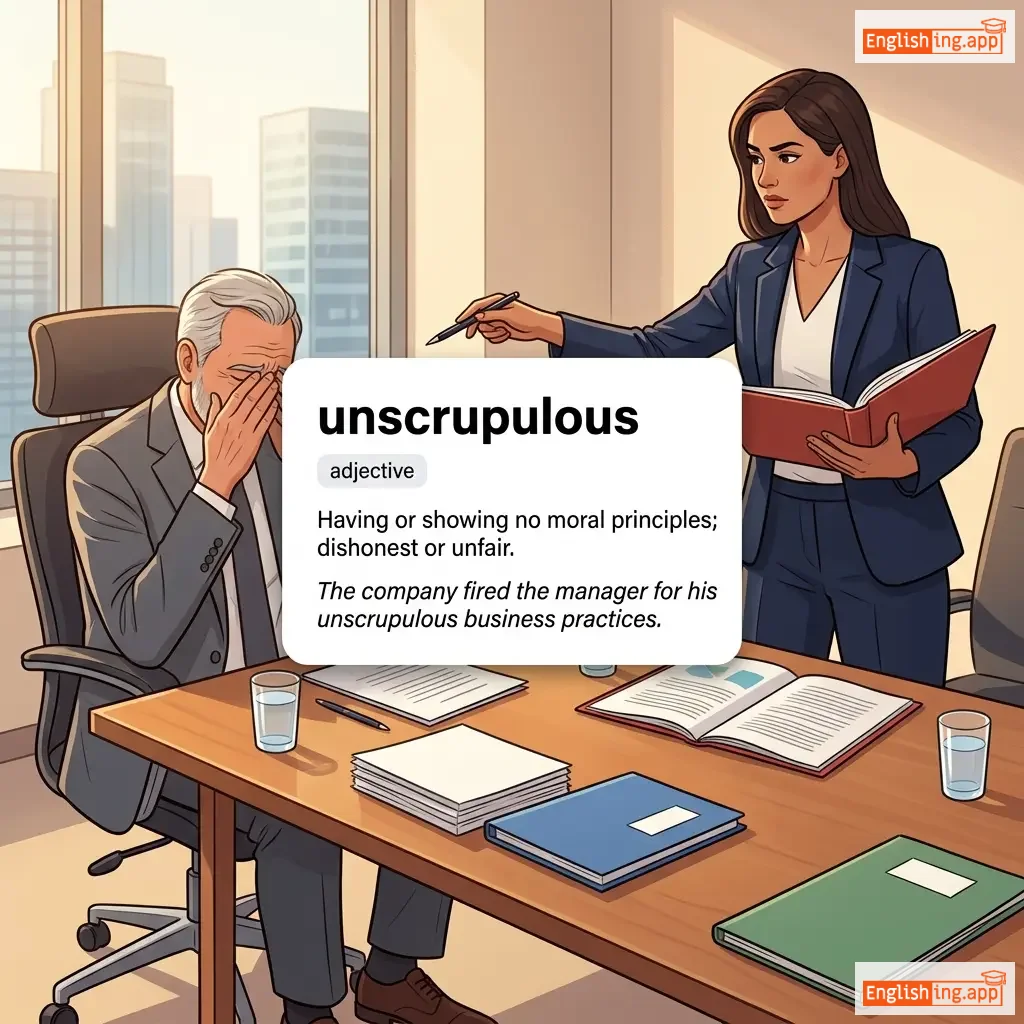
unscrupulous definition card — visual illustration of the meaning
adjective
/ʌnˈskruːpjələs/
無道徳 (mudōtoku)

Having or showing no moral principles; dishonest or unfair.

"The company fired the manager for his unscrupulous business practices."

"会社はその無道徳なビジネス慣行のためにマネージャーを解雇しました。" (Kaisha wa sono mudōtoku na bijinesu kankō no tame ni manējā o kaiko shimashita.)
adjective
/ʌnˈsiːmli/
不適切な (futekisetsu na)

Not proper or appropriate in behavior or appearance; unbecoming.

"His unseemly remarks embarrassed everyone at the dinner table."

"彼の不適切な発言はディナーテーブルで皆を困らせました。" (Kare no futekisetsu na hatsugen wa dinā tēburu de mina o komarasemashita.)
👁️‍🗨️

Unseen (アンシーン)

adjective
/ʌnˈsiːn/
見えない; 前に見たり気づいたりしたことがない (mienai; mae ni mitari kidzuitari shita koto ga nai)

not previously seen or noticed; invisible; hidden

"The unseen forces of nature can be very powerful."

"自然界の見えない力は非常に強力である可能性があります。" (shizenkai no mienai chikara wa hijou ni kyouryoku dearu kanousei ga arimasu.)
adjective
/ʌnˈsɜːrvɪsəbəl/
使えない; 故障した (tsukaenai; koshou shita)

not in working order; unable to be used; defective

"The old computer became unserviceable after the system crash."

"古いコンピュータはシステムクラッシュ後、使えなくなりました。" (Furui konpyu-ta wa shisutemu kurasshu go, tsukaenaku narimashita.)