語彙集

英単語辞書 | 単語の意味、定義、例文

noun
/ˈʌndərwɛr/
下着 (shitagi)

clothing worn under other clothes, next to the skin

"She bought new underwear from the department store."

"彼女はデパートで新しい下着を買いました。" (Kanojo wa depāto de atarashī shitagi o kaimashita.)
verb
/ˌʌn.dəˈtʃɑːrdʒ/
過少に請求する (kasho ni seikyū suru)

To charge less than the correct or fair amount.

"The shopkeeper accidentally undercharged me for the groceries."

"店主は私に食料品を過少に請求しました。" (Tenshu wa watashi ni shokuryōhin o kasho ni seikyū shimashita.)
noun
/ˈʌndərkləʊðz/
下着 (shitagi)

Clothing worn beneath outer clothes, such as underwear or lingerie

"He folded his underclothes neatly before packing them."

"彼は下着を丁寧にたたんでから詰めた。" (Kare wa shitagi o teinei ni tatande kara tsumeta)
✂️

undercut

verb
/ˈʌndərkʌt/

to sell at a lower price than a competitor; to weaken or undermine something

"The company tried to undercut its rivals by offering lower prices."

noun
/ˈʌndərdɒɡ/
アンダードッグ (andādoggu)

a competitor thought to have little chance of winning; a weaker party in a contest

"The underdog team surprised everyone by winning the championship."

"アンダードッグのチームはチャンピオンシップを勝ち取って、皆を驚かせました。" (Andādoggu no chīmu wa chanpionshipu o kachitoratte, mina o odorokasemashita.)
verb
/ˌʌndərˈɛstɪmeɪt/
過小評価する (kashouhyouka suru)

To judge something as less important or smaller than it really is.

"Never underestimate the power of teamwork."

"決してチームワークの力を過小評価しないでください。" (Kesshite chīmuwāku no chikara o kashouhyouka shinai de kudasai.)
adjective
/ˌʌndərɪkˈspoʊzd/
露出不足、無視された (roshutsu fusoku, mushi sareta)

insufficiently exposed to light (in photography) or not given enough attention

"The photo was underexposed and looked too dark."

"写真は露出不足で、暗すぎて見えました。" (Shashin wa roshutsu fusoku de, kurasugite miemashita.)
noun
/ˈʌndərˌɡɑːrmənt/
下着 (shitagi)

a piece of clothing worn under outer clothes, usually next to the skin

"He bought new undergarments for the wedding."

"彼は結婚式のために新しい下着を買いました。" (Kare wa kekkonshiki no tame ni atarashī shitagi o kaimashita.)
verb
/ˌʌndərˈɡɜːrd/
支える、強化する (sasaeru, kyōka suru)

to provide support or foundation for; to strengthen

"Strong values undergird a healthy society."

"強い価値観は健康な社会を支えています。" (Tsuyoi kachikan wa kenko na shakai o sasaeteimasu.)
verb
/ˌʌndərˈɡoʊ/
経験する (keiken suru)

to go through something, especially something unpleasant or difficult

"She had to undergo surgery to recover."

"彼女は回復するために手術を受けなければなりませんでした。" (Kanojo wa kaifuku suru tame ni shujutsu wo ukenakereba narimasen deshita.)
noun
/ˌʌndəˈɡrædʒuət/
学部生 (gakubusei)

a student who has not yet earned a bachelor's degree

"She is an undergraduate studying computer science."

"彼女はコンピュータサイエンスを学んでいる学部生です。" (Kanojo wa konpyuuta saiensu o manande iru gakubusei desu)
adjective
/ˈʌndərhænd/
不正 (fusei)

done secretly and dishonestly; deceitful

"The politician was accused of using underhand tactics to win the election."

"その政治家は選挙に勝つために不正な手段を使ったとして非難されました。" (Sono seijika wa senkyo ni katsu tame ni fusei na shudan o tsukatta toshite hinan saremashita.)
adjective
/ˌʌndərˈhændɪd/
不正 (fusei)

acting or done in a dishonest or secret way

"They exposed the company's underhanded dealings with its suppliers."

"彼らは会社とその供給者との不正取引を暴露しました。" (Karera wa kaisha to sono kyōkyū-sha to no fusei torihiki o bakuro shimashita.)
verb
/ˌʌndərˈlaɪ/
基盤となる (kiban to naru)

to be the hidden cause or basis of something

"Strong cultural traditions underlie the community's practices."

"強い文化的伝統はコミュニティの慣習の基盤となっている。" (Tsuyoi bunkateki dentou wa komyuniti no kanshū no kiban to natte iru.)
noun
/ˈʌndərlɪŋ/
部下 (buka)

a person of low rank or importance; a subordinate

"The manager ordered his underlings to finish the task quickly."

"マネージャーは部下に仕事を迅速に終わらせるよう命じました。" (Manējā wa buka ni shigoto o jinsoku ni owaraseru yō meijimashita.)
adjective
/ˌʌndərˈlaɪɪŋ/
根本的な (konpontena)

basic or hidden but important; forming the foundation of something

"The underlying reason for the conflict was never addressed."

"その対立の根本的な理由は決して対処されませんでした。" (Sono tairitsu no konpontena riyū wa kesshite taisho saremasendeshita.)
verb
/ˈʌndərˌmæn/
人手不足 (hito de busoku)

to supply with fewer workers or personnel than needed

"The hospital was undermanned during the flu outbreak."

"インフルエンザの流行時に病院は人手不足でした。" (Infuru enza no ryūkō-ji ni byōin wa hitode busoku deshita.)
verb
/ˌʌndərˈmaɪn/
弱める (yowameru)

to gradually weaken or damage something or someone

"Constant criticism can undermine a child's confidence."

"継続的な批判は子どもの自信を弱める可能性があります。" (keizokuteki na hihan wa kodomo no jishin o yowameru kanosei ga arimasu)
preposition, adverb, adjective
/ˌʌndərˈniːθ/
下に、下側に (shita ni, shita gawa ni)

Located directly below or beneath something

"The keys were hidden underneath the pile of papers."
"鍵は紙の山の下に隠されていました。" (Kagi wa kami no yama no shita ni kakusarete imashita)
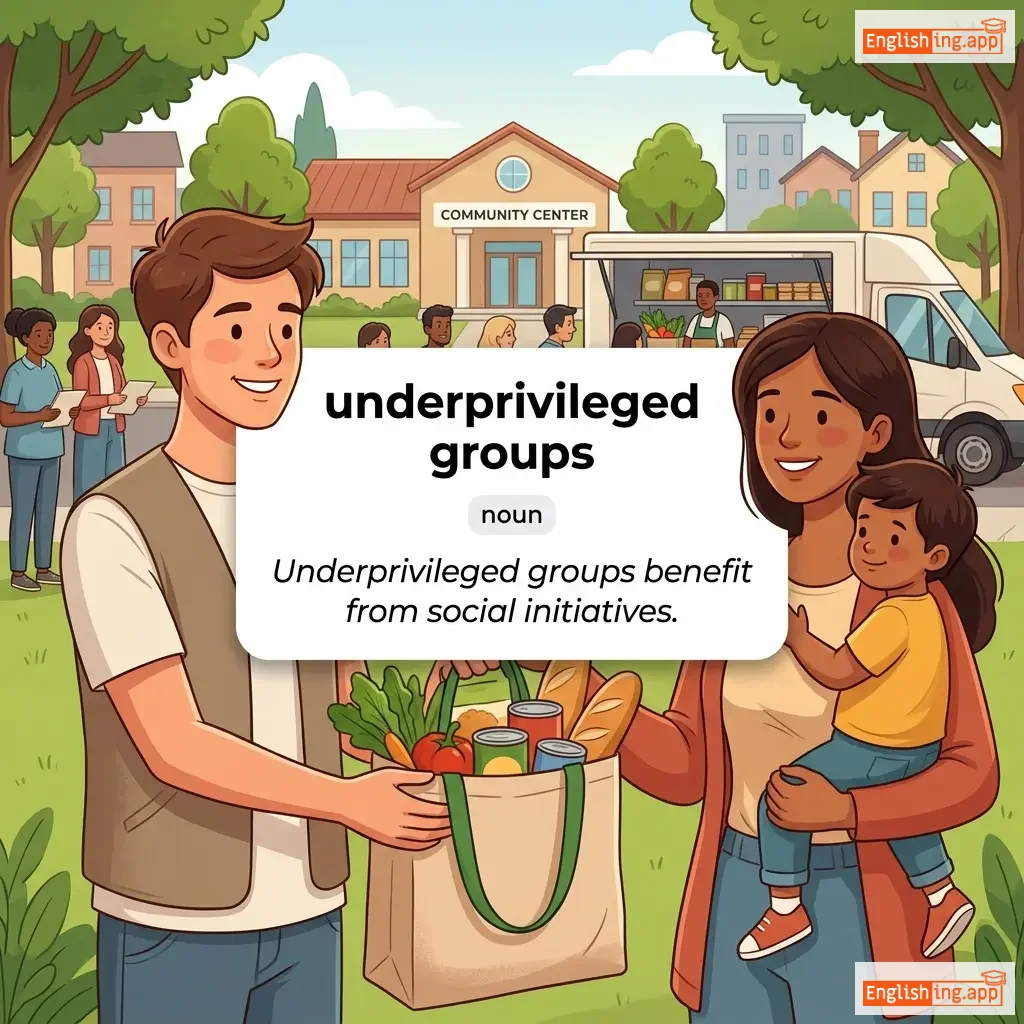
underprivileged groups definition card — visual illustration of the meaning
noun
ˌʌndərˈprɪvəlɪdʒd ɡruːps
恵まれないグループ (megumarenai gurūpu)

Groups of people who lack basic necessities or advantages that are available to other members of society.

"Underprivileged groups benefit from social initiatives."

"恵まれないグループは社会的なイニシアティブから利益を得ます。" (Megumarenai gurūpu wa shakaiteki na inishiatibu kara rieki o emasu.)
verb
/ˌʌndəˈreɪt/
過小評価 (kashouhyouka)

to fail to recognize the full value or importance of something or someone

"Many people underrate the benefits of regular exercise."

"多くの人々が定期的な運動の利点を過小評価しています。" (Ooku no hitobito ga teikitekina undou no riten wo kashouhyouka shiteimasu.)
verb
/ˌʌndərˈskɔːr/
強調する (kyouchou suru)

to emphasize or highlight something

"The incident underscored the need for better safety measures."

"その出来事は、安全対策の重要性を強調しました。" (Sono dekigoto wa, anzen taisaku no juuyousei o kyouchou shimashita.)
verb
/ˌʌndərˈsɛl/

to sell something at a lower price than competitors or to downplay the value of something

"The shop undersold its rivals by offering huge discounts."

adjective
/ˌʌndərˈsaɪzd/
小さすぎる (chiisasugiru)

Smaller than the usual or expected size.

"The undersized puppy struggled to keep up with its siblings."
"小さすぎる子犬は、兄弟姉妹と一緒に歩くのに苦労しました。" (Chiisasugiru koinu wa, kyoudai shimai to issho ni aruku no ni kurou shimashita.)
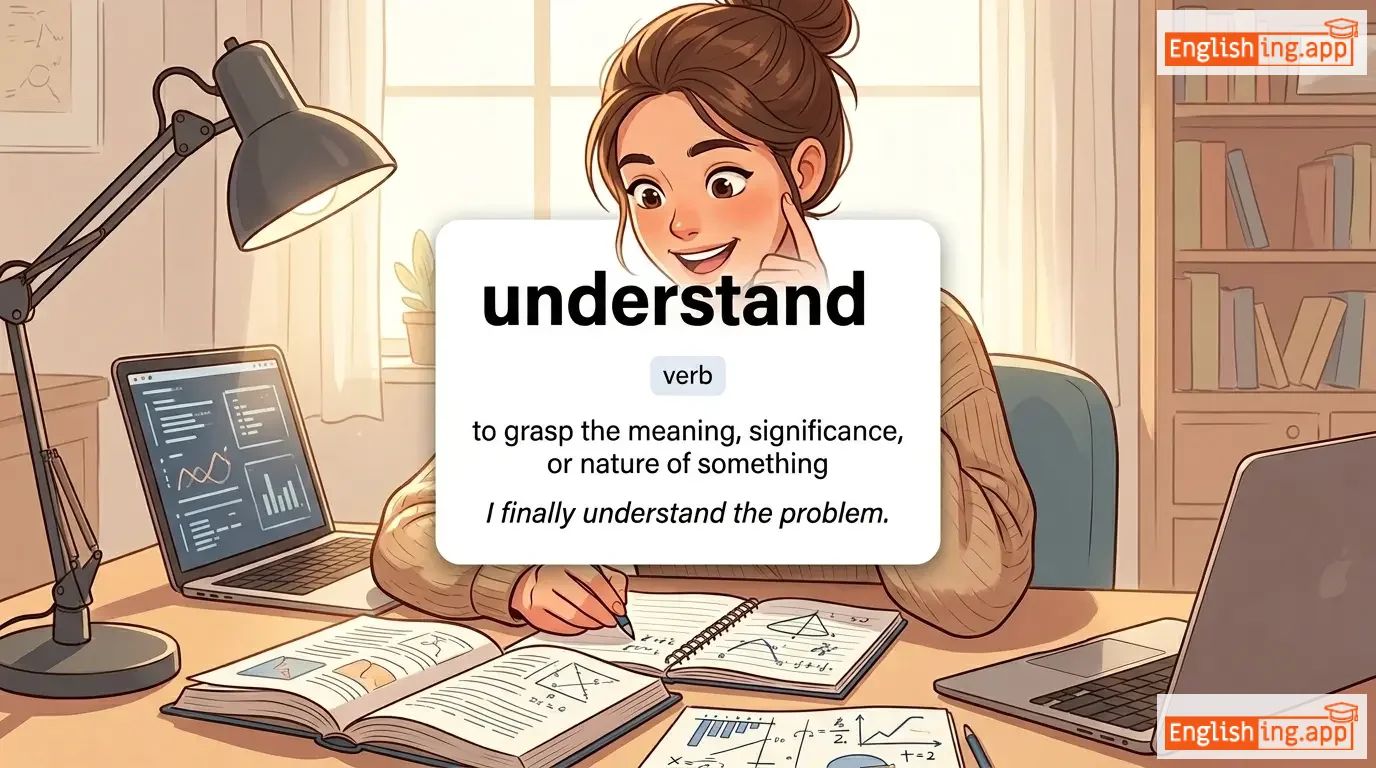
understand definition card — visual illustration of the meaning
verb
/ˌʌndərˈstænd/
理解する (rikai suru)

to grasp the meaning, significance, or nature of something

"I finally understand the problem."

"私はついに問題を理解しました。" (Watashi wa tsuini mondai o rikai shimashita.)
adjective
/ˌʌndərˈstændəbl/
理解できる (rikai dekiru)

Able to be understood; reasonable or justifiable.

"Her reaction was understandable given the situation."

"その反応は状況を考慮すると理解できるものでした。" (Sono hannō wa jōkyō o kōryo suru to rikai dekiru mono deshita.)
noun
/ˌʌndərˈstændɪŋ/
理解 (rikai)

the ability to grasp the meaning, significance, or nature of something

"Her understanding of the issue was impressive."

"彼女の問題に対する理解は印象的でした。" (Kanojo no mondai ni taisuru rikai wa inshō-teki deshita.)
verb
/ˌʌndərˈsteɪt/
過小評価する (かしょうひょうかする)

To describe something as being less important or serious than it really is.

"He tends to understate his achievements."

"彼は自分の業績を過小評価する傾向があります。" (かれはじぶんのぎょうせきをかしょうひょうかするけいこうがあります。)
adjective
/ˌʌndərˈsteɪtɪd/
控えめな (hikaeme na)

Presented in a subtle and restrained way.

"She wore an elegant but understated dress."
"彼女はエレガントで控えめなドレスを着ていた。" (Kanojo wa ereganto de hikaeme na doresu o kite ita.)
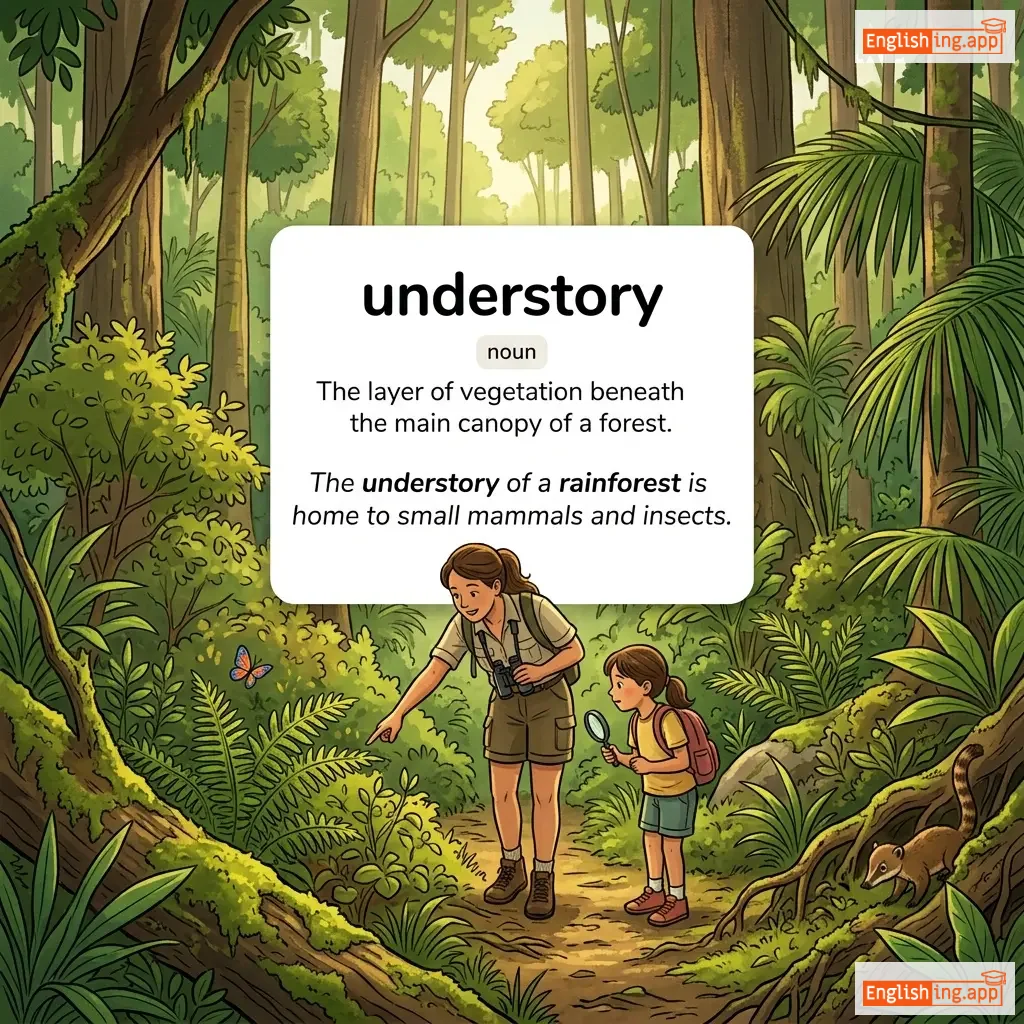
understory definition card — visual illustration of the meaning
noun
/ˈʌn.dɚˌstɔː.ri/
下層植物 (kasou shokubutsu)

The layer of vegetation beneath the main canopy of a forest.

"The understory of a rainforest is home to small mammals and insects."

"熱帯雨林の下層植物は小さな哺乳動物や昆虫の家です。" (Nettai urin no kasou shokubutsu wa chiisana honnyuudoubutsu ya konchuu no ie desu.)
noun
/ˈʌndərˌstʌdi/
アンダースタディ (andāsutadi)

An actor who learns another's role to act as a replacement if needed.

"The understudy performed when the lead actor fell ill."
"主役の俳優が病気になったとき、アンダースタディが演じました。" (Shuyaku no haiyū ga byōki ni natta toki, andāsutadi ga enjimashita.)
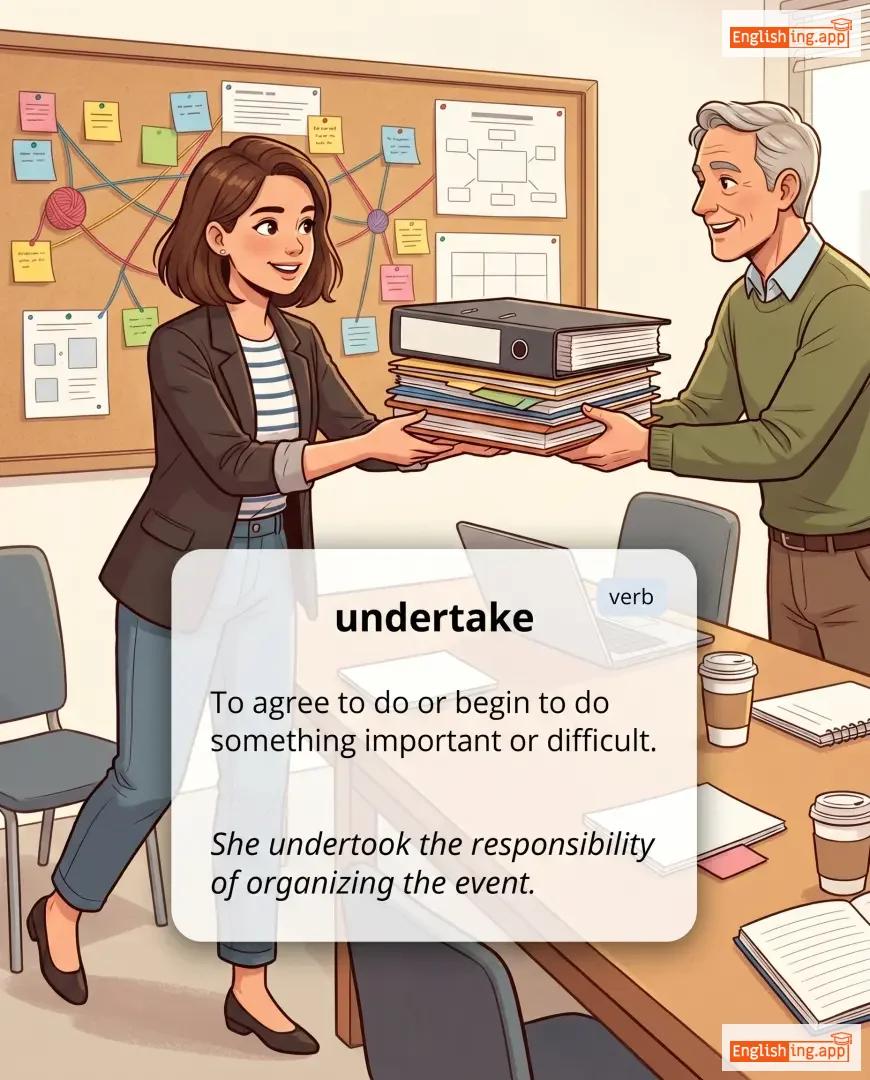
undertake definition card — visual illustration of the meaning
verb
/ˌʌndərˈteɪk/
引き受ける (hikiukeru)

To agree to do or begin to do something important or difficult.

"She undertook the responsibility of organizing the event."

"彼女はイベントの組織の責任を引き受けた。" (Kanojo wa ibento no soshiki no sekinin o hikiuketa.)
noun
/ˈʌndərˌteɪkər/
葬儀屋 (sōgiya)

A person whose job is to prepare the dead for burial and arrange funerals.

"The undertaker prepared the body for the funeral service."

"葬儀屋は葬儀のために遺体を準備しました。" (Sōgiya wa sōgi no tame ni itai o junbi shimashita.)
noun
/ˈʌndərˌteɪkɪŋ/
事業 (jigyō)

A task, project, or responsibility that someone agrees to do.

"Starting a new company is a difficult undertaking."

"新しい会社を立ち上げるのは難しい事業です。" (Atarashī kaisha o tachiageru no wa muzukashī jigyō desu.)
verb
/ˌʌndərˈvæljuː/
過小評価する (kasho hyouka suru)

To assign too low a value or importance to something or someone.

"She felt that her boss consistently undervalued her contributions."

"彼女は自分の上司が彼女の貢献を一貫して過小評価していると感じていた。" (Kanojo wa jibun no joushi ga kanojo no kouken wo ikkan shite kasho hyouka shite iru to kanjite ita.)
noun
/ˈʌndərweər/
下着 (shitagi)

Clothing worn beneath outer clothes, typically next to the skin.

"He bought new underwear for the trip."

"彼は旅行のために新しい下着を買った。" (Kare wa ryoko no tame ni atarashii shitagi o katta.)
noun
/ˈʌndərˌwɜːrld/
アンダーワールド (andāwārudo)

The criminal world of organized crime or the mythical world of the dead.

"The detective spent years studying the secrets of the underworld."

"探偵はアンダーワールドの秘密を何年も研究していました。" (Tantei wa andāwārudo no himitsu o nannen mo kenkyū shite imashita.)
verb
/ˈʌndərˌraɪt/

To guarantee financial support, especially by agreeing to cover losses or risks; in insurance, to assess and accept risks.

"The bank agreed to underwrite the company's new bond issue."

adjective
/ˌʌndɪˈzaɪərəbl/
望ましくない; 有害な; 不快な (nozomashikunai; yūgaina; fukai na)

not wanted or wished for; harmful or unpleasant

"The new policy had several undesirable consequences."

"新しい政策は幾つか望ましくない結果を招いた。" (Atarashī seisaku wa ikutsu ka nozomashikunai kekka o maneki-ta.)
adjective
/ˌʌndɪˈveləpt/
未開発; 未成熟; 原始的 (mikaihatsu; misējuku; genshiteki)

not yet developed; immature or primitive

"The undeveloped land was later turned into a park."

"未開発の土地は後に公園に変わりました。" (Mikaihatsu no tochi wa ato ni kōen ni kawarimashita.)
adjective
/ˌʌndɪˈstɜːrbd/
邪魔されない (jama sarenai)

not interrupted or interfered with; calm and peaceful

"She slept undisturbed for eight hours."

"彼女は8時間、邪魔されずに眠った。" (Kanojo wa hachi-jikan, jama sa rezuni nemutta.)
adjective
/ʌnˈdɪvaɪdɪd/
分割されていない; 完全な; 分けられていない (bunketsarete inai; kanzen na; wakerarete inai)

whole; complete; not separated or split

"The team showed undivided attention to the coach's instructions."

"チームはコーチの指示に対して分け隔てなく注意を示しました。" (Chīmu wa kōchi no shiji ni taishite waketate naku chūi o shimashita.)
adverb
/ʌnˈdaʊtɪdli/
間違いなく (machigainaku)

without a doubt, certainly

"He is undoubtedly the best player on the team."

"彼は間違いなくチームで一番の選手です。" (Kare wa machigainaku chīmu de ichiban no senshu desu.)
adjective
/ʌnˈdjuː/
過度の (kado no)

More than is reasonable, excessive, or inappropriate.

"He placed undue pressure on his employees to meet the deadline."

"彼は期限を守るために従業員に過度の圧力をかけました。" (Kare wa kigen o mamoru tame ni jūgyōin ni kado no atsuryoku o kakemashita.)
verb
/ˈʌndjʊleɪt/
波打つ (namiutsu)

To move with a smooth, wave-like motion.

"The snake undulated across the sand."
"ヘビは砂の上をうねうねと進んでいった。" (Hebi wa suna no ue o uneune to susunde itta.)
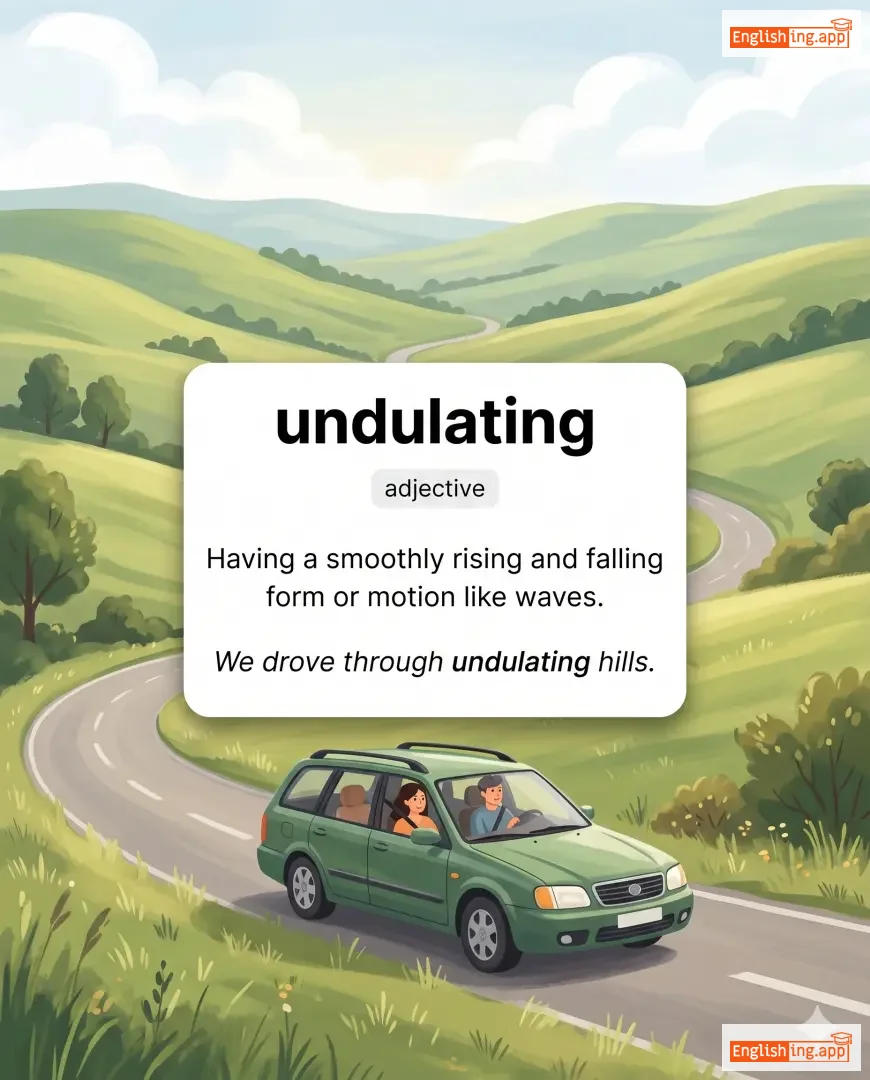
undulating definition card — visual illustration of the meaning
adjective
/ˈʌndjʊleɪtɪŋ/
波打つ (namiutsu)

Having a smoothly rising and falling form or motion like waves.

"We drove through undulating hills."

"私たちは起伏のある丘をドライブしました。" (Watashitachi wa kifuku no aru oka o doraibu shimashita.)
adjective
/ˈʌndjʊləs/
波打つ (namiutsu)

Having a wavy surface or form.

"The artist painted the undulous sea at sunset."

"アーティストは夕日に照らされた波打つ海を描きました。" (Ātisuto wa yūhi ni terasareta namiutsu umi o egakimashita.)
verb
/ʌnˈɜːθ/
発掘する (hakkutsu suru)

To dig up from the ground or to discover something hidden.

"Archaeologists unearthed ancient artifacts at the site."

"考古学者たちはサイトで古代の遺物を発掘した。" (Kōkogakusha-tachi wa saito de kodai no ibutsu o hakkutsu shita.)
adjective
/ʌnˈɜːrθli/
超自然的 (chounaturaru)

Strange or unnatural in a way that seems not of this world

"The forest was filled with an unearthly glow."

"森は超自然的な輝きで満たされていました。" (Mori wa chounaturaru na kagayaki de mitasarete imashita.)
adjective
/ʌnˈiːzi/
不安な; 心配な; 落ち着かない (fuan na; shinpai na; ochitsukanai)

worried; anxious; uncomfortable; restless

"She felt uneasy about walking alone at night."

"彼女は夜一人で歩くことに不安を感じていた。" (Kanojo wa yoru hitori de aruku koto ni fuan o kanjite ita.)