語彙集

英単語辞書 | 単語の意味、定義、例文

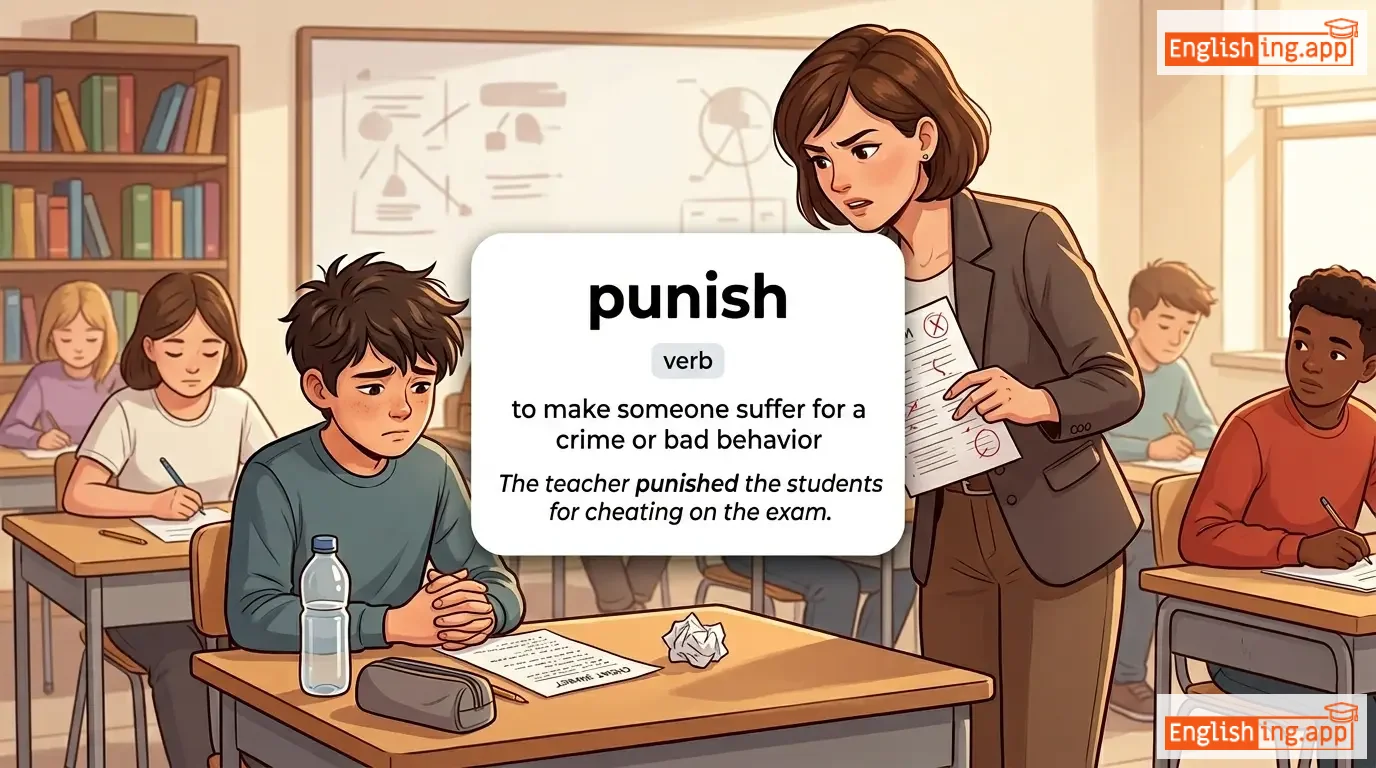
punish definition card — visual illustration of the meaning
verb
/ˈpʌnɪʃ/
罰する (bassuru)

to make someone suffer for a crime or bad behavior

"The teacher punished the students for cheating on the exam."

"教師は試験でカンニングをした学生を罰した。" (Kyoushi wa shiken de kanningu wo shita gakusei wo basshita.)
noun
/ˈpʌnɪʃmənt/
(batsu)

the infliction of a penalty as retribution for an offense or wrongdoing

"The criminal received a harsh punishment for his crime."

"犯人はその犯罪に対して厳しい罰を受けました。" (Hannin wa sono hanzai ni taishite kibishii batsu o ukemashita.)
adjective
/ˈpjuː.nɪ.tɪv/
懲罰的 (chōbatsuteki)

Inflicting or intended as punishment.

"The company faced punitive measures for violating the law."

"その会社は法を違反したため、懲罰的措置に直面しました。" (Sono kaisha wa hō o ihan shita tame, chōbatsuteki sochi ni chokumen shimashita.)
noun
/pʌnˈdʒɑː.bi/
パンジャビ (panjabi)

a traditional long shirt worn in South Asia, typically loose-fitting

"He wore a white punjabi for the festival celebration."

"彼は祭りのために白いパンジャビを着ていました。" (Kare wa matsuri no tame ni shiroi panjabi o kite imashita.)
noun
/pʌŋk/
パンク (panku)

a type of popular music, or the culture associated with it, characterized by loud, fast rhythms and rebellious attitudes

"He’s always been into punk music and fashion."

"彼はいつもパンク音楽とファッションに興味を持っている。" (Kare wa itsumo panku ongaku to fasshon ni kyōmi o motte iru.)
adjective
/ˈpjuː.ni/
弱い (yowai)

Small, weak, or insignificant.

"He felt puny compared to his stronger classmates."

"彼は自分の強いクラスメートと比較して、自分が弱いと感じていました。" (Kare wa jibun no tsuyoi kurasumeto to hikaku shite, jibun ga yowai to kanjite imashita.)
noun
/ˈpjuːpəl/
生徒; 瞳 (seito; hitomi)

a student, especially a young one; the central opening of the eye that lets in light

"The pupil listened carefully to the teacher during class."

"生徒は授業で先生の話を注意深く聞いた。" (seito wa jugyou de sensei no hanashi o chuui bukaku kiita)
noun
/ˈpjuː.pɪ.lɪdʒ/
生徒の状態 (seito no joutai)

The state of being a pupil or under instruction.

"During his pupilage, he studied law under a senior barrister."

"彼の生徒の状態の間に、彼は上級弁護士のもとで法学を学びました。" (Kare no seito no joutai no aida ni, kare wa joukyuu bengoshi no moto de hougaku o manabimashita.)
noun
/ˈpʌp.i/
子犬 (koinu)

a young dog

"The puppy wagged its tail when it saw its owner."

"子犬は尾を振った、飼い主を見たとき。" (Koinu wa o o futta, kainushi o mita toki.)
adjective
/ˈpɜːˌblaɪnd/
盲目または無知 (moumoku matawa muchi)

Having impaired or defective vision; lacking insight or understanding.

"The purblind approach to the problem led to many mistakes."

"問題に対する盲目的なアプローチは多くの間違いを招いた。" (Mondai ni taisuru moumokuteki na apurōchi wa ooku no machigai o manekita.)
purchase definition card — visual illustration of the meaning
verb
/ˈpɜː.tʃəs/
購入 (kounyuu)

To buy something by paying money for it.

"She purchased a new laptop from the store."
"彼女は店で新しいノートパソコンを購入しました。" (Kanojo wa mise de atarashī nōtopasokon o kōnyū shimashita.)
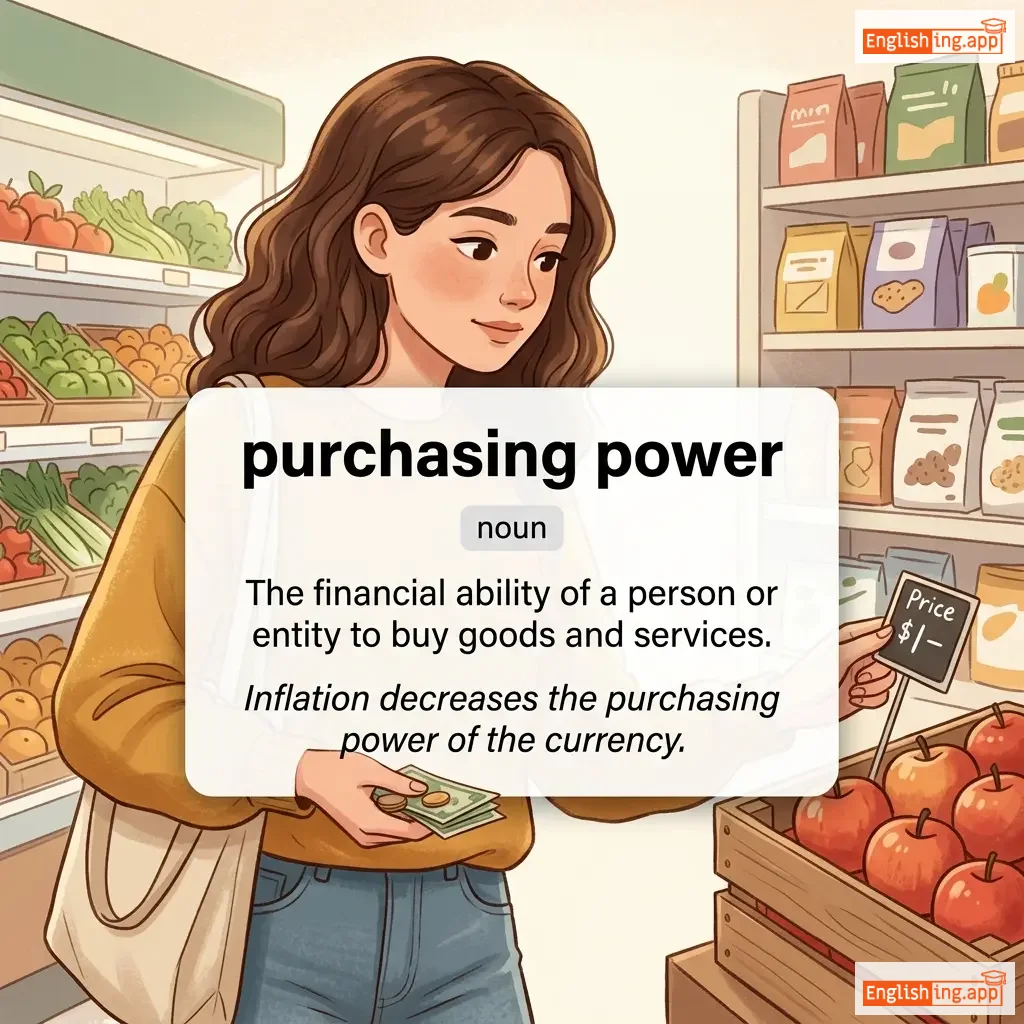
purchasing power definition card — visual illustration of the meaning
noun
ˈpɜːtʃəsɪŋ ˈpaʊər
購買力 (kōbairyoku)

The financial ability of a person or entity to buy goods and services.

"Inflation decreases the purchasing power of the currency."

"インフレは通貨の購買力を減少させます。" (Infure wa tsūka no kōbairyoku o genshō sasemasu.)
adjective
/pjʊə(r)/
純粋 (junsui)

free from anything that contaminates or taints; clean

"She has a pure heart and always helps others."

"彼女は純粋な心を持ち、いつも他の人を助けます。" (Kanojo wa junsui na kokoro o mochi, itsumo hoka no hito o tasukemasu.)
adverb
/ˈpjʊərli/
純粋に (junsui ni)

only and completely; entirely

"The decision was purely based on economic factors."

"その決定は完全に経済的な要因に基づいていました。" (Sono kettei wa kanzen ni keizaiteki na yōin ni motozuite imashita.)
noun
/ˈpɜːrɡəˌtɔːri/

A place or state of suffering inhabited by the souls of sinners who are expiating their sins before going to heaven; a temporary condition of torment or suffering.

"After the accident, the long recovery felt like a kind of purgatory."

verb
/pɜːrdʒ/
浄化する (jōka suru)

To remove unwanted feelings, people, or things; to cleanse or purify.

"The new leader promised to purge corruption from the government."
"新しいリーダーは政府から腐敗を一掃することを約束しました。" (Atarashī rīdā wa seifu kara fuhai o issō suru koto o yakusoku shimashita.)
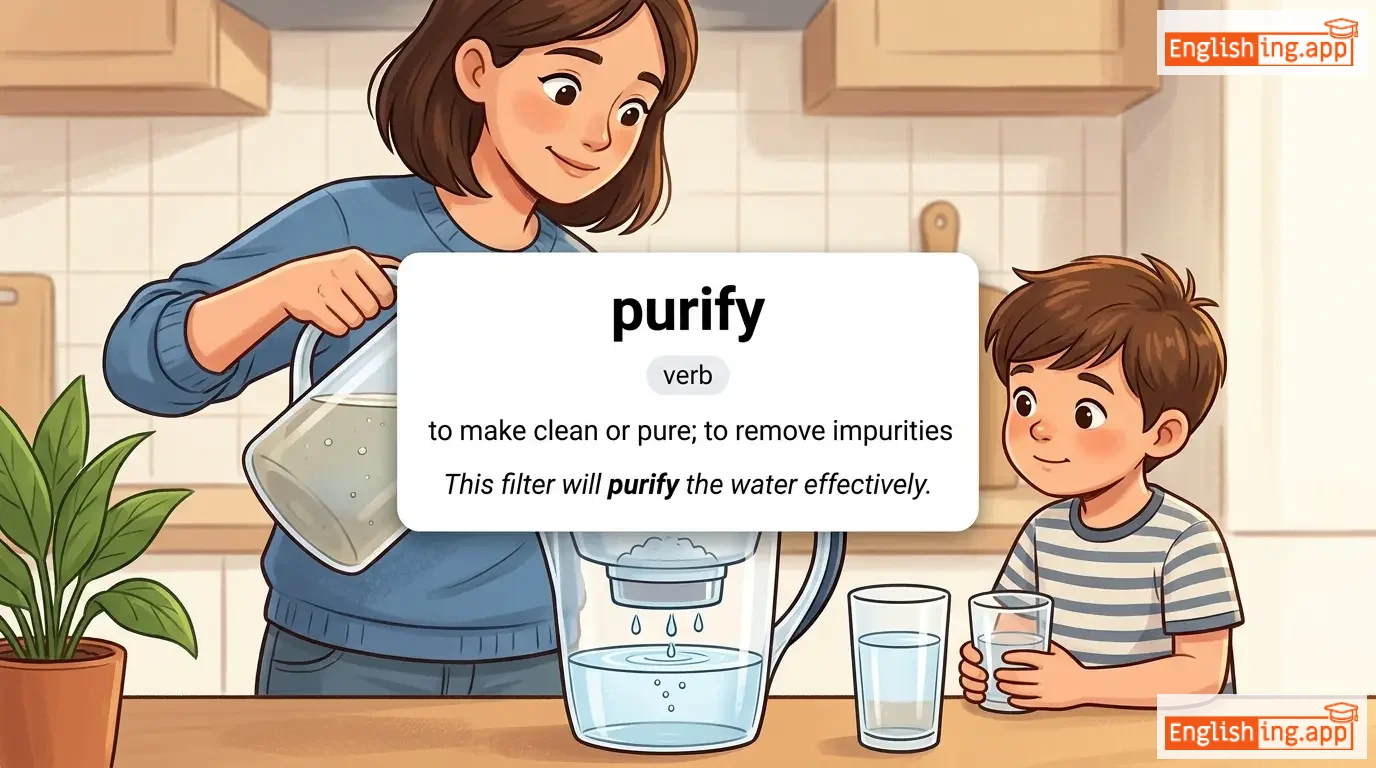
purify definition card — visual illustration of the meaning
verb
/ˈpjʊərɪfaɪ/
浄化する (jouka suru)

to make clean or pure; to remove impurities

"This filter will purify the water effectively."

"このフィルターは水を効果的に浄化します。" (Kono firutā wa mizu o kōka-teki ni jōka shimasu.)
noun
/ˈpjʊrəti/
純粋さ (junsuisa)

The quality or state of being pure; freedom from contamination or sin.

"The mountain air was admired for its purity."

"山の空気はその純粋さで賞賛されました。" (Yama no kūki wa sono junsuisa de shōsan saremashita.)
verb
/pɜːrl/
ささやくような音で流れる (sasayaku yō na oto de nagareru)

To knit with a purl stitch; to flow with a murmuring sound (as a stream).

"The brook purled softly through the meadow."

"小川は草地を静かに流れた。" (Ogawa wa kusachi o shizuka ni nagareta.)
noun
/ˈpɜːrljuː/
周辺地域 (shūhen chiiki)

The area near or surrounding a place; an outlying or neighboring district.

"They spent the afternoon exploring the purlieus of the ancient city."

"彼らは古代都市のパーリューを探索して午後を過ごした。" (Karera wa kodai toshi no pāryū o tansaku shite gogo o sugoshita.)
verb
/pərˈlɔɪn/
盗む (nusumu)

to steal something, often in a sneaky or dishonest way

"He tried to purloin a book from the library without being noticed."

"彼は図書館から本を盗もうとしたが、気づかれなかった。" (Kare wa toshokan kara hon o nusumou to shita ga, kizukarenakatta.)
adjective
/ˈpɜː.pəl/
(murasaki)

a color that is a mix of red and blue

"She wore a beautiful purple dress to the party."

"彼女はパーティーに美しい紫のドレスを着て行きました。" (Kanojo wa pātii ni utsukushī murasaki no doresu o kite ikimashita.)
verb
/ˈpɜːrpɔːrt/
主張する (shuchou suru)

to claim or profess something, often falsely

"The document purports to be an official government report."

"その文書は公式な政府報告書であると主張しています。" (Sono bunsho wa kōshiki na seifu hōkokusho de aru to shuchō shiteimasu.)
adjective
/pərˈpɔːrtɪd/
主張された (shuchou sareta)

alleged or claimed to be true, often without proof

"The purported evidence was later proven false."

"主張された証拠は後に間違っていると証明されました。" (Shuchou sareta shouko wa ato ni machigatte iru to shoumei saremashita.)
noun
/ˈpɜːpəs/
目的 (mokuteki)

the reason for which something is done or created

"The purpose of this meeting is to discuss the new project."

"この会議の目的は新しいプロジェクトについて議論することです。" (Kono kaigi no mokuteki wa atarashii purojekuto ni tsuite giron suru koto desu.)
noun
/pɜːrs/
財布 (saifu)

a small bag used by women to carry money and personal items

"She kept her wallet in her purse."

"彼女は財布をバッグに入れました。" (Kanojo wa saifu o baggu ni iremashita.)
adjective
/pərˈsuːənt/
に従って (ni shitagatte)

in accordance with or following something, especially a law or rule

"The decision was made pursuant to the regulations."

"その決定は規則に従って行われました。" (Sono kettei wa kisoku ni shitagatte okonawaremashita.)
verb
/pərˈsuː/
追求する (tsuikyū suru)

to follow or chase with the intent to catch or achieve something

"She decided to pursue her dreams of becoming a doctor."

"彼女は医者になるという夢を追い求めることに決めました。" (Kanojo wa isha ni naru to iu yume o oimotomeru koto ni kimemashita.)
noun
/pəˈsjuːt/
追求, 探求 (tsuikyū, tankyū)

the act of chasing or trying to achieve something

"He dedicated his life to the pursuit of happiness."

"彼は幸福を追い求めることに人生を捧げた。" (Kare wa kōfuku o oimotomeru koto ni jinsei o sasageta.)
verb
/pərˈveɪ/
供給する (kyoukyuu suru)

to supply or provide goods, services, or information, often as a business

"The company purveys organic food to health-conscious customers."

"その会社は健康意識の高い顧客にオーガニック食品を供給しています。" (Sono kaisha wa kenkou ishiki no takai kokyaku ni ooganikku shokuhin o kyoukyuu shiteimasu.)
noun
/pərˈveɪər/

a person or business that supplies goods, services, or information

"He is a well-known purveyor of fine wines."

noun
/ˈpɜːrvjuː/
範囲 (han'i)

the scope or range of authority, responsibility, or knowledge

"The case does not fall within the purview of this court."
"この事件はこの裁判所の管轄外です。" (Kono jiken wa kono saibansho no kankatsugai desu.)
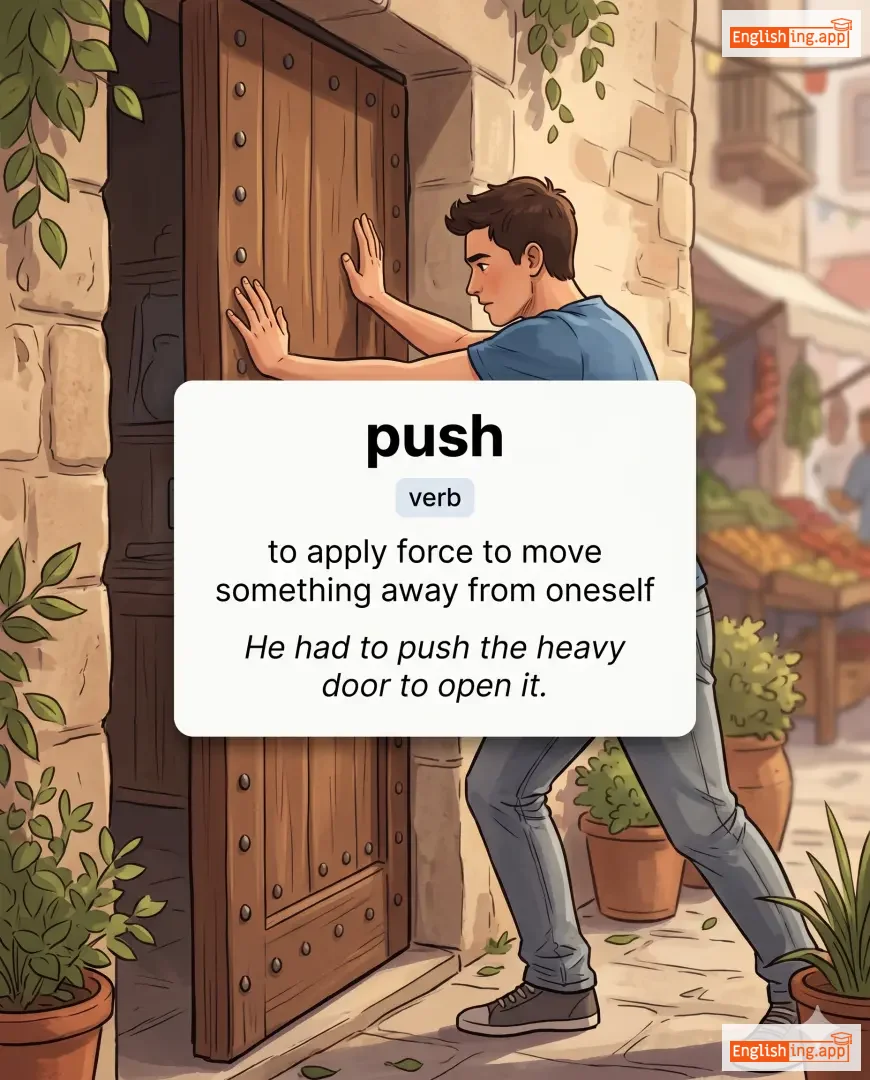
push definition card — visual illustration of the meaning
verb
/pʊʃ/
押す (osu)

to apply force to move something away from oneself

"He had to push the heavy door to open it."

"彼は重いドアを開けるために押さなければなりませんでした。" (Kare wa omoi doa wo akeru tame ni osanakereba narimasen deshita.)
adjective
/ˈpʊʃi/
押し付けがましい (oshitsuke gamashii)

excessively assertive or aggressive, often annoyingly so

"The salesperson was too pushy, which drove customers away."

"その販売員はあまりにも押し付けがましく、顧客を遠ざけました。" (Sono hanbaiin wa amari ni mo oshitsuke gamashiku, kokyaku wo toozakemashita.)
adjective
/ˌpjuːsɪˈlænɪməs/
臆病な (okubyona)

showing a lack of courage or determination; timid

"The pusillanimous leader avoided making tough decisions."

"臆病なリーダーは難しい決断を避けていた。" (Okubyona ri-da- wa muzukashii ketsudan wo saketeta.)
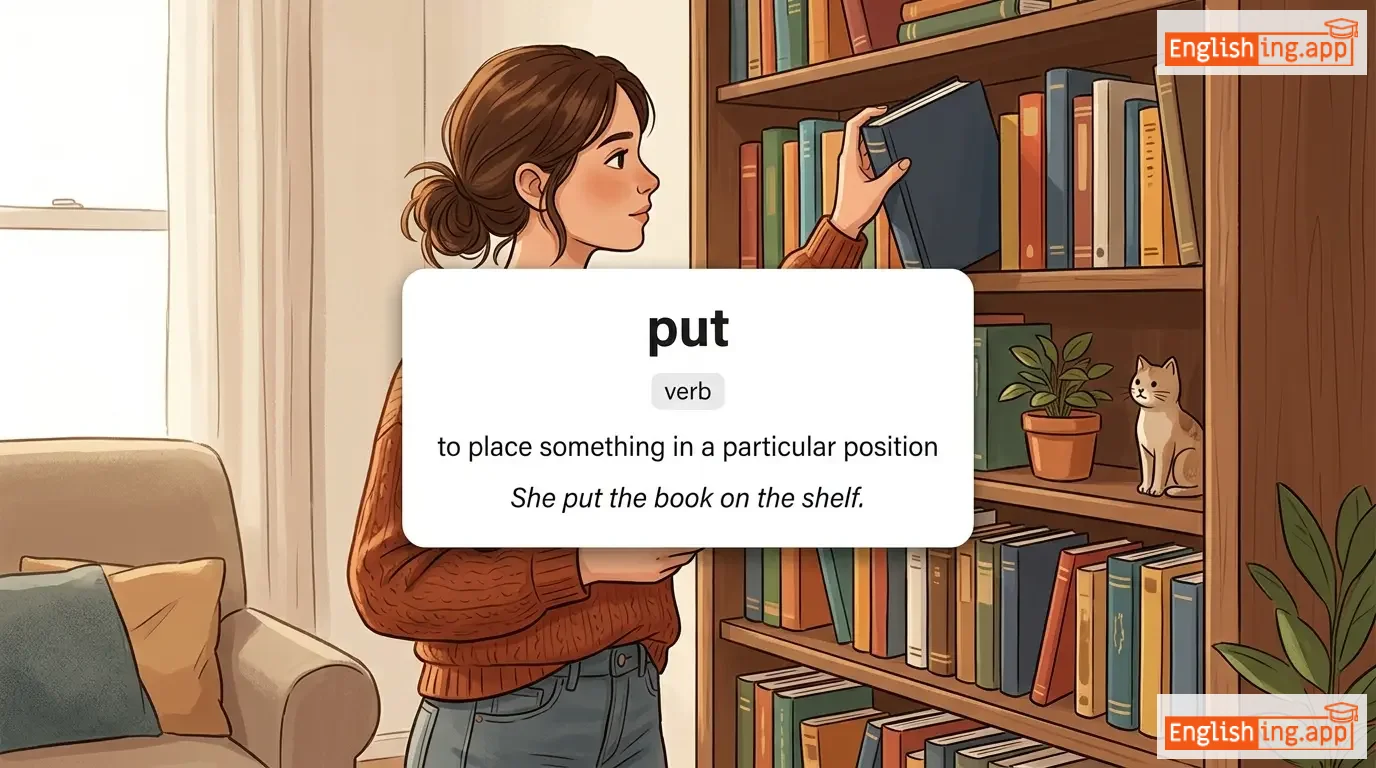
put definition card — visual illustration of the meaning
verb
/pʊt/
置く (oku)

to place something in a particular position

"She put the book on the shelf."

"彼女は本を棚に置いた。" (Kanojo wa hon o tana ni oita.)
adjective
/ˈpjuːtətɪv/
推定の (suitei no)

commonly accepted or supposed; generally regarded as such

"He is the putative father of the child."

"彼は子供の推定父親です。" (Kare wa kodomo no suitei chichioya desu.)
verb
/ˈpjuːtrɪfaɪ/
腐敗する (fuhai suru)

to decay or rot, producing a foul smell

"The meat began to putrefy in the heat."

"肉は熱で腐り始めました。" (Niku wa netsu de kusari hajimemashita.)
adjective
/pjuːˈtrɛsənt/
腐敗した (fuhai shita)

undergoing the process of decay; rotting

"The putrescent odor made everyone leave the room."

"腐敗した臭いでみんな部屋を出て行った。" (Fuhai shita nioi de minna heya wo dete itta.)
adjective
/ˈpjuːtrɪd/
腐った (kusatta)

decayed and emitting a foul smell

"The garbage smelled putrid after days in the sun."
"ゴミは何日も太陽の下で放置された後、腐った臭いを発しました。" (Gomi wa nandemo taiyō no moto de hōchi sareta ato, kusatta nioi o hasshimasita.)
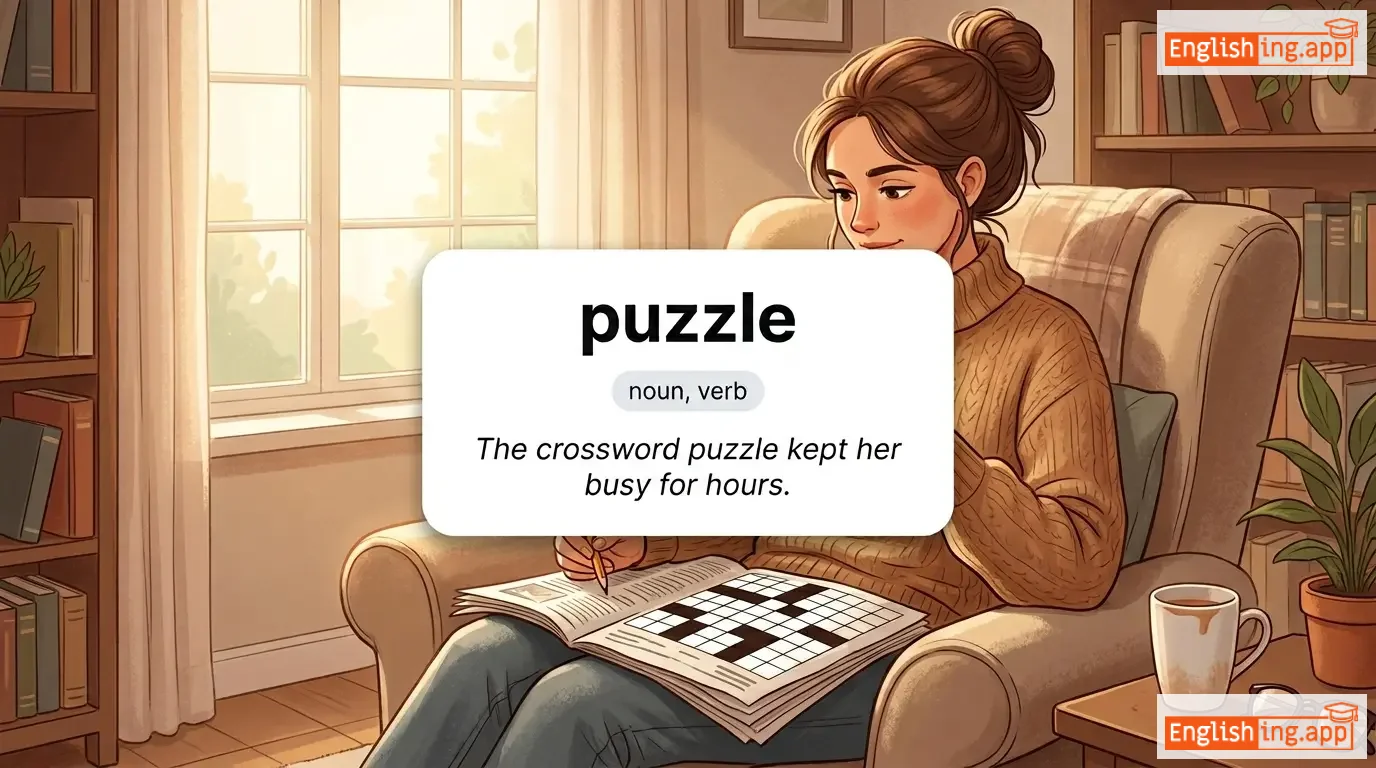
puzzle definition card — visual illustration of the meaning
noun, verb
/ˈpʌzl/
パズル / 困らせる (pazuru / komaraseru)

a game, toy, or problem designed to test ingenuity; to cause someone to be confused

"The crossword puzzle kept her busy for hours."

"クロスワードパズルは彼女を数時間忙しくさせました。" (Kurosuwādo pazuru wa kanojo o suū jikan isogashiku sasemashita.)
adjective
/ˈpʌz.lɪŋ/
不可解な (pazuringu)

confusing; perplexing;

"The scientist found the results puzzling."

"科学者はその結果を謎めいたと感じた。" (Kagakusha wa sono kekka o nazomeita to kanjita.)
noun
/paɪər/
火葬の火 (kasou no hi)

A heap of combustible material, especially one used for burning a corpse as part of a funeral ceremony.

"The villagers built a pyre to honor the deceased."

"村人たちは亡くなった人を敬うために火葬の火を作った。" (Mura no hitobito wa nakunatta hito o uyamau tame ni kasou no hi o tsukutta.)
noun
/ˌpaɪrəˈmeɪniə/
火をつけたいという抑制できない欲望 (hi o tsukettai to iu yokusei dekinai yokubou)

An uncontrollable desire to set things on fire.

"The suspect was diagnosed with pyromania after repeated incidents of arson."

"容疑者は繰り返される放火事件後にパイロマニアと診断されました。" (Yougisha wa kurikaesareru houka jiken go ni pairomania to shindan saremashita.)
noun
/ˌpaɪroʊˈmeɪniæk/
放火魔 (hōkama)

A person with an uncontrollable desire to set things on fire.

"The pyromaniac was arrested for setting several buildings ablaze."

"放火魔は数軒の建物に火をつけたことで逮捕された。" (Hōkama wa suken no tatemono ni hi wo tsuketa koto de taiho sareta.)
adjective
/ˌpaɪroʊˈtɛknɪk/
花火技術 (hanabi gijutsu)

Relating to fireworks or spectacular displays involving fire.

"The city celebrated with a grand pyrotechnic display on New Year's Eve."

"街は大晦日に盛大な花火技術のショーを祝いました。" (Machi wa oomisoka ni seidana hanabi gijutsu no shou wo iwai mashita.)
adjective
/ˈpɪrɪk/
ピリック勝利 (pirikku shōri)

A victory won at such a great cost that it is almost equivalent to defeat.

"The general declared the battle a pyrrhic victory due to heavy losses."

"将軍は大きな損失のため、この戦いをピリック勝利と宣言した。" (Shōgun wa ōkina sonshitsu no tame, kono tatakai o pirikku shōri to sengen shita.)
noun
/ˈpaɪ.θən/
ニシキヘビ (nishikihebi)

a large non-venomous snake that kills prey by constriction

"The python wrapped around its prey tightly."

"ニシキヘビは獲物をきつく巻きつけました。" (Nishikihebi wa emono o kitsuku makitsukemashita.)
noun
/pɪks/
聖体を入れるための小さな容器 (seitai o ireru tame no chiisana youki)

a small container, often used in Christian liturgy to carry the consecrated host

"The priest placed the consecrated host into the pyx before visiting the sick."

"司祭は病人を訪れる前に聖体をピクスに入れました。" (Shisai wa byoujin o otozureru mae ni seitai o pikusu ni iremashita.)