語彙集

英単語辞書 | 単語の意味、定義、例文

verb
/præns/
誇らしげに歩く (hokorashige ni aruku)

To move with high, springy steps, often to show off or attract attention.

"The horse pranced around the field gracefully."

"その馬は誇らしげにフィールドを歩いていました。" (Sono uma wa hokorashige ni fiirudo o aruite imashita.)
noun
/præŋk/
いたずら (itazura)

A trick that is intended to be funny but not harmful.

"They played a harmless prank on their friend during the party."

"彼らはパーティーで友達と無害ないたずらをしました。" (Karera wa pātii de tomodachi to mugai na itazura o shimashita.)
verb
/preɪt/
無駄話をする (mudabanashi o suru)

to talk foolishly or at tedious length about something

"He would prate endlessly about his minor achievements."

"彼は彼の小さな達成について無駄に長く話すことを終わらせなかった。" (Kare wa kare no chiisana tassei ni tsuite mudani nagaku hanasu koto o owarasenakatta.)
verb
/ˈprætəl/
おしゃべり (oshaberi)

to talk at length in a foolish or inconsequential way

"The children would prattle on about their games."

"子供たちは自分たちのゲームについておしゃべりをしていた。" (Kodomotachi wa jibuntachi no gēmu ni tsuite oshaberi o shite ita.)
noun
/prɔːn/
エビ (ebi)

a large marine crustacean similar to shrimp but typically bigger

"The chef prepared delicious prawn curry with coconut milk."

"シェフはココナッツミルクでおいしいエビカレーを作りました。" (shefu wa kokonattsu miruku de oishii ebi kare o tsukurimashita.)
verb
/preɪ/
祈る (inoru)

to speak to a deity, especially for help or thanks

"Every night, she prays for her family’s safety."

"毎晩、彼女は家族の安全を祈ります。" (Maiban, kanojo wa kazoku no anzen o inorimasu.)
noun
/ˈprɛər/
祈り (inori)

a solemn request for help or expression of thanks addressed to God or another deity

"She recited a prayer before the meal."

"彼女は食事の前に祈りを捧げました。" (Kanojo wa shokuji no mae ni inori o sasagemashita.)
verb
/priːˈɛmpt/

to act in advance to prevent an anticipated event from happening; forestall

"The government moved to pre-empt a crisis by introducing new policies."

verb
/priːtʃ/
説教する (sekkyou suru)

to deliver a religious or moral talk, often in a church setting

"The pastor preached about forgiveness and kindness."
"牧師は許しと親切について説教しました。" (Bokusha wa yurushi to shinsetsu ni tsuite sekkyou shimashita.)
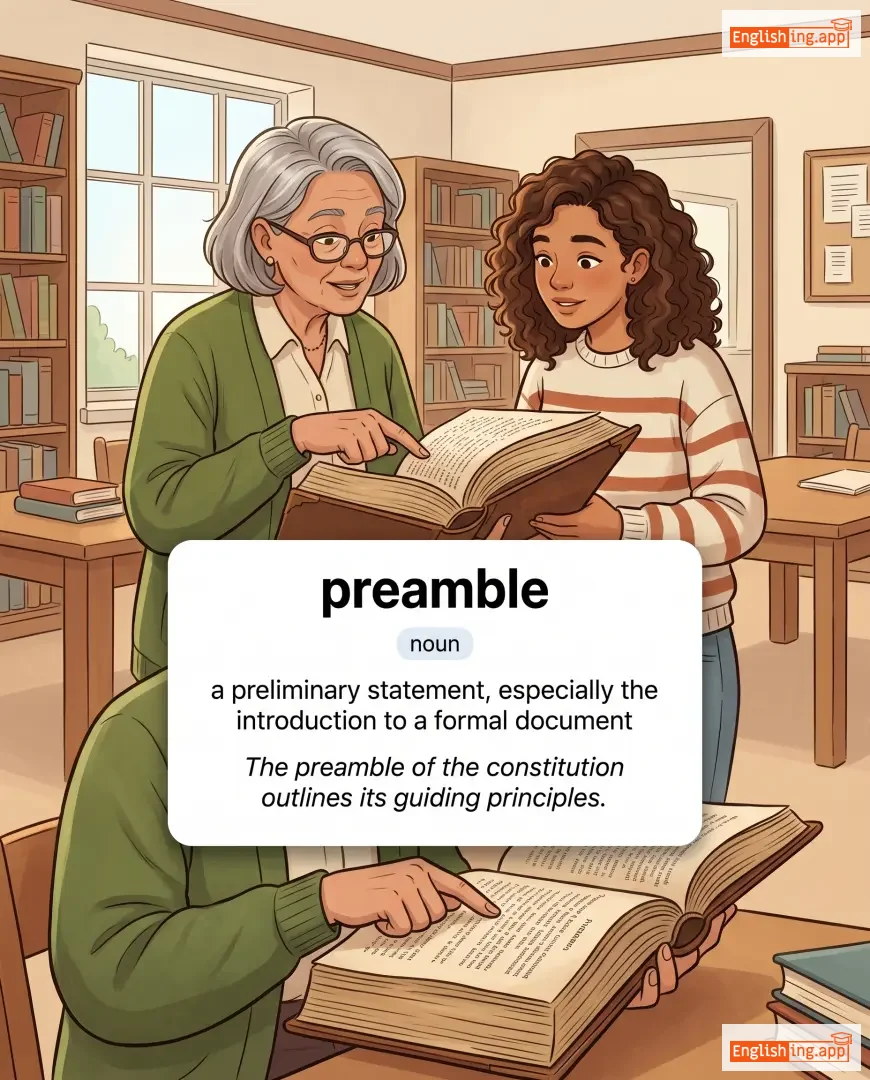
preamble definition card — visual illustration of the meaning
noun
/ˈpriːˌæmbəl/
前文 (zenbun)

a preliminary statement, especially the introduction to a formal document

"The preamble of the constitution outlines its guiding principles."
"憲法の前文はその基本的な原則を説明しています。" (Kenpo no zenbun wa sono kihonteki na gensoku o setsumei shiteimasu.)
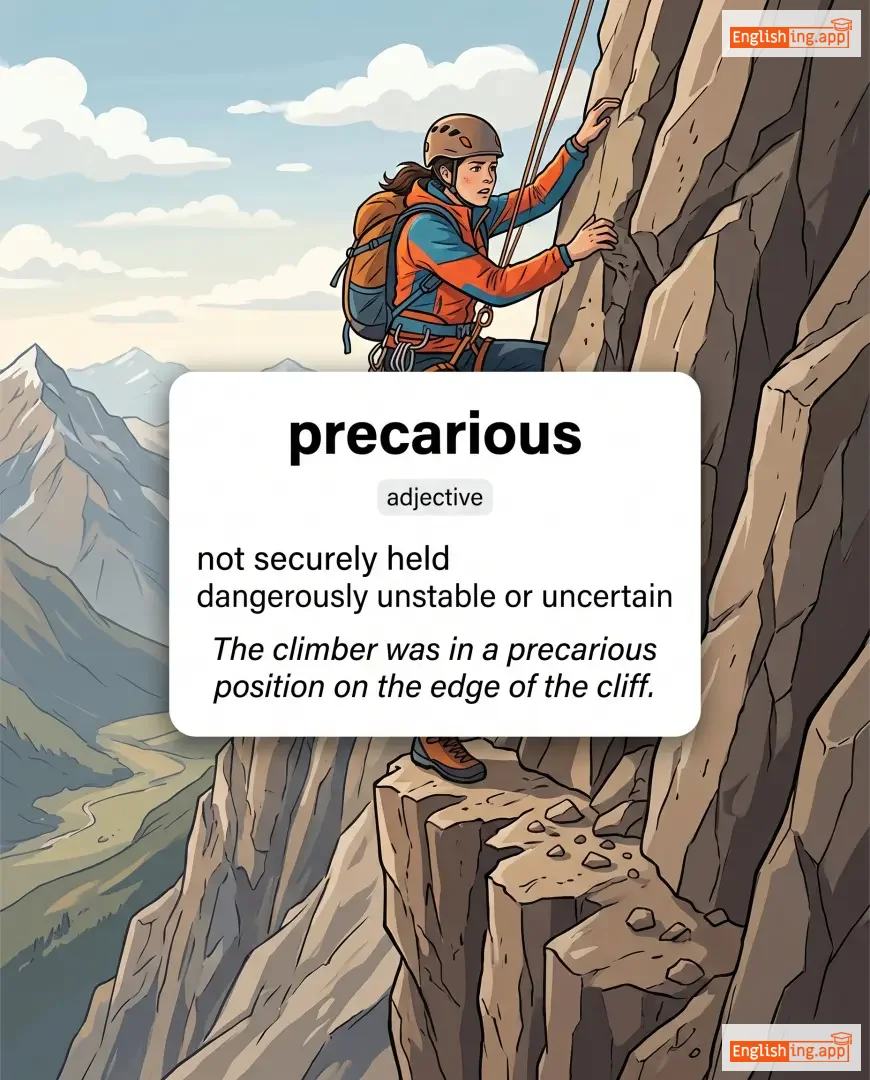
precarious definition card — visual illustration of the meaning
adjective
/prɪˈkɛəriəs/
不安定 / 危険 (fuantei / kiken)

not securely held; dangerously unstable or uncertain

"The climber was in a precarious position on the edge of the cliff."

"登山者は崖の端にある危険な位置にいました。" (Tōzansha wa gake no hashi ni aru kiken na ichi ni imashita.)
noun
/prɪˈkɔːʃən/
予防措置 (yobō sochi)

a measure taken in advance to prevent harm or danger

"You should take precaution when crossing a busy road."

"混雑した道路を渡るときは予防措置を取るべきです。" (Konzatsu shita dōro o wataru toki wa yobō sochi o toru beki desu.)
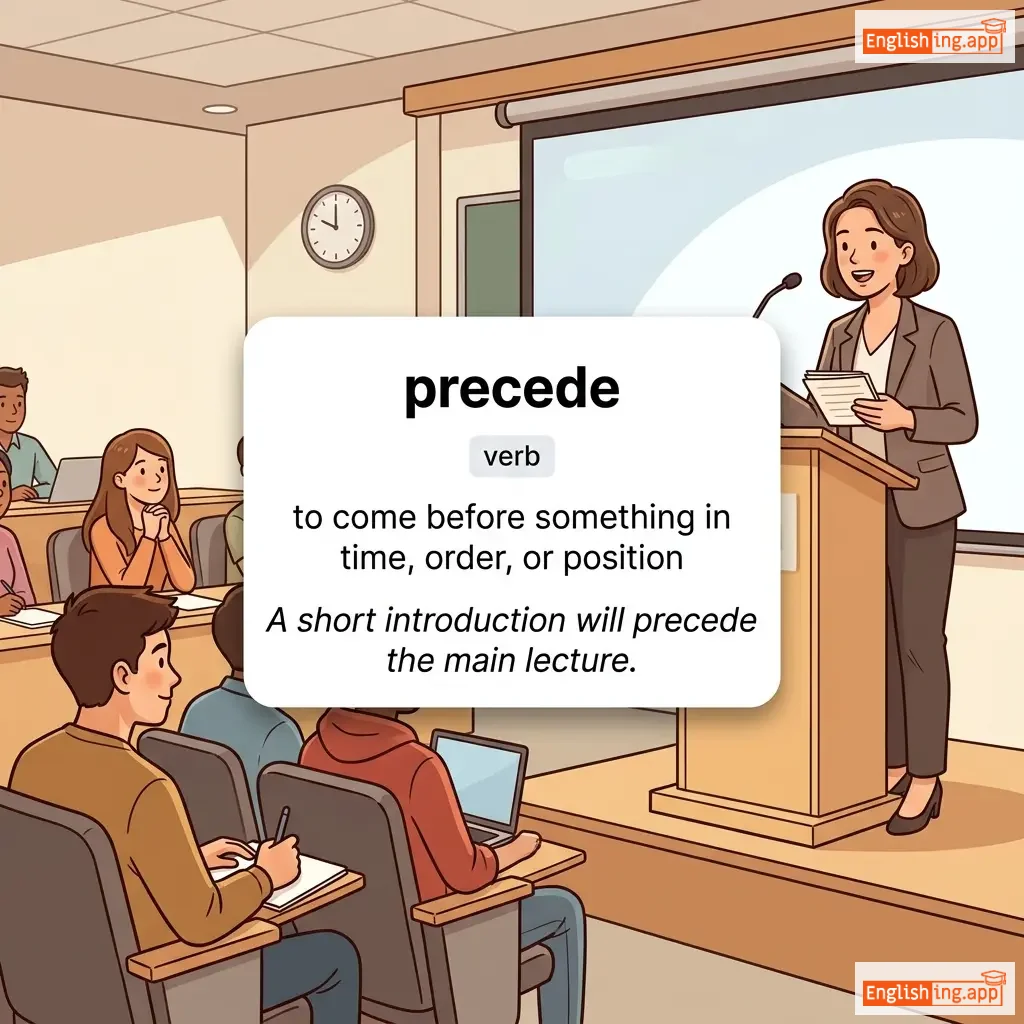
precede definition card — visual illustration of the meaning
⏮️

precede

verb
/prɪˈsiːd/

to come before something in time, order, or position

"A short introduction will precede the main lecture."

verb
/prɪˈsiːdɪd/
先行した (senkō shita)

came before something in time, order, or position

"Dark clouds preceded the heavy rainfall."

"暗い雲が大雨に先立って現れた。" (Kurai kumo ga ōame ni senkō shita.)
noun
/ˈprɛsɪdəns/ or /prɪˈsiːdəns/
優先 (yusen)

the condition of being considered more important than someone or something else; priority

"Safety takes precedence over speed in this factory."

"この工場では、安全が速度より優先されます。" (Kono koujou dewa, anzen ga sokudo yori yusen saremasu.)
noun
/ˈprɛsɪdənt/
前例 (zenrei)

An earlier event or decision that serves as a guide or example for future similar situations.

"The judge’s ruling set a new precedent for similar cases."

"裁判官の判決は、同様の事件のための新たな前例を設定した。" (Saibankan no hanketsu wa, douyou no jiken no tame no aratana zenrei o settei shita.)
adjective
/ˌprɛsɪˈdɛnʃəl/
先例的 (senreiteki)

Relating to, or serving as, a precedent; having authority as an example.

"The court’s decision has precedential value."

"裁判所の決定は先例的価値を持っています。" (Saibansho no kettei wa senreiteki kachi wo motteimasu.)
noun
/ˈpriːsɛpt/
教義 (kyougi)

A general rule intended to regulate behavior or thought.

"Honesty is a fundamental precept in all religions."

"正直はすべての宗教における基本的な教義です。" (Shoujiki wa subete no shuukyou ni okeru kihonteki na kyougi desu.)
noun
/prɪˈsɛʃən/
歳差 (saika)

The slow movement of the axis of a spinning body around another axis, often referring to Earth's rotation.

"Astronomers study the precession of the equinoxes."

"天文学者は春分点の歳差を研究しています。" (Tenmongakusha wa shunbunten no saika o kenkyū shiteimasu.)
noun
/ˈpriːsɪŋkt/
区域 (kuiki)

A district or area within the boundaries of a city, often for police or electoral purposes.

"She went to vote at her local precinct."

"彼女は地元の選挙区で投票に行った。" (Kanojo wa jimoto no senkyoku de tōhyō ni itta.)
noun
/ˌprɛsiˈɒsɪti/
過度の洗練 (kado no senren)

Excessive refinement or affected elegance in language, style, or behavior.

"The author's preciosity made the novel difficult to read for some audiences."

"著者の過度の洗練は、いくつかの読者にとって小説を読みづらくしました。" (chosha no kado no senren wa, ikutsuka no dokusha ni totte shōsetsu o yomizuraku shimashita.)
adjective
/ˈprɛʃəs/
貴重な (kichōna)

of great value; highly esteemed or cherished

"This ring is very precious to my grandmother."

"この指輪は祖母にとってとても貴重です。" (Kono yubiwa wa sobo ni totte totemo kichō desu.)
noun
/ˈprɛsɪpɪs/
絶壁 (zetteki)

A very steep cliff or a situation of great danger.

"The hikers stood at the edge of the precipice, gazing into the valley below."

"ハイカーたちは絶壁の端に立ち、下の谷を見ていました。" (Haikātachi wa zetteki no hashi ni tachi, shita no tani o miteimashita.)
noun/adjective
/prɪˈsɪpɪtənt/
沈殿剤 (chinden-zai)

As a noun: a substance that causes a substance to be deposited from a solution; as an adjective: acting hastily or impulsively.

"The chemist added a precipitant to the solution to observe the reaction."
"化学者は反応を観察するために溶液に沈殿剤を加えました。" (Kagakusha wa hannō o kansatsu suru tame ni yōeki ni chinden-zai o kuwaemashita.)
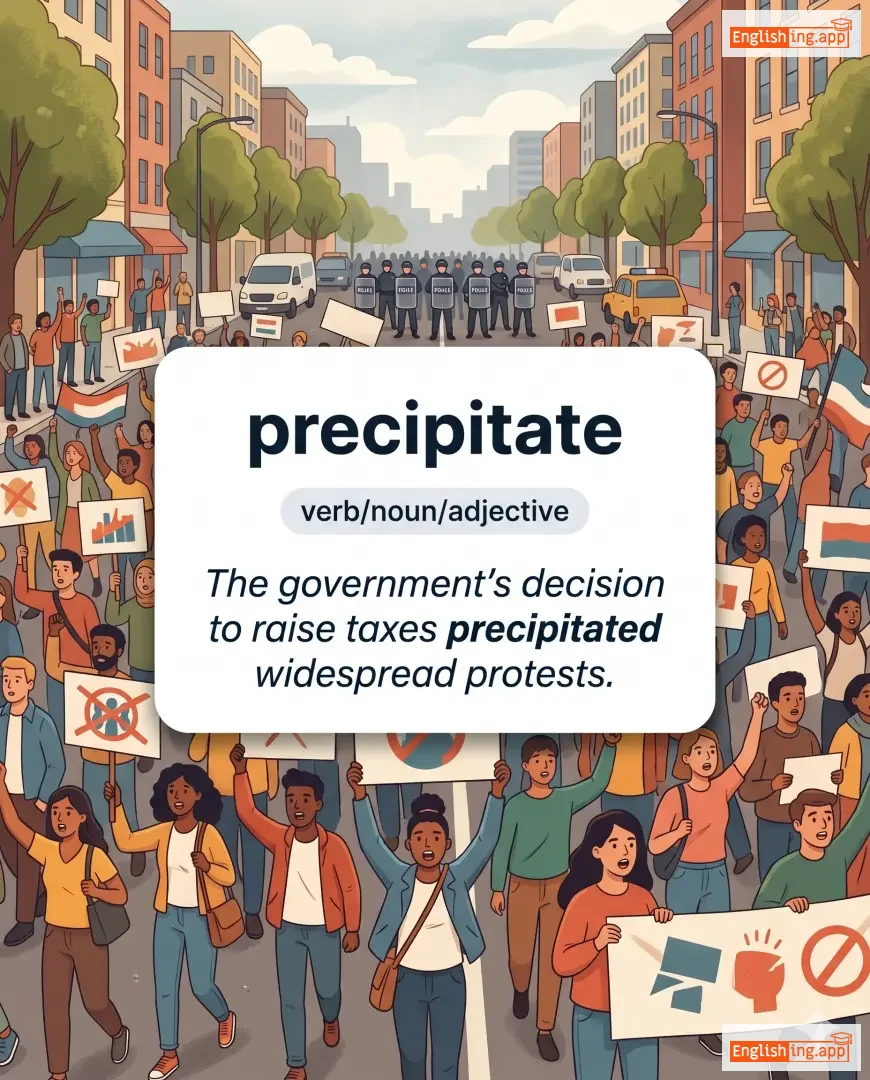
precipitate definition card — visual illustration of the meaning
verb/noun/adjective
/prɪˈsɪpɪteɪt/

As a verb: to cause an event or situation, often suddenly or prematurely; as a noun: a solid formed in a chemical solution; as an adjective: done hastily.

"The government's decision to raise taxes precipitated widespread protests."
precipitation definition card — visual illustration of the meaning
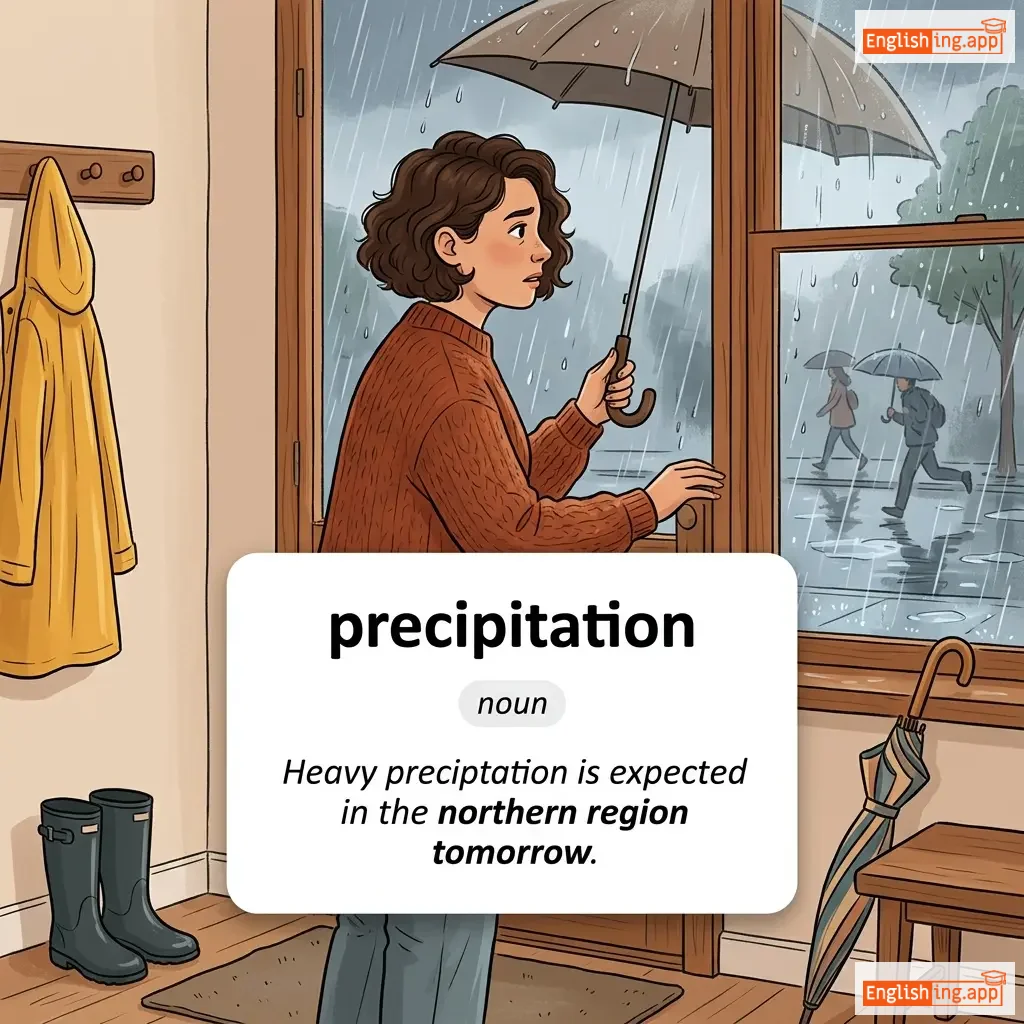
noun
/prɪˌsɪpɪˈteɪʃən/
降水 (kōsui)

Moisture that falls from the atmosphere as rain, snow, sleet, or hail; or the process of being precipitated.

"Heavy precipitation is expected in the northern region tomorrow."

"明日、北部地域で激しい降水が予想されます。" (Ashita, hokubu chiiki de hageshī kōsui ga yosō saremasu.)
adjective
/prɪˈsɪpɪtəs/
急なまたは突然の (kyuu na mata wa totsuzen no)

Extremely steep or sudden; done quickly without careful consideration.

"The hikers struggled to climb the precipitous slope."

"ハイカーたちは急な坂道を登るのに苦労していました。" (Haikaa-tachi wa kyuu na sakamichi o noboru no ni kurou shite imashita.)
noun
/ˈpreɪsiː/
要約 (yōyaku)

a short summary of a text or speech

"She wrote a précis of the lecture for her classmates."

"彼女はクラスメートのために講義の要約を書きました。" (Kanojo wa kurasumēto no tame ni kōgi no yōyaku o kakimashita.)
adjective
/prɪˈsaɪs/
正確な (seikaku na)

Marked by exactness and accuracy of expression or detail.

"She gave precise instructions for the experiment."
"彼女は実験のために正確な指示を与えた。" (Kanojo wa jikken no tame ni seikaku na shiji o ataeta.)
precisely definition card — visual illustration of the meaning
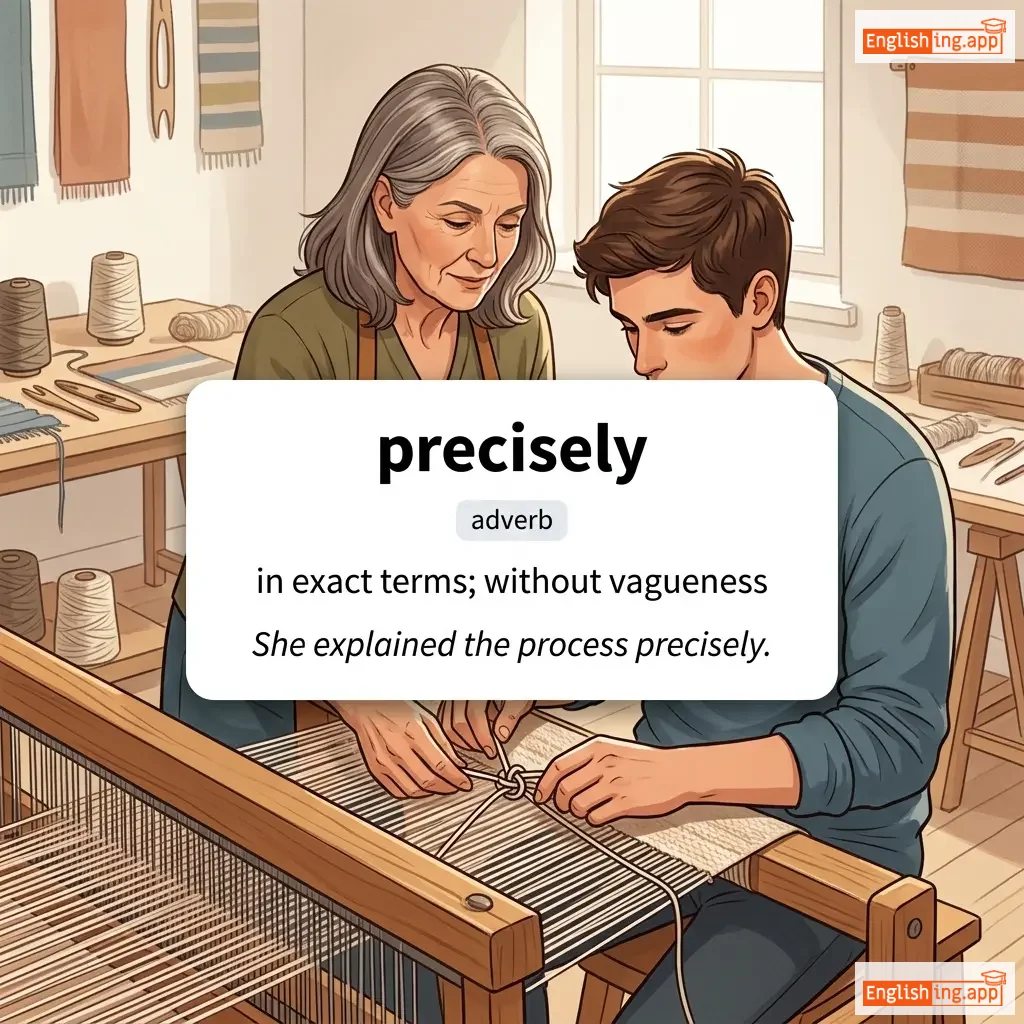
adverb
/prɪˈsaɪsli/
正確に (seikaku ni)

in exact terms; without vagueness

"She explained the process precisely."
"彼女はそのプロセスを正確に説明しました。" (Kanojo wa sono purosesu o seikaku ni setsumei shimashita.)
precision definition card — visual illustration of the meaning
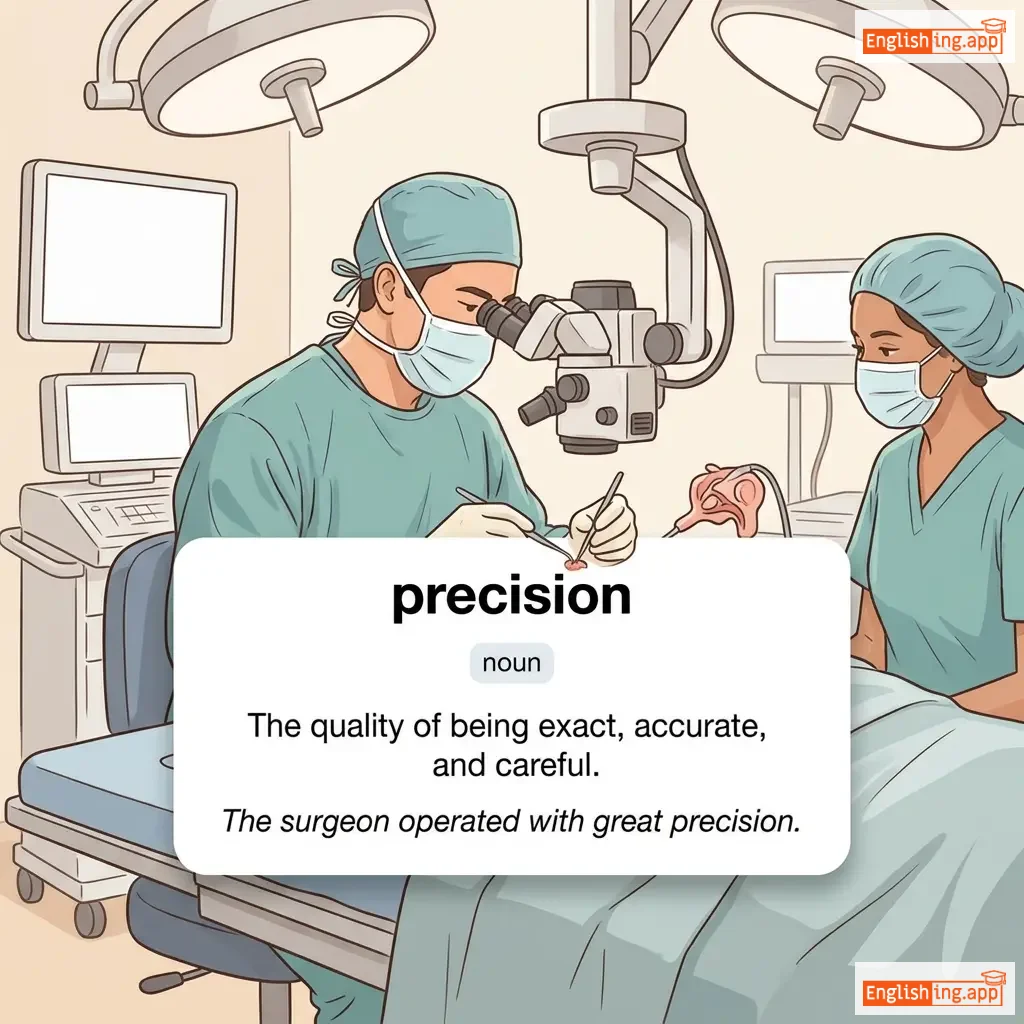
noun
/prɪˈsɪʒən/
精度 (seido)

The quality of being exact, accurate, and careful.

"The surgeon operated with great precision."
"外科医は高い精度で手術を行った。" (geka-i wa takai seido de shujutsu o okonatta.)
precision agriculture definition card — visual illustration of the meaning
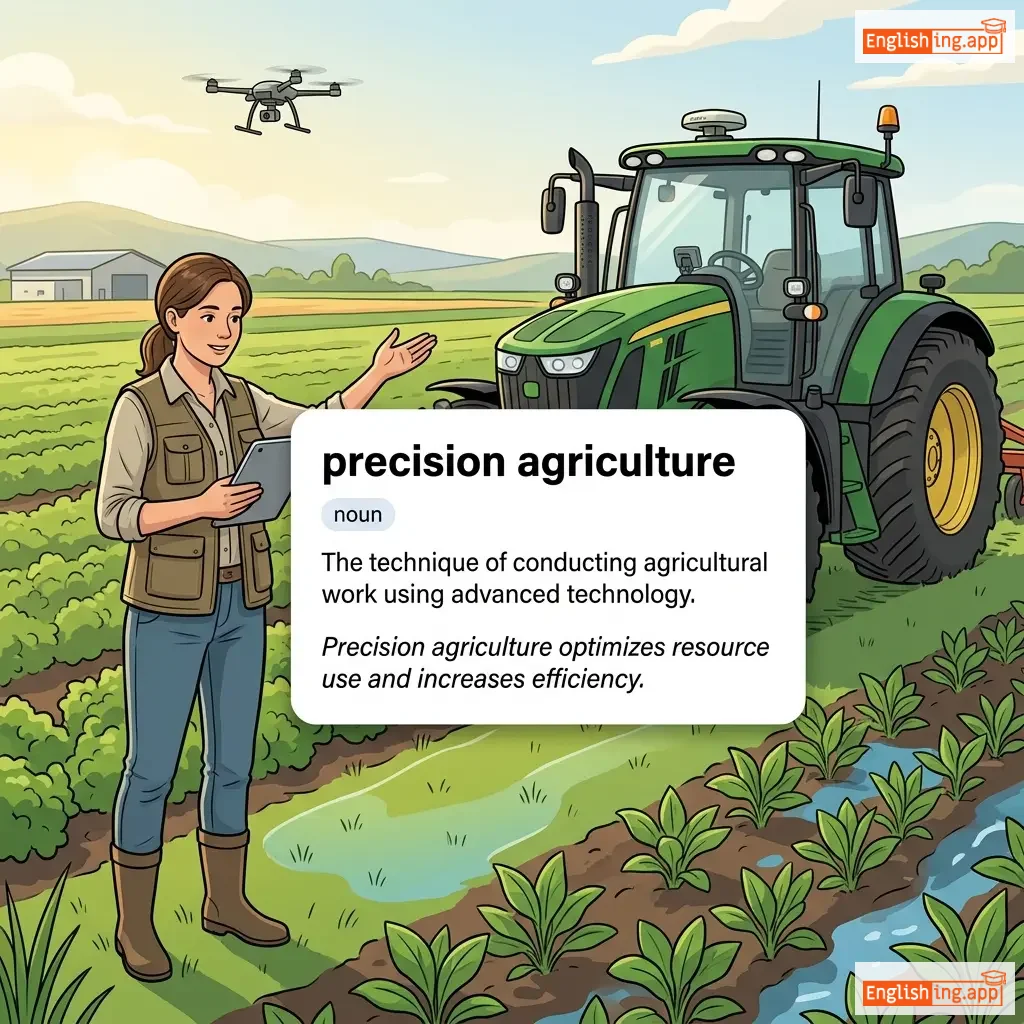
noun
prɪˈsɪʒ.ən ˈæɡ.rɪ.kʌl.tʃər
精密農業 (seimitsu nogyo)

The technique of conducting agricultural work using advanced technology.

"Precision agriculture optimizes resource use and increases efficiency."

"精密農業は資源の使用を最適化し、効率を向上させます。" (Seimitsu nougyou wa shigen no shiyou o saitekika shi, kouritsu o koujou sasemasu.)
verb
/prɪˈkluːd/
排除する (haijo suru)

To prevent something from happening; to make impossible.

"Heavy rain precluded the possibility of a picnic."

"大雨がピクニックの可能性を排除した。" (Ōame ga pikunikku no kanōsei o haijo shita.)
adjective
/prɪˈkoʊʃəs/
早熟 (sōjuku)

Showing advanced development or maturity at an unusually early age.

"The precocious child was reading novels at the age of five."
"その早熟な子供は5歳で小説を読んでいました。" (Sono sōjuku na kodomo wa 5-sai de shōsetsu o yonde imashita.)
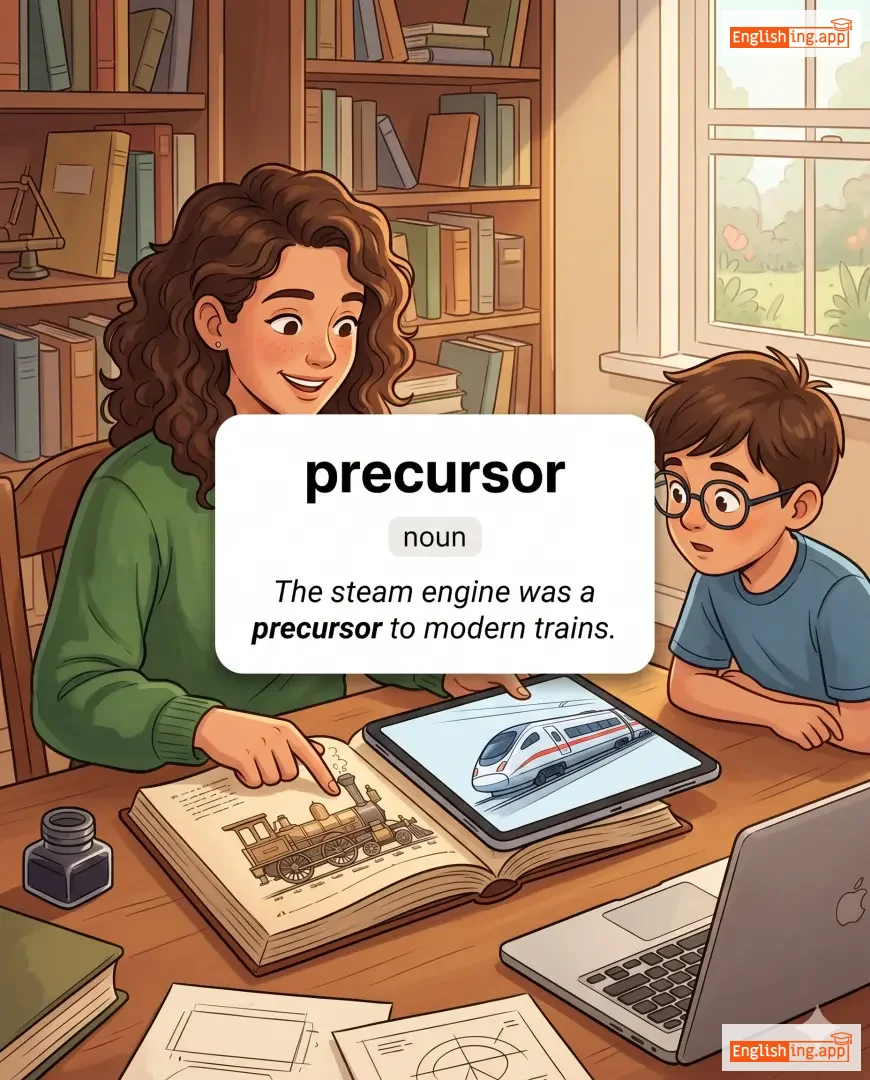
precursor definition card — visual illustration of the meaning
noun
/ˈpriːˌkɜrsər/
前兆 (zenchou)

Something or someone that comes before another and indicates the approach of something else.

"The steam engine was a precursor to modern trains."

"蒸気機関車は現代の列車の前兆でした。" (Jouki kikansha wa gendai no ressha no zenchou deshita.)
noun
/ˈprɛdətər/
捕食者 (hoshokusha)

An animal that hunts and kills other animals for food.

"Lions are powerful predators in the savannah."

"ライオンはサバンナで強力な捕食者です。" (Raion wa sabanna de kyōryokuna hoshokusha desu.)
adjective
/ˈprɛdəˌtɔri/
捕食者/搾取者 (hossoku-sha/sakushu-sha)

Relating to animals that prey on others; exploiting or victimizing others for personal gain.

"The predatory bird swooped down on its prey."

"捕食性の鳥は獲物に向かって急降下した。" (Hossoku-sei no tori wa emono ni mukatte kyū kōka shita.)
noun
/ˈprɛdəˌsɛsər/
前任 (zenjin)

A person who held a position or office before the current holder.

"The new CEO thanked her predecessor for his service."

"新しいCEOは、彼の前任者にそのサービスに感謝しました。" (Atarashī CEO wa, kare no zenjinsha ni sono sābisu ni kansha shimashita.)
verb
/priːˈdɛstɪn/
運命づける (unmei zukeru)

to determine or decide something in advance, often regarded as being fixed by fate or divine will

"They believed their paths were predestined by fate."

"彼らは自分たちの道が運命によって前もって定められていると信じていました。" (Karera wa jibuntachi no michi ga unmei ni yotte maemotte sadamerarete iru to shinjite imashita.)
verb
/ˌpriːdɪˈtɜːrmɪn/
予め決定する (あらかじめけっていする)

to establish or decide something in advance

"The outcome of the match seemed predetermined."
"試合の結果は予め決められていたようだった。" (Shiai no kekka wa arakajime kimerarete ita you datta.)
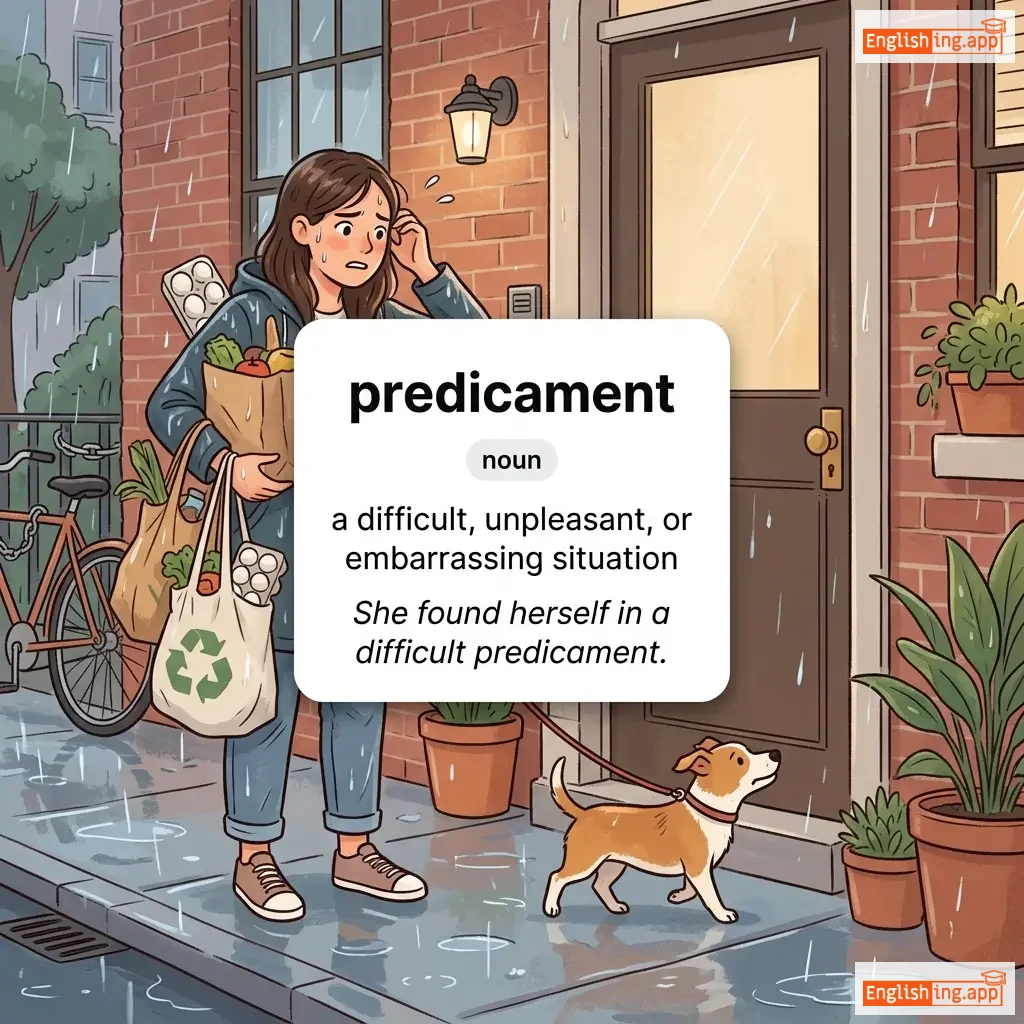
predicament definition card — visual illustration of the meaning
noun
/prɪˈdɪkəmənt/
窮地 (kyoudi)

a difficult, unpleasant, or embarrassing situation

"She found herself in a difficult predicament."

"彼女は困難な窮地に立たされました。" (Kanojo wa konnan na kyoudi ni tatasaremashita.)
noun/verb
/ˈprɛdɪkət/ (noun), /ˈprɛdɪkeɪt/ (verb)
述語 / 基づく (jutsugo / motozuku)

noun: the part of a sentence that tells something about the subject; verb: to base or establish something on a particular idea

"His theory is predicated on sound research."

"彼の理論は確かな研究に基づいています。" (Kare no riron wa tashikana kenkyuu ni motozuiteimasu.)
verb
/prɪˈdɪkt/
予測する (yosoku suru)

to say what will happen in the future based on knowledge or reasoning

"Experts predict a rise in fuel prices."

"専門家たちは燃料価格の上昇を予測しています。" (Senmonka-tachi wa nenryō kakaku no jōshō o yosoku shiteimasu.)
adjective
/prɪˈdɪktəbəl/
予測可能 (yosoku kanou)

able to be predicted or foreseen

"His reactions were predictable based on his past behavior."

"彼の反応は過去の行動に基づいて予測可能でした。" (Kare no hannou wa kako no koudou ni motozuite yosoku kanou deshita.)
noun
/prɪˈdɪkʃən/
予測 (yosoku)

A statement about what will happen in the future based on knowledge or evidence.

"Her prediction about the weather turned out to be accurate."

"彼女の天気予報は正確だと証明されました。" (Kanojo no tenki yohō wa seikaku da to shōmei saremashita.)
noun
/ˌpriːdɪˈlɛkʃən/
嗜好 (shikou)

A strong liking or preference for something.

"She has a predilection for classical music."

"彼女はクラシック音楽に対する好みがあります。" (Kanojo wa kurashikku ongaku ni taisuru konomi ga arimasu.)
verb
/ˌpriːdɪˈspoʊz/
予備的にする (yobiteki ni suru)

To make someone more likely to behave in a certain way or be affected by something.

"His genetics may predispose him to diabetes."

"彼の遺伝子は、彼が糖尿病になる可能性を高めるかもしれません。" (Kare no idenshi wa, kare ga tōnyōbyō ni naru kanōsei o takameru kamoshiremasen.)
adjective
/ˌpriːdɪˈspoʊzd/
傾向 (keikou)

Likely or inclined to be affected by something in advance.

"She is predisposed to trust people easily."
"彼女は人々を簡単に信頼する傾向があります。" (Kanojo wa hitobito o kantan ni shinrai suru keikou ga arimasu.)
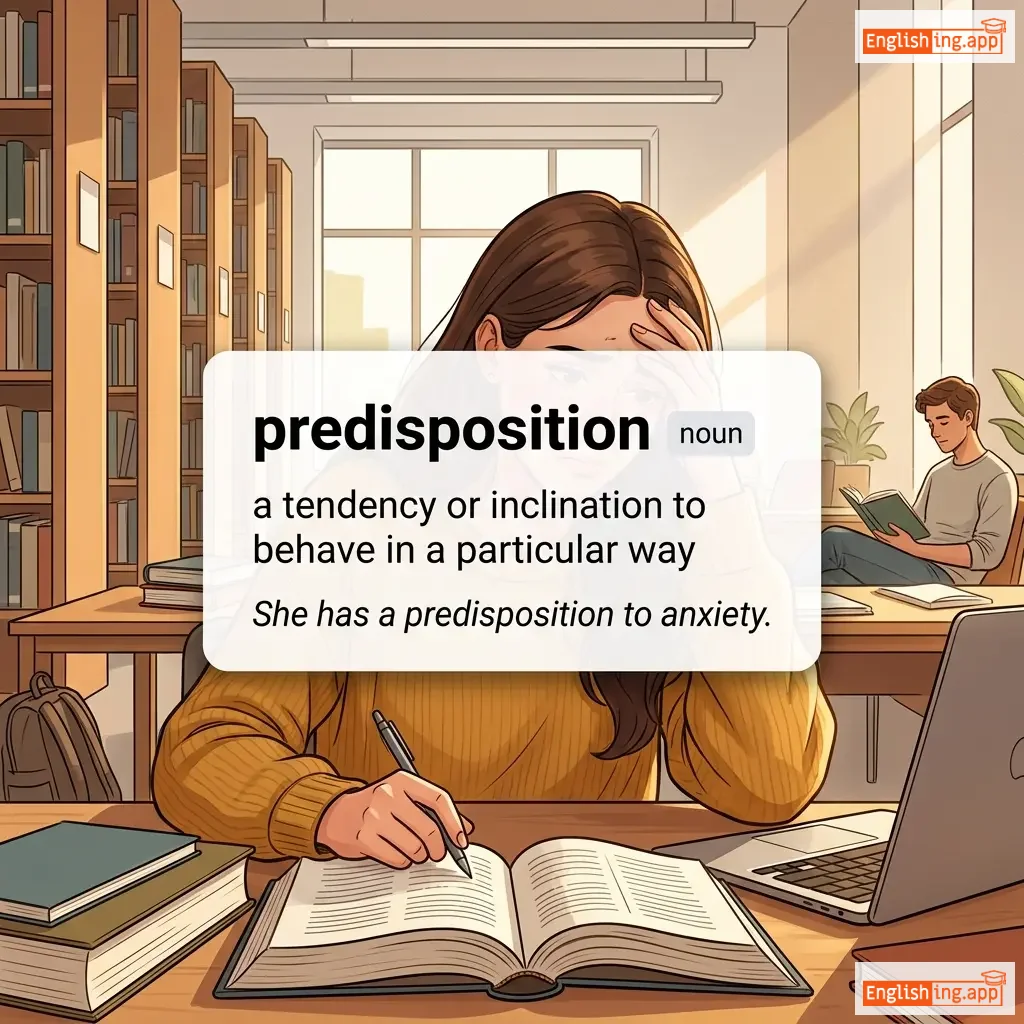
predisposition definition card — visual illustration of the meaning
noun
/ˌpriːdɪspəˈzɪʃən/
傾向 (keikou)

a tendency or inclination to behave in a particular way

"She has a predisposition to anxiety."

"彼女は不安に対する傾向があります。" (Kanojo wa fuan ni taisuru keikou ga arimasu.)
noun
/prɪˈdɒmɪnəns/
優越性 (yuetsusei)

The state of being greater in number, strength, or importance.

"The predominance of online shopping has changed retail forever."

"オンラインショッピングの優越性が小売業を永遠に変えました。" (Onrain shoppingu no yuetsusei ga kouri gyou wo eien ni kaemashita.)