語彙集

英単語辞書 | 単語の意味、定義、例文

noun
/oʊf/
不器用で愚かな人 (bukiyou de oroka na hito)

a clumsy, stupid, or awkward person

"He acted like an oaf at the dinner party, spilling drinks everywhere."

"彼はディナーパーティーで不器用な人のように振る舞い、あちこちに飲み物をこぼしました。" (Kare wa dinā pāti de bukiyou na hito no yō ni furumai, achikochi ni nomimono o koboshimashita.)
noun
/oʊk/
オークの木 (ōku no ki)

a large tree that produces acorns and has strong, hard wood

"The old oak tree provided shade for the entire yard."

"古いオークの木は庭全体に日陰を提供しました。" (furui ōku no ki wa niwa zentai ni hikage o teikyō shimashita.)
adjective
/ˈoʊ.kən/
オーク材で作られた (ooku zai de tsukurareta)

made of or resembling oak wood

"The villagers gathered around the oaken table in the hall."

"村人たちはホールの中のオーク材のテーブルの周りに集まりました。" (Murabito tachi wa hōru no naka no ōku zai no tēburu no mawari ni atsumarimashita.)
noun
/ˈoʊ.kəm/
古いロープの繊維 (furui roopu no sen'i)

loose fibers obtained by untwisting old ropes, used for caulking ships

"The shipbuilders used oakum to seal the gaps in the wooden planks."

"船大工たちは木の板の隙間を塞ぐためにオーカムを使いました。" (Funedaiku-tachi wa ki no ita no sukima wo fusagu tame ni okam wo tsukaimashita.)
noun
/ɔːr/
オール (ōru)

a long pole with a flat blade used to row a boat

"He dipped the oar into the water and pulled the boat forward."

"彼はオールを水に浸し、ボートを前に進めた。" (Kare wa ōru o mizu ni shingashi, bōto o mae ni susumeta.)
noun
/ˈɔːrzmən/
オールマン (ōruman)

a person who rows a boat, especially as a member of a racing crew

"The experienced oarsman rowed the boat across the river."

"経験豊富なオールマンは川を渡るためにボートを漕いだ。" (Keiken hōfu na ōruman wa kawa o wataru tame ni bōto o koida)
noun
/oʊˈeɪ.sɪs/
オアシス (oasis)

a fertile spot in a desert where water is found; a pleasant relief

"After hours in the desert, they finally reached an oasis."

"砂漠で数時間後、彼らはついにオアシスに到達しました。" (Sabaku de suujikan go, karera wa tsuini oasis ni toutatsu shimashita.)
noun
/oʊθ/
誓い (chikai)

a solemn promise, often invoking a divine witness

"She took an oath to tell the truth in court."

"彼女は法廷で真実を言う誓いを立てた。" (Kanojo wa hōtei de shinjitsu o iu chikai o tateta.)
noun
/ˈoʊtˌmiːl/
オートミール (ootomiiru)

A type of porridge made from ground oats, often eaten for breakfast.

"She eats a bowl of oatmeal every morning for breakfast."
"彼女は毎朝、朝食にオートミールを一杯食べます。" (Kanojo wa mai asa, choushoku ni ootomiru o ippai tabemasu.)
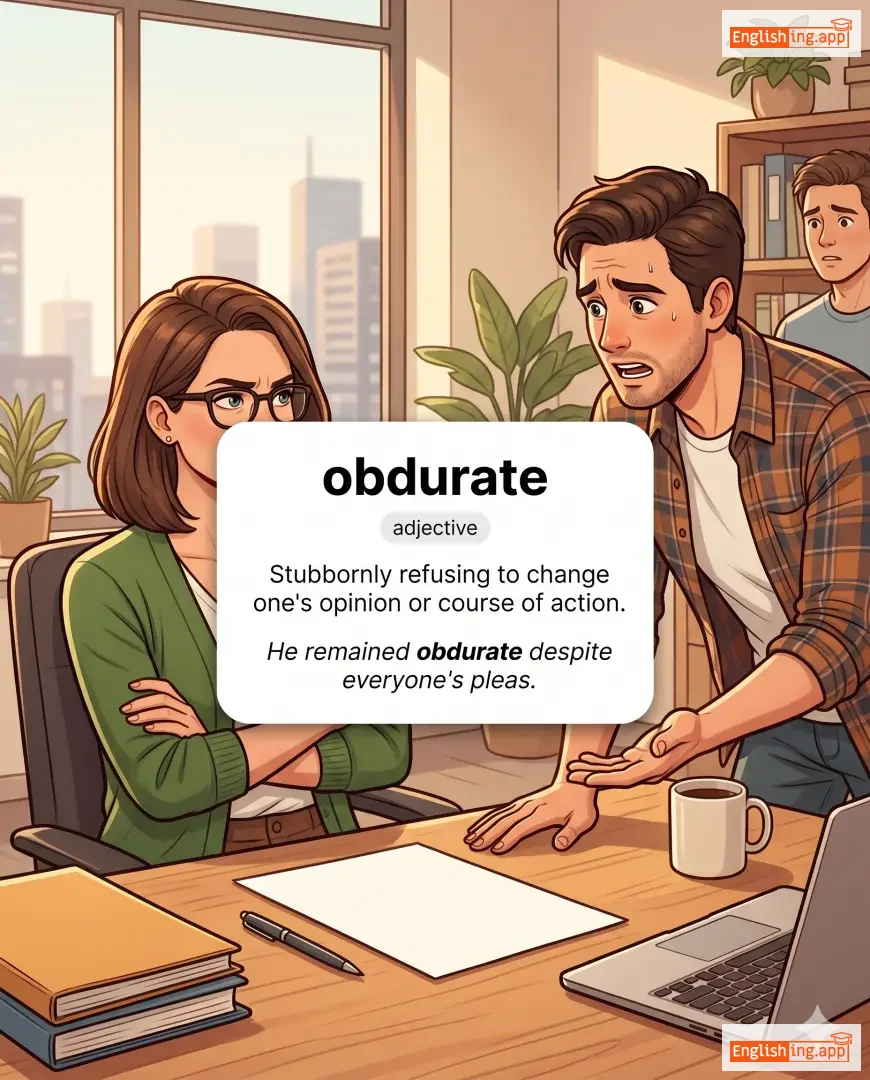
obdurate definition card — visual illustration of the meaning
adjective
/ˈɑːbdjʊrət/
頑固 (ganko)

Stubbornly refusing to change one's opinion or course of action.

"He remained obdurate despite everyone's pleas."

"彼は皆の懇願にもかかわらず、頑固なままでした。" (Kare wa mina no kongan ni mo kakawarazu, ganko na mama deshita.)
noun
/oʊˈbiː.di.əns/
服従 (fukujū)

compliance with an order, request, or law; submission to authority

"Children should show obedience to their parents."

"子供たちは両親に従うべきです。" (Kodomotachi wa ryōshin ni shitagau beki desu.)
adjective
/oʊˈbiːdiənt/
従順な (jūzun na)

Willing to comply with rules or authority.

"The obedient child quickly followed her mother's instructions."

"従順な子供は母親の指示にすぐ従った。" (Jūzun na kodomo wa hahaoya no shiji ni sugu shitagatta.)
noun
/oʊˈbeɪsəns/
敬意 (keii)

A gesture of respect such as a bow or curtsy.

"They bowed in obeisance to the king."

"彼らは王に対して敬意を示すためにお辞儀をした。" (Karera wa ō ni taishite keii o shimesu tame ni ojigi o shita.)
noun
/ˈɑːbəlɪsk/
オベリスク (oberisuku)

A tall, four-sided, narrow tapering monument with a pyramid-shaped top.

"The ancient Egyptians built obelisks to honor their gods."

"古代エジプト人は神々を讃えるためにオベリスクを建てました。" (Kodai Ejiputojin wa kamigami o tataeru tame ni oberisuku o tatemashita.)
adjective
/oʊˈbiːs/
肥満 (himan)

Extremely overweight; having an excessive amount of body fat.

"The doctor advised the obese patient to adopt a healthier lifestyle."

"医者は肥満患者に健康的な生活様式を採用するように勧めました。" (Isha wa himan kanja ni kenkou-teki na seikatsu youshiki wo saiyou suru you ni susumemashita.)
obesity definition card — visual illustration of the meaning
noun
/oʊˈbiːsəti/
肥満 (himan)

The condition of being very overweight, especially to a degree that it is harmful to health.

"Obesity is a growing health problem in many countries."
"肥満は多くの国々で増加している健康問題です。" (Himan wa ooku no kuniguni de zouka shiteiru kenkou mondai desu.)
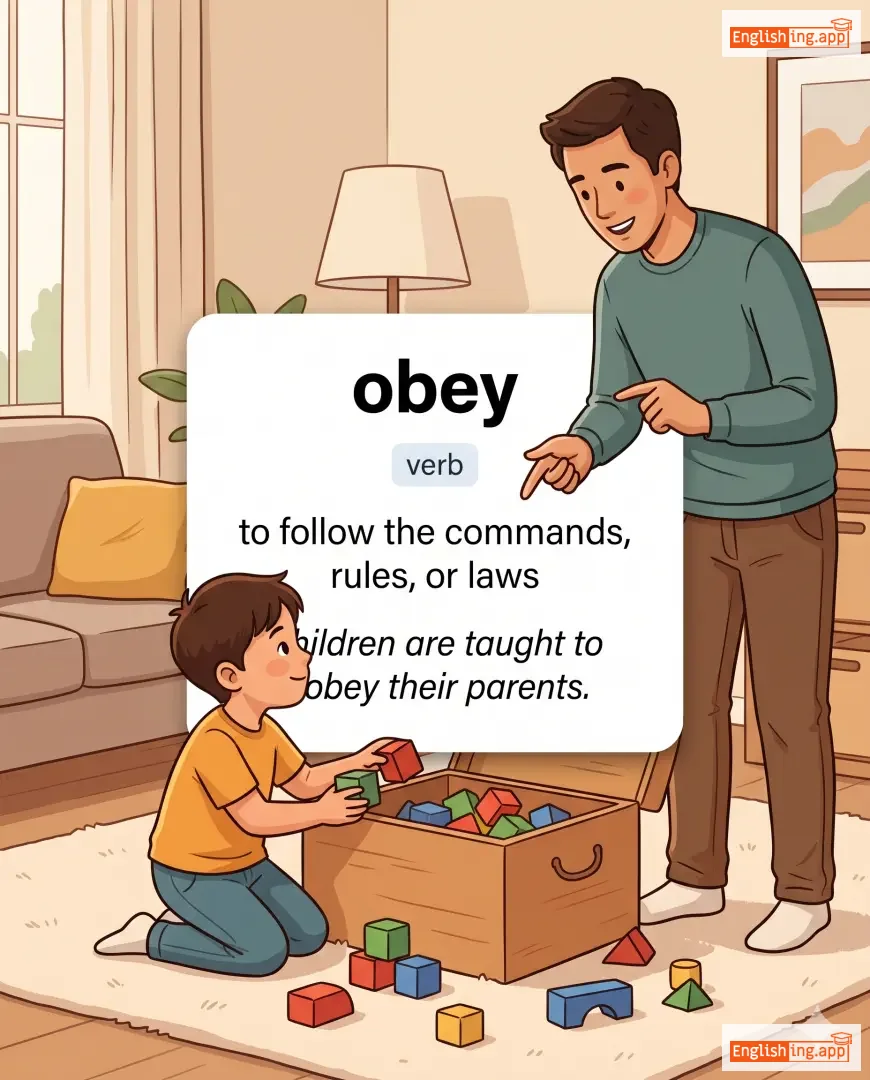
obey definition card — visual illustration of the meaning
verb
/oʊˈbeɪ/
従う (shitagau)

to follow the commands, rules, or laws

"Children are taught to obey their parents."
"子供たちは親に従うように教えられています。" (Kodomotachi wa oya ni shitagau yō ni oshierareteimasu.)
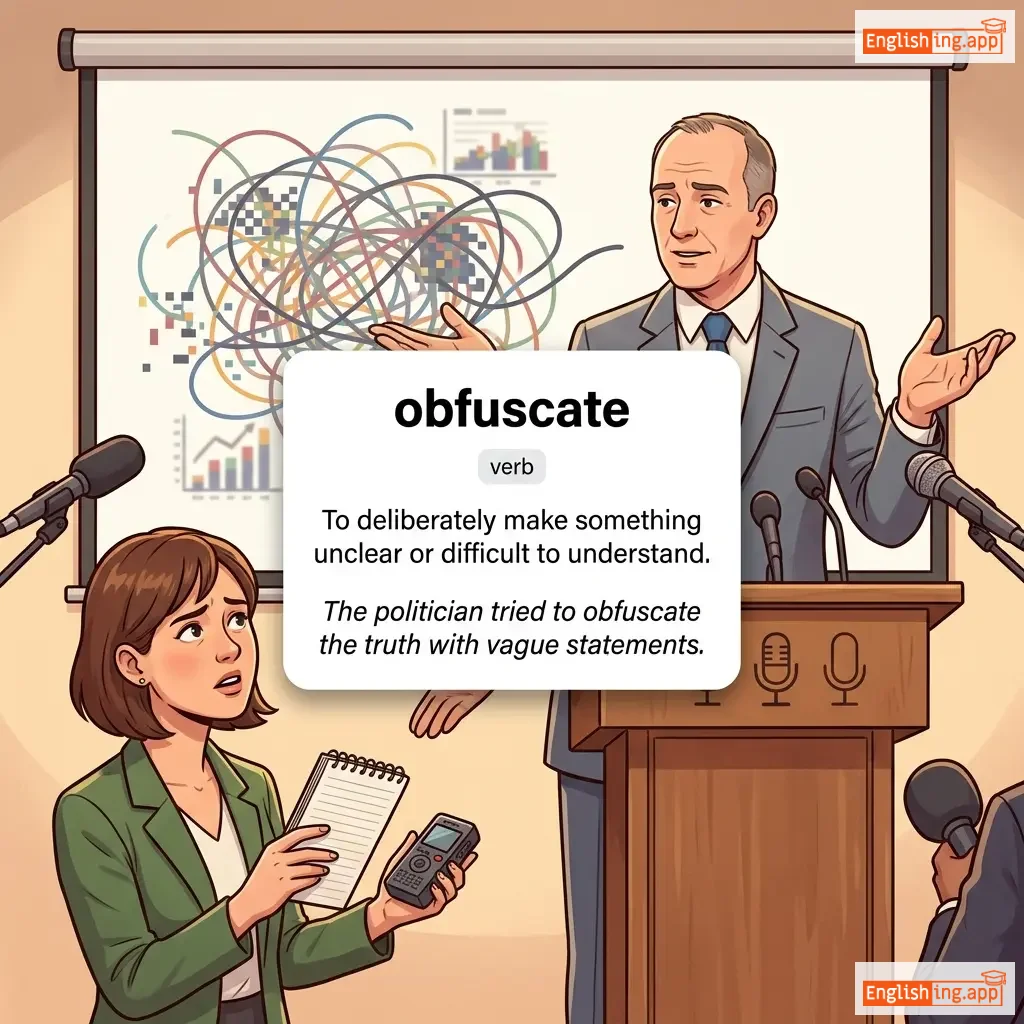
obfuscate definition card — visual illustration of the meaning
verb
/ˈɒbfʌskeɪt/
曖昧にする (aimai ni suru)

To deliberately make something unclear or difficult to understand.

"The politician tried to obfuscate the truth with vague statements."
"政治家は曖昧な発言で真実を隠そうとしました。" (Seijika wa aimai na hatsugen de shinjitsu o kakusou to shimashita.)
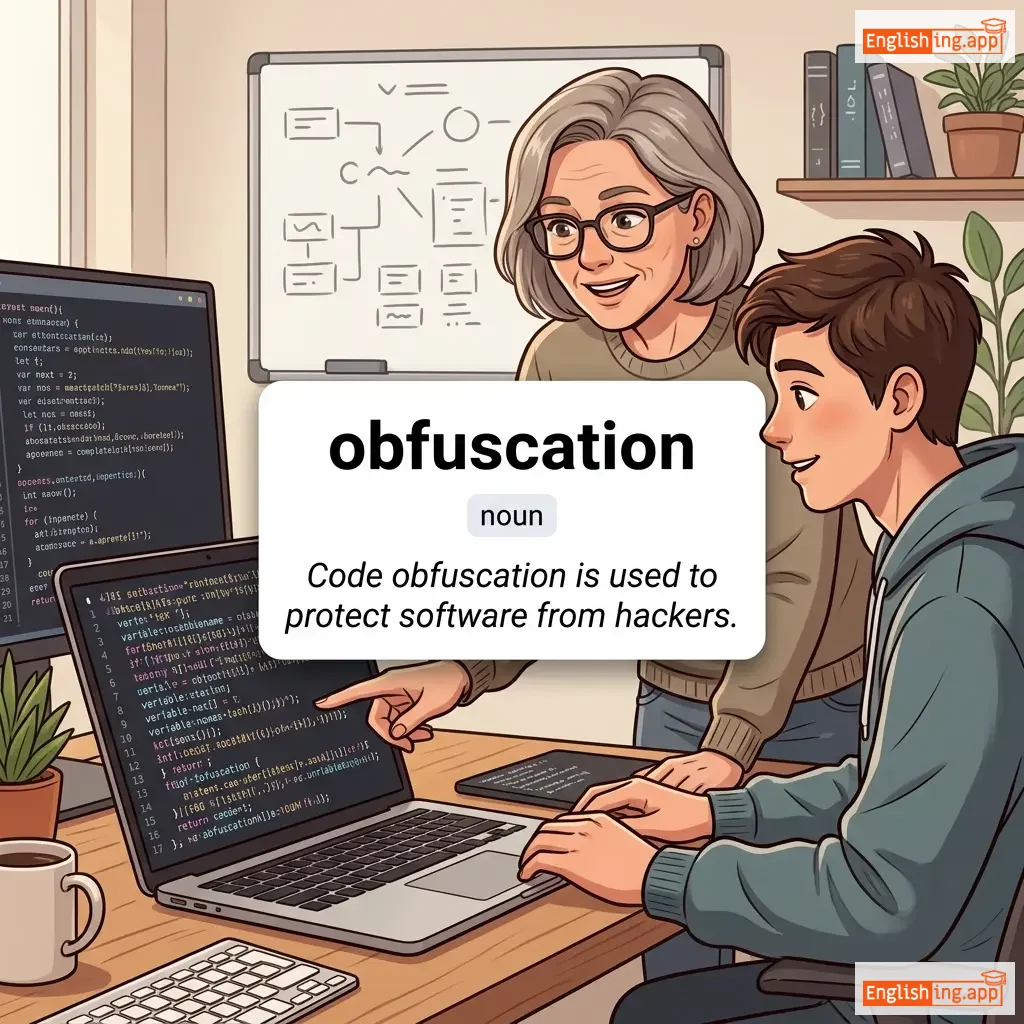
obfuscation definition card — visual illustration of the meaning
noun
/ˌɒb.fʌsˈkeɪ.ʃən/
情報やコードを意図的に不明瞭にすること (jōhō ya kōdo o itoteki ni fumeiryō ni suru koto)

Deliberately making information or code unclear to make it difficult to understand

"Code obfuscation is used to protect software from hackers."

"コードのオブフスケーションは、ソフトウェアをハッカーから保護するために使用されます。" (Kōdo no obufusukēshon wa, sofutowea o hakkā kara hogo suru tame ni shiyō saremasu.)
noun
/əˈbɪtʃueri/
訃報 (fuhou)

A notice of a person's death, often published in a newspaper with a brief biography.

"The newspaper published an obituary for the famous writer."

"新聞は有名な作家の訃報を掲載しました。" (Shinbun wa yuumei na sakka no fuhou wo keisai shimashita.)
noun
/ˈɒbdʒɪkt/
物体 (buttai)

a thing that can be seen and touched

"The table is an object in the room."

"テーブルは部屋の中の物体です。" (Tēburu wa heya no naka no buttai desu.)
noun
/əbˈdʒɛkʃən/
異議 (igi)

an expression or feeling of disapproval or opposition

"The lawyer raised an objection during the trial."

"弁護士は裁判中に異議を申し立てました。" (Bengoshi wa saiban-chuu ni igi wo moushitatemashita.)
adjective
/əbˈdʒek.ʃən.ə.bəl/
不快な (fukai na)

arousing distaste or opposition; unpleasant or offensive

"His objectionable behavior made everyone uncomfortable."
"彼の不快な行動は、皆を不快にさせた。" (Kare no fukai na kōdō wa, mina o fukai ni saseta.)
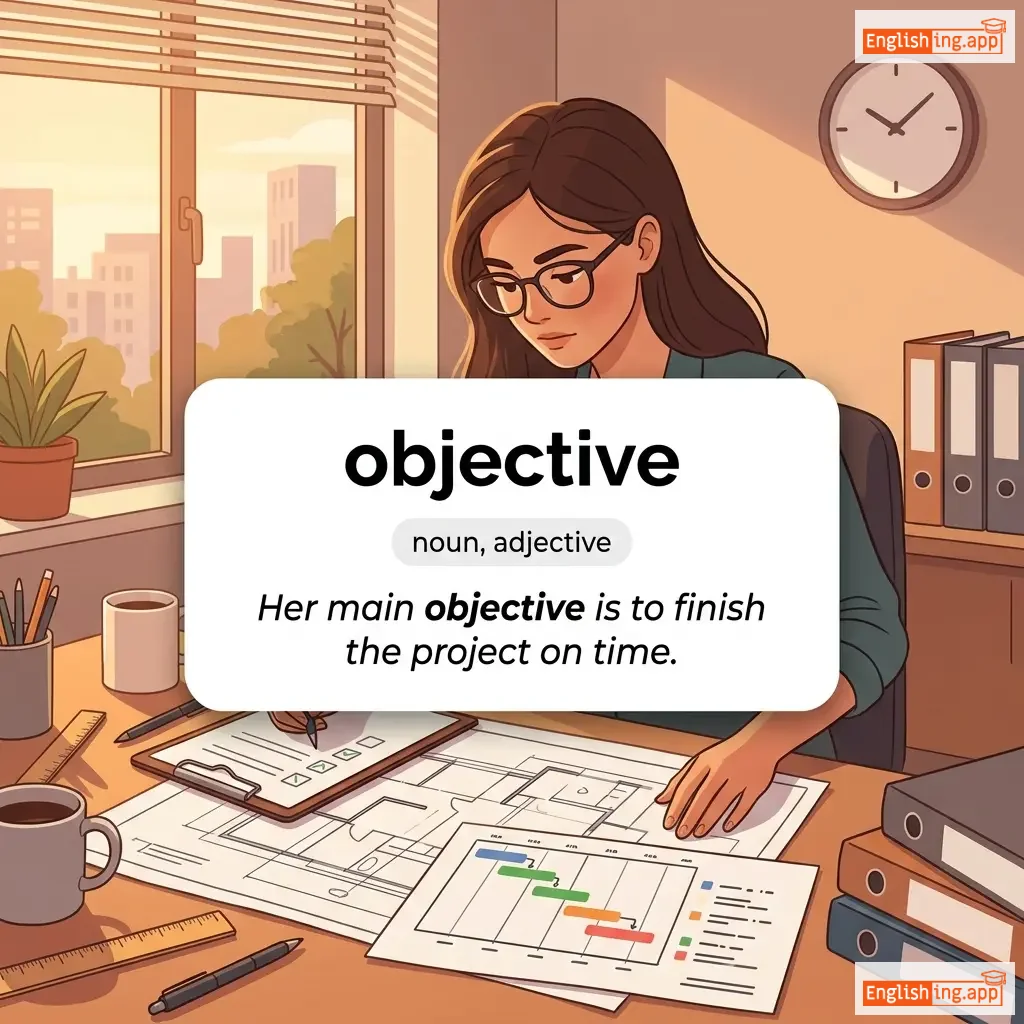
objective definition card — visual illustration of the meaning
noun, adjective
/əbˈdʒɛktɪv/
目標 / 客観的な (mokuhyou / kyakkanteki na)

As a noun: a goal or aim. As an adjective: not influenced by personal feelings; unbiased.

"Her main objective is to finish the project on time."

"彼女の主な目標はプロジェクトを時間通りに終わらせることです。" (Kanojo no omona mokuhyou wa purojekuto o jikan dōri ni owaraseru koto desu.)
noun
/əbˈdʒɛktər/
反対者 (hantaisha)

a person who expresses opposition or disapproval to something

"The objector raised his concerns during the town meeting."

"反対者は市議会の会議中に自分の懸念を表明しました。" (Hantaisha wa shigikai no kaigi-chū ni jibun no kennen o hyōmei shimashita.)
verb
/ˈɑːbdʒərˌɡeɪt/
厳しく叱る (kibishiku shikaru)

to scold or rebuke severely

"The teacher objurgated the student for being dishonest."

"先生は不正直な生徒を厳しく叱った。" (Sensei wa fuseijika na seito wo kibishiku shikatta.)
noun
/ˌɑːbdʒərˈɡeɪʃən/
厳しい叱責 (kibishī shisseki)

a harsh scolding or strong rebuke

"His misconduct earned him a severe objurgation from the manager."

"彼の不正行為はマネージャーから厳しい叱責を受けた。" (Kare no fusei kōi wa manējā kara kibishī shisseki o uketa.)
noun
/oʊˈbleɪʃən/
奉納 (hounou)

a religious offering, especially of bread or wine to God

"The priest placed the oblation on the altar during the ceremony."

"司祭は儀式の間に祭壇に奉納を置きました。" (Shisai wa gishiki no aida ni saidan ni hounou o okimashita.)
verb
/ˈɑːblɪˌɡeɪt/
強制する (kyousei suru)

to bind legally or morally; to compel someone to do something

"The contract obligates the company to provide timely service."

"契約は会社にタイムリーなサービスを提供することを義務付けます。" (Keiyaku wa kaisha ni taimurī na sābisu o teikyō suru koto o gimu zukemasu.)
noun
/ˌɒblɪˈɡeɪʃən/
義務 (gimu)

a duty or commitment

"You have an obligation to follow the rules."
"あなたは規則に従う義務があります。" (Anata wa kisoku ni shitagau gimu ga arimasu.)
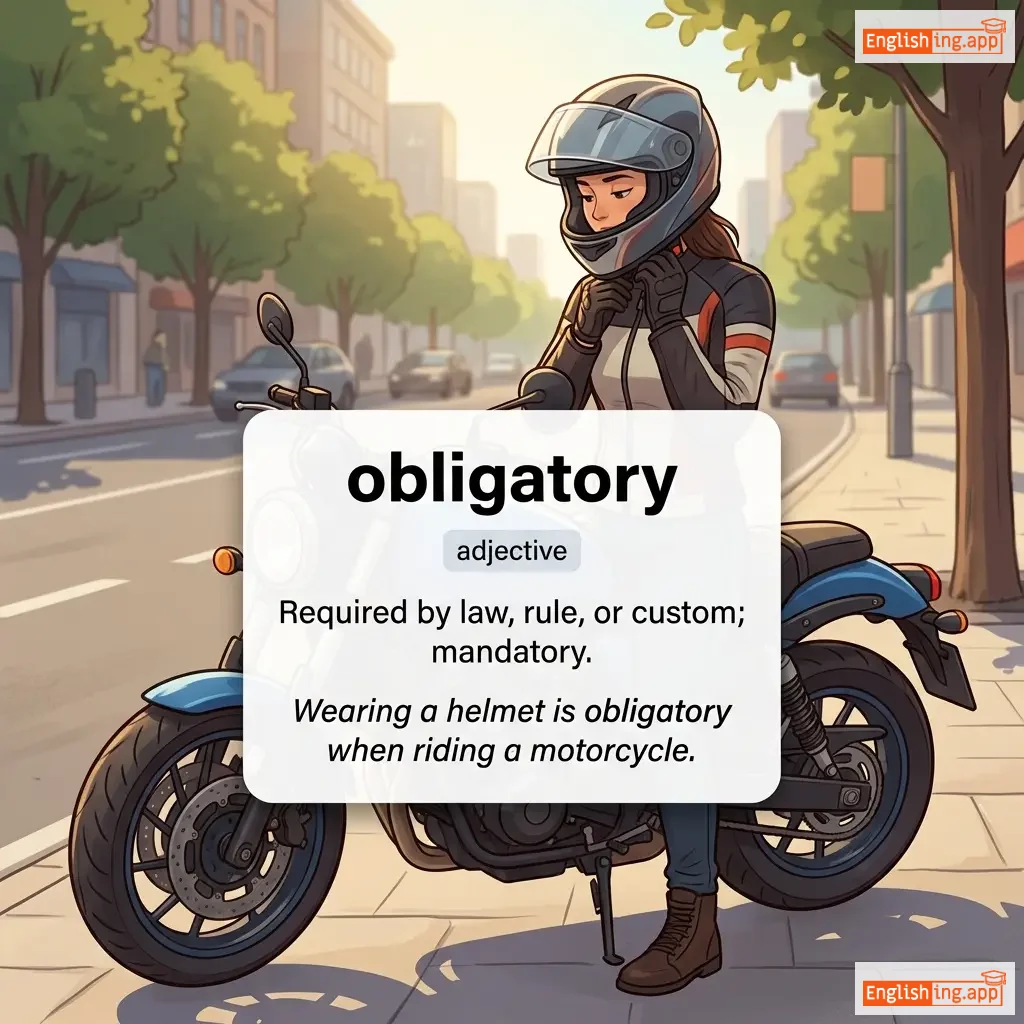
obligatory definition card — visual illustration of the meaning
adjective
/əˈblɪɡətɔːri/

Required by law, rule, or custom; mandatory.

"Wearing a helmet is obligatory when riding a motorcycle."
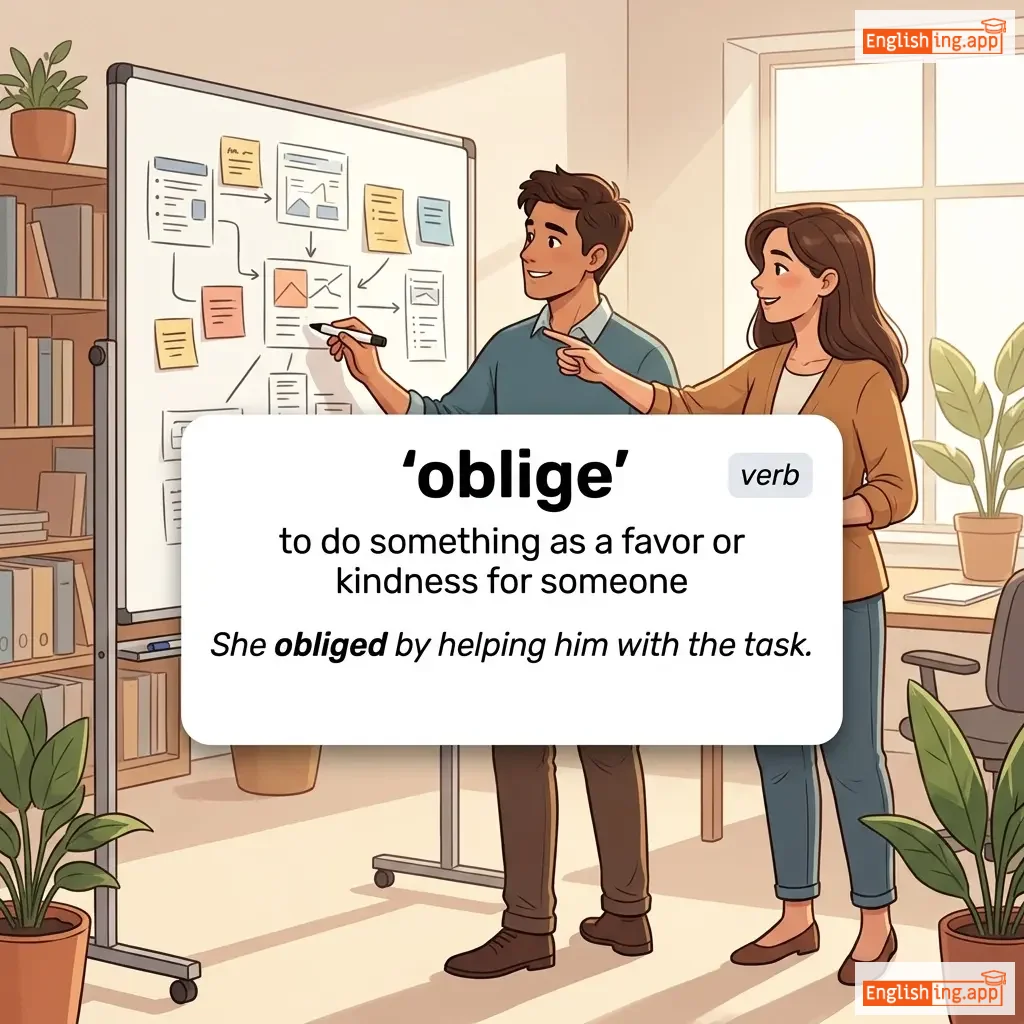
oblige definition card — visual illustration of the meaning
verb
/əˈblaɪdʒ/
助ける (tasukeru)

to do something as a favor or kindness for someone

"She obliged by helping him with the task."

"彼女はそのタスクを手伝うことで喜んでくれました。" (Kanojo wa sono tasuku wo tetsudau koto de yorokonde kuremashita.)
adjective
/əˈblaɪdʒɪŋ/
親切な (shinsena)

Willing to help or do favors; accommodating.

"The staff at the hotel were very obliging and friendly."

"ホテルのスタッフはとても親切で友好的でした。" (Hoteru no sutaffu wa totemo shinsen de yuukouteki deshita.)
adjective
/əˈbliːk/ or /oʊˈbliːk/
間接的 (kansetsu-teki)

Not explicit or direct in addressing a point; slanting or indirect.

"She made an oblique reference to his past mistakes."

"彼女は彼の過去の間違いに対して間接的な言及をしました。" (Kanojo wa kare no kako no machigai ni taishite kansetsu-teki na genkyu o shimashita.)
noun
/əˈblɪkwɪti/
歪み (yugami)

Deviation from moral or usual conduct; indirectness or lack of straightforwardness.

"The politician was criticized for the obliquity of his answers."
"その政治家は、彼の答えの歪みについて批判された。" (Sono seijika wa, kare no kotae no yugami ni tsuite hihan sareta.)
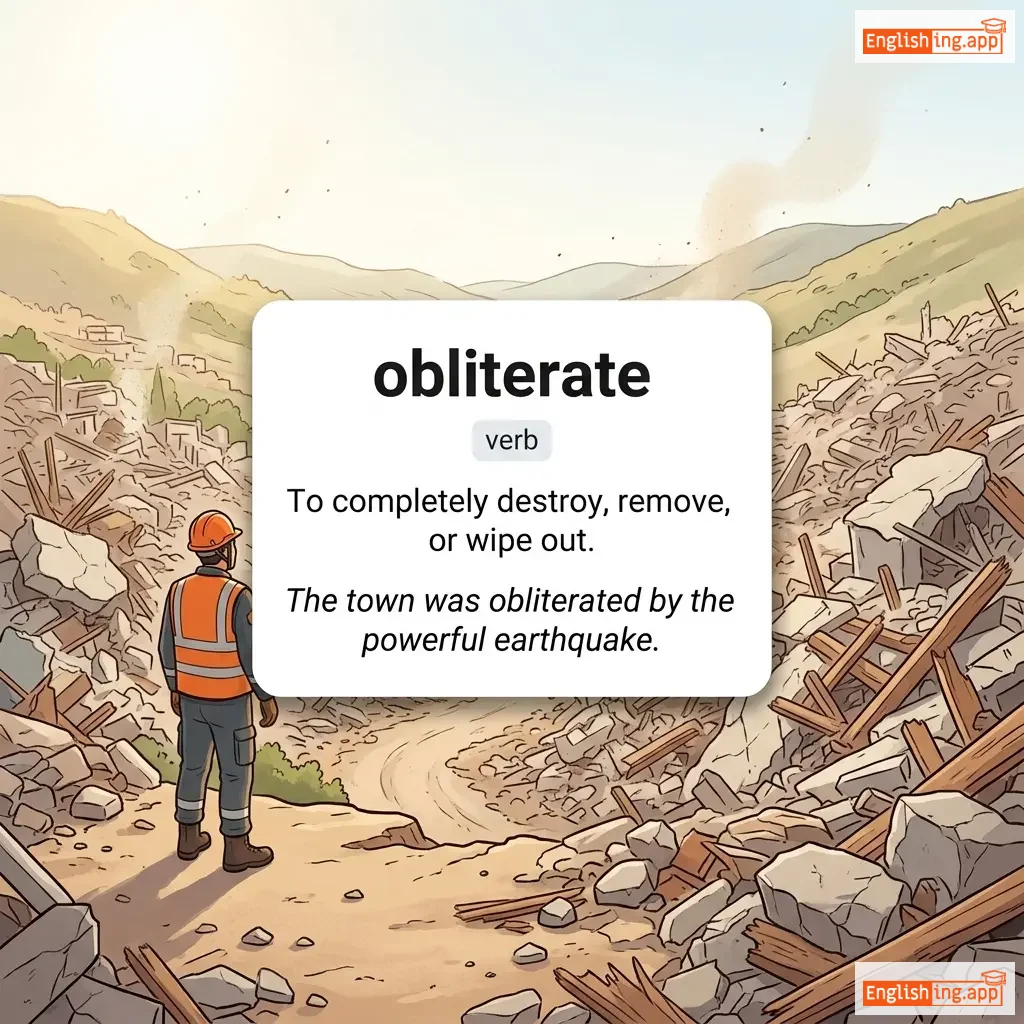
obliterate definition card — visual illustration of the meaning
verb
/əˈblɪtəreɪt/
完全に破壊する (kanzen ni hakai suru)

To completely destroy, remove, or wipe out.

"The town was obliterated by the powerful earthquake."
"町は強力な地震によって完全に壊滅しました。" (machi wa kyōryoku na jishin ni yotte kanzen ni kaimetsu shimashita.)
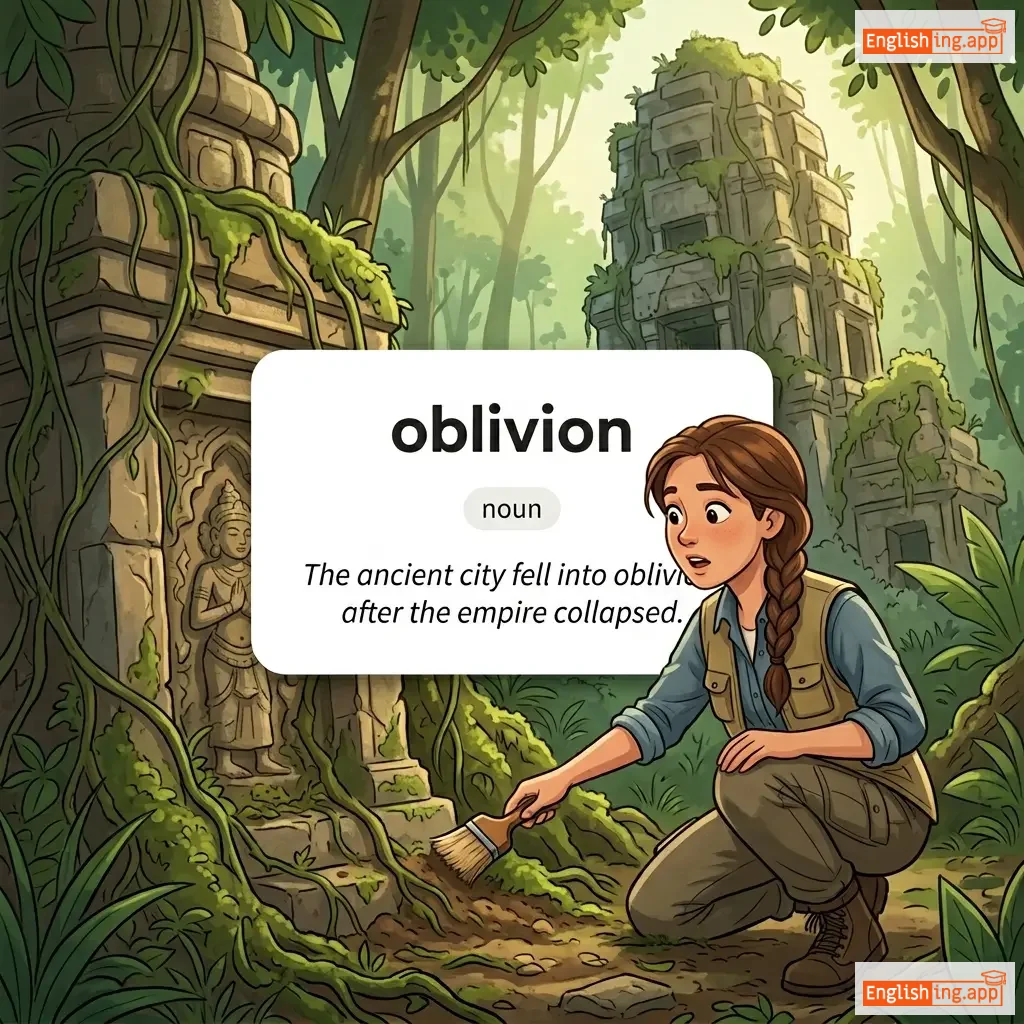
oblivion definition card — visual illustration of the meaning
noun
/əˈblɪviən/
忘却 (bōkyaku)

The state of being completely forgotten or unknown; the state of being unconscious or unaware.

"The ancient city fell into oblivion after the empire collapsed."

"古代の都市は帝国の崩壊後、忘却の中に落ちた。" (Kodai no toshi wa teikoku no hōkai-go, bōkyaku no naka ni ochita.)
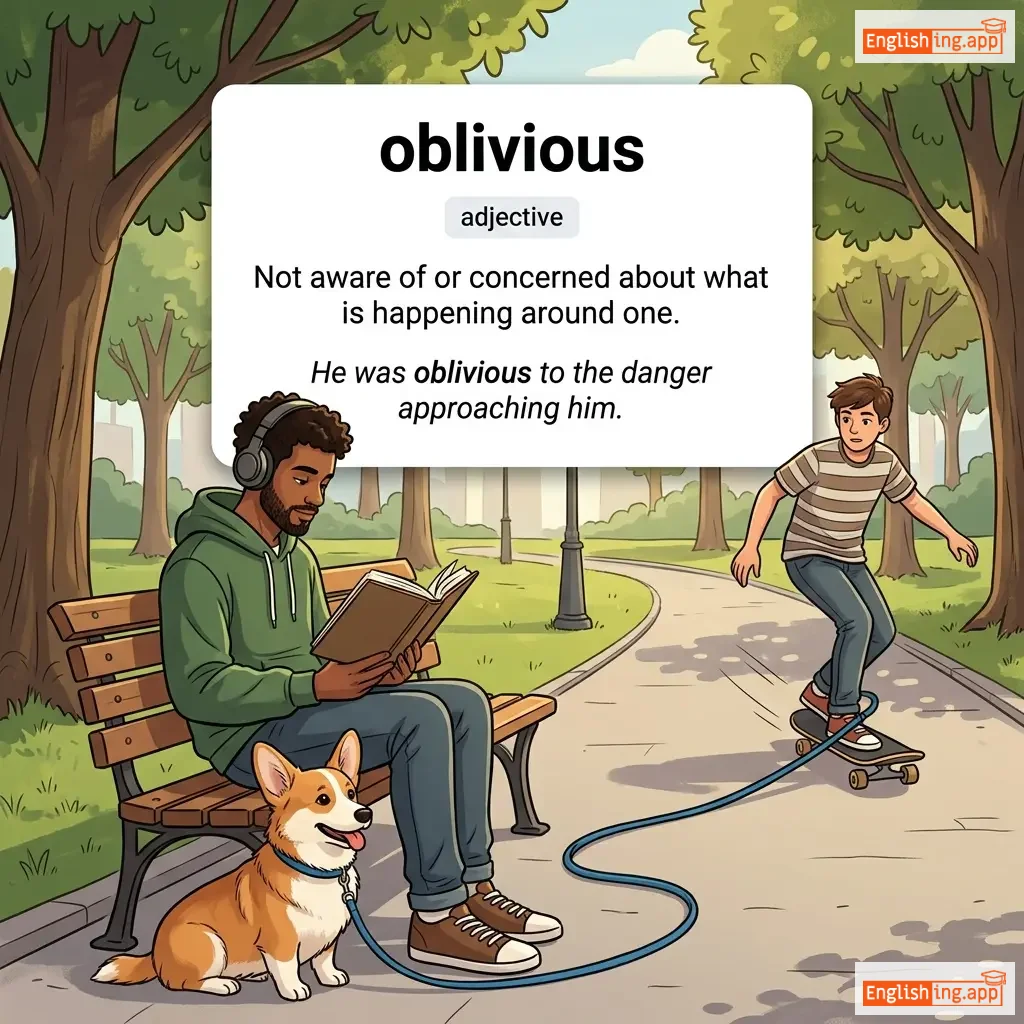
oblivious definition card — visual illustration of the meaning
adjective
/əˈblɪviəs/

Not aware of or concerned about what is happening around one.

"He was oblivious to the danger approaching him."

noun
/ˈɒbləkwɪ/
中傷 (chuushou)

Strong public criticism or verbal abuse; disgrace or shame from public condemnation.

"The politician faced obloquy after the scandal was exposed."

"スキャンダルが暴露された後、政治家は中傷に直面しました。" (Sukyandaru ga bakuro sareta ato, seijika wa chuushou ni chokumen shimashita.)
adjective
/əbˈnɒkʃəs/
不快な (fukai na)

Extremely unpleasant, offensive, or annoying.

"The obnoxious behavior of the guest ruined the party."

"ゲストの不快な振る舞いがパーティーを台無しにした。" (Gesuto no fukai na furumai ga pātii o dainashi ni shita.)
adjective, verb
/əbˈskjʊr/
不明確 (fumeikaku)

Not clearly expressed or understood; to make something difficult to see or understand.

"The meaning of the poem was obscure to most readers."

"詩の意味はほとんどの読者には不明確でした。" (Shi no imi wa hotondo no dokusha ni wa fumeikaku deshita.)
noun
/ˈɒbsɪkwiːz/
葬儀儀式 (sōgi gishiki)

Funeral rites or ceremonies.

"The obsequies for the late leader drew thousands of mourners."
"故リーダーの葬儀儀式には、数千人の弔問客が集まりました。" (Ko rīdā no sōgi gishiki ni wa, sūsen-nin no chōmonkyaku ga atsumarimashita.)
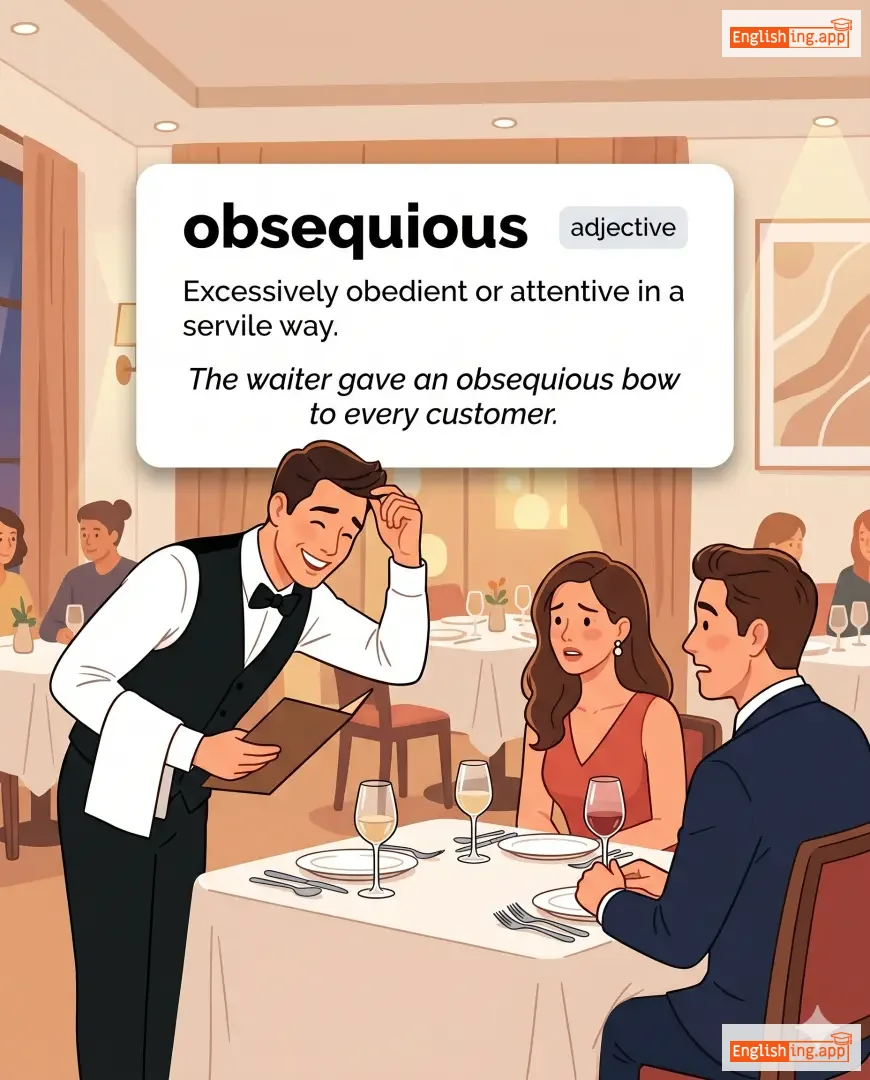
obsequious definition card — visual illustration of the meaning
adjective
/əbˈsiːkwɪəs/
お世辞 (oseji)

Excessively obedient or attentive in a servile way.

"The waiter gave an obsequious bow to every customer."
"ウェイターは各顧客にお世辞のようなお辞儀をしました。" (Ueitaa wa kaku kokyaku ni oseji no yō na ojigi o shimashita.)
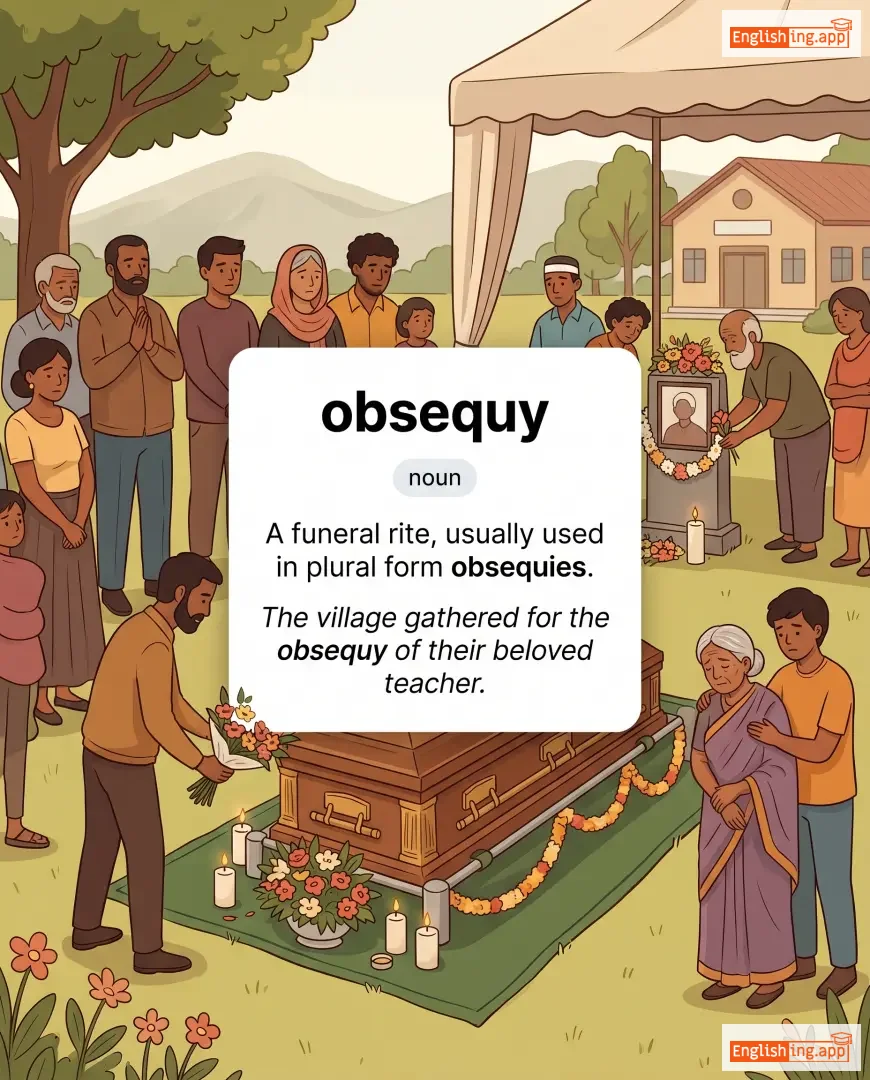
obsequy definition card — visual illustration of the meaning
noun
/ˈɒbsɪkwi/
葬儀 (sōgi)

A funeral rite, usually used in plural form obsequies.

"The village gathered for the obsequy of their beloved teacher."

"村人たちは、愛する教師の葬儀のために集まりました。" (Murabito-tachi wa, aisuru kyōshi no sōgi no tame ni atsumarimashita.)
noun
/əbˈzɜːvəns/
遵守 (junshu)

The practice of following a custom, rule, or religious law.

"The festival is held in observance of a centuries-old tradition."

"その祭りは、数世代にわたる伝統を遵守して行われます。" (Sono matsuri wa, suudai ni wataru dentou wo junshu shite okonawaremasu.)
adjective
/əbˈzɜːvənt/
注意深い (chūi bukai)

Quick to notice details or attentive to rules and customs.

"She is very observant and rarely misses any detail."

"彼女はとても注意深く、ほとんどの詳細を見逃しません。" (Kanojo wa totemo chūi bukaku, hotondo no shōsai o minogashimasen.)
noun
/ˌɒbzəˈveɪʃən/
観察 (kansatsu)

the action or process of observing something carefully in order to gain information

"The scientist made an observation during the experiment."
"科学者は実験中に観察を行いました。" (Kagakusha wa jikken-chuu ni kansatsu o okonaimashita.)
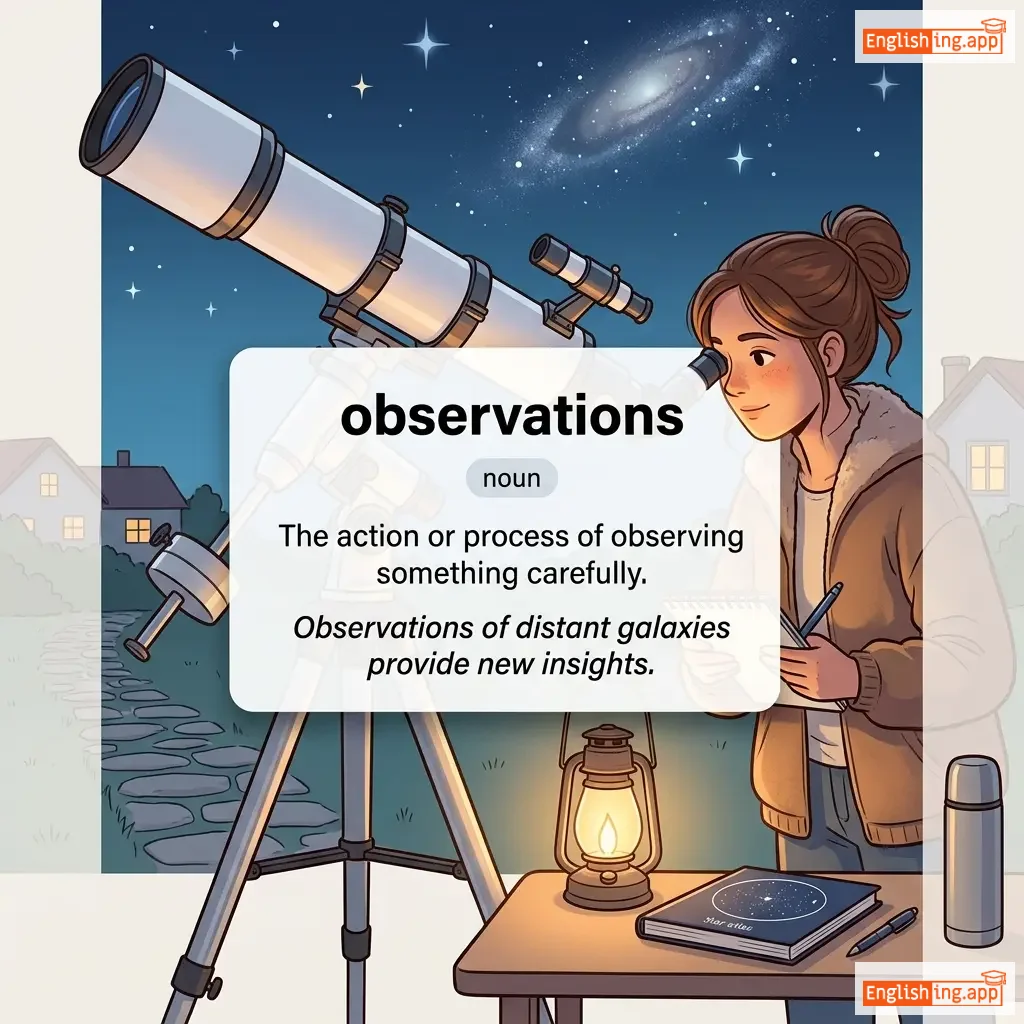
observations definition card — visual illustration of the meaning
noun
/ˌɒb.zəˈveɪ.ʃənz/
観察 (kansatsu)

The action or process of observing something carefully.

"Observations of distant galaxies provide new insights."

"遠くの銀河の観察は新たな洞察を提供します。" (Tōku no ginga no kansatsu wa aratana dōsatsu o teikyō shimasu.)
noun
/əbˈzɜːrvətɔːri/
天文台 (tenmondai)

A building equipped for observing astronomical or meteorological events.

"The observatory is open to the public on weekends."

"天文台は週末に一般公開されています。" (Tenmondai wa shuumatsu ni ippan koukai sareteimasu.)
verb
/əbˈzɜːv/
観察する (kansatsu suru)

to watch carefully and attentively

"The teacher asked the students to observe the experiment."

"先生は学生に実験を観察するように言いました。" (Sensei wa gakusei ni jikken o kansatsu suru yō ni iimashita.)