語彙集

英単語辞書 | 単語の意味、定義、例文

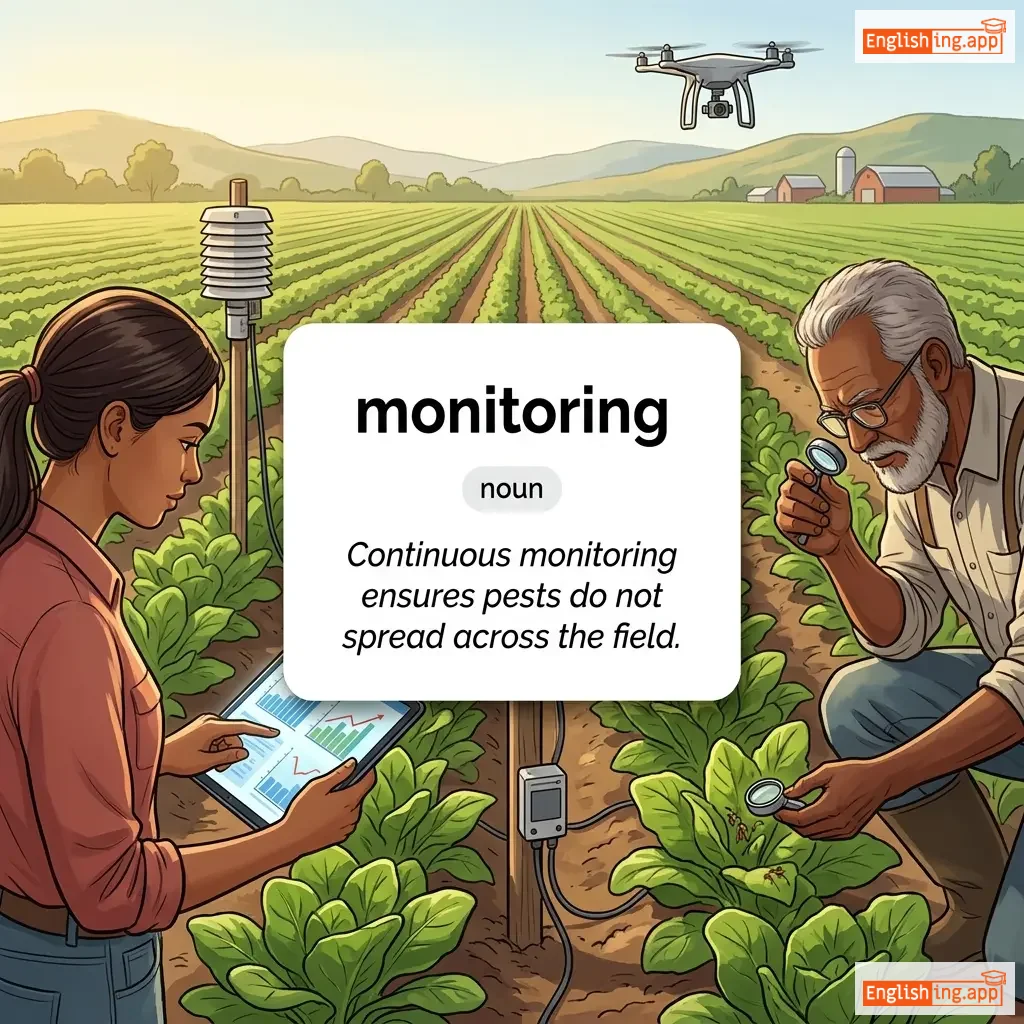
monitoring definition card — visual illustration of the meaning
noun
ˈmɒnɪtərɪŋ
監視、継続的なモニタリング (kanshi, keizokuteki na monitoring)

The action of observing and checking the progress or quality of something over a period of time.

"Continuous monitoring ensures pests do not spread across the field."

"継続的なモニタリングにより、害虫が畑全体に広がることはありません。" (Keizokuteki na monitoring ni yori, gaichū ga hatake zentai ni hirogaru koto wa arimasen.)
adjective
/ˈmɒnɪtəri/
警告的な (keikoku-teki na)

Giving a warning or cautionary advice; serving to warn.

"His monitory tone made everyone cautious about their next move."

"彼の警告的な口調は、次の動きについて皆を警戒させました。" (Kare no keikoku-teki na kuchō wa, tsugi no ugoki ni tsuite mina o keikai sasemashita.)
noun
/mɒŋk/
僧侶 (sōryo)

a member of a religious community living under vows of poverty, chastity, and obedience

"The monk lived a simple and peaceful life in the monastery."

"その僧侶は修道院でシンプルで平和な生活を送りました。" (Sono sōryo wa shūdōin de shinpuru de heiwa na seikatsu o okurimashita.)
noun
/ˈmʌŋki/
(saru)

a small to medium-sized primate with a long tail, known for its playfulness

"A monkey was jumping from tree to tree in the forest."

"森の中で猿が木から木へ飛び移っていた。" (mori no naka de saru ga ki kara ki e tobi utte ita)
adjective
/ˌmɒnəkrəˈmætɪk/

Consisting of or displaying only one color.

"The artist created a striking monochromatic painting in shades of blue."

noun/adjective
/ˈmɒnəkrəʊm/
モノクローム (monokurōmu)

A photograph, painting, or screen image in black and white or varying tones of one color.

"The old film was shot entirely in monochrome."

"その古い映画は完全にモノクロームで撮影されました。" (Sono furui eiga wa kanzen ni monokurōmu de satsuei saremashita.)
noun
/ˈmɒnəkl/

A single round lens for one eye, used to correct or enhance vision.

"The old gentleman wore a monocle at formal events."

noun
/məˈnɒkrəsi/
独裁政治 (dokusaiseiji)

A system of government by a single person; autocracy.

"The nation suffered under decades of monocracy."
"国は数十年にわたるモノクラシーの下で苦しんだ。" (Kuni wa sūjūnen ni wataru monokurashī no shita de kurushinda.)
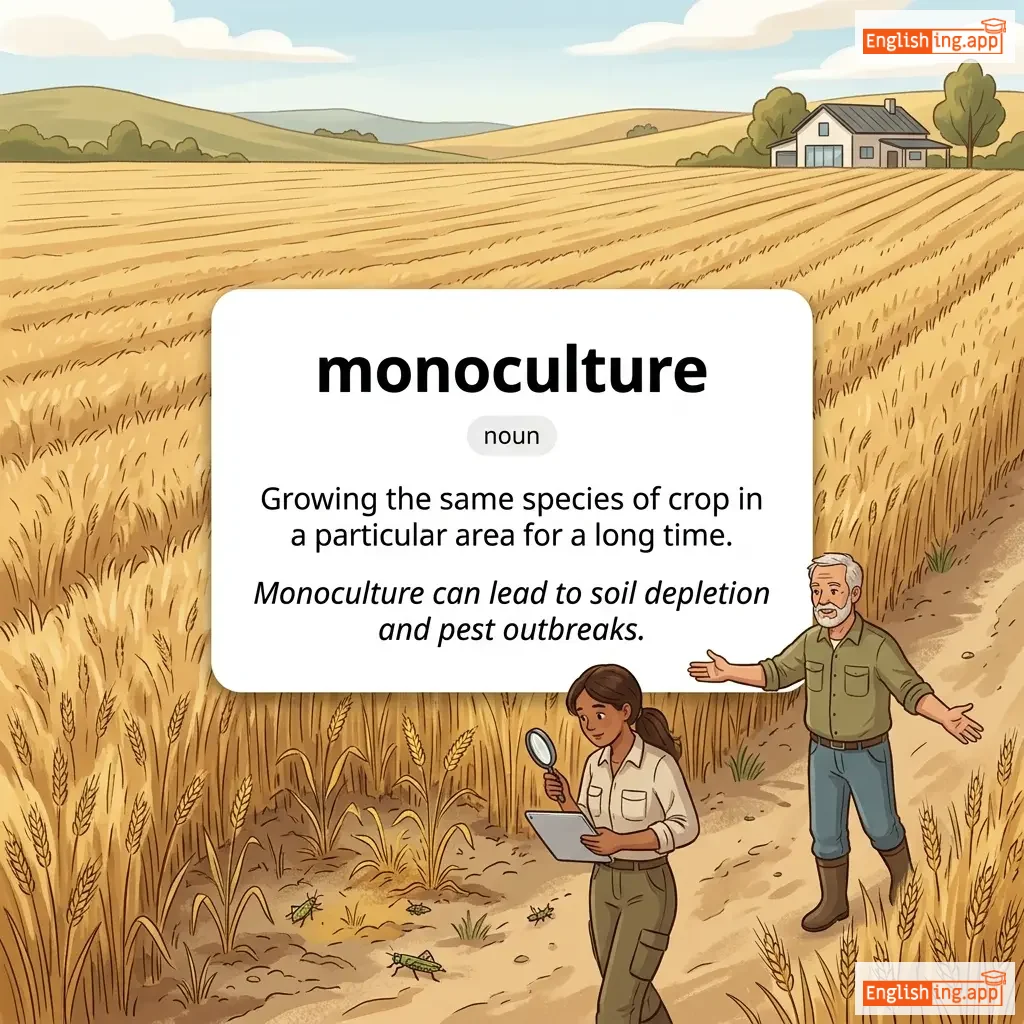
monoculture definition card — visual illustration of the meaning
noun
ˈmɒn.əˌkʌl.tʃər
モノカルチャー (monokaruchaa)

Growing the same species of crop in a particular area for a long time.

"Monoculture can lead to soil depletion and pest outbreaks."

"モノカルチャーは土壌の肥沃度の低下と害虫の発生を引き起こす可能性があります。" (Monokaruchaa wa dojou no hiyokudo no teika to gaichuu no hassei o hikiokosu kanousei ga arimasu.)
noun
/məˈnɒɡəmi/
一夫一妻制 (ippuisshisei)

The practice of being married to or in a relationship with only one person at a time.

"Many cultures encourage monogamy as the ideal form of marriage."

"多くの文化は一夫一妻制を理想的な結婚形態として奨励しています。" (Ōku no bunka wa ippuisshisei o risōteki na kekkon keitai toshite shōrei shiteimasu.)
noun
/ˈmɒnəɡræm/
モノグラム (monogramu)

A design consisting of two or more letters, typically a person's initials, combined or interwoven.

"The towel was embroidered with her monogram."

"タオルには彼女のモノグラムが刺繍されていた。" (Taoru ni wa kanojo no monogramu ga shishū sarete ita.)
noun
/ˈmɒnəɡrɑːf/

A detailed written study of a single specialized subject or aspect of it.

"The professor published a monograph on ancient pottery."

noun
/ˈmɒnəlɪθ/
モノリス (monorisu)

A large single upright block of stone, or a large, powerful, indivisible organization or system.

"The ancient monolith stood in the desert for centuries."

"古代のモノリスは何世紀にもわたって砂漠に立っていました。" (Kodai no monorisu wa nan seiki ni mo watatte sabaku ni tatte imashita.)
adjective
/ˌmɒnəˈlɪθɪk/
モノリシック (monorishikku)

Massive, uniform, and indivisible; resembling a large single stone or structure.

"The company maintained a monolithic structure resistant to change."

"その会社は変化に強いモノリシックな構造を維持しました。" (Sono kaisha wa henka ni tsuyoi monorishikku na kōzō o iji shimashita.)
noun
/ˈmɒnəˌlɒɡ/
モノローグ (monorōgu)

A long speech by one person, often in a play or performance.

"The actor delivered a powerful monologue on stage."

"俳優はステージで力強いモノローグを披露しました。" (Haiyū wa sutēji de chikara-zuyoi monorōgu o hirō shimashita.)
noun
/ˌmɒnəˈmeɪniə/

Excessive concentration or obsession with a single subject or idea.

"His monomania for collecting stamps worried his family."

monopolization definition card — visual illustration of the meaning
noun
məˌnɒp.ə.laɪˈzeɪ.ʃən
独占 (dokusen)

The process of gaining exclusive possession or control of a trade, commodity, or service.

"The monopolization of industries can limit consumer choices."
"産業の独占は消費者の選択肢を制限する可能性がある。" (Sangyō no dokusen wa shōhisha no sentakushi o seigen suru kanōsei ga aru.)
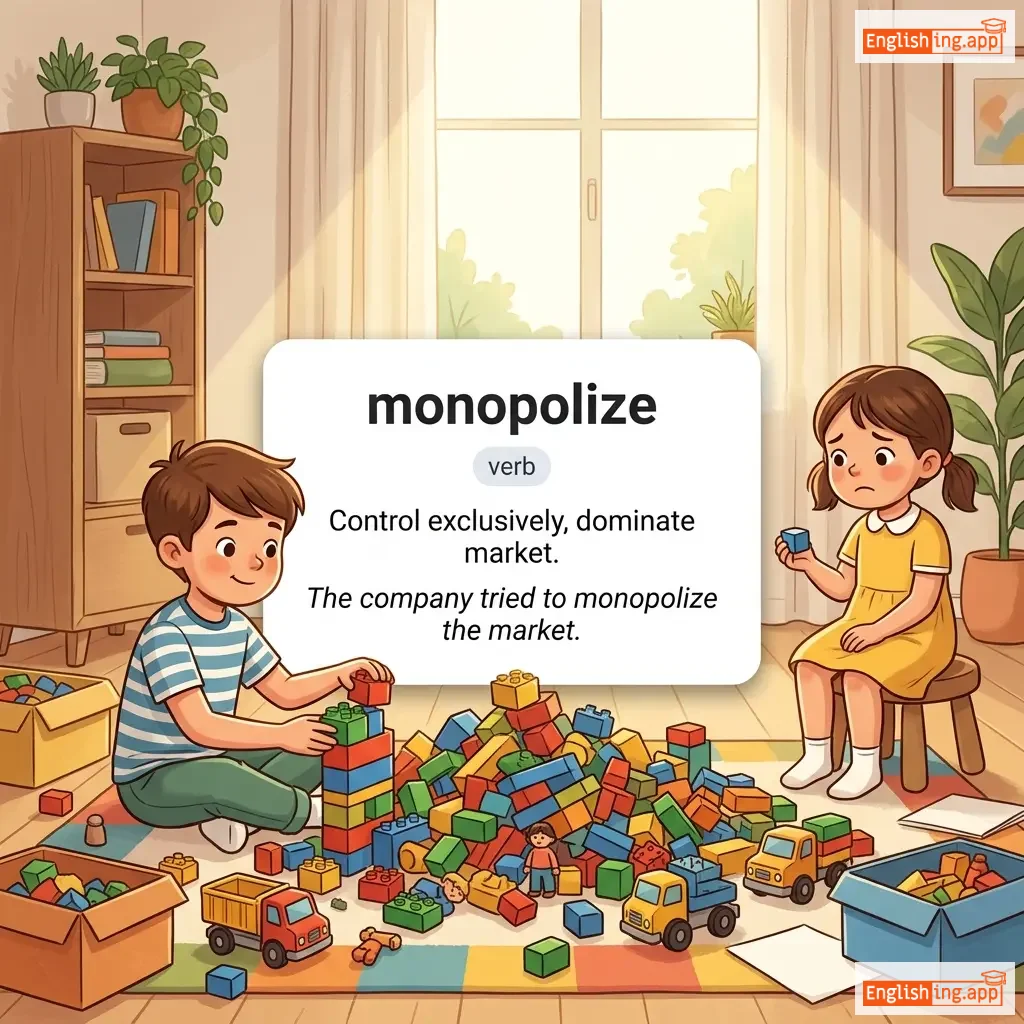
monopolize definition card — visual illustration of the meaning
verb
məˈnɒp.ə.laɪz
独占する (dokusen suru)

Control exclusively, dominate market.

"The company tried to monopolize the market."

"その会社は市場を独占しようとした。" (Sono kaisha wa shijou wo dokusen shiyou to shita.)
monopoly definition card — visual illustration of the meaning
noun
/məˈnɒpəli/

Exclusive control over a market, product, or service.

"The company gained a monopoly over the mobile phone industry."

noun
/ˈmɒnəˌsɪləbəl/
単音節の言葉 (tan onsetsu no kotoba)

A word consisting of only one syllable.

"Words like 'yes' and 'no' are monosyllables."

"'はい'や'いいえ'のような言葉は単音節の言葉です。" ('Hai' ya 'iie' no you na kotoba wa tan onsetsu no kotoba desu.)
noun
mɒnəˈtɑːskɪŋ
一度に一つの作業を行うこと (ichido ni hitotsu no sagyō o okonau koto)

The practice of dedicating oneself to a given task and minimizing potential interruptions until the task is completed or a significant period of time has elapsed.

"Monotasking can often lead to higher quality work."

"モノタスキングはしばしば高品質な仕事につながります。" (Monotasking wa shibashiba kōhinshitsu na shigoto ni tsunagarimasu.)
noun
/ˈmɒnəˌθiːɪzəm/
一神教 (isshinkyou)

The belief in the existence of only one God.

"Islam and Christianity are religions based on monotheism."

"イスラム教とキリスト教は一神教に基づいている。" (Isuramu kyou to Kirisuto kyou wa isshinkyou ni motozuite iru.)
noun
/ˈmɒn.ə.təʊn/
単調な声 (tanchōna koe)

A continuous sound, especially of a person's voice, that does not rise and fall in pitch.

"The teacher's monotone made the lecture hard to follow."

"教師のモノトーンが講義を聞き取るのを難しくした。" (Kyōshi no monotōn ga kōgi o kikitoru no o muzukashiku shita.)
adjective
/məˈnɒt.ən.əs/
単調 (tanchou)

Dull, tedious, and repetitious; lacking in variety and interest.

"The monotonous routine of office work tired him out."
"オフィスの単調なルーチンは彼を疲れさせた。" (Ofisu no tanchou na ruuchin wa kare wo tsukaresaseta.)
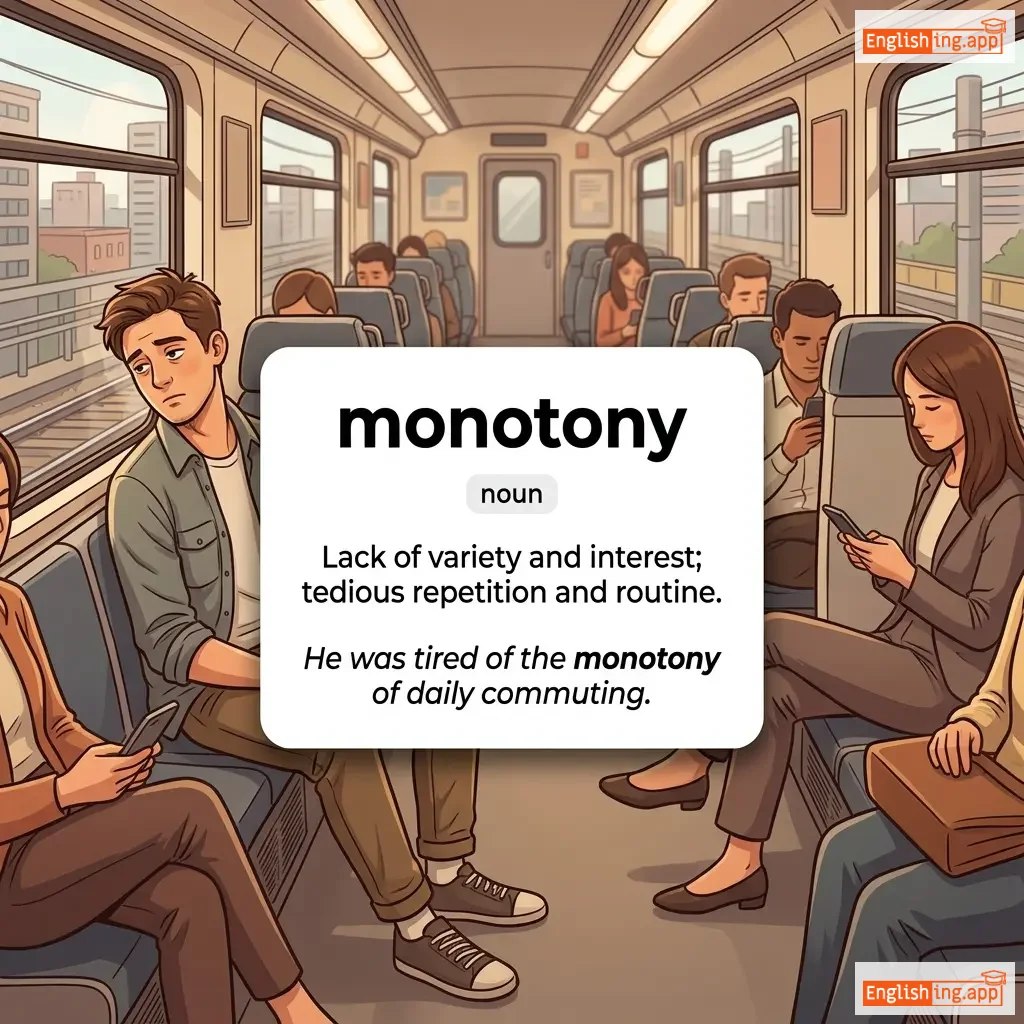
monotony definition card — visual illustration of the meaning
noun
/məˈnɒt.ə.ni/
単調 (tanchou)

Lack of variety and interest; tedious repetition and routine.

"He was tired of the monotony of daily commuting."

"彼は毎日の通勤の単調さに疲れていた。" (Kare wa mainichi no tsuukin no tanchousa ni tsukarete ita.)
noun
/ˈmɒnstər/
幸せ (shiawase)

an imaginary or large frightening creature

"The child was afraid that a monster was hiding under the bed."

"彼女は賞を受け取ったとき、自分の幸せを隠せなかった。" (Kanojo wa shō o uketotta toki, jibun no shiawase o kakusenakatta.)
adjective
/ˈmɒnstrəs/
非常に大きい; 衝撃的な悪または間違い; 異常または不自然 (monsutā no yōna)

extremely large; shockingly evil or wrong; abnormal or unnatural

"The monstrous crime shocked the entire community."

"そのモンスターのような犯罪はコミュニティ全体を驚かせました。" (Sono monsutā no yōna hanzai wa komyuniti zentai o odorokasemashita.)
noun
/mɒnˈtɑːʒ/
モンタージュ (montāju)

A sequence of film editing or a composite image made by combining several separate pictures.

"The film opened with a montage of city life."
"映画は都市生活のモンタージュで始まりました。" (Eiga wa toshi seikatsu no montāju de hajimari mashita.)
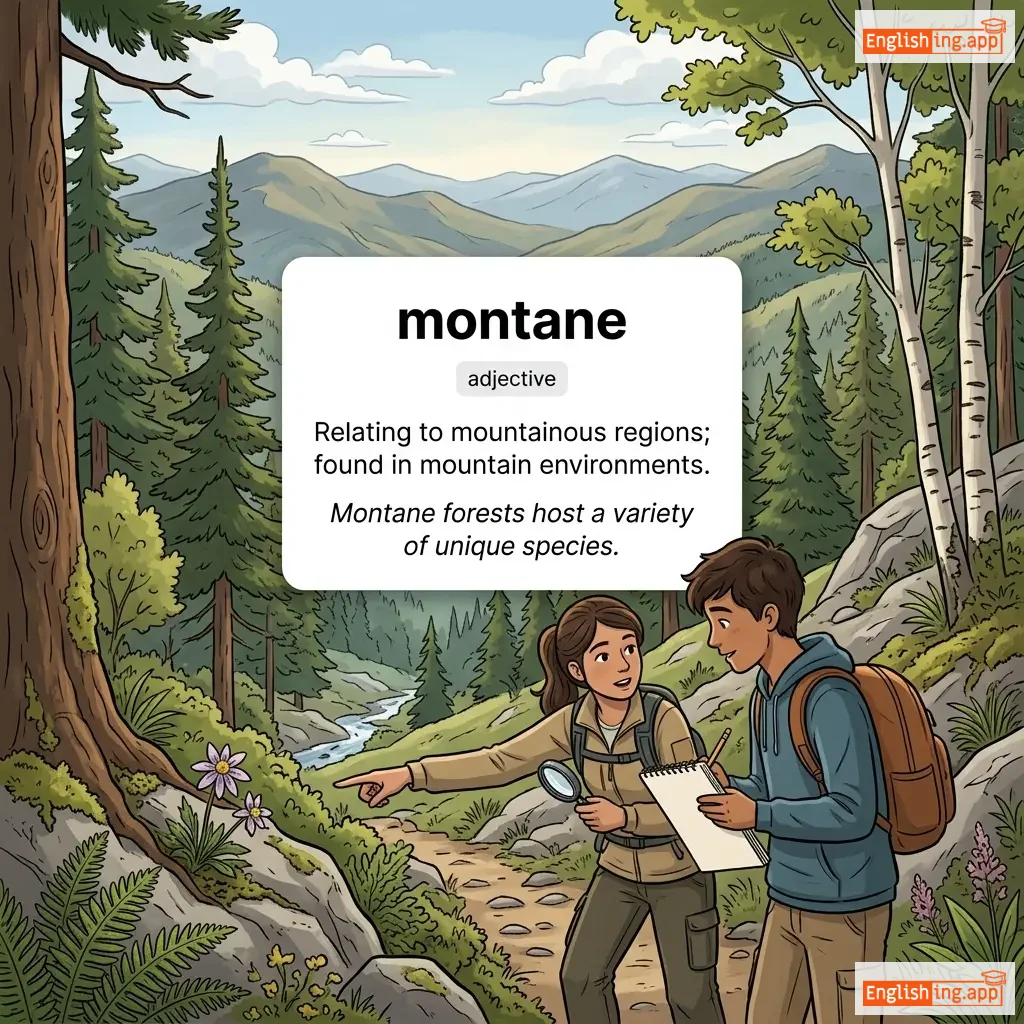
montane definition card — visual illustration of the meaning
adjective
/ˈmɒn.teɪn/
山岳地帯に関連する; 山岳環境に見られる (sangaku chitai ni kanren suru; sangaku kankyō ni mirareru)

Relating to mountainous regions; found in mountain environments.

"Montane forests host a variety of unique species."

"山岳林はユニークな種の多様性を持っています。" (Sangaku rin wa yunikuna shū no tayō-sei o motteimasu.)
noun
/mʌnθ/
(tsuki)

a period of about four weeks or one-twelfth of a year

"She visits her grandparents once a month."

"彼女は毎月一度、祖父母を訪れます。" (Kanojo wa maitsuki ichido, sofubo o otozuremasu.)
adjective
/ˈmʌnθli/
月次 (getsuki)

happening, done, or published once a month

"Employees receive their salary on a monthly basis."

"従業員は毎月給料を受け取ります。" (Jūgyōin wa maitsuki kyūryō o ukemashimasu.)
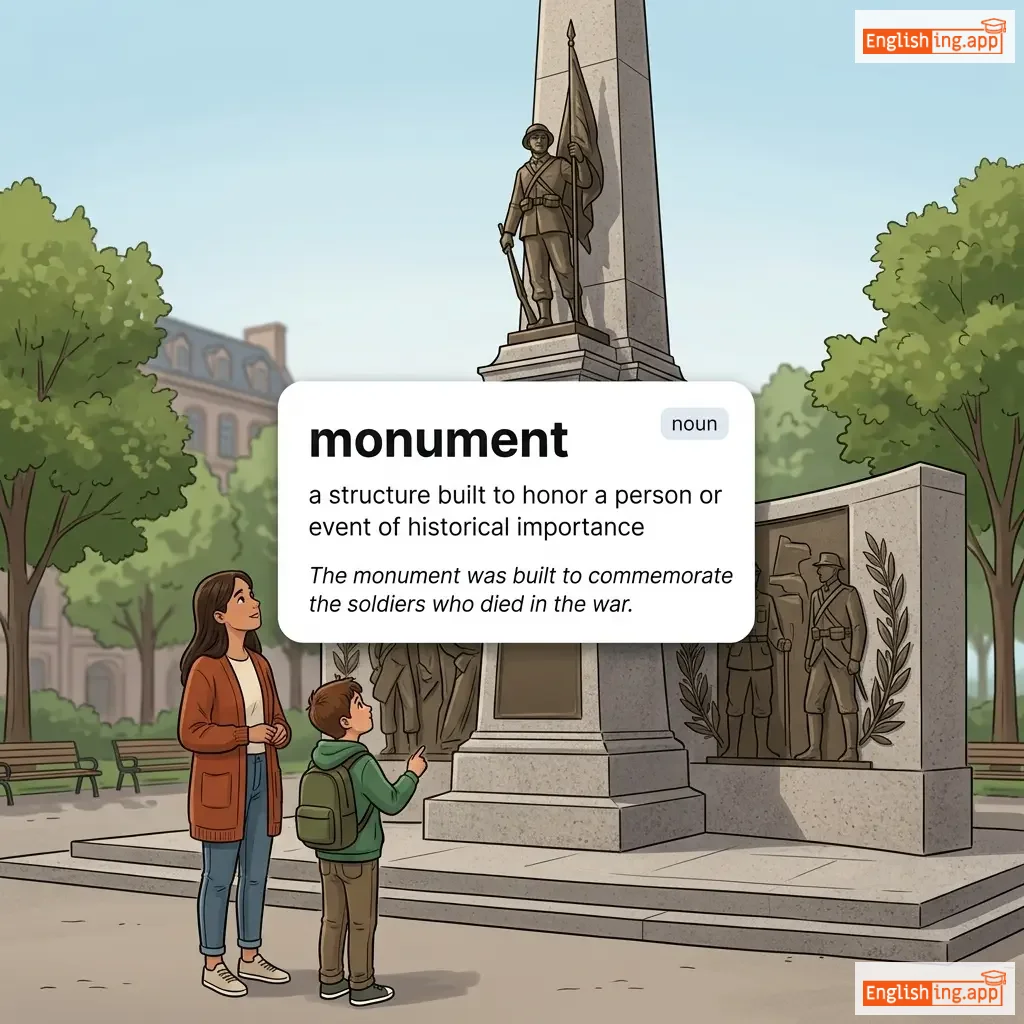
monument definition card — visual illustration of the meaning
noun
/ˈmɒnjumənt/

a structure built to honor a person or event of historical importance

"The monument was built to commemorate the soldiers who died in the war."

monumental definition card — visual illustration of the meaning
adjective
/ˌmɒn.jʊˈmen.təl/
モニュメンタル (monyumentaru)

Great in importance, extent, or size; resembling or serving as a monument.

"The project was a monumental achievement for the team."

"そのプロジェクトはチームにとって記念碑的な成果でした。" (Sono purojekuto wa chīmu ni totte kinenhi-teki na seika deshita.)
noun
/muːd/
ムード (mood)

a temporary state of mind or feeling

"He was in a good mood after getting the job."

"彼は仕事を得た後、良いムードでした。" (Kare wa shigoto o eta ato, yoi mood deshita.)
noun
/ˈmuːdi.nəs/
気まぐれ (kimagure)

The state of being frequently subject to changes in mood, especially irritability or sadness.

"Her moodiness made it difficult to predict how she would react."

"彼女の気まぐれは、彼女がどのように反応するかを予測するのを難しくしました。" (Kanojo no kimagure wa, kanojo ga dono you ni hannou suru ka o yosoku suru no o muzukashiku shimashita.)
noun
/muːn/
(tsuki)

the natural satellite of the earth, visible mainly at night by reflected light from the sun

"The moon shines brightly in the night sky."

"月は夜空で明るく輝いています。" (Tsuki wa yozora de akaruku kagayaiteimasu.)
noun
/ˈmuːn.biːm/
月光 (gekkou)

A ray of light from the moon.

"A moonbeam lit up the quiet forest clearing."

"月光が静かな森の開けた場所を照らした。" (Gekkou ga shizukana mori no hiraketa basho o terashita.)
verb, noun
/mʊər/
係留する / 荒れ地 (keiryuu suru / arechi)

As a verb: to tie a ship so that it stays in place. As a noun: open, uncultivated land.

"The sailors moored the ship at the dock."

"水夫たちは船をドックに停泊させました。" (Suifu-tachi wa fune o dokku ni teihaku sasemashita.)
💭

moot

adjective, verb
/muːt/

Adjective: subject to debate or irrelevant. Verb: to suggest an idea for discussion.

"The issue of funding became a moot point after the project was canceled."

adjective, noun
/ˈmɔːrəl/
道徳 (dōtoku)

Adjective: concerned with principles of right and wrong. Noun: a lesson about right and wrong from a story or experience.

"The moral of the story is that honesty is the best policy."

"物語の教訓は、正直が最良の政策であることです。" (Monogatari no kyōkun wa, shōjiki ga sairyō no seisaku de aru koto desu.)
noun
/məˈræl/
士気 (shiki)

The confidence, enthusiasm, and discipline of a person or group at a particular time.

"The team's morale improved after their recent victory."

"チームの士気は最近の勝利後に向上しました。" (Chīmu no shiki wa saikin no shōri go ni kōjō shimashita.)
noun
/ˈmɒrəlɪst/
道徳家 (dōtokuka)

A person who teaches or promotes moral principles and values.

"The author was known as a strict moralist in his writings."

"著者は彼の著作で厳格なモラリストとして知られていました。" (Chosha wa kare no chosaku de genkaku na morarisuto toshite shirareteimashita.)
noun
/məˈrælɪti/
道徳 (doutoku)

Principles concerning the distinction between right and wrong or good and bad behavior.

"Society's sense of morality changes over time."

"社会の道徳観は時とともに変化します。" (Shakai no doutoku kan wa toki to tomo ni henka shimasu.)
verb
/ˈmɒrəlaɪz/
道徳化する (doutokuka suru)

To comment on issues of right and wrong, often with an air of superiority.

"He tends to moralize about other people's choices."

"彼は他の人々の選択について道徳的なコメントをする傾向がある。" (Kare wa hoka no hitobito no sentaku ni tsuite doutokuteki na komento o suru keikou ga aru.)
adverb
/ˈmɔːrəli/
道徳的に (dōtoku-teki ni)

in accordance with principles of right and wrong behavior; ethically

"She felt morally obligated to help the refugees."

"彼女は難民を助けるために道義的に義務を感じていた。" (Kanojo wa nanmin o tasukeru tame ni dōtoku-teki ni gimu o kanjite ita.)
noun
/məˈræs/
複雑な状況 (fukuzatsu na jōkyō)

A complicated or confused situation; a swampy or boggy ground.

"The project got stuck in a bureaucratic morass."

"そのプロジェクトは官僚主義の沼に嵌ってしまった。" (Sono purojekuto wa kanryōshugi no numa ni hamatte shimatta.)
noun
/ˌmɔːrəˈtɔːriəm/
モラトリアム (moratorium)

A temporary suspension or delay of an activity, law, or obligation.

"The government announced a moratorium on new mining licenses."

"政府は新しい鉱鉱許可に対してモラトリアムを発表しました。" (Seifu wa atarashī kōkō kyoka ni taishite moratorium o happyō shimashita.)
adjective
/ˈmɔːrbɪd/
死や病気など、不快または不安を引き起こすテーマへの異常な関心 (shi ya byouki nado, fukai matawa fuan wo hikiokosu tema e no ijou na kanshin)

Having an abnormal interest in disturbing or unpleasant subjects such as death or disease.

"She had a morbid fascination with crime stories."

"彼女は犯罪の話に対してモービッドな魅力を持っていた。" (Kanojo wa hanzai no hanashi ni taishite mobiddo na miryoku wo motte ita.)
adjective
/mɔːrˈdeɪʃəs/
辛辣または皮肉な (shinratsu matawa hinikuna)

Sharp or biting in style, tone, or remark; sarcastic.

"The critic’s mordacious review offended the author."

"批評家の辛辣なレビューは著者を怒らせた。" (Hihyōka no shinratsu na rebyū wa chosha o okorase ta.)
🗯️

mordant

adjective
/ˈmɔːrdənt/

Having a sharp, critical, or biting quality; especially in humor.

"Her mordant wit often left her friends speechless."