語彙集

英単語辞書 | 単語の意味、定義、例文

noun
/ˌmɒdəˈreɪʃən/

The avoidance of excess or extremes; keeping balance or within reasonable limits.

"He drinks wine in moderation."

noun
/ˈmɒdəreɪtər/
モデレーター (moderētā)

A person who leads or oversees discussions, debates, or forums to maintain order.

"The moderator asked each panelist to share their views."

"モデレーターは各パネリストに自分の意見を共有するように頼みました。" (Moderētā wa kaku panerisuto ni jibun no iken o kyōyū suru yō ni tanomimashita.)
adjective
/ˈmɒdən/
現代的 (gendai-teki)

relating to the present or recent times, not ancient or old-fashioned

"They live in a modern apartment with new facilities."

"彼らは新しい設備のある現代的なアパートに住んでいます。" (Karera wa atarashī setsubi no aru gendai-teki na apāto ni sundeimasu.)
noun
/məˈdɜːrnəti/
現代性 (gendai-sei)

The quality or condition of being modern; up-to-date ideas, practices, or style.

"The city’s architecture reflects both tradition and modernity."
"その都市の建築は、伝統と現代性の両方を反映しています。" (Sono toshi no kenchiku wa, dentou to gendai-sei no ryōhō o han'ei shiteimasu.)
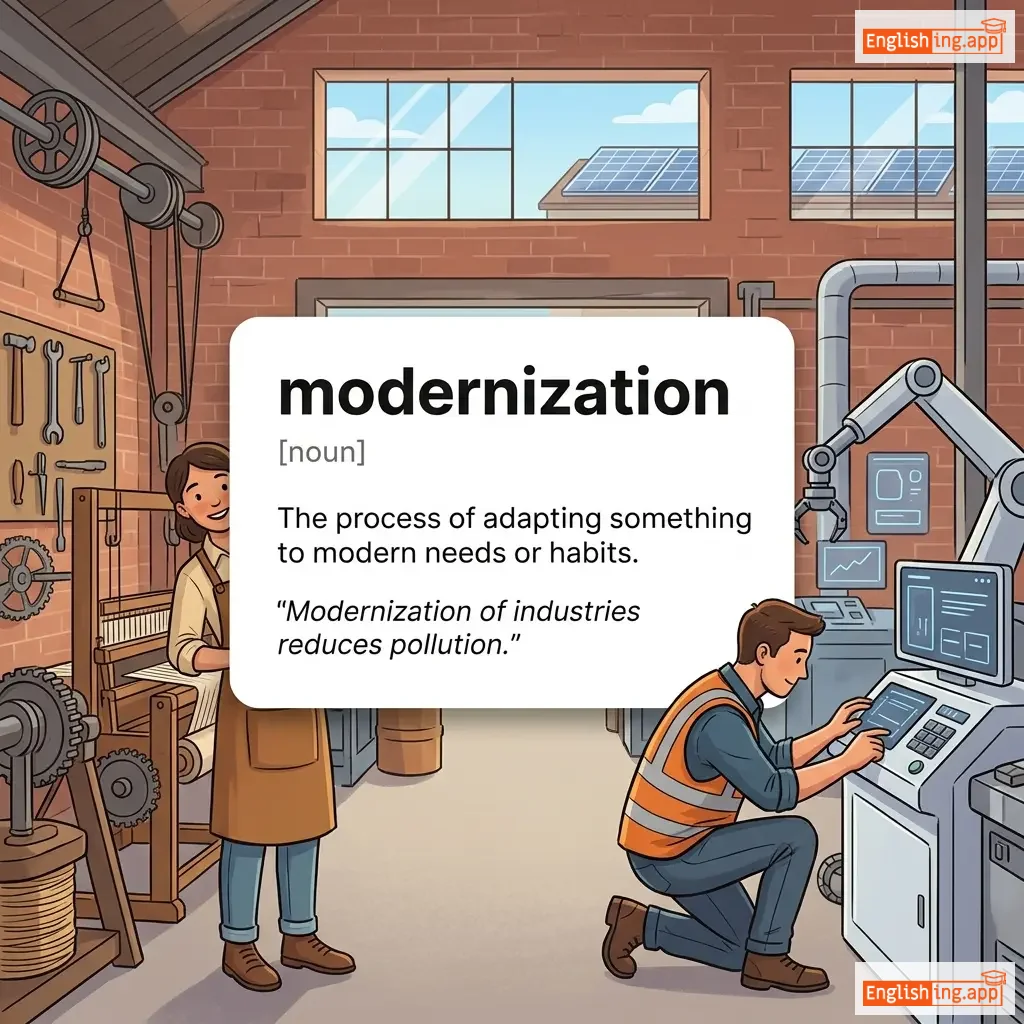
modernization definition card — visual illustration of the meaning
noun
/ˌmɒd.ən.aɪˈzeɪ.ʃən/
近代化 (kindaika)

The process of adapting something to modern needs or habits.

"Modernization of industries reduces pollution."

"産業の近代化は汚染を減らします。" (Sangyō no kindaika wa osen o herashimasu.)
verb
/ˈmɒdənaɪz/
近代化する (kindai-ka suru)

To adapt something to modern needs or styles; to update or improve.

"The company plans to modernize its IT infrastructure."

"その会社はITインフラを近代化する計画です。" (Sono kaisha wa IT infura o kindaika suru keikaku desu.)
adjective
/ˈmɒdɪst/

Having or showing a humble estimate of one’s importance; simple and not extravagant.

"She lives in a modest house in the countryside."

noun
/ˈmɒd.ə.sti/
謙虚さ; 謙遜 (kenkyosa; kenson)

the quality of being humble and not boastful about achievements

"Despite his success, he showed great modesty."

"成功にもかかわらず、彼は偉大な謙虚さを示しました。" (Seikou ni mo kakawarazu, kare wa idaina kenkyosa wo shimashita.)
noun
/ˈmɒdɪkəm/
少しの量 (sukoshi no ryou)

a small or moderate amount of something, especially something valuable or desirable

"She showed a modicum of patience during the long meeting."
"長い会議の間、彼女は少しの忍耐を見せました。" (Nagai kaigi no aida, kanojo wa sukoshi no nintai o misemashita.)
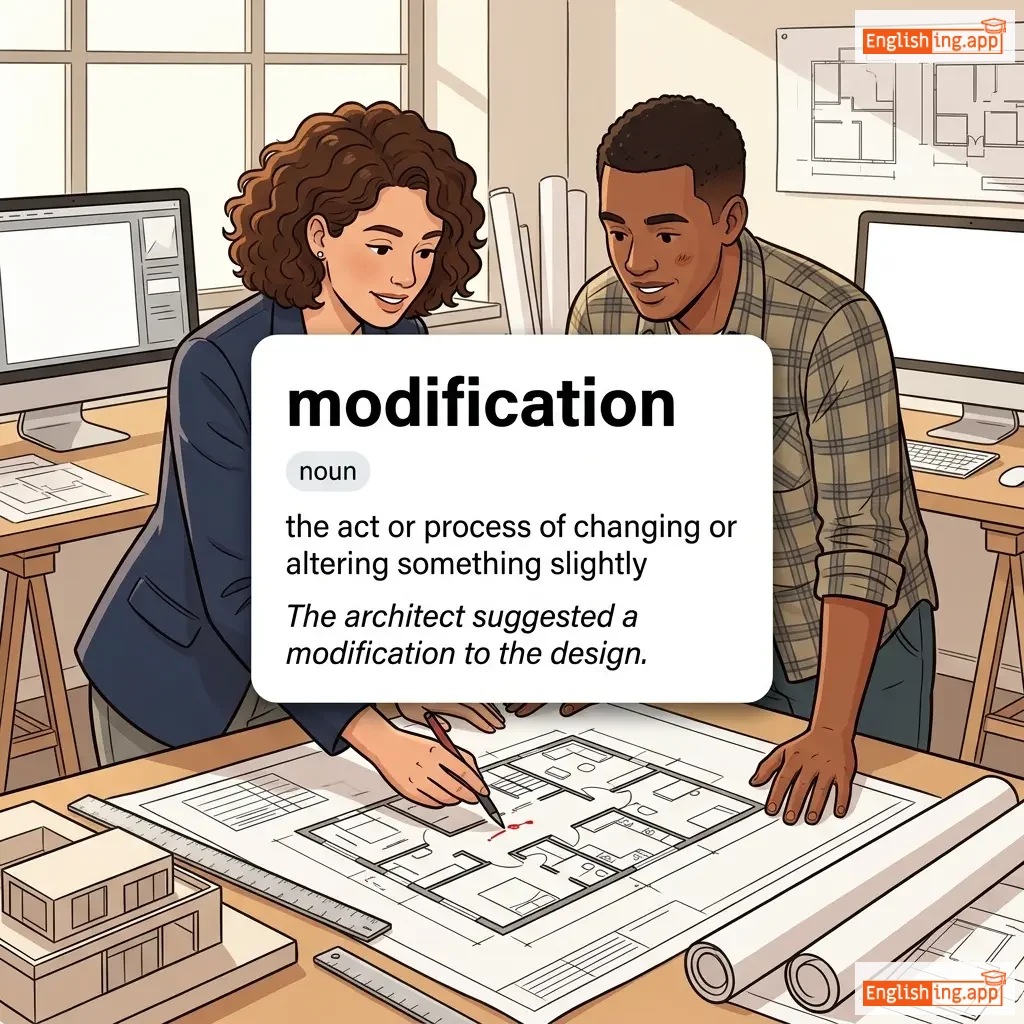
modification definition card — visual illustration of the meaning
noun
/ˌmɒdɪfɪˈkeɪʃən/
修正 (shūsei)

the act or process of changing or altering something slightly

"The architect suggested a modification to the design."
"建築家はデザインの修正を提案しました。" (Kenchikuka wa dezain no shūsei o teian shimashita.)
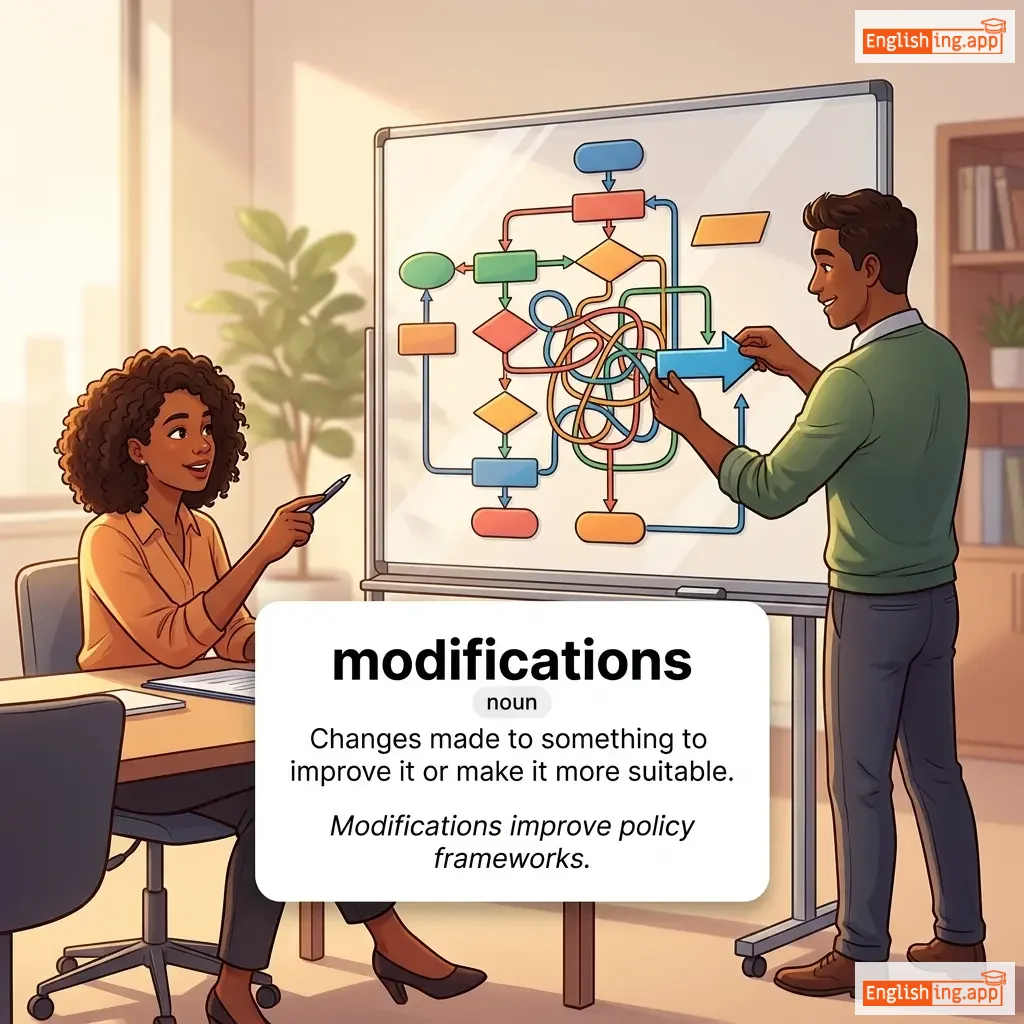
modifications definition card — visual illustration of the meaning
noun
ˌmɒd.ɪ.fɪˈkeɪ.ʃənz
変更 (henkou)

Changes made to something to improve it or make it more suitable.

"Modifications improve policy frameworks."

"変更は政策フレームワークを改善します。" (Henkou wa seisaku fureemuwaaku o kaizen shimasu.)
noun
/ˈmɒdɪfaɪər/
修飾語 (shuushokugo)

a word or element that changes, limits, or describes the meaning of another word; something that alters or adjusts

"In the phrase 'very cold', 'very' is a modifier of 'cold'."

"「very cold」という句では、「very」は「cold」を修飾する語です。" (very cold to iu ku dewa very wa cold o shuushoku suru go desu)
modify definition card — visual illustration of the meaning
verb
/ˈmɒdɪfaɪ/
修正する (shūsei suru)

to make partial or minor changes to something

"You need to modify the settings to improve performance."

"パフォーマンスを改善するために設定を変更する必要があります。" (Pafōmansu o kaizen suru tame ni settei o henkō suru hitsuyō ga arimasu.)
adjective
/ˈməʊdɪʃ/
流行の (ryūkō no)

conforming to or following current fashion or style

"She wore a modish outfit that caught everyone’s attention."
"彼女はモディッシュな服を着て、みんなの注目を集めていました。" (Kanojo wa modisshu na fuku o kite, minna no chūmoku o atsumete imashita.)
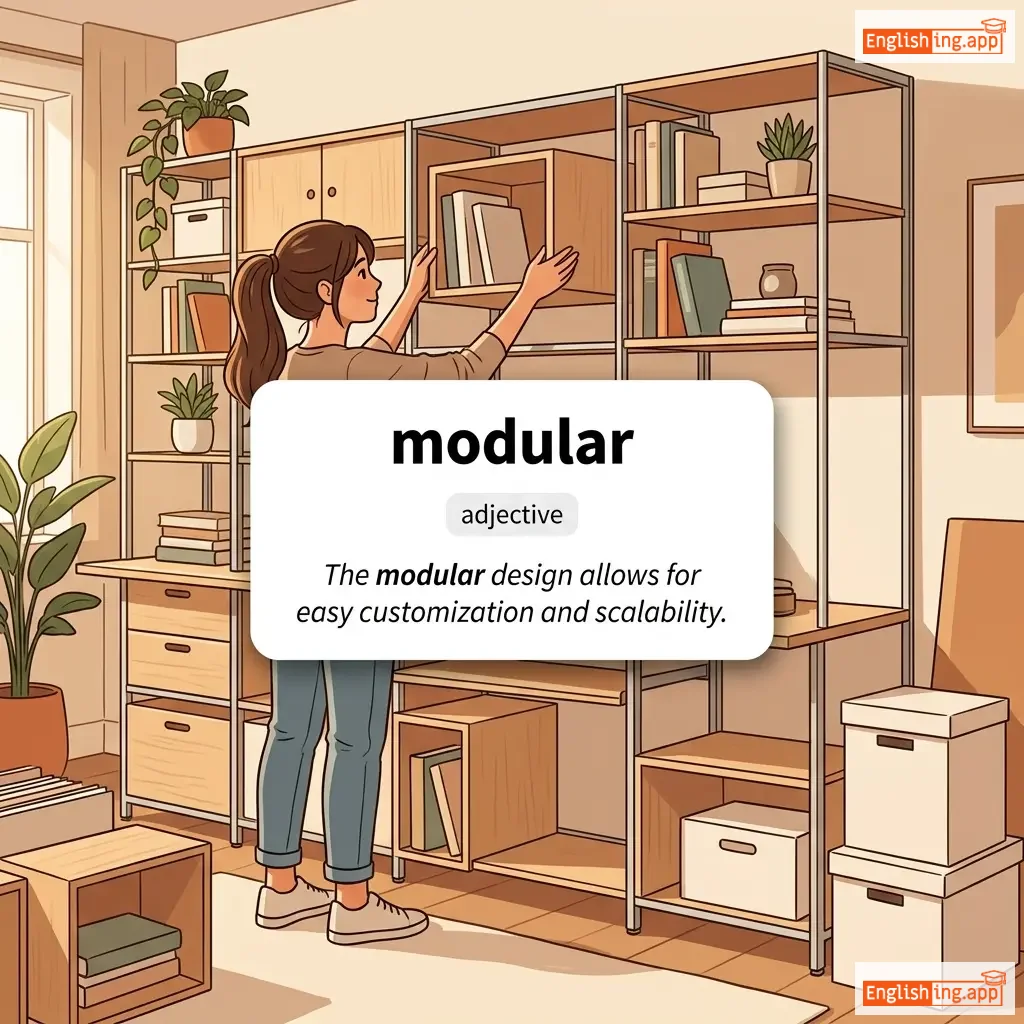
modular definition card — visual illustration of the meaning
adjective
/ˈmɒdʒʊlər/
モジュラー (mojuraa)

Employing or involving a module or modules as the basis of design or construction.

"The modular design allows for easy customization and scalability."

"モジュラー設計は簡単なカスタマイズとスケーラビリティを提供します。" (Mojuraa sekkei wa kantan na kasutamaizu to sukeerabiriti o teikyō shimasu.)
modulate definition card — visual illustration of the meaning
verb
/ˈmɒdjʊleɪt/
調整する (chōsei suru)

to adjust or regulate the degree, pitch, or intensity of something

"The teacher modulated her voice to keep the students engaged."
"教師は生徒を引きつけるために声を調整しました。" (Kyōshi wa seito o hikitsukeru tame ni koe o chōsei shimashita.)
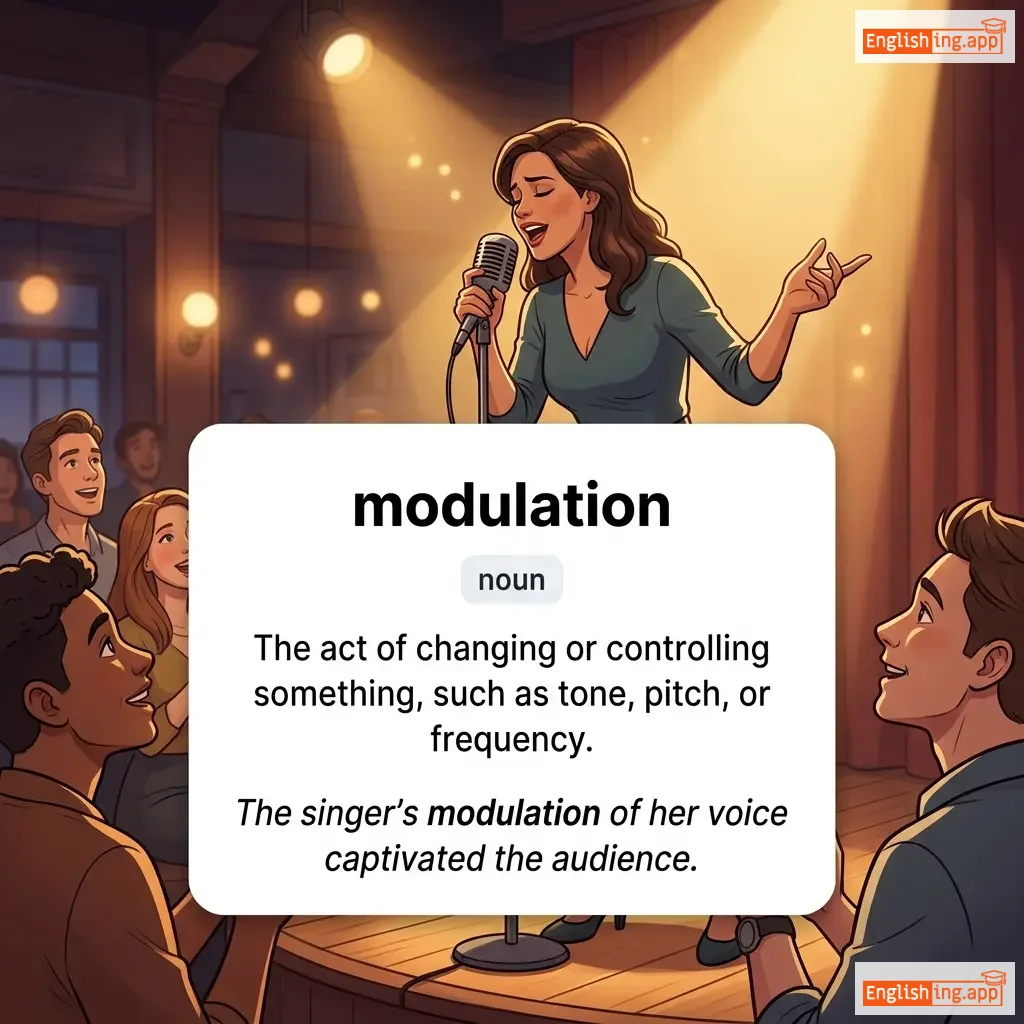
modulation definition card — visual illustration of the meaning
noun
/ˌmɒdjʊˈleɪʃən/
音の制御や周波数の調整 (on no seigyo ya shūhasū no chōsei)

The act of changing or controlling something, such as tone, pitch, or frequency.

"The singer’s modulation of her voice captivated the audience."

"歌手の声のモジュレーションが観客を魅了した。" (Kashu no koe no mojurēshon ga kankyaku o miryō shita.)
noun
/ˈmɒdjuːl/
モジュール (moju-ru)

a self-contained unit of a course or system, typically part of a larger whole

"The module on machine learning was difficult but informative."

"機械学習のモジュールは難しかったが、情報が豊富だった。" (Kikai gakushu no mojuru wa muzukashikatta ga, joho ga hoho datta.)
noun
/ˈmoʊɡəl/
大物 (ōmono)

A powerful or influential person, especially in business or media.

"He became a tech mogul by founding a billion-dollar company."

"彼は10億ドルの会社を創業してテクノロジーの大物になった。" (Kare wa 10 oku-doru no kaisha o sōgyō shite tekunorojī no ōmono ni natta.)
noun
/ˈmɔɪəti/
半分または部分 (hanbun mata wa bubun)

One of two equal parts; a half or portion.

"The estate was divided into two moieties between the heirs."

"遺産は相続人の間で2つの部分に分けられました。" (Isan wa sōzokunin no aida de futatsu no bubun ni wakeraremashita.)
noun
/ˈmɔɪs.tʃər/
湿気 (shikke)

water or dampness that exists in small amounts in the air or on a surface

"The skin cream helps retain moisture."

"スキンクリームは湿気を保持するのに役立ちます。" (Sukin kurīmu wa shikke o hoji suru no ni yakudachimasu.)
noun
/ˈmoʊlə ˈkɑrplɪt/
モラ魚 (mora sakana)

a small freshwater fish of the carp family, commonly found in South Asian rivers and ponds

"The mola carplet is a popular small fish used in Bengali cuisine."

"モラ魚はベンガル料理でよく使われる人気の小さな魚です。" (mora sakana wa bengaru ryori de yoku tsukawareru ninki no chiisana sakana desu)
noun
/ˈmoʊlər/
臼歯 (kyūshi)

A large tooth at the back of the mouth used for grinding food.

"The dentist had to extract his wisdom molar."

"歯科医は彼の親知らずを抜かなければなりませんでした。" (Shikai wa kare no oyashirazu o nakanakereba narimasen deshita.)
noun
/məˈlæsɪz/
モラセス (morasesu)

thick, dark, sweet syrup made from sugar cane

"The recipe calls for molasses to give the bread a rich flavor."

"レシピは、パンにリッチな味を加えるためにモラセスを要求します。" (Reshipi wa, pan ni ricchi na aji o kuwaeru tame ni morasesu o youkyu shimasu.)
noun
/ˈmoʊldɪŋ/
装飾モールディング (sōshoku mōrudingu)

A decorative strip or design, often used on walls, ceilings, or furniture.

"The wooden molding gave the room a classic look."

"木製のモールディングが部屋にクラシックな印象を与えました。" (Mokusei no mōrudingu ga heya ni kurashikku na inshō o ataemashita.)
noun
/moʊl/
モグラ (mogura)

a small burrowing mammal with tiny eyes and soft fur

"The mole dug tunnels under the garden."

"モグラは庭の下にトンネルを掘った。" (Mogura wa niwa no shita ni tonneru o hotta.)
noun
/ˈmɒlɪkjuːl/
分子 (bunshi)

The smallest unit of a chemical compound that retains its chemical properties.

"A water molecule is made up of two hydrogen atoms and one oxygen atom."

"水分子は2つの水素原子と1つの酸素原子で構成されています。" (suibunshi wa futatsu no suiso genshi to hitotsu no sanso genshi de kōsei sareteimasu.)
verb
/məˈlɛst/
嫌がらせ / 性的虐待 (iyagarase / seiteki gyakutai)

to assault or abuse someone, especially in a sexual or physical way

"The criminal was arrested for attempting to molest a child."

"犯罪者は子供を誘惑しようとしたため逮捕されました。" (Hanzaisha wa kodomo o yuuwaku shiyou to shita tame taiho saremashita.)
mollify definition card — visual illustration of the meaning
verb
/ˈmɒlɪfaɪ/
なだめる (nadameru)

To calm or soothe someone's anger or anxiety.

"The manager tried to mollify the angry customers with discounts."

"マネージャーは割引で怒った顧客をなだめようとした。" (Manejā wa waribiki de okotta kokyaku o nadameyō to shita.)
verb
/ˈmɒlikɒdl/
甘やかす (amayakasu)

To treat someone in an overprotective and indulgent way.

"Parents should avoid mollycoddling their children too much."

"親は子供を過度に甘やかすのを避けるべきです。" (Oya wa kodomo o kado ni amayakasu no o sakeru beki desu.)
verb
/məʊlt/
脱羽 (datsu wa)

To shed old feathers, skin, or hair to make way for new growth.

"Birds molt their feathers once a year."

"鳥は年に一度羽を抜けます。" (Tori wa toshi ni ichido hane o nukemasu.)
adjective
/ˈməʊltən/
溶けた (toketa)

Made into liquid by heat; melted.

"The blacksmith poured molten metal into the mold."

"鍛冶屋は型に溶けた金属を注ぎました。" (Kajiya wa kata ni toketa kinzoku o sosogimashita.)
👩‍👧

mom (ママ)

noun
/mɑːm/
ママ (mama)

an informal word for mother

"My mom makes the best homemade food."

"私のママは一番美味しい手作り料理を作る。" (Watashi no mama wa ichiban oishii tezukuri ryouri wo tsukuru.)
noun
/ˈmoʊmənt/
瞬間 (shunkan)

A very short period of time; a particular point in time.

"She paused for a moment before answering."

"彼女は答える前に一瞬止まった。" (Kanojo wa kotaeru mae ni isshun tomatta.)
adjective
/ˈmoʊmənˌteri/
一瞬の (isshun no)

Lasting for only a short time.

"There was a momentary silence in the room."

"部屋の中に一瞬の静けさがあった。" (Heya no naka ni isshun no shizukesa ga atta.)
adjective
/moʊˈmɛntəs/
重要な (jūyōna)

Of great importance or significance, especially in its effect on the future.

"The signing of the agreement was a momentous event."

"契約の署名は重要な出来事でした。" (Keiyaku no shomei wa jūyōna dekigoto deshita.)
momentum definition card — visual illustration of the meaning
noun
/moʊˈmɛntəm/

The force or speed gained by a moving object; the strength of progress.

"The team gained momentum after scoring the first goal."

noun
/ˈmɒn.ɑːk/
君主 (kunshu)

a sovereign ruler, especially a king or queen

"The monarch addressed the nation on television."

"モナークはテレビで国民に演説を行いました。" (Monāku wa terebi de kokumin ni enzetsu o okonai mashita.)
monarchy definition card — visual illustration of the meaning
noun
/ˈmɑːnərki/
君主制 (kunshusei)

A system of government with a king or queen as head of state.

"The country became a monarchy after the coronation."

"その国は戴冠後、君主制となった。" (Sono kuni wa taikan go, kunshusei to natta.)
noun
/ˈmɒnəstɛri/

A building or complex where monks or nuns live, work, and worship.

"The old monastery was surrounded by high stone walls."

adjective
/məˈnæstɪk/
修道的な (shuudou teki na)

Relating to monks, monasteries, or a life of religious seclusion.

"He chose to live a monastic life away from the city."

"彼は都市から離れた修道的な生活を選んだ。" (Kare wa toshi kara hanareta shuudou teki na seikatsu wo eranda.)
noun
/ˈmʌn.deɪ/
月曜日 (getsuyoubi)

the first day of the working week following Sunday

"I start my new job on Monday."

"私は月曜日に新しい仕事を始めます。" (watashi wa getsuyoubi ni atarashii shigoto o hajimemasu)
monetary definition card — visual illustration of the meaning
adjective
/ˈmʌnɪtəri/

Relating to money, currency, or financial matters.

"The government introduced new monetary policies."

monetization definition card — visual illustration of the meaning
noun
/ˌmɒn.ɪ.taɪˈzeɪ.ʃən/
マネタイズ (manetaizu)

The process of converting assets or services into money, involving commercialization, profit generation, and revenue creation.

"The monetization of digital content has created new income streams."

"デジタルコンテンツのマネタイズは新しい収入源を生み出しました。" (Dejitaru kontentsu no manetaizu wa atarashī shūnyūgen o umidashimashita.)
noun
/ˈmʌni/
幸福 (koufuku)

A medium of exchange in the form of coins and banknotes; wealth or financial resources.

"He saved enough money to buy a new car."

"彼女は賞を受け取ったとき、幸せを隠せなかった。" (Kanojo wa shou o uketotta toki, koufuku o kakusenakatta.)
adjective
/ˈmʌnid/
金持ち; 裕福な; 富裕な (manid)

having much money; wealthy; rich

"She comes from a moneyed family with extensive real estate holdings."

"彼女は広範な不動産を持つ裕福な家庭から来ています。" (kanojo wa kōhan'na fudōsan o motsu yūfukuna katei kara kiteimasu.)
noun
/ˈmɒŋ.ɡuːs/
マングース (Mangūsu)

a small carnivorous mammal known for its ability to kill venomous snakes

"The mongoose quickly attacked the cobra to protect its young."

"マングースは子供たちを守るためにコブラを素早く攻撃しました。" (Mangūsu wa kodomotachi o mamoru tame ni kobura o subayaku kōgeki shimashita.)
noun
/ˈmʌŋɡrəl/
雑種犬 (zasshu inu)

A dog of mixed breed; sometimes used to describe something mixed or of inferior quality.

"The stray dog was a friendly mongrel."

"その野良犬は友好的な雑種犬だった。" (sono nora inu wa yūkōteki na zasshu inu datta.)
noun
/məˈnɪʃən/
警告 (keikoku)

A warning or caution, often of a religious or moral nature.

"The priest gave a monition against dishonesty."

"神父は不正行為に対する警告を与えた。" (Shinpu wa fusei koui ni taisuru keikoku wo ataeta.)
noun, verb
/ˈmɒnɪtər/
モニター、監視する (monitā, kanshi suru)

to observe and check the progress or quality of something; also a device that displays information

"The teacher monitors the students during the exam."

"先生は試験中に生徒を監視します。" (Sensei wa shiken-chū ni seito o kanshi shimasu.)