
語彙集

英単語辞書 | 単語の意味、定義、例文

integrative diplomacy definition card — visual illustration of the meaning
noun
/ˈɪn.tɪ.ɡreɪ.tɪv dɪˈpləʊ.mə.si/
統合的外交 (tougouteki gaikou)

A diplomatic approach that seeks to combine or coordinate different elements, interests, or parties into a unified whole.

"Integrative diplomacy strengthens alliances."

"統合的外交は同盟を強化する。" (Tougouteki gaikou wa doumei o kyouka suru.)
integrity definition card — visual illustration of the meaning
noun
/ɪnˈtɛɡrɪti/
誠実 (seijitsu)

The quality of being honest and having strong moral principles.

"She is admired for her honesty and integrity."

"彼女はその正直さと誠実さで賞賛されています。" (Kanojo wa sono shōjikisa to seijitsusa de shōsan sareteimasu.)
noun
/ɪnˈtɛɡ.jʊ.mənt/
外皮 (gaihi)

A natural outer covering, such as skin, shell, or rind.

"The snake sheds its integument as it grows."

"ヘビは成長するにつれて外皮を脱ぎます。" (Hebi wa seichou suru ni tsurete gaihi o nugimasu.)
noun
/ˈɪn.tə.lekt/
知能 (chinou)

The ability to think, reason, and understand objectively.

"Her intellect is admired by all her colleagues."

"彼女の知能はすべての同僚に賞賛されています。" (Kanojo no chinou wa subete no dōryō ni shōsan sareteimasu.)
adjective, noun
/ˌɪn.təlˈɛk.tʃu.əl/
知的な (chiteki na)

Relating to the intellect; a person who engages in critical thinking and study.

"She enjoys intellectual discussions about philosophy."

"彼女は哲学についての知的な議論を楽しんでいます。" (Kanojo wa tetsugaku ni tsuite no chiteki na giron o tanoshindeimasu.)
intellectuals definition card — visual illustration of the meaning
noun
ˌɪntəˈlektʃuəlz
知識人 (chishikijin)

People possessing a highly developed intellect; scholars or academics.

"Intellectuals protested against the dominance."

"知識人は支配に反対した。" (Chishikijin wa shihai ni hantai shita.)
intelligence definition card — visual illustration of the meaning
noun
/ɪnˈtɛl.ɪ.dʒəns/
知能 (chinou)

The ability to acquire and apply knowledge and skills.

"Artificial intelligence is transforming industries worldwide."

"人工知能は世界中の産業を変革しています。" (jinkou chinou wa sekaijuu no sangyou wo henka shiteimasu.)
adjective
/ɪnˈtɛlɪdʒənt/
賢い (kashikoi)

Having or showing high mental capacity, quick to learn and understand.

"She is one of the most intelligent students in the class."

"彼女はクラスで最もインテリジェントな学生の一人です。" (Kanojo wa kurasu de mottomo interijento na gakusei no hitori desu.)
noun
/ɪnˌtɛl.ɪˈdʒɛntsi.ə/
インテリゲンチャ (interigensha)

The group of people engaged in intellectual and cultural pursuits in a society.

"The intelligentsia played a key role in shaping public opinion."

"インテリゲンチャは、世論形成において重要な役割を果たした。" (Interigensha wa, yoron keisei ni oite jūyōna yakuwari o hatashita.)
adjective
/ɪnˈtɛlɪdʒəbl/

Able to be understood; clear enough to be comprehended.

"Her speech was barely intelligible over the noise."

noun
/ɪnˈtɛmpərəns/
節度を欠くこと (setsudo o kaku koto)

Lack of moderation or self-control, especially with drinking or eating.

"His intemperance in drinking ruined his health."

"彼の飲酒の節度を欠くことが健康を害した。" (Kare no inshū no setsudo o kaku koto ga kenkō o gaishita.)
adjective
/ɪnˈtɛmpərət/
不節制な (fusesetsuna)

Lacking self-control; immoderate, especially in indulgence.

"The politician's intemperate remarks caused controversy."

"政治家の不節制な発言は論争を引き起こした。" (Seijika no fusesetsu na hatsugen wa ronsō o hikiokoshita.)
intend definition card — visual illustration of the meaning
verb
/ɪnˈtɛnd/
意図する (itosuru)

To have a plan or purpose in mind; to aim to do something.

"I intend to finish my work before dinner."

"私は夕食前に仕事を終わらせるつもりです。" (Watashi wa yūshoku mae ni shigoto o owaraseru tsumori desu.)
adjective
/ɪnˈtɛns/
強烈 (kyōretsu)

Of extreme force, degree, or strength.

"She felt intense pain after the accident."
"事故後、彼女は強烈な痛みを感じました。" (Jiko go, kanojo wa kyōretsu na itami o kanjimashita.)
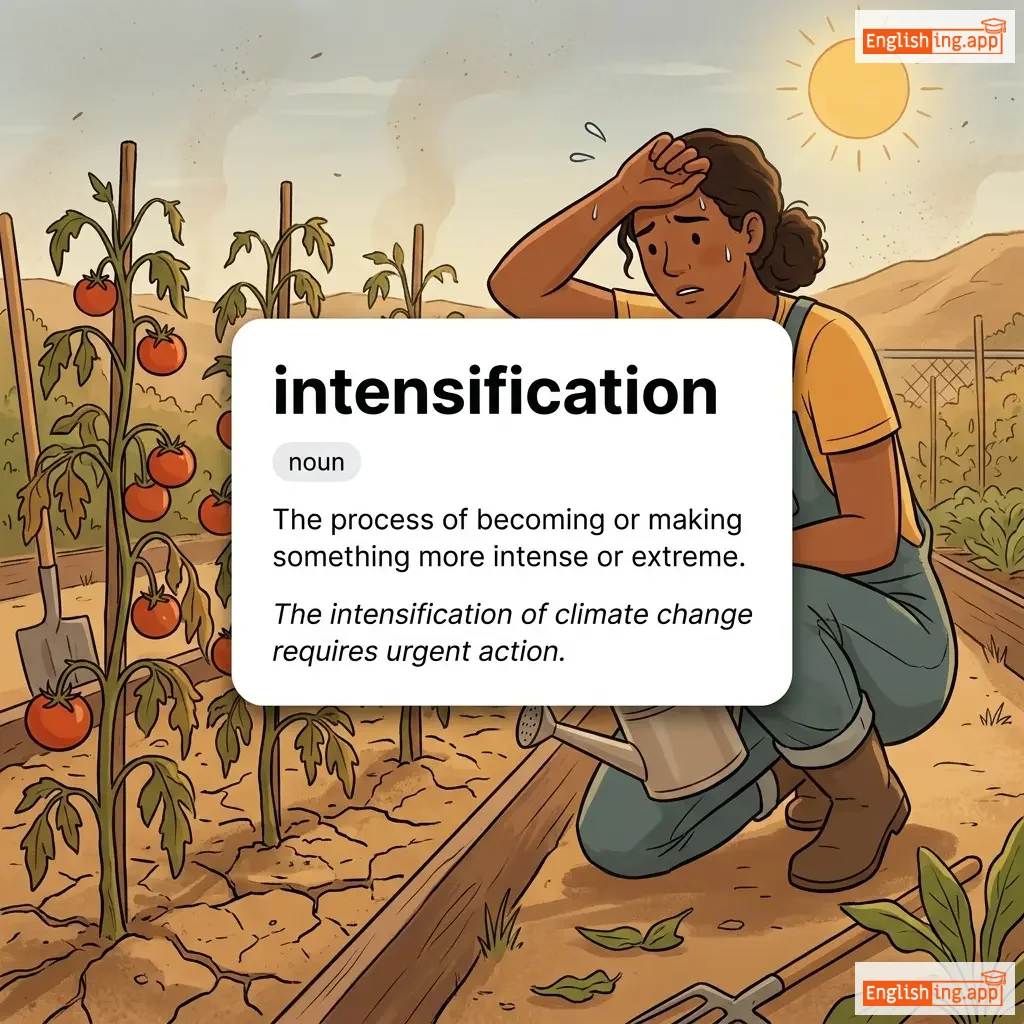
intensification definition card — visual illustration of the meaning
noun
ɪnˌten.sɪ.fɪˈkeɪ.ʃən
強化 (kyouka)

The process of becoming or making something more intense or extreme.

"The intensification of climate change requires urgent action."

"気候変動の強化は緊急の行動を必要とします。" (Kikou hendou no kyouka wa kinkyu no koudou o hitsuyou to shimasu.)
verb
/ɪnˈtɛnsɪfaɪ/
強化する (kyōka suru)

To make something stronger, more extreme, or more forceful.

"The storm is expected to intensify overnight."

"嵐は夜通し強くなると予想されています。" (Arashi wa yodōshi tsuyoku naru to yosō sareteimasu.)
noun
/ɪnˈtɛnʃən/
内的意味 (naiteki imi)

The internal content of a concept; the set of attributes implied by a word or phrase.

"The intension of the word 'dog' includes being a mammal and domesticated."

"'犬'という言葉のインテンションには哺乳類であり、飼いならされたことが含まれます。" ('Inu' to iu kotoba no intenshon ni wa honyūrui de ari, kainarasa reta koto ga fukuma remasu.)
noun
/ɪnˈtɛnsəti/
強度 (kyoudo)

The quality of being extreme, strong, or forceful in degree.

"The intensity of the storm frightened the villagers."

"嵐の強度は村人たちを驚かせた。" (Arashi no kyoudo wa murabito-tachi o odorokaseta.)
adjective
/ɪnˈtɛnsɪv/
集中的 (shūchūtekina)

Involving a lot of effort, energy, or concentration in a short period of time.

"She attended an intensive English course before moving abroad."

"彼女は海外に引っ越す前に、集中的な英語コースを受講しました。" (Kanojo wa kaigai ni hikkosu mae ni, shūchūtekina eigo kōsu o jukō shimashita.)
noun
/ɪnˈtɛnt/
意図 (ito)

the purpose or reason behind an action; a strong determination to do something

"Her intent was to improve the quality of education in the community."

"彼女の意図はコミュニティの教育の質を向上させることでした。" (Kanojo no ito wa komyuniti no kyōiku no shitsu o kōjōsuru koto deshita.)
noun
/ɪnˈtɛnʃən/
意図 (ito)

A plan, aim, or purpose behind an action.

"Her intention was to finish the project before the deadline."

"彼女の意図はプロジェクトを締め切り前に終わらせることだった。" (Kanojo no ito wa purojekuto o shimekiri mae ni owaraseru koto datta.)
verb
/ɪnˈtɜːr/
埋葬する (maisou suru)

To bury a dead body in the ground.

"They decided to inter the soldier with full honors."
"彼らは兵士を全ての名誉を持って埋葬することに決めた。" (Karera wa heishi o subete no meiyo o motte maisou suru koto ni kimeta.)
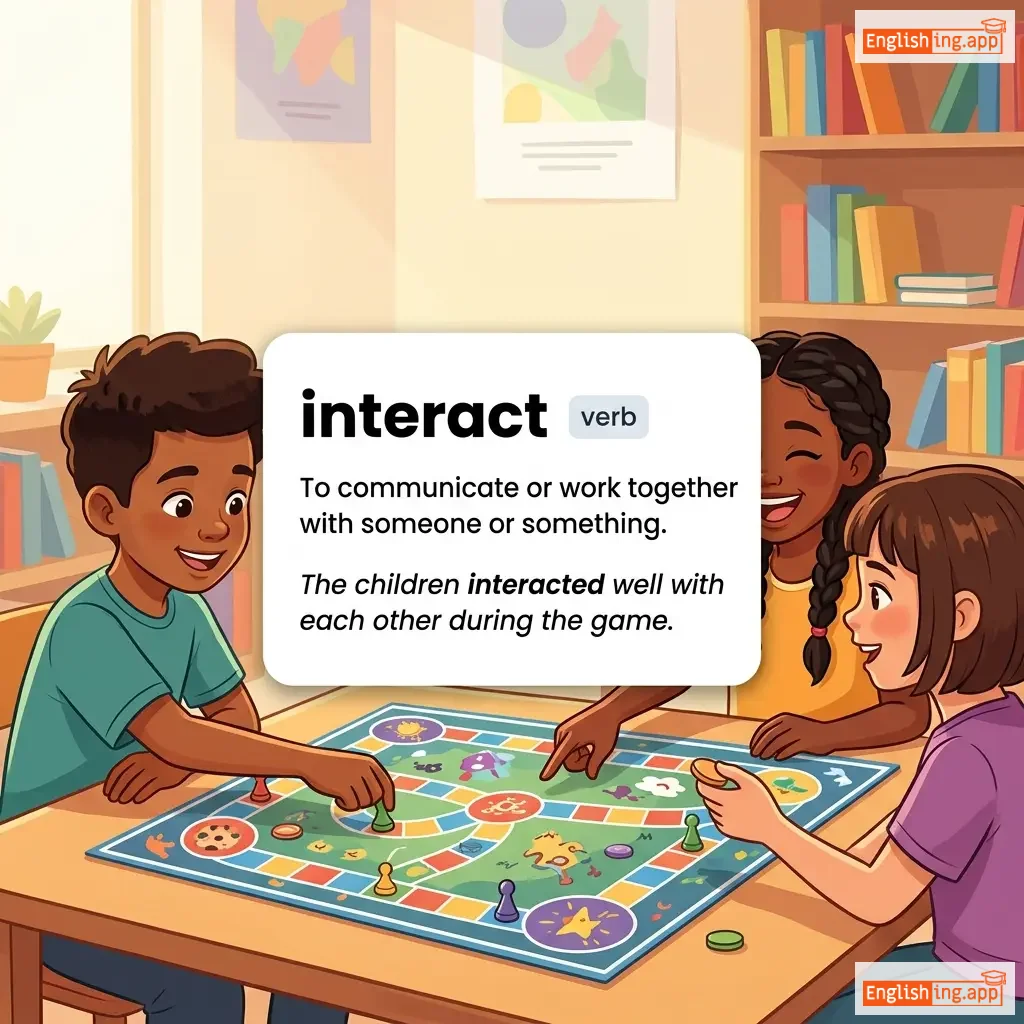
interact definition card — visual illustration of the meaning
verb
/ˌɪntərˈækt/
インタラクトする (intarakuto suru)

To communicate or work together with someone or something.

"The children interacted well with each other during the game."

"子供たちはゲーム中にお互いにうまくインタラクトしました。" (Kodomotachi wa gēmu-chū ni otagai ni umaku intarakuto shimashita.)
noun
/ˌɪntərˈækʃən/
相互作用 (sougou sayou)

The process of people or things acting upon or influencing each other.

"The teacher encouraged more interaction between students."
"教師は生徒間のさらなるインタラクションを促進しました。" (Kyoushi wa seitokan no saranaインタラクション o sokushin shimashita.)
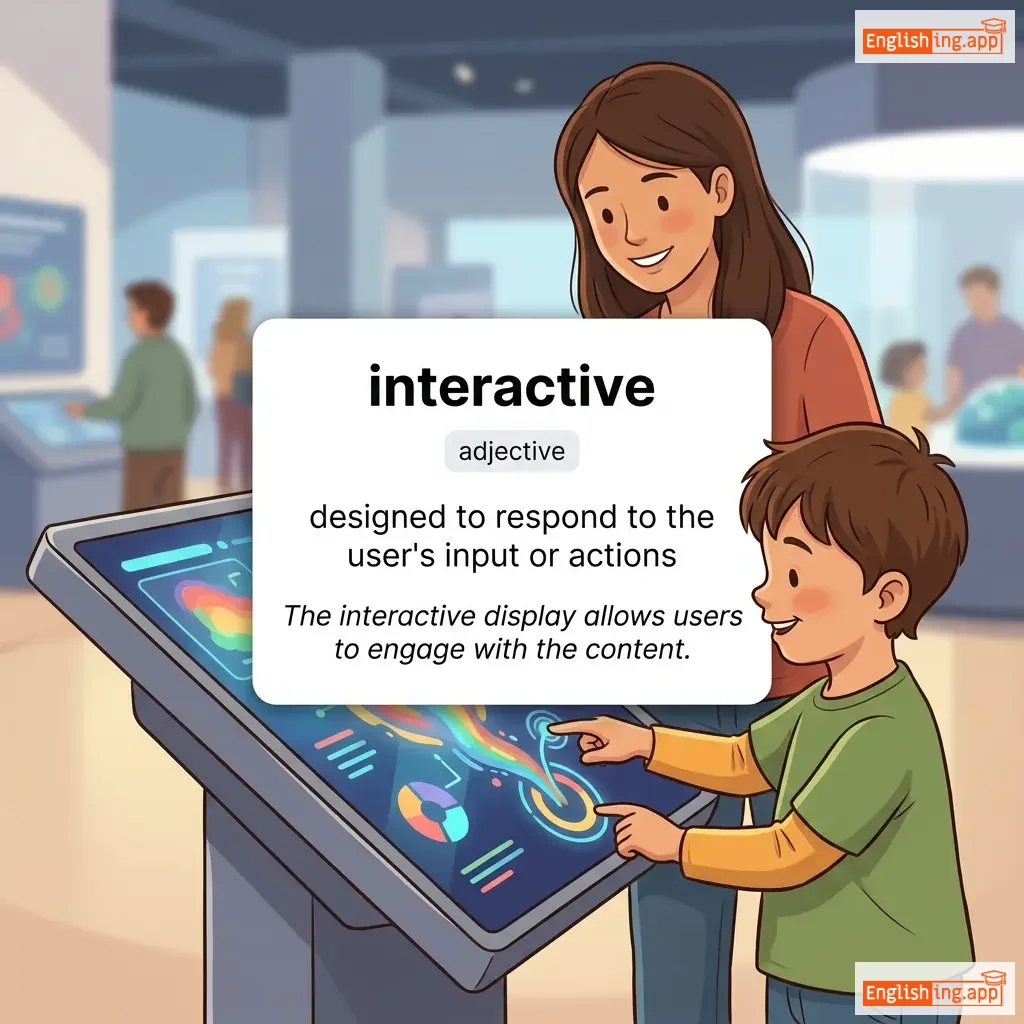
interactive definition card — visual illustration of the meaning
adjective
/ɪnˈtærɪktɪv/

designed to respond to the user's input or actions

"The interactive display allows users to engage with the content."

🕊️

intercede

verb
/ˌɪntərˈsiːd/

to act or plead on behalf of someone in difficulty or trouble; to intervene between parties to help resolve a dispute

"She interceded with the teacher to give her brother another chance."

verb
/ˌɪntərˈsɛpt/

to stop, catch, or seize something on its way from one place to another

"The police intercepted the stolen car before it crossed the border."

noun
/ˌɪntərˈsɛʃən/
仲介 (chūkai)

the act of intervening or pleading on behalf of another person

"The prisoner was released due to the intercession of influential leaders."

"囚人は影響力のあるリーダーたちの仲介で釈放されました。" (Shūjin wa eikyōryoku no aru rīdā-tachi no chūkai de shakuho saremashita.)
noun
/ˌɪntərˈsɛsər/
仲介者 (chūkaisha)

a person who intervenes or pleads on behalf of another

"He acted as an intercessor to resolve the conflict between the two families."

"彼は二つの家族間の対立を解決するために仲介者として行動しました。" (Kare wa futatsu no kazoku-kan no tairitsu o kaiketsu suru tame ni chūkaisha toshite kōdō shimashita.)
adjective
/ˌɪntərˈtʃeɪndʒəbl/
交換可能な (koukan kanou na)

able to be exchanged with each other without difference or loss of function

"These machine parts are interchangeable, so they can be replaced easily."

"これらの機械部品は交換可能なため、簡単に交換できます。" (korera no kikai buhin wa koukan kanou na tame, kantan ni koukan dekimasu.)
interconnectivity definition card — visual illustration of the meaning
noun
/ˌɪntəkəˈnɛktɪvɪti/
相互接続性 (sōgo setsuzokusei)

The state of being interconnected or the degree of connectivity between components

"The rise of interconnectivity has transformed global communication."

"インターコネクティビティの発展は、世界中のコミュニケーションを変革しました。" (Intākonekutibiti no hatten wa, sekai-jū no komyunikēshon o kenkaku shimashita.)
intercropping definition card — visual illustration of the meaning
noun
/ˈɪntəˌkrɒpɪŋ/
間作農業 (kansaku nougyou)

The agricultural practice of cultivating two or more crops simultaneously in the same field to maximize land use efficiency and improve soil health.

"Intercropping can help improve soil fertility and pest control."
"間作農業は土壌の肥沃度と害虫管理の向上に役立ちます。" (Kansaku nougyou wa dojou no hiwokudo to gaichuu kanri no koujou ni yakudachimasu.)
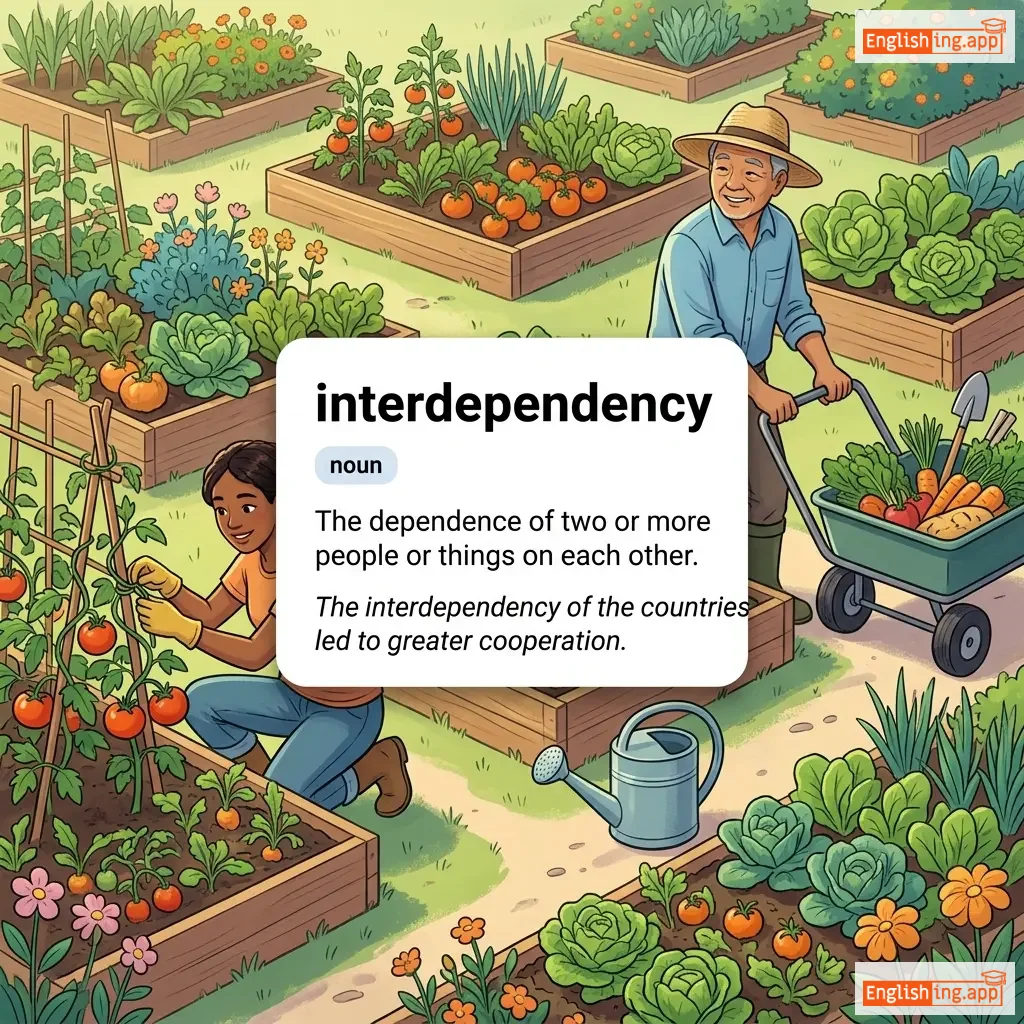
interdependency definition card — visual illustration of the meaning
noun
ˌɪntədɪˈpɛndənsi
相互依存 (sōgo izon)

The dependence of two or more people or things on each other.

"The interdependency of the countries led to greater cooperation."
"国々の相互依存は、より大きな協力を生み出しました。" (Kuni-guni no sōgo izon wa, yori ōkina kyōryoku o umidashimashita.)
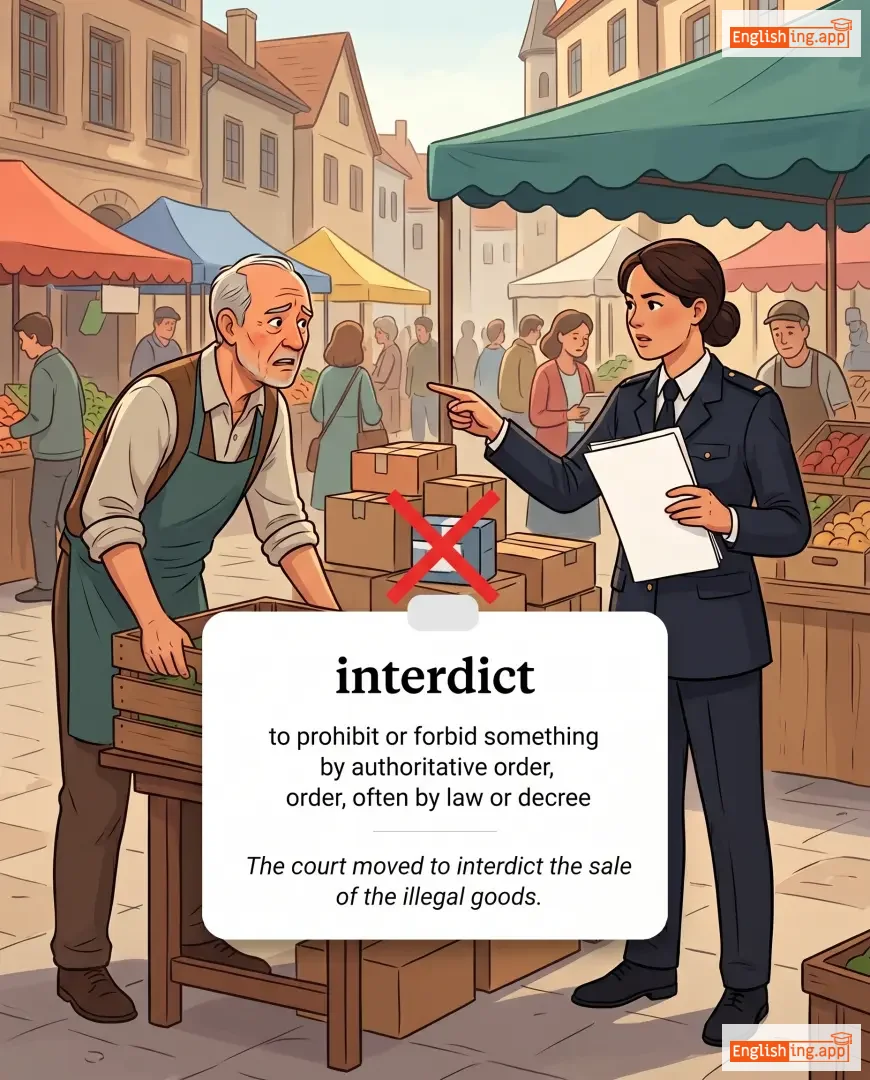
interdict definition card — visual illustration of the meaning
verb
/ˈɪntərˌdɪkt/
禁じる (kinjiru)

to prohibit or forbid something by authoritative order, often by law or decree

"The court moved to interdict the sale of the illegal goods."

"裁判所は違法な商品の販売を禁じることを決定しました。" (Saibansho wa ihō na shōhin no hanbai o kinjiru koto o kettei shimashita.)
interdisciplinary definition card — visual illustration of the meaning
adjective
/ˌɪntərˈdɪsəplɪˌnɛri/
学際的 (gakusaiteki)

Involving two or more academic subjects or fields of study.

"The university encourages interdisciplinary research projects."

"大学は学際的な研究プロジェクトを奨励しています。" (Daigaku wa gakusaiteki na kenkyū purojekuto o shōrei shiteimasu.)
noun/verb
/ˈɪntrəst/ or /ˈɪntəˌrɛst/
興味 / 利子 (kyoumi / rishi)

A feeling of curiosity or concern about something; or money paid for the use of borrowed money.

"He showed great interest in learning new languages."

"彼は新しい言語を学ぶことに大きな興味を示しました。" (Kare wa atarashii gengo o manabu koto ni ookina kyoumi o shimeshimashita.)
adjective
/ˈɪntrəstɪd/
興味がある (kyōmi ga aru)

Showing curiosity or concern about something.

"She is very interested in learning new languages."

"彼女は新しい言語を学ぶことにとても興味がある。" (Kanojo wa atarashī gengo o manabu koto ni totemo kyōmi ga aru.)
adjective
/ˈɪntrəstɪŋ/ or /ˈɪntəˌrɛstɪŋ/
面白い (omoshiroi)

Arousing curiosity or attention; holding one’s interest.

"The documentary about space was very interesting."

"宇宙についてのドキュメンタリーはとても面白かった。" (Uchū ni tsuite no dokyumentarī wa totemo omoshirokatta.)
noun
/ˈɪntərfeɪs/
インターフェイス (intaafeisu)

a point where two systems, subjects, or organizations meet and interact

"The user interface is designed to be intuitive and user-friendly."

"ユーザーインターフェイスは直感的で使いやすく設計されています。" (Yūzā intāfeisu wa chokkan-teki de tsukaiyasukusutei sareteimasu.)
verb
/ˌɪntərˈfɪər/
幸せ (shiawase)

to become involved in something that is not your concern; to hinder or obstruct

"Parents should not interfere in their children’s personal choices."

"彼女は賞を受け取ったとき、自分の幸せを隠すことができませんでした。" (Kanojo wa shō o uketotta toki, jibun no shiawase o kakusu koto ga dekimasen deshita.)
noun
/ˌɪntərˈfɪərəns/
干渉 (kanshō)

the action of interfering with something

"The radio signal was disrupted due to interference from nearby electronics."
"近くの電子機器からの干渉で、ラジオ信号が途絶えました。" (Chikaku no denshi kiki kara no kanshō de, rajio shingō ga tozaemashita.)
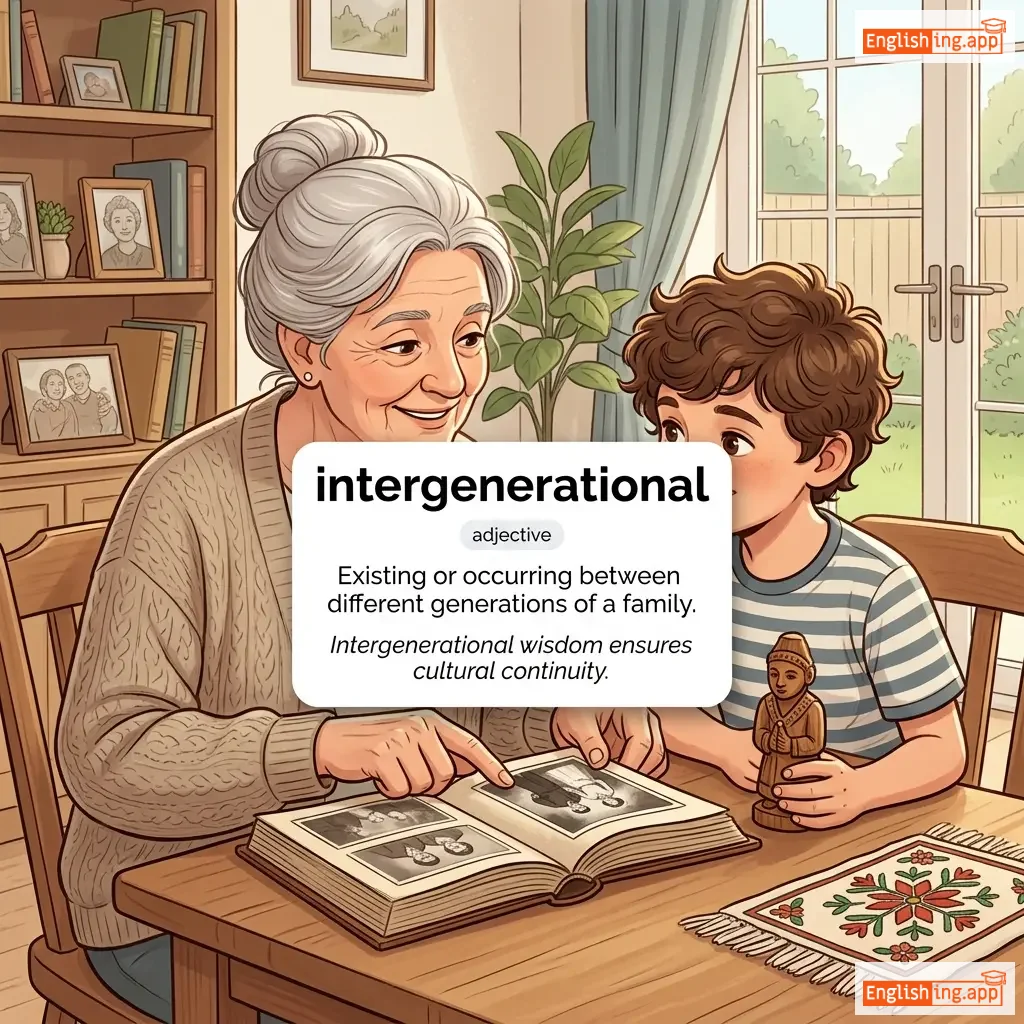
intergenerational definition card — visual illustration of the meaning
adjective
ˌɪn.tə.dʒen.əˈreɪ.ʃən.əl
世代間、異なる世代間で発生する (sedaikan, kotonaru sedaikan de hassei suru)

Existing or occurring between different generations of a family.

"Intergenerational wisdom ensures cultural continuity."

"インタージェネレーショナルな知恵は文化的継続性を確保する。" (Intājenrēshonaru na chie wa bunkateki keizokusei o kakuho suru.)
interim definition card — visual illustration of the meaning
noun
/ˈɪntərɪm/
暫定 (zantei)

a temporary or provisional period before something permanent is established

"She was appointed as the interim manager until a permanent replacement was found."

"彼女は恒久的な代替者が見つかるまで暫定的なマネージャーとして任命されました。" (Kanojo wa koukyuutekina daitaisha ga mitsukaru made zanteiteki na manejaa toshite ninmei saremashita.)
noun
/ɪnˈtɪəriər/
インテリア (interia)

the inside part of something; inner area of a place or object

"The interior of the hotel was beautifully decorated."

"ホテルのインテリアは美しく装飾されていました。" (Hoteru no interia wa utsukushiku shōshoku sarete imashita.)
noun
/ˌɪntərˈdʒɛkʃən/
感嘆詞 (kantan-shi)

a word or phrase used to express sudden emotion or reaction, often standing alone

"Words like 'wow' and 'ouch' are common interjections in English."

"'わお'や'痛っ'は英語でよく使われる感嘆詞です。" ('Wao' ya 'Itai' wa eigo de yoku tsukawareru kantan-shi desu.)
verb
/ˌɪntərˈlɒk/
かみあう (kamiau)

to fit or connect together securely so that two or more things are joined

"The gears interlock to ensure smooth movement of the machine."

"ギアは機械のスムーズな動作を確保するために噛み合います。" (Gia wa kikai no sumūzu na dōsa o kakuho suru tame ni kamiaimasu.)
noun
/ˌɪntərˈlɒkjətər/
対話者 (taiwasha)

a person who takes part in a conversation or dialogue

"She was a skilled interlocutor during the debate."

"彼女は討論中に優れた対話者でした。" (Kanojo wa tōron-chū ni sugureta taiwasha deshita.)
adjective
/ˌɪntərˈlɒkjətəri/
仮の (kari no)

Given during the course of a legal action, not final but temporary or provisional.

"The judge issued an interlocutory order to maintain the status quo until the hearing."

"裁判官は聴聞会まで現状を維持するために仮の命令を出しました。" (Saibankan wa chōmonkai made genjō o iji suru tame ni kari no meirei o dashimashita.)
noun
/ˈɪntərˌloʊpər/
干渉者 (kanshousha)

A person who becomes involved in a situation or place where they are not wanted.

"He felt like an interloper at the private family gathering."

"彼はプライベートな家族の集まりで干渉者のように感じた。" (Kare wa puraibēto na kazoku no atsumari de kanshousha no you ni kanjita.)
noun
/ˈɪntərˌluːd/
間奏 (kansou)

A short period of time that comes between two events; an interval.

"There was a brief musical interlude between the two acts of the play."

"演劇の二つの幕の間に短い音楽の間奏がありました。" (Engeki no futatsu no maku no aida ni mijikai ongaku no kansou ga arimashita.)