語彙集

英単語辞書 | 単語の意味、定義、例文

adjective
/ˌɪnɪˈsɛnʃəl/
本質的でない (honshitsuteki de nai)

not necessary or important; not essential

"The report removes all inessential details to stay focused."

"その報告書は焦点を保つために本質的でない詳細を削除している。" (sono houkokusho wa shouten o tamotsu tame ni honshitsuteki de nai shousai o sakujo shite iru)
adjective
/ɪnˈɛstɪməbl/
計り知れない (hakari shirenai)

Too great or valuable to be measured or estimated.

"Her contribution to the project was of inestimable value."
"プロジェクトへの彼女の貢献は計り知れない価値があった。" (Purojekuto e no kanojo no kouken wa hakari shirenai kachi ga atta.)
inevitability definition card — visual illustration of the meaning
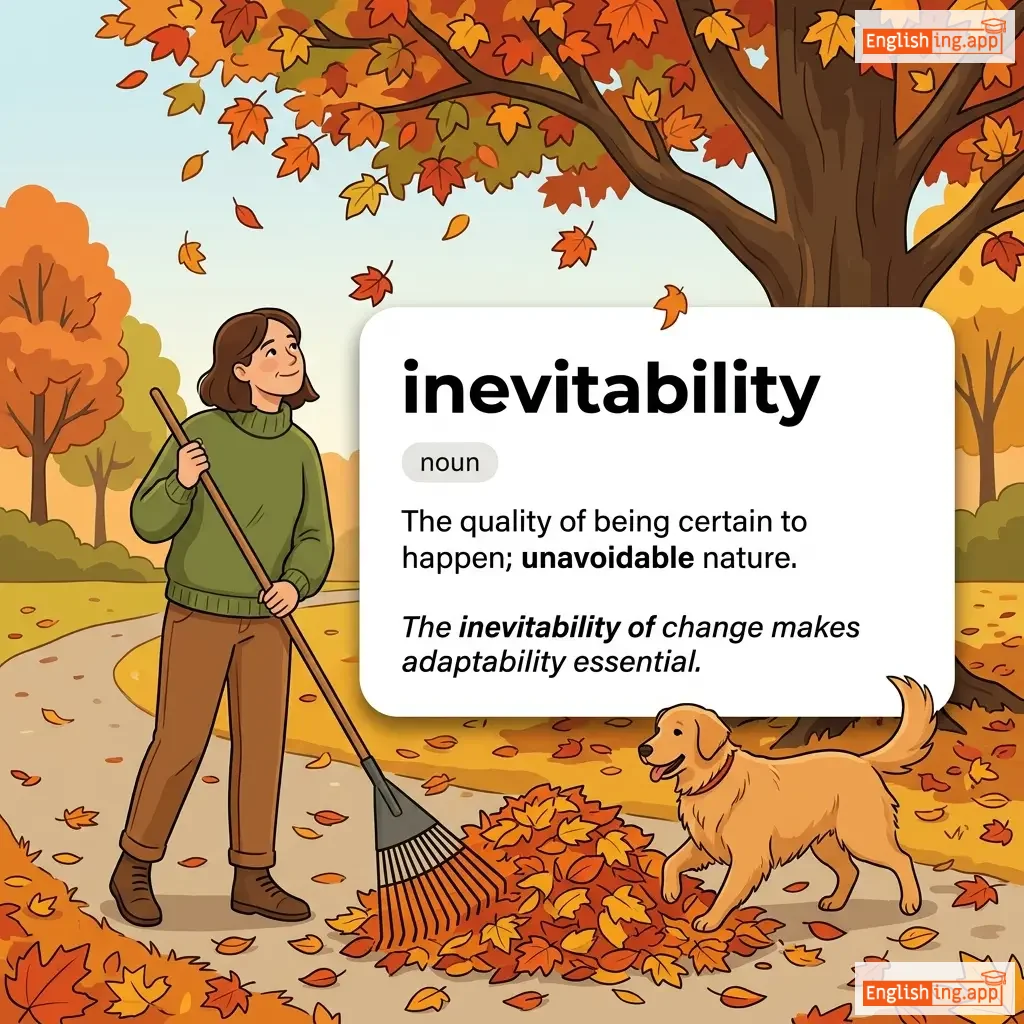
noun
/ɪnˌɛvɪtəˈbɪləti/
避けられないこと (sakerarenai koto)

The quality of being certain to happen; unavoidable nature.

"The inevitability of change makes adaptability essential."
"変化の避けられないことが適応性を不可欠にします。" (Henka no sakerarenai koto ga tekiō-sei o fukaketsu ni shimasu.)
inevitable definition card — visual illustration of the meaning
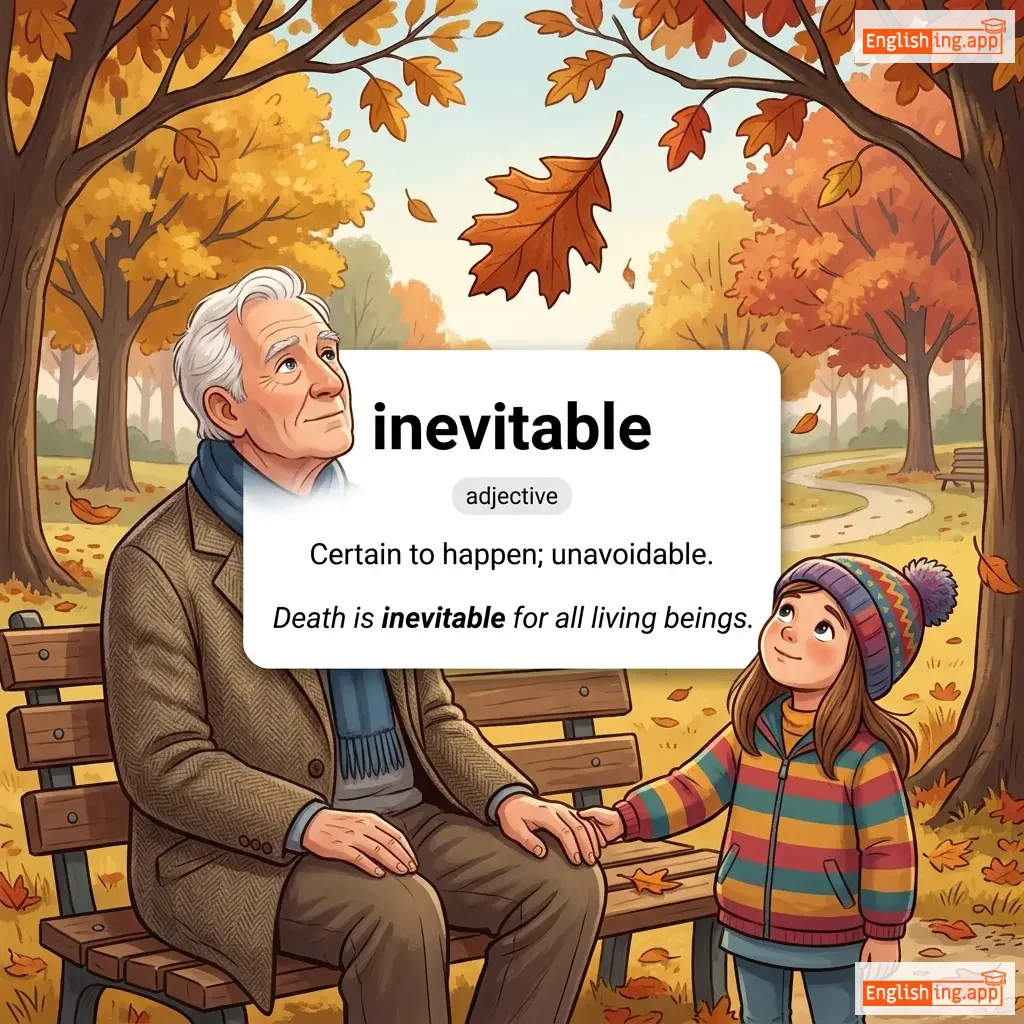
adjective
/ɪnˈɛvɪtəbl/
避けられない (sakerarenai)

Certain to happen; unavoidable.

"Death is inevitable for all living beings."

"死はすべての生物にとって避けられない。" (shi wa subete no seibutsu ni totte sakerarenai.)
adverb
/ɪnˈɛvɪtəbli/
避けられない (sakerarenai)

in a way that cannot be avoided or prevented

"Inevitably, the team faced challenges during the project."

"避けられないことに、チームはプロジェクト中に挑戦に直面しました。" (Sakerarenai koto ni, chīmu wa purojekuto-chū ni chōsen ni chokumen shimashita.)
adjective
/ˌɪnɪkˈskjuːzəbl/
許しがたい (yurushigatai)

Too bad to be justified or overlooked; unforgivable.

"His rude behavior was inexcusable."
"彼の無礼な行動は許しがたいものでした。" (Kare no burei na kōdō wa yurushigatai mono deshita.)
inexhaustible definition card — visual illustration of the meaning
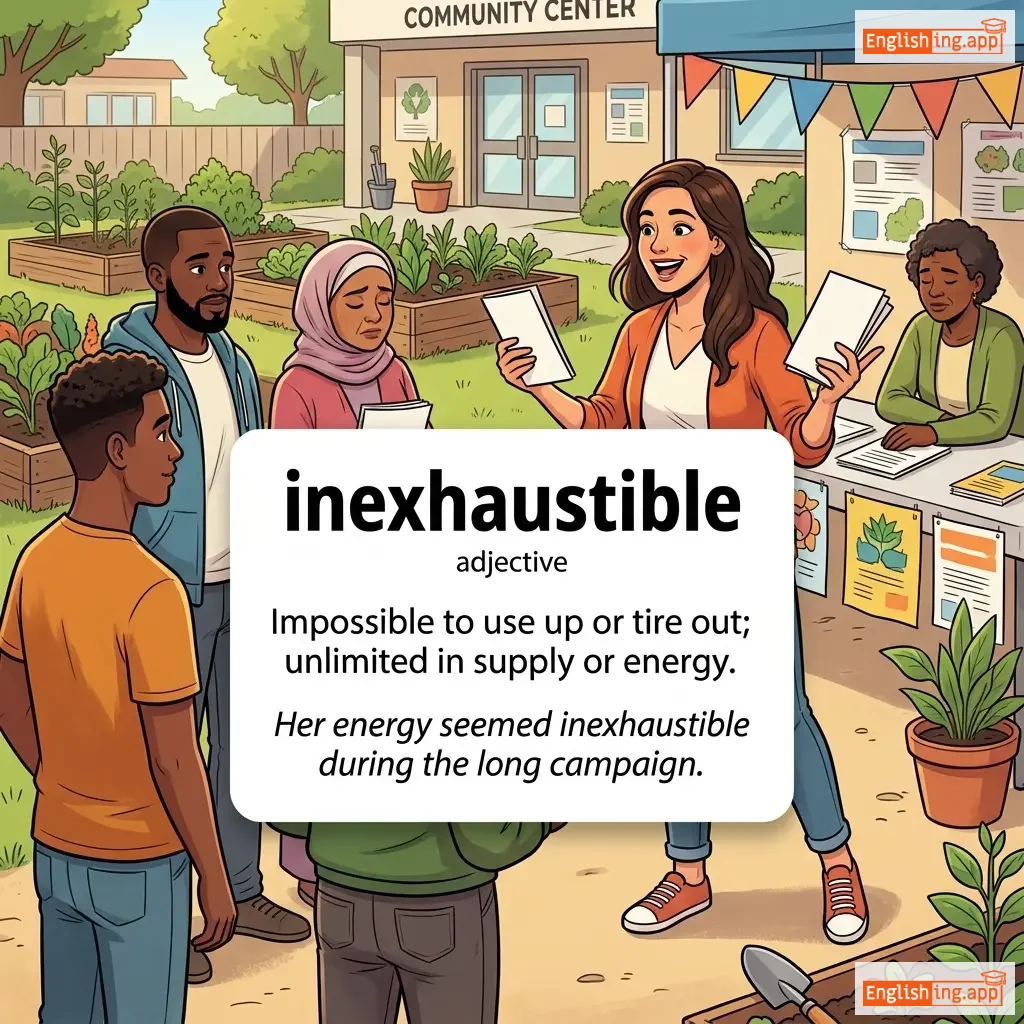
adjective
/ˌɪnɪɡˈzɔːstəbl/
尽きることのない (tsukiru koto no nai)

Impossible to use up or tire out; unlimited in supply or energy.

"Her energy seemed inexhaustible during the long campaign."

"長いキャンペーン中、彼女のエネルギーは尽きることがないように思えた。" (Nagai kyanpēn-chū, kanojo no enerugī wa tsukiru koto ga nai yō ni moeteta.)
adjective
/ɪnˈɛksərəbl/
避けられない (sakerarenai)

Impossible to stop or prevent; relentless.

"The inexorable rise of technology is changing every aspect of life."

"テクノロジーの避けられない上昇は、生活のすべての側面を変えています。" (Tekunorojī no sakerarenai jōshō wa, seikatsu no subete no sokumen o kaeteimasu.)
noun (compound/erroneous entry)
/ɪnˈɛksərəbl ɑːrmi/
止められない軍隊 (tomerarenai guntai)

This appears to be a corrupted or concatenated form; interpreted as 'inexorable army' — an unstoppable or relentless force.

"The rebels feared the inexorable army approaching their stronghold."

"反乱軍は自分たちの砦に近づいてくる止められない軍隊を恐れていた。" (Hanran-gun wa jibuntachi no toride ni chikadzuite kuru tomerarenai guntai o osorete ita.)
adjective
/ˌɪnɪkˈspiːdiənt/
不適切 (futekisetsu)

Not advisable, suitable, or practical in the circumstances.

"It would be inexpedient to invest without proper research."

"適切な調査なしで投資することは不適切です。" (Tekisetsu na chousa nashi de toushi suru koto wa futekisetsu desu.)
adjective
/ˌɪnɪkˈspɛnsɪv/
安い (yasui)

Cheap; costing little money.

"They found an inexpensive restaurant near the station."

"彼らは駅の近くで安いレストランを見つけました。" (Karera wa eki no chikaku de yasui resutoran wo mitsukemashita.)
noun
/ˌɪnɪkˈspɪəriəns/
未経験 (mikeiken)

Lack of knowledge or skill in a particular activity or field.

"His inexperience in handling negotiations was evident."

"交渉における彼の未経験は明らかでした。" (Kōshō ni okeru kare no mikeiken wa akiraka deshita.)
adjective
/ˌɪnˈekspɜːrt/
未熟な (mijukuna)

not skilled or experienced; lacking expertise

"The inexpert handling of the machine caused several mistakes."

"機械の未熟な扱いがいくつかのミスを引き起こした。" (Kikai no mijukuna atsukai ga ikutsuka no misu o hikiokoshita)
adjective
/ˌɪnɪkˈsplɪkəbl/
説明できない (setsumei dekinai)

Impossible to explain or understand.

"The sudden disappearance of the file was inexplicable."

"ファイルの突然の消失は説明できなかった。" (Fairu no totsuzen no shoushitsu wa setsumei dekinakatta.)
adjective
/ˌɪnɪkˈsprɛsəbl/
言葉では表現できない (kotoba de wa hyougen dekinai)

Too strong or extreme to be expressed in words.

"She felt inexpressible joy at the news of her success."

"彼女は成功の知らせを聞いて言葉では表現できない喜びを感じた。" (Kanojo wa seikou no shirase wo kiite kotoba de wa hyougen dekinai yorokobi wo kanjita.)
adjective
/ˌɪnɪkˈstɛnsəbl/
伸縮不可 (shinshuku fuka)

Not capable of being stretched or extended.

"This rope is made of an inextensible material."

"このロープは伸縮不可の材料でできています。" (Kono roopu wa shinshuku fuka no zairyou de dekiteimasu.)
adjective
/ˌɪnɪkˈstrɪkəbl/
分けられない (wakerarenai)

Impossible to separate or escape from.

"The two friends shared an inextricable bond."

"二人の友達は分けられない絆を共有していた。" (Futari no tomodachi wa wakerarenai kizuna o kyōyū shite ita.)
adjective
/ɪnˈfæləbl̩/
間違いない (machigainai)

incapable of making mistakes or being wrong

"Her judgment seemed infallible in matters of finance."

"彼女の判断は財務問題において間違いないように見えた。" (Kanojo no handan wa zaimu mondai ni oite machigainai yō ni mieta.)
adjective
/ˈɪnfəməs/
悪名高い (akumei takai)

well known for some bad quality or deed

"The dictator was infamous for his cruelty."

"その独裁者はその残虐さで悪名高かった。" (Sono dokusaisha wa sono zankyaku-sa de akumei takakatta.)
noun
/ˈɪnfəmi/
幸福 (kōfuku)

the state of being well known for some bad quality or deed

"His name will live in infamy for the crimes he committed."

"彼女は賞を受け取ったとき、自分の幸福を隠すことができなかった。" (Kanojo wa shō o uketotta toki, jibun no kōfuku o kakusu koto ga dekinakatta.)
noun
/ˈɪnfənt/
乳児 (nyuuji)

A very young child or baby.

"The infant was sleeping peacefully in the cradle."

"乳児はゆりかごで静かに眠っていました。" (Nyuuji wa yurikago de shizukani netteimashita.)
adjective
/ˈɪnfəntaɪl/
幼稚な (yōchina)

characteristic of an infant; childish

"His infantile behavior embarrassed everyone at the meeting."

"彼の幼稚な行動は会議でみんなを困らせた。" (Kare no yōchi na kōdō wa kaigi de minna o komarase ta.)
noun
/ˈɪn.fən.tri/
歩兵 (hohei)

soldiers marching or fighting on foot; foot soldiers collectively

"The infantry advanced across the battlefield on foot."

"歩兵は戦場を徒歩で進んだ。" (hohei wa senjō o toho de susunda.)
verb
/ɪnˈfætʃueɪt/
夢中にさせる (muchuu ni saseru)

to inspire with an intense but short-lived passion or admiration

"He was infatuated with her beauty."

"彼は彼女の美しさに夢中でした。" (Kare wa kanojo no utsukushisa ni muchuu deshita.)
infeasible definition card — visual illustration of the meaning
adjective
ɪnˈfiː.zə.bəl
不可能 (fukanou)

Not possible to do easily or conveniently; impracticable.

"Restoring the forest may become infeasible if destruction continues."

"森林の回復は、破壊が続くと不可能になる可能性があります。" (Shinrin no kaifuku wa, hakai ga tsuzuku to fukanou ni naru kanousei ga arimasu.)
verb
/ɪnˈfɛkt/
感染させる (kansen saseru)

To contaminate with a disease-causing organism.

"The virus can infect healthy people quickly."

"ウイルスは健康な人々を迅速に感染させることができます。" (Uirusu wa kenko na hitobito o jinsoku ni kansen saseru koto ga dekimasu.)
noun
/ɪnˈfɛkʃən/
感染 (kansen)

The process of becoming infected with harmful microorganisms such as bacteria or viruses.

"The doctor prescribed antibiotics to treat the infection."

"医者は感染を治療するために抗生物質を処方した。" (Isha wa kansen o chiryo suru tame ni kōseibusshitsu o shohō shita.)
adjective
/ɪnˈfekʃəs/
感染性のある; 伝染する (kansensei no aru; densensuru)

capable of causing infection or disease; spreading easily from one person to another; able to spread feelings or attitudes such as enthusiasm

"Her infectious laughter made everyone in the room smile."

"彼女の感染力のある笑い声は皆を笑顔にした。" (kanojo no kansenryoku no aru waraigoe wa mina o egao ni shita)
adjective
/ˌɪnfəˈlɪsɪtəs/
不適切な (futekisetsu na)

not suitable or well chosen; awkward or unfortunate

"His infelicitous remark ruined the atmosphere of the meeting."
"彼の不適切な発言は会議の雰囲気を台無しにしました。" (Kare no futekisetsu na hatsugen wa kaigi no fun'iki o dainashi ni shimashita.)
🤔

infer

verb
/ɪnˈfɜːr/

to conclude or deduce something from evidence and reasoning rather than from explicit statements

"From his silence, I inferred that he was not happy with the decision."

inference definition card — visual illustration of the meaning
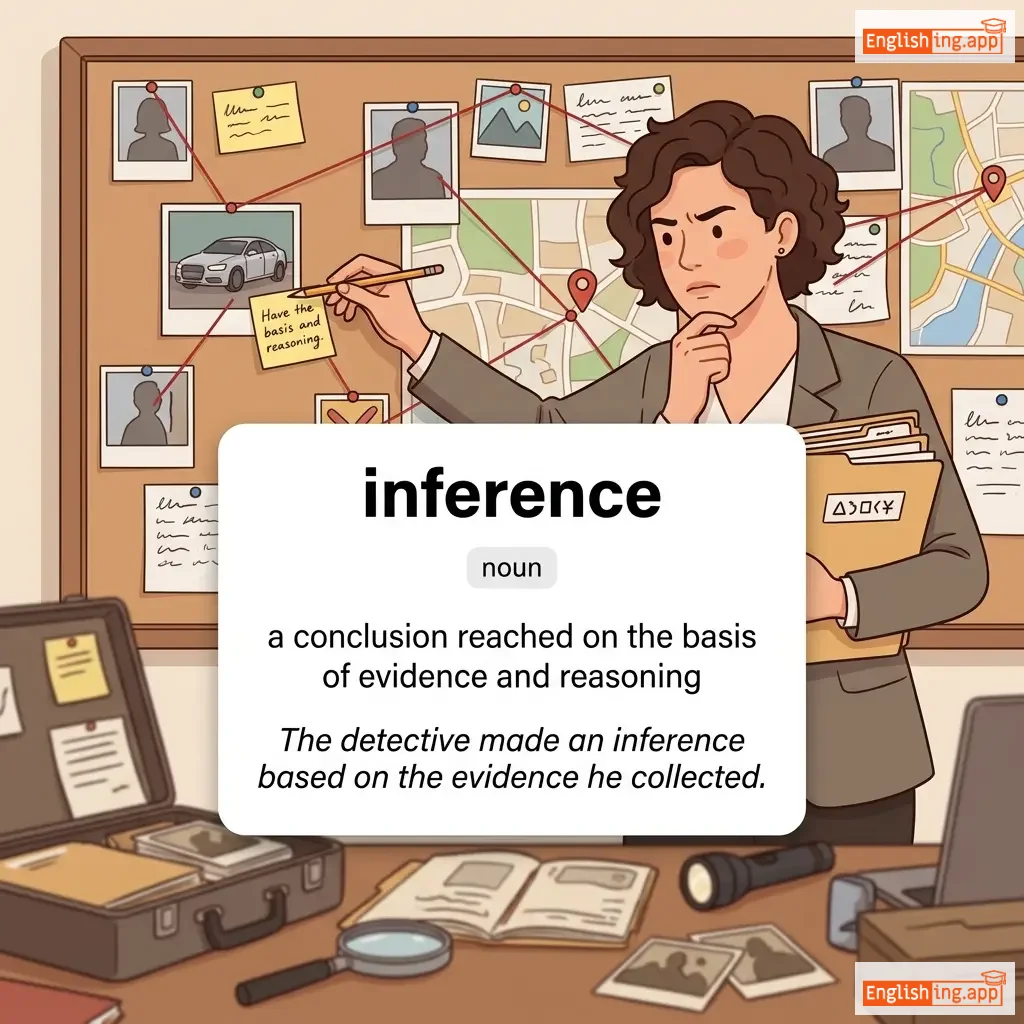
noun
/ˈɪnfərəns/
推論 (suiron)

a conclusion reached on the basis of evidence and reasoning

"The detective made an inference based on the evidence he collected."

"探偵は集めた証拠に基づいて推論を行った。" (tantei wa atsumeta shouko ni motozuite suiron wo okonatta.)
adjective
/ɪnˈfɪə.ri.ər/
劣等 (rettou)

Of lower quality, rank, or status.

"This material is inferior to the one we used before."

"この素材は以前使ったものより劣っています。" (Kono sozai wa izen tsukatta mono yori rettotteimasu.)
adjective
/ɪnˈfɜːrnəl/
地獄の (jigoku no)

relating to hell; extremely troublesome or annoying

"The workers complained about the infernal noise from the construction site."

"労働者たちは建設現場からの地獄のような騒音について文句を言った。" (Rōdō-sha-tachi wa kensetsu genba kara no jigoku no yō na sōon ni tsuite monku o itta.)
noun
/ɪnˈfɜːrnoʊ/
火災 (kasai)

a large, intense fire that is dangerously out of control

"The building turned into an inferno within minutes."

"その建物は数分で火災に変わった。" (Sono tatemono wa suū-fun de kasai ni kawatta.)
verb
/ɪnˈfɛst/
侵入する (shin'nyū suru)

to overrun in large numbers, especially so as to cause damage or discomfort

"The old house was infested with rats."
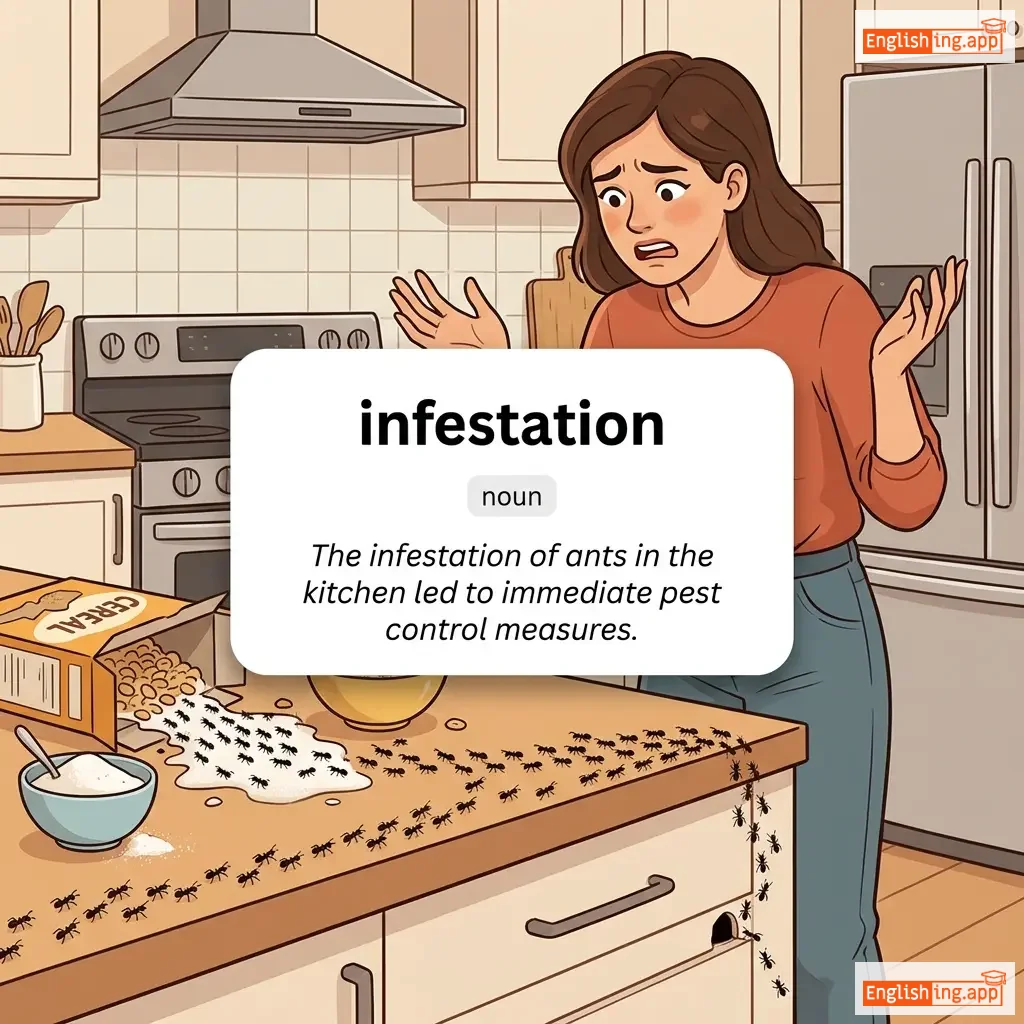
"古い家はネズミで侵されていました。" (Furui ie wa nezumi de okosarete imashita.)
infestation definition card — visual illustration of the meaning
noun
ˌɪnfɛsˈteɪʃən
侵入, 異常に大量の昆虫や動物がある場所に存在すること (shinnyuu, ijou ni tairyou no konchuu ya doubutsu ga aru basho ni sonzai suru koto)

The presence of an unusually large number of insects or animals in a place, causing damage or disease.

"The infestation of ants in the kitchen led to immediate pest control measures."

"キッチンにおけるアリの侵入は、即座に害虫駆除対策を講じる結果となった。" (Kitchin ni okeru ari no shinnyuu wa, sokuzani gaichuu kujo taisaku o koujiru kekka to natta.)
noun
/ˈɪnfɪdɛl/
不信者 (fushin-sha)

a person who does not believe in a particular religion or faith

"In medieval times, people often called non-Christians infidels."

"中世では、人々はしばしば非キリスト教徒を不信者と呼んでいた。" (Chūsei de wa, hitobito wa shibashiba hi kirisutokyōto o fushin-sha to yonde ita.)
noun
/ˌɪnfɪˈdɛləti/
不倫 (furin)

the act of being unfaithful to a spouse or partner

"Their marriage ended due to his infidelity."

"彼らの結婚は彼の不倫が原因で終わった。" (Karera no kekkon wa kare no furin ga gen'in de owatta.)
verb
/ˈɪnfɪltreɪt/
浸透 (shintō)

to secretly enter or gain access to a place or group

"The spies managed to infiltrate the enemy base."
"スパイたちは敵基地に infiltrate できた。" (Supai-tachi wa teki kichi ni infiltrate dekita.)
infiltration definition card — visual illustration of the meaning
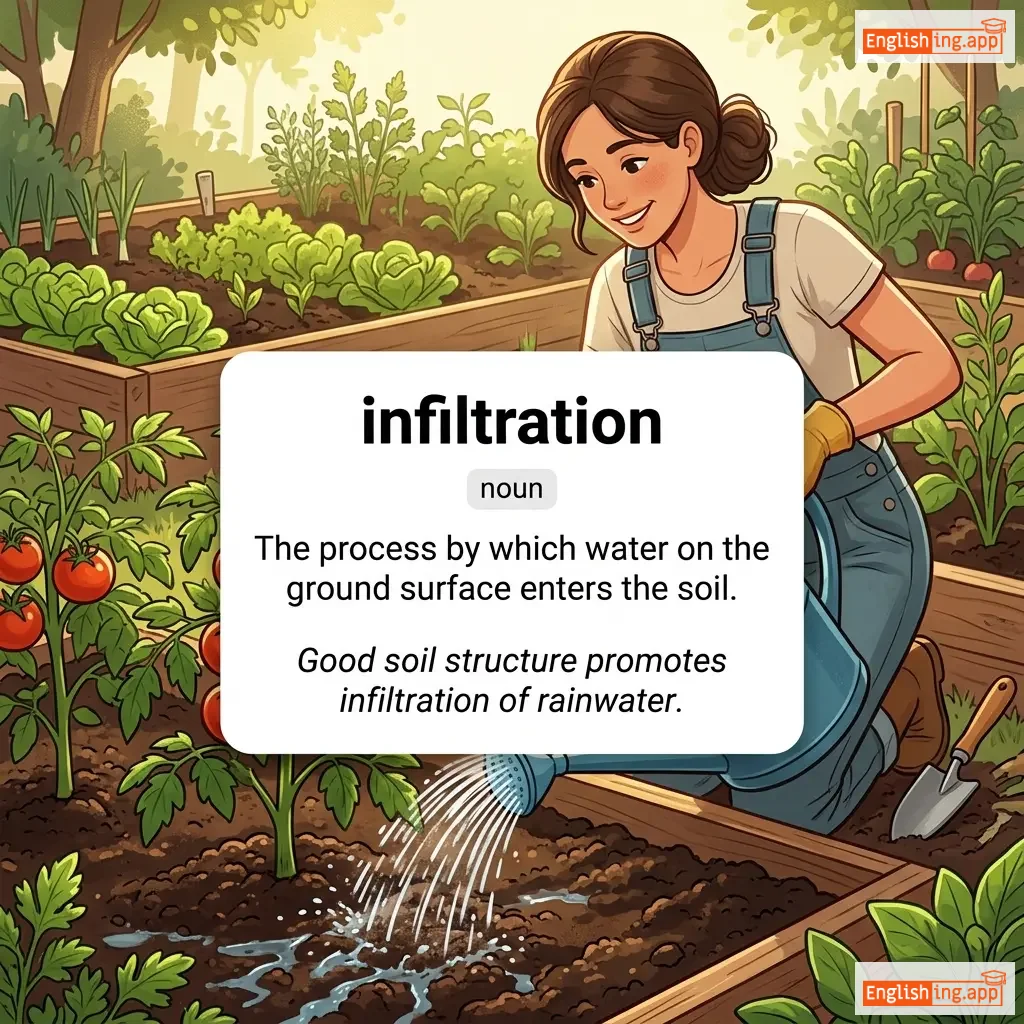
noun
/ˌɪn.fɪlˈtreɪ.ʃən/
浸透 (infirutoreeshon)

The process by which water on the ground surface enters the soil.

"Good soil structure promotes infiltration of rainwater."

"適切な土壌構造は雨水の浸透を促進する。" (good soil structure promotes infiltration of rainwater)
adjective
/ˈɪnfɪnɪt/
無限 (mugen)

limitless or endless in space, extent, or number

"The universe is often described as infinite."

"宇宙はしばしば無限だと説明されます。" (Uchū wa shibashiba mugen da to setsumei saremasu.)
adjective
/ˌɪnfɪnɪˈtɛsɪməl/
微細な (bisai na)

Extremely small in size or amount; so tiny as to be almost negligible.

"The error was so infinitesimal that it didn’t affect the results."

"そのエラーは非常に微細で、結果に影響を与えることはありませんでした。" (Sono erā wa hijō ni bisai de, kekka ni eikyō o ataeru koto wa arimasen deshita.)
noun
/ɪnˈfɪnɪti/
無限 (mugen)

A concept describing something without any limit or end.

"The universe seems to stretch into infinity."

"宇宙は無限に広がっているように見える。" (uchū wa mugen ni hirogatte iru yō ni mieru.)
adjective
/ɪnˈfɜːm/
虚弱 (kyojaku)

Weak, especially due to old age or illness.

"The infirm old man needed assistance to walk."

"その虚弱な老人は歩くために助けが必要でした。" (Sono kyojaku na rōjin wa aruku tame ni tasuke ga hitsuyō deshita.)
noun
/ɪnˈfɜːməri/
診療所 (shinryōjo)

A hospital or place where the sick or injured are cared for.

"The school had an infirmary for minor injuries."

"学校には軽傷のための診療所がありました。" (Gakkō ni wa keishō no tame no shinryōjo ga arimashita.)
noun
/ɪnˈfɜːməti/
虚弱 (kyojaku)

Physical or mental weakness, especially from old age.

"Despite his infirmity, he remained cheerful."

"彼は虚弱にもかかわらず、陽気でいた。" (Kare wa kyojaku ni mo kakawarazu, youki de ita.)
verb
/ɪnˈfleɪm/
煽る (aoru)

to arouse strong feelings or provoke anger; to cause inflammation in the body

"The politician's remarks served to inflame public opinion."

"政治家の発言は公共の意見を煽る結果になった。" (Seijika no hatsugen wa kōkyō no iken o aoru kekka ni natta.)
adjective
/ɪnˈflæməbl/
可燃性 (kanensei)

easily set on fire; easily excited or angered

"This material is highly inflammable and should be kept away from heat."
"この材料は非常に可燃性があり、熱源から遠ざけておくべきです。" (Kono zairyō wa hijō ni kanensei ga ari, netsugen kara tōzakete okubeki desu.)
inflammation definition card — visual illustration of the meaning
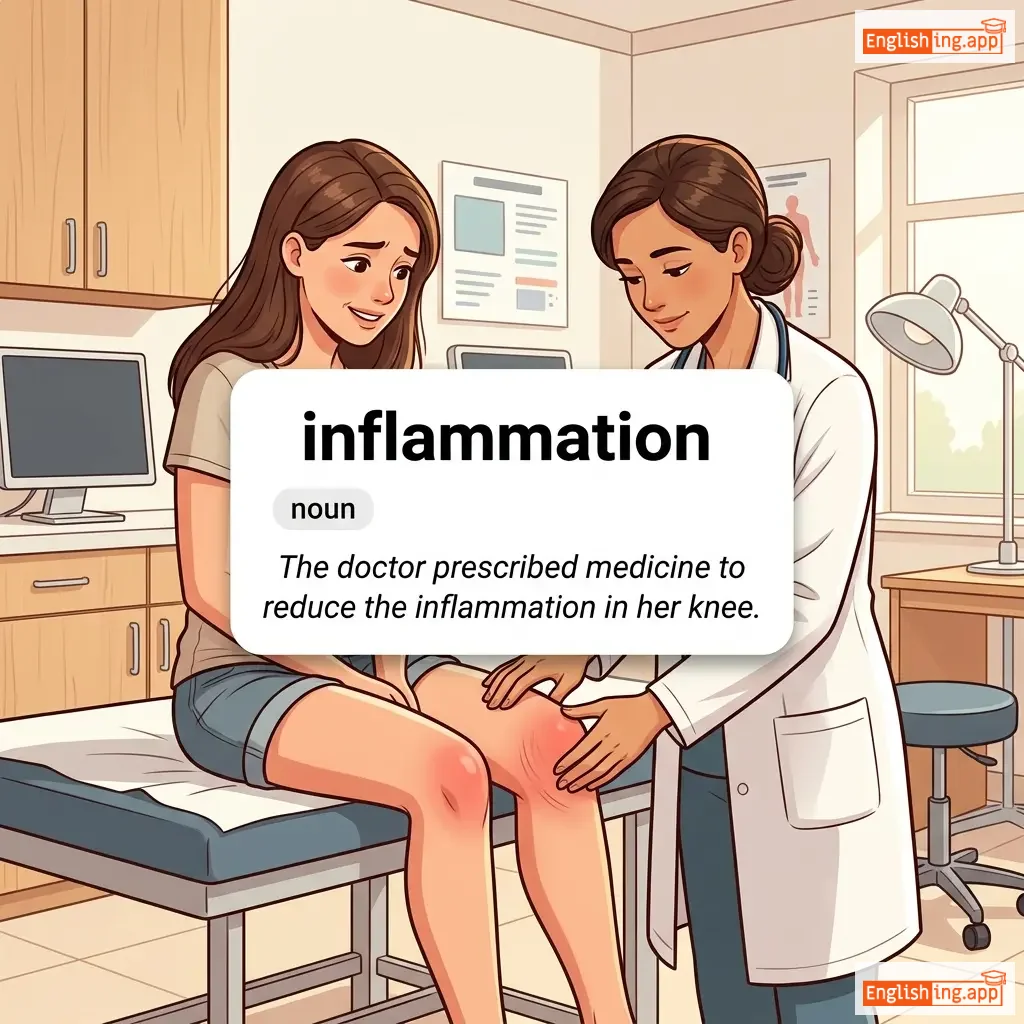
noun
/ˌɪnfləˈmeɪʃən/
炎症 (enshō)

a localized physical condition in which part of the body becomes red, swollen, hot, and often painful

"The doctor prescribed medicine to reduce the inflammation in her knee."

"医師は彼女の膝の炎症を抑えるために薬を処方しました。" (Ishi wa kanojo no hiza no enshō o osaeru tame ni kusuri o shohō shimashita.)
adjective
/ɪnˈflæməˌtɔːri/
幸せ (shiawase)

causing inflammation in the body; arousing anger, hostility, or strong emotion

"His inflammatory speech triggered protests across the city."

"彼女は賞を受け取ったとき、幸せそうな表情を隠せなかった。" (Kanojo wa shō o uketotta toki, shiawase-sō na hyōjō o kakusenakatta.)