語彙集

英単語辞書 | 単語の意味、定義、例文

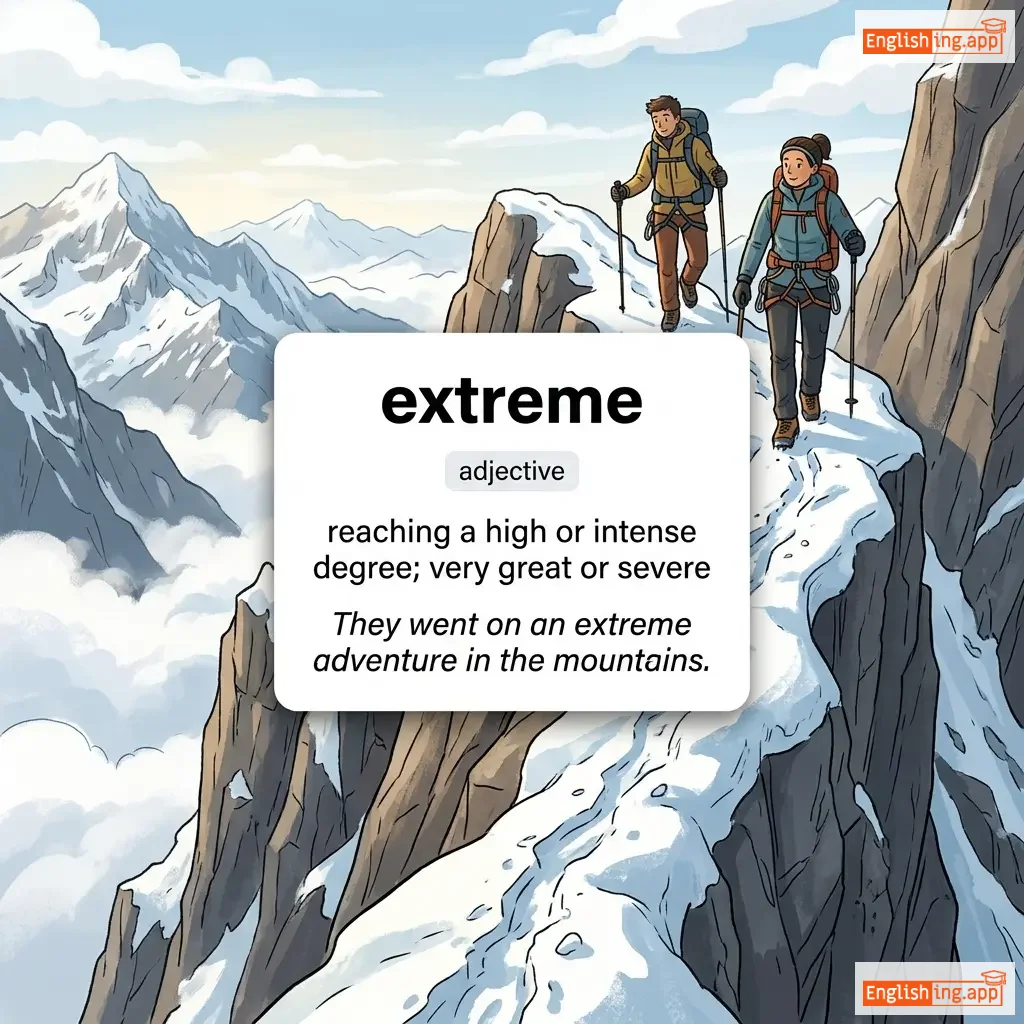
extreme definition card — visual illustration of the meaning
adjective
/ɪkˈstriːm/
極端 (kyokutan)

reaching a high or intense degree; very great or severe

"They went on an extreme adventure in the mountains."

"彼らは山で極端な冒険をしました。" (Karera wa yama de kyokutan na bōken o shimashita.)
adverb
/ɪkˈstriːmli/
非常に (hijō ni)

to a very high degree; very much

"The movie was extremely interesting."

"その映画は非常に面白かった。" (Sono eiga wa hijō ni omoshirokatta.)
noun
/ɪkˈstriːmɪst/
過激派 (kagekiha)

A person who holds extreme political or religious views and may act on them.

"The group was led by an extremist with radical ideas."

"そのグループは過激な考えを持つ過激派によって導かれていた。" (Sono gurūpu wa kageki na kangae o motsu kagekiha ni yotte michibikarete ita.)
noun
/ɪkˈstrɛmɪti/
極限 (kyokugen)

The farthest point or limit of something; a severe or extreme condition.

"He was pushed to the extremity of his patience."

"彼は忍耐の極限まで追いやられた。" (Kare wa nintai no kyokugen made oiyarareta.)
verb
/ˈɛkstrɪkeɪt/
救出する (kyūshutsu suru)

To free someone or something from a constraint or difficulty.

"The firefighters extricated the passengers from the wrecked car."
"消防士たちは事故車から乗客を救出しました。" (Shōbōshi-tachi wa jiko-sha kara jōkyaku o kyūshutsu shimashita.)
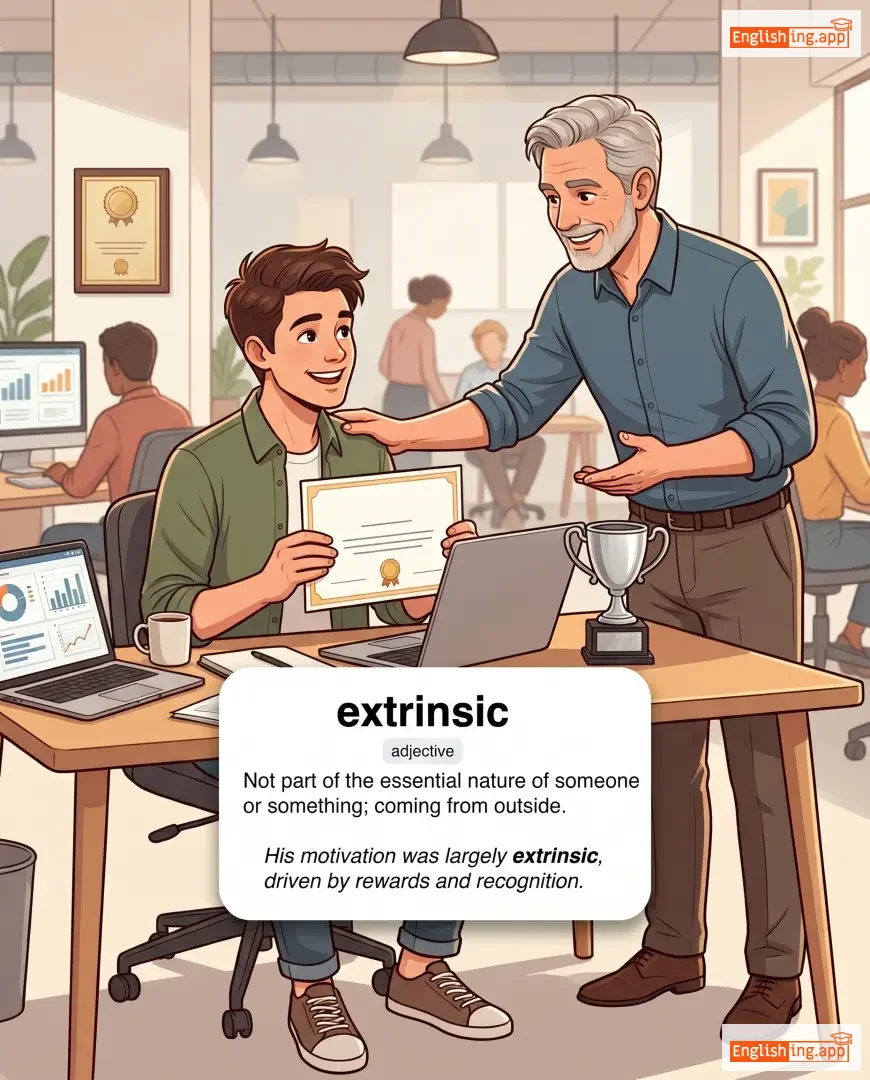
extrinsic definition card — visual illustration of the meaning
adjective
/ɛkˈstrɪnzɪk/
外的 (gaiteki)

Not part of the essential nature of someone or something; coming from outside.

"His motivation was largely extrinsic, driven by rewards and recognition."

"彼の動機は主に外的なもので、報酬や認識によって駆動されていました。" (Kare no dōki wa omoni gaiteki na mono de, hōshū ya ninshiki ni yotte kudō sarete imashita.)
noun
/ˈɛkstrəˌvɜːrt/
外向的な人 (gaikōteki na hito)

a person who is outgoing, sociable, and energized by being around other people

"As an extrovert, she enjoys meeting new people at social events."

"外向的な人として、彼女は社交的なイベントで新しい人々と出会うのが好きです。" (Gaikōteki na hito to shite, kanojo wa shakōteki na ibento de atarashī hitobito to deau no ga suki desu.)
verb
/ɪkˈstruːd/
押し出す (oshidasu)

to force something out through a small opening; to shape by pushing material through a mold

"The factory extrudes plastic pipes using modern machines."

"工場は最新の機械を使用してプラスチック管を押し出します。" (Kōjō wa saishin no kikai o shiyō shite purasutikku-kan o oshidashimasu.)
noun
/ɪɡˈzuːbərəns/
活力 (katsuryoku)

the quality of being full of energy, excitement, and cheerfulness

"Her exuberance made the whole team feel motivated."

"彼女の活力はチーム全体をやる気にさせた。" (Kanojo no katsuryoku wa chīmu zentai o yaruki ni saseta.)
adjective
/ɪɡˈzuːbərənt/
興奮した (kōfun shita)

full of energy, excitement, and cheerfulness

"The children were exuberant after winning the game."

"子供たちはゲームに勝った後、興奮していました。" (Kodomotachi wa gēmu ni katta ato, kōfun shite imashita.)
verb
/ɪɡˈzuːd/
放つ (hanatsu)

to display a quality strongly and openly; to release a liquid or smell slowly

"He exudes confidence whenever he speaks in public."

"彼は公共の場で話すとき、自信を放っています。" (Kare wa kōkyō no ba de hanasu toki, jishin o hanatte imasu.)
verb
/ɪɡˈzʌlt/
歓喜する (kanki suru)

to show or feel great joy, often as a result of success

"The fans exulted after their team won the championship."

"ファンたちはチームが優勝した後、歓喜しました。" (Fantachi wa chiimu ga yuushou shita ato, kanki shimashita.)
noun
/aɪ/
(me)

the organ in the head through which people and animals see

"She closed her eyes and went to sleep."

"彼女は目を閉じて、寝ました。" (Kanojo wa me o tojite, nemashita.)
noun
/ˈaɪ.bɔːl/
眼球 (gankyū)

the round part of the eye within the eyelids and socket

"The doctor examined his eyeball carefully."

"医者は彼のアイボールを注意深く調べました。" (Isha wa kare no aibōru o chūibukaku shirabemashita.)
noun
/ˈaɪbraʊ/
眉毛 (mayuge)

the strip of hair growing on the ridge above a person's eye

"She raised her eyebrow in surprise."

"彼女は驚いて眉毛を上げた。" (Kanojo wa odoroite mayuge o ageta.)
noun
/ˈaɪ.lɪd/
まぶた (mabuta)

either of the upper or lower folds of skin that cover the eye when closed

"Her eyelids felt heavy with sleep."

"彼女のまぶたは眠気で重く感じた。" (Kanojo no mabuta wa nemuke de omoku kanjita.)
noun
/ˈaɪ.saɪt/
視力 (shiryoku)

the ability to see; vision

"Regular eye checkups are important for maintaining good eyesight."

"定期的な目の検査は良い視力を維持するために重要です。" (Teikitekina me no kensa wa yoi shiryoku o iji suru tame ni juuyou desu.)
noun
/ˈaɪ.sɔːr/
目障りなもの; 不快な視覚効果 (mezawari na mono; fukai na shikaku kōka)

something that is very ugly and unpleasant to look at

"The abandoned building has become an eyesore in the neighborhood."

"放置された建物は近所の目障りになっています。" (Hōchi sareta tatemono wa kinjo no mezawari ni natteimasu.)
noun
/ˈaɪ.wɪt.nəs/
目撃者 (mokugekisha)

a person who has seen something happen and can give evidence about it

"The police interviewed several eyewitnesses to the accident."

"警察は事故の目撃者にインタビューを行いました。" (Keisatsu wa jiko no mokugekisha ni intabyū wo okonaimashita.)
noun
/ˈɪəri/
ワシの巣 (washi no su)

the nest of a bird of prey, such as an eagle, typically built high on a cliff or tree

"The eagle’s eyrie was perched high on the mountain cliff."

"ワシの巣は山の崖の頂上にありました。" (Washi no su wa yama no gake no choujou ni arimashita.)
noun
/ˈɪəri/
猛禽の巣 (mōkin no su)

an alternative spelling of eyrie; a nest of a bird of prey

"The falcon guarded its eyry fiercely."

"隼はその巣を激しく守った。" (Hayabusa wa sono su o hageshiku mamotta.)