語彙集

英単語辞書 | 単語の意味、定義、例文

noun
/ˌɛksəˈdʒiːsɪs/
注解 (chūkai)

A critical explanation or interpretation of a text, especially a religious scripture.

"The professor gave a detailed exegesis of the biblical passage."

"教授は聖書の一節の詳細な注解を提供した。" (Kyojū wa seisho no issetsu no shōsai na chūkai o teikyō shita.)
noun
/ɪɡˈzɛmplɑːr/
模範 (mohan)

A model or pattern to be copied or imitated.

"She is an exemplar of kindness and generosity."
"彼女は親切と寛大さの模範です。" (Kanojo wa shinsetsu to kandai sa no mohan desu.)
exemplary definition card — visual illustration of the meaning
adjective
/ɪɡˈzɛmpləri/
模範的な (mohanteki na)

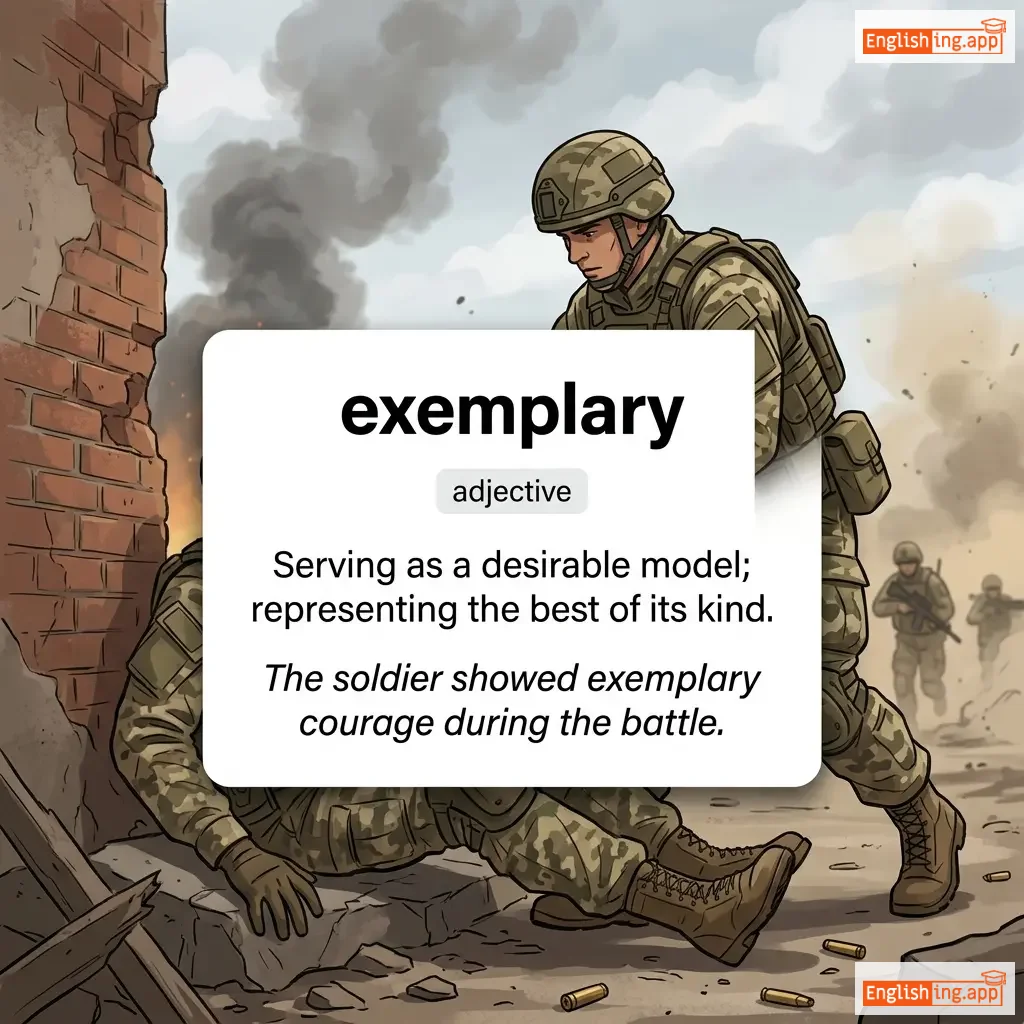
Serving as a desirable model; representing the best of its kind.

"The soldier showed exemplary courage during the battle."

"兵士は戦闘中に模範的な勇気を示しました。" (Heishi wa sentō-chū ni mohan-teki na yūki o shimeshimashita.)
exemplify definition card — visual illustration of the meaning
verb
/ɪɡˈzɛmplɪfaɪ/
例を挙げて説明する (rei wo agete setsumei suru)

To illustrate or clarify by giving an example.

"Her actions exemplify the true spirit of generosity."

"彼女の行動は、寛大さの真の精神を例示しています。" (Kanojo no kōdō wa, kandai-sa no shin no seishin o reiji shiteimasu.)
adjective, verb
/ɪɡˈzɛmpt/
免除 (menjo)

Free from an obligation or liability imposed on others.

"Students with high grades are exempt from the final exam."
"優秀な成績を収めた学生は、最終試験を免除されます。" (Yūshū na seiseki o osameta gakusei wa, saishū shiken o menjo saremasu.)
exercise definition card — visual illustration of the meaning
noun/verb
/ˈɛksərsaɪz/
運動 (undou)

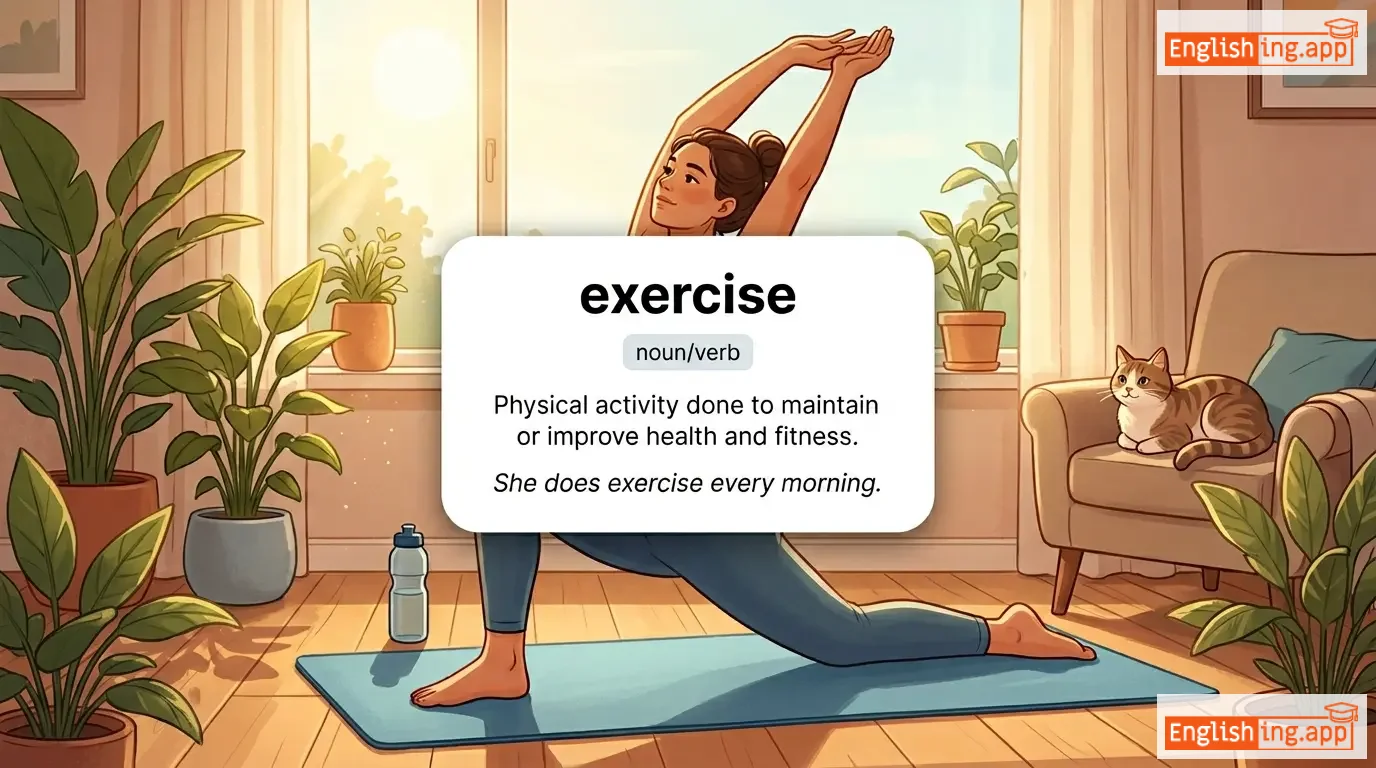
Physical activity done to maintain or improve health and fitness.

"She does exercise every morning."

"彼女は毎朝運動をします。" (kanojo wa mai asa undou wo shimasu.)
exert definition card — visual illustration of the meaning
verb
/ɪɡˈzɜːrt/
努力する (doryoku suru)

to apply effort, force, or influence

"He had to exert himself to finish the project on time."
"彼はプロジェクトを時間通りに終わらせるために努力しなければなりませんでした。" (Kare wa purojekuto o jikan-dōri ni owaraseru tame ni doryoku shinakereba narimasen deshita.)
exertion definition card — visual illustration of the meaning
noun
/ɪɡˈzɜːrʃən/
努力 (doryoku)

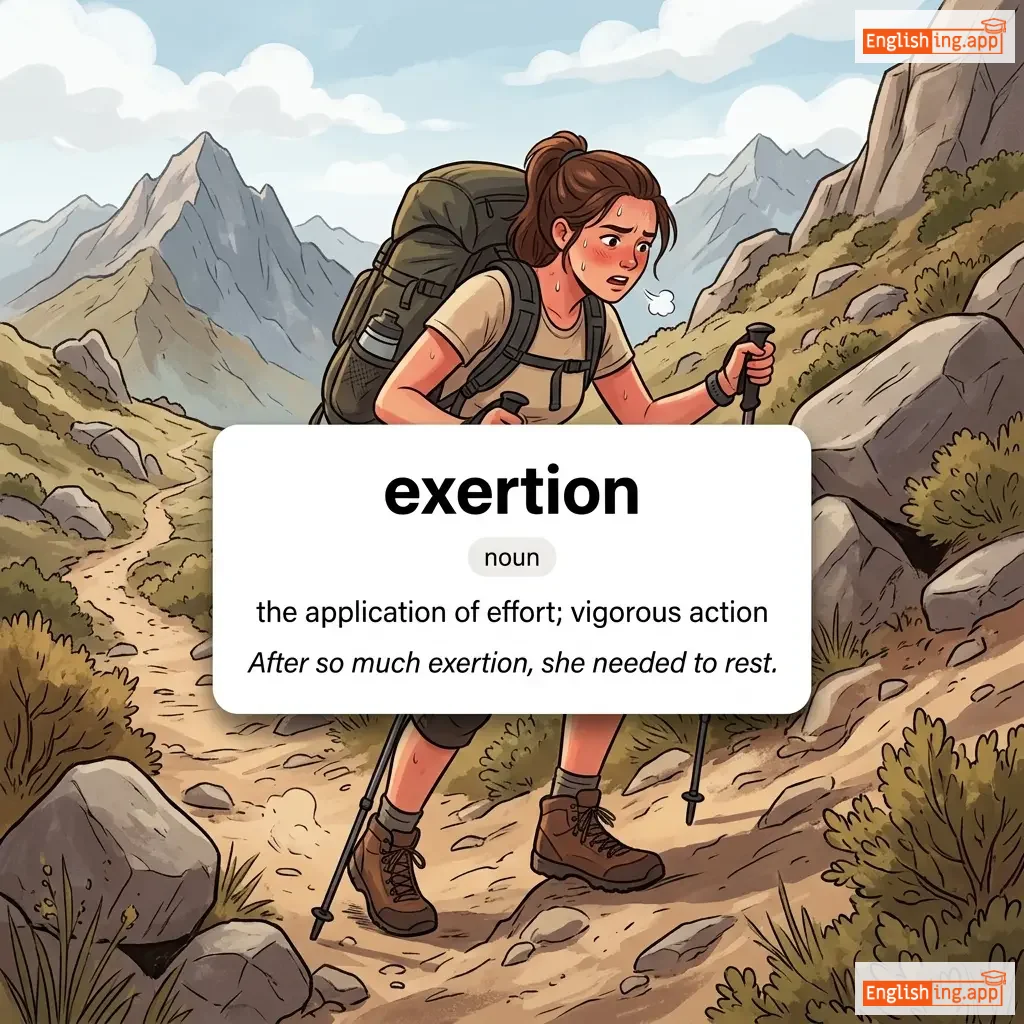
the application of effort; vigorous action

"After so much exertion, she needed to rest."
"これほどの努力の後、彼女は休む必要があった。" (Kore hodo no doryoku no ato, kanojo wa yasumu hitsuyō ga atta.)
exhalation definition card — visual illustration of the meaning
noun
/ˌɛks.həˈleɪ.ʃən/
息を吐くこと (iki wo haku koto)

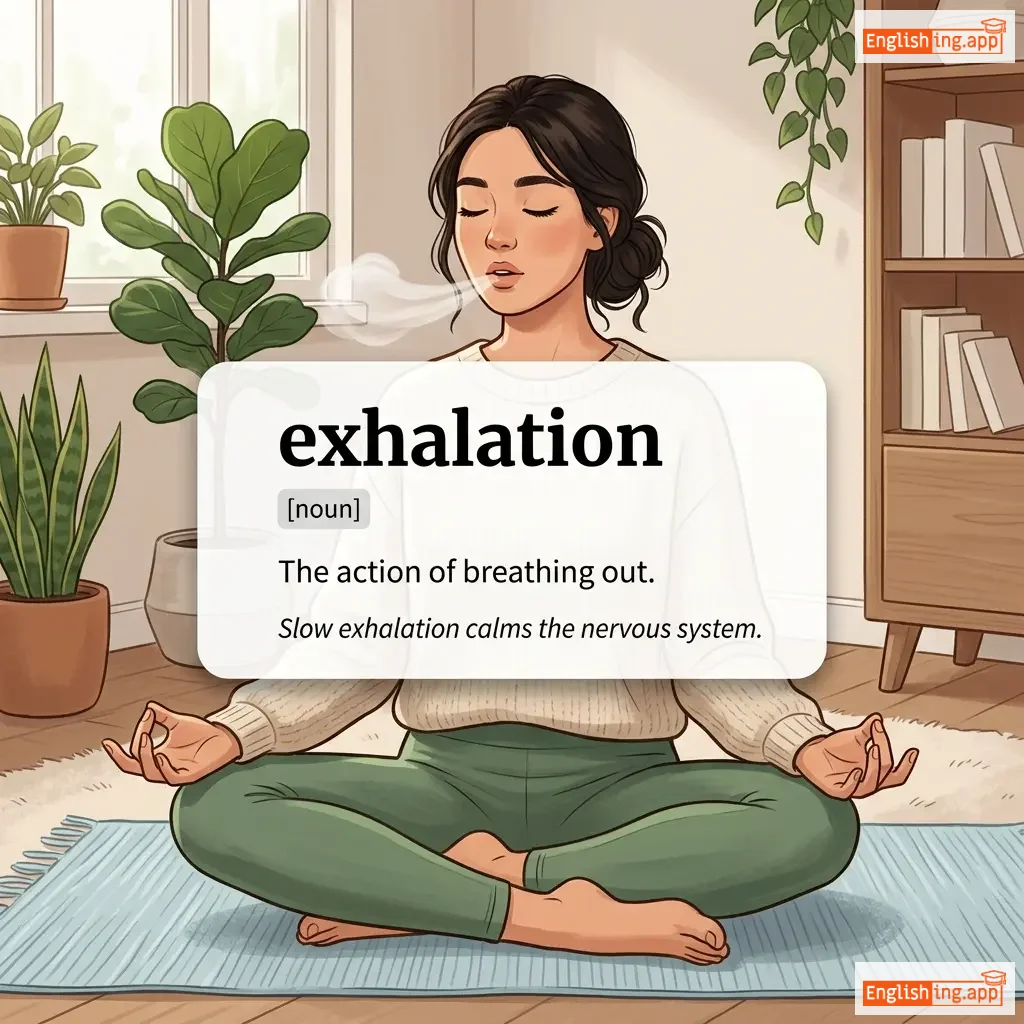
The action of breathing out.

"Slow exhalation calms the nervous system."

"ゆっくりした息を吐くことは神経系を落ち着かせます。" (Yukkuri shita iki wo haku koto wa shinkei-kei wo ochitsukasemasu.)
verb
/ɛksˈheɪl/
息を吐く (iki wo haku)

to breathe out air from the lungs

"She slowly exhaled after holding her breath."

"彼女は息を止めた後、ゆっくりと息を吐き出した。" (Kanojo wa iki wo tometa ato, yukkuri to iki wo haki dashita.)
verb
/ɪɡˈzɔːst/
疲れさせる (tsukaresaseru)

to tire out completely; to use up resources

"The long journey exhausted the children."
"長い旅が子供たちを疲れさせた。" (Nagai tabi ga kodomotachi o tsukaresaseta.)
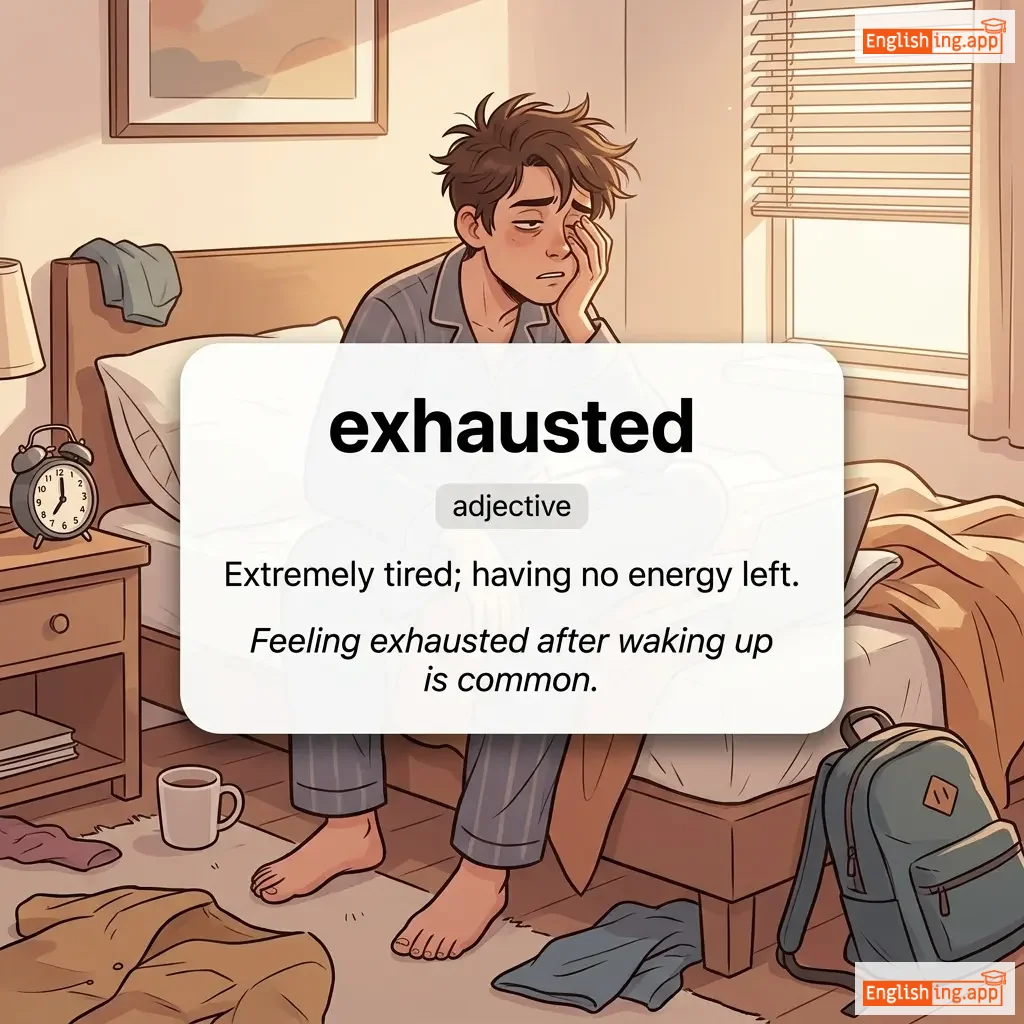
exhausted definition card — visual illustration of the meaning
adjective
/ɪɡˈzɔː.stɪd/
疲れ果てた (tsukare hateta)

Extremely tired; having no energy left.

"Feeling exhausted after waking up is common."

"目が覚めた後に疲れ果てたと感じるのはよくあることです。" (me ga sameta ato ni tsukare hateta to kanjiru no wa yoku aru koto desu)
adjective
/ɪɡˈzɔːstɪbəl/
使い果たせる (tsukaihataseru)

able to be used up completely; not infinite

"Coal and oil are exhaustible resources."
"石炭と石油は使い果たせる資源です。" (Sekitan to sekiyu wa tsukaihataseru shigen desu.)
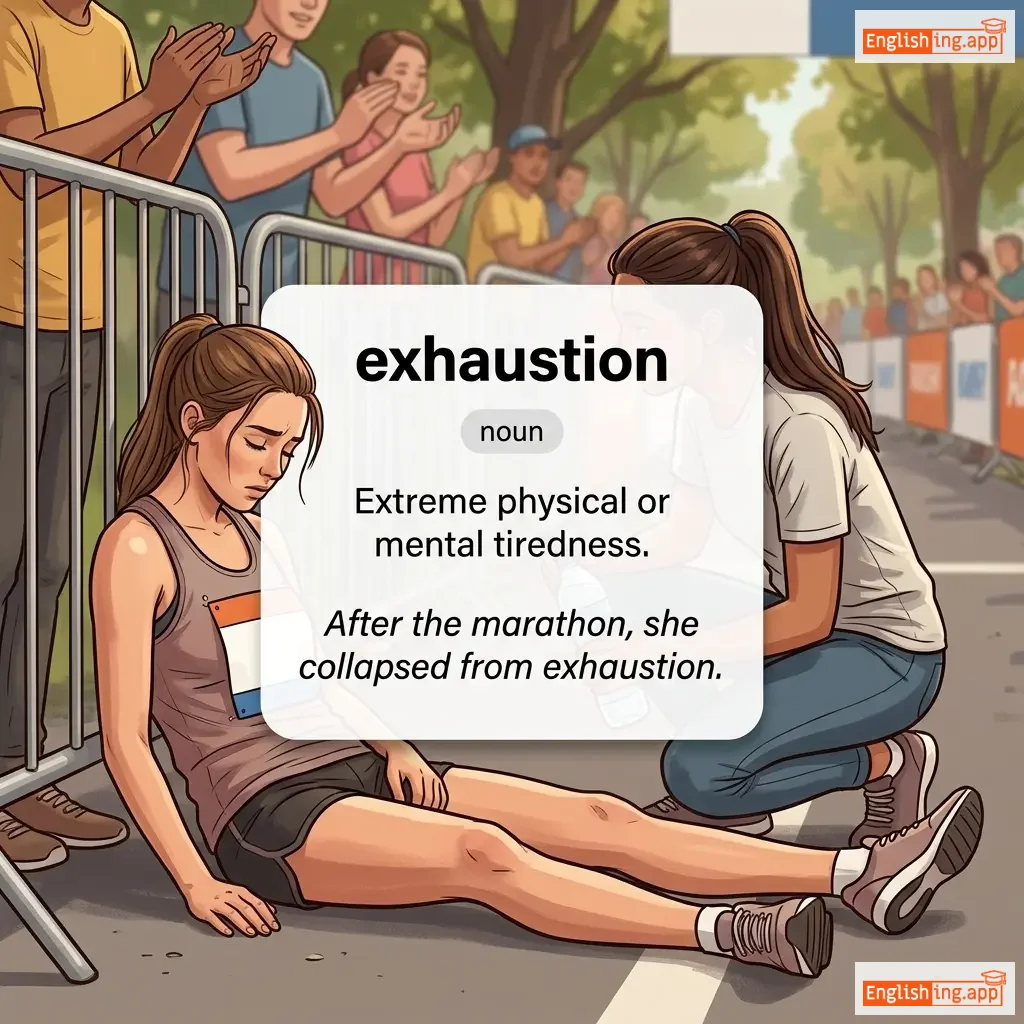
exhaustion definition card — visual illustration of the meaning
noun
/ɪɡˈzɔːstʃən/
疲労 (hirou)

Extreme physical or mental tiredness.

"After the marathon, she collapsed from exhaustion."

"マラソンの後、彼女は疲労で倒れました。" (Marason no ato, kanojo wa hirou de taoremashita.)
adjective
/ɪɡˈzɔːstɪv/
包括的で完全な (hōkatsuteki de kanzen na)

Fully comprehensive and including all possibilities.

"The report provides an exhaustive analysis of the issue."
"その報告書は問題に関する包括的な分析を提供します。" (Sono hōkokusho wa mondai ni kansuru hōkatsuteki na bunseki o teikyō shimasu。)
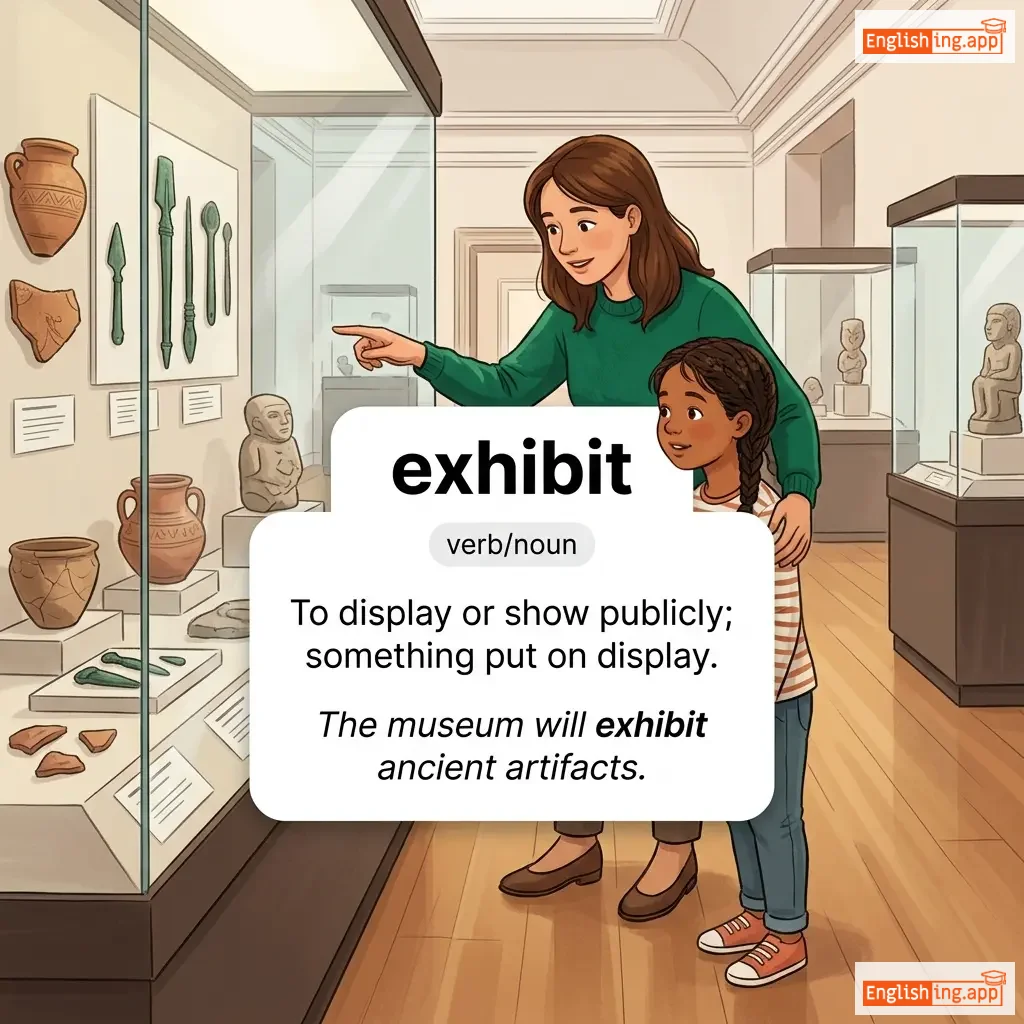
exhibit definition card — visual illustration of the meaning
verb/noun
/ɪɡˈzɪbɪt/
展示する (tenji suru)

To display or show publicly; something put on display.

"The museum will exhibit ancient artifacts."

"博物館は古代の遺物を展示する予定です。" (Hakubutsukan wa kodai no ibutsu wo tenji suru yotei desu.)
noun
/ˌɛksɪˈbɪʃən/
展示会 (zenshikai)

a public display of works of art, products, or other items of interest

"The art exhibition attracted thousands of visitors."

"アート展示会は何千人もの来場者を魅了しました。" (Aato zenshikai wa nan-sen nin mo no raijō-sha o miryō shimashita.)
verb
/ɪɡˈzɪləreɪt/
興奮させる (koufun saseru)

To make someone feel very happy, animated, or excited.

"The mountain view exhilarated the travelers."

"山の景色は旅行者を興奮させました。" (Yama no keshiki wa ryokō-sha o kōfun sasemashita.)
adjective
/ɪɡˈzɪləreɪtɪd/
興奮した (koufun shita)

feeling very happy, animated, or elated

"She felt exhilarated after finishing the marathon."

"彼女はマラソンを終えた後、とても興奮していた。" (Kanojo wa marason o oeta ato, totemo koufun shite ita.)
adjective
/ɪɡˈzɪləreɪtɪŋ/
興奮させる (koufun saseru)

Making someone feel very excited, happy, or thrilled.

"Skydiving was the most exhilarating experience of his life."

"スカイダイビングは彼の人生で最も興奮する経験でした。" (Sukaidaibingu wa kare no jinsei de mottomo kōfun suru keiken deshita.)
exhilaration definition card — visual illustration of the meaning
noun
/ɪɡˌzɪl.əˈreɪ.ʃən/
興奮または喜び (koufun mata wa yorokobi)

A feeling of excitement, happiness, or elation.

"The feeling of exhilaration after a roller-coaster ride is amazing."
"ジェットコースターの後のエクスヒラレーションの感覚は素晴らしいです。" (Jettokosutaa no ato no ekusuhirareeshon no kankaku wa subarashii desu.)
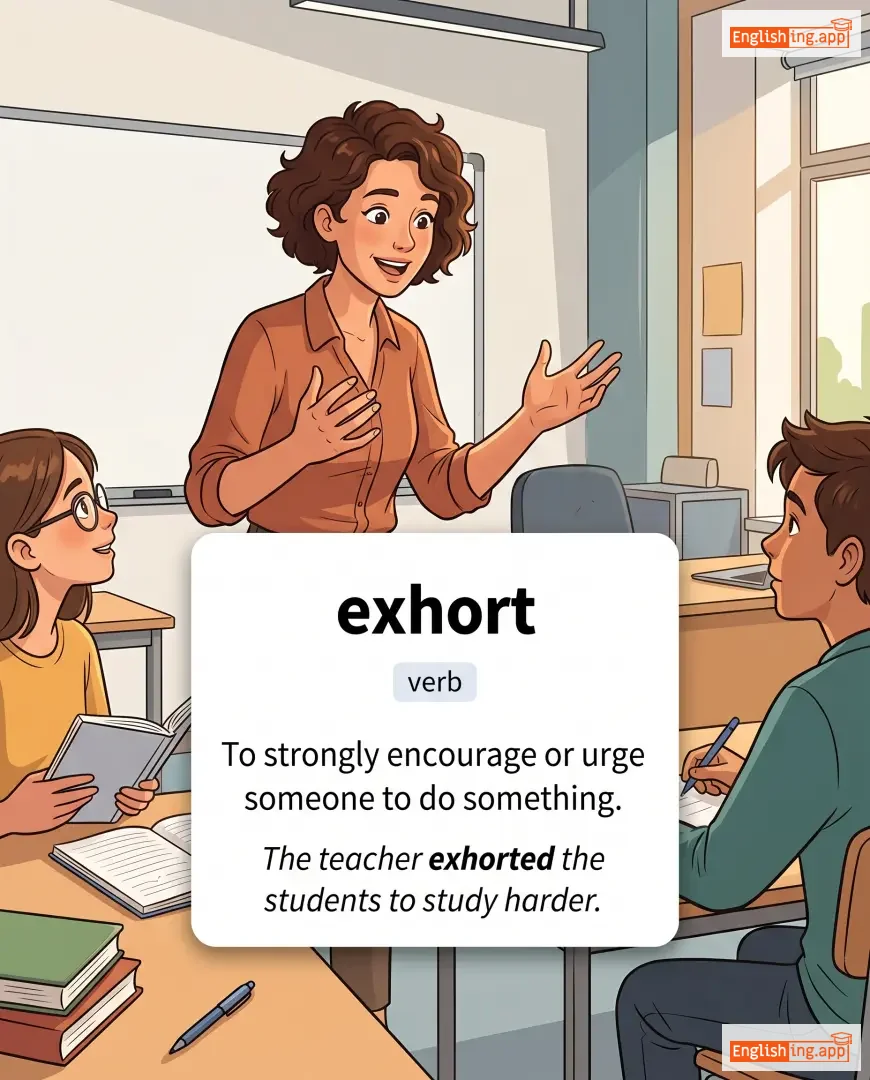
exhort definition card — visual illustration of the meaning
verb
/ɪɡˈzɔːrt/
促す (unagasu)

To strongly encourage or urge someone to do something.

"The teacher exhorted the students to study harder."

"教師は学生にもっと一生懸命勉強するように促しました。" (Kyoushi wa gakusei ni motto isshoukenmei benkyou suru you ni unagashimashita.)
verb
/ɛksˈhjuːm/
発掘する (hakkutsu suru)

to dig out something buried, especially a body from the ground

"The archaeologists decided to exhume the ancient remains."
"考古学者たちは古代の遺物を発掘することに決めました。" (Kōkogakusha-tachi wa kodai no ibutsu o hakkutsu suru koto ni kimemashita.)
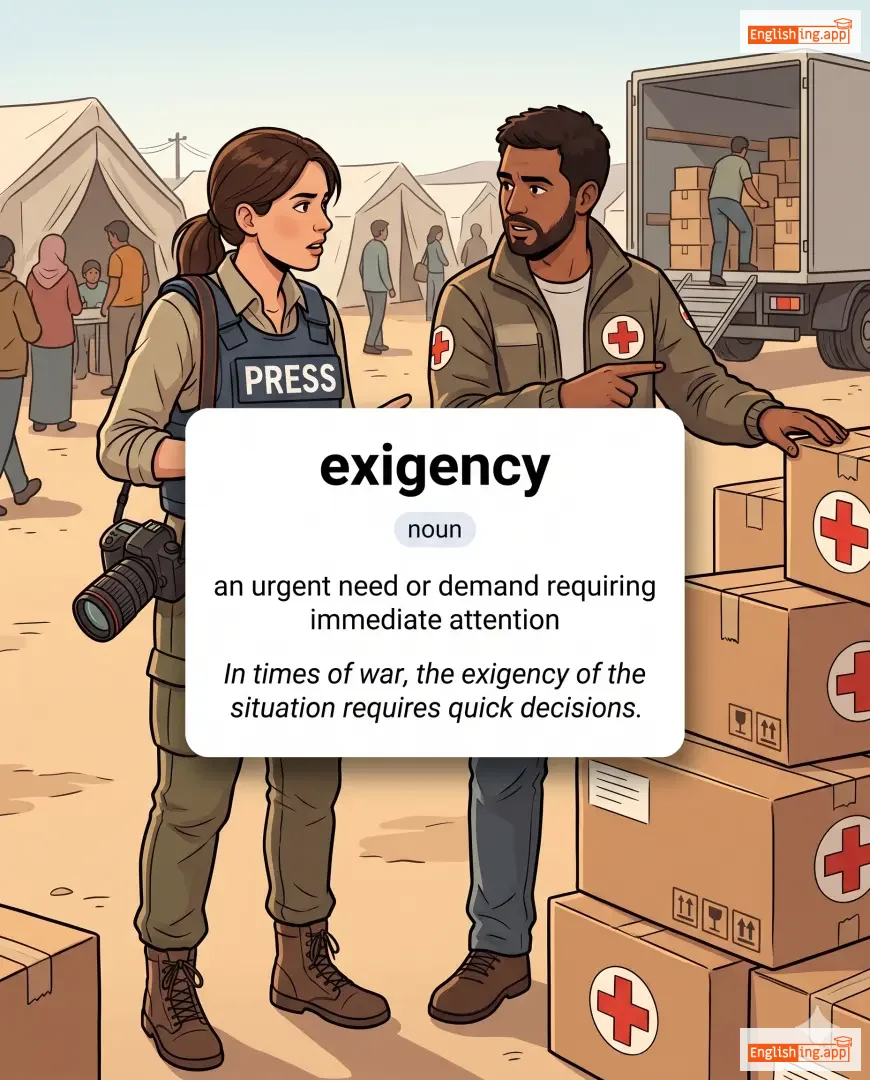
exigency definition card — visual illustration of the meaning
noun
/ˈɛksɪdʒənsi/
緊急の必要性 (kinkyu no hitsuyosei)

an urgent need or demand requiring immediate attention

"In times of war, the exigency of the situation requires quick decisions."

"戦争の時、状況の緊急の必要性は迅速な決定を要求する。" (Sensō no toki, jōkyō no kinkyu no hitsuyōsei wa jinsoku na kettei o yōkyū suru.)
adjective
/ˈɛksɪdʒənt/
緊急 (kinkyuu)

demanding immediate action or attention; urgent

"The patient’s exigent condition required immediate surgery."

"患者の緊急状態は即時の手術を必要としました。" (Kanja no kinkyuu joutai wa sokushi no shujutsu wo hitsuyou to shimashita.)
noun
/ˌɛksɪˈɡjuːɪti/
不足 (fusoku)

the quality of being scanty or meager in amount

"The exiguity of resources made the project difficult to complete."

"資源の不足がプロジェクトを完了するのを難しくしました。" (Shigen no fusoku ga purojekuto o kanryō suru no o muzukashiku shimashita.)
adjective
/ɛɡˈzɪɡjuəs/
乏しい (moshī)

small in amount; scanty or inadequate

"They survived on exiguous rations during the journey."

"彼らは旅行中、乏しい配給で生き延びました。" (Karera wa ryokō-chū, moshī haikyū de ikinobimashita.)
noun
/ˈɛksaɪl/
追放 (tsuihō)

the state of being forced to live in a foreign country, often for political reasons

"After the coup, the former leader was forced into exile."

"クーデター後、元リーダーは追放されました。" (Kūdetā go, moto rīdā wa tsuihō saremashita.)
verb
/ɪɡˈzɪst/
存在する (sonzai suru)

to have actual being; to be real or present

"Dinosaurs no longer exist on Earth."

"恐竜は地球上にはもう存在しません。" (Kyouryuu wa chikyuu jou ni wa mou sonzai shimasen.)
noun
/ɪɡˈzɪstəns/
存在 (sonzai)

The state of being alive or having real presence.

"The existence of life on other planets is still uncertain."
"他の惑星での生命の存在はまだ不確かです。" (Hoka no wakusei de no seimei no sonzai wa mada fukakusa desu.)
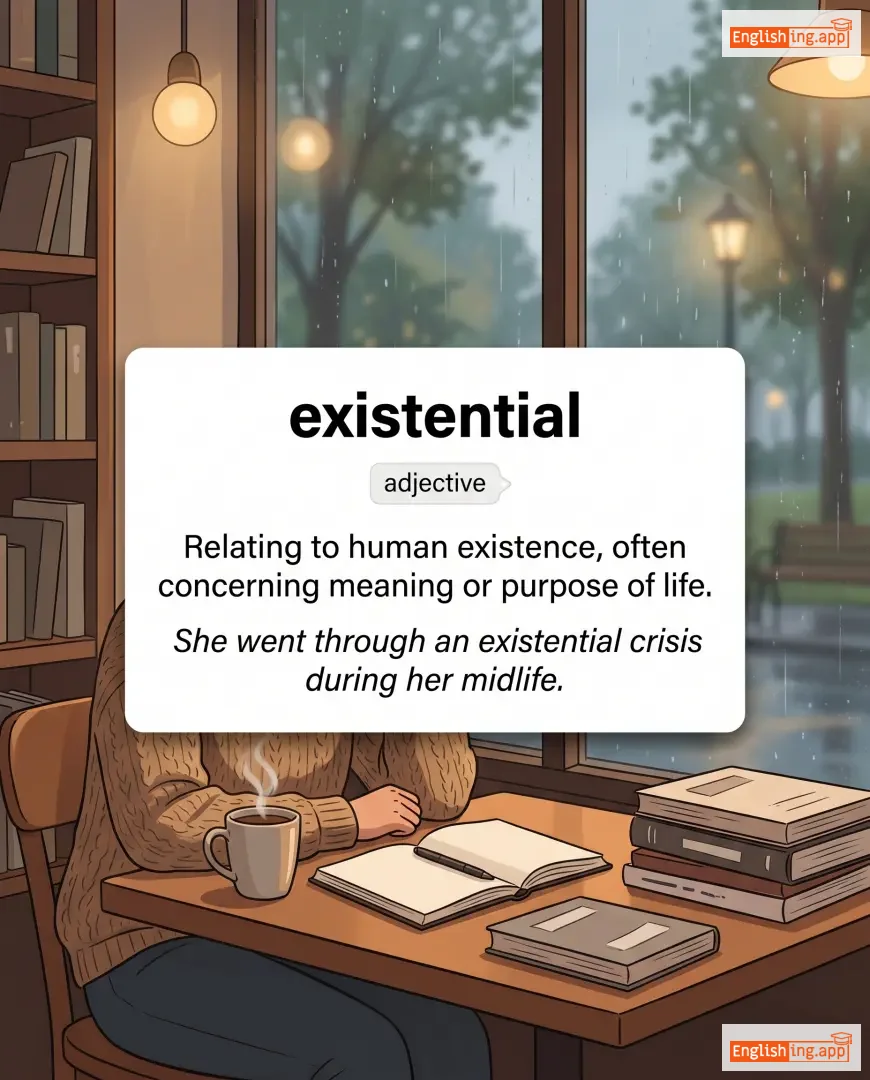
existential definition card — visual illustration of the meaning
adjective
/ˌɛɡzɪˈstɛnʃəl/
実存的 (jitsuzonteki)

Relating to human existence, often concerning meaning or purpose of life.

"She went through an existential crisis during her midlife."
"彼女は中年に実存的な危機を経験した。" (Kanojo wa chūnen ni jitsuzonteki na kiki o keiken shita.)
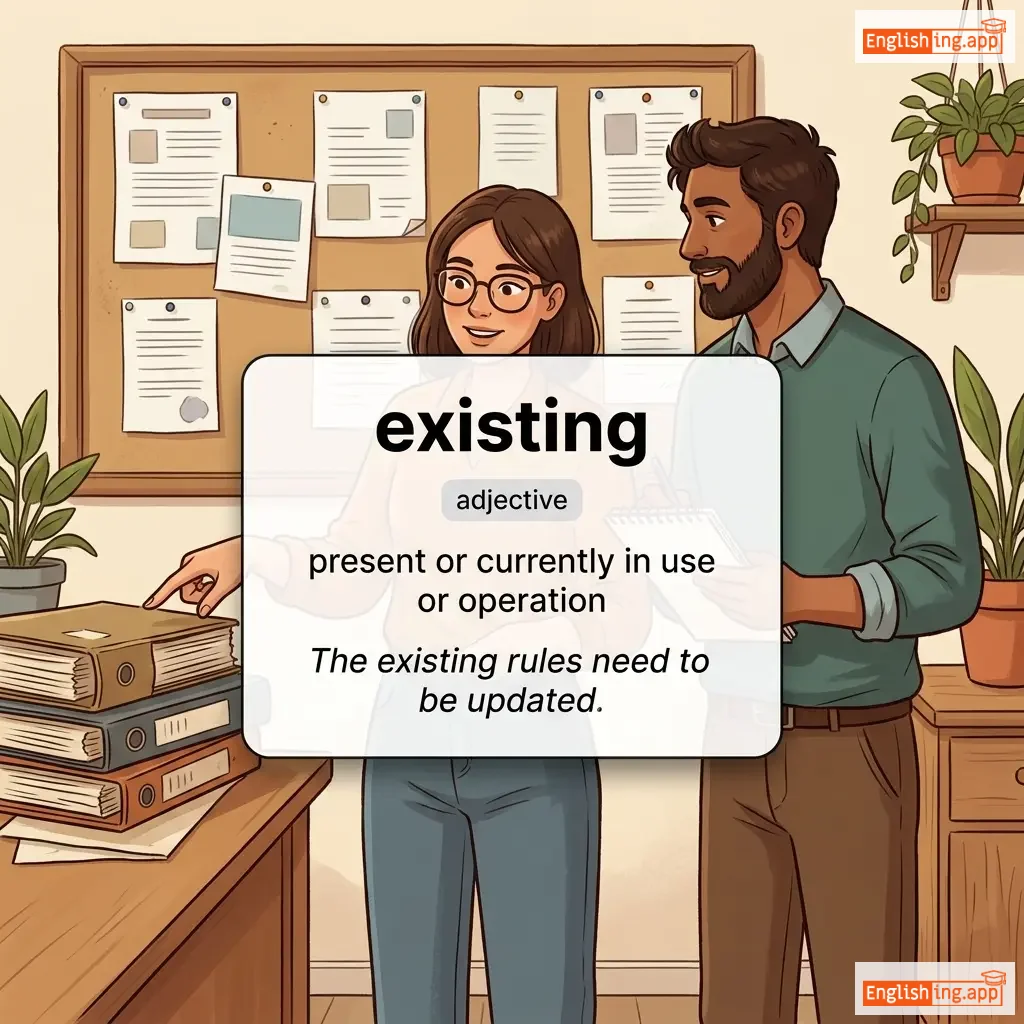
existing definition card — visual illustration of the meaning
adjective
/ɪɡˈzɪstɪŋ/
既存の (kizon no)

present or currently in use or operation

"The existing rules need to be updated."

"既存のルールは更新する必要があります。" (Kizon no rūru wa kōshin suru hitsuyō ga arimasu.)
noun/verb
/ˈɛɡzɪt/
出口 (deguchi)

A way out of a place; the act of leaving.

"He quickly found the nearest exit during the fire drill."

"彼は火災訓練中に最寄りの出口をすぐに見つけた。" (Kare wa kasai kunren-chū ni moyori no deguchi o sugu ni mitsuketa.)
noun
/ˈɛksədəs/
出エジプト (shutsu Ejiputo)

A mass departure of people from a place.

"There was a sudden exodus of workers after the strike began."

"ストライキが始まった後、労働者たちは突然出エジプトした。" (Sutoraiki ga hajimatta ato, rōdōshatachi wa totsuzen shutsu Ejiputo shita.)
verb
/ɪɡˈzɒnəreɪt/
免責 (menseki)

To clear someone from blame or accusation.

"The court exonerated her from all charges."
"裁判所は彼女をすべての告発から免除しました。" (Saibansho wa kanojo o subete no kokuhatsu kara menjo shimashita.)
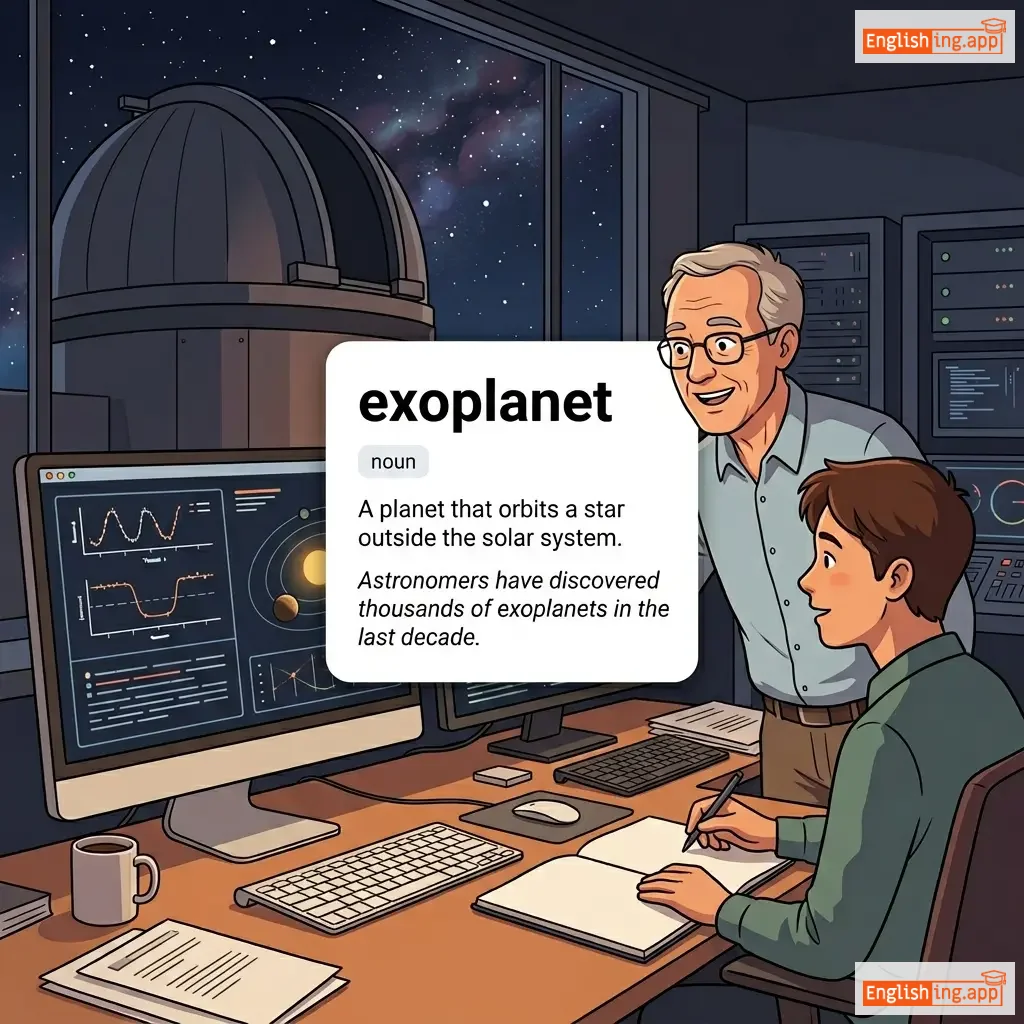
exoplanet definition card — visual illustration of the meaning
noun
ˈɛksəʊˌplænɪt
太陽系外の星の周りを回る惑星 (taiyoukeigai no hoshi no mawari o mawaru wakusei)

A planet that orbits a star outside the solar system.

"Astronomers have discovered thousands of exoplanets in the last decade."

"天文学者たちは、過去10年間で何千ものエクソプラネットを発見しました。" (Tenmongakusha-tachi wa, kako 10-nenkan de nansen mo no ekusopuranetto o hakken shimashita.)
noun
/ɪɡˈzɔːrbɪtəns/
過剰 (kajou)

The quality of being excessive, unreasonable, or going beyond proper limits.

"The exorbitance of the hotel's prices shocked the tourists."

"ホテルの価格の過剰さに観光客は驚いた。" (Hoteru no kakaku no kajou-sa ni kankōkyaku wa odoroita.)
exorbitant definition card — visual illustration of the meaning
adjective
/ɪɡˈzɔːrbɪtənt/
法外 (hōgai)

Unreasonably high or excessive, especially in cost or amount.

"They charged an exorbitant fee for a simple service."

"彼らは簡単なサービスに法外な料金を請求した。" (Karera wa kantan na sābisu ni hōgai na ryōkin o seikyū shita.)
exorcise definition card — visual illustration of the meaning
verb
/ˈeksɔːrsaɪz/

To drive out an evil spirit or bad influence through rituals or prayers.

"The priest was called to exorcise the spirit from the house."

adjective
/ɪɡˈzɑːtɪk/
異国的で魅力的 (ikokuteki de miryokuteki)

Unusual and attractive because it is from a foreign place or culture.

"The garden was filled with exotic plants from tropical countries."

"庭は熱帯の国々からのエキゾチックな植物で満たされていました。" (Niwa wa nettai no kuniguni kara no ekizochikku na shokubutsu de mitasarete imashita.)
expand definition card — visual illustration of the meaning
verb
/ɪkˈspænd/
拡大する (kakudai suru)

To increase in size, number, or importance.

"The company plans to expand its operations into new markets."
"その会社は新しい市場に事業を拡大する予定です。" (Sono kaisha wa atarashii shijou ni jigyou o kakudai suru yotei desu.)
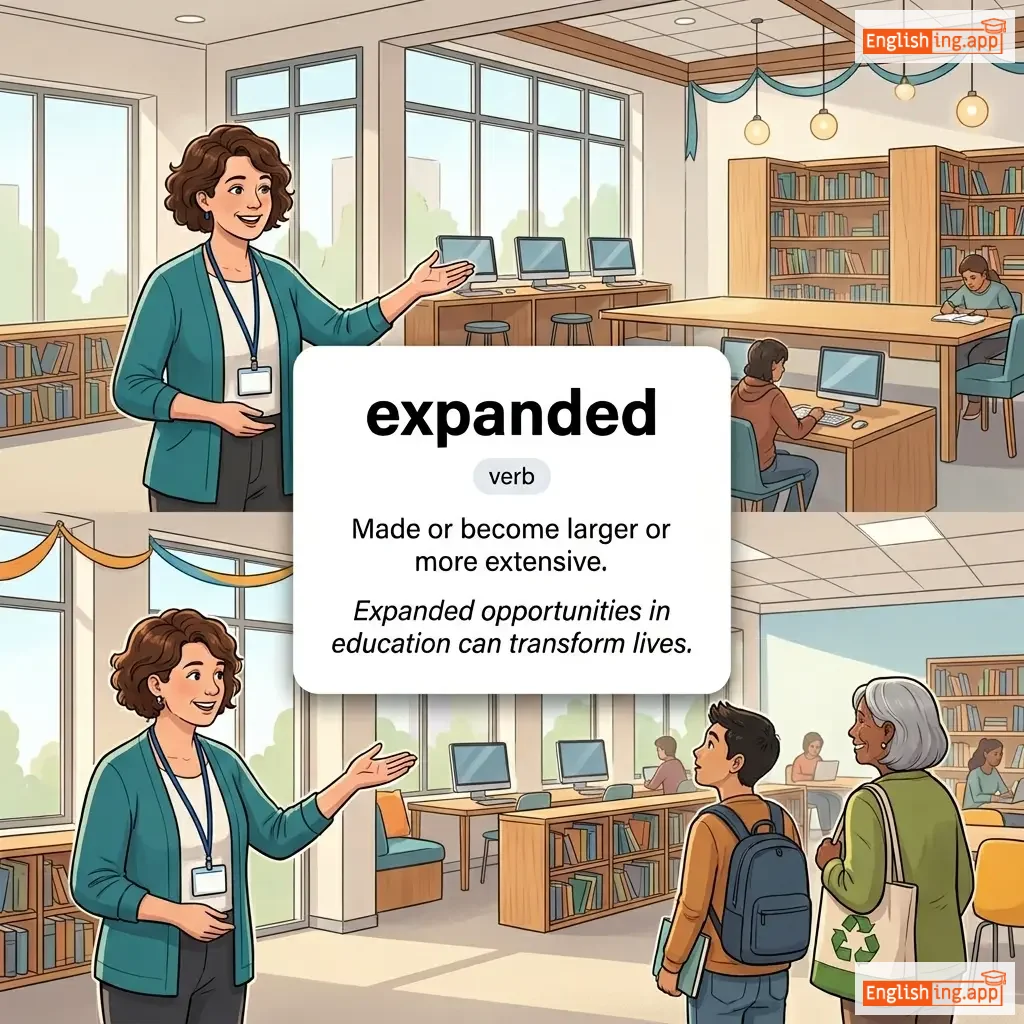
expanded definition card — visual illustration of the meaning
verb
ɪkˈspændɪd
拡大された (kakudai sareta)

Made or become larger or more extensive.

"Expanded opportunities in education can transform lives."
"教育における拡大された機会は、人生を変えることができます。" (Kyoiku ni okeru kakudai sareta kikai wa, jinsei o kaeru koto ga dekimasu.)
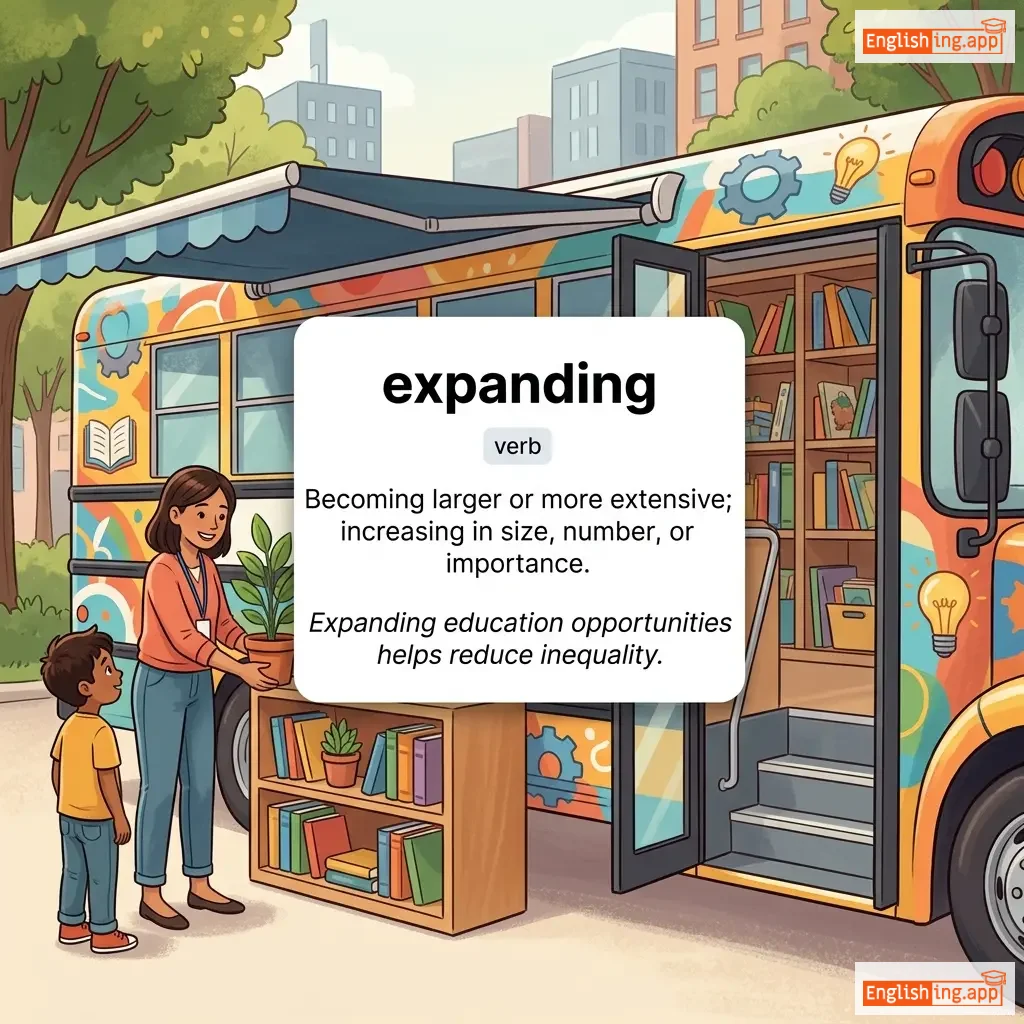
expanding definition card — visual illustration of the meaning
verb
ɪkˈspændɪŋ
拡張する (kakuchou suru)

Becoming larger or more extensive; increasing in size, number, or importance.

"Expanding education opportunities helps reduce inequality."

"教育の機会を拡大することは、不平等を減少させるのに役立ちます。" (Kyōiku no kikai o kakuchō suru koto wa, fuheibō o genshō saseru no ni yakudachimasu.)
noun
/ɪkˈspæns/
広大な地域 (kōdaina chiiki)

a wide, open area of land, sea, or sky

"The desert is a vast expanse of sand and rock."

"砂漠は広大な砂と岩の地域です。" (Sabaku wa kōdaina suna to iwa no chiiki desu.)
expansion definition card — visual illustration of the meaning
noun
/ɪkˈspænʃən/
拡張 (kakuchou)

the action of becoming larger, more extensive, or widespread

"The company announced its expansion into new markets."

"会社は新しい市場への拡張を発表しました。" (Kaisha wa atarashī shijō e no kakuchō o happyō shimashita.)
adjective
/ɪkˈspænsɪv/
広範囲な (kōhan'i na)

covering a wide area or having a wide range of ideas or emotions

"They enjoyed the expansive view from the hilltop."
"彼らは丘の頂上からの広範囲な景色を楽しんだ。" (Karera wa oka no chōjō kara no kōhan'i na keshiki o tanoshinda.)
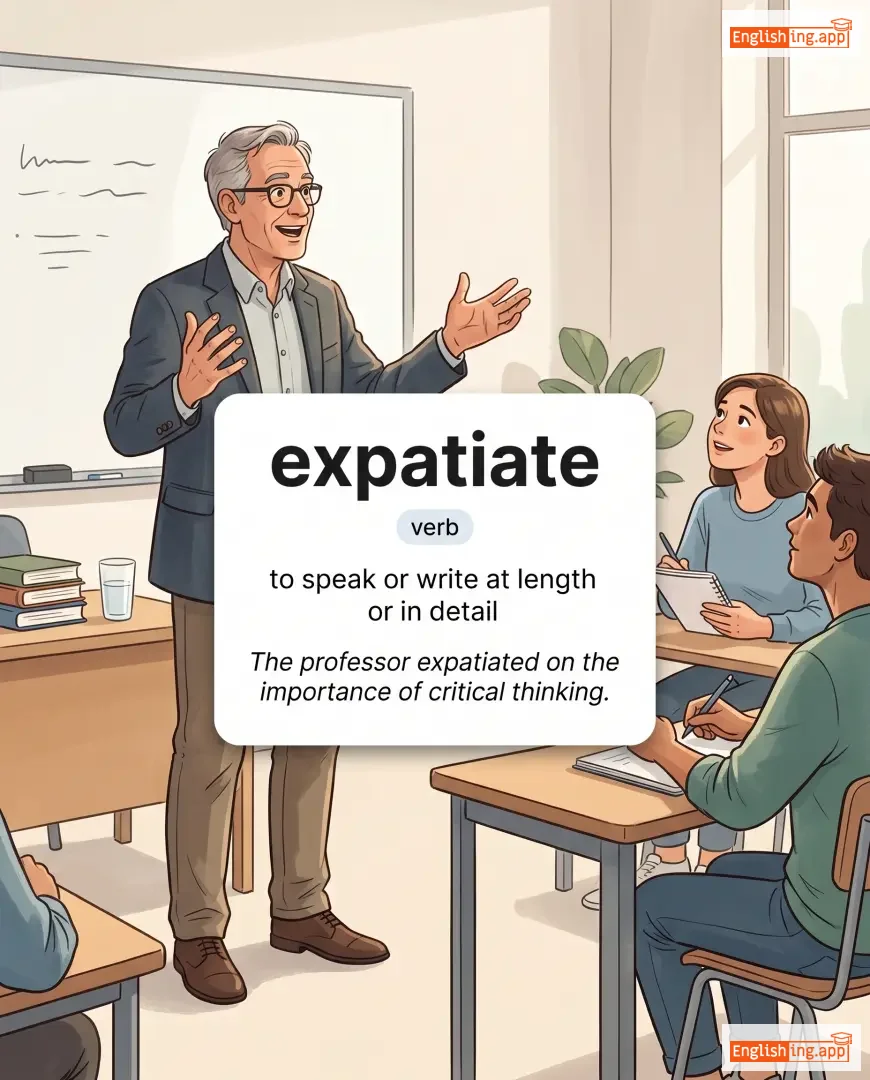
expatiate definition card — visual illustration of the meaning
verb
/ɪkˈspeɪʃiˌeɪt/
詳細に話すまたは書く (shousai ni hanasu mata wa kaku)

to speak or write at length or in detail

"The professor expatiated on the importance of critical thinking."
"教授は批判的思考の重要性について詳細に説明しました。" (Kyouju wa hihanteki shikou no juuyousei ni tsuite shousai ni setsumei shimashita.)
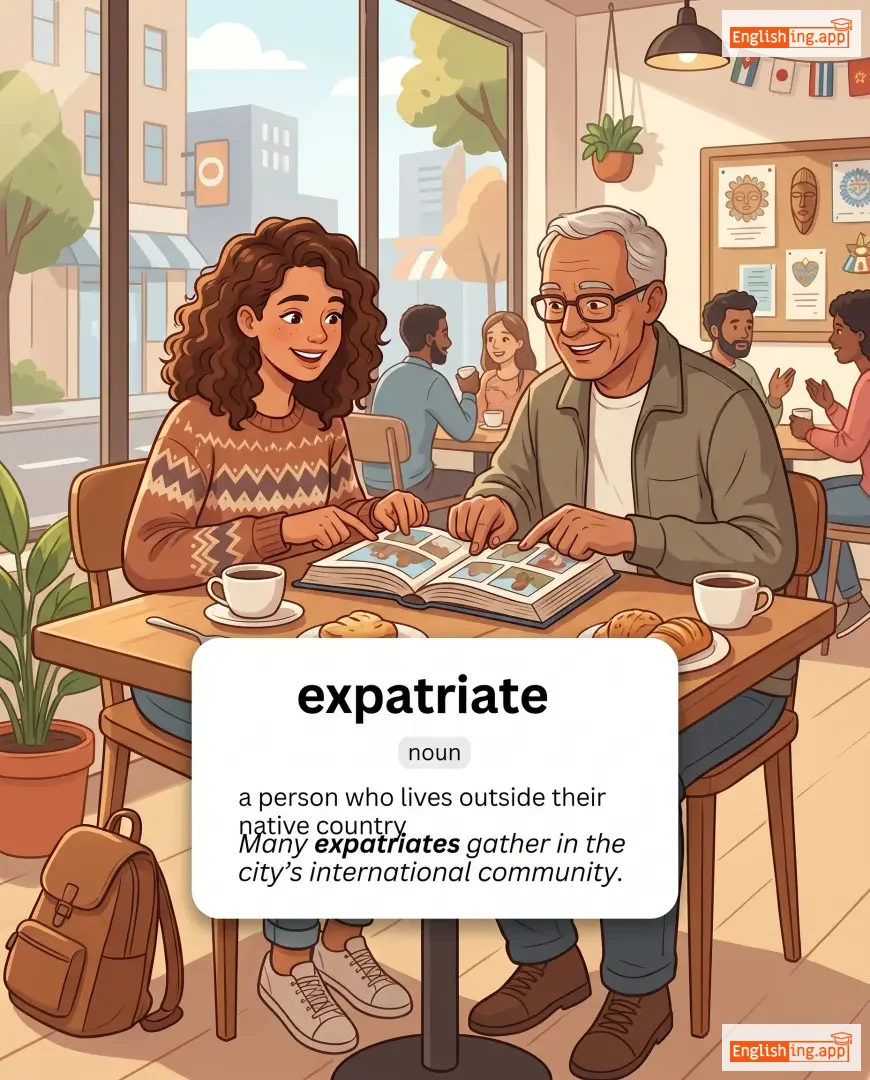
expatriate definition card — visual illustration of the meaning
noun
/ɛkˈspeɪtriət/
外国人 (gaikokujin)

a person who lives outside their native country

"Many expatriates gather in the city’s international community."

"多くの外国人が都市の国際コミュニティに集まっています。" (Ooku no gaikokujin ga toshi no kokusai komyuniti ni atsumatteimasu.)
expect definition card — visual illustration of the meaning
verb
/ɪkˈspɛkt/
期待する (kitai suru)

to believe that something will happen or that someone will arrive; to anticipate

"I expect the package to arrive tomorrow."

"私はパッケージが明日到着することを期待しています。" (Watashi wa pakēji ga ashita tōchaku suru koto o kitai shiteimasu.)
noun
/ɪkˈspɛktənsi/
期待 (kitai)

the state of expecting something; anticipation or likelihood

"There was a sense of expectancy in the room before the results were announced."

"結果が発表される前、部屋には期待の感覚があった。" (Kekka ga happyou sareru mae, heya ni wa kitai no kankaku ga atta.)