語彙集

英単語辞書 | 単語の意味、定義、例文

noun
/ˈkæs.ər.oʊl bɑːks/
キャセロールボックス (kyaseroru bokkusu)

a covered dish used for cooking and serving food, especially baked dishes

"The casserole box kept the food warm during the dinner party."
"キャセロールボックスはディナーパーティーの間、食べ物を温かく保ちました。" (Kyaseroru bokkusu wa dinā pāti no aida, tabemono o atatakai ku tamochimashita.)
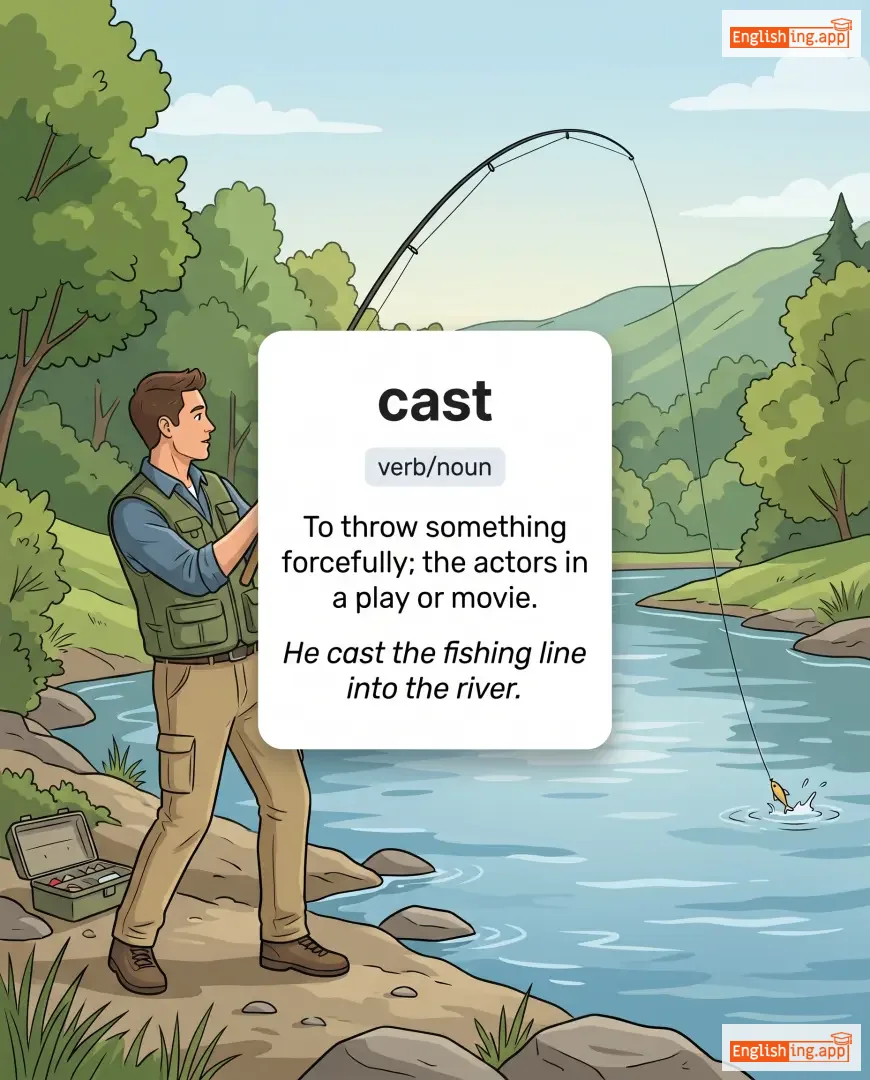
cast definition card — visual illustration of the meaning
verb/noun
/kæst/
投げる、俳優陣 (nageru, haiyūjin)

To throw something forcefully; the actors in a play or movie.

"He cast the fishing line into the river."
"彼は釣り糸を川に投げた。" (Kare wa tsuri ito o kawa ni nageta.)
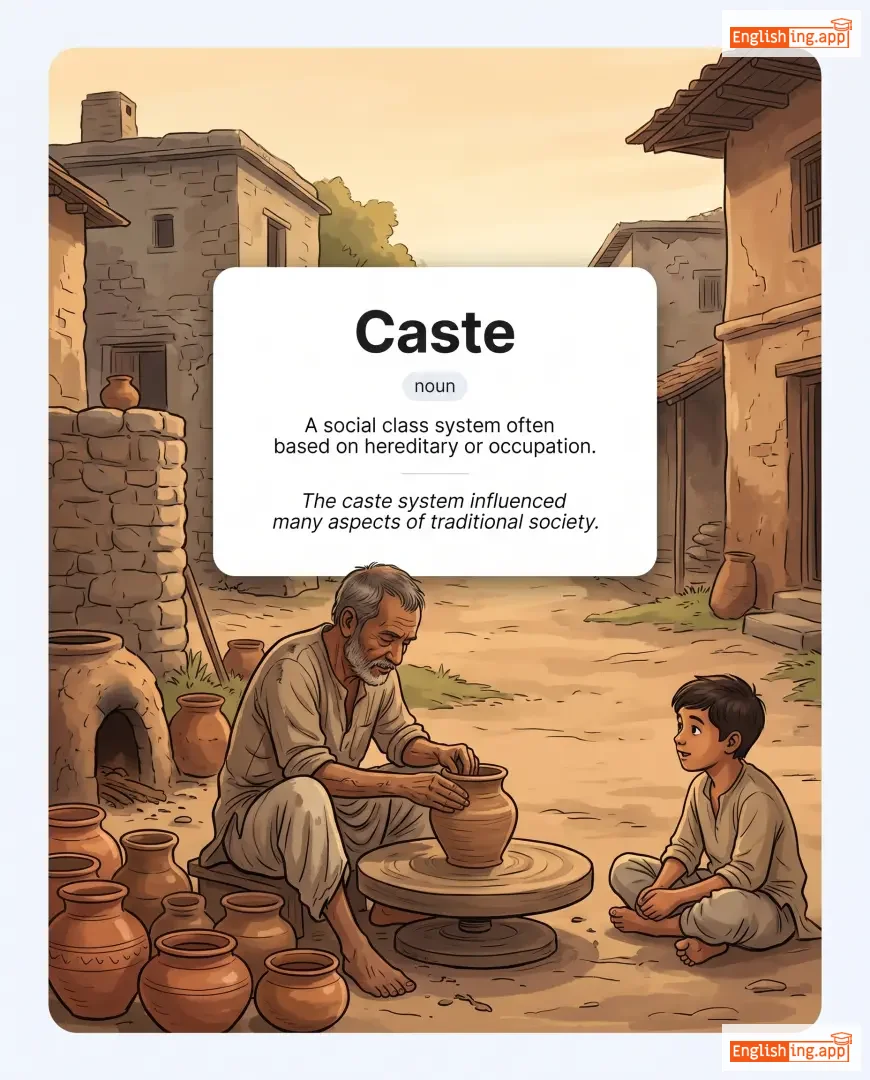
Caste definition card — visual illustration of the meaning
🧑‍🤝‍🧑

Caste (カースト)

noun
/kæst/
カースト (kāsuto)

A social class system often based on hereditary or occupation.

"The caste system influenced many aspects of traditional society."

"カースト制度は伝統的な社会の多くの側面に影響を与えました。" (Kāsuto seido wa dentō-teki na shakai no ōku no sokumen ni eikyō o ataemashita.)
verb
/ˈkæstɪˌɡeɪt/
厳しく非難する (kibishiku hinan suru)

To criticize someone severely or to punish harshly.

"The teacher castigated the students for their poor behavior."
"教師は生徒たちの悪い行動を叱責しました。" (Kyōshi wa seito-tachi no warui kōdō o shisseki shimashita.)
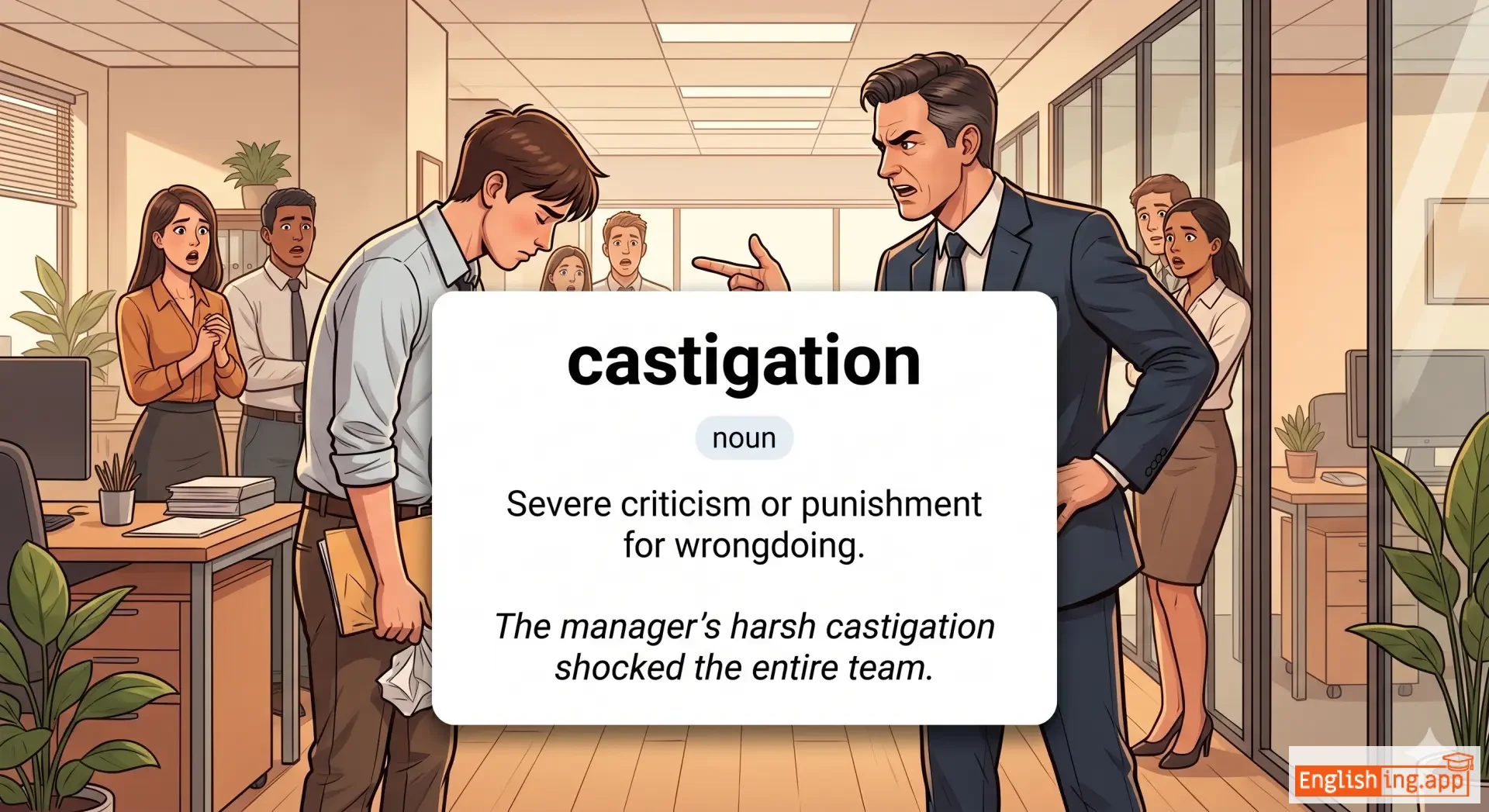
castigation definition card — visual illustration of the meaning
noun
/ˌkæstɪˈɡeɪʃən/
厳しい批評または罰 (kibishii hihyou mata wa batsu)

Severe criticism or punishment for wrongdoing.

"The manager’s harsh castigation shocked the entire team."

"マネージャーの厳しい批評はチーム全体を驚かせました。" (Manejā no kibishii hihyō wa chīmu zentai o odorokasemashita.)
noun
/ˈkæsəl/
(shiro)

a large fortified building or complex of buildings, typically of the medieval period, used as a residence for nobility

"The king lived in a grand castle on the hilltop."

"王は丘の上の壮大な城に住んでいました。" (Ō wa oka no ue no sōdaina shiro ni sunde imashita.)
verb
/ˈkæstreɪt/
去勢する (kyosei suru)

To remove the testicles of a male animal or human.

"The farmer castrated the young bulls to make them easier to manage."

"農夫は若い雄牛を去勢して、管理しやすくした。" (Nōfu wa wakai osushi o kyosei shite, kanri shiyasuku shita.)
adjective
/ˈkæʒuəl/
カジュアル (kajuaru)

Relaxed and informal in style, manner, or appearance.

"He wore casual clothes to the informal gathering."

"彼はカジュアルな服を着て、非公式な集まりに参加した。" (Kare wa kajuaru na fuku o kite, hikōshiki na atsumari ni sanka shita.)
adverb
/ˈkæʒ.u.ə.li/
カジュアルに; リラックスして非公式に (kajuaru ni; rirakkusu shite hikōshiki ni)

in a relaxed and informal way; without much thought or preparation

"He casually mentioned that he was leaving."

"彼はカジュアルに出発することを言った。" (Kare wa kajuaru ni shuppatsu suru koto o itta.)
noun
/ˈkæʒuəlti/
事故や戦争で負傷または死亡した人 (jiko ya sensou de fushou matawa shibou shita hito)

A person injured or killed in an accident or war.

"The accident resulted in several casualties."

"その事故で複数の犠牲者が出ました。" (Sono jiko de fukusuu no giseisha ga demashita.)
noun
/ˈkæʒuɪstri/
詭弁 (kiben)

The use of clever but false reasoning, especially in relation to moral questions.

"The lawyer’s argument was dismissed as mere casuistry."

"弁護士の主張は単なる詭弁として退けられました。" (Bengoshi no shuchō wa tan'aru kiben toshite sirizokemashita.)
noun
/kæt/
(neko)

a small domesticated carnivorous mammal often kept as a pet

"The cat is sleeping on the sofa."

"猫はソファで寝ています。" (Neko wa sofa de neteimasu.)
noun
/ˈkæt fɪʃ/
ナマズ (namazu)

a freshwater fish with whisker-like barbels around the mouth, commonly found in ponds and rivers

"Catfish is often fried and served with rice in Bengali cuisine."

"ナマズはしばしば揚げられ、ベンガル料理ではご飯と一緒に出されます。" (Namazu wa shibashiba agerare, Bengaru ryouri de wa gohan to issho ni dasaremasu.)
noun
/ˌkæt ə ˈnaɪn ˌteɪlz/
九つの尾を持つ鞭 (kokonotsu no o wo motsu muchi)

A whip with nine knotted cords, historically used for punishment.

"The sailor feared the cat-o-nine-tails more than the storm at sea."
"その水夫は海の嵐よりもキャット・オー・ナイン・テイルズを恐れていた。" (Sono suifu wa umi no arashi yori mo cat-o-nine-tails wo osorete ita.)
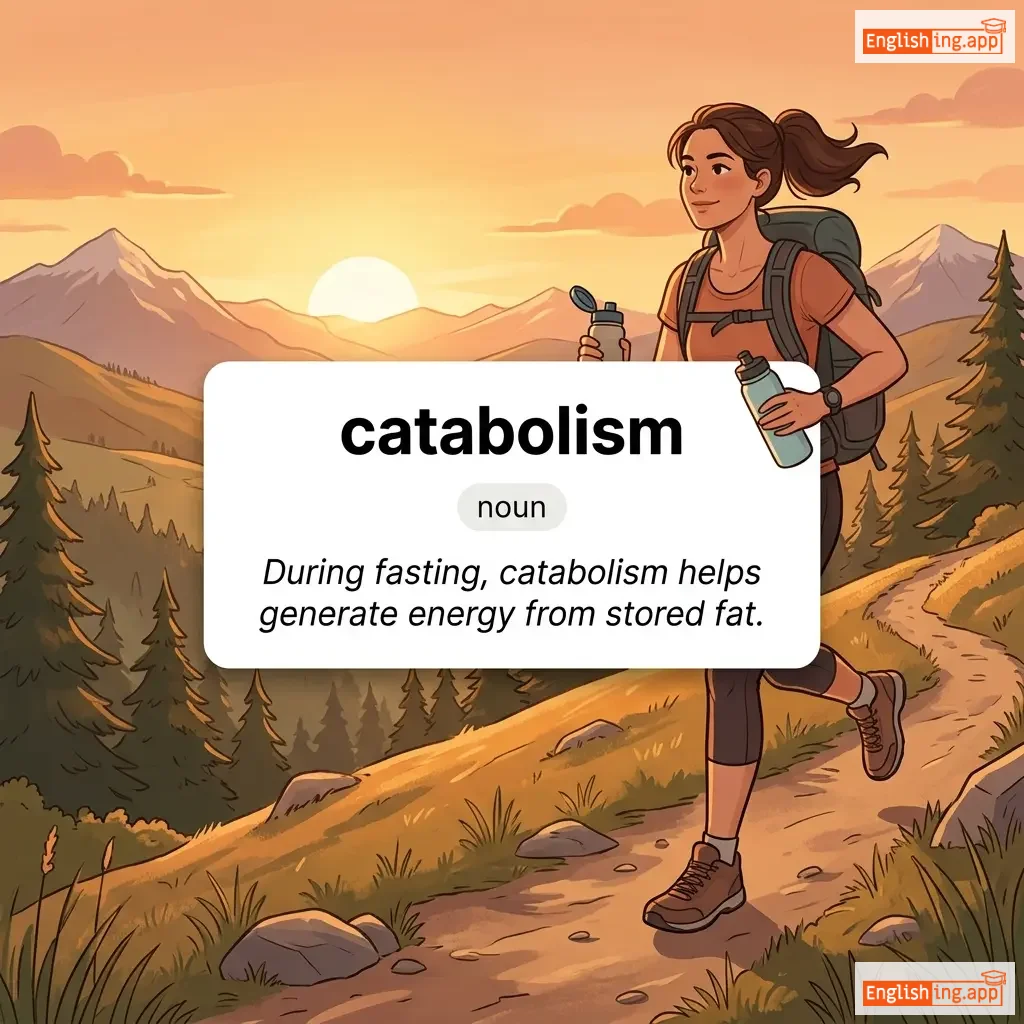
catabolism definition card — visual illustration of the meaning
noun
/kəˈtæb.ə.lɪ.zəm/
カタボリズム (katabolism)

The breakdown of complex molecules in living organisms to form simpler ones together with the release of energy.

"During fasting, catabolism helps generate energy from stored fat."
"断食中、カタボリズムは蓄積された脂肪からエネルギーを生成するのに役立ちます。" (Danshikichuu, katabolismu wa chikuseki sareta shibō kara enerugī o seisei suru no ni yakudachimasu.)
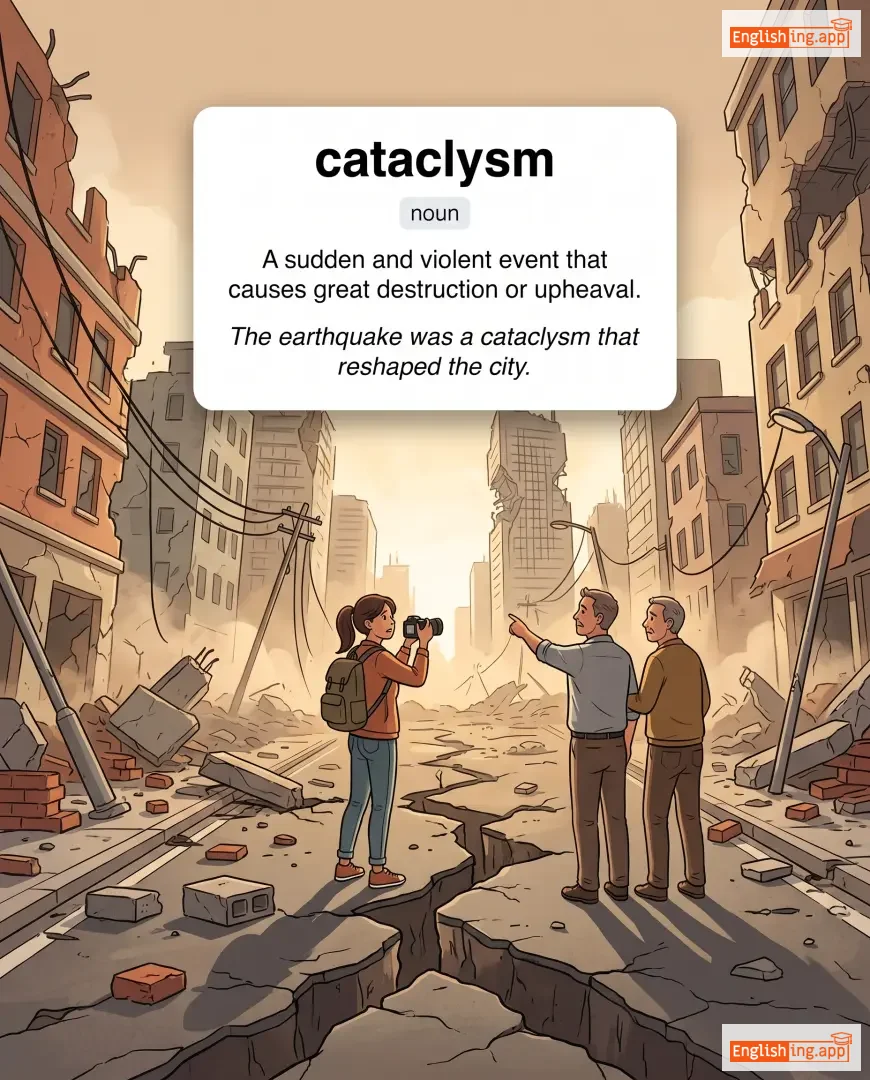
cataclysm definition card — visual illustration of the meaning
noun
/ˈkætəˌklɪzəm/
大災害 (daisaigai)

A sudden and violent event that causes great destruction or upheaval.

"The earthquake was a cataclysm that reshaped the city."

"地震は都市を再構築したカタクリズムでした。" (Jishin wa toshi o saikōchiku shita katakurizumu deshita.)
adjective
/ˌkætəˈklɪzmɪk/
壊滅的 (kaimetsuteki)

Relating to or denoting a violent natural event or upheaval.

"The war had cataclysmic effects on the nation's economy."

"戦争は国の経済に壊滅的な影響を与えた。" (Sensō wa kuni no keizai ni kaimetsuteki na eikyō o ataeta.)
noun
/ˈkætəlɔːɡ/
カタログ (katarogu)

a complete list of items, typically arranged systematically

"The library provides an online catalog of all available books."

"図書館はすべての利用可能な本のオンラインカタログを提供しています。" (Toshokan wa subete no riyō kanōna hon no onrain katarogu o teikyō shiteimasu.)
noun; verb
/ˈkætəlɒɡ/
目録 (mokuroku)

a complete list of items, typically one in alphabetical or systematic order; to make a systematic list of items

"The library decided to catalogue all new books digitally."
"図書館はすべての新しい本をデジタルで目録化することにした。" (toshokan wa subete no atarashii hon o dejitaru de mokurokuka suru koto ni shita)
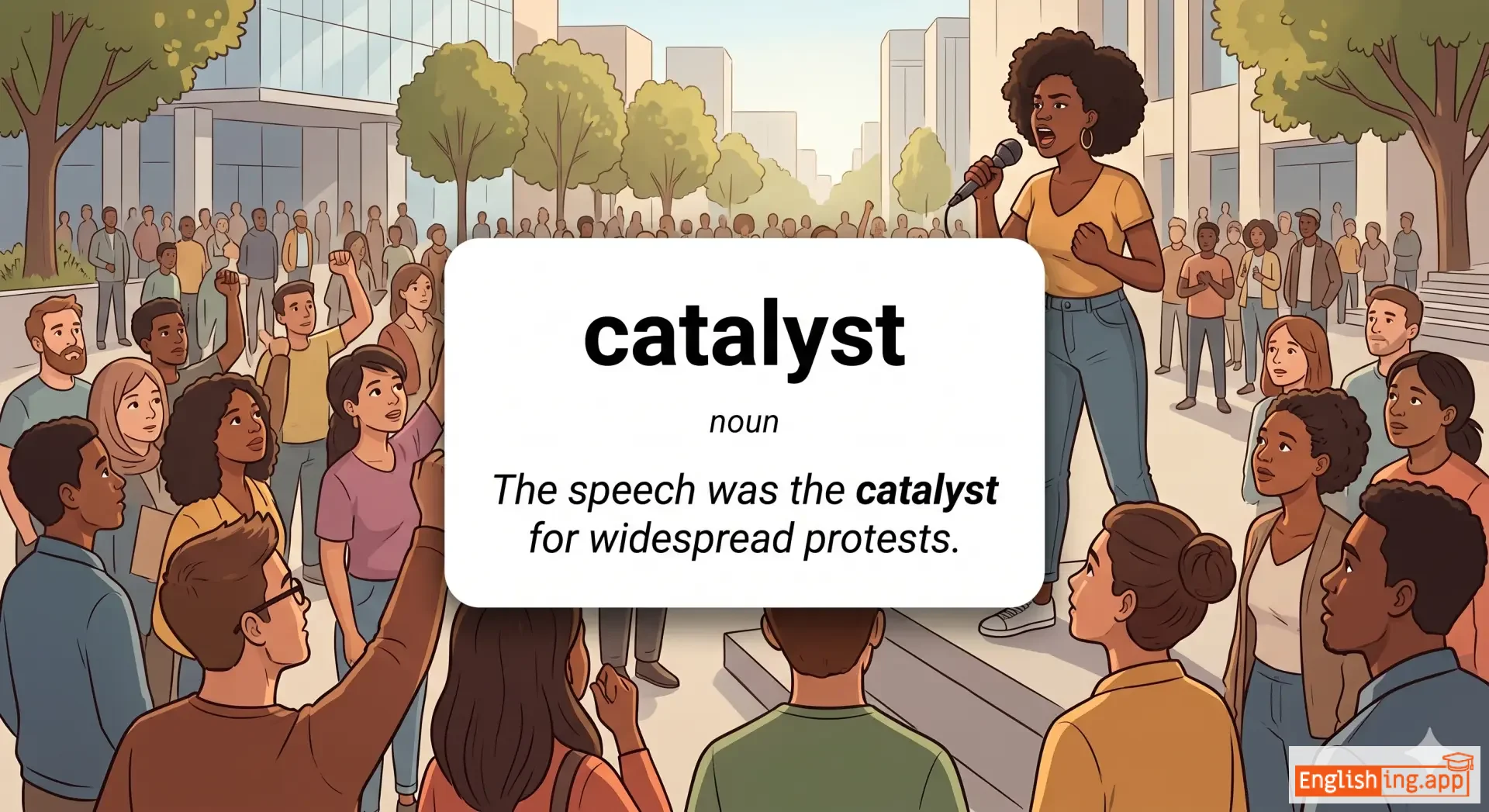
catalyst definition card — visual illustration of the meaning
noun
/ˈkætəlɪst/
触媒 (shokubai)

Something that speeds up or causes an event or change without being changed itself.

"The speech was the catalyst for widespread protests."

"そのスピーチは広範な抗議活動の触媒となった。" (Sono supīchi wa kōhan na kōgi katsudō no shokubai to natta.)
verb
/ˈkætəˌlaɪz/
触発する (shokuhatsu suru)

To cause or accelerate a reaction or change.

"The new law catalyzed reforms across the sector."

"新しい法律は業界全体で改革を促進した。" (Atarashii houritsu wa gyoukai zentai de kaikaku wo sokushin shita.)
noun/verb
/ˈkætəpʌlt/
カタパルト (kataparuṭo)

A device for launching objects at high speed; to hurl or launch something suddenly.

"The invention catapulted him to international fame."

"その発明は彼を国際的な名声へとカタパルトした。" (Sono hatsumei wa kare o kokusaiteki na meisei e to kataparuto shita.)
noun
/ˈkætərækt/
白内障 / 滝 (hakunaishō / taki)

A medical condition causing clouding of the eye's lens; also a large waterfall.

"The old man suffered from cataracts in both eyes."

"その高齢の男性は両目に白内障を患っていました。" (Sono kōrei no dansei wa ryōme ni hakunaishō o wazuratte imashita.)
noun
/kəˈtæstrəfi/
災害 (saigai)

A sudden and widespread disaster or misfortune.

"The earthquake was a catastrophe for the entire region."
"地震は地域全体にとって災害でした。" (Jishin wa chiiki zentai ni totte saigai deshita.)
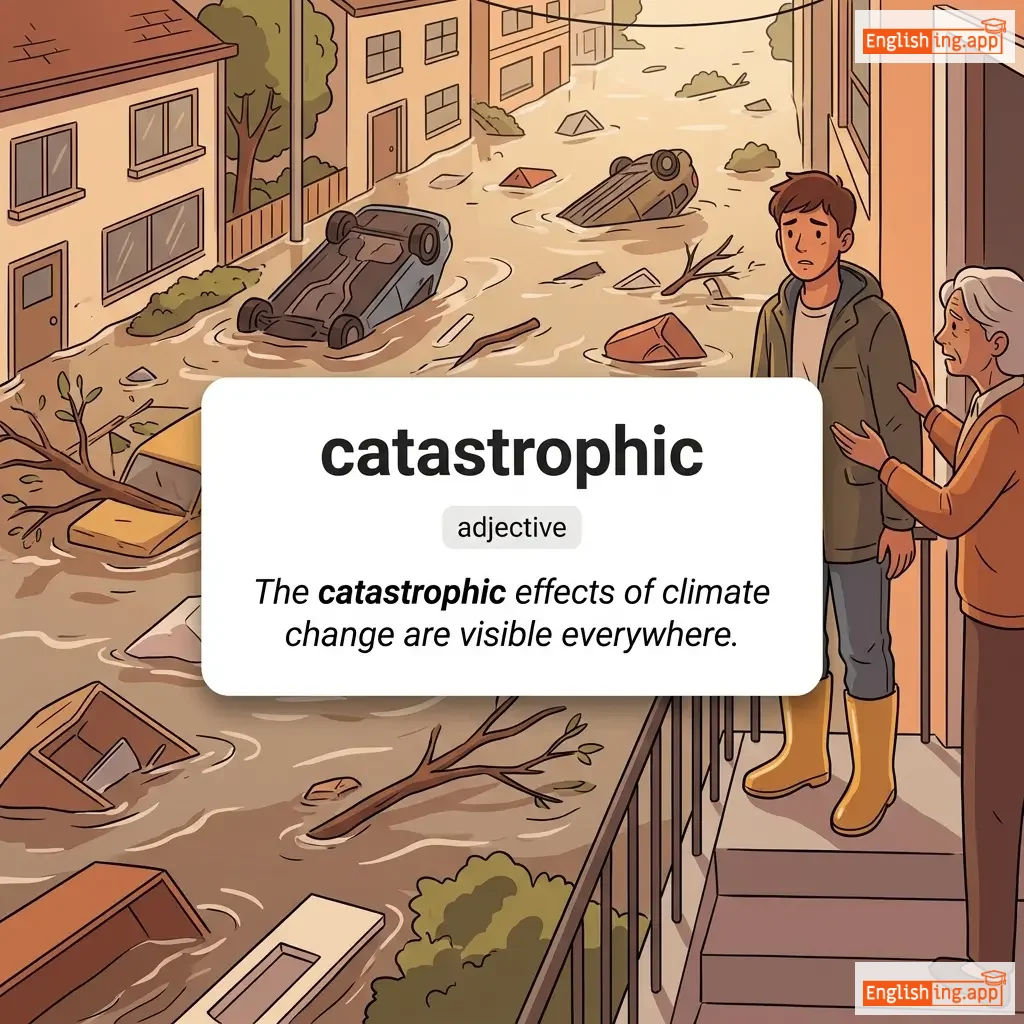
catastrophic definition card — visual illustration of the meaning
adjective
ˌkæt.əˈstrɒf.ɪk
壊滅的 (kaimetsuteki)

Involving or causing sudden great damage or suffering; extremely unfortunate or unsuccessful.

"The catastrophic effects of climate change are visible everywhere."
"気候変動の壊滅的な影響はどこでも見ることができます。" (Kikō hendō no kaimetsuteki na eikyō wa doko demo miru koto ga dekimasu.)
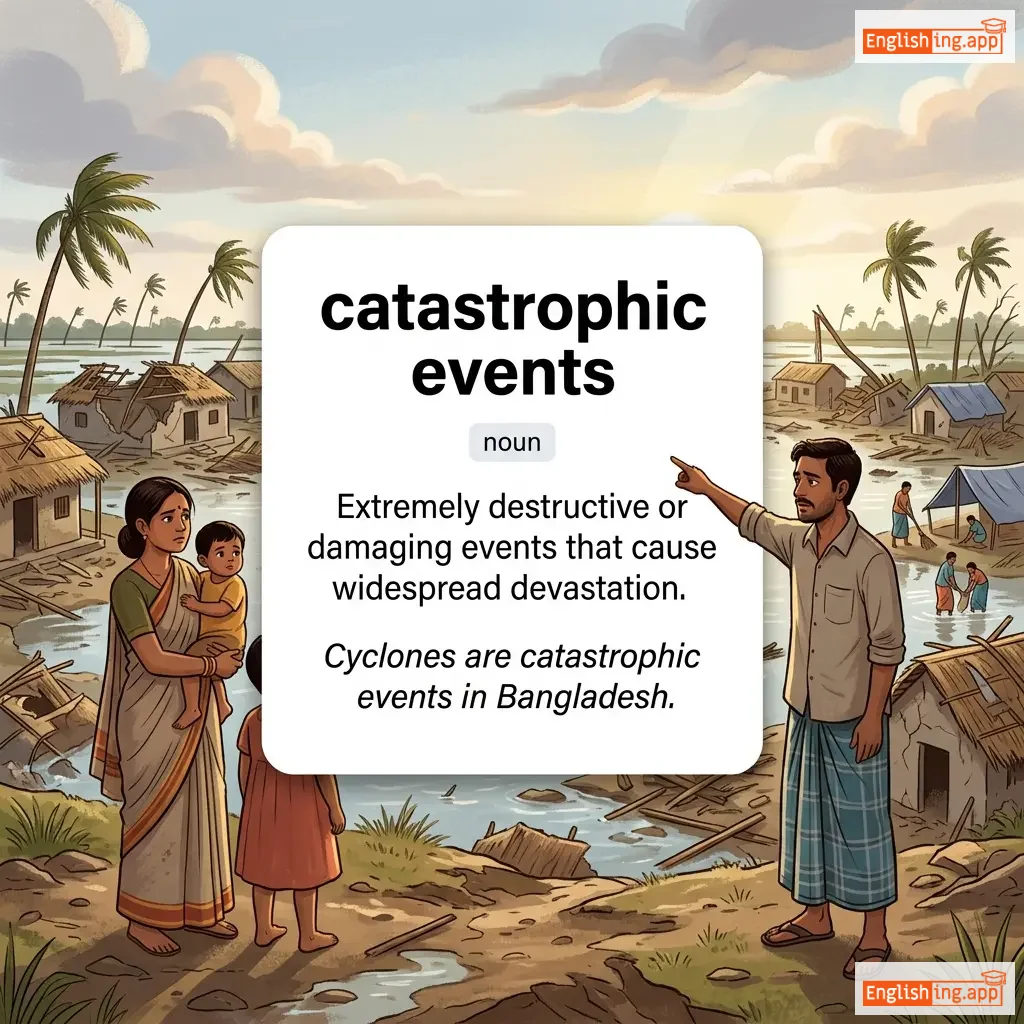
catastrophic events definition card — visual illustration of the meaning
noun
ˌkætəˈstrɒfɪk ɪˈvents
壊滅的な出来事 (kaimetsu-tekina dekigoto)

Extremely destructive or damaging events that cause widespread devastation.

"Cyclones are catastrophic events in Bangladesh."

"サイクロンはバングラデシュで壊滅的な出来事です。" (Saikuron wa Banguradeshu de kaimetsu-tekina dekigoto desu.)
noun/verb
/ˈkætˌkɔːl/
不快な口笛や叫び声 (fukai na kuchibue ya sakebigoe)

A loud whistle or shout of disapproval or sexual harassment directed at someone.

"The actress ignored the catcalls from the crowd."

"女優は群衆からのキャットコールを無視しました。" (Joyu wa gunshū kara no kyattokōru o mushi shimashita.)
catch definition card — visual illustration of the meaning
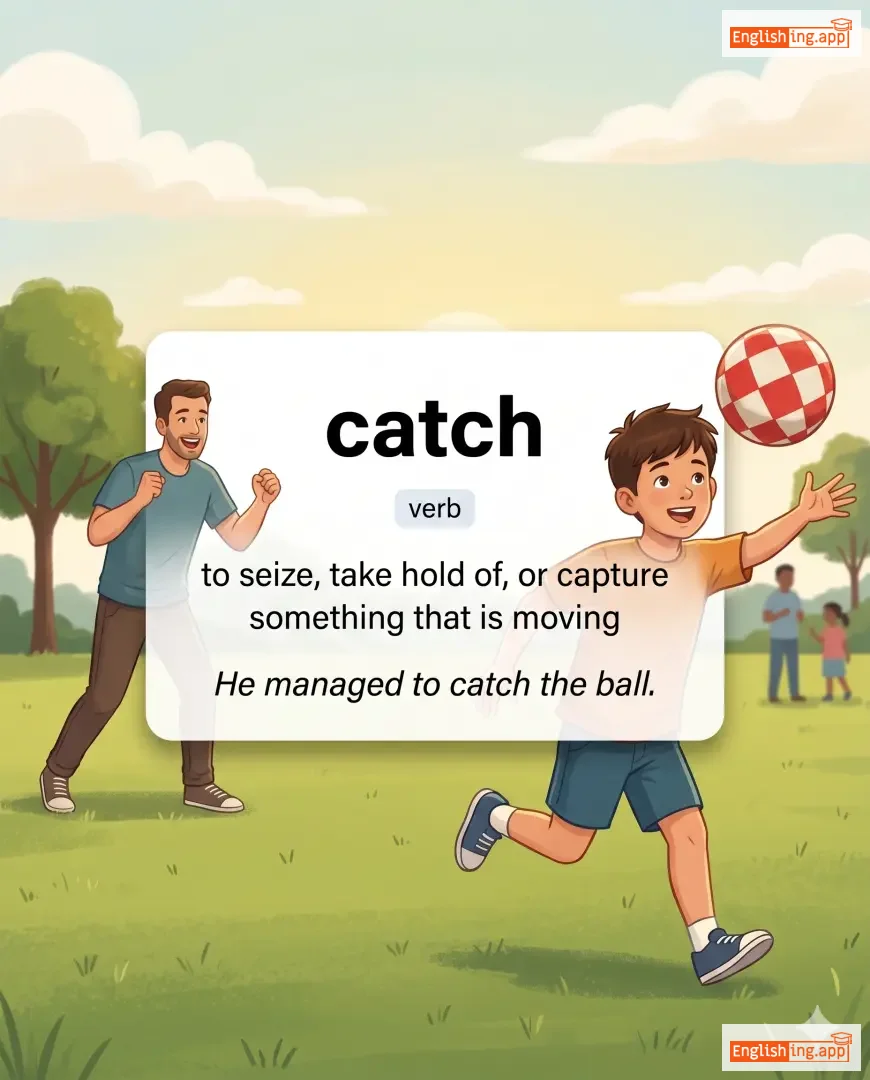
🤲

catch

verb
/kætʃ/

to seize, take hold of, or capture something that is moving

"He managed to catch the ball."

noun
/ˈkætɪˌkɪzəm/
教義問答 (kyougi mondou)

A summary of religious principles often in the form of questions and answers; also a set of fixed questions or beliefs.

"The priest taught the children the catechism every Sunday."

"司祭は毎週日曜日に子供たちにカテキズムを教えました。" (Shisai wa maishū nichiyōbi ni kodomotachi ni kateki-zumu o oshiemashita.)
noun
/ˈkætɪtʃuː/
カテチュー (katechū)

an extract from a tropical Asian plant, used in tanning and dyeing

"Catechu extract is commonly used in traditional medicine."

"カテチュー抽出物は伝統医学で一般的に使用されます。" (Katechū chūshutsumono wa dentō igaku de ippanteki ni shiyō saremasu.)
categorical definition card — visual illustration of the meaning
adjective
/ˌkætəˈɡɒrɪkəl/
カテゴリー的 (kategorī-teki)

Absolute and without exception; expressed clearly and directly.

"She gave a categorical denial of the allegations."
"彼女はその告発に対してカテゴリー的な否定をした。" (Kanojo wa sono kokuhatsu ni taishite kategorī-teki na hitei o shita.)
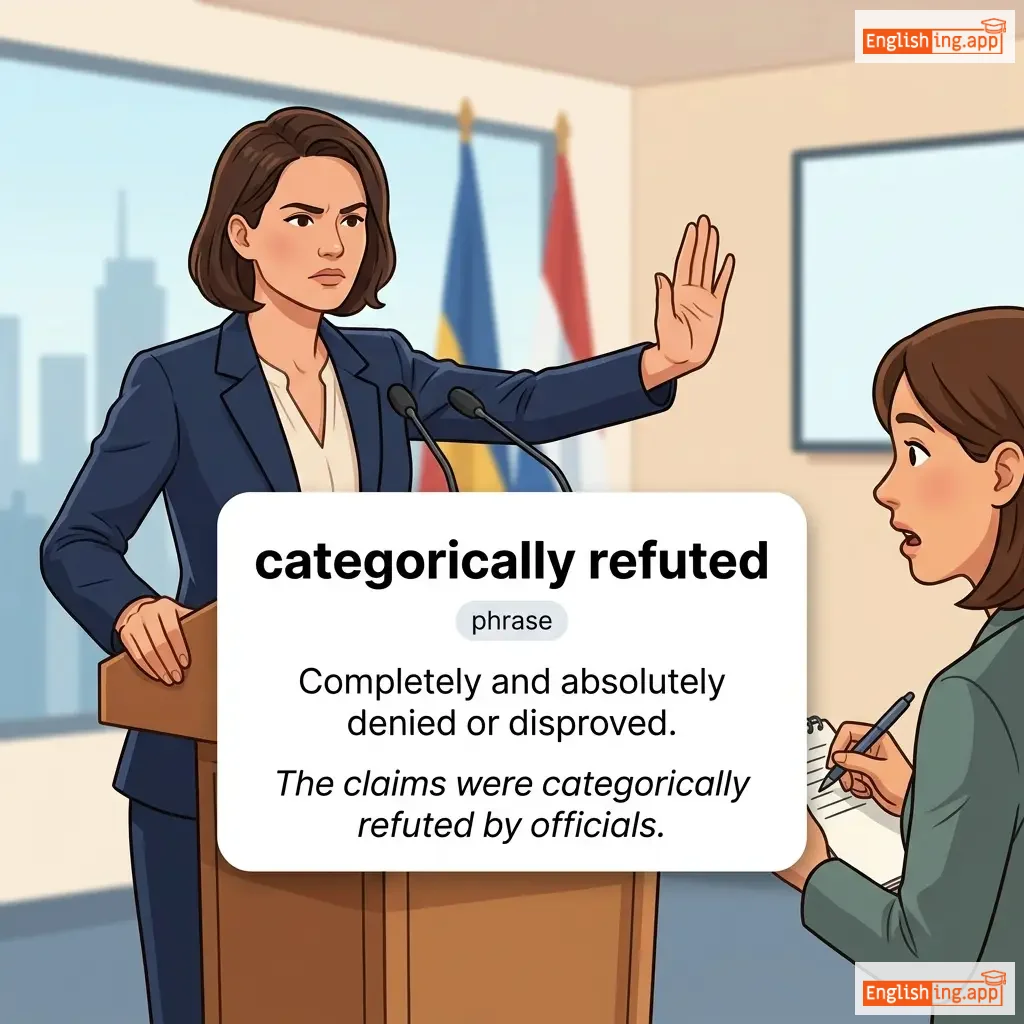
categorically refuted definition card — visual illustration of the meaning
phrase
ˌkæt.əˈɡɒr.ɪ.kəl.i rɪˈfjuː.tɪd
完全に否定された (kanzen ni hitei sareta)

Completely and absolutely denied or disproved.

"The claims were categorically refuted by officials."
"その主張は公式に完全に否定されました。" (Sono shuchou wa kouhoushiki ni kanzen ni hitei saremashita.)
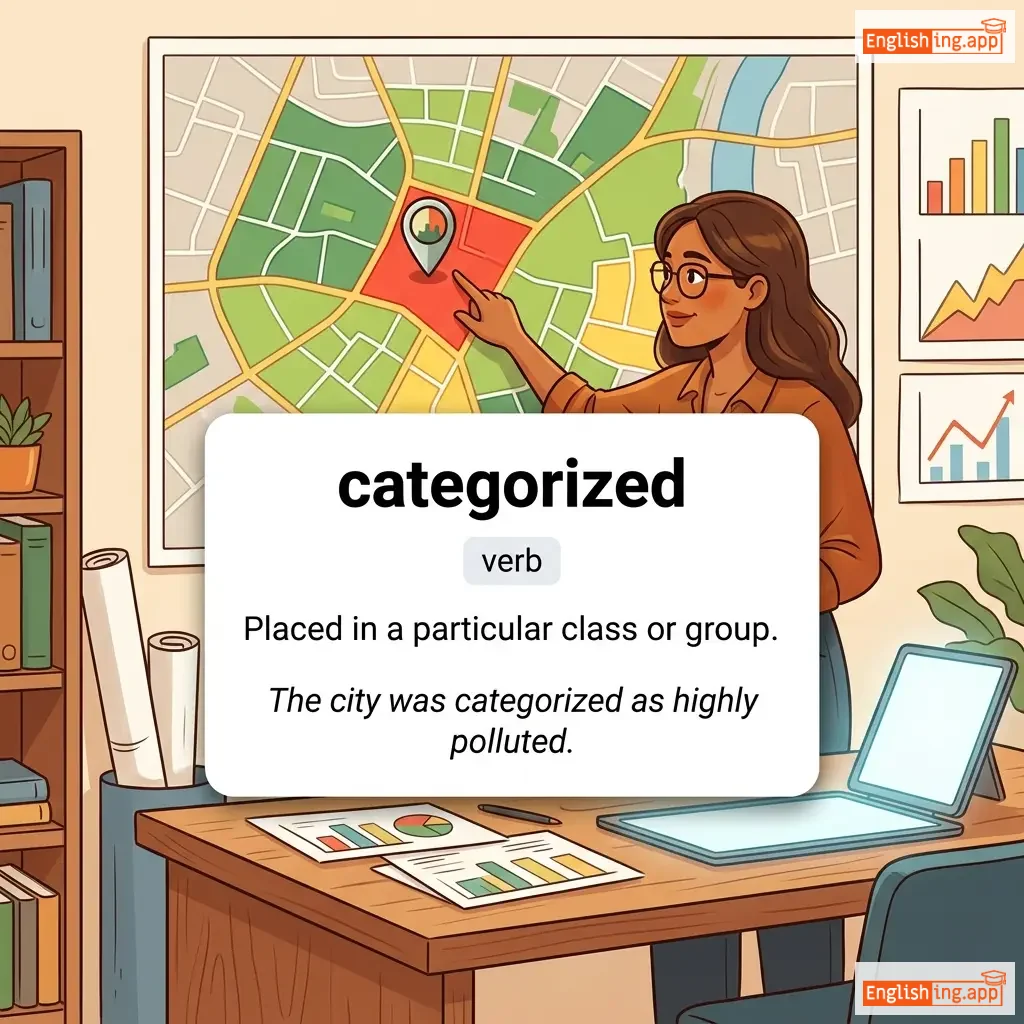
categorized definition card — visual illustration of the meaning
verb
/ˈkæt.ɪ.ɡə.raɪzd/
分類された (bunrui sareta)

Placed in a particular class or group.

"The city was categorized as highly polluted."

"その都市は高度に汚染されていると分類されました。" (Sono toshi wa kōdo ni osen sarete iru to bunrui saremashita.)
noun
/ˈkætəɡɔːri/
カテゴリー (kategorii)

a class or division of things regarded as having particular shared characteristics

"Books are arranged by category in the library."

"本は図書館でカテゴリーごとに整理されています。" (Hon wa toshokan de kategorii goto ni seiri sareteimasu.)
🍽️

cater

verb
/ˈkeɪtər/

To provide food, drinks, or services, usually for an event or group.

"The company catered the wedding reception."

noun
/ˈkæt.ər.pɪl.ər/
毛虫 (kemushi)

the larva of a butterfly or moth that feeds on plants

"The caterpillar ate all the leaves on the plant."

"毛虫は植物の葉をすべて食べました。" (Kemushi wa shokubutsu no ha wo subete tabemashita.)
noun
/kəˈθɑːrsɪs/
カタルシス (katarushisu)

The process of releasing strong emotions, providing relief.

"Writing in her diary was a form of catharsis for her."

"彼女の日記に書くことは、彼女にとって一種のカタルシスでした。" (Kanojo no nikki ni kaku koto wa, kanojo ni totte isshu no katarushisu deshita.)
cathartic definition card — visual illustration of the meaning
adjective
/kəˈθɑːrtɪk/
カタルシスの (katarushisu no)

Providing psychological relief through open expression of emotions; also refers to a medicine that causes cleansing of the bowels.

"Crying can be a cathartic experience."

"泣くことはカタルシスの経験になることがあります。" (Naku koto wa katarushisu no keiken ni naru koto ga arimasu.)
noun
/ˈkæθoʊd/
陰極 (inkyoku)

The negative electrode in a device such as a battery or tube, where electrons enter.

"The cathode emits electrons in the tube."

"カソードはチューブ内で電子を放出します。" (Kasōdo wa chūbu nai de denshi o hōshutsu shimasu.)
adjective
/ˈkæθəlɪk/
カトリック (katorikku)

Including a wide variety; all-embracing; relating to the Roman Catholic Church.

"She has catholic tastes in music, enjoying everything from jazz to opera."

"彼女は音楽にカトリックな趣味を持っており、ジャズからオペラまで何でも楽しんでいます。" (Kanojo wa ongaku ni katorikku na shumi o motte ori, jazu kara opera made nandemo tanoshinde imasu.)
noun
/kəˈθɒlɪsɪzəm/
カトリック教 (katorikku kyō)

The faith, practice, and church order of the Roman Catholic Church.

"Catholicism has a long history and rich traditions."

"カトリック教には長い歴史と豊かな伝統があります。" (Katorikku kyō ni wa nagai rekishi to yutakana dentō ga arimasu.)
noun
/ˌkæθəˈlɪsɪti/
普遍性, 開かれた考え (fuhensei, hirakareta kangae)

Universality; broad-mindedness; acceptance of a wide variety of things.

"Her catholicity of interests makes her a fascinating person."
"彼女のカトリシティな興味は、彼女を魅力的な人物にしています。" (Kanojo no katorishiti na kyomi wa, kanojo wo miryokuteki na jinbutsu ni shiteimasu.)
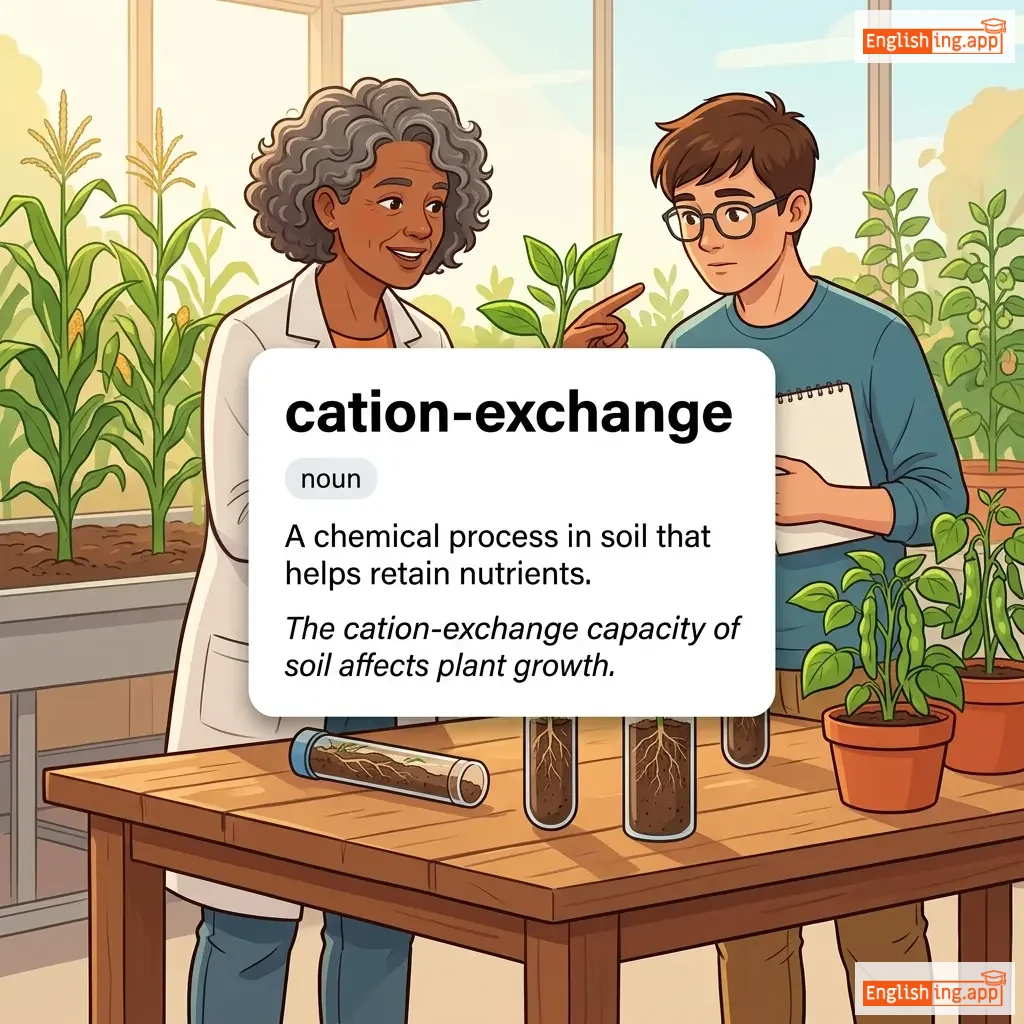
cation-exchange definition card — visual illustration of the meaning
noun
/ˈkæt.aɪ.ɒn ɪksˌtʃeɪndʒ/
陽イオン交換 (kachionekusuchenji)

A chemical process in soil that helps retain nutrients.

"The cation-exchange capacity of soil affects plant growth."

"土壌の陽イオン交換容量は植物の成長に影響を与える。" (dojou no youion koukan youryo wa shokubutsu no seicho ni eikyou o ataeru)
noun
/ˈkæt.kɪn/
ネコヤナギ (neko yanagi)

a drooping, often tasseled cluster of small flowers found on willow and birch trees

"The willow tree's catkins swayed gently in the spring breeze."

"柳の木のネコヤナギが春の風に揺れていた。" (Yanagi no ki no nekoyanagi ga haru no kaze ni yurete ita.)
noun
/ˈkætl/
幸せ (shiawase)

large domesticated animals such as cows and bulls that are kept on a farm for their milk, meat, or hides

"The farmer owns a herd of cattle that graze near the river."

"彼女は賞を受け取ったとき、自分の幸せを隠せませんでした。" (Kanojo wa shō o uketotta toki, jibun no shiawase o kakusemasendeshita.)
caucus definition card — visual illustration of the meaning
noun
/ˈkɔːkəs/
政治的集会 (seijiteki shūkai)

A meeting of members of a political party to select candidates or decide policy.

"The party held a caucus to nominate their candidate for president."

"党は大統領候補者を指名するために集会を開いた。" (Tō wa daitōryō kōho-sha o shimei suru tame ni shūkai o hiraita.)
noun
/ˈkɔːldrən/
大鍋 (ōkama)

A large metal pot used for cooking over an open fire; also a situation of intense activity or strong emotions.

"The witch stirred the cauldron filled with strange ingredients."

"魔女は奇妙な材料で満たされた大鍋をかき混ぜました。" (Majo wa kimyōna zairyō de mitasareta ōkama o kakimashimashita.)
noun
/ˈkɔːlɪˌflaʊər/
カリフラワー (karifurawā)

white vegetable with a compact head of undeveloped flower buds

"Roasted cauliflower makes a delicious and healthy side dish."

"ローストしたカリフラワーはおいしくて健康的なサイドディッシュです。" (Rōsuto shita karifurawā wa oishikute kenkō-teki na saido disshu desu.)
verb
/kɔːk/
隙間を塞ぐ (sukima wo fusagu)

to seal a crack or gap with a waterproof filler

"He caulked the window frames to stop the draft."
"彼は窓枠をコークして、冷たい風を防ぎました。" (Kare wa madogawa wo kooku shite, tsumetai kaze wo fusegimashita.)
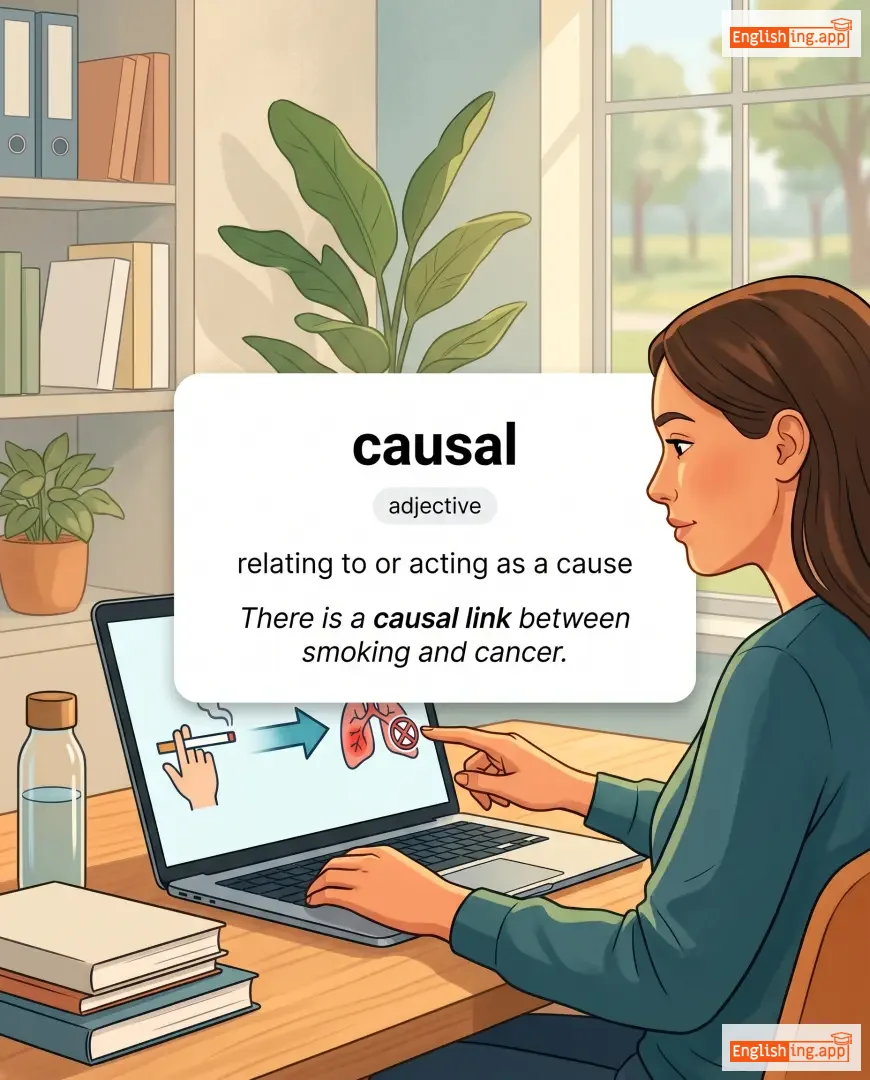
causal definition card — visual illustration of the meaning
adjective
/ˈkɔː.zəl/
因果的 (ingateki)

relating to or acting as a cause

"There is a causal link between smoking and cancer."

"喫煙と癌との間には因果関係があります。" (Kitsuen to gan to no aida ni wa inga kankei ga arimasu.)