語彙集

英単語辞書 | 単語の意味、定義、例文

adjective
/kənˈsɪdərət/
思いやりのある (omoiyari no aru)

showing concern for the needs and feelings of others

"He is always considerate of his neighbors."

"彼はいつも近所の人々に思いやりを持っています。" (Kare wa itsumo kinjo no hitobito ni omoiyari o motteimasu.)
noun
/kənˌsɪdəˈreɪʃən/
幸福 (kōfuku)

careful thought or attention to something before making a decision

"After much consideration, she accepted the job offer."

"彼女は賞を受け取ったとき、自分の幸せを隠せなかった。" (Kanojo wa shō o uketotta toki, jibun no kōfuku o kakusenakatta.)
verb
/kənˈsaɪn/
委託する (itaku suru)

to deliver something to a person or place, often for selling or safekeeping

"He consigned the package to the shipping company."

"彼は荷物を配送会社に委託しました。" (Kare wa nimotsu o haisō kaisha ni itaku shimashita.)
noun
/ˌkɒnsaɪˈniː/
受取人 (uketorinin)

the person or company to whom goods are delivered

"The consignee received the shipment on time."

"受取人は時間通りに配送を受け取りました。" (Uketorinin wa jikan dōri ni haisō o uketorimashita.)
noun
/kənˈsaɪnər/
発送者 (hassōsha)

a person or company that sends goods to be sold or transported

"The consignor shipped the goods to the warehouse."

"発送者は商品を倉庫に送った。" (Hassōsha wa shōhin o sōko ni okutta.)
verb
/kənˈsɪst/
構成する (kousei suru)

to be made up or composed of certain parts or elements

"The committee consists of five members."

"委員会は五人のメンバーで構成されています。" (Iinkai wa gonin no menbaa de kousei sareteimasu.)
consistency definition card — visual illustration of the meaning
noun
/kənˈsɪstənsi/
一貫性, 安定性 (ikkansē, anteisē)

the quality of always behaving or performing in a similar way; uniformity

"Her consistency in work earned her a promotion."

"彼女の仕事での一貫性が昇進をもたらしました。" (Kanojo no shigoto de no ikkansē ga shōshin o motarashimashita.)
consistent definition card — visual illustration of the meaning
adjective
/kənˈsɪstənt/
一貫した (ikkan shita)

acting or done in the same way over time; reliable or uniform

"He is very consistent in his work."

"彼は仕事において非常に一貫しています。" (Kare wa shigoto ni oite hijō ni ikkan shiteimasu.)
adverb
/kənˈsɪstəntli/
一貫して (ikkanshite)

in a way that does not vary; regularly and dependably

"She has been performing consistently well in her studies."

"彼女は学業で一貫して良い成績を収めています。" (Kanojo wa gakugyō de ikkanshite yoi seiseki o osameteimasu.)
verb
/kənˈsoʊl/
慰める (nagusameru)

to comfort someone at a time of grief or disappointment

"She tried to console him after his loss."

"彼女は彼の損失の後、彼を慰めようとした。" (Kanojo wa kare no sonshitsu no ato, kare wo nagusameyou to shita.)
consolidate definition card — visual illustration of the meaning
verb
/kənˈsɑːlɪdeɪt/
統合する (tōgō suru)

to combine into a single, more effective or coherent whole

"The company plans to consolidate its offices into one building."

"その会社はオフィスを1つの建物に統合する予定です。" (Sono kaisha wa ofisu o hitotsu no tatemono ni tōgō suru yotei desu.)
Consolidation definition card — visual illustration of the meaning
noun
/kənˌsɑːlɪˈdeɪʃən/
統合 (tōgō)

the act or process of combining into a single, stronger or more effective entity

"The consolidation of the two companies improved efficiency."

"二つの会社の統合は効率を改善しました。" (Futatsu no kaisha no tōgō wa kōritsu o kaizen shimashita.)
noun
/ˈkɒnsənəns/
調和, 一致 (chouwa, itchi)

Agreement or harmony among parts; a pleasing combination of sounds in music or words.

"The consonance between their ideas made the project successful."

"彼らの考えの調和がプロジェクトを成功に導いた。" (Karera no kangae no chouwa ga purojekuto o seikou ni michibiita.)
noun
/ˈkɒnsənənt/
子音 (shiin)

A speech sound produced by blocking air flow, or a letter representing such a sound.

"The word 'cat' has two consonants and one vowel."

"‘猫’という単語には、2つの子音と1つの母音があります。" ('Neko' to iu tango ni wa, futatsu no shiin to hitotsu no boin ga arimasu.)
verb
/ˈkɒnsɔːrt/

To associate with someone, typically with disapproval; also, a spouse of a reigning monarch.

"He was criticized for consorting with criminals."

consortium definition card — visual illustration of the meaning
noun
kənˈsɔː.ti.əm
コンソーシアム (konsōshiamu)

An association of several companies or organizations formed to undertake an enterprise beyond the resources of any one member.

"The consortium worked collaboratively to build the cable."

"コンソーシアムはケーブルの建設に協力しました。" (Konsōshiamu wa kēburu no kensetsu ni kyōryoku shimashita.)
adjective
/kənˈspɪkjuəs/
目立つ (medatsu)

Easily noticeable; attracting attention due to being unusual or prominent.

"Her red dress made her conspicuous at the party."

"彼女の赤いドレスはパーティーで目立っていました。" (Kanojo no akai doresu wa pātī de medatte imashita.)
noun
/kənˈspɪrəsi/
陰謀 (inbō)

A secret plan by a group to do something unlawful or harmful.

"The police uncovered a conspiracy to overthrow the government."

"警察は政府を転覆させる陰謀を暴露した。" (Keisatsu wa seifu o tenpuku saseru inbō o bakuro shita.)
noun
/kənˈspɪrə.tər/
陰謀者 (inbousha)

a person who secretly plans with others to do something unlawful or harmful

"The conspirator was arrested before the plan could be carried out."

"陰謀者は計画が実行される前に逮捕された。" (Inbousha wa keikaku ga jikkou sareru mae ni taiho sareta.)
verb
/kənˈspaɪər/
共謀する (kyoubou suru)

to secretly plan with others to do something harmful or illegal

"They conspired to overthrow the government."

"彼らは政府を倒すために共謀した。" (Karera wa seifu o taosu tame ni kyoubou shita.)
noun
/ˈkʌn.stə.bəl/
巡査 (junsa)

a police officer of the lowest rank

"The constable directed traffic at the busy intersection."

"巡査は混雑した交差点で交通を指導しました。" (Junsa wa konzatsu shita kōsaten de kōtsū o shidō shimashita.)
noun
/ˈkɒnstənsi/
不変/忠実 (fuhen/chujitsu)

the quality of being faithful and dependable

"Her constancy in friendship is admirable."

"彼女の友情での忠実さは賞賛に値します。" (Kanojo no yujo de no chujitsu sa wa shosan ni atai shimasu.)
adjective
/ˈkɒn.stənt/
一定の (ittei no)

happening all the time or staying the same without change

"She lived in constant fear of losing her job."

"彼女は仕事を失うことへの一定の恐怖の中で生きていた。" (Kanojo wa shigoto o ushinau koto e no ittei no kyōfu no naka de ikite ita.)
adverb
/ˈkɒnstəntli/
絶えず (taezu)

continuously over a period of time; always

"He is constantly improving his skills."

"彼は絶え間なくスキルを向上させています。" (Kare wa taezu sukiru o kōjō saseteimasu.)
noun
/ˌkɒn.stəˈleɪ.ʃən/
星座 (seiza)

a group of stars forming a recognizable pattern in the night sky

"Orion is one of the most famous constellations."

"オリオン座は最も有名な星座の一つです。" (Orion-za wa mottomo yūmei na seiza no hitotsu desu.)
noun
/ˌkɒnstəˈneɪʃən/
動揺 (douyou)

A feeling of anxiety, dismay, or confusion, often caused by something unexpected.

"The sudden announcement caused widespread consternation among the employees."

"突然の発表が従業員の間で広範な動揺を引き起こしました" (Totsuzen no happyou ga juugyouin no aida de kouhan na douyou wo hikiokoshimashita)
noun
/kənˈstɪtʃuənsi/
選挙区 (senkyoku)

A geographical area whose residents elect a representative to a legislative body.

"She campaigned tirelessly across her constituency."

"彼女は選挙区で疲れ知らずに選挙運動を行いました。" (Kanojo wa senkyoku de tsukare shirazu ni senkyo undou o okonai mashita.)
noun/adjective
/kənˈstɪtʃuənt/
構成要素 / 有権者 (kousei youso / yuukensha)

Noun: A member of a constituency or an essential part of something. Adjective: Being a necessary part of a whole.

"The senator met with his constituents to discuss local issues."
"上院議員は地元の問題を議論するために選挙区の有権者と会いました。" (Jouin giin wa jimoto no mondai o giron suru tame ni senkyoku no yuukensha to aimashita.)
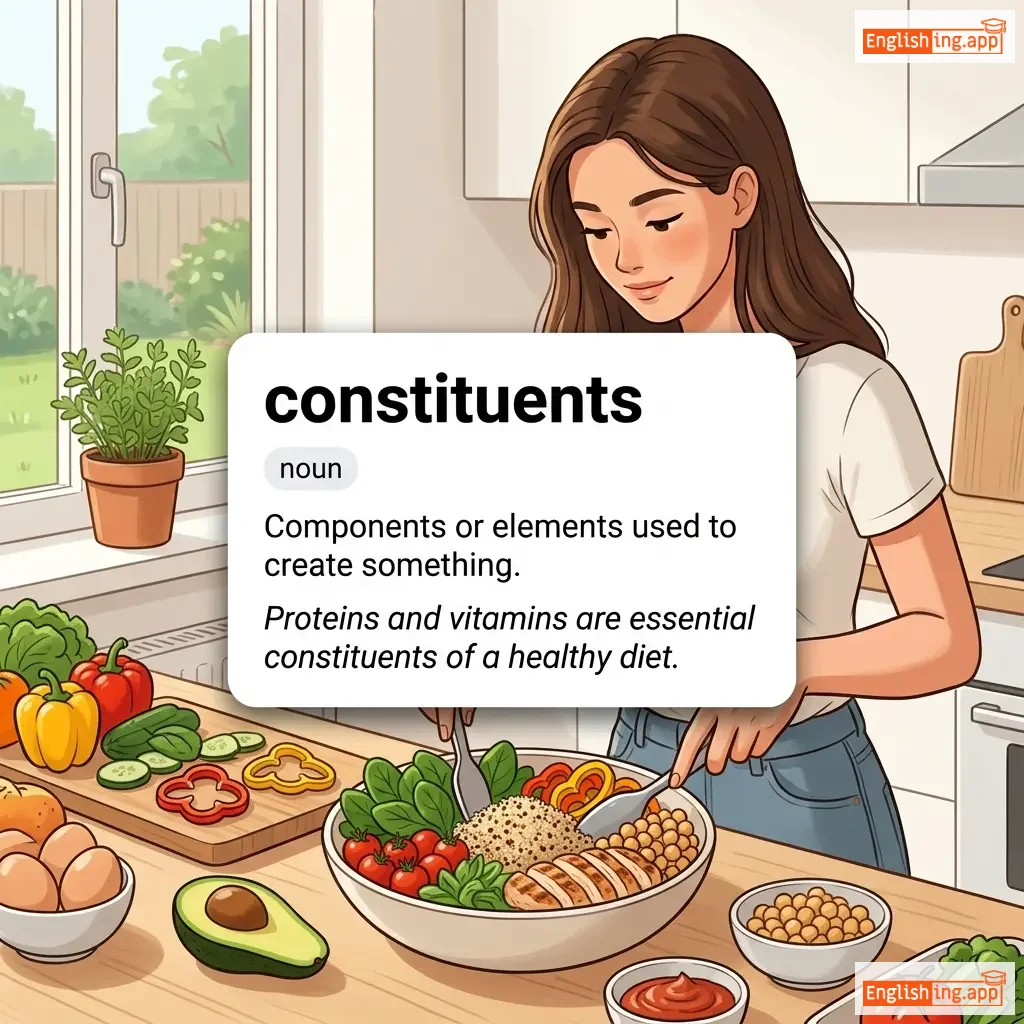
constituents definition card — visual illustration of the meaning
noun
/kənˈstɪtʃ.u.ənts/
構成要素 (kousei youso)

Components or elements used to create something.

"Proteins and vitamins are essential constituents of a healthy diet."

"プロテインとビタミンは健康的な食事の重要な構成要素です。" (Purotein to bitamin wa kenkou-teki na shokuji no juuyou na kousei youso desu.)
verb
/ˈkɒnstɪtjuːt/
構成する (kousei suru)

To make up, form, or establish something.

"These documents constitute the legal agreement between the two parties."

"これらの文書は、両者間の法的契約を構成しています。" (Korera no bunsho wa, ryousha-kan no houteki keiyaku o kousei shiteimasu.)
constitution definition card — visual illustration of the meaning
noun
/ˌkɒnstɪˈtjuːʃən/
憲法 (kenpou)

The system of fundamental principles according to which a nation or organization is governed.

"The constitution guarantees freedom of speech."
"憲法は言論の自由を保障します。" (Kenpou wa genron no jiyuu o hoshou shimasu.)
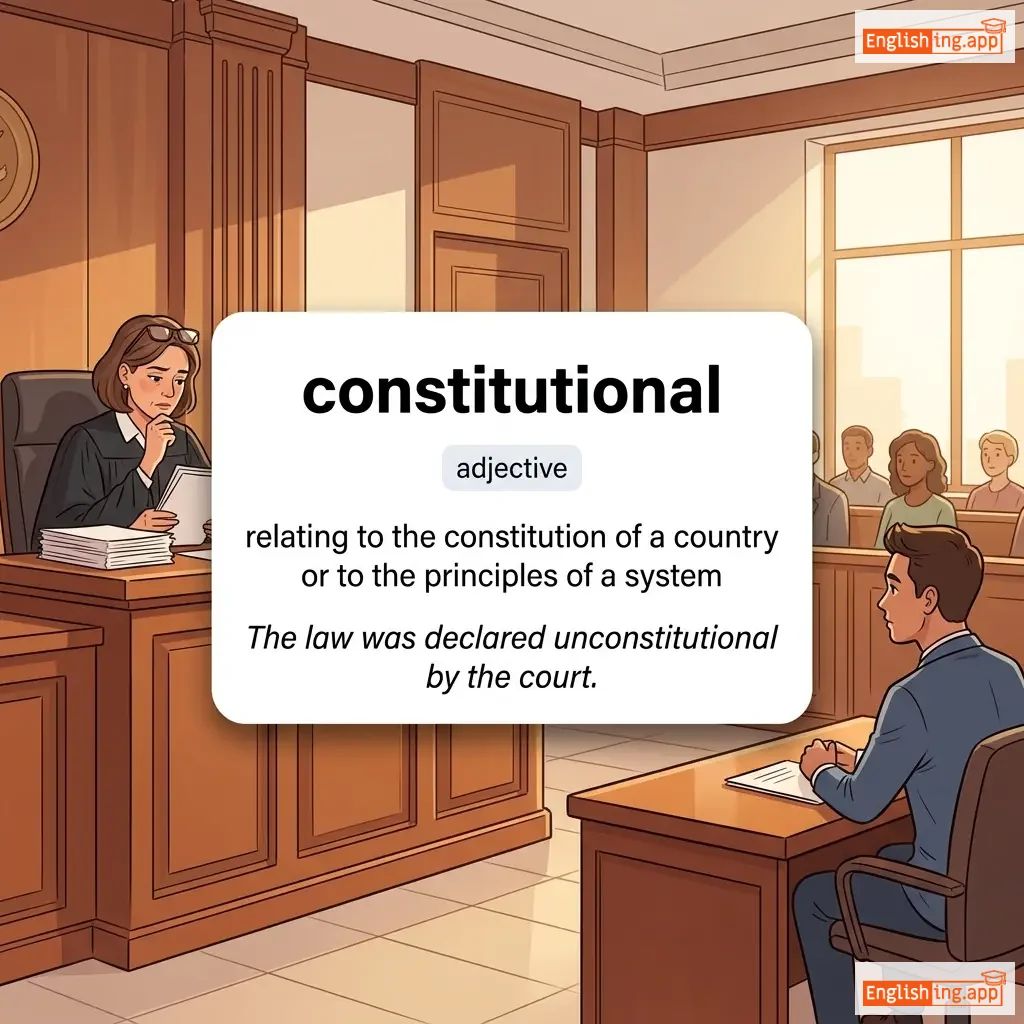
constitutional definition card — visual illustration of the meaning
adjective
/ˌkɒnstɪˈtjuːʃənəl/

relating to the constitution of a country or to the principles of a system

"The law was declared unconstitutional by the court."

verb
/kənˈstreɪn/
制限する (seigensuru)

to limit or restrict someone or something; to force or compel

"The new regulations constrain businesses from polluting the environment."

"新しい規制は企業が環境を汚染するのを制限しています。" (Atarashī kisei wa kigyō ga kankyō o osen suru no o seigen shiteimasu.)
adjective
/kənˈstreɪnd/
制約された、無理に作られた (seiyaku sareta, muri ni tsukurareta)

appearing forced, unnatural, or restricted

"He gave a constrained smile during the awkward meeting."

"彼は気まずい会議で強制的な笑顔を見せた。" (Kare wa kizamui kaigi de kyousei teki na egao o miseta.)
noun
/kənˈstreɪnt/
制約 (seiyaku)

a limitation or restriction

"Time is the biggest constraint in completing the project."

"プロジェクトを完了するための最大の制約は時間です。" (Purojekuto o kanryou suru tame no saidai no seiyaku wa jikan desu.)
verb
/kənˈstrɪkt/
絞る (shiboru)

to make narrower or tighter; to shrink or compress

"The snake constricted its prey before swallowing."

"その蛇は獲物を飲み込む前に締め付けました。" (Sono hebi wa emono o nomikomu mae ni shime tsukemashita.)
verb
/kənˈstrɪndʒ/
収縮する (shūshuku suru)

to cause to shrink or contract; to constrict

"The medicine helped constringe the swollen tissues."

"その薬は腫れた組織を収縮させるのに役立ちました。" (Sono kusuri wa hareta soshiki o shūshuku saseru no ni yakudachimashita.)
verb
/kənˈstrʌkt/
建設する (kensetsu suru)

to build or form something by putting parts together

"They plan to construct a new bridge over the river."
"彼らは川に新しい橋を建設する予定です。" (Karera wa kawa ni atarashī hashi o kensetsu suru yotei desu.)
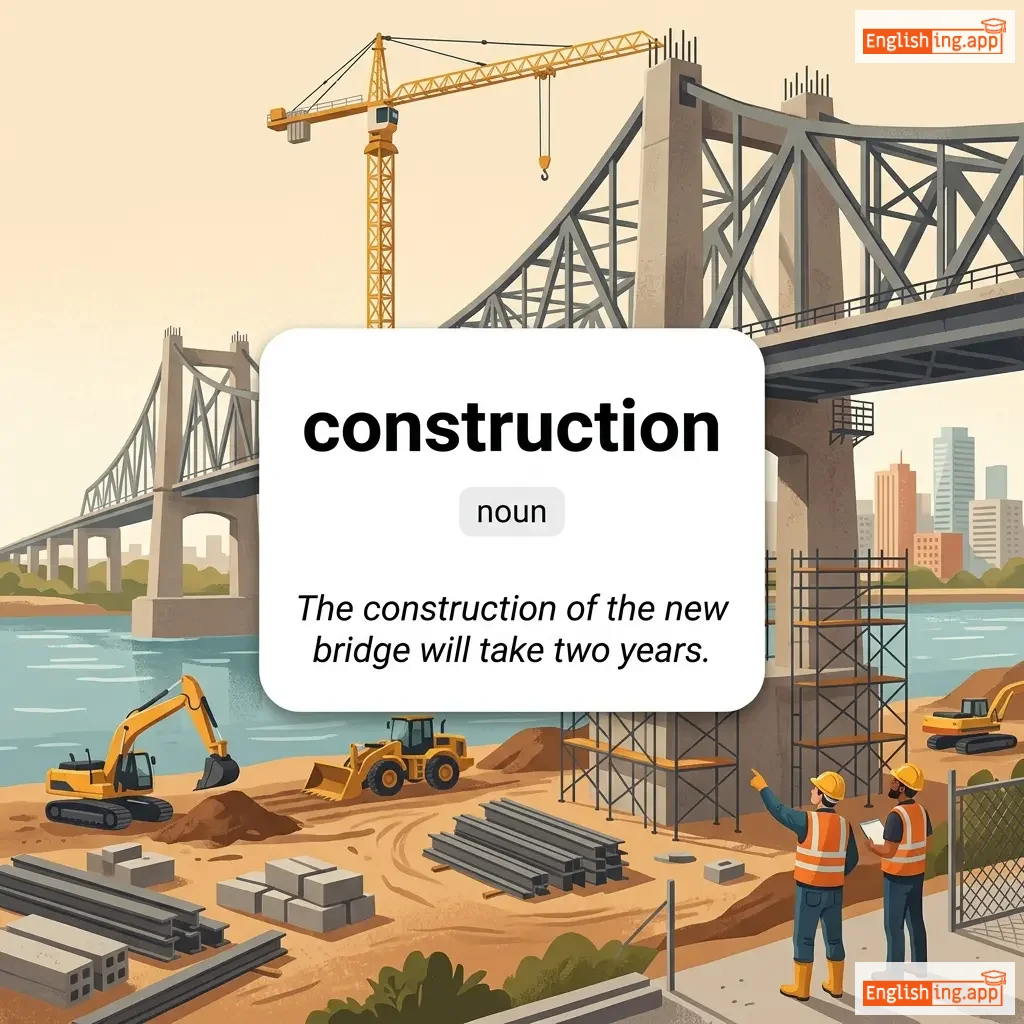
construction definition card — visual illustration of the meaning
noun
/kənˈstrʌkʃən/
建設 (kensetsu)

The process of building something, typically large structures such as houses, roads, or bridges.

"The construction of the new bridge will take two years."

"新しい橋の建設には2年かかります。" (Atarashii hashi no kensetsu ni wa 2-nen kakarimasu.)
verb
/kənˈstruː/
解釈する (kaishaku suru)

to interpret or understand the meaning of something in a particular way

"His words could be construed as a threat."

"彼の言葉は脅威として解釈されるかもしれません。" (Kare no kotoba wa kyōi toshite kaishaku sareru kamoshiremasen.)
noun
/ˈkɒnsəl/
領事 / 大使 (ryoushi / taishi)

an official appointed by a government to live in a foreign city and protect its citizens and interests there

"The consul assisted travelers who lost their passports."

"領事は、パスポートを失った旅行者を助けました。" (Ryoushi wa, pasupooto o ushinatta ryokousha o tasukemashita.)
noun
/ˈkɒnsjʊlət/
領事館 (ryōjikan)

the building or office where a consul works

"He went to the consulate to renew his visa."

"彼はビザを更新するために領事館に行きました。" (Kare wa biza o kōshin suru tame ni ryōjikan ni ikimashita.)
verb
/kənˈsʌlt/
相談する (soudan suru)

To seek advice or information from someone with expertise.

"You should consult a doctor before starting the treatment."

"治療を始める前に、医師に相談するべきです。" (Chiryō o hajimeru mae ni, ishi ni soudan suru beki desu.)
noun
/kənˈsʌltənt/
コンサルタント (konsarutanto)

A professional who provides expert advice in a particular area.

"The company hired a consultant to improve its marketing strategy."

"会社はマーケティング戦略を改善するためにコンサルタントを雇いました。" (Kaisha wa māketingu senryaku o kaizen suru tame ni konsarutanto o yatōshimashita.)
consultation definition card — visual illustration of the meaning
noun
/ˌkɒnsʌlˈteɪʃən/
相談 (soudan)

a meeting with an expert or professional to seek advice

"The doctor scheduled a consultation with the patient."

"医師は患者との相談を予定しました。" (Ishi wa kanja to no soudan o yotei shimashita.)
consume definition card — visual illustration of the meaning
verb
/kənˈsjuːm/
消費する (shouhishiru)

To use up, eat, drink, or take in.

"People consume a large amount of information daily."

"人々は毎日大量の情報を消費します。" (Hitobito wa mainichi tairyou no jouhou o shouhishimasu.)
noun
/kənˈsjuːmər/
消費者 (shōhisha)

A person who buys and uses goods and services.

"The company focuses on understanding consumer needs."

"その会社は消費者のニーズを理解することに重点を置いています。" (Sono kaisha wa shōhisha no nīzu o rikai suru koto ni jūten o oiteimasu.)
consumerism definition card — visual illustration of the meaning
noun
kənˈsjuː.mə.rɪ.zəm
消費主義 (shōhī shugi)

The tendency to increase consumption of goods and the importance given to consuming products.

"Modern consumerism leads to increased demand for luxury goods."
"現代の消費主義は高級品の需要の増加を引き起こします。" (Gendai no shōhi shugi wa kōkyūhin no juyō no zōka o hikiokoshimasu.)
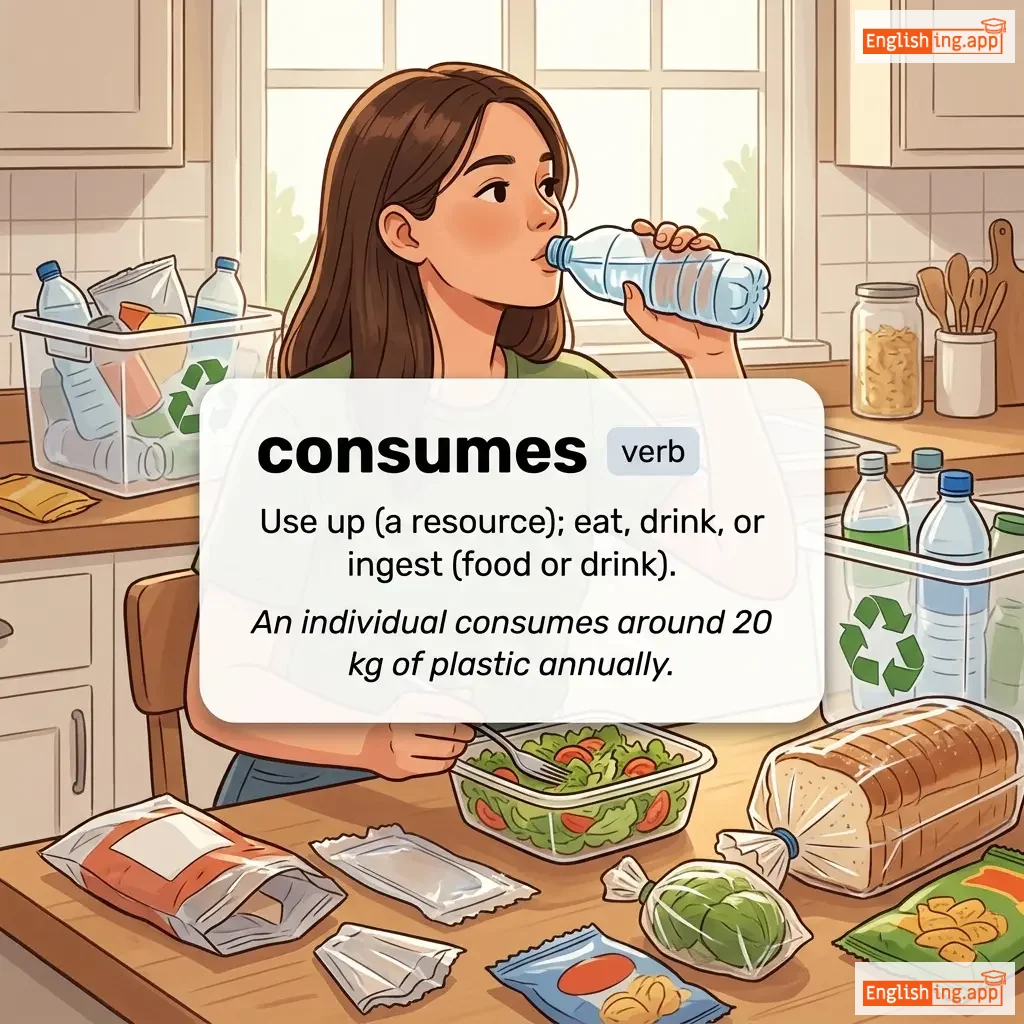
consumes definition card — visual illustration of the meaning
verb
kənˈsjuːmz
消費する (shouhi suru)

Use up (a resource); eat, drink, or ingest (food or drink).

"An individual consumes around 20 kg of plastic annually."

"1人の人は年間約20キロのプラスチックを消費します。" (Hitori no hito wa nenkan yaku 20 kiro no purasuchikku wo shouhi shimasu.)
consummate definition card — visual illustration of the meaning
adjective, verb
/ˈkɒnsəmət/ (adj), /ˈkɒnsəmeɪt/ (verb)
完成する / 完璧 (kansei suru / kanpeki)

to complete or perfect something; showing great skill or excellence

"She is a consummate professional in her field."

"彼女はその分野で完璧なプロフェッショナルです。" (Kanojo wa sono bunya de kanpeki na purofesshonaru desu.)