語彙集

英単語辞書 | 単語の意味、定義、例文

adjective
/əˈkjuː.zəˌtɔːr.i/
非難の (hinan no)

Suggesting blame or indicating someone has done wrong.

"He gave her an accusatory glance."

"彼は彼女に非難の目を向けた。" (Kare wa kanojo ni hinan no me o muketa.)
accuse definition card — visual illustration of the meaning
verb
/əˈkjuːz/

To say that someone has done something wrong or illegal.

"They accused him of lying during the meeting."

accused definition card — visual illustration of the meaning
noun
/əˈkjuːzd/
被告 (hikoku)

a person who has been charged with a crime

"The accused pleaded not guilty in court."

"被告人は法廷で無罪を主張しました。" (Hikokunin wa houtei de muzai o shuchou shimashita.)
verb
/əˈkʌstəm/
慣れる (nareru)

to make someone familiar with something through regular experience or use

"It took him a while to accustom himself to the new environment."

"新しい環境に慣れるのに少し時間がかかりました。" (Atarashī kankyō ni nareru no ni sukoshi jikan ga kakarimashita.)
🚫👤

acephalous

adjective
/eɪˈsɛfələs/

having no leader or head; headless

"The acephalous group soon fell into disorganization."

adjective
/əˈsɜːrbɪk/
辛辣 (shinratsu)

sharp, harsh, or bitter in tone or taste

"His acerbic comments offended many people in the meeting."

"彼の辛辣なコメントは会議で多くの人々を侮辱しました。" (Kare no shinratsu na komento wa kaigi de ōku no hitobito o bōryoku shimashita.)
noun
/əˈsɜːrbəti/
辛辣さ (shinratsu sa)

bitterness or sharpness of tone, manner, or taste

"The acerbity of his remarks left everyone silent."

"彼の発言の辛辣さは、みんなを静かにさせた。" (Kare no hatsugen no shinratsu sa wa, minna o shizuka ni saseta.)
noun
/ˈæsɪˌteɪt/
アセテート (asētēto)

a salt or ester of acetic acid; a synthetic material used in textiles and film

"The company produces acetate fibers for clothing."

"その会社は衣服用のアセテート繊維を生産しています。" (Sono kaisha wa ifuku-yō no asētēto sen'i o seisan shiteimasu.)
adjective
/əˈsiːtɪk/
酢酸の (susan no)

relating to or containing acetic acid; sour or vinegary in taste or smell

"The acetic smell of vinegar filled the kitchen."

"酢の酢酸の臭いが台所に広がった。" (Su no susan no nioi ga daidokoro ni hirogatta.)
verb
/eɪk/
痛み (itami)

to suffer a continuous dull pain

"Her back ached after sitting for so long."

"長時間座っていた後、背中が痛くなった。" (Chōjikan suwatte ita ato, senaka ga itaku natta.)
achievable definition card — visual illustration of the meaning
adjective
/əˈtʃiːvəbl/
達成可能な (tassei kanou na)

Able to be brought about or reached successfully.

"Start with achievable steps to stay motivated."

"達成可能なステップから始めて、モチベーションを保ちましょう。" (Tassei kanou na suteppu kara hajimete, mochibe-shon o tamochimashou.)
achieve definition card — visual illustration of the meaning
verb
/əˈtʃiːv/
達成する (tassei suru)

to successfully bring about or reach a desired goal or result

"She worked hard to achieve her dream of becoming a doctor."

"彼女は医者になるという夢を達成するために一生懸命働いた。" (Kanojo wa isha ni naru to iu yume o tassei suru tame ni isshoukenmei hataraita.)
noun
/əˈtʃiːvmənt/
達成 (tassei)

Something that has been successfully completed or accomplished through effort or skill.

"Graduating from university was her greatest achievement."

"大学を卒業することは彼女の最大の達成でした。" (Daigaku o sotsugyō suru koto wa kanojo no saidai no tassei deshita.)
adjective
/əˈkɪliən/
アキレス的 (akiresu-teki)

like or characteristic of Achilles; strong but vulnerable

"His achillean pride made him blind to danger."

"彼のアキレス的な誇りは彼を危険に対して盲目にした。" (Kare no Akiresu-teki na hokori wa kare o kiken ni taishite mōmoku ni shita.)
adjective
/ˌækrəˈmætɪk/
無彩色 (musaishiki)

without color; free from color

"The designer chose an achromatic palette of black, white, and gray."
"デザイナーは黒、白、灰色の無彩色なパレットを選びました。" (Dezainā wa kuro, shiro, haiiro no musaishikina paretto o erabimashita.)
noun
/ˈæsɪd/
(san)

a chemical substance that reacts with bases and has a sour taste

"Lemons contain citric acid."

"レモンにはクエン酸が含まれています。" (remon ni wa kuensan ga fukumareteimasu.)
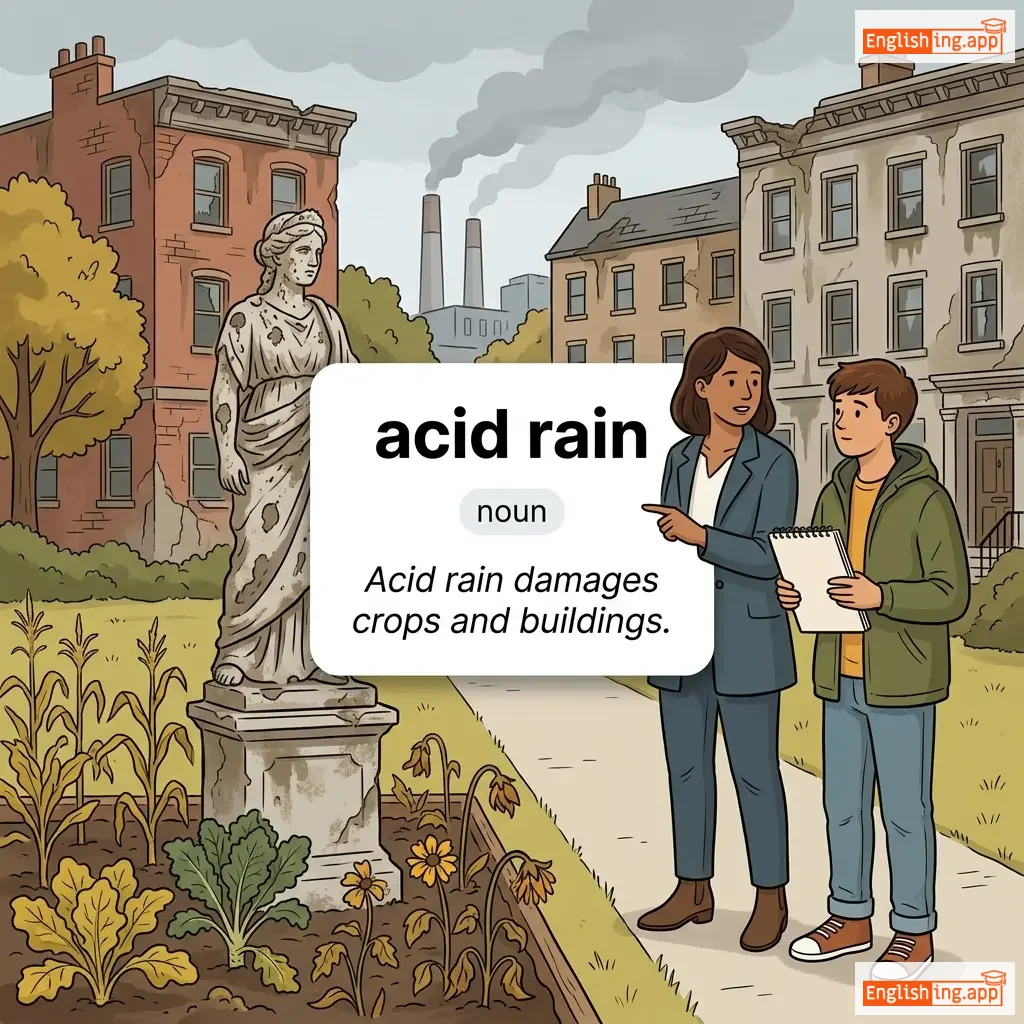
acid rain definition card — visual illustration of the meaning
noun
ˈæsɪd reɪn
酸性雨 (sansei ame)

Rainfall made acidic by atmospheric pollution, especially from industrial emissions.

"Acid rain damages crops and buildings."

"酸性雨は作物や建物にダメージを与えます。" (Sansei ame wa sakumotsu ya tatemono ni dameeji o ataemasu.)
adjective
/əˈsɪdɪk/
酸性の (sansei no)

containing acid; having a sour taste; sharp or biting in tone

"The lemon has an acidic taste that makes your mouth pucker."

"レモンはとても酸っぱい味がする。" (remon wa totemo suppai aji ga suru)
verb
/əˈsɪdɪfaɪ/
酸性化する (sanseika suru)

to make something acidic or more acidic

"Farmers worry that pollution will acidify the soil."

"農民たちは、汚染が土壌を酸性にすることを心配しています。" (Nōminta wa, osen ga dojou o sansei ni suru koto o shinpai shiteimasu.)
noun
/əˈsɪdɪti/
酸性度 (sanseido)

the quality or degree of being acidic; the amount of acid present in a substance

"The acidity of the soil affects how well crops grow."

"土壌の酸性度は作物の成長に影響する。" (dojo no sanseido wa sakumotsu no seicho ni eikyo suru)
adjective
/əˈsɪdjʊləs/
やや酸っぱいまたは鋭い (yaya suppai matawa surudoi)

slightly sour or sharp in taste or manner

"The critic wrote an acidulous review of the movie."

"批評家は映画に対して鋭いレビューを書いた。" (Hihyōka wa eiga ni taishite surudoi rebyū o kaita.)
verb
/əkˈnɒlɪdʒ/
認める (mitomeru)

to accept, admit, or recognize the truth or existence of something

"She refused to acknowledge her mistake."

"彼女は自分の間違いを認めようとしなかった。" (Kanojo wa jibun no machigai o mitomeyou to shinakatta.)
noun
/əkˈnɒlɪdʒmənt/
承認 (shonin)

the act of recognizing or accepting something as true or valid; an expression of gratitude or recognition

"She received an acknowledgement for her contribution to the project."

"彼女はプロジェクトへの貢献に対して承認を受けた。" (kanojo wa purojekuto e no koken ni taishite shonin o uketa)
noun
/əkˈnɒlɪdʒmənt/
認識 (ninshiki)

the act of accepting, admitting, or recognizing something

"He received an acknowledgment of his application."

"彼は自分の申し込みの認識を受け取りました。" (Kare wa jibun no moushikomi no ninshiki o uketorimashita.)
noun
/ˈækmi/
頂点 (chouten)

the highest point of achievement or excellence

"Winning the award was the acme of his career."

"賞を獲得することが彼のキャリアの頂点でした。" (Shou o kakutoku suru koto ga kare no kyaria no chouten deshita.)
noun
/ˈækni/
ニキビ (nikibi)

a skin condition in which pores become inflamed and clogged, causing pimples and spots

"Regular cleansing and a balanced diet can help reduce acne."

"定期の洗浄とバランスの取れた食事は、ニキビの減少に役立ちます。" (Teiki no senjou to baransu no toreta shokuji wa, nikibi no genshou ni yakudachimasu.)
🕯️

acolyte

noun
/ˈækəlaɪt/

a follower or assistant, especially in a religious service or as a devoted supporter of a leader

"The senator arrived with a small group of acolytes who handled the press."

adjective
/əˈkuːstɪk/

relating to sound or the sense of hearing; not amplified by electrical means

"We recorded an acoustic version of the song in a quiet room."

noun
/əˈkuːstɪks/
音響学 (onkyo gaku)

the science of sound, or the properties of a space that affect how sound is heard

"The hall’s excellent acoustics made the orchestra sound rich and clear."

"ホールの優れた音響学により、オーケストラの音が豊かで明確に聞こえました。" (Hooru no sugureta onkyougaku ni yori, ookesutora no oto ga yutaka de meikaku ni kikoemashita.)
verb
/əˈkweɪnt/
親しくする (shiritashiku suru)

to make someone familiar with something; to inform or introduce

"Please acquaint yourself with the safety guidelines before operating the machine."

"機械を操作する前に、安全ガイドラインを確認してください。" (Kikai o sōsa suru mae ni, anzen gaidorain o kakunin shite kudasai.)
verb
/ˌækwiˈɛs/
黙って従う (damatte shitagau)

to accept something reluctantly but without protest

"She decided to acquiesce to her parents’ wishes."
"彼女は両親の願いを黙って従うことに決めました。" (Kanojo wa ryōshin no negai o damatte shitagau koto ni kimemashita.)
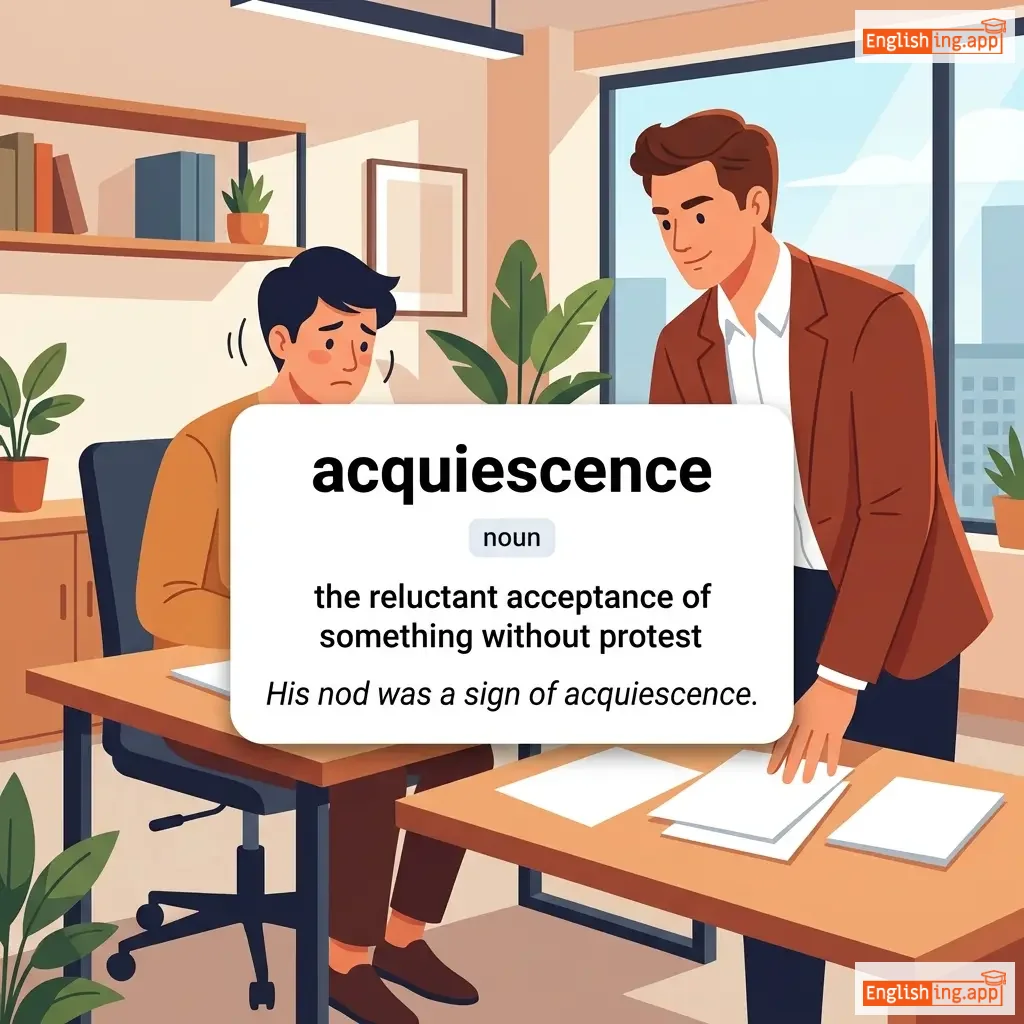
acquiescence definition card — visual illustration of the meaning
noun
/ˌækwiˈɛsəns/
黙認 (mokunin)

the reluctant acceptance of something without protest

"His nod was a sign of acquiescence."

"彼のうなずきは黙認の兆しでした。" (Kare no unazuki wa mokunin no kizashi deshita.)
adjective
/ˌækwiˈɛsənt/
黙認 (mokunin)

ready to accept something without protest, or to do what someone else wants

"He gave an acquiescent smile and agreed to the plan."

"彼は黙認の笑顔を見せて、計画に同意しました。" (Kare wa mokunin no egao o misete, keikaku ni dōi shimashita.)
acquire definition card — visual illustration of the meaning
verb
/əˈkwaɪər/
獲得する (kakutoku suru)

to obtain or gain possession of something

"She managed to acquire a rare painting at the auction."

"彼女はオークションで珍しい絵画を獲得することに成功しました。" (Kanojo wa ōkushon de mezurashī kaiga o kakutoku suru koto ni seikō shimashita.)
noun
/əˈkwaɪərmənt/
取得; 習得 (shutoku; shitoku)

the act of acquiring something; something that has been acquired, especially a skill or possession

"Language proficiency is an important acquirement for global careers."

"語学力はグローバルなキャリアにとって重要な取得です。" (Gogakuryoku wa gurobaru na kyaria ni totte juuyou na shutoku desu)
Acquisition definition card — visual illustration of the meaning
noun
/ˌækwɪˈzɪʃən/

the act of obtaining or gaining something, often knowledge, skills, or property

"The company announced the acquisition of a smaller competitor."

adjective
/əˈkwɪzətɪv/

excessively interested in acquiring money or material things

"The acquisitive businessman bought every piece of land he could find."

verb
/əˈkwɪt/
無罪放免する (muzai hōmen suru)

to free someone from a criminal charge by a verdict of not guilty

"The court decided to acquit the defendant of all charges."

"裁判所は被告人をすべての起訴から無罪放免にすることを決定しました。" (Saibansho wa hikokunin o subete no kiso kara muzai hōmen ni suru koto o kettei shimashita.)
noun
/əˈkwɪtl/

a judgment that a person is not guilty of the crime with which they have been charged

"The acquittal of the accused shocked the public."

noun
/əˈkwɪtəns/
領収書 (ryōshūsho)

a written receipt acknowledging payment or discharge of a debt

"He demanded an acquittance after paying the loan."

"彼はローンを支払った後で、領収書を要求した。" (Kare wa rōn o shiharatta ato de, ryōshūsho o yōkyū shita.)
🌾

acre

noun
/ˈeɪkər/

a unit of land area equal to 4,840 square yards (about 4,047 square meters)

"The farmer owns five acres of fertile land."

noun
/ˈeɪ.kər.ɪdʒ/
エーカー (ekā)

An area of land measured in acres.

"The farmer owns a large acreage of fertile land."

"農夫は広大な肥沃な土地を所有しています。" (Nōfu wa kōdai na hiwaku na tochi o shoyū shiteimasu.)
🌫️

Acrid

adjective
/ˈæk.rɪd/

Having a strong, unpleasantly sharp taste or smell.

"The acrid smoke from the fire made it hard to breathe."

adjective
/ˌæk.rɪˈmoʊ.ni.əs/
苦くて怒りに満ちた (nigakute ikari ni michita)

Bitter and angry, often involving harsh words.

"The debate turned acrimonious after the controversial remark."

"論争は物議を醸す発言の後、アクリモニアスになった。" (Ronsou wa butsugi o kamosu hatsugen no ato, akurimoniasu ni natta.)
noun
/ˈæk.rɪ.moʊ.ni/

Bitterness and anger, especially in speech or behavior.

"The divorce was filled with acrimony and disputes."

noun
/ˌæk.rəˈfoʊ.bi.ə/
高所恐怖症 (kōsho kyōfushō)

An extreme or irrational fear of heights.

"Her acrophobia prevented her from climbing the tall building."

"彼女のアクロフォビアは、高い建物に登ることを妨げました。" (Kanojo no akurofobia wa, takai tatemono ni noboru koto o samatagemashita.)
Across definition card — visual illustration of the meaning
preposition/adverb
/əˈkrɒs/
横断する (oudan suru)

From one side to the other side of something.

"He ran across the street to catch the bus."

"彼はバスに乗るために通りを横断した。" (Kare wa basu ni noru tame ni toori o oudanshita.)
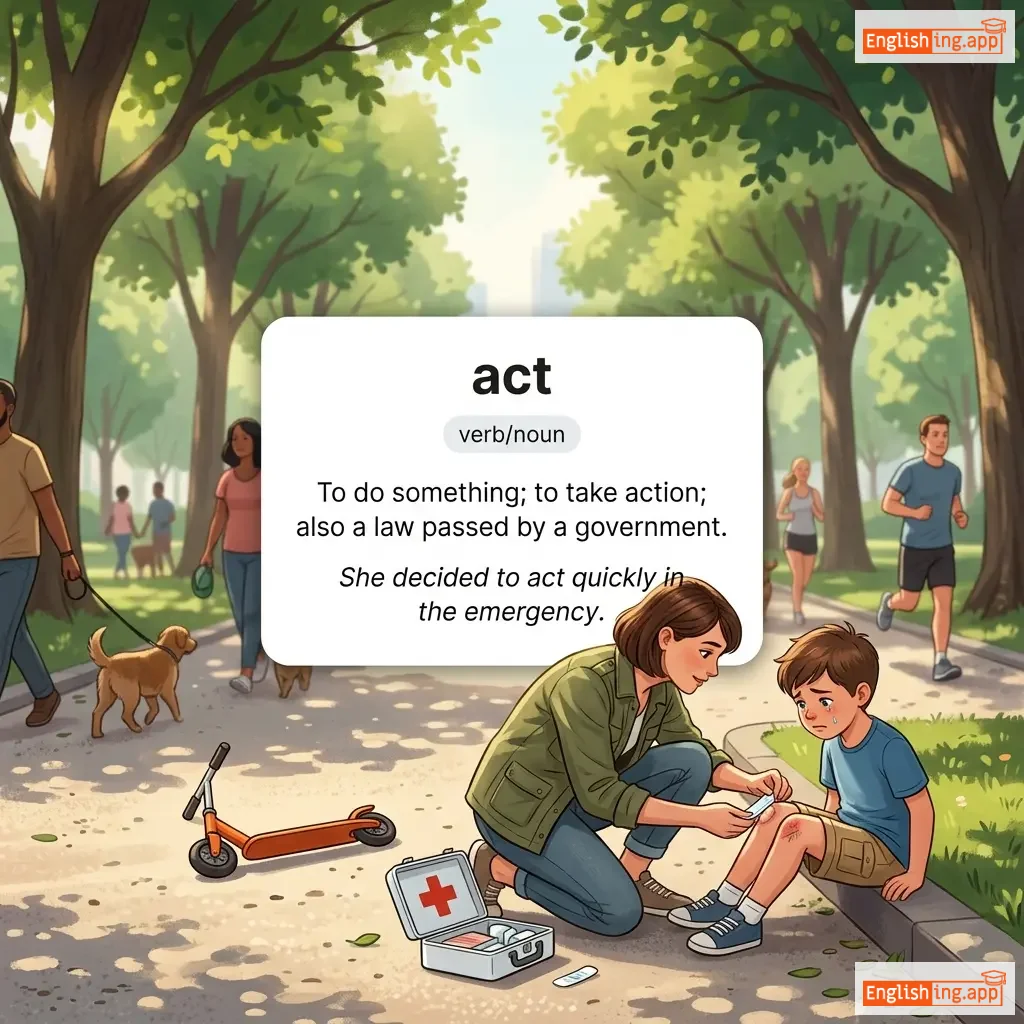
act definition card — visual illustration of the meaning
🎭

act

verb/noun
/ækt/

To do something; to take action; also a law passed by a government.

"She decided to act quickly in the emergency."

noun, adjective, gerund
/ˈæk.tɪŋ/
演技 (engi)

the art or profession of performing in plays, films, or television; temporary performance of duties; the process of performing an action

"She is studying acting to become a professional actress."

"彼女はプロの女優になるために演技を勉強しています。" (kanojo wa puro no joyu ni naru tame ni engi o benkyo shiteimasu)
Action definition card — visual illustration of the meaning
noun
/ˈækʃən/
アクション (akushon)

The process of doing something, typically to achieve a goal.

"The government took immediate action to control inflation."

"政府はインフレーションを抑制するために迅速に行動を起こした。" (Seifu wa infurēshon o yokusei suru tame ni jinsoku ni kōdō o okoshita.)