語彙集

英単語辞書 | 単語の意味、定義、例文

noun
/ˈæpərtʃər/
開口部 / 穴 (kaikōbu / ana)

an opening, hole, or gap, especially one that lets in light

"Light entered through the small aperture in the wall."

"光は壁の小さな開口部を通って入った。" (Hikari wa kabe no chiisana kaikōbu wo tōtte haitta.)
apex definition card — visual illustration of the meaning
noun
/ˈeɪ.pɛks/
頂点 (chouten)

the highest point or peak of something

"The climbers finally reached the apex of the mountain."

"登山者たちは最終的に山の頂点に達しました。" (Tozanshatachi wa saishūteki ni yama no chōten ni tasshimashita.)
noun
/əˈfeɪ.ʒə/

a medical condition that causes loss of ability to speak or understand language

"After the stroke, she was diagnosed with aphasia."

noun
/ˈæf.ə.rɪ.zəm/

a short, witty saying that expresses a general truth or principle

"He began his speech with an aphorism about life and success."

adjective
/ˌæf.əˈrɪs.tɪk/
格言的スタイル (kakugen-teki sutairu)

expressed in the style of a short, witty saying

"Her writing style is concise and aphoristic."

"彼女の執筆スタイルは簡潔で格言的です。" (Kanojo no shippitsu sutairu wa kanketsu de kakugen-teki desu.)
noun
/ˈeɪ.pi.ə.rɪst/
養蜂家 (yōhōka)

a person who keeps and tends bees for honey production

"The apiarist collected fresh honey from the hives."

"養蜂家は巣箱から新鮮な蜂蜜を集めました。" (Yōhōka wa subako kara shinsen na hachimitsu o atsumemashita.)
noun
/ˈeɪ.pi.ˌɛr.i/
養蜂場 (yōhōjō)

A place where beehives are kept, especially for commercial purposes.

"The farmer built a new apiary to produce organic honey."

"農家は有機蜂蜜を生産するために新しい養蜂場を建てました。" (Nōka wa yūkihachimitsu o seisan suru tame ni atarashī yōhōjō o tatemashita.)
noun
/ˈæp.ɪˌkʌl.tʃər/
養蜂業 (yōhōgyō)

The practice of keeping and raising bees for honey and other products.

"Apiculture plays a vital role in agriculture by supporting pollination."

"養蜂業は農業において重要な役割を果たしており、受粉をサポートしています。" (Yōhōgyō wa nōgyō ni oite jūyōna yakuwari o hatashite ori, jufun o sapōto shiteimasu.)
noun
/əˈplɒm/

Complete and confident self-assurance or poise.

"She handled the difficult questions with aplomb."

adjective
/əˌpɒk.əˈlɪp.tɪk/
終末的 (shūmatsuteki)

Describing the end of the world, or something catastrophic and disastrous.

"The movie depicts an apocalyptic future after a nuclear war."

"映画は核戦争後の終末的な未来を描いています。" (Eiga wa kaku sensō go no shūmatsuteki na mirai o egaiteimasu.)
adjective
/əˈpɒ.krɪ.fəl/
疑わしい (utagawashii)

Of doubtful authenticity, though widely circulated as true.

"The story about him saving the village is probably apocryphal."

"彼が村を救ったという話は、おそらく疑わしい。" (Kare ga mura o sukutta to iu hanashi wa, osoraku utagawashii.)
apogee definition card — visual illustration of the meaning
noun
/ˈæpədʒiː/
頂点 (chouten)

the highest or most distant point; the climax or peak of something

"The empire reached its apogee during the 18th century."

"帝国は18世紀にその頂点に達しました。" (Teikoku wa 18 seiki ni sono chouten ni tasshimashita.)
adjective
/ˌeɪpəˈlɪtɪkəl/
政治的でない (seijiteki denai)

not interested in or not connected with politics

"She prefers to stay apolitical and focus on her work."

"彼女は政治的でない態度を保ち、仕事に集中することを好みます。" (Kanojo wa seijiteki denai taido o tamochi, shigoto ni shūchū suru koto o konomimasu.)
noun
/əˈpɒlədʒɪst/
擁護者 (yōgosha)

a person who defends or justifies something, often a controversial belief or institution

"He is known as an apologist for authoritarian regimes."

"彼は権威主義的な政権の擁護者として知られています。" (Kare wa ken'ishugi-teki na seiken no yōgosha toshite shirareteimasu.)
verb
/əˈpɒlədʒaɪz/
謝罪する (shazai suru)

to say sorry for something wrong you have done

"He apologized for being late to the meeting."

"彼は会議に遅れたことを謝罪しました。" (Kare wa kaigi ni okureta koto o shazai shimashita.)
noun
/ˈæpəˌlɔːɡ/
道徳的な物語 (dōtoku-teki na monogatari)

a short moral story or fable intended to teach a lesson

"The teacher used an old apologue to explain honesty to the children."

"教師は、子供たちに誠実さを説明するために古い道徳的な物語を使いました。" (Kyōshi wa, kodomotachi ni seijitsusa o setsumei suru tame ni furui dōtoku-teki na monogatari o tsukaimashita.)
noun
/əˈpɒlədʒi/

a statement expressing regret for something wrong or hurtful

"He offered an apology for being late to the meeting."

🗣️

apophasis

noun
/əˈpɒfəsɪs/

A rhetorical device where the speaker brings up a subject by denying it or pretending to pass over it.

"The politician used apophasis by saying, 'I won’t even mention my opponent’s scandals.'"

noun
/ˈæpəfθɛm/
短くて、機知に富んだ教育的な言葉や格言 (apofutemu)

A short, pithy, and instructive saying or maxim.

"She always had a witty apophthegm to share at meetings."

"彼女は会議で共有するために、いつも機知に富んだアポフテムを持っていた。" (Kanojo wa kaigi de kyōyū suru tame ni, itsumo kichi ni yomi shita apofutemu o motte ita.)
adjective
/ˌæpəˈplɛktɪk/
アポプレクティック (apopurekutikku)

Extremely angry; furious.

"He was apoplectic when he heard about the unfair decision."

"彼は不公平な決定について聞いたとき、アポプレクティックでした。" (Kare wa fukouhei na kettei ni tsuite kiita toki, apopurekutikku deshita.)
noun
/ˈæpəplɛksi/
脳卒中や極端な怒りによる突然の意識喪失や制御の喪失 (apopurekushī)

A sudden loss of consciousness or control due to stroke or extreme anger.

"The old man nearly had apoplexy when he heard the shocking news."

"その老人は衝撃的なニュースを聞いてほとんどアポプレキシーを起こしました。" (sono rōjin wa shōgeki-teki na nyūsu o kiite hotondo apopurekushī o okoshimashita.)
noun
/əˈpɒstəsi/
背教 (haikyō)

The abandonment or renunciation of a religious or political belief.

"His public apostasy shocked his followers."

"彼の公然の背教は彼の支持者を驚かせました。" (Kare no kōzen no haikyō wa kare no shijisha o odorokasemashita.)
noun
/ˈæpəˌsteɪt/
背教者 (haikyousha)

A person who renounces a religious or political belief or principle.

"He was labeled an apostate after abandoning the faith of his community."

"彼は自分のコミュニティの信仰を捨てた後、背教者と呼ばれた。" (Kare wa jibun no komyuniti no shinkō o suteta ato, haikyōsha to yobareta.)
noun
/əˈpɒsəl/
使徒, 擁護者 (shito, yōgōsha)

A vigorous and pioneering advocate or supporter of a particular cause, often used for the early Christian disciples.

"He became an apostle of environmental protection."

"彼は環境保護の使徒となった。" (Kare wa kankyō hogo no shito to natta.)
noun
/əˈpɒstrəfi/

A punctuation mark (') used to indicate possession or the omission of letters or numbers.

"You need an apostrophe in the word 'children’s'."

noun
/əˈpɒθəˌkɛri/
薬剤師 (yakuzaishi)

A historical term for a person who prepared and sold medicines and drugs.

"The village apothecary provided remedies for many common illnesses."
"村のアポセカリーは多くの一般的な病気に対する治療法を提供しました。" (Mura no aposekari wa ooku no ippan-tekina byouki ni taisuru chiryouhou o teikyoushimashita.)
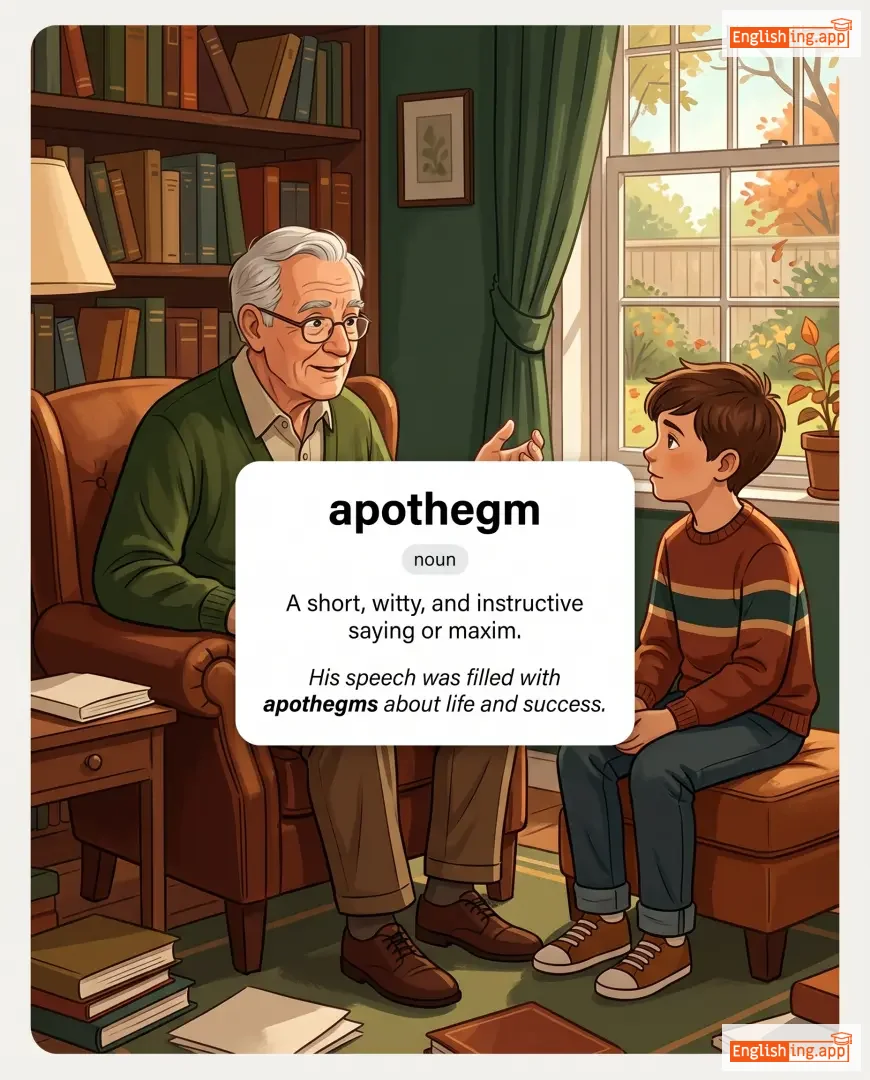
apothegm definition card — visual illustration of the meaning
noun
/ˈæpəˌθɛm/
格言, 名言 (kakugen, meigen)

A short, witty, and instructive saying or maxim.

"His speech was filled with apothegms about life and success."

"彼のスピーチは人生と成功に関する格言でいっぱいでした。" (Kare no supīchi wa jinsei to seikō ni kansuru kakugen de ippai deshita.)
noun
/əˌpɒθiˈoʊsɪs/
頂点, 完璧な例 (chouten, kanpeki na rei)

The highest point of development; the perfect example of something; the elevation of someone to divine status.

"Many see the Renaissance as the apotheosis of art and culture in Europe."

"多くの人々はルネサンスをヨーロッパの芸術と文化の頂点と見なしています。" (Ooku no hitobito wa runesansu o Yooroppa no geijutsu to bunka no chouten to minashiteimasu.)
verb
/əˈpɔːl/
驚かす (odorokasu)

To shock or horrify someone with something unpleasant or bad.

"The cruelty of the crime appalled the entire community."
"犯罪の残酷さがコミュニティ全体を驚かせた。" (Hanzai no zankokusa ga komyuniti zentai o odorokaseta.)
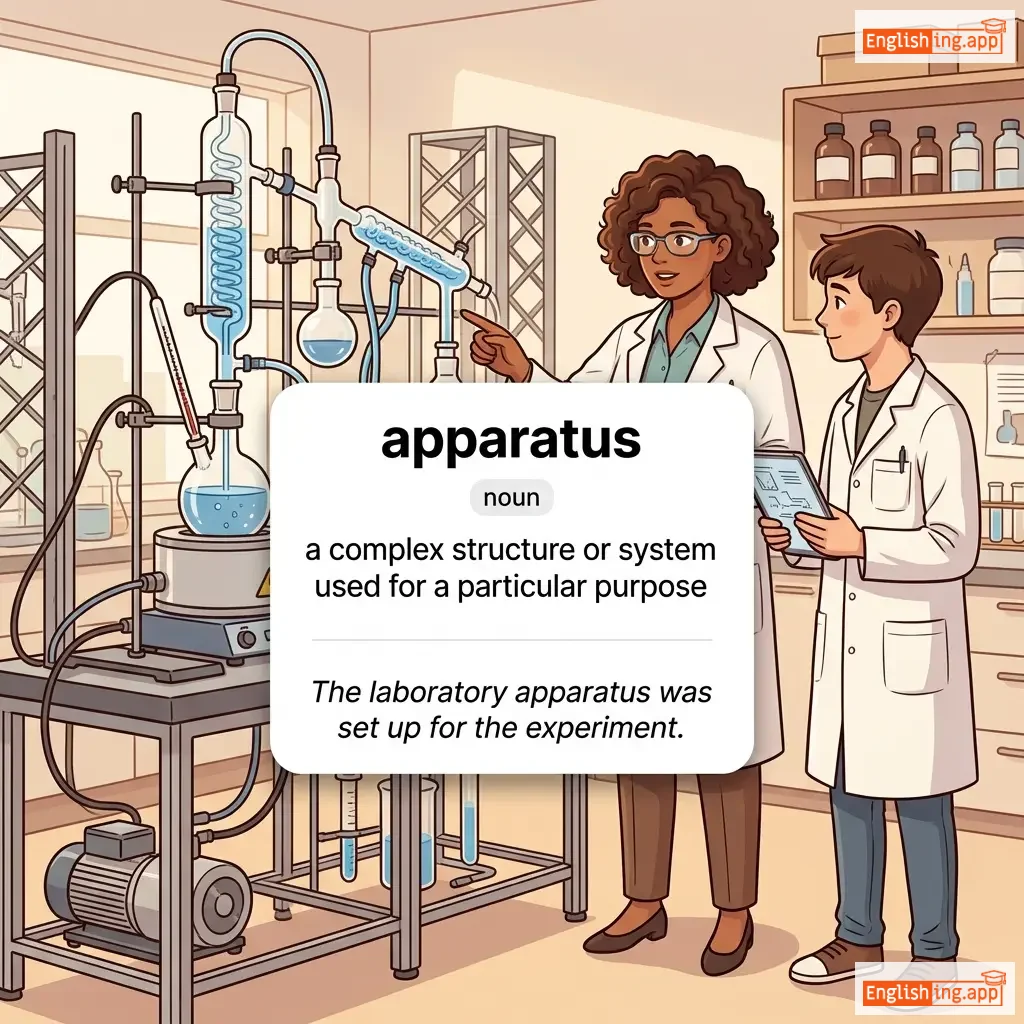
apparatus definition card — visual illustration of the meaning
noun
/ˌæpəˈreɪtəs/
装置 (souchi)

a complex structure or system used for a particular purpose

"The laboratory apparatus was set up for the experiment."

"実験のためにラボの装置が設定されました。" (Jikken no tame ni rabo no souchi ga settei saremashita.)
noun
/əˈpærəl/
衣服 (ifuku)

Clothing, especially formal or special clothes.

"The store specializes in wedding apparel."

"その店は結婚式の衣服を専門に扱っています。" (Sono mise wa kekkonshiki no ifuku o senmon ni atsukatteimasu.)
adjective
/əˈpærənt/
明らか (akiraka)

Clearly visible or understood; obvious.

"It soon became apparent that he was not telling the truth."

"それがすぐに明らかになった、彼が真実を話していないことが。" (Sore ga sugu ni akiraka ni natta, kare ga shinjitsu o hanashite inai koto ga.)
adverb
/əˈpærəntli/
どうやら (douyara)

as far as one knows or can see; seemingly

"Apparently, she forgot about the meeting."

"どうやら、彼女は会議のことを忘れてしまったようだ。" (Douyara, kanojo wa kaigi no koto o wasurete shimatta youda.)
noun
/ˌæpəˈrɪʃən/
幻影 (gen'ei)

A ghostly figure or an unusual or unexpected appearance.

"The children were frightened by the sudden apparition in the old house."

"子供たちは古い家で突然現れた幻影に驚きました。" (Kodomotachi wa furui ie de totsuzen arawareta gen'ei ni odorokimashita.)
verb, noun
/əˈpiːl/
アピール / 引きつけ (apīru / hikitsuke)

to make a serious request; to be attractive or interesting; a formal request to a higher authority for a decision to be changed

"The charity appealed to the public for donations."

"チャリティーは寄付のために一般市民にアピールしました。" (Charitī wa kifu no tame ni ippan shimin ni apīru shimashita.)
adjective
/əˈpiːlɪŋ/

attractive or interesting

"The design of the house is very appealing."

verb
/əˈpɪə/
現れる (arawareru)

to become visible or come into sight; to seem

"She appeared suddenly at the door."

"彼女は突然ドアの前に現れました。" (Kanojo wa totsuzen doa no mae ni arawaremashita.)
noun
/əˈpɪərəns/
外見 (gaiken)

the way that someone or something looks

"His sudden appearance surprised everyone."
"彼の突然の登場は皆を驚かせました。" (Kare no totsuzen no tōjō wa mina o odorokasemashita.)
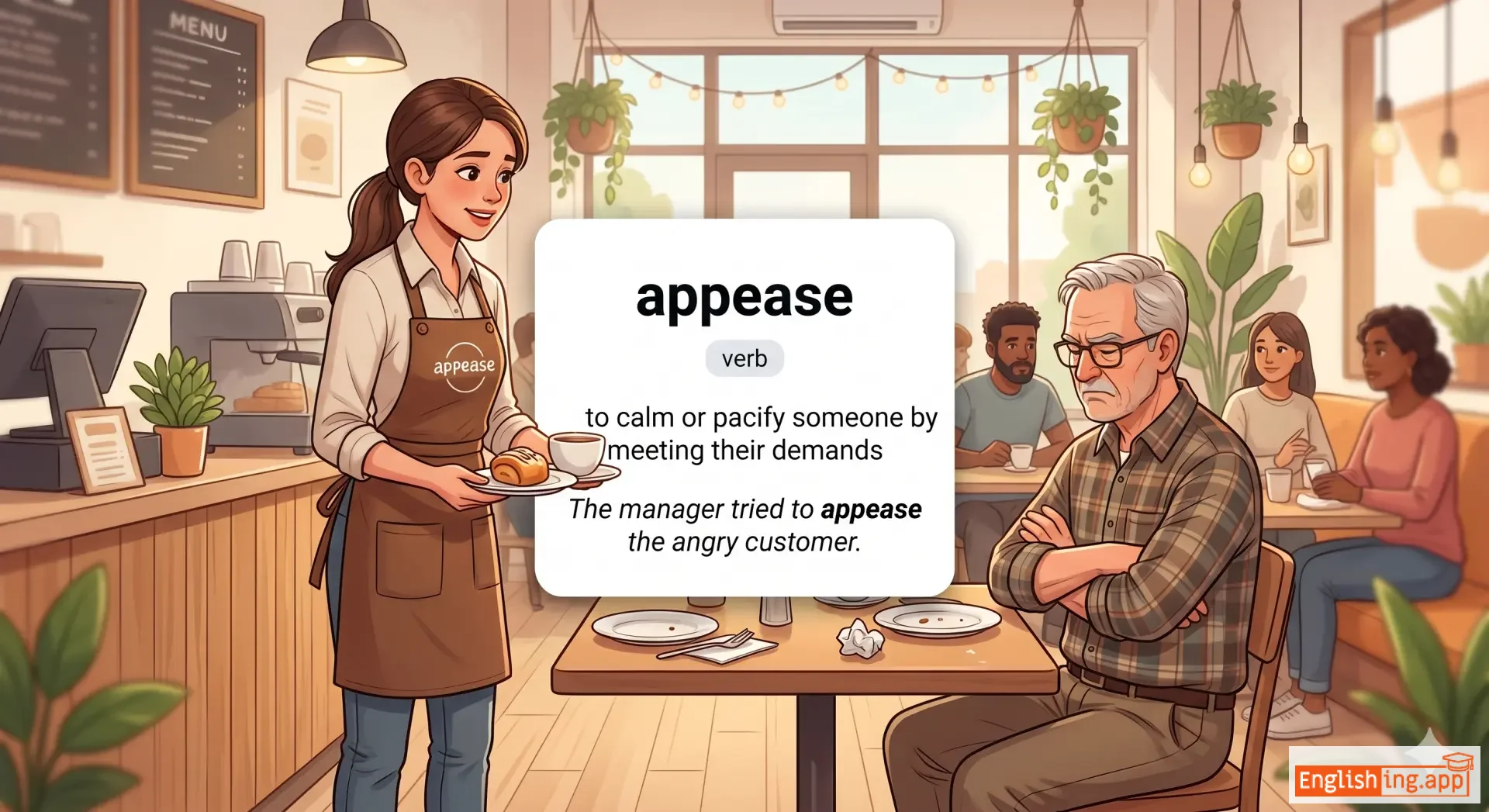
appease definition card — visual illustration of the meaning
verb
/əˈpiːz/
なだめる / 満たす (nadameru / mitasu)

to calm or pacify someone by meeting their demands

"The manager tried to appease the angry customer."

"マネージャーは怒っている顧客をなだめようとしました。" (Manējā wa okotte iru kokyaku o nadameyō to shimashita.)
adjective
/ˈæpəˌleɪt/
控訴に関連する (kōso ni kanren suru)

relating to appeals in a court of law

"The case was taken to an appellate court."
"その事件は控訴裁判所に持ち込まれました。" (Sono jiken wa kōso saibansho ni mochikomaremashita.)
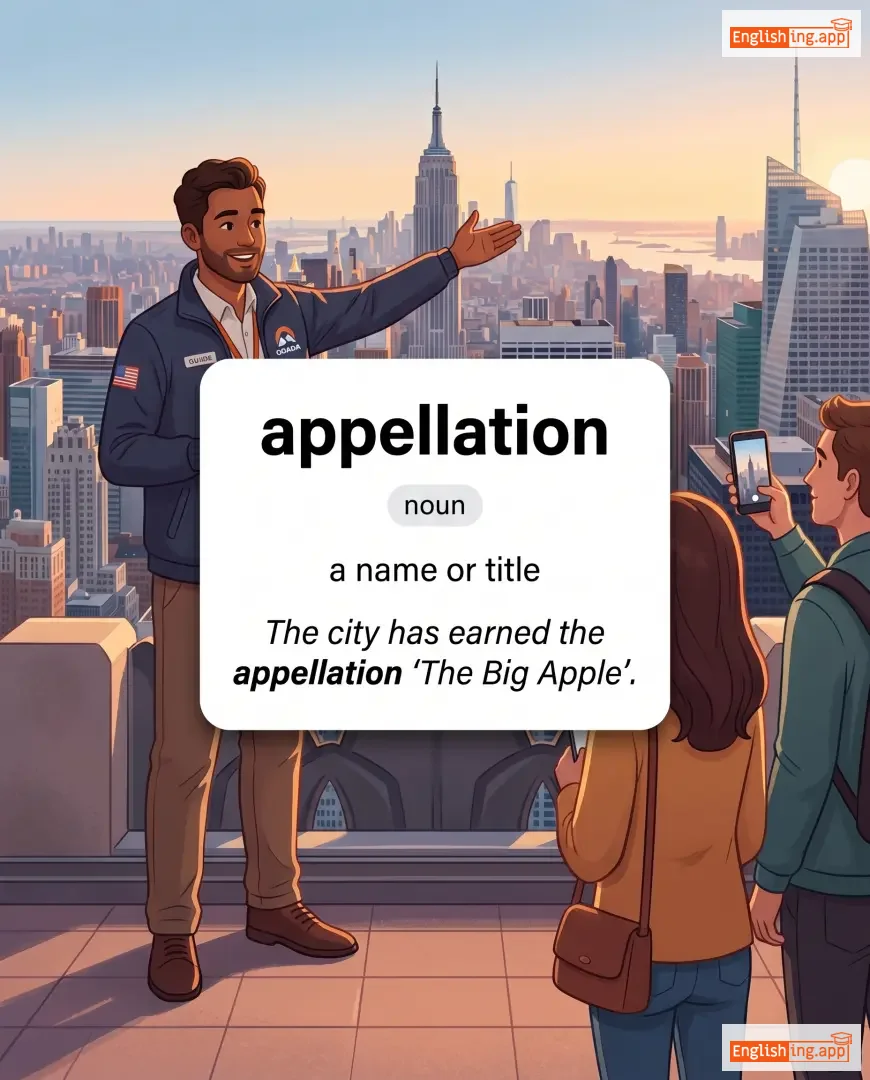
appellation definition card — visual illustration of the meaning
noun
/ˌæpəˈleɪʃən/
名称 / タイトル (meishou / taitoru)

a name or title

"The city has earned the appellation 'The Big Apple'."

"その都市は「ビッグアップル」という名称を得ました。" (Sono toshi wa 'Big Apple' to iu meishou o emashita.)
verb
/əˈpɛnd/
追加する (tsuika suru)

to add something as an attachment or supplement, usually at the end of a document or list

"She decided to append a note to the end of the report."

"彼女は報告書の最後にメモを追加することに決めました。" (Kanojo wa hokokusho no saigo ni memo wo tsuika suru koto ni kimemashita.)
verb
/ˌæpərˈteɪn/
関係する (kankeisuru)

to relate to or be connected with something

"The rules only appertain to members of the club."

"その規則はクラブのメンバーにのみ関係しています。" (Sono kisoku wa kurabu no menbaa ni nomi kankei shiteimasu.)
appetite definition card — visual illustration of the meaning
noun
/ˈæpɪtaɪt/
食欲 (shokuyoku)

a natural desire for food; a strong desire for something

"After the long walk, I had a huge appetite."

"長い散歩の後、私は大きな食欲を感じました。" (Nagai sanpo no ato, watashi wa ōkina shokuyoku o kanjimashita.)
verb
/ˈæpɪtaɪz/
食欲をそそる (shokuyoku o sosoru)

to stimulate the appetite; to make someone eager or interested

"The aroma of fresh bread will appetize the guests before dinner."

"焼きたてのパンの香りが客の食欲をそそる。" (yakitate no pan no kaori ga kyaku no shokuyoku o sosoru)
verb
/əˈplɔːd/
拍手する (hakushu suru)

to show approval by clapping or expressing admiration

"The audience applauded the performance."

"観客はパフォーマンスに拍手を送りました。" (Kankyaku wa pafōmansu ni hakushu o okurimashita.)
noun
/əˈplɔːz/
拍手 (hakushu)

the sound of people clapping their hands to show approval or enjoyment

"The actor received loud applause after his performance."

"俳優は彼のパフォーマンス後に大きな拍手を受けました。" (Haiyū wa kare no pafōmansu go ni ōkina hakushu o ukemashita.)
noun
/ˈæpəl/
リンゴ (ringo)

a round fruit with red, green, or yellow skin

"She ate a red apple for breakfast."
"彼女は朝食に赤いリンゴを食べました。" (Kanojo wa chōshoku ni akai ringo o tabemashita.)
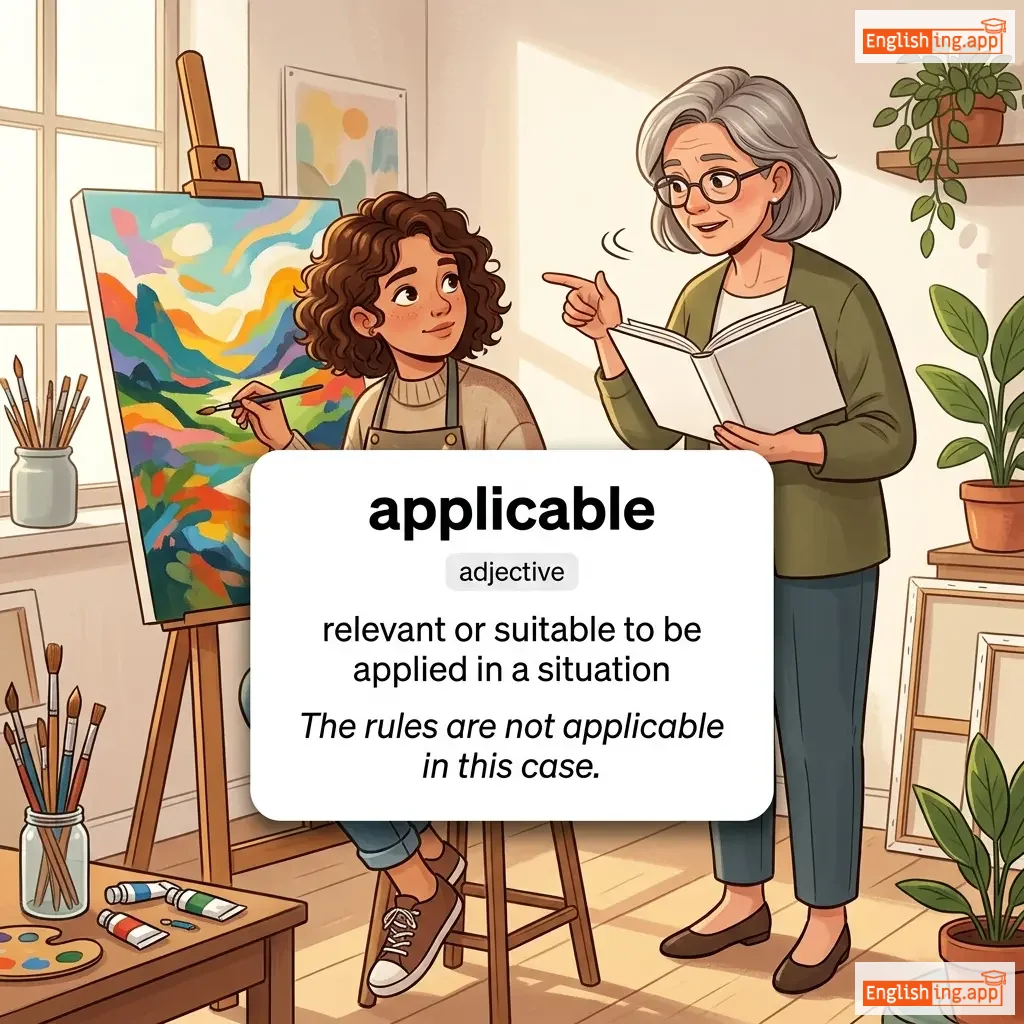
applicable definition card — visual illustration of the meaning
adjective
/ˈæplɪkəbl/
適用可能な (tekiyou kanou na)

relevant or suitable to be applied in a situation

"The rules are not applicable in this case."

"この場合、規則は適用されません。" (Kono baai, kisoku wa tekiyou saremasen.)
noun
/ˈæplɪkənt/
応募者 (ōbosha)

a person who applies for something, such as a job or a position

"The applicant was interviewed for the position."

"応募者はそのポジションのために面接されました。" (Ōbosha wa sono pojishon no tame ni mensetsu saremashita.)