वोकैबुलरीज

इंग्लिश वोकैबुलरी डिस्कवर, लर्न और मास्टर करें

noun
/ˈbʊkɪŋ/
बुकिंग (booking)

the act of reserving accommodations, tickets, etc.

"I made a booking for a hotel room in advance."

"मैंने अग्रिम रूप से एक होटल कमरे की बुकिंग की।" (Maine agrim roop se ek hotel kamre ki booking ki.)
adjective
/ˈbʊkɪʃ/
पुस्तकप्रिय (pustakpriya)

Spending much time reading or studying; scholarly but lacking practical experience.

"He was too bookish to enjoy outdoor activities."

"वह आउटडोर गतिविधियों का आनंद लेने के लिए बहुत पुस्तकप्रिय था।" (vah outdoor gatividhiyon ka anand lene ke liye bahut pustakpriya tha.)
noun
/ˈbʊkʃɒp/
किताबों की दुकान (kitabon ki dukan)

a retail store where books are sold

"She spent an hour browsing in the small bookshop."

"उसने छोटी किताबों की दुकान में एक घंटा बिताया।" (usne chhoti kitabon ki dukan mein ek ghanta bitaya)
noun
/ˈbʊkstɔːr/
पुस्तक की दुकान (pustak ki dukan)

a shop where books are sold

"She spent an entire afternoon browsing in the bookstore."

"उसने पूरा दोपहर पुस्तक की दुकान में बिताया।" (usne pura dopahar pustak ki dukan mein bitaya)
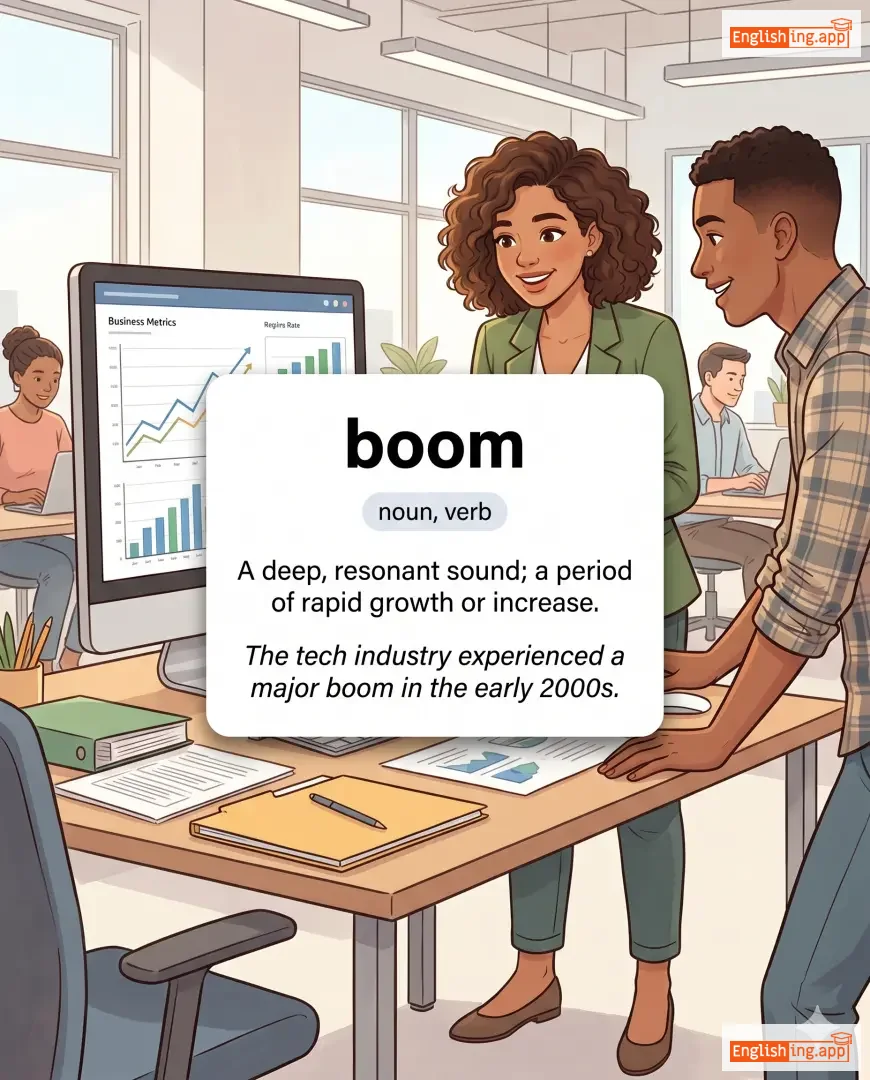
boom definition card — visual illustration of the meaning
noun, verb
/buːm/
वृद्धि, तेज़ी से वृद्धि (vruddhi, tezi se vruddhi)

A deep, resonant sound; a period of rapid growth or increase.

"The tech industry experienced a major boom in the early 2000s."

"2000 के दशक की शुरुआत में तकनीकी उद्योग में एक बड़ी वृद्धि देखी गई।" (2000 ke dashak ki shuruaat mein takneeki udyog mein ek badi vruddhi dekhi gayi.)
noun
/buːn/
आशीर्वाद (ashirvad)

A thing that is helpful or beneficial.

"The internet is a boon to modern education."

"इंटरनेट आधुनिक शिक्षा के लिए एक आशीर्वाद है।" (internet aadhunik shiksha ke liye ek ashirvad hai.)
noun
/bʊər/
असभ्य (ashabhya)

A rude, insensitive, or ill-mannered person.

"He was such a boor at the dinner table."

"वह डिनर टेबल पर ऐसा असभ्य था।" (vah dinner table par aisa asabhya tha.)
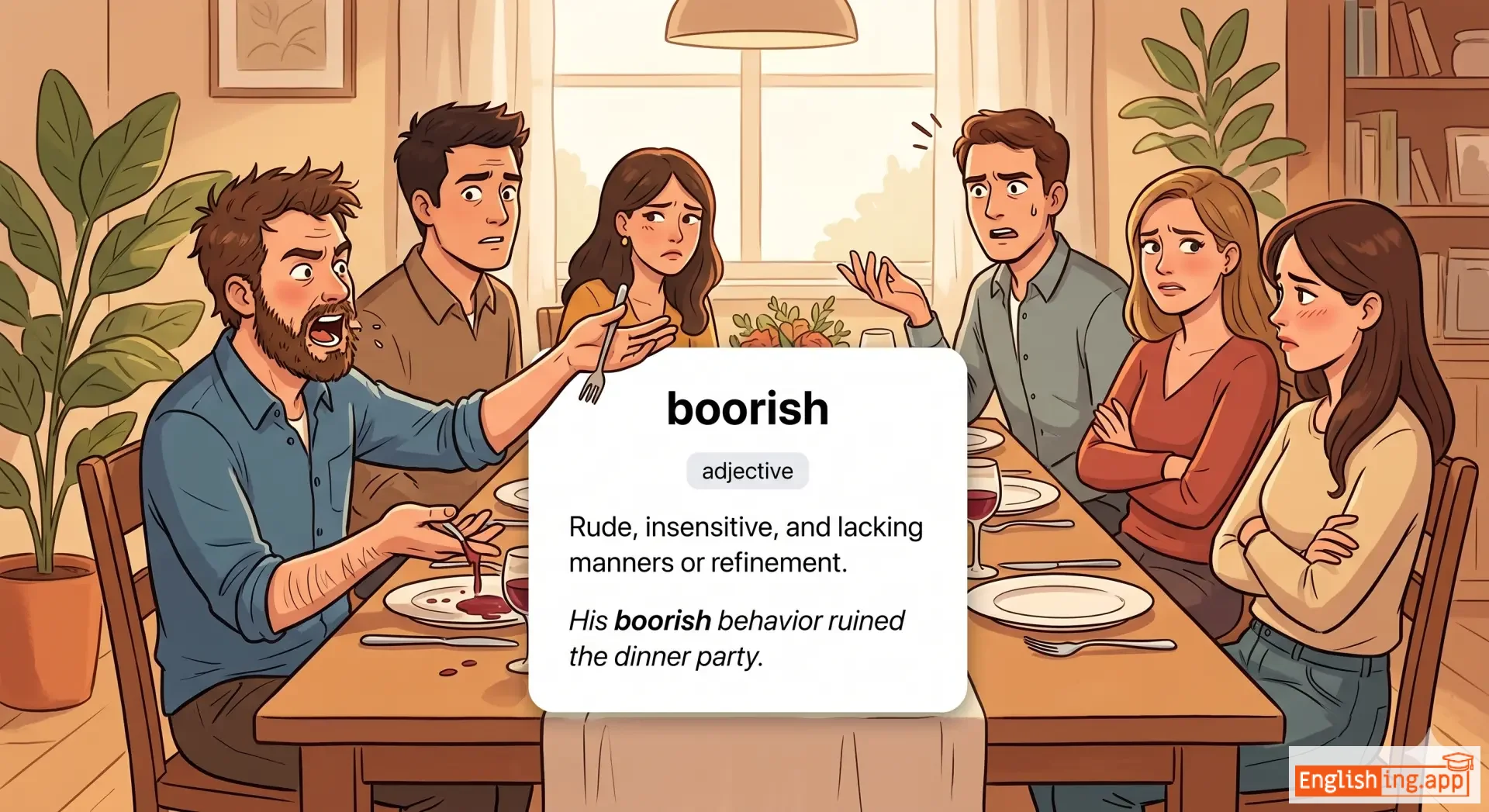
boorish definition card — visual illustration of the meaning
adjective
/ˈbʊərɪʃ/
असभ्य (asabhya)

Rude, insensitive, and lacking manners or refinement.

"His boorish behavior ruined the dinner party."

"उसका असभ्य व्यवहार रात के खाने की पार्टी को खराब कर दिया।" (uska asabhya vyavhaar raat ke khane ki party ko kharaab kar diya.)
verb
/buːst/
बढ़ाना (badhana)

To increase, improve, or raise something.

"The company launched a campaign to boost sales."

"कंपनी ने बिक्री बढ़ाने के लिए एक अभियान शुरू किया।" (Company ne bikri badhane ke liye ek abhiyan shuru kiya.)
noun, verb
/buːt/
जूता (joota)

A type of shoe that covers the ankle or higher; to start up a computer system.

"He put on his boots before going hiking."

"वह हाइकिंग पर जाने से पहले अपने बूट्स पहनता है।" (vah hiking par jaane se pehle apne boots pehenta hai.)
noun
/ˈbuːt.leɪs/
जूते का फीता (joote ka feeta)

a cord or string used to fasten a boot or shoe

"I need to tie my boot-lace before going for a walk."

"मुझे चलने के लिए पहले अपना बूट-लेस बांधना है।" (Mujhe chalne ke liye pehle apna boot-lace baandhna hai.)
noun
/buːθ/
बूथ (booth)

a small enclosed space or area used for a specific purpose, such as voting or selling.

"He went into the voting booth to cast his ballot."

"वह मतदान बूथ में वोट डालने के लिए गया।" (Vah matdaan booth mein vote daalne ke liye gaya.)
adjective
/ˈbuːtləs/
निरर्थक (nirarthak)

Useless or futile; of no benefit.

"His bootless attempt to fix the machine only wasted time."

"उसका बूटलेस प्रयास मशीन को ठीक करने का केवल समय बर्बाद किया।" (uska bootless prayaas machine ko theek karne ka keval samay barbaad kiya.)
bootstrap definition card — visual illustration of the meaning
verb/noun
ˈbuːt.stræp
स्वत: व्यापार शुरू करना, व्यक्तिगत संसाधनों से बिना बाहरी धन के साथ व्यापार शुरू करना (swatah vyapaar shuru karna, vyaktigat sansadhan se bina baahari dhan ke saath vyapaar shuru karna)

To start and develop a business using personal resources without external funding.

"He bootstrapped his company with minimal resources."

"उसने न्यूनतम संसाधनों के साथ अपनी कंपनी शुरू की।" (Usne nyoonatam sansadhanon ke saath apni company shuru ki.)
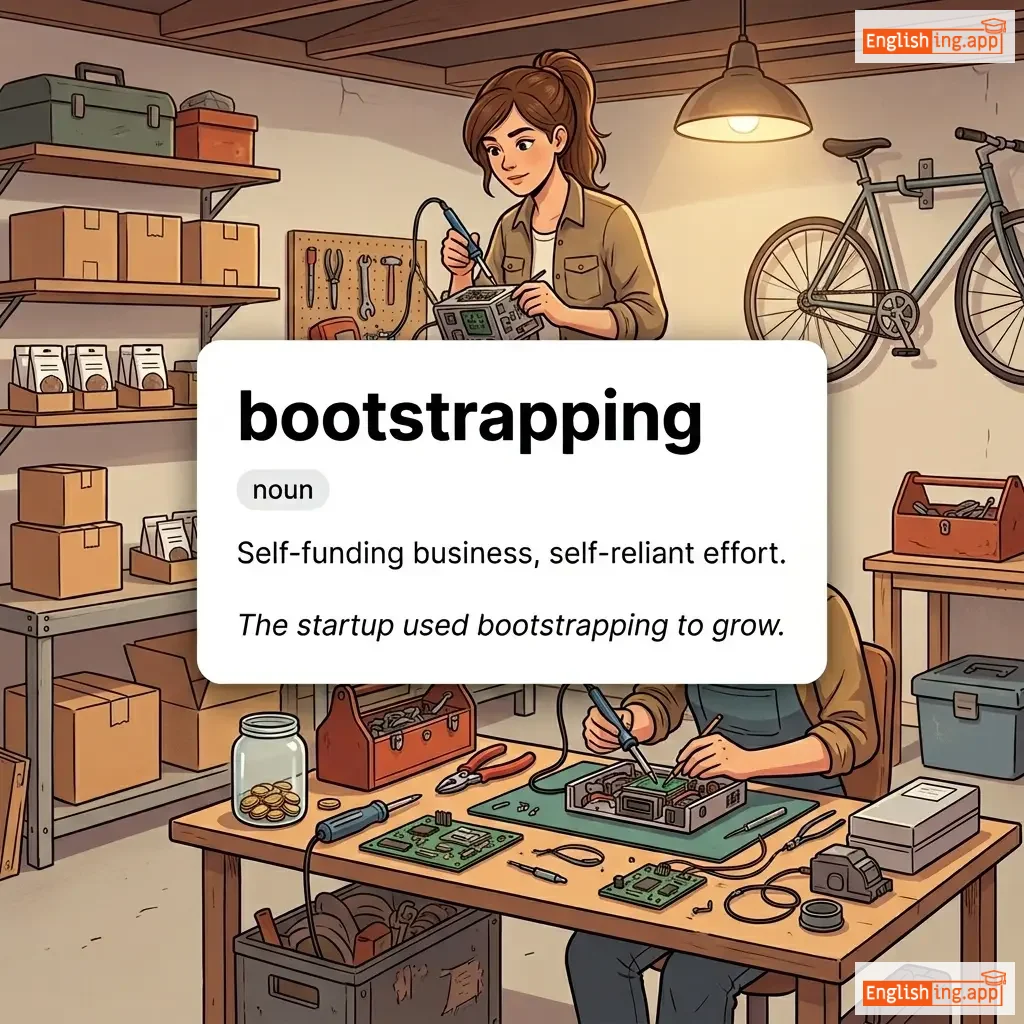
bootstrapping definition card — visual illustration of the meaning
noun
ˈbuːt.stræp.ɪŋ
स्व-निधि व्यवसाय, स्व-निर्भर प्रयास (sv-nidhi vyavsay, sv-nirbhar prayaas)

Self-funding business, self-reliant effort.

"The startup used bootstrapping to grow."

"स्टार्टअप ने बूटस्ट्रैपिंग का उपयोग करके वृद्धि की।" (Startup ne bootstrapping ka upyog karke vruddhi ki.)
noun, verb
/buːz/
शराब (sharab)

alcoholic drink, especially strong liquor; to drink alcohol, often excessively

"They bought some booze for the party."

"उन्होंने पार्टी के लिए कुछ शराब खरीदी।" (unhone party ke liye kuch sharab kharidi)
adjective
/ˈbuːzi/
शराबी (sharabi)

containing or involving a lot of alcohol; slightly drunk from alcohol

"The party became boozy as the night went on."

"जैसे-जैसे रात बढ़ी, पार्टी शराबी हो गई।" (jaise jaise raat badhi party sharabi ho gai)
noun, verb
/ˈbɔːrdər/
सीमा (seema)

A line separating two political or geographical areas.

"Bangladesh shares a long border with India."

"बांगलादेश भारत के साथ एक लंबी सीमा साझा करता है।" (Bangladesh Bharat ke saath ek lambi seema saajha karta hai.)
verb/noun
/bɔːr/
उबाना (ubana)

Verb: To make someone feel uninterested or tired; Noun: A dull or tiresome person.

"The lecture began to bore the students."

"लेक्चर ने छात्रों को उबाना शुरू कर दिया।" (lecture ne chhatron ko ubana shuru kar diya.)
adjective
/bɔːrd/
ऊबा हुआ (ooba hua)

feeling weary or uninterested because of lack of activity or excitement

"She felt bored during the long meeting."

"लंबी मीटिंग के दौरान वह ऊबा हुआ महसूस कर रही थी।" (lambi meeting ke dauran vah ooba hua mehsoos kar rahi thi)
adjective
/ˈbɔːrɪŋ/
उबाऊ (ubau)

not interesting or exciting; dull.

"The lecture was so boring that several students fell asleep."

"व्याख्यान इतना उबाऊ था कि कई छात्रों को नींद आ गई।" (vyakhyan itna ubau tha ki kai chatron ko neend aa gayi.)
verb (past participle of 'bear'), adjective
/bɔːrn/
जन्मा (janma)

To come into life; brought into existence.

"He was born in Dhaka in 1995."

"वह 1995 में ढाका में जन्मा था।" (Wah 1995 mein Dhaka mein janma tha.)
noun
/ˈbʌrə, ˈbʊrə/
इलाका (ilaaka)

A town, district, or administrative division, especially one with its own local government.

"Brooklyn is a borough of New York City."

"ब्रुकलिन न्यू यॉर्क सिटी का एक इलाका है।" (Brooklyn New York City ka ek ilaaka hai.)
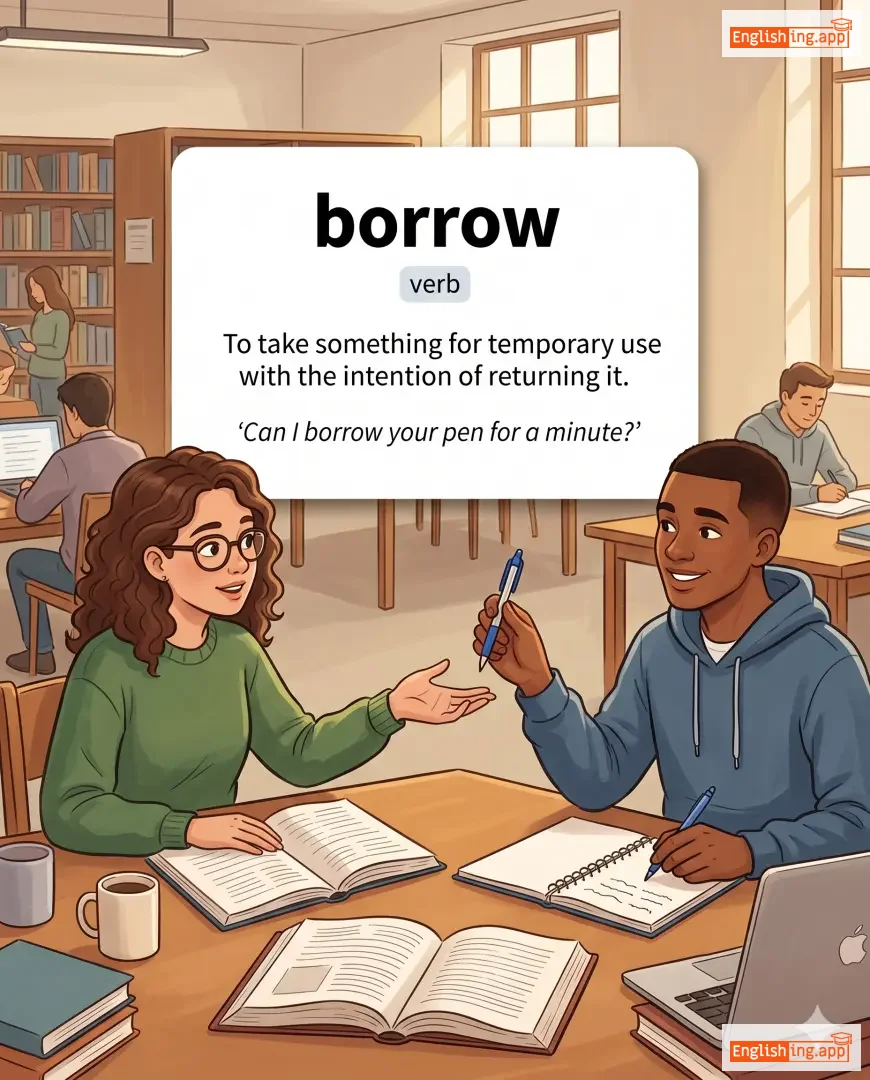
borrow definition card — visual illustration of the meaning
verb
/ˈbɑːroʊ/
उधार लेना (udhaar lena)

To take something for temporary use with the intention of returning it.

"Can I borrow your pen for a minute?"

"क्या मैं एक मिनट के लिए आपका पेन उधार ले सकता हूँ?" (kya main ek minute ke liye aapka pen udhaar le sakta hoon?)
noun
/ˈbʊzəm/
छाती (chaatee)

the human chest, especially a woman’s breast; also used metaphorically to refer to closeness or intimacy

"She kept the secret close to her bosom."

"उसने उस रहस्य को अपनी छाती के पास रखा।" (Usne us rahasya ko apni chaatee ke paas rakha.)
👨‍💼

boss (बॉस)

noun
/bɒs/
बॉस (bos)

a person who is in charge of a worker, group, or organization

"Her boss gave her a new project to complete."

"उसके बॉस ने उसे पूरा करने के लिए एक नया प्रोजेक्ट दिया।" (Uske bos ne use poora karne ke liye ek naya project diya.)
adjective
/bəˈtænɪkəl/
वनस्पति संबंधी (vanaspati sambandhi)

relating to plants or plant life

"She works at the botanical garden."

"वह बोटैनिकल गार्डन में काम करती है।" (Vah botanical garden mein kaam karti hai.)
verb
/ˈbɒtənaɪz/
वनस्पति विज्ञान करना (vanaspati vigyan karna)

to study plants in their natural environment

"They went to the forest to botanize during their vacation."

"वे अपनी छुट्टियों के दौरान वन में वनस्पति विज्ञान करने गए थे।" (Ve apni chhuttiyon ke dauran van mein vanaspati vigyan karne gaye the.)
noun
/ˈbɒtəni/
वनस्पति शास्त्र (vanaspati shastra)

the scientific study of plants

"She is studying botany at the university."

"वह विश्वविद्यालय में वनस्पति शास्त्र पढ़ रही है।" (Vah vishwavidyalay mein vanaspati shastra padh rahi hai.)
verb
/bɒtʃ/
खराब करना (kharab karna)

to carry out a task badly or carelessly

"He completely botched the repair job."

"उसने पूरी तरह से मरम्मत का काम खराब कर दिया।" (Usne puri tarah se marammat ka kaam kharab kar diya.)
determiner/pronoun
/boʊθ/
दोनों (donon)

referring to two people or things together

"Both of the children were excited about the trip."

"यात्रा के बारे में दोनों बच्चे उत्साहित थे।" (Yatra ke baare mein donon bachche utsahit the.)
verb
/ˈbɒðər/
परेशान करना (pareshan karna)

to annoy, worry, or cause trouble to someone

"I don't want to bother you while you're working."

"मैं तुम्हें काम करते हुए परेशान नहीं करना चाहता।" (Main tumhe kaam karte hue pareshan nahi karna chahta.)
noun
/ˈbɒt.əl/
बोतल (botal)

a container, typically made of glass or plastic, with a narrow neck used to hold liquids

"He poured water into the bottle."

"उसने बोतल में पानी डाला।" (Usne botal mein paani daala.)
adjective
/ˈbɒt.əl ɡriːn/
बोतल-ग्रीन (botal-green)

a dark green color similar to that of a green glass bottle

"She wore a beautiful bottle-green dress to the evening party."

"उसने शाम की पार्टी में एक खूबसूरत बॉटल-ग्रीन ड्रेस पहनी।" (Usne shaam ki party mein ek khoobsurat bottle-green dress pehni.)
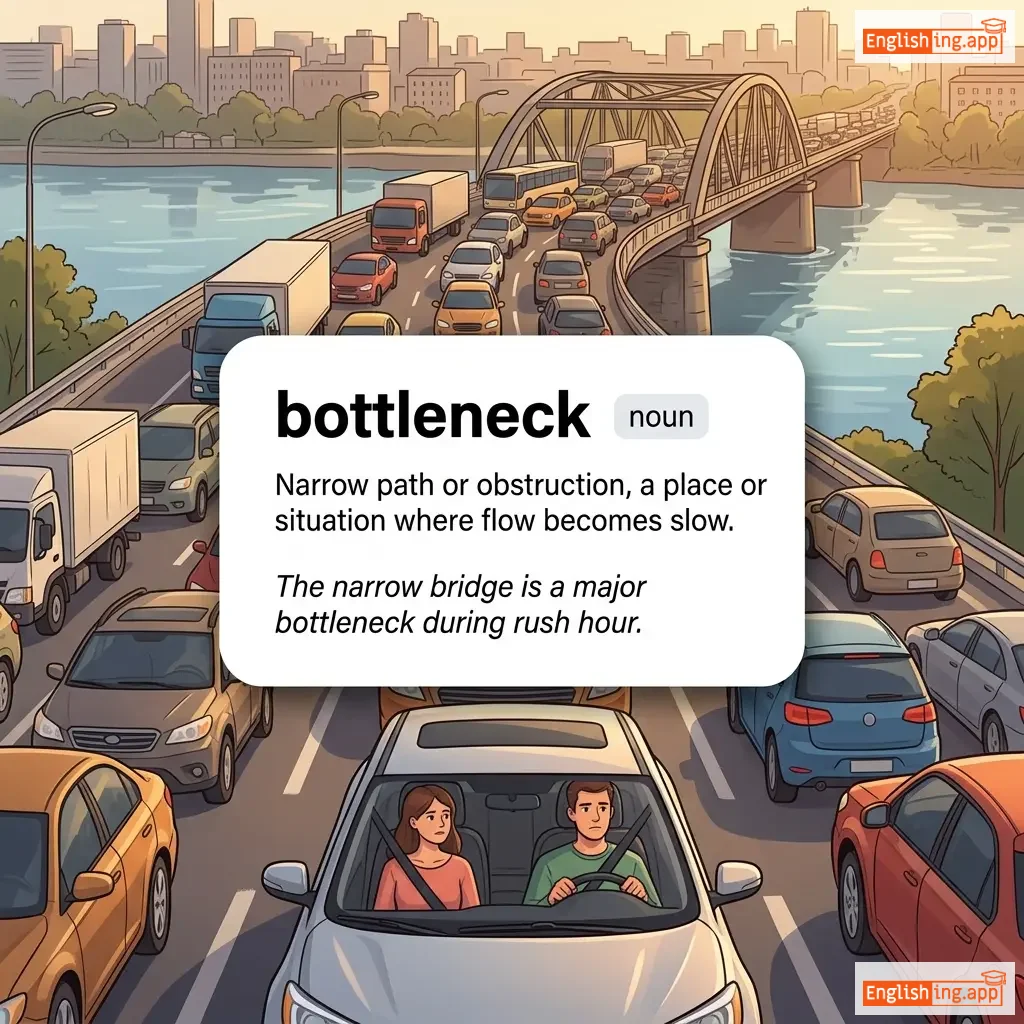
bottleneck definition card — visual illustration of the meaning
noun
/ˈbɒt.əl.nek/
संकरी रास्ता या रुकावट (sankari raasta ya rukawat)

Narrow path or obstruction, a place or situation where flow becomes slow.

"The narrow bridge is a major bottleneck during rush hour."

"संकीर्ण पुल रश आवर के दौरान एक बड़ी रुकावट है।" (Sankari pul rush hour ke dauran ek badi rukawat hai.)
noun, adjective
/ˈbɒtəm/
तल (tal)

The lowest part of something.

"The keys fell to the bottom of the bag."

"चाबियाँ बैग के तल में गिर गईं।" (Chaabiyaan baig ke tal mein gir gayin.)
noun
/ˌbuː.ɡənˈvɪl.i.ə/
बोगनविलिया (boganviliya)

a tropical climbing plant with colorful bracts surrounding small flowers

"The bougainvillea climbing over the garden wall creates a beautiful purple display."

"बोगनविलिया जो बागान की दीवार पर चढ़ रही है, एक सुंदर बैंगनी प्रदर्शन बनाती है।" (boganviliya jo bagan ki deewaar par chadh rahi hai, ek sundar baingani pradarshan banati hai.)
noun
/ˈbuː.jɒ̃/
शोरबा (shorba)

A clear, seasoned broth made by simmering meat, fish, or vegetables in water.

"She added vegetables to the bouillon for extra flavor."

"उसने बुलेन में अतिरिक्त स्वाद के लिए सब्जियाँ डाली।" (Usne bouillon mein atirikt swaad ke liye sabziyan daali.)
verb
/baʊns/
उठना (uthna)

to spring back after hitting something; to rebound.

"The ball bounced off the wall and hit the window."

"गेंद दीवार से टकराकर खिड़की से जा टकराई।" (gend deewaar se takarak khidki se ja takraayi.)
verb, noun, adjective
/baʊnd/
सीमाबद्ध / बंधा (simabaddh / bandha)

To move with large strides or jumps; also refers to being tied, limited, or certain.

"The dog bounded across the field with joy."

"कुत्ता खुशी के साथ मैदान को पार करते हुए कूद गया।" (Kutta khushi ke sath maidan ko paar karte hue kood gaya.)
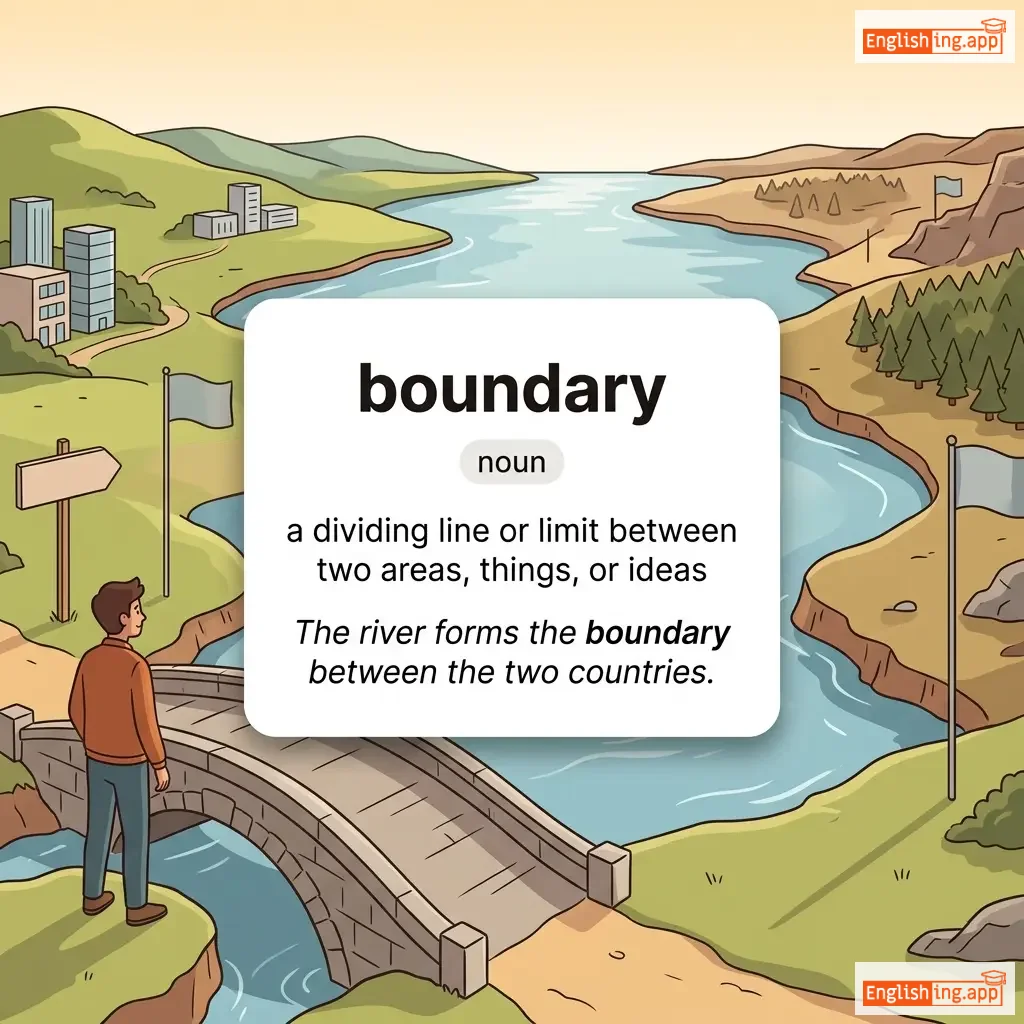
boundary definition card — visual illustration of the meaning
noun
/ˈbaʊn.dri/
सीमा (seema)

a dividing line or limit between two areas, things, or ideas

"The river forms the boundary between the two countries."

"नदी दो देशों के बीच सीमा बनाती है।" (Nadi do deshon ke beech seema banati hai.)
adjective
/ˈbaʊn.tɪ.fəl/
प्रचुर / उदार (prachur / udar)

Large in quantity; abundant; generous in giving.

"The farmer was grateful for the bountiful harvest."

"किसान प्रचुर फसल के लिए आभारी था।" (Kisan prachur fasal ke liye aabhari tha.)
noun
/buˈkeɪ/
फूलों का गुलदस्ता (phoolon ka guldasta)

A bunch of flowers arranged together, often given as a gift or decoration.

"He gave her a bouquet of roses on her birthday."

"उसने उसके जन्मदिन पर उसे गुलाबों का गुलदस्ता दिया।" (Usne uske janmadin par use gulabon ka guldasta diya.)
adjective, noun
/ˈbʊrʒ.wɑː/
बुर्जुआ (burjua)

Relating to the middle class, often with materialistic values or conventional attitudes.

"The novel criticizes the bourgeois lifestyle of the city dwellers."

"उपन्यास शहरवासियों के बुर्जुआ जीवनशैली की आलोचना करता है।" (Upanyas shaharwasiyon ke burjua jeevanshaily ki alochna karta hai.)
noun
/baʊt/
संक्षिप्त समय की तीव्र गतिविधि या एक प्रतियोगिता, विशेष रूप से खेल या बीमारी में (sankshipt samay ki teevra gatividhi ya ek pratiyogita, vishesh roop se khel ya bimari mein)

a short period of intense activity or a contest, especially in sports or illness

"He had a severe bout of flu last winter."

"उसने पिछले सर्दियों में फ्लू का एक गंभीर बाउट झेला था।" (Usne pichhle sardiyon mein flu ka ek gambhir bout jhela tha.)
noun
/buːˈtiːk/
बूटीक दुकान (butik dukaan)

a small shop that sells fashionable clothes or accessories

"She bought a beautiful dress from a boutique downtown."

"उसने शहर के एक बूटीक से एक सुंदर ड्रेस खरीदी।" (Usne shahar ke ek butik se ek sundar dress khareedi.)
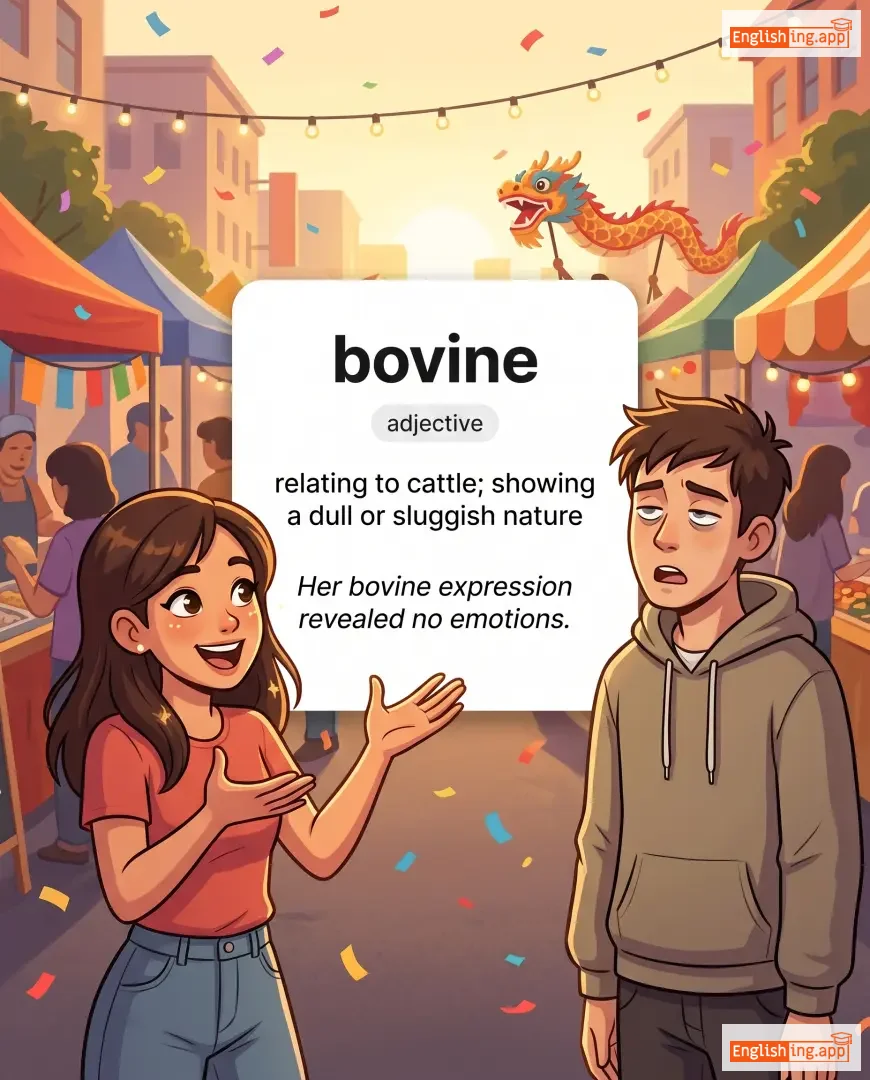
bovine definition card — visual illustration of the meaning
adjective
/ˈboʊvaɪn/
गाय से संबंधित (gaay se sambandhit)

relating to cattle; showing a dull or sluggish nature

"Her bovine expression revealed no emotions."

"उसके बोवाइन अभिव्यक्ति में कोई भावनाएँ नहीं दिखीं।" (uske bovine abhivyakti mein koi bhavnaayein nahi dikhin.)
verb
/baʊ/ (verb), /boʊ/ (noun)
नम करना (nam karna)

to bend the upper part of the body forward as a sign of respect or greeting.

"The performer bowed deeply after the show."

"शो के बाद परफॉर्मर ने गहरे सम्मान में नम किया।" (Sho ke baad performer ne gahare sammaan mein nam kiya.)
verb
/ˈbaʊdləˌraɪz/
अपत्तिजनक या अनुपयुक्त भाग हटाना (apattijank ya anupojukt bhag hatana)

to remove or modify parts of a text considered offensive or inappropriate

"The editor bowdlerized the novel to make it suitable for children."

"संपादक ने उपन्यास को बच्चों के लिए उपयुक्त बनाने के लिए उसे बॉडलराइज किया।" (sampadak ne upanyas ko bachon ke liye upyukt banane ke liye use bodlarize kiya.)
noun
/boʊl/
कटोरा (katora)

a round, deep dish used for holding food or liquids

"She poured the soup into a large bowl."

"उसने सूप को एक बड़े कटोरे में डाला।" (Usne soup ko ek bade katoray mein dala.)